The Suite Report

Category: Room guide

  • Grand Velas Riviera Maya: Jungle, Beachfront or Grand Class?

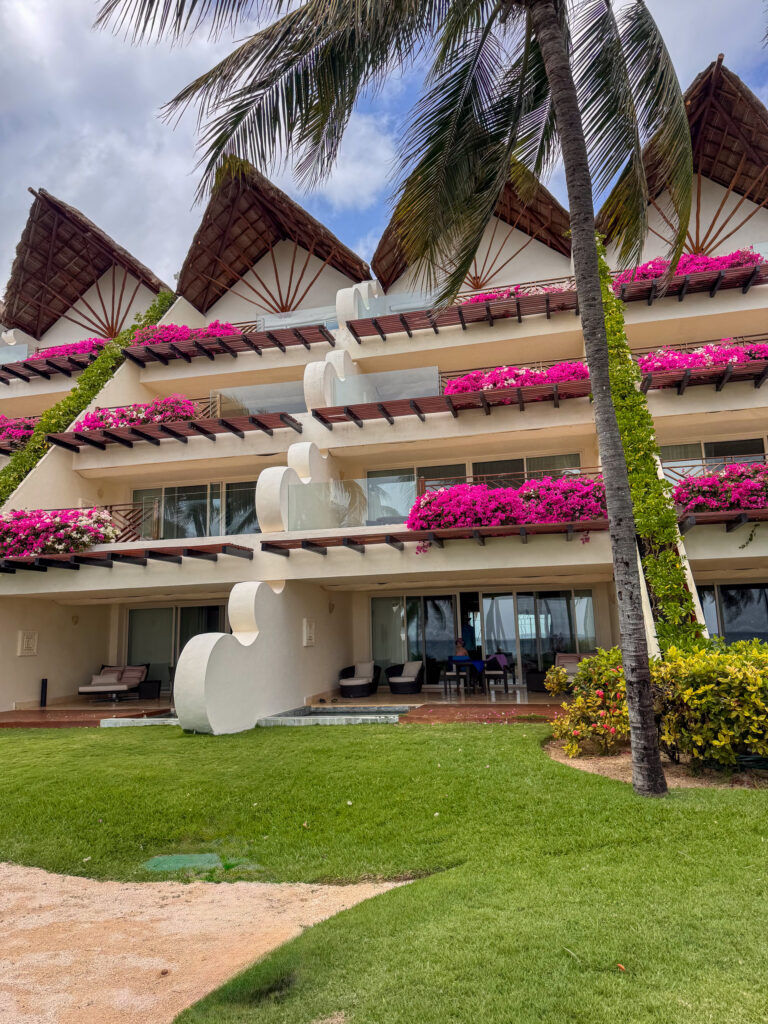
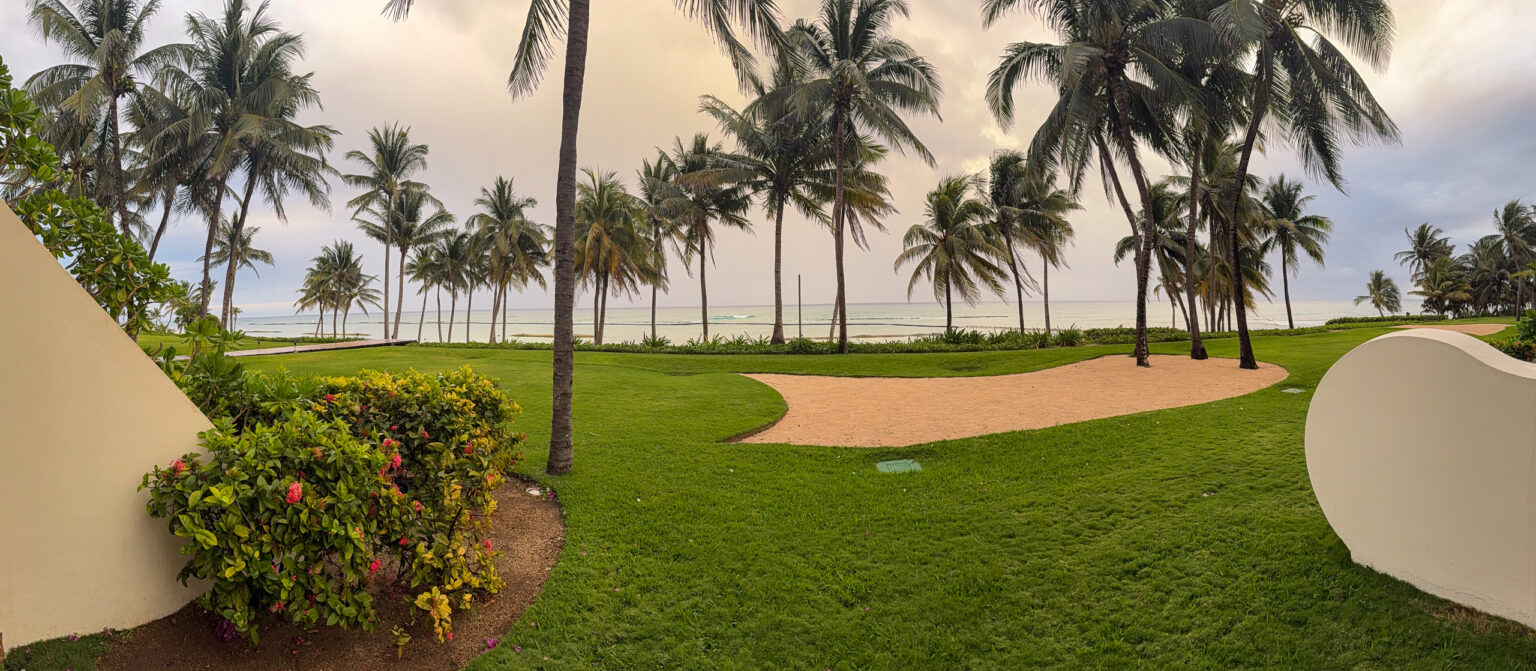
    Wide panorama of lawn, coconut palms and a sand circle framed between two curved white walls

    RIVIERA MAYA, MEXICO · ROOM GUIDE · 10 MIN READ

    Grand Velas Riviera Maya: Jungle, Beachfront or Grand Class?

    Three resorts share one gate, one rate card and a listed 539 suites between them. The question here is not beachfront or jungle. It is which of three answers you want, and the cheapest one is a mile from the sea.

    By J.C. Mercer

    Know before you go

    • Where the Cancún–Tulum highway at Km 62, four miles from Playa del Carmen. Not in Mayakoba, whatever the search results say
    • The property all-suite, 539 suites, opened November 2008, on roughly 200 acres by the hotel’s own count
    • The choice Zen Grand in the jungle, Ambassador above the beach, Grand Class on the sand — each with its own lobby, pool and restaurants
    • Rates the resort’s own booking engine quotes per person per night, with Grand Class a tier above the entry suites
    • Getting around a 24-hour shuttle van links the three lobbies; the hotel calls the Zen-to-beach run two to three minutes

    Every stay on this site is paid for in full and booked the way any other guest would book it.

    Grand Velas Riviera Maya is not in Mayakoba. That needs saying at the top, because much of the internet says otherwise and so, embarrassingly, does the label on the folder my own photographs live in. Mayakoba is a gated development of some 595 acres holding exactly four hotels — Alila, Banyan Tree, Fairmont and Rosewood. Grand Velas is none of them. It sits on its own land further up the Cancún–Tulum highway, behind its own gate. Its only link to the name is El Camaleón Mayakoba, the golf course it partners with, five minutes away.

    The distinction has one practical consequence. At Mayakoba your key opens three neighbouring hotels. At Grand Velas it opens three neighbouring sections of the same resort — and choosing between them is the whole decision.

    I slept here

    Grand Velas Riviera Maya

    • Nights 4
    • Stayed March 2026
    • Room booked Zen Grand Pool Nature View Suite
    • How it was booked Amex Fine Hotels + Resorts, public rate
    • Rate band $$$$Check current rates

    Three ambiances, not two

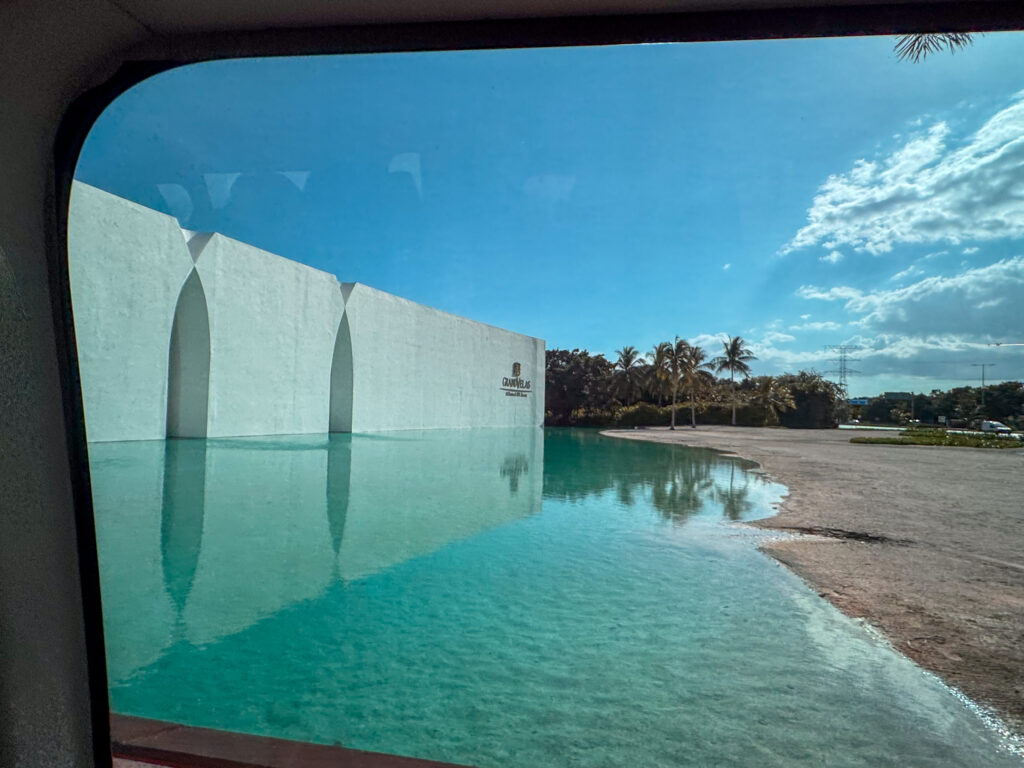
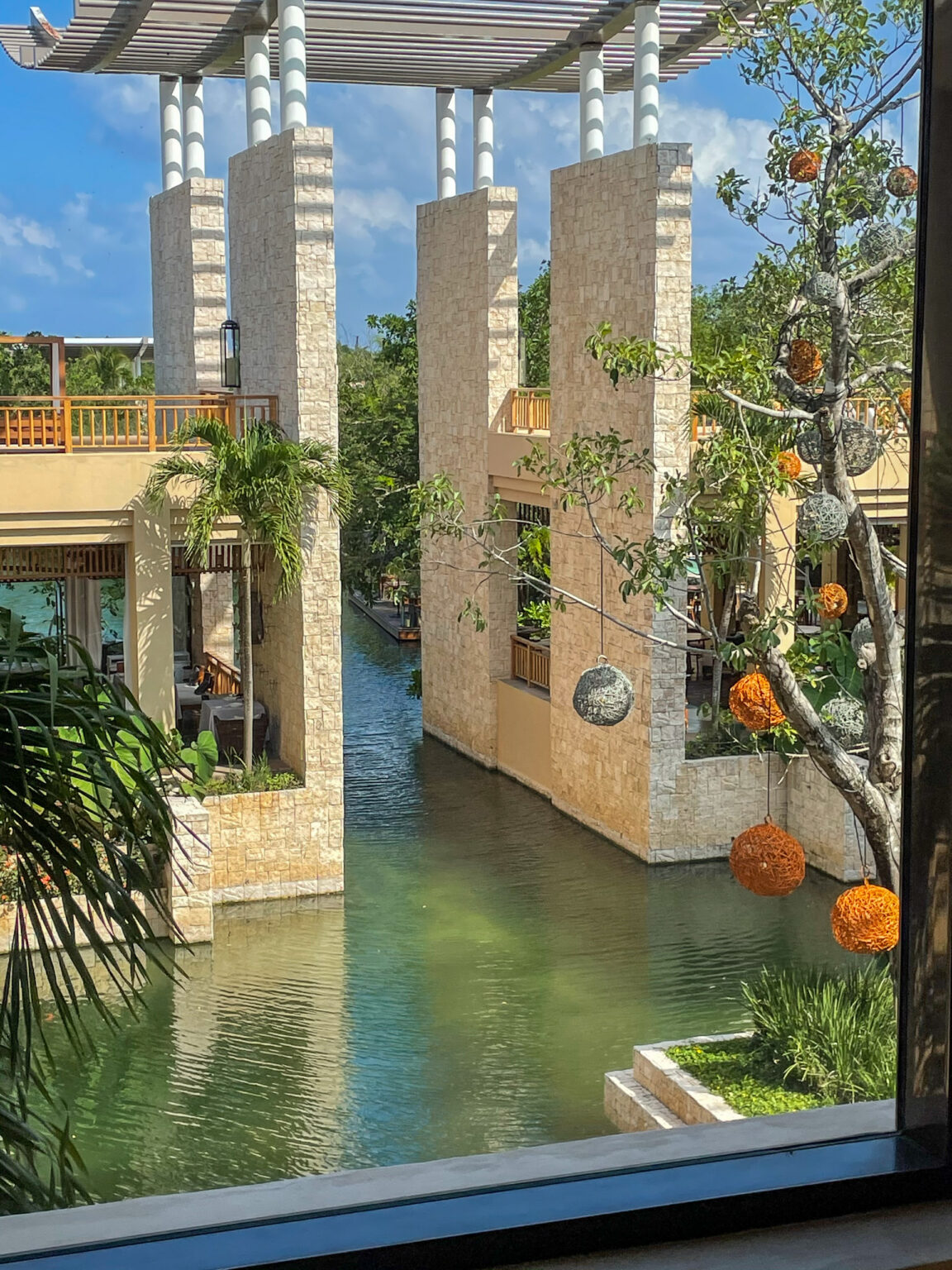
    Curved white wall reflected in a shallow turquoise arrival pool, seen through a vehicle window
    One gate, one drive, and then a fork in the road that decides most of your holiday.

    Most resorts offering a room choice offer two: water or garden. Grand Velas offers three, and calls them ambiances rather than wings — marketing language over a real structural fact. Each has its own lobby, pool and restaurants, and guests may use all three wherever they sleep, with one age caveat I will come to.

    Zen Grand is the biggest of the three at a listed 254 suites, set inland in jungle and mangrove with two restaurants and a pool. Ambassador holds 195 overlooking the beach, with three restaurants and the largest pool complex. Grand Class is 90 oceanfront suites, three restaurants and an infinity pool. That comes to 539, which is the number the group publishes – a rare case of a hotel’s arithmetic reconciling. If you see 491 quoted anywhere, it is describing a property that still had iPod docks in it.

    What follows is a resort that is genuinely three resorts. The spa and the convention centre sit in Zen Grand. The beach fronts Ambassador. The Michelin-starred restaurant is in Grand Class. Wherever you sleep, something you want is somewhere else.

    Zen Grand: the jungle side

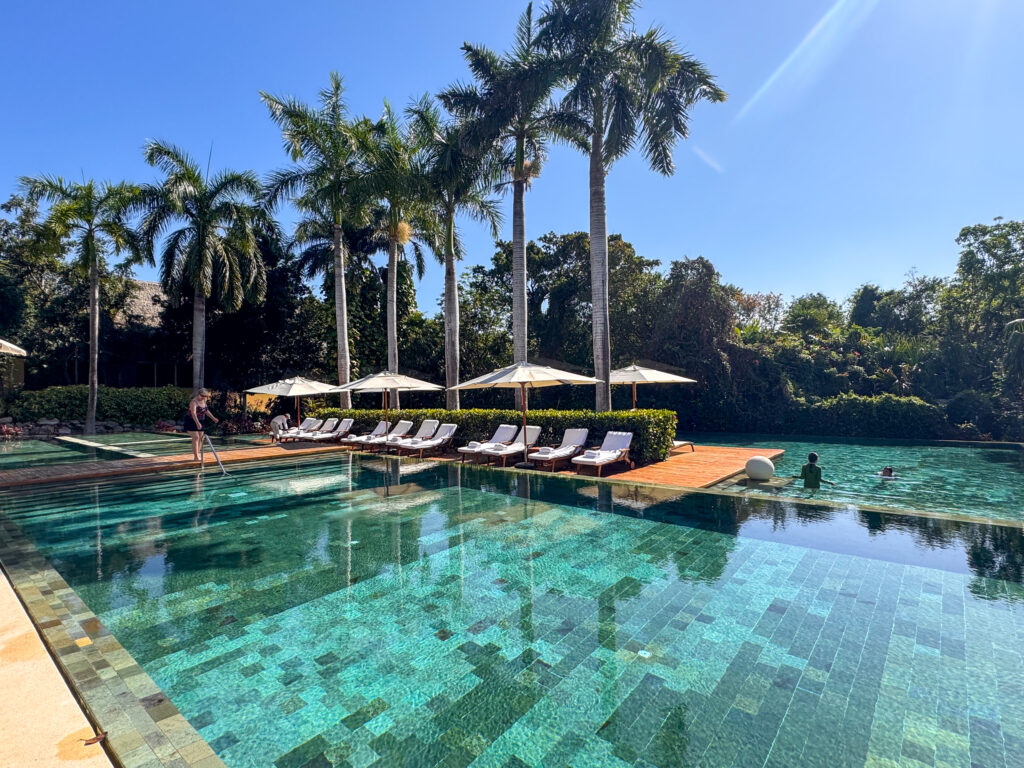
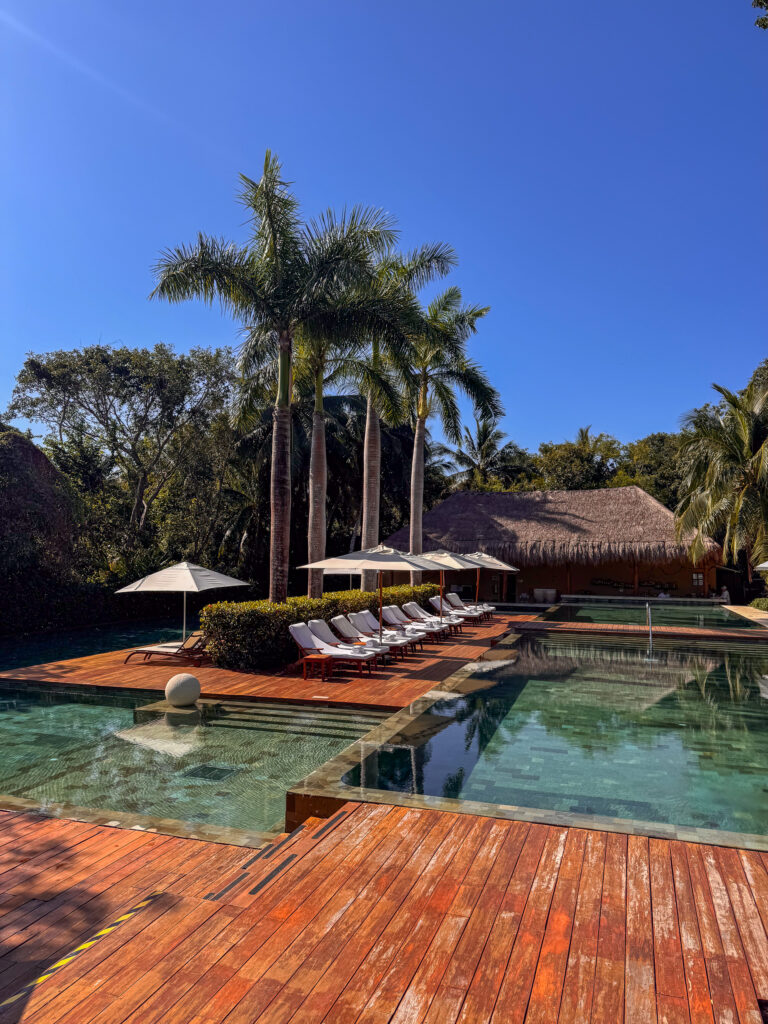
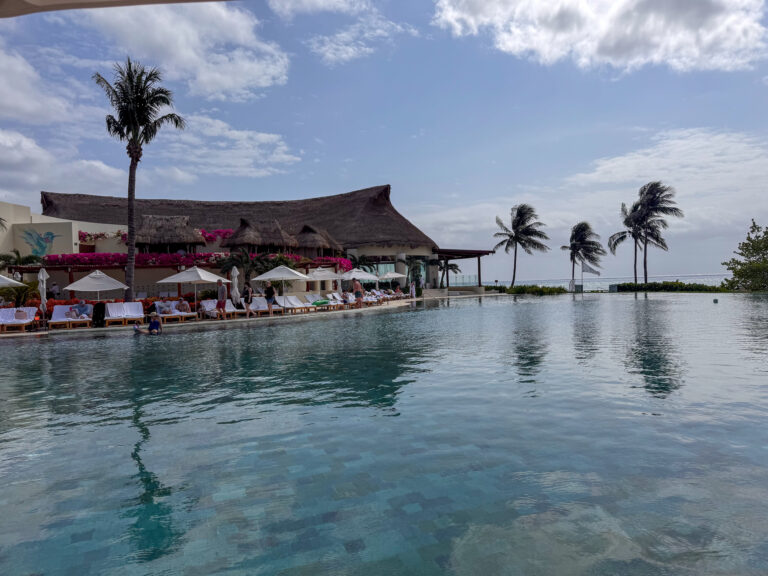
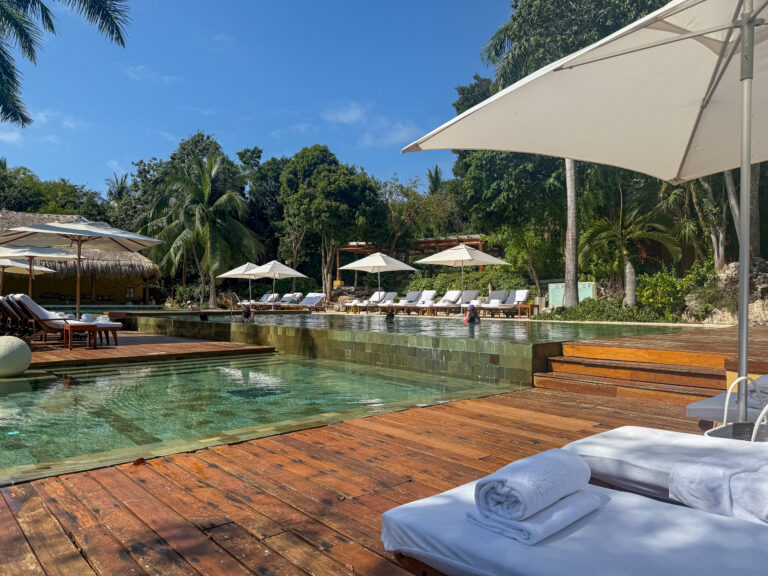
    Emerald mosaic-tiled pool reflecting royal palms, with loungers and umbrellas along the far edge
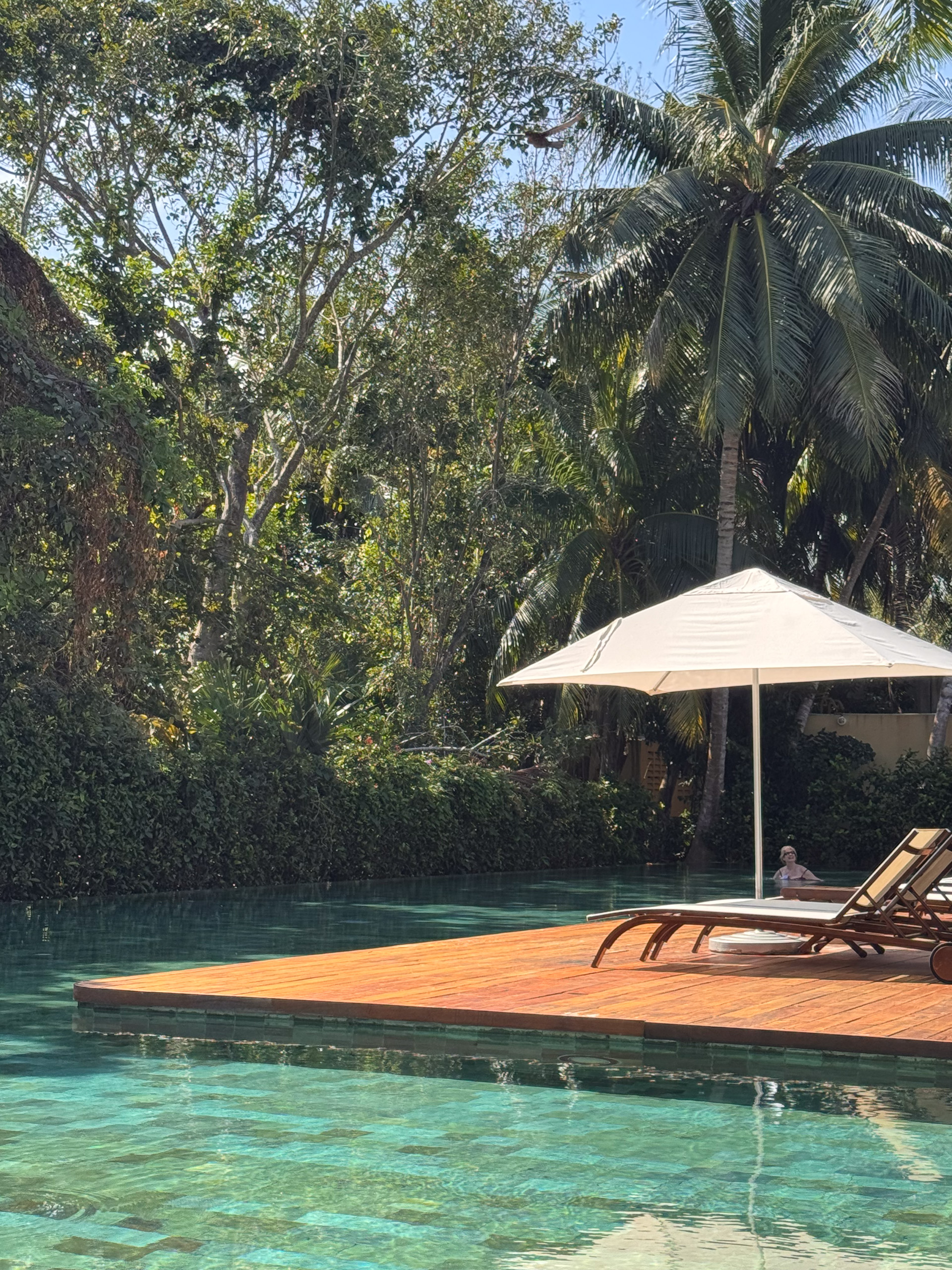
    The inland pools are tiled emerald rather than blue and sit under the canopy – cooler and a good deal quieter than the beachfront ones.

    The entry Zen Grand Nature View Suite is a published 1,377 square feet with a jungle terrace and an indoor jacuzzi. Above it: a plunge-pool version, a two-bedroom family suite at 2,368 square feet, a presidential at 3,518. The hotel calls this section family-friendly in its own words — worth holding onto for later.

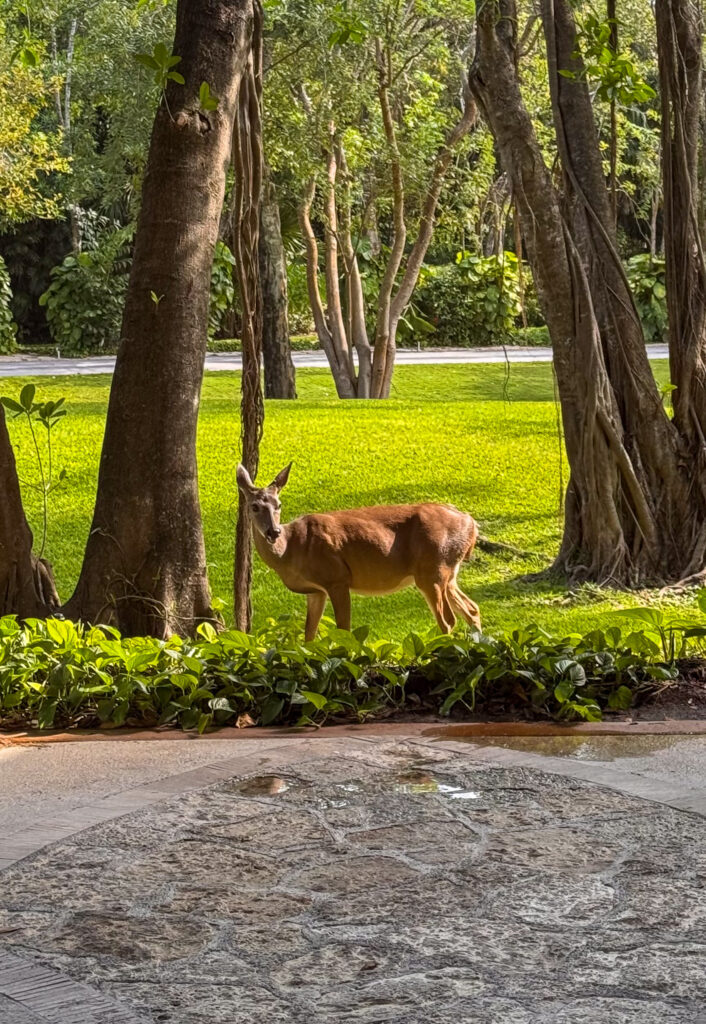
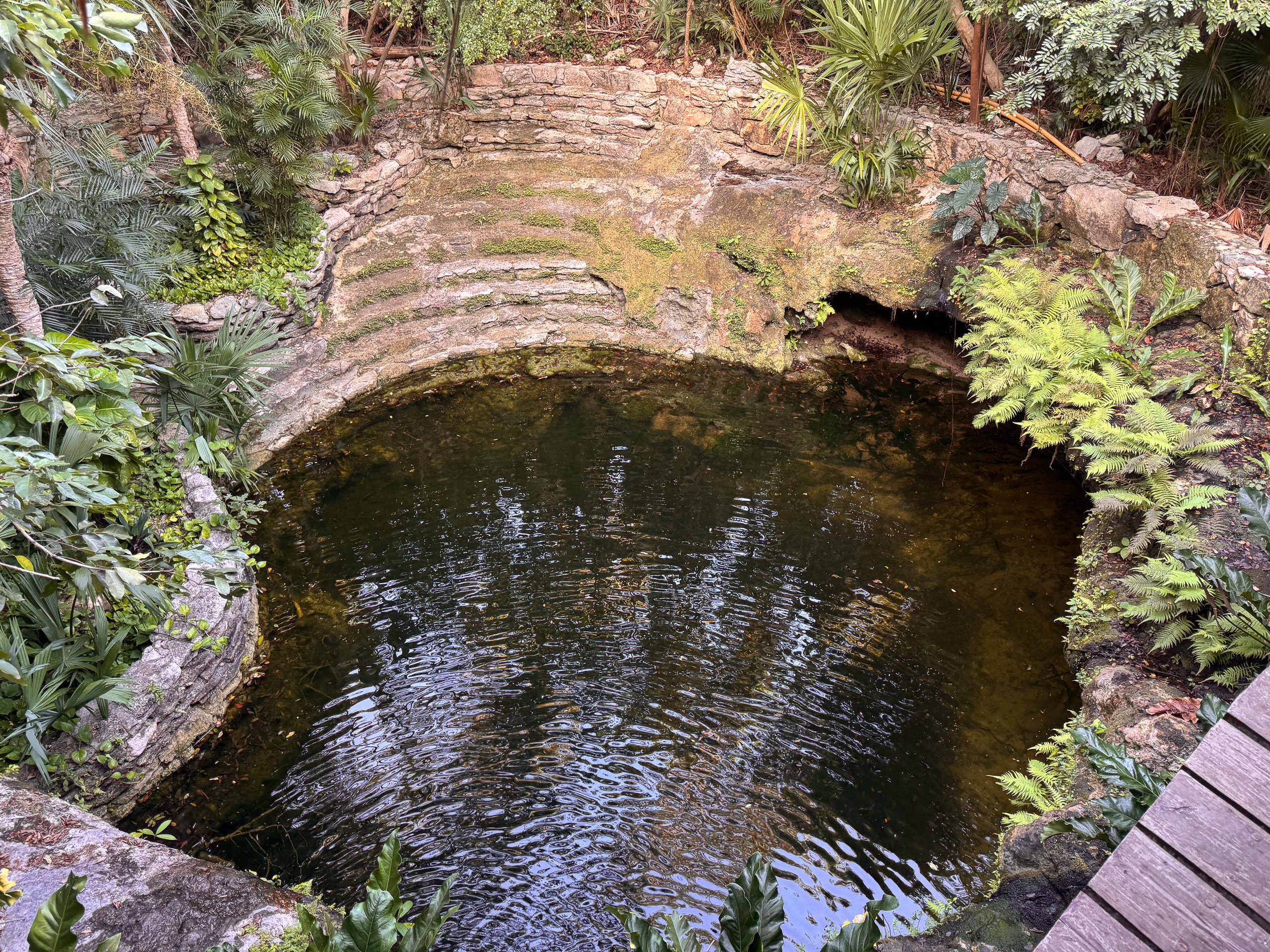
    What you get for the inland address is the quieter half of the property. The spa is here, and it is the strongest single thing Grand Velas has – five Forbes stars, built partly into a natural cenote. The grounds are the other reward. On this side I found a deer grazing between banyan trunks, an oriole working the palm fronds, and a stone-walled cenote sunk among ferns a few minutes from the room.

    A deer grazing on a sunlit lawn between banyan trunks, seen across a flagstone path
    Not a stocked attraction. The inland grounds run into real jungle, and the wildlife comes with the postcode.

    The cost is distance, and it is the thing people argue about most. The hotel says a complimentary shuttle runs 24 hours and takes two to three minutes. In practice the drive is nearer five. Zen sits about a mile back from the water, and it is not a walk you would want to make twice a day in that heat.
    Three minutes is true and also beside the point. Door to door – waiting for the van, loading, dropping other guests on the way – is closer to ten. Nobody waits long for the shuttle itself; the friction is everything either side of it. It is enough to make you quietly give up on the morning yoga class rather than build a day around a van.

    There is a harder problem with Zen, and it is not the distance. The building is older and darker than the other two, and it shows: burned-out bulbs, pictures hanging askew, and rooms that want the lights on at midday. Book Zen knowing it is a different product, not a cheaper view of the same one.

    Ambassador: the beachfront middle

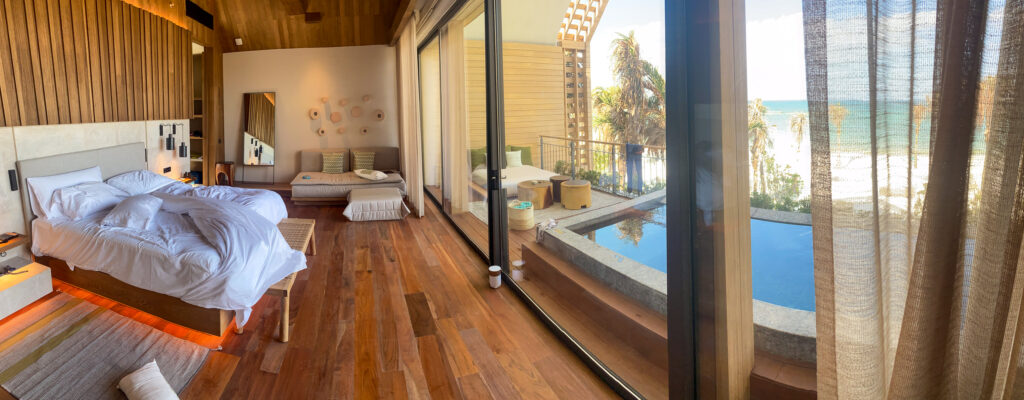
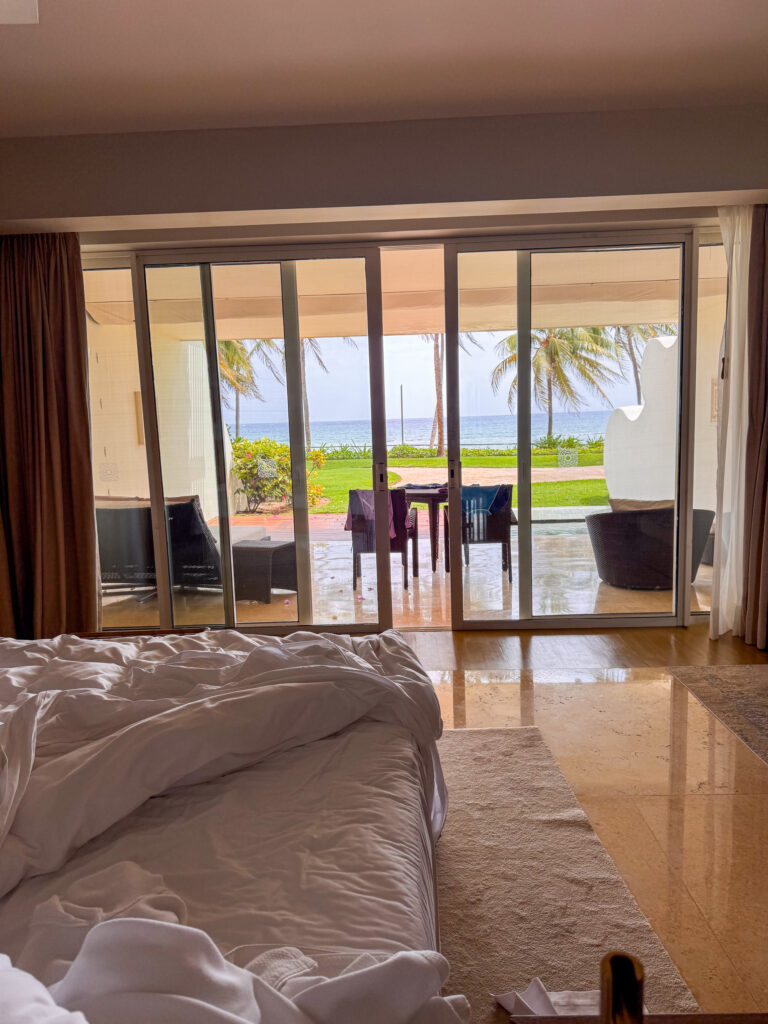
    Rumpled white bed and marble floor facing glass doors open to palms, lawn and sea
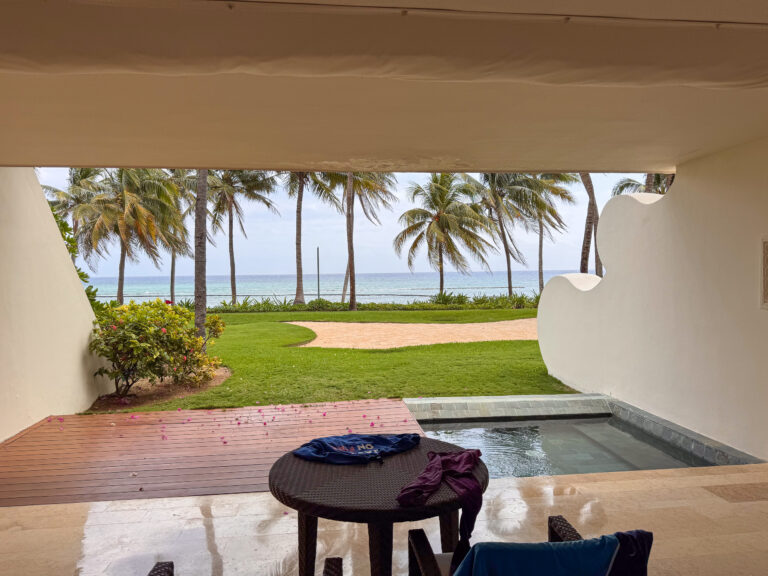
    The ocean-view suites put the doors at the foot of the bed. On the ground floor the lawn takes a slice of that view with it.

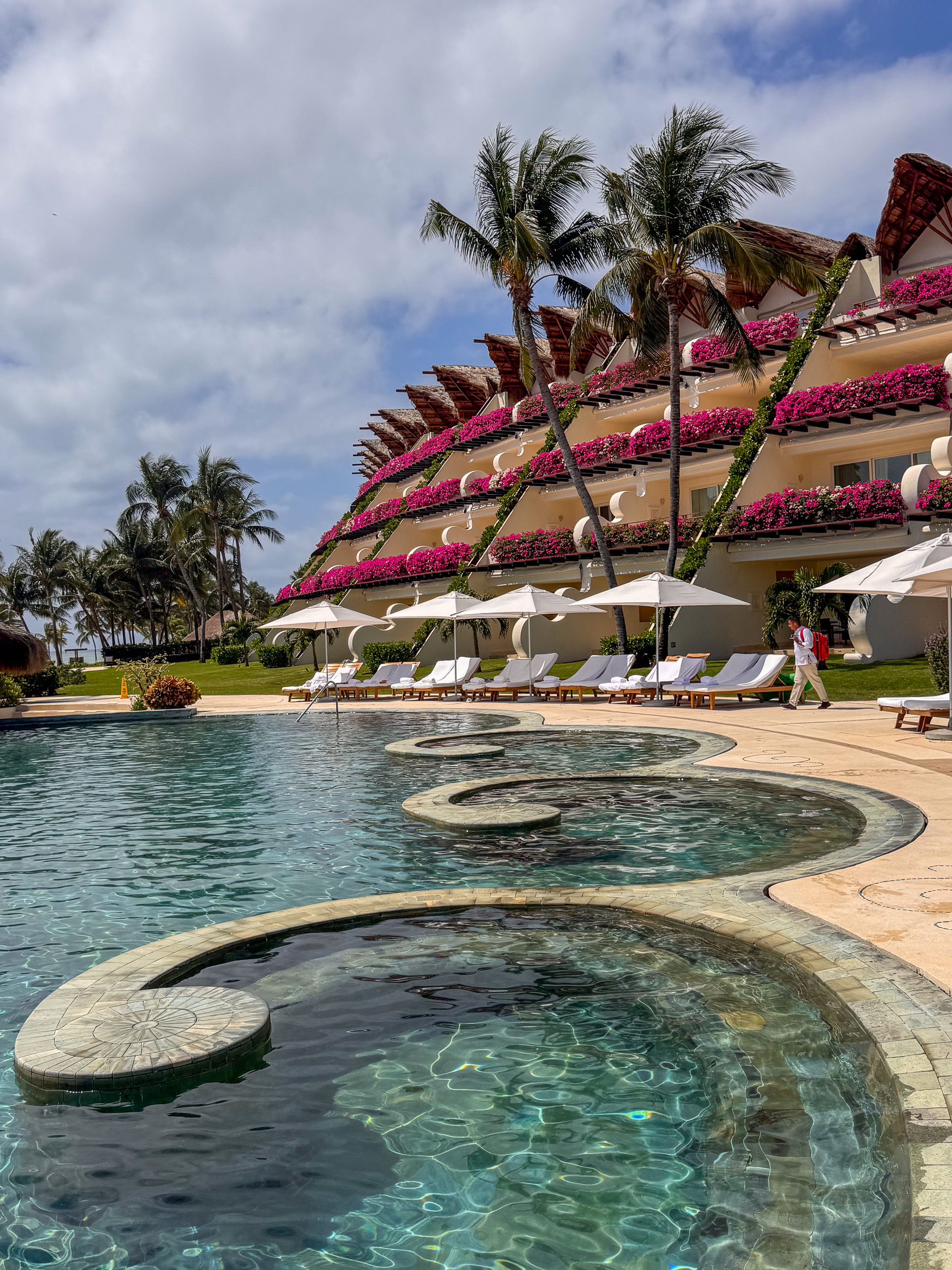
    Ambassador is the largest section and the one that fronts the beach. Its entry Ocean View Suite is 1,270 square feet — the smallest category the hotel publishes anywhere, which tells you the scale of the place. Above it: a Pool Ocean Front, a 2,540 square foot family suite, a Governor with in-suite massage, a presidential at 3,084. Three of those carry a “recently renewed” flag, part of a refurbishment the group puts at over four million dollars.

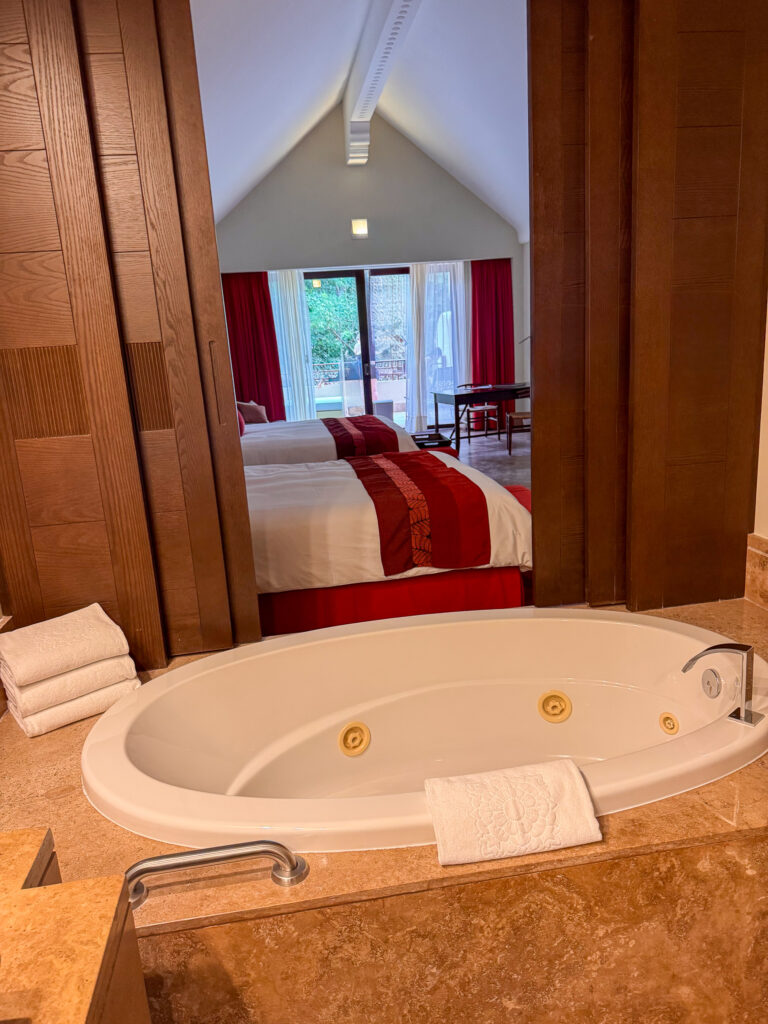
    Oval whirlpool tub in a travertine bathroom looking through to a bed with red runner
    Every suite has an indoor jacuzzi and a wood screen that opens the bathroom to the room.

    This is where families live. The Ambassador pool is the biggest of the three, with a zero-entry children’s pool at the back. The Kids’ Club runs 4 to 12 and opens at nine; the Teens’ Club takes 13 to 18 and runs to midnight. Azul does the buffet, Frida the Mexican haute cuisine, Lucca the Italian.

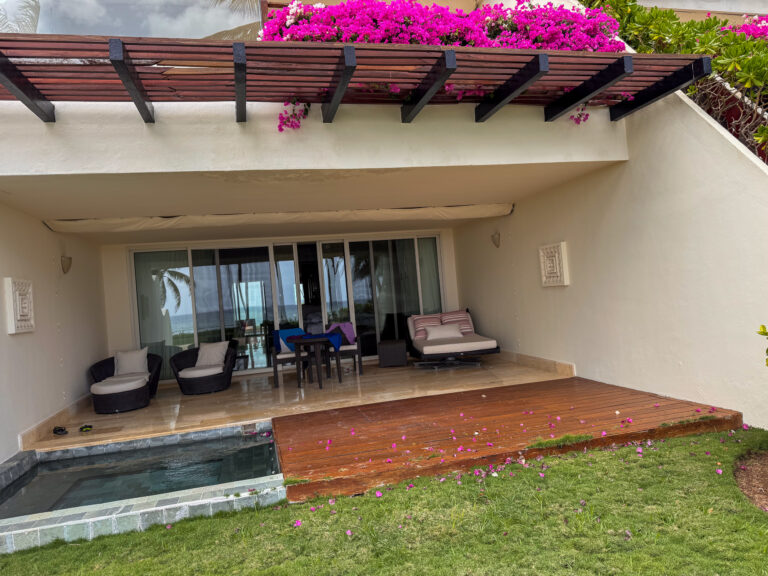
    Two warnings the brochure will not give you. Ground-floor suites give up the view – you have to walk ten feet out of the room before you can see the sea – and they collect mosquitoes. And the stone hallways carry sound: corridor noise after dinner, lift noise all day. Ask for a higher floor, away from the lift.
    Grand Class: oceanfront, and the adults-only muddle

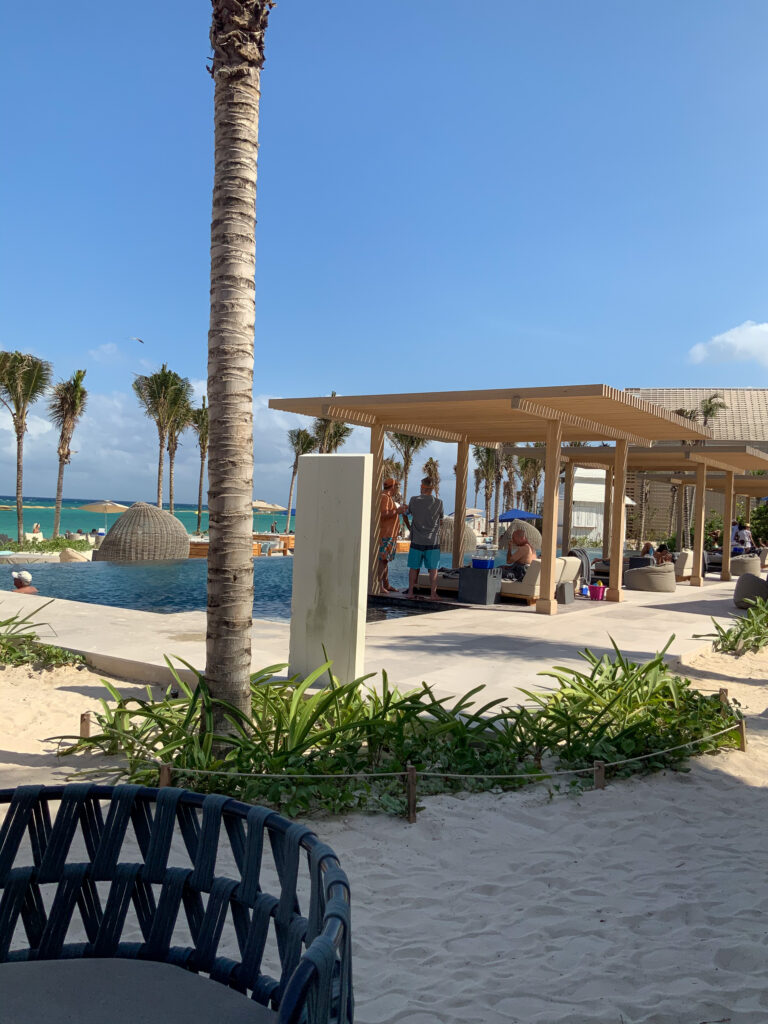
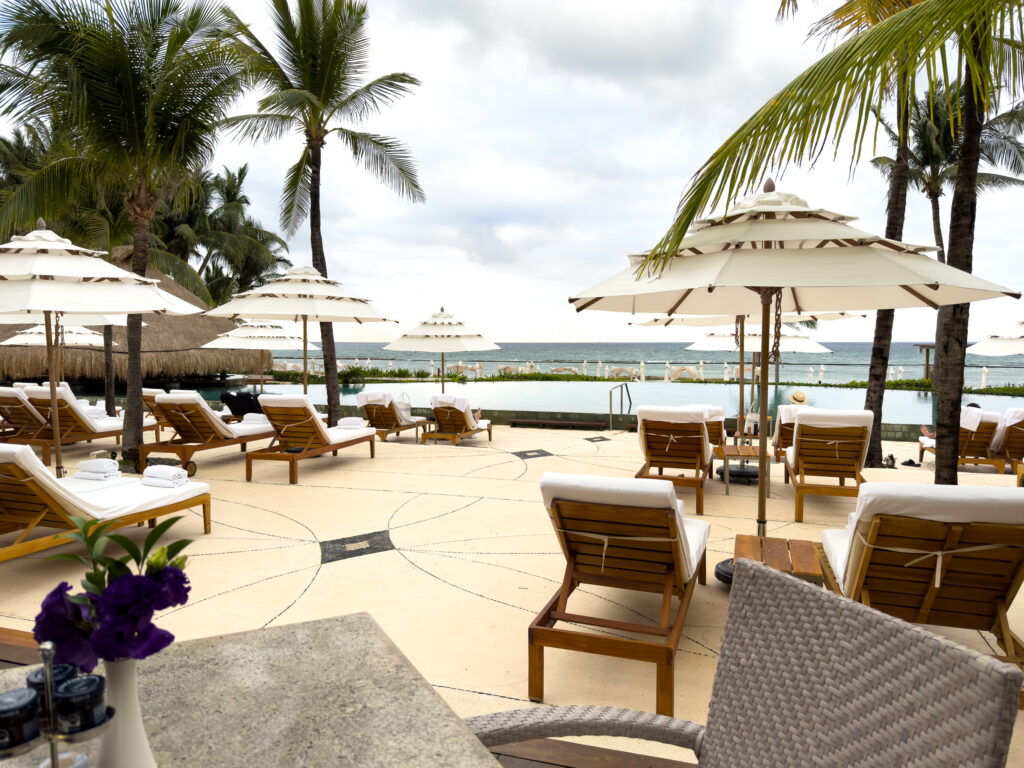
    White parasols and teak loungers on a stone terrace running to an infinity pool above the sea
    The one part of the resort the hotel commits to in writing as adults only. One umbrella per two chairs, and they go early.

    Ninety suites, directly on the sand, with a smaller and more boutique-feeling lobby of their own. The Grand Class Oceanfront Suite is published at 1,377 square feet with a terrace plunge pool; the Presidential runs to 3,796 across two bedrooms, with a private butler rather than one shared with ten rooms. Bistro, Piaf and Cocina de Autor are here, with the Sky Bar and the infinity pool.

    Here is the thing to get right before you book, because the hotel has not. Grand Class is marketed as adults only. Agents sell it as an adults-only oceanfront retreat, and the booking sites list it as a separate property with “Adults Only” in the name.
    What the resort commits to in writing is narrower. Its rate terms name the adults-only zones precisely: the Grand Class pool and bar, and the restaurants Piaf, Cocina de Autor and Bistro. The suites are not on that list – and the hotel’s own booking page for the Oceanfront Suite calls it ideal for three adults and one minor aged nought to fifteen.

    So book Grand Class for the pool, the bar and the three restaurants, which really are age-restricted. Do not book it expecting a childless corridor. The hotel’s own pages contradict each other, and the safe assumption is the one its booking engine will sell you.
    Side by side

    Zen GrandAmbassadorGrand Class
    Suites25419590
    Entry suite1,377 sq ft, nature view1,270 sq ft, ocean view1,377 sq ft, oceanfront
    To the beachShuttle, about a mileOverlooks itOn it
    Its restaurantsChaká, Sen LinAzul, Frida, LuccaBistro, Piaf, Cocina de Autor
    Its poolJungle, coolest, quietestLargest, zero-entry kids’ sectionInfinity, adults only
    ChildrenFamily-friendly, the hotel’s wordWhere both clubs areFacilities are 16+, the suites are not
    Entry rate, per personLowest of the threeLevel with Zen, rising in peakA tier above both
    Best forThe spa, the wildlife, the priceFamilies and short staysCouples who want the sand

    What the rate actually covers

    Open minibar of soft drinks, beer, water and wine above a basket of crisps and sweets
    Restocked daily and included – with one caveat: the tequila and the wine are one bottle each per stay, not per day.

    Every rate plan the resort’s booking engine returns carries the same sentence: rates are per person per night on double occupancy, taxes and gratuities included. The widget then displays the room total rather than the per-person figure it just quoted, which explains most of the disagreement online.

    Grand Velas quotes per person and shows you per room. Half the argument about what this place costs is that one conversion.

    Zen and Ambassador cost the same to the dollar. One of them is a mile from the sea.

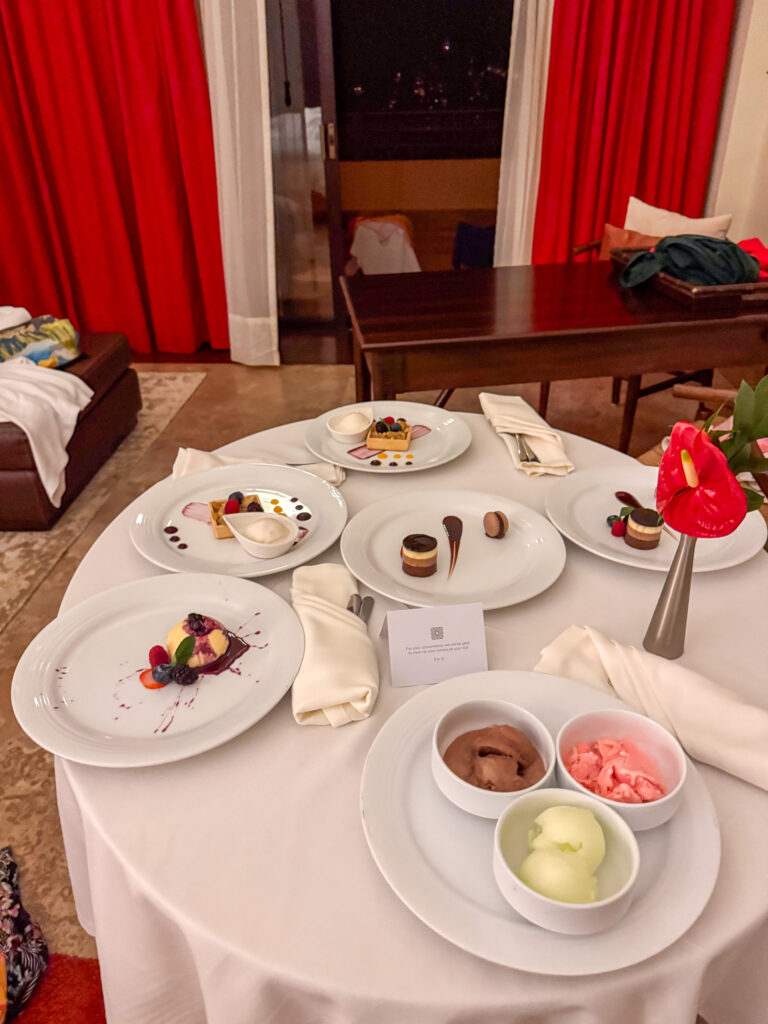
    Inside the rate: all meals at all eight restaurants, buffet and à la carte, plus 24-hour in-suite dining at no surcharge. Every menu runs two parallel wine lists, one included and one charged, and the included tier is not token — the same bottles go to outside diners at around MXN 1,100. The spirits run to Macallan 12, Don Julio, Grey Goose and Zacapa 23. Add a welcome bottle of mezcal, a shared butler, and a fifty-dollar spa credit per adult per day.

    Beef in dark jus with brussels sprout leaves, potato spheres and a crisp golden tuile
    Dinner is where the kitchen earns the price. Lunch is where it does not.

    The headline inclusion is Cocina de Autor, which took a star in the inaugural MICHELIN Guide to Mexico in 2024 and held it in 2025. The tasting menu is included for resort guests — the official menu page prices it only “for external customers,” which is the giveaway.

    Outside the rate: spa treatments, priced on the 2026 menu; the hydrotherapy Water Ceremony, free with any treatment of fifty minutes or more; airport transfers; babysitting; connecting rooms. The state Visitax is paid separately online, and Quintana Roo’s environmental levy is collected at checkout in pesos.

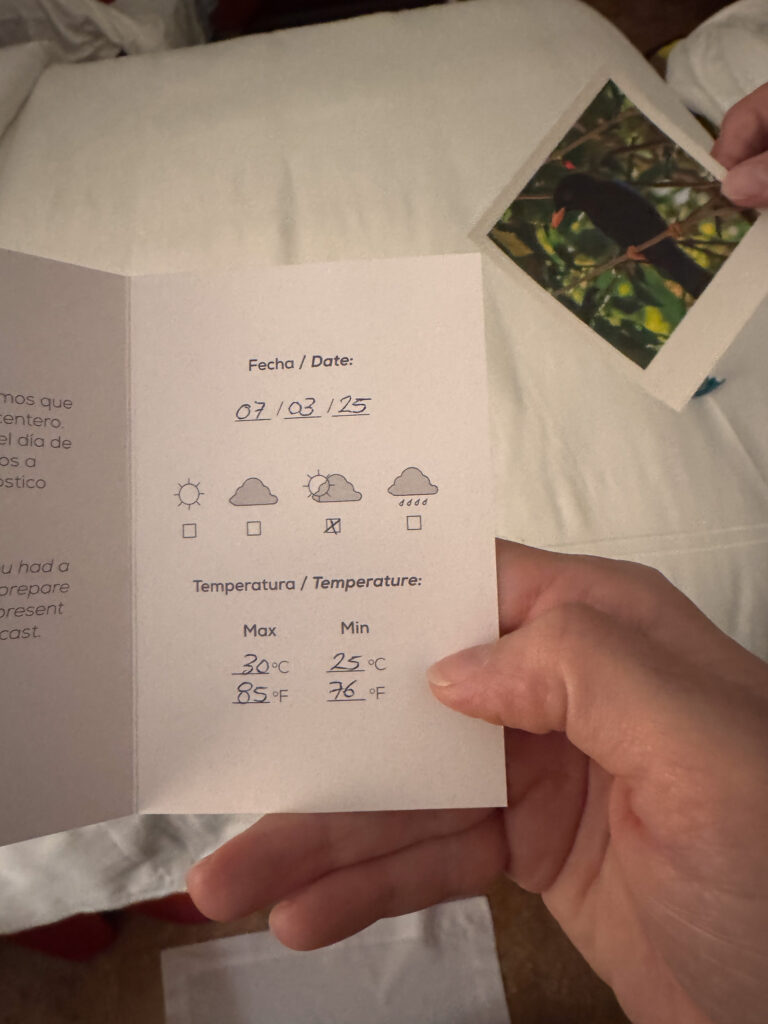
    A hand holding the printed daily weather card, dated 07/03/25, on a white bed
    Turndown leaves a printed card with tomorrow’s forecast — the sort of thing that explains the service scores.

    The counter-argument

    The counter-argument here is not really about the resort. It is about the price. People love the suites, the grounds and the service, and are noticeably cooler about what all of it costs.

    Put sharply: if a hotel charges Four Seasons money, it ought to deliver a Four Seasons experience, and this does not quite. There is a hard number behind the feeling. The resort markets its AAA Five Diamond award hard, but Forbes rates the hotel four stars and the spa five. The spa is the five-star part.

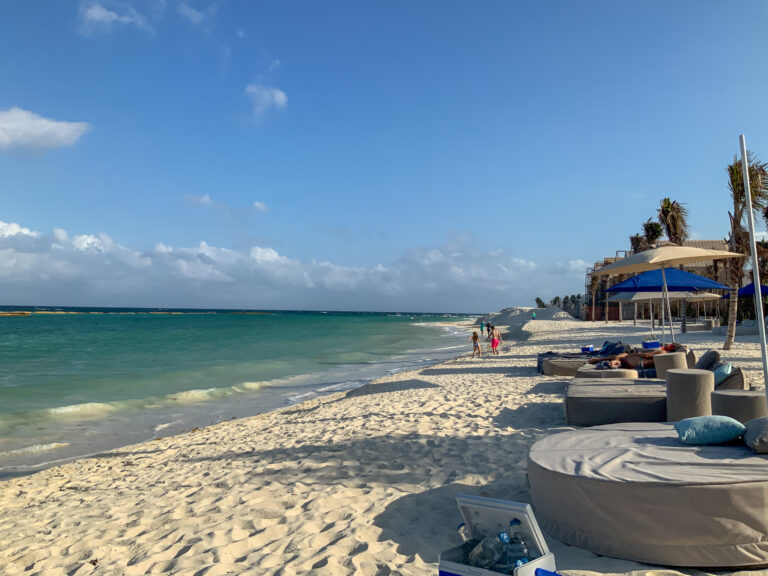
    The beach is the most consistent complaint, and it is really two problems. One is seasonal: the Atlantic sargassum belt peaks in June and July and bottoms out in winter, and the grumbling tracks that almost exactly. The other is structural and does not go away in the clear months. Grand Velas keeps its sand wide with a submerged breakwater of sand-filled geotubes and concrete forms, which flattens the surf and leaves rock underfoot – and the concrete shapes are not much to look at.

    Then the operational stuff, which repeats. The included Michelin-starred dinner can feel like a promise the resort cannot keep. Tables are scarce enough that the resort charges its own guests MXN 850 a head for missing one, which tells you how hard they are to refill. Book it the day the calendar opens or you will not eat there at all. Lunch is buffet or poolside only; there is no sit-down option at a resort charging four figures a night. Loungers go before breakfast and the chair rules are not enforced. And although gratuities are in every rate plan, a tab still lands at the end of every meal reading zero, which is there so that you will tip on top.

    What it costs

    Published figures are close to useless here, because quotes swing wildly depending entirely on whether the number is per person or per room. The resort’s own booking engine is steadier.

    In mid-September the entry Zen Grand Nature View and the entry Ambassador Ocean View come out level with each other, taxes and gratuities in, with Grand Class a step above. Move to February or April 2027 and both rise, but not by much.

    That is the counter-intuitive part, and it contradicts the seasonal tables you will find elsewhere. Outside the holiday weeks the spread between low and high season is only about four to ten per cent. The premium sits almost entirely in Christmas and New Year, when the entry Zen suite jumps and an Ambassador Ocean View over New Year roughly triples, with a seven-night minimum from 27 December.

    The quote carries exactly 21 per cent tax — Mexico’s 16 per cent IVA plus the five per cent Quintana Roo lodging tax — and no American-style resort fee appears anywhere. Over Christmas and New Year the cheap non-refundable plan disappears and only the flexible rate is sold.

    Know before you go

    Book the restaurants before you fly, and Cocina de Autor first – wait, and you are eating at half past nine or not at all. Take the season seriously if the beach is the reason you are going: the cleanest months are November through February, and the people who sell this place will tell you plainly to avoid May to October. Bring repellent, and water shoes if you intend to swim rather than look.

    On the room: take Zen Grand if the spa, the wildlife and the price are what you came for, and accept ten minutes door-to-door to the sea. Take Ambassador if you have children, because both clubs, the big pool and the beach are there. Take Grand Class to step from your suite onto the sand — but not on the promise of a childless section, because the hotel does not make that promise where it counts. Ask for an upper floor away from the lifts, and bring more cash than “gratuities included” suggests.

    Don’t miss

    If you only do five things:

    • Cocina de Autor, booked the day the calendar opens
    • The Water Ceremony at SE Spa, free with any treatment of fifty minutes or more
    • Lobster tacos at the Grand Class pool bar
    • The Melipona bee eco-tour, Wednesday mornings, reservation required
    • Sunrise over the reef from the beach lawn

    The Grand Velas gallery

    Every photo on this site is my own, shot on the stay. Slide through →
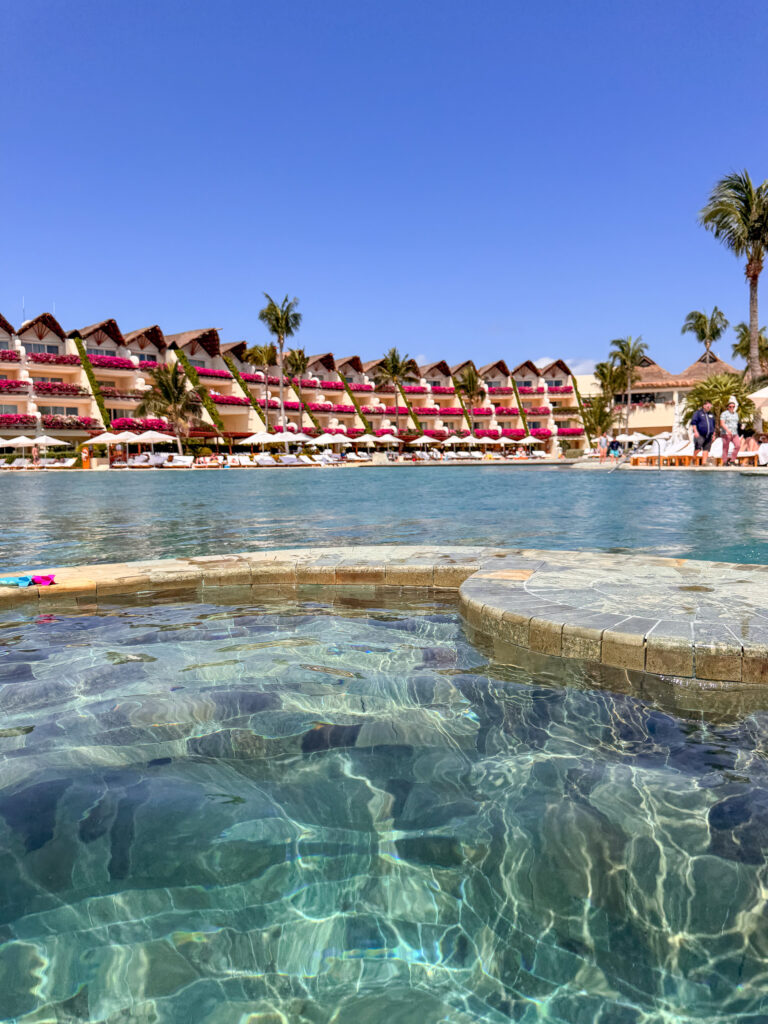
    Wide panorama of lawn, coconut palms and a sand circle framed between two curved white wallsCurved white wall reflected in a shallow turquoise arrival poolEmerald mosaic-tiled pool reflecting royal palms, with loungers along the far edgeThatched open walkway lit warm orange, running on rough-hewn posts through palms and jungleCircular stone-walled cenote of dark still water sunk among ferns and jungle plantingAn orange and black oriole perched among palm fronds against a clear blue skyRumpled white bed and marble floor facing glass doors open to palms, lawn and seaWhite parasols and teak loungers on a stone terrace running to an infinity pool above the seaGrilled beef with charred pear, asparagus and cherry tomatoes between two orange sauce pools
  • Banyan Tree Mayakoba: Beachfront or Jungle?

    Canals running between the villa buildings at Banyan Tree Mayakoba

    MAYAKOBA, MEXICO · ROOM GUIDE · 10 MIN READ

    Banyan Tree Mayakoba: Beachfront or Jungle?

    Every villa here has its own pool. The only real decision is whether you want to wake up to the Caribbean or to the mangrove, and the pricing does not point the way you would expect.

    By J.C. Mercer

    Know before you go

    • Where Mayakoba, 25 minutes north of Playa del Carmen, about 45 from Cancún
    • The property all-villa, every villa with a private pool, inside a 595-acre four-resort complex
    • The choice beachfront suites on the sand, or lagoon and jungle villas in the mangrove
    • Rates published by the resort; rooftop villas sit above beachfront suites
    • Getting around bicycles come with every villa, golf carts on call

    Every stay on this site is paid for in full and booked the way any other guest would book it.

    Mayakoba means village over the water, and the name does most of the explaining. Four resorts share a 595-acre stretch of Riviera Maya coast threaded with man-made canals cut through mangrove, and the whole complex is built around water rather than beside it. Fairmont opened here first, in 2006, but Banyan Tree is the one that leaned hardest into the setting.

    Every accommodation is a villa. Every villa has a private pool. That flattens most of the usual decisions and leaves one that actually matters: sand or jungle.

    I slept here

    Banyan Tree Mayakoba

    • Nights 4
    • Stayed March 2026
    • Room booked Lagoon Deluxe Pool Villa
    • How it was booked Amex Fine Hotels + Resorts, public rate
    • Rate band $$$$Check current rates

    The two sides

    Banyan Tree’s footprint splits cleanly. A relatively small number of suites and villas sit directly on the beach. The much larger share sits inland along the lagoon system, tucked into mangrove and jungle, connected by paths you ride rather than walk.

    They are not lesser and greater versions of the same room. They are different holidays that happen to share a spa.

    The beachfront side

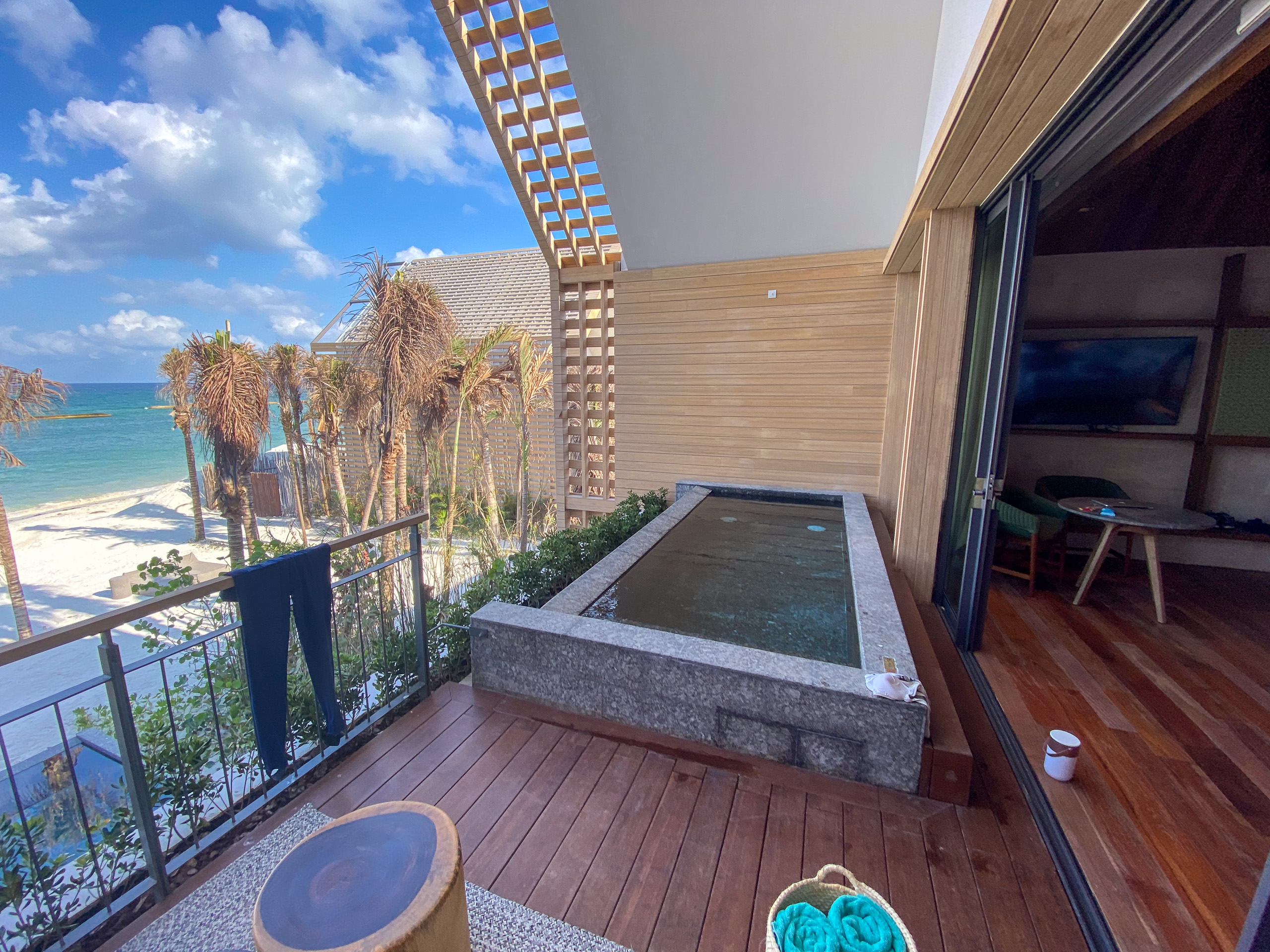
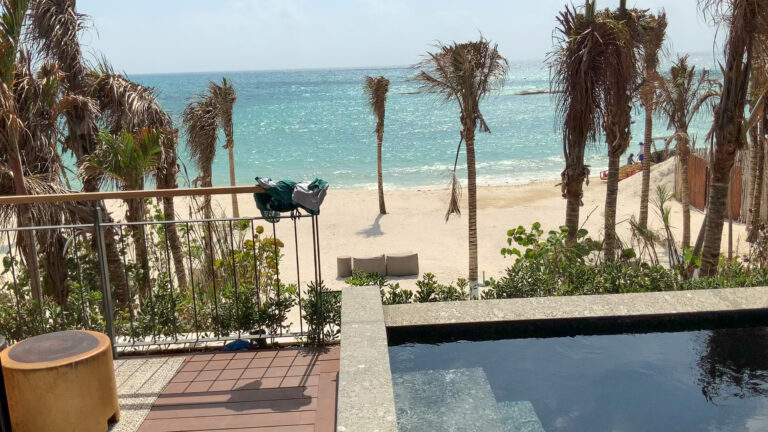
    Bed, wood floors and a plunge pool looking out to the Caribbean in a beachfront suite
    The beachfront suites put a wall of glass between the bed and the water. The blinds are remote-controlled, which matters more than it sounds.

    The Beachfront Terrace Pool Suites put you on the sand with a wall of glass between your bed and the Caribbean. Floor-to-ceiling windows take up an entire wall, the private deck holds a plunge pool, and the bed is positioned so the sea is the first thing you see. Remote-controlled blinds handle the mornings you would rather not.

    Above that sit the Beachfront Sunrise Pool Suites and, at the top, five Harmony Three-Bedroom Beachfront Villas published at 5,500 square feet each, with a heated pool, a jet pool, a full kitchen, and a private pavilion a few steps from the water.

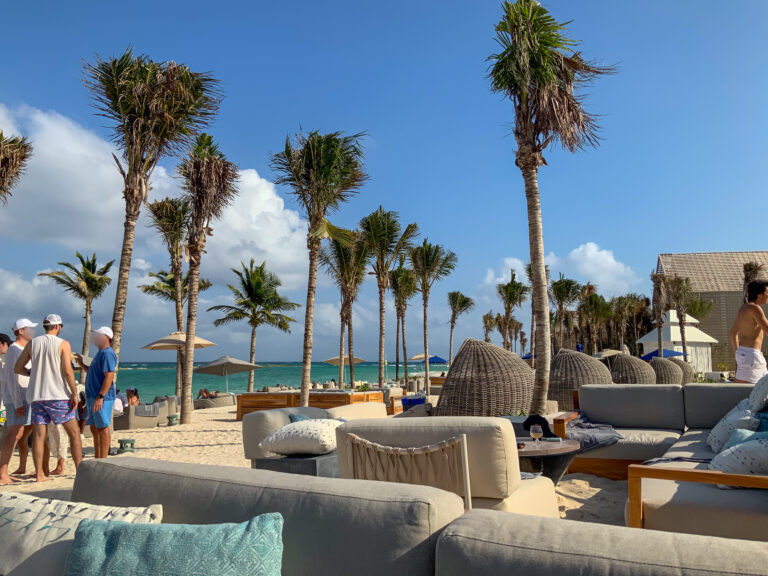
    Cabanas and loungers around the beachfront pool under palms
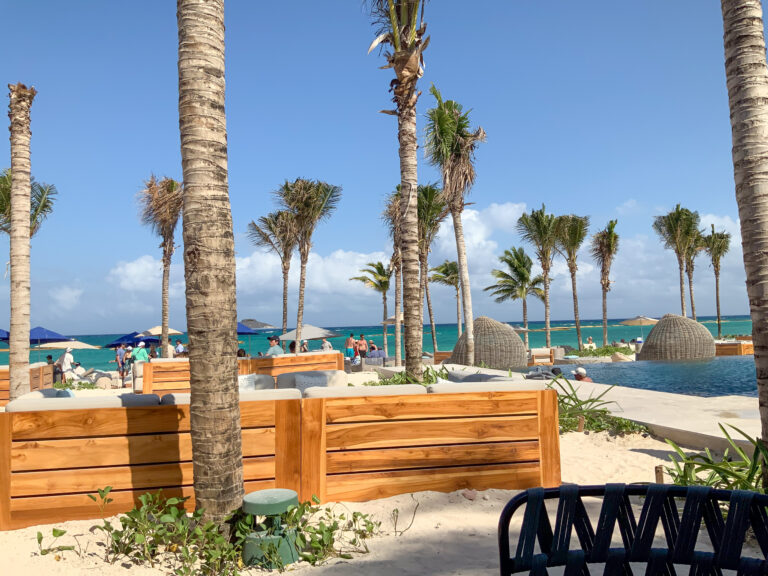
    The Sands Beach Club and the beachfront pool are a short walk from the beachfront suites and a bike ride from everywhere else.

    What you gain is immediacy. Coffee on the sand in your dressing gown, the Sands Beach Club and the beachfront pool within a short walk, no logistics between you and the water. If you are traveling with small children, this is the side to take, and it is not close.

    What you give up is the thing the property is actually famous for.

    The jungle and lagoon side

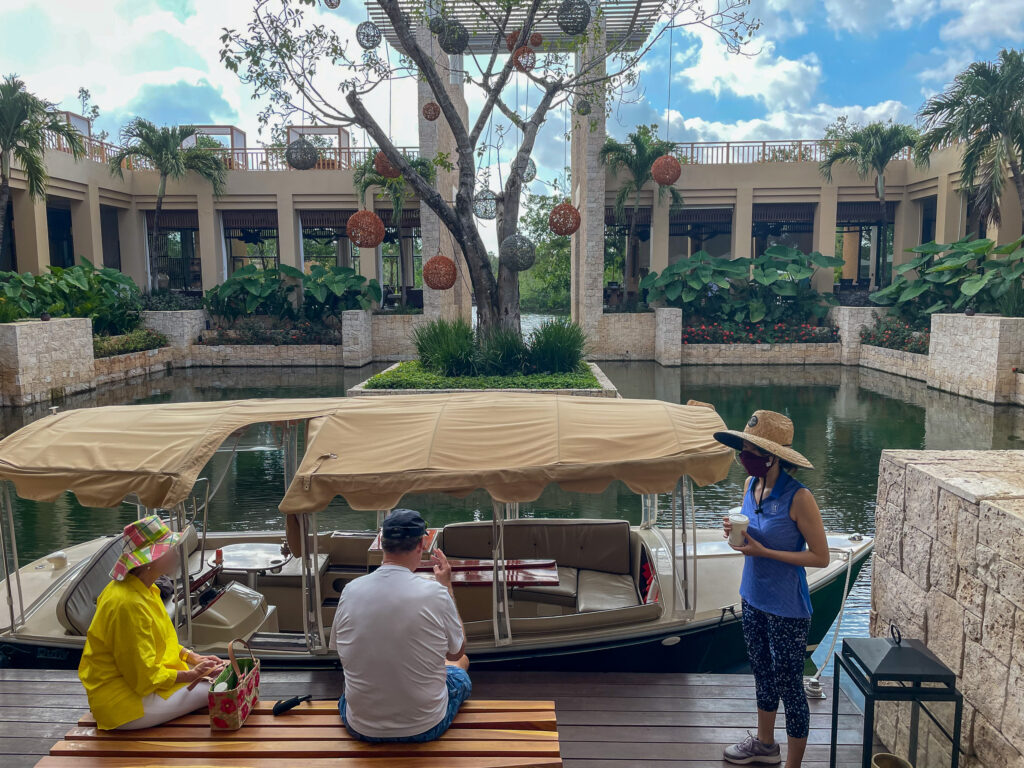
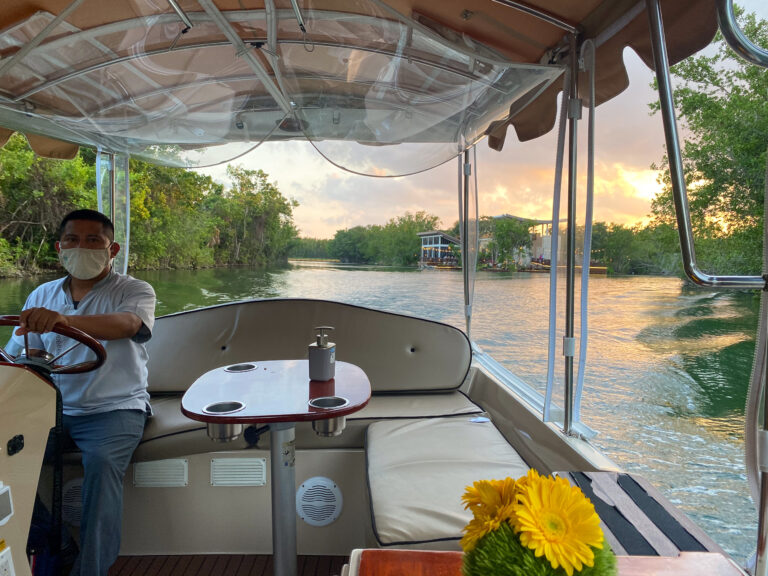
    A small electric boat on the canal beside the villas, lanterns hanging in the trees
    The canals are the transport and the attraction. The sunrise boat tour is the one to book.

    Inland, the villas sit in the mangrove with the lagoon at the door. The Deluxe Pool Villas are the volume category and the most common room on the property. Above them are versions with separate living rooms, Spa Pool Villas with their own massage porch, and the newest category, the Lagoon and Sunset Rooftop Pool Villas, which add a private rooftop with a heated infinity pool and a full seating deck.

    The setting is the point. Mayakoba holds more than 100 species of birds, plus turtles, coatis, and crocodiles that the resort tracks and relocates when they get large. You can kayak the canals past cenote entrances that open into the underground river system. My guide pointed out a crocodile on the way. This is a nature preserve that happens to have a hotel in it, and from a lagoon villa you are inside it rather than looking at it.

    The trade is distance. From an inland villa you bike, walk, or call a golf cart to reach the beach, which sounds trivial and is trivial on day one. By day four, with a toddler, wet towels, and a schedule, it is not.

    Side by side

    BeachfrontJungle and lagoon
    Wake up toCaribbean, directMangrove, birds, water
    Private poolYes, plunge on the deckYes, some with rooftop infinity
    Beach accessImmediateBike or buggy, a few minutes
    WildlifeMinimalConstant
    InsectsSea breeze helpsRepellent in warm months
    Sargassum exposureYou see it from bedYou choose when to see it
    Entry rateThe lower of the twoRooftop villas sit above it
    Best forFamilies, short stays, first visitsCouples, longer stays, repeat guests

    The pricing inversion

    The obvious assumption is that beachfront costs more. Here it does not. The newest lagoon category, the rooftop pool villas, opened at a starting rate meaningfully above the beachfront suites.

    That tells you what the property thinks it is selling. The beach is a Riviera Maya commodity, available at a hundred resorts along this coast. The mangrove is not. Banyan Tree has priced accordingly, and the market has agreed with them.

    It also means the frugal choice and the sea view are the same choice, which is unusual enough to be worth knowing before you book.

    What both sides share

    The spa is the reason the Banyan Tree name carries weight in Asia, and the Mayakoba outpost holds up. Treatment cabins sit over the water, large enough that I mistook the first one for a guest villa. Therapists train at the Banyan Tree academies in Thailand and Indonesia. The hydrotherapy pools, steam rooms, and treatment range are the strongest single amenity on the property.

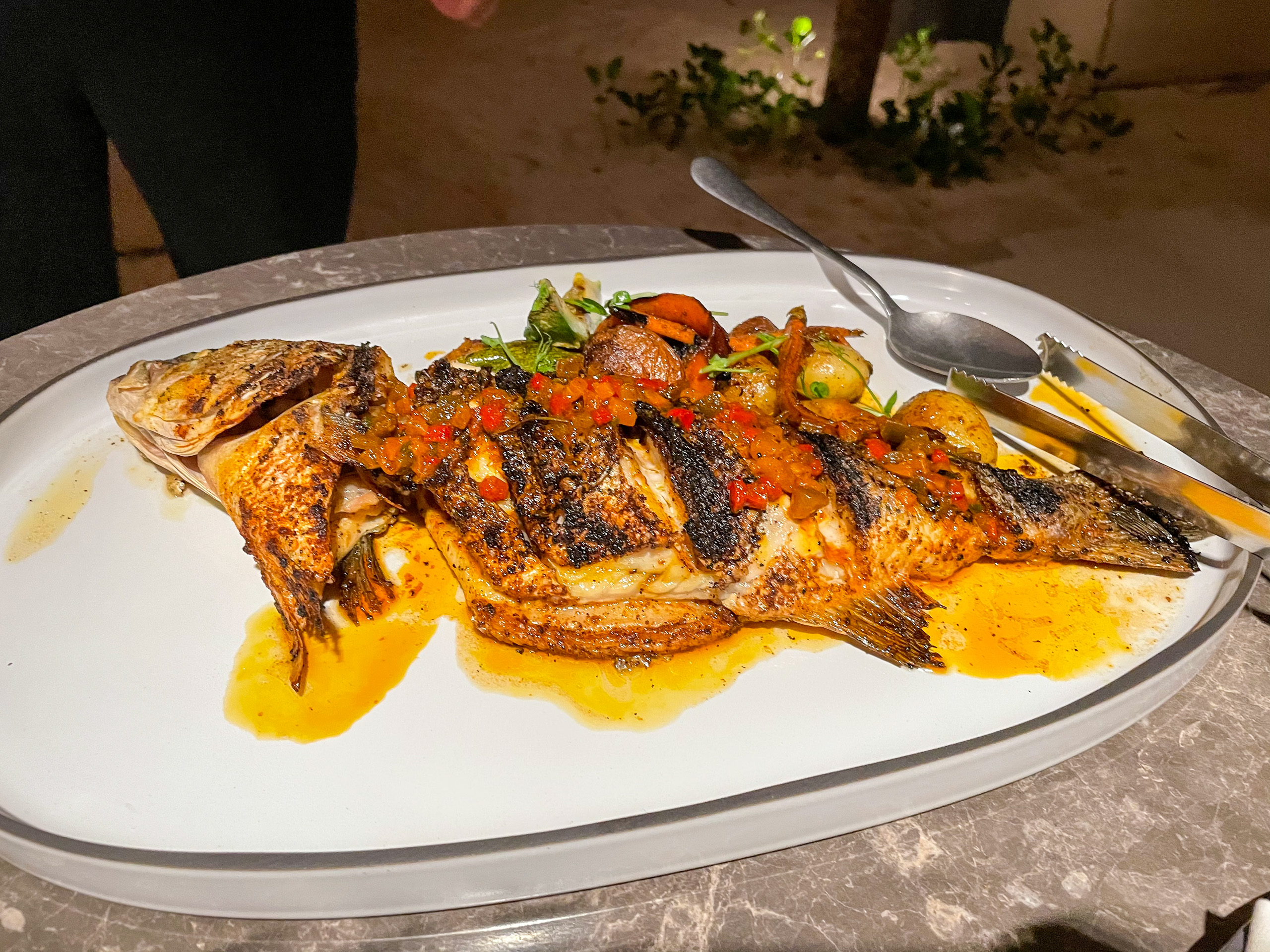
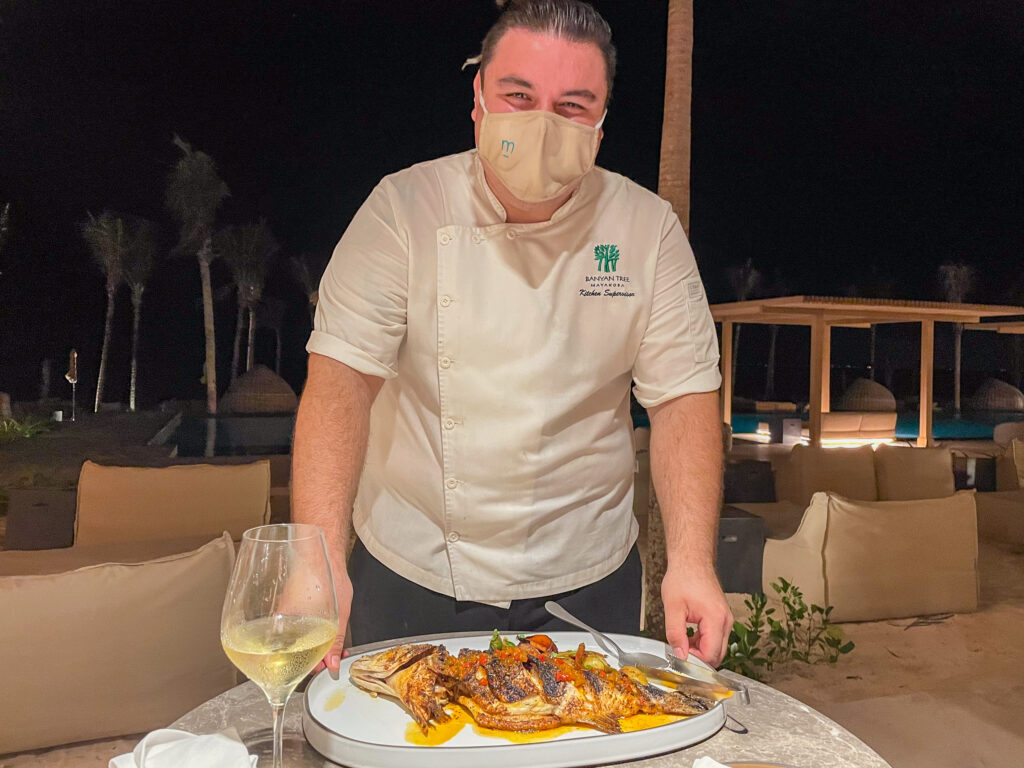
    A chef presenting a whole grilled fish on a platter beside the lit pool after dark
    HAAB is cooked over fire in the jungle and served with a Mayan host talking you through it. Book it before you arrive.

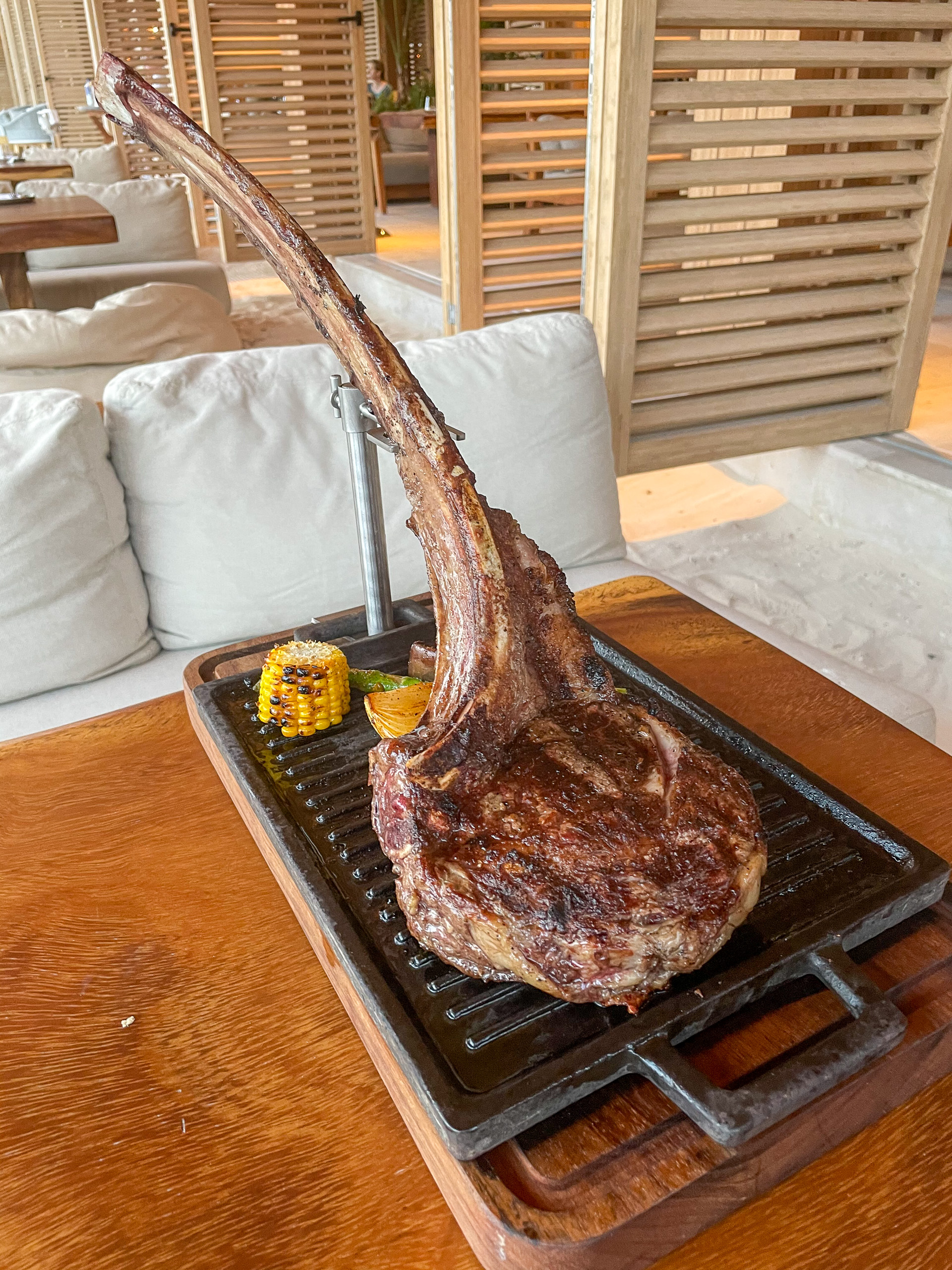
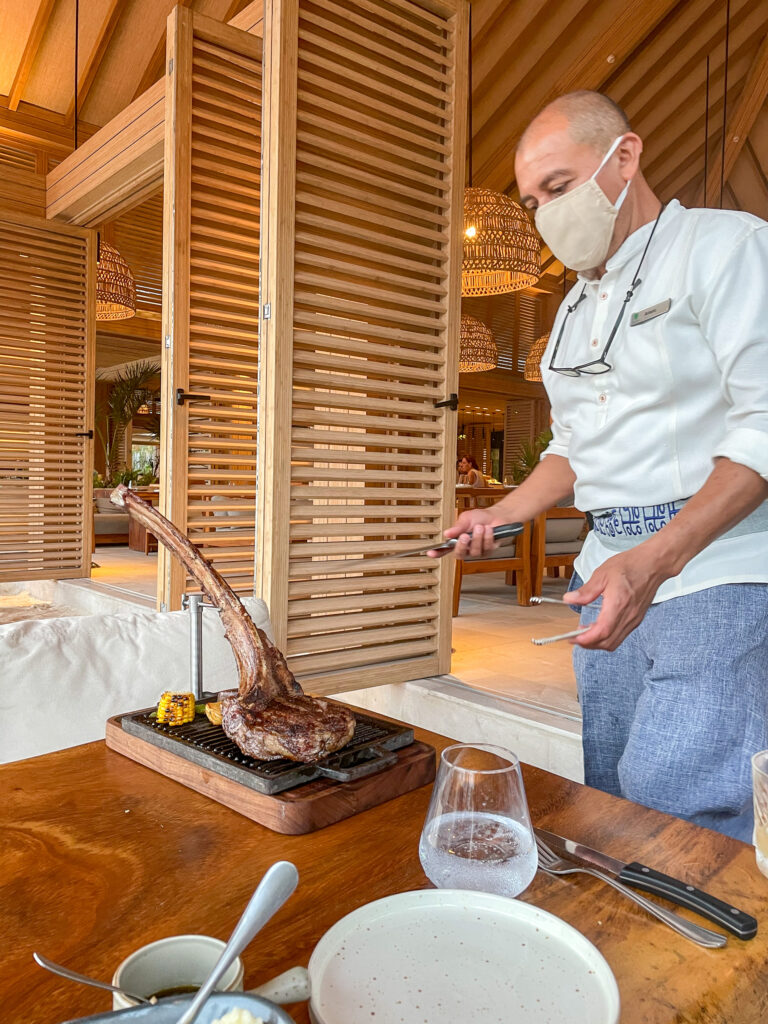
    Dining runs deep. Saffron is the signature, Thai food served on decks suspended over the lagoon, and it stands with the best Thai kitchens I have eaten in on this side of the Atlantic. Oriente handles all-day dining and a breakfast buffet worth getting up for. Cello covers Italian, Sands Beach Club sits on the beachfront pool, Tomahawk does open-fire Latin grill, and there is a burger shop and a kosher restaurant besides.

    The one to book first is HAAB, an open-air Mayan dinner cooked over fire in the jungle, served with cultural explanation from a Mayan host and a performance by dancers in traditional body paint. It is the meal I still describe to people months later.

    Every villa comes with bicycles, and the flat terrain makes them the sensible way to move. El Camaleón, the golf course the PGA Tour visits each year for the World Wide Technology Championship, runs through three ecosystems on the same property. Room keys open the restaurants at Rosewood, Fairmont, and Andaz next door, which effectively triples your dining options. El Pueblito, a small village inside the complex, has shops, a chapel, and its own cenote.

    The sargassum question

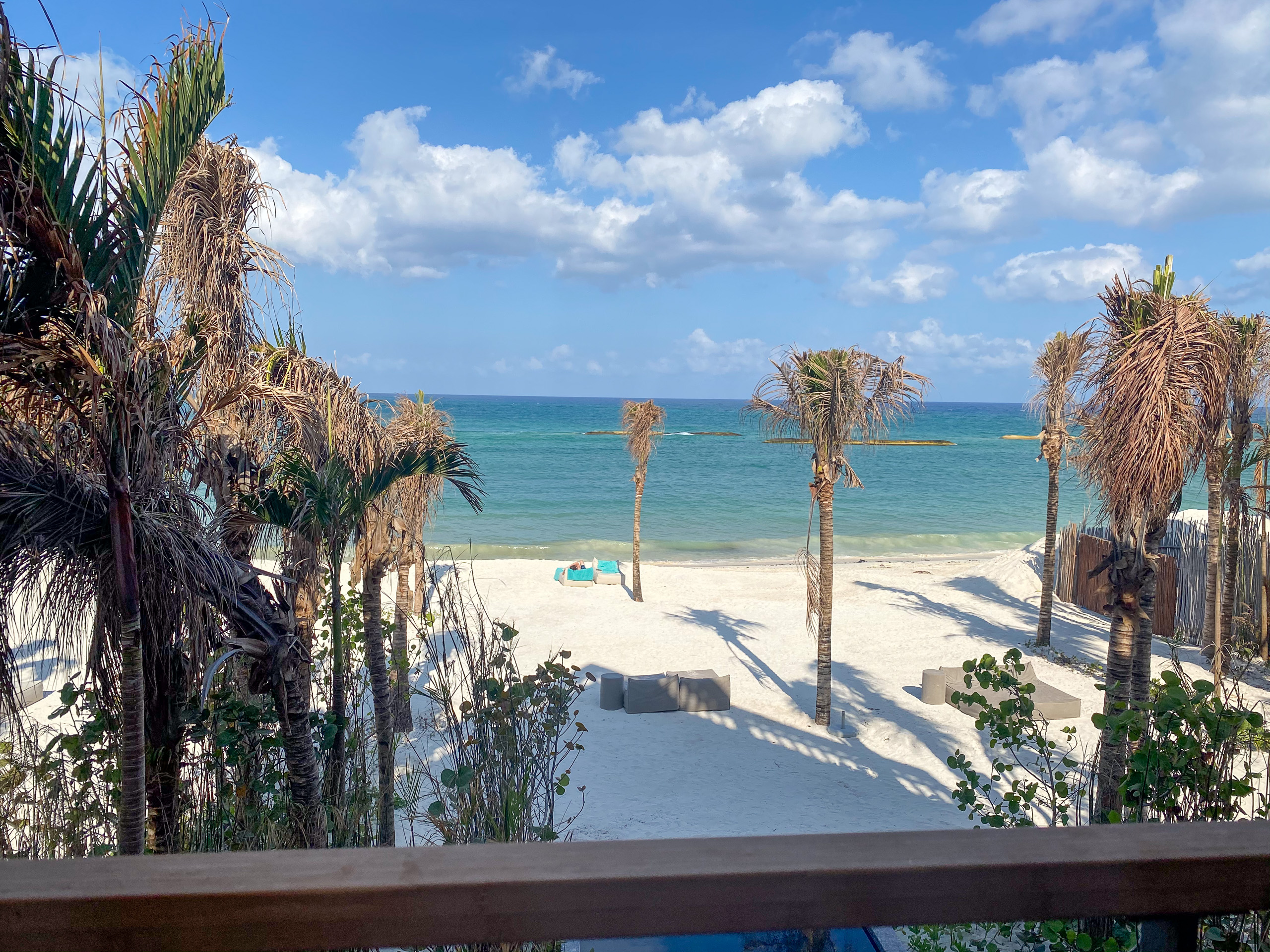
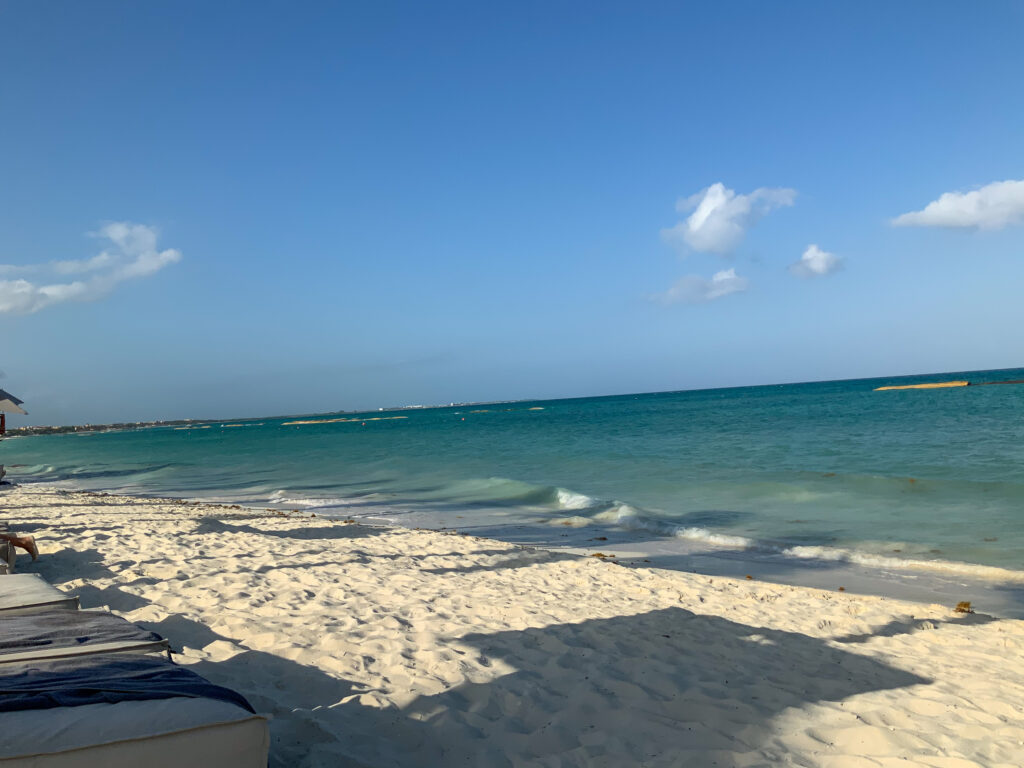
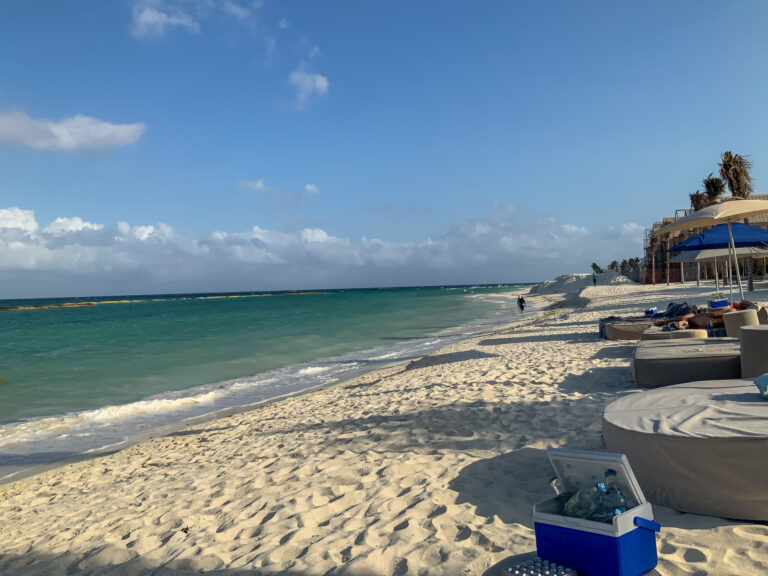
    Clear turquoise water and clean white sand on the beach at Mayakoba
    A clear week in March. Between May and October the same view is a lottery, and a beachfront villa gives you no way to look elsewhere.

    Nobody’s marketing mentions this and every honest review does. Sargassum seaweed washes onto Caribbean-facing beaches along this coast seasonally, generally heaviest from late spring through early autumn, and Mayakoba is not exempt. I went in mid-March and found the beach clear, which is luck rather than planning.

    The resort rakes and manages it, and some weeks are fine. But a beachfront villa in August is a room with a view of whatever the tide brought, and there is no version of that stay where you can look somewhere else. A lagoon villa gives you a mangrove view that is never affected, and a beach you visit on the days it looks good.

    If you are traveling between May and October, that argument alone should probably decide it.

    The counter-argument

    The real drawback of the jungle setting shows up in the warmer months. Outdoor dining needs serious insect repellent, and the decks at Saffron, suspended over the lagoon, are the worst of it. A nature preserve is a nature preserve at dusk.

    Cost is the other thing to weigh. Food and drink are priced at full resort levels, and the bill at the end of a week is steep even by the standards of this coast. The counterpoint is that the quality tracks the price, which is not always true in this region.

    And the property is large. The villa density that gives you privacy also means the gym, the lobby, the spa, and the beach are all a ride from each other. If you want everything within thirty steps, look at a smaller property.

    What it costs

    Lagoon rooftop pool villas sit above beachfront suites, and the larger multi-bedroom villas well above both. Rates move sharply by season, with the December to April high season commanding the most and the summer months discounting against the heat and the seaweed.

    Meals are extra and not modest. Budget for dining as a real line item rather than a rounding error, and use the cross-resort access at Rosewood, Fairmont, and Andaz to spread it around.

    Know before you go

    Book a lagoon villa if you are coming in summer, a beachfront suite if you are coming with small children in winter, and the rooftop category only if the private deck is genuinely what you want, because it is the most expensive room on the property. Pack repellent regardless of which side you land on. Reserve HAAB and Saffron before arrival, since both fill. Take the bikes seriously as your main transport rather than a novelty. And leave one evening free for a meal at a neighboring resort, because the room key that opens Rosewood’s restaurants is one of the best things about staying anywhere inside Mayakoba.

    The beach is a Riviera Maya commodity. The mangrove is not.

    Don’t miss

    If you only do five things:

    • Saffron on the deck over the lagoon
    • HAAB, the Mayan dinner in the jungle
    • An overwater treatment at the spa
    • The sunrise eco boat tour of the canals
    • Dinner at Rosewood, on your room key

    The Banyan Tree gallery

    Every photo on this site is my own, shot on the stay. Slide through →
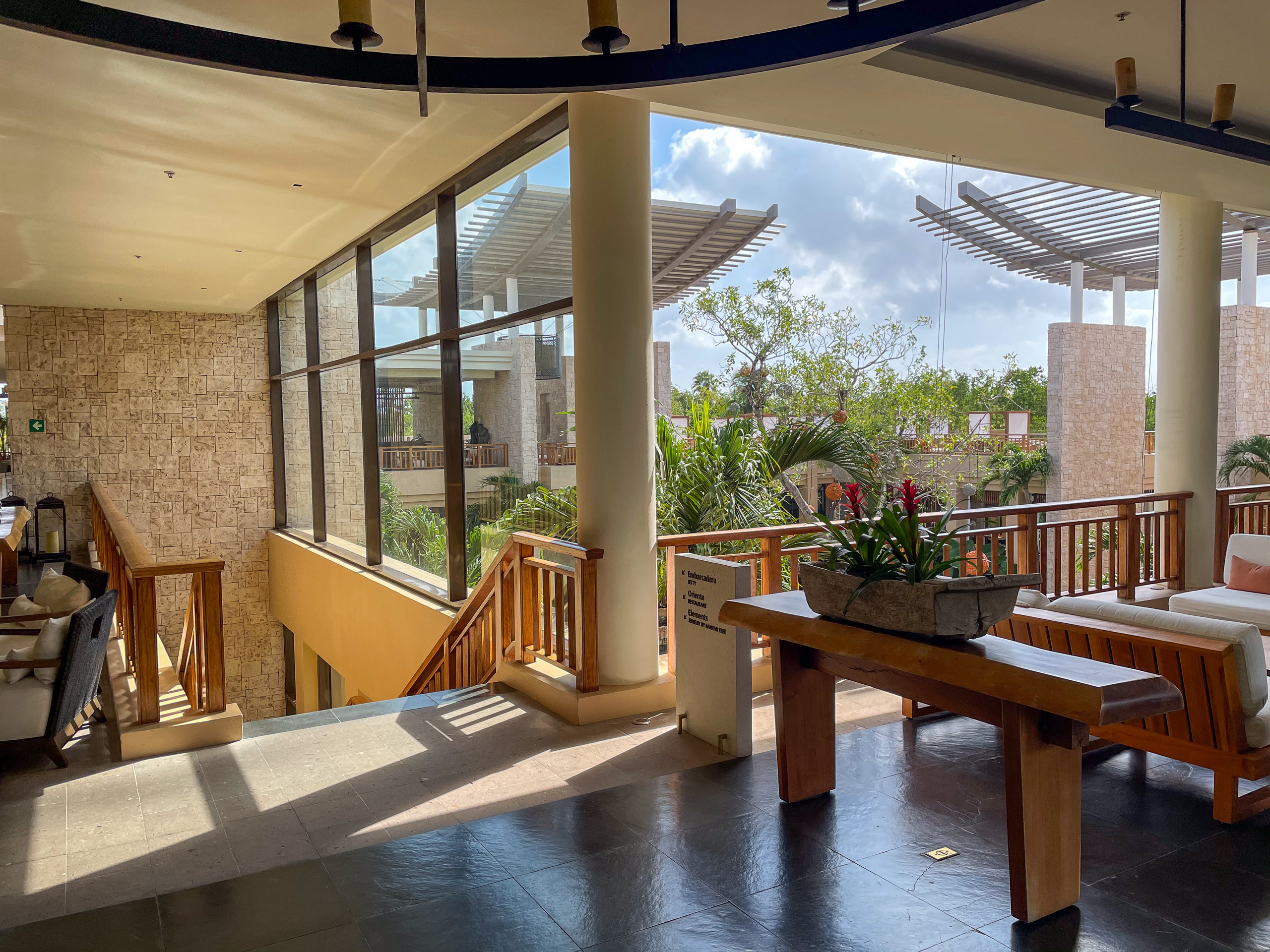
    Canals running between the villa buildings at Banyan Tree MayakobaBed and plunge pool looking out to the Caribbean in a beachfront suiteA villa terrace with a private plunge pool above the beachCabanas around the beachfront poolClear water and clean sand on the beach at MayakobaThe beachfront pool under palmsA tomahawk steak from the open-fire grillWhole fish from the kitchenThe open-air lobby lounge, timber sofas and a stone planter looking out to the pergolas and gardens