MADRID, SPAIN · RESTAURANT · 9 MIN READ
Paco Roncero Restaurante: Two Michelin Stars and the Best Roof in Madrid
Three tasting menus, no à la carte, and a terrace on the roof of a private club that is doing more of the work than the kitchen is.
By J.C. Mercer
- Covers Two, dinner
- Dined August 2025
- Menu One of the two long tasting menus, with the Spanish pairing chosen at the table
- Drinks A run of Spanish wines, a different bottle brought out for each stage of the menu
Every meal on this site is booked the way any other guest would book it.
The restaurant is on the top floor of the Real Casino de Madrid, and you reach it through the club’s own doorway on Calle de Alcalá rather than anything resembling a shopfront. It has been up there since 1990, first as La Terraza del Casino and, since 2019, under the chef’s own name. That is all that changed. The address, the room and the terrace are the same ones that took a first Michelin star in 2002 and a second in 2010.
What it does now is narrow. Three tasting menus, no à la carte, two to two and a half hours, and a booking band an hour wide at each service. The premise is Madrid itself – the city as raw material, its bars and its neighbourhoods read back to you as courses. Paco Roncero has had this kitchen since the autumn of 2000, when he took it on with Ferran Adrià advising, and the cooking still sits squarely in that lineage: long, front-loaded, technical, most of it small enough to eat with your fingers.
Very little of the argument about this restaurant is about the room. It is about what arrives in it.
The best table in Madrid is outdoors
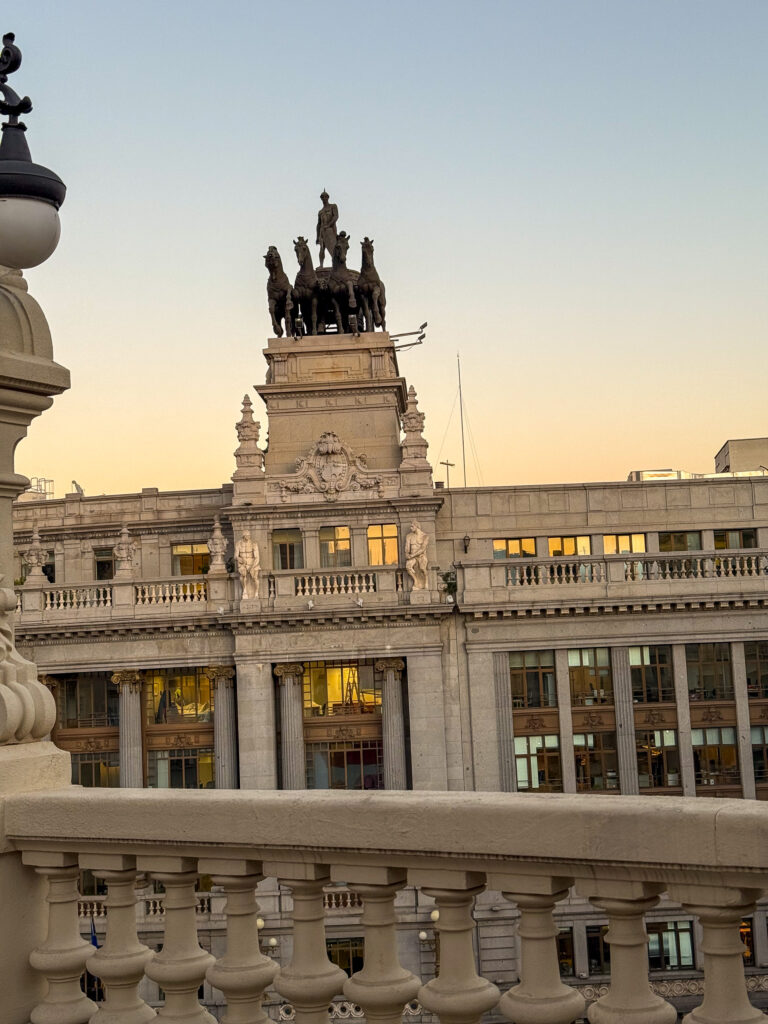
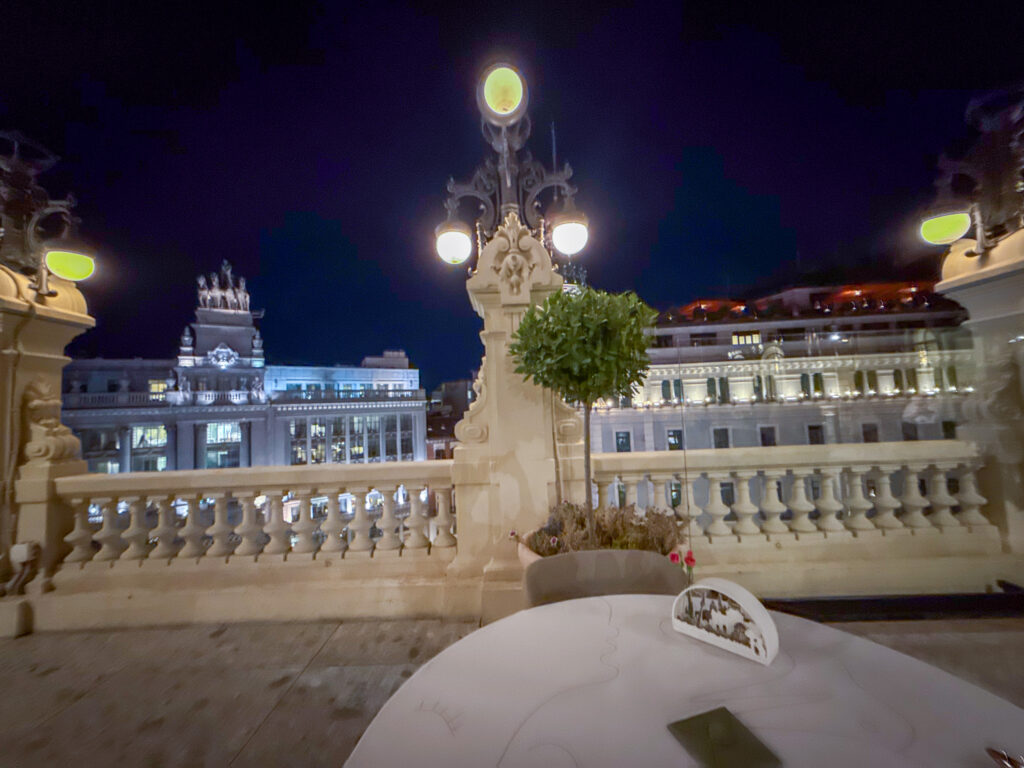
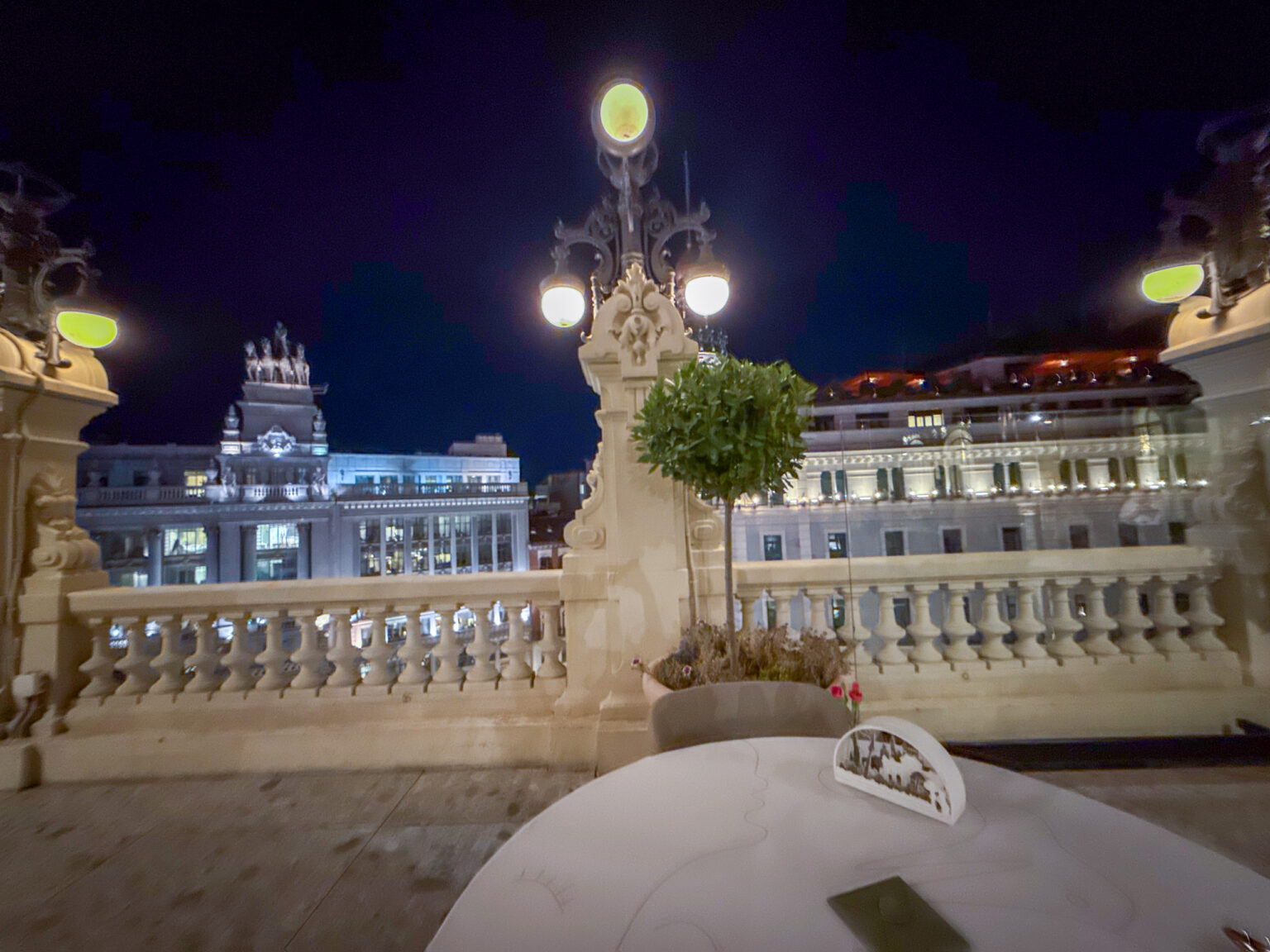
The inside of this restaurant is Jaime Hayon’s, and it is glamorous in the way a designer room is glamorous. The terrace is Julio Guixeres’s, and it is better. It is a proper roof: a monumental stone balustrade, wrought lamps the size of small trees, clipped bays in terracotta pots, and the top floors of Calle de Alcalá standing at eye level all around, one of them carrying a bronze four-horse chariot on its roofline. In August the meal starts in daylight and ends under the lamps. That is not a small thing to buy with a dinner reservation.
The detailing out there is exact. The linen is printed with loose line-drawn faces, an eye here, a mouth there, and the same drawings turn up on the lids of the serving boxes. The water glasses are heavy blue textured tumblers. A die-cut card of the Madrid skyline stands on the table like a menu holder. Small plates are finished at a marble-topped trolley wheeled out beside you, and at least one course goes over a charcoal grill the size of a shoebox at the table edge.
Ask for the terrace when you book. It is the difference between a good dinner and a night you will describe to people.
Three menus, and nothing else
There is no à la carte and there never has been in this format. You choose a length. At the time of writing the long one is twenty-five courses, the middle one twenty-three and the short one fifteen, and the names change more often than the shape does – the menu has been rebuilt and renamed several times in the last three years.
| Menu | Courses | What that buys |
|---|---|---|
| Gran Madrid | 25 | The longest menu. Food only; the pairing is extra, at any of three tiers |
| Madrid, Madrid, Madrid | 23 | Food only. Same three pairings available |
| Esencia, Thursday and Friday lunch | 15 | Food only. The pairings are not offered on this menu |
| Esencia, evenings and Saturdays | 15 | Wine pairing included, and compulsory – it is not sold without it |
That last row is the one people get wrong. Esencia in the evening is not the lunch menu with wine added; it is the same fifteen courses sold only as a package, and the wine cannot be declined. Everywhere else on the calendar, the ninety euros of wine comes with it whether you want it or not. The easiest honest way into this restaurant is a Thursday or Friday lunchtime.
A card for each chapter
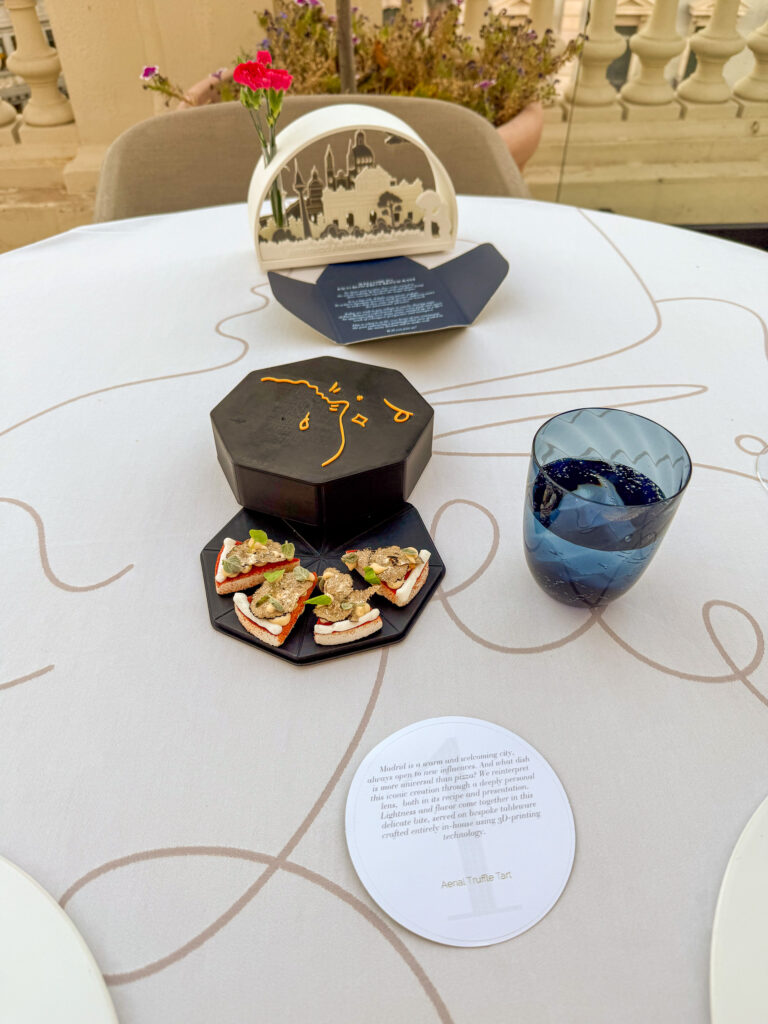
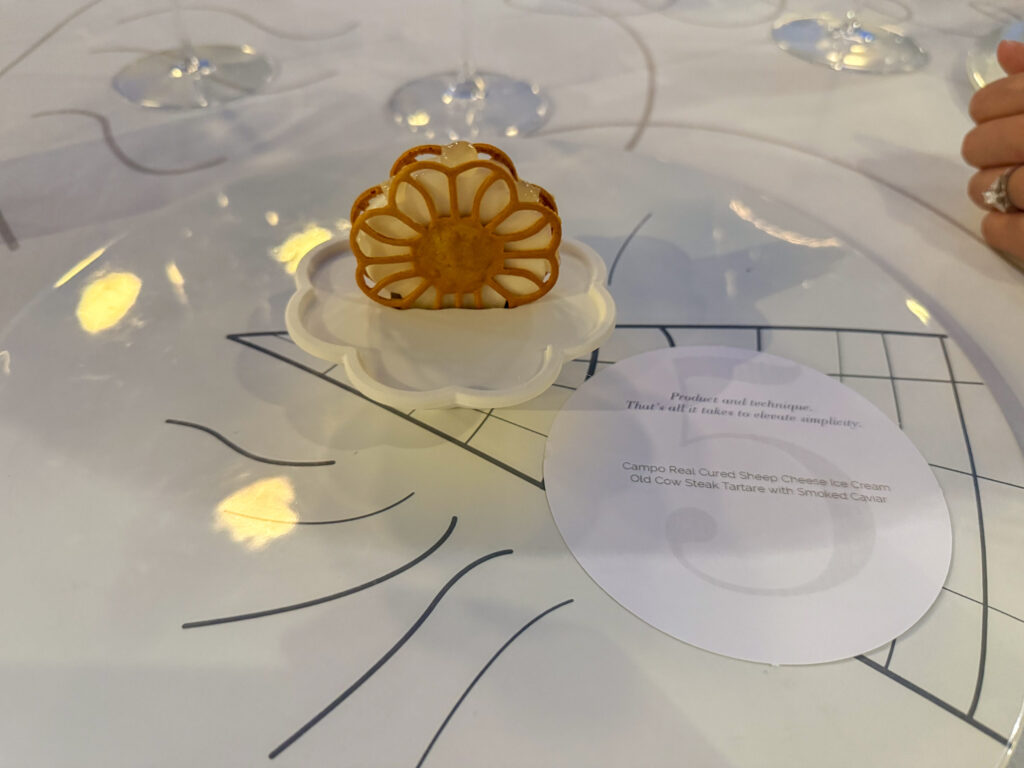
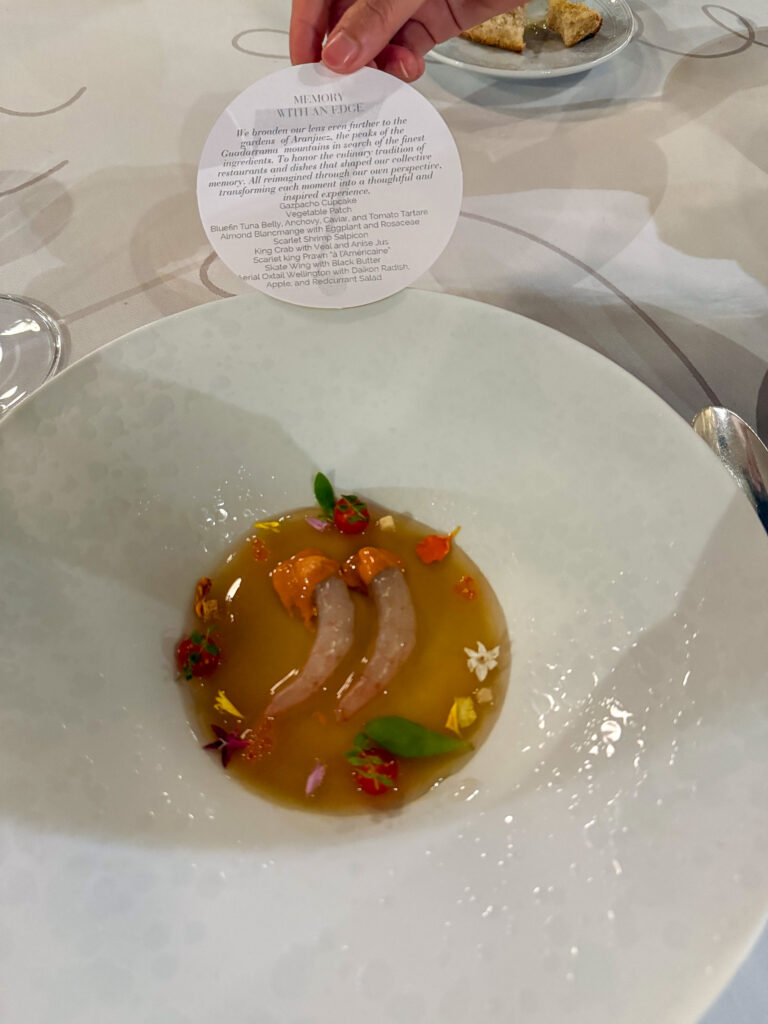
The menu is not handed over as a sheet of paper. It arrives in instalments, as numbered discs of card, one per chapter, printed in English and left on the cloth beside the dish they belong to. Each carries a couple of lines of argument and then the dishes that follow.
They are worth reading, because they say out loud what the kitchen thinks it is doing. The first one, under the truffle tart, asks what dish is more universal than pizza, answers its own question, and finishes: “served on bespoke tableware crafted entirely in-house using 3D-printing technology.” The next chapters are headed A Tribute to Madrid and its Bars, Product and Technique, Memory with an Edge. Those are still the chapter headings on the menu today, which tells you the structure of this meal has outlived at least two of its names.
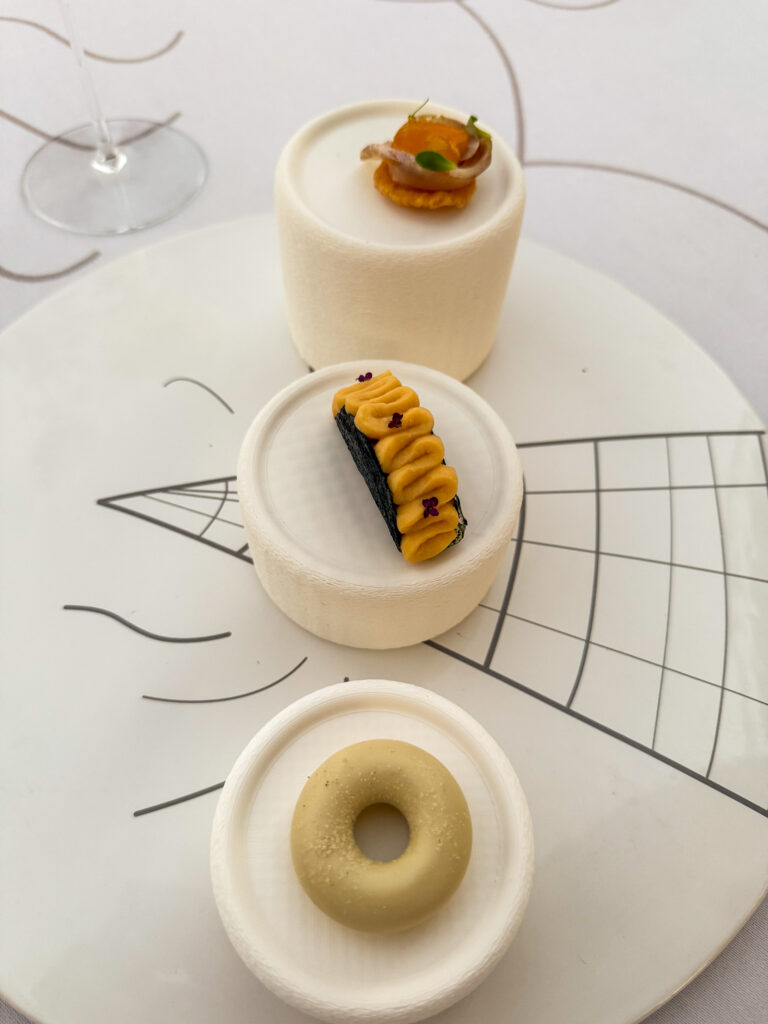
The 3D printing is not a press line, either. It is on the table all evening: octagonal stands, ribbed pedestals, plates cut to hold exactly one thing. It was there in August 2025, well before anybody started describing it as a new idea.
What the kitchen is actually doing
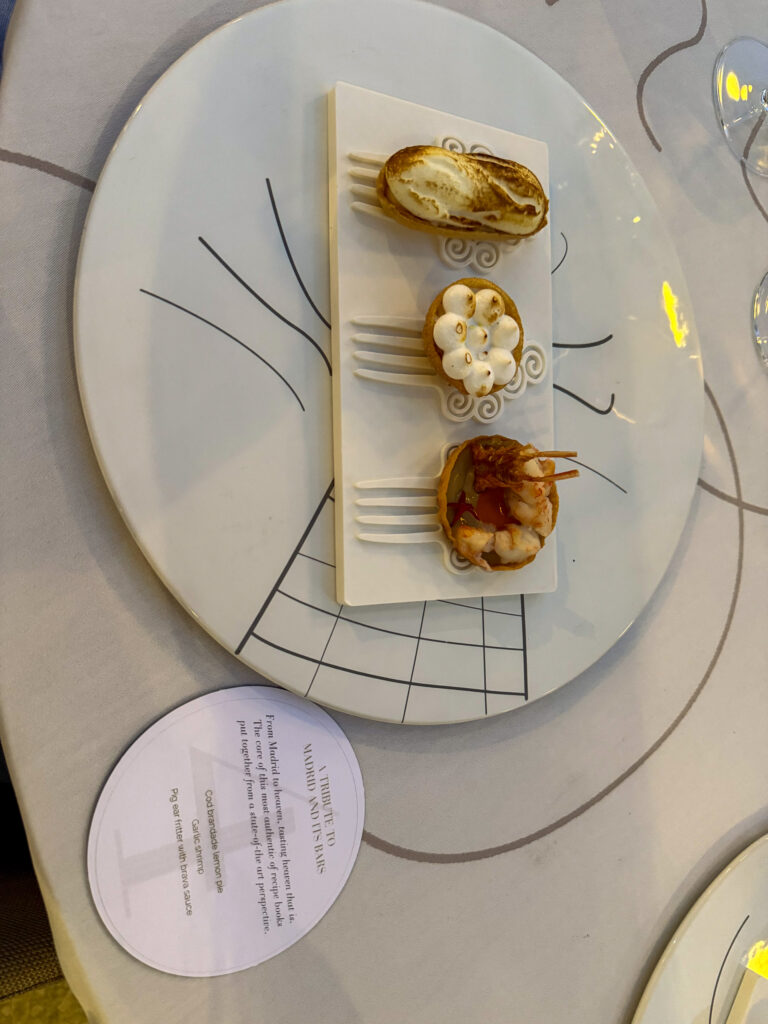
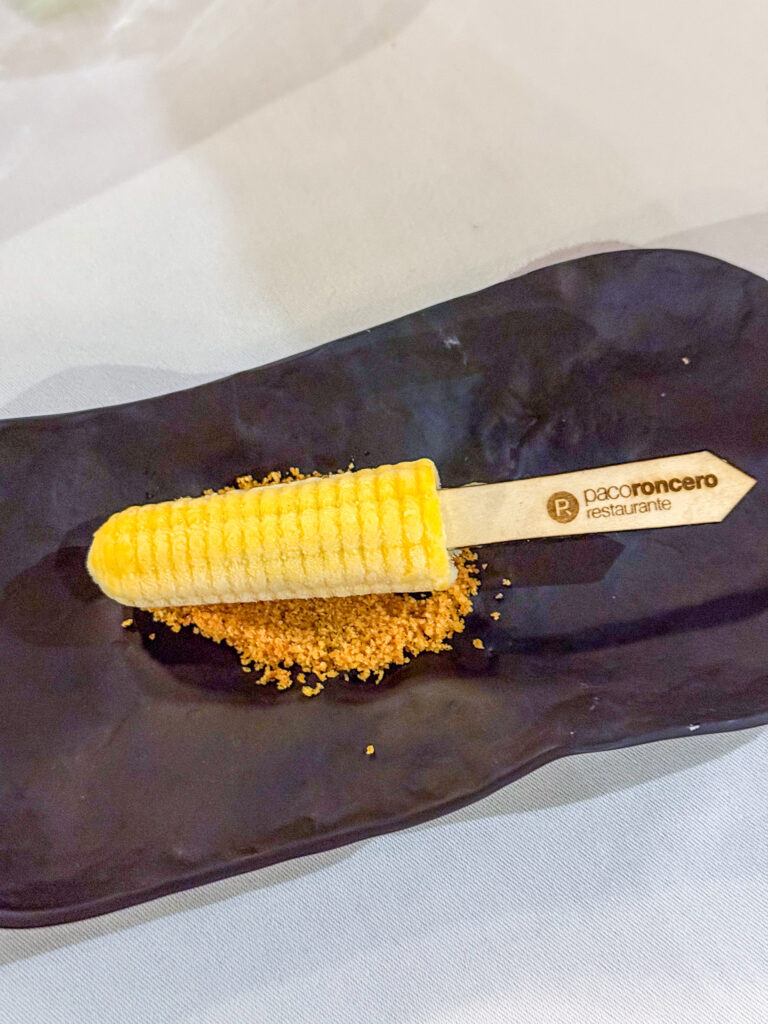
The meal is heavily front-loaded. Something like a dozen small bites go past before the sequence proper starts, and most of them are built for the hand rather than the fork. Two openers have been fixtures for years: the aerated truffle tart, which uses a meringue instead of a base, and an olive presented on a little tree, a direct descendant of the spherified olive Adrià put on the map.
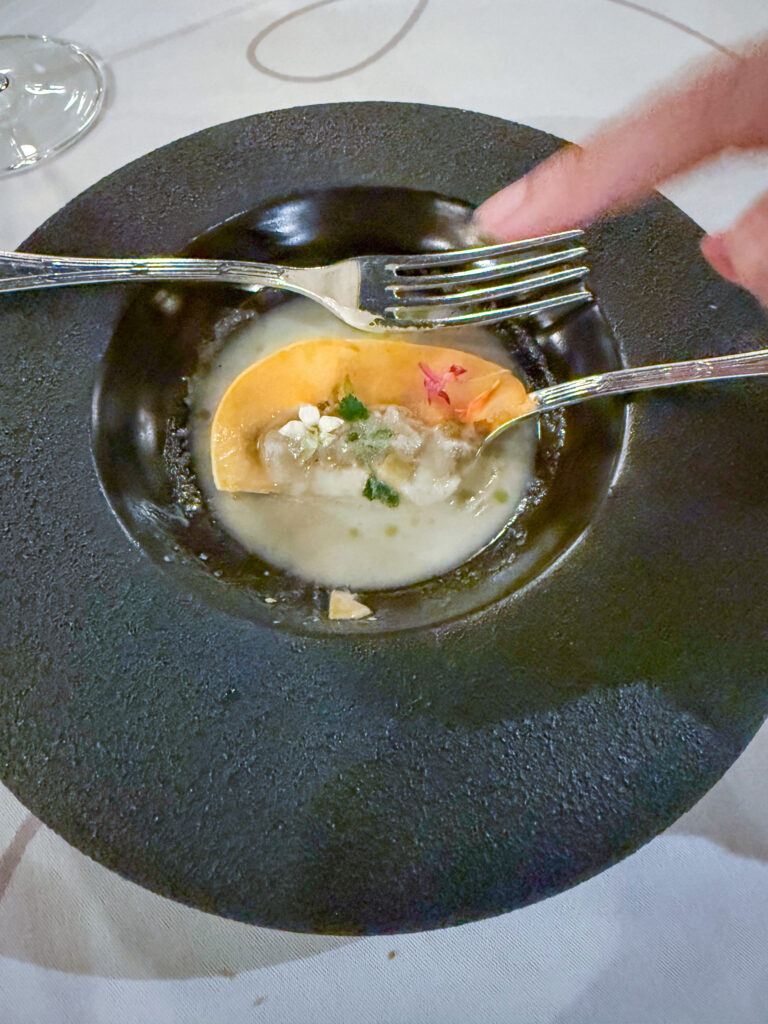
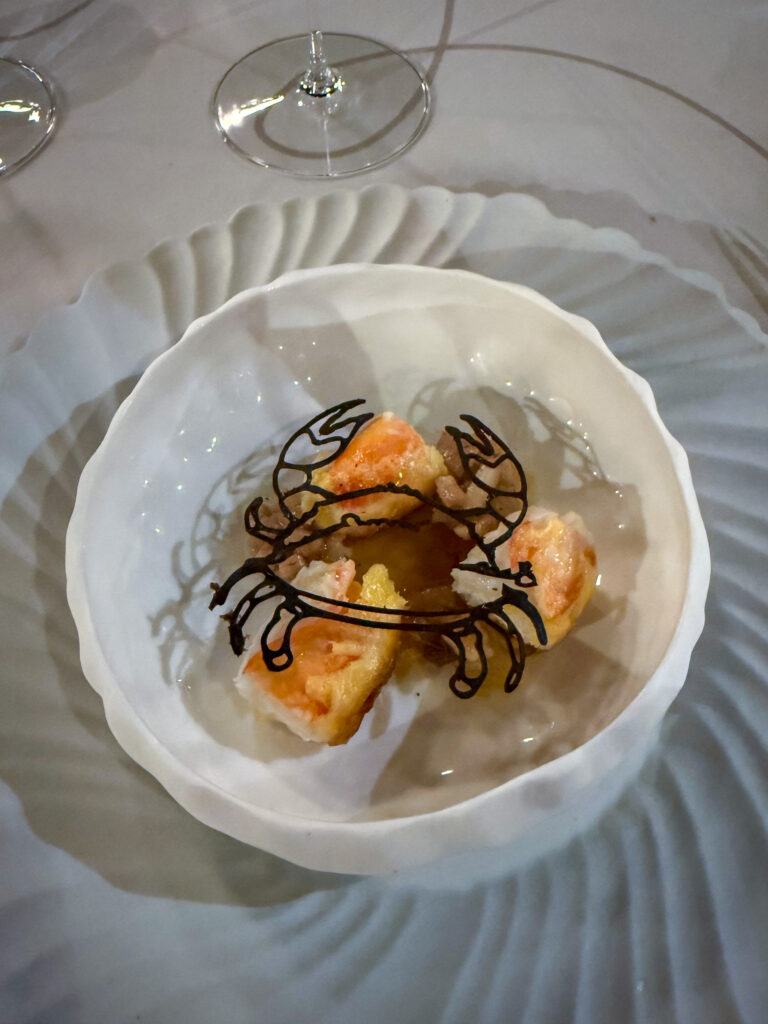
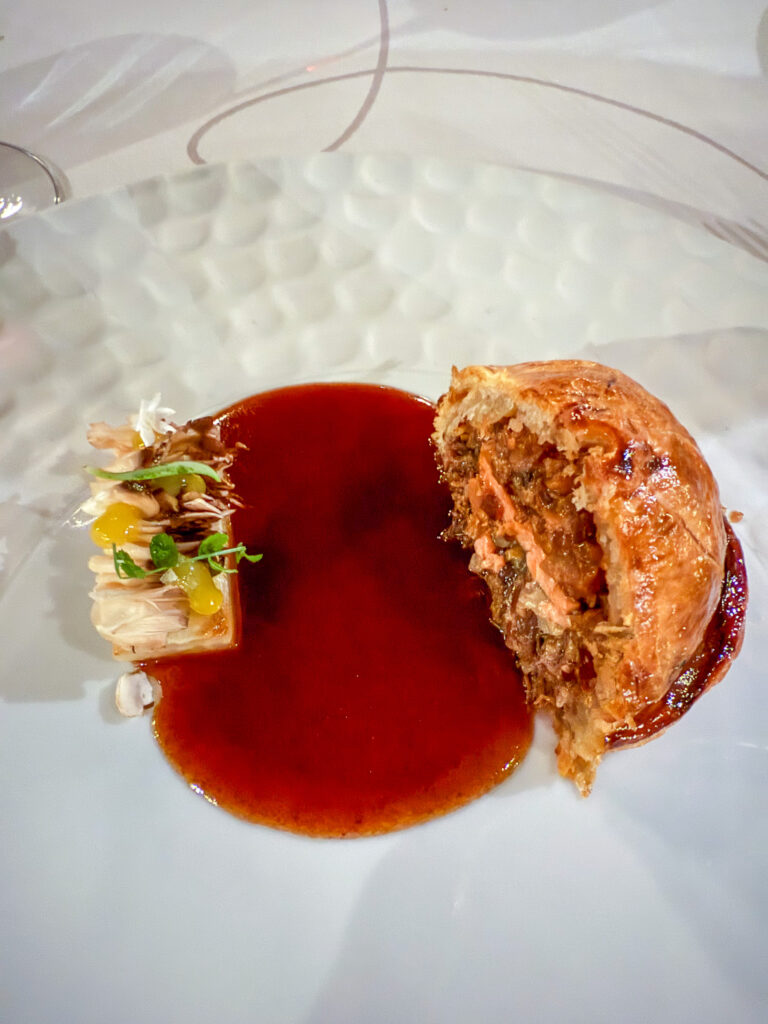
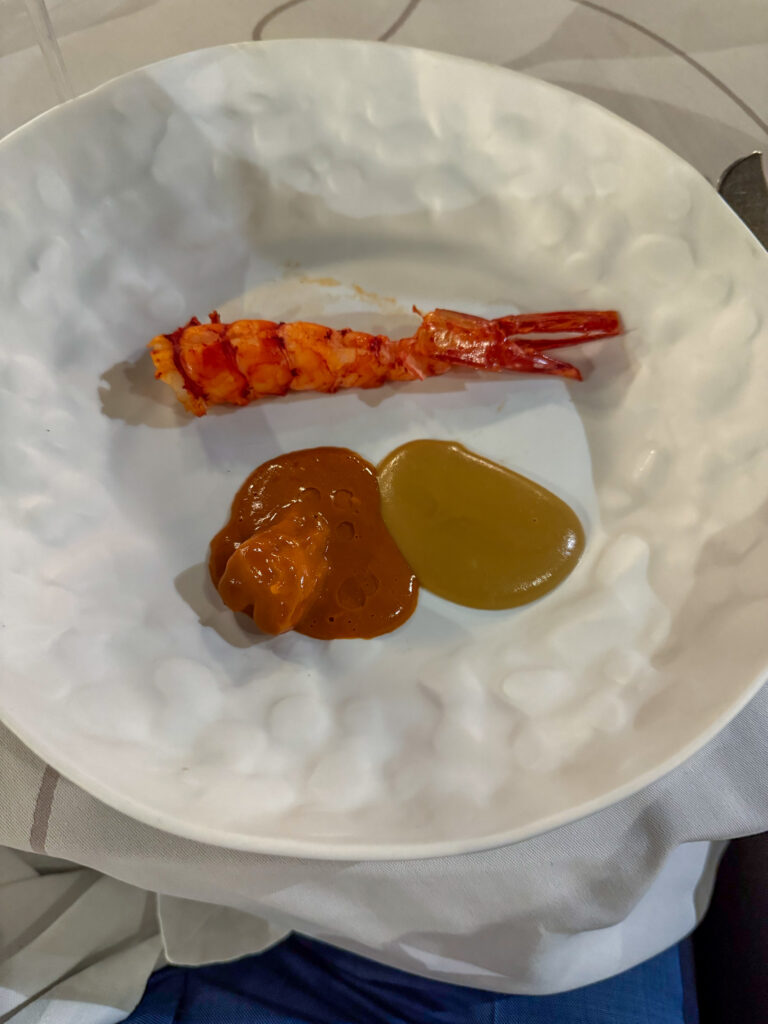
Then the chapters. The Classics is house greatest hits – a chocolate Filipino biscuit with foie gras and cardamom, marinated salmon with miso. A Tribute to Madrid and its Bars is the conceptual centre: cod brandade rebuilt as a lemon pie, a gratinated scallop tartlet, garlic prawns, red mullet done the Madrid way. Product and Technique is where the ox tartare with smoked caviar sits, and the bread with olive-oil butter, which this kitchen serves as a course rather than a courtesy. Memory with an Edge is the long stretch of proper plated cooking: a vegetable garden built in a glass bowl, bluefin belly with anchovy and caviar, king crab with Ibérico jowl, scarlet prawn, turbot, roast fillet of beef.
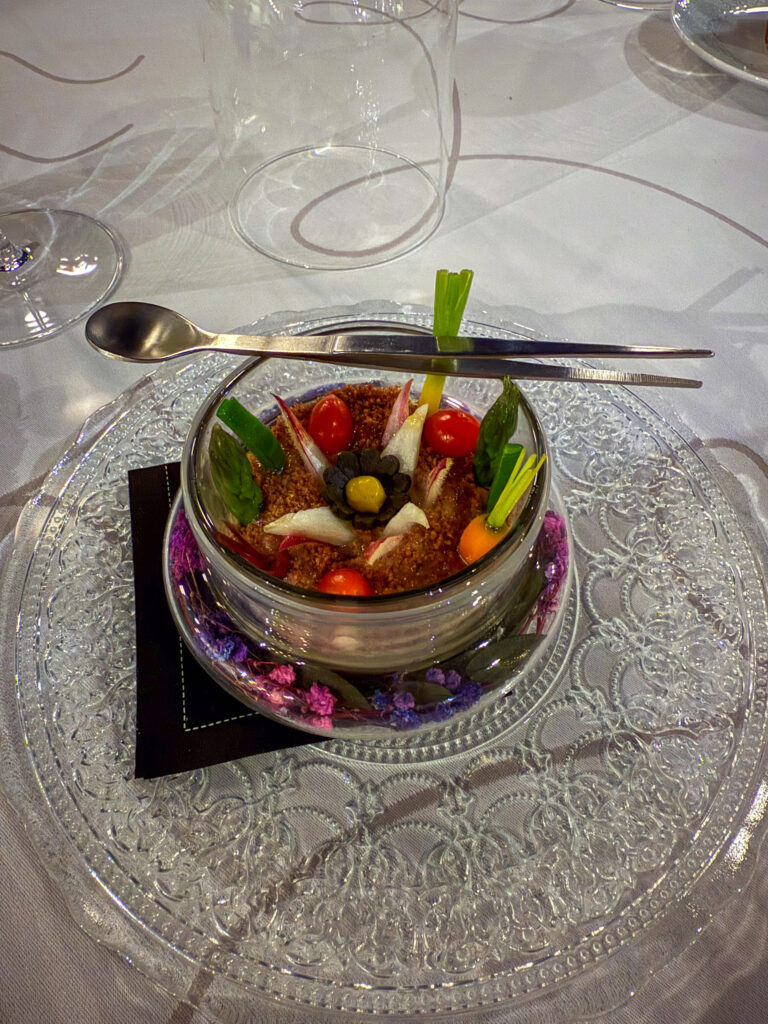
A fair amount of this happens in front of you. The floor team finishes plates at the trolley, grills at the table and rolls the tuna belly for you to eat, and the pace of the whole thing is set by them rather than by the kitchen. It is the most confident part of the operation, which is not a backhanded compliment: the dining room here has been run by the same head of room since 2019, she took the national prize for the job in 2023, and it shows in a way that a lot of two-star rooms would like to be able to claim.
The wine
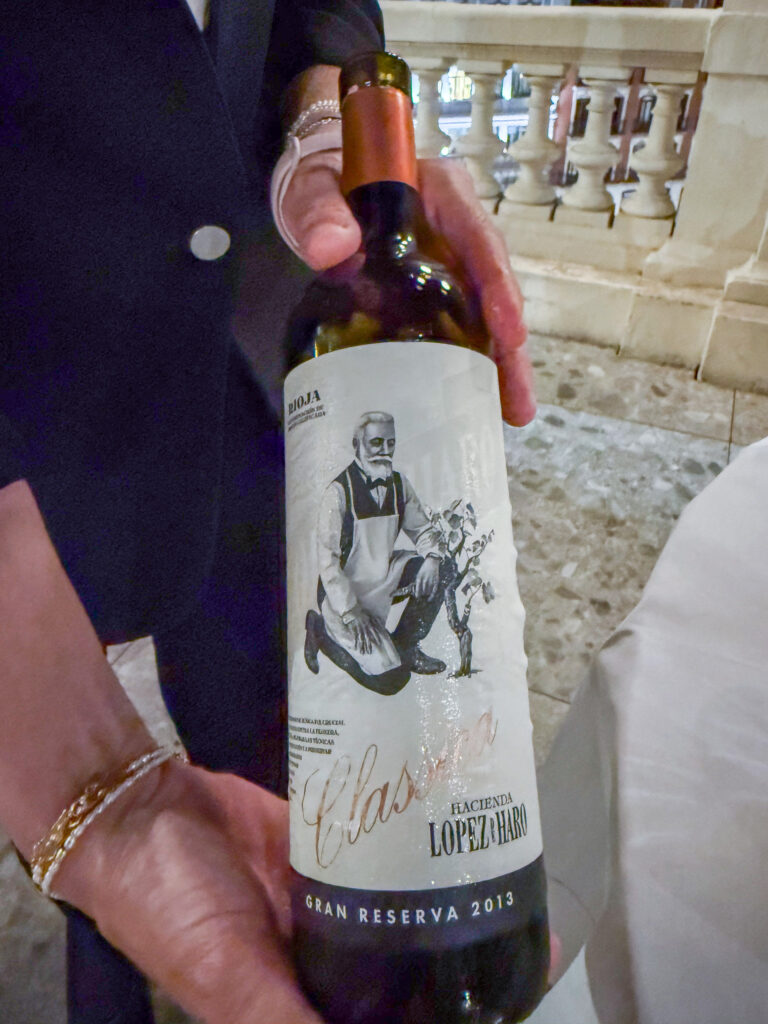
The cellar runs to about eight hundred references and roughly half of it is Spanish, arranged the old way – fortified, sparkling, white, rosé, red, sweet. It is deliberately unstable: some labels stay put, others rotate out, and a producer will occasionally be shown vertically across several vintages. The same sommelier has been running it alongside Roncero since 2000.
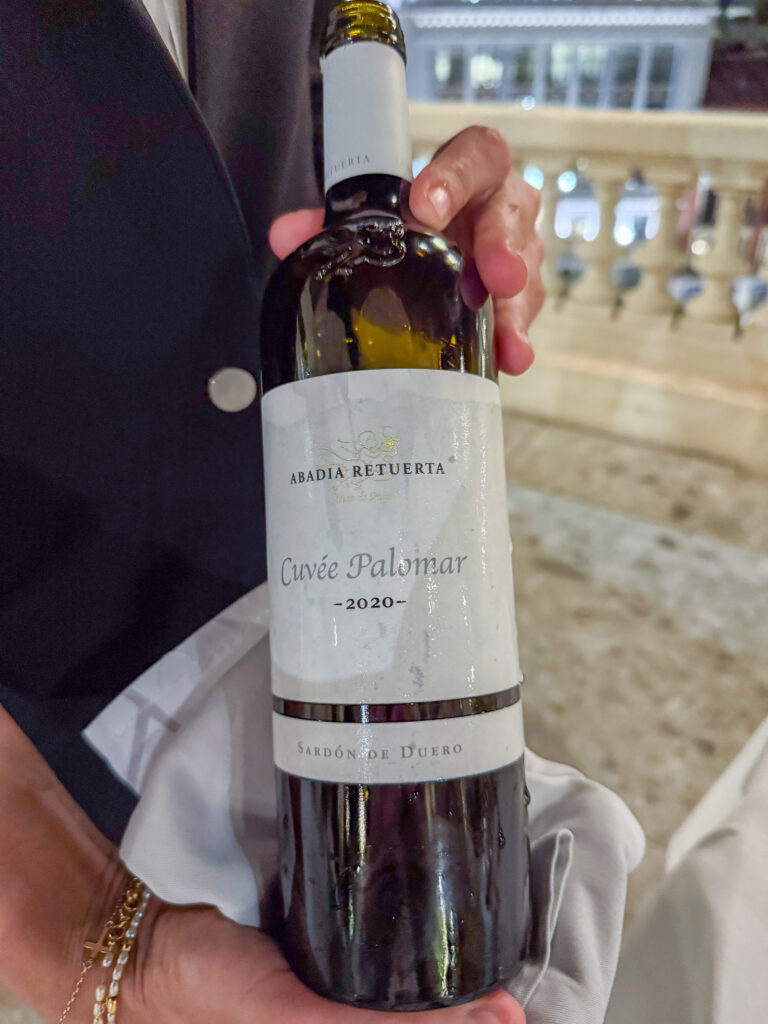
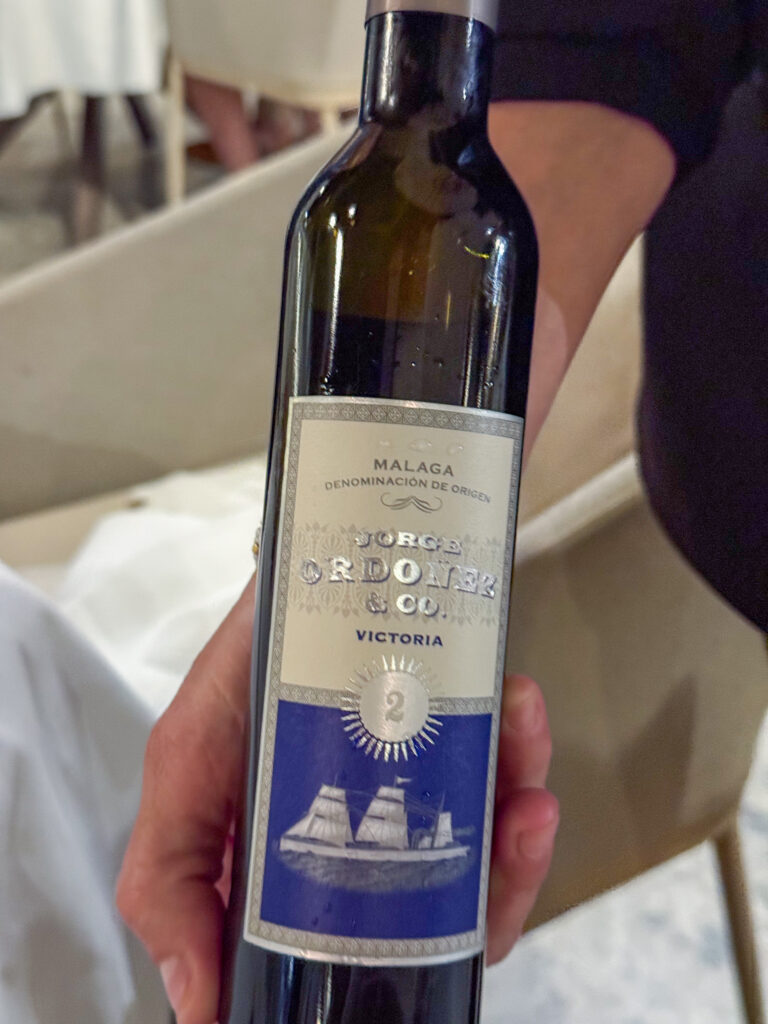
There are three pairing tiers on the two long menus – Spanish, old and new world, and a tier of serious bottles – and you pick at the table rather than at booking, which is the right way round. What came out over the evening was Spanish end to end and unusually wide: a gran reserva Rioja, a white from Sardón de Duero, a Galician bottle, a garage wine with a child’s drawing for a label, and a sweet Málaga to finish. That is a list with opinions, and it is a long way from a safe pairing.
The counter-argument
The problem here is not the terrace and it is not the people working it. It is the middle of the menu.
The opening runs rich early. A truffle tart straight into a set of olive oils encapsulated in cocoa butter is a lot of fat inside the first fifteen minutes, and the portions being tiny does not undo it. Then comes the Madrid bars chapter, the one the entire concept rests on, and it is where the cracks are. The bites are technically immaculate and unevenly flavoured, and sweetness keeps showing up in savoury courses where it has no business being: a cod brandade built as a lemon pie in which the salt cod goes missing under the sugar, a shellfish tartlet that does not taste of shellfish, a pepitoria roll that does not taste of the stew it is named after. A long run of small, correct, faintly sweet things is a hard thing to sit through at this level.
The plated courses look spectacular and the technique on them does not always arrive in the eating. A battered oyster loses itself in its own consommé. A trompe-l’œil of Segovian beans is clever and no more than that. A sole in black butter can turn up with very little to say for itself. And the bread – which, again, this restaurant serves as a course, on purpose – is the weakest thing on the table.
Two smaller things. Indoors, the room is louder than a three-hundred-euro menu ought to be; the terrace fixes that and is another reason to insist on it. And the whole evening is pitched as though the cooking were as good as the setting, which is the honest summary of the value question: you are not being short-changed on the experience — the experience is the product, and the cooking is not consistently its equal.
Where it recovers is at the end. The last third of the menu is comfortably the best of it: citrus, a fairground apple wafer, and above all beetroot with black garlic ice cream, which is the single most convincing thing this kitchen does. If you have paced yourself badly through twenty snacks you will be too full to notice, and that would be the real waste of the evening.
Know before you go
The booking window is thirty days and not one more; the system will not show you a date beyond it, and there is a waiting list if the night you want has gone. A card is required and a cancellation policy is attached, with a pre-authorisation taken some days beforehand. The amount and the notice period only appear once you have chosen a date and a party size, so read the confirmation properly rather than assuming it is the usual.
Allergies and intolerances are handled better here than at most restaurants of this length: the booking form makes you declare them before it will take the reservation, and the house states that every menu is adapted. That is not the same as a vegetarian menu, and there is no published vegetarian or vegan option and no à la carte to fall back on. If you do not eat meat or fish, ask before you hold a table, not after.
Children under twelve are discouraged, and the restaurant says plainly that it has no high chairs and no room for prams. Allow two to two and a half hours. There is no published dress code; the building is a formal private club and smart is right. The entrance is the club’s, so give yourself five minutes to find the right door and the lift.
It was open and serving in August when I was there, which is worth knowing in a city where a lot of kitchens of this level shut for the month. It does not publish a holiday calendar, though, so if you are planning around a specific week, ask.
See the full set: Paco Roncero — in frames.
Nothing about the room or the service needs defending. It is the middle of the menu that does.
The Paco Roncero gallery
Every photo on this site is my own, shot on the night. Slide through →