The Suite Report

Tag: The Peninsula

  • Breakfast at The Peninsula Hong Kong: the famous room, and the table nobody books

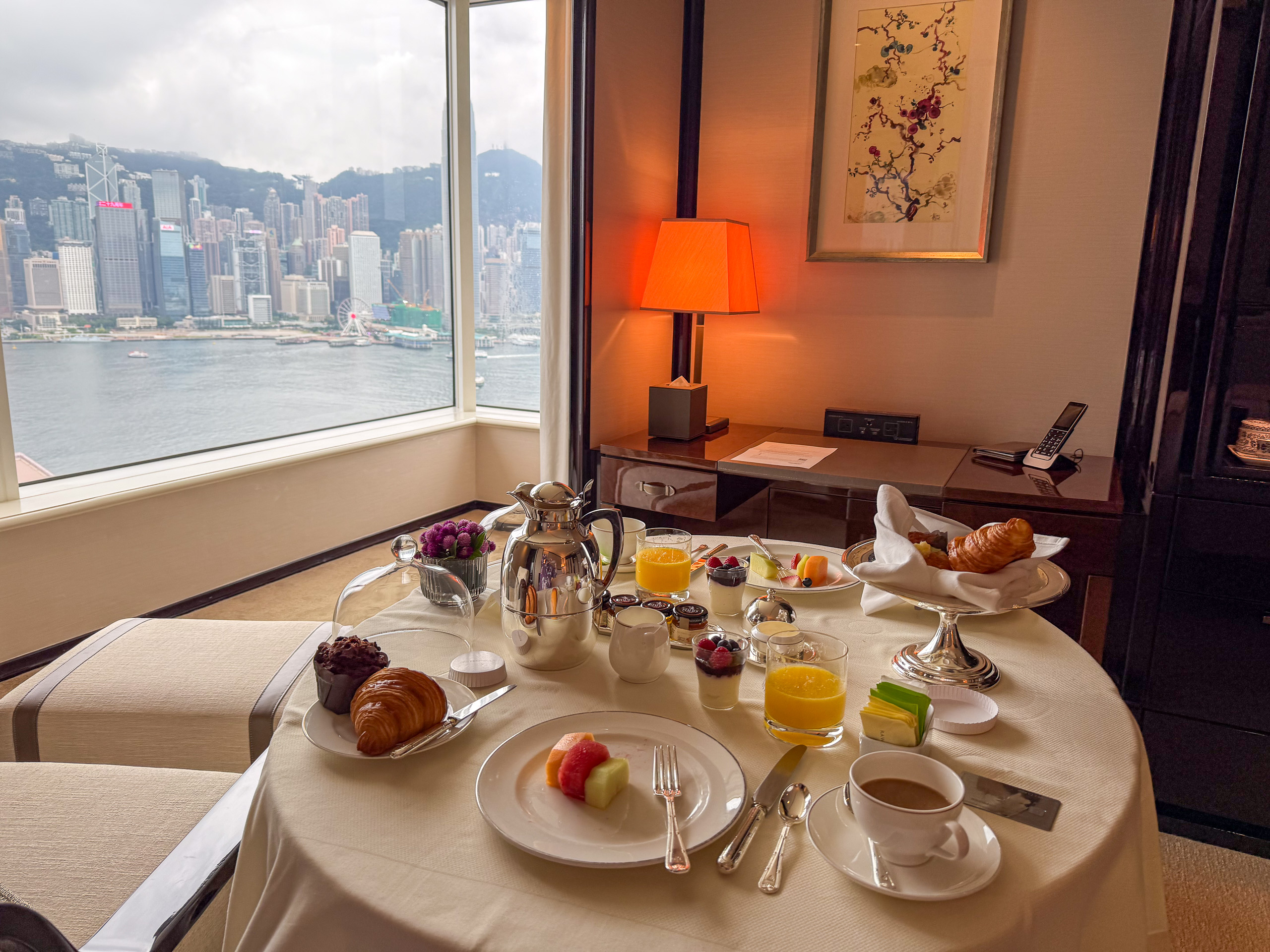
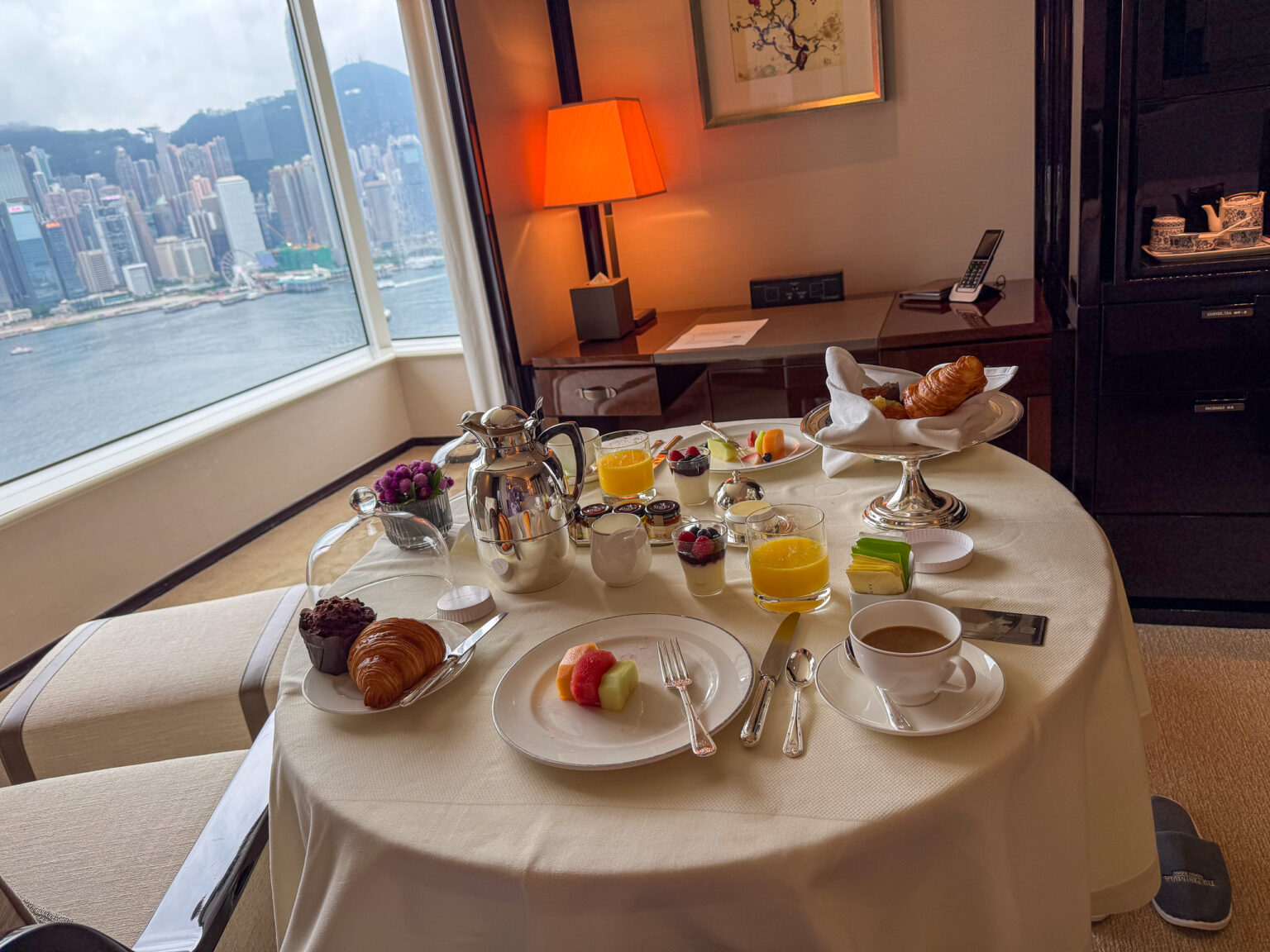
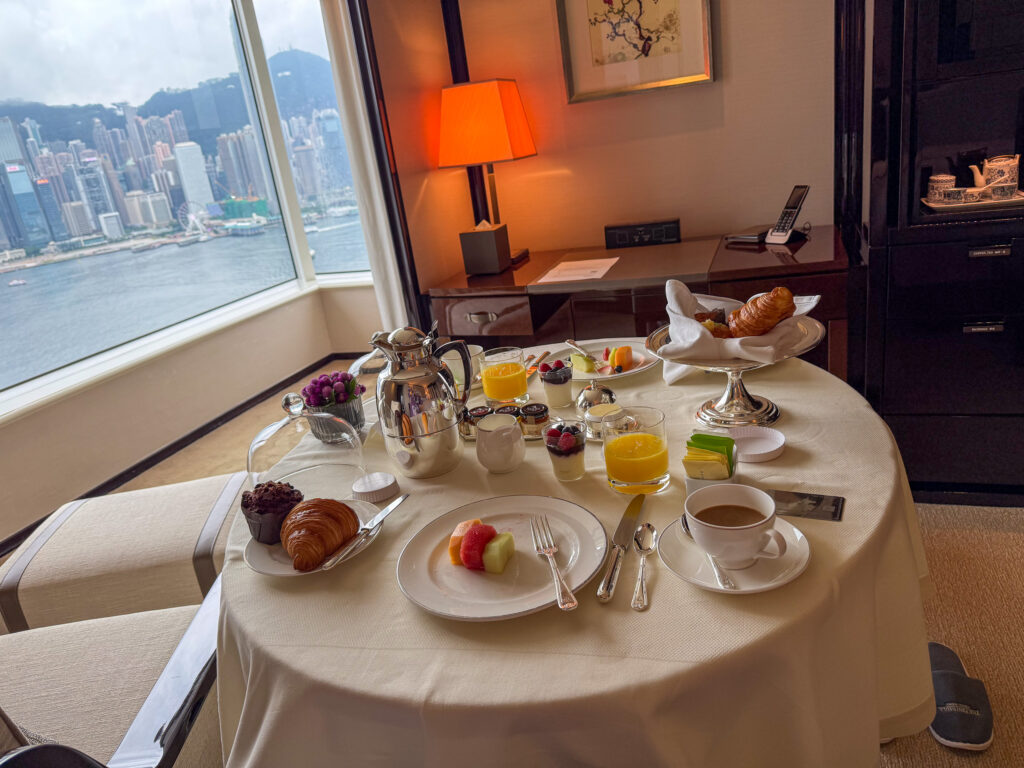
    Room-service breakfast on a round table by the window, croissants, coffee and the harbour behind

    HONG KONG · RESTAURANT · 9 MIN READ

    Breakfast at The Peninsula Hong Kong: the famous room, and the table nobody books

    Four services will feed you before eleven, one of them takes a reservation seven days a week, and none of it is the afternoon tea everybody queues for.

    By J.C. Mercer

    Verified meal·paid in full

    • Covers Two, breakfast
    • Dined March 2026, during a three-night stay on the 24th floor of the Tower
    • Menu The Verandah’s breakfast buffet
    • How it was booked Included with the room

    Every meal on this site is booked the way any other guest would book it.

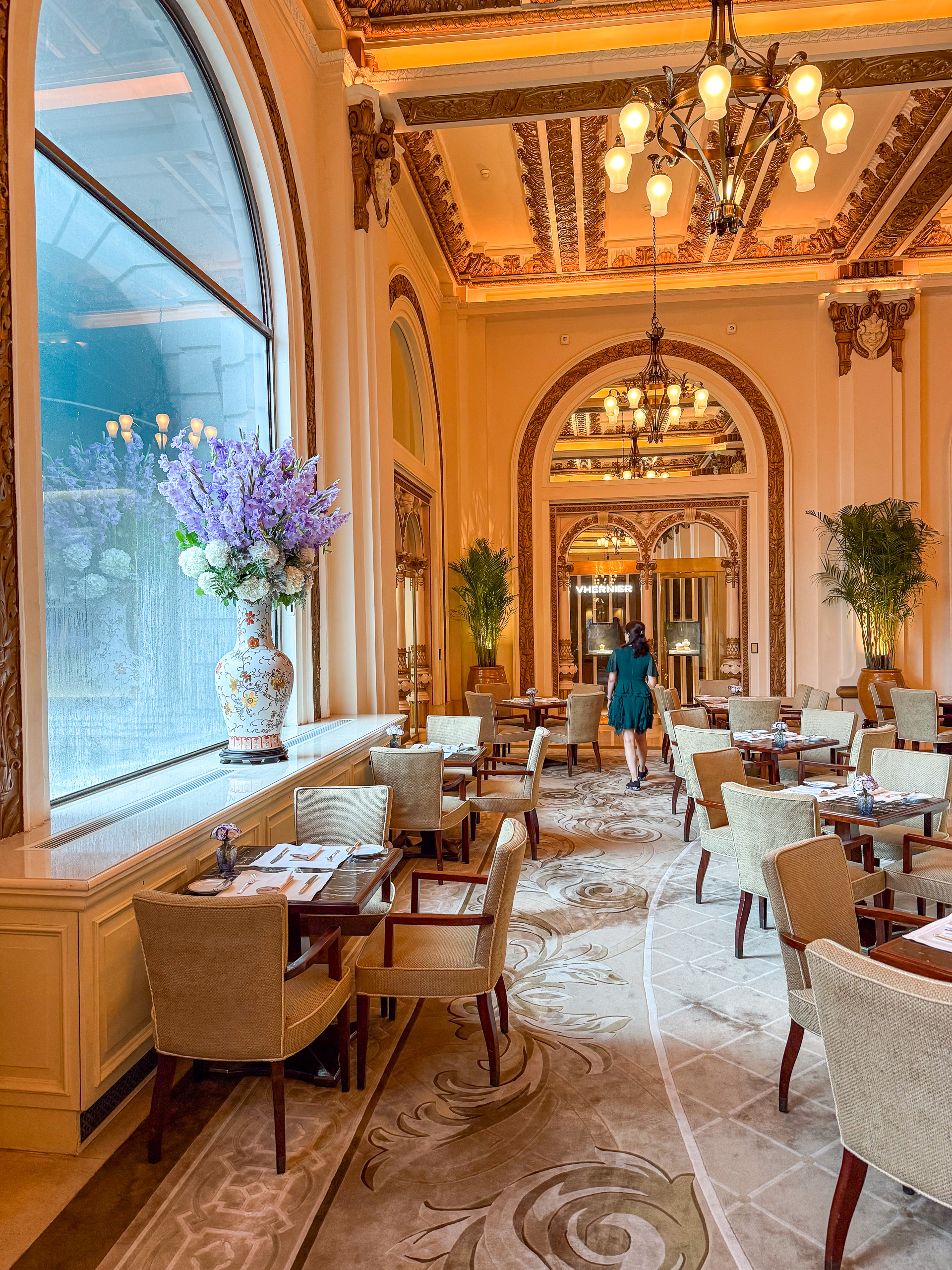
    The Peninsula opened on 11 December 1928, and The Lobby has been feeding people since the first week – concerts, dinner dances, and the afternoon tea that has since eaten the room’s identity whole. That tea is the most photographed sitting in Hong Kong and its queue is a tourist attraction in its own right. Breakfast in the same room is none of those things. It is quiet, and it takes a reservation.

    It is also, for the moment, the room it has been since 1994. In August 2026 the owners approved a landmark renovation timed against the hotel’s centenary in 2028; no schedule and no closure plan has followed. The Lobby has been through this before – restored and reopened on 25 September 1994, its mouldings rebuilt from old records and photographs – and was then deliberately left out of the refurbishment of 2012 to 2014. This is the last clear window in which to write down what breakfast here actually is.

    Four services will feed you before eleven

    The hotel’s line-up runs to nine restaurants and bars, plus poolside dining and in-room dining around the clock. Exactly four of them do breakfast.

    The Verandah, first floor, is the buffet and the default: open at seven, stopping at ten Monday to Saturday and half past ten on Sundays and public holidays. It has been running buffets in that room since 1933, when the hotel opened it, in its own words, as Hong Kong’s first fine buffet establishment.

    The Lobby, ground floor, is the famous one, and the only dining room in the building at street level. Breakfast runs eight to eleven, seven days a week, à la carte and in three set menus, no buffet at all. It seats two hundred and ten, two and a half times The Verandah’s eighty-six.

    The pool deck on the eighth floor serves a poolside breakfast from seven until eleven, off its own printed menu – the longest breakfast window in the building, and the least-known thing about this hotel.

    In-room dining runs twenty-four hours, which makes it the only breakfast available at noon, or at four in the morning.
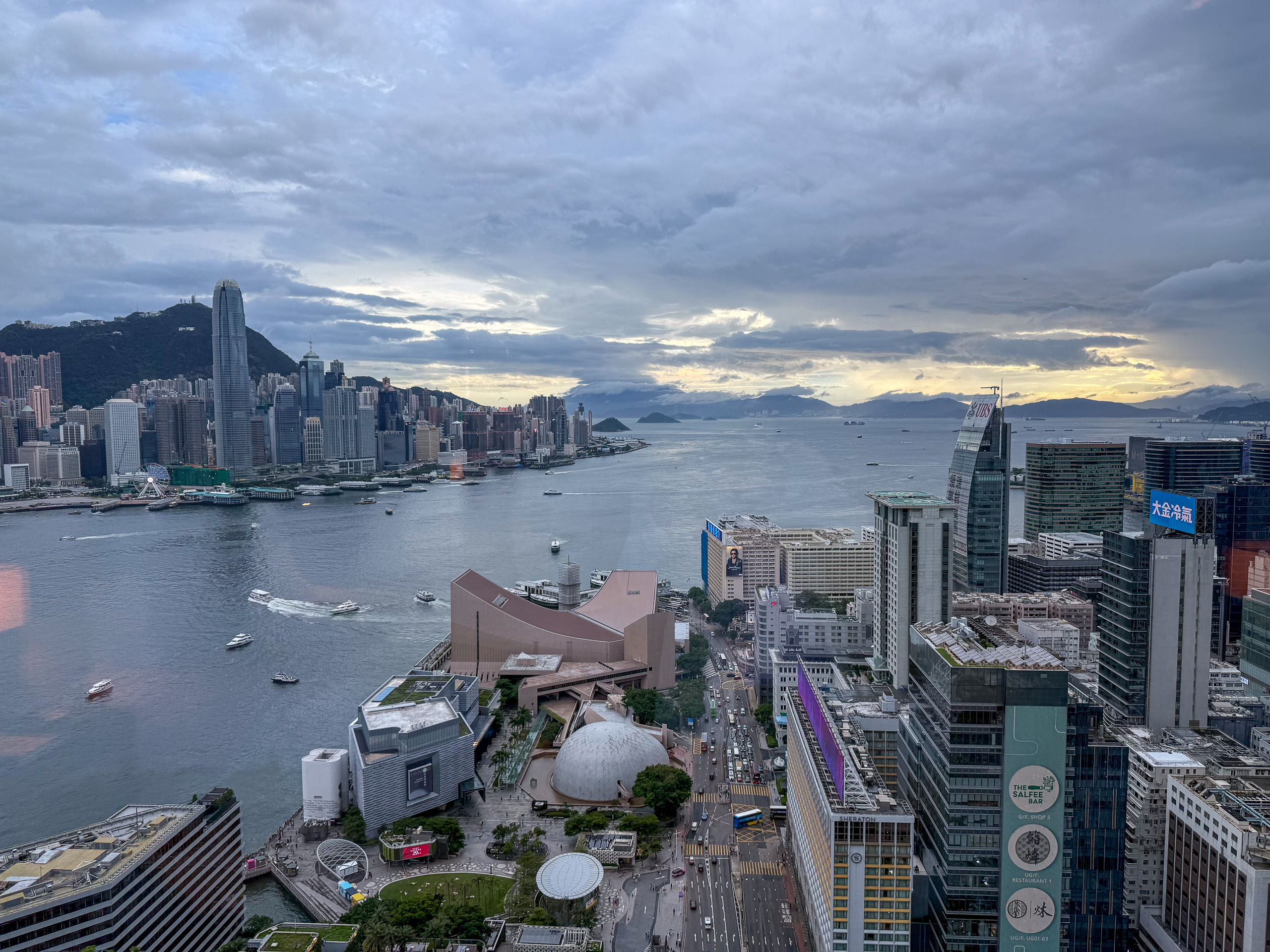
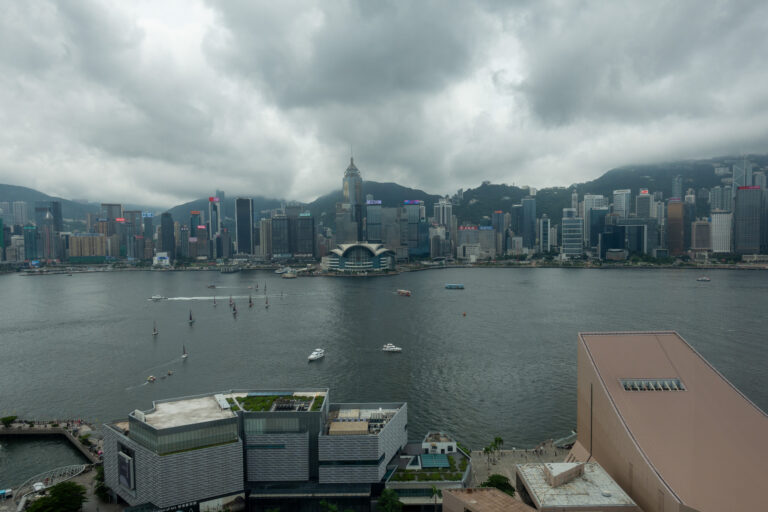
    Victoria Harbour on an overcast day, the Convention Centre and Hong Kong Island under low cloud
    Victoria Harbour under low cloud, from the room. This is the argument for having breakfast sent up rather than going down for it.

    Everything else is closed. Spring Moon’s first table is half past eleven, eleven on a Sunday, so there is no morning yum cha at The Peninsula at all: dim sum before eleven means the Verandah buffet or the Chinese Breakfast set downstairs. Gaddi’s is Tuesday to Saturday, lunch and dinner. Chesa and Imasa open at noon, The Bar at four, Felix at half past five.

    The two starred kitchens here – Spring Moon, starred every year since the 2017 guide, and Gaddi’s, starred since 2020 – are both dark in the morning. Nothing that serves breakfast at The Peninsula holds a star, a Forbes rating or a Black Pearl diamond. The morning trades on the room and the name and nothing else.

    WhereWhen
    The Verandah, 1/F07:00–10:00 Mon–Sat; to 10:30 Sundays and public holidays
    The Lobby, G/F08:00–11:00, seven days
    Poolside, 8/F07:00–11:00 daily
    In-room dining24 hours
    The Lobby afternoon tea, for contrast14:00 to about 18:00, last orders 17:00

    The room nobody thinks to book

    Here is the finding, and anyone can check it. Ask the hotel’s own booking system for breakfast at The Lobby and it offers five slots – eight, half past eight, nine, half past nine, ten. It offered all five on each of seven consecutive days when I looked, weekends included. Not one morning was full.

    This is the room people queue two hours for at two in the afternoon.

    You do not have to be staying here, either. Both breakfast rooms are open to the public, which makes a nine o’clock table at The Lobby the easiest way anyone has found into the grandest interior in Hong Kong.

    The buffet, oddly, is the harder table. The Verandah cannot be booked online at all: the grid is there, the times are there, and every slot comes back as a request rather than a confirmation. To be sure of the buffet you telephone. To be sure of the famous room you click.

    Breakfast is not the afternoon tea

    Almost every account of this hotel blurs the two, because they happen in the same two hundred and ten seats and one of them is famous enough to have swallowed the other. They are unrelated meals.

    The tea is one fixed set on a tiered stand, two o’clock until about six with last orders at five, played in by the house ensemble, The Lobby Strings: an amuse, finger sandwiches, pastries and raisin scones – raisin, not plain, the detail everybody is vague about.

    Nor is breakfast a side door into the tea: no scones, no tiered stand, no finger sandwiches. If the stand is what you came for, that is the two o’clock service and a separate bill.
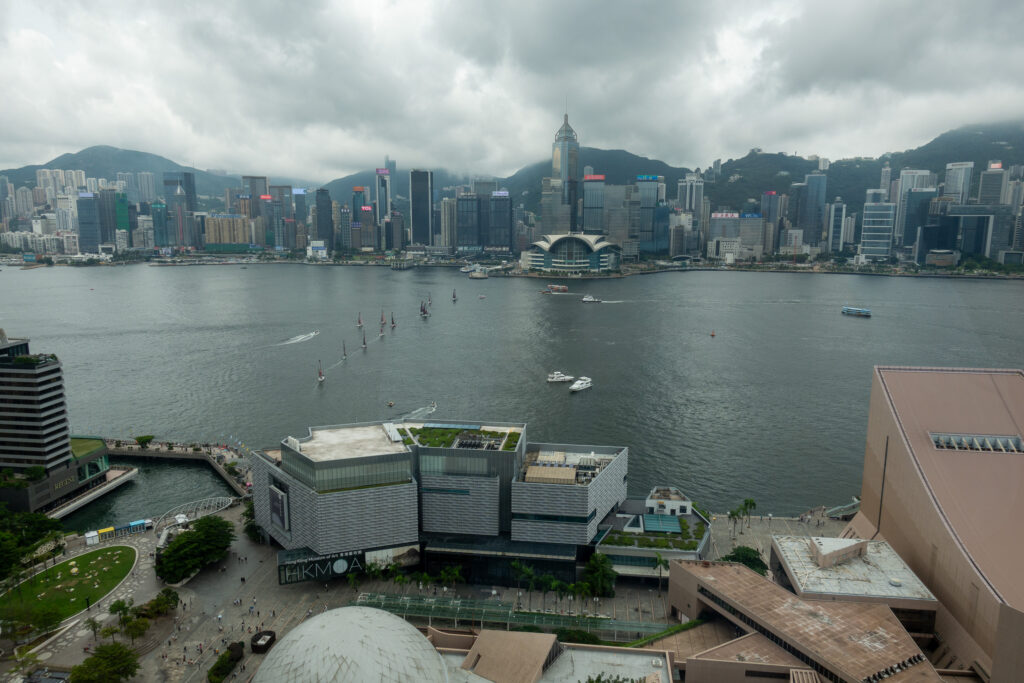
    A fleet of small sailing dinghies racing across the harbour with the Wan Chai skyline behind
    Dinghies racing off Tsim Sha Tsui. Breakfast at this hotel is finished long before the afternoon starts – the last table anywhere in the building is eleven.

    The booking rule is the opposite of its reputation, too. The tea is described everywhere, the hotel’s own page included, as first come first served. It is bookable Monday to Thursday. At the weekend it is request-only – which is when the queue forms, and how the reputation survives.

    And one thing nobody says at all: The Verandah runs its own tea service, the Verandah Café, from two until half past five – same hours, one floor up, no line outside it.

    What to order

    The Lobby’s breakfast card is a proper restaurant menu, not an afterthought bolted to a tea room, and the best thing on it is also the simplest: tomato broth, sliced beef, macaroni. That is the standard cha chaan teng breakfast, the thing half the city eats standing up, served on Peninsula china under a 1928 ceiling.

    The set to order is the Chinese Breakfast: shrimp, vegetable and pork dumplings with a deep-fried wonton, congee with chicken, beef or cod, fried noodles with barbecued pork, hot soy milk and the house Ti Guan Yin. Take the set if you know what you want, the buffet if there are two of you who want different things.

    Above it sit the Premium Breakfast – granola trifle, scrambled eggs with black truffle, coffee – and the “Grand” Petit Dejeuner, sold for two or for one: thirty grams of Kristal caviar, Boston lobster with eggs, a lobster-and-black-truffle sausage and a glass of the hotel’s own Champagne. At eight in the morning, and with service it is the grandest breakfast in the building by a distance.

    What to skip is easier. The cereal section is cornflakes and milk, and there is no version of this hotel in which that is worth having. Eggs for two à la carte deliver a fraction of the buffet. The card also moves, so ask what is running.

    The breakfast you will never see a picture of
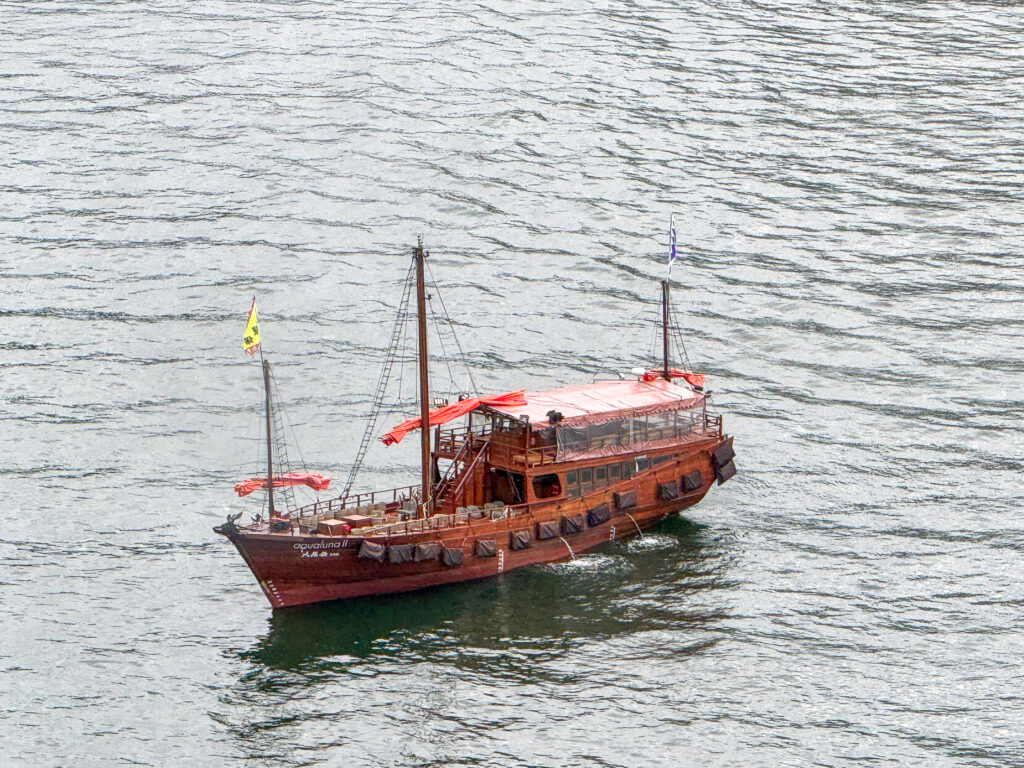
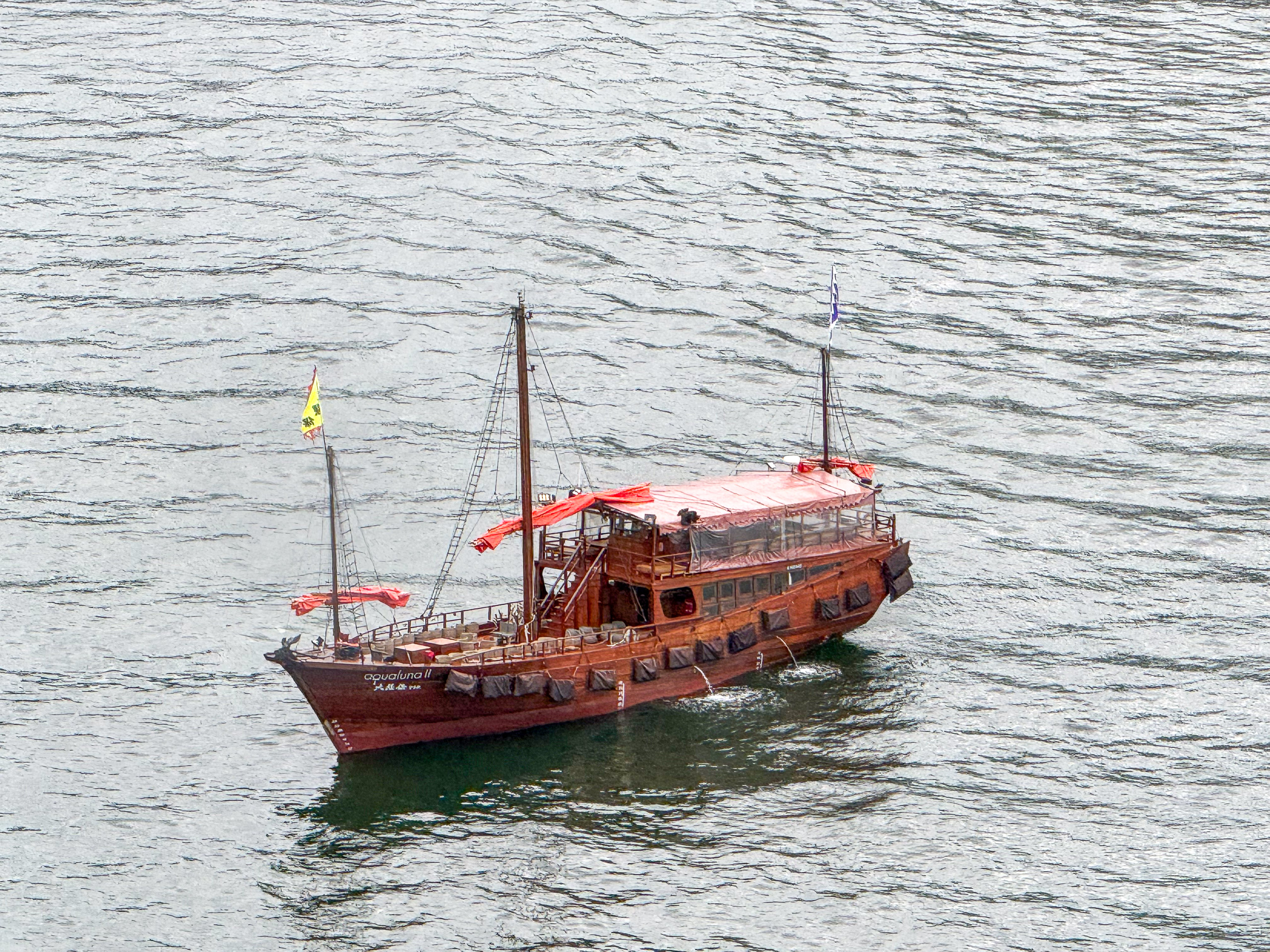
    A red-sailed wooden junk crossing the grey water of Victoria Harbour
    A junk crossing the harbour. The eighth-floor pool has a wall of glass over this water – and a firm no-photography rule, which is why what follows is described rather than shown.

    The pool at The Peninsula is a Roman bath in style: colonnaded, friezed, glass along one whole side over the harbour. A firm sign at the door tells you not to photograph it, which is the correct policy and the reason no good picture of it exists anywhere, this page included.

    What almost nobody knows is that the pool deck serves breakfast, seven until eleven, off its own printed menu, every day. The menu is not published anywhere, so ask when you book – then put the telephone away, which makes a better morning than the photograph would have.

    The counter-argument

    Nobody argues about the room. The colonnades, the ceiling and the sheer height of the place are not in dispute and never have been. What is in dispute is the distance between the name on the door and what arrives on the plate.

    Put plainly: at the top of this hotel’s menus you are paying for The Peninsula as much as for the cooking, and at breakfast that is nearly the whole transaction. There is no star in the morning and no rating to hide behind. You are buying a 1928 room, a 1933 buffet and a century of doorman.

    The breakfast-specific complaint is the spread. The buffet with service buys a well-made spread in an eighty-six-seat room, and it is not a large one. The eggs, the waffles, the dim sum and the congee are all there and all correct; abundance is not.

    À la carte at The Lobby is the hard way to do this: two eggs with a side and a juice, and you will wish you had taken the buffet before the coffee arrives. The bread is the weak point – it has a habit of arriving under temperature, which at a hotel whose bakery is part of its legend is worth saying out loud.

    Service is the last of it, and both halves are true. To a resident guest it is the product here, and close to unmatched. In a two-hundred-and-ten-seat room at capacity on a weekend afternoon, with a queue outside and no chairs in it, it is a different operation and it feels like one. One more argument for the morning.

    Know before you go

    The two deadlines are most of the practical advice. The Verandah stops at ten, half past ten on a Sunday or public holiday. The Lobby takes its last breakfast order at eleven, and lunch does not begin until half past, so there is a dead half-hour in the middle of the morning. Miss all of it and the only breakfast left comes up in the lift.

    Book The Lobby online – seven days a week, and the mornings are open. Telephone The Verandah on +852 2696 6766, because its online slots are requests rather than confirmations; The Lobby is +852 2696 6772.

    On dress, both rooms are smart casual, with sports kit and beachwear ruled out in plain terms. The published relaxation for jeans, t-shirts and sneakers names the lunch and afternoon tea periods and does not name breakfast. Nobody will turn you around at eight in the morning, but that is the wording.

    Chinese New Year does not change the hours here — it changes the mood. The Lobby put on a New Year breakfast set served with a good-fortune mahjong tile, and the lion-dance eye-dotting is at nine in the morning in the forecourt – the one morning of the year to be at breakfast early and near a window.

    Last, the renovation. That renovation was approved in August 2026 and aims at the 2028 centenary, and not one detail has been published since. Nothing is shut today. But if you are building a trip around a particular room in this building, ask when you book, not when you arrive.

    See the full set: The Peninsula, Hong Kong — in frames. More Hong Kong: Rosewood, Hong Kong.

    At two in the afternoon this room costs two hours in a queue. At eight in the morning it costs a reservation nobody else bothers to make.

    Don’t miss

    • Book The Lobby online. Five slots, eight to ten.
    • The Chinese Breakfast set: dim sum, congee, soy milk.
    • Or the tomato broth with beef and macaroni.
    • The poolside breakfast, eighth floor, 7 to 11.
    • The tiered stand is 2pm tea, and a separate bill.

    The Peninsula gallery

    Every photo on this site is my own, shot on the stay. Slide through →
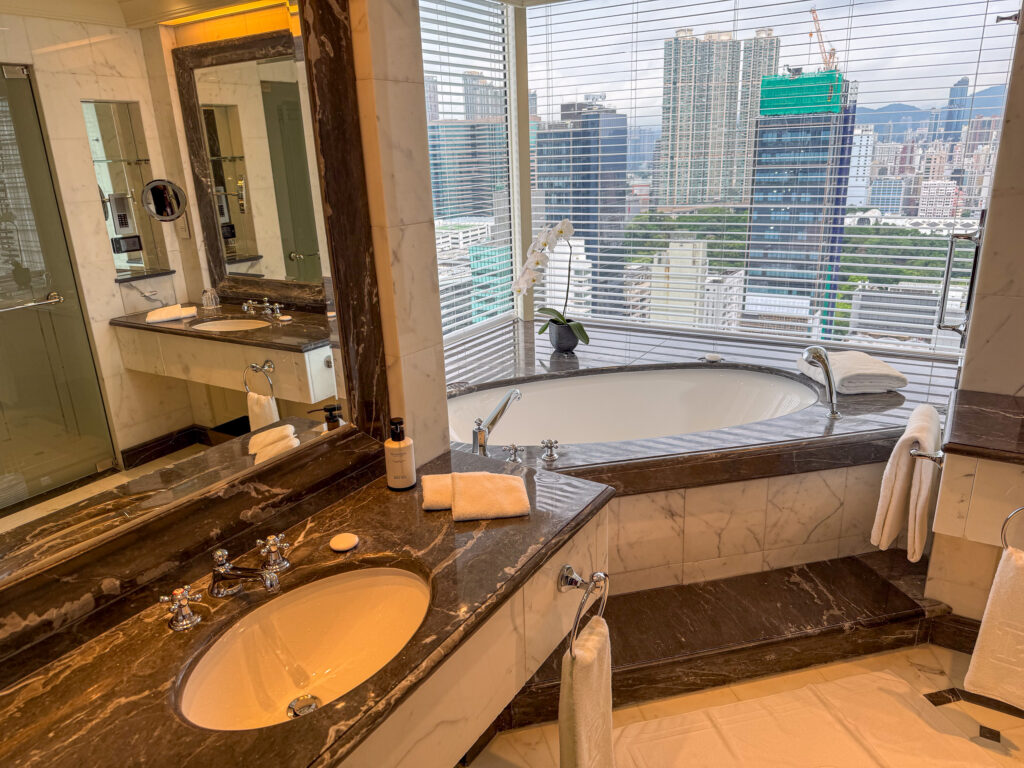
    Room-service breakfast on a round table by the window, croissants, coffee and the harbour behindVictoria Harbour on an overcast day, the Convention Centre and Hong Kong Island under low cloudA red-sailed wooden junk crossing the grey water of Victoria HarbourA fleet of small sailing dinghies racing across the harbour with the Wan Chai skyline behindVictoria Harbour at dusk from the room, the Space Museum dome below and Hong Kong Island lit across the waterThe Hong Kong Island skyline at night across the harbour, the Cultural Centre roof in the foregroundA full moon over the lit Hong Kong Island skyline, its colour reflected the length of the harbourA deep tub set into dark marble in front of corner windows looking over Kowloon at blue hourA marble bathroom with twin basins, a mirrored wall and a tub under the window with a white orchid on the sill
  • L’Oiseau Blanc: Two Stars, a Rooftop, and an Aeroplane That Never Arrived

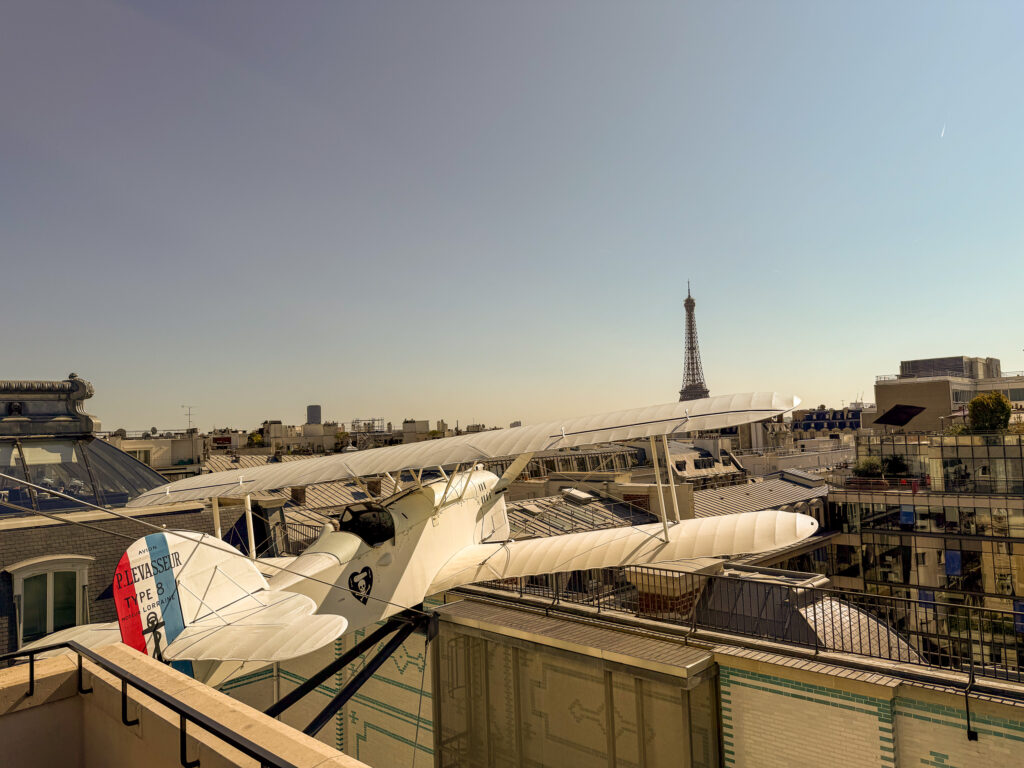
    A full-size white biplane replica standing on the hotel roof at dusk, wings spread over the Paris rooftops with the Eiffel Tower on the horizon

    PARIS · RESTAURANT · 9 MIN READ

    L’Oiseau Blanc: Two Stars, a Rooftop, and an Aeroplane That Never Arrived

    The Peninsula Paris’s rooftop dining room, named for a biplane that vanished over the Atlantic in 1927, with a full-size replica parked outside the glass.

    By J.C. Mercer

    Verified meal·paid in full

    L’Oiseau Blanc, The Peninsula Paris

    • Covers Two, 7.30pm
    • Dined April 2026
    • Menu The tasting menu
    • Drinks The pairing, half wine and half not

    Every meal on this site is booked the way any other guest would book it.

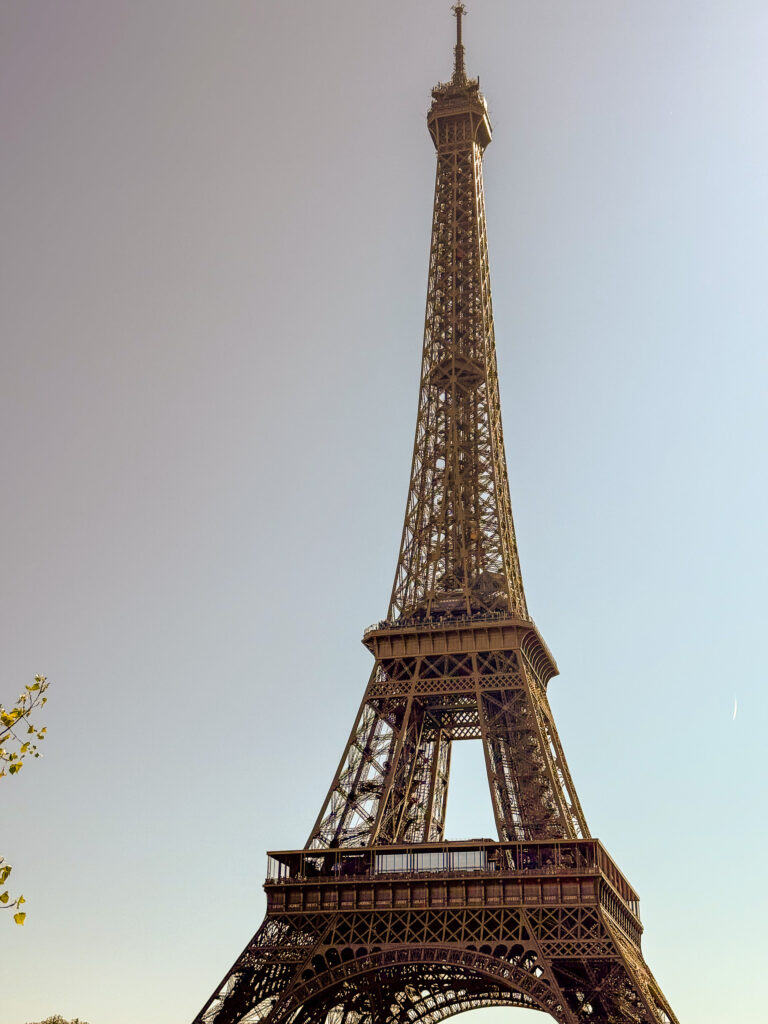
    There is an aeroplane on the roof. Not a model and not a sculpture of one: a full-size white biplane with a tricolour flash on the tail, parked on the terrace with its nose up and its wings out over avenue Kléber, so that from the dining room you look past a wingtip to the Eiffel Tower. It is the single most literal piece of restaurant branding I have seen anywhere, and it works, because the story behind it is not a marketing story.

    In May 1927 Charles Nungesser and François Coli took off from Paris in a white biplane called L’Oiseau Blanc, aiming to be the first to fly the North Atlantic. They were never seen again. Charles Lindbergh made the crossing in the other direction a fortnight later and the world remembered him instead. The restaurant is named after the aircraft that did not arrive, which is an unusual thing for a two-star dining room to build itself around and is the reason the room has more character than its glass walls would suggest.

    The room, and the view everybody books for

    L’Oiseau Blanc sits on top of The Peninsula Paris on avenue Kléber in the sixteenth, glazed on the long side and open onto the terrace at the end. The tables run along the glass. Below you are the zinc roofs and the chimney stacks and the pale stone, and then the Eiffel Tower straight ahead, and Sacré-Cœur off to the right on a clear evening.

    Be honest with yourself about what you are booking. There are a limited number of tables with the tower squarely in front of them and a larger number without, and the difference to the evening is considerable. Ask when you reserve, ask again when you arrive, and take the earlier sitting if that is what it takes.

    The opening

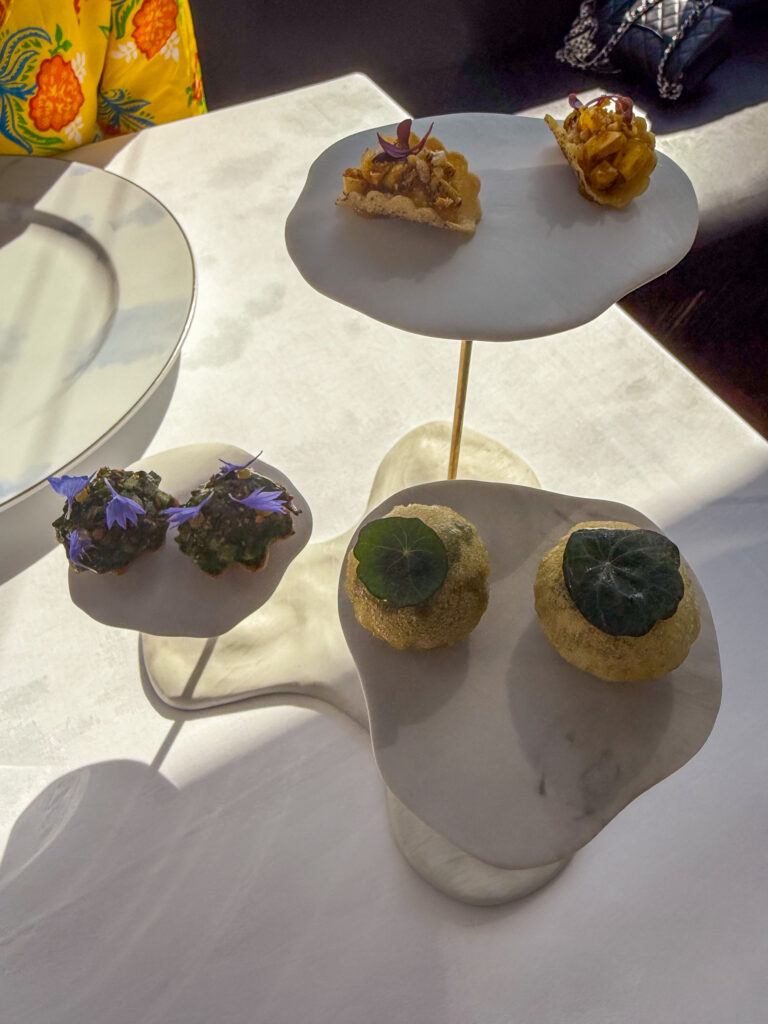
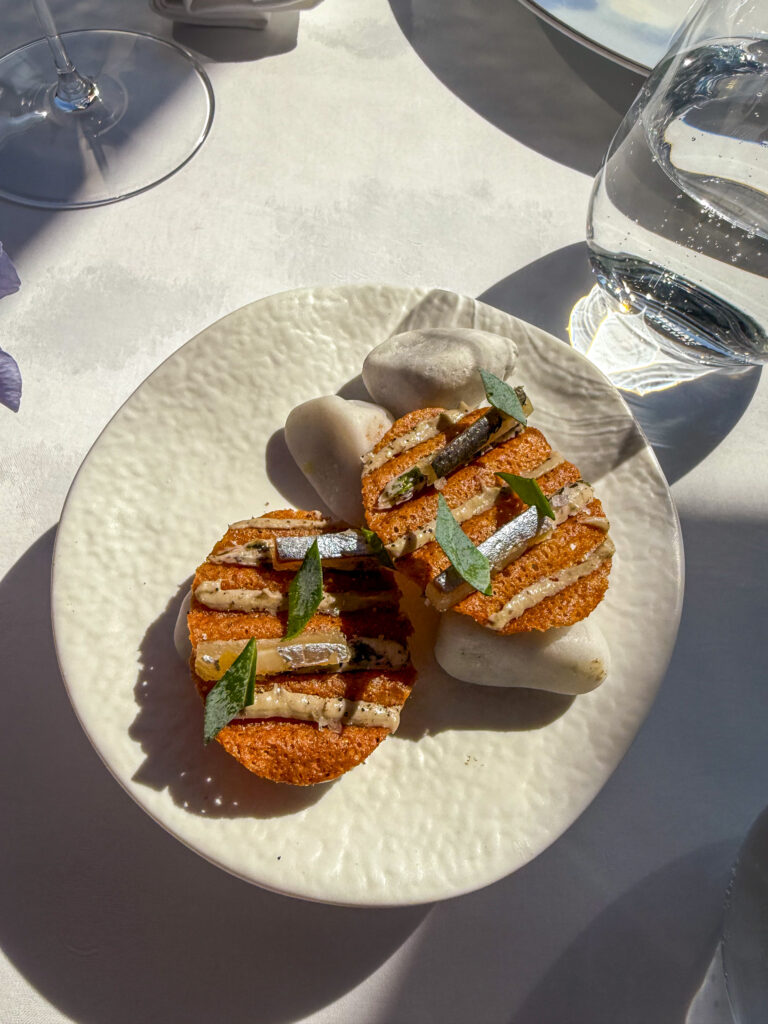
    Dinner starts with a small architecture of snacks on a two-tier stand of white pebble-shaped plates: a tart under a purple flower, a filled golden shell, two dark canapés under blue borage, and two pale rounds each capped with a whole nasturtium leaf. It is precise, very pretty, and over in about four minutes, which is the correct length for this part of a meal.

    A two-tier stand of white pebble-shaped plates holding small tarts, dark canapes under blue borage flowers and pale rounds capped with nasturtium leaves
    The opening. Four minutes, six things, no explanations.

    What David Bizet is actually cooking

    David Bizet has run this kitchen since the hotel opened and took the second Michelin star in March 2022, which it has held every year since. The cooking is classical French technique used with a very light hand: sauces reduced properly but poured sparingly, a great deal of raw and barely-cooked vegetable work, and a consistent preference for acidity where a heavier kitchen would reach for fat.

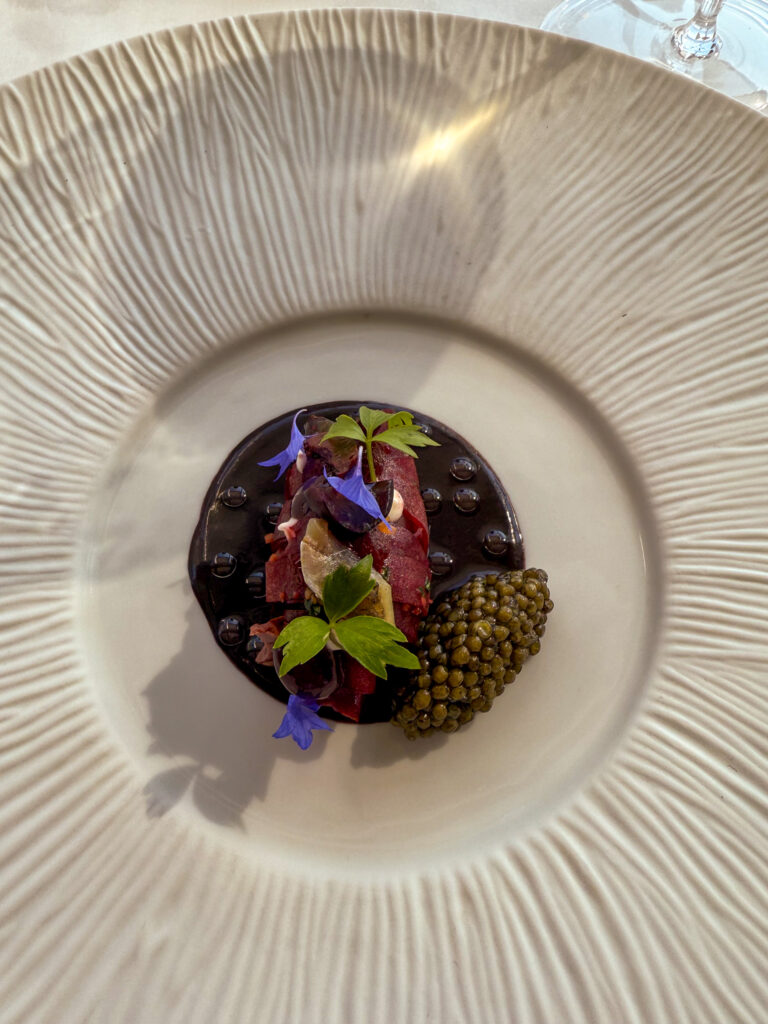
    The dish that made the case was a shallow bowl with a dark, glossy, almost black base, sliced pink flesh laid over it, blue flowers and small leaves scattered across, and a crescent of caviar at one edge. It looked like a garden and ate like a much more serious plate of food than it looked, which is the trick this kitchen keeps performing.

    A fluted white bowl holding a dark glossy base topped with sliced pink flesh, blue borage flowers, small green leaves and a crescent of caviar
    It looks like a garden. It is not cooked like one.

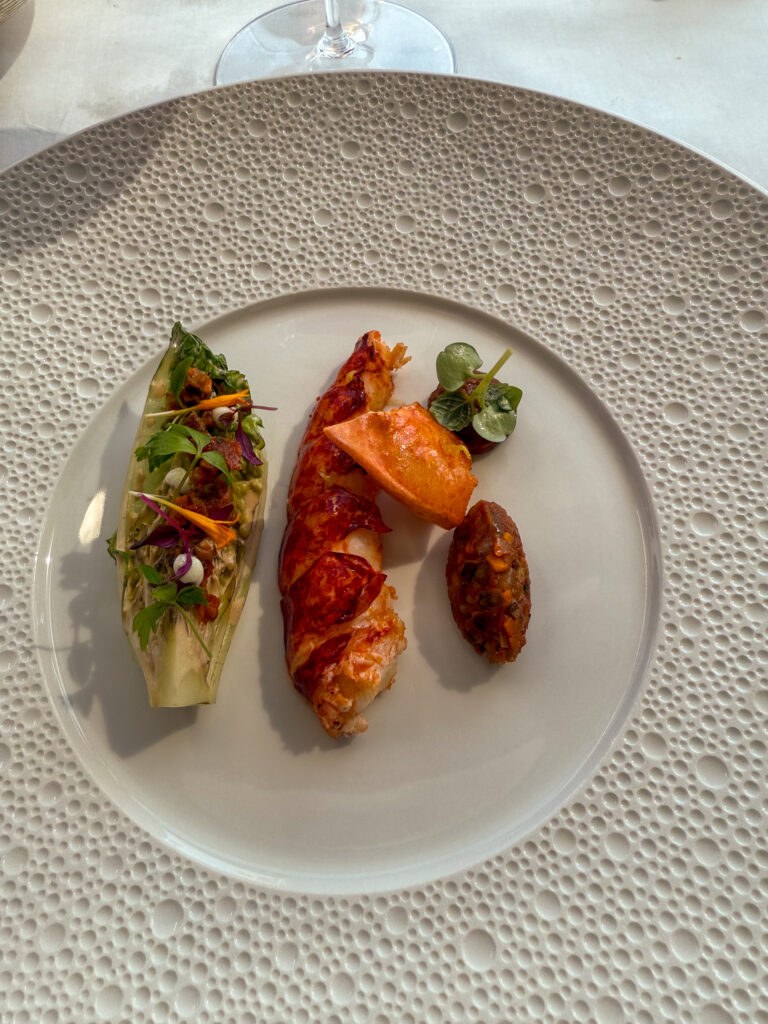
    The best course was langoustine: the tail glazed a deep red and laid whole down the middle of a dimpled white plate, a chicory boat of dressed leaves and shredded vegetables to one side, a dark croquette to the other. Three temperatures, three textures, one flavour running through all of them.

    A dimpled white plate with a red-glazed langoustine tail, a chicory boat filled with dressed leaves and shredded vegetables, and a dark croquette
    The langoustine. The croquette next to it is doing more work than it looks.

    Where the kitchen is least interesting is the middle of the menu, where two or three courses in a row arrive as a single dark element in a pool of sauce on a large pale plate. They were all good. They looked like each other.

    Bread deserves its own sentence, because in a French restaurant at this level it is a test and most kitchens quietly fail it. Here it arrives warm, is offered more than once without being pressed, and the butter is worth the trouble it has clearly been given. Nobody at this table left any.

    Desserts follow the same restraint as the savoury courses. Fruit rather than chocolate, acidity rather than sugar, and a final plate small enough that it does not undo the two hours before it. That is the house position across the whole menu, and the consistency of it is what makes the meal feel composed rather than assembled.

    The pairing, and the bottle that was not wine

    The pairing is the part worth taking. The sommelier works the room himself, brings each bottle to the table before pouring it, and explains it in about two sentences rather than four minutes, which is the correct ratio.

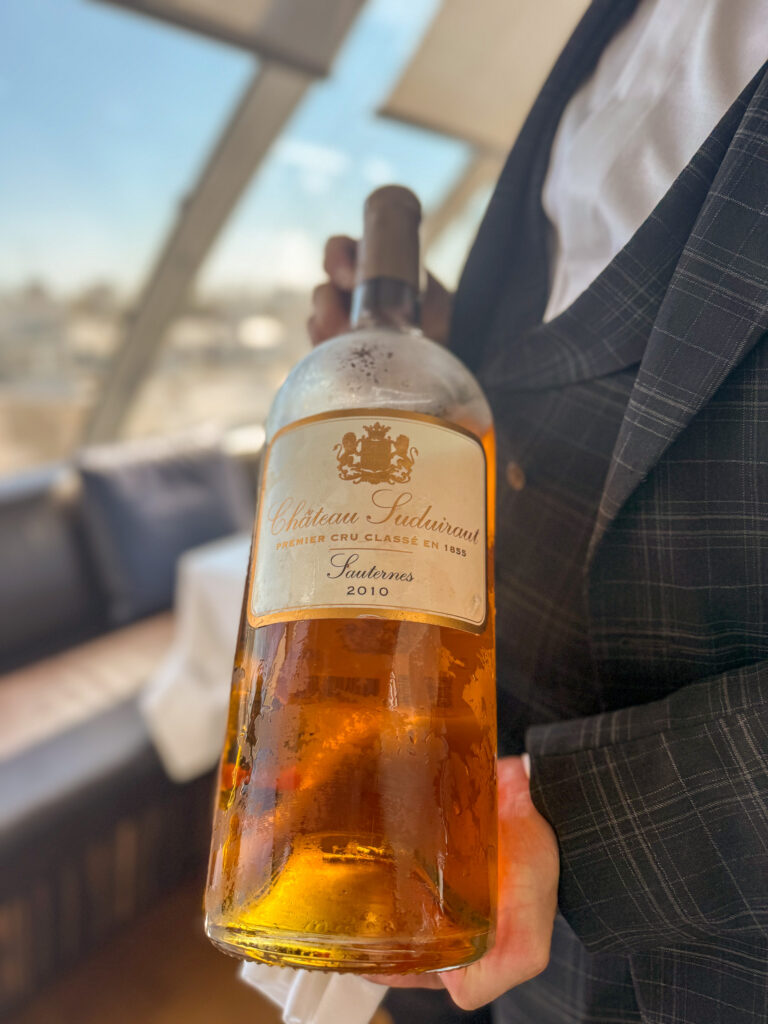
    The unexpected thing is that roughly half of the pairing is not wine. A kombucha, brewed in France, arrived alongside an early course in a bottle with a painted mouth on the label, and it did what the pairing needed better than a white wine would have. Later there was a Gevrey-Chambertin from old vines with fifteen years on it, and a Sauternes at the end, and the two halves sat together perfectly comfortably.

    If you do not drink, or are only half drinking, this is one of the few kitchens at this level where the non-alcoholic half of the list has clearly been built by someone who cares about it rather than assembled to avoid embarrassment.

    Noted

    WhatChecked on the night
    MichelinTwo stars, held since March 2022
    ChefDavid Bizet
    WhereOn the roof of The Peninsula Paris, avenue Kléber, 16th
    ViewEiffel Tower ahead; Sacré-Cœur to the right on a clear evening
    The aeroplaneA full-size replica, on the terrace
    LengthAbout three hours for two
    PairingRoughly half non-alcoholic, by design

    Observed on the stay, not measured.

    One more thing about the terrace, since it is the reason to choose this restaurant over the several others in Paris holding the same two stars. It is not a viewing platform bolted onto a dining room; it is where the whole conceit resolves. The aeroplane is at eye level, the roofs go on for a mile, and the tower does its hourly business on the hour whether or not anybody is watching. Fifteen minutes out there between courses is the part of the evening I would repeat first.

    The counter-argument

    The view is doing a lot of the work, and everyone in the room knows it. That is not a criticism of the cooking, which would hold two stars in a basement. It is a warning about expectation management: if you get a table on the inside row on a grey evening, you are eating a very good but not transcendent dinner in a glassy modern room, and the thing you were promised is happening to somebody else eight feet away.

    Second, the room reads modern hotel rather than Paris institution. Pale, bright, comfortable, slightly anonymous. There are dining rooms in this city where the room is half the reason to go. This is not one of them; the terrace is.

    Third, the sixteenth is a quiet, handsome, expensive and slightly airless part of Paris, and there is very little reason to be up here except this restaurant and the hotel under it. Dinner does not spill into an evening the way it would in the eleventh or the ninth. Plan what happens afterwards, or accept that nothing does.

    Know before you go

    Book weeks ahead and ask specifically for a table on the window row facing the tower. Take the earlier sitting in summer so that you get the light on the roofs and then the tower lit. Take the pairing and let them give you the non-alcoholic half. Go out onto the terrace between courses, at least once. And read about Nungesser and Coli before you come, because the restaurant will not tell you the story and it is the best thing in the room.

    See the full set: L’Oiseau Blanc, Paris — in frames.

    Named for the flight that failed, in a city that remembered the other one.

    Don’t miss

    What I would do again.

    • A window table facing the tower, requested twice.
    • The langoustine course.
    • The pairing, half of it not wine.
    • Out onto the terrace, beside the aeroplane.

    L’Oiseau Blanc gallery

    Every photo on this site is my own, shot on the stay. Slide through →
    The white biplane replica on the roof at dusk with the Eiffel Tower beyondThe Eiffel Tower seen from below against a clear pale skyA two-tier stand of canapes on white pebble-shaped platesA fluted bowl with a dark glossy base, sliced pink flesh, blue flowers and caviarA red-glazed langoustine tail with a chicory boat and a dark croquetteLayered crisp pressed strips with herbs on white chinaA charred slice with small vegetables, watermelon and olivesA dark fig-like element with peach slices and a green oliveA bottle of Sauternes held up with the Paris rooftops and the Eiffel Tower behind
  • Peninsula or Rosewood: Ninety Years Apart on the Same Harbour

    The Hong Kong Island skyline lit at night in full colour, reflected the length of Victoria Harbour, seen from a Kowloon terrace

    HONG KONG · COMPARISON · 5 MIN READ

    Peninsula or Rosewood: Ninety Years Apart on the Same Harbour

    Two great Hong Kong hotels a ten-minute walk apart, one from 1928 and one from 2019, and the one question that decides between them.

    By J.C. Mercer

    Verified stays·paid in full

    The PeninsulaRosewood
    StayedJune 2026June 2026
    Room bookedGrand Deluxe Harbour View, king, 24th floorDeluxe Harbour Room, king, high floor
    How it was bookedAmex Platinum Fine Hotels and ResortsAmex Fine Hotels + Resorts, public rate
    What the channel boughtFull FHR benefits — EXCELLENT breakfast, and an upgrade to a suiteFull FHR benefits – good breakfast, upgraded room to high floor
    Value verdictWorth it for a first visit and for the occasion; you are paying for a building, a lobby and a car.Worth it for the room, which is the best entry harbour room in the city, and not close.
    When to goFirst time to Hong Kong Book the PeninsulaAny time of year Book Rosewood

    Both stays booked the way any other guest would book them.

    The question

    These two hotels are a ten-minute walk apart on the same side of the same harbour, they are both very good, and almost nobody needs to agonize over the choice for as long as they do. One is the last of the great colonial waterfront hotels still doing it properly. The other is the best argument anyone has made in decades for what a new luxury hotel should be. The 2025 rankings had it as the number one hotel in the world. I am not sure I would go that far — what, Chief Kong of the Rankers never heard of Capella? The right answer depends on one question, which is not about the rooms, and which I will come to.

    Everything below is from a split stay in June, three nights in each, in the entry harbour-view category at both (both then upgraded to something nicer — thanks, AmEx). The booked part matters: a suite at one against a standard room at the other would tell you nothing, so the room verdicts below judge the categories I booked, with the upgrades enjoyed and set aside.

    Armchairs beneath the arched windows of the lobby, a chandelier above
    The Peninsula lobby, columns and strings. Ten minutes’ walk from the other one.

    Both are in Tsim Sha Tsui, on the Kowloon side, which is the side you want because it looks at the skyline rather than being part of it. The Peninsula sits on Salisbury Road, set back from the water behind the Cultural Centre and the Space Museum, with a forecourt, a fountain and a fleet of green Rolls-Royces in front of it.

    Rosewood is at Victoria Dockside, directly on the waterfront at the end of the promenade, with the harbour immediately below. The practical difference is a hundred metres of ground and about forty years of urban planning: the Peninsula has a front door that is an event and a view with one row of buildings in it; Rosewood has an unremarkable arrival through a retail podium and a view with nothing in it at all.

    A tiled lobby with a chequerboard floor and mirrored doors
    Rosewood’s lobby: chequerboard floor, mirrored doors, no strings.

    Side by side

    WhatThe PeninsulaRosewood
    WhereSalisbury Road, set back behind the Cultural CentreVictoria Dockside, on the water
    The viewHarbour, with one row of buildings in itHarbour, with nothing in it
    ArrivalA green Rolls-Royce and a forecourtA lift from a retail podium
    The roomFormal, generous; the bathroom is the best partResidential, low-lit; the best entry room in the city
    The public roomsThe lobby is the great room in Hong KongDesigned to be walked through, not sat in
    EatingSix rooms, an estate rather than a list; tea in the lobbyNarrower and, dish for dish, sharper; the bar the city crosses the harbour for
    ServiceFormal and slightly ceremonialQuieter; closer to a good private house
    Best forA first visit, and anyone who wants the occasionA second visit, and anyone who wants the room
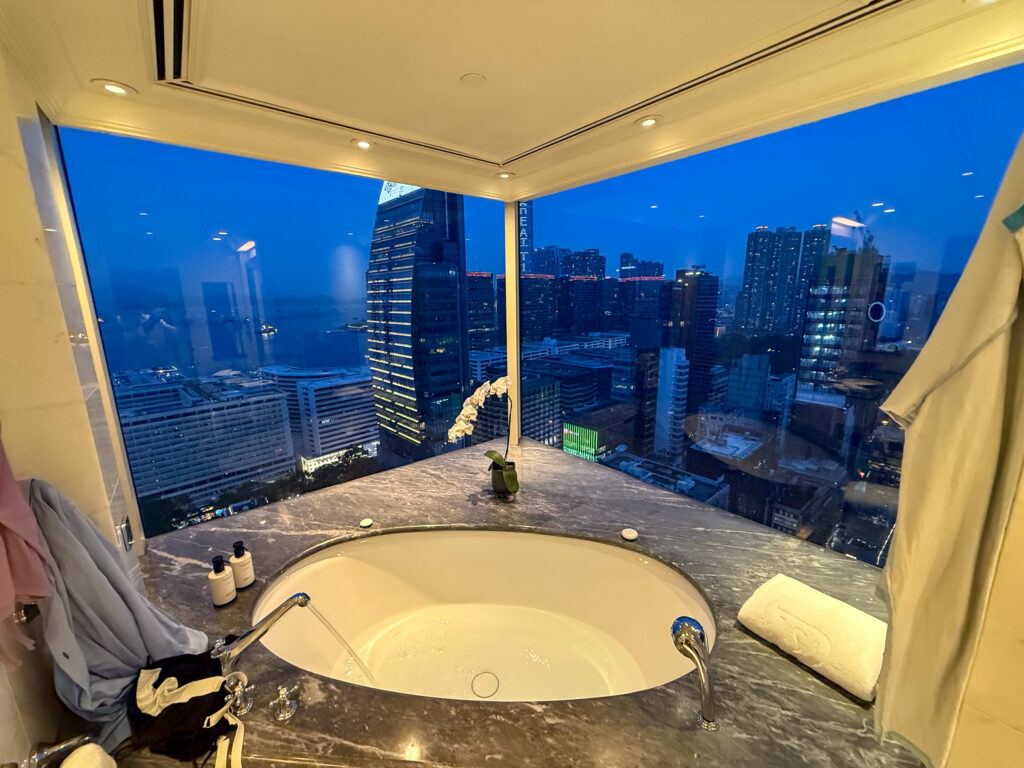
    The tub in the window with the towers and the water beyond
    Peninsula: the tub at the window, the towers beyond.
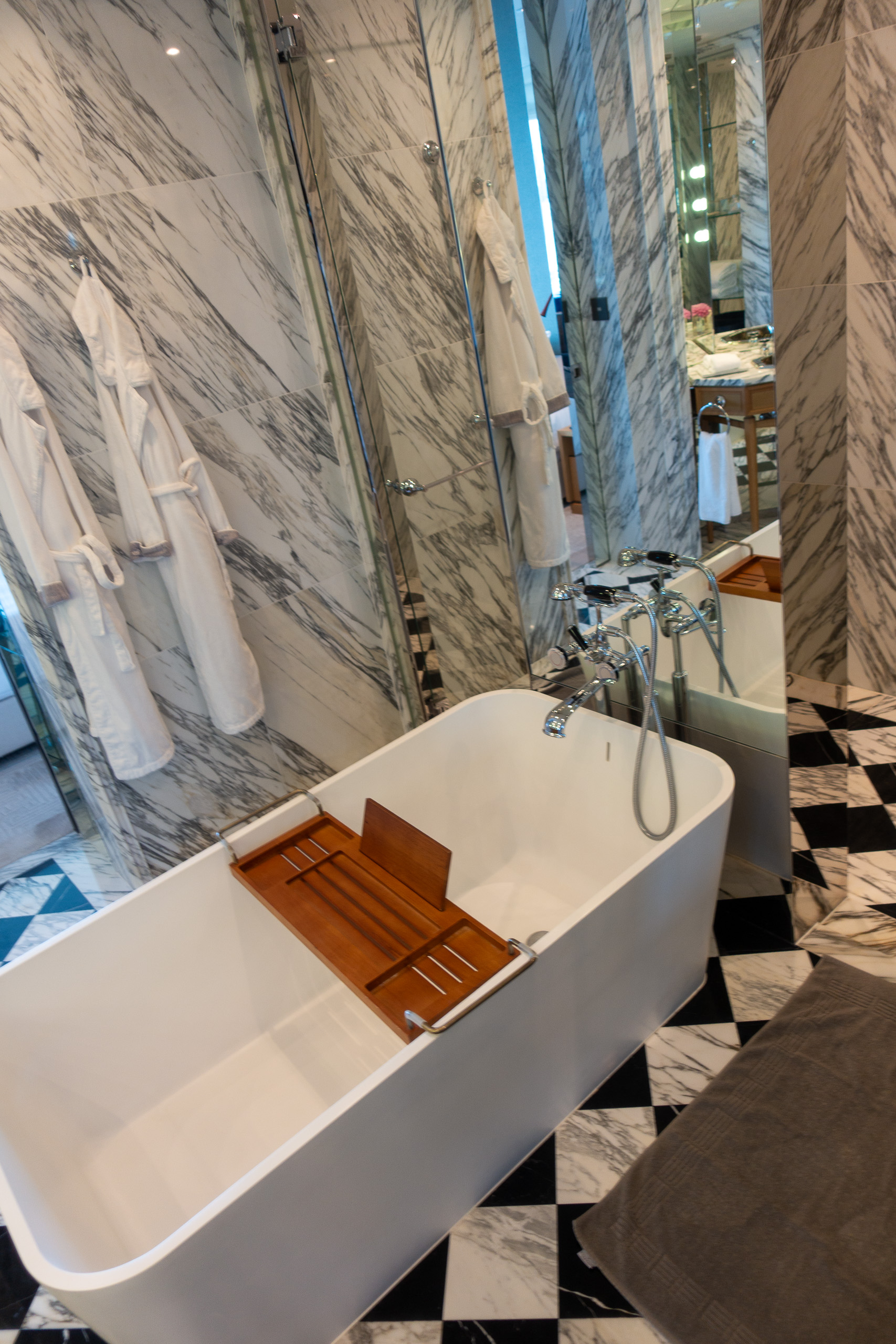
    A freestanding tub with a timber tray, robes hanging on the marble wall
    Rosewood: the tub, the tray, the robes.

    Where the Peninsula wins

    The arrival, and the thing you cannot get twice. The Peninsula sends a Phantom in the hotel’s own green to collect you, and if that sounds like theatre it is because it is theatre, staged well, by people who have been doing it for fifty years.

    It is the single most memorable arrival in Asian hospitality and it is worth having once, on the way in, when you are tired enough to enjoy being handled. Rosewood’s arrival is a car park under a shopping centre. That is the plainest way to put it. Once you are upstairs none of it matters, but the first four minutes of the two hotels are not in the same category and the Peninsula knows it.

    Breakfast laid on a round table at the window, the harbour beyond
    Breakfast at the round table by the window. The Peninsula does this without being asked twice.

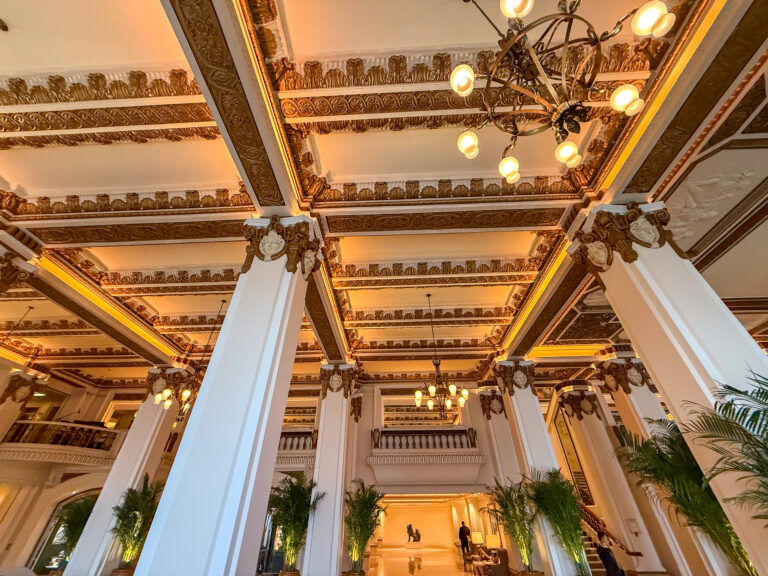
    The lobby. A colonnaded double-height hall with a gilded ceiling, palms in urns, a string quartet on the balcony and afternoon tea running below it, and it belongs to the city more than to the hotel. Rosewood has nothing like it and does not try: there is nowhere in that hotel to simply be. The Peninsula has a room for that. It is the lobby, and there is a queue for it.

    The estate. Six rooms including a starred Cantonese one, a formal grand restaurant, a Philippe Starck bar on the twenty-eighth floor that has aged into something close to camp, and a Swiss chalet on the ground floor serving fondue in subtropical Kowloon. Tea in the lobby is an institution with the queue to prove it; take it at seven in the evening, when there is none.

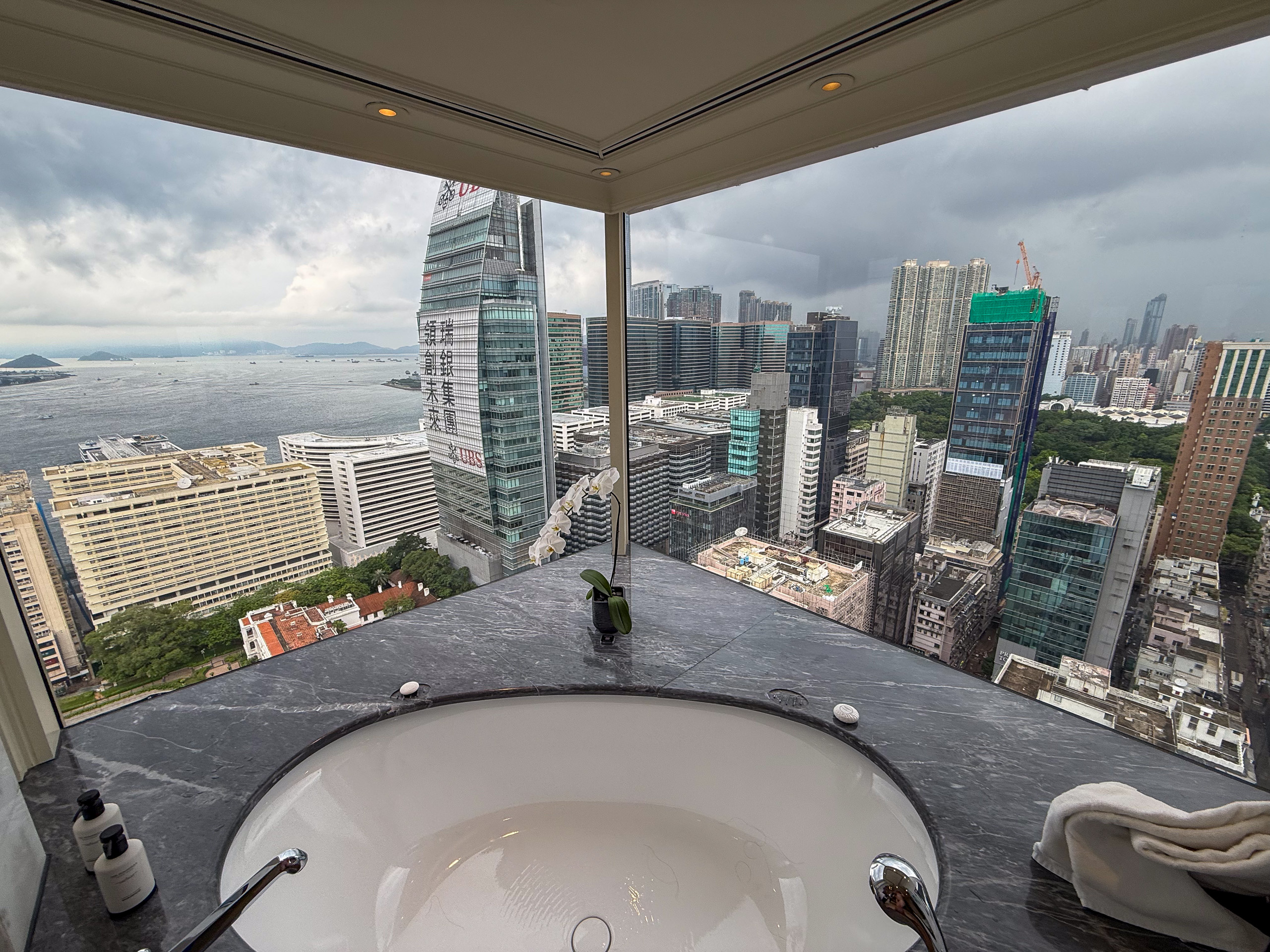
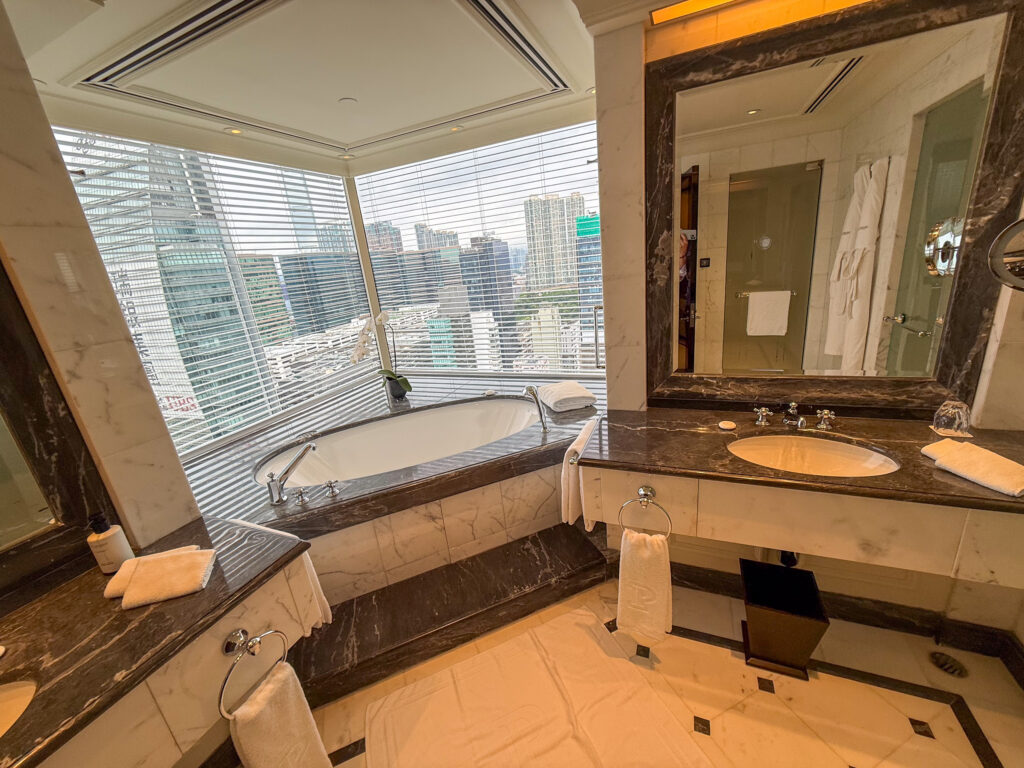
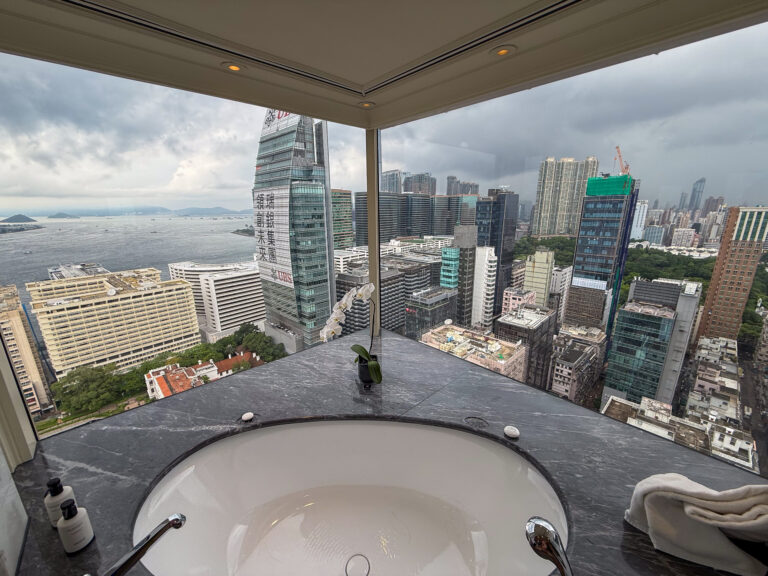
    A marble bathroom at The Peninsula with a tub set into the corner window and the Hong Kong skyline across the harbour beyond
    The Peninsula answers with this. The tub at the glass is the room’s whole argument.

    Where Rosewood wins

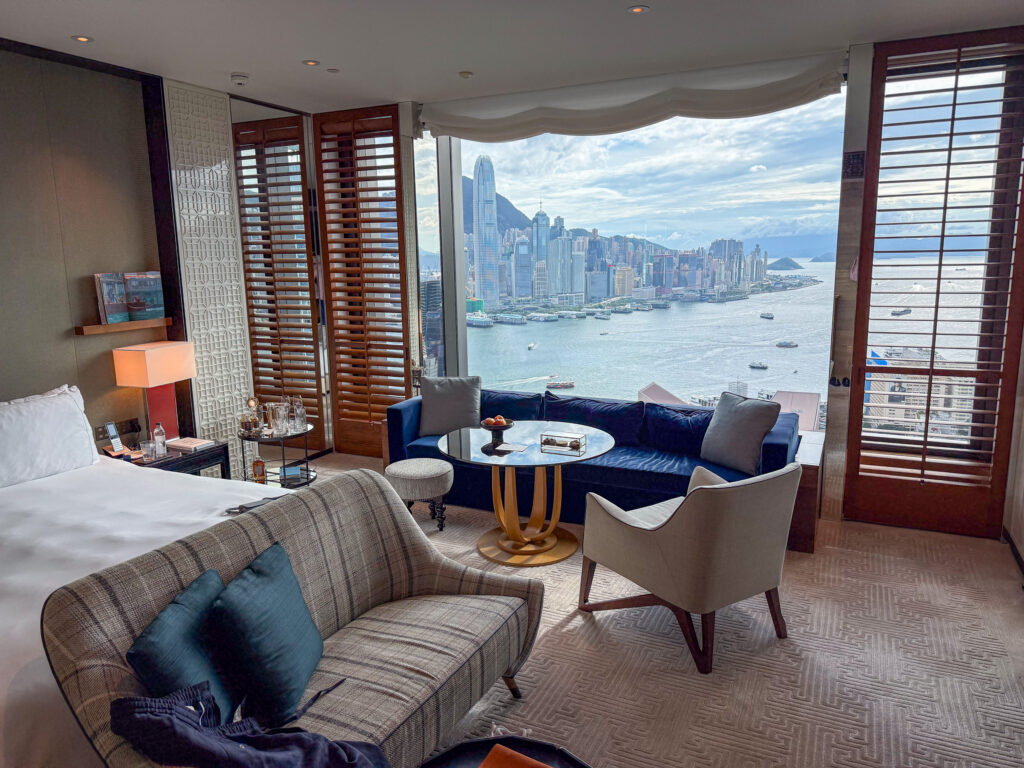
    The room, and this is where it stops being close. The Rosewood harbour room is a wide, low-lit, deeply comfortable space with plantation shutters folded back off a window that runs the width of it, a seating nook set into the glass, a proper writing desk, and a marble bathroom with a checkerboard floor and a freestanding tub placed where it can see the water.

    The room is organised around the harbour without ever saying so. The Peninsula’s is handsome, generous and slightly more formal, with a bathroom that is the best part of it — the tub at the corner window is one of the great hotel-bathroom views anywhere — and technology that was famous fifteen years ago and is now maintained the way a family maintains a grandfather clock.

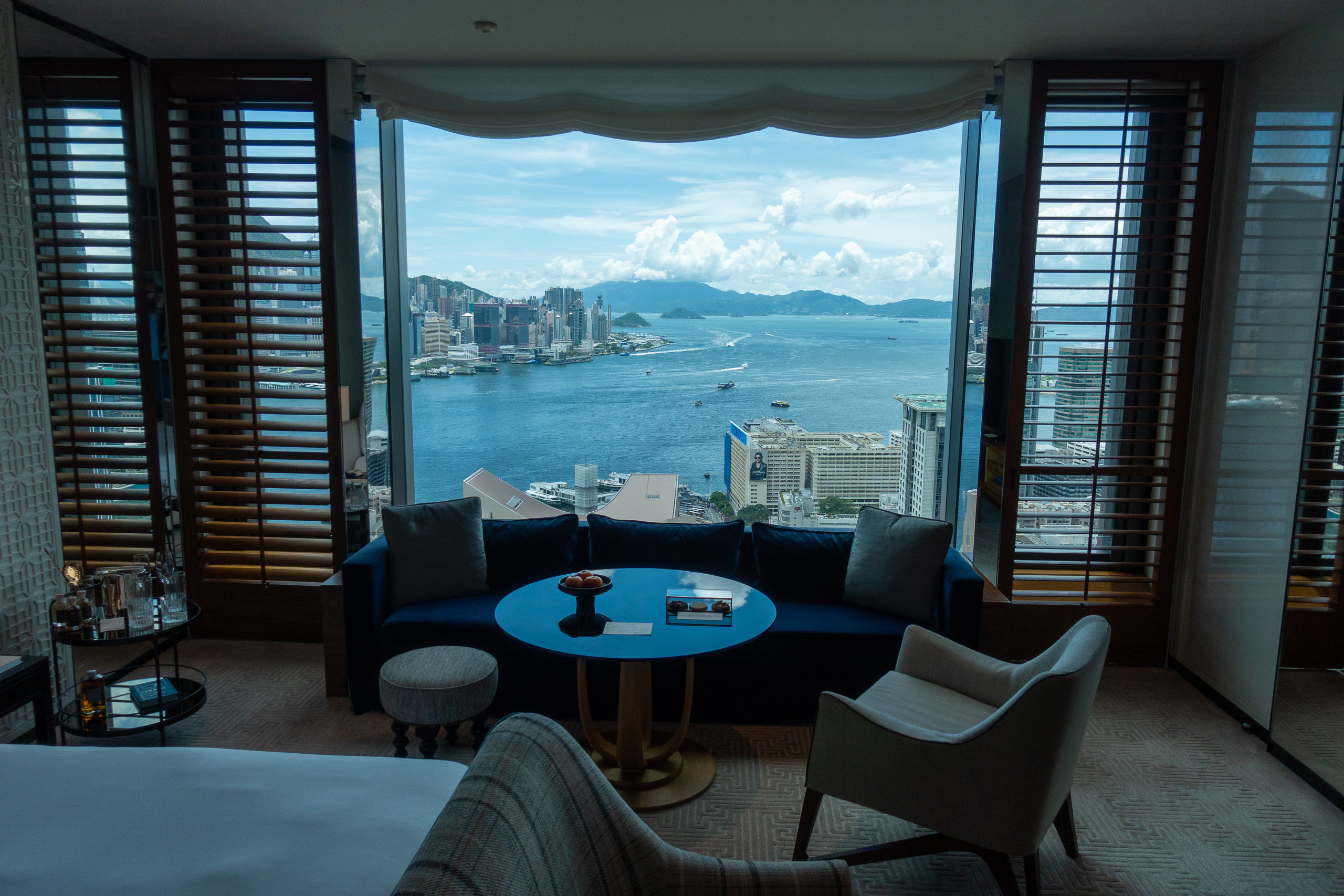
    A Rosewood harbour room with a bed, a sofa and a round table by the window, plantation shutters folded back and Victoria Harbour and Hong Kong Island filling the glass
    Rosewood, entry harbour category. The shutters fold right back and the window is the wall.

    The building, if you like the new kind. Dark timber, brass, low light, art everywhere, corridors that feel like a private floor, and a lobby you walk through rather than sit in: the least hotel-like large hotel I have stayed in.

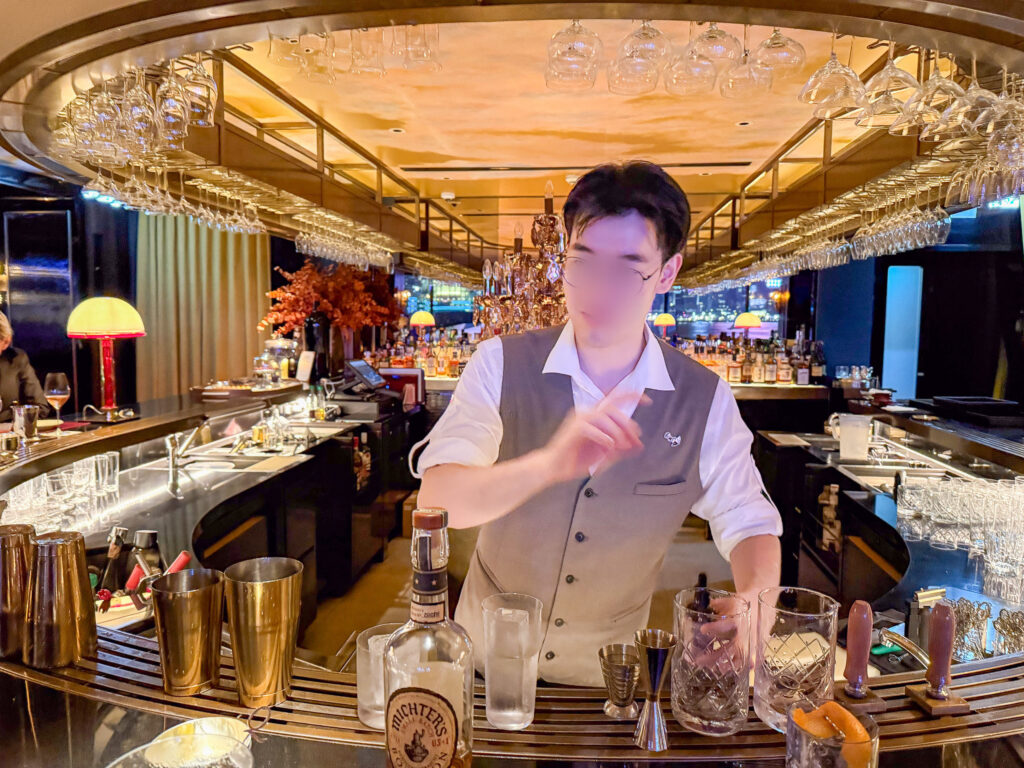
    The bar, and the sharper kitchen. The Legacy House is the Cantonese room and it is very serious about old recipes done exactly. The bar is the one people cross the harbour for, and on a Friday it is full of Hong Kong rather than full of guests, which is the mark of a bar that works.

    A bartender in a waistcoat mixing a drink at a low-lit bar with a gilded ceiling, bottles and shakers across the counter
    Rosewood’s bar on a weekday. By Friday you will not get this view of it.

    Service is the category where the gap closes completely. Both are staffed by people who are very good at this and have been for a long time, both anticipate rather than react, and neither made a mistake across six nights. The difference is register: the Peninsula is formal and slightly ceremonial, Rosewood is quieter and closer to how a good private house would run. Neither is better. Pick the one you would rather be greeted by at seven in the morning.

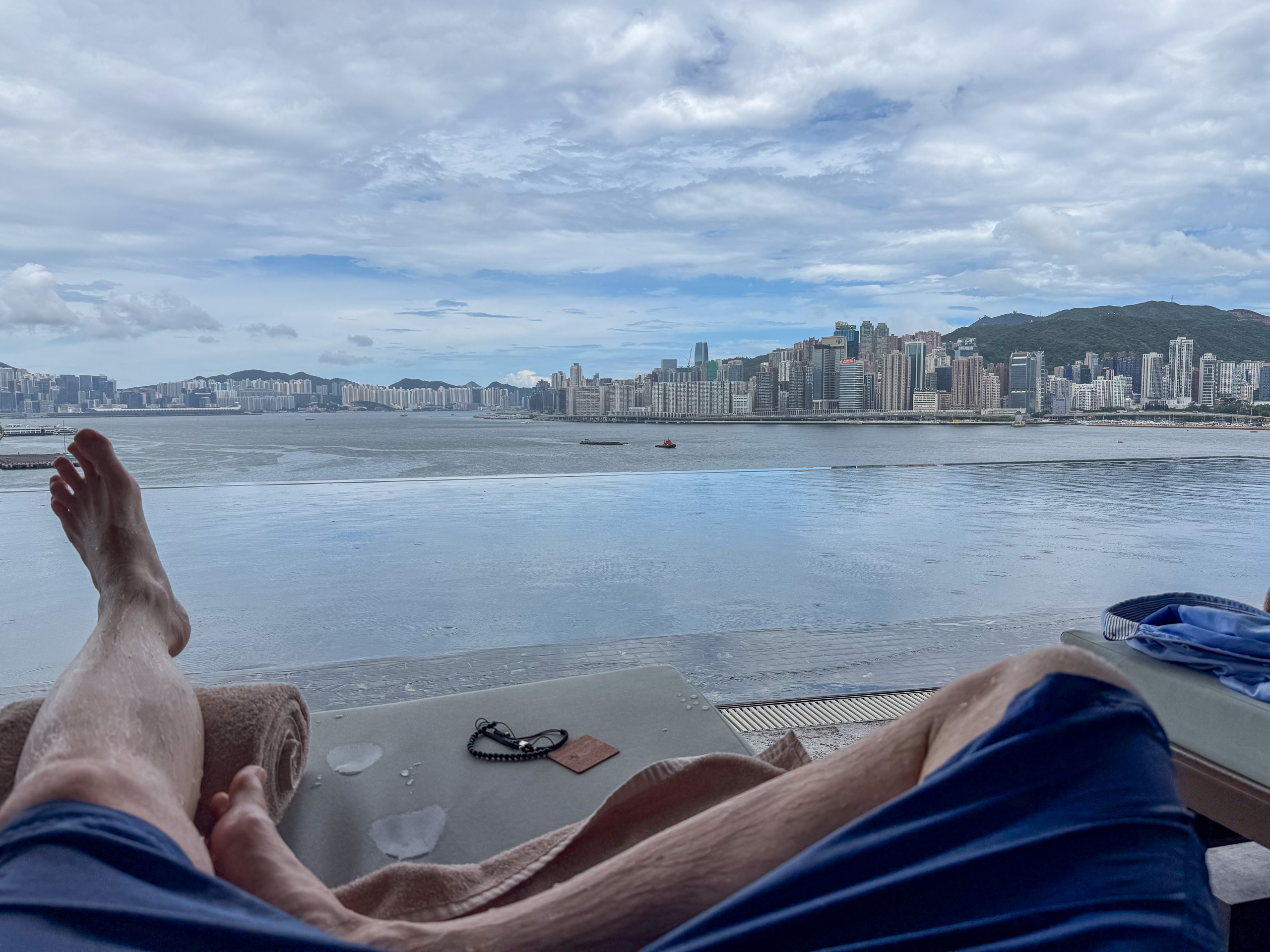
    Feet up on the daybed with the water and the far shore beyond
    The daybed at the glass, feet up.
    A round blue table at the window with the harbour spread out behind
    The round blue table at the window.
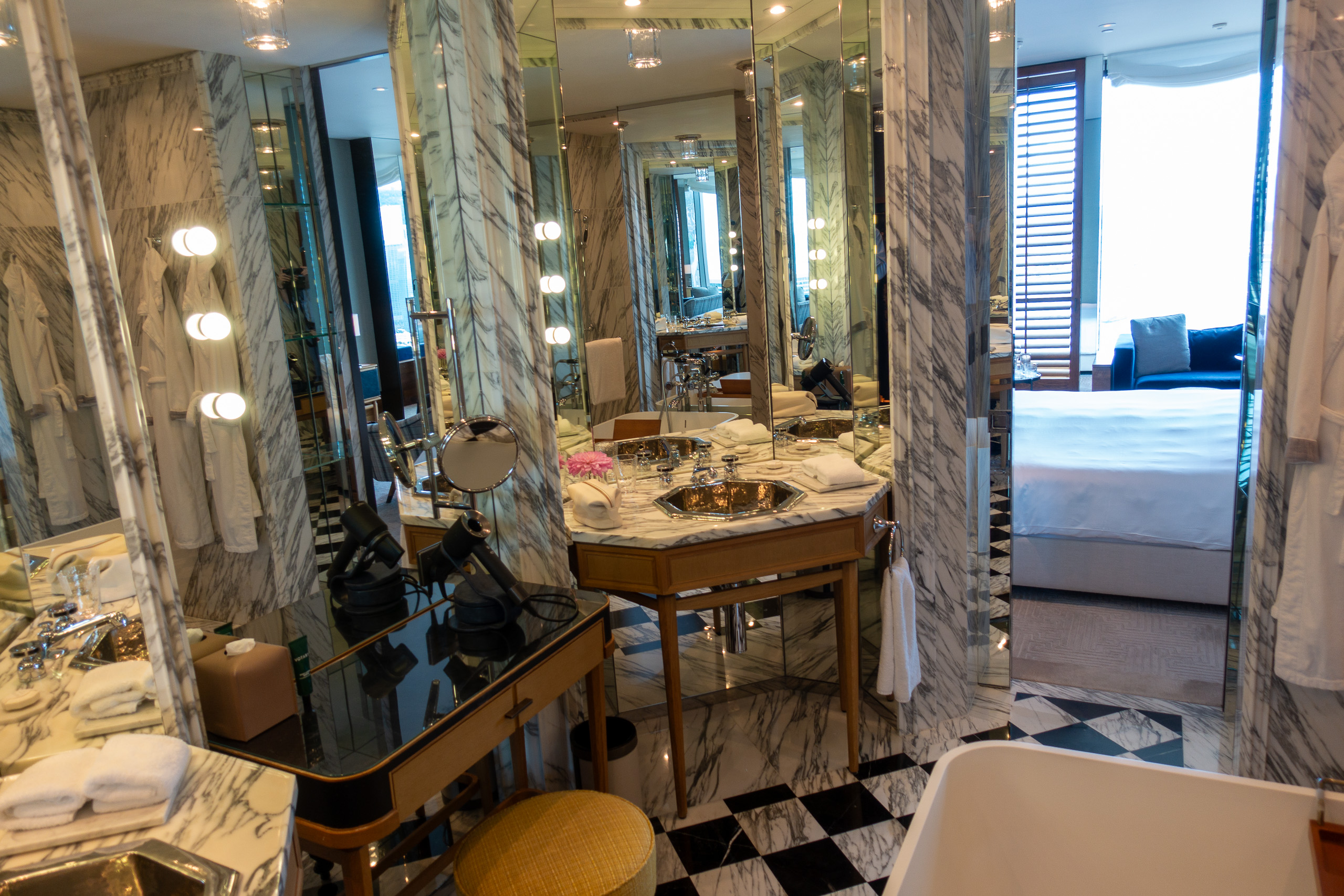
    A marble bathroom with a lit vanity and a chequerboard floor, the bedroom through the door
    The marble bathroom, the bedroom through the door.

    Verdict by traveller type

    Here is the question, and it is not about rooms. Is this your first time in Hong Kong?

    If it is, stay at the Peninsula. The building, the lobby, the car and the tea are part of the city in a way that a hotel room, however good, is not, and you will remember arriving there for the rest of your life. Take the room with the harbour in it, take the Rolls once, and accept that you are paying for an occasion.

    If it is not, stay at Rosewood. You already know the city, you do not need the introduction, and what you want is the best room on the best view with the fewest people in the way. That is what it is, comfortably, and it is not close.

    And if you have four nights or more, do what I did and split it. They are ten minutes apart, the contrast is the most interesting thing about either of them, and neither hotel will mind. One caution for both: March in Hong Kong can be grey and wet for days at a time, and every argument above is about a view. Neither hotel can do anything about that, and both will charge you for it regardless.

    One of them is the arrival. The other is the room. Almost nobody needs both, and everybody thinks they do.

    The harbour at dusk under broken cloud, lights coming on across the water
    The harbour at dusk from the Rosewood side. Kowloon, either way.

    Bottom line

    The Peninsula for the occasion, Rosewood for the room and the definition of luxury. First visit, the Peninsula and the car once; been before, Rosewood on a high floor.

    See the full set: The Peninsula, Hong Kong — in frames and Rosewood, Hong Kong — in frames. More Hong Kong: the Hong Kong set.

    Hong Kong gallery

    Every photo on this site is my own, shot on the stay. Slide through →
    A lit display of teapots and canisters behind a lacquered counterRosewood, Hong KongHong Kong Island's skyline at night reflected across Victoria HarbourDumplings and small plates on a red lacquer table with a pot of teaThe living area in daylight with the shutters open to the harbourA round bathtub set at a window overlooking the city towers at duskThe hotel’s green Rolls-Royce waiting at the doorThe full width of the room, bed and seating, the harbour along one sideA marble bathroom with twin basins and a tub, the harbour through the windowThe cabin of the hotel Rolls-Royce, the driver at the wheel
  • The Peninsula, and the Rolls-Royce that comes to collect you

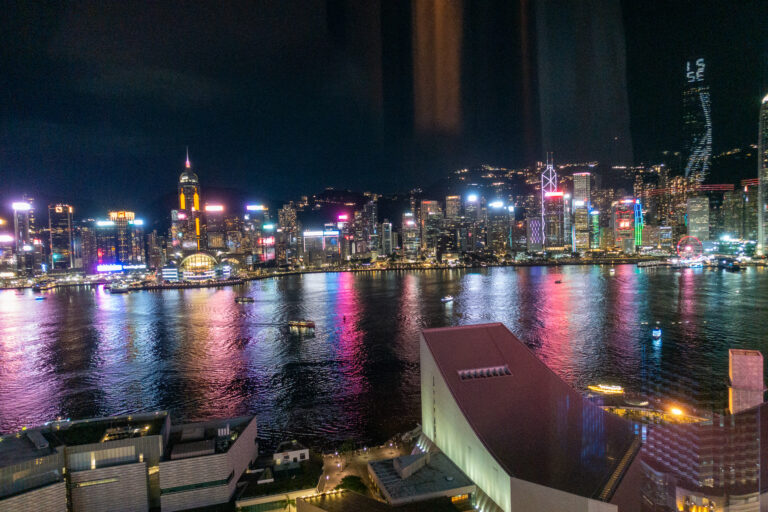
    The Hong Kong Island skyline at dusk across Victoria Harbour, seen from The Peninsula

    HONG KONG · STAYED MARCH 2026 · 6 MIN READ

    The Peninsula, and the Rolls-Royce that comes to collect you

    Inside Hong Kong’s grande dame — the fleet, the suites, and the service that still sets the standard.

    By J.C. Mercer

    Verified stay·paid in full

    • Stayed June 2026
    • Room booked Grand Deluxe Harbour View, king, 24th floor — the Tower
    • How it was booked American Express Platinum, Fine Hotels and Resorts
    • What the channel bought Free upgrade to the harbour side · breakfast for two at The Verandah · a property credit · four o’clock checkout · 8 am check-in
    • Value verdict Worth it in the Tower, harbour side. The 1928 building asks no less and looks at Salisbury Road.
    • When to go Spring. June was humid and rainy Book this stay

    Booked the way any other guest would book it.

    Arrival

    My driver was standing at the arrivals barrier. He already had the flight number, the surname and the bag count, and he said good morning as though he had collected me a dozen times before. That is the first thing to understand about The Peninsula. The performance starts a forty-minute drive from the building.

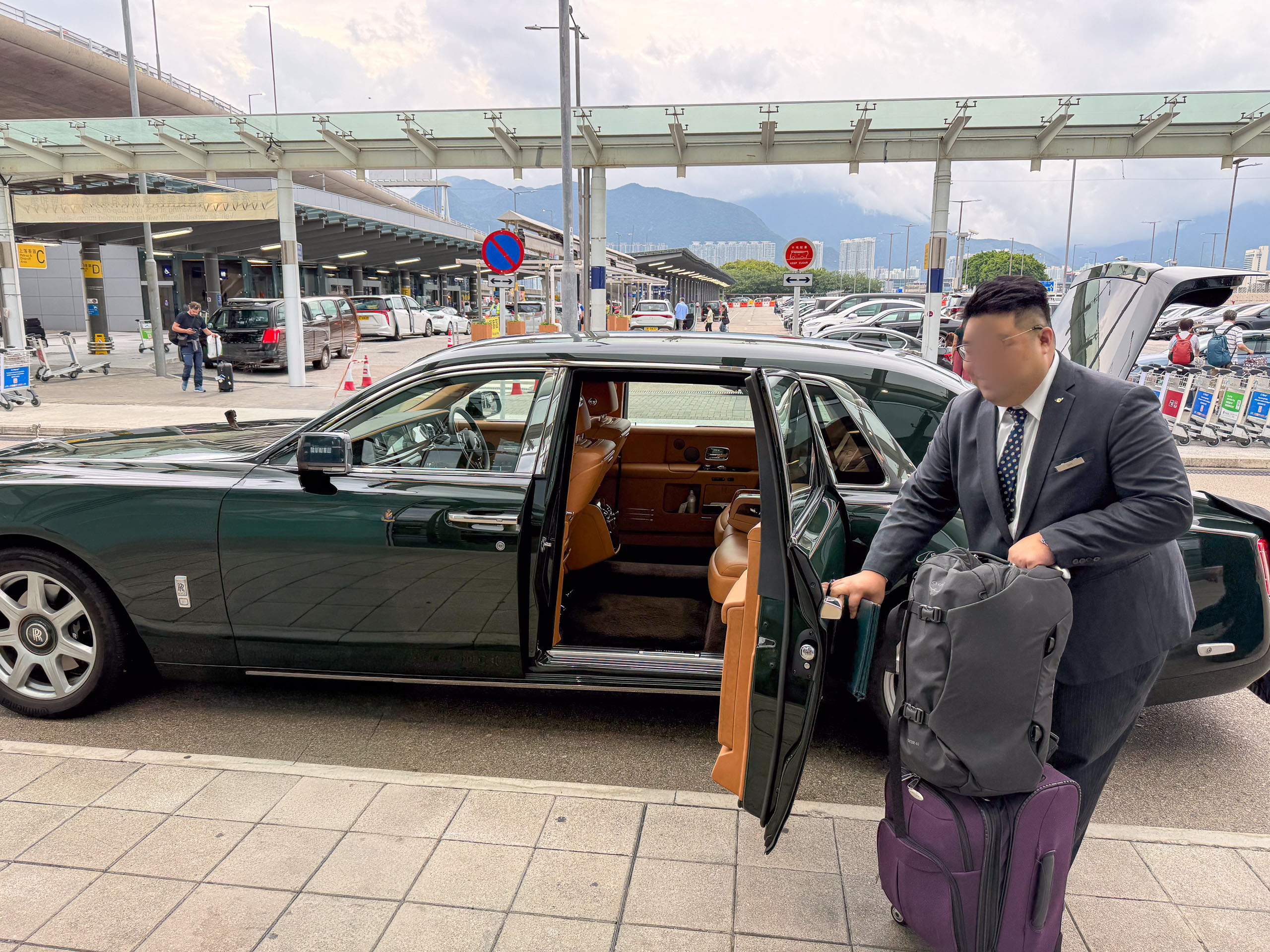
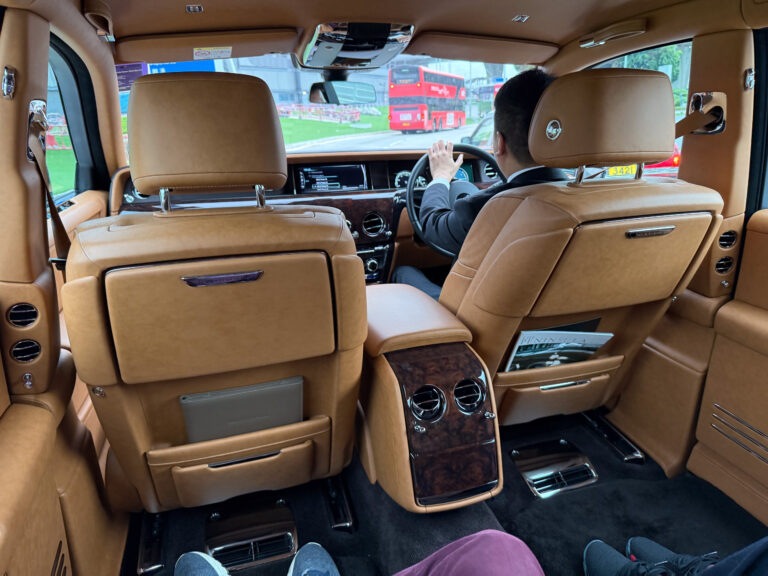
    The car was a Phantom Extended Wheelbase in Peninsula Green, the hotel’s own colour, with the crest of The Hongkong and Shanghai Hotels on the rear door. Chilled water in the console; curtains on the rear glass that draw at the touch of a switch. I spent the run over the Tsing Ma Bridge doing what everyone does in that car, which is pressing buttons to see what they do, then pretending I had not.

    A member of staff loading luggage into the green Rolls-Royce at the terminal
    The Phantom at the terminal. The buttons are inside, and I pressed all of them.

    The fleet is not a marketing exercise. The green belongs to the hotel and the cars are ordered in batches rather than one at a time; the doorman told me they have been buying Rolls-Royces since the 1970s and have never seriously considered anything else. The one to look for sits at the front of the driveway most mornings, a pre-war Phantom kept in better condition than most cars a fraction of its age.

    You pull up past the fountain into a colonnade of page boys in white, and the doors open before the car has settled. We were greeted at the door by name, and moved to our ready-room for check-in– upstairs, in the room, with full tea. Equal to the best hotel arrival of my life and it starts the stay with a feeling of harmony.

    Armchairs beneath the arched windows of the lobby, a chandelier above
    The lobby at four. The strings are behind the columns and the tea trolley finds you.

    The lobby is the finest room in Hong Kong and it does not belong to the hotel’s guests. Between two and six in the afternoon it belongs to everyone: the queue for tea forms before service opens, snakes past the columns and does not disappear until closing. Reservations are not taken.

    Gilt ceilings, palms, a string quartet on the mezzanine, a hundred people photographing a tiered stand, and one man photographing the hundred people. I joined the line on the first day at ten to two and sat by twenty past, which is a good outcome. If the host tells you the wait is long, supposedly Felix on the 28th floor serves a version of the tea with the harbour in the window and no queue at all. Felix was just cocktails for me later. The scones are the same. The room is not, and I would take the lobby every time if I had the afternoon to spend.

    The performance starts a forty-minute drive from the building.

    The room

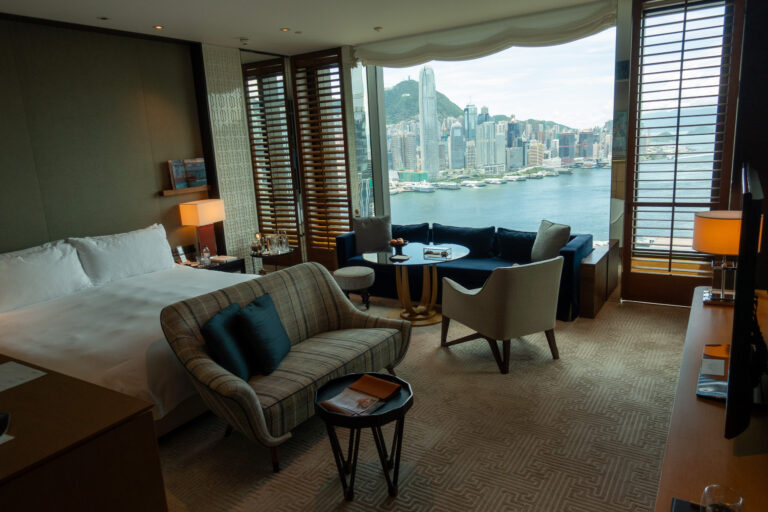
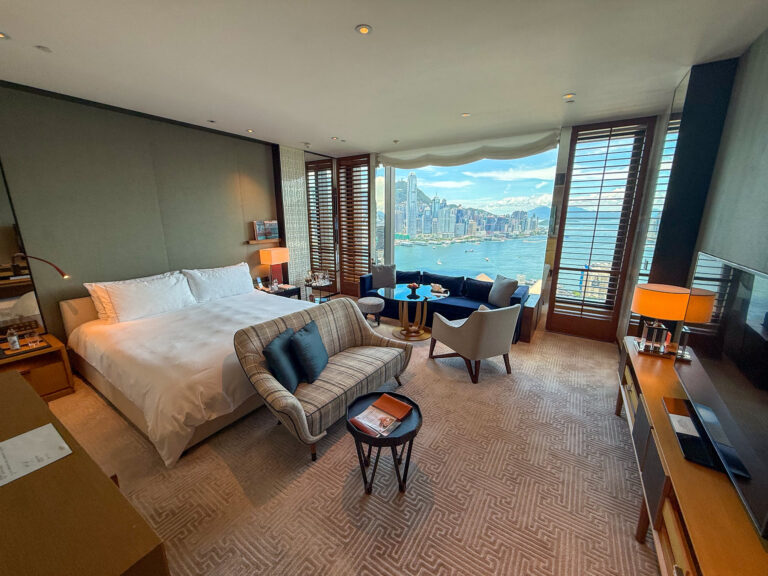
    I was in the Tower, high enough that the window wall framed Hong Kong Island end to end. The 1928 building has the taller ceilings and the better bones, but its rooms look over Salisbury Road and the shopping streets. If the harbour is why you are coming, take the Tower and the highest floor they will give you (or Rosewood…).

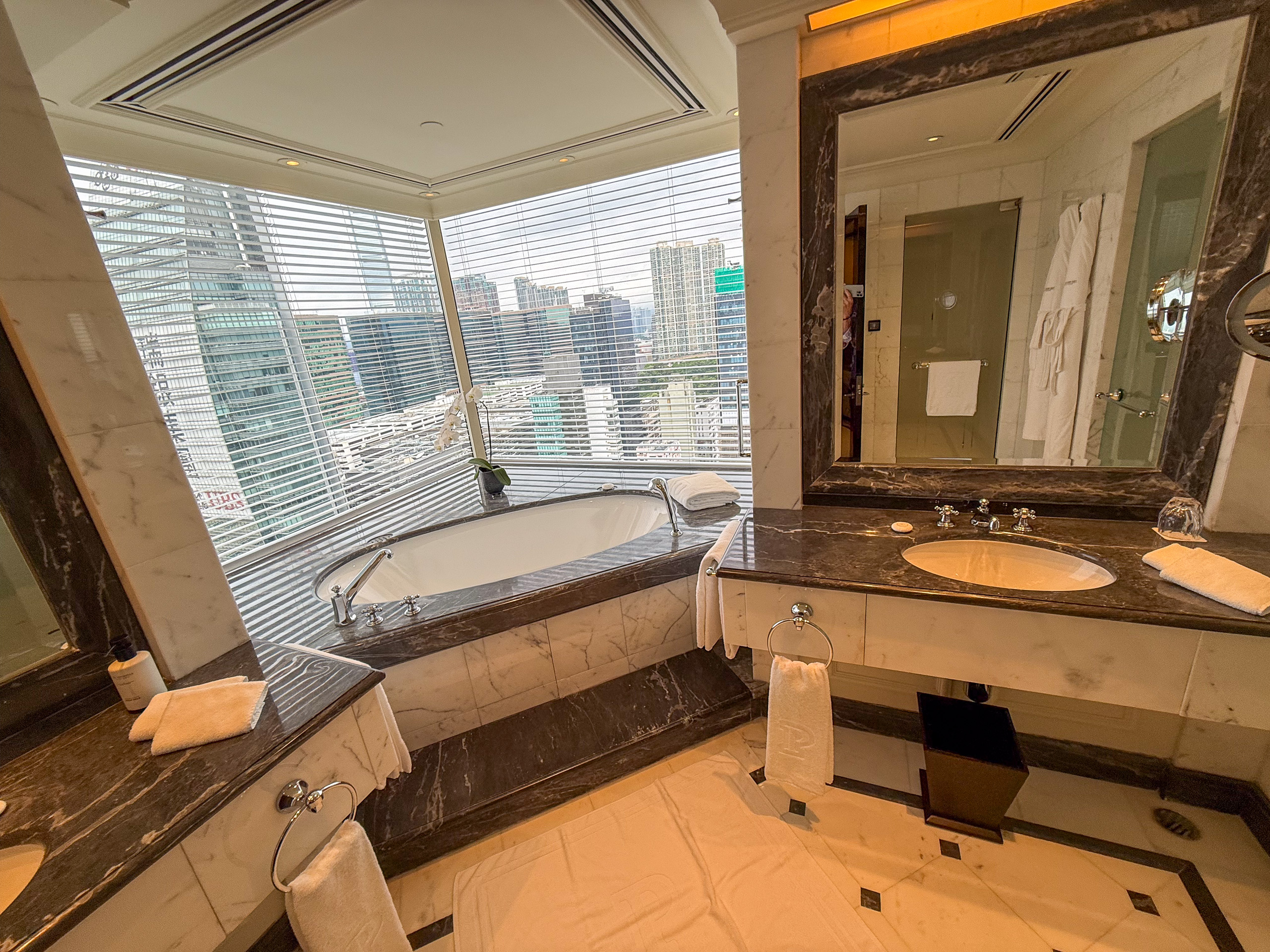
    A corner bath set into marble beneath the window, the city outside
    The tub sits at the glass; the city does the rest.

    The room is a study in restraint that hides an absurd amount of engineering. Three tablets control everything, preset in a long list of languages: lights, curtains, temperature, the television, room service, spa bookings, the weather, your flight status. What makes them work is that they stay out of the way until you want them.

    The details that stay with you are smaller. A valet box beside the door with a hatch on each side, so the newspaper and the pressed shirts arrive without anyone knocking. A vanity mirror that rises out of the dressing table at the touch of a button and vanishes again. A slot for shoes that need shining. A nail dryer built into the vanity, which I laughed at on day one and used on day two. Nespresso machine, Dyson dryer, a proper Chinese tea set, Evian on the tray.

    The bathroom is marble on every surface: a deep tub at the glass, a television set into the mirror above it, a separate shower and a separate WC. Bath salts appear at turndown, and so does something from the bakery. I’m a sucker for the see and be seen bathtub and this was one of my all-time favorites.

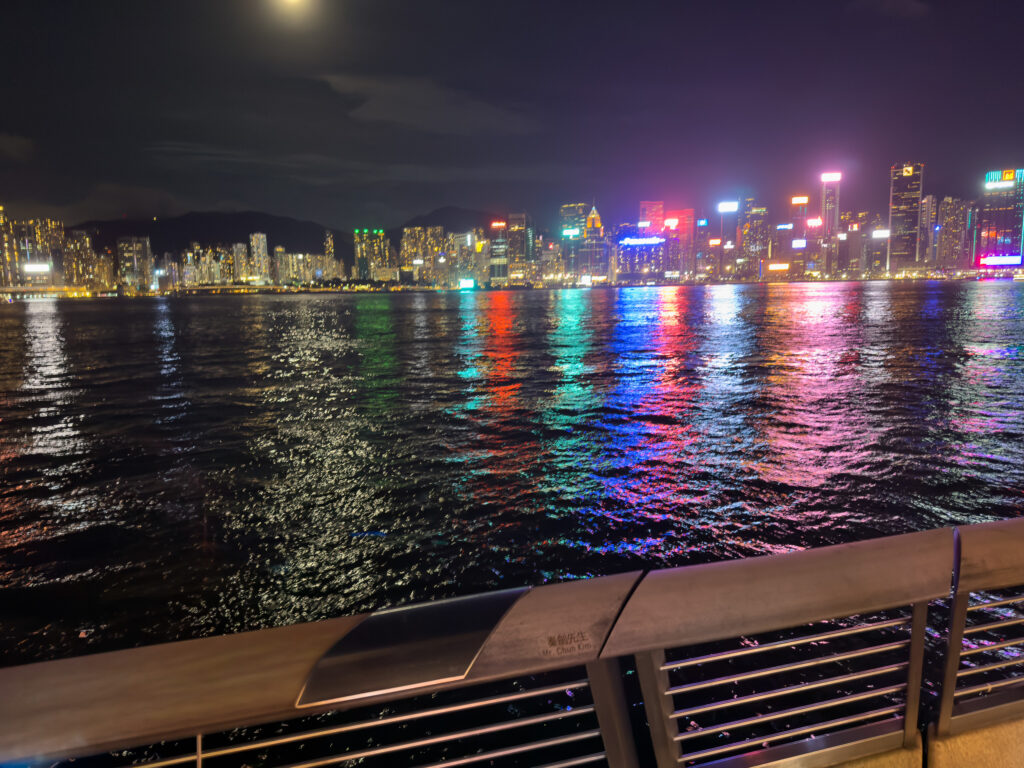
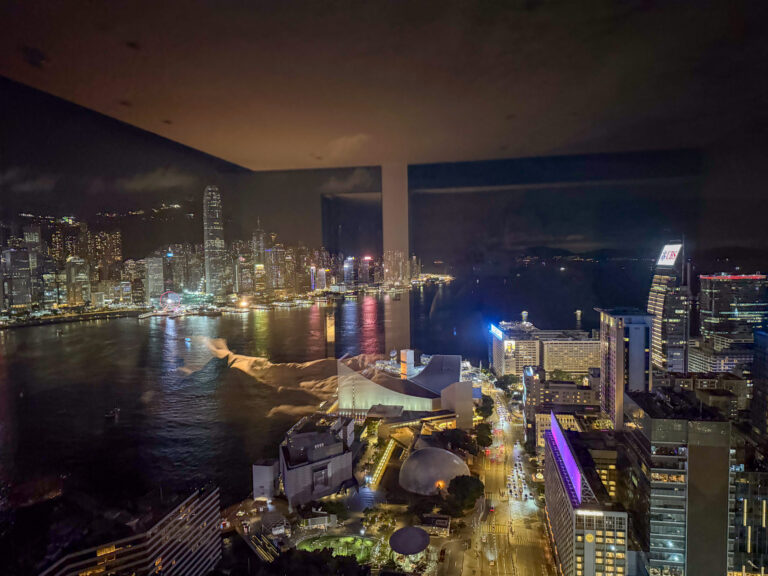
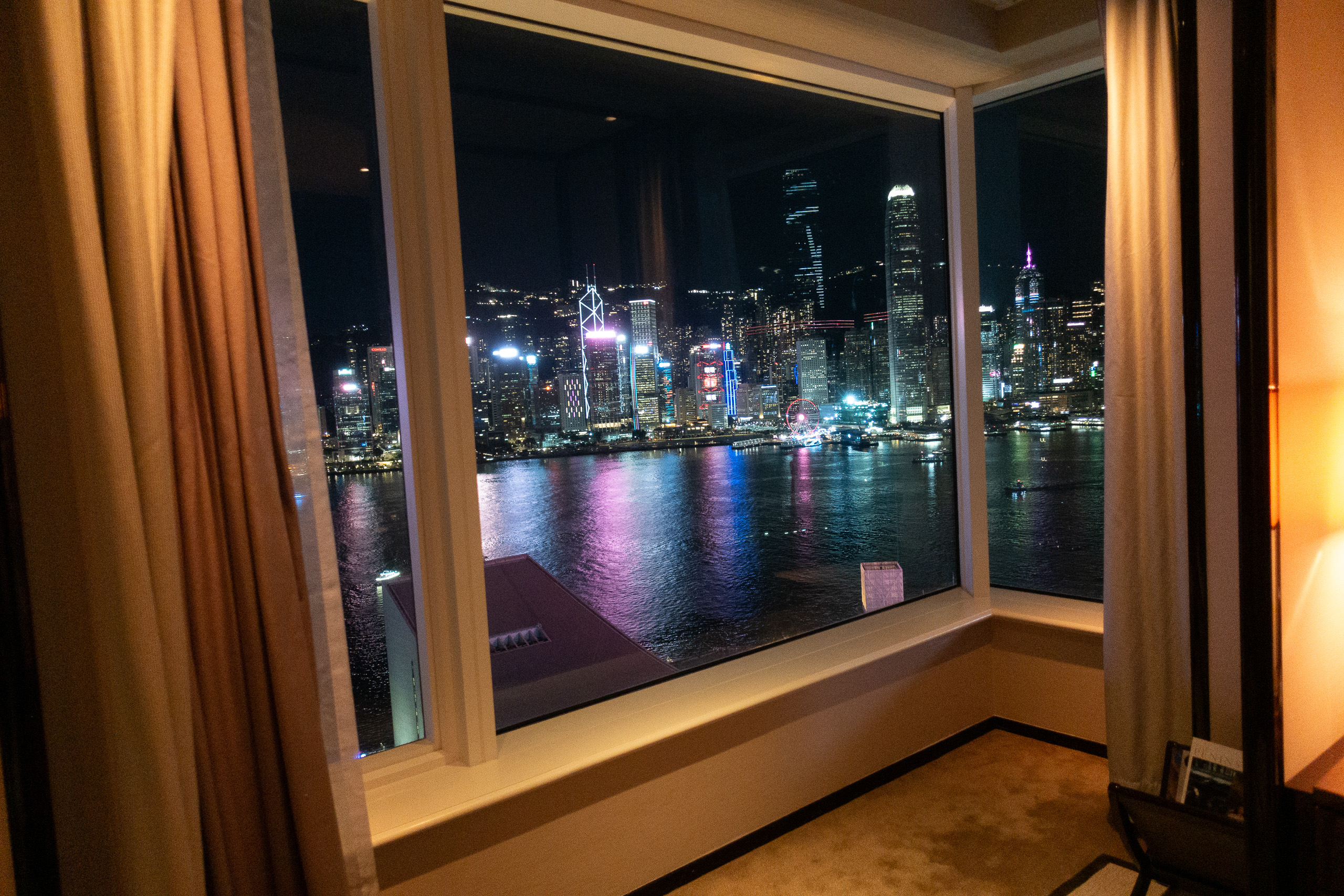
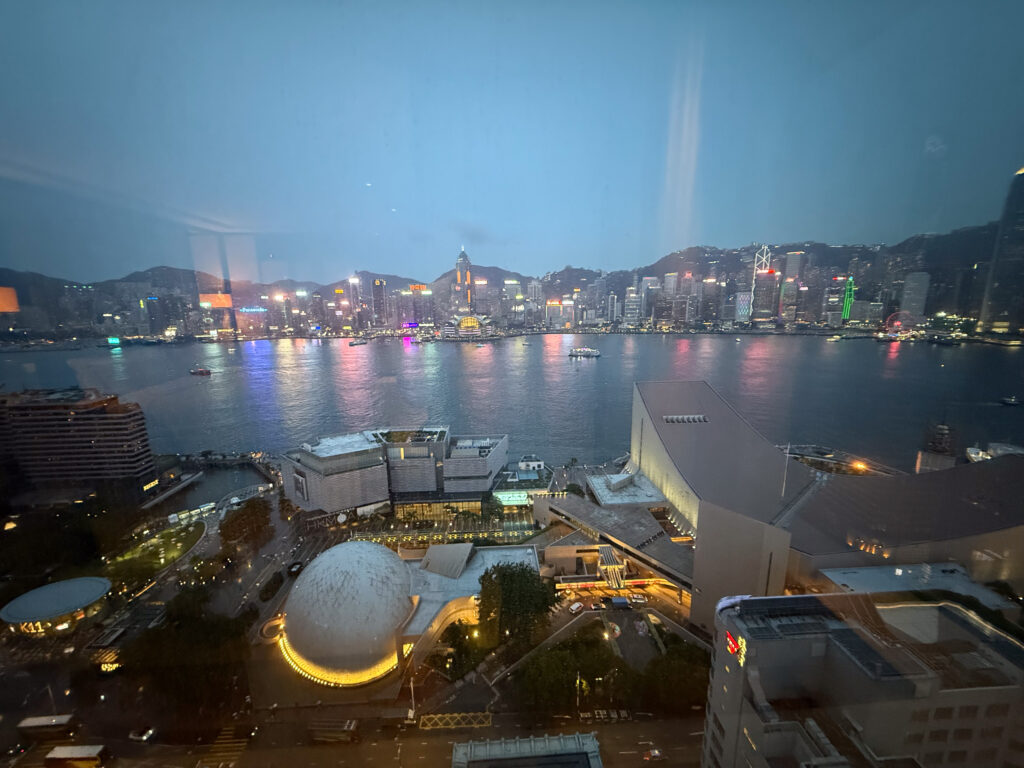
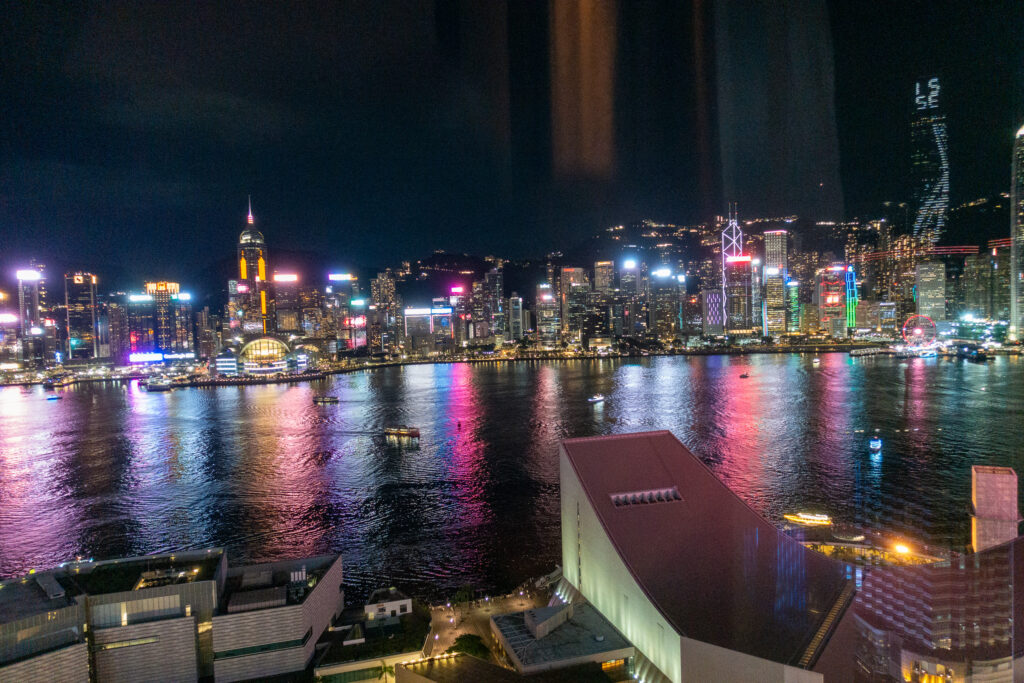
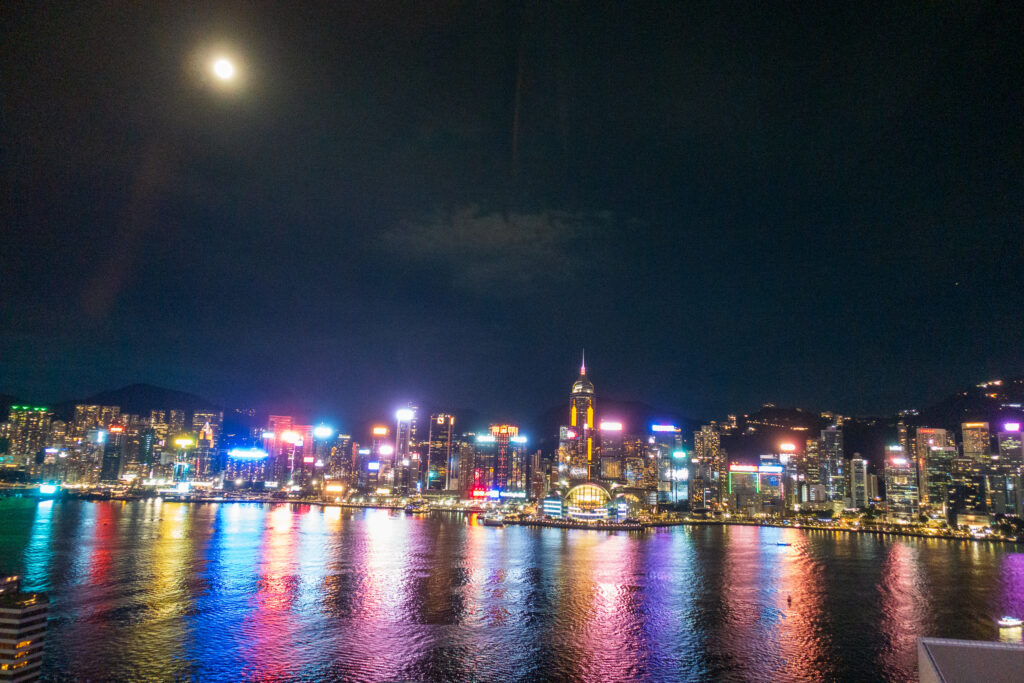
    At eight each evening the Symphony of Lights runs across the harbour, and you can watch the whole thing from the bed without moving. I did.

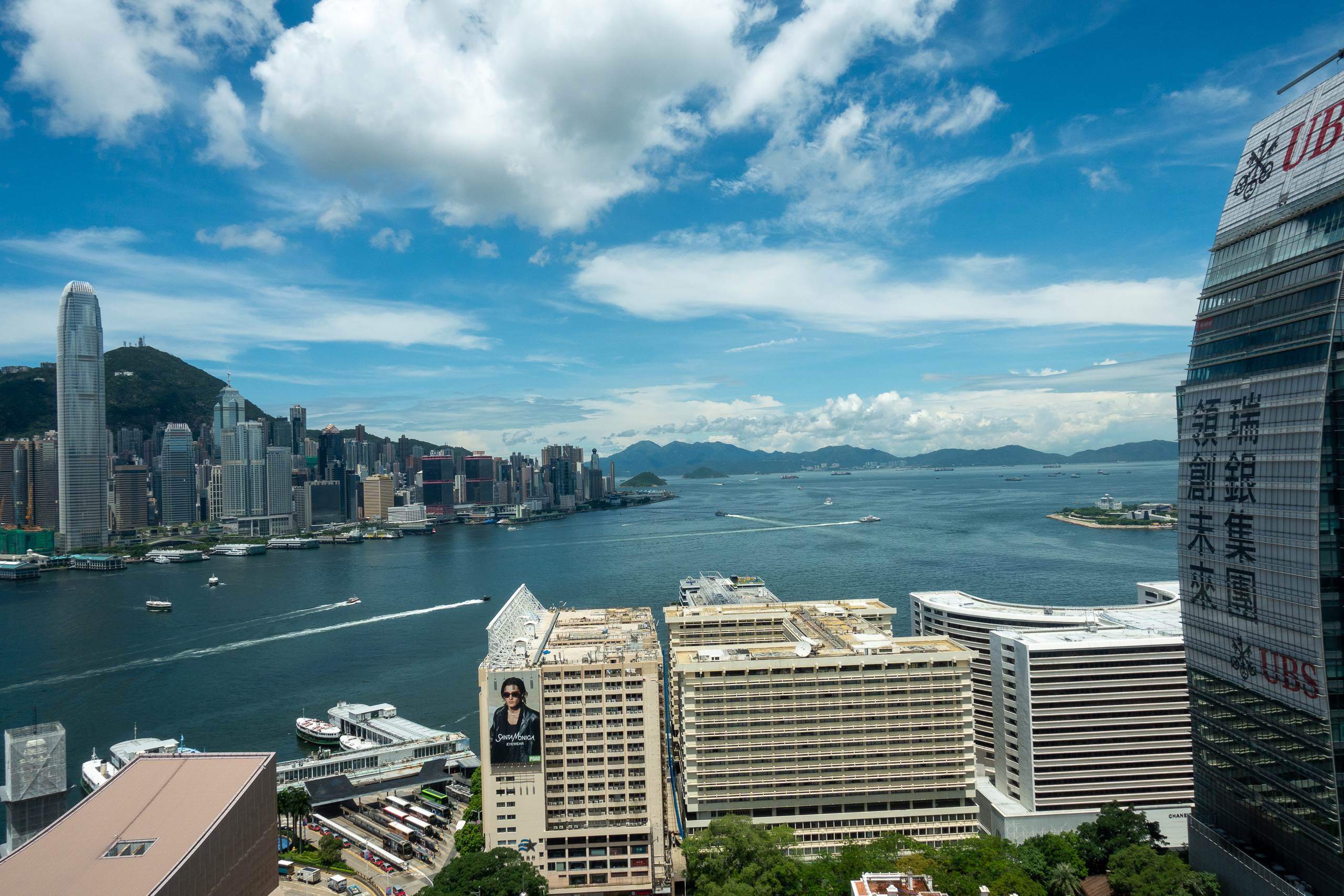
    The island and the harbour in full daylight from the window
    The window at nine.
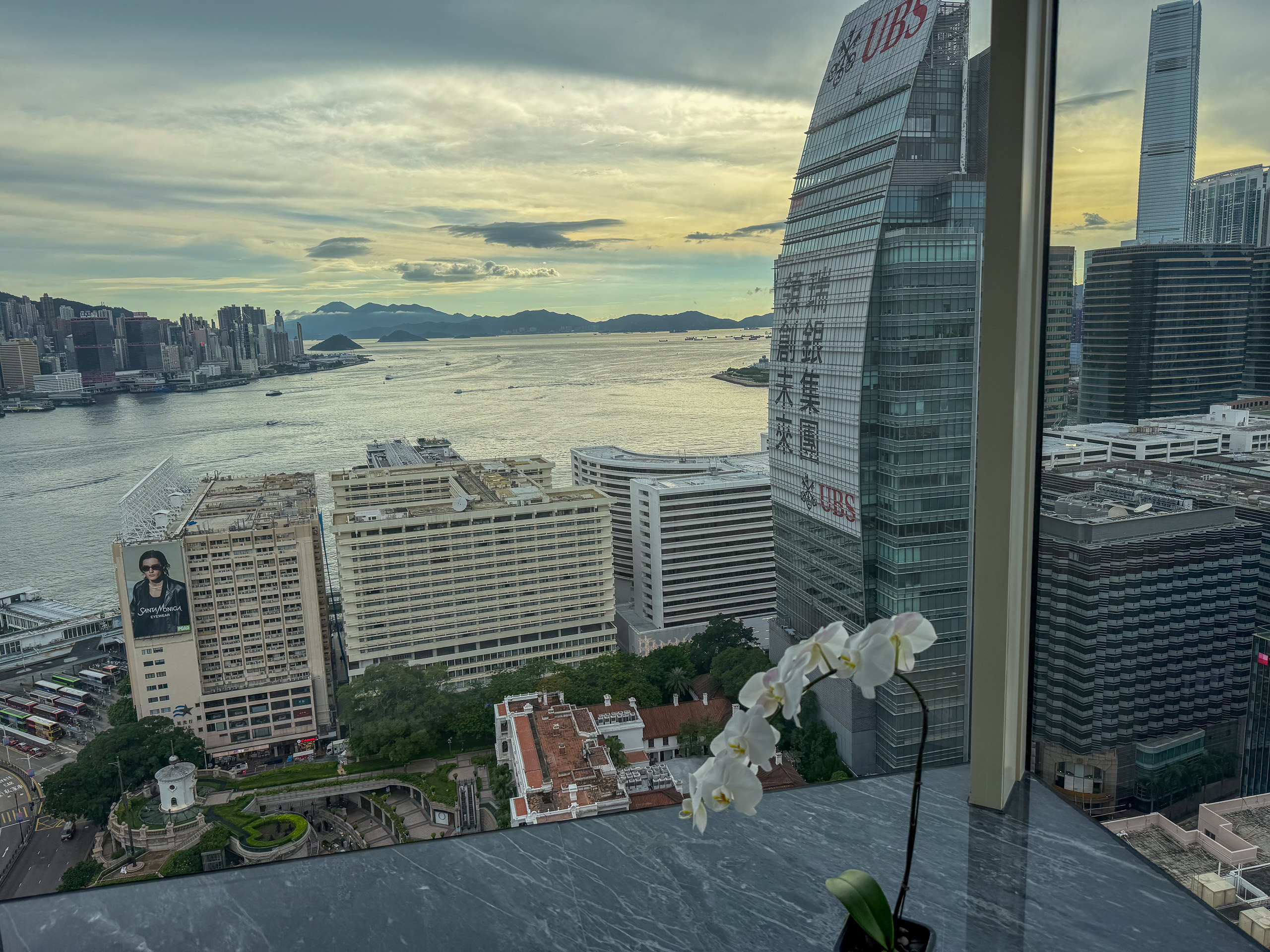
    Late light across the harbour, an orchid on the sill
    The window at six.
    The harbour at night framed by the curtains of the darkened room
    The window at eleven.

    Noted

    Observed on the stay, not measured.

    WhatChecked on the stay
    Wi-Fi speedFast, and it held across three days
    NoiseSilent inside; faint ferry horns around 6am
    BedKing, medium-firm, four pillow options on the tablet
    Water pressureStrong; hot almost at once
    Air conditioningQuiet, holds the set temperature overnight
    Blackout curtainsFull, motorised, no light gap
    Lift waitNever waited

    Eating

    Six restaurants and bars, several of which people cross the harbour for.

    Breakfast laid on a round table at the window, the harbour beyond
    Breakfast in the room, harbour included. The round table is there for exactly this.

    The Verandah does breakfast, and it is worth having it included. The buffet runs a noodle station cooked to order, congee, dim sum, a Japanese section, an Indian section and the full European spread. GREAT BREAKFAST.

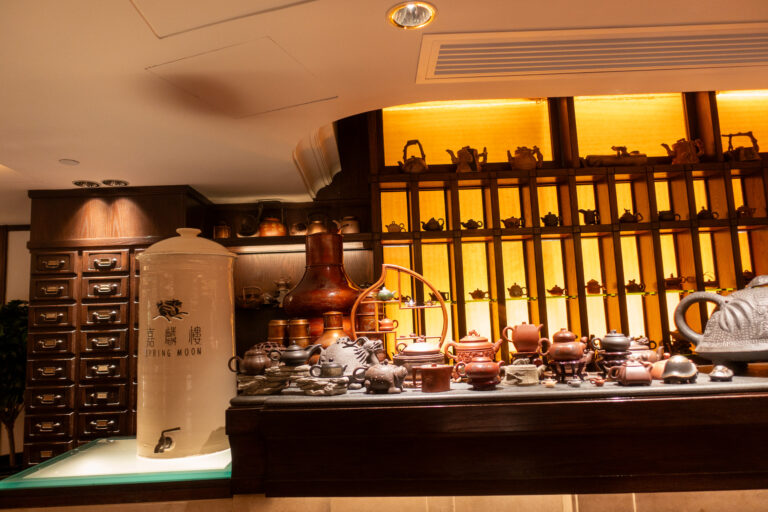
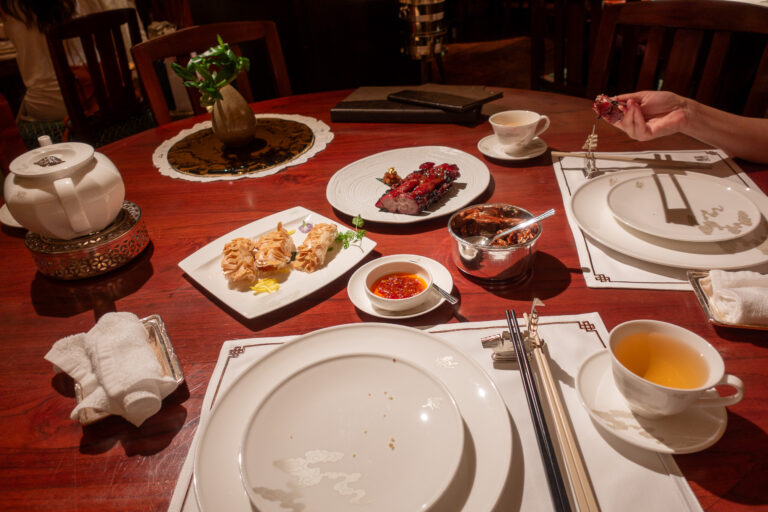
    Spring Moon is a formal bite but go for lunch if you need. Refined Cantonese, a Michelin star, a tea master who will talk you through the list, and an XO sauce the hotel now sells by the jar. Order the sauce with anything. Though wonderful in setting, two of the dishes were a miss so be careful there with you ordering. They must film movies here though- it is indeed a classy period film- beauties and business men abound.

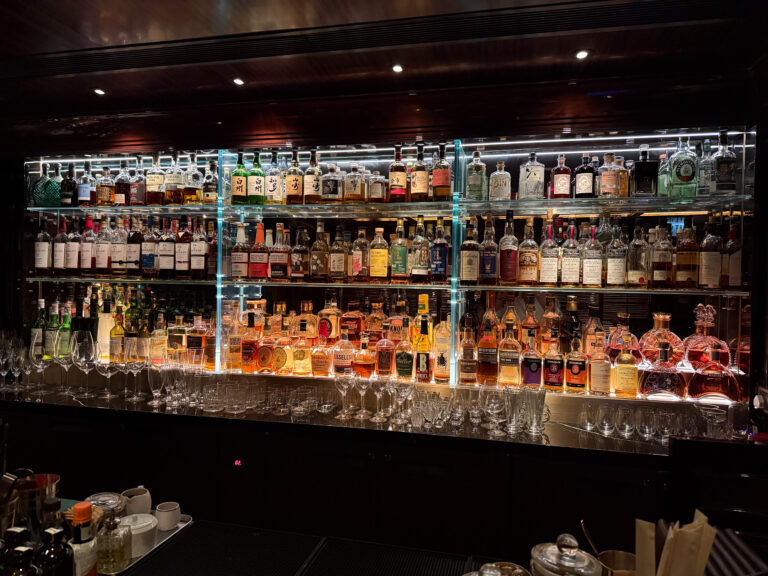
    Gaddi’s is the grandest and most formal of the rooms, and carries it without apology. Elegant attire, and they mean it. Felix, on the 28th floor, is a Philippe Starck interior that has aged into something close to camp, in the best way; go for the view and a drink before dinner elsewhere.

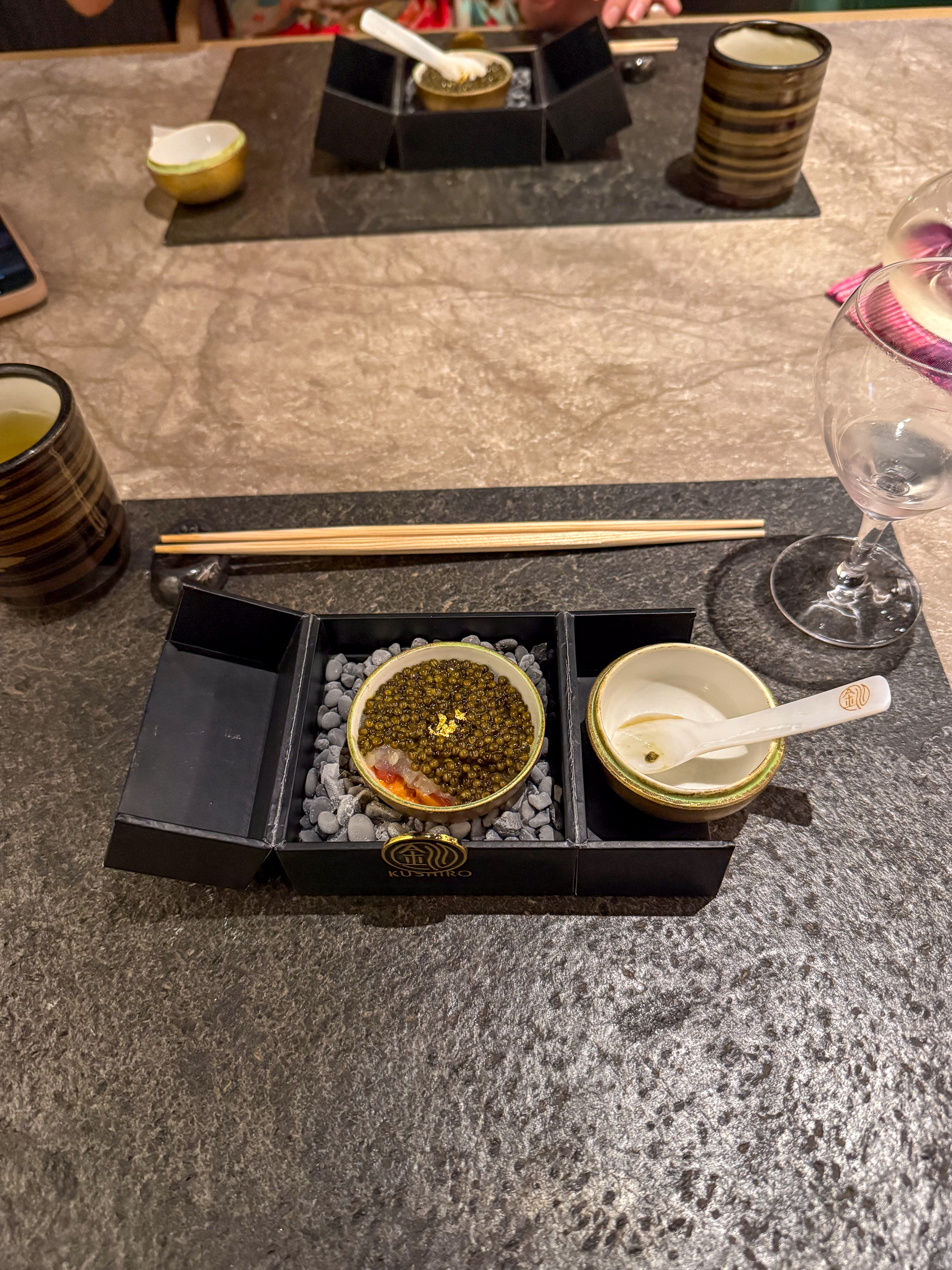
    A lacquer tray with caviar and its accompaniments on the stone counter
    Caviar on the stone counter.
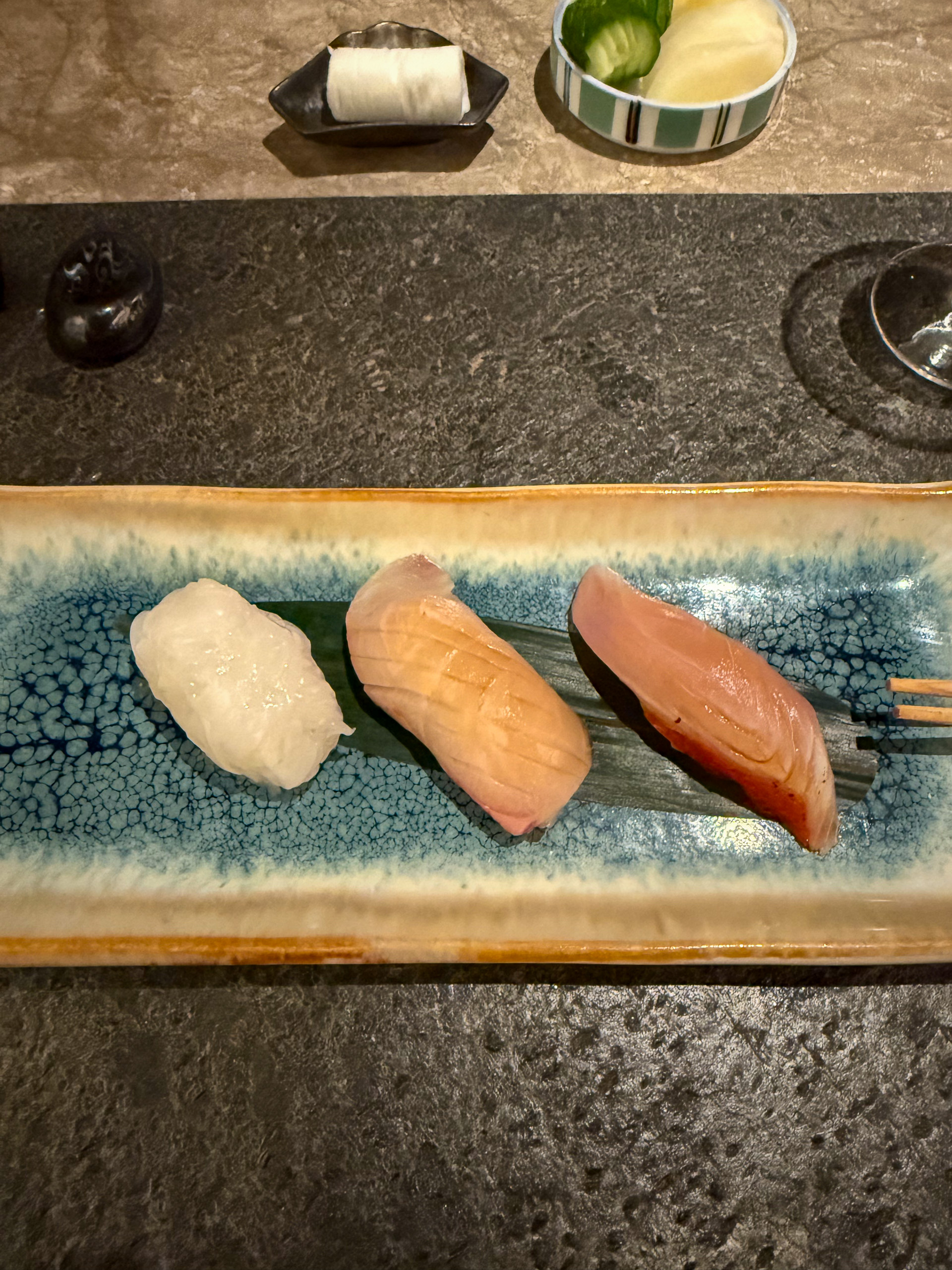
    Three pieces of nigiri on a pale glazed board
    Three pieces of nigiri, on the glazed board.
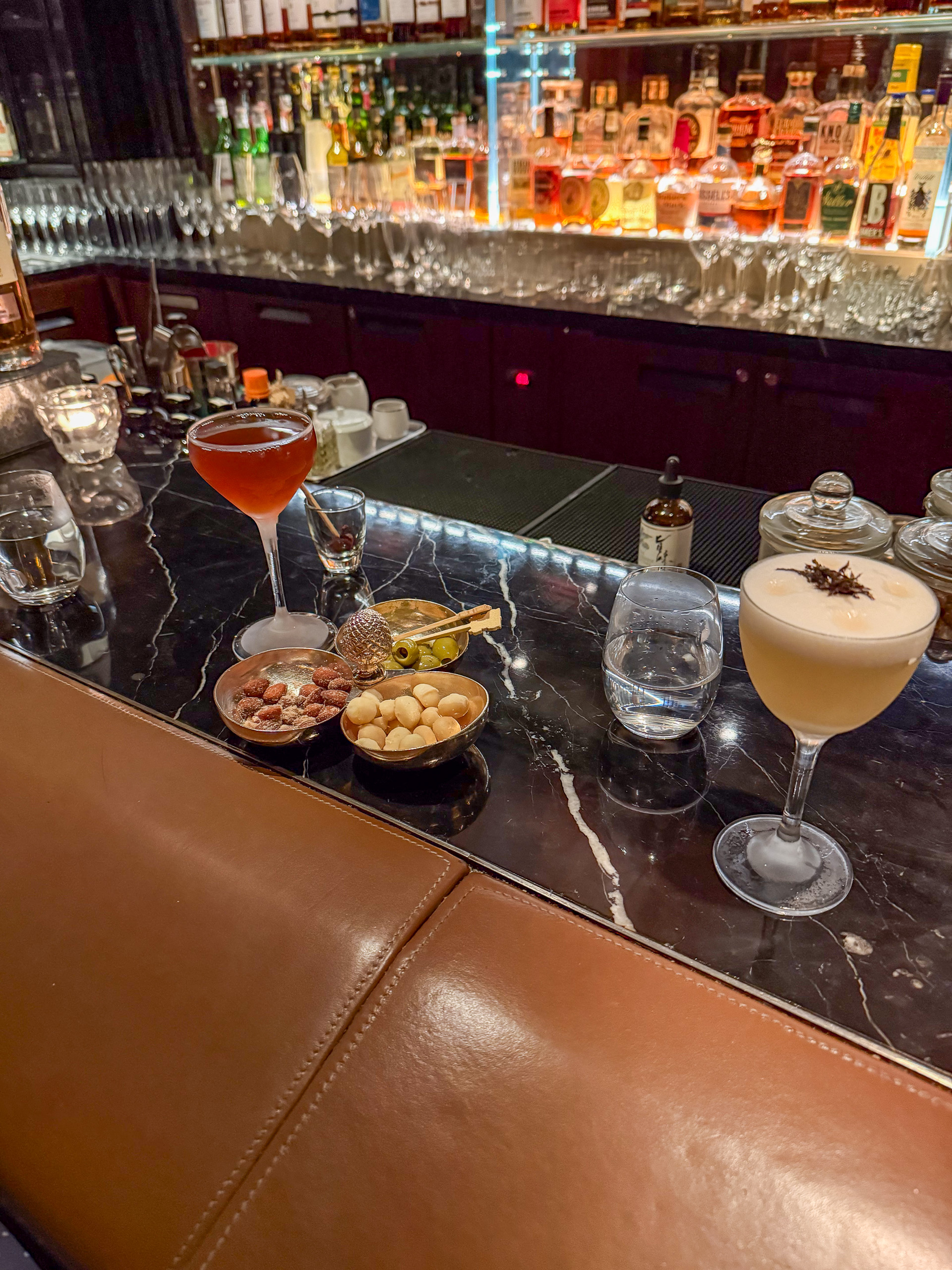
    Cocktails and a bowl of snacks on the marble bar counter
    The bar, and the snacks that arrive unasked.

    Kushiro is downstairs, and it is the one to book if you only have one night. The concierge found me an omakase seat the same day I asked. Sake and sushi paired course by course, including uni auctioned in Japan that morning. If you care about sushi, do not leave the city without eating here. Just note – a fellow diner thought it was too much show and questioned why they need to brag about the uni auction. My mouth didn’t question its rank though- delicious!

    Spa and pool

    The spa is big and it books out, so reserve before you arrive. The pool is the showpiece: a Roman bath in style, colonnaded, with friezes and a wall of glass over the harbour. This is the kind of pool people mention when you say you are going to the hotel. Happened in Fiji. There is a firm no-photography sign, which is the correct policy and also the reason you have never seen a good picture of it.

    The gym is well equipped and plain. Everything works; nothing in it was designed to be looked at.

    Service moments

    The service here is the product, and it is the least photographable thing about the place. What I can offer instead is a list.

    The driver who was plainly happy. The check-in that happened over tea in the room rather than at a desk. The doorman who tells the story of the old Phantom as if for the first time. The valet hatch, which meant three days passed without a knock at the door. The concierge who produced a same-day seat at Kushiro as though it were nothing. He sent us to great places for watches and shoes, again seemingly content with his job. Turndown that came with bath salts and a pastry, at the hour I had gone down to dinner and not a minute before, which means somebody was watching the lift, and I have decided to find that reassuring.

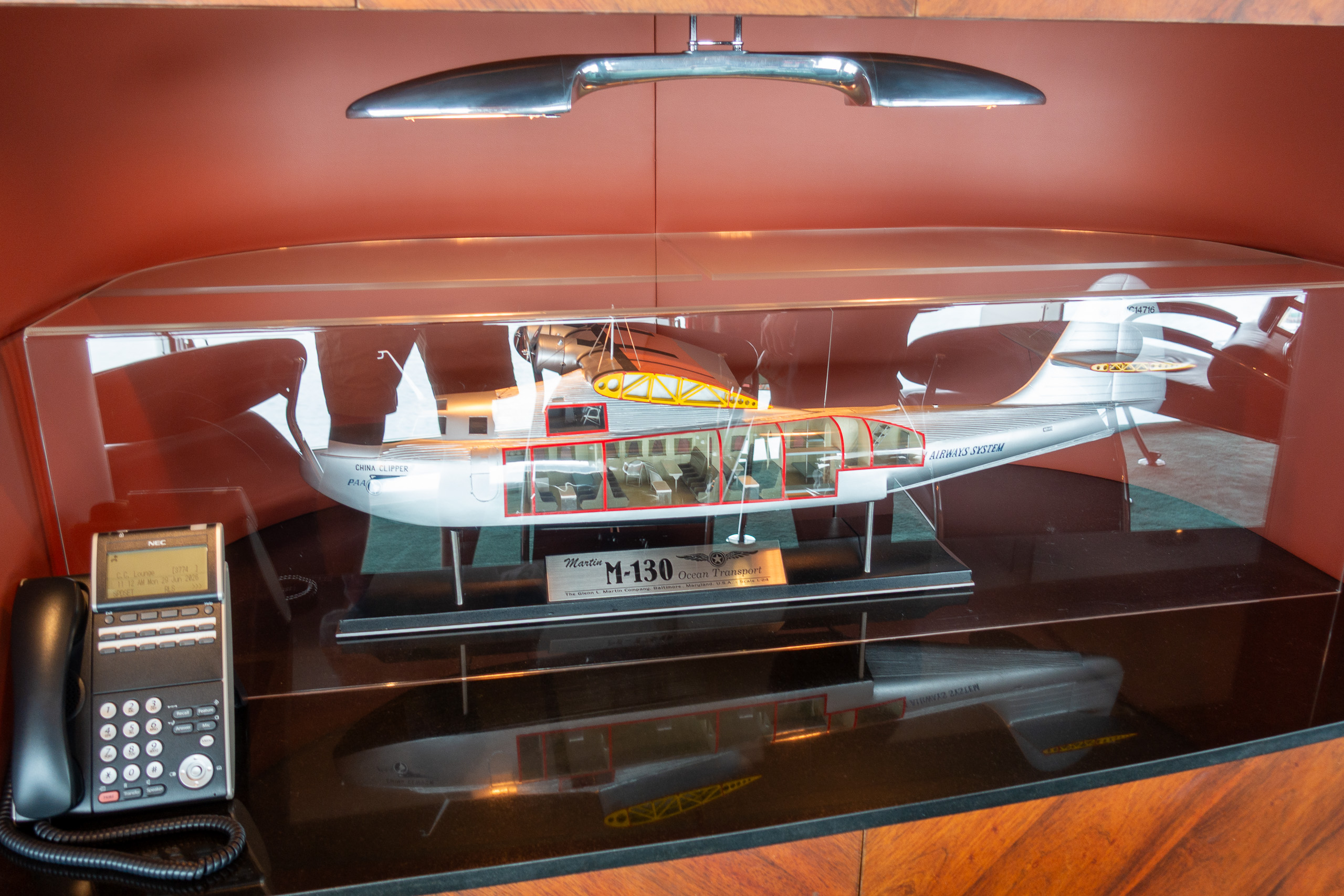
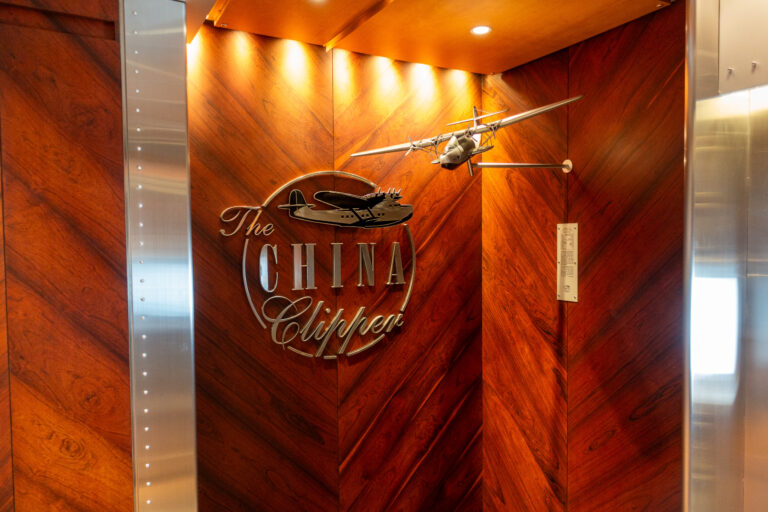
    A cased model of a Martin M-130 flying boat above the desk
    The flying boat above the desk. The hotel has never quite got over how you used to arrive.

    Who it is for, and who it is not

    Through the hotel none of it is showy. Almost all of it happened without my asking, which is the point.

    Come if this is your first visit to Hong Kong, if the trip is an occasion, or if you want the lobby, the harbour and the car in the same building. Come if you would rather be looked after than left alone, and if you can give an afternoon to a queue for the pleasure of the room at the end of it.

    Look elsewhere if the room itself is what you are paying for. The Rosewood, ten minutes’ walk along the waterfront, has the better bling with the better view, and I have set the two side by side in Peninsula or Rosewood. Look elsewhere too if you want the harbour without Kowloon; the Island side is a different city and a different stay and I shan’t speak to that.

    The Peninsula, Hong Kong
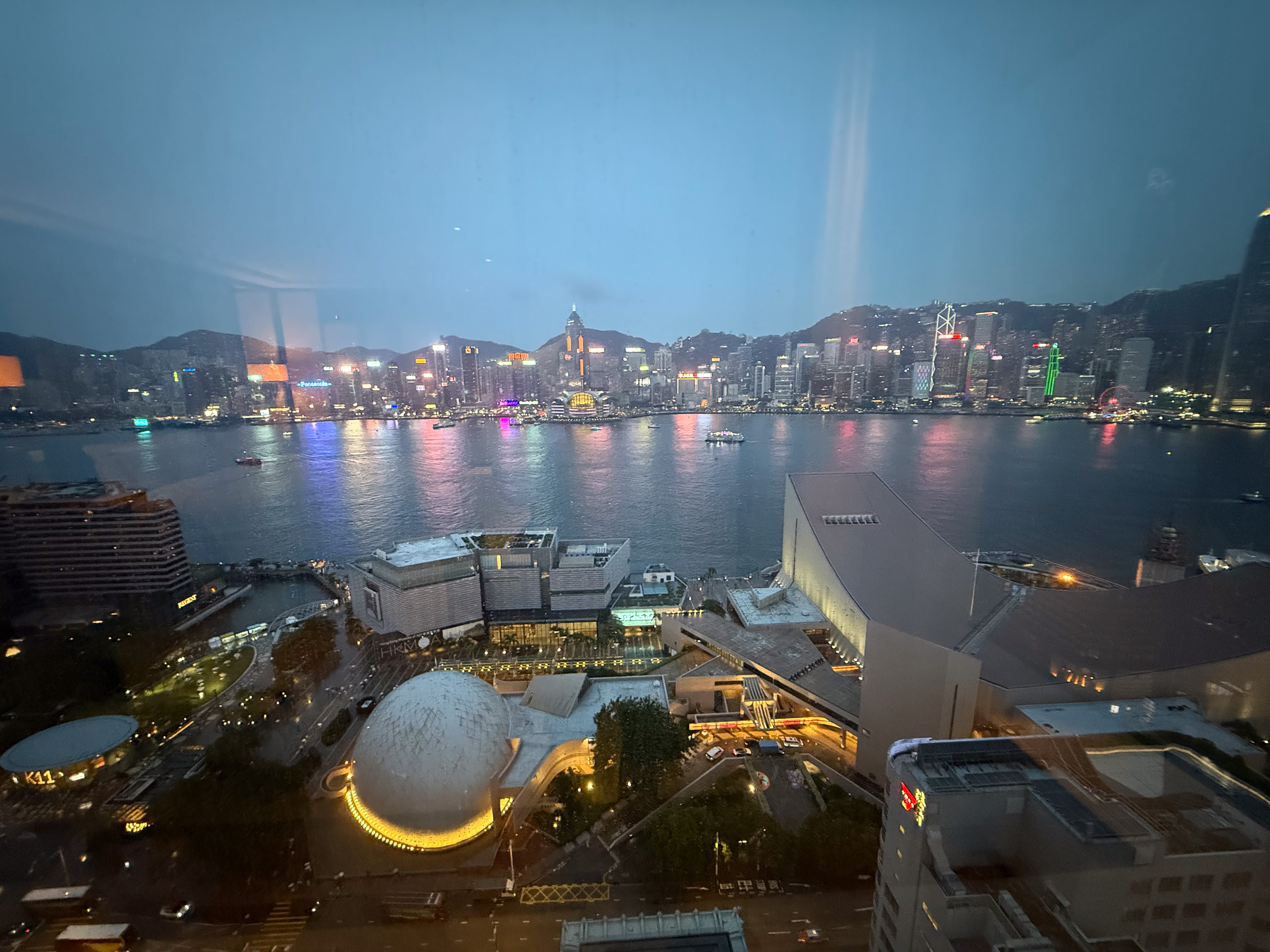
    The harbour the lobby looks out on. It is the reason the lobby faces the way it does.

    Bottom line

    The Peninsula is still the standard for service in Hong Kong, and a harbour-side room in the Tower is the way to see it. Book that room, take the car once, and have tea at seven rather than three.

    See the full set: The Peninsula, Hong Kong — in frames. More Hong Kong: Rosewood, Hong Kong.

    The Peninsula gallery

    Every photo on this site is my own, shot on the stay. Slide through →
    A lit display of teapots and canisters behind a lacquered counterDumplings and small plates on a red lacquer table with a pot of teaThe Peninsula, Hong KongThe cabin of the hotel Rolls-Royce, the driver at the wheelA long back-bar of bottles lit from beneath, glassware ranged along the counterA model flying boat mounted on a burr-walnut wall beside the liftHeavy cloud over the harbour and the island seen from high upThe tub in the window with the towers and the water beyondThe gilded coffered ceiling and columns of the lobby from belowA place setting of chopsticks and porcelain on a red lacquer table