TURKS & CAICOS · VILLA GUIDE · 9 MIN READ
Sapodilla Bay: Where a Villa Is Not the Better Option, It Is the Only One
Ten miles from Grace Bay, the south coast of Providenciales has no resorts, no beach service and no restrooms, and about four feet of water for a hundred yards.
By J.C. Mercer
A private villa above Sapodilla Bay
- Where high ground in the southwest corner of Providenciales, looking down over shallow water. Not on the sand
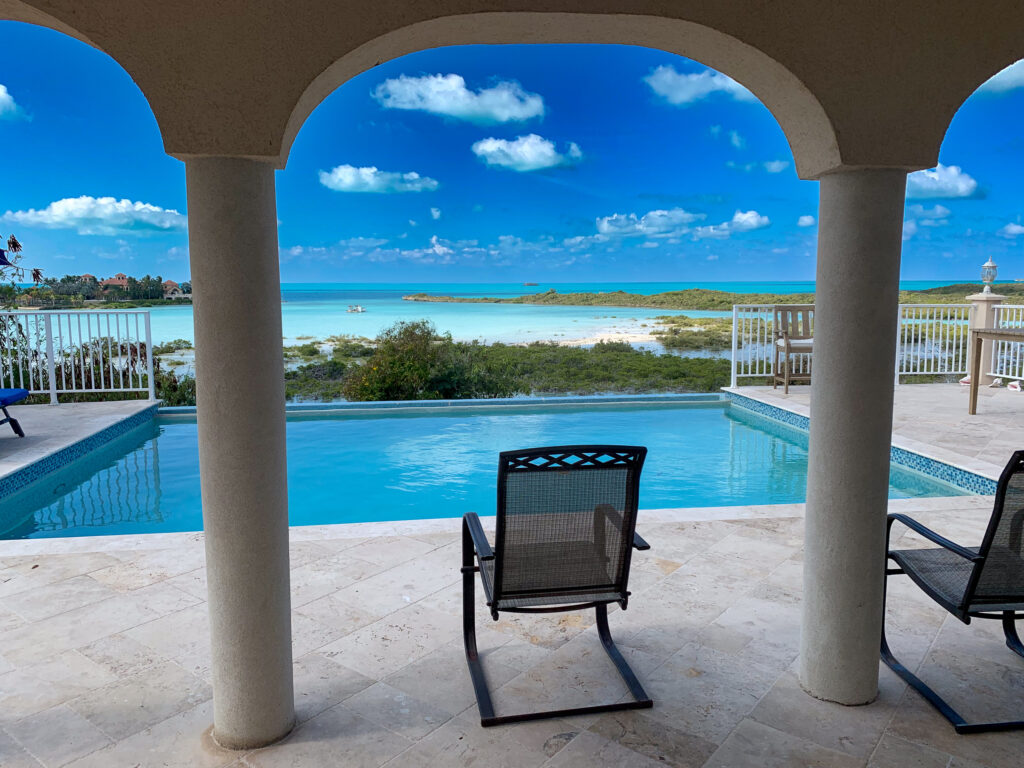
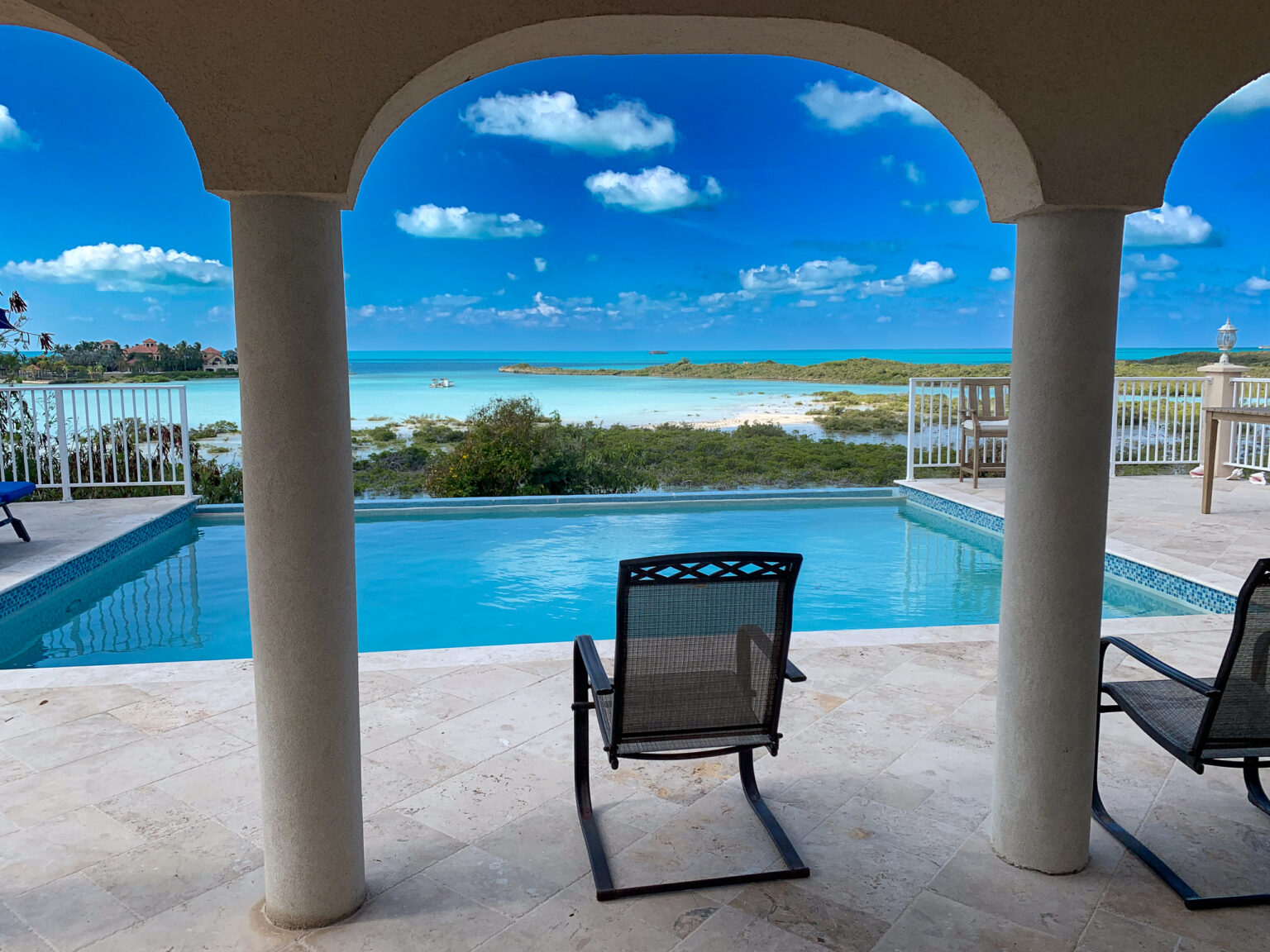
- The house two storeys in cream stucco under a white standing-seam roof, an arched colonnade the length of the ground floor, a first-floor balcony behind white timber balustrades
- Outside a long rectangular pool with a mosaic waterline on a travertine deck, and a raised side terrace with a bar-height table and a red parasol
- The beach Sapodilla Bay, down the hill and reached by car
- How it was booked Direct with the villa’s managing agent
Every stay on this site is booked the way any other guest would book it.
Drive southwest out of the Grace Bay strip and Providenciales empties in about a quarter of an hour. The hotels stop. The roundabouts stop. The road climbs a low ridge over salt flats, scrub and standing water so bright it looks like an error in the photographs, and somewhere up there is the house you have rented, because on this side of the island there is nothing else to rent. Sapodilla Bay has no hotels on it. Not a small one, not a discreet one. None.
The lie of the land
- Where the southwest corner of Providenciales, ten miles from Grace Bay and ten to fifteen minutes from the airport, nearer to arrivals than the resort strip is
- Three places, not one Sapodilla Bay and Taylor Bay are separate sheltered beaches a headland apart on the south coast. Chalk Sound, the islet-studded lagoon behind them, is a national park and a different body of water again
- The beach 900 feet of very fine white sand facing the Caicos Bank. Public, free to park, and with no lifeguards, no restrooms and no beach service of any kind
- Where you sleep there is no hotel on this bay. The frontage and the ridge behind it are private houses, from one-bedroom cottages to nine-bedroom estates
Three places, one corner of the island
Get the geography straight before you book anything, because almost everybody gets it wrong. Sapodilla Bay is a 900-foot cove on the south coast. Taylor Bay is a separate beach, roughly 2,000 feet long, one headland to the west. Chalk Sound is neither: it is an inland lagoon three miles long, a national park, only a few metres deep at its deepest and studded with hundreds of small rocky islets, nearly every vegetated one of which has rock iguanas living on it. A winding channel joins the lagoon to the sea, motorboats are not allowed in it, and you do not swim in it from a beach: the bottom is clay-like and unpleasant underfoot. The three together are the island’s southwest corner, and villa listings use all three names more or less interchangeably. They are not interchangeable.
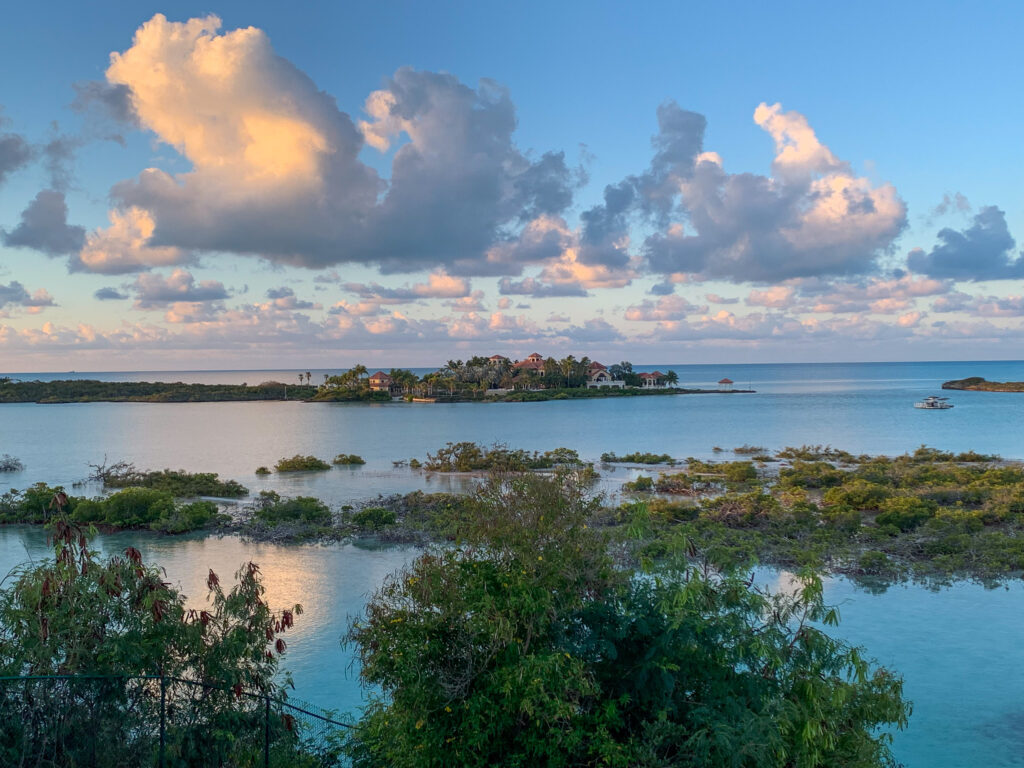
What makes this side of the island feel like a different country from Grace Bay is not the development, or the lack of it. It is what the water is sitting on. Grace Bay faces the Atlantic across a barrier reef about a mile offshore, and has the deep, clean, swimmable floor that goes with it. Sapodilla Bay faces the Caicos Bank, some 1,700 square miles of shallow marine shelf that is nowhere deep. One coast has swell and the other has none. The sand follows the same logic: the grains here have travelled a long way across the bank to arrive, and they are worn to something closer to silt than to sand. It is fine enough to feel powdery underfoot and fine enough to hang in the water when a crowd stirs it up.
The consequences all point the same way. The water is warmer than the north coast, because a shallow sheet in full sun heats up and a deep one does not, and waves are essentially a hurricane-season phenomenon, June to November. The airport is also closer than it is from Grace Bay, five or six miles and ten to fifteen minutes, which on a day with small children and a late flight is worth more than it sounds.
The house is above the water, not on it
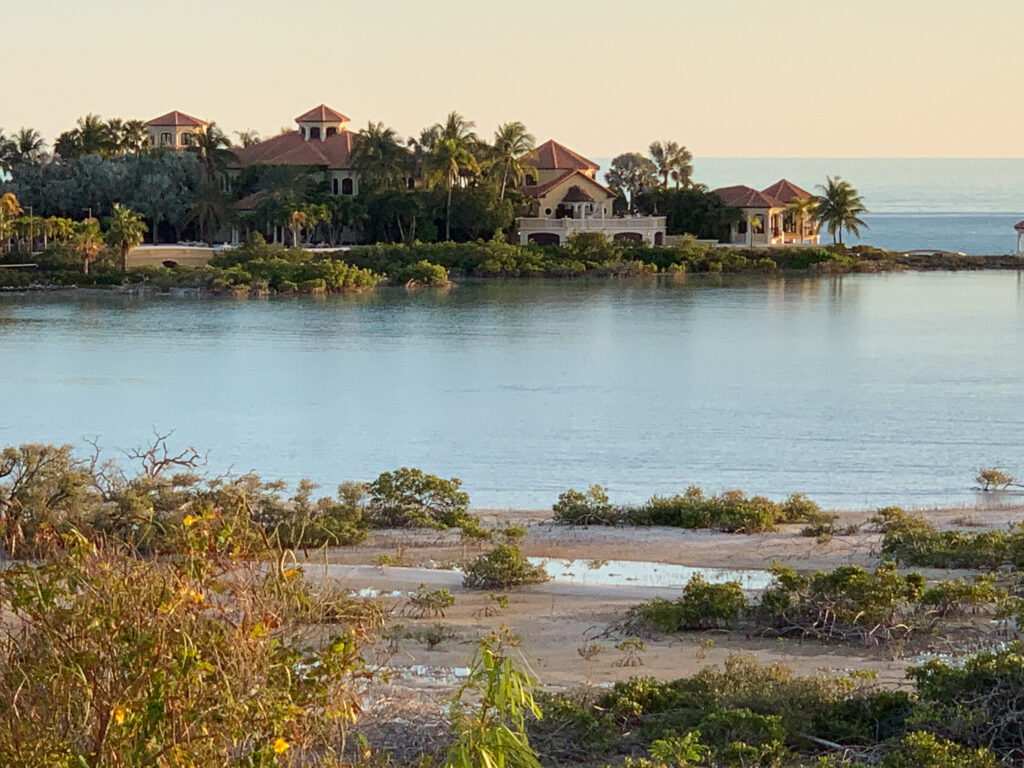
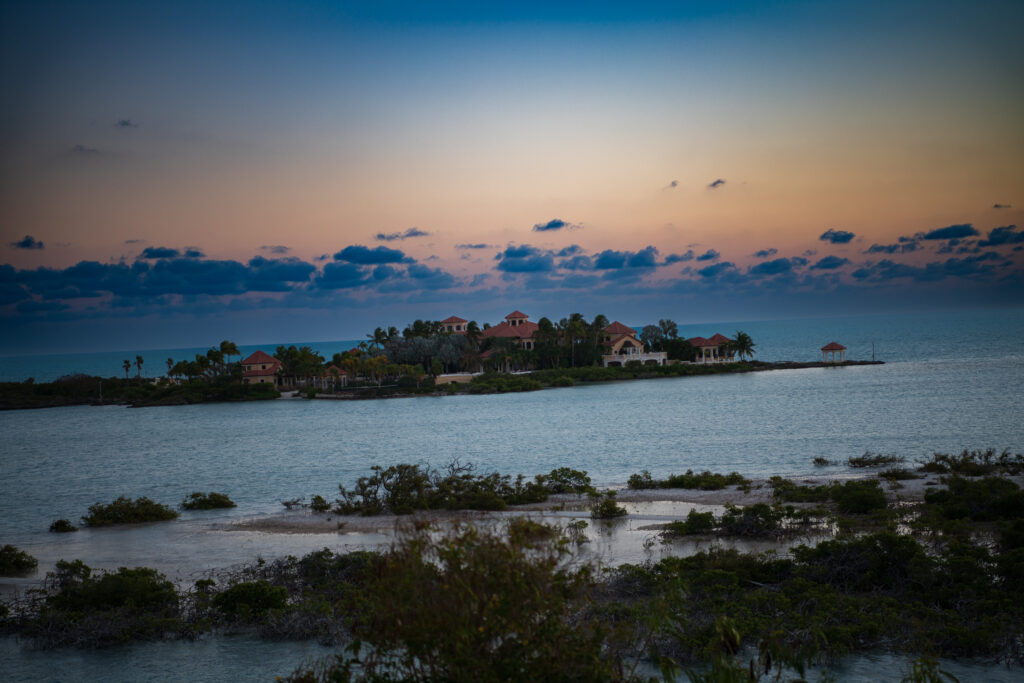
This is the thing the listings are least clear about, and it changes the shape of the week. The houses on this side are not, for the most part, beachfront in the sense a Grace Bay resort is beachfront. They are on rising ground behind and above the shallows, and what they sell you is the view down onto them. Every frame I have of this house looks down: the pool deck, the railing, then a drop through scrub to sand flats and standing water, then a low green point with somebody else’s red-tiled roof on it, then the sea.
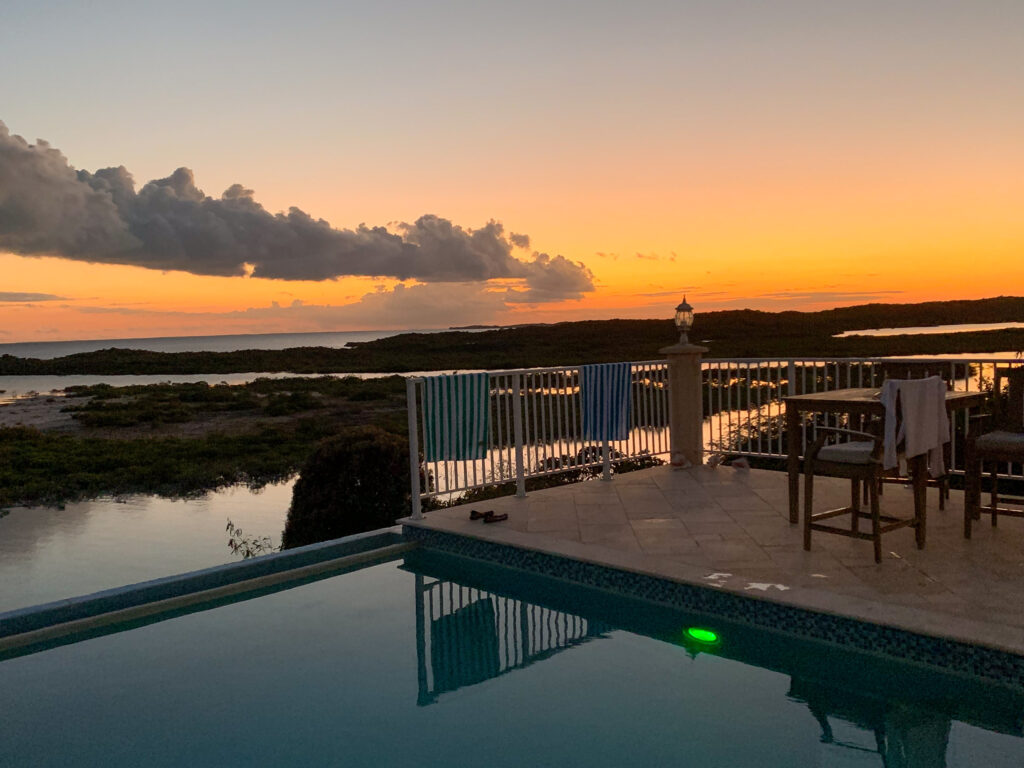
The house itself is unmistakably a house rather than a resort unit: two storeys of cream stucco, a white metal roof, an arched colonnade running the full length of the ground floor and a balcony above it behind white timber balustrades. French doors on both levels. A long rectangular pool with a mosaic waterline tile, set on a travertine deck wide enough that nobody has to walk behind anybody’s lounger. A raised terrace to one side carries a bar-height table, stools and a red parasol. There is a barbecue. There is a hose. It is somebody’s actual house, let out.
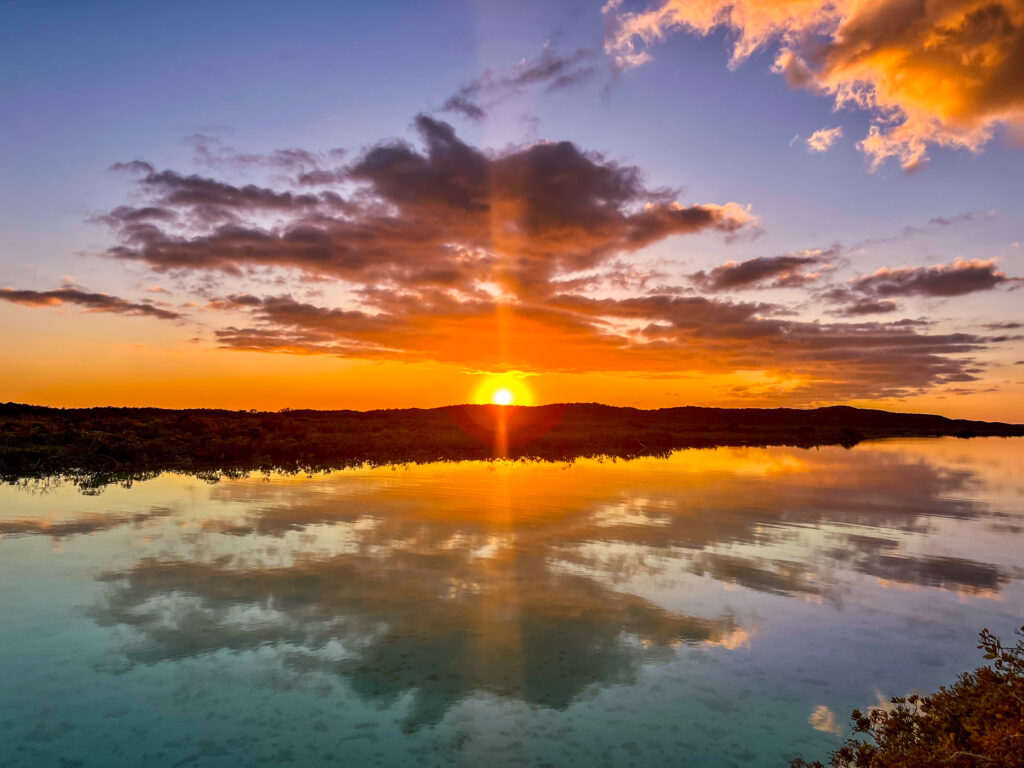
Elevation is the product, and it is worth knowing what you trade for it. You lose walking out of the bedroom onto sand. You gain most of the sky, which on this coast is the better half of the bargain: the flats hold a mirror-flat film of water at nearly any state of the tide, so the sunset arrives twice, once overhead and once upside down below you. Two of the best frames in the set were taken from a bar stool without anyone standing up.
The beach below
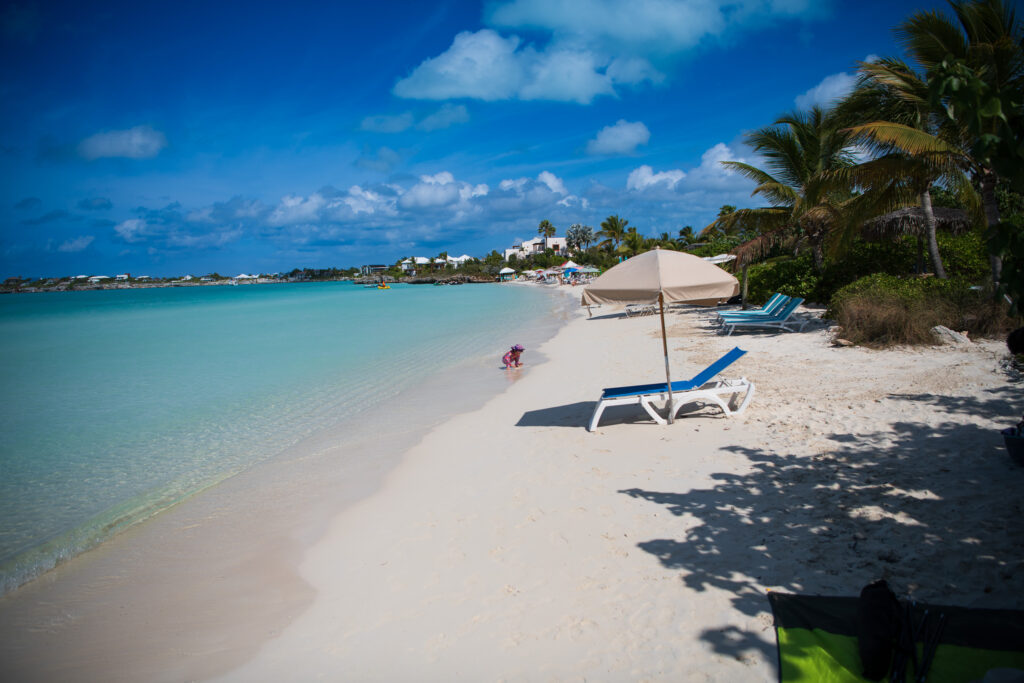
Sapodilla Bay is small. Nine hundred feet, end to end. You can walk its whole length in the time it takes to decide where to put the towel. There are two ways in, both free and both unpaved: a southern approach by Sapodilla Hill and a northern one off Chalk Sound Drive, where the parking is dirt, the curbs are unfriendly to a low rental car, and the path to the sand is a sandy scramble through the scrub. There is no gate, no attendant and no ticket. It is a public beach in the fullest sense.
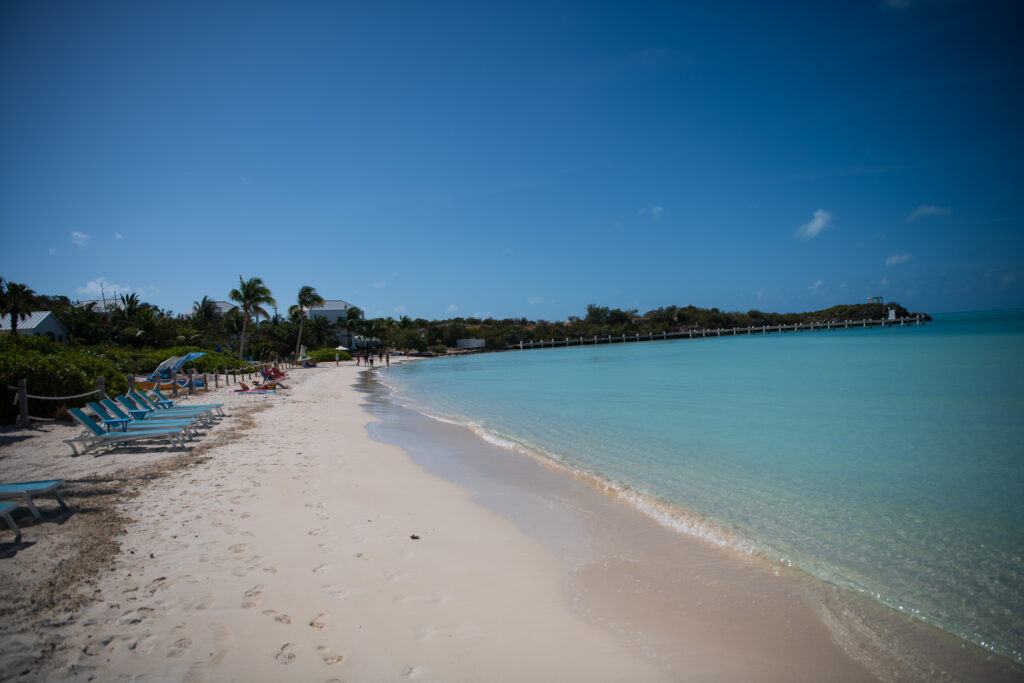
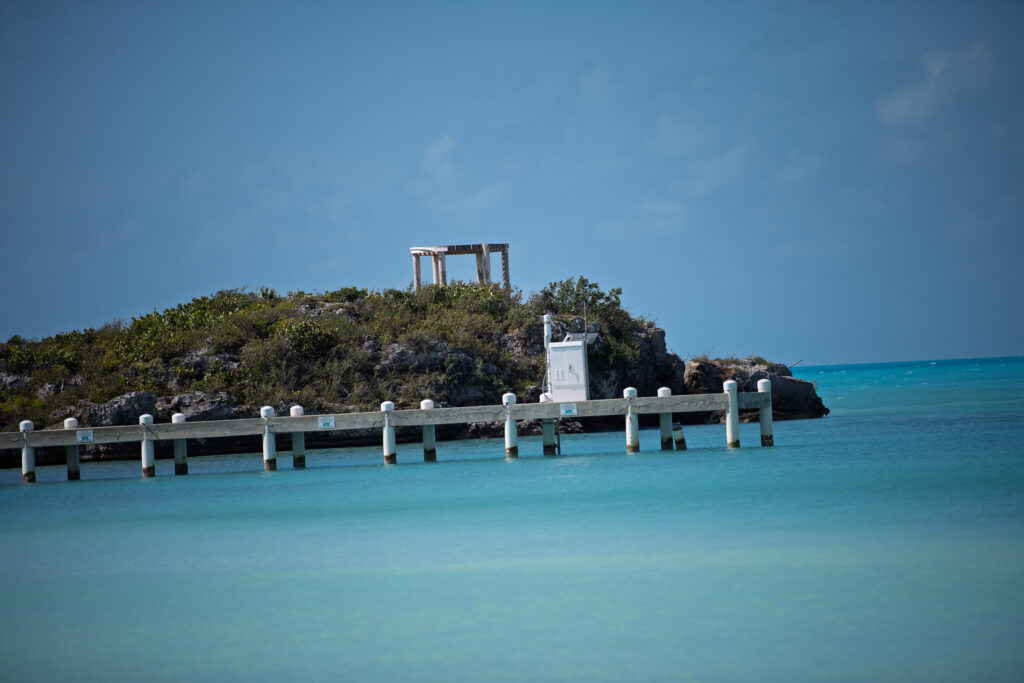
A timber pier runs out from the eastern end towards a low rocky headland. The ridge above it is a little over fifty feet high and carries something truly old: carvings cut into the rock by ships’ crews and shipwrecked sailors between the mid-1700s and well into the 1800s. It is a short climb on a path that is loose, slippery and better done in shoes than flip-flops, and it is the only place on this coast where you see the whole arrangement at once, including the thing no listing mentions, which is that the country’s main cargo port sits immediately over the ridge to the east.
The bay is a working anchorage as well as a beach. Sailboats and small yachts lie off it, and with no lifeguards the standing advice is to watch for boats rather than for surf. Snorkelling is thin: small schools, the occasional ray or turtle near the pier. There is a wreck offshore, but it is a twenty-minute swim with fins and not a casual one.
Nobody is swimming
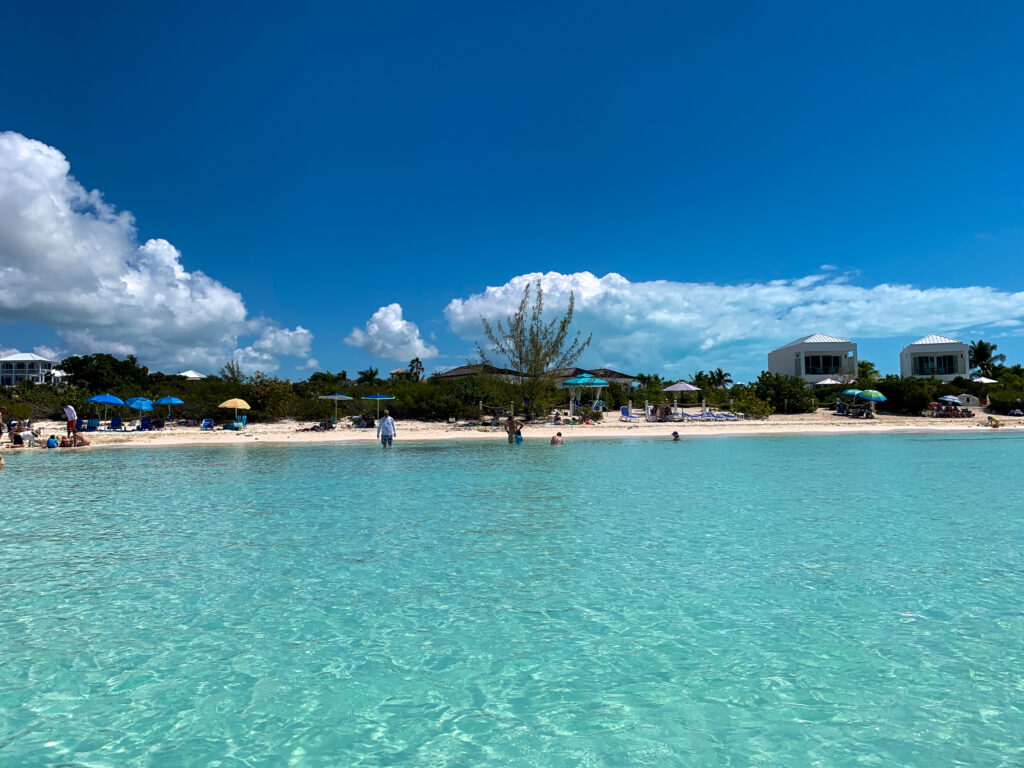
Look at any wide frame of the water and count the heads. Everybody is standing up. The bay rarely gets above about four feet deep for the first hundred yards, which means the wade out to a depth where you can actually float is longer than the beach is wide. People walk out until they are the size of a thumbnail and they are still only wet to the ribs. If your idea of a beach involves swimming, proper swimming with arms over and going somewhere, this is not that beach, and no amount of turquoise fixes it.
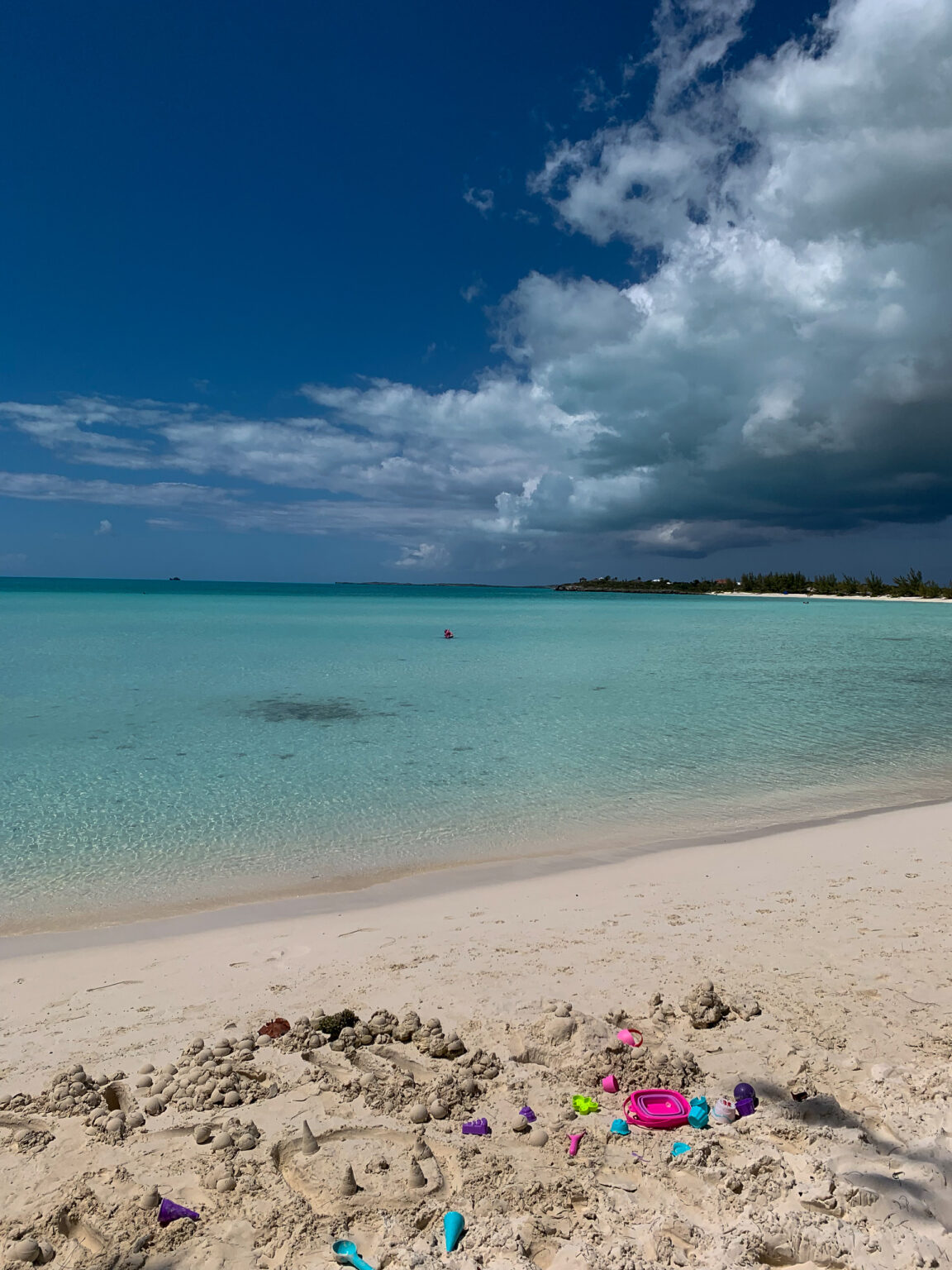
The same fact is the reason to come. Warm, glassy, ankle-to-waist water with no current and no undertow, over a floor of fine pale sand, is about as safe as a sea gets for a four-year-old, and this is one of the safest beaches in the country for exactly that reason. The evidence in the photographs is entirely domestic: a starfish lifted out of six inches of water and put back, a collapsed sandcastle with the plastic moulds still where they were dropped, somebody’s dog trotting the tideline. Nothing dramatic happens here. That is the offer.
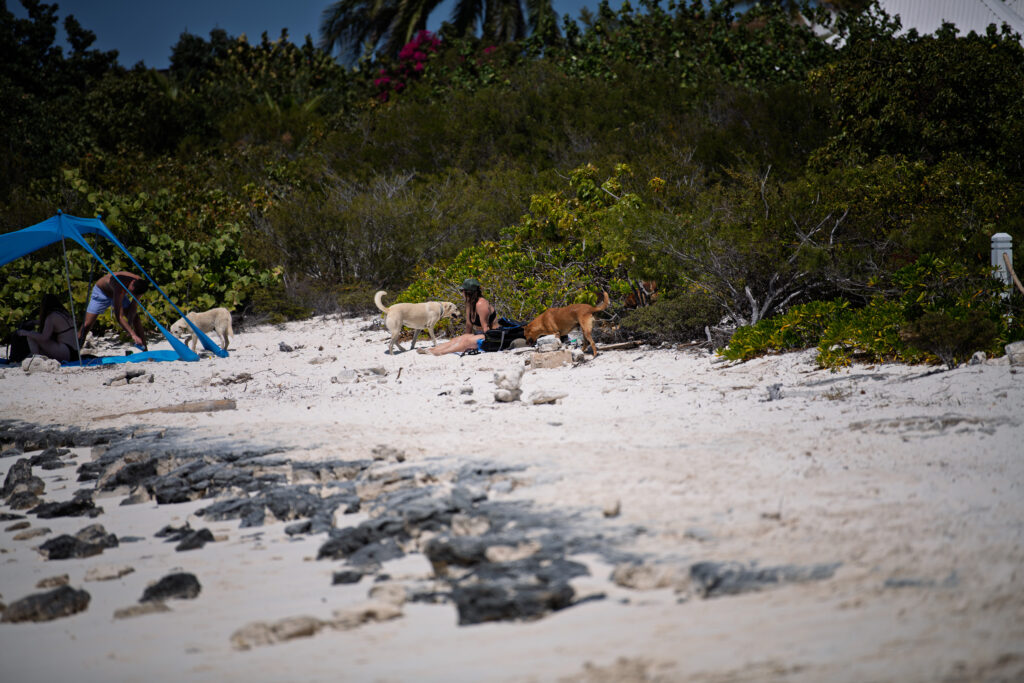
Two practical caveats the pictures also carry. Parts of the entry are not sand at all but a low shelf of grey limestone at the waterline, sharp enough that water shoes are the difference between a good morning and a bad one. And the timber pier gets properly scalding underfoot by midday.
The counter-argument
Nothing about this side of the island is difficult. It is just that everything is a drive. The lavatory, the coffee, the bag of ice, and you have signed up to be the one who drives.
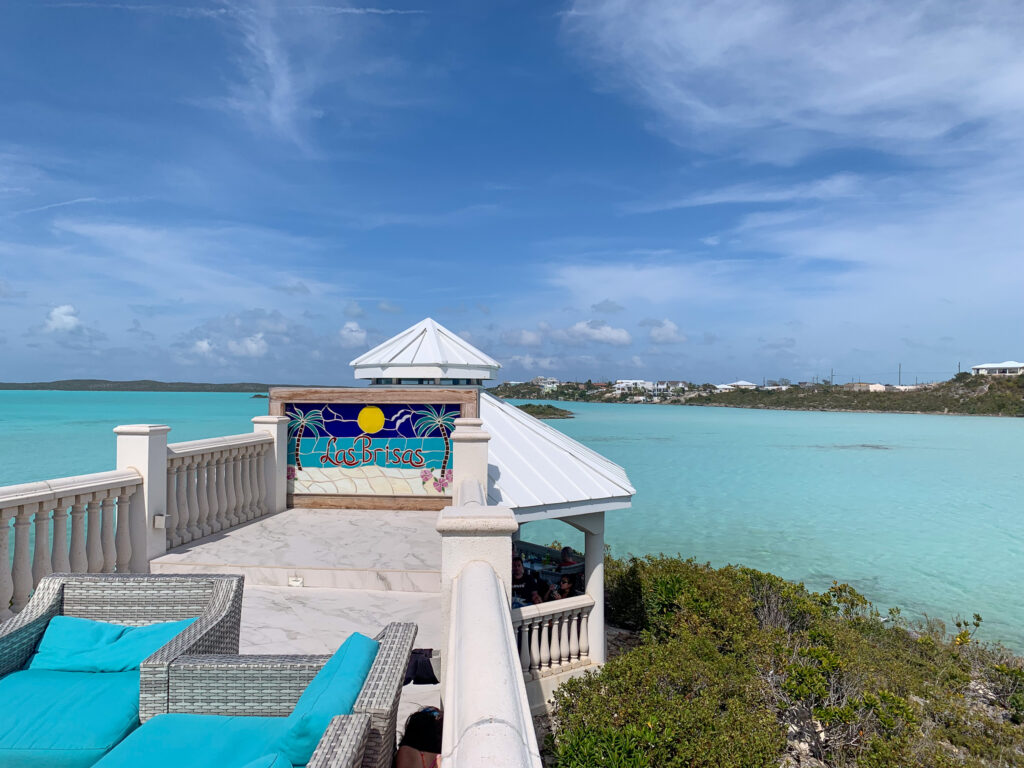
Start with the lavatory, because it is the one nobody plans for. There are no restrooms on Sapodilla Bay. Not at either car park, not at either end of the sand. The nearest is a terrace restaurant on Chalk Sound Drive, about a minute away by car, which is fine once and tiresome by the fourth time on a beach day with children. It is also, incidentally, the only place within sight of the beach where somebody will bring you a drink.
A rental car is not a convenience here, it is a condition of the booking. There is no restaurant within walking distance of the villas, no beach bar, no water-sports desk and no supermarket around the corner. You drive to every meal you do not cook, and you cook a lot, which brings you to the surprise nobody plans for: island groceries are imported, and the till shows it — provision for a week of eight with your eyes open.
Then there is the beach itself, which is public and behaves like it. By late morning the pier end is a row of rental loungers and umbrellas, a jet-ski stand that smells of two-stroke, a speaker, and somebody walking the sand asking whether you want anything. Nine hundred feet is not much sand to spread that across. There is litter at the top of the beach often enough to be worth a bag in the car, and with no restrooms anywhere near it, the very shallow water takes the consequences of that on a busy afternoon. This is not a private beach attached to your villa. It is the local beach, and you are on it.
And nothing is included unless the listing says it is. The word “villa” covers a house with a pool and a set of keys and a house with a housekeeper and a butler already in it, and the listing tells you which only if you read past the bedroom count. Assume self-catering, assume you are doing your own laundry, assume the transfer is yours to arrange, and be pleased when any of that turns out to be wrong.
Know before you go
Book the car before the house: on this coast it is the load-bearing reservation, and a low-slung compact will resent the dirt parking at both beach approaches. Pack water shoes for everyone, for the limestone at the waterline and for the pier. Expect to rent shade rather than have it brought: two loungers and an umbrella can be had for the day from the vendors at the pier end, and there is nothing else on offer.
Go down to the sand early, before the loungers and the jet skis arrive, and take the middle of the day back up to the pool, which is what the ridge houses are for. Check what your particular villa actually includes before you assume it; kayaks and paddleboards are common on the waterfront houses, housekeeping and a chef are not standard, and airport transfers are usually somebody’s optional extra. And if the beach ever feels too full, drive five minutes west to Taylor Bay, which is twice as long, has parking for about eight cars, and has no vendors, no loungers and no facilities whatsoever.
See the full set: the Sapodilla villa — in frames. More Providenciales: Grace Bay.
There is no hotel on this bay, and that is both the objection and the argument. A villa here is not the better option; it is the only one.
The Sapodilla Bay gallery
Every photo on this site is my own, shot on the stay. Slide through →