WASHINGTON, DC · RESTAURANT · 8 MIN READ
Jônt: Sixteen Seats Above a Restaurant You Already Know
Fifteen courses at a counter that doubles as the pass, Japanese produce under French sauces, and the hardest table in Washington to get. Upstairs from Bresca, through the same door.
By J.C. Mercer
- Covers Two, one sitting
- Dined March 2026
- Menu The tasting menu, fifteen courses. There is no other option
- Drinks The wine pairing
Every meal on this site is booked the way any other guest would book it.
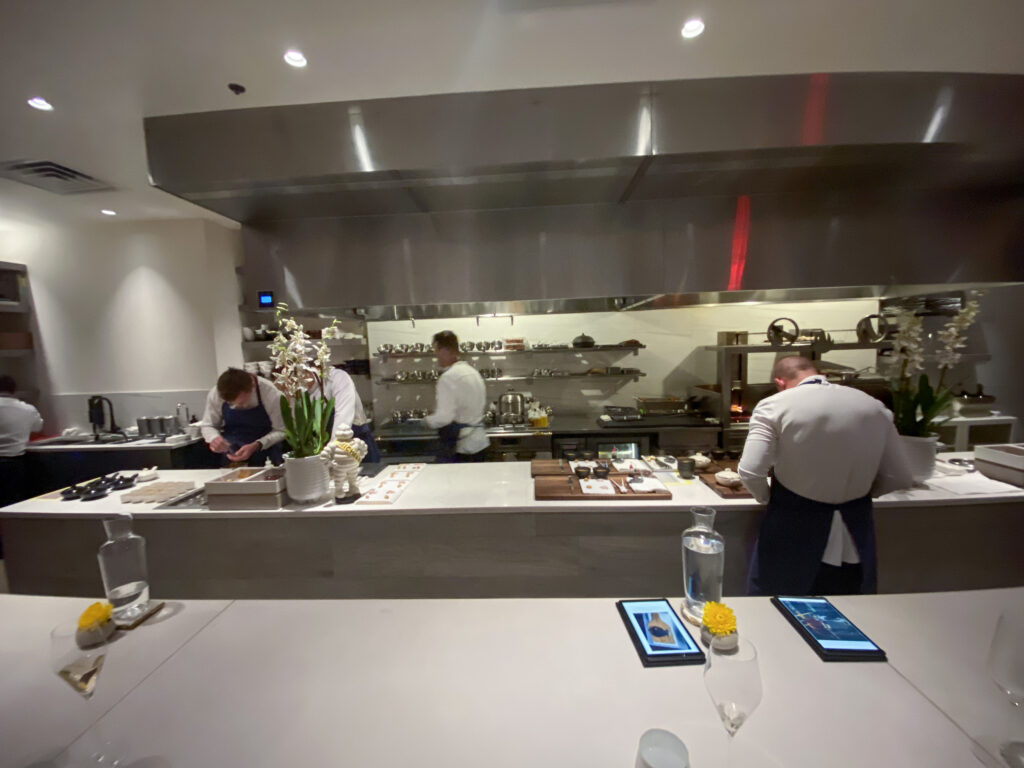
There is a restaurant underneath this one. Bresca has been on 14th Street since 2017 and is the reason most people know Ryan Ratino’s name; Jônt opened above it in 2020 and is the reason the guide gave him two stars. You go through the same door and up. Sixteen seats, one counter, and a kitchen that is not behind anything.
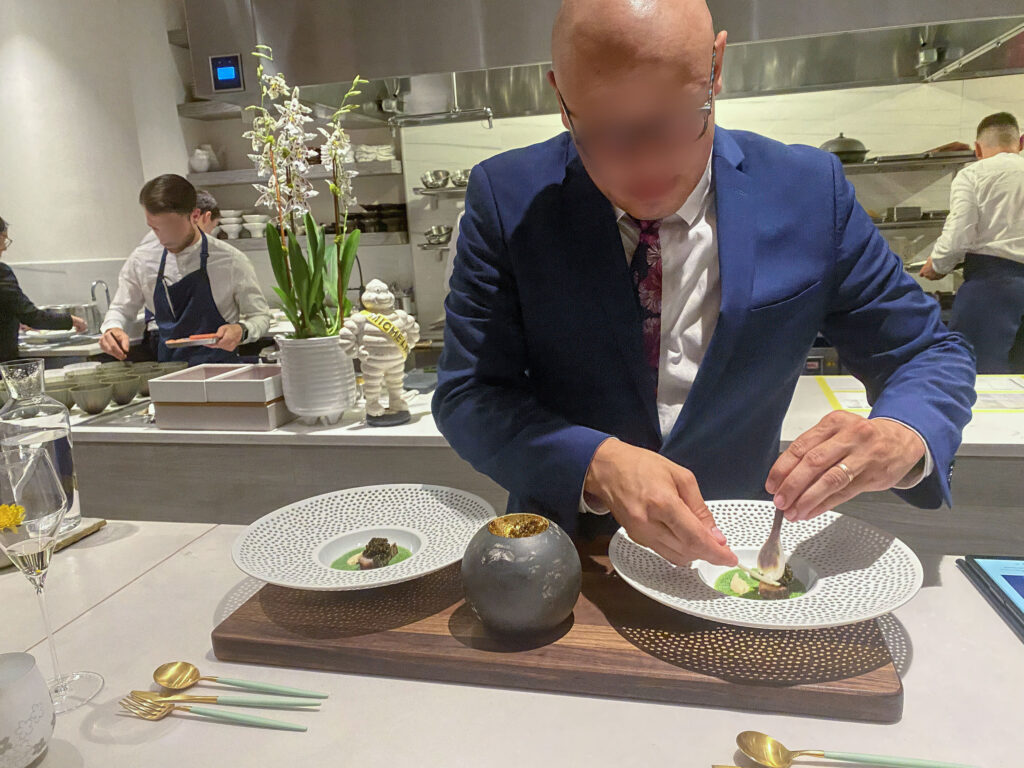
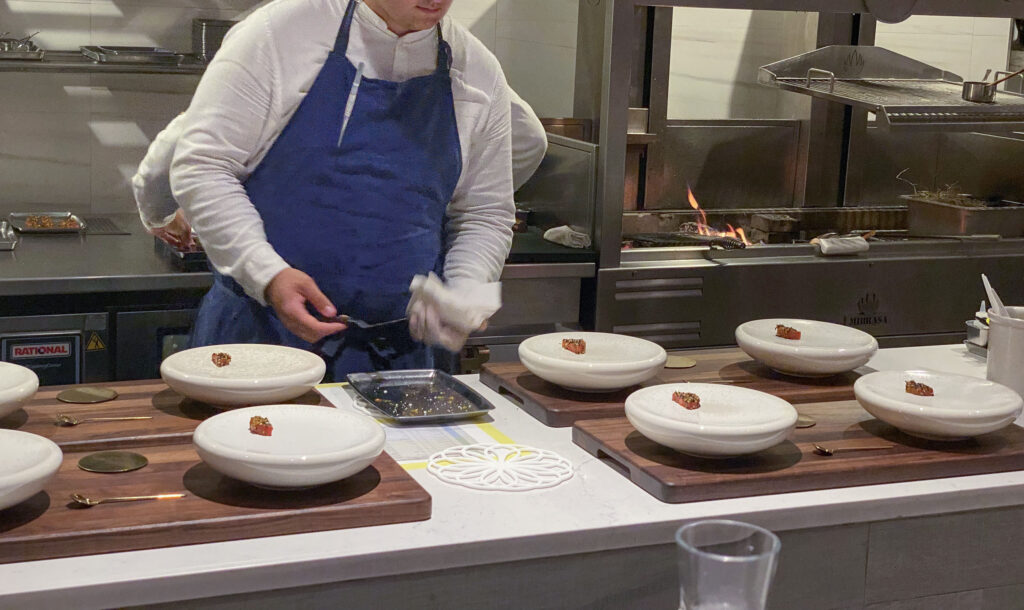
That last part is the whole design. The counter is the pass. What is being plated in front of you is what you are about to eat, and the people plating it are close enough that you can hear the tweezers touch the rim.
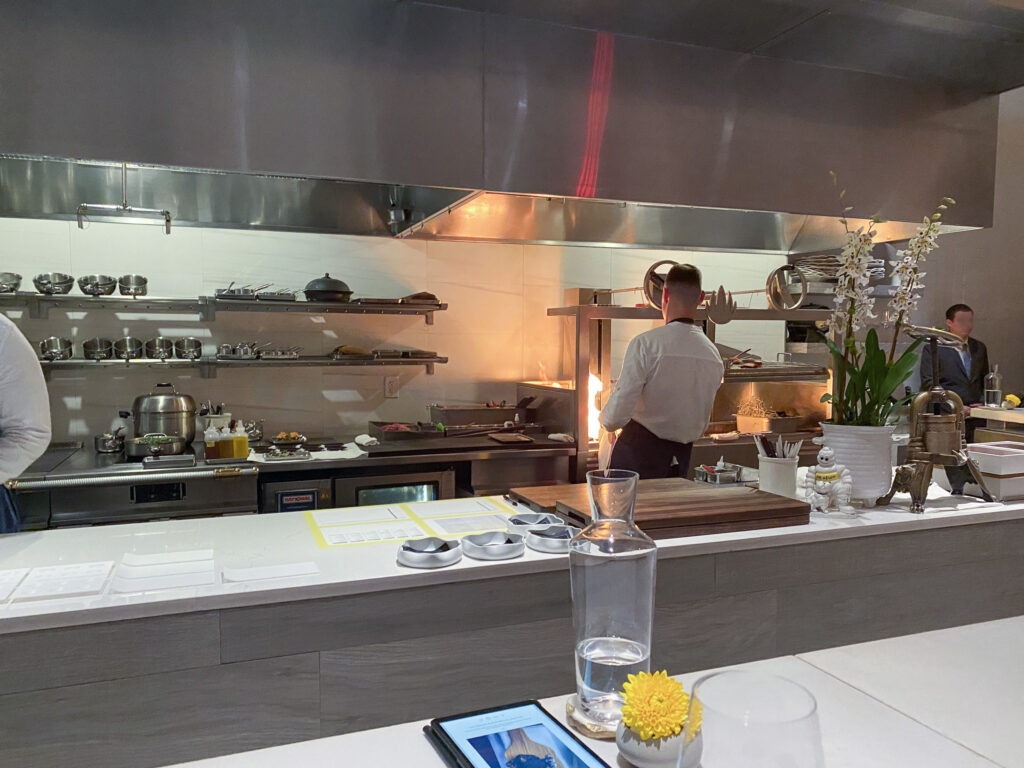
Sixteen seats, and no back of house
The room is smaller than the reputation suggests and much brighter than most tasting counters. White stone, pale wood, a rank of copper and steel on open shelves behind the line. There is no music you would notice. The only decoration is a single orchid and, on the pass, a Michelin figurine that somebody has clearly decided to leave exactly where it is.
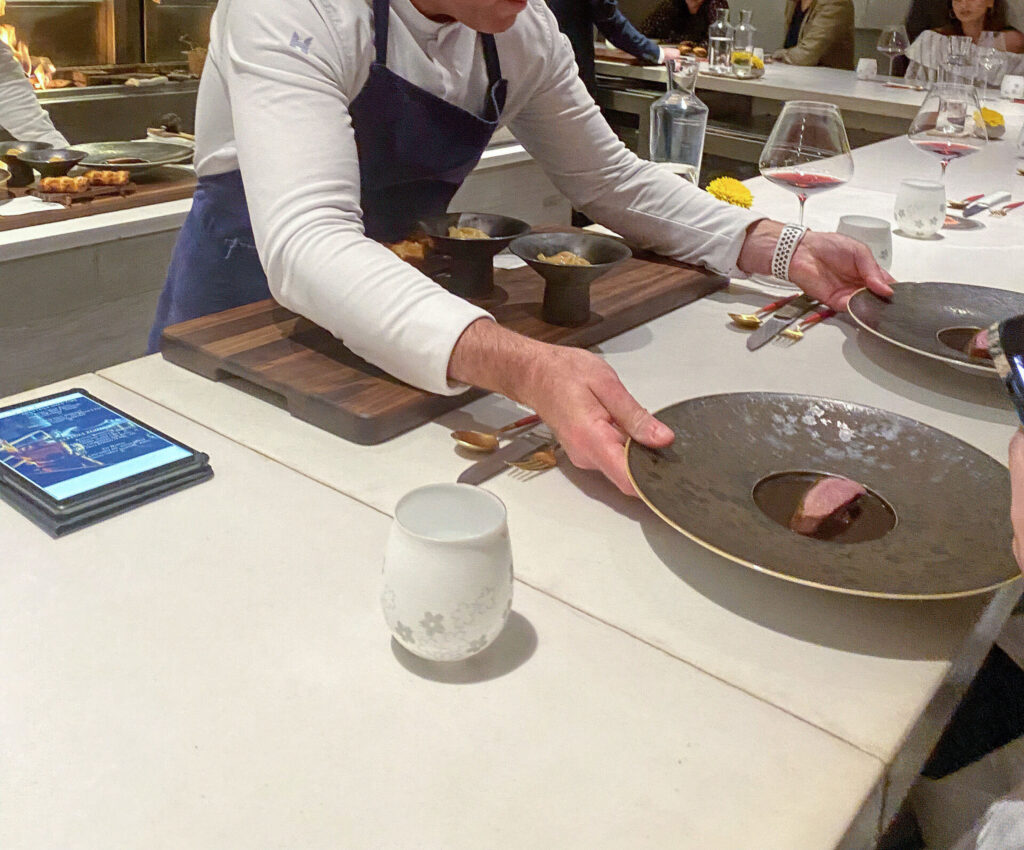
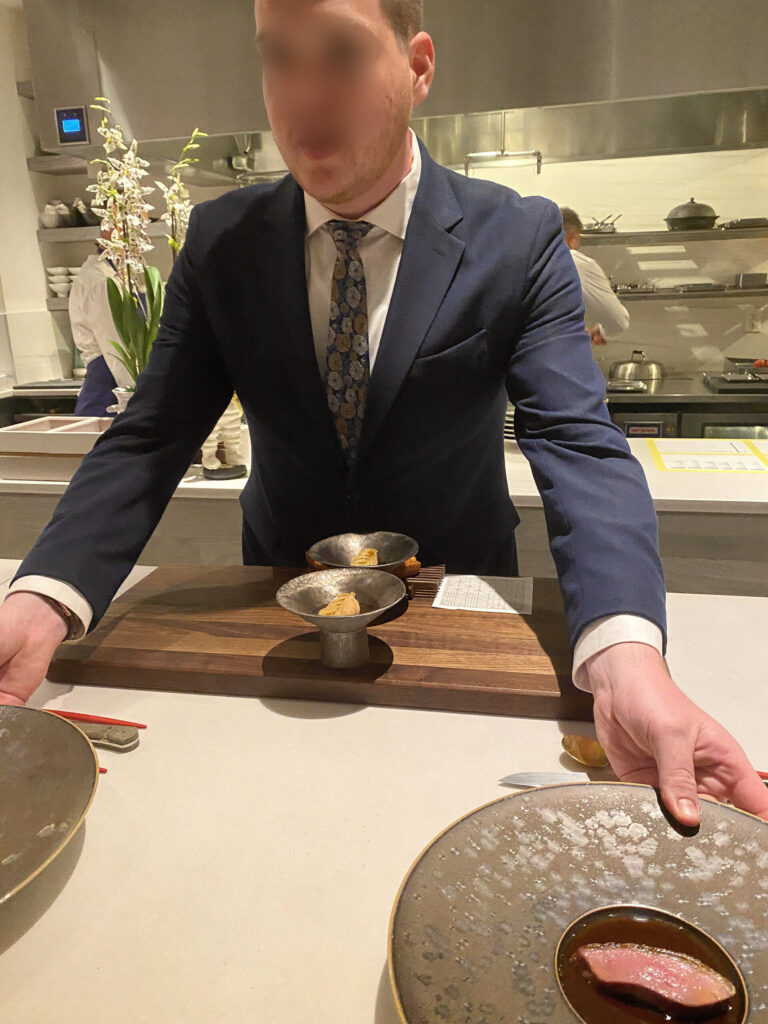
Because the kitchen faces you, the service and the cooking are the same people. The cook who seared something forty seconds ago walks it two metres and puts it down in front of you, and says what it is in about eight words. It makes for a quieter, less theatrical evening than a room with a dedicated front of house, and I preferred it.
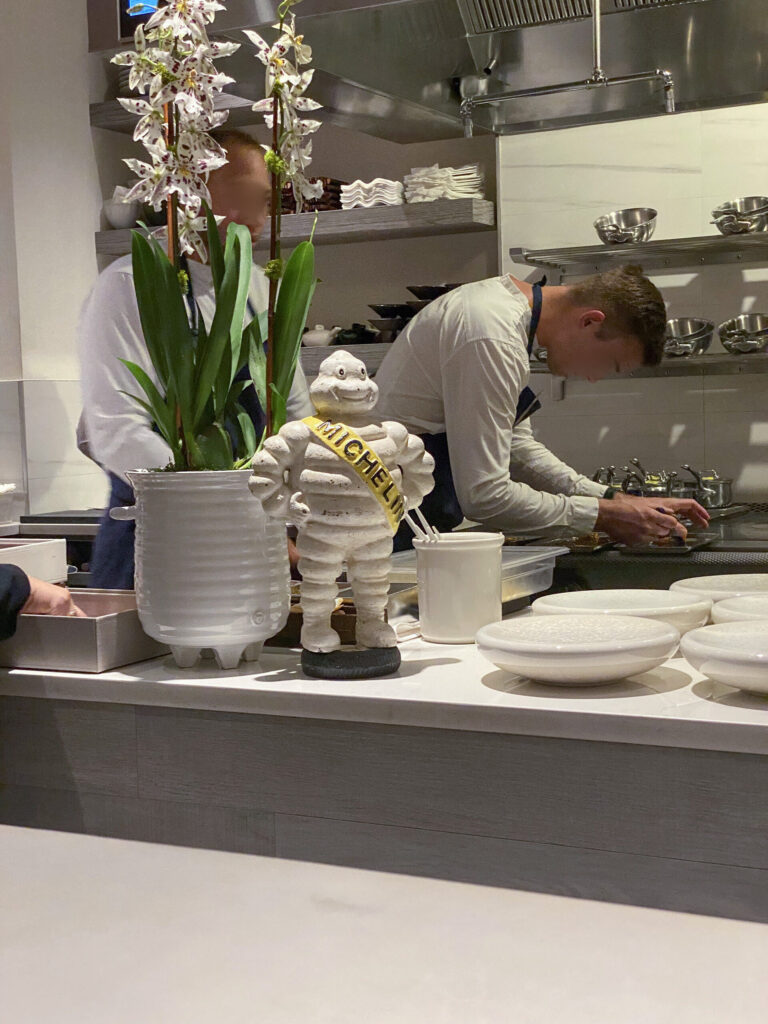
Jônt is a Relais & Châteaux house, which on a sixteen-seat counter above a bistro reads as slightly incongruous until you have sat through the service. The association is usually shorthand for a certain kind of country hotel; here it is doing something more specific, which is vouching for consistency in a room where consistency is the entire technical challenge.
One more thing about the counter, which took me most of the evening to work out. There is no service station in the room. No sideboard of cutlery, no tray of spare glasses, nothing tucked behind a screen, because there is no screen. Everything that arrives at your place has come from the line, carried by the person who made it, and everything that leaves goes back the same way. It is a small structural decision and it changes the texture of the whole meal: there is no moment where a member of staff you have not seen before appears at your shoulder.
The consequence is that you end up in conversation with the kitchen whether you intended to or not. Not performatively; nobody is working the room. But if you ask what something is, the answer comes from the person who cooked it, and it is usually a sentence longer than you expected.
Fifteen courses, and where the produce comes from
The menu runs to fifteen courses and the sourcing is the point of it: Michelin’s own entry describes seafood and meat from Japan as the core of the kitchen, and that is what you taste. Hokkaido uni. Bluefin. Wagyu, in a tart small enough to eat in one. Rice from Koshiibuki, which is a variety rather than a place, worked with crab and mushroom and shaved black truffle.
It would be easy for that list to become the argument, and for a couple of courses in the middle it very nearly does. What stops it is the sauce work. Ratino’s kitchen makes proper reduced sauces, glossy and quite dark and unmistakably French in method, and puts them under Japanese produce. That combination is the restaurant.
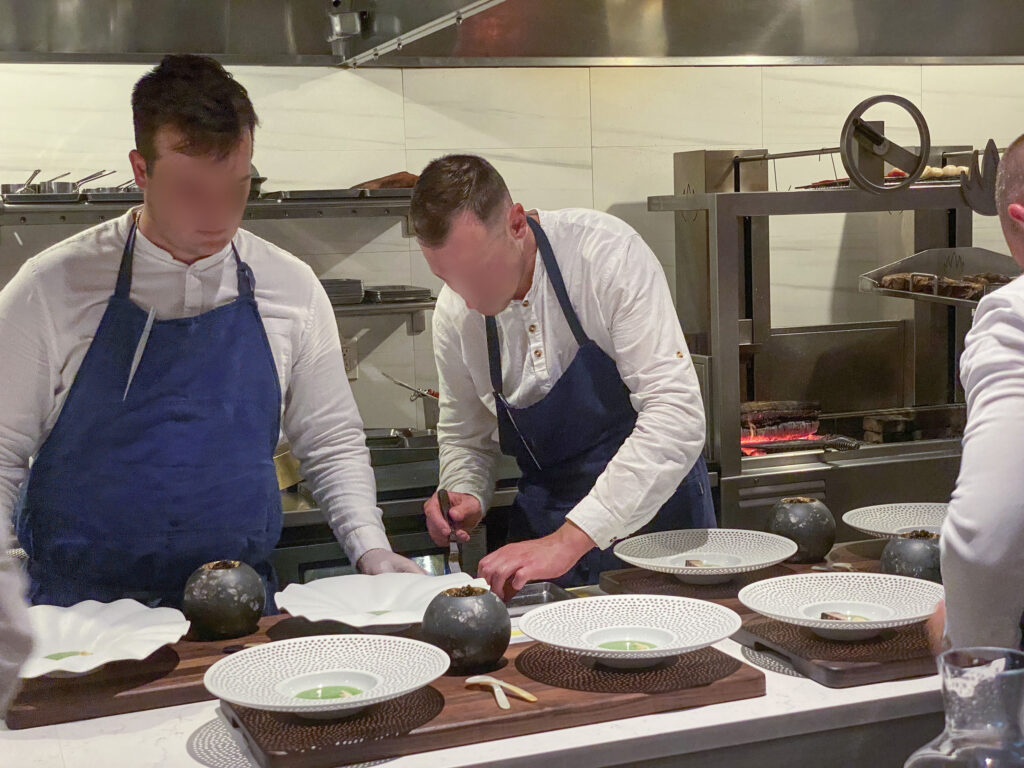
The plating is the same every time and it is done in front of you, which is a risk most kitchens would not take. Fifteen courses is a lot of chances to be caught being sloppy, and over an evening I did not see a plate wiped twice or a garnish put on crooked.
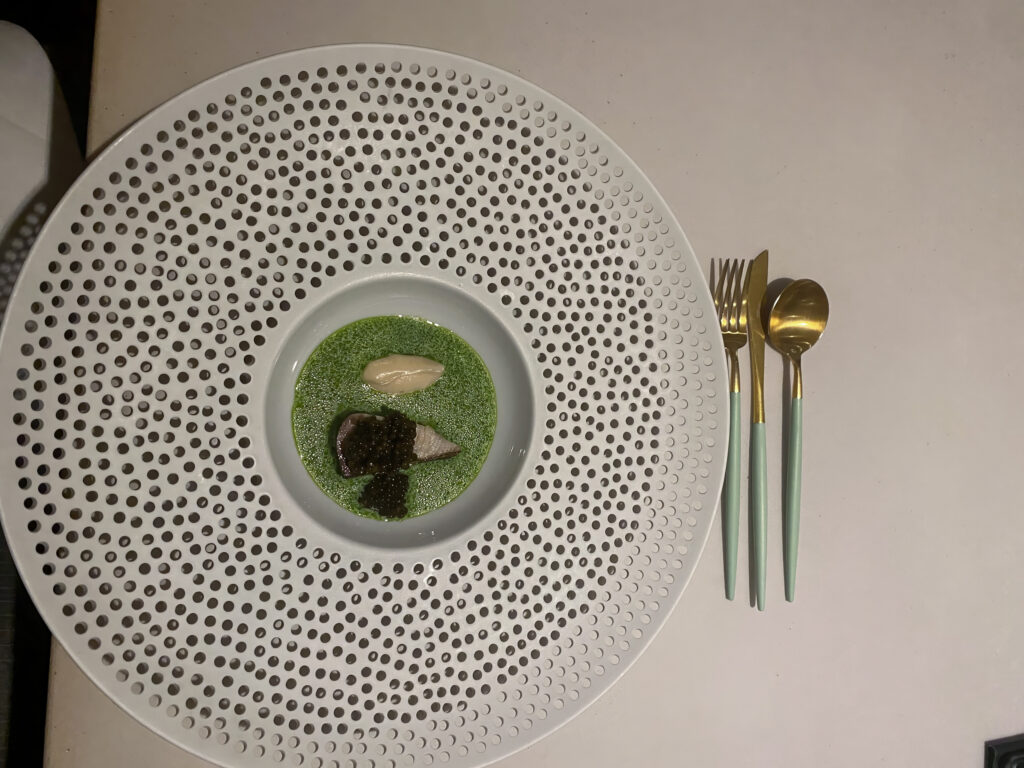
The seasoning is confident without being loud. Nothing arrived that needed salt, and only one thing, a sauce late in the savoury run, was rich enough that I was glad the portion was the size it was.
A French kitchen’s sauces under Japanese produce, cooked two metres from your hands. That combination is what the kitchen is for.
The order of the meal is worth describing because it is not the order most tasting menus use. It opens cold and small: things you eat in one, in sequence, quite quickly. Then it slows sharply through the middle where the sauces arrive, then speeds up again for dessert. The effect is that the heaviest eating happens when you are most awake for it, around the second third, rather than being back-loaded the way a classical menu would.
Two courses in the middle run are doing the real work. One is a rice dish, warm and quite loose, built to carry whatever is shaved over it. The other is a piece of protein with a reduction that has clearly been going since the morning. Everything on either side of those two is lighter than you expect, and I think deliberately. They are the two you are meant to remember.
The reservation, which is the hard part
Getting in is properly difficult and it is worth understanding why before you start refreshing anything. Sixteen seats and one sitting means the entire capacity of a night is smaller than a single large table at a conventional restaurant. There is no walk-in, no bar, and no second service to fall back on.
| Jônt | Bresca, downstairs | |
|---|---|---|
| What it is | The tasting counter, two stars | The restaurant that came first, and is much easier to get into |
| Format | Fifteen courses, one sitting, everyone starts together | À la carte |
| Seats | Sixteen, all at the counter | A full dining room |
| If you cannot get in | Book Bresca. Same kitchen team, same building, and it is not a consolation prize | |
The practical advice: book the moment the window opens, take any seat you are offered rather than holding out for a date, and go alone or as a two if you can. A four is materially harder at a sixteen-seat counter than the arithmetic suggests, because it is a quarter of the room.
This is also not Ratino’s only room, and has not been for some time. The group behind it runs Bresca downstairs and has opened elsewhere in the city since. That matters less than it might: on the night I was there he was on the line, and the cooking did not read like a kitchen being run remotely.
The counter-argument
Two things, and the first is structural.
You cannot opt out of the pace. Everyone starts together and moves together, which is what makes the room work, but it means the evening runs at the kitchen’s speed rather than yours. Fifteen courses arrive when they are ready. If you are the kind of diner who likes a long gap in the middle of a meal to sit and talk, this is not the room for it, and there is no polite way to slow it down without holding up fifteen other people.
And it is bright. Not harsh, but lit like a working kitchen rather than a dining room, because it is one. That is honest and it suits the food, and it also means a table of four having a big night out will feel more exposed here than they would downstairs. Some people want the dim room. This is not the dim room.
What is not a fair complaint: the produce. There is a line of thinking that a kitchen flying seafood from Japan is buying its stars rather than cooking them. Sitting two metres from the sauce work, that argument does not survive the evening.
Know before you go
Book direct through the restaurant. Jônt and Bresca take separate reservations and it is the same front door, so be specific about which you want.
Tell them about allergies when you book, not on the night. Fifteen courses at a sixteen-seat counter leaves the kitchen very little room to improvise.
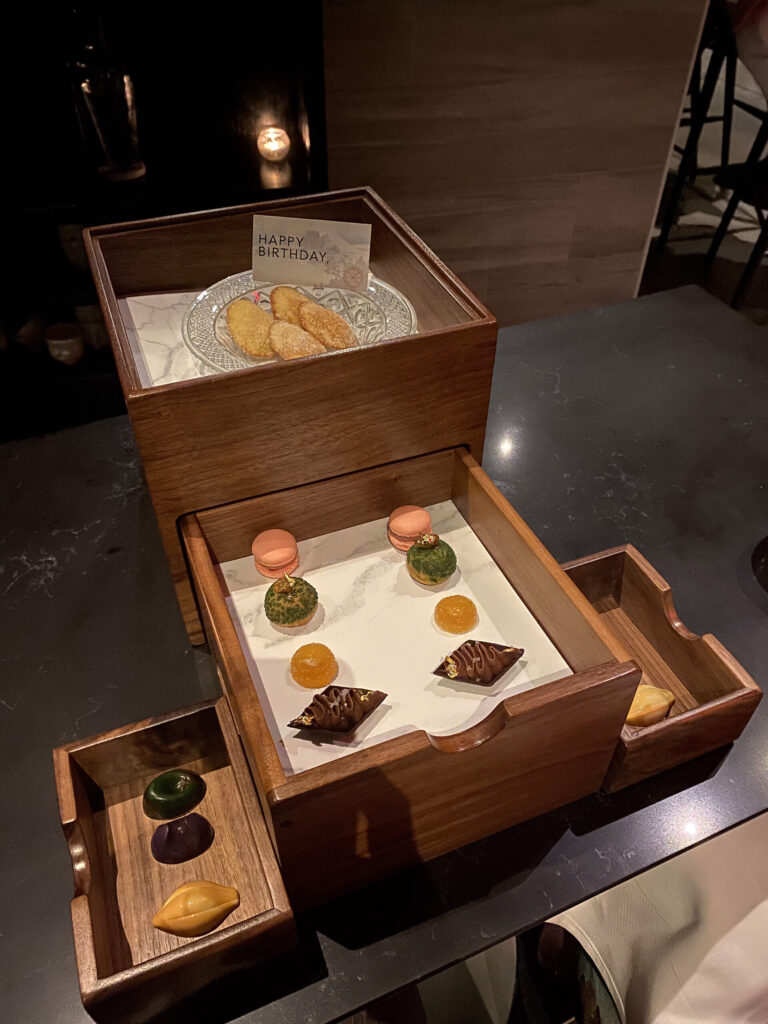
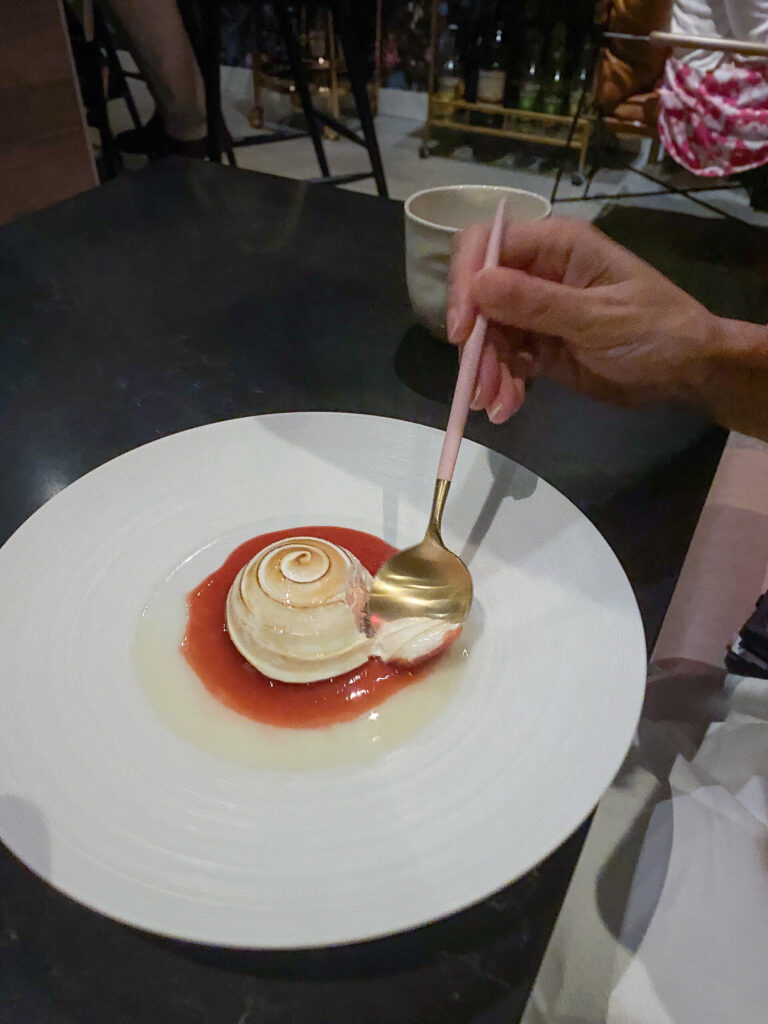
Mention an occasion if you have one. The end of the meal is where they put it.
And sit down when you are told to. Everyone starts together, and arriving late at a counter this size is conspicuous in a way it would not be anywhere else.
See the full set: Jônt, Washington DC — in frames.
Sixteen seats, fifteen courses, and a French sauce kitchen hiding behind Japanese produce. Book the counter and take whatever date they give you.
The Jônt gallery
Every photo on this site is my own, shot on the night. Slide through →