The Suite Report

Category: Restaurant

  • TURK Fatih Tutak: Modern Anatolian, Two Stars, and the Best Table in Istanbul

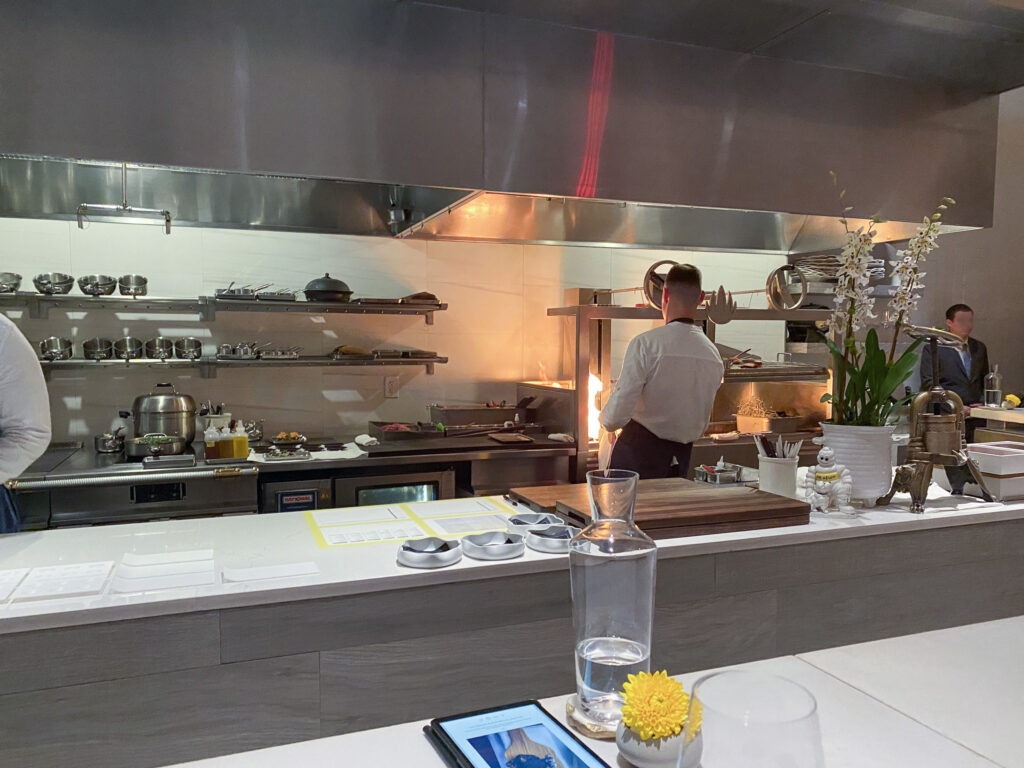
    Copper pans stacked on the kitchen pass under brass heat lamps, a cook working at the counter behind

    ISTANBUL, TÜRKİYE · RESTAURANT · 9 MIN READ

    TURK Fatih Tutak: Modern Anatolian, Two Stars, and the Best Table in Istanbul

    One fixed menu, built from a pantry with names and postcodes on every jar. The case for it is the provenance. The case against is that the provenance is the show.

    By J.C. Mercer

    Know before you go

    • Where the Now Bomonti building, Şişli – two minutes’ walk from Osmanbey on the M2, and its address since day one
    • The format one fixed tasting menu, dinner only, Tuesday to Saturday. No à la carte, and no vegetarian, vegan, gluten-free or lactose-free menu
    • What it costs one fixed price per head, published on the restaurant’s own page – VAT in, service added at the end
    • Booking turkft.com only, held with a per-person deposit inside 24 hours. Full refund at 72 hours’ notice, nothing after
    • The stars two in the first MICHELIN Guide Istanbul, October 2022, retained in 2024, 2025 and 2026. It never held one

    Every meal on this site is paid for in full and booked the way any other guest would book it.

    TURK Fatih Tutak occupies a unit in the Now Bomonti building in Şişli, and has occupied that same unit since it opened on 5 December 2019. Listings filing it under Beyoğlu, or Osmanbey, or Halide E. Adıvar are wrong: it has never moved. What changed is what it serves. It opened à la carte – four courses, four choices in each – and now serves one fixed tasting menu and nothing else.

    Tutak was born in Istanbul in 1985 and worked through Qingdao, Beijing and Hong Kong, but two rooms matter more than the rest: three-star Nihonryori Ryugin in Tokyo, and Noma in Copenhagen. In Bangkok he put a Turkish menu on the pass at The House of Sathorn and took it into Asia’s 50 Best. Then he came home and opened his own restaurant at thirty-four.

    The house line is that it is “creating a new alphabet for Turkish cuisine.” In practice that means a pantry: named growers, named regions, a named knife-maker in Mersin. It is also, if you are feeling unkind, a show. Both can be true at once. The question is how much of the second you are paying for in order to get the first.

    I ate here

    TURK Fatih Tutak, Istanbul

    • Covers Two, 7pm
    • Dined April 2025
    • Menu The tasting menu
    • Drinks Wine pairing
    • How it was paid for I paid in full

    Two stars, in a single step

    Almost everyone gets this slightly wrong. Istanbul had no MICHELIN Guide until October 2022. TURK had by then been open nearly three years without a star, because there was no guide to give it one. In that first selection it was the only restaurant in the city awarded two, making Tutak Türkiye’s first two-star chef. It did not work its way up; it went from unstarred to two in one move. Some biographies date the award to 2023, wrongly.

    It has held the two ever since. TURK is no longer the only two-star restaurant in the country, but it is still the only one in the city. La Liste made it the best restaurant in Türkiye in 2023 and 2024, and it entered the World’s 50 Best extended list at No. 66 in 2023 without ever becoming a fixture there.

    The pantry is the argument

    Whole fish hung to dry on a rail beside glass jars of preserved figs and dried chillies
    Fish drying on a rail above jars of figs and chillies. The store is not hidden behind the kitchen.

    Back-lit cabinets of ingredients stand in the room like furniture, and the sourcing behind them is the most concrete thing about the restaurant. Honey from Erzincan, from hives at three thousand metres. Pomegranate molasses from Hatay, barrel-aged seven years and then cellared further. Cold-pressed vinegar and water-buffalo yoghurt from Manisa; turbot from Sinop, squid from Çanakkale, lamb from Thrace, butter from Trabzon, bulgur from Urfa. Tutak shops the Bomonti organic market himself on Saturdays.

    A rolling rack of labelled preserving jars and bottles in the kitchen, a wicker basket resting on top
    A rolling rack of labelled preserves – the habit that got the kitchen through 2020.

    That habit has a decent origin story. When the restaurant was shut for the 2020 lockdown, Tutak went on buying from his producers anyway and turned the harvest into garums, misos, tarhanas and pickles to serve on reopening. The tableware makes the same argument in another material: four Turkish ceramic artists, plus olive-wood pieces oiled in-house and never put through a dishwasher. The knives for the meat course are made by Tüfekçi Karadayı, a third-generation craftsman in Mersin; the restaurant’s shop will sell you one.

    Two glass-fronted cabinets hung with drying fish and flatbreads on wire racks
    The two-door ageing cabinet, hung with fish and flatbreads. Pantry-as-decor, taken to its logical end.

    One menu, twelve courses or fourteen

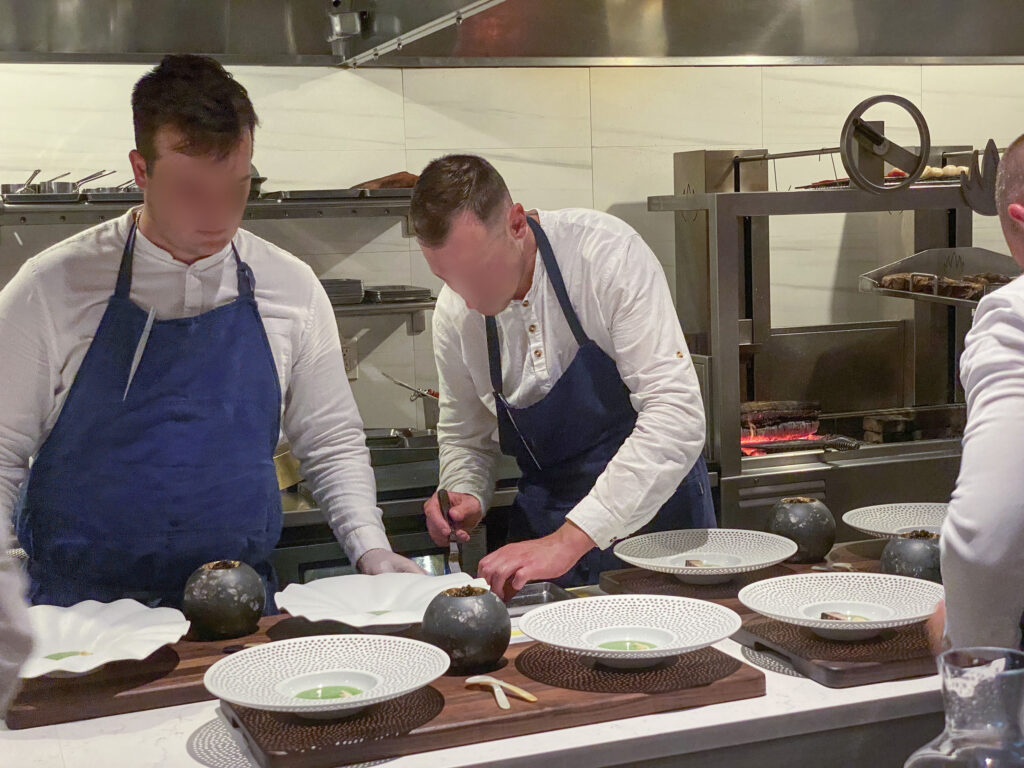
    The evening does not start at the table. It starts in AVLU – “the courtyard” – where the first canapés come out, and you can be four courses in before anyone shows you to a seat. The room beyond is long, narrow and dark, with a bar down one side and an open kitchen fronted by six counter seats. The house cooks for thirty guests a night with a staff of twenty-seven, which tells you most of what you need to know about the pace of the thing.

    The bread course: a sesame-crusted roll in a bowl of buckwheat, a cylinder of cheese on a slate dish, olive oil and a wooden spreader
    The bread course: a sesame roll bedded in buckwheat, cheese on slate, a wooden spreader.

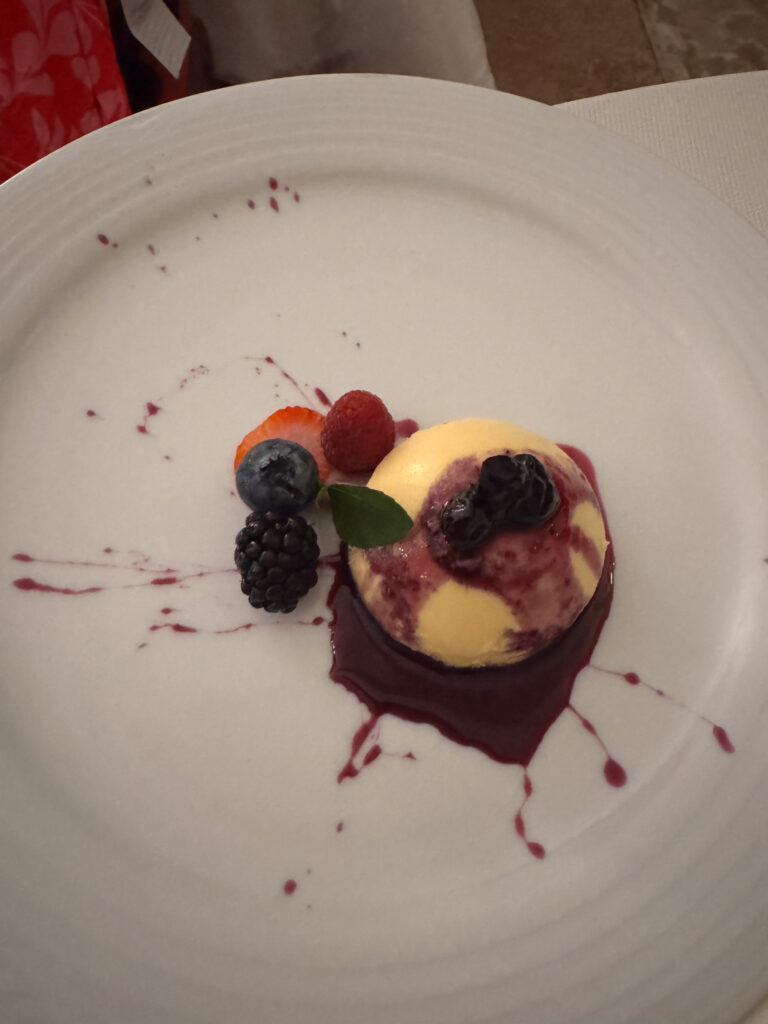
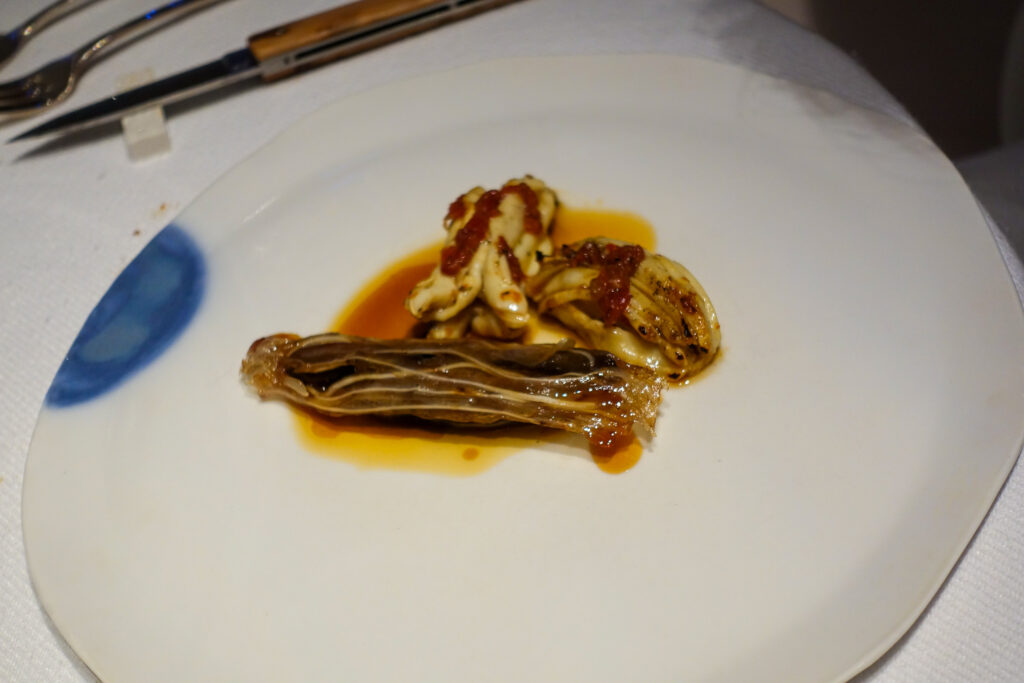
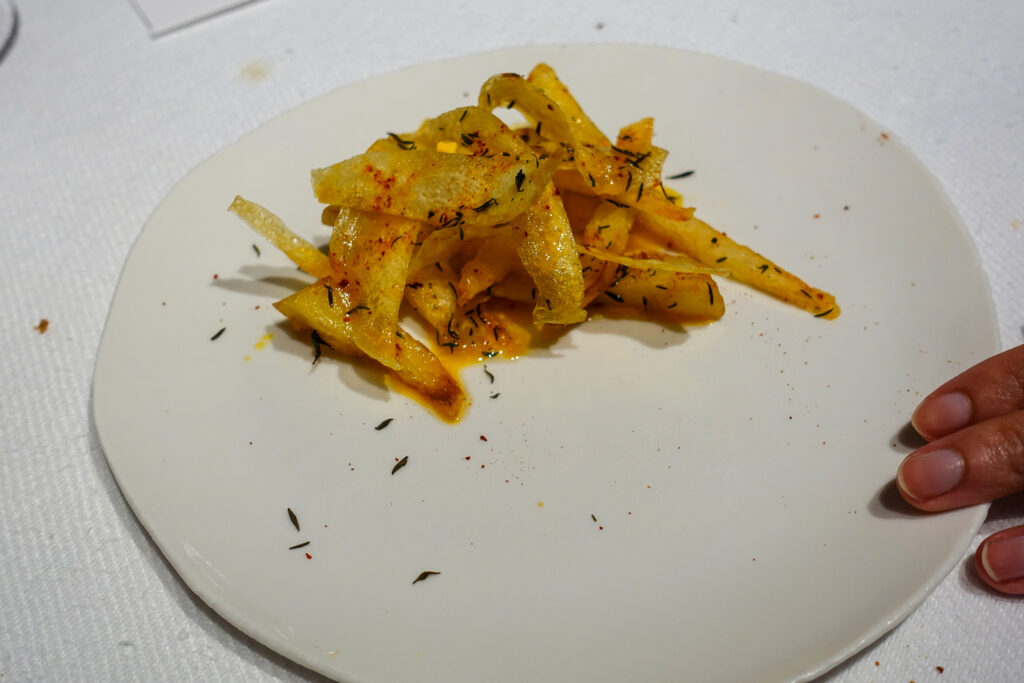
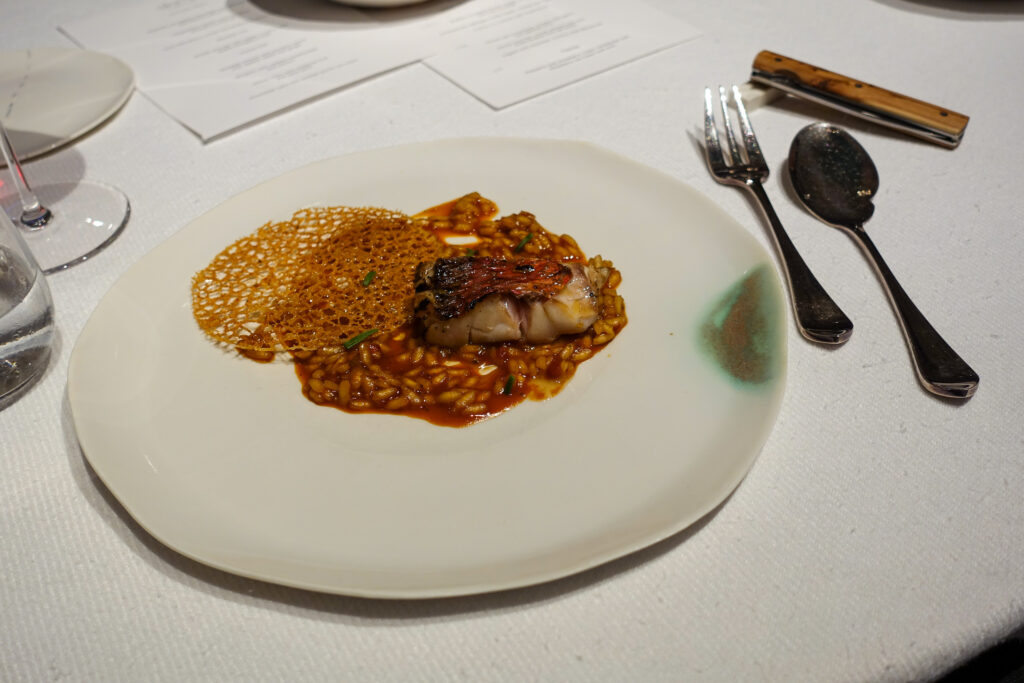
    The menu is micro-seasonal, so any dish list is a record of one night rather than a promise. A few things recur: a double-boiled chicken broth in a Turkish tea glass, which has opened the meal since at least 2024; the mussel dolma, rice-stuffed mussels inside an edible squid-ink shell, the dish everyone photographs; and the mantı called “From My Mom,” which followed Tutak from Bangkok and is still the signature. Recent menus have added wagyu çiğ köfte, a 64°C egg yolk with truffle shaved at the table, and a dessert developed with an AI flavour-modelling tool that the kitchen calls “the AI.”

    A quenelle of cream scattered with popcorn and crowned with caviar and a white flower, set in the hollow of a stone plate
    A quenelle of cream under caviar and popcorn, set into the hollow of a stone plate.
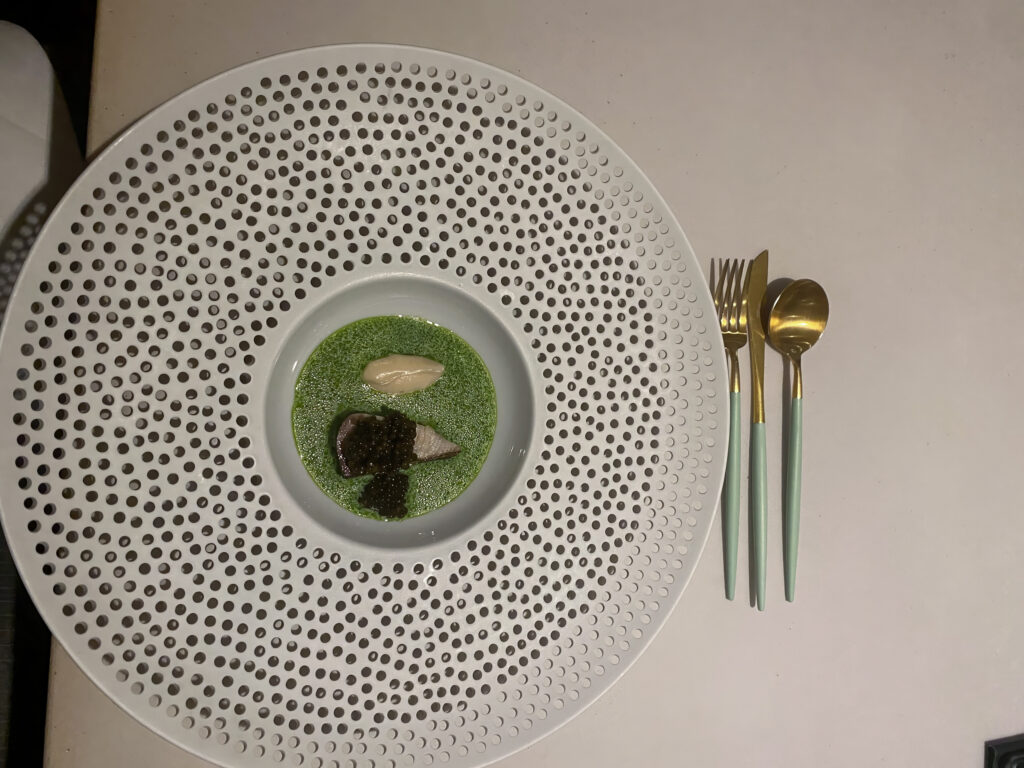
    Checkerboard slices of tuna loin and belly in green olive oil on a pale ceramic plate, a glass of water alongside
    Tuna loin and belly laid out as a checkerboard in green olive oil. The Tokyo years are not hidden.

    Tutak puts it plainly: “Turkish cuisine is not just about kebabs… Kebab is part of it, maybe 5% but there is so much more than kebabs.”

    The pantry is not decoration. It is the one thing on the menu nobody else can copy.

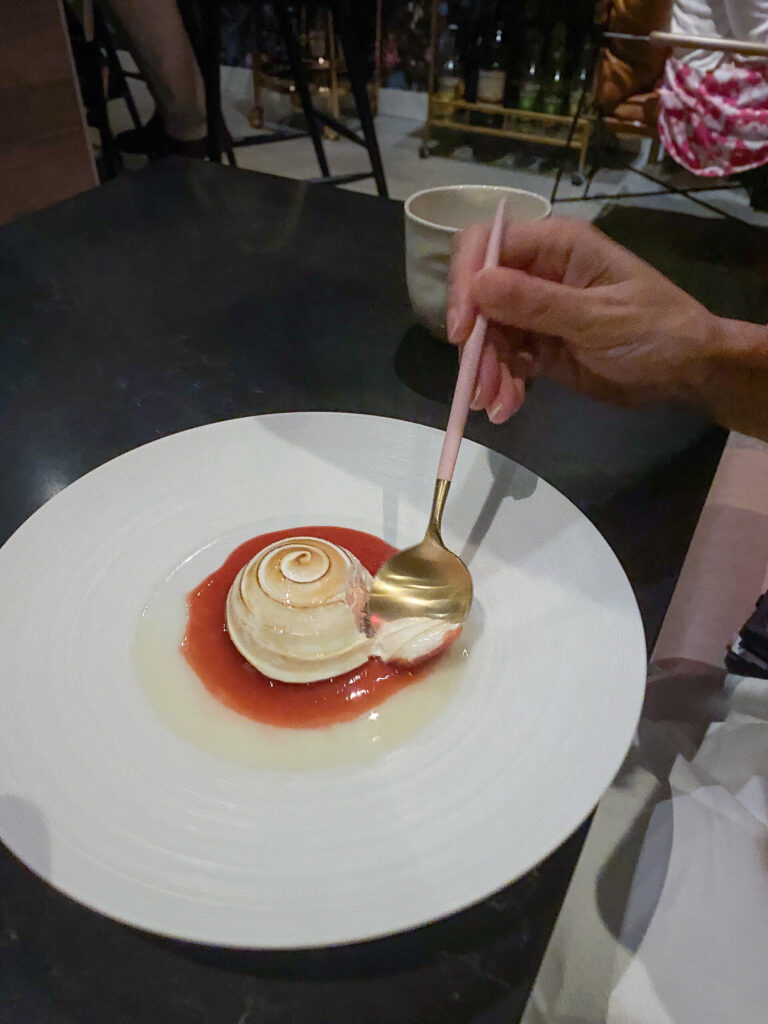
    A bruleed custard under a drift of grated white cheese and a curl of green herb in an oval dish
    A brûléed custard under grated white cheese, with one of the hand-oiled olive-wood spoons.

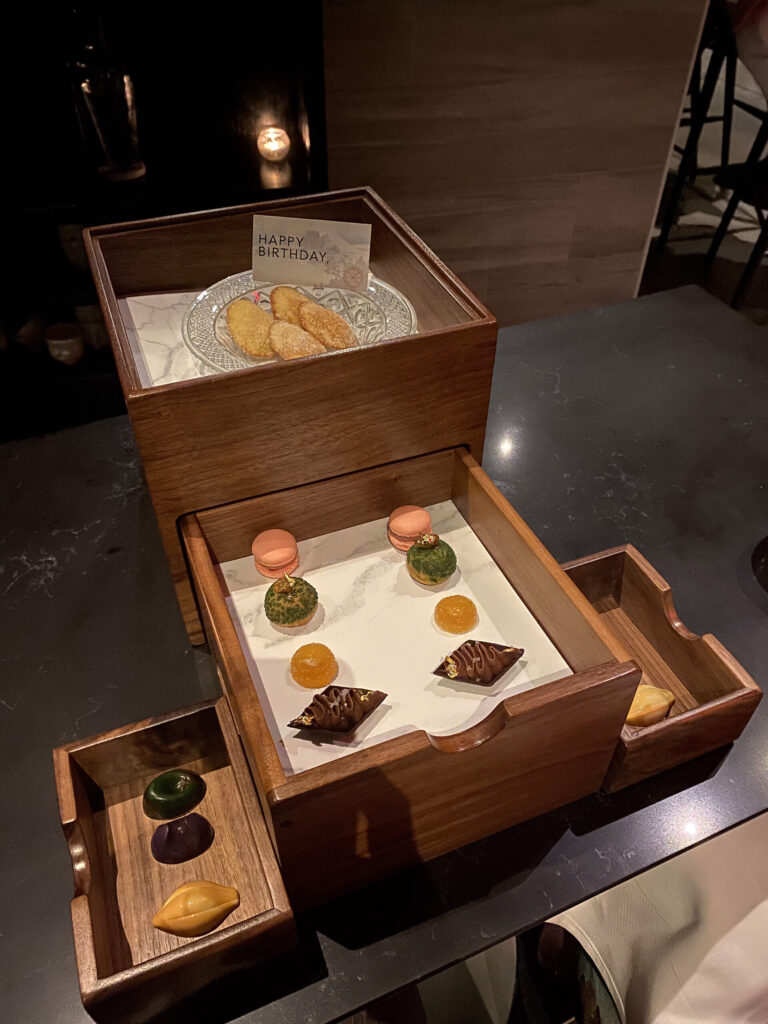
    Water, coffee and tea are in the price. The meal ends with a kitchen tour led by Tutak or one of his chefs, and you leave with a handwritten menu in a box with two chocolates and a limoncello-style spirit.

    What is in the glass

    The wine pairing runs seven wines chosen to walk you around Turkish terroir rather than flatter the food with imports, from a list of more than 490 labels. The non-alcoholic pairing runs six house-made drinks, one of which – a fermented elderflower and rose called Özlem – is good enough that one write-up reckoned wine drinkers briefly regret their choice.

    A hand holding a bottle of Turasan Riesling from Zeynep Baglari in Cappadocia
    Turasan Riesling 2022 from Zeynep Bağları in Cappadocia – the label records it as bottle 1,268 of 4,000.

    The bottles in my photographs give a fair sense of the range: a Yaşasın brut from Kalecik Karası, 7Bilgeler’s Khilon Sauvignon Blanc, that Cappadocian Riesling, a Chamlija Thracian, a Lermonos Rindera blending Öküzgözü and Boğazkere. There is also a bottle of Japanese Junmai Ginjo sake in the same set of frames – less a criticism than a clue, and it returns below.

    What you actually get

    FormatOne fixed tasting menu, dinner only, Tuesday to Saturday. No à la carte
    CoursesTwelve to fourteen, depending how you count a course
    LengthAllow three and a half hours
    Starts inAVLU, the courtyard lounge – canapés before you are seated
    Ends withA kitchen tour, a handwritten menu, two chocolates and a spirit
    DrinksWine pairing or non-alcoholic pairing; water, coffee and tea included
    Cannot accommodateVegan, vegetarian, gluten-free, lactose-free

    The counter-argument

    The complaints about TURK are consistent enough to take seriously, and they sort into three: the room, the plate, and the claim.

    The room first. It is dark, and once it fills it is loud – closer to a bar than a dining room, which some people love and others resent at this price. Then the absent-chef question, which is fair and checkable. Tutak took on Gallada and Topside Bar at The Peninsula Istanbul when they opened in 2023, and he is not necessarily in this kitchen on any given night. At two stars, with one seating and thirty covers, that matters more than it would somewhere larger.

    Then the plate. The misses, when they come, are misses of seasoning and restraint rather than technique: squid dialled too far down, a dessert carrying a lump of something fatty in an otherwise light dish, a nectarine ice cream that does not taste of nectarines. Nothing disastrous, and nothing that would trouble a one-star kitchen. But at this price the near-misses are the ones that stay with you.

    The hardest thing about TURK is who it will not feed. It cannot accommodate vegan or vegetarian diets, lactose intolerance or coeliac disease; the menu leans on seafood it cannot remove, and onions, garlic, milk and dairy are not coming out either. Tutak’s own framing is that a menu is a film, and if you do not like the film you should not come to the cinema. That is a defensible position for a fixed menu, and it is also, plainly, a restaurant deciding who it is not for. The policy is published. Read it before you pay the deposit, not after.

    Then the objection worth taking most seriously: that this is Japanese technique pointed at Anatolian produce, at a price justified by the claim to be Anatolian. Given Ryugin, given Noma, given a tuna checkerboard and a bottle of Junmai Ginjo sitting in my own photographs from the night, that is not an unreasonable reading. Tutak’s answer is on the record and is not a denial: the Turks came from Central Asia, he has spent sixteen years travelling it, and the kitchen develops new techniques from what it finds. Whether that makes the result Anatolian cooking is not something the menu settles. You decide at the table.

    What it costs

    Prices here move too fast to be worth printing, and the restaurant publishes its own. What is worth saying plainly is the shape of it: TURK is not expensive by two-star standards in Paris or Tokyo, and it is very expensive by the standards of the city it is in. Payment is in Turkish lira only, VAT is inside the quoted price, and a service charge is added at the end.

    Know before you go

    Book through turkft.com and nowhere else – the old Rezervem listing is dead, and there is no OpenTable or Resy. Nothing is confirmed until the email arrives, and a per-person deposit is due within 24 hours and comes off the bill. Cancel with 72 hours’ notice or more and you get it all back; inside that window, or a no-show, and you lose it, and shrinking the party costs you the deposit on each missing seat. Solo diners are seated only at the Chef’s Table, which takes at most six a night. Two to three weeks ahead is enough midweek; make it three to four for a weekend.

    Dress is semi-formal and specified: for men, a collar and long trousers, and no shorts, sportswear, tracksuits, hoodies, caps or flip-flops. The age limit is twelve. Bomonti is not the Istanbul most visitors book – inland in Şişli, no Bosphorus to sell, anchored by Bomontiada, the 1890 beer factory reopened as a cultural complex in 2015. A restaurant that puts its pantry where other places put a window is in exactly the right neighbourhood.

    Don’t miss

    If you only do five things:

    • Re-read the price on turkft.com the week you book – it moves faster than the guides
    • Read the dietary policy before you pay the deposit, not after
    • Take the wine pairing for the Turkish list, not the count of glasses
    • Look at the ingredient cabinets on the way in – they are the argument
    • Say yes to the kitchen tour at the end

    The TURK Fatih Tutak gallery

    Every photo on this site is my own, shot on the night. Slide through →
    A sommelier presenting a bottle of Yasasin brut sparkling wine over the tableA tall glass of cloudy amber cocktail under a foam cap dusted with cinnamon, on a leather coasterThe bread course: a sesame-crusted roll in a bowl of buckwheat, a cylinder of cheese on a slate dish, olive oil and a wooden spreaderA hand holding a bottle of 7Bilgeler Khilon Sauvignon Blanc, its paper label torn and weatheredA bruleed custard under a drift of grated white cheese and a curl of green herb in an oval dishA sommelier holding a bottle of Junmai Ginjo sake with a gold labelCheckerboard slices of tuna loin and belly in green olive oil on a pale ceramic plate, a glass of water alongsideA hand holding a bottle of Turasan Riesling from Zeynep Baglari in CappadociaA quenelle of cream scattered with popcorn and crowned with caviar and a white flower, set in the hollow of a stone plateA hand holding a bottle of Chamlija Thracian white wine with a turquoise and gold labelThe label of Lermonos Rindera 2022 held close, Okuzgozu and Bogazkere lettered in white on deep redA hand holding a bottle of Kavaklidere Tatli Sert 2004, a fortified white made from Narince grapesA rolling rack of labelled preserving jars and bottles in the kitchen, a wicker basket resting on topTwo glass-fronted cabinets hung with drying fish and flatbreads on wire racksWhole fish hung to dry on a rail beside glass jars of preserved figs and dried chilliesCopper pans stacked on the kitchen pass under brass heat lamps, a cook working at the counter behind
  • Sorn: Three Stars, and Worth Planning a Trip Around

    A terracotta pot of steaming jasmine rice set in a woven basket on the marble table

    BANGKOK, THAILAND · RESTAURANT · 9 MIN READ

    Sorn: Three Stars, and Worth Planning a Trip Around

    One southern Thai tasting menu, one sitting a night, paid for in full weeks in advance and refundable under no circumstances. The hard part is not the meal. It is the booking.

    By J.C. Mercer

    Know before you go

    • Where 56 Soi Sukhumvit 26, Bangkok – a restored house down a residential lane, fifteen minutes on foot from BTS Phrom Phong
    • The format one set southern Thai tasting menu, dinner only, from 6pm. No à la carte, no vegetarian menu
    • What it costs one fixed price per person on the restaurant’s own booking page, with service and VAT added on top
    • Booking paid in full at booking, non-refundable, non-transferable, impossible to reschedule. Email opens on the 15th; the online release is at noon on the 25th
    • The stars one in the 2019 Michelin Guide Thailand, two in 2020, three in the 2025 guide announced November 2024, held since

    Every meal on this site is paid for in full and booked the way any other guest would book it.

    Sorn is a restored house down a quiet residential lane off Sukhumvit 26, and you would walk straight past it if you did not know. By the guide’s own count it was the first Thai restaurant anywhere to be given three Michelin stars, and for a year it was the only one in the country. It is not the only one now, but it got there first. What it actually does is narrower than three stars suggests: one set menu, dinner only, built entirely from the food of the south, cooked over charcoal and in clay pots.

    Supaksorn Jongsiri – Ice, to everyone – is from Nakhon Si Thammarat, never went to culinary school, and learned to cook from his grandmother. By his own account, before opening in 2018 he spent two years driving all fourteen southern provinces, eating and writing things down. That is the whole restaurant in a sentence: this is not southern Thai food interpreted for Bangkok, it is southern Thai food brought north intact.

    Almost nobody argues about the cooking. The argument is about getting in – and that part is won or lost weeks before you eat.

    I ate here

    Sorn, Bangkok

    • Covers Two, 6pm
    • Dined May 2026
    • Menu The tasting menu
    • Drinks Wine pairing
    • How it was paid for Prepaid in full at booking
    • What it cost the fixed menu price per person, plus service and VAT, before any drinks

    The hardest table in Thailand

    It may be the hardest table in Thailand. There is one seating a night, and the room is small: somewhere between twenty and forty covers depending on how the tables are laid. Demand is not small at all.

    There are two ways in. Booking from outside Thailand, you email the restaurant from midnight Bangkok time on the 15th, for the following month. Everyone else goes through TableCheck, which opens at noon on the 25th, again for the month ahead, moving to the 24th if the 25th falls on a Saturday.

    Do not treat those dates as gospel. The restaurant has run other systems – a monthly application window, different release times – and the guidance floating around online contradicts itself constantly. Email early, set one alarm for the 15th and another for noon on the 25th, and check the restaurant’s own channels the week before.

    By emailOnline, via TableCheck
    OpensMidnight Bangkok time on the 15thNoon Bangkok time on the 25th, or the 24th if the 25th is a Saturday
    Who forInternational guestsAnyone; parties of one to twelve
    How you payThe full menu price, at the moment of booking. Visa, Mastercard and AMEX only
    The catchReplies reported at three weeks, or neverThe month reported gone within seconds

    What you buy at that moment is not a reservation in the ordinary sense. The full price is charged up front and the terms are hard: final on confirmation, no rescheduling, no cancellation, and the credit covers the menu only, never drinks. Arrive more than thirty minutes late and the booking is void, which in Bangkok traffic is a real risk. Turn up with fewer people than you booked and you pay for the empty seats anyway.

    One piece of advice worth taking: book for four rather than two. There are simply more tables for four, and which table you get matters more here than it should.

    What the kitchen is actually doing

    A ceramic tray of raw ingredients: a whole river prawn, green mangoes, garlic, bird's eye chillies, jasmine rice and black and white peppercorns
    The tray that opens the meal: river prawn, green mango, garlic, bird’s eye chilli, jasmine rice, peppercorns. Sorn shows you the components before the dish.

    Southern Thai cooking is the most aggressively seasoned food in the country, and there is a reason for it. The intensity comes from a time when people foraged and travel took days: the stronger the chilli paste, the more rice it could carry, and the further a small amount went. That logic is still on the plate.

    Almost everything on the table comes from the south, and from fourteen provinces of it. Tapi River prawns and Surat Thani crab arrive each morning, lobster from Phuket, squid from the Andaman, rice from Nakhon Si Thammarat. Even the water the rice is cooked in comes from Ranong – in a clay pot, over charcoal.

    None of it goes through a supplier company. A board on the wall names the individual people who source for the kitchen, which is the argument made as an object: not knowing where the ingredients come from, but knowing who they come from. Accepting his third star, Jongsiri talked about southern farmers burning surplus mangosteen for want of a buyer while Bangkok restaurants imported fruit from Europe.

    One menu, somewhere north of twenty courses

    A wooden bowl of raw southern Thai produce: winged beans, cucumbers, baby corn, betel leaves, torch ginger flower, fresh turmeric, pomelo and green mangoes
    The bowl for the vegetable course: winged beans, baby corn, betel leaves, torch ginger, turmeric, pomelo, green mango. Presented whole, then dressed at the table.

    Nobody agrees how many courses this is, and the disagreement is really about the unit – one course can arrive as three plates. Expect something north of twenty, across about three hours.

    The shape is consistent. The first act is individually plated and small: raw and lightly worked seafood, a sequence labelled “The Ocean,” a sorbet to clear. Then it pivots. Rice arrives from a clay pot with a spread of condiments – chilli pastes, pork rinds, dried stingray, sweet shrimp, quail egg, herbs – and the southern classics come out family-style: soup, curry, stir-fry, something fried. Then desserts, then the trolley.

    Torn layers of flaky roti in a cloth-lined basket beside a curry and a bowl of greens
    Roti beside a curry. The green curry is the one to save room for.figcaption>

    The rice is the centre of gravity here, not a side dish: southern jasmine from Nakhon Si Thammarat, cooked in a clay pot over charcoal, and good enough that it is the thing you will still be thinking about a week later. Everything alongside is built to be eaten with it, which is why the middle of the meal looks less like fine dining than the opening did. That is deliberate. The fine-dining format is borrowed from the West, as Jongsiri has put it, and it is not who this kitchen is.

    Two blocks of dark braised meat in a yellow curry served in a granite mortar, a basket of roti alongside
    Braised meat in a yellow curry, served in a granite mortar. Every chilli paste in the house is pounded by hand.

    “I focus on food that complements rice, not courses,” the chef has said.

    You pay in full weeks before you eat. The only thing left to chance is the table.

    A crisp golden omelette ringed around chunks of lobster meat and greens on a pale ceramic plate
    A crisp golden omelette built around shellfish and greens, from the family-style half of the meal.

    Spice is the one variable you control. The kitchen asks about allergies and heat before service and will set it per person, anywhere from full southern to mild. Two things are worth knowing. The curries are made in batch and cannot be turned down, and they are the hottest things on the menu. And mild here is still, by most standards, hot.

    A tangle of stir-fried morning glory crowned with crisp fried garlic and shallots in a rustic bowl
    Stir-fried morning glory under crisp fried garlic and shallots. By now the plates are shared.

    The last act

    A dessert of black sticky rice with sesame, coconut ice cream and a cashew-studded wafer on a textured white plate
    Black sticky rice with sesame, coconut ice cream and a cashew wafer – the dessert Thai kitchens call bee koh moy.

    Desserts run through coconut, black rice, sago and fruit, and then a trolley arrives carrying more than anyone can reasonably eat – eight or so kinds of petit four, and no expectation that you stop at one.

    Seven Thai petits fours arranged on a dark slate plate, a coconut crisp sitting on a heap of palm sugar
    Seven petits fours on slate, a coconut crisp balanced on a heap of palm sugar. The trolley does not ration.
    A glass teapot of flowering chrysanthemum tea and two amber-filled cups on an etched glass tray
    Flowering chrysanthemum tea to close, poured at the table.

    Who Sorn cannot feed

    This needs saying plainly, because the money is gone before you find out. Sorn’s booking terms state there is no vegetarian or vegan menu: the kitchen is “unable to cater to guests who do not consume meat.” It cannot accommodate any degree of shellfish allergy – “even if limited to a single variety” – nor guests who simply do not eat shellfish. And it names eight core ingredients it will not substitute for allergy or intolerance: coriander root, onion, garlic, peppercorns, shrimp paste, coconut, chilli and fish sauce. It is published on the same page that takes your card.

    The counter-argument

    Whatever there is to hold against Sorn is almost never about the food. It is about getting in, and about where you sit once you have.

    The second one is real. There is a table upstairs in a corner between three walls, facing the dumbwaiter, beside the door to the restrooms. Draw it and you will spend the evening watching the service traffic and the queue for the lavatory. At over nine thousand baht a head, paid weeks in advance, that is a great deal to leave to a draw – and it is the strongest argument there is for booking a four-top.

    The pace is quick, and it is deliberate rather than careless: a lot of these dishes are temperature-critical and are meant to reach you fast. The descriptions come just as quickly, and if you want to hear one twice you may find yourself pointed at the printed menu instead. You will also be too full well before the trolley. And ask what the water costs – it is not cheap, and the price is published nowhere.

    What it costs

    The restaurant publishes one fixed price per person on its own booking page; service and VAT are added on top. It has roughly tripled in the eight years since opening. Drinks are separate, and the prepaid credit does not touch them. There are two wine pairings, six glasses and nine, and the shorter one is not all wine. Corkage is one for one: every bottle you bring means buying one from the list.

    Know before you go

    The house is down Soi Sukhumvit 26, fifteen minutes on foot from BTS Phrom Phong. On-site parking is very limited, but there is a complimentary shuttle from the Four Wings Hotel car park in the same lane, where parking is charged by the hour. Allow far more time than the map suggests; the thirty-minute forfeit is real.

    There is no published dress code; smart and unfussy is right. Bring a layer, because the room runs cold. Answer the spice question honestly when it comes. Budget three hours. And if this meal is going to shape the trip, book it before you book the flights.

    Two things Sorn does not publish: which days it opens, and what its hours are. What you will find online contradicts itself. One phone call settles it, and it is worth making before you build a day around it.

    Don’t miss

    If you only do five things:

    • Set two alarms: the 15th for email, noon on the 25th for the online release
    • Book for four rather than two – there are more tables that size
    • Answer the spice question truthfully when the chef asks
    • Read the supplier board on the wall before you sit down
    • Leave room for the petit-four trolley

    The Sorn gallery

    Every photo on this site is my own, shot on the night. Slide through →
    The closed menu, a grey card folder sealed with a Thai postage stamp, held above the marble tableA ceramic tray of raw ingredients: a whole river prawn, green mangoes, garlic, bird's eye chillies, jasmine rice and black and white peppercornsA single bite of jasmine rice topped with shellfish and glazed red strips, on a blue and white glazed plateA clear consomme in a fluted glass bowl, two cubes and a mint leaf at its centre, the glass lid set asideTwo glazed skewers resting on a wire mesh over a small terracotta charcoal potA wooden bowl of raw southern Thai produce: winged beans, cucumbers, baby corn, betel leaves, torch ginger flower, fresh turmeric, pomelo and green mangoesA small herb and pomelo salad heaped on a speckled blue plate, the bowl of raw produce behind itA terracotta pot of steaming jasmine rice set in a woven basket on the marble tableA crisp golden omelette ringed around chunks of lobster meat and greens on a pale ceramic plateTorn layers of flaky roti in a cloth-lined basket beside a curry and a bowl of greensTwo blocks of dark braised meat in a yellow curry served in a granite mortar, a basket of roti alongsideA dessert of black sticky rice with sesame, coconut ice cream and a cashew-studded wafer on a textured white plateA whole mangosteen dessert on a glazed plate in front of a Thai tin of canned mangosteenA glass teapot of flowering chrysanthemum tea and two amber-filled cups on an etched glass traySeven Thai petits fours arranged on a dark slate plate, a coconut crisp sitting on a heap of palm sugar