The Suite Report

Category: Restaurant

  • Masa: The Room That Will Not Let You Photograph It

    NEW YORK CITY · RESTAURANT · 8 MIN READ

    Masa: The Room That Will Not Let You Photograph It

    Twenty-six seats, a cypress counter flown from Japan, no menu and no cameras. The strictest dining room in New York, and the rule turns out to be the point.

    By J.C. Mercer

    Verified meal·paid in full

    • Covers One, at the counter
    • Dined February 2026
    • Menu The dinner omakase, Hinoki Counter Experience
    • Drinks Sake, chosen by the room

    Every meal on this site is booked the way any other guest would book it.

    No photographs. Masa prohibits photography and videography in the dining room. This is the one review on this site with no pictures of its own, and none taken by anyone else.

    There are no photographs with this review, and there will not be any. Masa does not allow them. The restaurant’s own booking page puts it plainly: “photography and videography are strictly prohibited”. It gives two reasons, preserving the environment of the room, and the privacy of the people in it. Phones stay on silent. Calls are taken outside. Guests who ignore it, the same page says, may be asked to leave. Every other review on this site is built on my own pictures. This one is built on paying attention instead.

    I have come to think that is the most interesting thing about the room, and not a limitation on writing about it.

    Where it is, which is the first surprise

    Masa is on the fourth floor of a shopping mall. That is not a slight; it is the Deutsche Bank Center at 10 Columbus Circle, and the same building holds a great deal of expensive retail, but you do arrive by escalator, past luggage and cosmetics, and it never stops being funny. Then a door, and the noise of Columbus Circle simply stops.

    The room seats twenty-six. The counter is a single slab of hinoki cypress, flown from Japan, and it is the object the whole restaurant is arranged around. It is unlacquered and unsealed, scrubbed rather than polished, and it has the pale, matte, slightly soft look of wood that is maintained daily rather than protected.

    Takayama did not start here. He cooked in Los Angeles for years before New York, and the restaurant that made his name in Tokyo, Ginza Sushi-ko under Suhiyama Toshiaki, is the kind of apprenticeship that shows up as restraint rather than technique. There are two other Masa rooms in this city, a bar and a kappo, and both are easier in every sense. This is the strict one.

    The counter or the table, and why it matters

    There are two ways to eat here and they are sold separately. The Hinoki Counter Experience puts you at the cypress, in front of the chefs. Table seating puts you in the dining room, where the same food arrives but the making of it does not. There is also a lunch service at the counter.

    Take the counter. The entire proposition of this restaurant is watching one man and his cooks work in near silence at arm’s length, and taking the same dinner at a table and having it carried to you is the single worst decision available on the booking page.

    Hinoki CounterTable seating
    What you getA seat at the cypress, in front of the chefsThe same omakase, in the dining room
    Party sizeOne to fourTwo to four
    Also at lunchYesDinner only
    Booked howThrough Tock

    What comes out

    There is no menu. You are not asked what you would like and there is nothing to read. Masayoshi Takayama trained under Suhiyama Toshiaki at Ginza Sushi-ko in Tokyo, and what he learned there is visible in the shape of the meal rather than in any single dish: it opens with cooked things, moves through the raw, and ends without ceremony.

    Most of the fish is flown from Japan. The house signatures recur: toro with osetra, nigiri built on foie gras, abalone handled in a way I have not seen elsewhere in the city, and in season a quantity of white and black truffle shaved over things that were already rich before it arrived. That last part is where the room divides people, and I will come back to it.

    The rice is warmer than you expect and looser than you expect. It is seasoned assertively enough that a couple of the leaner pieces come across as sharp rather than delicate. Nothing is sauced to hide behind.

    The abalone is the thing I would come back for, and it is the hardest to describe without a picture, which is a sentence this restaurant has arranged for me to have to write. It arrives worked to a texture that is not chewy and not soft, somewhere closer to the resistance of a mushroom stem, and it tastes overwhelmingly of the sea in a way none of the raw fish does. It is a cooked dish in a room people come to for raw fish, and it is better than most of the raw fish.

    The counter itself is worth arriving early enough to look at properly. It is scrubbed down rather than wiped between guests, and the wood has the faint unevenness of a surface that gets abraded daily. Nothing is set on it that does not need to be. There are no cloths, no cruets, no card with the name of the restaurant on it.

    There is no menu, no music, and nothing to photograph. What is left is the food and the sound of the room, which is mostly knives.

    The silence, and what the policy is actually for

    The no-phone rule reads, on the booking page, like the sort of thing a restaurant writes to sound serious. In the room it is not that at all. Twenty-six people, no music, nobody holding a screen up: the loudest sound is a knife going through fish, and a room full of people who have run out of ways to perform has to actually talk to each other.

    The stated reason is guest privacy, and given who eats in that building, that is plainly a real consideration. But the effect is on the food. You look at a piece of nigiri for the two seconds before you eat it rather than the forty seconds it takes to light it properly, and it turns out two seconds is the correct amount of time.

    The other thing the silence does is expose the service. With nothing to look at on a screen you notice how the room is run, and it is run extremely tightly: plates land without being announced, glasses are dealt with before you have registered wanting anything, and nobody explains a dish at length. The explanation is one sentence, sometimes just the name of the fish and where it came from, and then they leave you alone with it. After two hours of that, the ordinary restaurant habit of a server narrating a plate for thirty seconds starts to seem like an odd thing that people do.

    It is also, and this is worth saying plainly, not a warm room. Nobody is unfriendly and several of the cooks are quietly funny once you have been sitting there a while, but the register is formal and it does not loosen much. If your idea of a great night out involves the chef pouring you something off-menu at the end and telling you a story, this is not that restaurant, and it is not trying to be.

    The counter-argument

    Two, and they are both real.

    The first is the truffle. In season it goes over a great deal, and there is a point in the evening, usually somewhere after the third shaving, where luxury stops being a seasoning and becomes the argument itself. Some of the best things served here are the plainest, and they are the ones the truffle lands on top of. If that reads as generosity to you, it is. If it reads as a restaurant reaching for the grandest thing in the building, that is also fair, and it is the most common serious complaint about Masa.

    The second is the mall. You will pay a great deal of attention for two or three hours and then walk out into a shopping centre. There is no transition, no bar to sit in afterwards, nowhere for the evening to come down. Book somewhere for a drink before you go in, not after.

    What is not a fair complaint: the second star. Masa held three for about fifteen years and was moved to two in November 2025, and the reaction was noisier than the change deserved. Two stars at Masa describes the same room, the same counter and the same cooking it described a year ago.

    Know before you go

    Book through Tock, and book the counter. Parties of one are welcome at it, which is rarer than it should be at this level and is the best possible way to eat here.

    Tell them about allergies and dietary restrictions when you book. The restaurant accommodates them, with stated exceptions, but not on the night.

    Leave your phone in your pocket and your fragrance at home. Both are asked for, and the second matters more than it sounds in a room where a lot of what you are being sold arrives by smell.

    And do not expect to leave with anything. That is the deal here, and after an evening of it I think the restaurant has the better of the argument.

    The only restaurant I have been to where the rule against photographs improves the food. Sit at the counter.
    Don’t miss

    If you only do five things:

    • Book the counter, never the table
    • Go alone if you can; parties of one are taken
    • Declare allergies at booking, not on the night
    • Wear no fragrance at all
    • Book a drink somewhere else first, not after
  • Jade Dragon: Eight Straight Years of Three Stars, and It Shows

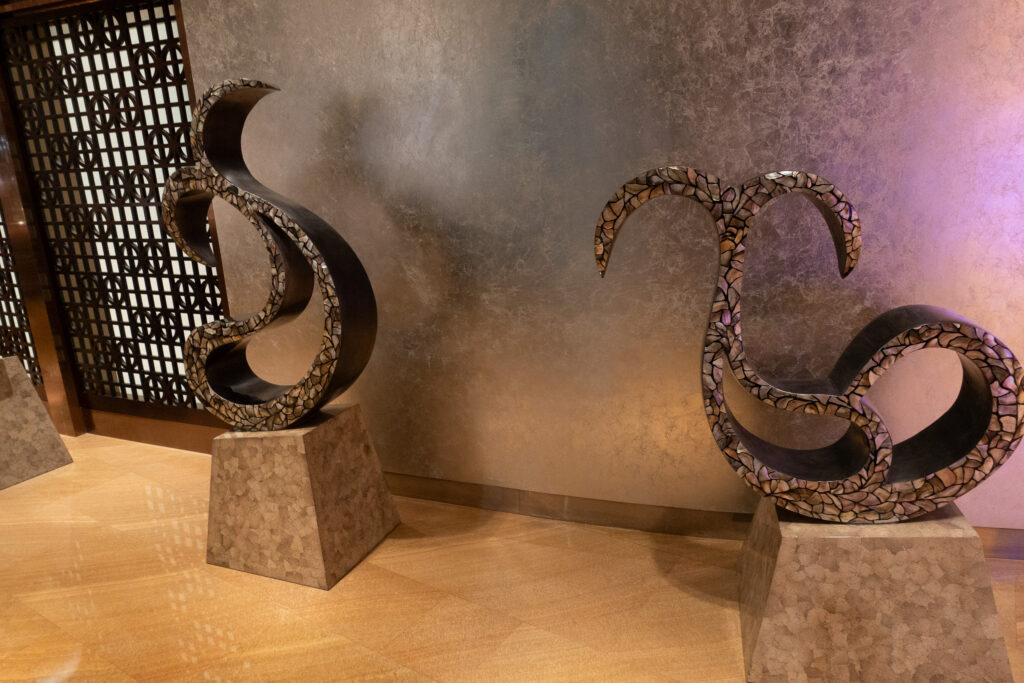
    Two bronze dragon sculptures on stone plinths against a bronze wall beside a dark lattice screen at the restaurant entrance

    MACAU · RESTAURANT · 8 MIN READ

    Jade Dragon: Eight Straight Years of Three Stars, and It Shows

    The only Cantonese restaurant in Greater China holding three Michelin stars and three Black Pearl diamonds, and what an evening there is actually like.

    By J.C. Mercer

    Verified meal·paid in full

    Jade Dragon, City of Dreams

    • Covers Two, 7pm
    • Dined June 2026
    • Menu The tasting menu
    • Drinks Wine by the glass, and a pot of aged pu-erh

    Every meal on this site is booked the way any other guest would book it.

    Two bronze dragons stand on stone plinths at the entrance, coiled into shapes that read as calligraphy before they read as animals, and they set the register for everything that follows. This is not a restaurant being playful about its name. It is a restaurant that commissioned sculpture, laid a carpet with a pattern nobody will photograph, and had the plates made with a dragon in relief under the glaze, and it did all of that before deciding what to cook.

    Jade Dragon has held three Michelin stars for eight consecutive years, and it is the only Cantonese restaurant in Greater China to hold three stars and three Black Pearl diamonds at the same time. Those are the two guides that matter in this part of the world and they very rarely agree at the top. Here they do.

    What the room is doing

    The dining room is high, quiet and built out of screens. Dark lattice panels run the length of the walls in a pattern that lets light through in small squares, drum shades hang low over the tables, and the tables themselves are far enough apart that you cannot hear the next conversation. The carpet is a heavy floral in muted golds and greens, which is the single most old-fashioned thing in the room and the reason the acoustics work.

    There is no music. In a city built on noise, and inside a resort that pipes sound into every other space it owns, walking into a silent room is a physical relief. Whatever this dinner asks of you, some of it is being spent on the absence of things.

    The opening trio, and what it tells you

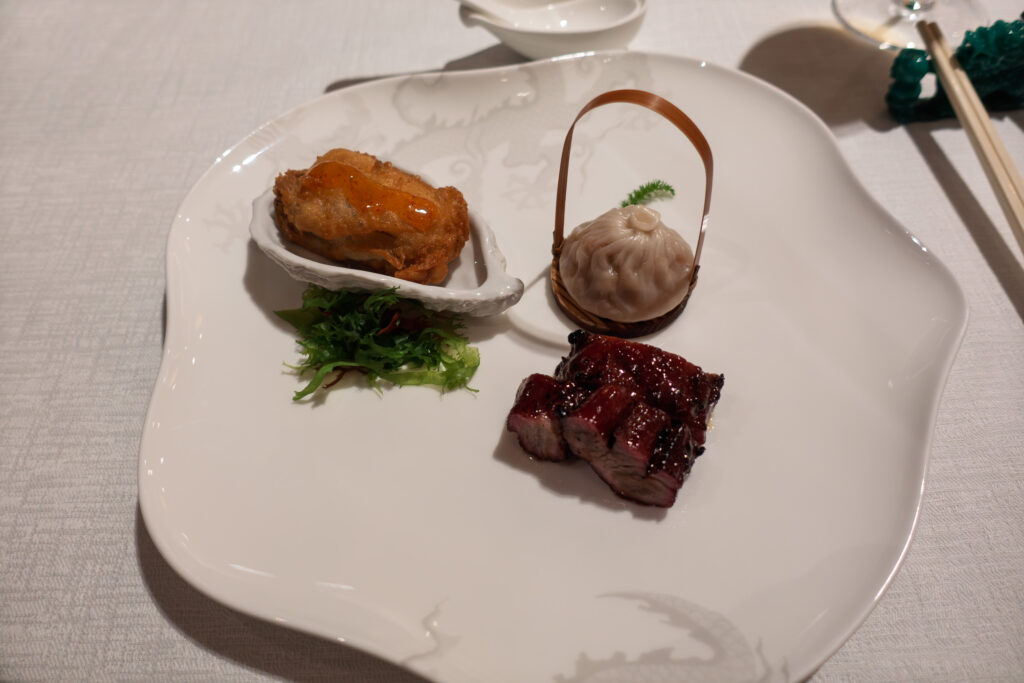
    Dinner started with three things on one plate, which is a Cantonese convention and is also a statement of method. A deep-fried puff, golden and blistered, sitting in its own small dish. A single pleated dumpling in a woven basket spun from caramelised sugar, which you eat as well. And slices of barbecued pork under a dark lacquer glaze, laid over dressed greens.

    A white plate with a dragon relief holding a golden fried puff in a small dish, a pleated dumpling in a spun sugar basket, and slices of dark-glazed barbecued pork on greens
    Three techniques, one plate, before anybody has said anything about ambition.

    Each of those is a different discipline. The puff is pastry work, the dumpling is skin work, the pork is fire and time. Putting them together first is the kitchen telling you which three things it wants to be judged on, and it is a confident thing to do at the start rather than the end.

    The pork was the best of the three and the best single mouthful of the evening. The glaze had gone almost to the edge of burnt in places, which is where it should go and where most kitchens stop short of.

    Soup, and the part that cannot be rushed

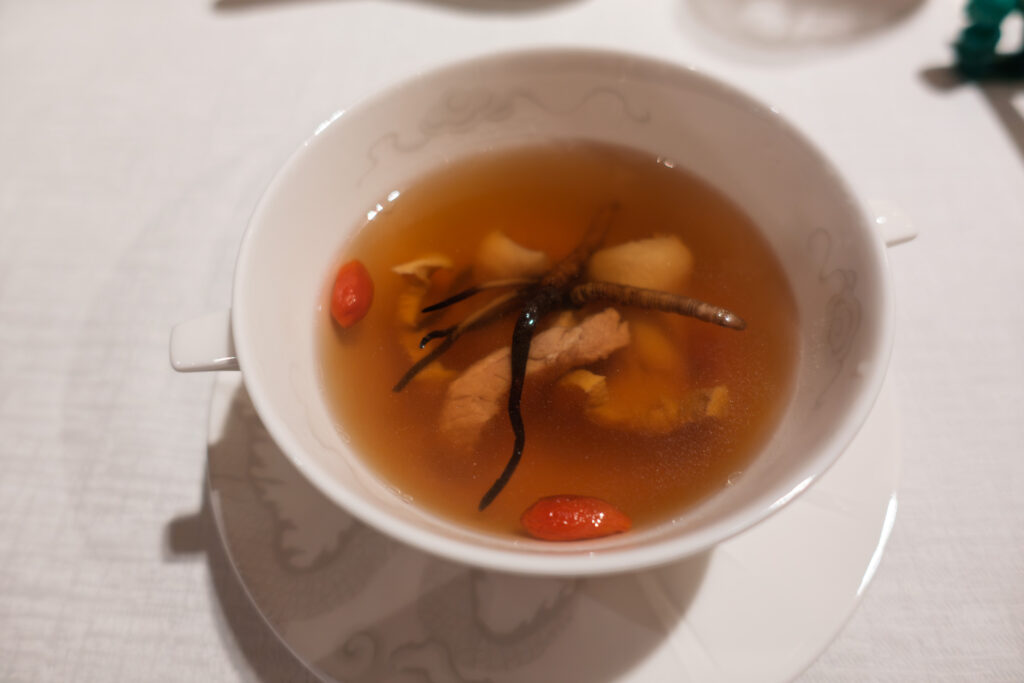
    Then a clear double-boiled soup, amber and completely transparent, with a few goji berries sitting in it and seafood beneath. Double-boiling is the technique where the ingredients go into a sealed vessel and the vessel goes into simmering water, so nothing ever boils and nothing clouds. It takes hours and it cannot be shortened.

    It also cannot be improved by presentation, which is why it arrives looking like almost nothing at all. This is the course that separates Cantonese restaurants that are expensive from Cantonese restaurants that are serious, and it is the one to pay attention to.

    Abalone, and gold leaf used properly

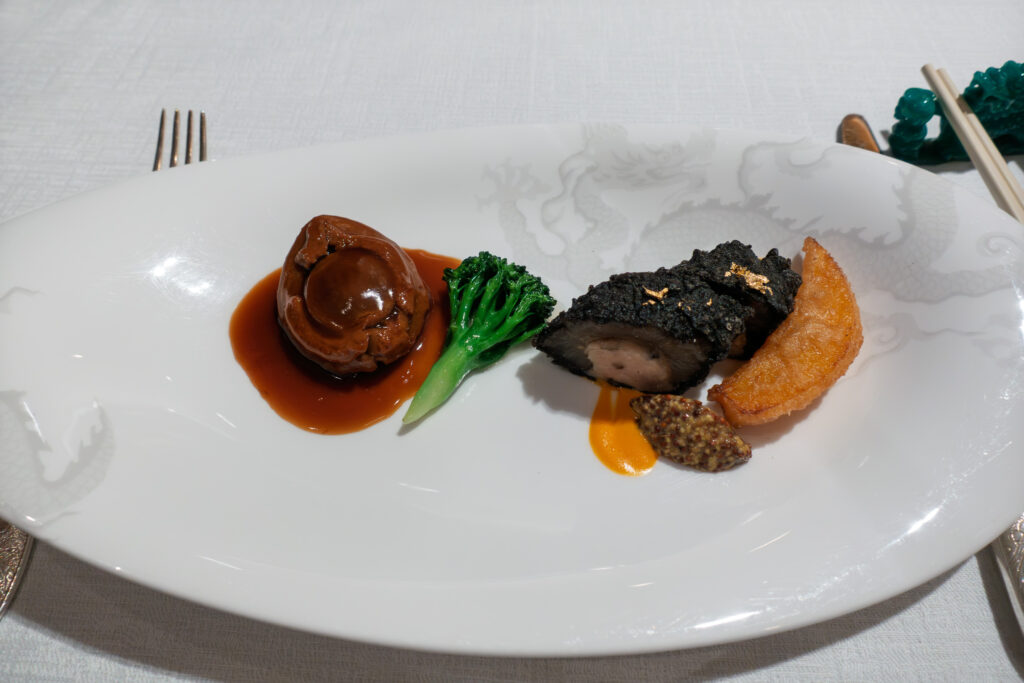
    The centre of the meal was a whole braised abalone in a dark reduction, on a long oval plate, with a stem of gai lan alongside, a piece of dark braise finished with gold leaf, a wedge of crisp pumpkin, and a smear of orange purée underneath it.

    A whole braised abalone in dark sauce on a long white plate with a stem of gai lan, a gold-leafed braise, a wedge of crisp pumpkin and an orange puree
    The abalone is the course the kitchen is famous for. It earns it.

    Gold leaf on a plate is almost always a bad sign, and it is worth saying plainly that here it is not doing what it usually does. It sits on one dark element among five, and the plate would be just as good without it. That is the only false note in the meal and it is a small one.

    The abalone itself was the thing. Braised long enough to yield without going soft, coated in a sauce with enough reduction behind it to stand up on the plate, and served hot, which sounds trivial and is the failure point in half the versions of this dish anywhere.

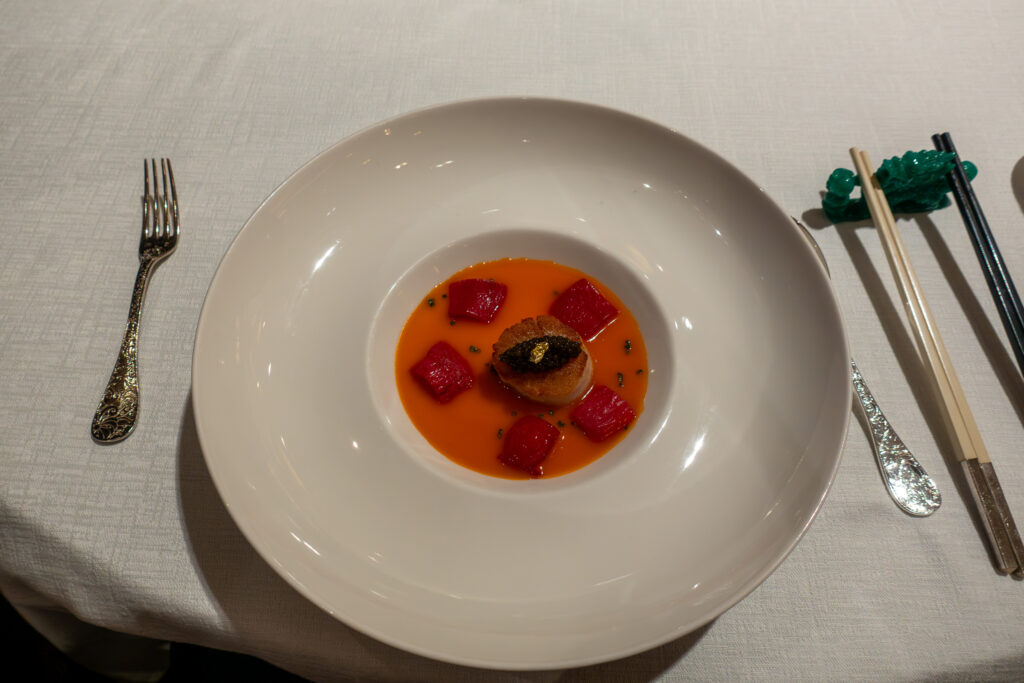
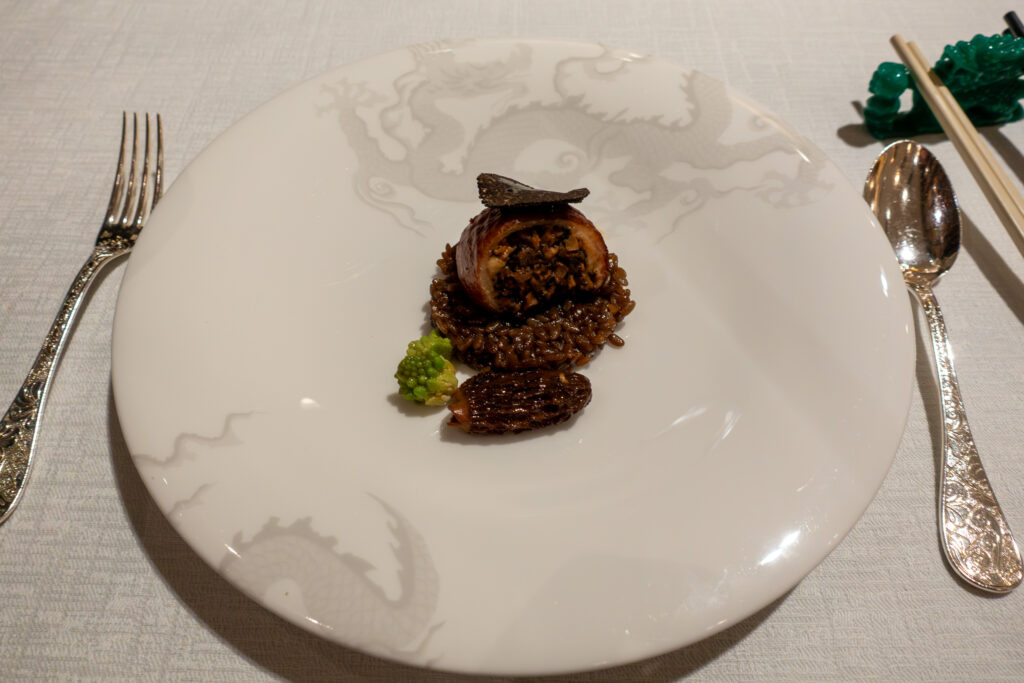
    Between the abalone and the dessert came the courses that are easy to forget and are the reason the meal holds together: a small round tart under an orange-red sauce, a dark crisp nest that shattered properly rather than bending, and a plate of greens cooked to the exact point where they stop being raw. None of those is a signature. All of them were correct.

    The service, and the trolley

    Service here is formal in the old sense: black suits, gueridon trolleys, wine opened and decanted at the table rather than at a station out of sight. Plates are set down together and cleared together. Nobody introduces themselves or explains the concept.
    What impressed me most was the pacing. Three hours passed and at no point was there a gap that felt like waiting or a course that arrived while the previous one was still being finished. That is invisible when it goes right and unmistakable when it goes wrong, and it is the hardest thing in a restaurant to get consistently correct.

    Dessert is deliberately restrained. Cantonese kitchens at this level do not finish with a construction, and the last plate of the evening is a small, cool, precise thing that resets the palate rather than competing for the memory. It is the right decision and it will disappoint anybody expecting a finale.

    What to drink

    There is a serious wine list and a sommelier who will work with it, and there is also tea, served properly, in glass over a burner so you can watch it open. Tea is the better answer with the first half of the meal and wine is the better answer with the braises, and a table of two can comfortably have both without it becoming a project.

    Noted

    WhatChecked on the night
    MichelinThree stars, eighth consecutive year, 2026 guide
    Black PearlThree diamonds
    CuisineCantonese
    WhereCity of Dreams, Estrada do Istmo, Cotai
    RoomQuiet; no music; tables well spaced
    LengthAbout three hours for two
    BookingWeeks ahead for a prime sitting

    Observed on the stay, not measured.

    The counter-argument

    The complaint about Jade Dragon is never the cooking. It is the setting. To get here you walk through a casino floor, and you arrive at a three-star dining room having just crossed a carpet designed to disorient you under lighting designed to keep you awake. The restaurant does everything it can to shut that out and it succeeds from the moment the door closes. The approach is still the approach.

    Second, this is a formal room and it does not pretend otherwise. If what you want from a great Cantonese kitchen is a loud table of eight and a lazy Susan, that is a real and legitimate thing to want and this is emphatically not it.

    Third, dining rooms this precise leave very little room for a bad night, and one indifferent course would be more noticeable here than in a warmer restaurant. Nothing on my evening was indifferent. The margin is narrow by design.

    Know before you go

    Book weeks ahead for a prime sitting and take an earlier one if that is what is offered. Ask for tea alongside the wine rather than instead of it. Order the barbecued pork whatever else you do. Do not skip the soup because it looks like nothing. And walk in through the sculptures rather than cutting through from the lift lobby, because whoever designed the arrival meant it to be used.

    See the full set: Jade Dragon — in frames. More Macau: Morpheus.

    Three hours of silence, in a building engineered to prevent exactly that.

    Don’t miss

    What I would order again.

    • The barbecued pork in the opening trio.
    • The double-boiled soup, unhurried.
    • The braised abalone.
    • Tea alongside the wine, not instead.

    Jade Dragon gallery

    Every photo on this site is my own, shot on the stay. Slide through →

    Two bronze dragon sculptures on stone plinths at the restaurant entranceThe opening trio: a fried puff, a dumpling in a spun sugar basket and glazed barbecued porkBraised abalone in dark sauce with gai lan, a gold-leafed braise and crisp pumpkinA clear amber double-boiled soup with goji berries in a white bowlA small round dish in an orange-red sauce on a wide-rimmed white plateA dark crisp pastry nest set alone on a dragon-relief plateThe end of the meal: a cleared plate, silver cutlery and a glass of red wine
  • L’Oiseau Blanc: Two Stars, a Rooftop, and an Aeroplane That Never Arrived

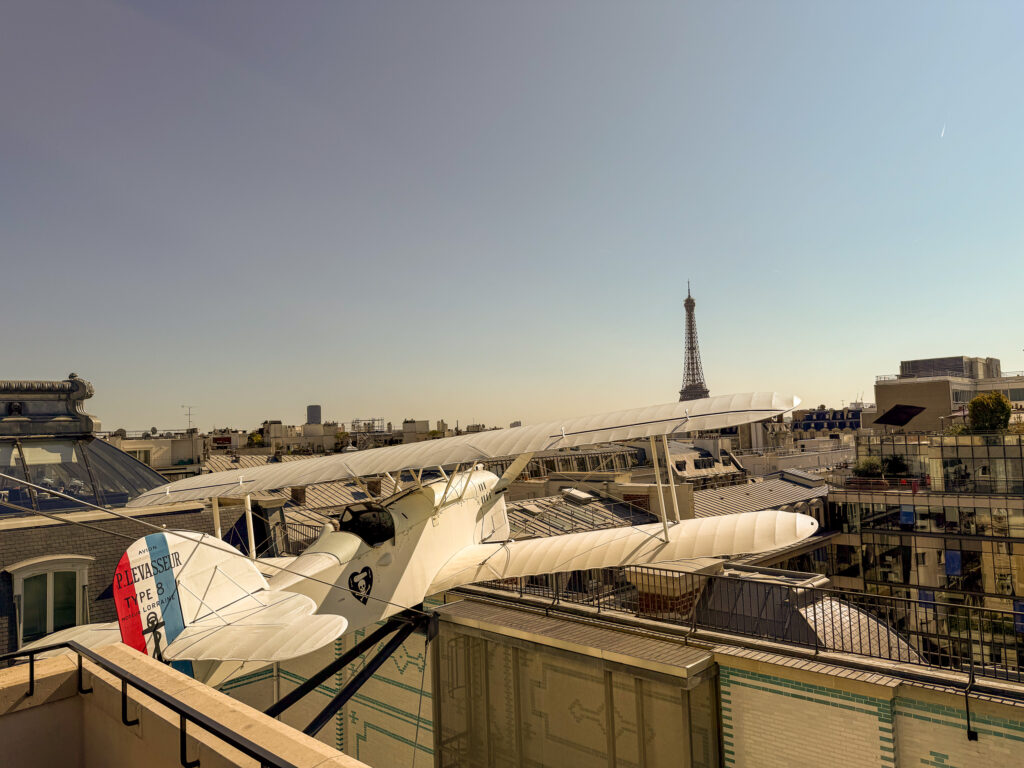
    A full-size white biplane replica standing on the hotel roof at dusk, wings spread over the Paris rooftops with the Eiffel Tower on the horizon

    PARIS · RESTAURANT · 9 MIN READ

    L’Oiseau Blanc: Two Stars, a Rooftop, and an Aeroplane That Never Arrived

    The Peninsula Paris’s rooftop dining room, named for a biplane that vanished over the Atlantic in 1927, with a full-size replica parked outside the glass.

    By J.C. Mercer

    Verified meal·paid in full

    L’Oiseau Blanc, The Peninsula Paris

    • Covers Two, 7.30pm
    • Dined April 2026
    • Menu The tasting menu
    • Drinks The pairing, half wine and half not

    Every meal on this site is booked the way any other guest would book it.

    There is an aeroplane on the roof. Not a model and not a sculpture of one: a full-size white biplane with a tricolour flash on the tail, parked on the terrace with its nose up and its wings out over avenue Kléber, so that from the dining room you look past a wingtip to the Eiffel Tower. It is the single most literal piece of restaurant branding I have seen anywhere, and it works, because the story behind it is not a marketing story.
    In May 1927 Charles Nungesser and François Coli took off from Paris in a white biplane called L’Oiseau Blanc, aiming to be the first to fly the North Atlantic. They were never seen again. Charles Lindbergh made the crossing in the other direction a fortnight later and the world remembered him instead. The restaurant is named after the aircraft that did not arrive, which is an unusual thing for a two-star dining room to build itself around and is the reason the room has more character than its glass walls would suggest.

    The room, and the view everybody books for

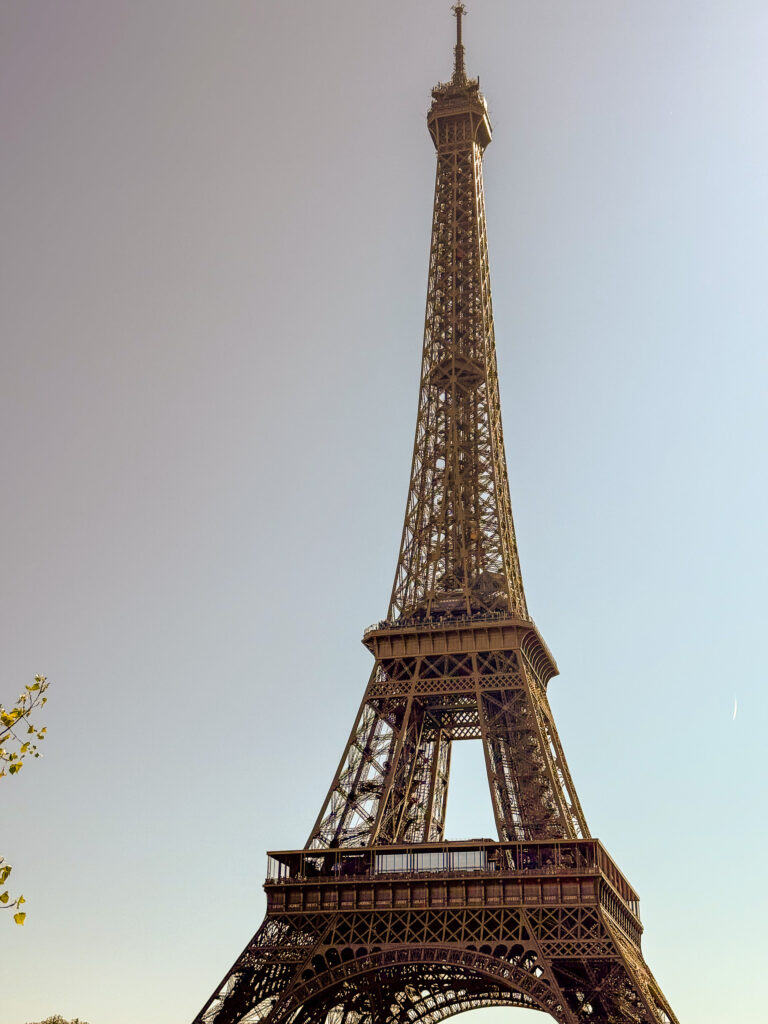
    L’Oiseau Blanc sits on top of The Peninsula Paris on avenue Kléber in the sixteenth, glazed on the long side and open onto the terrace at the end. The tables run along the glass. Below you are the zinc roofs and the chimney stacks and the pale stone, and then the Eiffel Tower straight ahead, and Sacré-Cœur off to the right on a clear evening.

    Be honest with yourself about what you are booking. There are a limited number of tables with the tower squarely in front of them and a larger number without, and the difference to the evening is considerable. Ask when you reserve, ask again when you arrive, and take the earlier sitting if that is what it takes.

    The opening

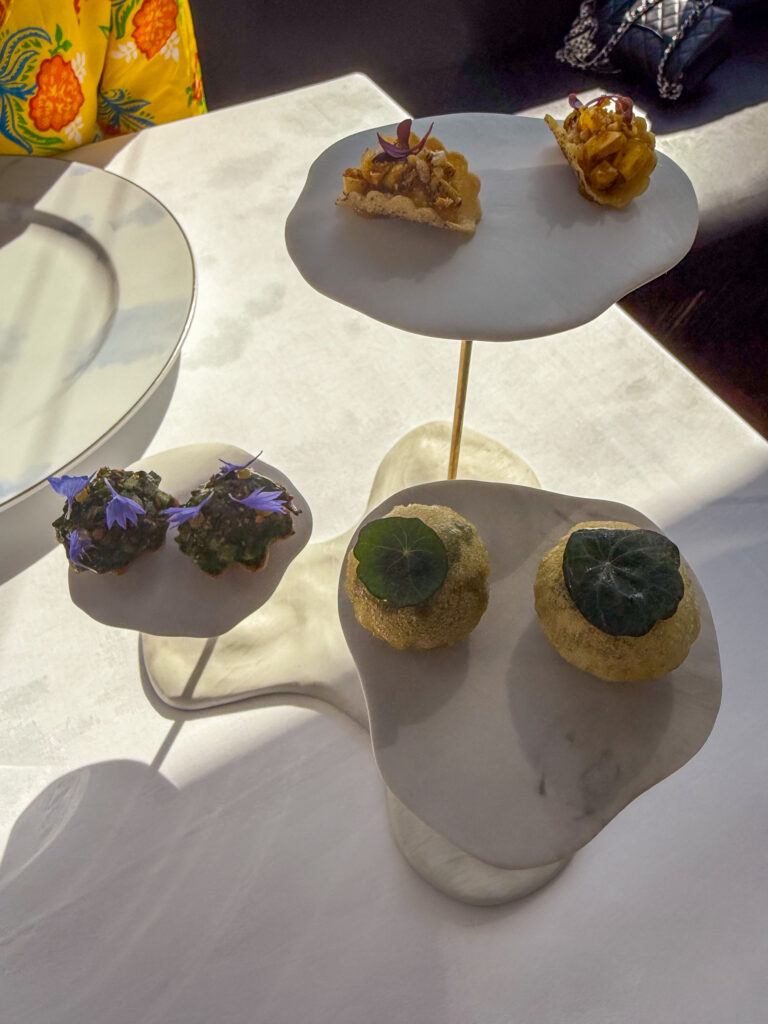
    Dinner starts with a small architecture of snacks on a two-tier stand of white pebble-shaped plates: a tart under a purple flower, a filled golden shell, two dark canapés under blue borage, and two pale rounds each capped with a whole nasturtium leaf. It is precise, very pretty, and over in about four minutes, which is the correct length for this part of a meal.

    A two-tier stand of white pebble-shaped plates holding small tarts, dark canapes under blue borage flowers and pale rounds capped with nasturtium leaves
    The opening. Four minutes, six things, no explanations.

    What David Bizet is actually cooking

    David Bizet has run this kitchen since the hotel opened and took the second Michelin star in March 2022, which it has held every year since. The cooking is classical French technique used with a very light hand: sauces reduced properly but poured sparingly, a great deal of raw and barely-cooked vegetable work, and a consistent preference for acidity where a heavier kitchen would reach for fat.

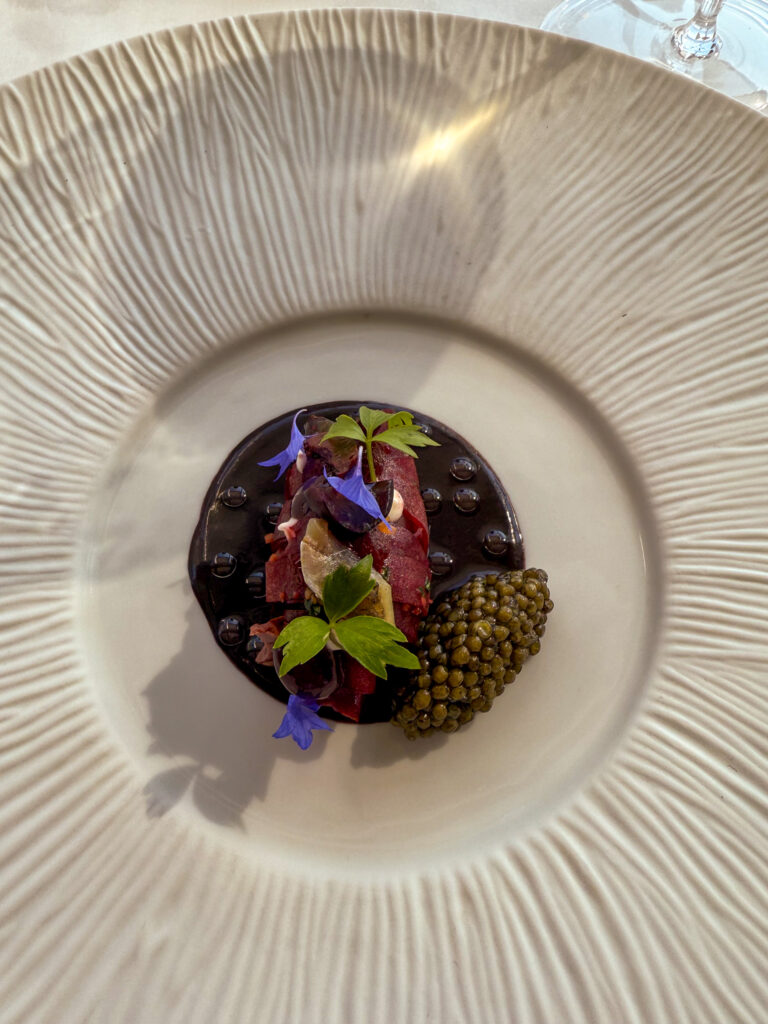
    The dish that made the case was a shallow bowl with a dark, glossy, almost black base, sliced pink flesh laid over it, blue flowers and small leaves scattered across, and a crescent of caviar at one edge. It looked like a garden and ate like a much more serious plate of food than it looked, which is the trick this kitchen keeps performing.

    A fluted white bowl holding a dark glossy base topped with sliced pink flesh, blue borage flowers, small green leaves and a crescent of caviar
    It looks like a garden. It is not cooked like one.

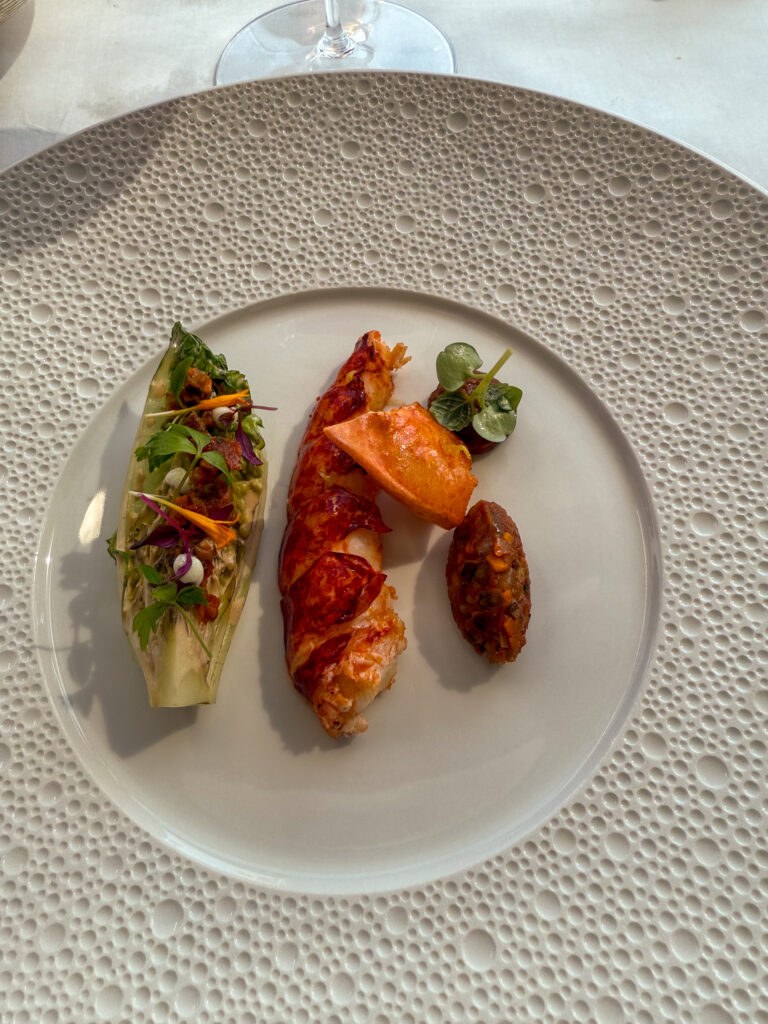
    The best course was langoustine: the tail glazed a deep red and laid whole down the middle of a dimpled white plate, a chicory boat of dressed leaves and shredded vegetables to one side, a dark croquette to the other. Three temperatures, three textures, one flavour running through all of them.

    A dimpled white plate with a red-glazed langoustine tail, a chicory boat filled with dressed leaves and shredded vegetables, and a dark croquette
    The langoustine. The croquette next to it is doing more work than it looks.

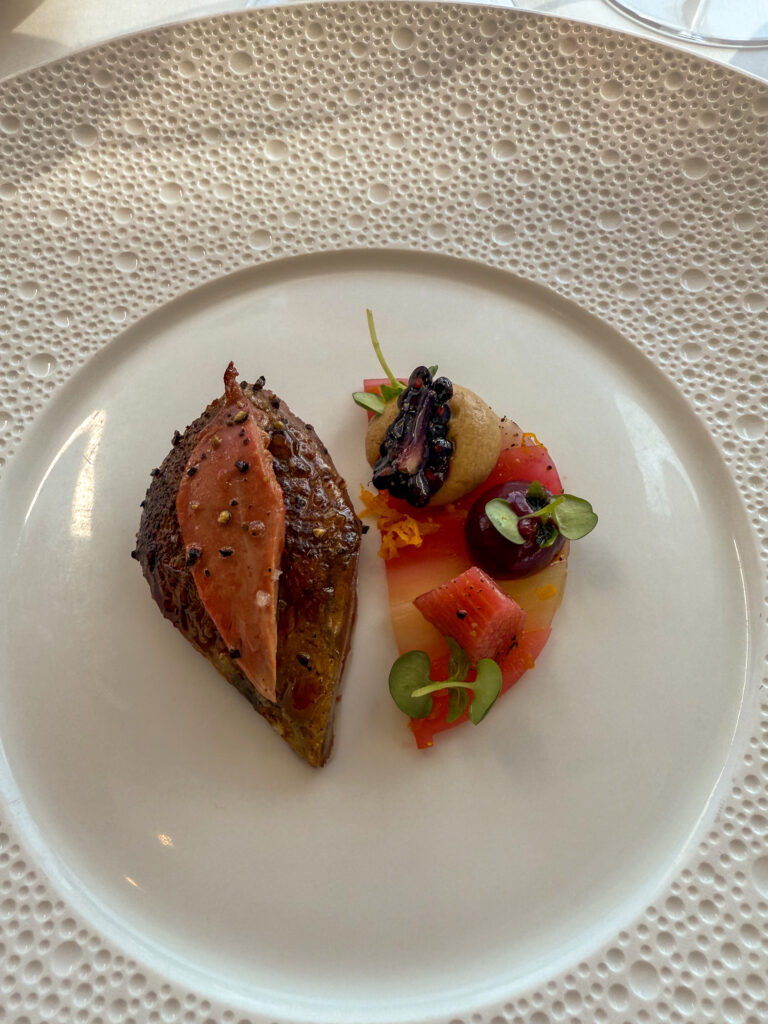
    Where the kitchen is least interesting is the middle of the menu, where two or three courses in a row arrive as a single dark element in a pool of sauce on a large pale plate. They were all good. They looked like each other.

    Bread deserves its own sentence, because in a French restaurant at this level it is a test and most kitchens quietly fail it. Here it arrives warm, is offered more than once without being pressed, and the butter is worth the trouble it has clearly been given. Nobody at this table left any.

    Desserts follow the same restraint as the savoury courses. Fruit rather than chocolate, acidity rather than sugar, and a final plate small enough that it does not undo the two hours before it. That is the house position across the whole menu, and the consistency of it is what makes the meal feel composed rather than assembled.

    The pairing, and the bottle that was not wine

    The pairing is the part worth taking. The sommelier works the room himself, brings each bottle to the table before pouring it, and explains it in about two sentences rather than four minutes, which is the correct ratio.

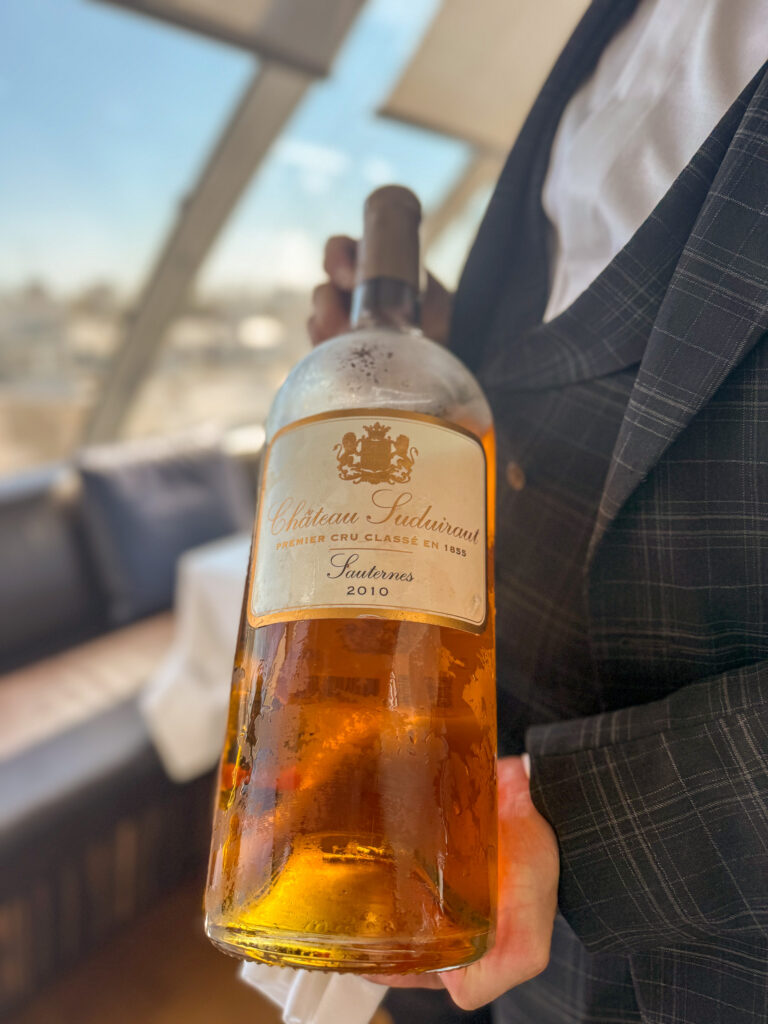
    The unexpected thing is that roughly half of the pairing is not wine. A kombucha, brewed in France, arrived alongside an early course in a bottle with a painted mouth on the label, and it did what the pairing needed better than a white wine would have. Later there was a Gevrey-Chambertin from old vines with fifteen years on it, and a Sauternes at the end, and the two halves sat together perfectly comfortably.

    If you do not drink, or are only half drinking, this is one of the few kitchens at this level where the non-alcoholic half of the list has clearly been built by someone who cares about it rather than assembled to avoid embarrassment.

    Noted

    WhatChecked on the night
    MichelinTwo stars, held since March 2022
    ChefDavid Bizet
    WhereOn the roof of The Peninsula Paris, avenue Kléber, 16th
    ViewEiffel Tower ahead; Sacré-Cœur to the right on a clear evening
    The aeroplaneA full-size replica, on the terrace
    LengthAbout three hours for two
    PairingRoughly half non-alcoholic, by design

    Observed on the stay, not measured.

    One more thing about the terrace, since it is the reason to choose this restaurant over the several others in Paris holding the same two stars. It is not a viewing platform bolted onto a dining room; it is where the whole conceit resolves. The aeroplane is at eye level, the roofs go on for a mile, and the tower does its hourly business on the hour whether or not anybody is watching. Fifteen minutes out there between courses is the part of the evening I would repeat first.

    The counter-argument

    The view is doing a lot of the work, and everyone in the room knows it. That is not a criticism of the cooking, which would hold two stars in a basement. It is a warning about expectation management: if you get a table on the inside row on a grey evening, you are eating a very good but not transcendent dinner in a glassy modern room, and the thing you were promised is happening to somebody else eight feet away.

    Second, the room reads modern hotel rather than Paris institution. Pale, bright, comfortable, slightly anonymous. There are dining rooms in this city where the room is half the reason to go. This is not one of them; the terrace is.

    Third, the sixteenth is a quiet, handsome, expensive and slightly airless part of Paris, and there is very little reason to be up here except this restaurant and the hotel under it. Dinner does not spill into an evening the way it would in the eleventh or the ninth. Plan what happens afterwards, or accept that nothing does.

    Know before you go

    Book weeks ahead and ask specifically for a table on the window row facing the tower. Take the earlier sitting in summer so that you get the light on the roofs and then the tower lit. Take the pairing and let them give you the non-alcoholic half. Go out onto the terrace between courses, at least once. And read about Nungesser and Coli before you come, because the restaurant will not tell you the story and it is the best thing in the room.

    See the full set: L’Oiseau Blanc, Paris — in frames.

    Named for the flight that failed, in a city that remembered the other one.

    Don’t miss

    What I would do again.

    • A window table facing the tower, requested twice.
    • The langoustine course.
    • The pairing, half of it not wine.
    • Out onto the terrace, beside the aeroplane.

    L’Oiseau Blanc gallery

    Every photo on this site is my own, shot on the stay. Slide through →

    The white biplane replica on the roof at dusk with the Eiffel Tower beyondThe Eiffel Tower seen from below against a clear pale skyA two-tier stand of canapes on white pebble-shaped platesA fluted bowl with a dark glossy base, sliced pink flesh, blue flowers and caviarA red-glazed langoustine tail with a chicory boat and a dark croquetteLayered crisp pressed strips with herbs on white chinaA charred slice with small vegetables, watermelon and olivesA dark fig-like element with peach slices and a green oliveA bottle of Sauternes held up with the Paris rooftops and the Eiffel Tower behind
  • TURK Fatih Tutak: Modern Anatolian, Two Stars

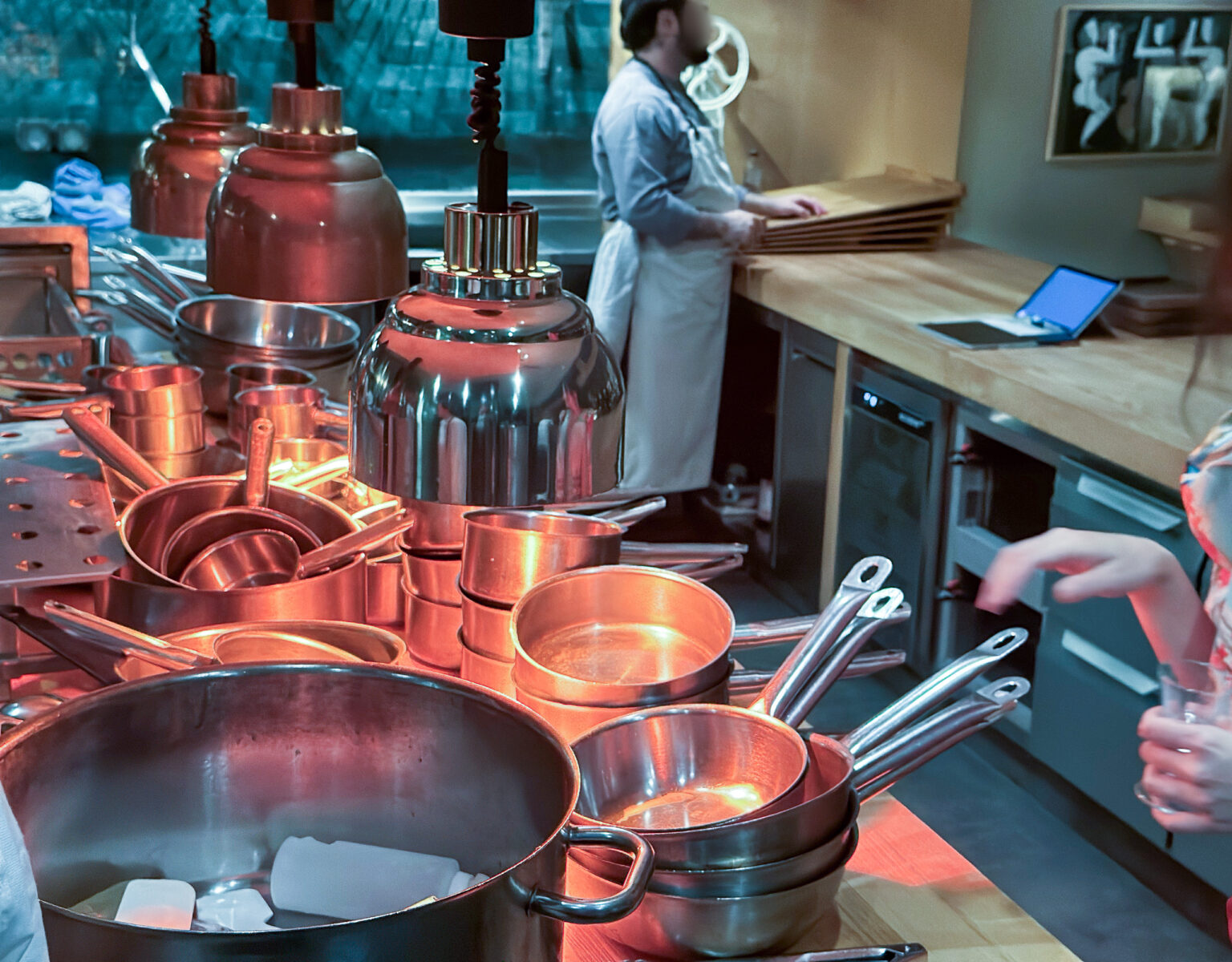
    Copper pans stacked on the kitchen pass under brass heat lamps, a cook working at the counter behind

    ISTANBUL, TÜRKİYE · RESTAURANT · 5 MIN READ

    TURK Fatih Tutak: Modern Anatolian, Two Stars

    A clean, well-oiled machine of a restaurant, with just enough flair and showmanship — and the perfect amount of behind-the-curtains action.

    By J.C. Mercer

    Verified meal·paid in full

    • Covers Two, 7pm
    • Dined April 2025
    • Menu The tasting menu
    • Drinks Wine pairing
    • How it was booked The way any other guest would
    • Value verdict A terrific introduction to Anatolian cuisine and wines, and a gem of an evening. STRONGLY RECOMMENDED.

    Booked the way any other guest would book it.

    The room and the counter

    TURK Fatih Tutak sits in a unit in the Now Bomonti building in Şişli, inland, with no Bosphorus to sell, in the neighbourhood anchored by the old beer factory reopened as a cultural complex. Two stars on the door, one fixed tasting menu and nothing else. The house line is that it is creating a new alphabet for Turkish cuisine. In practice that means a pantry: named growers, named regions, a named knife-maker in Mersin. The flair is real, but measured: just enough showmanship out front, and the right amount of machinery behind the curtain.

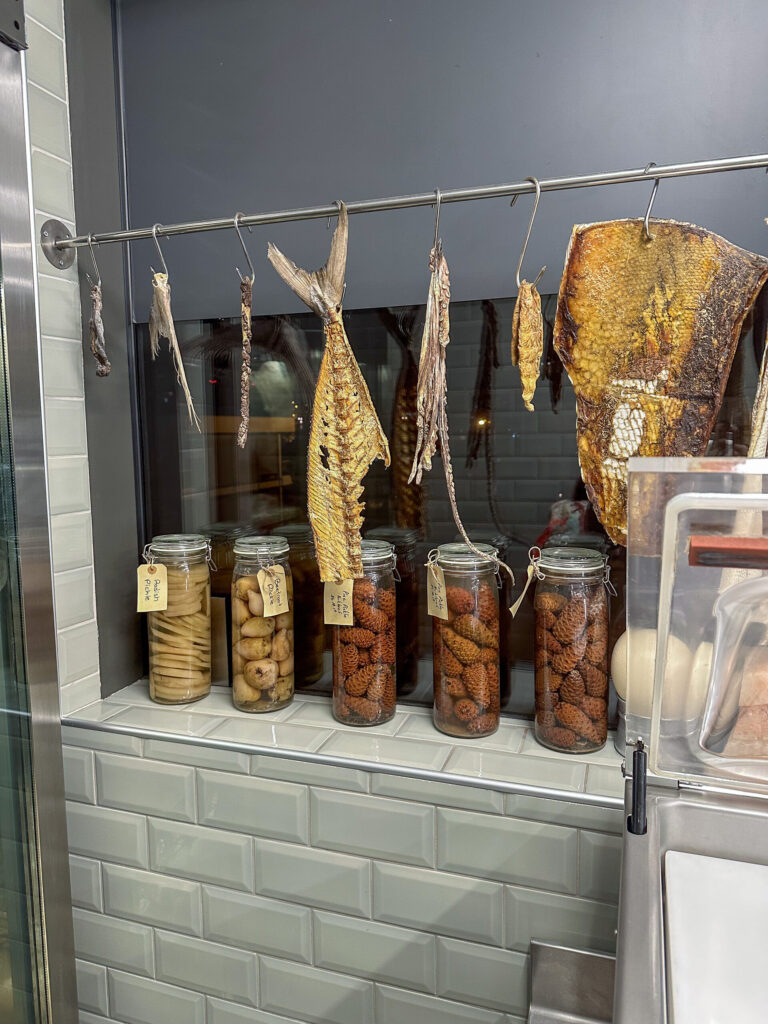
    Whole fish hung to dry on a rail beside glass jars of preserved figs and dried chillies
    Fish drying on a rail above jars of figs and chillies. The store is not hidden behind the kitchen.

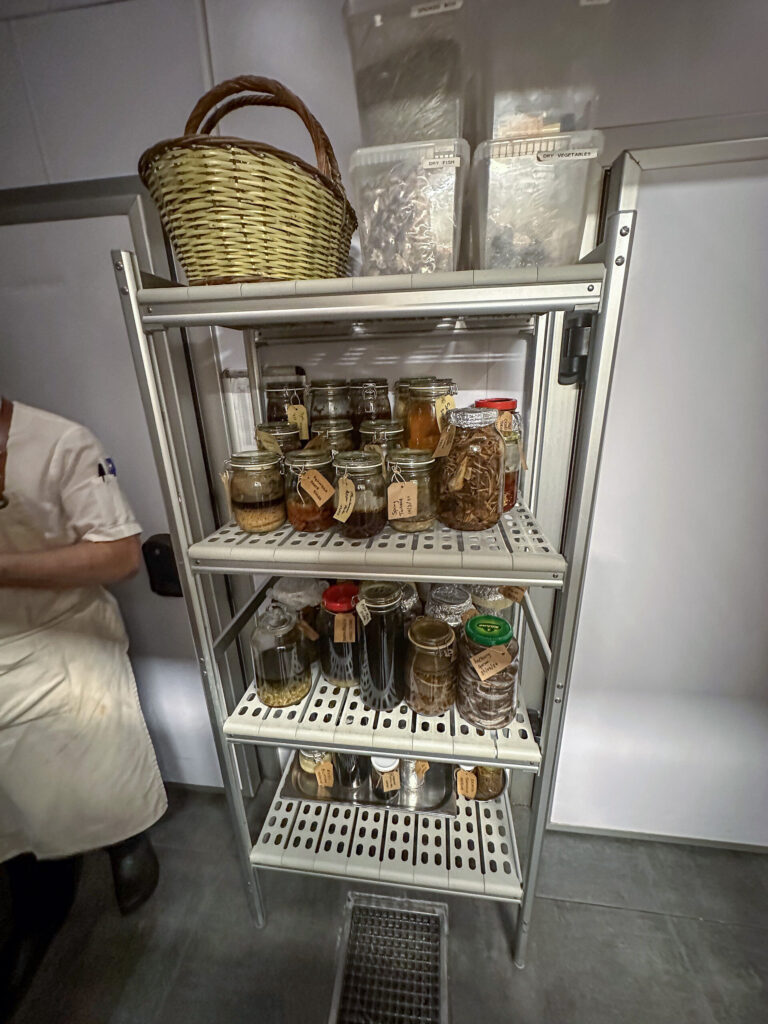
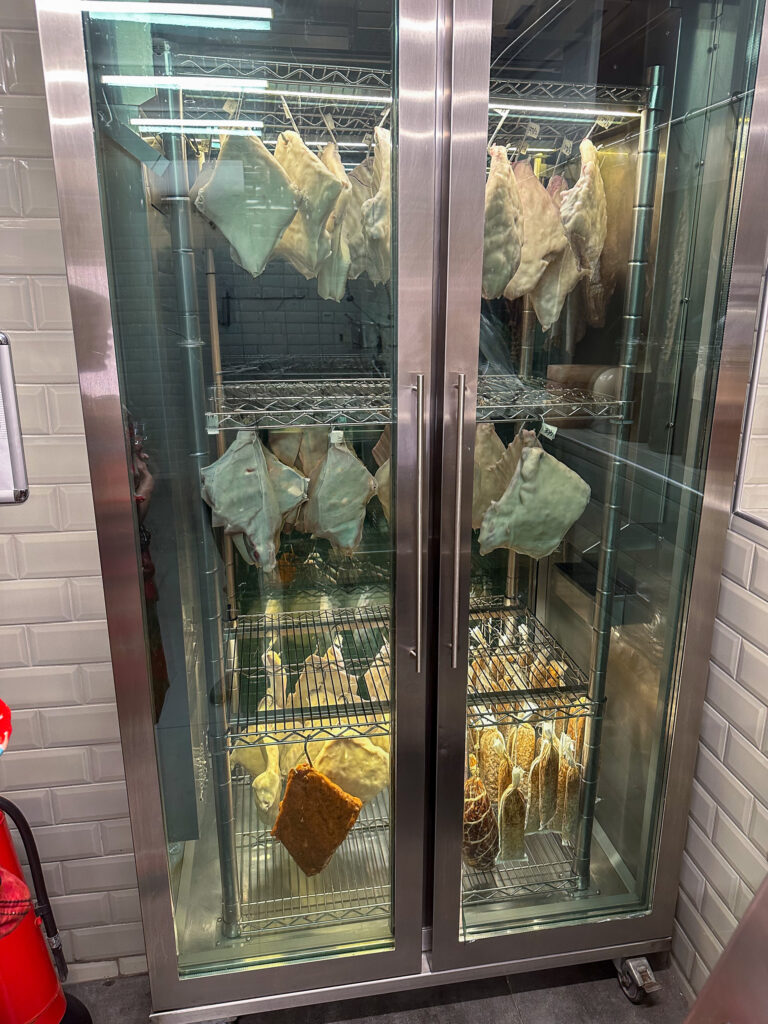
    Back-lit cabinets of ingredients stand in the room like furniture, and the sourcing behind them is the most concrete thing about the place: honey from hives at three thousand metres, pomegranate molasses aged for years in barrel, water-buffalo yoghurt, turbot from the Black Sea, butter from Trabzon, bulgur from Urfa. A rolling rack of labelled preserves is the habit that got the kitchen through the lockdown year, when the chef kept buying from his producers and turned the harvest into garums and pickles. A two-door ageing cabinet hangs with fish and flatbreads. Pantry as decor, taken to its logical end, and the only restaurant I know where you can read the wallpaper.

    A rolling rack of labelled preserving jars and bottles in the kitchen, a wicker basket resting on top
    The rolling rack of labelled preserves.
    Two glass-fronted cabinets hung with drying fish and flatbreads on wire racks
    The two-door ageing cabinet, fish and flatbreads.
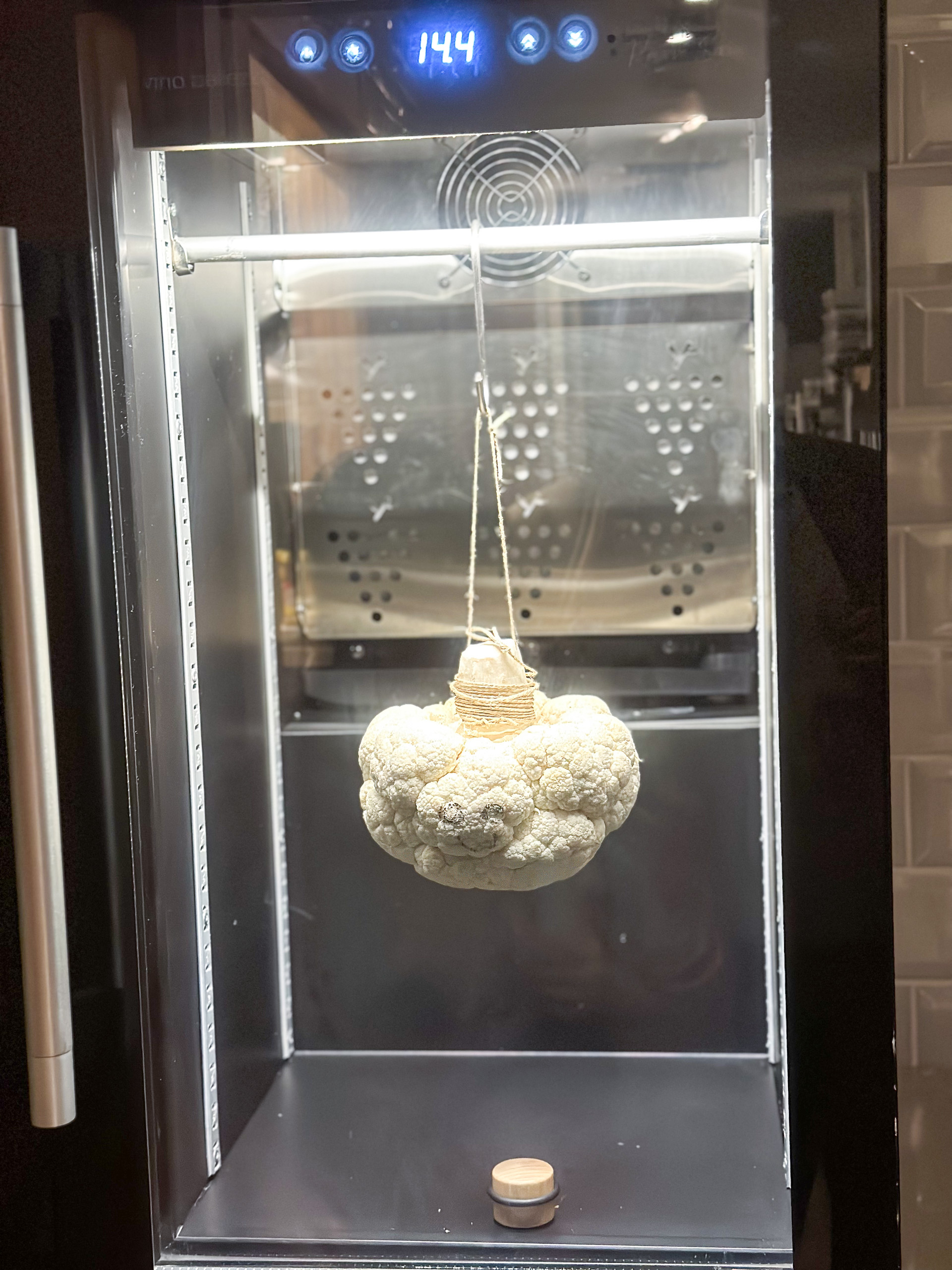
    A whole cauliflower hung on twine inside a glass-fronted ageing cabinet reading 144
    A whole cauliflower on twine, cabinet reading 144.

    The room beyond is long, narrow and dark, with a bar down one side and an open kitchen fronted by six counter seats. Once it fills it is loud, closer to a bar than a dining room, which some people love and others resent at this level. The tableware makes the pantry’s argument in another material: Turkish ceramics, olive-wood pieces oiled in-house and never put through a dishwasher, and knives for the meat course made by a third-generation craftsman in Mersin, which the shop will sell you on the way out.

    How the meal runs

    The evening does not start at the table. It starts in the courtyard lounge, where the first canapés come out, and you can be four courses in before anyone shows you to a seat. Then twelve to fourteen courses, depending how you count a course, over about three and a half hours. The menu is micro-seasonal, so any dish list is a record of one night rather than a promise. A few things recur: a double-boiled chicken broth in a Turkish tea glass to open; the mussel dolma, rice-stuffed mussels inside an edible squid-ink shell, which everyone photographs; and the mantı called “From My Mom,” which is still the signature.

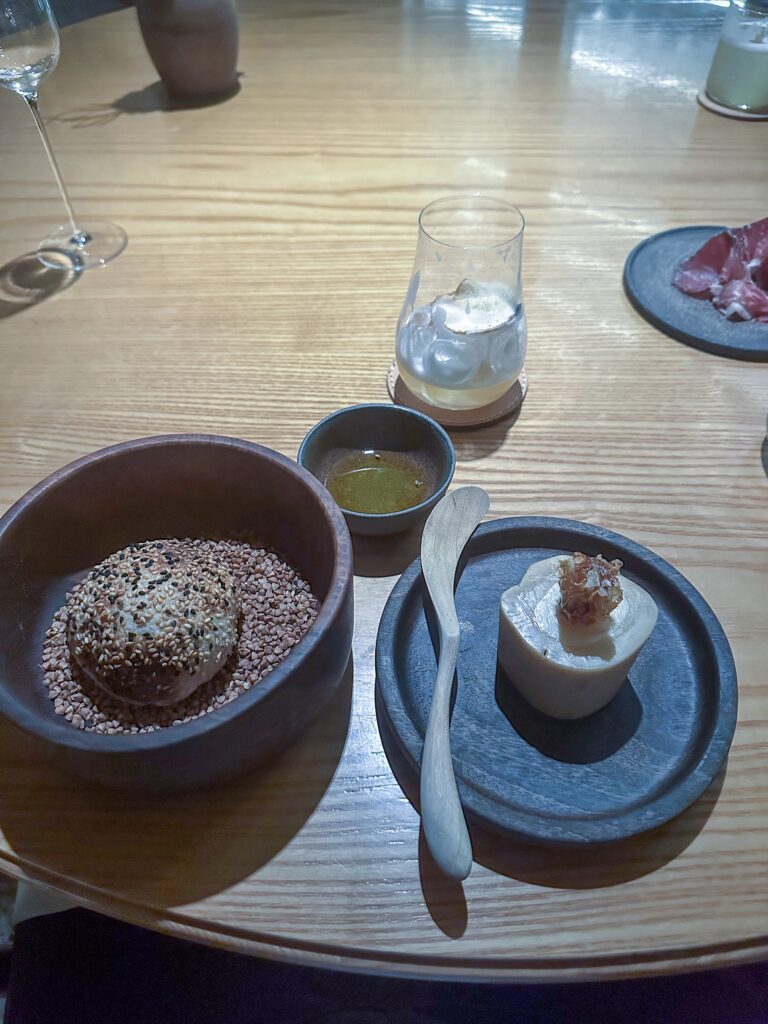
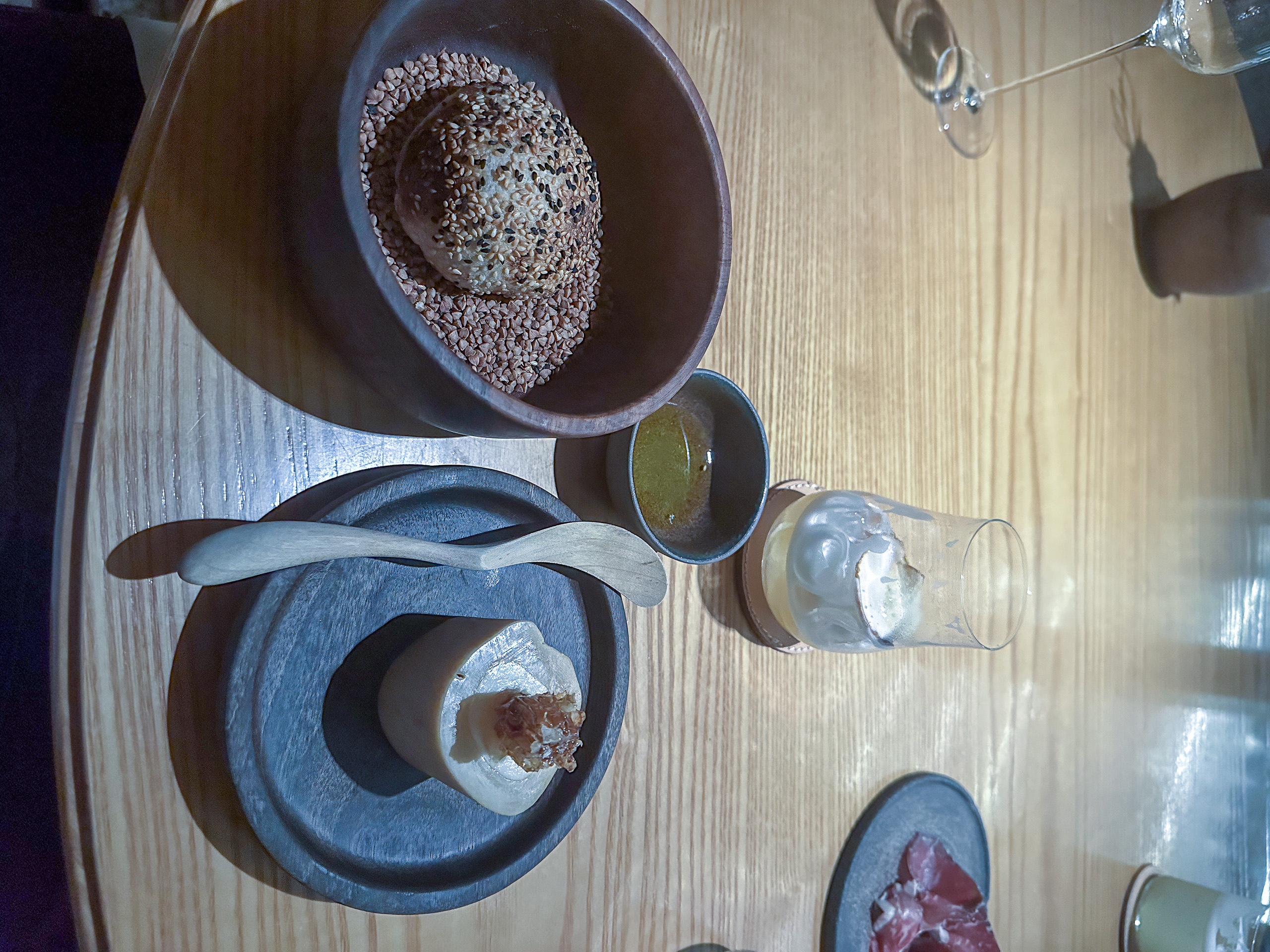
    The bread course: a sesame-crusted roll in a bowl of buckwheat, a cylinder of cheese on a slate dish, olive oil and a wooden spreader
    The bread course: a sesame roll bedded in buckwheat, cheese on slate, a wooden spreader.

    Water, coffee and tea come with the meal. The meal ends with a kitchen tour led by the chef or one of his cooks, and you leave with a handwritten menu in a box with two chocolates and a small bottle of something like limoncello. Say yes to the tour.

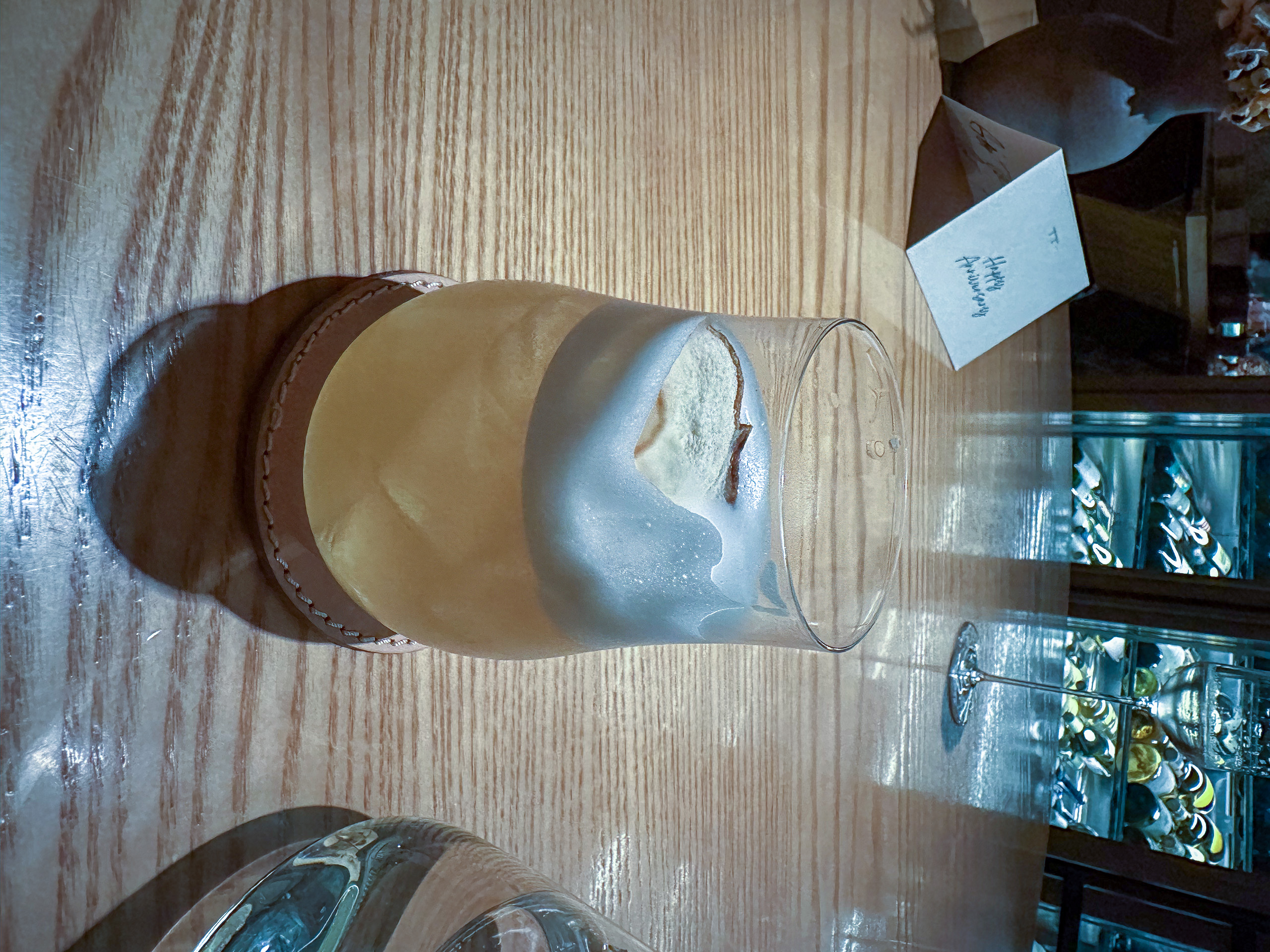
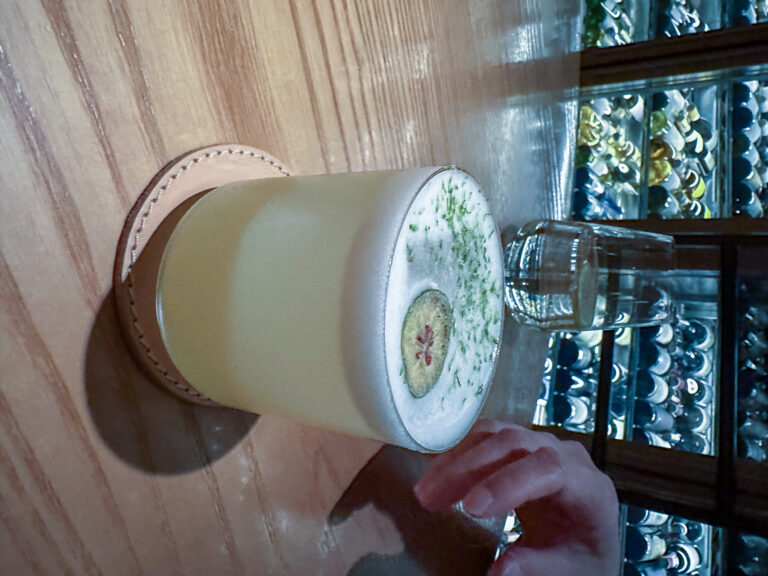
    A cocktail under a thick foam cap on the timber bar counter
    The first cocktail, under a thick foam cap, in the courtyard.
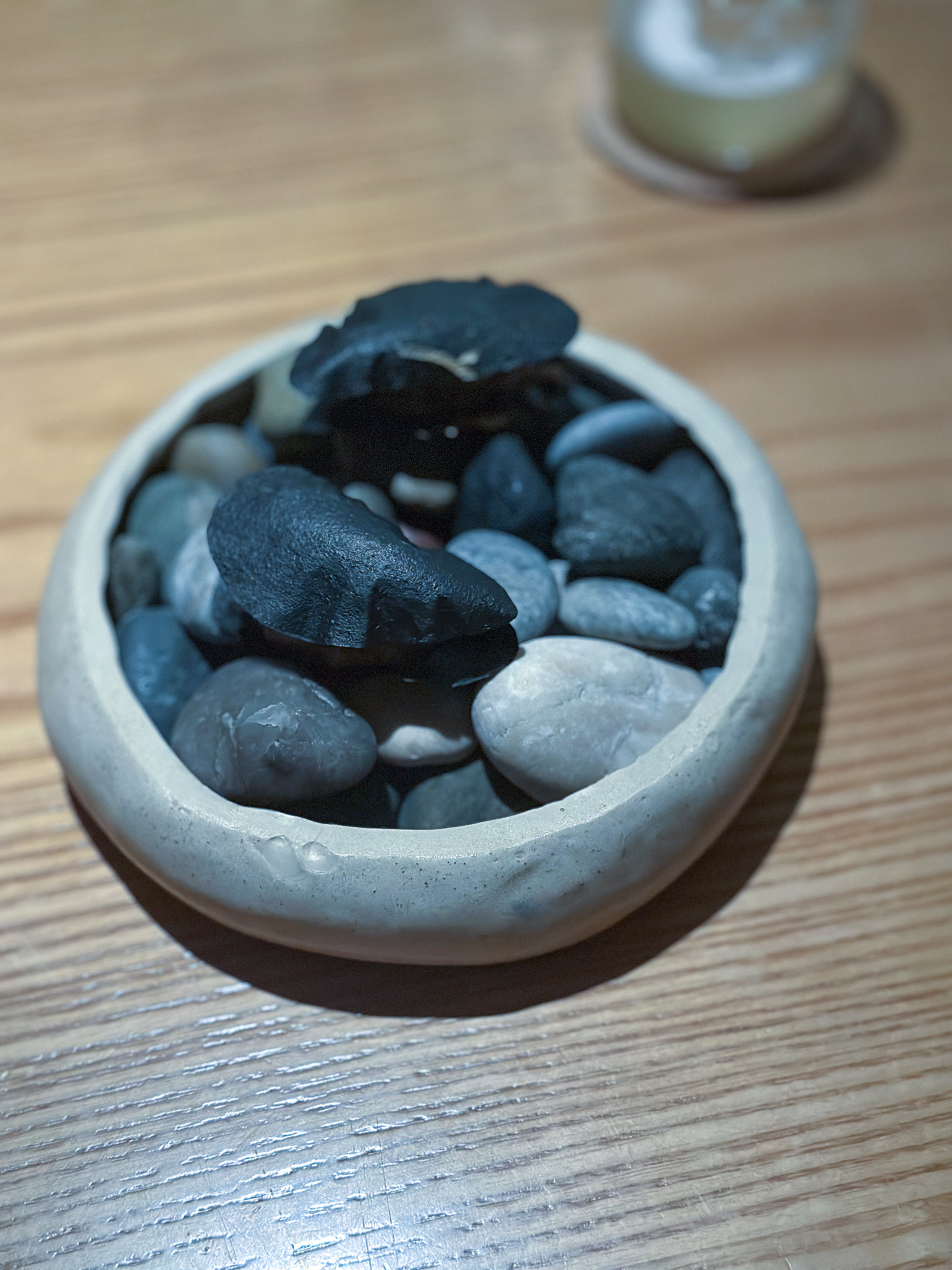
    A dish disguised as river stones, dark shapes set among grey pebbles in a stone bowl
    A dish disguised as river stones, in a stone bowl.
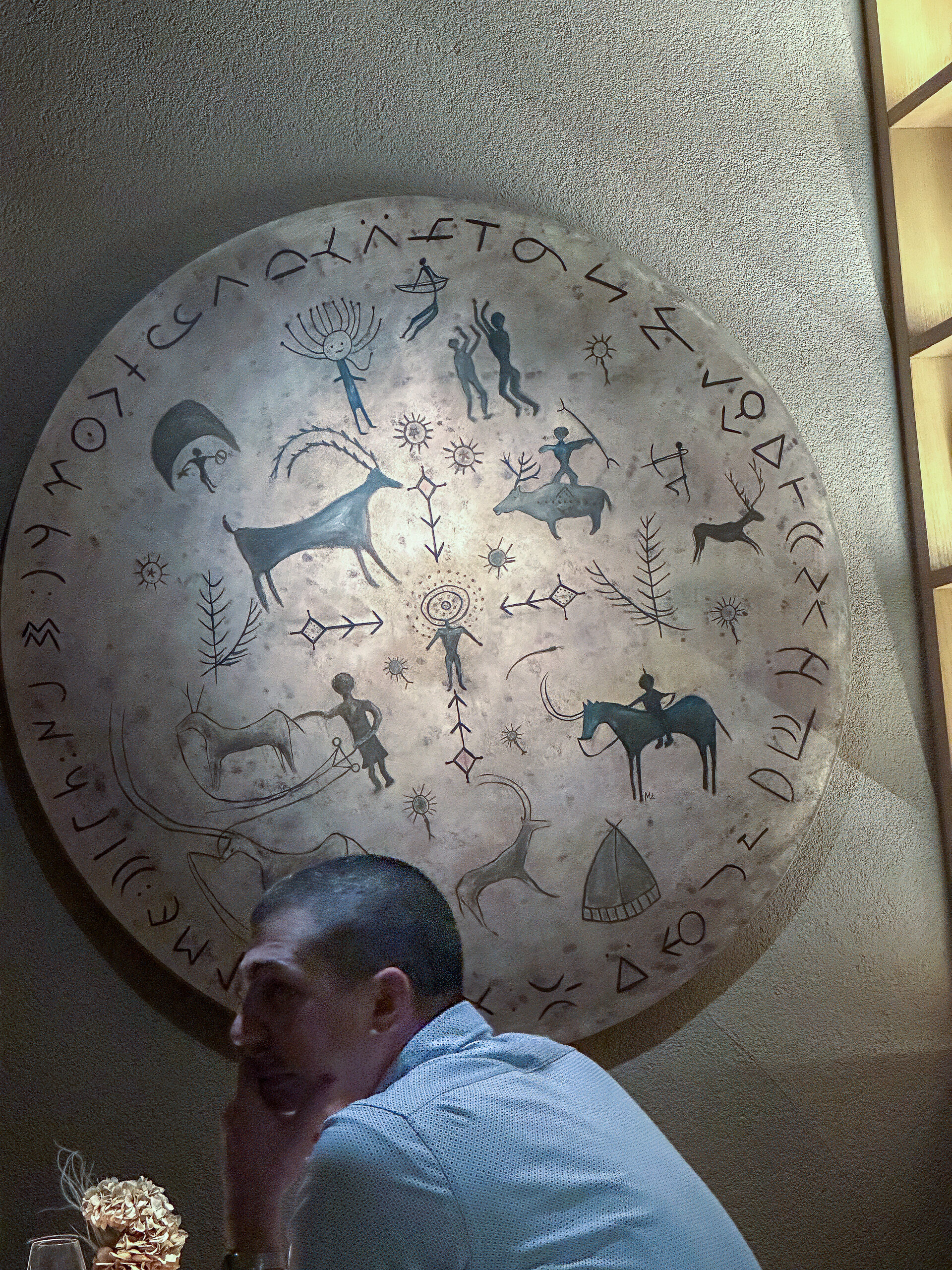
    A diner seated beneath the large round wall disc painted with Anatolian rock-art figures and runic script
    The wall disc painted with Anatolian rock-art figures.

    Three dishes that mattered

    The bread course: a sesame roll bedded in buckwheat, cheese on slate, a wooden spreader, and the first moment the pantry stops being a display and becomes dinner.

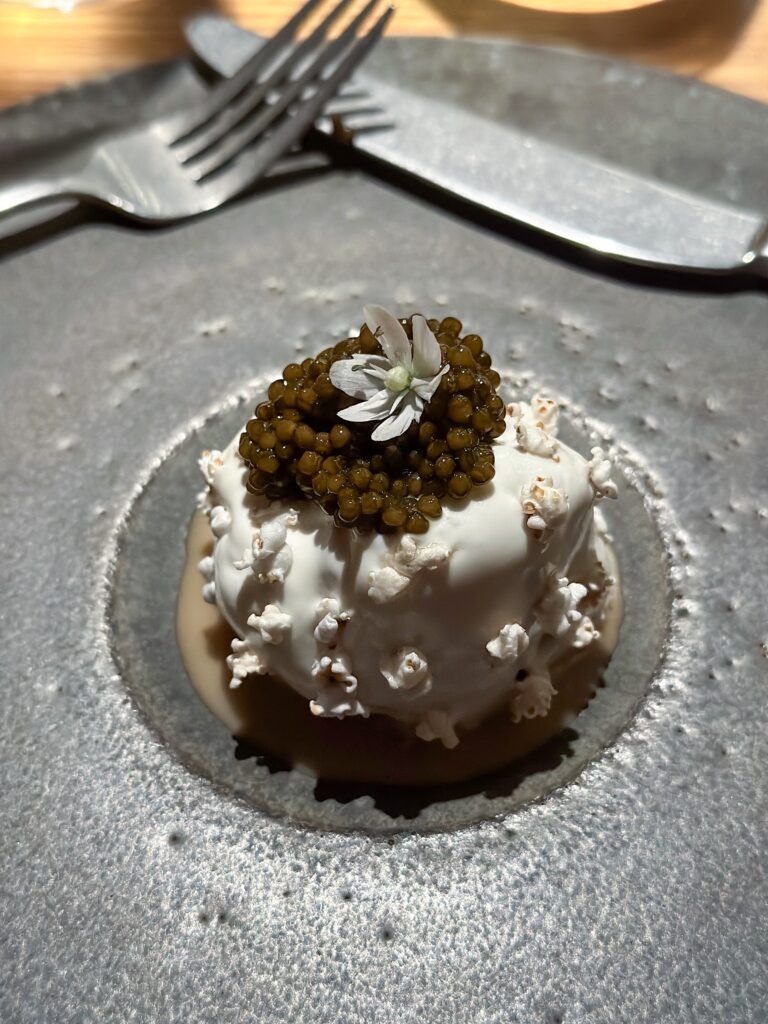
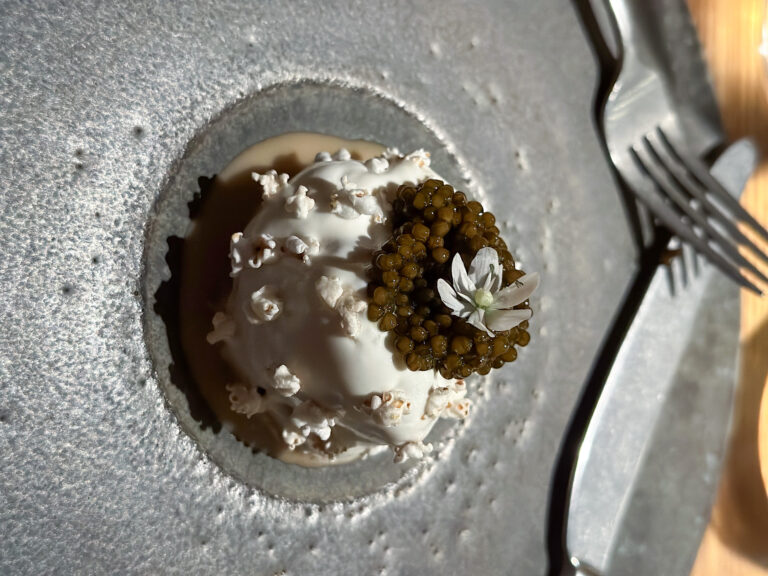
    A quenelle of cream scattered with popcorn and crowned with caviar and a white flower, set in the hollow of a stone plate
    A quenelle of cream under caviar and popcorn, set into the hollow of a stone plate.

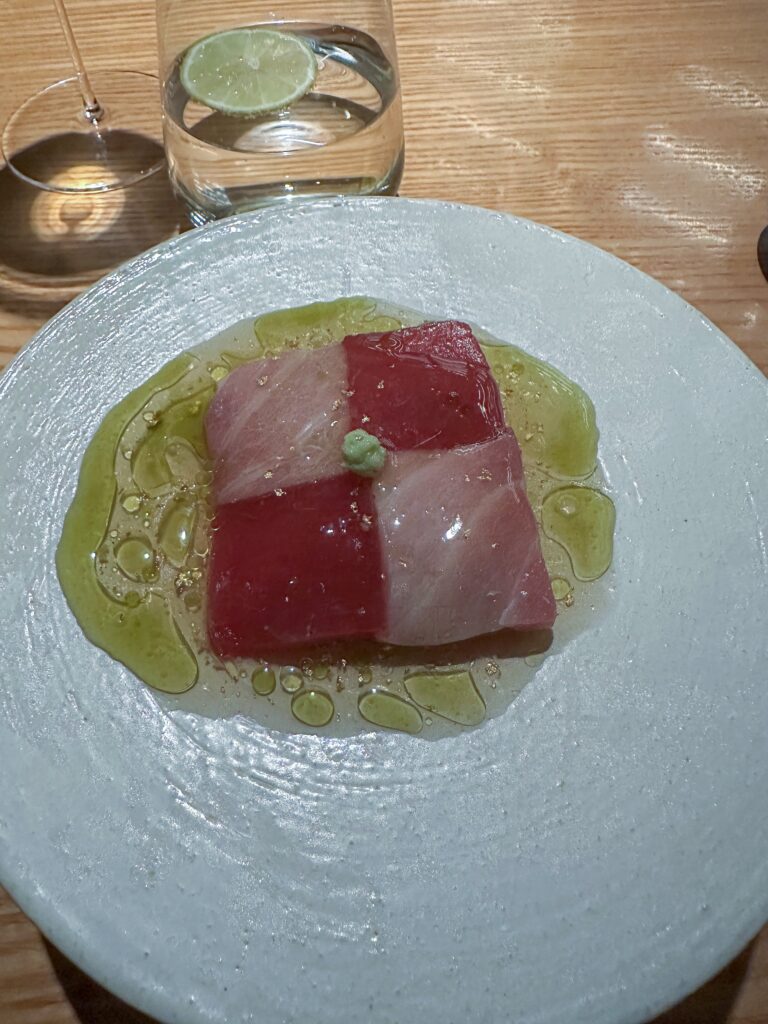
    A quenelle of cream under caviar and popcorn, set into the hollow of a stone plate, which is the kind of thing that should not work and did. And the tuna, loin and belly laid out as a checkerboard in green olive oil, which is the dish that raises the question the whole restaurant lives with: the chef’s years in Tokyo and Copenhagen are not hidden, and there is a bottle of Japanese sake on the list.

    Checkerboard slices of tuna loin and belly in green olive oil on a pale ceramic plate, a glass of water alongside
    Tuna loin and belly laid out as a checkerboard in green olive oil. The Tokyo years are not hidden.

    Is this Japanese technique pointed at Anatolian produce, trading on the claim to be Anatolian? His answer is that the Turks came from Central Asia and the kitchen develops what it finds there. The menu does not settle it. You decide at the table.

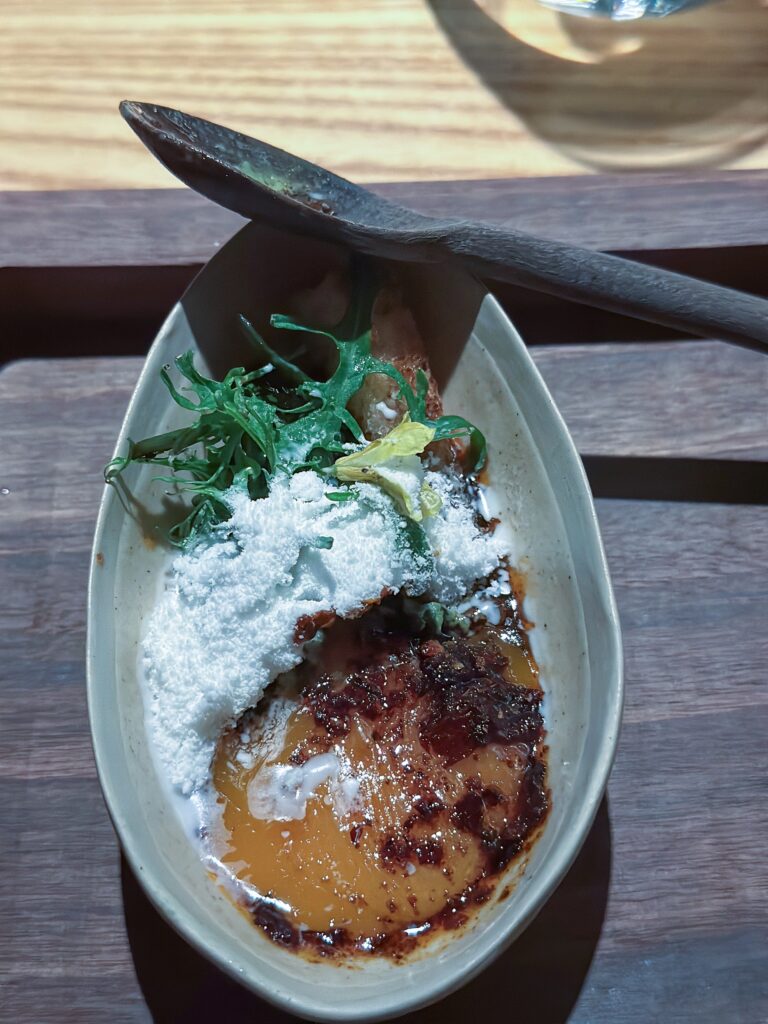
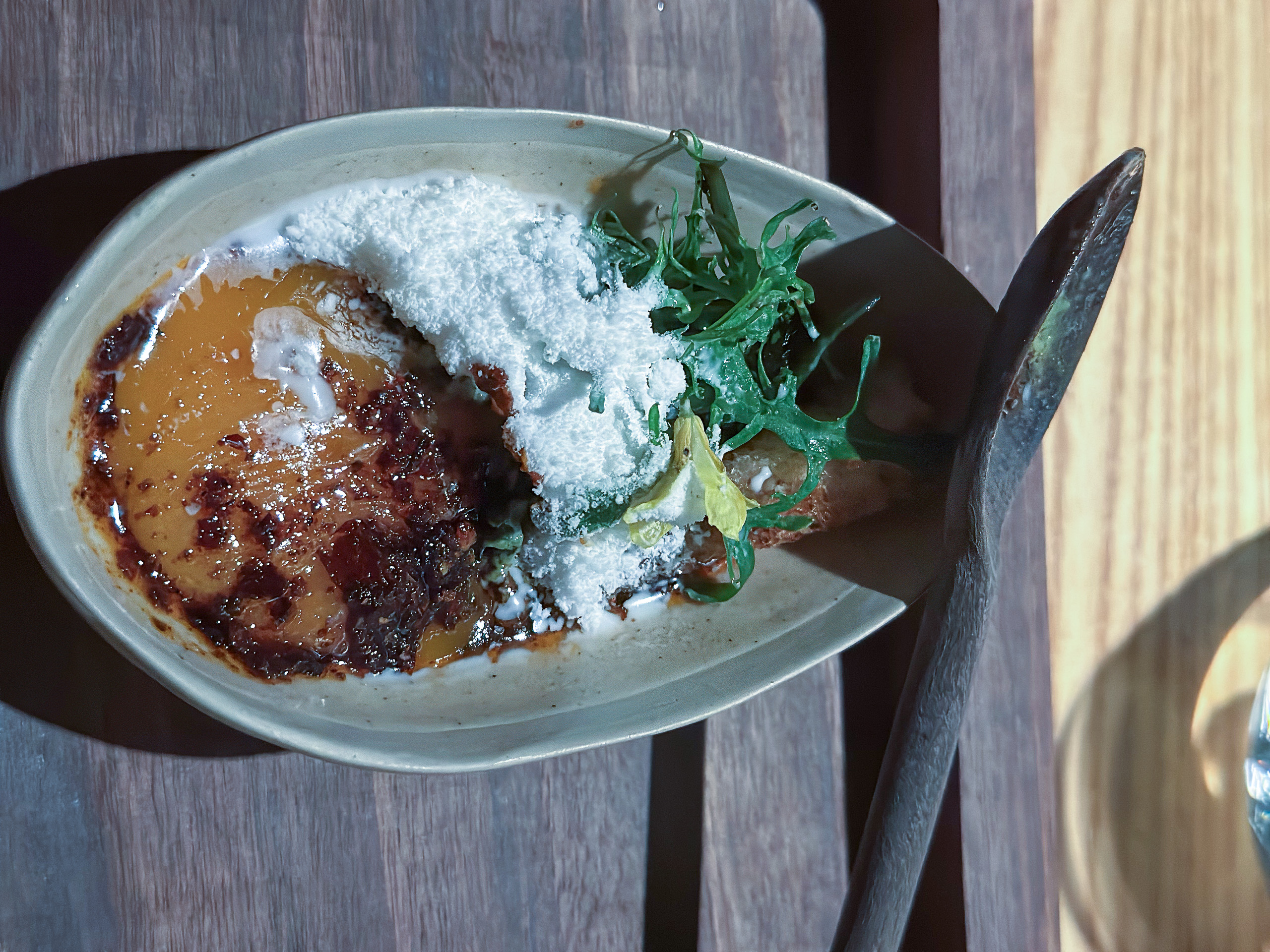
    A bruleed custard under a drift of grated white cheese and a curl of green herb in an oval dish
    A brûléed custard under grated white cheese, olive-wood spoon.
    A dish under orange sauce and white crumb with herbs, in a pale bowl
    A dish under orange sauce and white crumb with herbs.
    Small dishes and a cocoa-dusted bite set in stone bowls on the table
    Small dishes and a cocoa-dusted bite in stone bowls.

    The glass

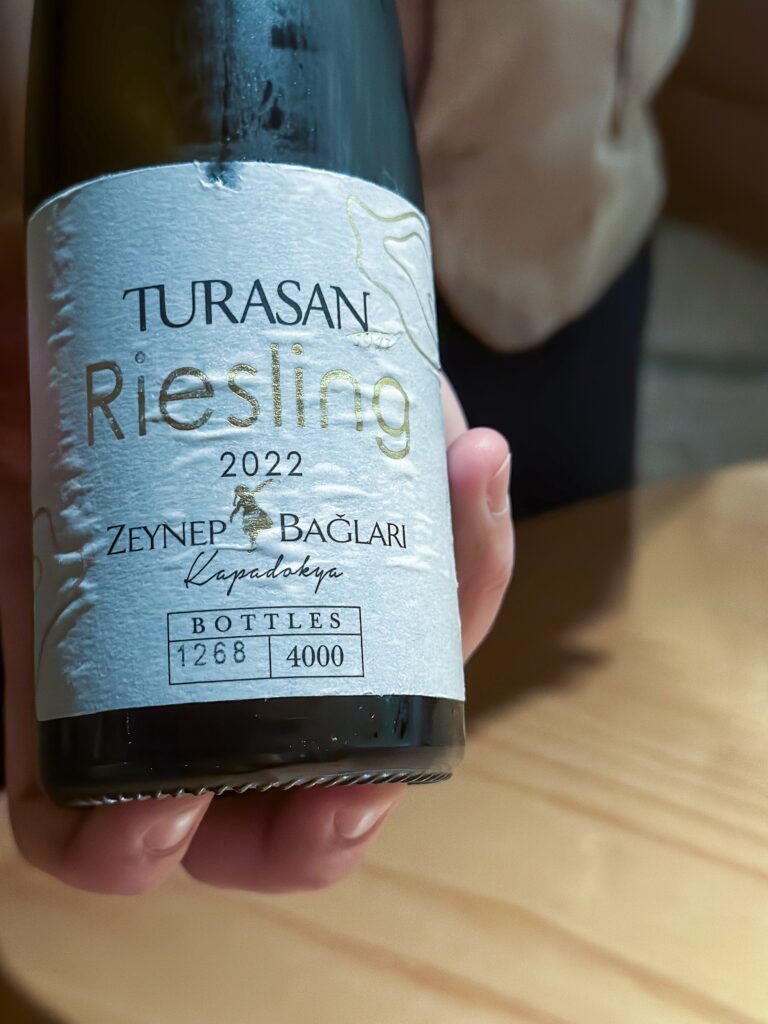
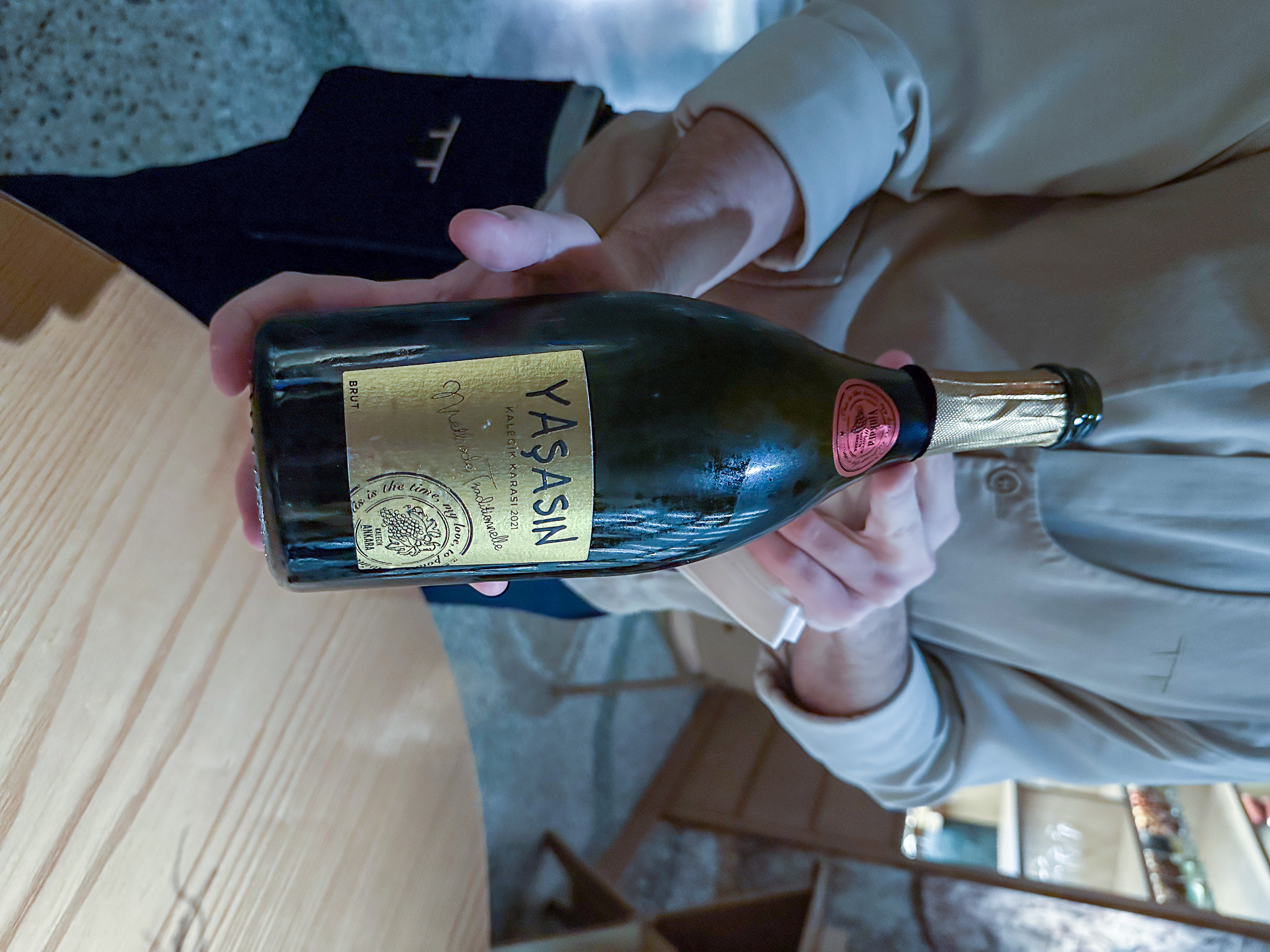
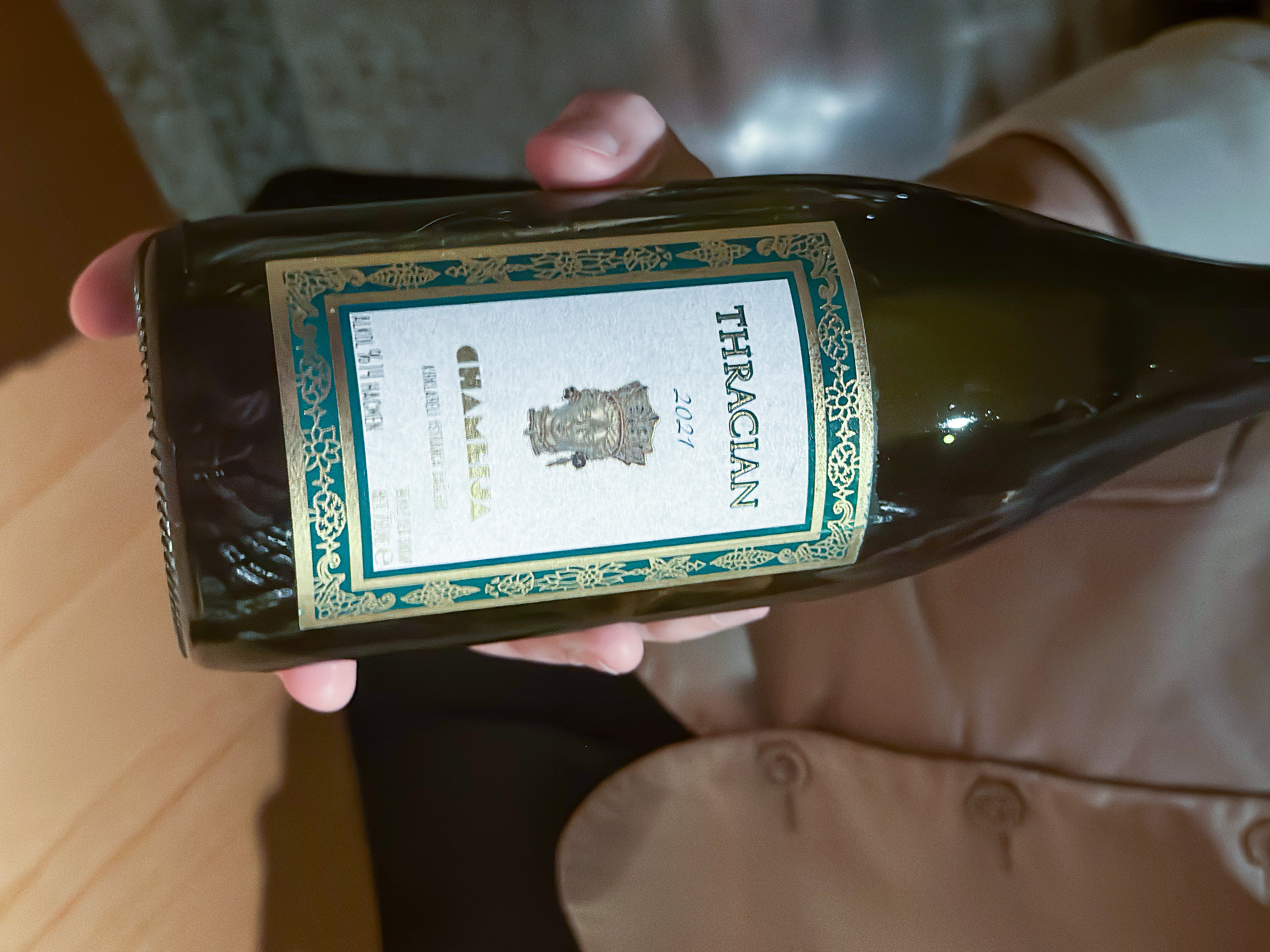
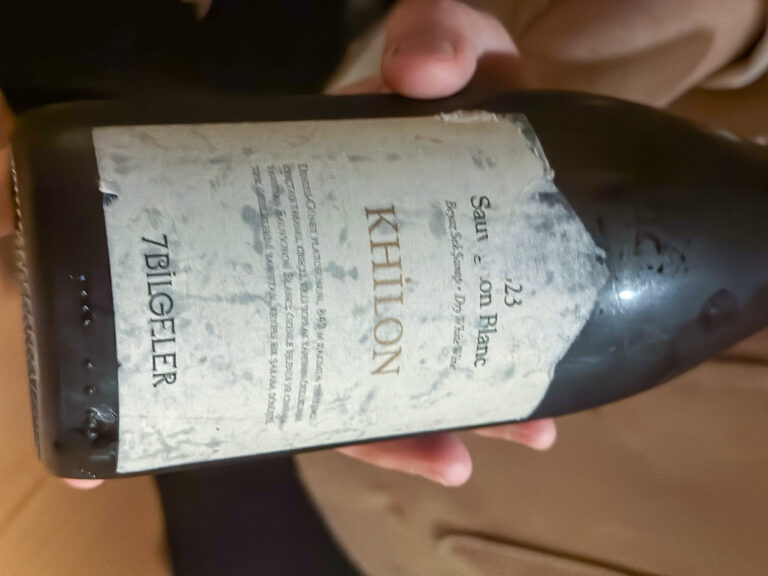
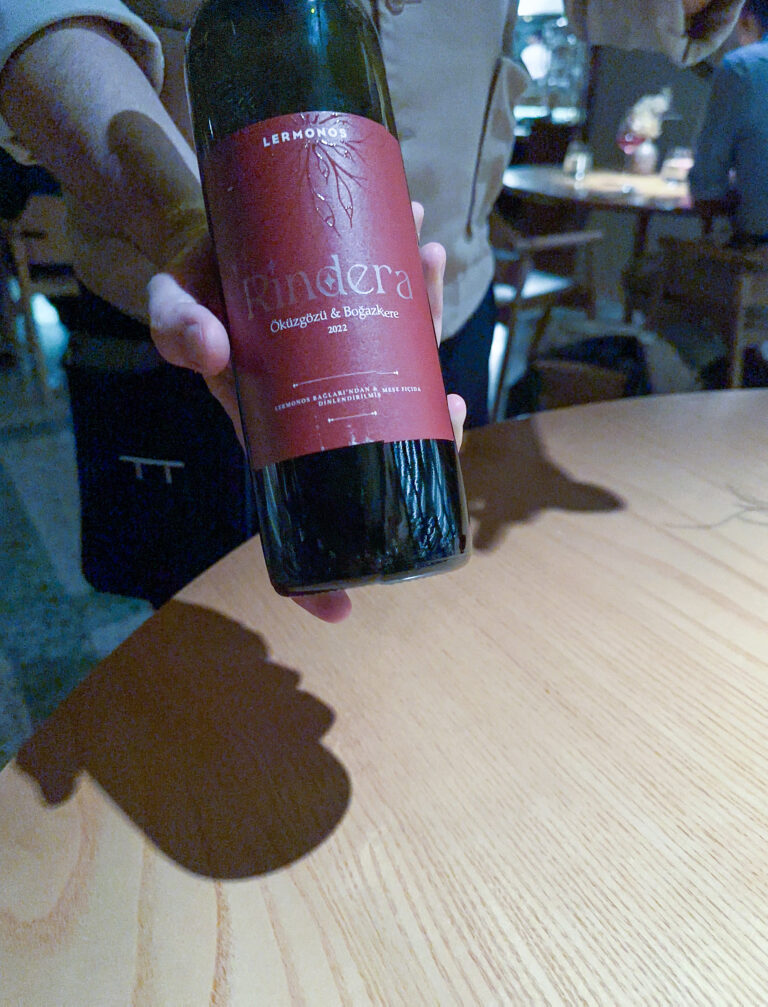
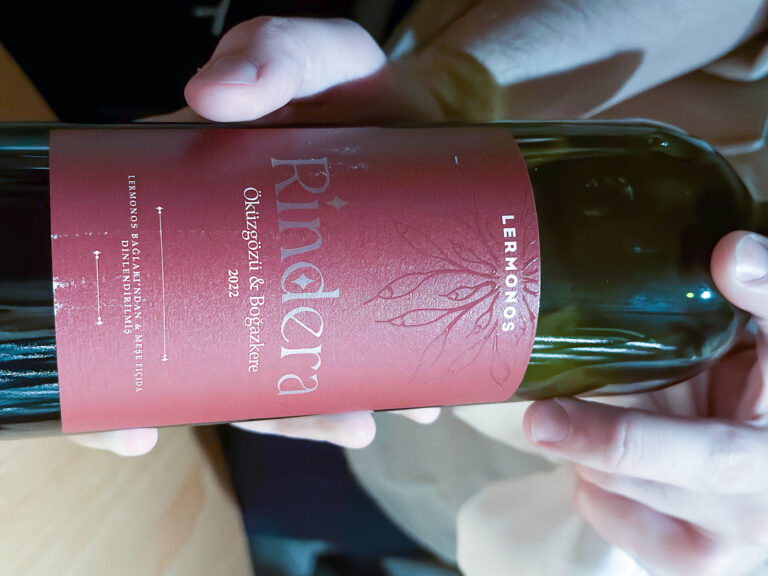
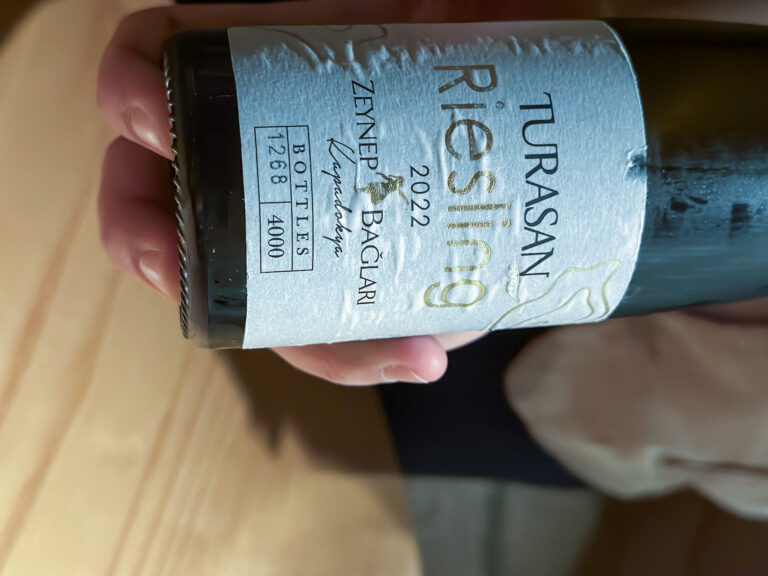
    The wine pairing runs seven wines chosen to walk you around Turkish terroir rather than flatter the food with imports: a brut from Kalecik Karası, a Cappadocian Riesling whose label records the bottle number, a Thracian red, a blend of Öküzgözkü and Boğazkere. Take it: the pairing is a must here. The wine adds to the food and the food adds to the wine — many places fail at exactly that, and TURK has it right. Ask for an extra sip of the Anatolian wines. The non-alcoholic pairing runs six house-made drinks, and the fermented elderflower and rose is good enough to make the wine drinkers at the table look over.

    A hand holding a bottle of Turasan Riesling from Zeynep Baglari in Cappadocia
    The Turasan Riesling; the label records the bottle number.
    A bottle of Yasasin sparkling wine held out across the table
    A Yaşasın sparkling, held out across the table.
    A bottle of Thracian white held across the table
    A Thracian white.

    Booking reality

    Book through the restaurant’s own site and nowhere else. Nothing is confirmed until the email arrives; cancellation closes three days out, and the commitment counts per seat, not per table. Solo diners are seated only at the chef’s table. Two to three weeks ahead is enough midweek; make it three to four for a weekend. Dinner only, Tuesday to Saturday.

    Who it is for, and who it is not

    Come here for Turkish fusion. Come for the wine pairing. Come if you are open to trying new things and want to see the kitchen — look at the cabinets on the way in and say yes to the tour at the end.

    Look elsewhere if anyone in the party is vegetarian, vegan, gluten-free or lactose-intolerant, because the answer is no before you sit down. Look elsewhere if you want the chef at the pass, because he has other rooms in the city now and is not necessarily in this one on a given night, which at thirty covers matters more than it would somewhere larger. And know that the room is dark and, by nine, loud. If you came for a quiet word, have it in the courtyard.

    The pantry is not decoration. It is the one thing on the menu nobody else can copy.

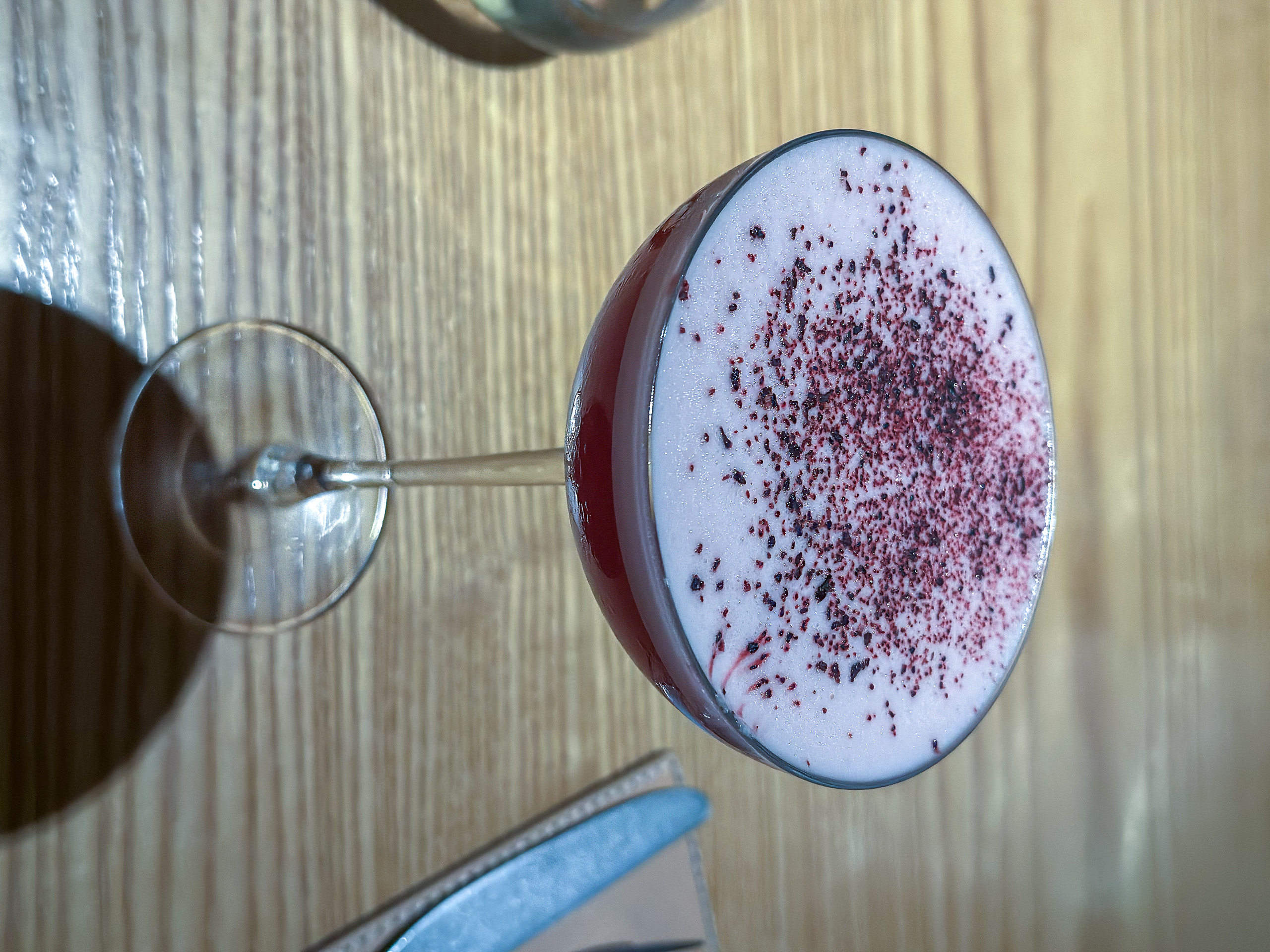
    A cocktail under foam dusted deep red, seen from above
    A cocktail under foam, dusted deep red. If you came for a quiet word, have it here.

    Bottom line

    TURK is a terrific introduction to Anatolian cuisine and wines, and it was a gem of an evening. STRONGLY RECOMMENDED. Book a weekend three to four weeks out, take the Turkish pairing, and read the dietary policy before you book.

    See the full set: Türk Fatih Tütak — in frames. More Istanbul: Kempinski, Istanbul.

    The TURK Fatih Tutak gallery

    Every photo on this site is my own, shot on the night. Slide through →

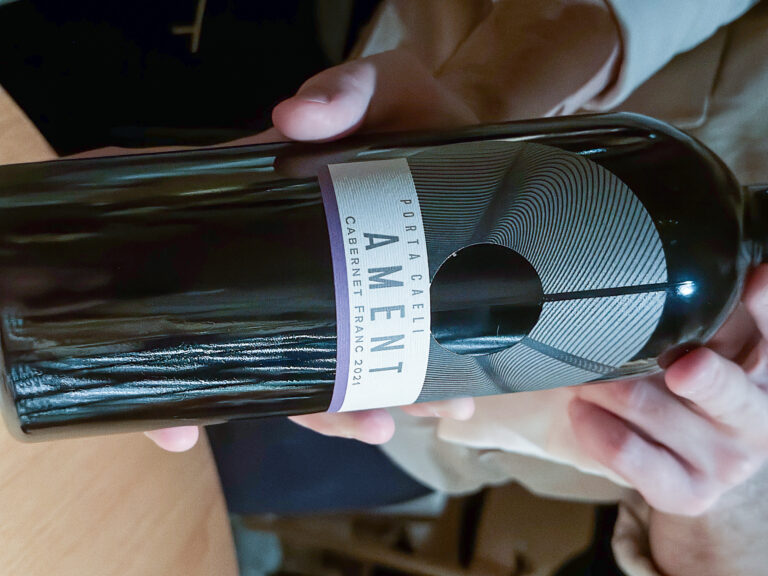
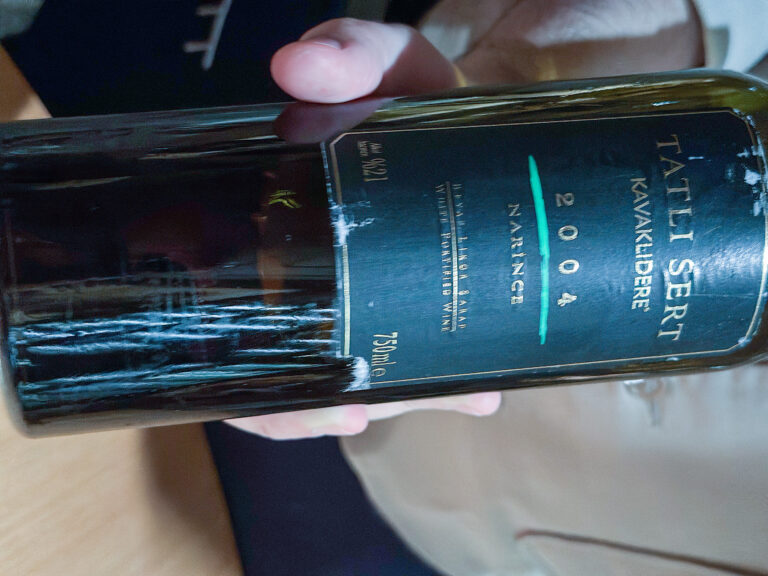
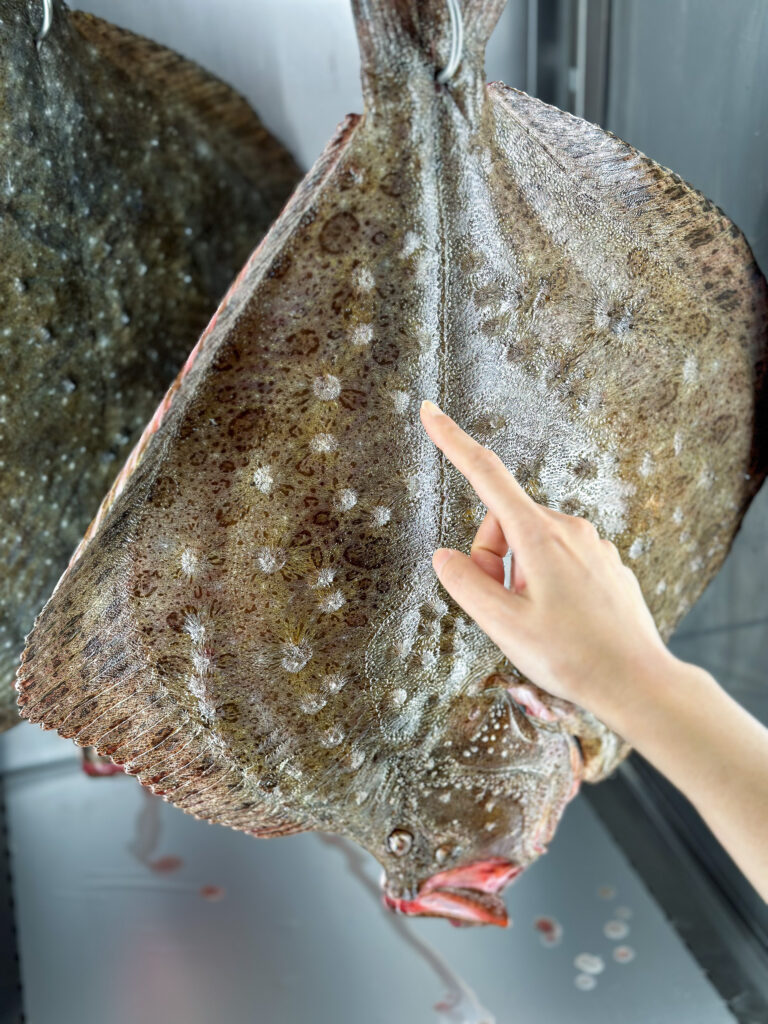
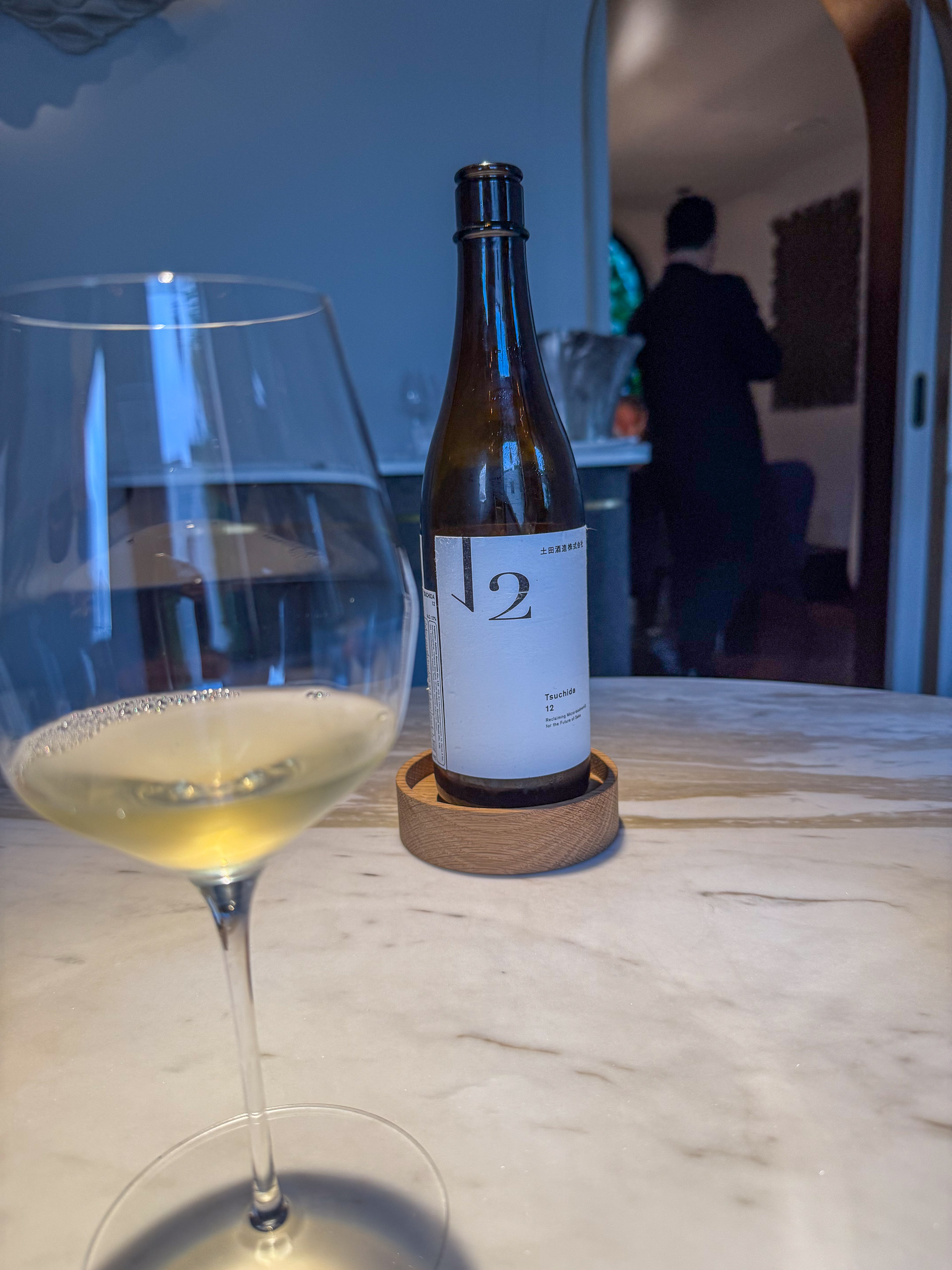
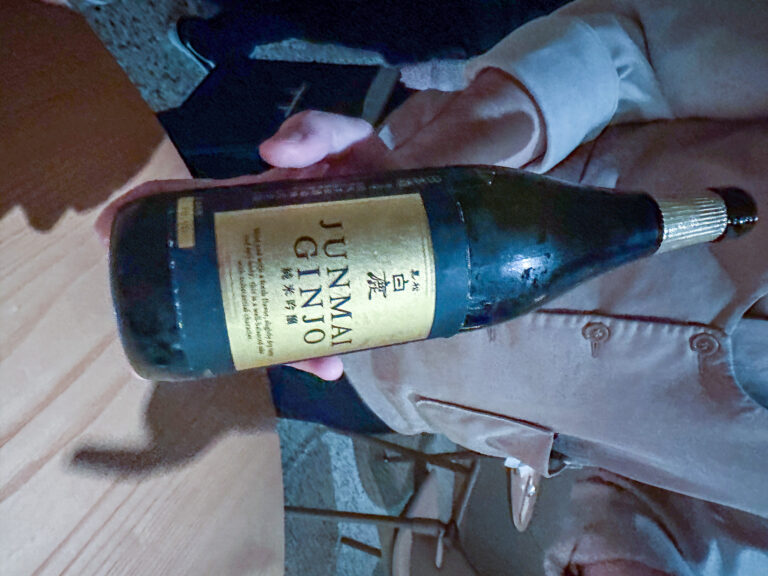
    A pale green cocktail dressed with herbs, held above the counterA bottle of Khilon sauvignon blanc held up, its label facing outA bottle of junmai ginjo sake presented over the tableA bottle of Turasan riesling held out, the vintage showingCaviar over cream in a rough stone bowl, a flower set on topA bottle of Rindera held up in the dining roomThe Rindera label held close, its pink script filling the frameA dark bottle of Ament cabernet turned to the labelA bottle of Tatli Sert from 2004 held up to the lightA hand pointing at a whole turbot hanging in the dry-ageing room, more flatfish behind it
  • Sorn: Three Stars, and Worth Planning a Trip Around

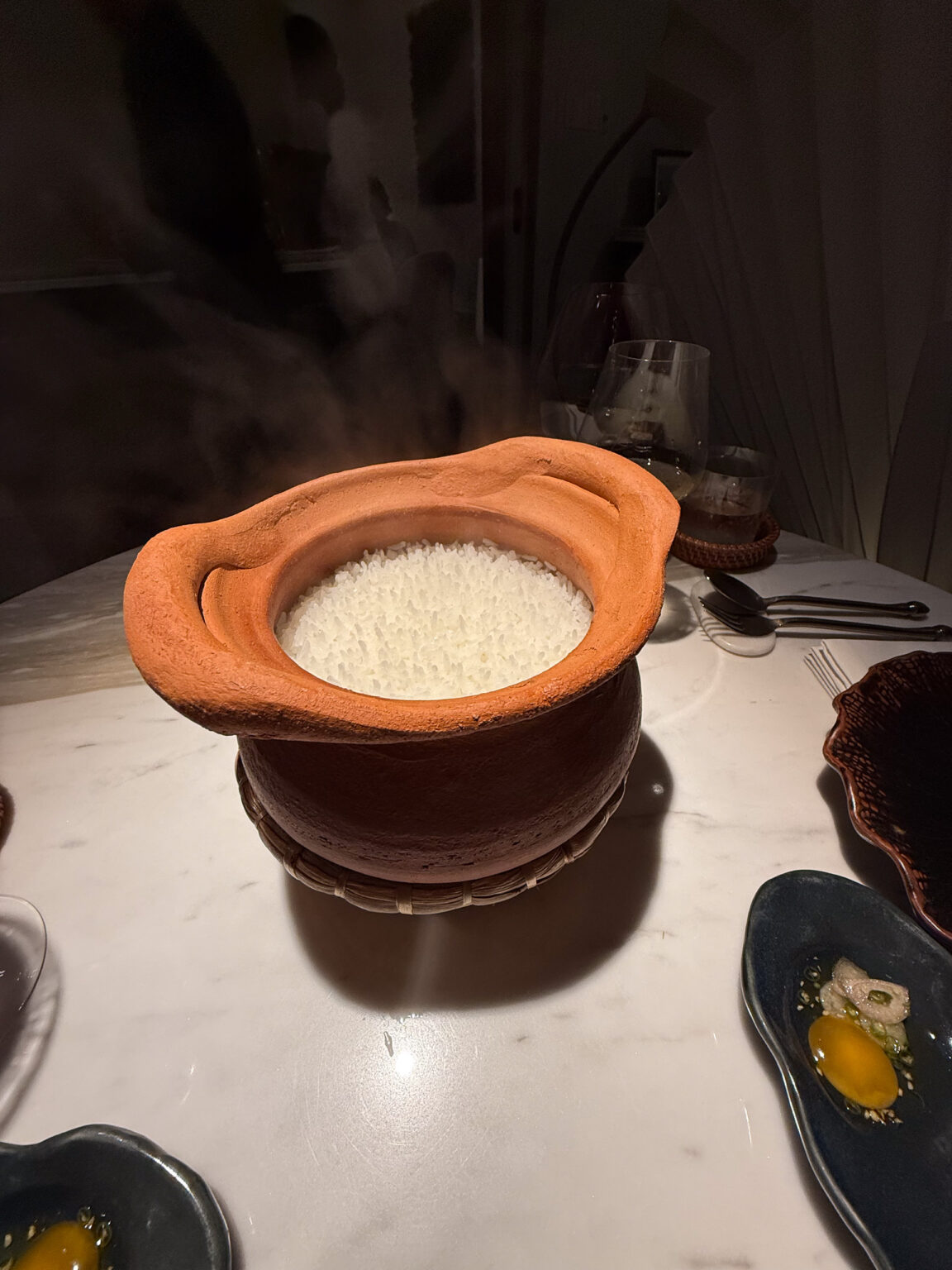
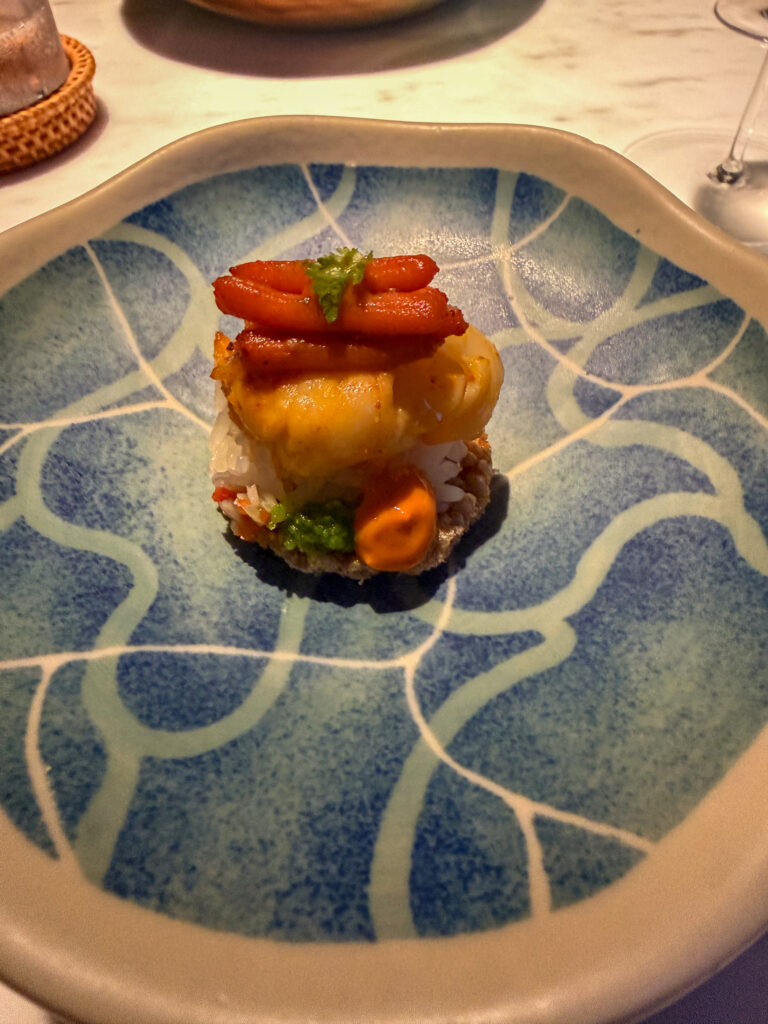
    A terracotta pot of steaming jasmine rice set in a woven basket on the marble table

    BANGKOK, THAILAND · RESTAURANT · 5 MIN READ

    Sorn: Three Stars, and Worth Planning a Trip Around

    One southern Thai tasting menu, one sitting a night, and the hardest table in the country to get. It is, to date, the best meal of my life.

    By J.C. Mercer

    Verified meal·paid in full

    • Covers Two, 6pm
    • Dined July 2026
    • Menu The tasting menu
    • Drinks Wine pairing
    • How it was booked In the monthly release, weeks ahead
    • Value verdict This is currently, to date, the best meal of my life. A MUST DO IF YOU CAN for any lover of Thai cuisine.

    Booked the way any other guest would book it.

    The house and the room

    Sorn is a restored house down a quiet residential lane off Sukhumvit 26, and you would walk straight past it if you did not know. Three stars on the door, and what it actually does is narrower than three stars suggests: one set menu, dinner only, built entirely from the food of the south, cooked over charcoal and in clay pots. This is not southern Thai food interpreted for Bangkok. It is southern Thai food brought north intact.

    Two claims before the details, so the stakes are clear. First: this went to the top of my meals-eaten-ever list, in any country, and it has stayed there. Second: it may be the most difficult table to get in the country, and not only for foreigners — Thais miss it too. I put the question to hotel staff, to the staff of other restaurants, and to people I met elsewhere in Thailand, in the United States, and even in Fiji: more than a dozen had wanted to eat here, tried numerous times, and never got in.

    The menu open on the table
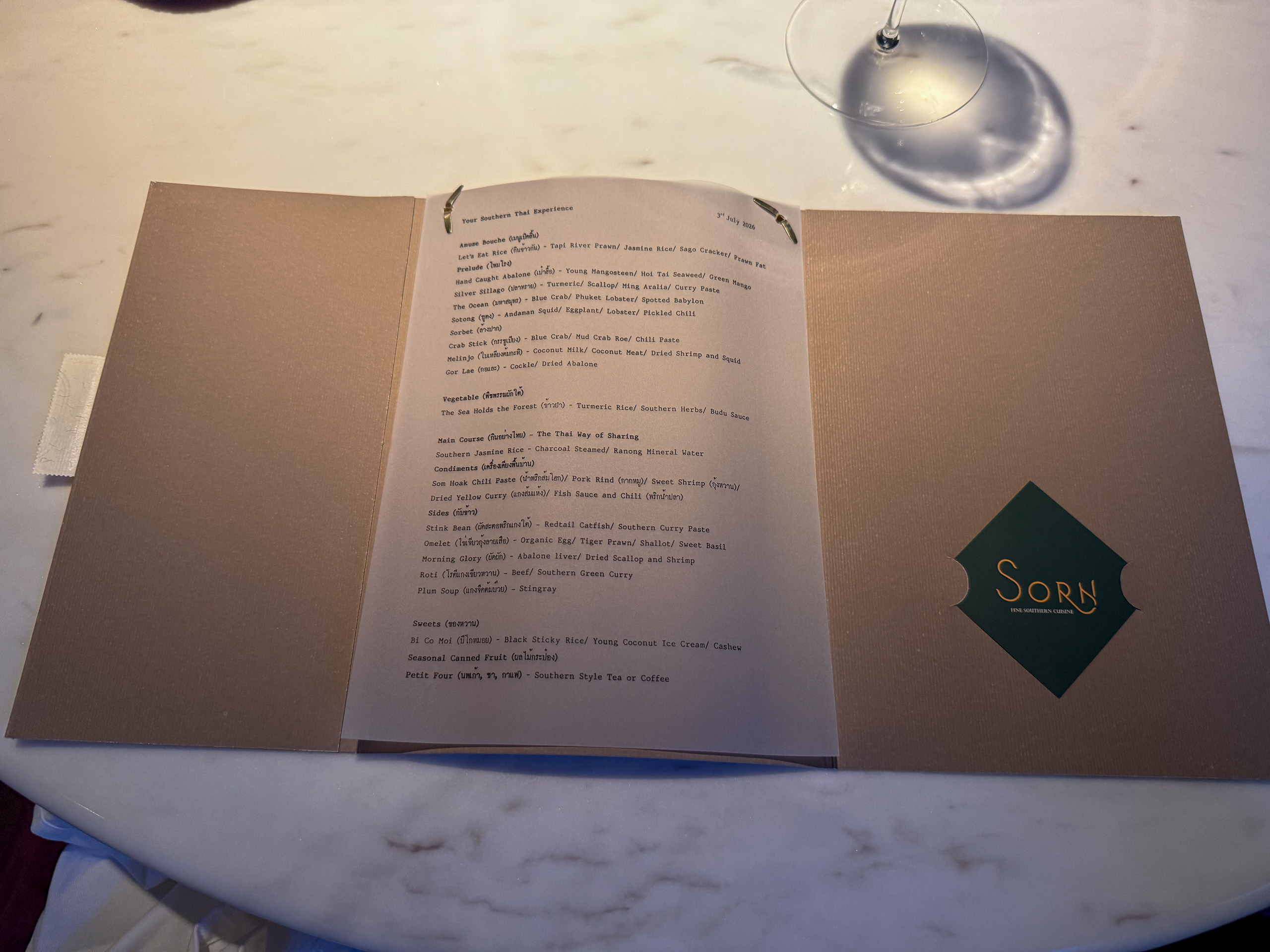
    The menu, open on the table. One set menu, one sitting, and nothing to choose.

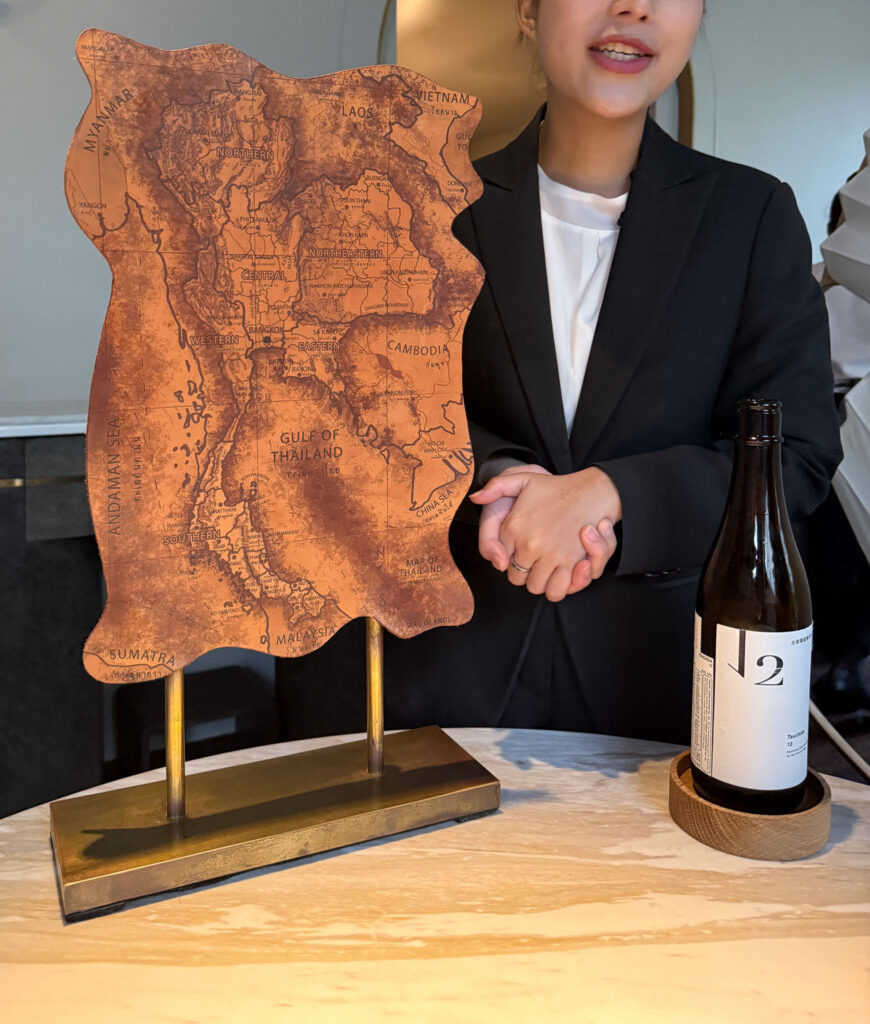
    The room is small and there is one seating a night. A board on the wall names the individual people who source for the kitchen — the prawns from the Tapi river, the crab from Surat Thani, the rice from Nakhon Si Thammarat — which is the argument made as an object: not knowing where the ingredients come from, but knowing who they come from. Read it before you sit down. The room runs cold; bring a layer.

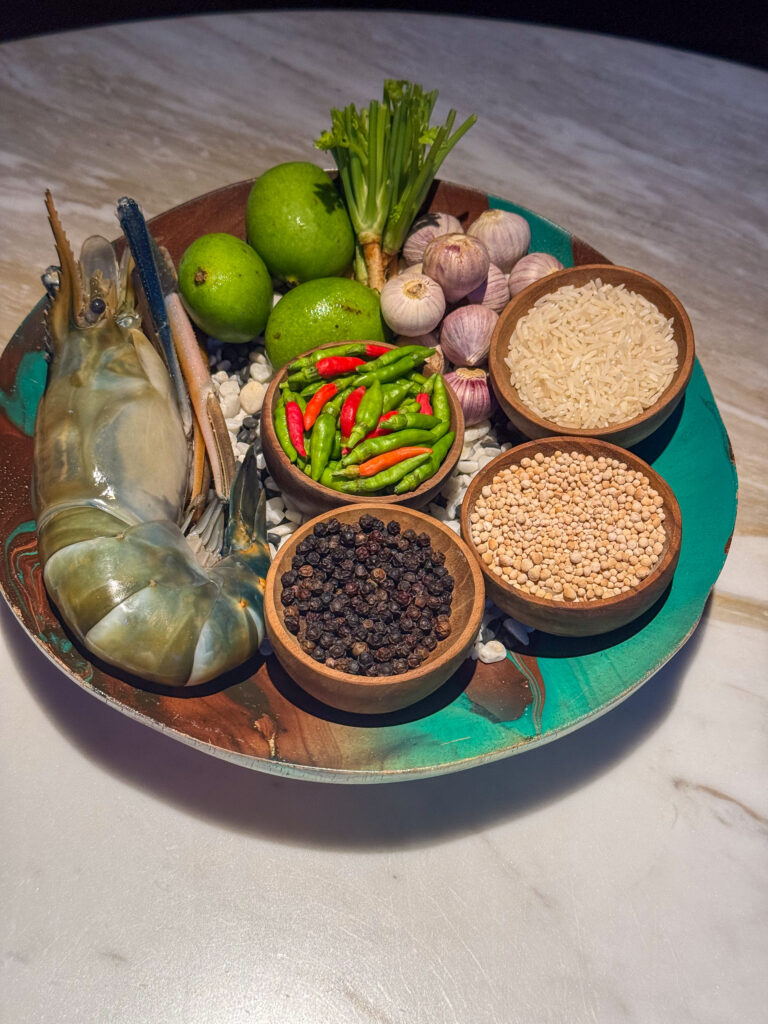
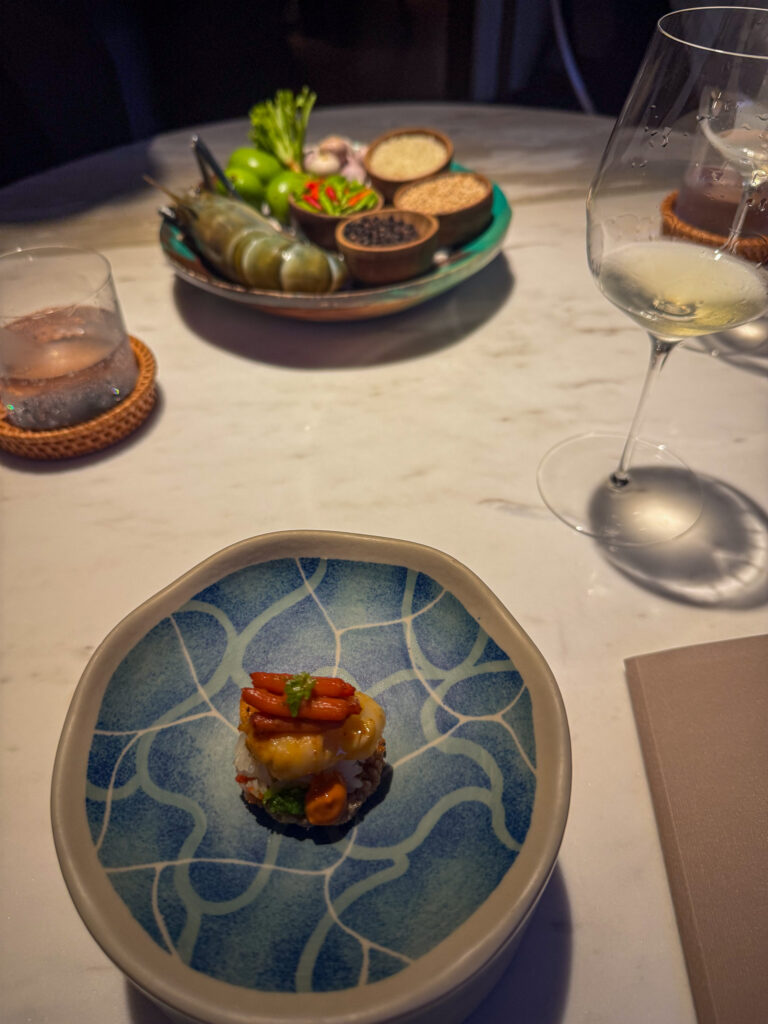
    A ceramic tray of raw ingredients: a whole river prawn, green mangoes, garlic, bird's eye chillies, jasmine rice and black and white peppercorns
    The tray that opens the meal: river prawn, green mango, garlic, bird’s eye chilli, jasmine rice, peppercorns. Sorn shows you the components before the dish.

    How the meal runs

    Nobody agrees how many courses this is, and the disagreement is really about the unit, because one course can arrive as three plates. Expect something north of twenty, across about three hours. The first act was individually plated and small: raw and lightly worked seafood, a sequence the menu calls the Ocean, a sorbet to clear. Then it pivoted. Rice arrived from a clay pot with a spread of condiments — chilli pastes, pork rinds, dried stingray, sweet shrimp, quail egg, herbs — and the southern classics came out family-style: soup, curry, stir-fry, something fried. Then desserts, then the trolley.

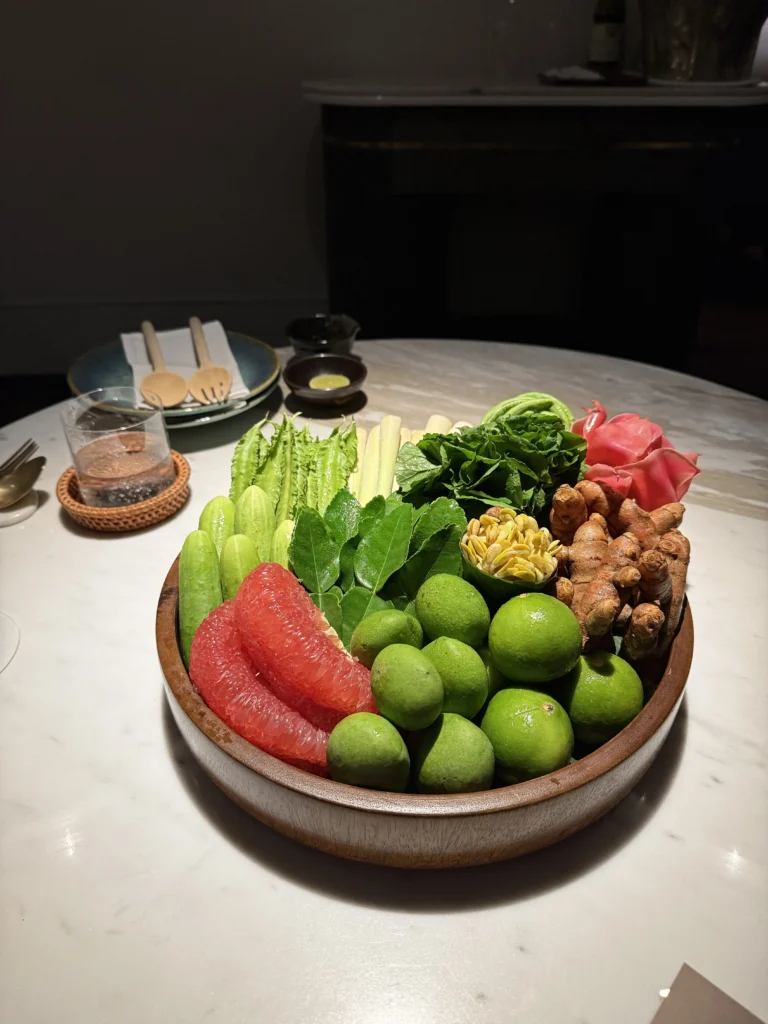
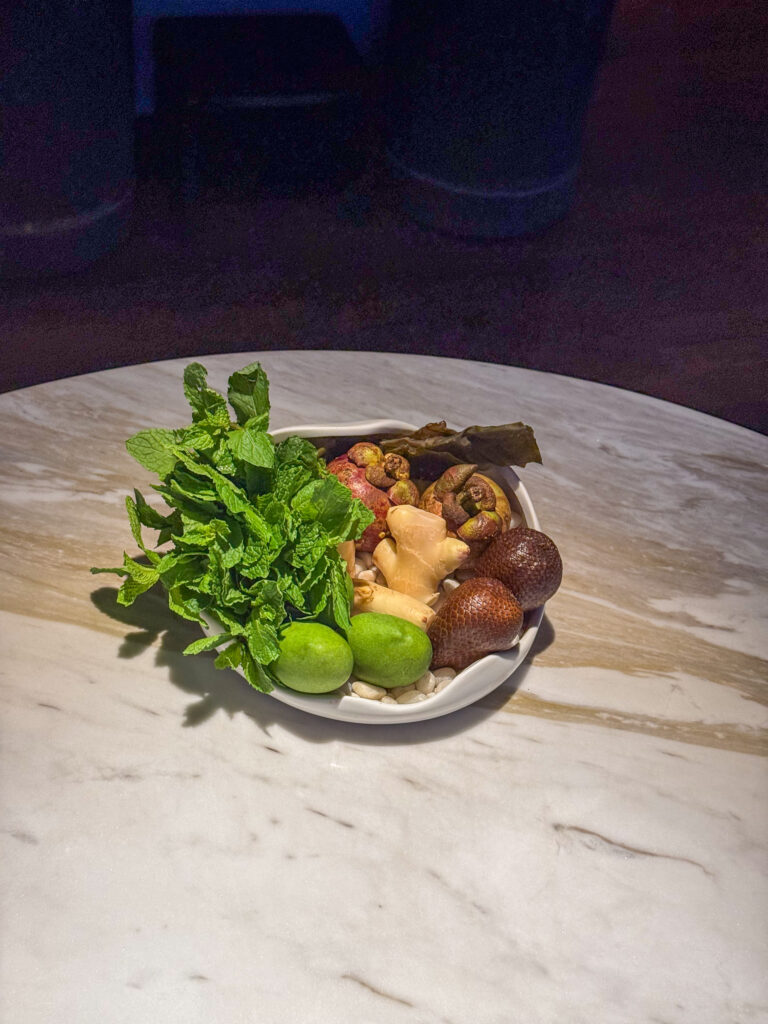
    And through it all, the ritual I have not seen done better anywhere: before a dish arrived, they showed you, on a platter, a large and beautiful spread of the actual ingredients of what you were about to be offered. It is theatrical and it adds an element most tasting menus never find — anticipation and knowledge combined. It is simply sublime.

    A wooden bowl of raw southern Thai produce: winged beans, cucumbers, baby corn, betel leaves, torch ginger flower, fresh turmeric, pomelo and green mangoes
    The bowl for the vegetable course: winged beans, baby corn, betel leaves, torch ginger, turmeric, pomelo, green mango. Presented whole, then dressed at the table.

    Southern Thai cooking is the most aggressively seasoned food in the country, and the kitchen asks about heat before service and sets it per person, anywhere from full southern to mild. Two things are worth knowing. The curries are made in batch and cannot be turned down, and they are the hottest things on the menu. And mild here is still, by most standards, hot. I said medium, the way you say it at home. The chef nodded the way a doctor nods.

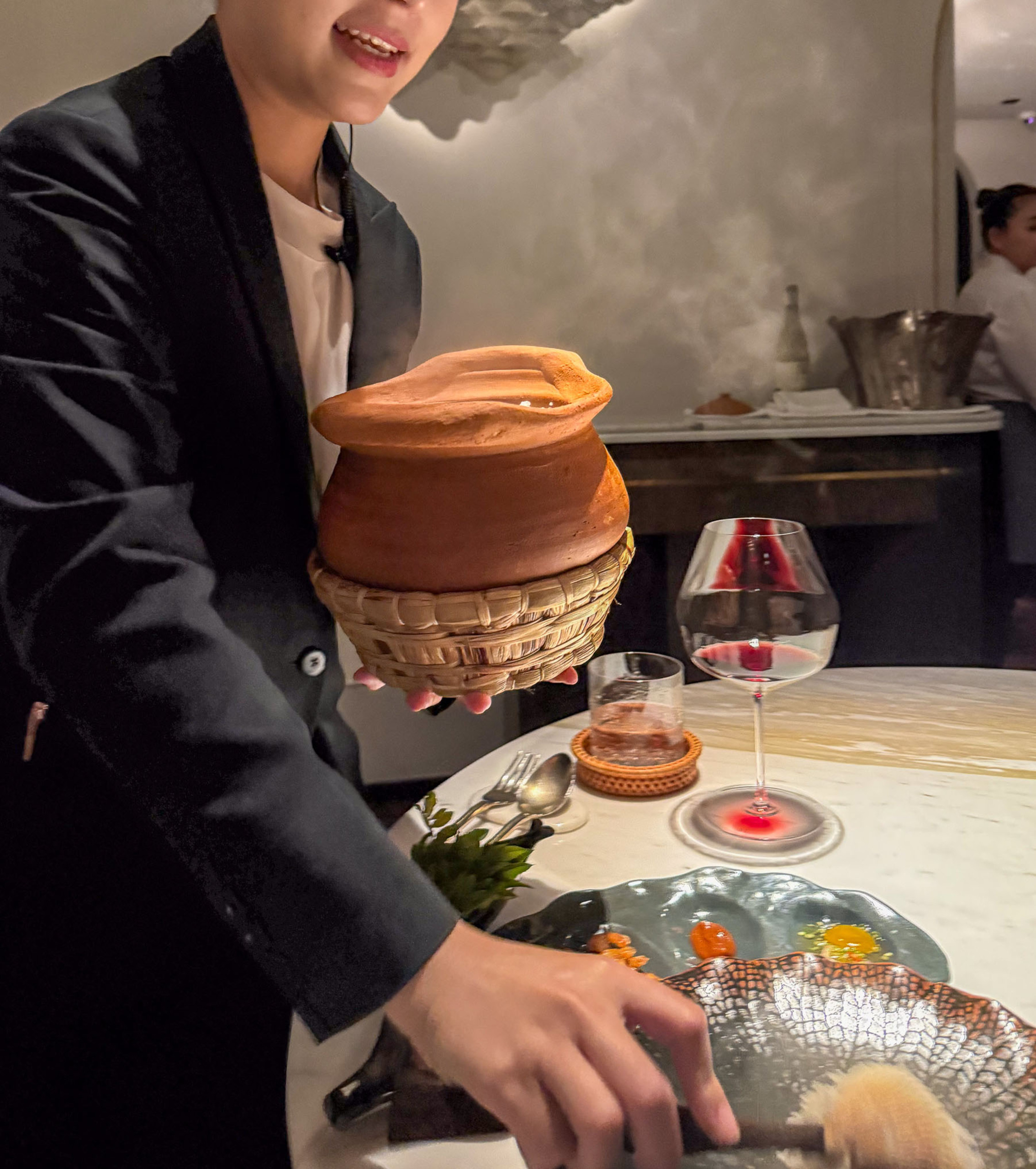
    Steam off the pot as the lid comes away
    Steam off the rice as the lid comes away.

    The pace is quick, and it is deliberate rather than careless: a lot of these dishes are temperature-critical and are meant to reach you fast. The descriptions come just as quickly, and if you want to hear one twice you may be pointed at the printed menu instead. You will be too full well before the trolley.

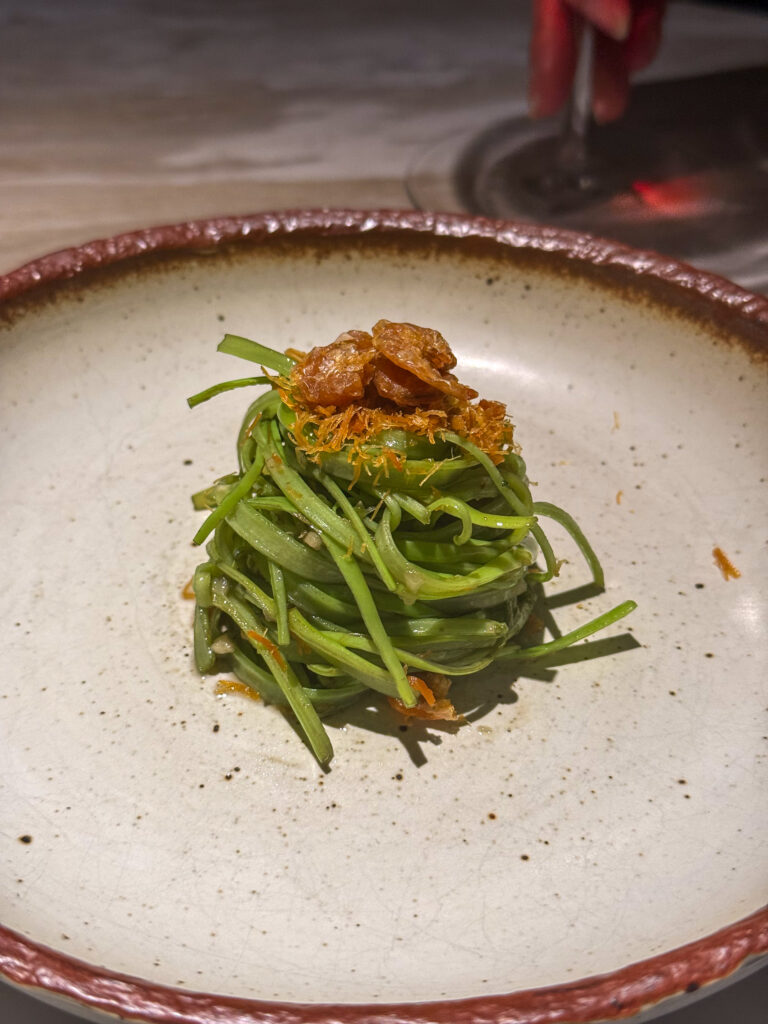
    A tangle of stir-fried morning glory crowned with crisp fried garlic and shallots in a rustic bowl
    Stir-fried morning glory under crisp fried garlic and shallots. By now the plates are shared.

    Three dishes that mattered

    The rice. It is the centre of gravity here, not a side dish: southern jasmine cooked in a clay pot over charcoal, in water brought up from the south — and like a different beast from any jasmine rice I have had before or since. It was the rice of angels. Everything alongside is built to be eaten with it, which is why the middle of the meal looks less like fine dining than the opening did. That is deliberate.

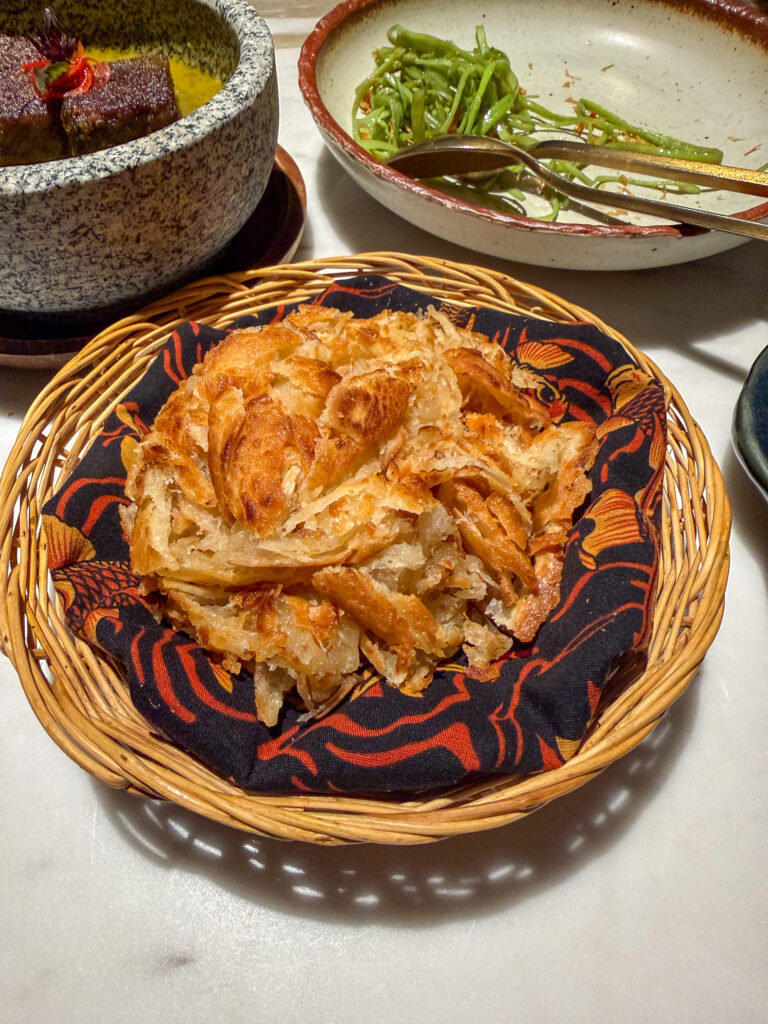
    Torn layers of flaky roti in a cloth-lined basket beside a curry and a bowl of greens
    Roti beside a curry. The green curry is the one to save room for.

    The green curry, beside roti. Save room for it. The intensity in this food comes from a time when people foraged and travel took days — the stronger the paste, the more rice it could carry — and that logic is still on the plate. Every chilli paste in the house is pounded by hand, and you can taste the difference in a way that is hard to explain and easy to notice.

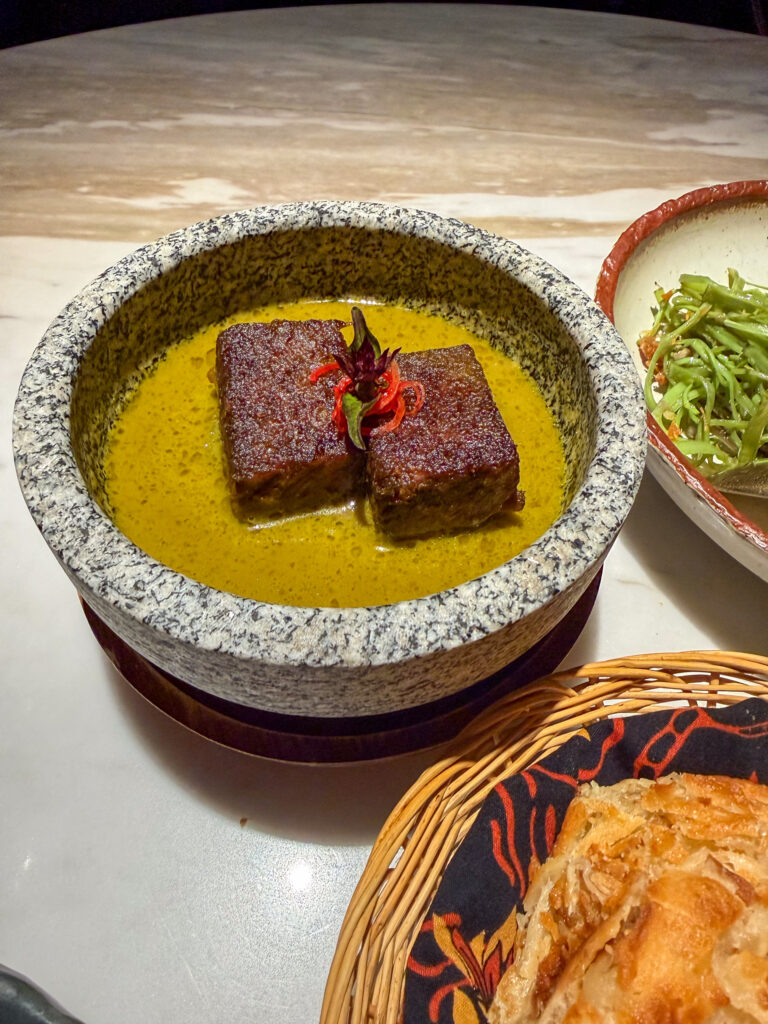
    Two blocks of dark braised meat in a yellow curry served in a granite mortar, a basket of roti alongside
    Braised meat in a yellow curry, served in a granite mortar. Every chilli paste in the house is pounded by hand.

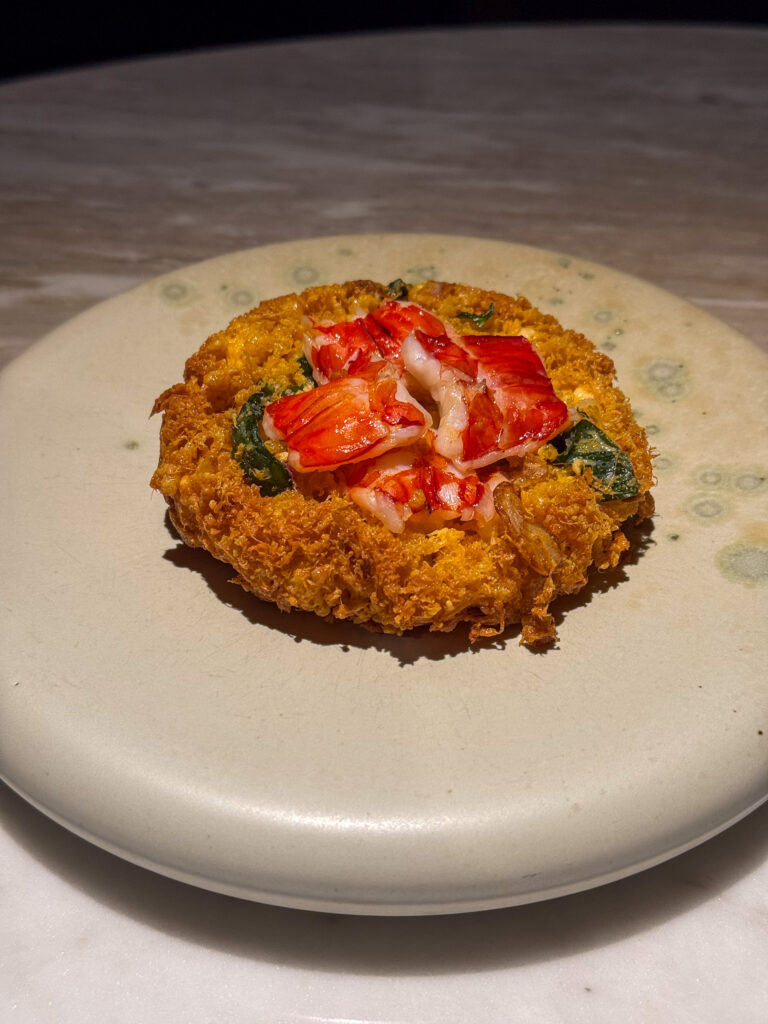
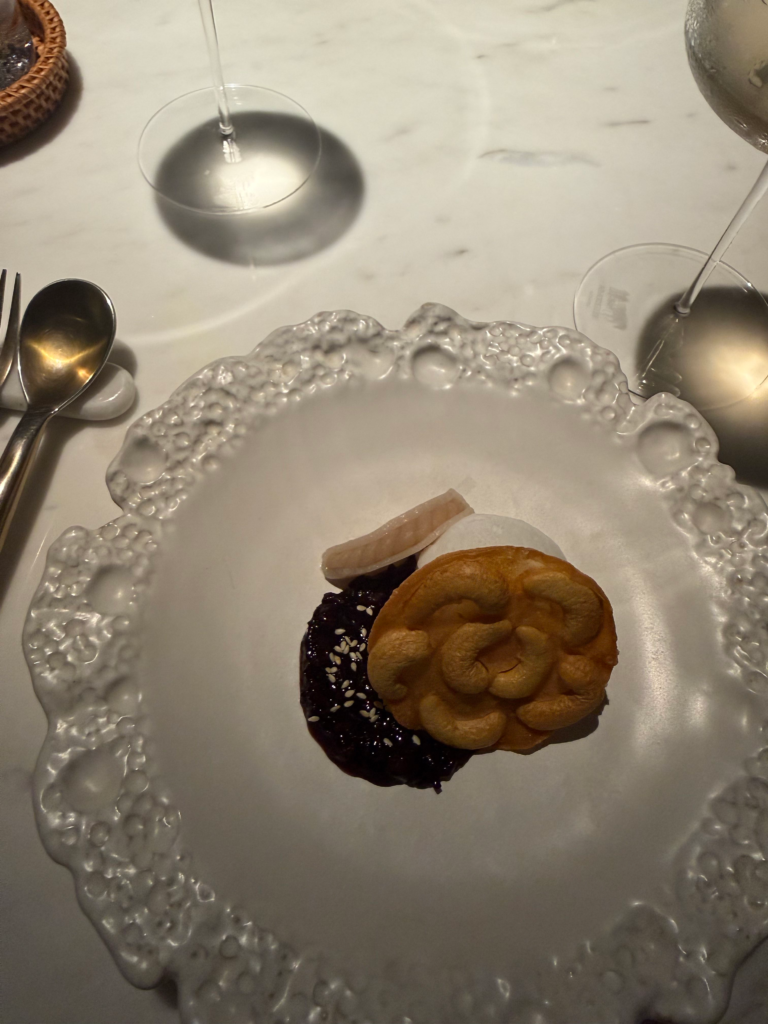
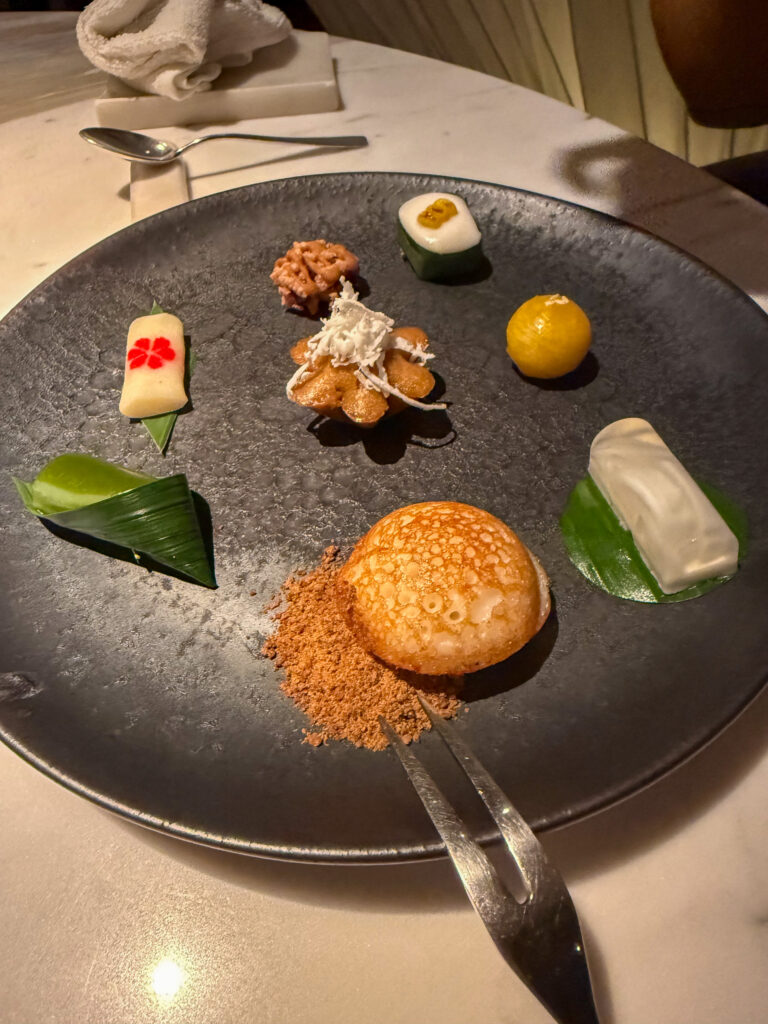
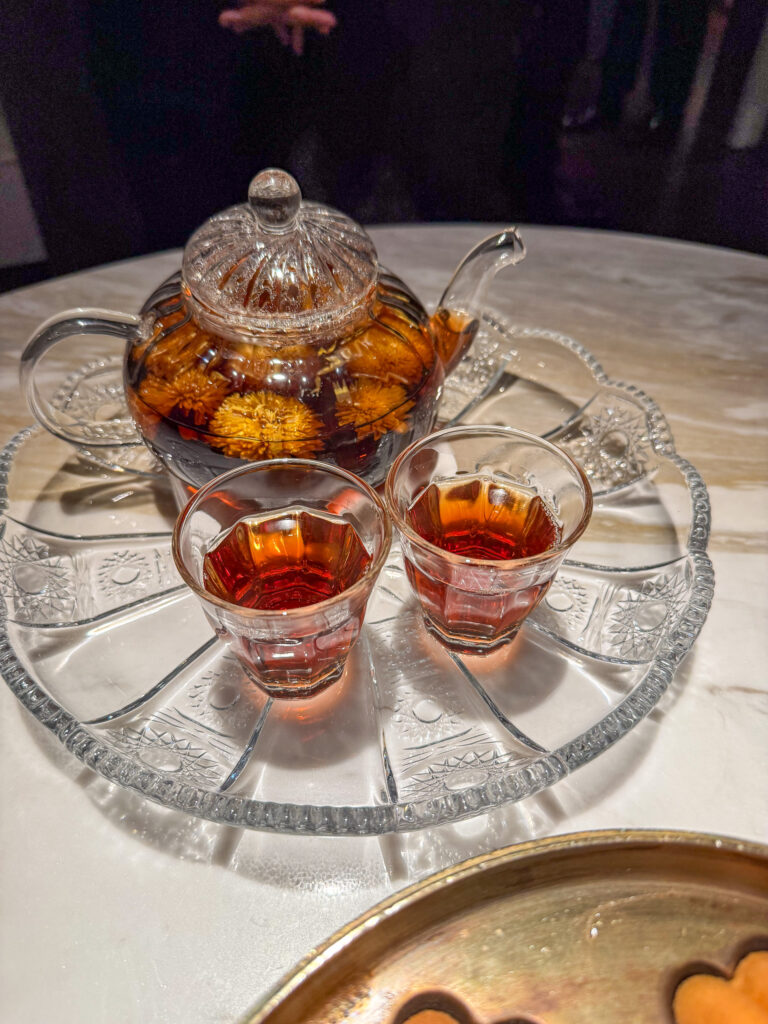
    The braised meat in yellow curry, served in a granite mortar, and the crisp golden omelette built around shellfish and greens from the family-style half of the meal. Then the last act: black sticky rice with sesame, coconut ice cream and a cashew wafer, and a trolley carrying more petits fours than anyone can reasonably eat, with no expectation that you stop at one. Flowering chrysanthemum tea to close, poured at the table.

    A crisp golden omelette ringed around chunks of lobster meat and greens on a pale ceramic plate
    The crisp omelette, shellfish and greens inside.
    A dessert of black sticky rice with sesame, coconut ice cream and a cashew-studded wafer on a textured white plate
    Black sticky rice, coconut ice cream, a cashew wafer.
    Seven Thai petits fours arranged on a dark slate plate, a coconut crisp sitting on a heap of palm sugar
    Seven petits fours on slate. The trolley does not ration.

    The glass

    Two wine pairings, six glasses and nine, and the shorter one is not all wine. Drinks are separate from the menu.

    A glass teapot of flowering chrysanthemum tea and two amber-filled cups on an etched glass tray
    Flowering chrysanthemum tea to close, poured at the table.
    A glass of white wine poured at the table, the bottle behind
    A white poured at the table, the bottle behind.
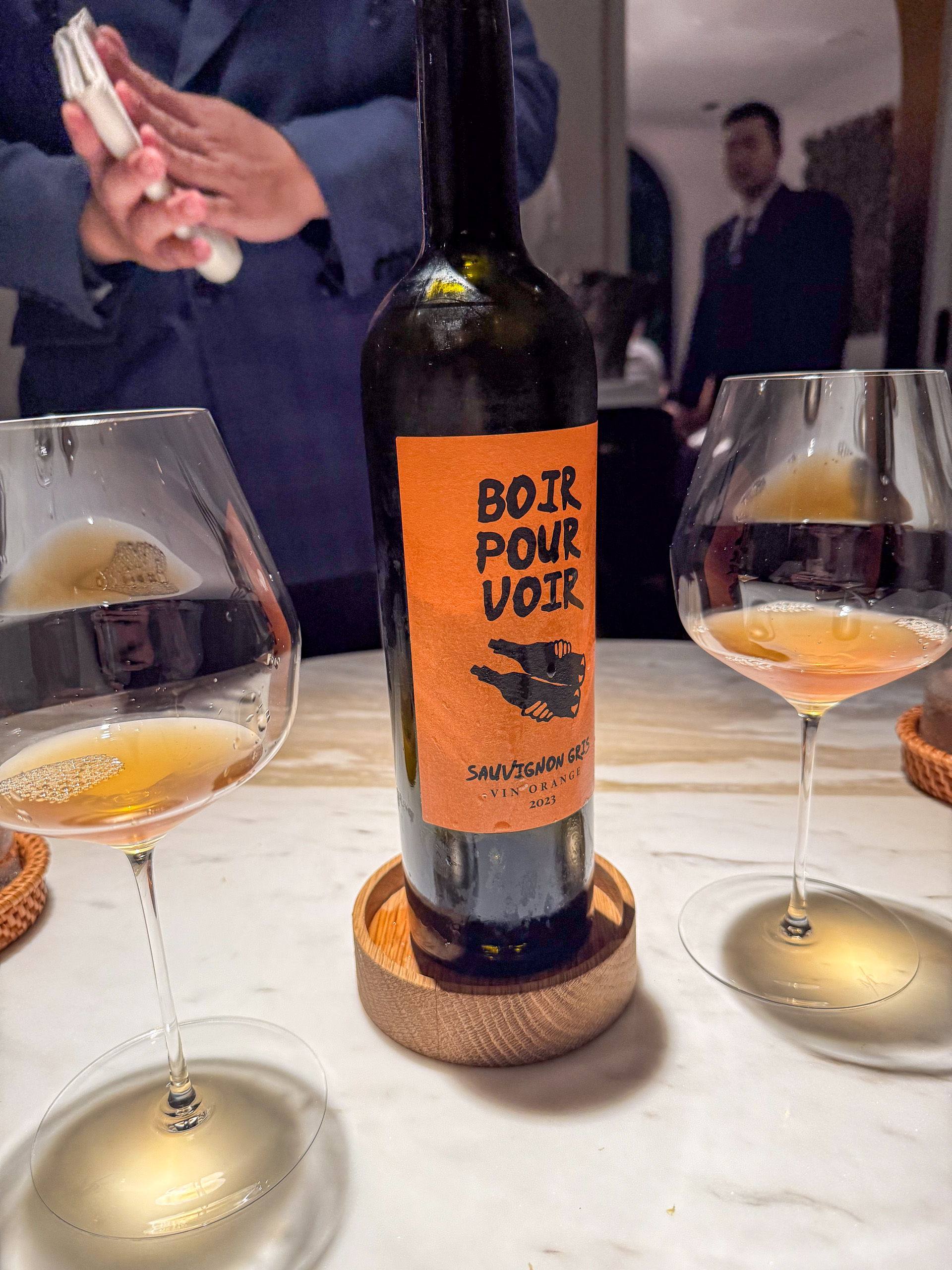
    An orange wine opened at the table
    An orange wine opened at the table.

    Booking reality

    There are two ways in. From outside Thailand you email the restaurant from midnight Bangkok time on the fifteenth, for the following month. Everyone else goes online at noon on the twenty-fifth, again for the month ahead. The restaurant has run other systems and the guidance online contradicts itself, so email early, set one alarm for the fifteenth and another for noon on the twenty-fifth, and check the restaurant’s own channels the week before.

    What you buy at that moment is not a reservation in the ordinary sense. The terms are hard: final on confirmation, no rescheduling, no cancellation. Arrive more than thirty minutes late and the booking is void, which in Bangkok traffic is a real risk; allow far more time than the map suggests.

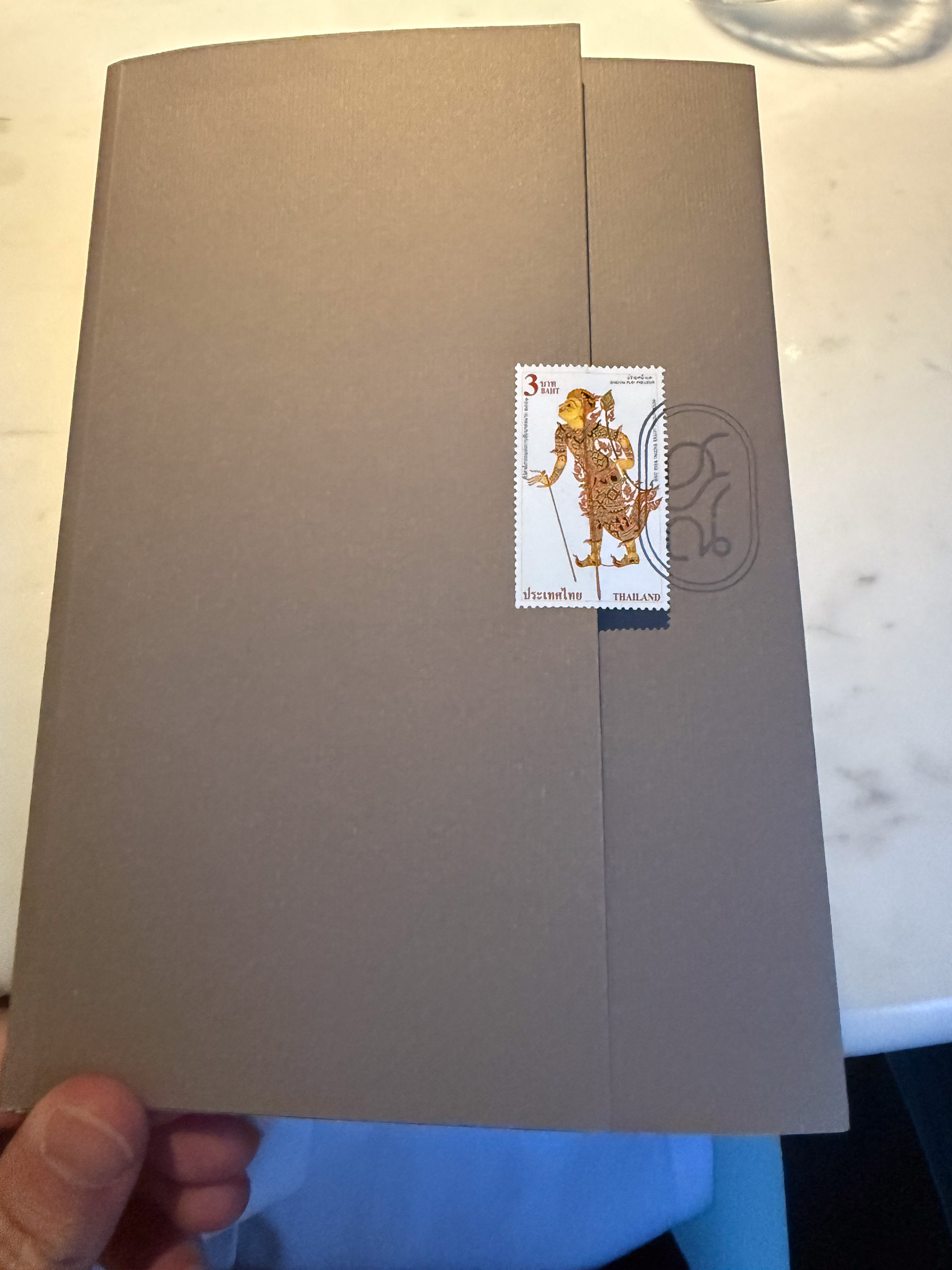
    The printed card standing on the table before service
    The printed card on the table before service. What you buy is not a reservation in the ordinary sense.

    Turn up with fewer people than you booked and the empty seats still count. Book for four rather than two: there are more tables that size.

    And this needs saying plainly, because the commitment is final before you find out: there is no vegetarian or vegan menu, no shellfish allergy of any degree can be accommodated, and eight core ingredients — coriander root, onion, garlic, peppercorns, shrimp paste, coconut, chilli and fish sauce — will not be substituted. It is published on the same page that takes your card.

    Who it is for, and who it is not

    Come if this dinner is going to shape the trip, and book it before you book the flights. Come if you want one kitchen making one argument for three hours about the food of a region most visitors never eat. Answer the spice question truthfully when it comes. Budget three hours. Smart and unfussy is right; there is no dress code.

    Look elsewhere if anyone in the party is vegetarian, allergic to shellfish or unable to eat any of the eight, if anyone might not make the date, or if you want a table this week.

    The hardest table in the country, and the best meal of my life.

    Bottom line

    Sorn is the best restaurant in Thailand, the hardest table in it, and — to date — the best meal of my life. Set two alarms, book for four, say yes to the heat. Do what you must to get there. MUST DO BEFORE DEATH.

    See the full set: Sorn — in frames. More Bangkok: the Bangkok set.

    The Sorn gallery

    Every photo on this site is my own, shot on the night. Slide through →

    A member of the team presenting an ingredient at the tableThe first dishes set down on the marbleA single composed course in a blue-glazed bowlHerbs, greens and shellfish arranged on a shallow plateA clear cup of jellied brothA cold beer poured beside the plateA single crisp-fried course on a plain plateThe raw ingredients of the course laid out on a trayThree small courses arriving togetherGreens, egg and shellfish on a glazed plate