BANGKOK, THAILAND · RESTAURANT · 5 MIN READ
Sorn: Three Stars, and Worth Planning a Trip Around
One southern Thai tasting menu, one sitting a night, and the hardest table in the country to get. It is, to date, the best meal of my life.
By J.C. Mercer
- Covers Two, 6pm
- Dined July 2026
- Menu The tasting menu
- Drinks Wine pairing
- How it was booked In the monthly release, weeks ahead
- Value verdict This is currently, to date, the best meal of my life. A MUST DO IF YOU CAN for any lover of Thai cuisine.
Booked the way any other guest would book it.
The house and the room
Sorn is a restored house down a quiet residential lane off Sukhumvit 26, and you would walk straight past it if you did not know. Three stars on the door, and what it actually does is narrower than three stars suggests: one set menu, dinner only, built entirely from the food of the south, cooked over charcoal and in clay pots. This is not southern Thai food interpreted for Bangkok. It is southern Thai food brought north intact.
Two claims before the details, so the stakes are clear. First: this went to the top of my meals-eaten-ever list, in any country, and it has stayed there. Second: it may be the most difficult table to get in the country, and not only for foreigners — Thais miss it too. I put the question to hotel staff, to the staff of other restaurants, and to people I met elsewhere in Thailand, in the United States, and even in Fiji: more than a dozen had wanted to eat here, tried numerous times, and never got in.
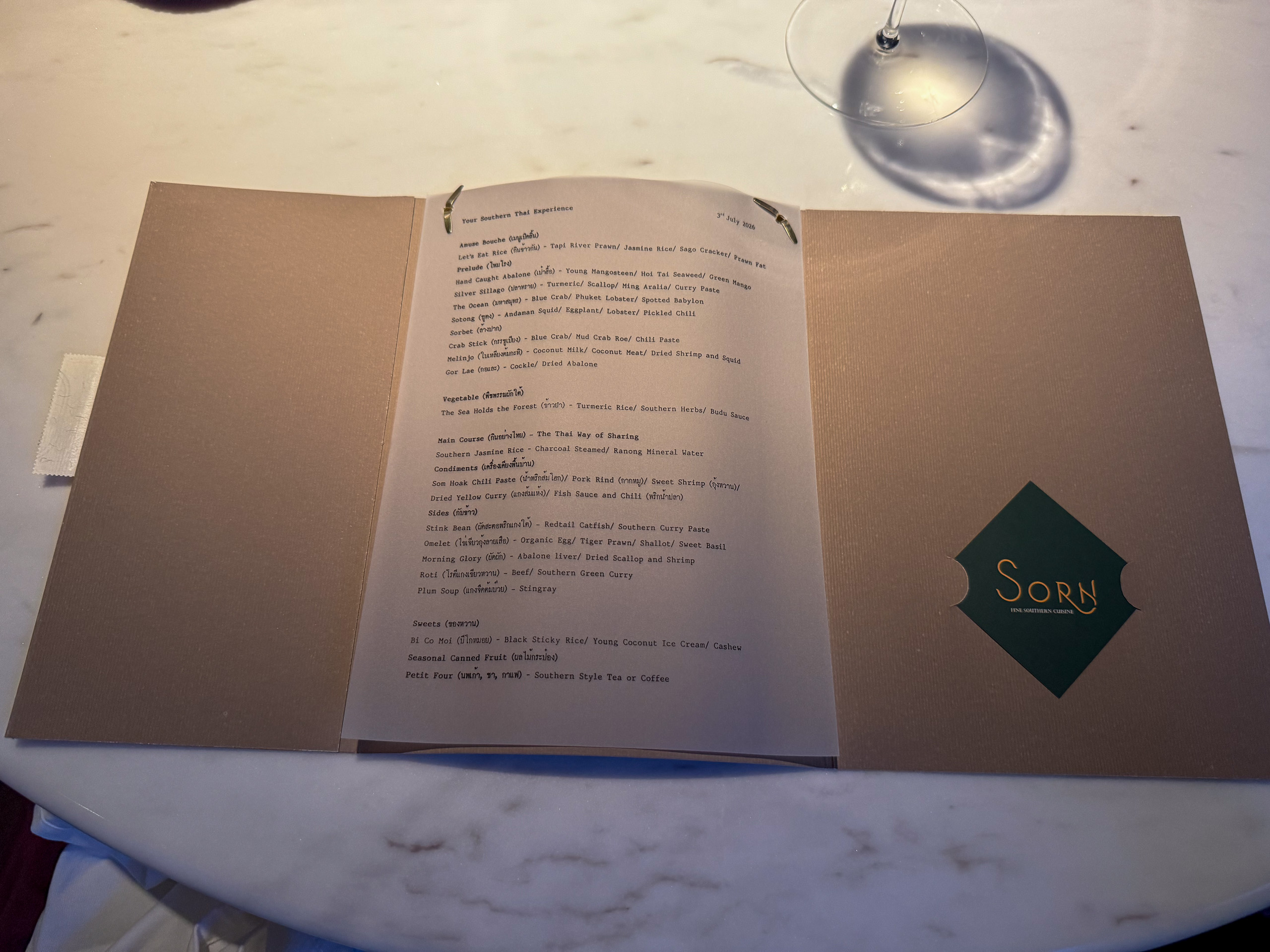
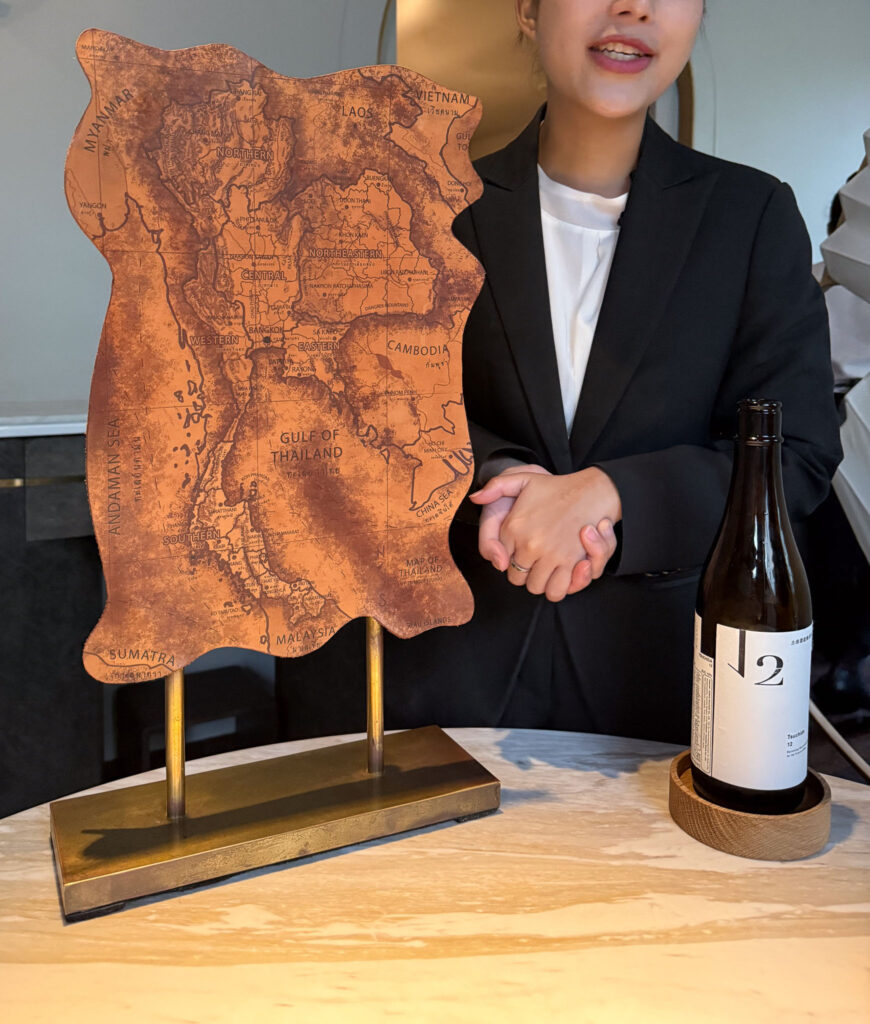
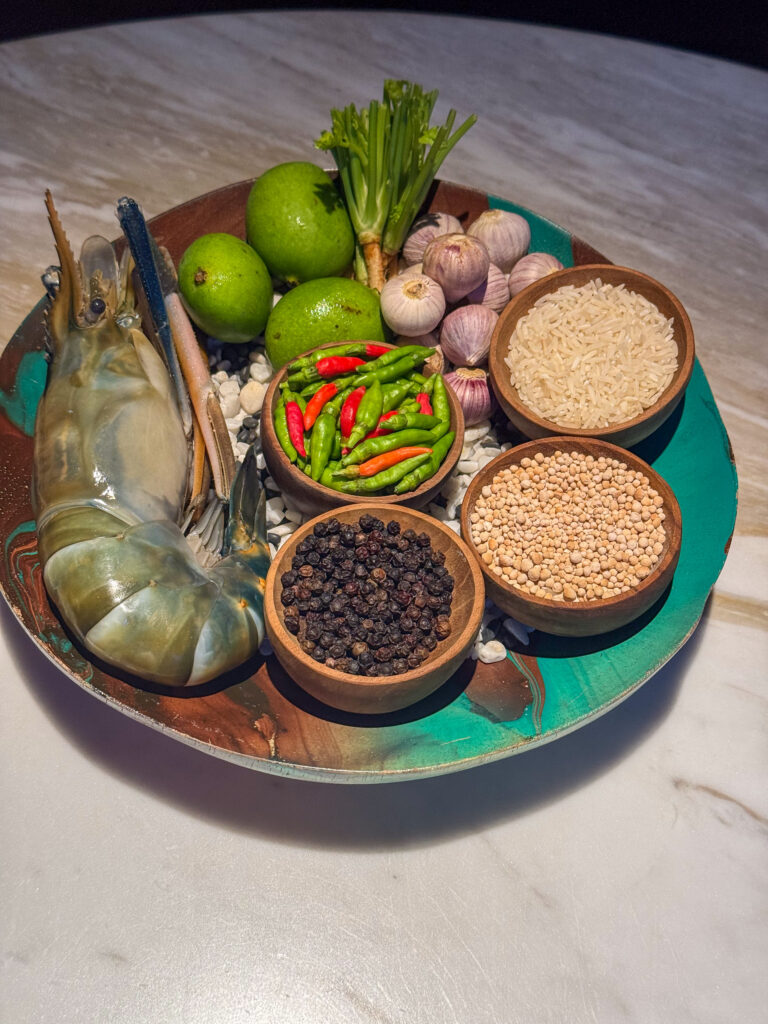
The room is small and there is one seating a night. A board on the wall names the individual people who source for the kitchen — the prawns from the Tapi river, the crab from Surat Thani, the rice from Nakhon Si Thammarat — which is the argument made as an object: not knowing where the ingredients come from, but knowing who they come from. Read it before you sit down. The room runs cold; bring a layer.
How the meal runs
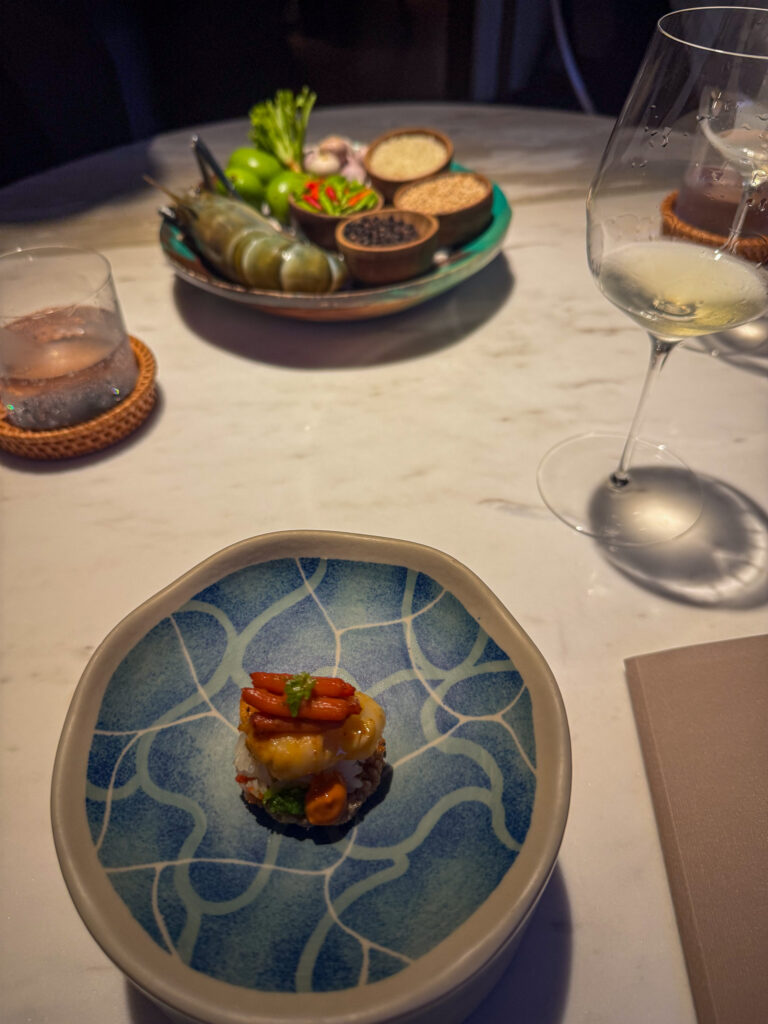
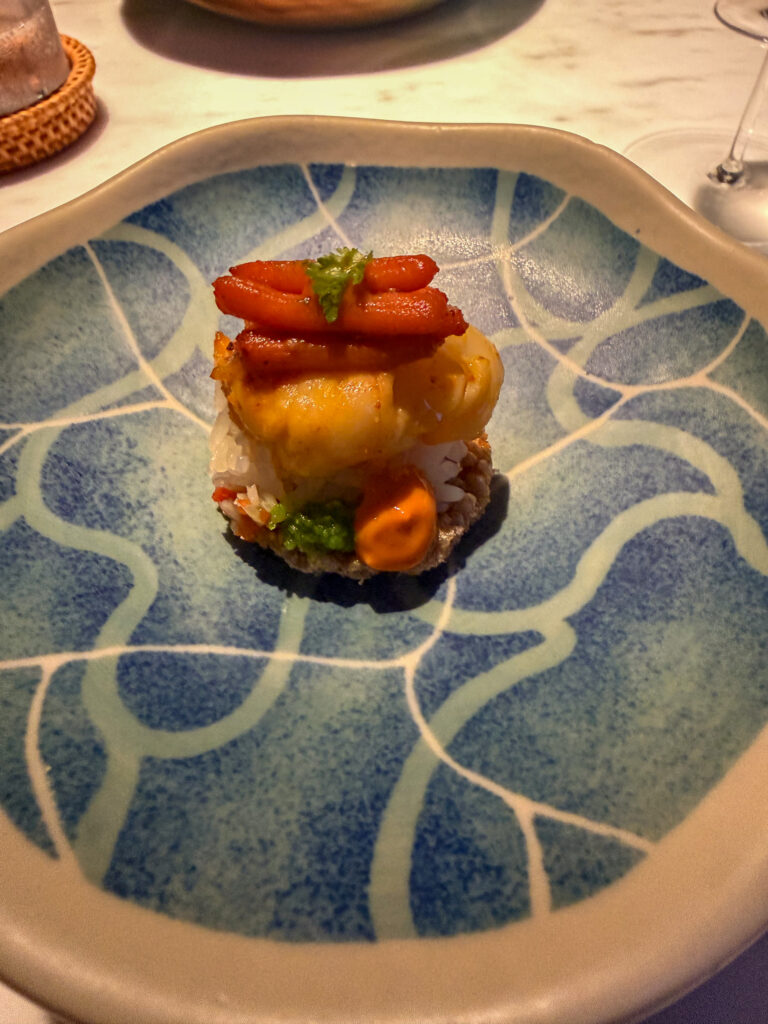
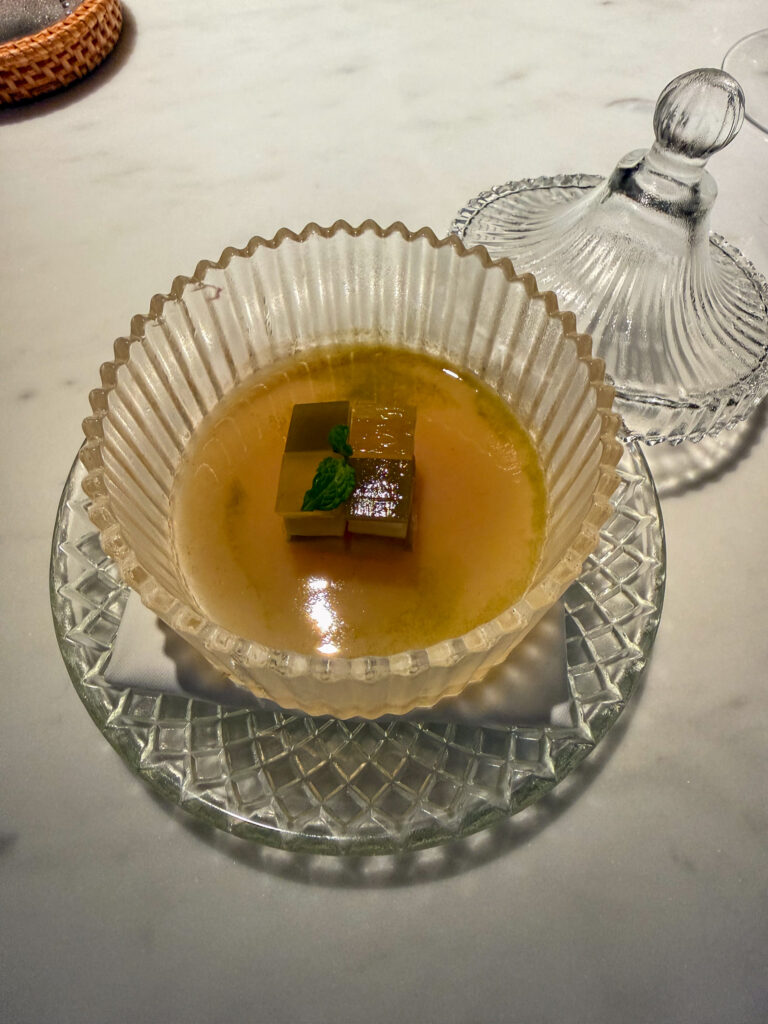
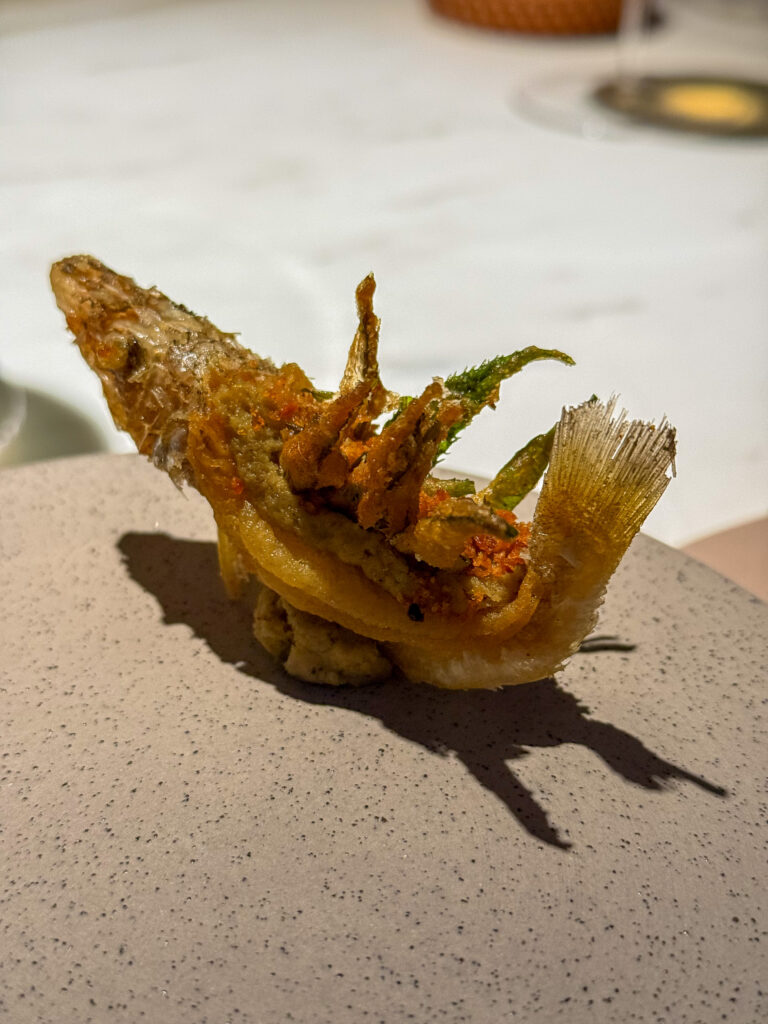
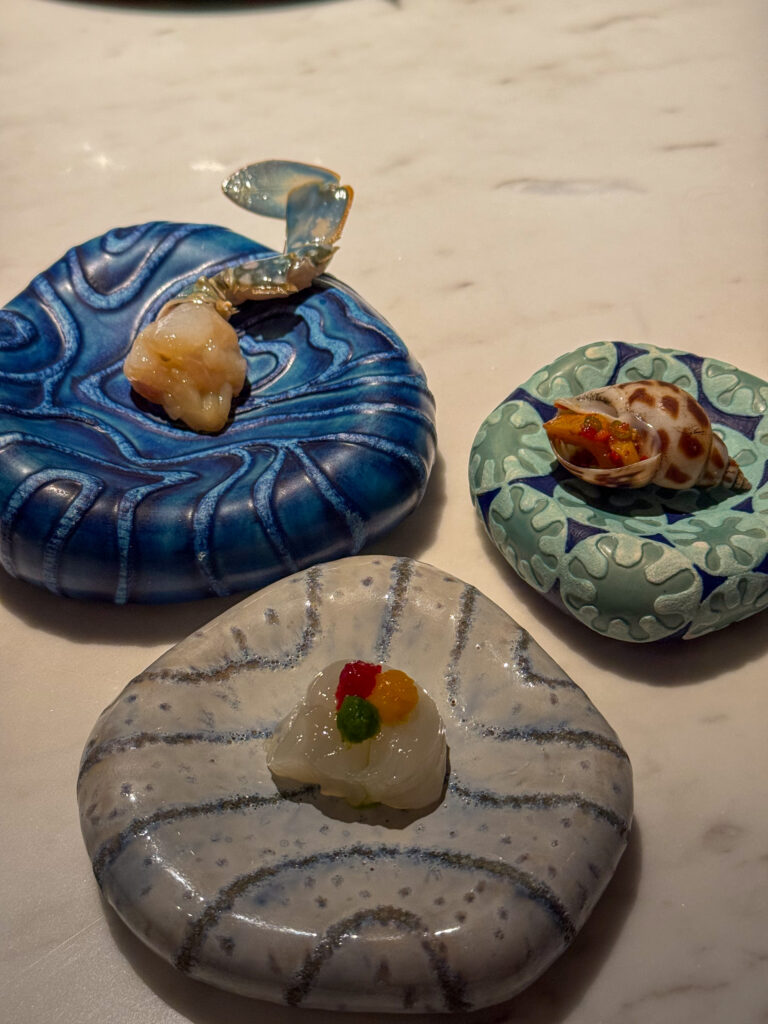
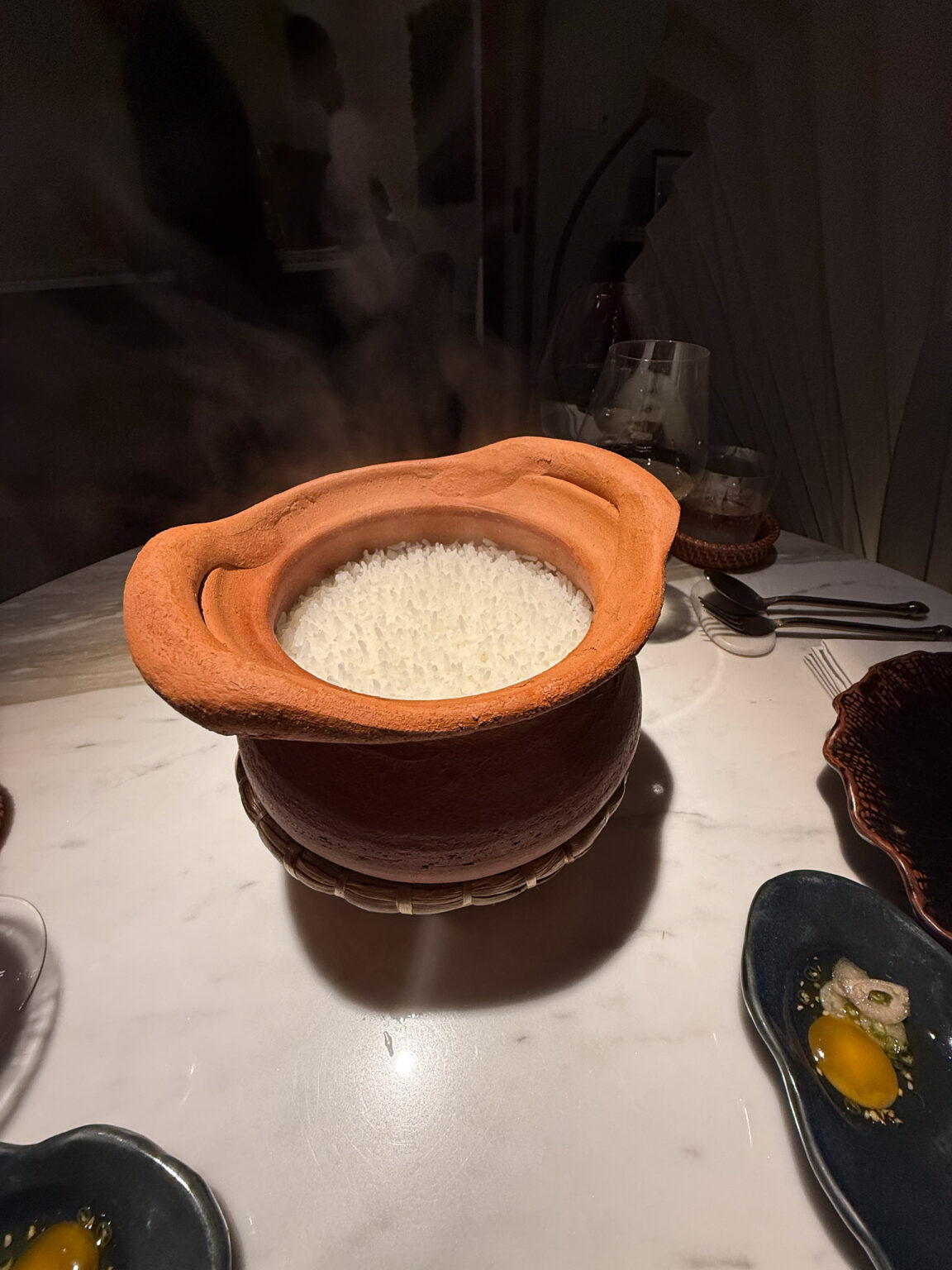
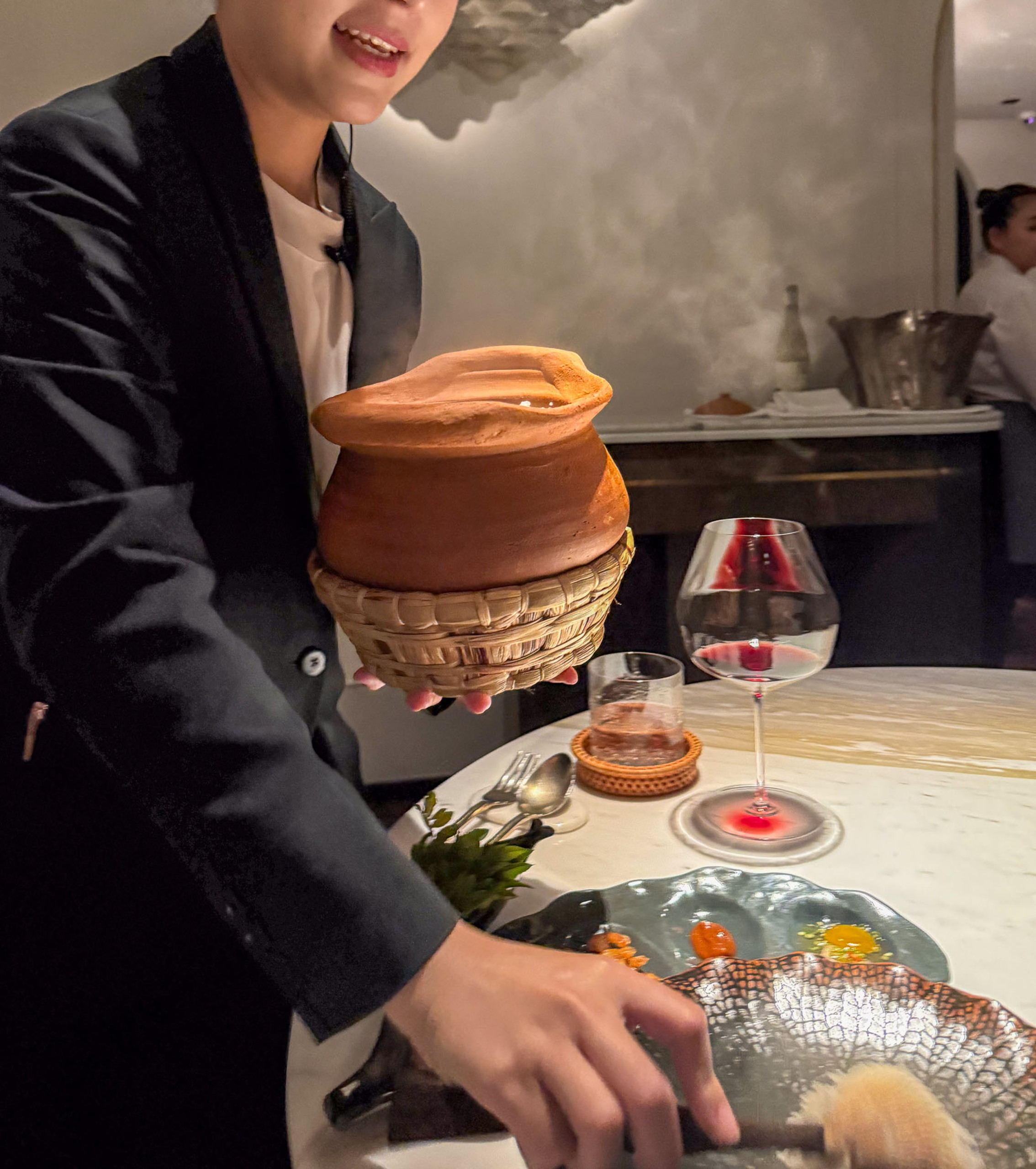
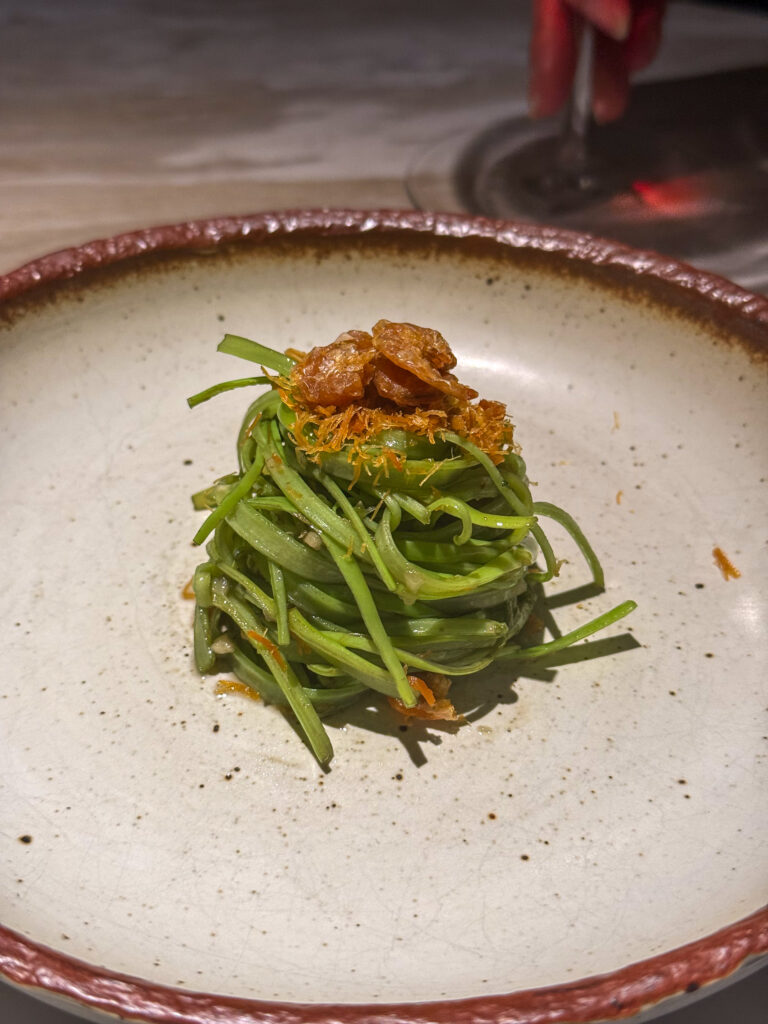
Nobody agrees how many courses this is, and the disagreement is really about the unit, because one course can arrive as three plates. Expect something north of twenty, across about three hours. The first act was individually plated and small: raw and lightly worked seafood, a sequence the menu calls the Ocean, a sorbet to clear. Then it pivoted. Rice arrived from a clay pot with a spread of condiments — chilli pastes, pork rinds, dried stingray, sweet shrimp, quail egg, herbs — and the southern classics came out family-style: soup, curry, stir-fry, something fried. Then desserts, then the trolley.
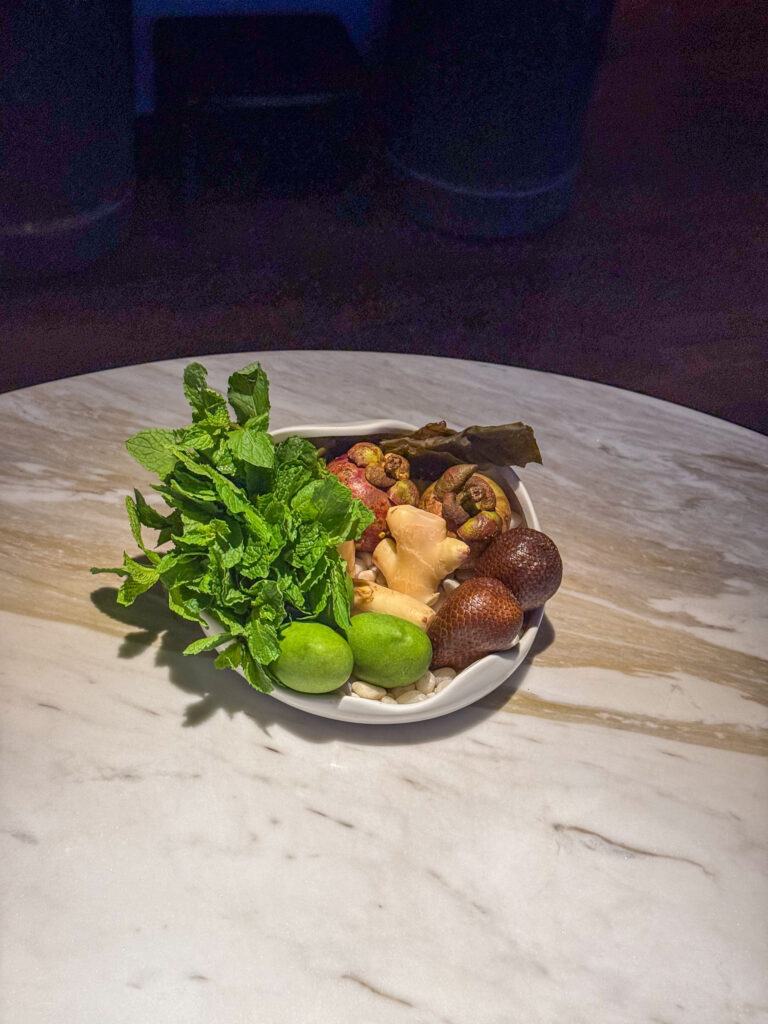
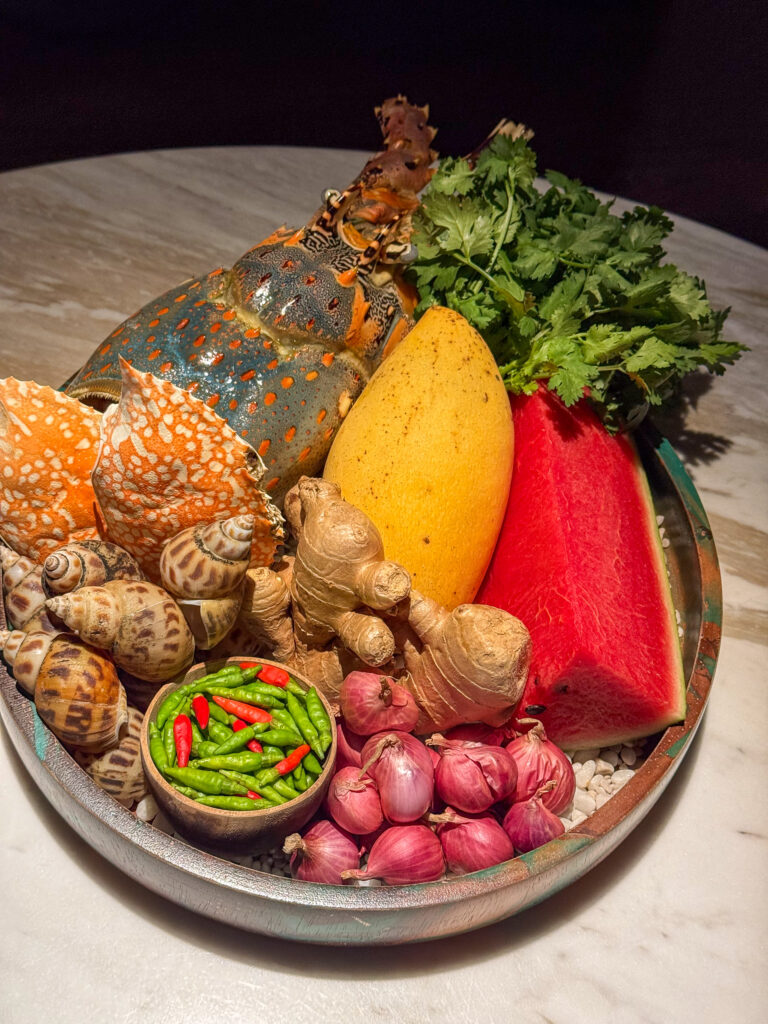
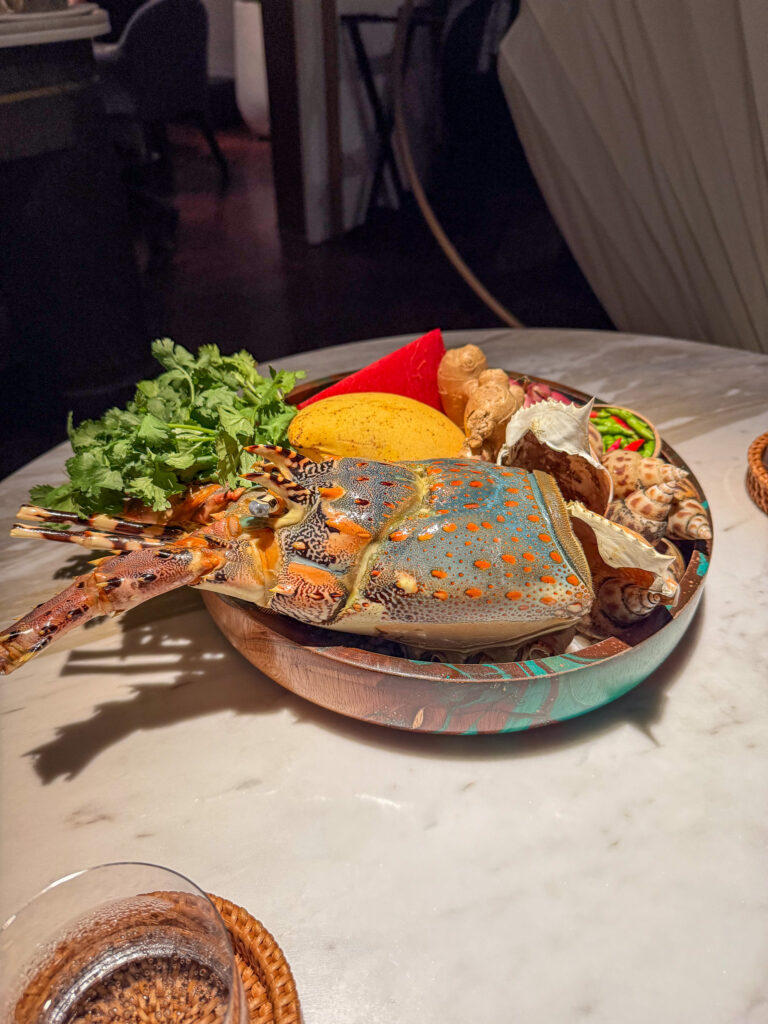
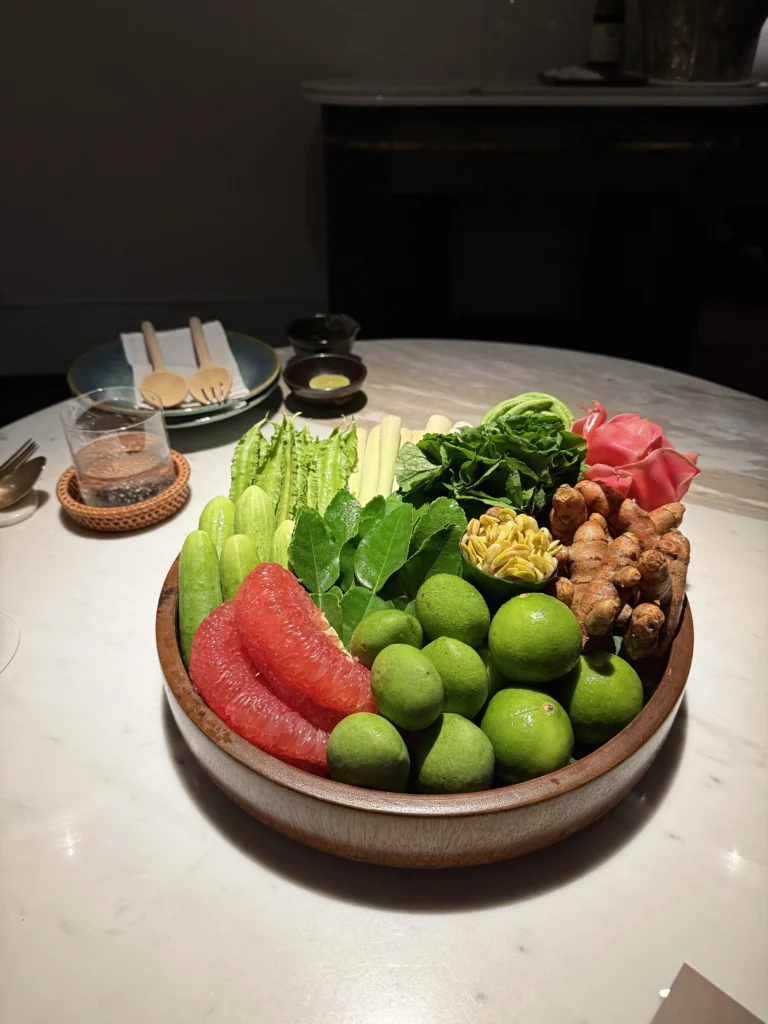
And through it all, the ritual I have not seen done better anywhere: before a dish arrived, they showed you, on a platter, a large and beautiful spread of the actual ingredients of what you were about to be offered. It is theatrical and it adds an element most tasting menus never find — anticipation and knowledge combined. It is simply sublime.
Southern Thai cooking is the most aggressively seasoned food in the country, and the kitchen asks about heat before service and sets it per person, anywhere from full southern to mild. Two things are worth knowing. The curries are made in batch and cannot be turned down, and they are the hottest things on the menu. And mild here is still, by most standards, hot. I said medium, the way you say it at home. The chef nodded the way a doctor nods.
The pace is quick, and it is deliberate rather than careless: a lot of these dishes are temperature-critical and are meant to reach you fast. The descriptions come just as quickly, and if you want to hear one twice you may be pointed at the printed menu instead. You will be too full well before the trolley.
Three dishes that mattered
The rice. It is the centre of gravity here, not a side dish: southern jasmine cooked in a clay pot over charcoal, in water brought up from the south — and like a different beast from any jasmine rice I have had before or since. It was the rice of angels. Everything alongside is built to be eaten with it, which is why the middle of the meal looks less like fine dining than the opening did. That is deliberate.
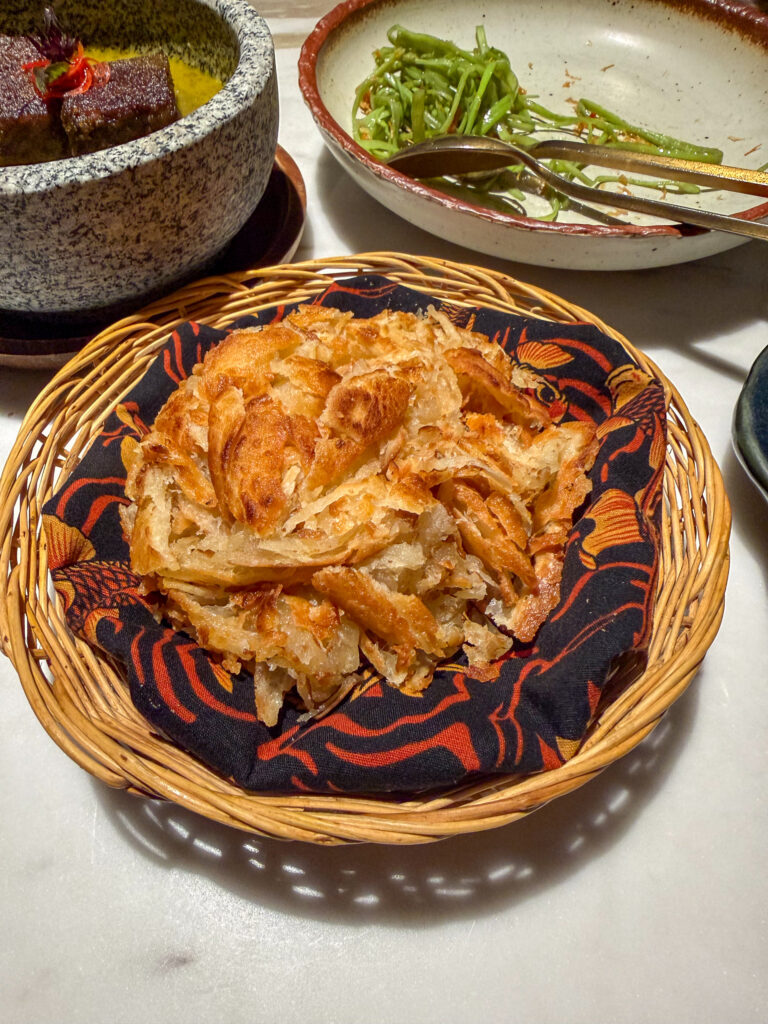
The green curry, beside roti. Save room for it. The intensity in this food comes from a time when people foraged and travel took days — the stronger the paste, the more rice it could carry — and that logic is still on the plate. Every chilli paste in the house is pounded by hand, and you can taste the difference in a way that is hard to explain and easy to notice.
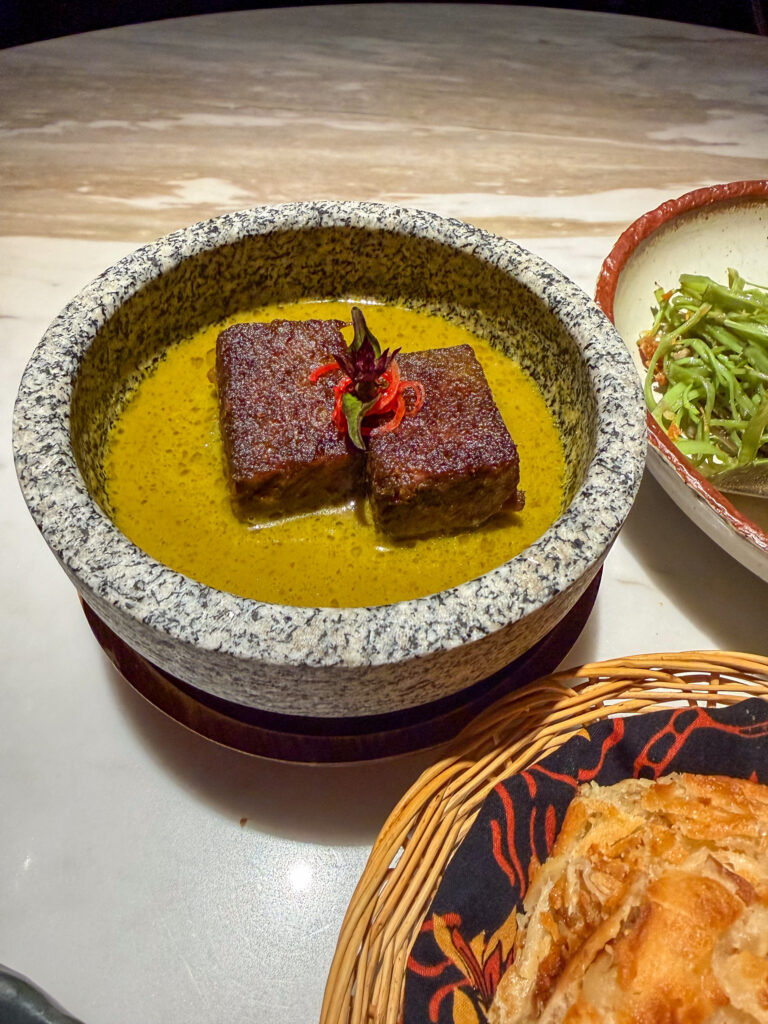
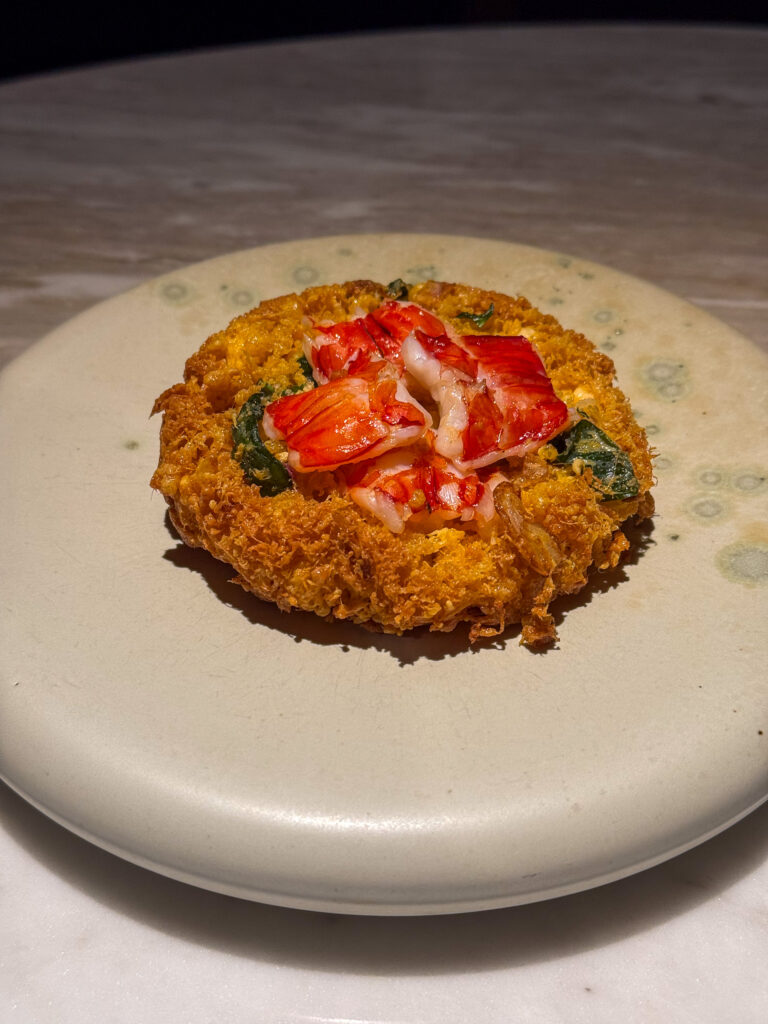
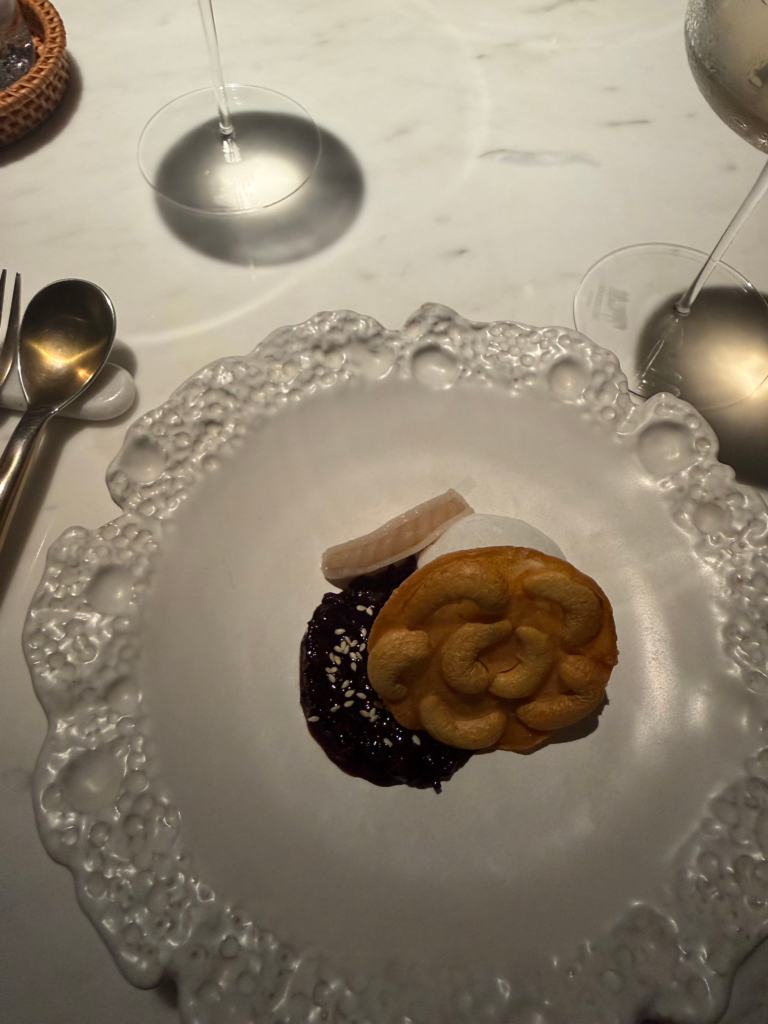
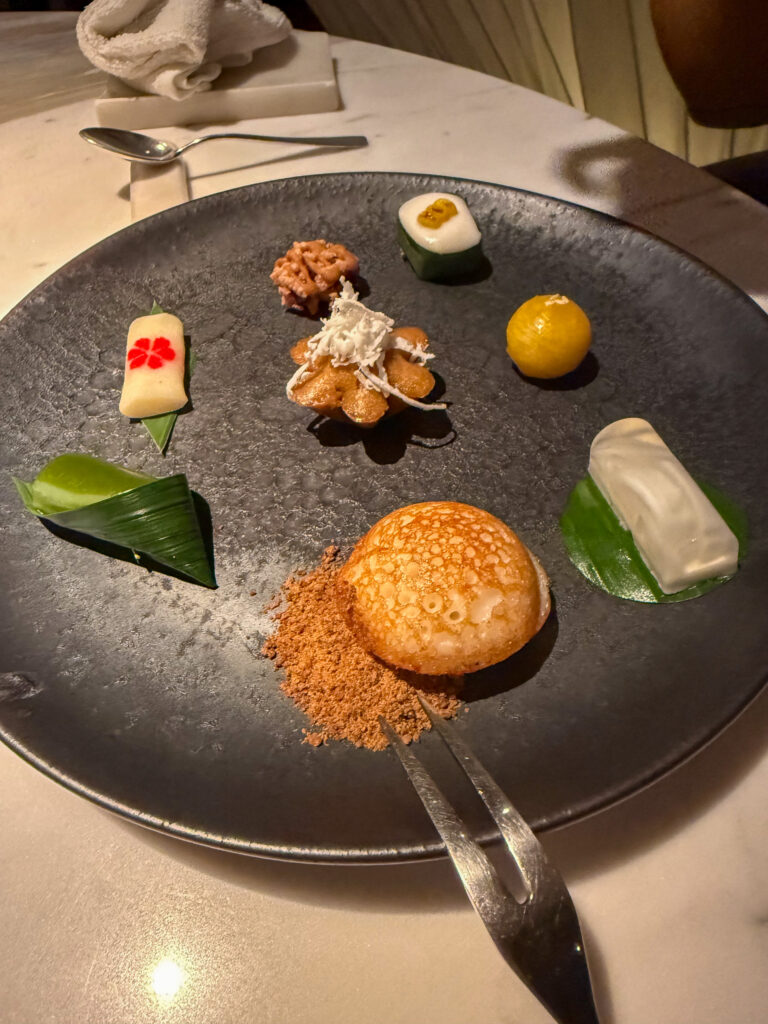
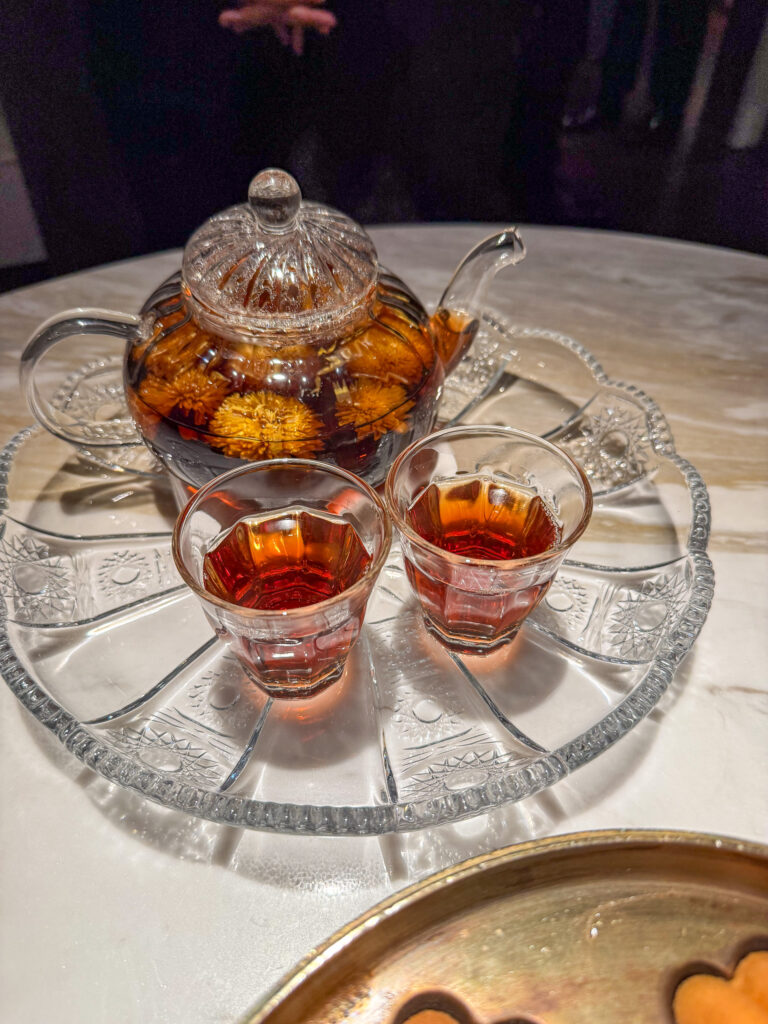
The braised meat in yellow curry, served in a granite mortar, and the crisp golden omelette built around shellfish and greens from the family-style half of the meal. Then the last act: black sticky rice with sesame, coconut ice cream and a cashew wafer, and a trolley carrying more petits fours than anyone can reasonably eat, with no expectation that you stop at one. Flowering chrysanthemum tea to close, poured at the table.
The glass
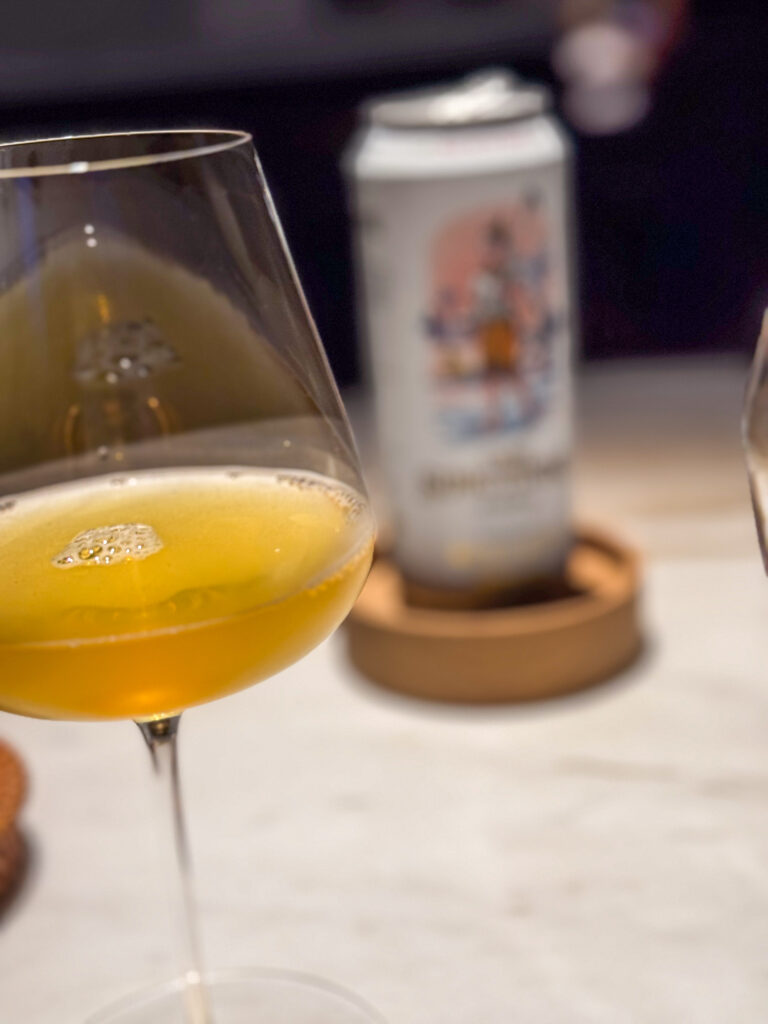
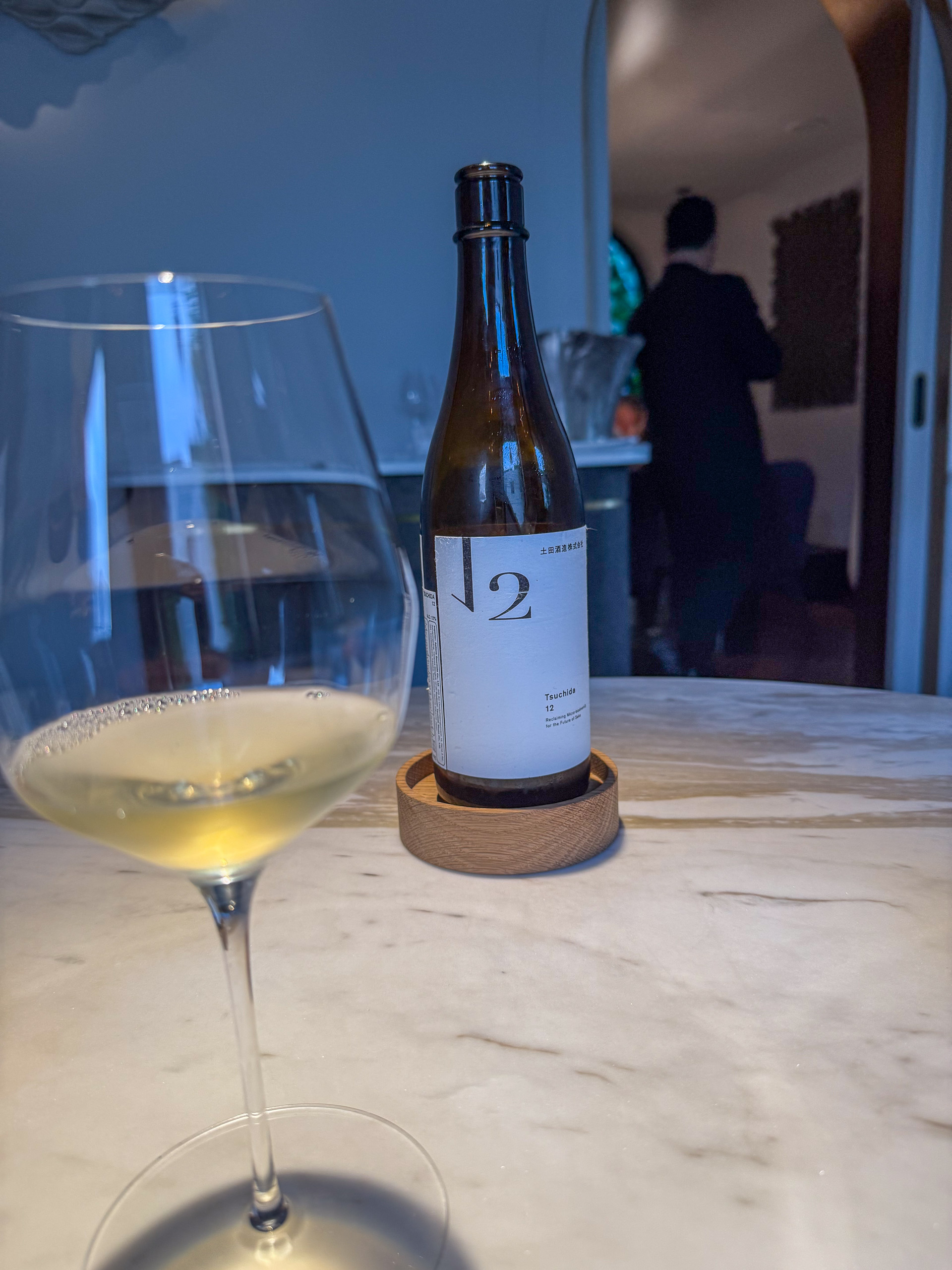
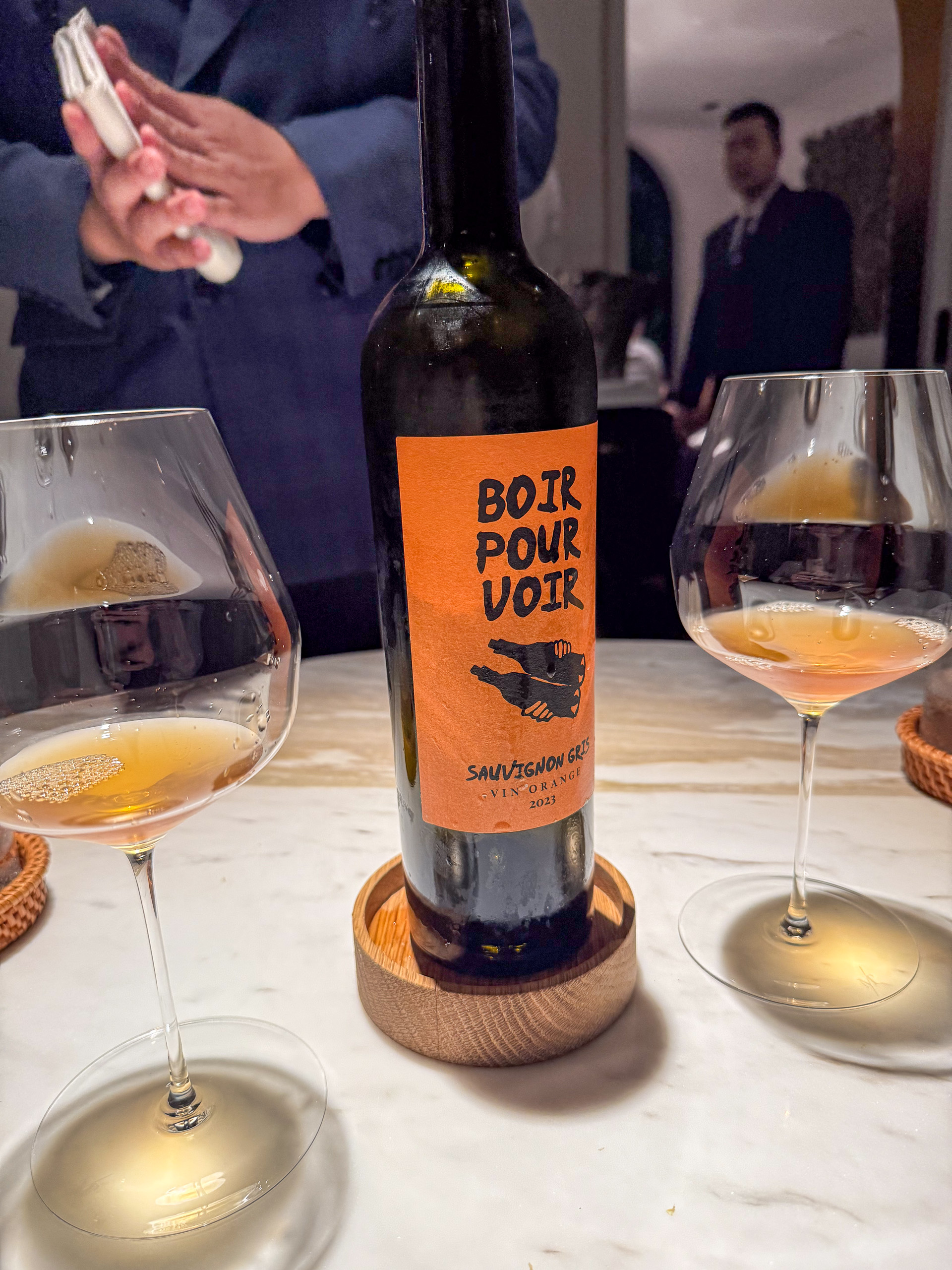
Two wine pairings, six glasses and nine, and the shorter one is not all wine. Drinks are separate from the menu.
Booking reality
There are two ways in. From outside Thailand you email the restaurant from midnight Bangkok time on the fifteenth, for the following month. Everyone else goes online at noon on the twenty-fifth, again for the month ahead. The restaurant has run other systems and the guidance online contradicts itself, so email early, set one alarm for the fifteenth and another for noon on the twenty-fifth, and check the restaurant’s own channels the week before.
What you buy at that moment is not a reservation in the ordinary sense. The terms are hard: final on confirmation, no rescheduling, no cancellation. Arrive more than thirty minutes late and the booking is void, which in Bangkok traffic is a real risk; allow far more time than the map suggests.
Turn up with fewer people than you booked and the empty seats still count. Book for four rather than two: there are more tables that size.
And this needs saying plainly, because the commitment is final before you find out: there is no vegetarian or vegan menu, no shellfish allergy of any degree can be accommodated, and eight core ingredients — coriander root, onion, garlic, peppercorns, shrimp paste, coconut, chilli and fish sauce — will not be substituted. It is published on the same page that takes your card.
Who it is for, and who it is not
Come if this dinner is going to shape the trip, and book it before you book the flights. Come if you want one kitchen making one argument for three hours about the food of a region most visitors never eat. Answer the spice question truthfully when it comes. Budget three hours. Smart and unfussy is right; there is no dress code.
Look elsewhere if anyone in the party is vegetarian, allergic to shellfish or unable to eat any of the eight, if anyone might not make the date, or if you want a table this week.
The hardest table in the country, and the best meal of my life.
Bottom line
Sorn is the best restaurant in Thailand, the hardest table in it, and — to date — the best meal of my life. Set two alarms, book for four, say yes to the heat. Do what you must to get there. MUST DO BEFORE DEATH.
See the full set: Sorn — in frames. More Bangkok: the Bangkok set.
The Sorn gallery
Every photo on this site is my own, shot on the night. Slide through →