PROVIDENCIALES, TURKS & CAICOS · BEACH GUIDE · 8 MIN READ
The Bight Reef: The Best Thing on Providenciales Is Free
The most popular snorkelling site in the country runs a hundred metres out from the sand and asks nothing of you, and the bar standing on the dune above it asks rather a lot.
By J.C. Mercer
- Where The Bight, Providenciales. The reef runs about a hundred metres out from the sand
- The reef Free. No ticket, no operator and no equipment hire on the sand
- Getting in Two public accesses, Penn’s Road and Stubb’s Road
- The bar Somewhere Café & Lounge, independently run, on the dune in front of Coral Gardens Resort
- How it was booked The way any other guest would
Every meal on this site is booked the way any other guest would book it.
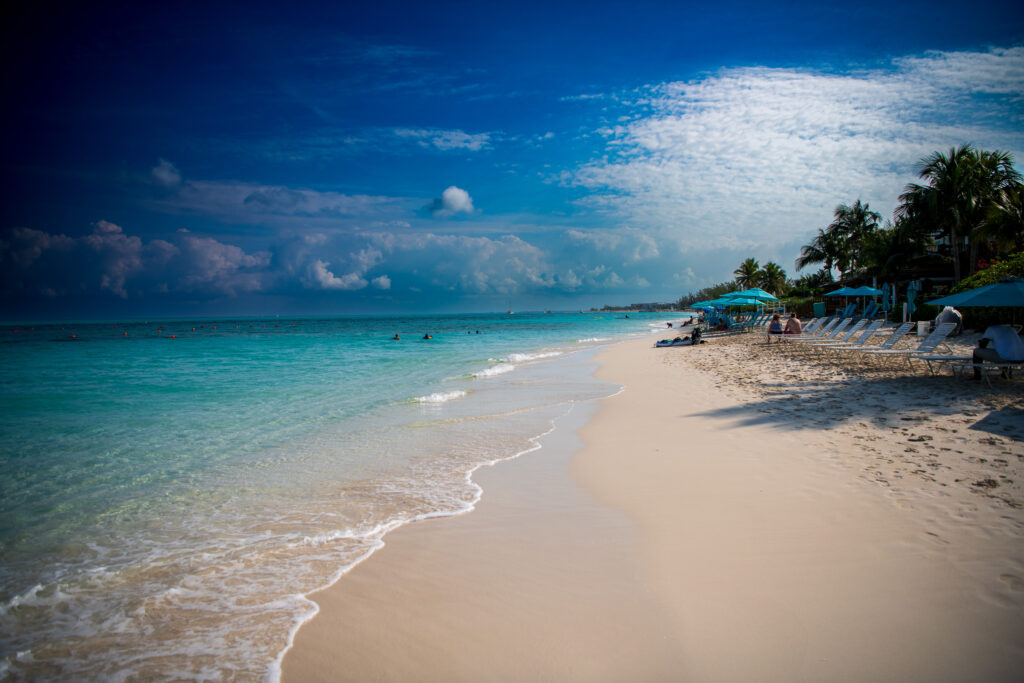
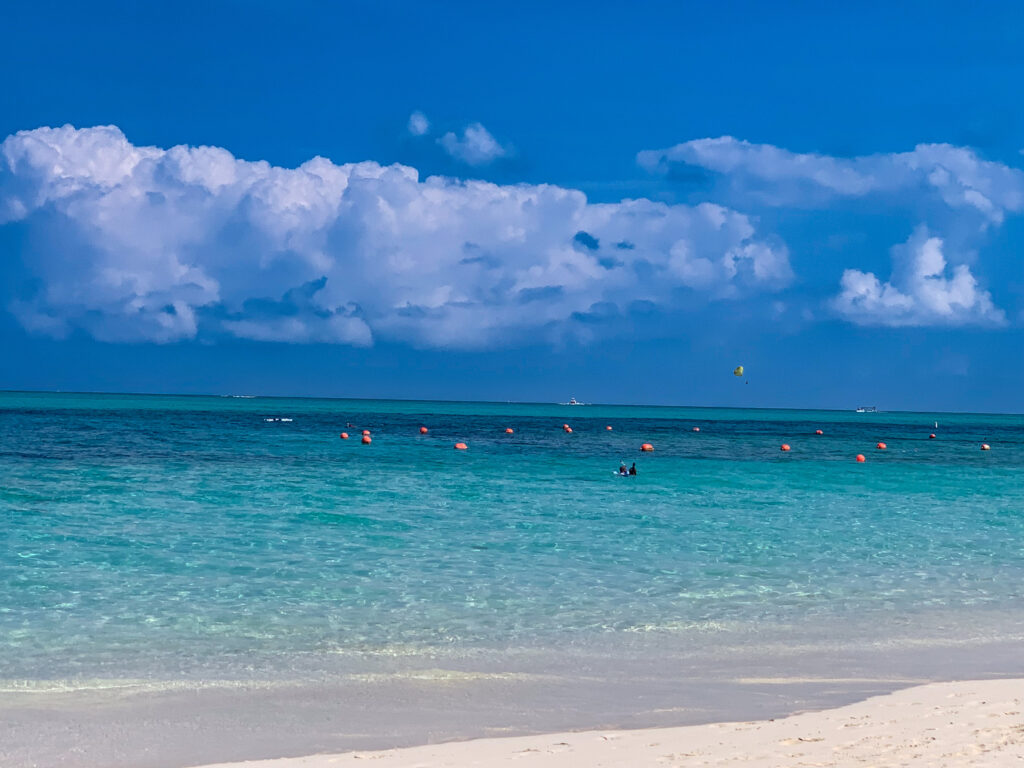
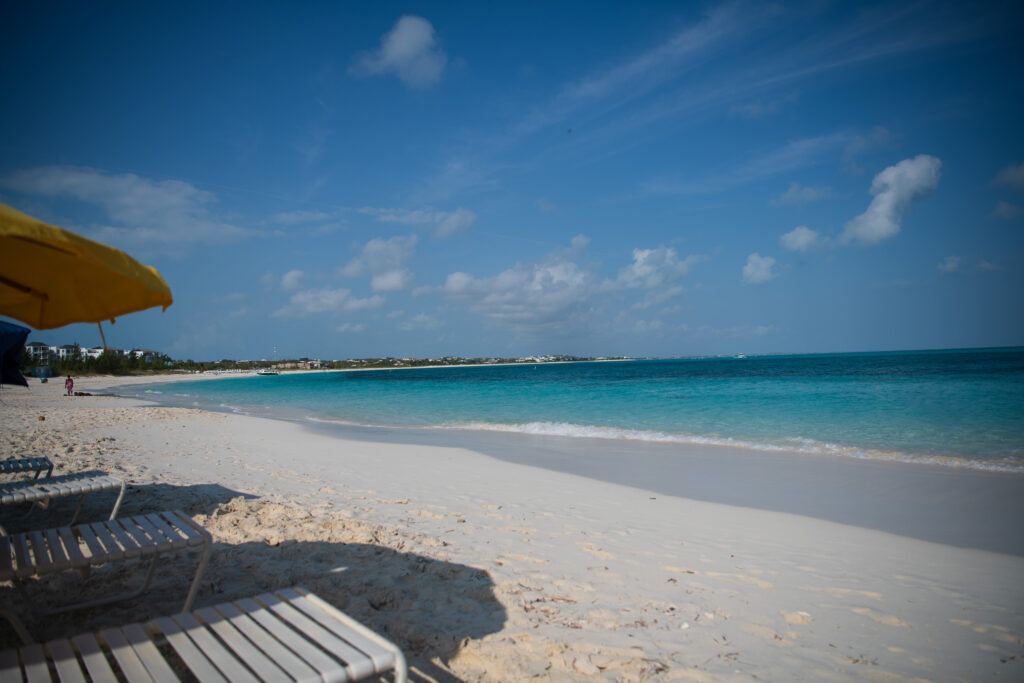
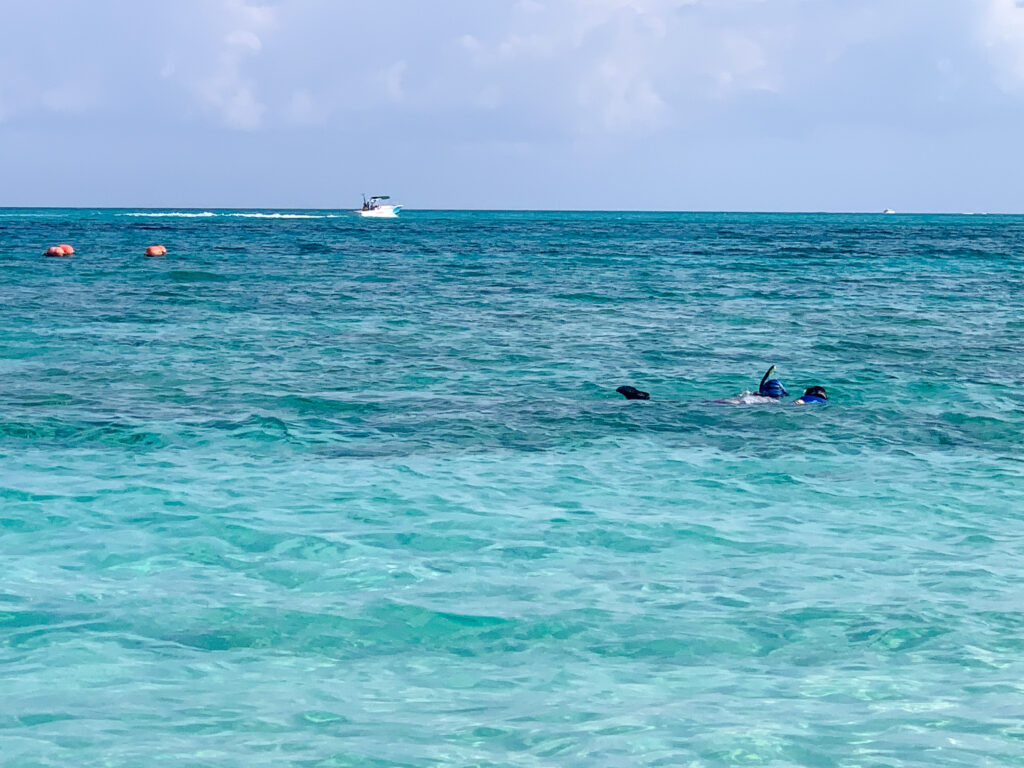
Three hundred and fifty feet off the beach at the western end of Providenciales’ north shore, a single ridge of coral runs out from the sand. It is called the Bight Reef, or Coral Gardens, and it is the most popular snorkelling site in the Turks and Caicos Islands. There is no boat, no operator, no ticket and no gate. You park on Penn’s Road, walk between two low buildings onto the sand, put your face in the water, and swim.
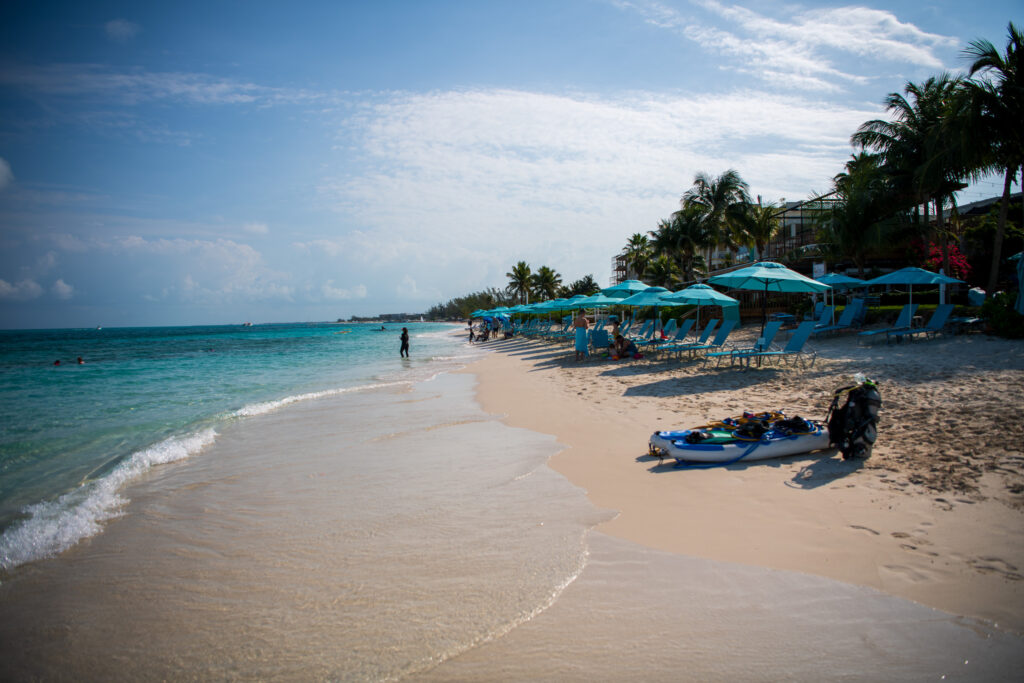
That is the whole proposition, and it is why everything else on this stretch exists: the loungers, the resort blocks set back behind the sea grape, and the two-storey timber bar standing directly on the dune above the entry point. The bar is called Somewhere Café & Lounge. It is extremely good at being where it is. It is also the only part of the day with a menu, and the setting is doing most of the work on it.
Both of those things are worth knowing before you come, and they pull in opposite directions.
The beach here is not Grace Bay
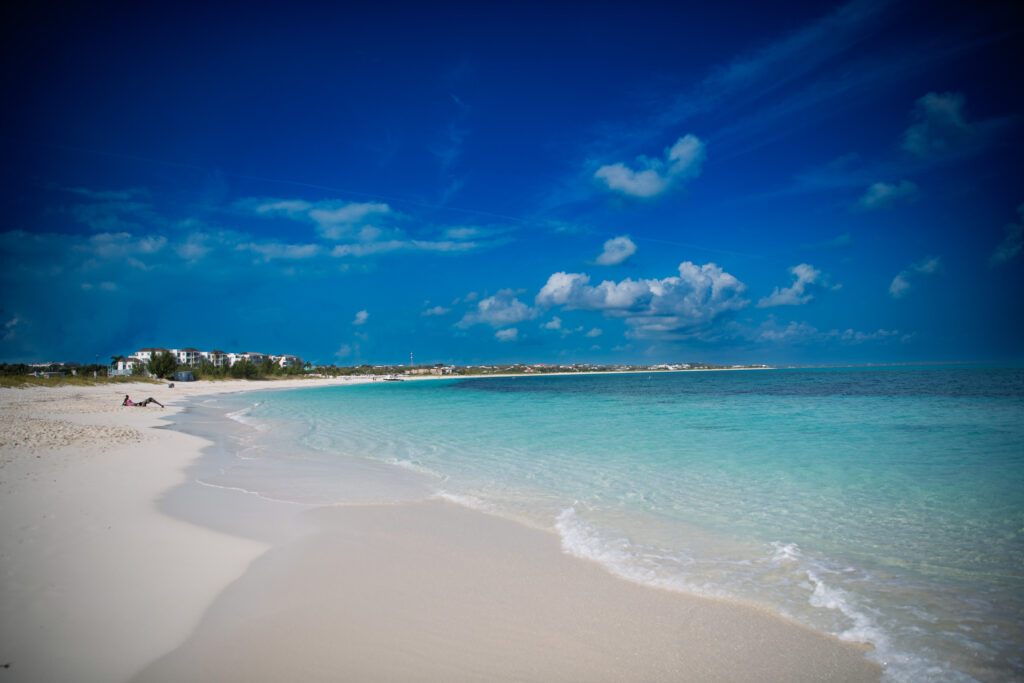
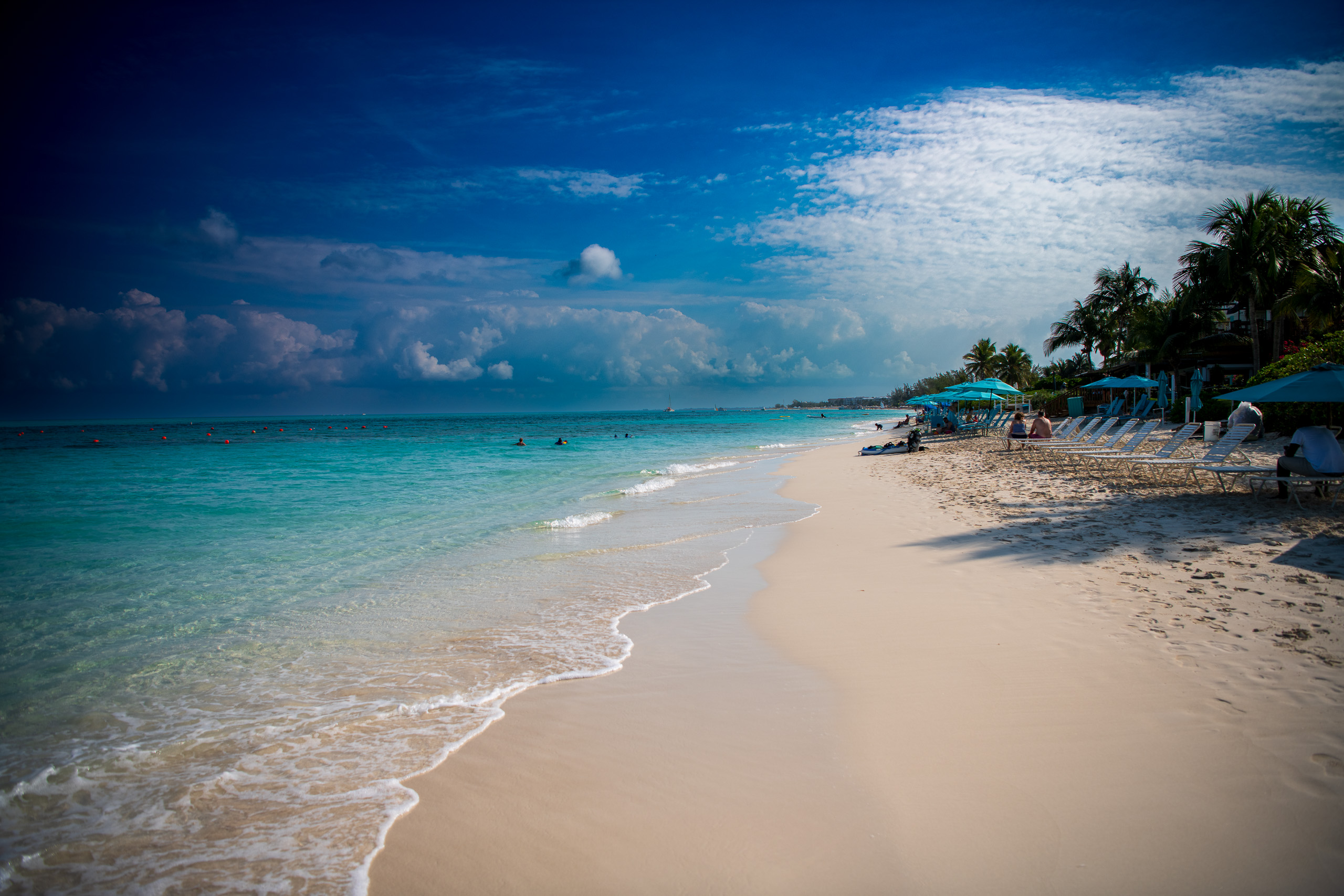
Almost everything written about this sand calls it Grace Bay. It is not, quite. Grace Bay proper runs about three miles along the north coast, lined with the big resort names, and its western boundary is the Bight Reef. From the reef onward the sand becomes the Bight Beach, which continues another mile and a half to Smith’s Reef. The islands’ own tourist board is blunt about the elision: many of the villas and hotels on the Bight claim to be on Grace Bay.
The distinction is not pedantry, because for what most people come here to do the Bight is the better half. It sits deeper in the lee of the trade winds, so the water is calmer and clearer more of the time. It has the island’s best shore-entry reef at its eastern end, and seagrass beds further west that hold stingrays, turtles and nurse sharks. It is not the beach the large chains front, so there are fewer loungers per hundred metres of sand. What it lacks is the resort strip’s choice of somewhere to eat, which is exactly why the two casual places sitting in the dune at the reef do the trade they do.
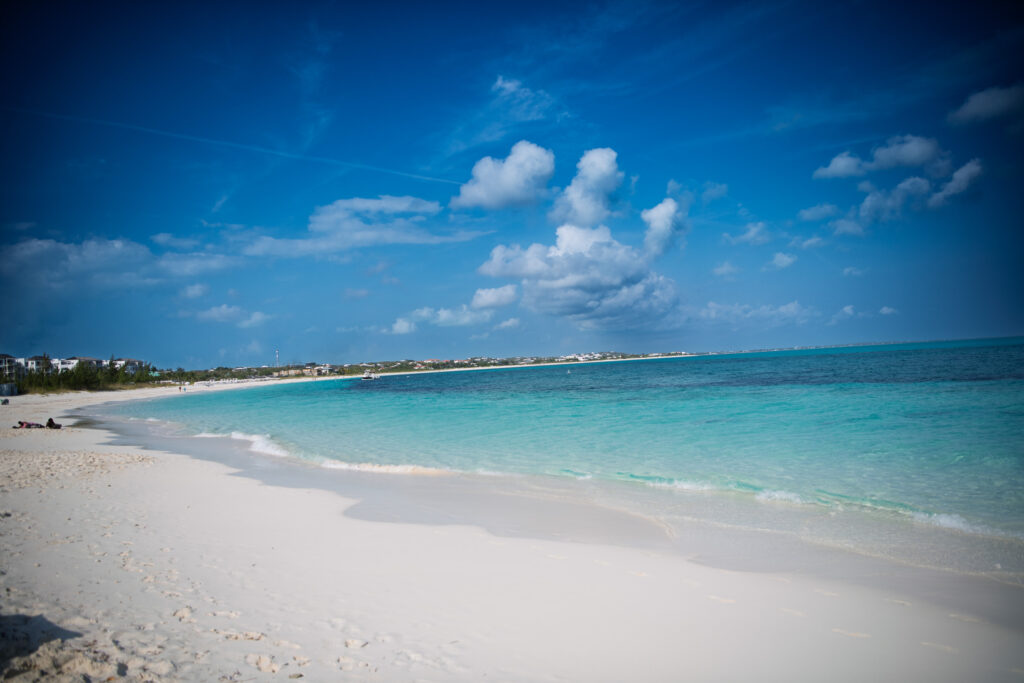
The whole of this coast is shielded from Atlantic swell by a barrier reef about a mile offshore. That is why the water shelves so gently, and why it holds its colour. It is also why the beach is one of the few in the Caribbean that reliably escapes the sargassum that lands elsewhere between June and November: the prevailing east and south-east winds carry it away offshore rather than onto the sand.
A hundred metres of coral, and what lives on it
The reef is one main ridge, extending about 350 feet out from the beach. Inshore it lies in three feet of water, which is the source of both its appeal and its problem. At its outer reaches it drops away to fifteen or twenty feet. All of it sits inside Princess Alexandra National Park: no fishing, no collecting shell or coral, nothing touched, and the buoy-marked conservation zone is a boundary rather than a swimming lane.
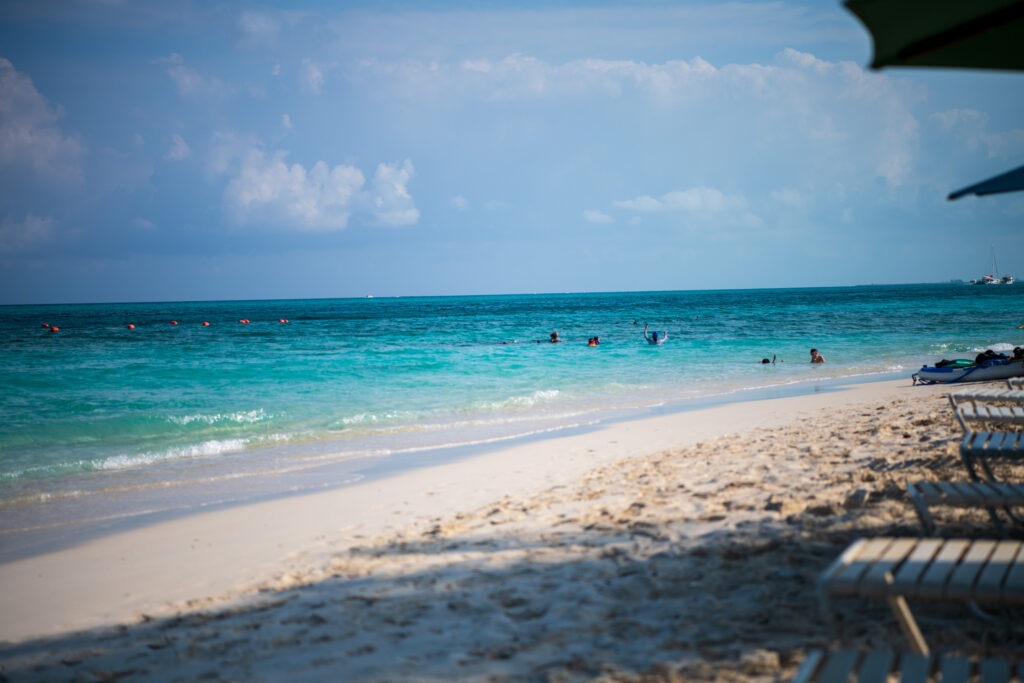
What you will see on an ordinary morning: parrotfish, grouper, angelfish, snapper and triggerfish, with green turtles, stingrays, spotted eagle rays and nurse sharks all regular enough that nobody treats them as an event. The animals here are noticeably more approachable than on reefs that see fewer people, which cuts both ways. They are used to being looked at, and they have been looked at a great deal.
Which is the other half, and it should be said plainly: the coral is not what it was twenty years ago. Snorkeller contact and sediment from dredging have each taken something from it. It remains the best shore-entry site in the country by a wide margin, and it is also a reef that has been loved hard.
Getting in
Two free public accesses serve the reef. Coral Gardens Beach Access, on Penn’s Road, is the western one and the one with the bar on it; Stubb’s Road, at the eastern end, is usually the quieter of the two. Parking is free along the road at both. The beach chairs laid out on the sand belong to the hotels rather than to the restaurant, so if you want to sit down for the afternoon, bring something to sit on.
Conditions matter more here than the reputation suggests. The site is best with the wind under about twelve miles an hour and near high tide, when there is enough water over the shallow inshore section to swim it rather than stand in it. Early and late are when the lobsters and the lionfish come out. There are no lifeguards anywhere on this beach.
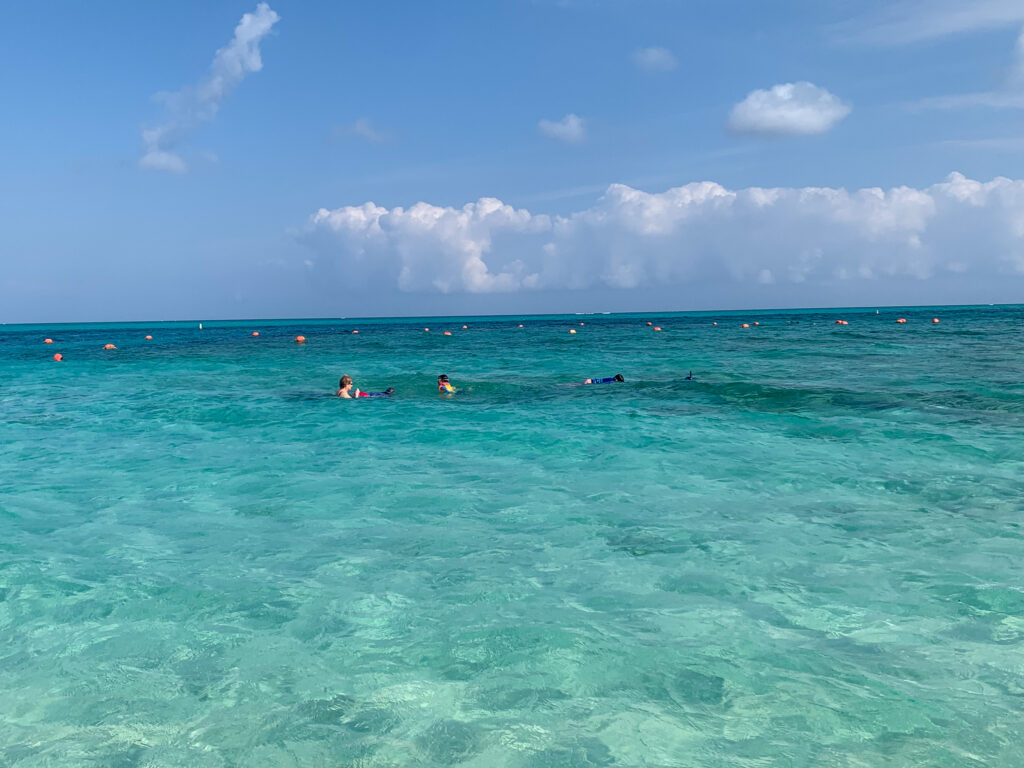
The hazards worth naming are venomous lionfish spines, occasional swarms of thimble jellyfish, and – the one the island’s own authorities are most exercised about – powerboats working outside the swim zone. There is a fifteen-mile-an-hour limit inside the national park and it is not universally observed. It is the most dangerous thing on this coast, and it has killed people.
The bar on the dune
Somewhere Café & Lounge stands directly in front of Coral Gardens Resort and is not part of it. It is independently owned and run, with its own kitchen and its own hours; the resort’s website gives it a photo gallery, the words “located on-site” and a link out. Say “at Coral Gardens” rather than “the Coral Gardens restaurant”, and do not assume anything can be charged to a room.
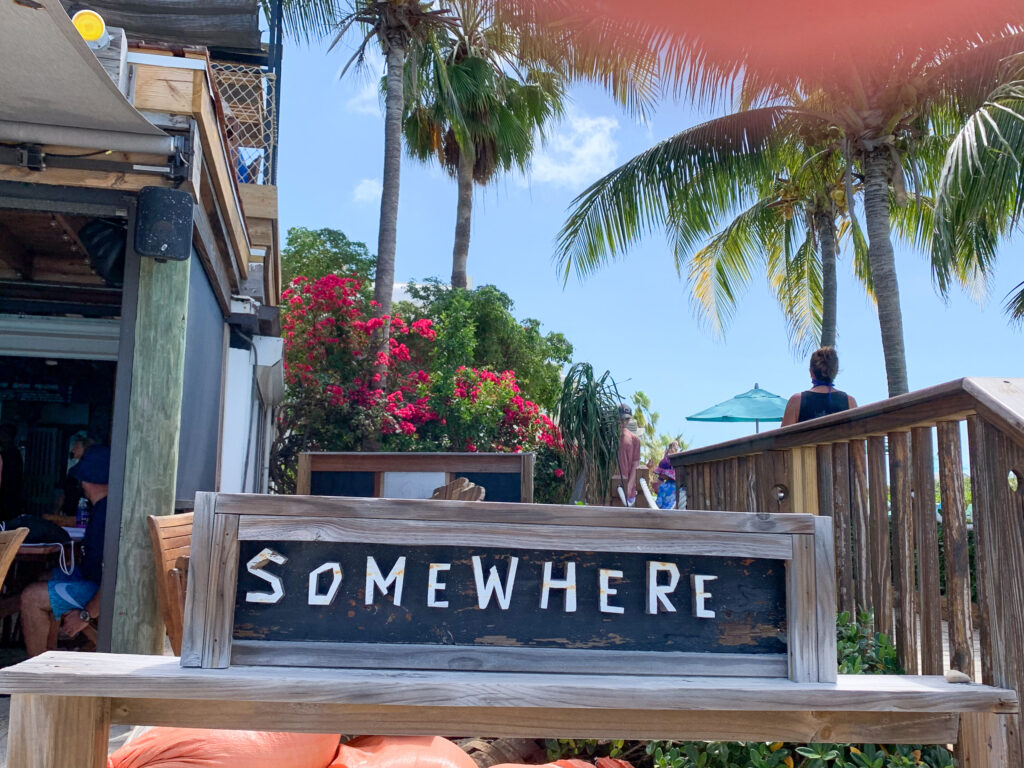
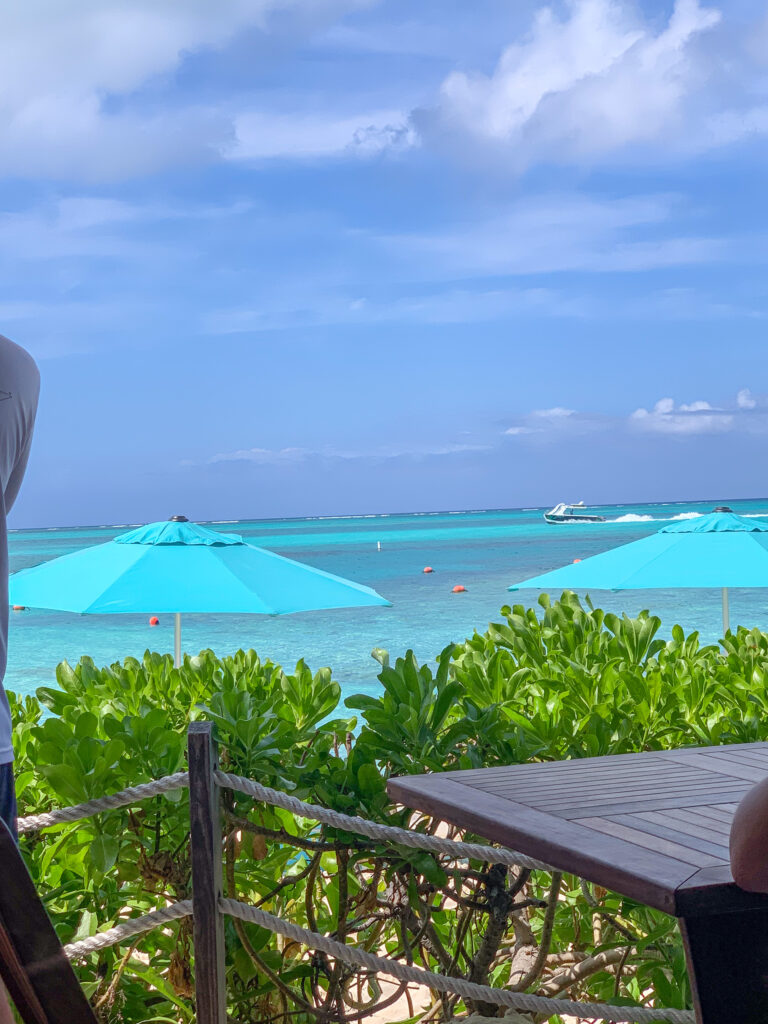
It has been trading here since around 2009 and it is the only place on this beach with two floors: a ground-level deck behind a rope rail, and an upper lounge with day beds and a second bar. Wood decking, nautical rope, teak, tiki torches. Nobody arrives dressed for it, because there is no dress code and swimwear is normal.
The kitchen is Tex-Mex, which is the venue’s own word and a more honest one than Mexican. Tacos, burritos, nachos, fajitas, ceviche, a fish sandwich, jerk chicken, carne asada. Local conch and local snapper are pushed through the format, and the fish tacos are what it is known for. Take-out is the underused move, given that the beach is twenty feet away.
Two operational things to carry with you. You cannot reserve unless there are six or more of you – everything smaller is first come, first served – and a booking is forfeited ten minutes after the hour unless the whole party is standing there. And the upper deck has its own rules: nobody under five at any time, and after four in the afternoon it is eighteen and over.
The counter-argument
The complaints about Somewhere are almost never about the setting. They are about the distance between the setting and everything else.
Front of house is the weak link, and the bar is not. Long gaps before anyone comes to the table; staff visibly gathered away from the floor; a check delivered in the middle of a meal and, more than once this year, a table asked to move on with empty tables all around it. The bartenders are the strongest thing about the service here, and they are strong.
It is also inconsistent, and the inconsistency runs inside a single week rather than across seasons. Three visits in five days will produce one near-walkout and two good evenings. Within the same month this summer the food has been excellent and it has been barely worth eating.
The signature dish is also the standing complaint, an awkward thing to carry. The fish tacos are what it is famous for and what people who have been eating them for a decade say has been thinned out: more lettuce, more cabbage, less fish.
And it is not a taco shack, whatever the driftwood sign suggests — it only dresses like one.
Know before you go
The most important thing on this page, and the thing the big listings have wrong: the bar closes completely for about six weeks from early September 2026 for maintenance. The hours you will find published almost everywhere – 8:30am to 11pm, seven days – are the winter figure, and they are wrong today.
The real off-season hours, from 10 August until late November, are 11am to 8pm, with the kitchen closing at 7pm, and closed on Tuesdays. Breakfast, weekend brunch and live music are all suspended until the winter season begins on 22 November. The venue’s own pages disagree with each other about whether the off-season ends on the 11th or the 21st of November, so if you travel in that window, phone.
The reef, of course, does not close. September is the statistical peak of the hurricane season in these islands and the bar’s calendar tracks it almost exactly: short hours as the season builds, six weeks shut across the worst of it, back for the winter. The beach itself stays clear of the sargassum that lands on the south and west of the island through the same months.
If you are coming for the water: wind under twelve miles an hour, near high tide, and go in from Stubb’s Road if the Penn’s Road end looks busy. If you are coming for lunch as well, come early or come at sunset and expect to wait, because you cannot hold a table unless there are six of you.
See the full set: Grace Bay — in frames. More Providenciales: the Sapodilla villa.
The reef asks nothing of you but the walk into the water. The bar on the dune above it charges like the view is on the plate.
The Grace Bay gallery
Every photo on this site is my own, shot on the trip. Slide through →