The Suite Report

Tag: Grace Bay

  • Sapodilla Bay vs. Grace Bay

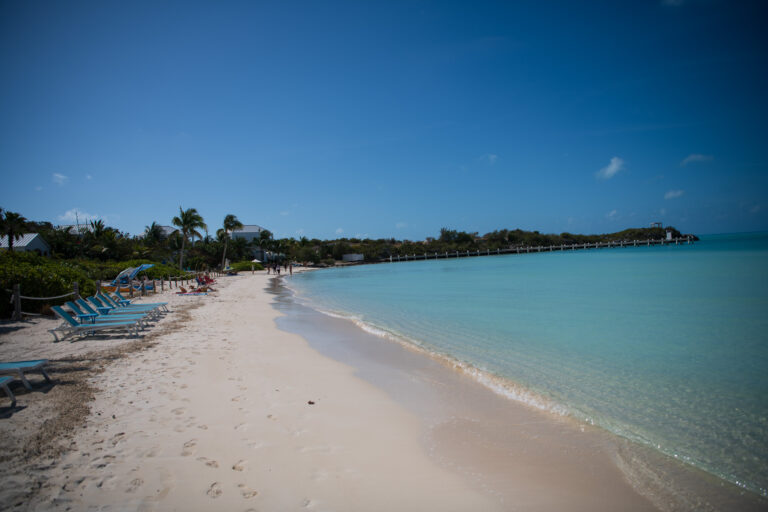
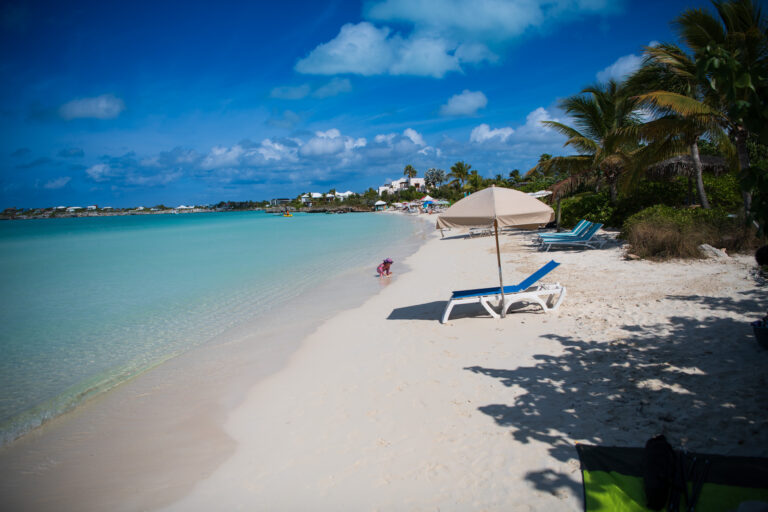
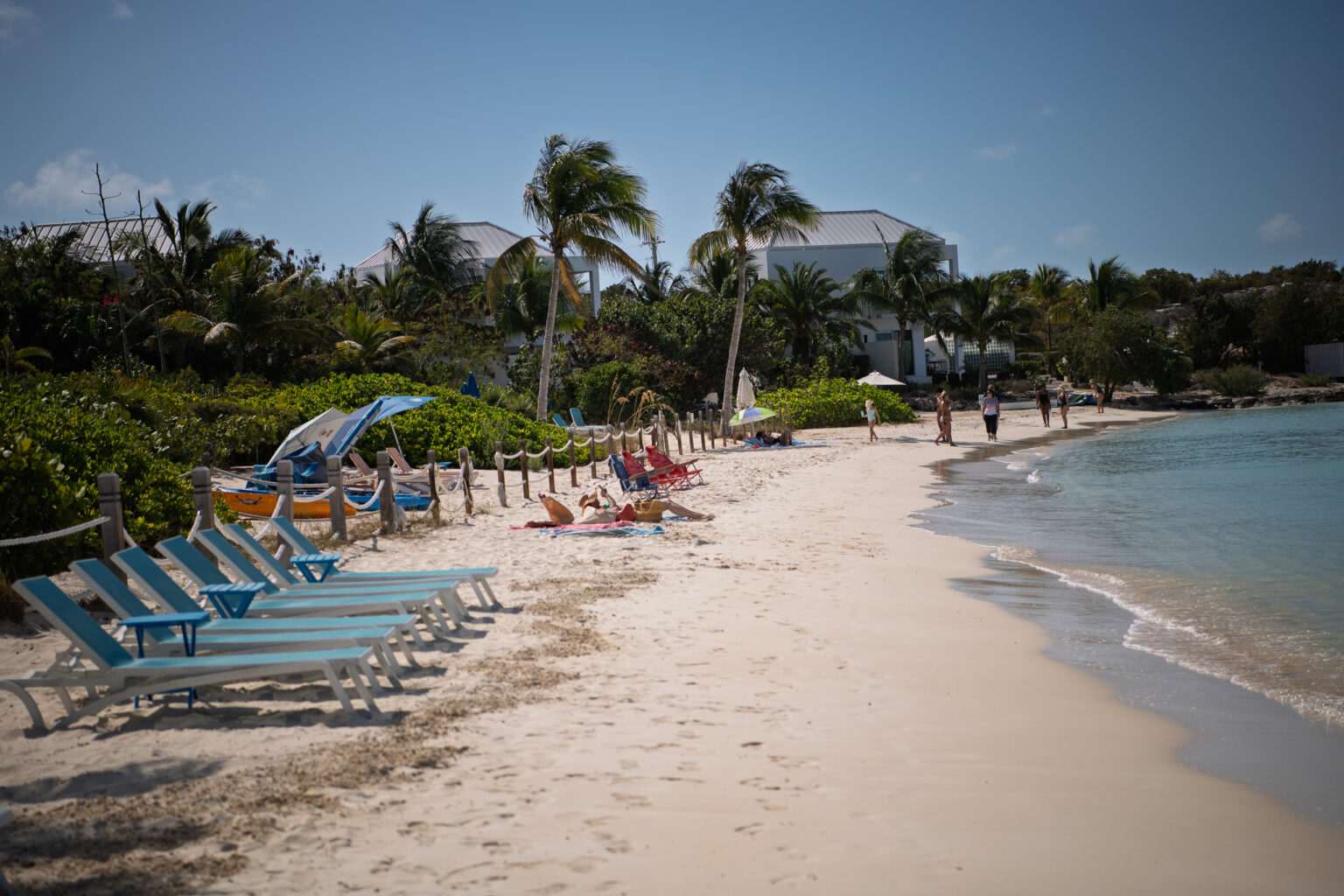
    Blue loungers and kayaks drawn up on the sand at Sapodilla Bay, white houses among the palms behind and glassy shallow water running out to the right

    PROVIDENCIALES, TURKS & CAICOS · SAPODILLA BAY vs. GRACE BAY · 5 MIN READ

    Sapodilla Bay vs. Grace Bay

    Fifteen minutes apart on the same small island: one coast has water you can swim in and somewhere to eat, the other has water you can stand in and a kitchen of your own.

    By J.C. Mercer

    Verified stay·paid in full

    Sapodilla Bay, south coastGrace Bay and the Bight, north shore
    WhereThe south-west corner of Providenciales, on high ground above the shallows, ten miles from the stripThe north coast, at the western end of the strip, on the stretch the maps call the Bight
    What I bookedA private house; there is no hotel on this bay, so there was nothing else to bookDays on the sand from the public accesses; the loungers belong to the hotels
    The beachOne cove, reached by car and shared with everybody else on this side of the islandMiles of it, resorts and condominiums behind the sea grape, two casual restaurants standing in the dune
    Value verdictWorth it for six or more with small children; for two it is eight people’s worth of house to avoid a drive.Worth it for two or four who intend to swim, snorkel and walk to dinner.
    When to goOutside hurricane season there is no narrow window to chase. On Sapodilla, sooner beats later — each of the last three visits was busier than the one before.

    Booked the way anyone else would book it.

    The question

    Almost everybody who books Providenciales books Grace Bay, and most of them have never heard of the other one. That is a defensible choice and it is not always the right one. This island has two beaches worth the flight, they sit on opposite coasts about a quarter of an hour apart, and they are so unlike each other that a week on the wrong one is a disappointing holiday. Nobody tells you that, because the photographs of the two are almost interchangeable. The difference is not in the pictures. It is in the depth of the water, the number of front doors behind the sand, and how many of you are travelling.

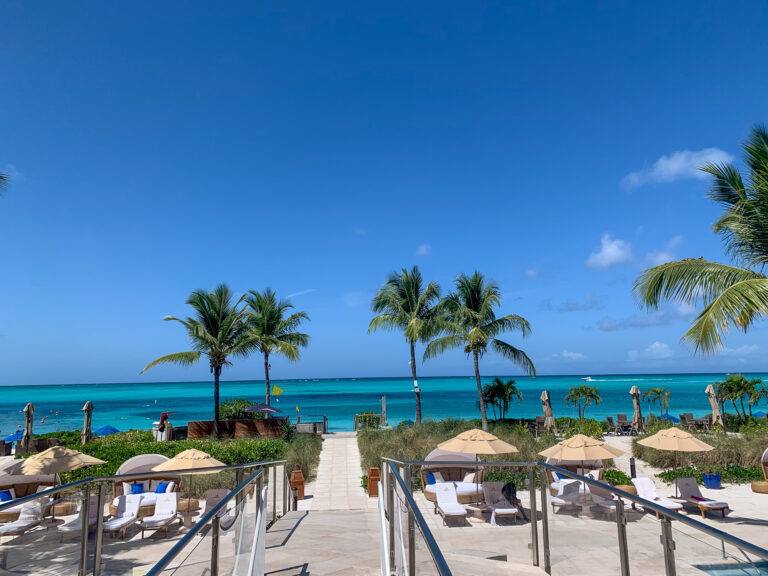
    Grace Bay is the north coast: a long white strip behind a barrier reef that takes the Atlantic swell before it arrives, which is why the water is calm and why the floor under it is deep, clean and sandy. Behind the sea grape there is a resort, then another resort, then a condominium block, then a bar. You can swim from the sand and you can eat three meals a day without starting a car.
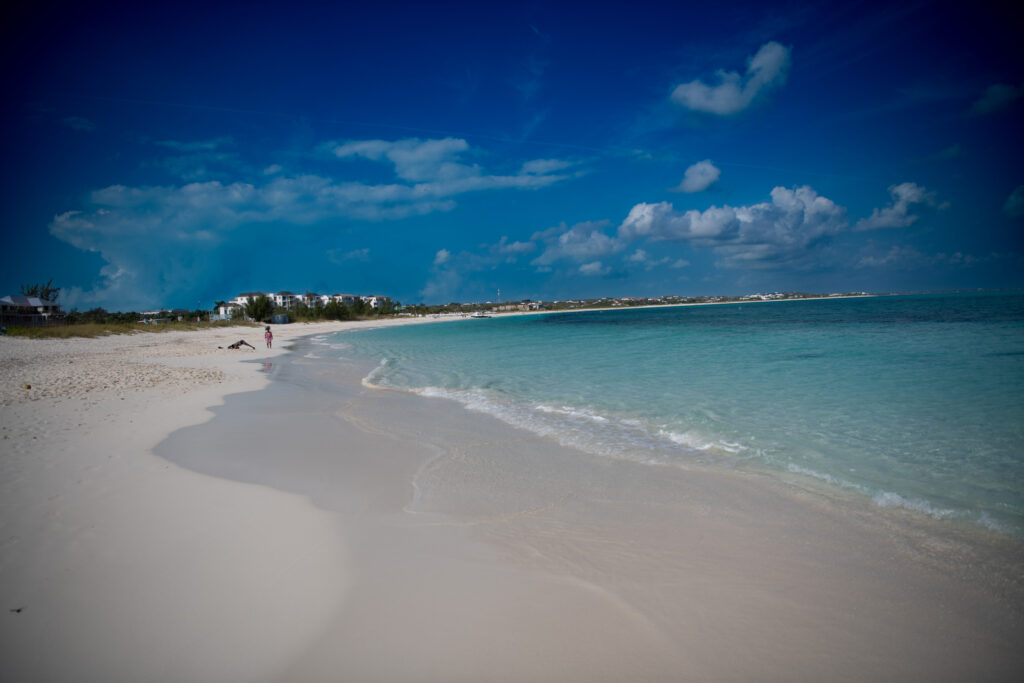
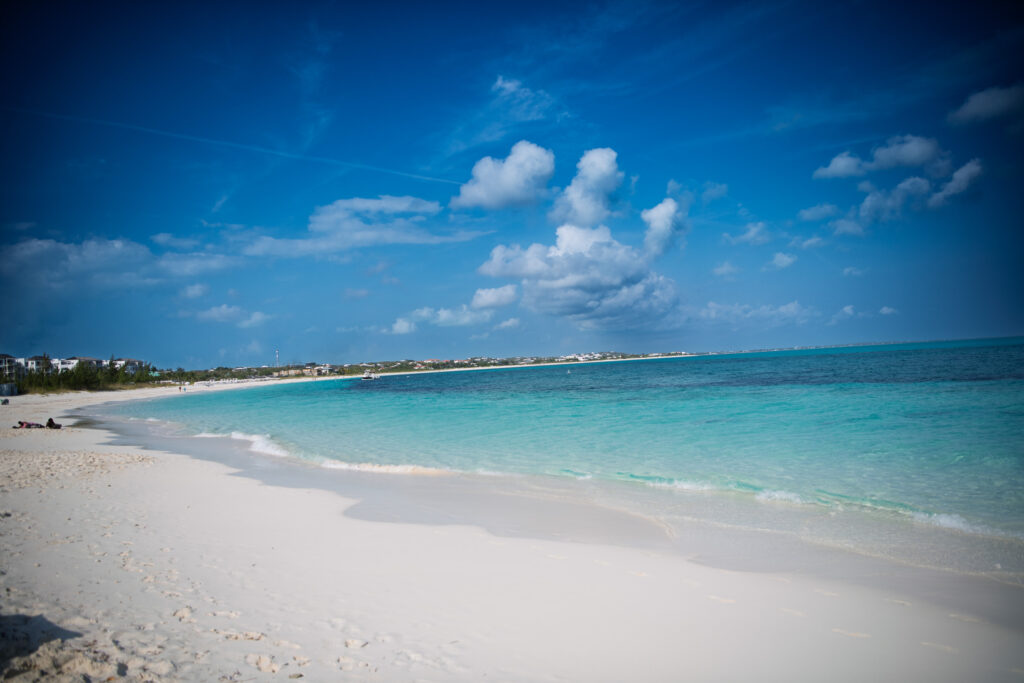
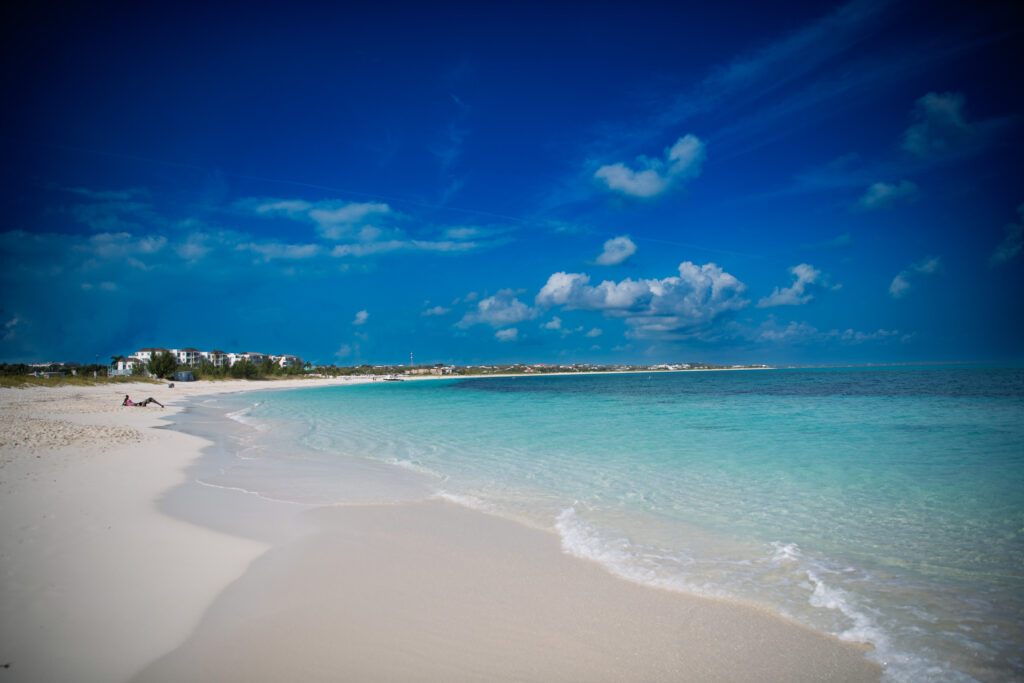
    A long empty sweep of white sand on the north shore under a deep blue sky and towering cumulus, low resort buildings small in the far distance
    The north shore between two accesses. The scale is the point: the strip is long enough that stretches of it are empty at eleven in the morning.

    Sapodilla Bay is the south coast: a single small cove facing a shallow bank that is nowhere deep. There is no hotel on it. The frontage and the ridge behind are private houses, and they are the only thing there is to book. There is no restaurant within walking distance, no beach bar, no water-sports desk, no lifeguard and no lavatory. The water rarely gets above about four feet deep for the first hundred yards. Everything else follows from those two paragraphs.
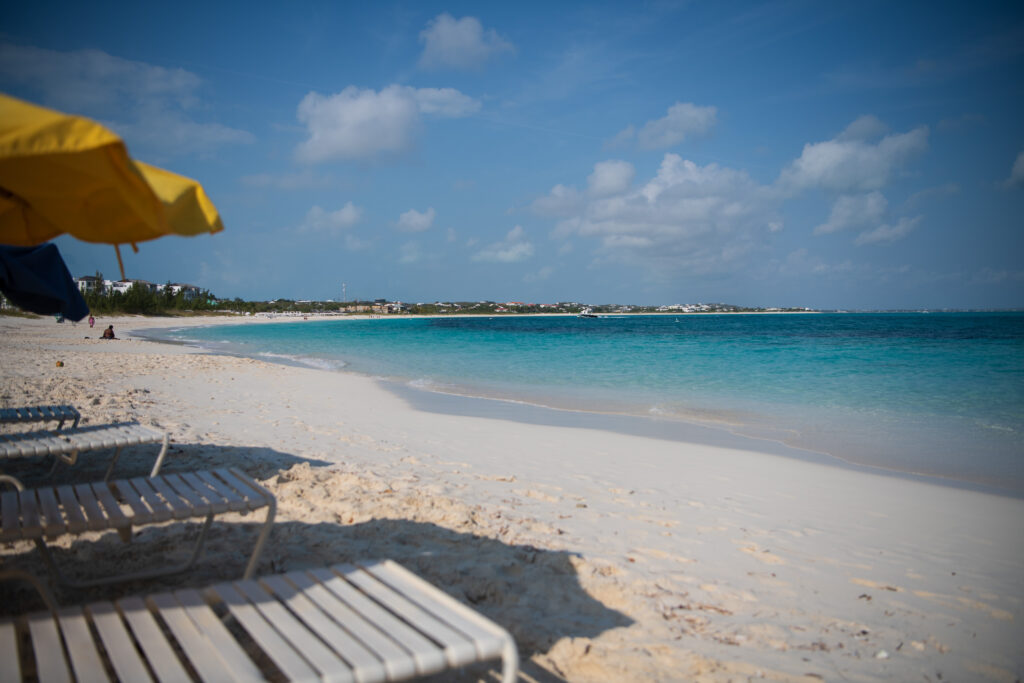
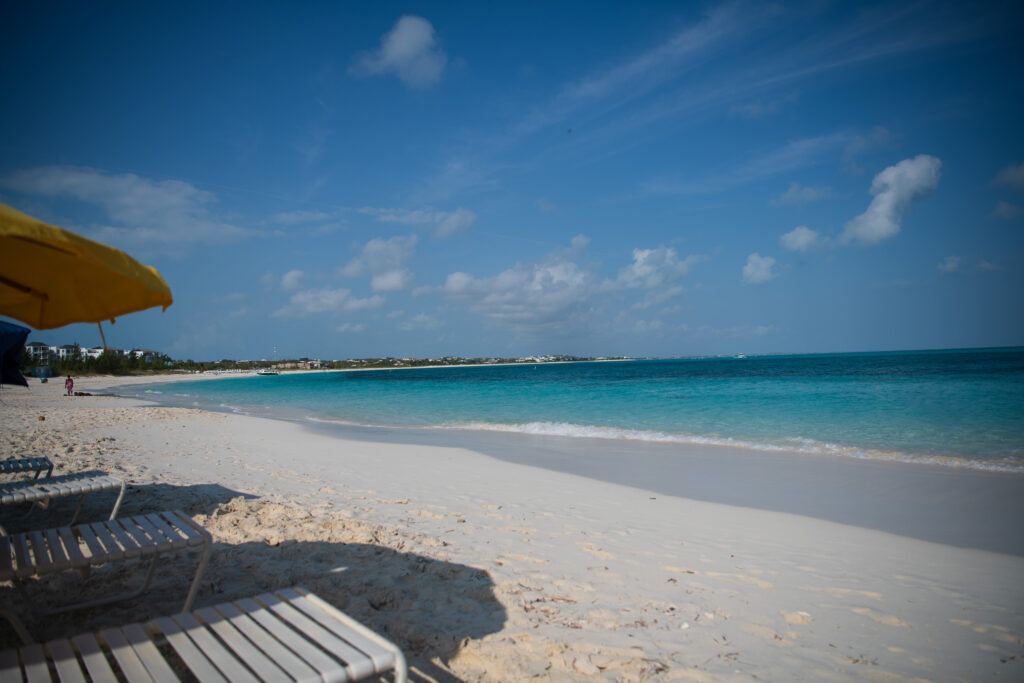
    A yellow parasol and white loungers on the sand at Sapodilla Bay, the shallow bay curving away to low houses on the far shore under a blue sky
    Sapodilla Bay from the sand. The whole surface is flat because nothing arrives here with any energy left in it.

    Side by side

    WhatSapodilla BayGrace Bay
    CoastSouth, facing the shallow bankNorth, behind a barrier reef
    WaterRarely over four feet for a hundred yards; the warmest water on the island; wade, do not swimDeep, clean, sandy floor; swimming within a few strides of the sand
    WavesEffectively none outside hurricane seasonSmall; the reef takes the swell
    SnorkellingThin: small schools, the odd ray near the pier, a wreck that is a serious swimThe country’s best shore-entry reef, at the western end, no boat needed
    Where you sleepPrivate houses only, from one bedroom to nine; no hotel on the bayResorts, hotels and condominiums the length of the strip
    DinnerNothing within walking distance; you drive to every meal you do not cookDozens of tables, several of them on the sand
    Beach serviceNone; two loungers and an umbrella from a vendor by the dayHotel loungers and shade, bars, water-sports desks — the hotels’ furniture, not yours
    Getting aroundA car is a condition of the booking; closer to the airport than the strip isWalkable; taxis everywhere; most people never drive
    QuietSmall enough to feel full by mid-morning; the quiet is at the houseLong enough to absorb people; the noise is powerboats offshore
    Best forSix to twelve people, small children, self-cateringTwo to four, swimmers, snorkellers, anyone without a car
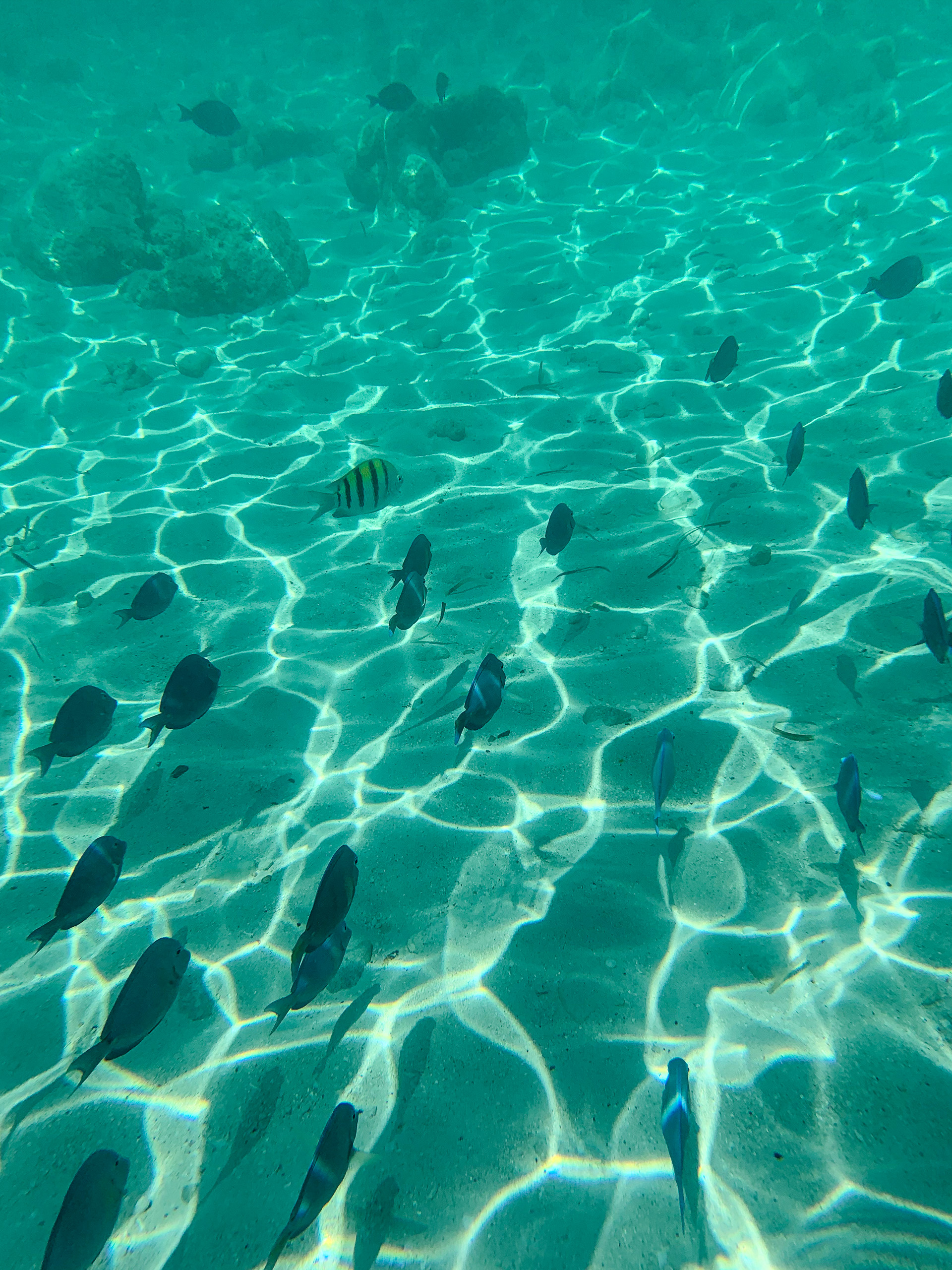
    Small fish moving over the rippled sand in clear shallow water
    Grace Bay: small fish over rippled sand, waist deep.
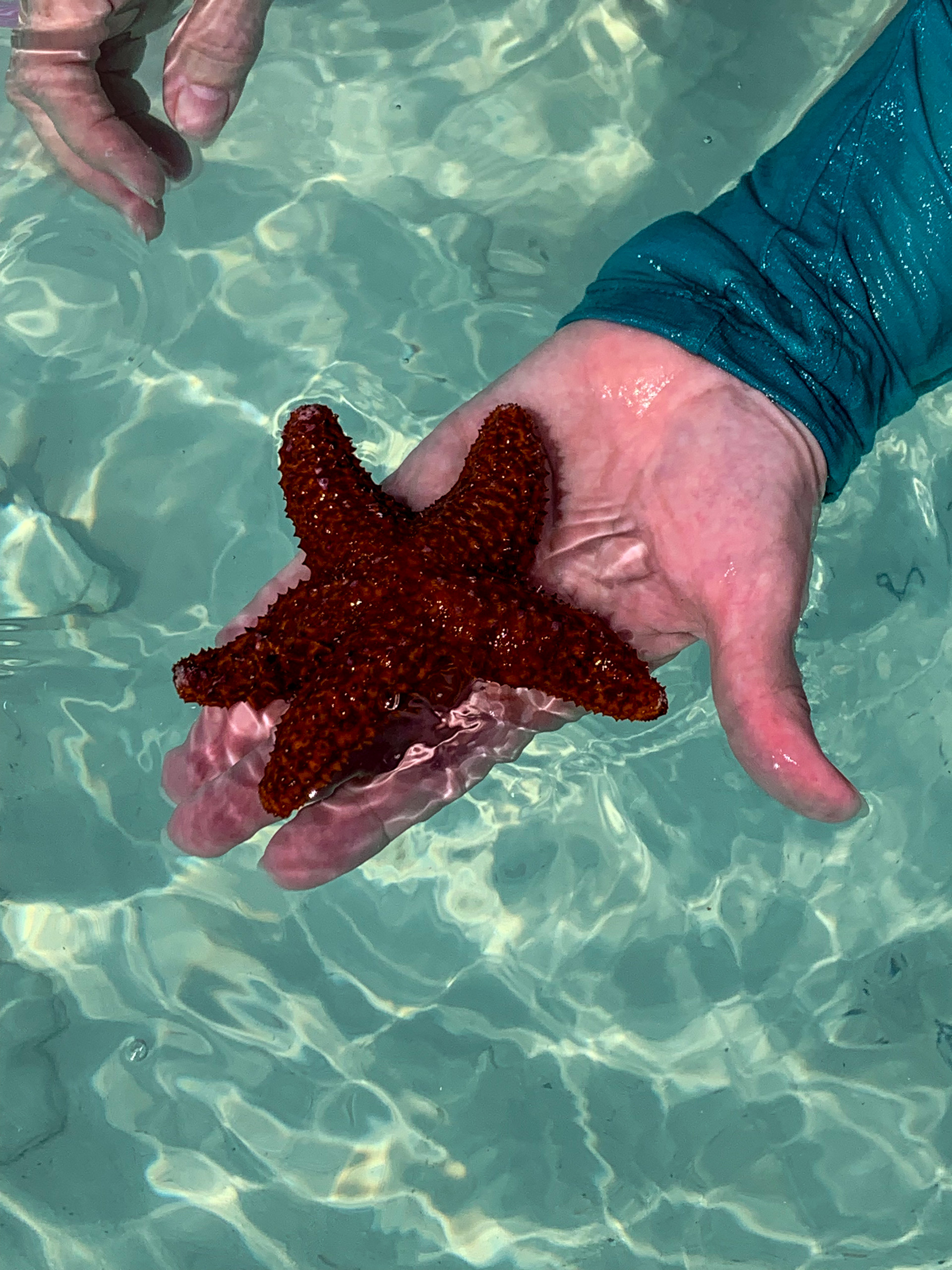
    A red starfish held on an open palm just below the surface
    Sapodilla: a starfish lifted from six inches of water, and put back.

    Noted

    Observed on both stays, not measured.

    The villas are the variable. They differ widely along this shore, and the differences are the booking: research the location first — Taylor’s Bay and Sapodilla Bay read as one strip in the listings and are not the same beach — and research the shore access second, because many of the villas along the strip sit on rocky or cliff access rather than sand.

    Sapodilla has been busier on each of the last three visits, and the window for clear days may be a limited one. There was also a pack of local dogs we were told had been released to “control the foreigners.” They never actually accosted us; we watched each other with professional respect. Worth knowing they are about.

    Where Grace Bay wins

    The water, which is most of the argument. At Grace Bay you walk in from the sand and within a few strides you are swimming: arms over, going somewhere, out past the line of people standing about. At Sapodilla you can walk a hundred yards straight out to sea and the water will still be at your ribs.

    If somebody in your party swims lengths at home and intends to swim here, that is a defect and it is not a small one. The snorkelling is not close either: the western end of the strip holds the best shore-entry reef in the country, a single coral ridge you swim to from the beach without a boat or a ticket, and it is busy for a reason.

    The reputation is earned. Grace Bay is habitually ranked the best beach on the planet — a title with more electors than the Oscars, and for once the winner deserves it — and billions of investment in the luxury hotels behind it keep the whole strip impeccable. It has two temperaments: the polished resort vibe holds the east side, and the west end runs chiller and more bohemian.

    Our recommended medium is Windsong, on the reef toward the west side, with lunches at Somewhere Café on the sand nearby. Several locals called the reef off Windsong the best on the island, and the mornings backed them up: a tiger ray and more fish than we could count, each day, before breakfast.
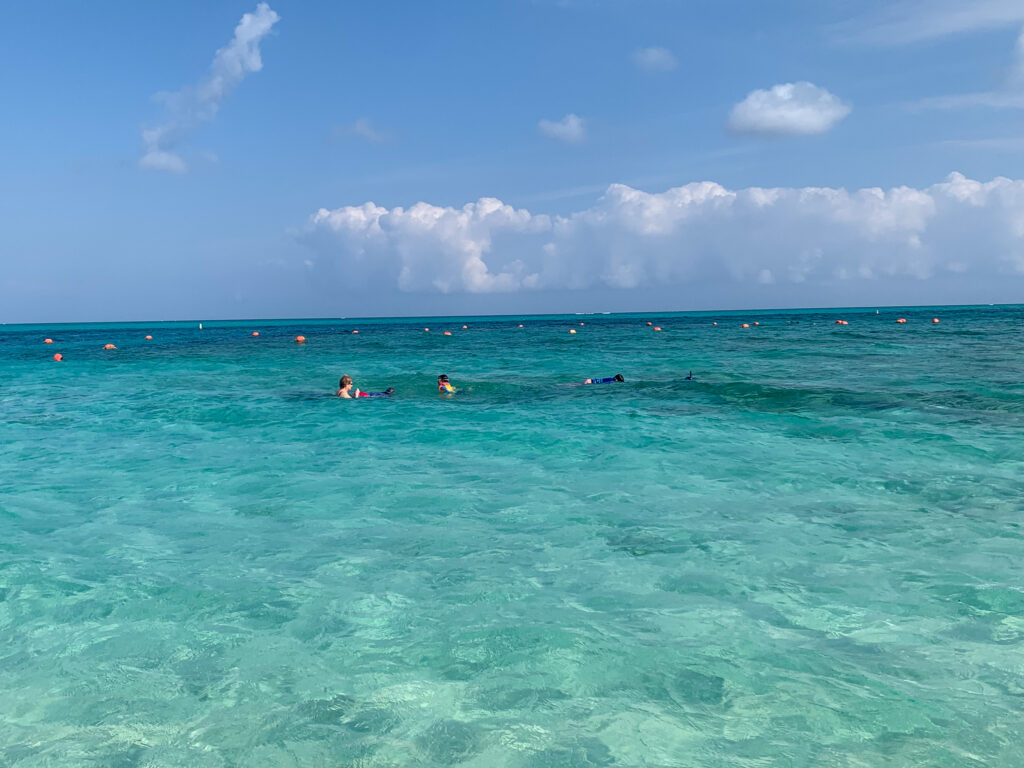
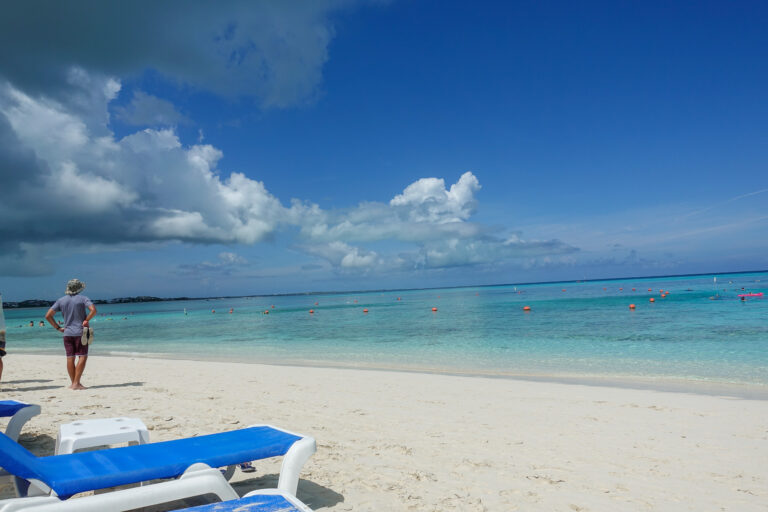
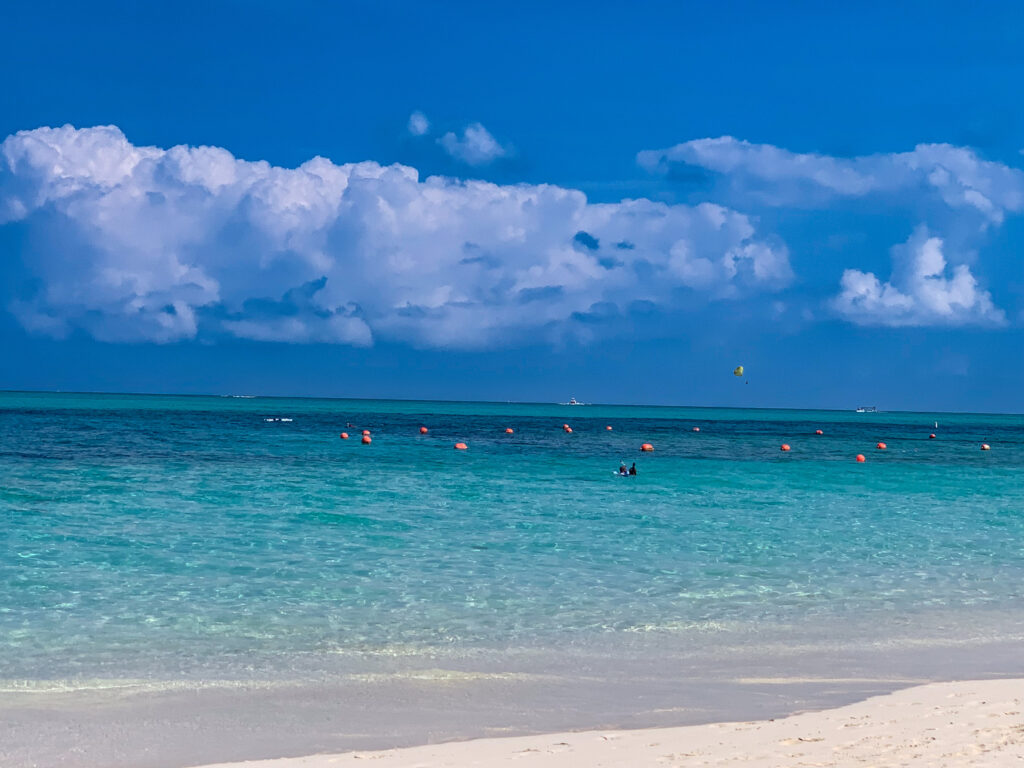
    Three snorkellers face down in clear turquoise water on the north shore with a long line of orange conservation buoys behind them and cumulus on the horizon
    The north shore, inside the buoy line. Depth you can float in, coral you can reach from the sand, and no boat involved.

    Dinner. Grace Bay is a hotel beach in the fullest sense: you book a room, the room has a restaurant, and there are twenty more within a walk or a very short taxi. At Grace Bay dinner is a decision you make at seven in the evening. At Sapodilla it is a decision you made on the way in from the airport, at the supermarket, which is the most consequential shop of the week and the only one where I have felt entirely unqualified.
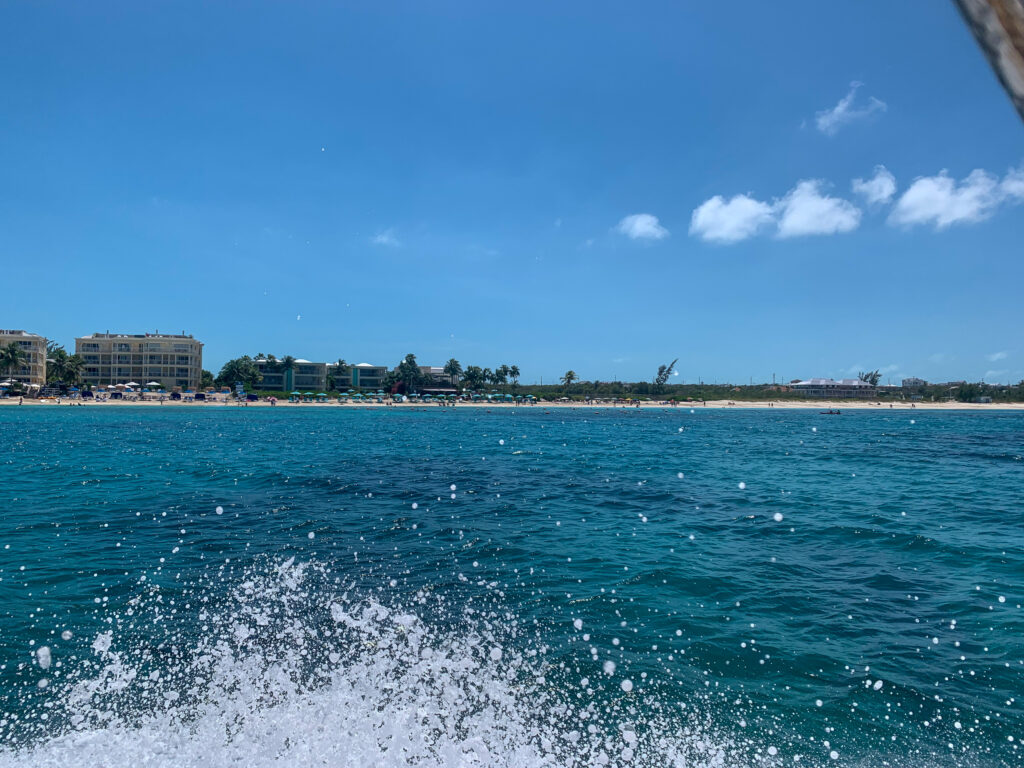
    The Grace Bay resort strip seen from a boat offshore, low pastel hotel blocks and palms running along the back of the sand with spray in the foreground
    The strip from the water. Every one of those buildings has somewhere to eat in it, and that is the practical difference between the two coasts.

    And the finding that surprises people: the developed beach is the quieter one to sit on. Grace Bay is long, with public accesses spaced along the back, so the people spread out and stretches of it read as empty in the middle of the morning. The loungers in rows belong to the hotels behind them, which keeps the sand orderly, and if you are not staying in one of those hotels, none of that furniture is yours.
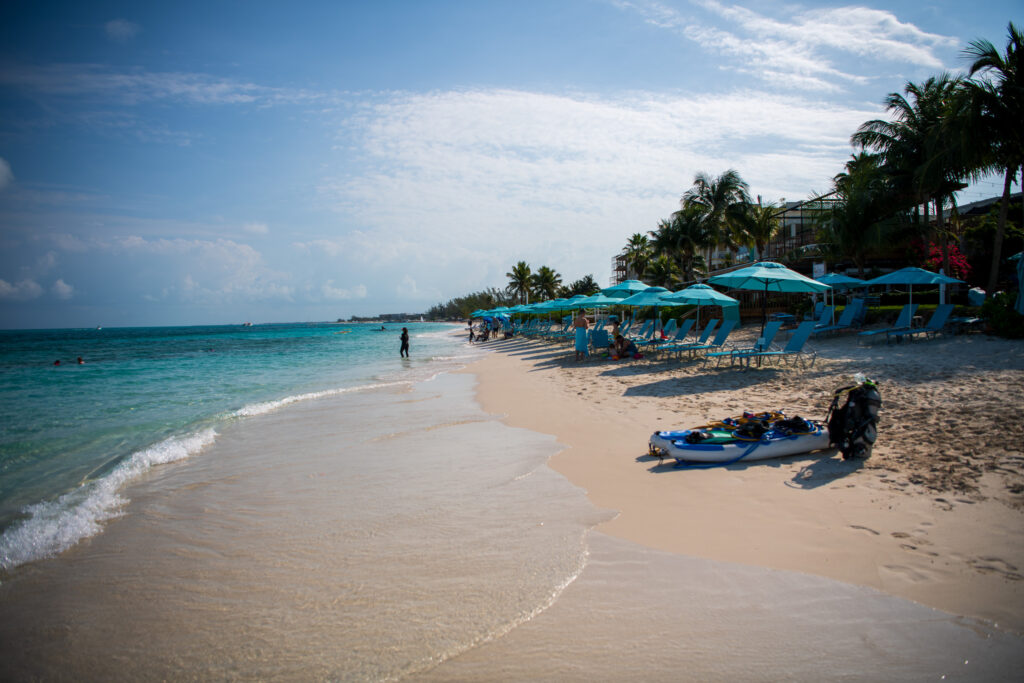
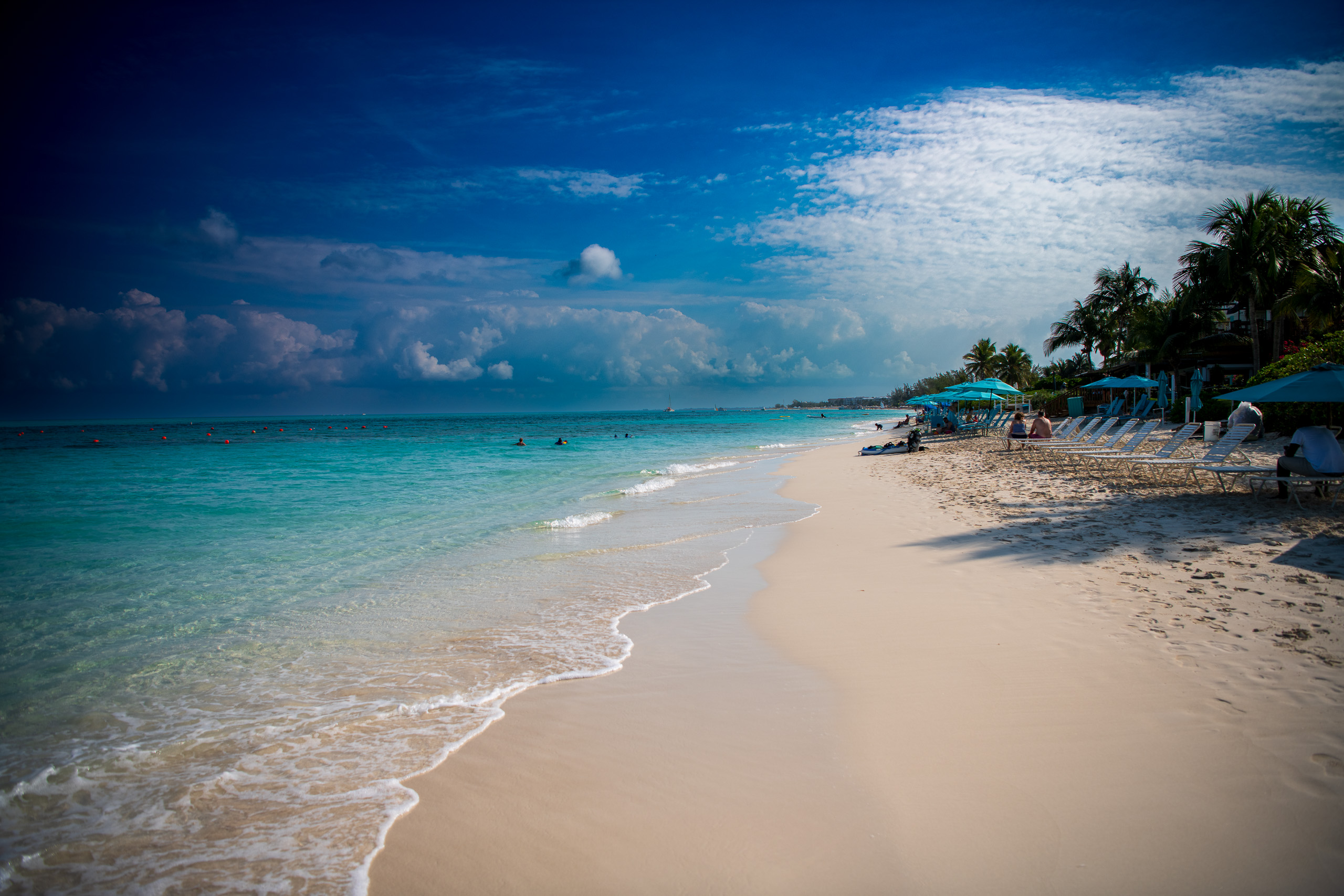
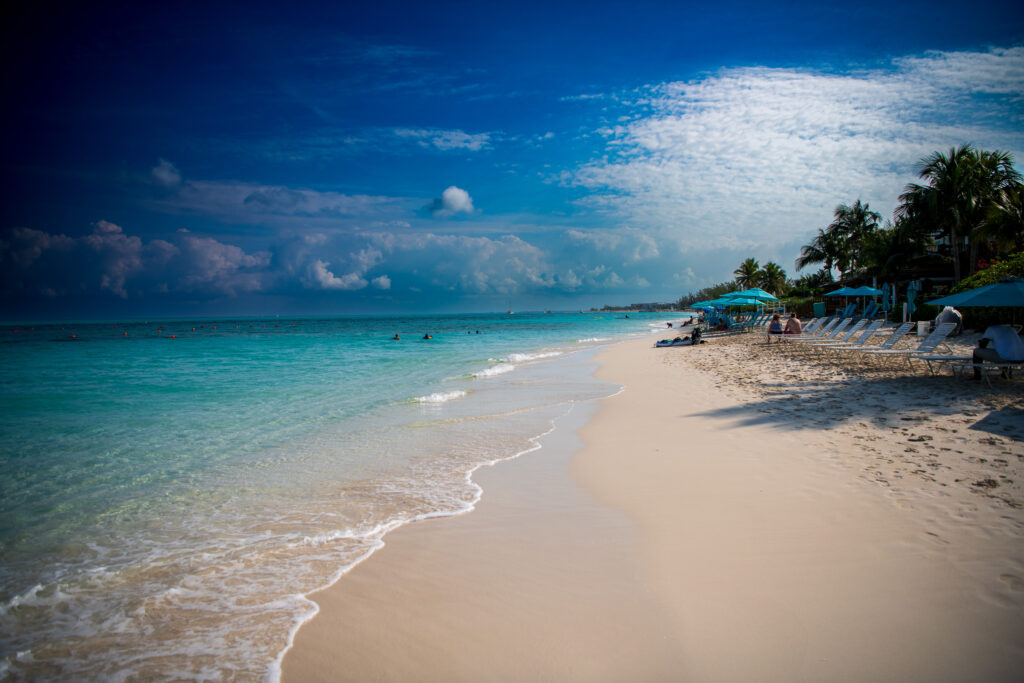
    A row of turquoise umbrellas and loungers along the sand in front of the resort palms, a kayak drawn up on the beach
    Loungers, shade and a building with a kitchen in it, thirty yards from the waterline. That is what the north coast sells.

    Where Sapodilla Bay wins

    Small children. Warm, glassy, ankle-to-waist, no current and no undertow is about as forgiving as a sea gets, and if the person you are worried about is four years old, the shallowness is the entire reason to come. The south coast is warmer for the same reason a puddle is warmer than a lake, and waves outside hurricane season are close to a non-event. The sand is finer, worn to something nearer silt, powdery underfoot and quick to hang in the water when a crowd stirs it up; parts of the entry are limestone shelf rather than sand.
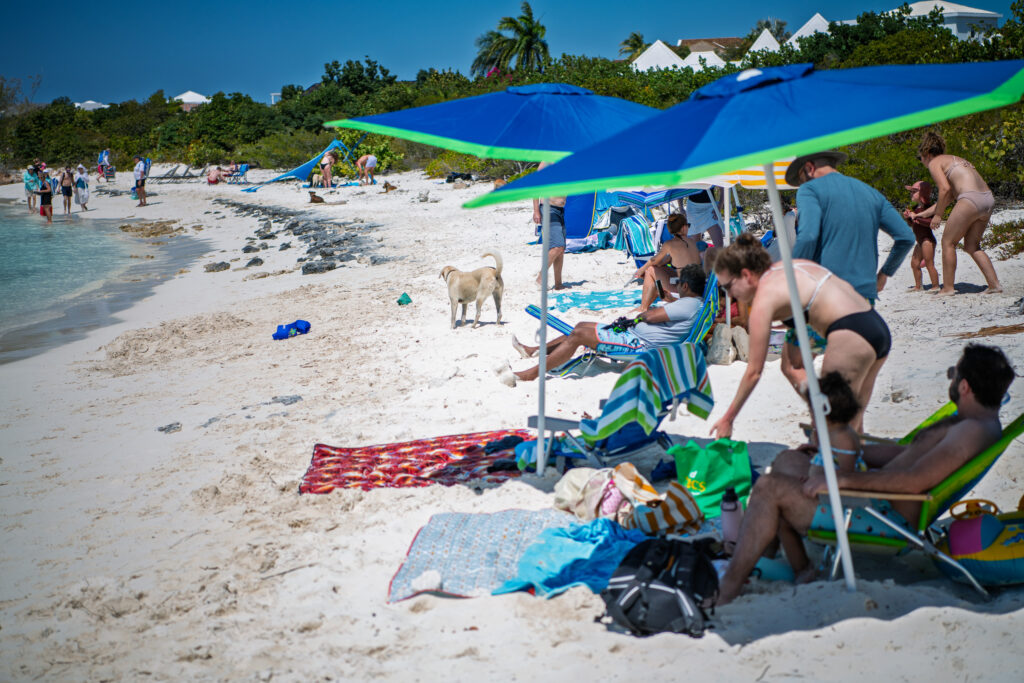
    A busy stretch of Sapodilla Bay under blue parasols, towels and chairs along the sand, a dog on the tideline and a shelf of grey rock at the waterline
    Sapodilla on a good afternoon. Note the grey shelf breaking through at the waterline: parts of the entry are limestone rather than sand.

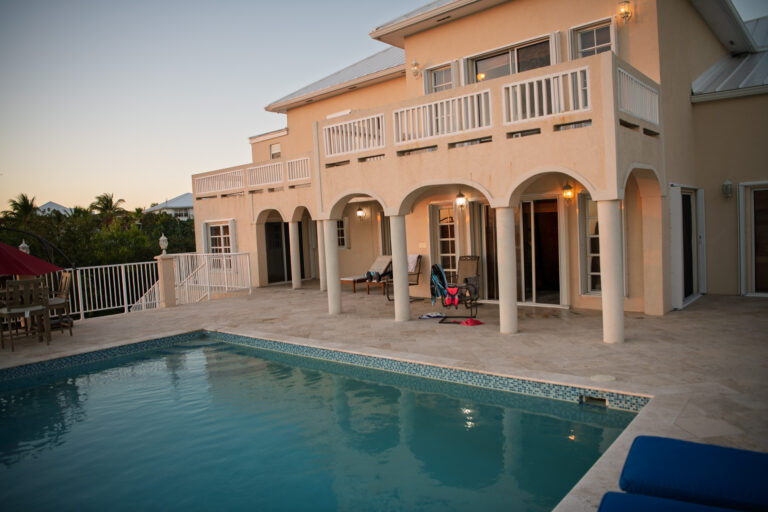
    The house. The market runs from one-bedroom cottages to estates sleeping twenty-four, and for six, eight or twelve people the house makes its own case: a kitchen, a pool, a terrace and doors you can close — the kind of space no pair of hotel rooms gives you. The houses sit up on the ridge, and what you get at the end of the day is the whole sky twice over.

    The quiet on the south coast is real, but it is at the house rather than on the beach: by late morning the cove is a line of rented umbrellas, a jet-ski stand, a speaker, and somebody walking the sand asking whether you want anything. Take the middle of the day back up to the pool and the week looks very different.
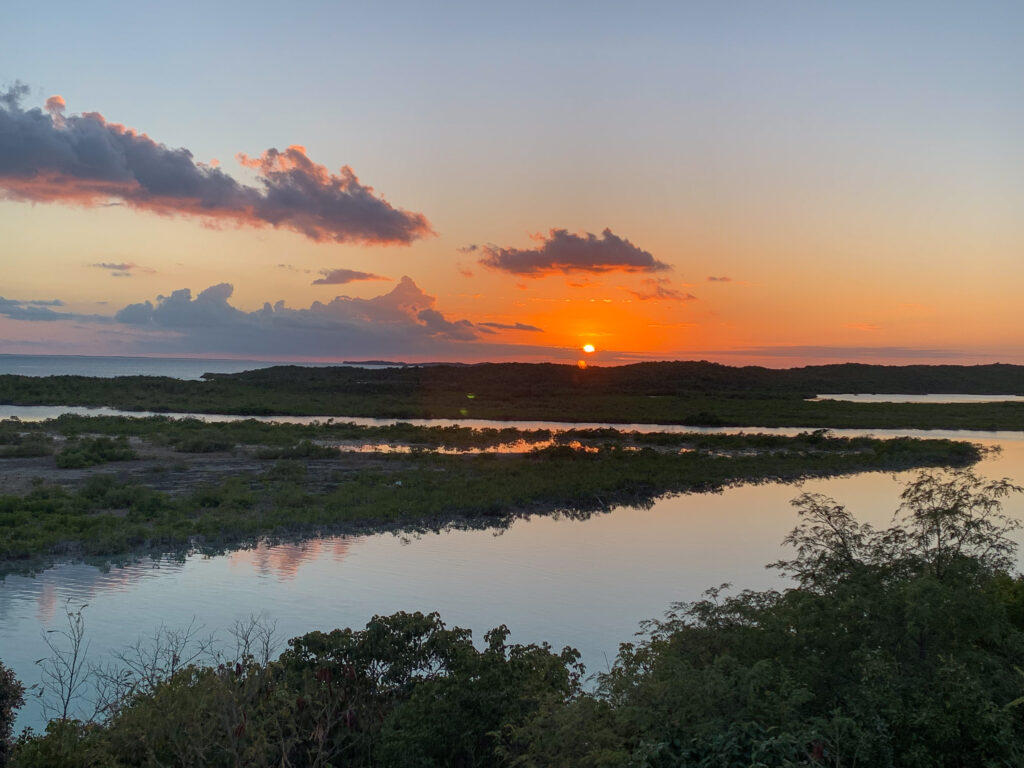
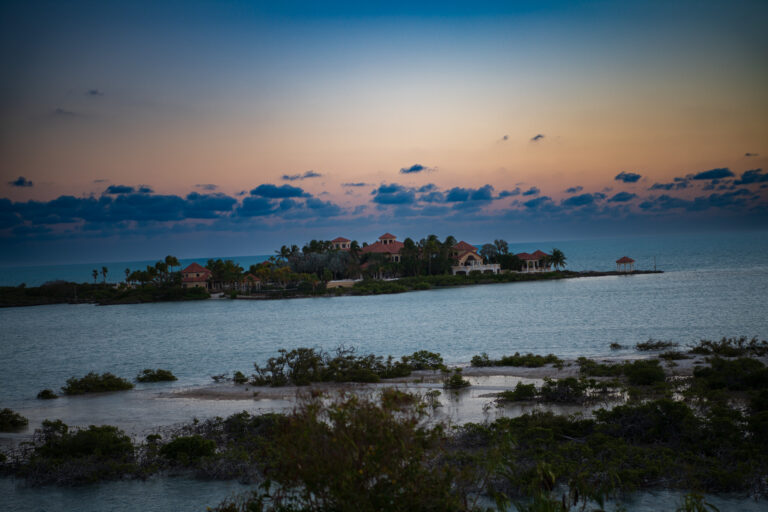
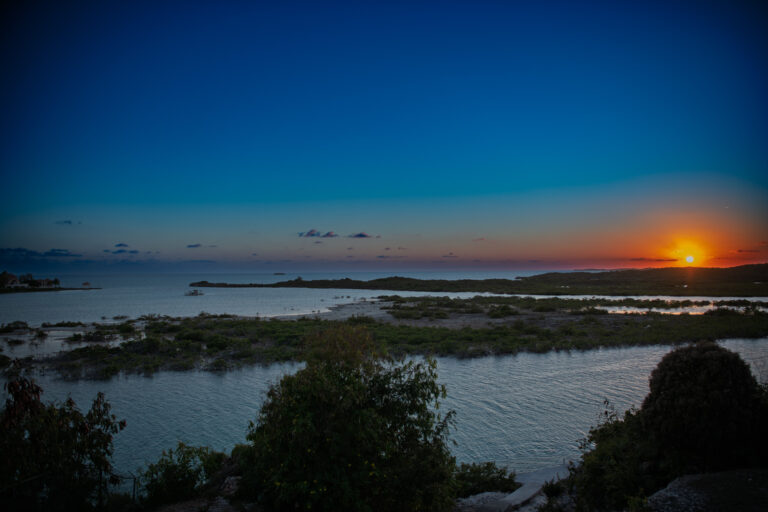
    Sunset over shallow tidal creeks and low scrub seen from high ground on the south coast, the orange sun on the horizon and the water mirroring the sky
    The compensation on the south coast. The houses sit up on the ridge, and what you get at the end of the day is the whole sky twice over.

    Position. You are nearer the airport than the strip is, which is worth more than it sounds on a day with small children and a late flight, and five minutes from the things people drive across the island to see. Chalk Sound, the islet-studded lagoon behind the beach, is a national park and the best of them; you kayak on it, you do not swim off it. In exchange the car is a condition of the booking, and the parking at both beach approaches is unpaved and unkind to a low-slung compact.
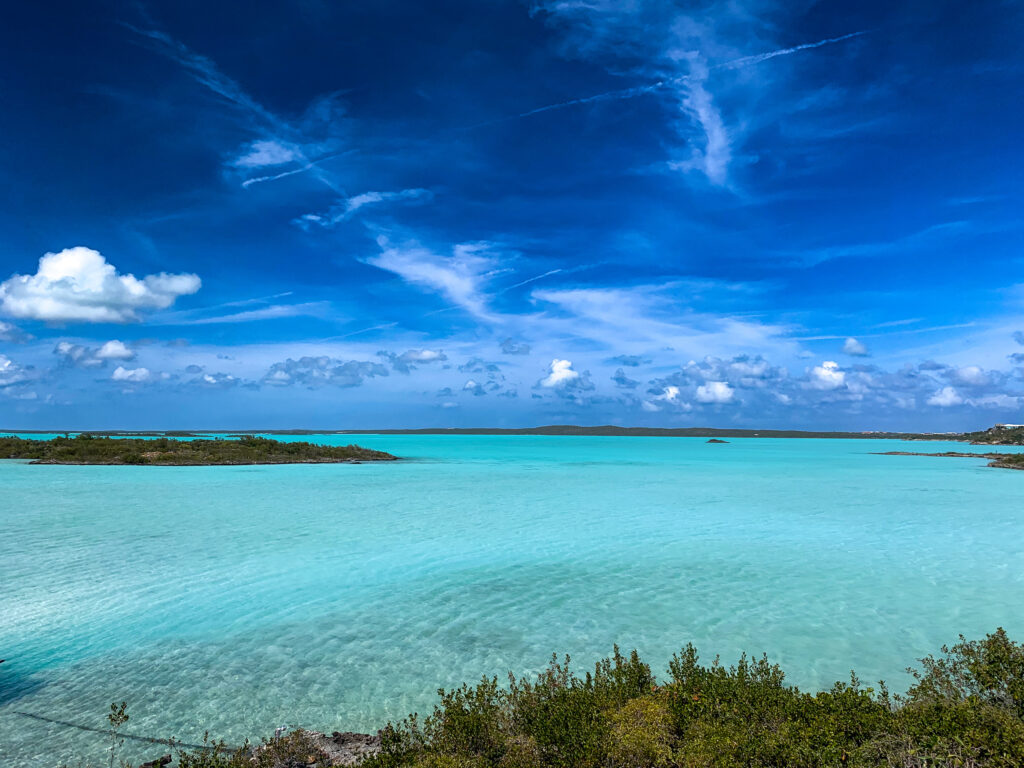
    The pale turquoise lagoon of Chalk Sound seen from above the scrub, low rocky islets scattered across it and a big blue sky with high cirrus
    Chalk Sound, five minutes from Sapodilla Bay. A lagoon rather than a beach: you kayak on it, you do not swim off it.

    Two things are true of both coasts. Neither has lifeguards, and the real hazard on this island is not the sea but powerboats: there is a speed limit inside the national park on the north shore and it is not universally observed, and at Sapodilla yachts anchor in the bay itself, so watch for traffic rather than surf. Both escape the seaweed that lands elsewhere in the region in summer.

    Verdict by traveller type

    Book Grace Bay if there are two or four of you; if anyone intends to swim rather than stand; if snorkelling is on the list; if you would like to eat somewhere different every night and walk home along the sand; and if nobody wants to drive. It is also the safer first visit. You will not have to think about a single logistical thing for a week, and the beach earns its reputation.

    Book Sapodilla Bay if you are six, eight, twelve: a family group or two couples travelling together, because the house does what no hotel can: a kitchen, a pool and doors you can close. Book it if the water needs to be safe rather than deep, if you would rather cook than queue, if the sunset from a terrace beats the sunset from a bar, and if you accept that you have volunteered to be the one who drives. Book the car before you book anything else.

    Do not book Sapodilla for a honeymoon for two, for a swimmer, or for anyone who expects a lounger to appear with a towel on it. Do not book Grace Bay for a party of ten who want to eat together every night, unless you have imagined booking ten dinners a night for seven nights and did not flinch.

    For all the sorting, both are a strong recommendation — together they sit at the top of the list of places to visit before you die, morbid phrasing for somewhere this sunny, but the list is not wrong. Whichever you stay on, take a day trip to the other: the argument settles itself in fifteen minutes by car.

    Book Grace Bay if there are two of you. Book Sapodilla Bay if there are eight.
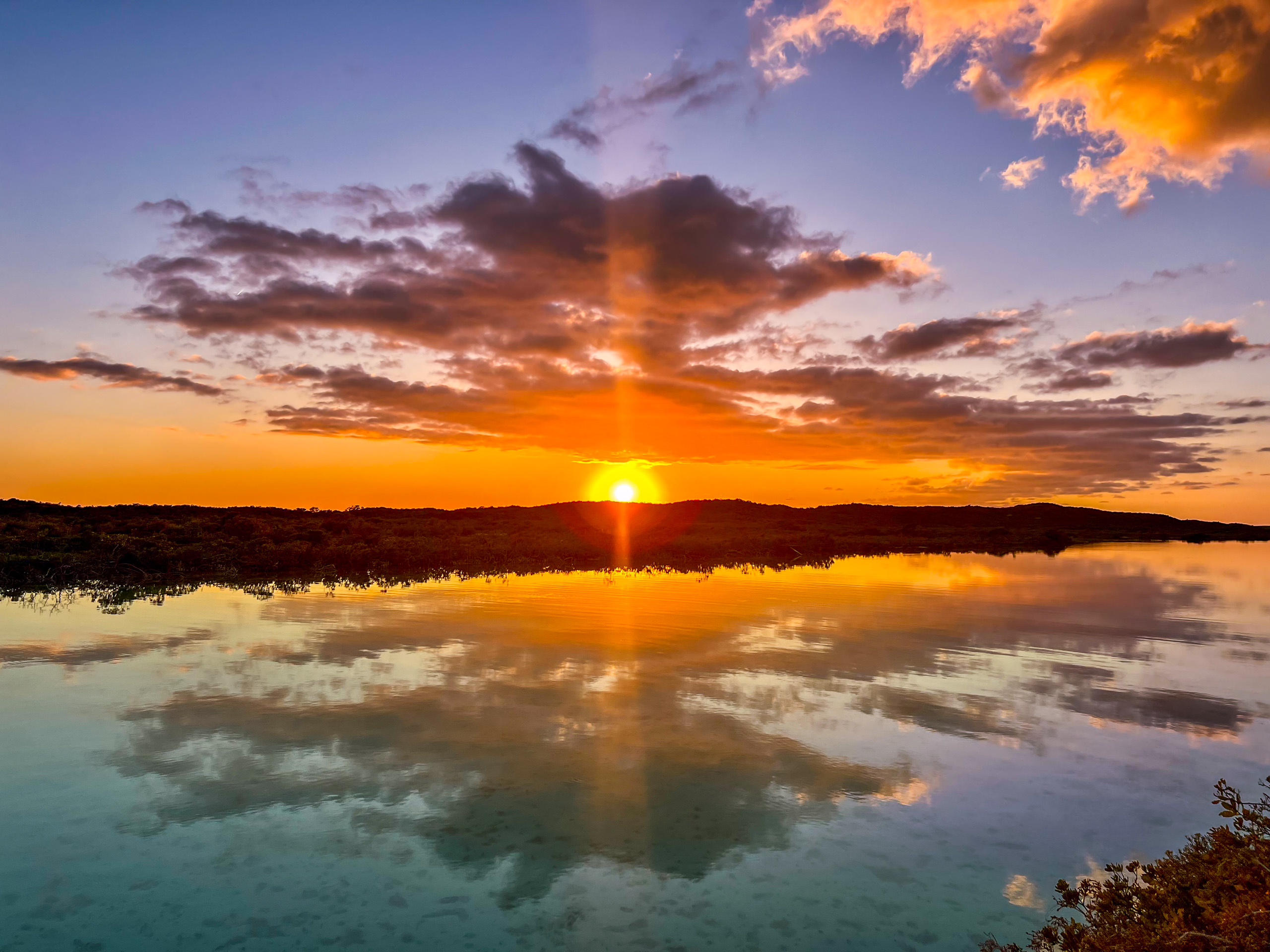
    A vivid sunset mirrored in the still water of the flats
    A vivid sunset mirrored in the still water of the flats. The sunset is the one thing the south coast wins outright.

    Bottom line

    Two beaches, one island, both a strong recommendation — top of the list of places to visit before you die. Party size picks the base: Grace Bay for two or four who want to swim and walk to dinner, Sapodilla Bay for six or more with small children and a kitchen of their own. Whichever you choose, take the day trip to the other — it is fifteen minutes away.

    See the full set: the Sapodilla villa — in frames and Grace Bay — in frames.

    The Providenciales galleries

    Every photo on this site is my own, shot on the trip. Slide through →
    The sun going down beyond the flats, the tidal channel catching the last lightA panorama of the bay from a sun lounger, the water shelving from white to blueThe villa lit from within at dusk, the pool still in the foregroundPalms and thatched parasols framing the water from the resort pathHouses along the far point silhouetted against a fading skyThe beach and reef seen over a blue balcony railThe long curve of the bay, the shallows running from white to deep turquoiseA wide panorama of the shallows running along the sandA single parasol and lounger at the water line, palms crowding behindA figure walking the waterline, loungers behind on the sand
  • The Bight Reef: The Best Thing on Providenciales Is Free

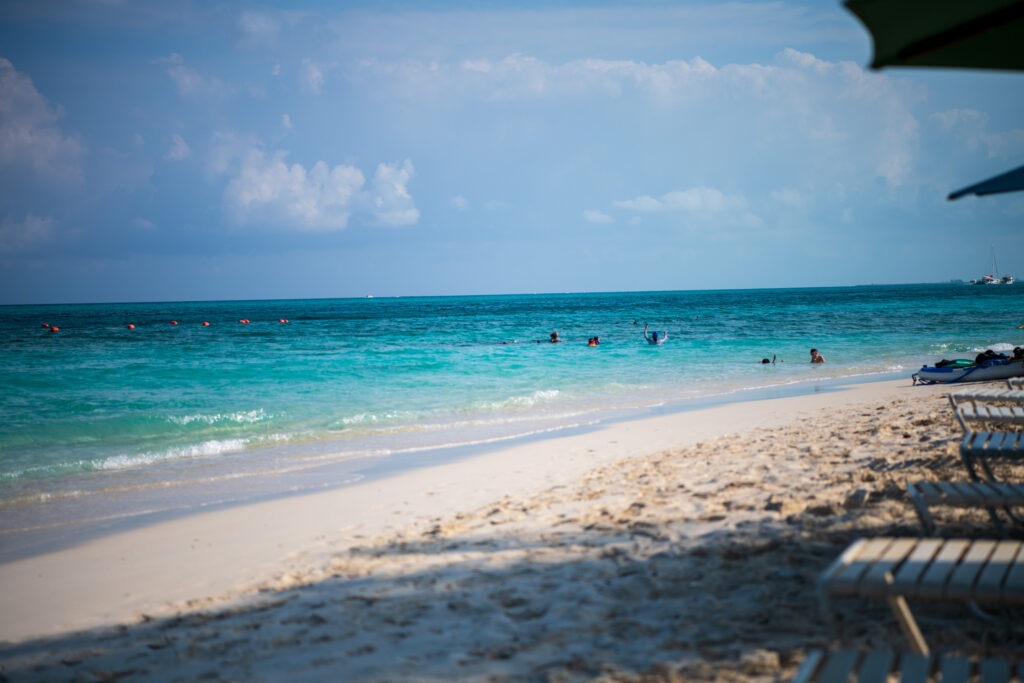
    White sand curving west along the shoreline with turquoise shallows, orange marker buoys offshore and a line of umbrellas and loungers under palms

    PROVIDENCIALES, TURKS & CAICOS · BEACH GUIDE · 8 MIN READ

    The Bight Reef: The Best Thing on Providenciales Is Free

    The most popular snorkelling site in the country runs a hundred metres out from the sand and asks nothing of you, and the bar standing on the dune above it asks rather a lot.

    By J.C. Mercer

    Verified meal·paid in full

    • Where The Bight, Providenciales. The reef runs about a hundred metres out from the sand
    • The reef Free. No ticket, no operator and no equipment hire on the sand
    • Getting in Two public accesses, Penn’s Road and Stubb’s Road
    • The bar Somewhere Café & Lounge, independently run, on the dune in front of Coral Gardens Resort
    • How it was booked The way any other guest would

    Every meal on this site is booked the way any other guest would book it.

    Three hundred and fifty feet off the beach at the western end of Providenciales’ north shore, a single ridge of coral runs out from the sand. It is called the Bight Reef, or Coral Gardens, and it is the most popular snorkelling site in the Turks and Caicos Islands. There is no boat, no operator, no ticket and no gate. You park on Penn’s Road, walk between two low buildings onto the sand, put your face in the water, and swim.

    That is the whole proposition, and it is why everything else on this stretch exists: the loungers, the resort blocks set back behind the sea grape, and the two-storey timber bar standing directly on the dune above the entry point. The bar is called Somewhere Café & Lounge. It is extremely good at being where it is. It is also the only part of the day with a menu, and the setting is doing most of the work on it.

    Both of those things are worth knowing before you come, and they pull in opposite directions.

    The beach here is not Grace Bay

    Almost everything written about this sand calls it Grace Bay. It is not, quite. Grace Bay proper runs about three miles along the north coast, lined with the big resort names, and its western boundary is the Bight Reef. From the reef onward the sand becomes the Bight Beach, which continues another mile and a half to Smith’s Reef. The islands’ own tourist board is blunt about the elision: many of the villas and hotels on the Bight claim to be on Grace Bay.

    The distinction is not pedantry, because for what most people come here to do the Bight is the better half. It sits deeper in the lee of the trade winds, so the water is calmer and clearer more of the time. It has the island’s best shore-entry reef at its eastern end, and seagrass beds further west that hold stingrays, turtles and nurse sharks. It is not the beach the large chains front, so there are fewer loungers per hundred metres of sand. What it lacks is the resort strip’s choice of somewhere to eat, which is exactly why the two casual places sitting in the dune at the reef do the trade they do.

    An empty white beach curving west with low buildings in the far distance and a dark band of reef under the turquoise water
    West of the reef the sand becomes the Bight and runs another mile and a half. The big resort names are behind you, to the east.

    The whole of this coast is shielded from Atlantic swell by a barrier reef about a mile offshore. That is why the water shelves so gently, and why it holds its colour. It is also why the beach is one of the few in the Caribbean that reliably escapes the sargassum that lands elsewhere between June and November: the prevailing east and south-east winds carry it away offshore rather than onto the sand.

    A hundred metres of coral, and what lives on it

    The reef is one main ridge, extending about 350 feet out from the beach. Inshore it lies in three feet of water, which is the source of both its appeal and its problem. At its outer reaches it drops away to fifteen or twenty feet. All of it sits inside Princess Alexandra National Park: no fishing, no collecting shell or coral, nothing touched, and the buoy-marked conservation zone is a boundary rather than a swimming lane.

    The beach seen from under a green umbrella, white loungers on the sand, snorkellers in the shallows and orange conservation buoys marking the reef beyond
    The entry point. The orange buoys mark the conservation zone; the coral ridge sits inside them, three hundred and fifty feet out from where you are standing.

    What you will see on an ordinary morning: parrotfish, grouper, angelfish, snapper and triggerfish, with green turtles, stingrays, spotted eagle rays and nurse sharks all regular enough that nobody treats them as an event. The animals here are noticeably more approachable than on reefs that see fewer people, which cuts both ways. They are used to being looked at, and they have been looked at a great deal.

    Which is the other half, and it should be said plainly: the coral is not what it was twenty years ago. Snorkeller contact and sediment from dredging have each taken something from it. It remains the best shore-entry site in the country by a wide margin, and it is also a reef that has been loved hard.

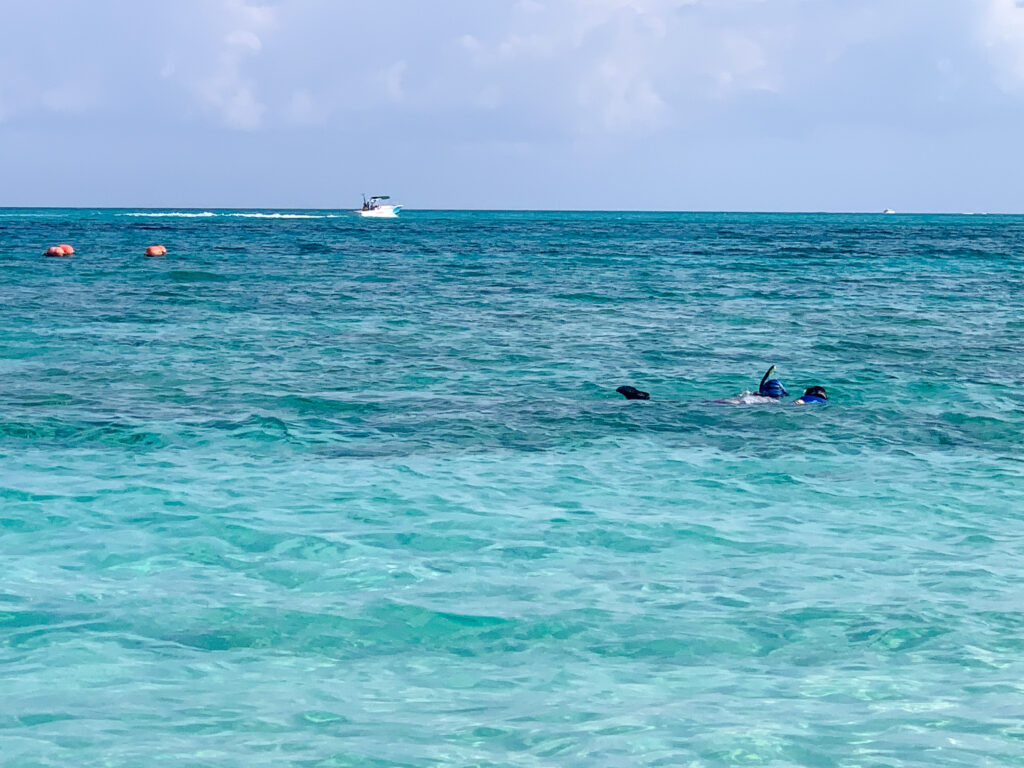
    Two snorkellers face down over the dark ridge of the reef, orange marker buoys to the left and a powerboat crossing the horizon
    Face down over the ridge. Note the boat on the horizon, outside the buoy line but not far outside it.

    Getting in

    Two free public accesses serve the reef. Coral Gardens Beach Access, on Penn’s Road, is the western one and the one with the bar on it; Stubb’s Road, at the eastern end, is usually the quieter of the two. Parking is free along the road at both. The beach chairs laid out on the sand belong to the hotels rather than to the restaurant, so if you want to sit down for the afternoon, bring something to sit on.

    Conditions matter more here than the reputation suggests. The site is best with the wind under about twelve miles an hour and near high tide, when there is enough water over the shallow inshore section to swim it rather than stand in it. Early and late are when the lobsters and the lionfish come out. There are no lifeguards anywhere on this beach.

    Rippled sand under clear shallow water in the foreground, the darker band of the reef and a line of orange buoys beyond, with snorkellers between them
    The shallows before the ridge. Near high tide there is enough water to cross the inshore section without touching it.

    The hazards worth naming are venomous lionfish spines, occasional swarms of thimble jellyfish, and – the one the island’s own authorities are most exercised about – powerboats working outside the swim zone. There is a fifteen-mile-an-hour limit inside the national park and it is not universally observed. It is the most dangerous thing on this coast, and it has killed people.

    The bar on the dune

    Somewhere Café & Lounge stands directly in front of Coral Gardens Resort and is not part of it. It is independently owned and run, with its own kitchen and its own hours; the resort’s website gives it a photo gallery, the words “located on-site” and a link out. Say “at Coral Gardens” rather than “the Coral Gardens restaurant”, and do not assume anything can be charged to a room.

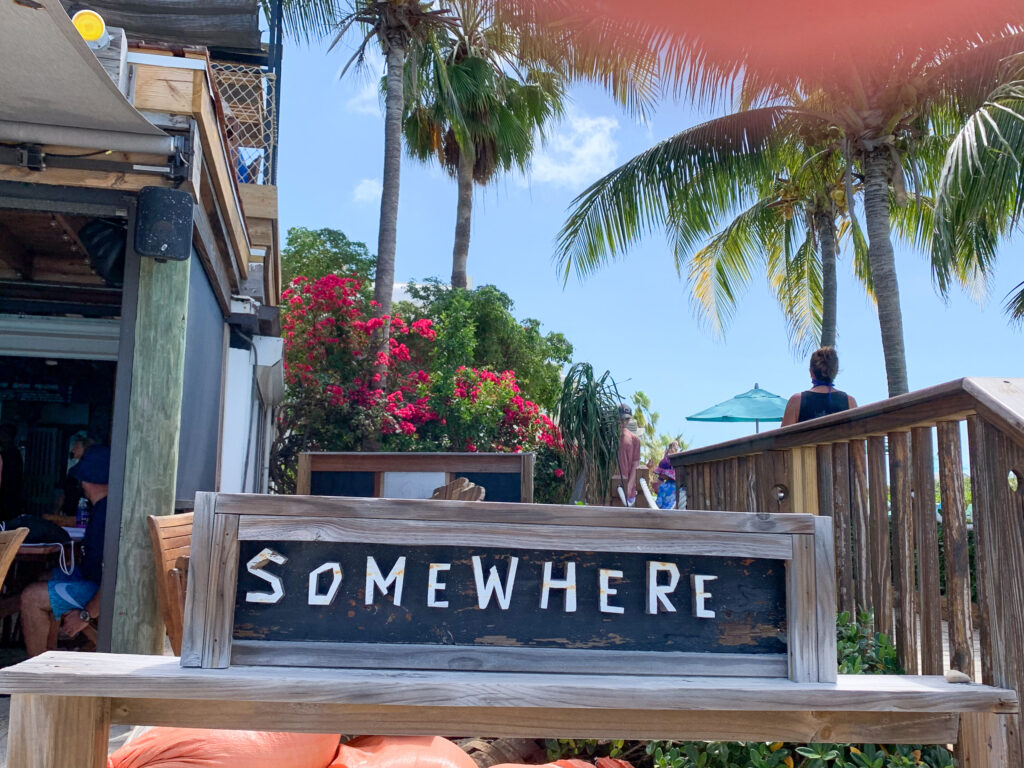
    A driftwood board spelling SOMEWHERE in white shell lettering propped on a bench in front of the timber bar, with bougainvillea and palms behind
    The sign on the dune. Two floors, open air, independently run, and standing on the resort’s land rather than in it.

    It has been trading here since around 2009 and it is the only place on this beach with two floors: a ground-level deck behind a rope rail, and an upper lounge with day beds and a second bar. Wood decking, nautical rope, teak, tiki torches. Nobody arrives dressed for it, because there is no dress code and swimwear is normal.

    The kitchen is Tex-Mex, which is the venue’s own word and a more honest one than Mexican. Tacos, burritos, nachos, fajitas, ceviche, a fish sandwich, jerk chicken, carne asada. Local conch and local snapper are pushed through the format, and the fish tacos are what it is known for. Take-out is the underused move, given that the beach is twenty feet away.

    Two operational things to carry with you. You cannot reserve unless there are six or more of you – everything smaller is first come, first served – and a booking is forfeited ten minutes after the hour unless the whole party is standing there. And the upper deck has its own rules: nobody under five at any time, and after four in the afternoon it is eighteen and over.

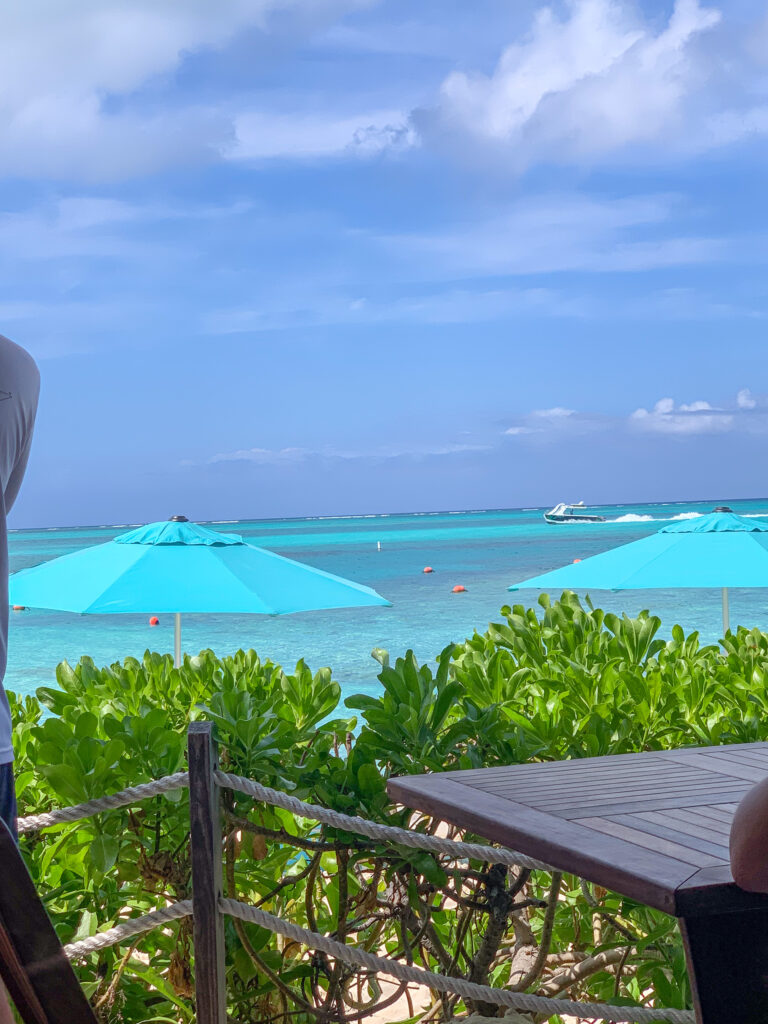
    A dark timber table behind a rope railing, looking over a sea-grape hedge to two turquoise umbrellas, the reef buoys and a powerboat crossing
    From a table on the lower deck: the hedge, the umbrellas, the buoy line, and a powerboat crossing outside the swim zone. You watch the reef from here rather than the room.

    The counter-argument

    The complaints about Somewhere are almost never about the setting. They are about the distance between the setting and everything else.

    Front of house is the weak link, and the bar is not. Long gaps before anyone comes to the table; staff visibly gathered away from the floor; a check delivered in the middle of a meal and, more than once this year, a table asked to move on with empty tables all around it. The bartenders are the strongest thing about the service here, and they are strong.

    It is also inconsistent, and the inconsistency runs inside a single week rather than across seasons. Three visits in five days will produce one near-walkout and two good evenings. Within the same month this summer the food has been excellent and it has been barely worth eating.

    The signature dish is also the standing complaint, an awkward thing to carry. The fish tacos are what it is famous for and what people who have been eating them for a decade say has been thinned out: more lettuce, more cabbage, less fish.

    And it is not a taco shack, whatever the driftwood sign suggests — it only dresses like one.

    Know before you go

    The most important thing on this page, and the thing the big listings have wrong: the bar closes completely for about six weeks from early September 2026 for maintenance. The hours you will find published almost everywhere – 8:30am to 11pm, seven days – are the winter figure, and they are wrong today.

    The real off-season hours, from 10 August until late November, are 11am to 8pm, with the kitchen closing at 7pm, and closed on Tuesdays. Breakfast, weekend brunch and live music are all suspended until the winter season begins on 22 November. The venue’s own pages disagree with each other about whether the off-season ends on the 11th or the 21st of November, so if you travel in that window, phone.

    The reef, of course, does not close. September is the statistical peak of the hurricane season in these islands and the bar’s calendar tracks it almost exactly: short hours as the season builds, six weeks shut across the worst of it, back for the winter. The beach itself stays clear of the sargassum that lands on the south and west of the island through the same months.

    If you are coming for the water: wind under twelve miles an hour, near high tide, and go in from Stubb’s Road if the Penn’s Road end looks busy. If you are coming for lunch as well, come early or come at sunset and expect to wait, because you cannot hold a table unless there are six of you.

    See the full set: Grace Bay — in frames. More Providenciales: the Sapodilla villa.

    The reef asks nothing of you but the walk into the water. The bar on the dune above it charges like the view is on the plate.

    Don’t miss

    • Swim the ridge near high tide with the wind under twelve miles an hour
    • Go in from Stubb’s Road if Penn’s Road is full
    • Drink at four rather than six – the daily draft-beer hour
    • Order the ceviche and the fish sandwich, not the signature fish tacos
    • Take it away and eat on the sand – the beach chairs belong to the hotels

    The Grace Bay gallery

    Every photo on this site is my own, shot on the trip. Slide through →
    White sand curving west along the shoreline with turquoise shallows, orange marker buoys offshore and a line of umbrellas and loungers under palmsThe beach seen from under a green umbrella, white loungers on the sand, snorkellers in the shallows and orange conservation buoys marking the reef beyondA line of orange conservation buoys strung across turquoise water off a bank of white sand, a single snorkeller inside the line and a cumulus bank on the horizonTwo snorkellers face down over the dark ridge of the reef, orange marker buoys to the left and a powerboat crossing the horizonRippled sand under clear shallow water in the foreground, the darker band of the reef and a line of orange buoys beyond, with snorkellers between themA row of turquoise umbrellas and blue loungers along the dune with palms behind, a kayak drawn up on the sand and swimmers at the waterlineAn empty white beach curving west with low buildings in the far distance and a dark band of reef under the turquoise waterAn empty stretch of white sand with low resort buildings set back among the trees and clear turquoise water breaking at the shorelineA yellow beach umbrella and white loungers on wet sand, the shoreline curving away into turquoise waterA driftwood board spelling SOMEWHERE in white shell lettering propped on a bench in front of the timber bar, with bougainvillea and palms behindA dark timber table behind a rope railing, looking over a sea-grape hedge to two turquoise umbrellas, the reef buoys and a powerboat crossing