The Suite Report

Tag: Banyan Tree

  • Where to eat at Banyan Tree Mayakoba

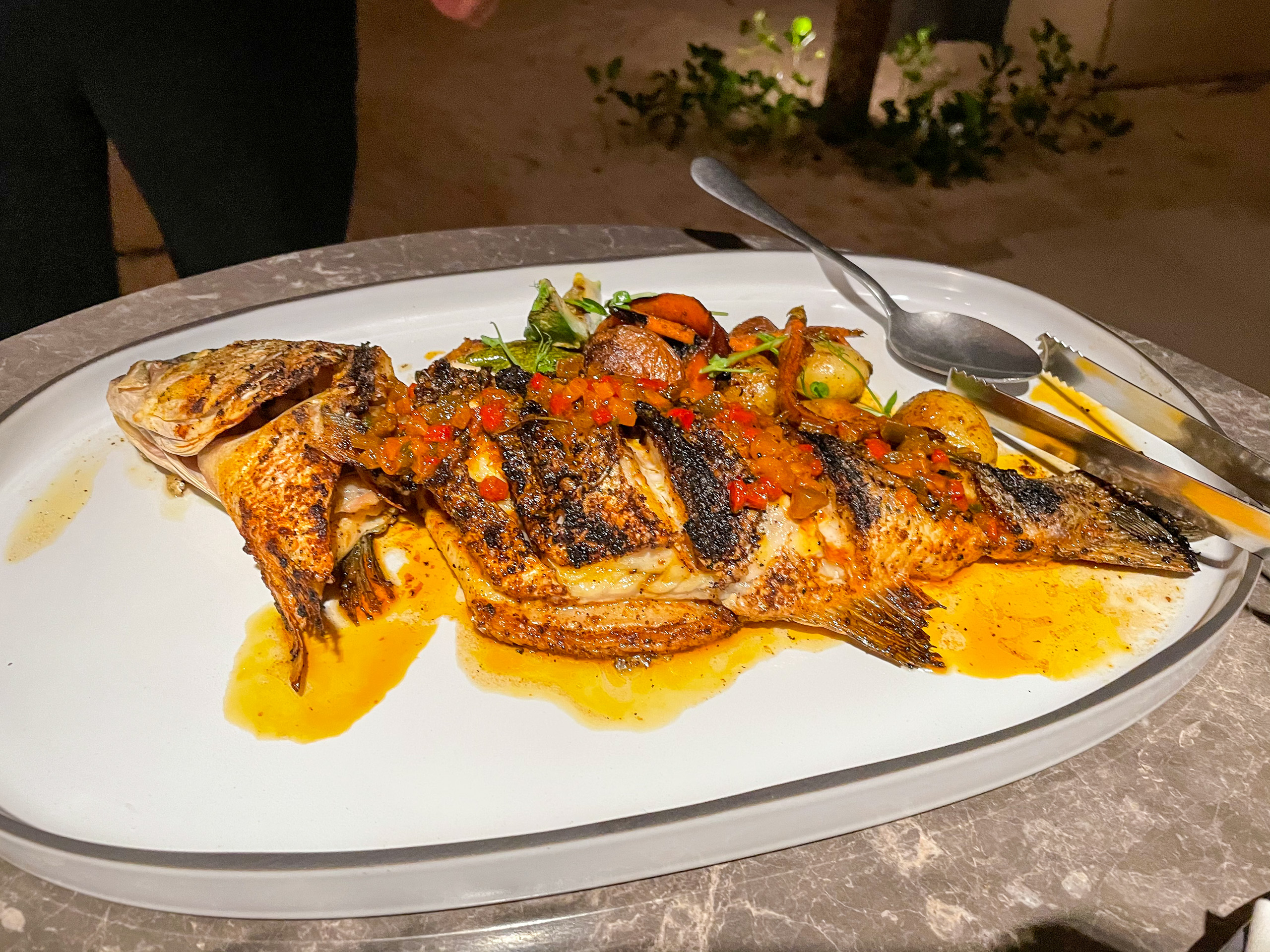
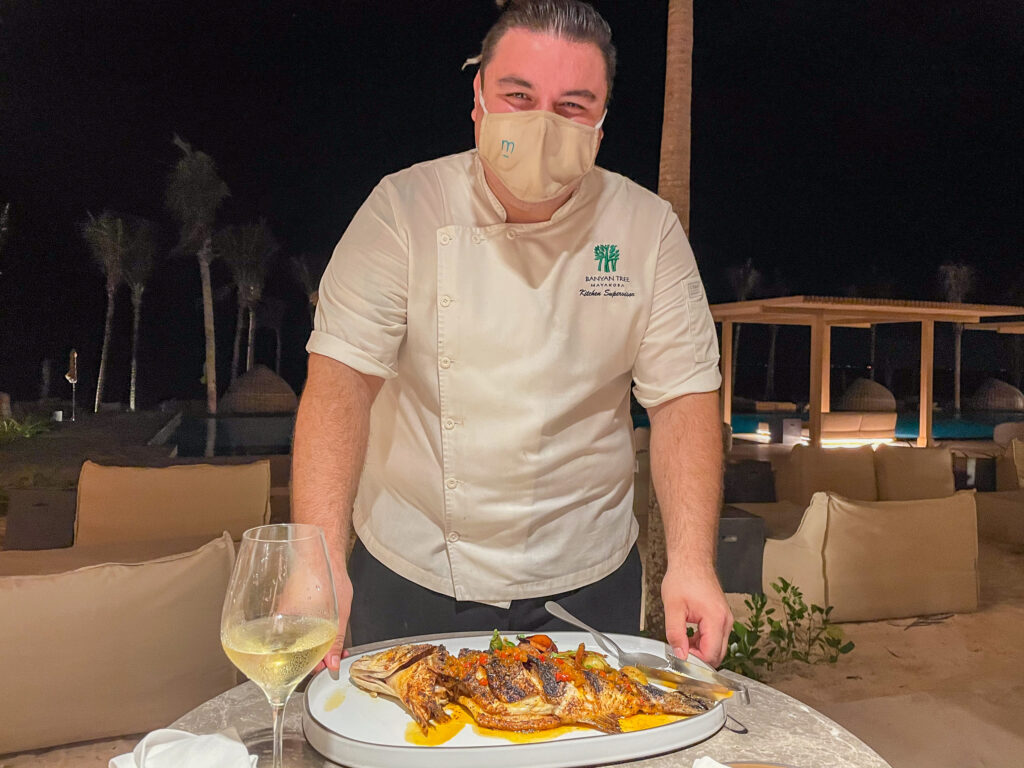
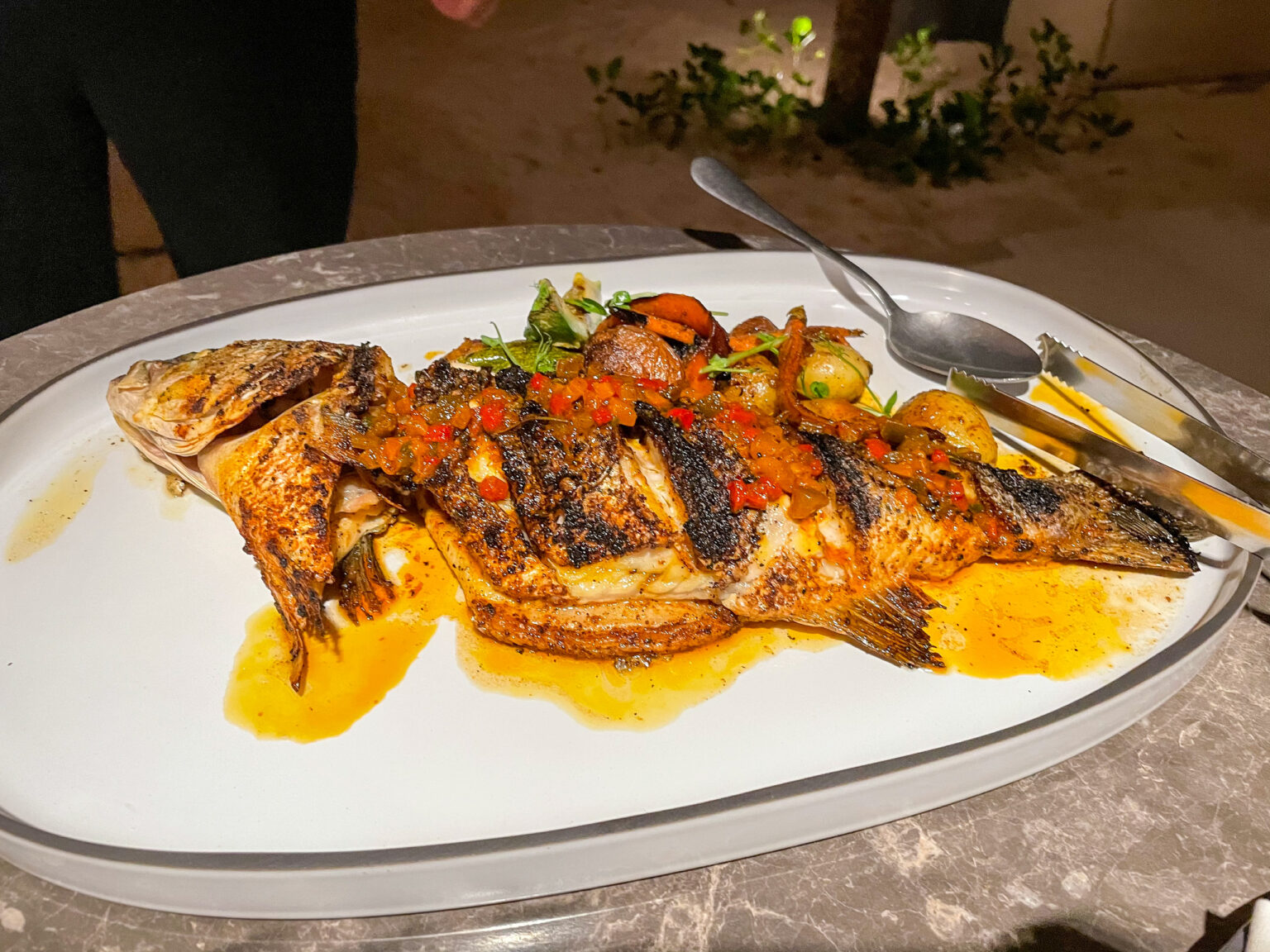
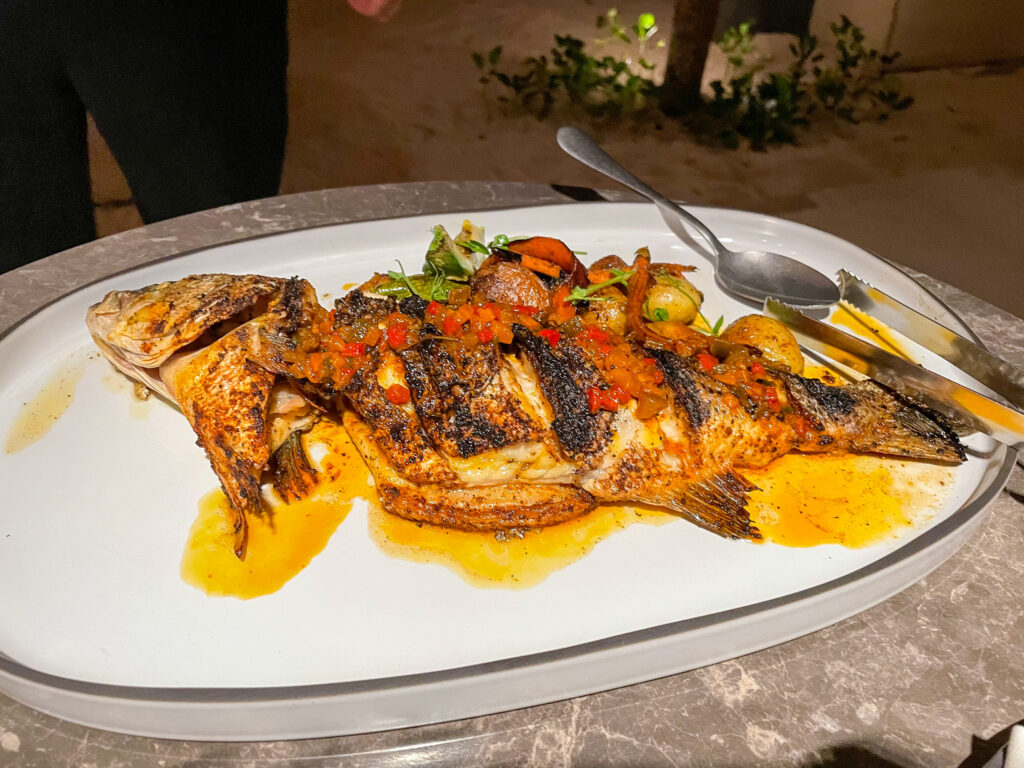
    A whole grilled fish on a white platter with chilli salsa, potatoes and olives, served outdoors after dark

    MAYAKOBA, MEXICO · RESTAURANT · 9 MIN READ

    Where to eat at Banyan Tree Mayakoba

    Seven restaurants, two beach clubs and six destination dinners – and a bill written in two currencies that behave in opposite directions.

    By J.C. Mercer

    Verified meal·paid in full

    • Covers Two, across two stays rather than at one table
    • Dined March 2026
    • Menu À la carte throughout. There is no tasting menu anywhere on the property, not even at the signature restaurant
    • Drinks Cocktails and wine by the glass, ordered off the card. No pairing is offered and no drinks package exists
    • How it was booked The way any other guest would

    Every meal on this site is booked the way any other guest would book it.

    Banyan Tree Mayakoba lists seventeen places to eat, which is true and not much help. Seven are fixed restaurants, two are beach clubs, one is a pool bar. Six are formats rather than rooms – a Mayan dinner over fire, a dinner for two on a flat-bottomed boat, two themed nights, a barbecue at your villa, a sunset cruise. The seventeenth is room service, quietly one of the better options.

    Put like that, the decision is not which restaurant but which night. Two of the seven serve one meal a day, the adults-only beach club shuts at five, one kitchen stays open until one in the morning, and two of the destination dinners run on a single evening a week. Meanwhile the best food on the estate sells out nightly, including to people sleeping a hundred metres from it.

    Two of the seven restaurants are the same room

    The seven: Saffron for Thai, Suna for Nikkei until one in the morning, Cello for Italian, Tomahawk Open Fire Latin Grill for steak, Oriente for breakfast, Cocina Corazón for tacos at El Pueblito, La Copa for a drink.
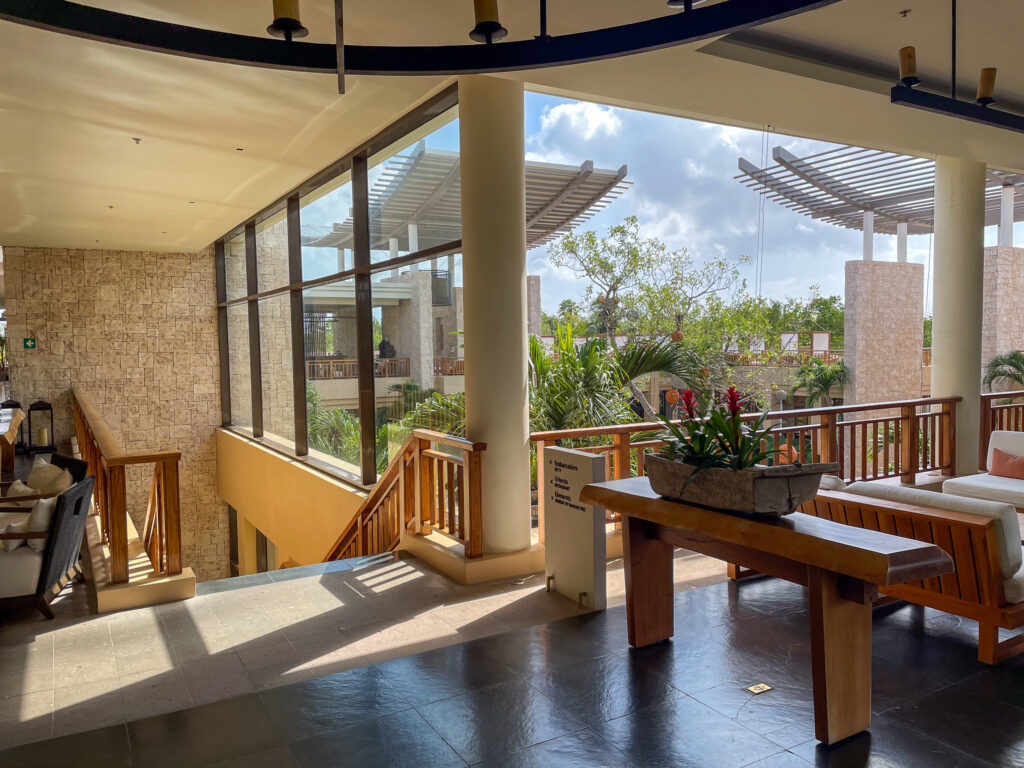
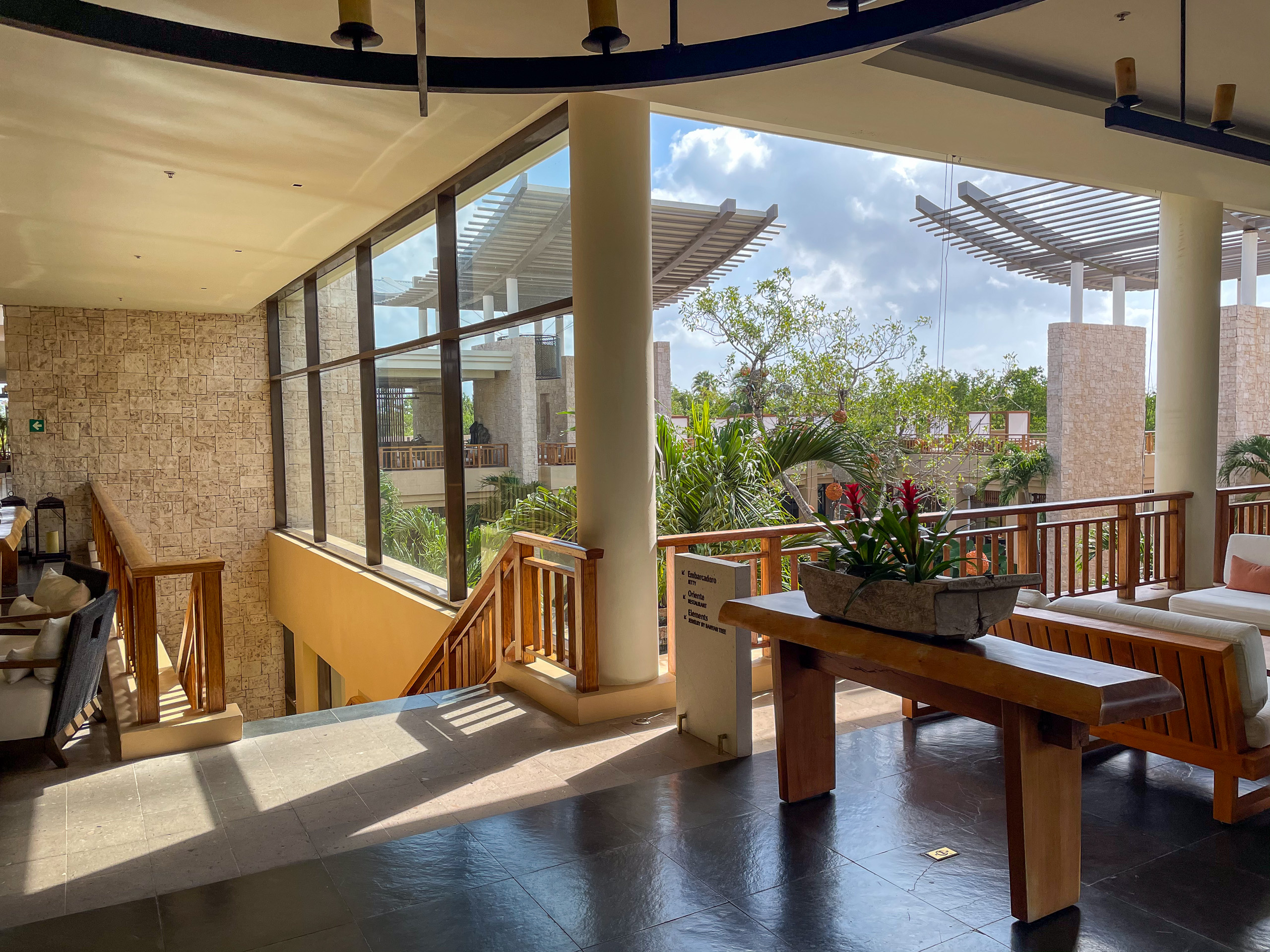
    The open-air lobby lounge, timber benches and a stone bowl of bromeliads looking out to the jungle
    The open-air lobby lounge. La Copa sits out here under the banyan tree, and it is the only place on the property you can get a drink and something to eat at four in the afternoon.

    Two of them are the same room. Oriente serves breakfast in it and closes at eleven; Tomahawk lights the grill in it at half past five. The property presents two restaurants and structurally it is one space used twice a day, which explains the hours and a good deal about how the steakhouse feels. La Copa, meanwhile, does more than a lobby bar usually does: the agave tasting is held there, and it is where you board the lagoon dinner.

    Saffron is the one to book before you fly

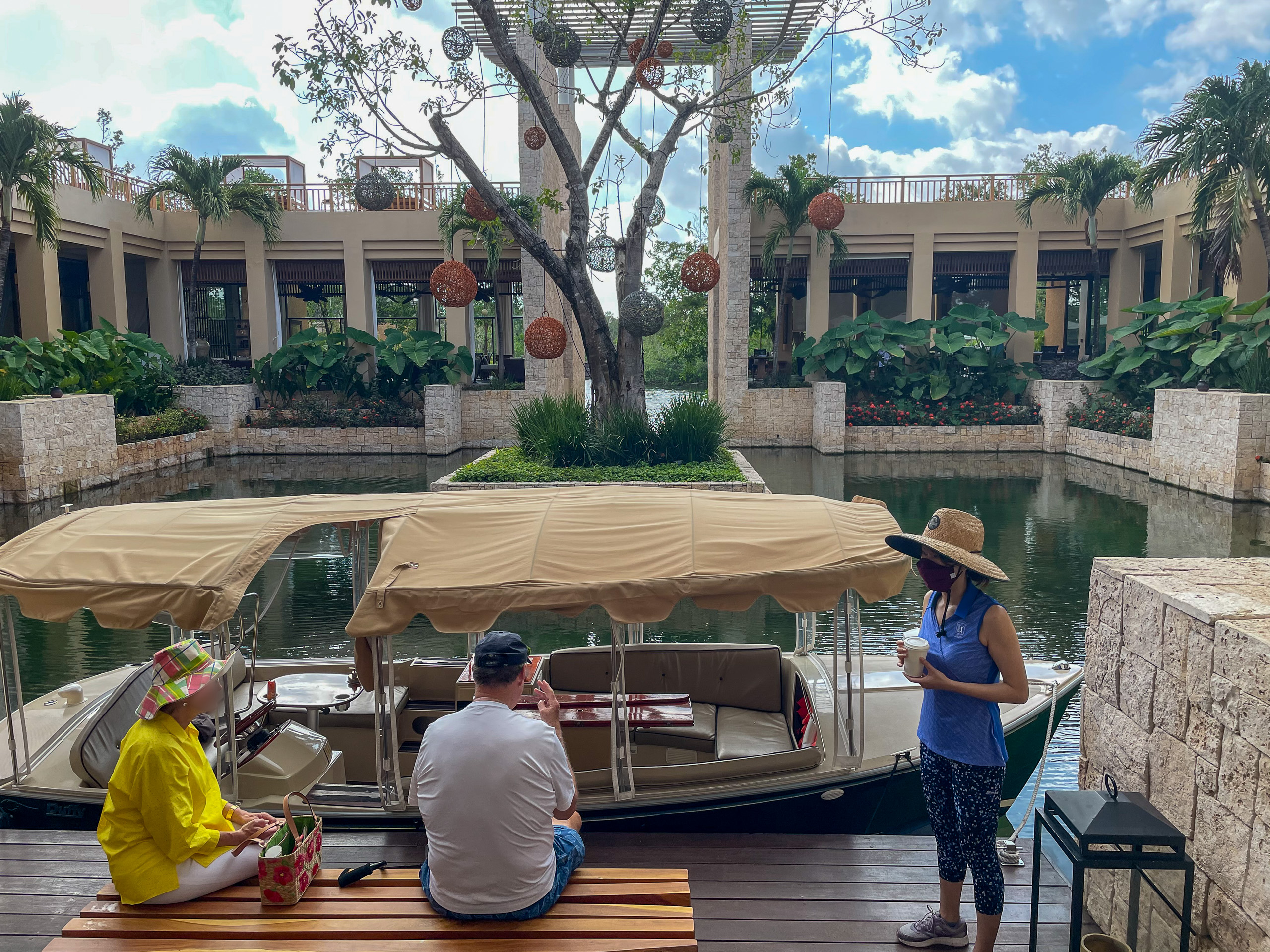
    Saffron sits on low wooden decks over one of the canals, and the intended way to reach it is by electric boat rather than on foot. Dinner only, seven nights. It is the best food inside the gates, and not by a little.

    The lineage matters more than it usually would. The first Saffron opened at Banyan Tree Phuket in 1995 and it is now the group’s signature restaurant at fourteen properties, with a corporate chef who travels between them so that the dish you order in Mexico is the dish you would be handed in Macau. The local kitchen puts the split at roughly eighty per cent corporate recipes it must follow exactly, twenty per cent it can play with.

    There is no tasting menu and no wine pairing, which at this level is unusual and is good news: you order what you want. Curries and wok dishes climb to the tenderloin at the top of the card, and the vegetarian section is a real one – seven mains, all close cousins.

    Two practical notes. Saffron sells out nightly and nothing appears to be held back for guests already on the property, so booking from home is not over-planning – and when it is full the kitchen will cook to your villa, because Saffron is on the all-night room-service card. Second, it opens at half past five, on decks above standing water, in a mangrove. Take the repellent to dinner.

    Breakfast is the one room everybody is in

    Oriente serves from seven until eleven and that is the whole of its day. The buffet is vast – a wall of bread and pastry, a Mexican side and an American one, omelettes and pancakes to order – with a continental tier, a children’s version, and an à la carte card besides. It is also the only crowded space on a resort whose whole selling point is that nothing is crowded. Every child on the property is in there between eight and nine, the kitchen is not staffed for the volume, and a filter coffee can outlast the food.

    Three ways around it. Sands Beach Club does à la carte on the sand from eight to eleven, pancakes at the bottom of the card and an acai bowl at the top. The boat dinner has a breakfast version for two. Or eat on your terrace, where in-villa sets carry a delivery charge on top: dearest of the four, and quietest. Note that Oriente opens at seven and Sands not until eight.

    The two beach clubs split the day between them
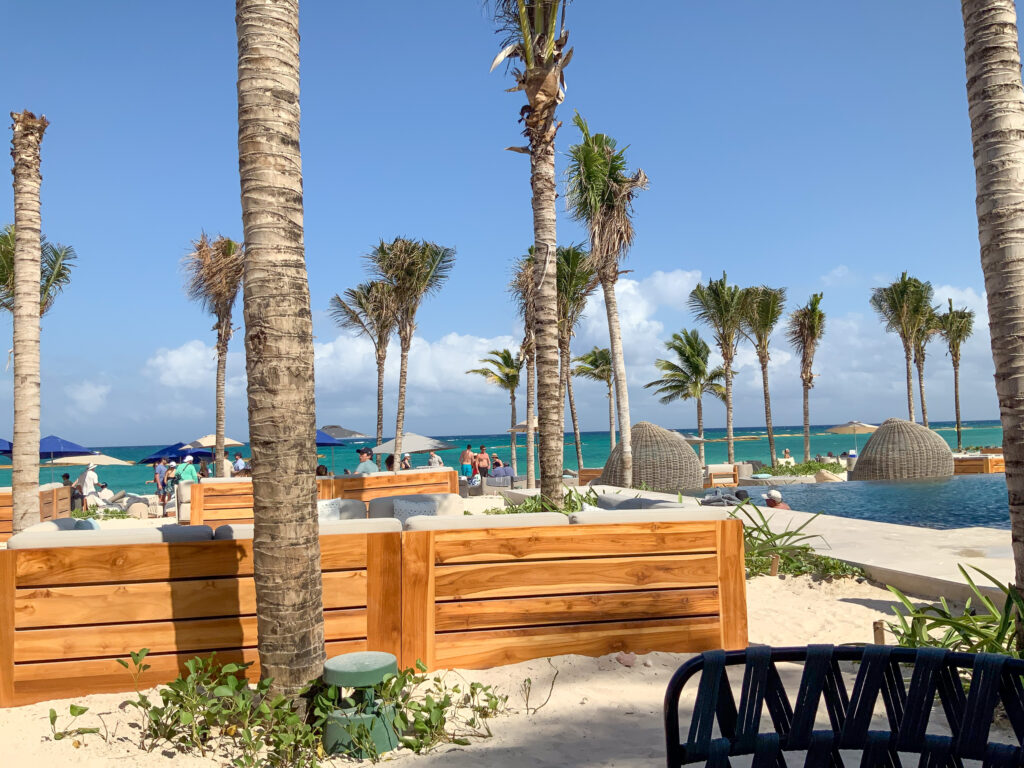
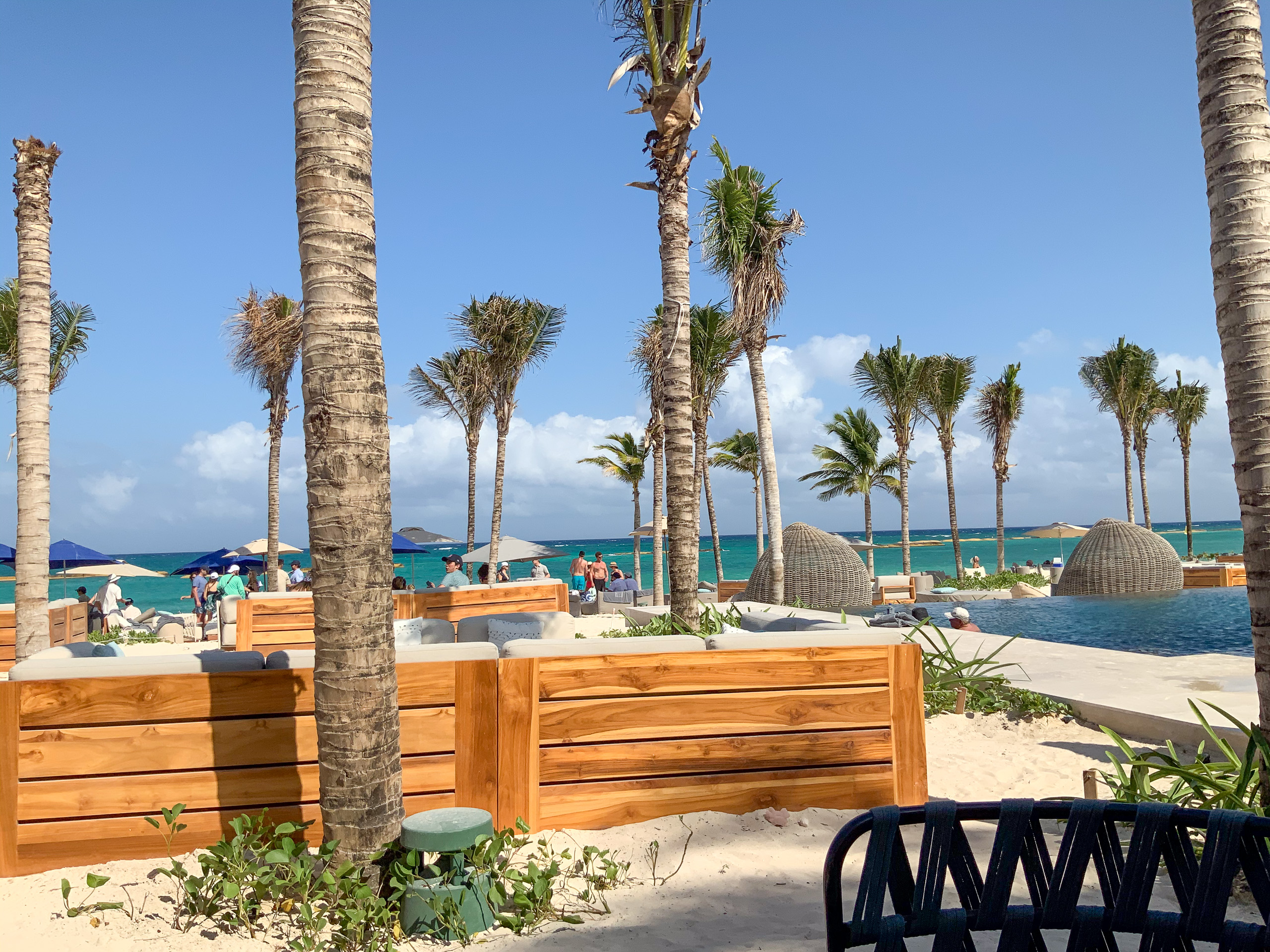
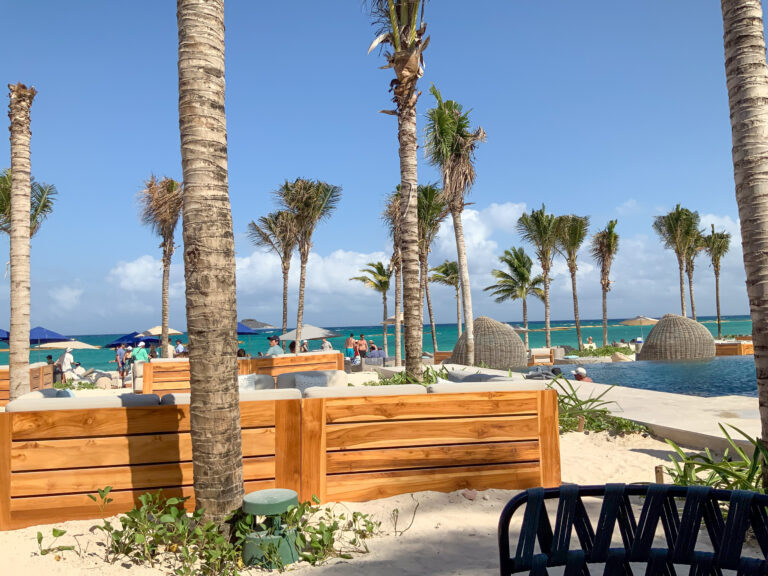
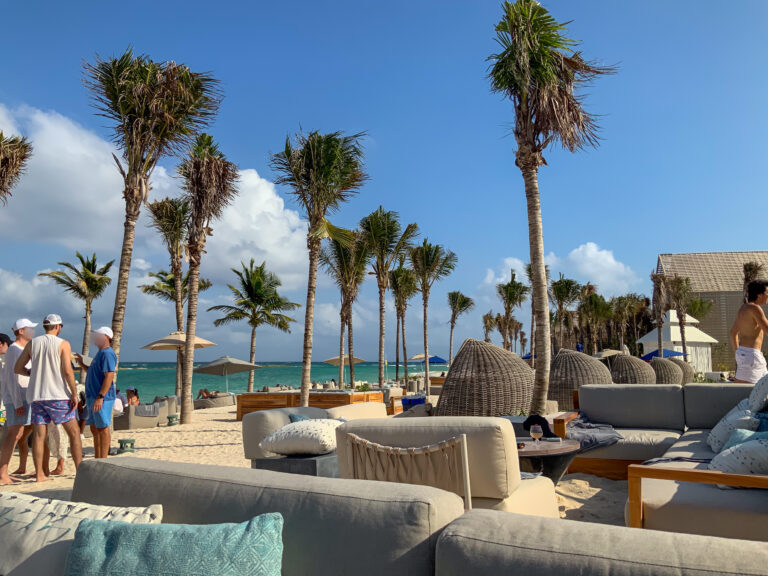
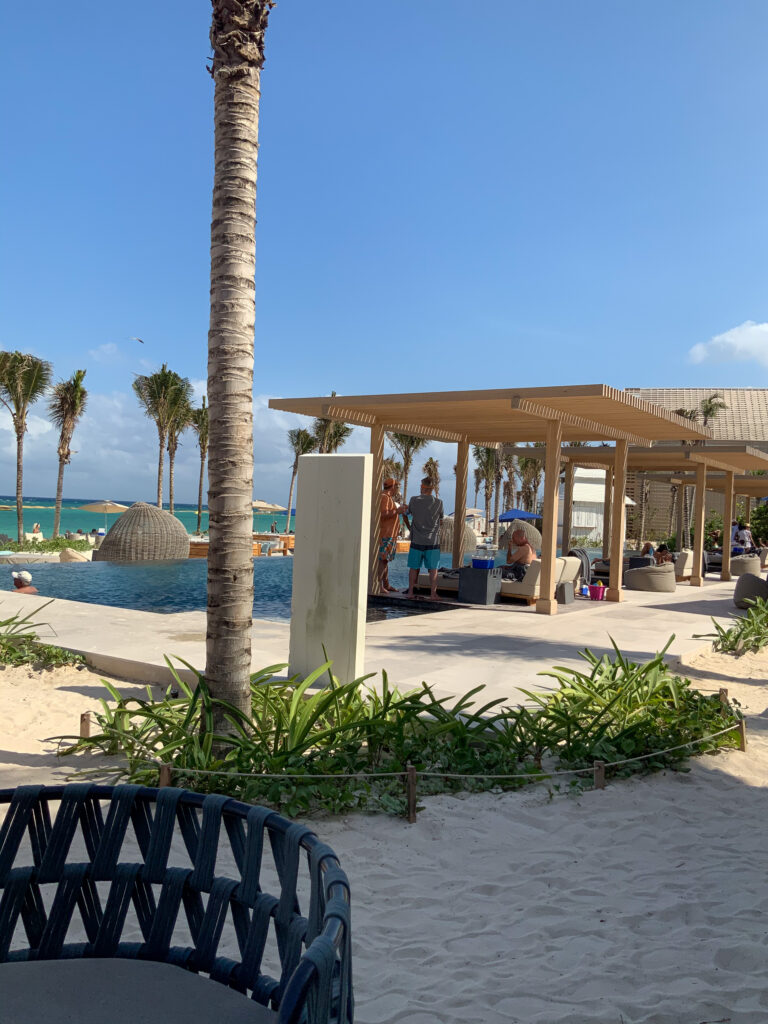
    Teak daybeds and woven pod cabanas on the sand beside the beachfront infinity pool, palms and the Caribbean behind
    The beachfront pool and the daybeds beside it. The house states plainly that the daybeds are a daytime arrangement and are not available at dinner.

    Sands is the only venue doing all three meals. Lunch is poke bowls, pizzas and tacos, with a lobster roll at the top of the card. Dinner is a different proposition – the kitchen sets up a seafood market and cooks what you point at – running from lobster tacos to a 300-gram beef tenderloin, the dearest single plate on the property and dearer than anything at the signature restaurant.

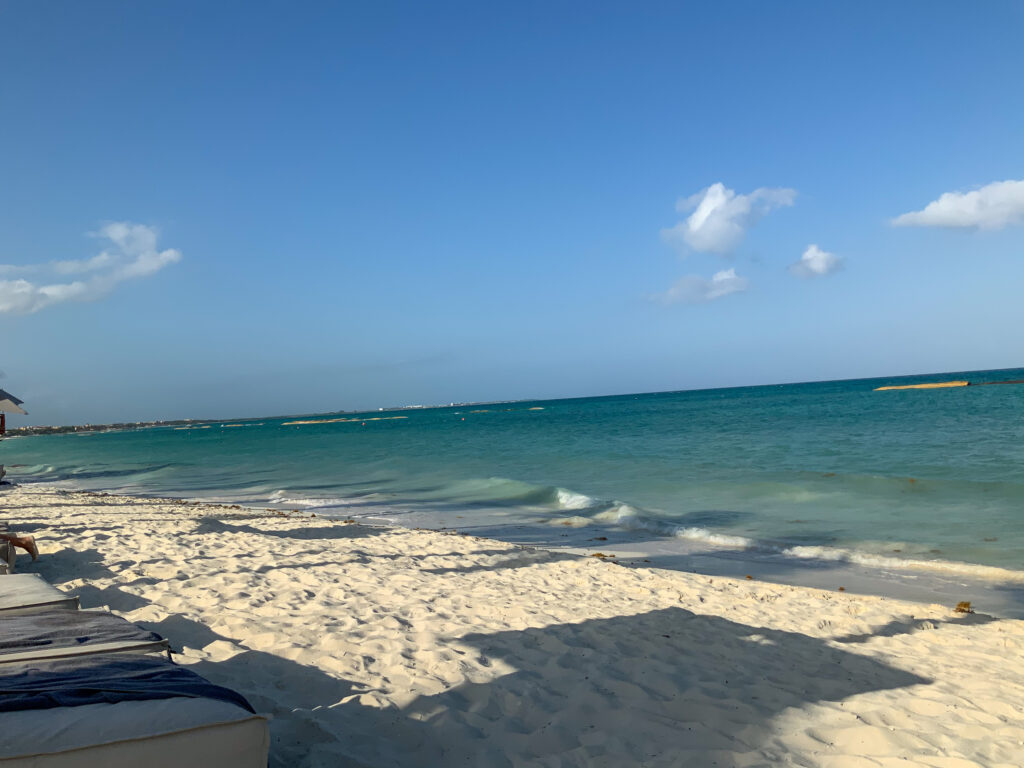
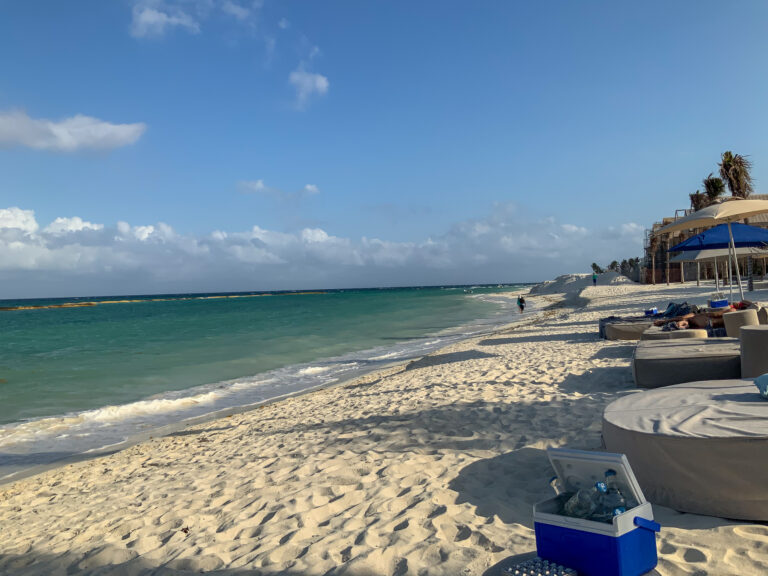
    Sur is the only adults-only dining space here, eleven until five and no dinner at all. That is the useful shape of the day: Sur takes the quiet lunch, Sands takes the children and the evening. It also means only these two and the barbecues on the sand are exposed to the sargassum that reaches this coast from late spring into early autumn. Everything else is lagoon-side or in the village.

    The dinners that only happen if enough people book
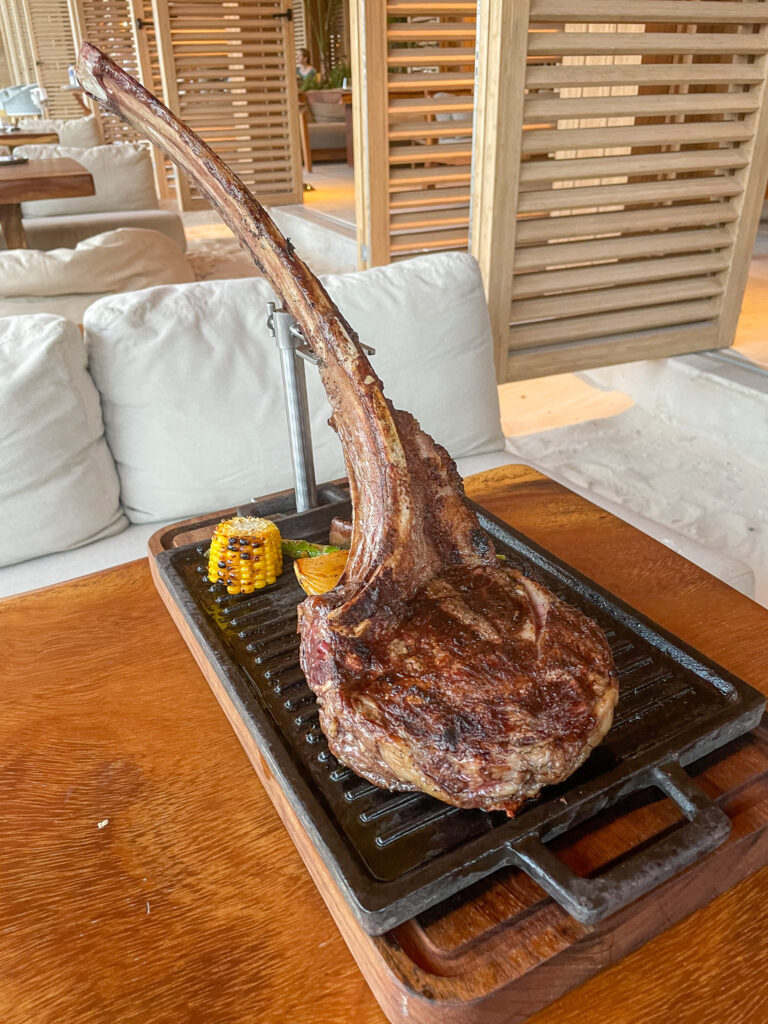
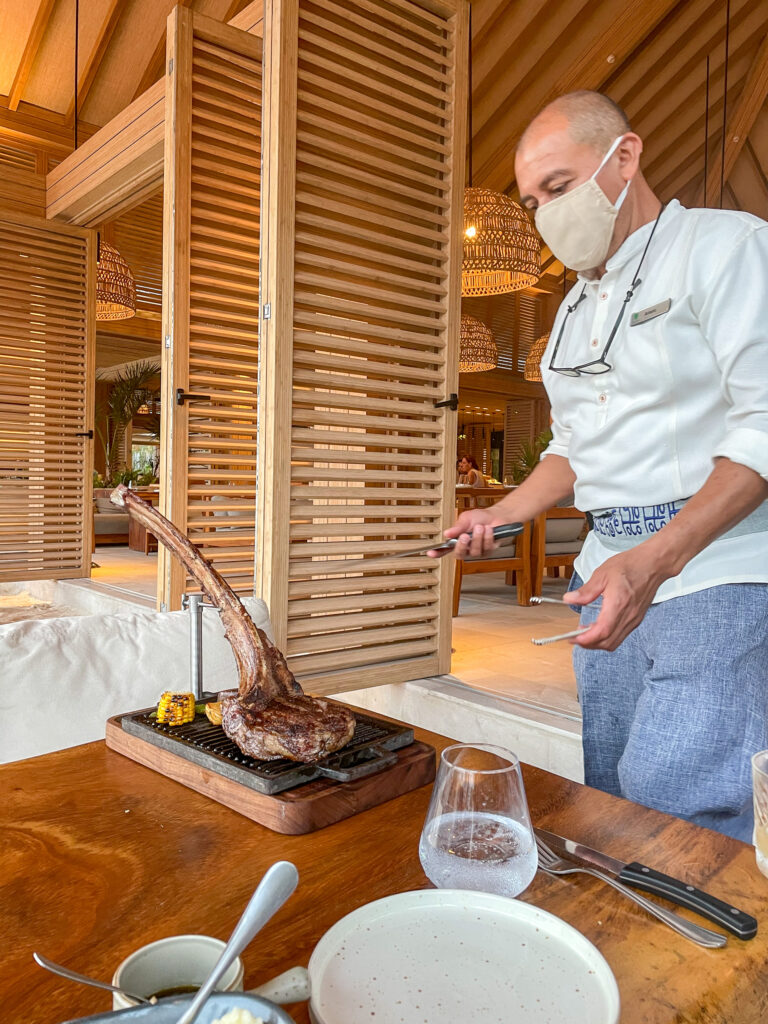
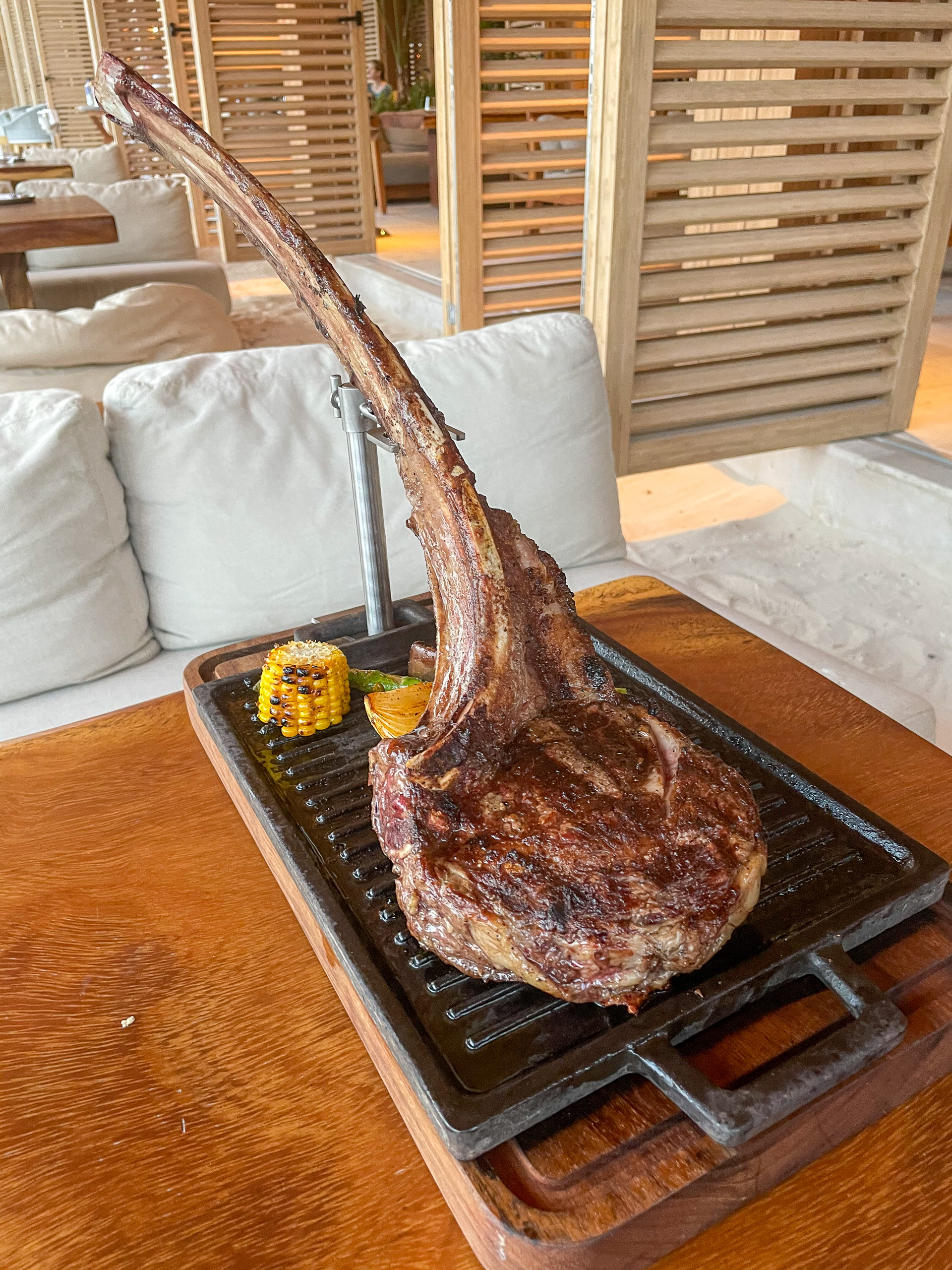
    A tomahawk steak on a cast-iron grill plate with charred corn, served on a low table in the lounge
    A tomahawk and charred corn brought out on a cast-iron plate. The private formats travel: the kitchen will grill at your villa, on the sand, or beside the lounge.

    Six of the seventeen listings are events rather than rooms, and several need a minimum number of diners. If the numbers are not there, the evening does not run. Haab is the headline: a multi-course Mayan dinner in the open air, wines and spirits harmonised into the set menu, song and dance through it. It goes on request rather than on a fixed night, and it can be pulled on the day for want of sign-ups – repeatedly, even in high season. Book it early and hold it loosely. Latin Beach BBQ, on Wednesdays, has the same problem; Mexican Night is Saturdays, mariachi and antojitos.

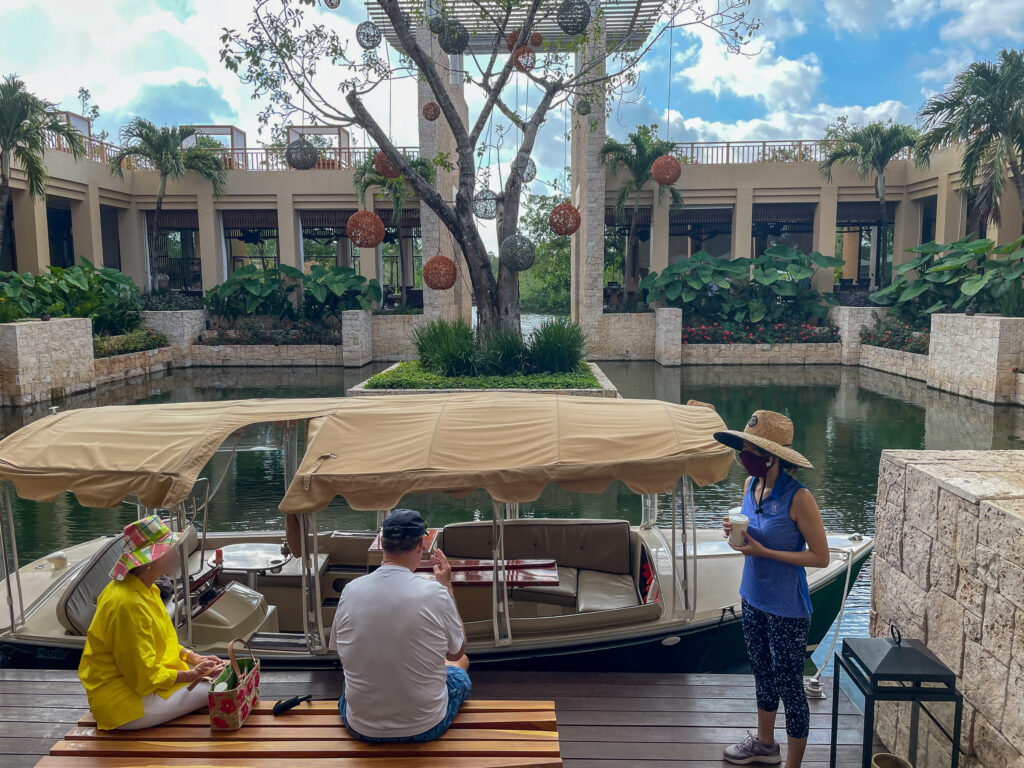
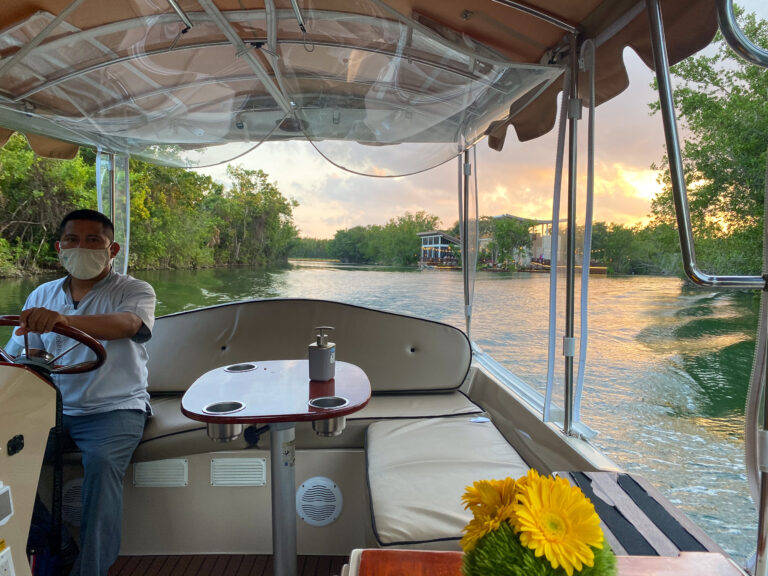
    Ixchel does not depend on anyone else turning up, because it is private. You board a trajinera at the lobby dock after a cocktail at La Copa and drift the lagoons for about two hours, a captain and a chef aboard, working from one of three menus you choose in advance. Take the Thai: Saffron’s kitchen cooks it. A bottle of wine comes with it. Of everything here, it is the thing I would book twice. The Signature In-Villa BBQ and the Sunset Cruise are email bookings rather than WhatsApp.

    One flat statement, because it matters more than an estimate would: the property publishes no terms for any of the six, nor for the cooking classes or the tastings — get the details in writing first.

    The boat to the other three hotels stops at seven
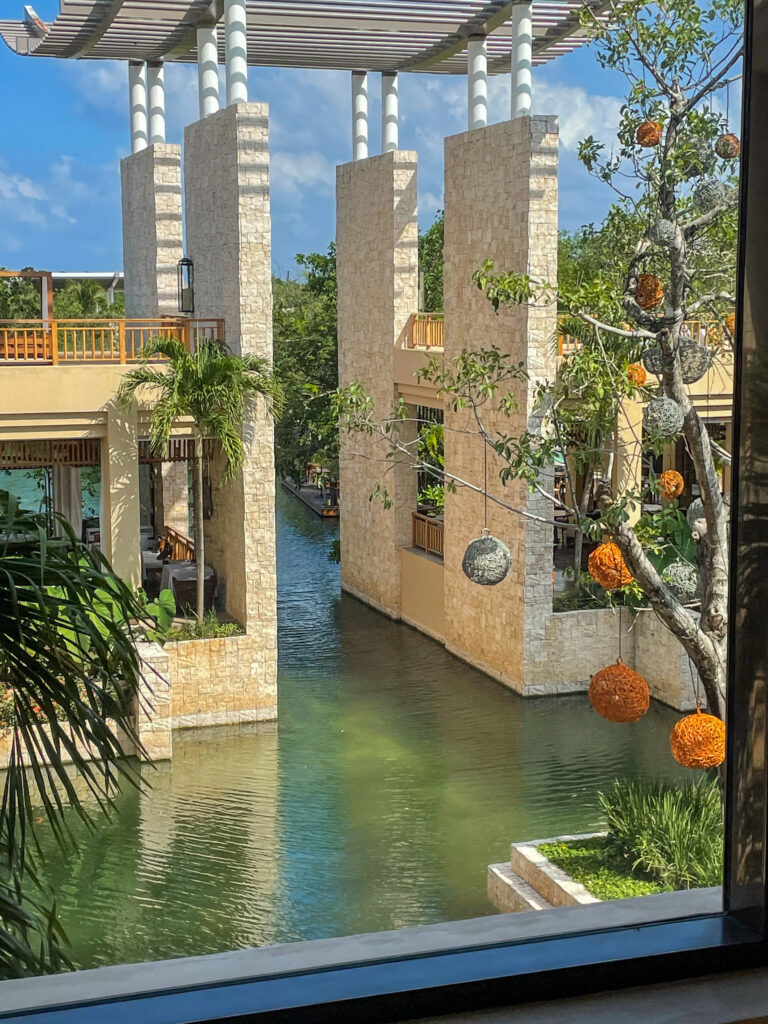
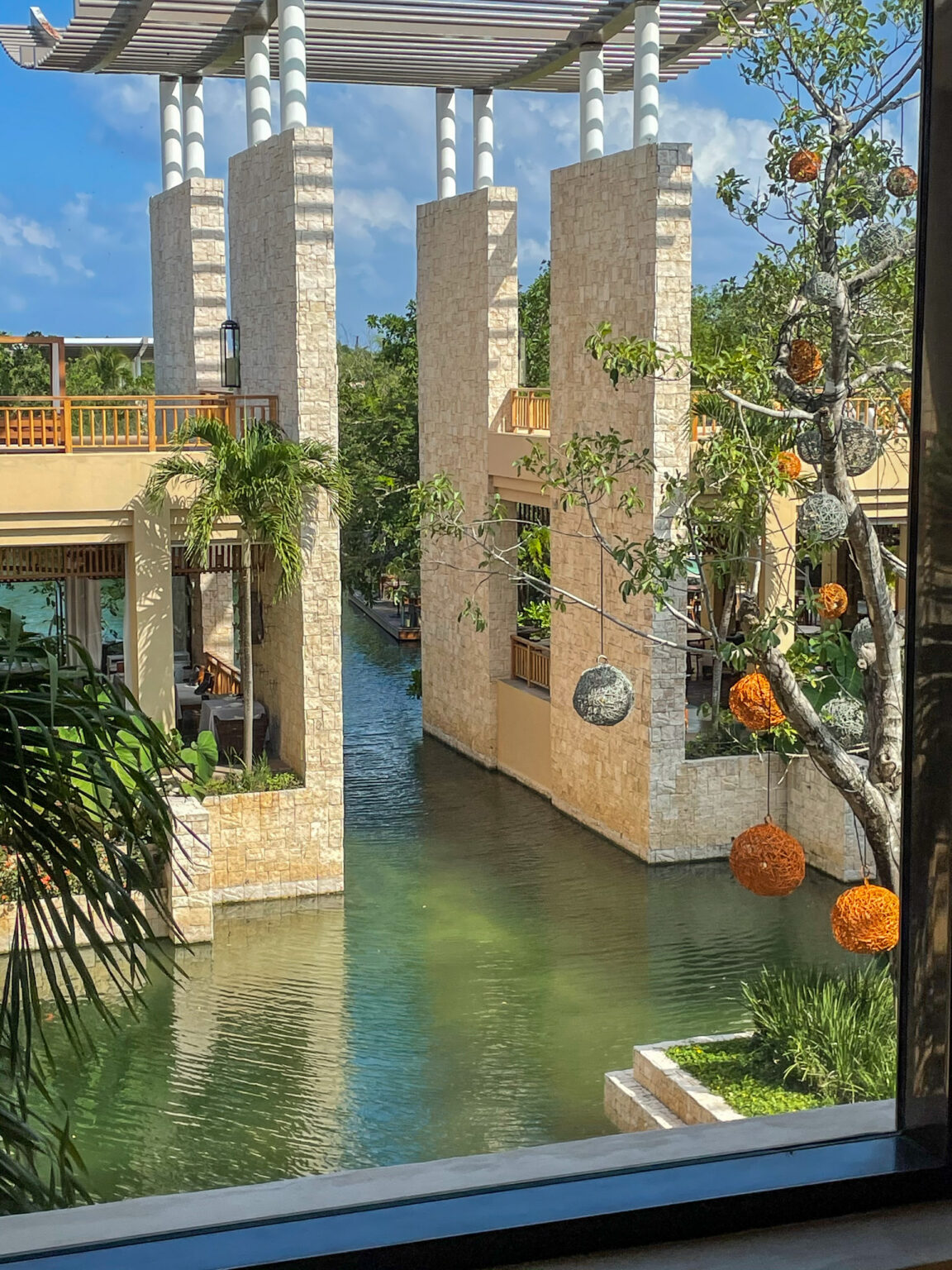
    Canals running between the villa buildings, seen from a window with woven lanterns hanging in the tree outside
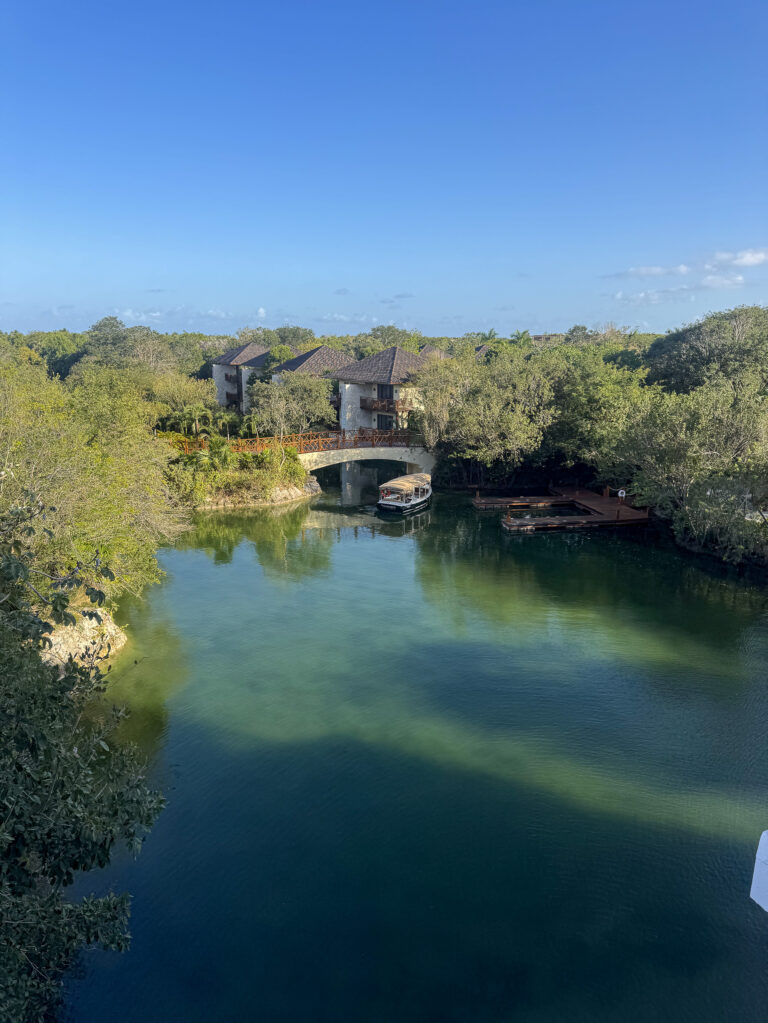
    The canals that link the four hotels. The electric boats run along them all day and stop at seven in the evening.

    Mayakoba is four hotels – Alila, Banyan Tree, Fairmont, which opened first in 2006, and Rosewood – on one gated estate of some 600 acres, and every one of their restaurants is open to every one of their guests. That is a destination-level policy, not a courtesy a single hotel extends. Getting there is by boat, golf cart, bicycle or on foot. Rosewood’s Zapote is a serious cocktail bar with Mediterranean small plates; Fairmont has El Puerto and La Laguna.

    But the boats stop at seven, and that single fact reorganises the idea. Arriving at another hotel’s restaurant by water at dusk, the version everyone pictures, exists only for the early sitting: book half past five and the canal takes you both ways; book eight and you go home in a golf cart, which is fine and is not the same evening. And if you are coming from outside the gates, the booking has to be in the gatehouse’s system, not merely in your inbox.

    The counter-argument

    The problem with eating here is not the cooking at the top. It is everything underneath it, and it is the drinks. Start with the steakhouse, the clearest case. Tomahawk is a grill concept working out of the breakfast room and it shows: no atmosphere of its own, tables that feel like tables put somewhere rather than a restaurant, and a headline product that is not good enough. The cut arrives tough and, more damningly, essentially unseasoned. The bread and the empanadas are the best things on the table, which is not a compliment at a place named after a cut of beef. Skip it.

    Two irritations: every menu is a QR code with no printed card anywhere, and fish listed on the beach-club card is often unavailable.

    The largest objection is the hardest to answer. This is a heritage-rich stretch of Mexico and the best restaurant on the property is Thai, with the Mexican register carried by a lunch room and a bar. The Asian identity is genuine and well executed, and it is also why a week here can feel oddly untethered from the country you flew to. The fix is not on this property. It is a free boat away, and it leaves at seven.

    Know before you go

    Booking is not one system but three: Saffron, Cello, Tomahawk and Sands take online reservations, every other venue is WhatsApp only, and the in-villa barbecue and the sunset cruise are email. Dietary requirements are handled well but on a clock – vegetarian, vegan, gluten-free, halal and kosher meals are all available with at least twenty-four hours’ notice, arranged through the concierge rather than at the table. There is no kosher restaurant here; it is a meal request, and the notice is the whole of the requirement. Dress is resort casual by day, and after dark the rule at the dinner restaurants is no beach shorts and no flip-flops.

    Two timing notes to finish. The hotel states that its restaurants run to seasonality and hours can change without notice, so confirm anything you are building a night around on the day, not the month before. And the venues are open to people not staying here, provided the reservation is confirmed – part of why the best table on this estate is gone by the time you land.

    See the full set: Banyan Tree, Mayakoba — in frames. More Mayakoba: the Mayakoba set.

    Book Saffron from home, keep breakfast early, and let the lagoon run the evenings.

    Don’t miss

    • Book Saffron before you fly. It sells out nightly.
    • Ixchel on the lagoon. Choose the Thai menu.
    • Zapote at Rosewood, booked for six, for the canal boat.
    • Book direct for the daily signature cocktail.
    • Suna after eleven. The only kitchen still working.

    The Banyan Tree gallery

    Every photo on this site is my own, shot on the stay. Slide through →
    A whole grilled fish on a white platter with chilli salsa, potatoes and olives, served outdoors after darkA tomahawk steak on a cast-iron grill plate with charred corn, served on a low table in the loungeThe open-air lobby lounge, timber benches and a stone bowl of bromeliads looking out to the jungleCanals running between the villa buildings, seen from a window with woven lanterns hanging in the tree outsideTeak daybeds and woven pod cabanas on the sand beside the beachfront infinity pool, palms and the Caribbean behindCabanas and loungers around the beachfront pool under palmsClear turquoise water and clean white sand on the beach at MayakobaA villa terrace with a private plunge pool above the beachBed, wood floors and a plunge pool looking out to the Caribbean in a beachfront suite
  • Banyan Tree or Fairmont Mayakoba: the Retreat and the Resort

    The main pool at Fairmont Mayakoba, loungers and a parasol on the limestone terrace with palms behind

    BANYAN TREE MAYAKOBA vs. FAIRMONT MAYAKOBA · 4 MIN READ

    Banyan Tree or Fairmont Mayakoba: the Retreat and the Resort

    Four hotels share one jungle estate on the Riviera Maya. Two of them are the real decision — and one of them is not a resort at all. It is a retreat.

    By J.C. Mercer

    Verified stays·paid in full

    Banyan TreeFairmont
    StayedApril 2022March 2026
    Room bookedOceanfront Pool VillaSignature Casita, king
    How it was bookedAmex Fine Hotels + Resorts, public rateAccor ALL, public rate
    What the channel boughtUpgrade to pool villaNothing beyond standard.
    Value verdictWorth it. Beachfront villa excellent. Worth it as the value play to access Mayakoba — with children, a group or a longer stay. It is good, not great.
    When to goAnytime. Book Banyan TreeSpring Break. Book Fairmont

    Both stays booked the way any other guest would book them.

    The question

    Mayakoba is not a hotel. It is a gated stretch of jungle about forty minutes south of Cancún airport, threaded with canals cut out of the limestone and fed by the rivers running underneath the Yucatán. Four luxury hotels sit inside it, with a golf course and a shared village square, and guests move between them by golf cart, bike or boat. Which means the location argument, which usually decides these comparisons, does not exist here. Same jungle, same beach, same drive, same course. What is left is the hotel itself — and the two ask very different levels of commitment for it, with Banyan Tree the bigger ask on any comparable dates.

    Guests boarding a boat at the Mayakoba arrival dock
    The arrival dock. The same boats serve both hotels; the estate is one address.

    I have written each up on its own: Banyan Tree, beachfront or jungle goes through the villa categories, and Fairmont, the one that got here first covers the oldest hotel on the estate. This piece assumes you have narrowed it to these two and want to know which way to jump.

    The short version. Banyan Tree is all villas, every one with its own heated pool, wrapped in Southeast-Asian design and anchored by a Thai-heritage spa; it is the quieter, more design-led property, the one built around wellness, and the one that makes you feel you have left the resort world entirely — a retreat rather than a resort, and it commits from the kerb. Fairmont is rooms, casitas and suites, five pools including one with a waterslide, a kids’ club and a teens’ club, eight restaurants and an optional all-inclusive plan; it is the better-value property and the more practical one for a family. Both share the same canals and the same beach. Neither shares the same temperament.

    What the table cannot hold is the Banyan highlight: the Zen that settles on you somewhere between leaving the cab and leaving the resort, and never once breaks. A surprising amount of it arrives through the nose. The scent of the place is exceptional and pervasive — a keen aromatherapy that follows you from the lobby to the spa to your own villa, until you catch yourself breathing on purpose.

    An infinity pool running towards the sea past a thatched palapa
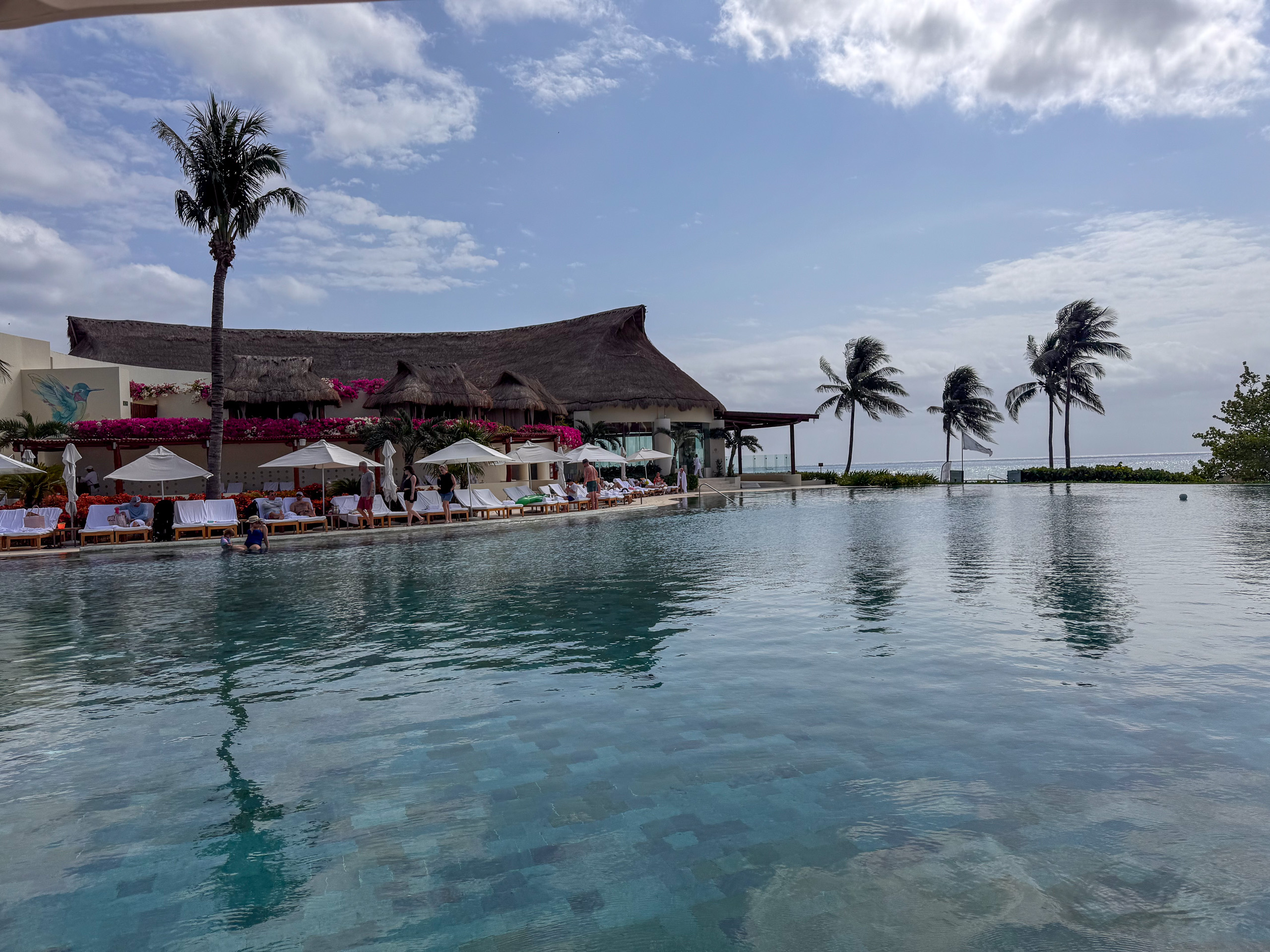
    An infinity pool running to the sea past a thatched palapa. Which hotel? That is the question.

    Side by side

    WhatBanyan TreeFairmont
    Entry accommodationA villa with a private heated pool; living space and bedroom open onto a terrace and your own waterA room or casita, large and bright, deep marble tub; comfortable rather than memorable
    DesignSoutheast-Asian, softened with Mexican materialsResort-standard; plain for the standing, and the walls are thin
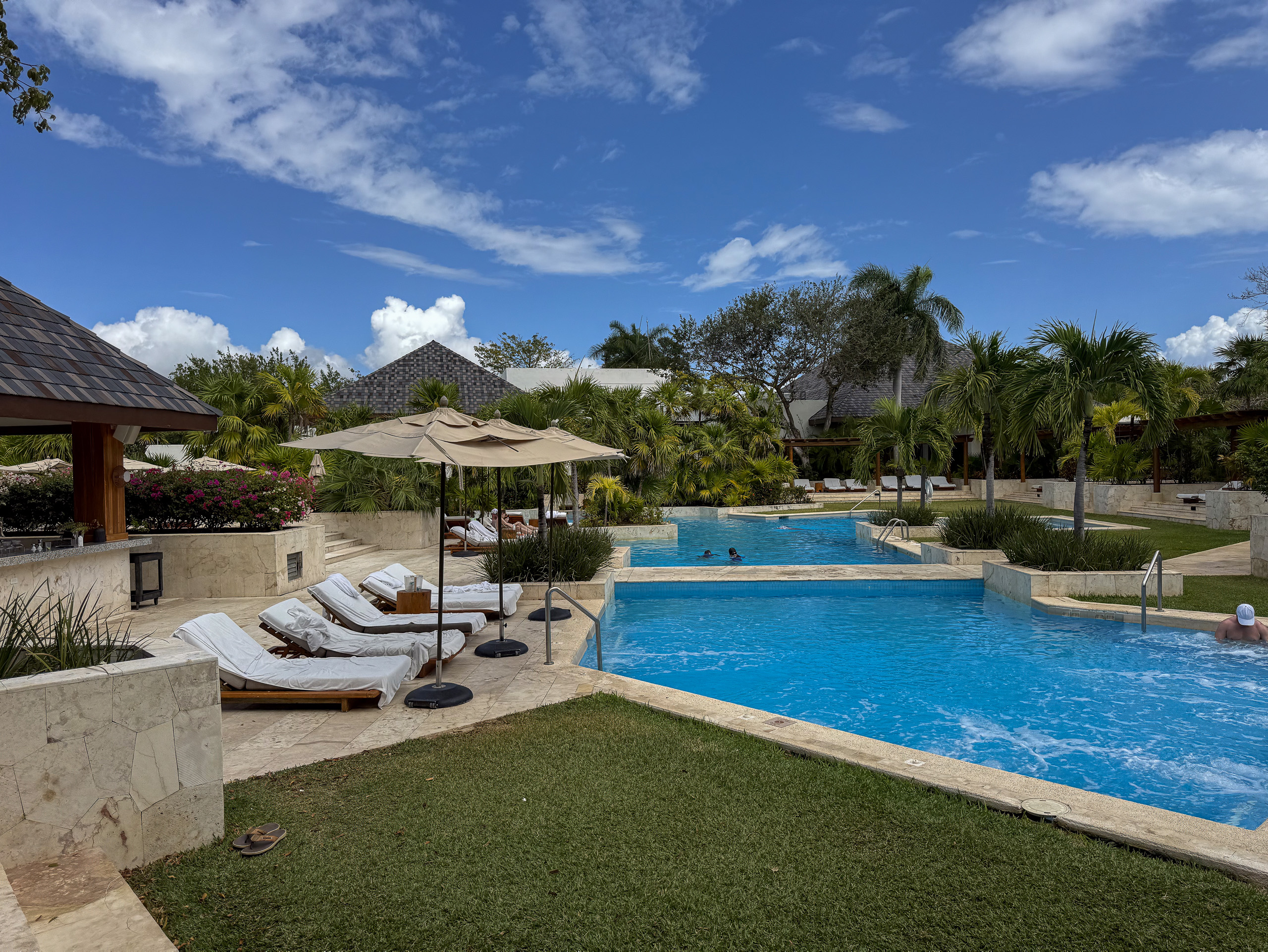
    PoolsBetter beach front club pool, private plunge pool.Numerous on site and by ocean. Including a family pool with a slide and an adults-only infinity pool over the lagoon
    SpaThe Banyan Tree Spa in private villas, and The Rainforest hydrothermal circuit — a reason on its own to visit Very good, without a wellness brand behind it
    EatingSaffron, the Thai room, is the standout on the estate. Steakhouse at the beach is excellent.Average food throughout
    ChildrenWelcomed, no kids’ clubBuilt for them: kids’ club, teens’ club, waterslide, connecting rooms
    ServiceThe strongest on the estate; fewer guests, more attention per villaGood for the size
    Best forCouples, wellness, the villaFamilies, groups, golf, longer stays
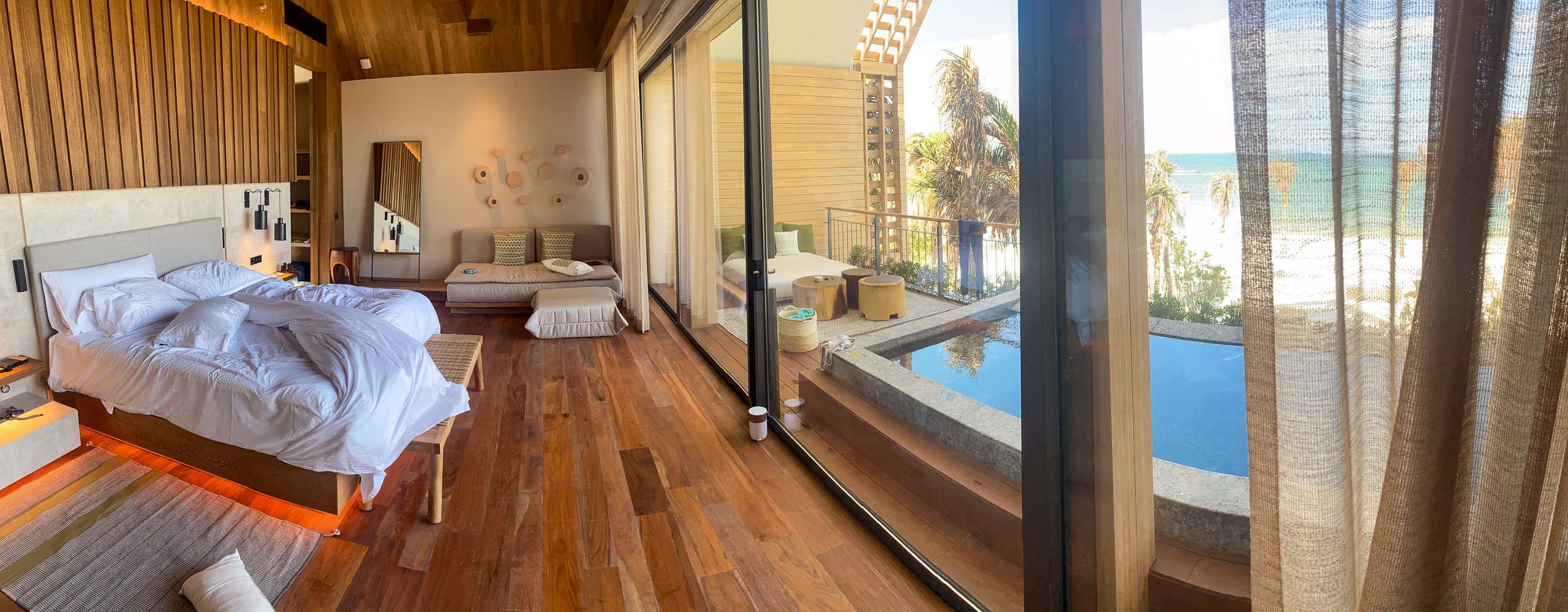
    A Banyan Tree villa bedroom opening onto its private pool and the sea
    Banyan Tree: the villa bedroom opening onto its own pool.
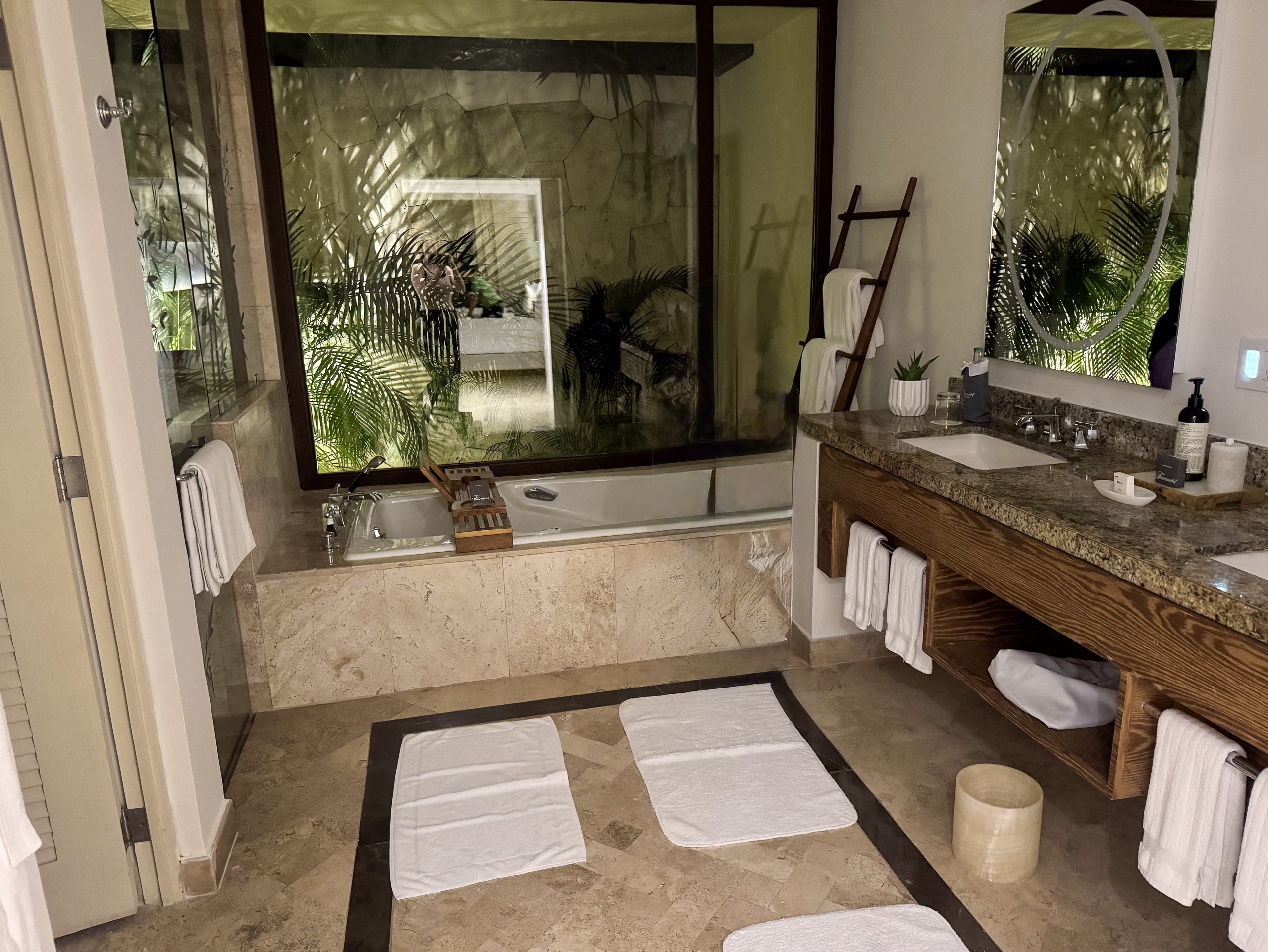
    A stone bathroom with a glass shower and the garden beyond
    Fairmont: the stone bathroom, the garden beyond.

    Noted

    Observed on both stays, not measured.

    WhatBanyan TreeFairmont
    Wi-FiFast, steady across the villaAdequate, weak on the terrace
    NoiseBirds and insects; no neighbours audibleNeighbouring room audible through the wall
    BedKing, medium-firm, excellent linenKing, medium, good linen
    Water pressureStrong; hot almost at onceStrong; a little slower to run hot
    Private poolHeated, cleaned dailyNot in this category
    Time to the beachOn the beach. Ten minutes with the buggy
    Loungers gone byNever an issueNever an issue
    SargassumPresent, barriers in place, cleared each morningPresent, barriers in place, cleared each morning
    Mosquitoes at duskNoticeable on the lagoonNoticeable in the gardens

    Where Banyan Tree wins

    The villa. A private heated pool on every terrace changes how the whole resort feels; the shared water is quieter than the guest count suggests because half the guests are in their own. One tip worth having: the garden and lagoon villas, screened by jungle, sit lower on the ladder and often feel more private rather than less.

    The spa. Thai-influenced treatments in private therapy villas, and The Rainforest, a circuit of steam, ice, heat and sensation pools that you build a slow afternoon around. It is a reason to choose this side on its own. And the service, which is the best on the estate for the plainest reason: fewer guests, and staff who are not stretched across four hundred keys.

    Saffron. The Thai room is the one restaurant on the whole estate worth crossing the water for, and Fairmont guests can — the ferry runs between the hotels. Which is the most useful thing I can tell you about eating at the Fairmont.

    A whole fish plated at dinner
    A whole fish at dinner, at the villa. The kitchen will grill at your pool.

    Where Fairmont wins

    Children, and this is the one category where the gap widens rather than narrows. Kids’ club, teens’ club, waterslide, connecting rooms, and enough space that nobody minds noise. Banyan Tree will put a family in a multi-bedroom villa and arrange babysitting, and it is a couples-and-wellness property at heart. At Fairmont your children are the point. At Banyan Tree they are quietly accommodated. Fairmont is a resort to take the kids to. Banyan Tree is a retreat to recover from them.

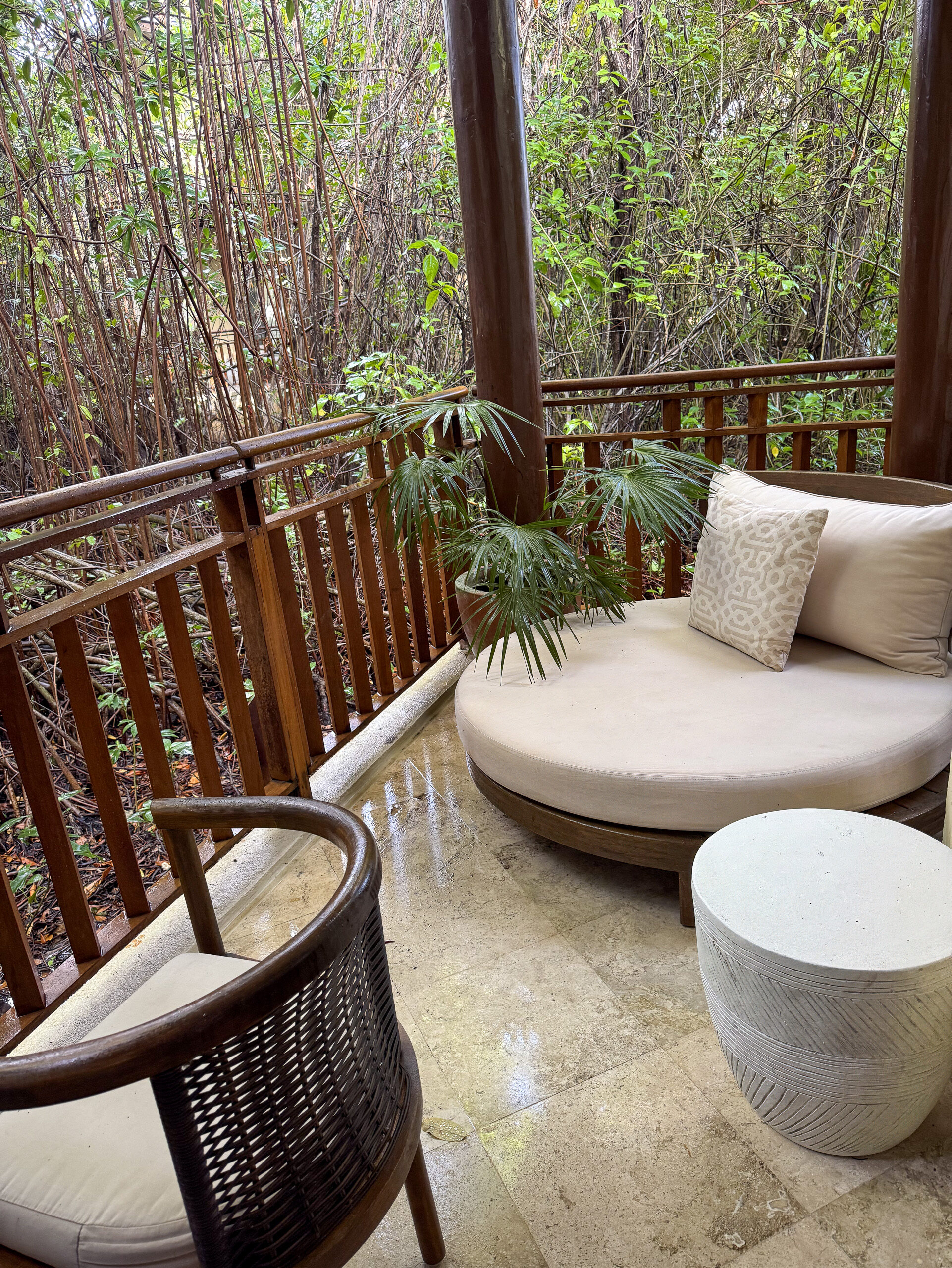
    A shaded daybed on a deck above the mangroves
    A shaded daybed on a deck above the mangroves at Fairmont. The lagoon side is the quiet side.

    The grounds, and the wildlife in them, are the luxury at the Fairmont: older trees, longer lagoon frontage, coatis and iguanas on the way to breakfast. The rooms are comfortable rather than memorable, the decor reads plain for the standing, the walls are thin, and maintenance can lag. You will not remember the room. You will remember the iguana.

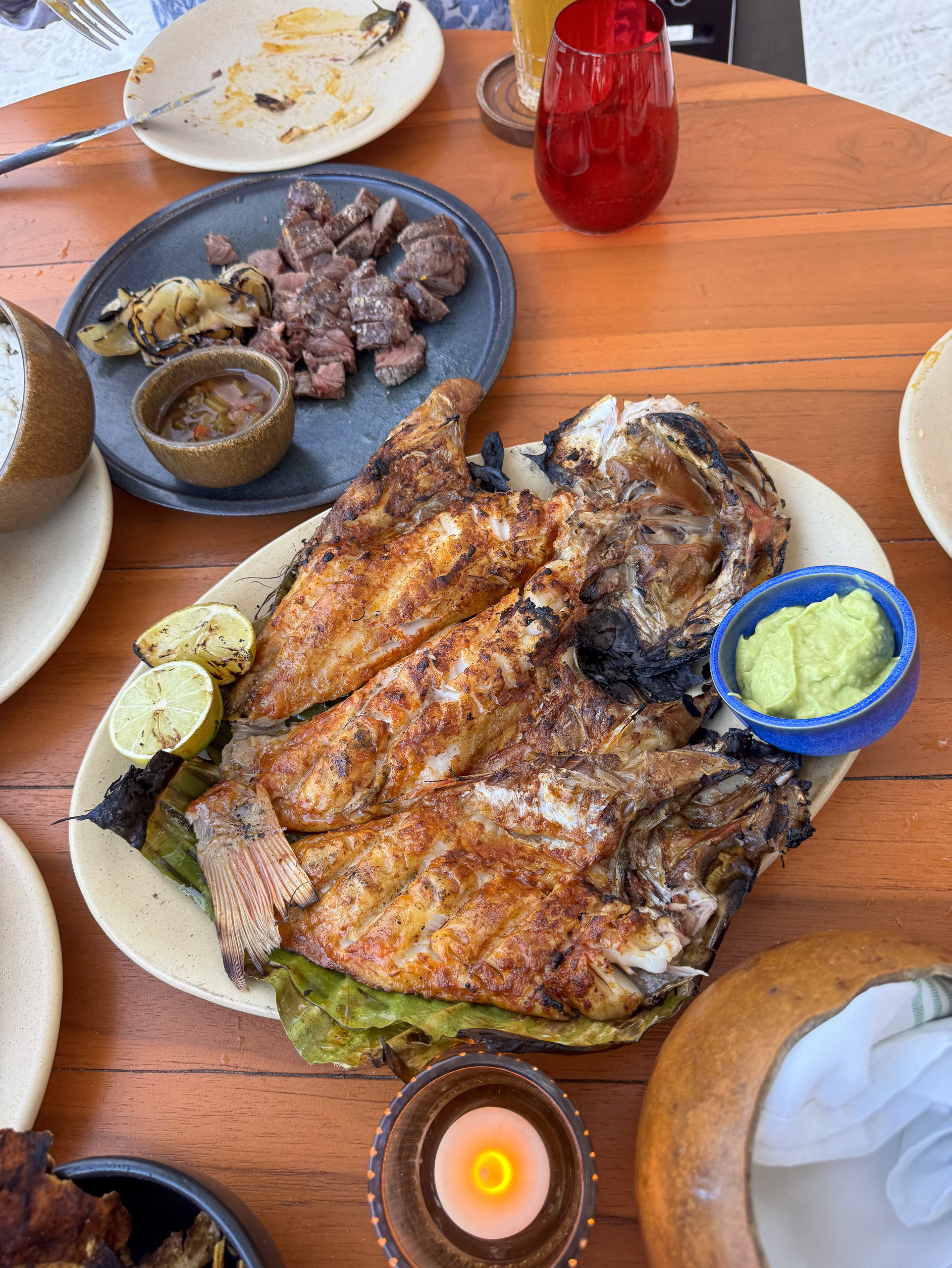
    A whole grilled fish on the table with guacamole, meat and tortillas around it
    Whole grilled fish, guacamole, tortillas, on the plan.
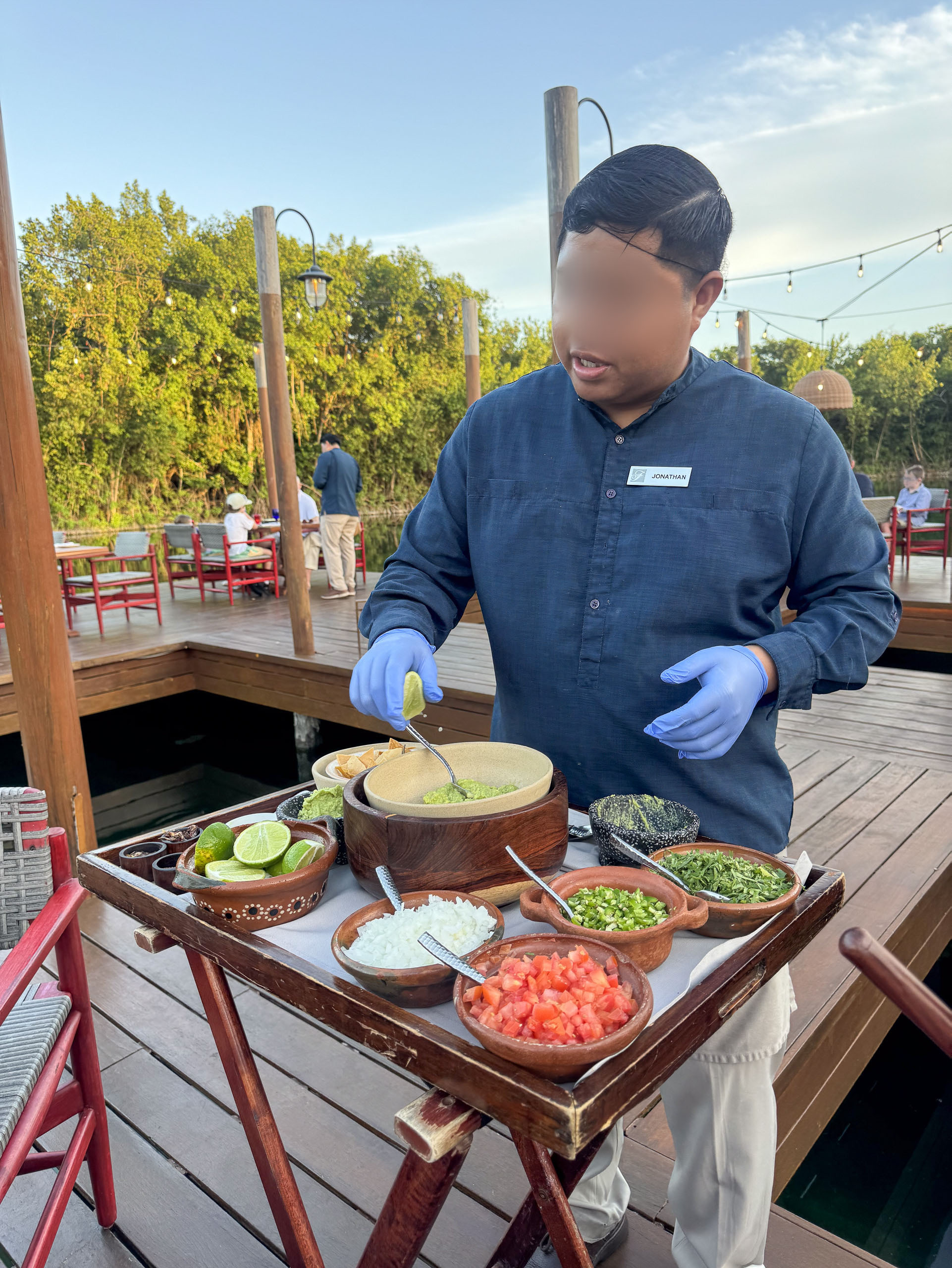
    A waiter spooning guacamole from a tableside trolley set with lime, onion, tomato and herbs
    Guacamole made at the trolley.

    And the honest part, which applies to both: this stretch of coast gets seaweed seasonally, and the offshore barriers used to manage it mean the beach does not look like the brochure. Neither hotel can fix it and both handle it about as well as anyone does. If a flawless Caribbean beach is the point of your trip, come outside seaweed season or look at the Pacific side.

    Verdict by traveller type

    Take Banyan Tree for a honeymoon, an anniversary, or any trip built around the villa and the spa. Take it if wellness is a reason for going, if you want a private pool off your own terrace, and if Southeast-Asian calm is the mood you have been carrying around.

    Take Fairmont with children, with a group, on a golf trip, or on any stay longer than four nights where the dinners start to compound. Take the all-inclusive if you plan to eat in.

    If you can stretch to it and want my answer: four nights in a Banyan Tree villa beat six in a Fairmont room. If it does not stretch, the Fairmont is not a consolation prize. You are in the same jungle, on the same beach, and you can hop the ferry to Saffron for dinner.

    Book Banyan Tree if the villa is the trip. Book Fairmont if the trip is bigger than the room.

    Teak daybeds and woven pod cabanas on the sand beside the beachfront infinity pool, palms and the Caribbean behind
    Teak daybeds and woven cabanas on the sand at Banyan Tree. Both hotels front the same beach.

    Bottom line

    Banyan Tree if the villa is the trip, Fairmont if the trip is bigger than the room. Take the oceanfront upgrade at one, the all-inclusive plan at the other, and eat at Saffron either way.

    See the full set: Banyan Tree, Mayakoba — in frames and Fairmont, Mayakoba — in frames. More Mayakoba: the Mayakoba set.

    Book Banyan Tree if the villa is the trip. Book Fairmont if the trip is bigger than the room.

    The Mayakoba galleries

    Every photo on this site is my own, shot on the stays. Slide through →

    Banyan Tree MayakobaFairmont MayakobaHotel terraces hung with bougainvillea above a pool and rows of loungersBanyan Tree MayakobaFairmont MayakobaA sand path crossing a palm lawn towards the beachBanyan Tree MayakobaFairmont MayakobaA deer standing among trees on a mown lawn in the groundsA chef carving the steak at the table beside a glass of wine
  • Banyan Tree Mayakoba: Beachfront or Jungle?

    Canals running between the villa buildings at Banyan Tree Mayakoba

    MAYAKOBA, MEXICO · ROOM GUIDE · 5 MIN READ

    Banyan Tree Mayakoba: Beachfront or Jungle?

    There is a private pool behind the door of any villa you book, so the usual room questions answer themselves. The one that is left — sand or mangrove — turns out to be a question about who is coming with you.

    By J.C. Mercer

    Verified stay·paid in full

    • Stayed April 2022
    • Room booked Oceanfront Pool Villa
    • How it was booked Amex Fine Hotels + Resorts, public rate
    • What the channel bought An upgrade to a pool villa.
    • Value verdict Worth it. The beachfront villa was excellent — built for two on a coast full of rooms built for crowds — and the lagoon is the version of this place nobody else can sell you.
    • When to go Anytime. Let the season pick the side. Book this stay

    Booked the way any other guest would book it.

    The two sides

    Mayakoba means village over the water, and the name does most of the explaining. Four resorts share a stretch of Riviera Maya coast threaded with man-made canals cut through mangrove, and the whole complex is built around water rather than beside it. Banyan Tree is the one that leaned hardest into the setting. Every accommodation is a villa. Every villa has a private pool. That flattens most of the usual decisions and leaves one that actually matters: sand or jungle.

    The footprint splits cleanly. A relatively small number of suites and villas sit directly on the beach. The much larger share sits inland along the lagoon, tucked into mangrove and jungle, connected by paths you ride rather than walk. They are not lesser and greater versions of the same room. They are different holidays that happen to share a spa.

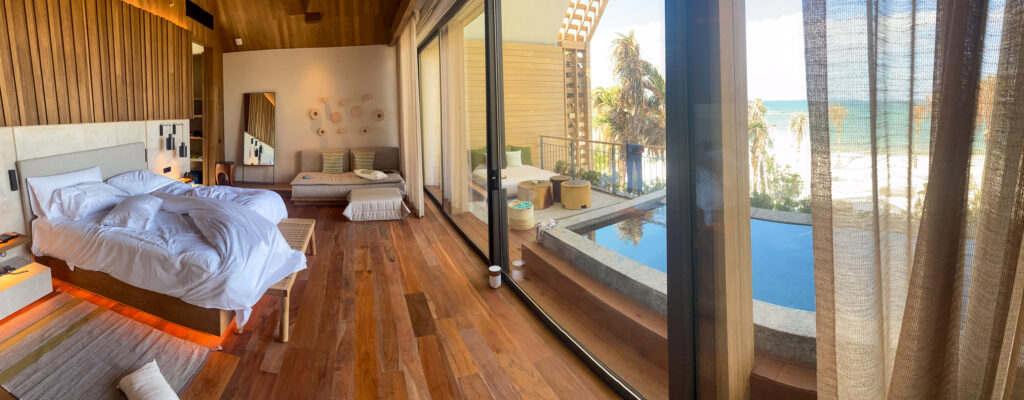
    Bed, wood floors and a plunge pool looking out to the Caribbean in a beachfront suite
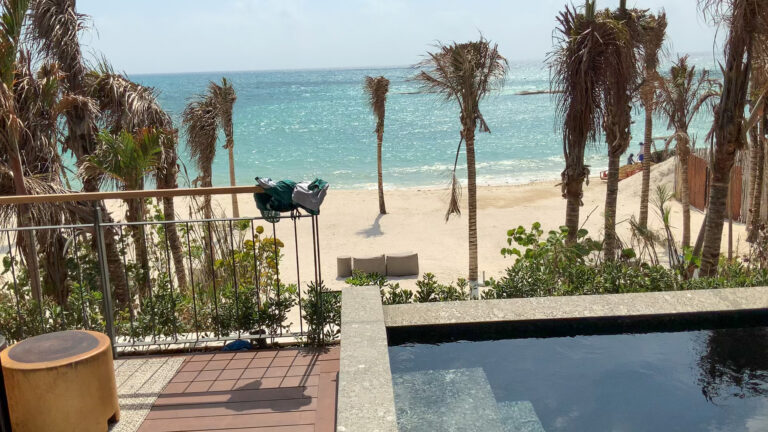
    The beachfront suites put a wall of glass between the bed and the Caribbean.

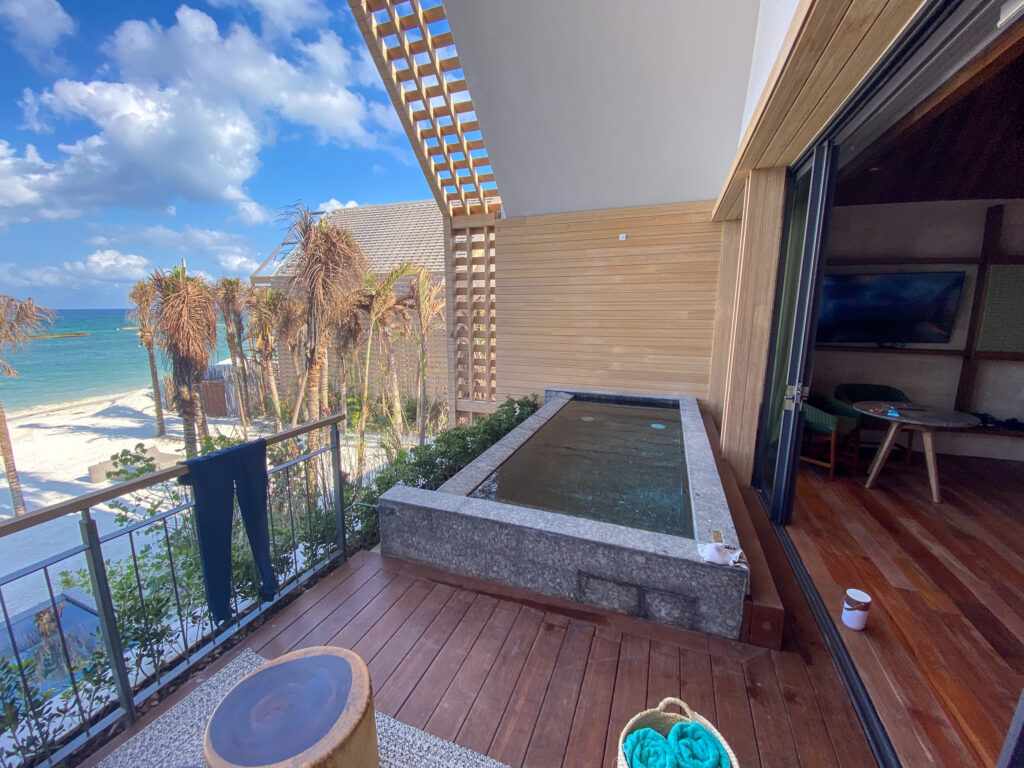
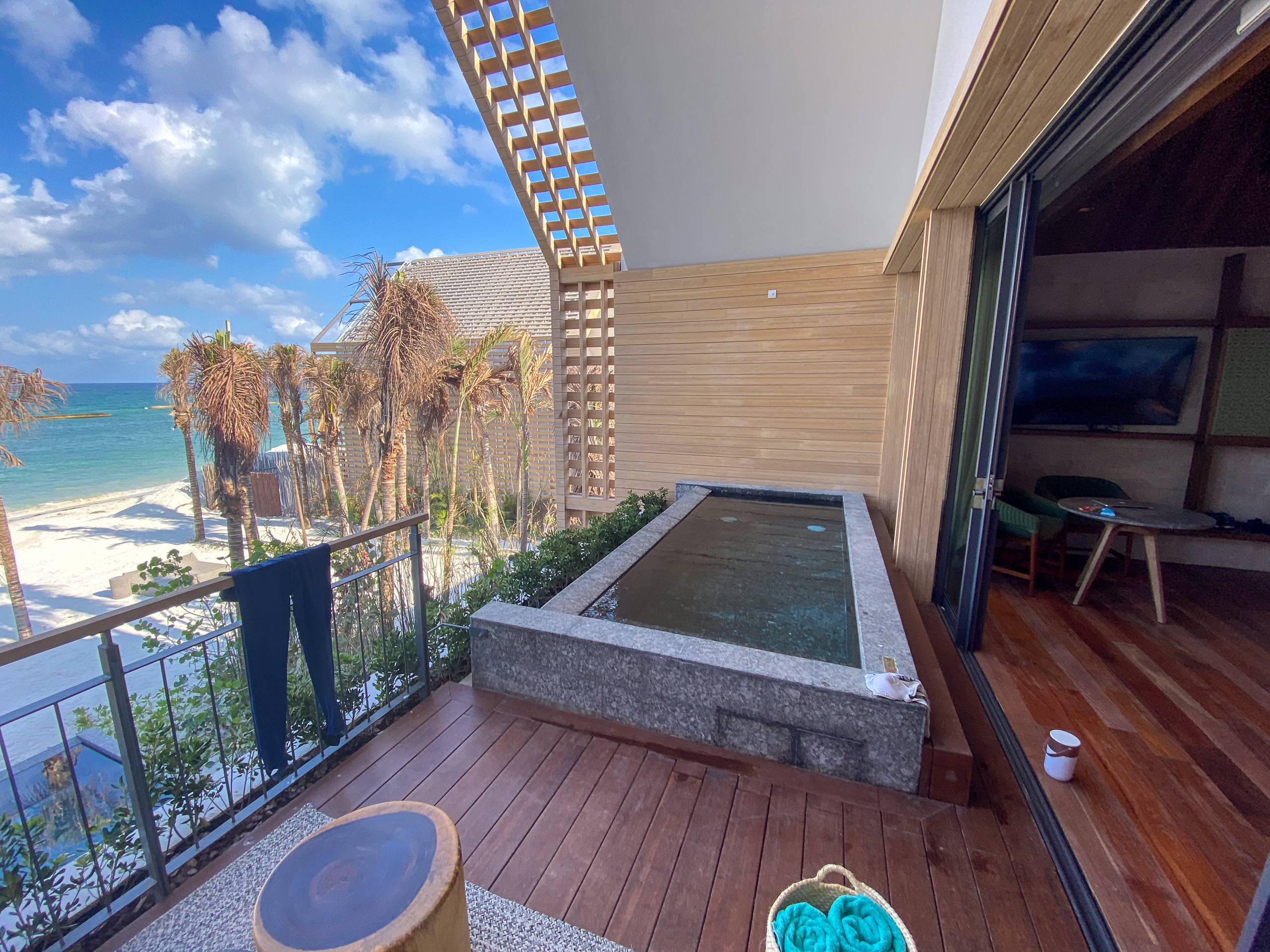
    The beachfront suites are honeymoon suites in all but name: luxury one-bedrooms with a wall of glass between the bed and the Caribbean, a private plunge pool on the deck, and the bed aimed so the sea is the first thing you see. Remote-controlled blinds handle the mornings you would rather not. They are cream of the crop and very tastefully done — restrained where this coast tends to gild.

    What the beach side buys is immediacy: coffee on the sand in a dressing gown, the beachfront grill working next door, the pool kept for adults a few steps beyond it, and no logistics between you and the water. What it is not for is children. A room this romantic is wasted on anyone whose main interest in a plunge pool is the cannonball. This side is for honeymoons and for lovers — the jungle will give a family far more back.

    Cabanas and loungers around the beachfront pool under palms
    The Sands beach club and the beachfront pool, a short walk along the sand.

    Inland, the villas sit in the mangrove with the lagoon at the door. The Deluxe Pool Villas are the volume category and the most common room on the property; above them are versions with separate living rooms, Spa Pool Villas with their own massage porch, and the newest category, rooftop pool villas with a private heated infinity pool and a full seating deck upstairs. The setting is the point. It is also where children belong: more room, more to watch, and none of what makes the beachfront suites special is anything a child will notice.

    Birds, turtles, coatis, and crocodiles the resort tracks and relocates when they get large; you can kayak the canals past cenote entrances into the underground river, and my guide pointed out a crocodile on the way. He was very calm about it. I have decided he was right to be. From a lagoon villa you are inside the preserve rather than looking at it. The trade is distance: bike, walk or call a buggy to reach the beach, which is trivial on day one and, by day four with a toddler and wet towels, is not.

    A small electric boat on the canal beside the villas, lanterns hanging in the trees
    The canals are the transport and the attraction. The sunrise side faces this.

    Side by side

    BeachfrontJungle and lagoon
    Wake up toCaribbean, directMangrove, birds, water
    Private poolYes, a plunge pool on the deckYes; some with a rooftop infinity pool
    Beach accessImmediateBike or buggy, a few minutes
    WildlifeMinimalConstant
    InsectsThe sea breeze helpsRepellent in the warm months
    SargassumYou see it from bedYou choose when to see it
    Best forHoneymoons, anniversaries, lovers’ retreatsChildren, families, longer stays, repeat visits
    Banyan Tree Mayakoba
    Beachfront: the sea through the palms.
    Banyan Tree Mayakoba
    The terrace and plunge pool, either side.

    The obvious assumption is that beachfront sits at the top of the ladder. Here it does not, quite: the newest lagoon category opened above the beachfront suites, and that tells you what the property thinks it is selling. The beach is a Riviera Maya commodity, available at a hundred resorts along this coast. The mangrove is not.

    What both sides share

    The spa is the reason the Banyan Tree name carries weight in Asia, and the Mayakoba outpost holds up. Treatment cabins sit over the water, large enough that I mistook the first one for a guest villa, and the hydrotherapy pools, steam rooms and treatment range are the strongest single amenity on the property.

    Banyan Tree Mayakoba
    The tomahawk, carved at the table.
    Banyan Tree Mayakoba
    Grilled fish under a dark glaze.
    Banyan Tree Mayakoba
    The lobby lounge under the banyan.

    Dining runs deep. Saffron is the signature, Thai food served on decks suspended over the lagoon, and it stands with the best Thai kitchens I have eaten in on this side of the Atlantic. Oriente handles all-day dining and a breakfast buffet worth getting up for; Cello covers Italian; the beach club sits on the beachfront pool; Tomahawk does open-fire Latin grill; there is a burger shop and a kosher restaurant besides. The one to book first is HAAB, an open-air Mayan dinner cooked over fire in the jungle, with a Mayan host talking you through it and dancers in traditional body paint. It is the meal I still describe to people months later.

    A chef presenting a whole grilled fish on a platter beside the lit pool after dark
    Haab is cooked over fire in the jungle and served with a Mayan blessing. Both sides book it.

    The villas come with bicycles, and the flat terrain makes them the sensible way to move; golf carts run you to the main building for meals when the evening calls for real shoes. The cart to dinner starts as a courtesy and ends as a lifestyle. Room keys open the restaurants at Rosewood, Fairmont and Andaz next door, which effectively triples the dining options, and El Pueblito, the small village inside the complex, has shops, a chapel and its own cenote. Food and drink are a full-dress resort operation, and the quality holds, which is not always true in this region.

    Which to book, by trip

    Summer, May to October: a lagoon villa, and that argument alone should decide it. Seaweed washes onto the Caribbean-facing beaches along this coast seasonally, the resort rakes and manages it, and some weeks are fine; but a beachfront villa in August is a room with a view of whatever the tide brought, with no version of the stay where you can look somewhere else. A lagoon villa has a mangrove view that is never affected and a beach you visit on the days it looks good. I went in April and found the beach clear, which is luck rather than planning.

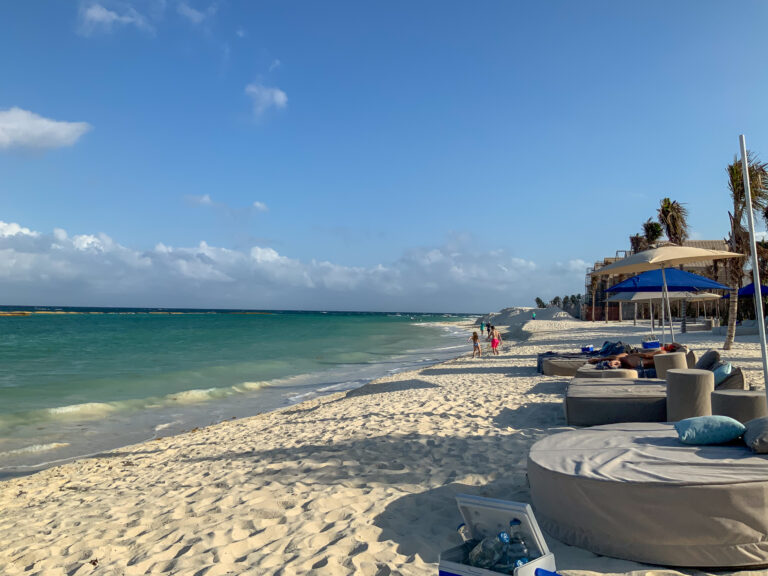
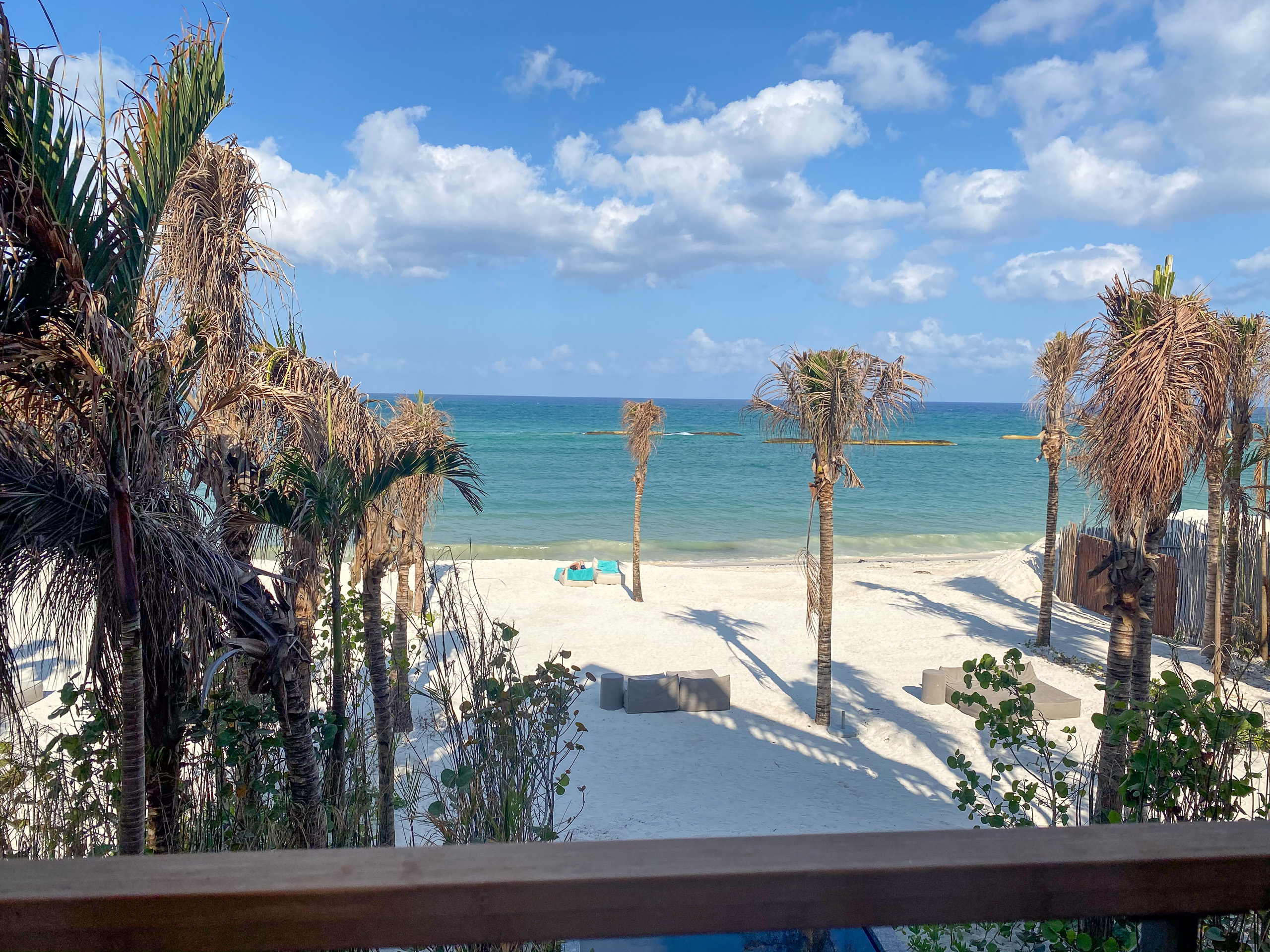
    Clear turquoise water and clean white sand on the beach at Mayakoba
    A clear week in March. Between May and October the same view can carry sargassum.

    A honeymoon, an anniversary, a trip the children sat out: the beachfront suite, and do not overthink it — that is what it is built for. Travelling with children: the jungle side, where the canals and the coatis do half the entertaining and nothing about the room is wasted on them. A longer stay or a return visit: the lagoon, in the volume category unless the private rooftop is truly what you want. Pack repellent regardless of which side you land on; outdoor dining needs it in the warm months and the decks at Saffron are the worst of it. Reserve HAAB and Saffron before arrival. Take the bikes seriously as transport, and the golf carts to dinner. And leave one evening free for a meal at a neighbouring resort, because the room key that opens Rosewood’s restaurants is one of the best things about staying anywhere inside Mayakoba.

    Look elsewhere if you want everything within thirty steps. The villa density that gives you privacy also means the gym, the lobby, the spa and the beach are all a ride from each other.

    The beach is a Riviera Maya commodity. The mangrove is not.

    Bottom line

    Sand or mangrove is really lovers or family. The beachfront suites are a honeymoon in room form — plunge pool, grill next door, the adults’ pool beyond it. Children belong on the jungle side, and the mangrove is what the hotel is really selling. HAAB and Saffron either way.

    See the full set: Banyan Tree, Mayakoba — in frames. More Mayakoba: the Mayakoba set.

    The Banyan Tree gallery

    Every photo on this site is my own, shot on the stay. Slide through →
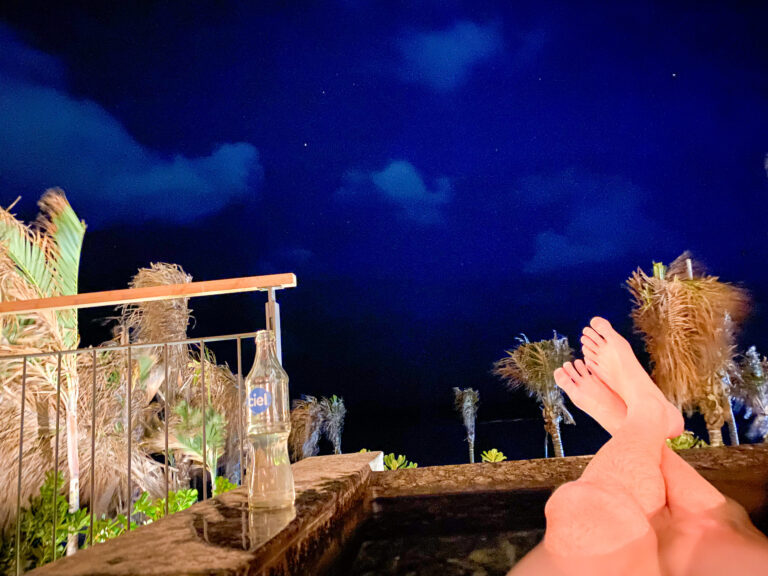
    Banyan Tree MayakobaBanyan Tree MayakobaA chef carving the steak at the table beside a glass of wineBare feet on the rail of the terrace under a deep blue night skyThe boatman steering the covered launch along the lagoon at duskBanyan Tree MayakobaBanyan Tree MayakobaThe plunge pool, the terrace rail and the sea beyond through the palms