MAYAKOBA, MEXICO · VERIFIED STAY · 6 MIN READ
Fairmont Mayakoba: The One That Got Here First
The resort that opened Mayakoba is the biggest of the four, the least precious about it, and the only one that will sell you the whole stay all-inclusive.
By J.C. Mercer
- Stayed March 2026
- Room booked Deluxe Casita, lagoon side
- How it was booked Accor ALL, public rate
- What the channel bought Nothing beyond standard.
- Value verdict Worth it as the value play to access Mayakoba; a lagoon casita for two is the version that earns it.
- When to go Spring Break. Book this stay
Booked the way any other guest would book it.
Arrival
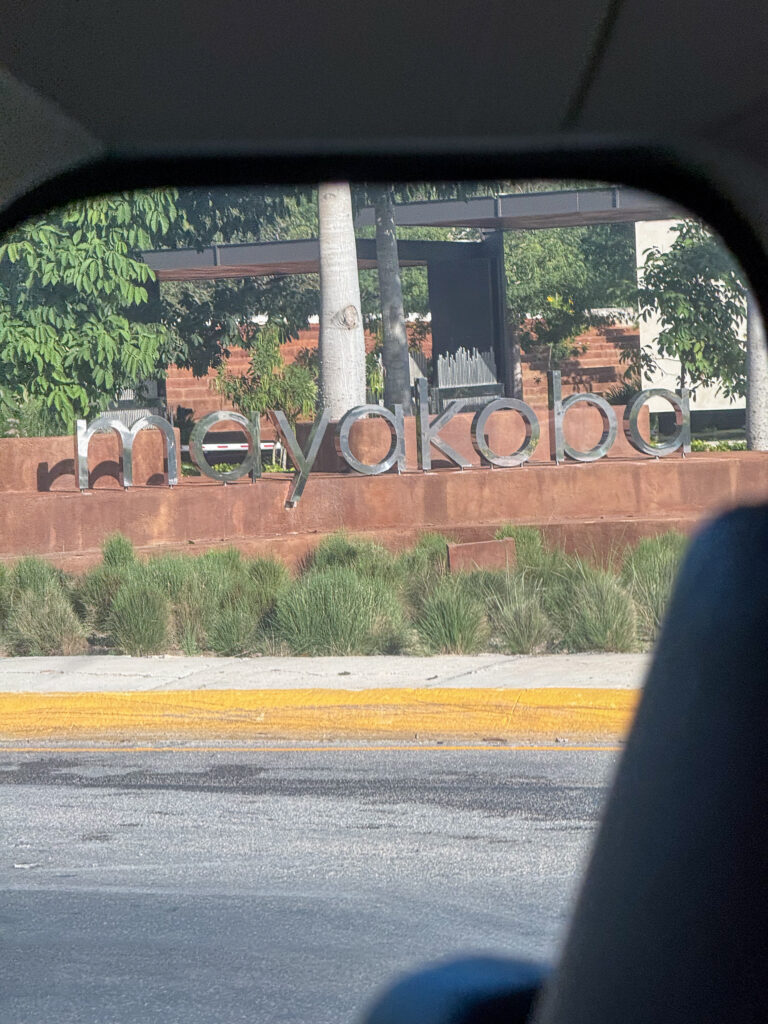
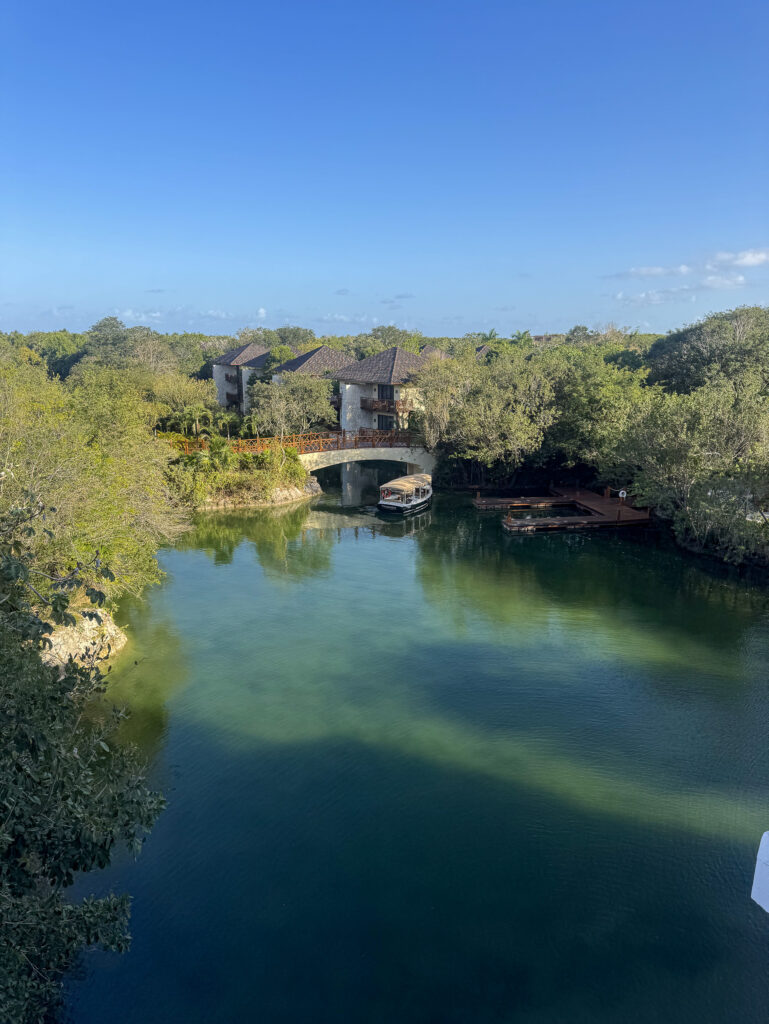
Mayakoba is four resorts sharing one address, a private community of clear-water canals cut through mangrove on the Riviera Maya, and Fairmont got here first — before the canals had a reputation and before Rosewood, Banyan Tree and Andaz arrived to give the place its luxury shorthand. That head start explains most of what the resort is now.
It is the largest of the four and the one that behaves least like a boutique hotel: two kids’ clubs, a main pool you could lose a family in, and an optional all-inclusive package, three things nobody would write about Rosewood next door. Whether that reads as a warning or a relief depends almost entirely on who is travelling with you.
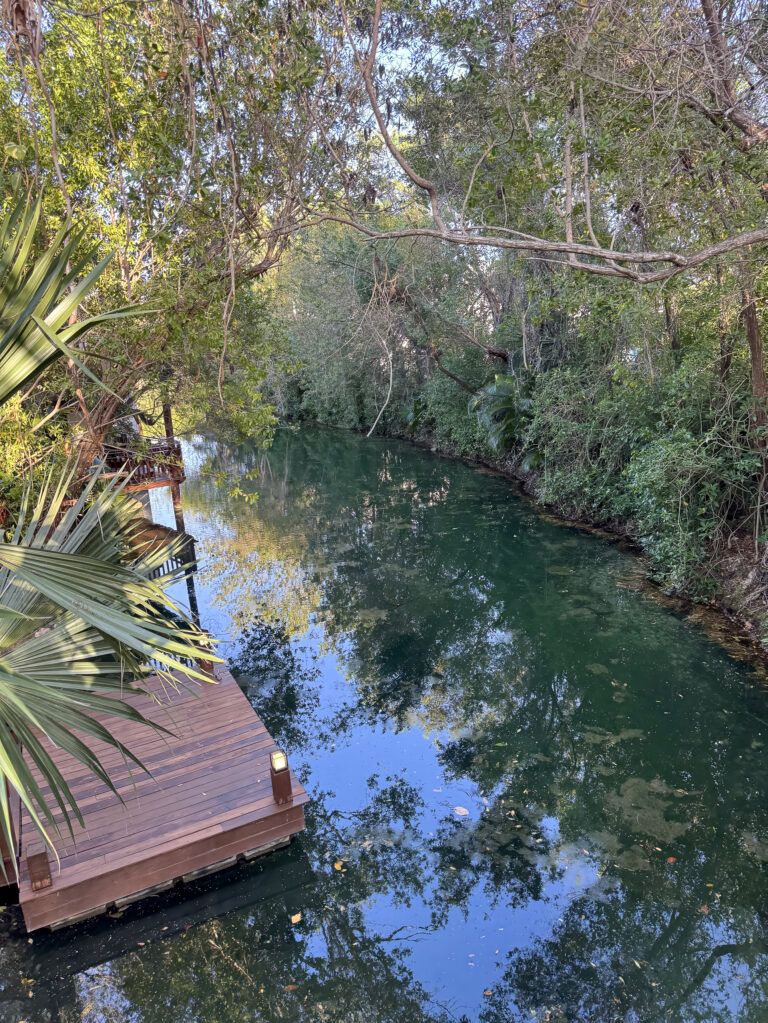
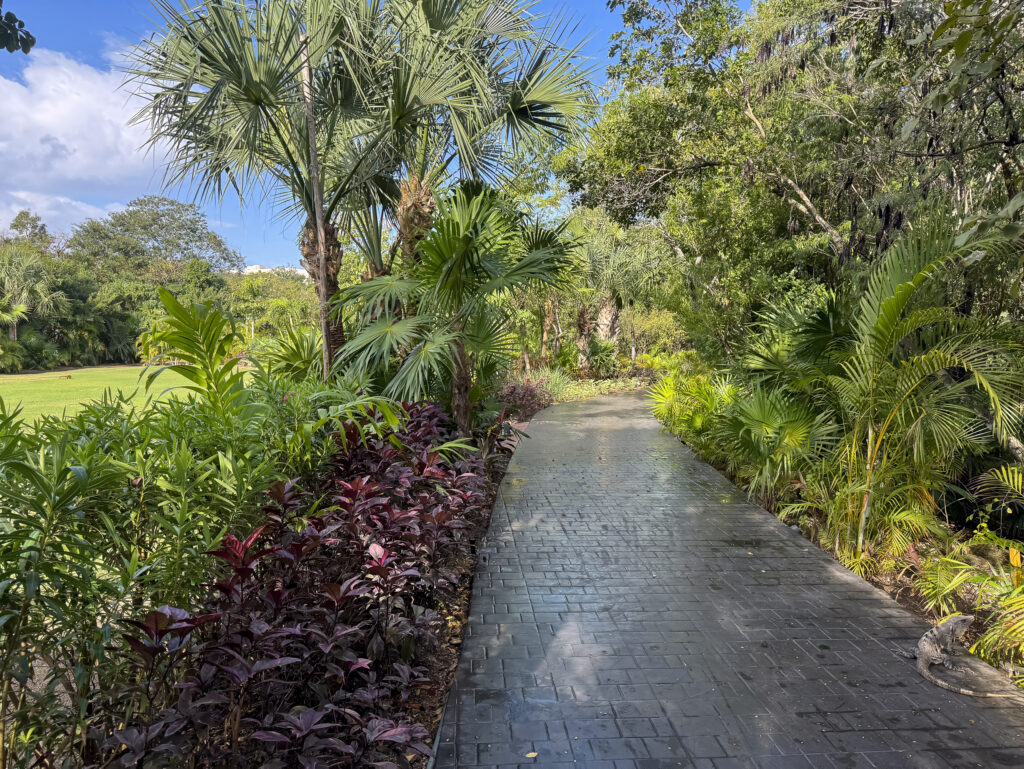
The single most underrated advantage of arriving first is that your trees are older than everyone else’s. The fan palms lean across the paths rather than standing politely beside them, the planting runs to dark red croton and heliconia thick enough to hide the edging, and the canal banks are properly overgrown. It does not look landscaped. It looks kept.
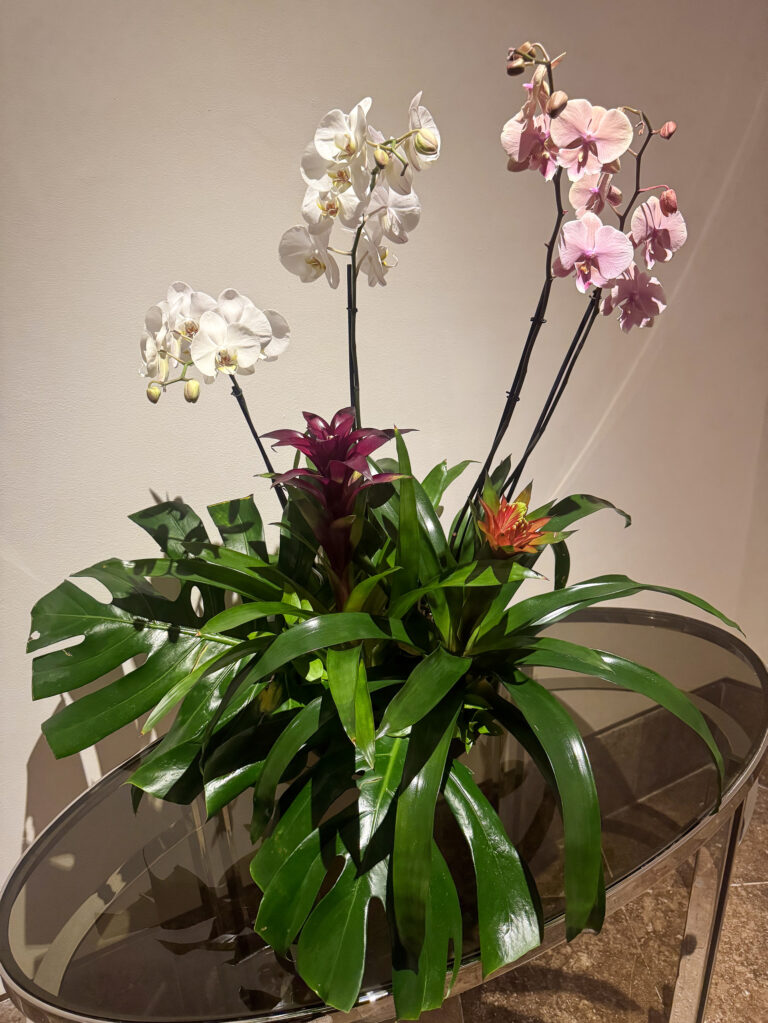
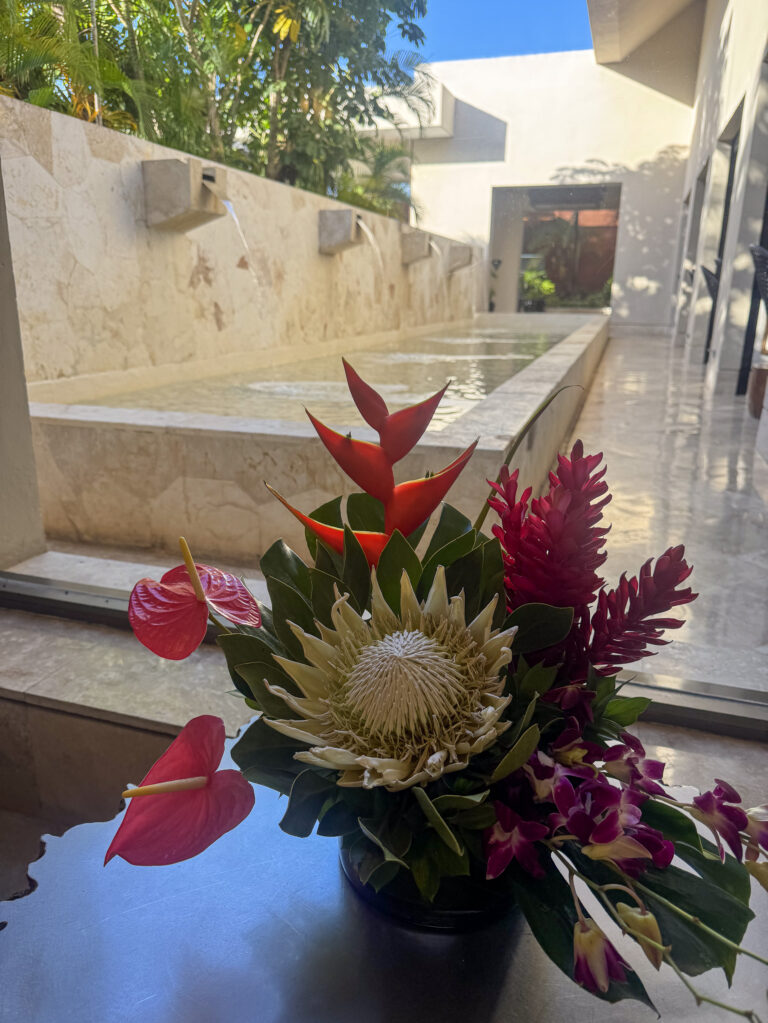
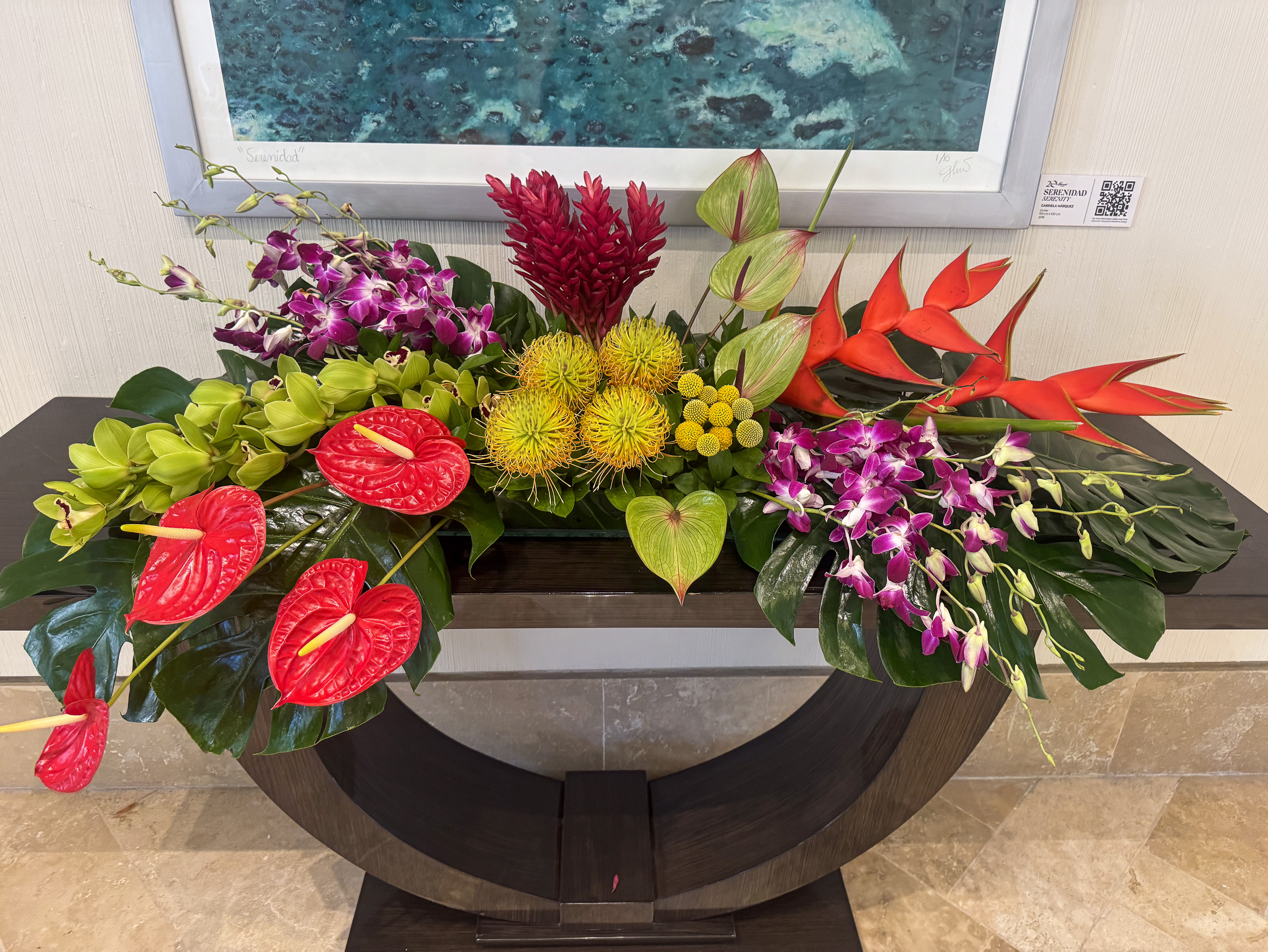
The other thing the head start bought is scale. Rosewood and Banyan Tree are villa properties. Fairmont is a resort in the older and more literal sense: buildings, corridors, a lobby with a florist’s arrangement the length of a console table, and a golf course running through the back of it, so that one garden path has a fairway sitting open and green just off the left shoulder. The paths are flat, shaded and long enough that the bicycles are not a novelty.
The room
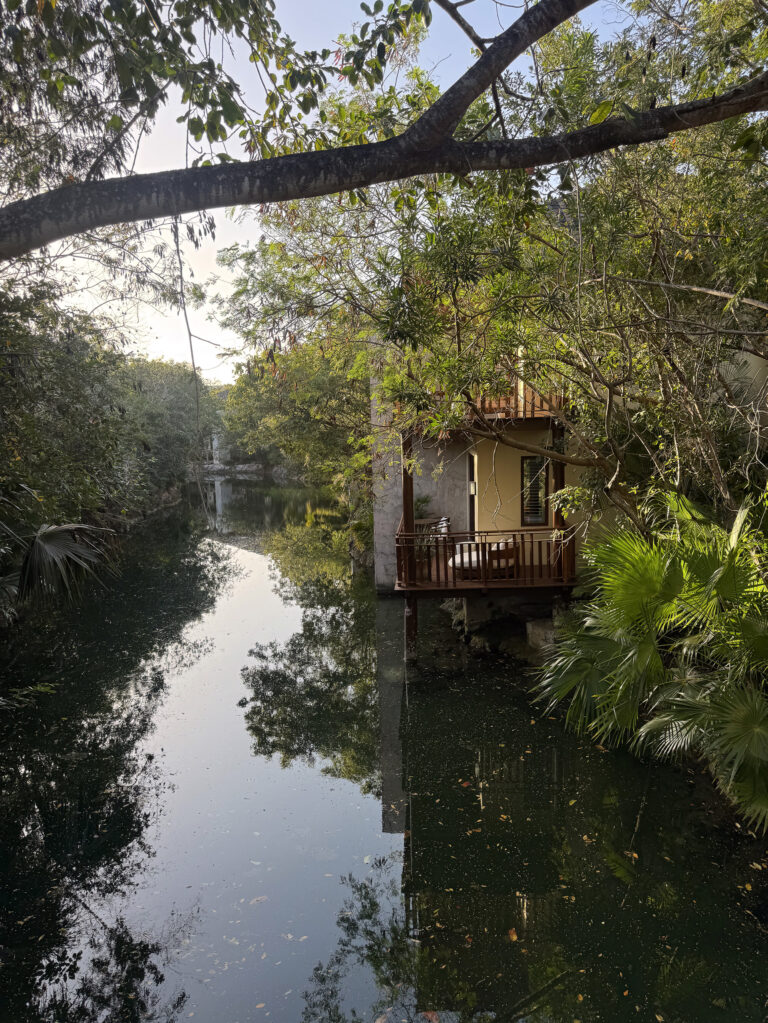
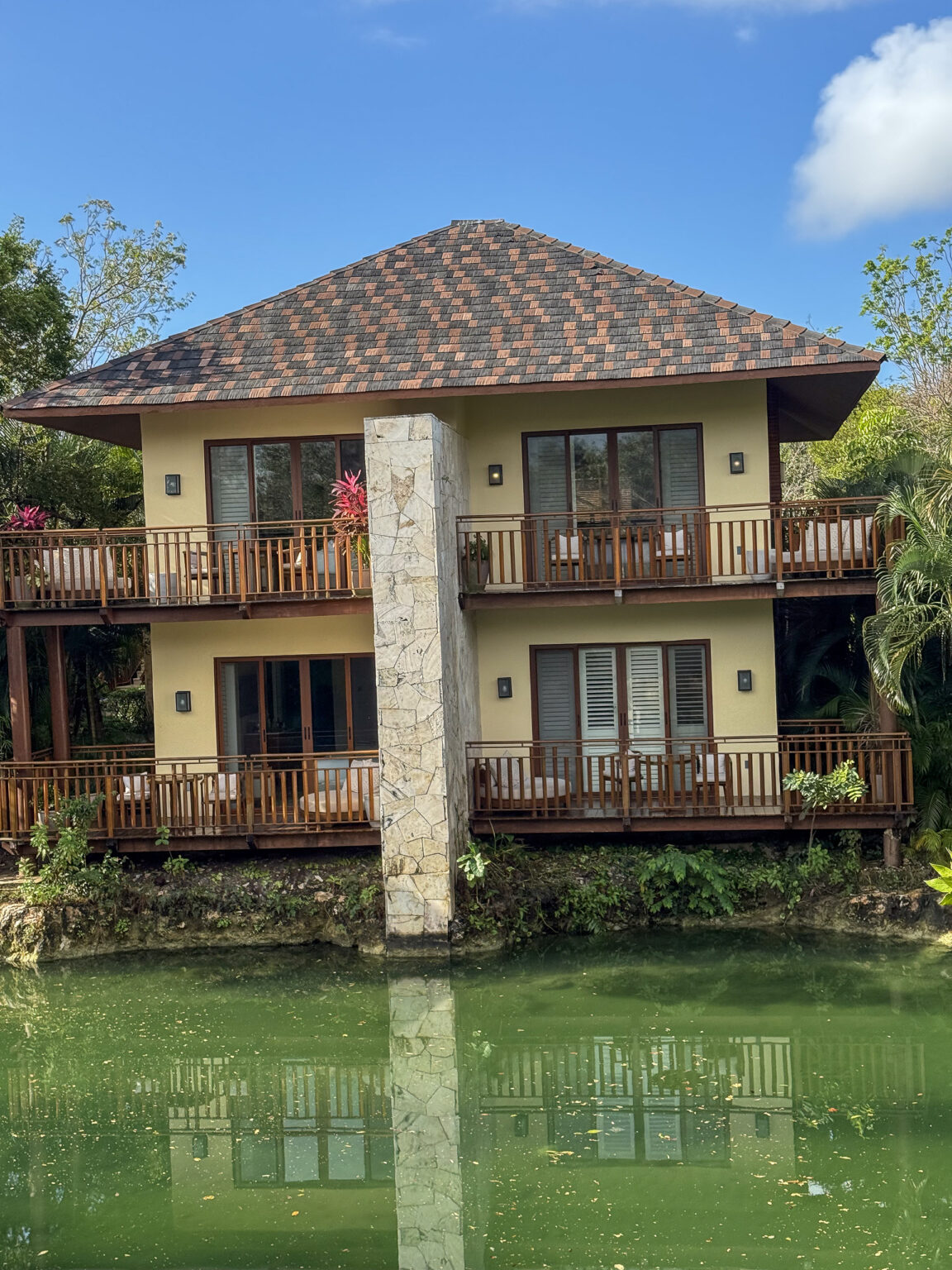
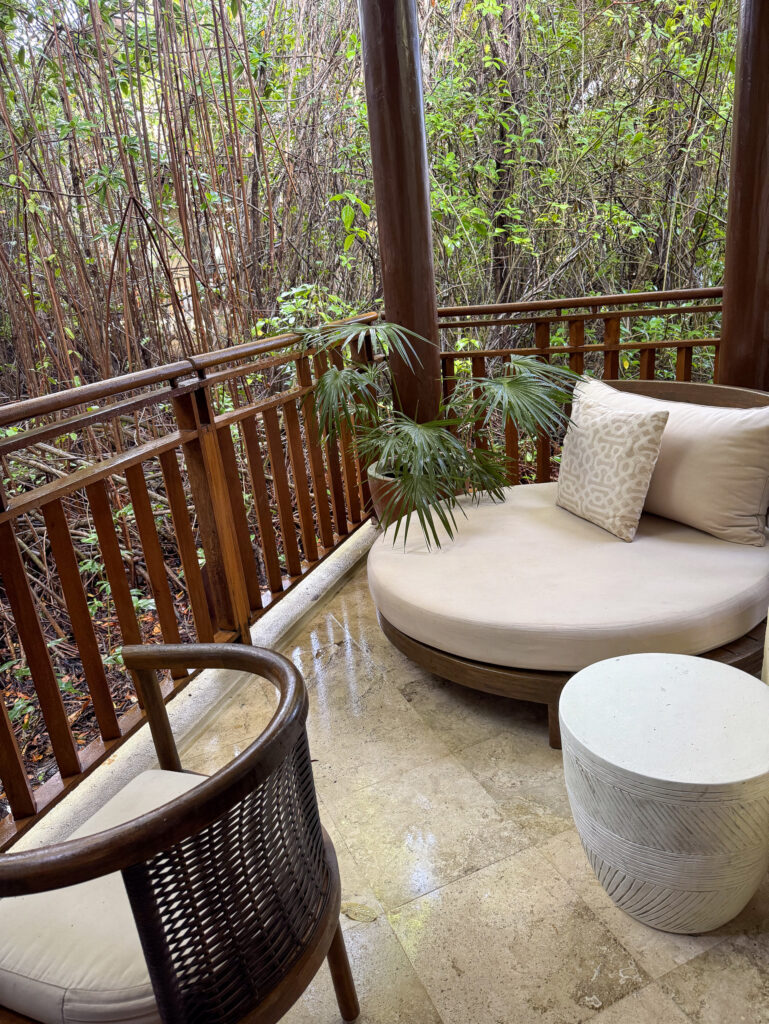
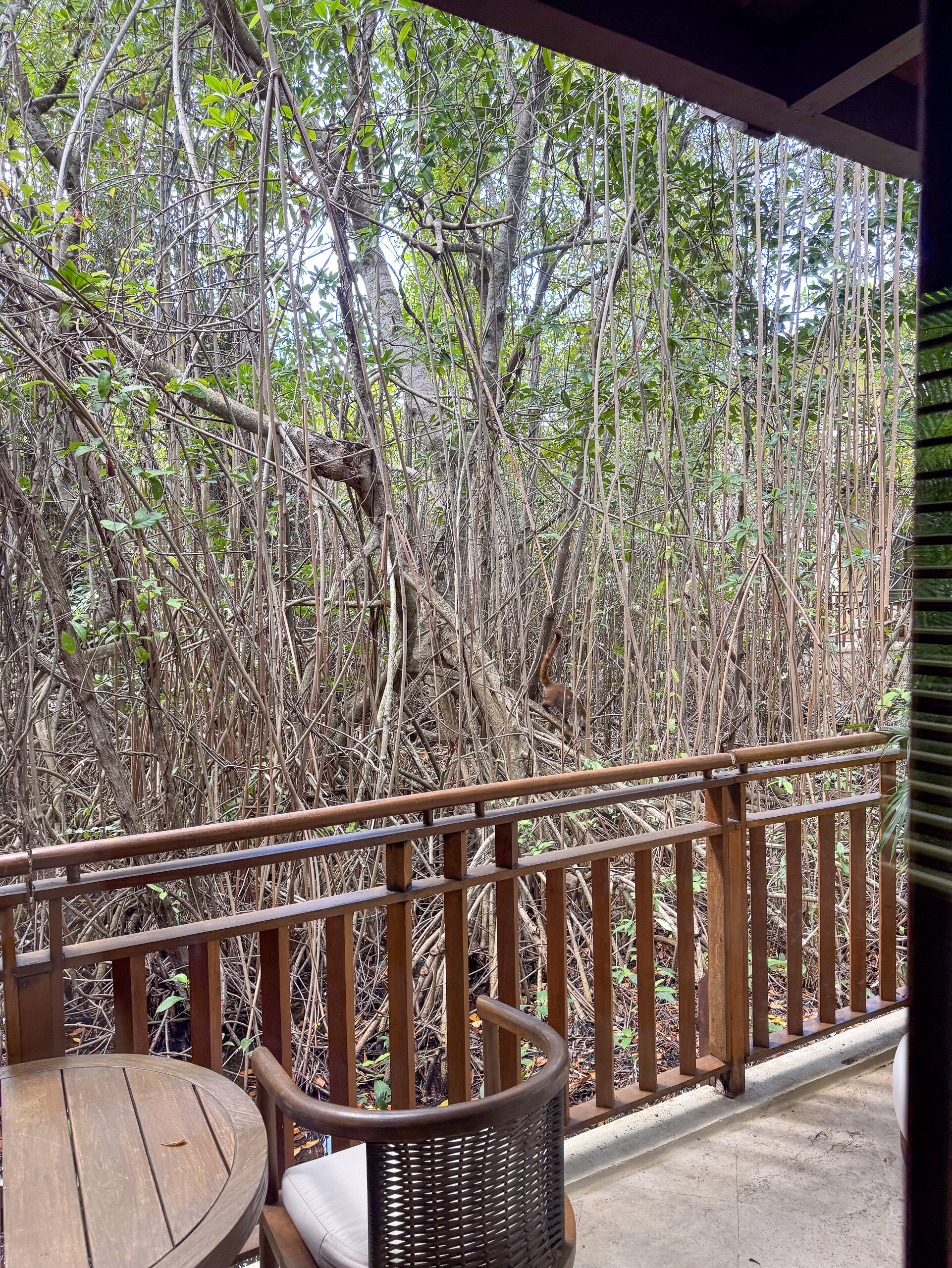
The building block is the casita: two-storey blocks of a handful of rooms each, dropped into the mangrove along the lagoon or set back from the beach. I had a Deluxe Casita on the lagoon side, and the terrace is the room: a round cushioned daybed, a hardwood railing, and nothing beyond it but mangrove about two metres away, with birds in it. There is no view in the postcard sense. There is a wall of trees, and it is the argument for this side of the property in one frame.
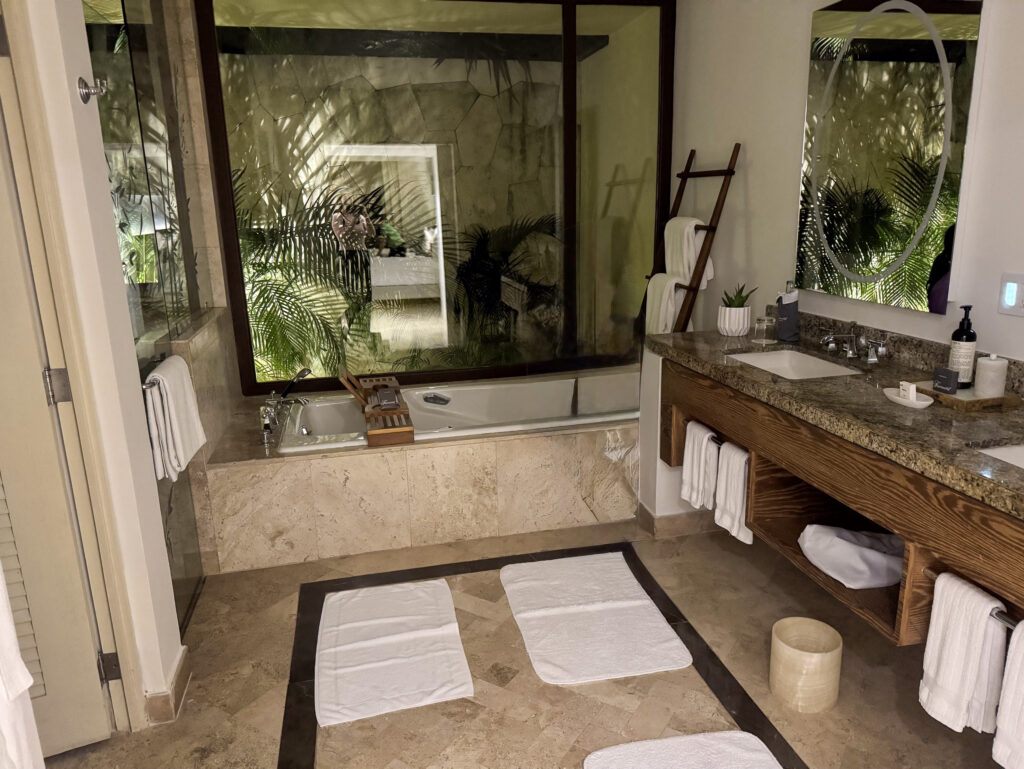
Inside, the finish is warm rather than fashionable — travertine floors, dark timber, a stone-topped double vanity, a deep tub set against a window that looks straight into planting. It is not the pale, stripped-back palette the newer Mayakoba properties use, and it will read to some people as dated. It also means nothing in the room is trying very hard, which after four days is not a complaint. It is a recommendation.
Eating
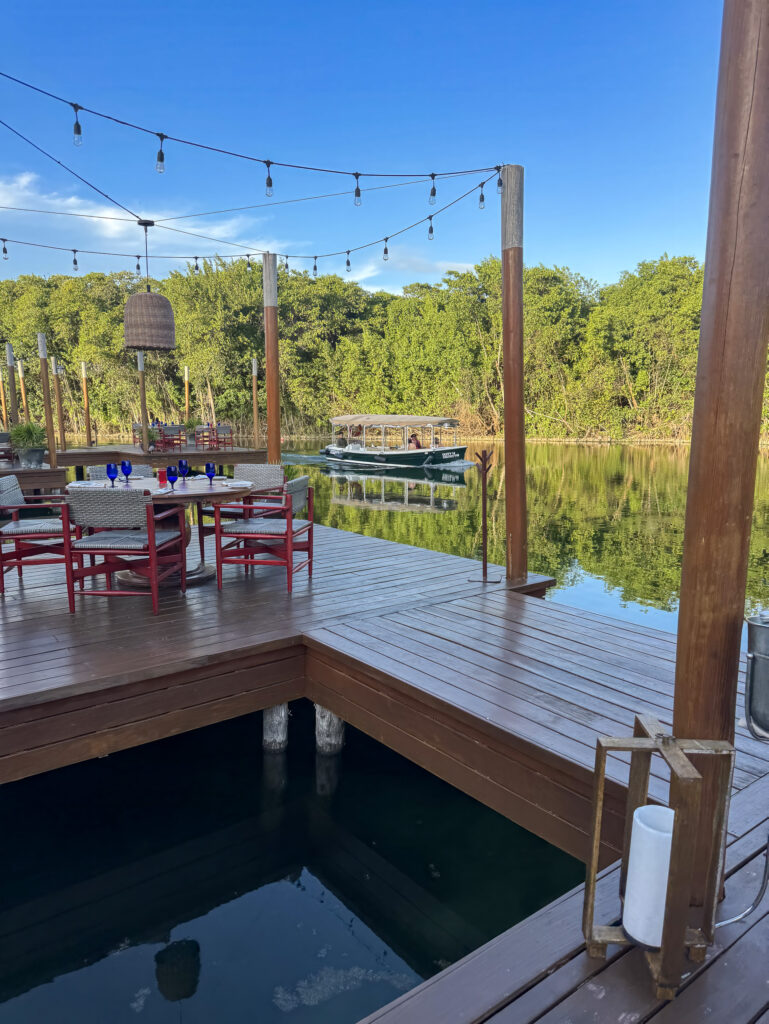
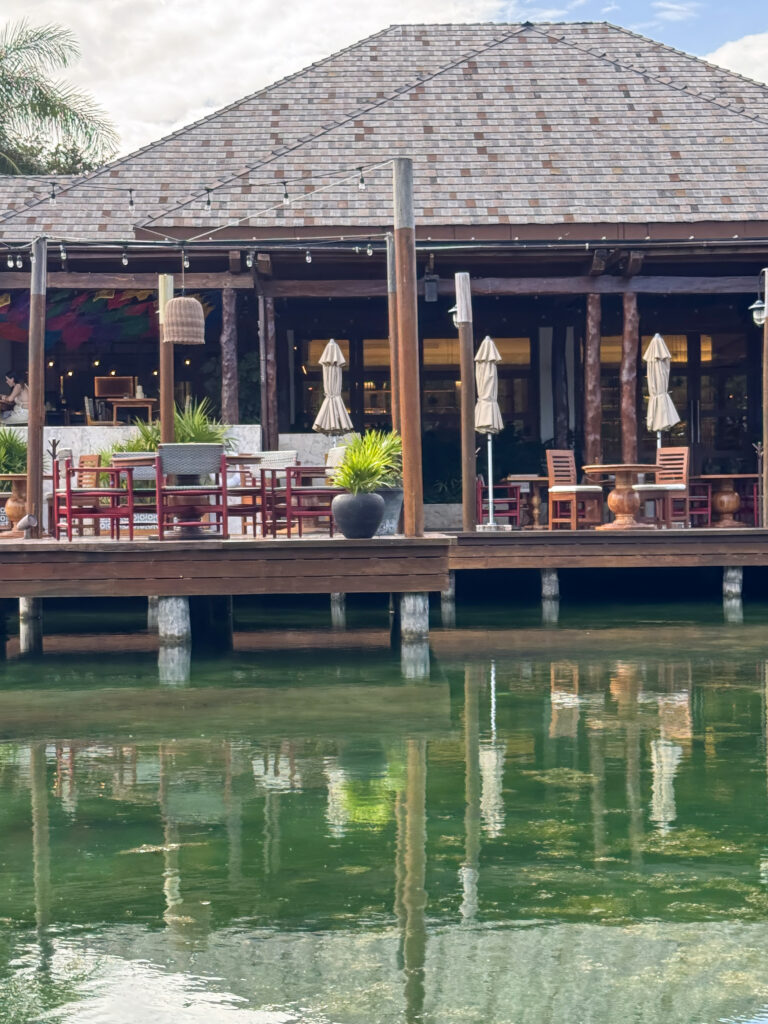
The list is long for one property: Mexican over the water at La Laguna, a steakhouse, an Italian, a thatch-roofed beach hut, a lobby bar, two more bars, and the five outlets at the beach club. The best room of the lot is the lagoon deck: a shingle-roofed pavilion on pilings with red-painted chairs, woven pendant lamps and festoon lights strung over a hardwood terrace that ends in green water, with a boat going past. It is the only dining room on the property that could not be anywhere else.
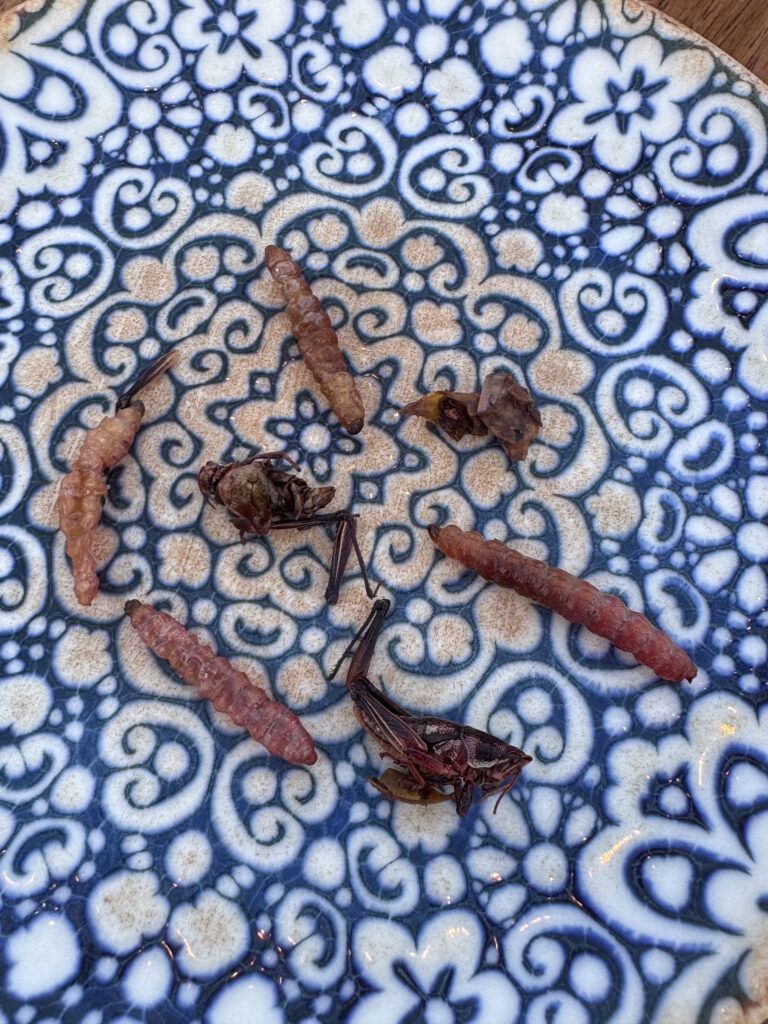
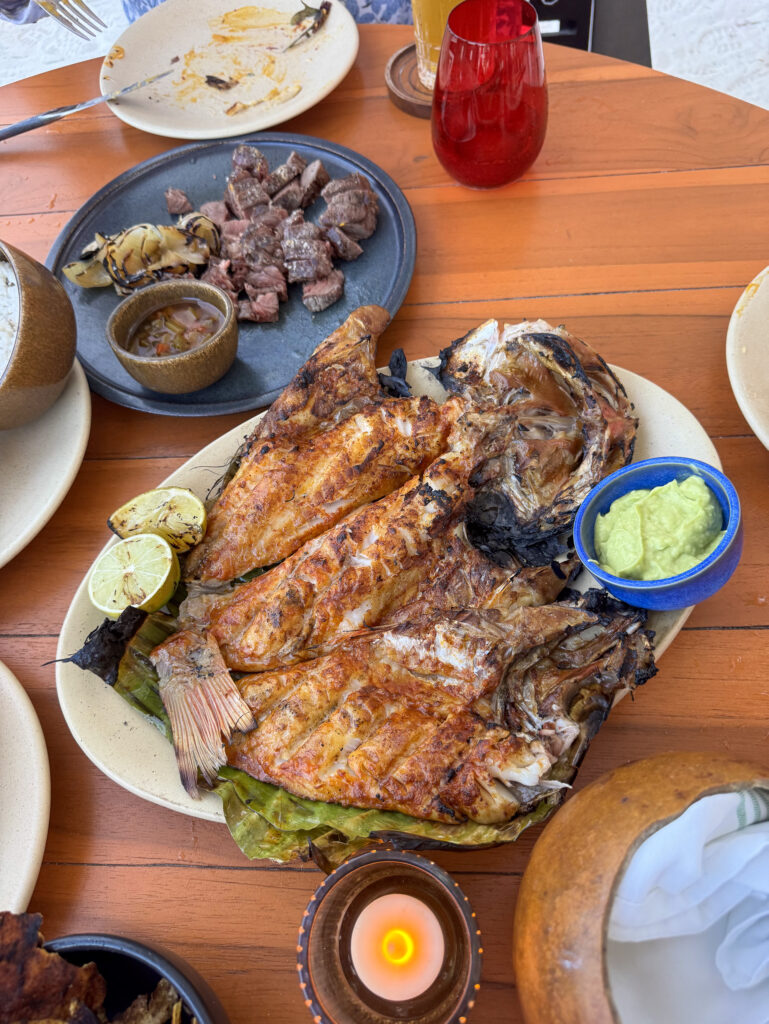
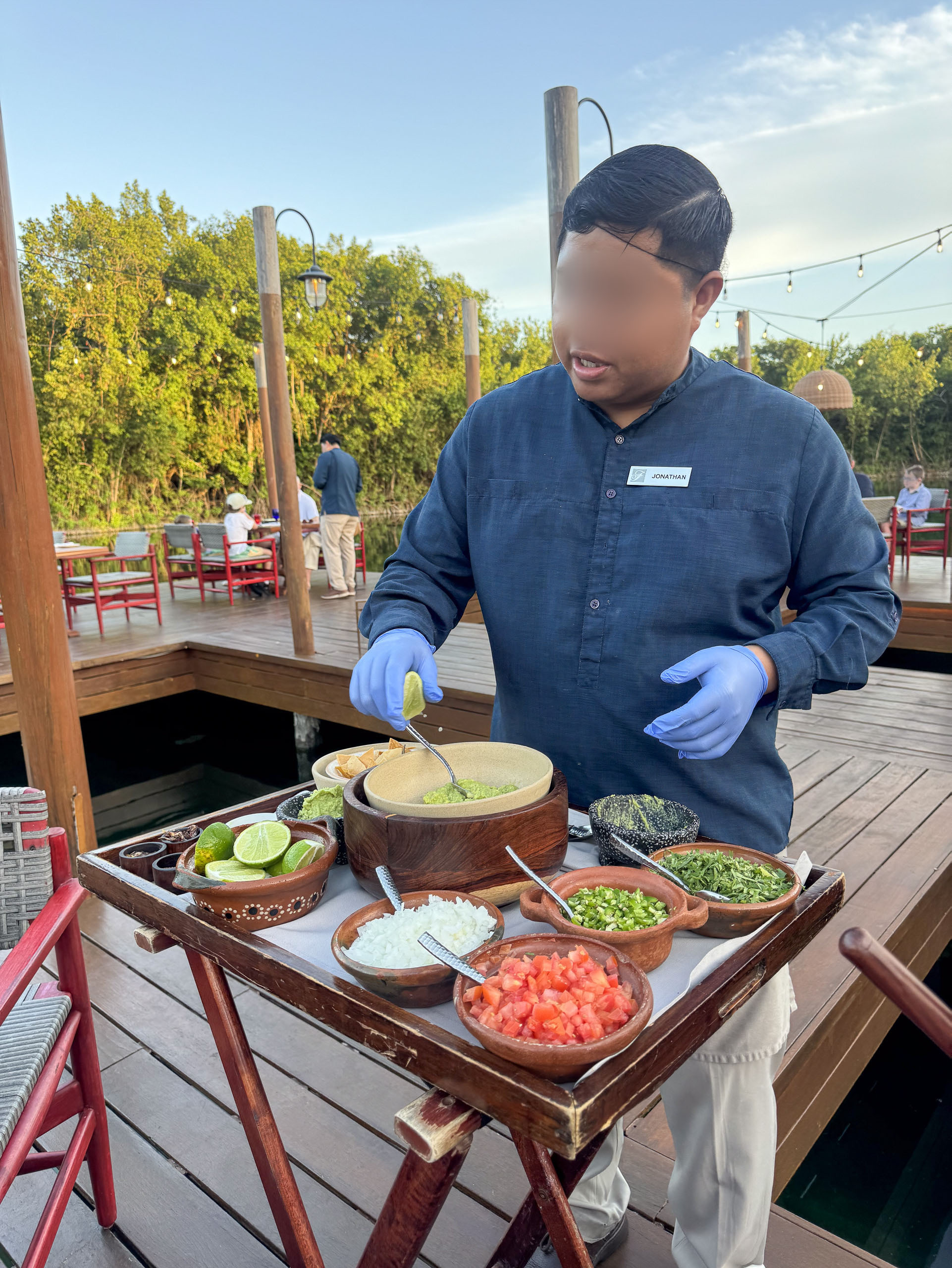
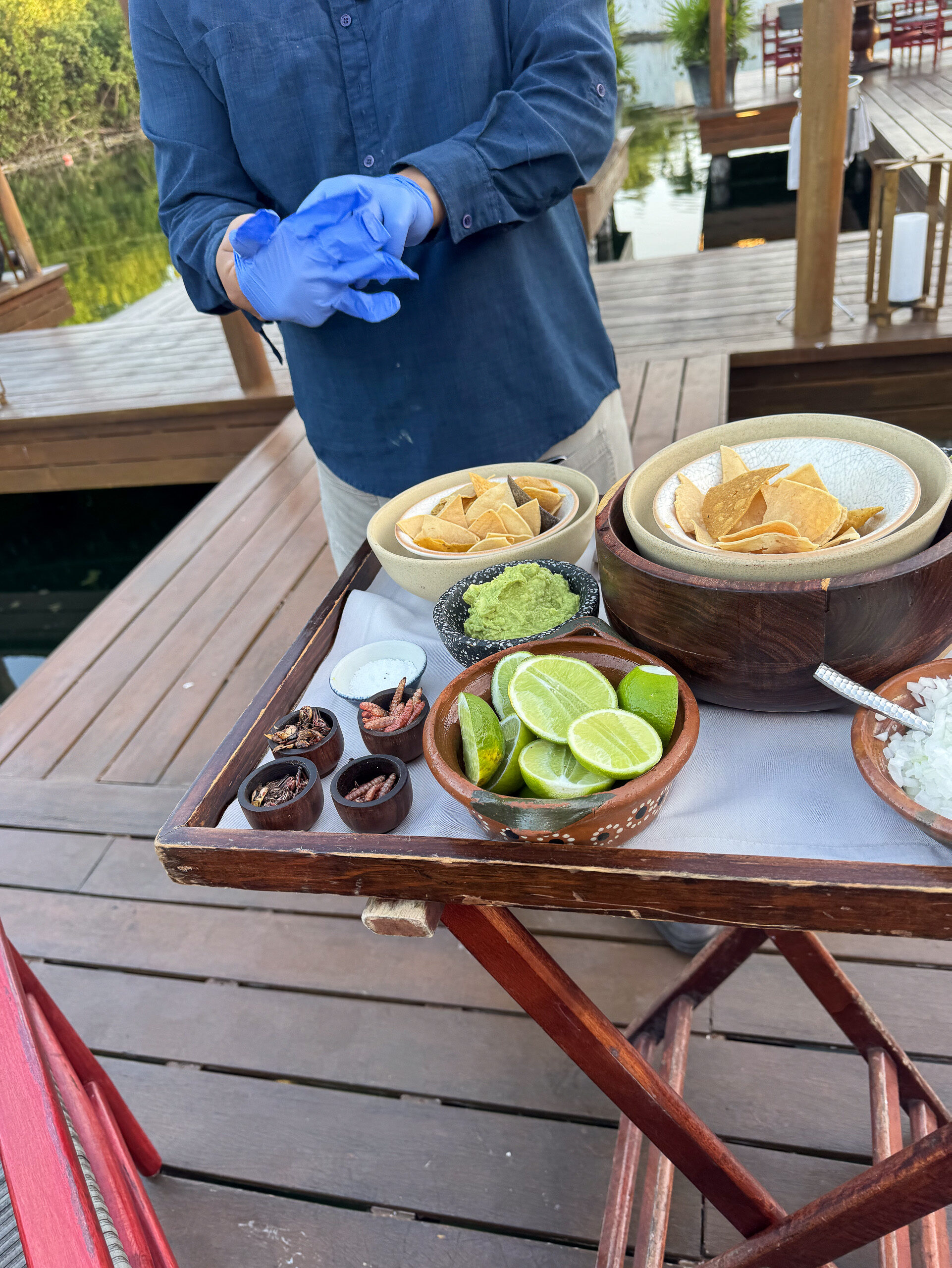
The service style is old-school in the way Fairmont still does well: a guacamole trolley wheeled to the table and made in front of you, with lime, tomato, cheese, coriander and a dish of chapulines beside it for anyone who wants them. Whole fish comes off the grill and onto the table more or less as it left it. The kitchens lean local and simple, which suits the setting.
Then there is the all-inclusive question. Fairmont sells an optional package covering meals and drinks by the glass at the participating restaurants, with premium dishes, bottled wine and breakfast at some rooms outside it. A five-diamond resort with an all-inclusive tick-box is an unusual animal, and it is the clearest signal of how this property differs from its neighbours. It cuts both ways: the room around you changes, because a package with unlimited drinks does not attract the same guest as an à la carte one. Only one of the two versions lets you spend an evening eating at Rosewood.
The lagoon, the pools, and the beach club
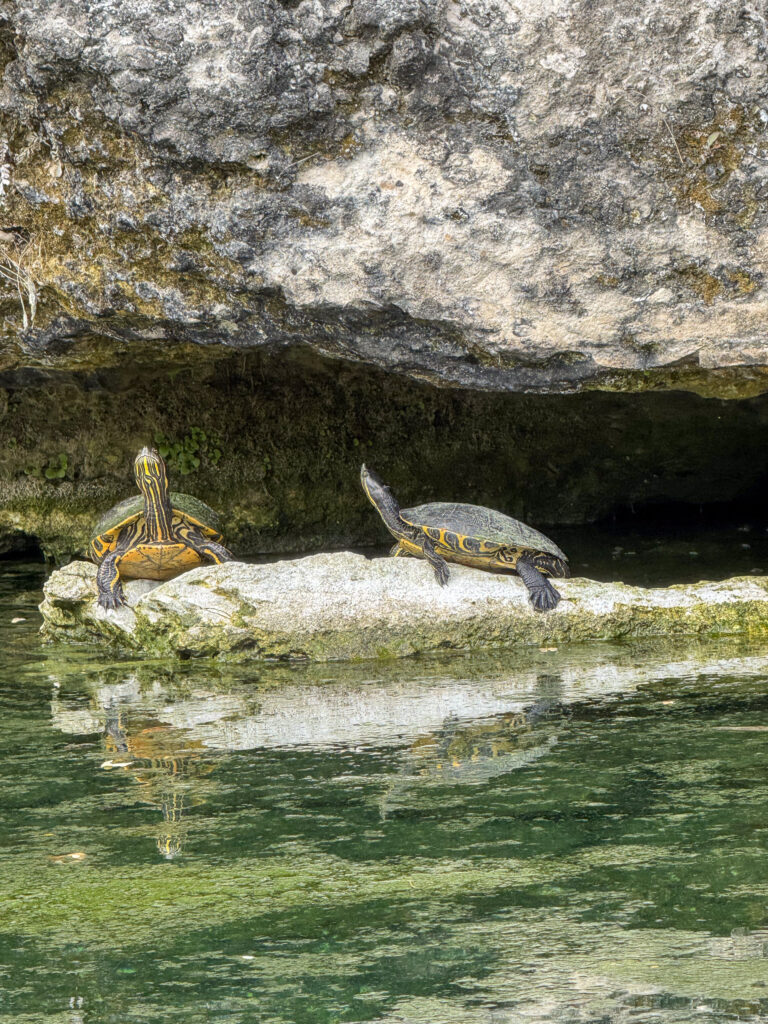
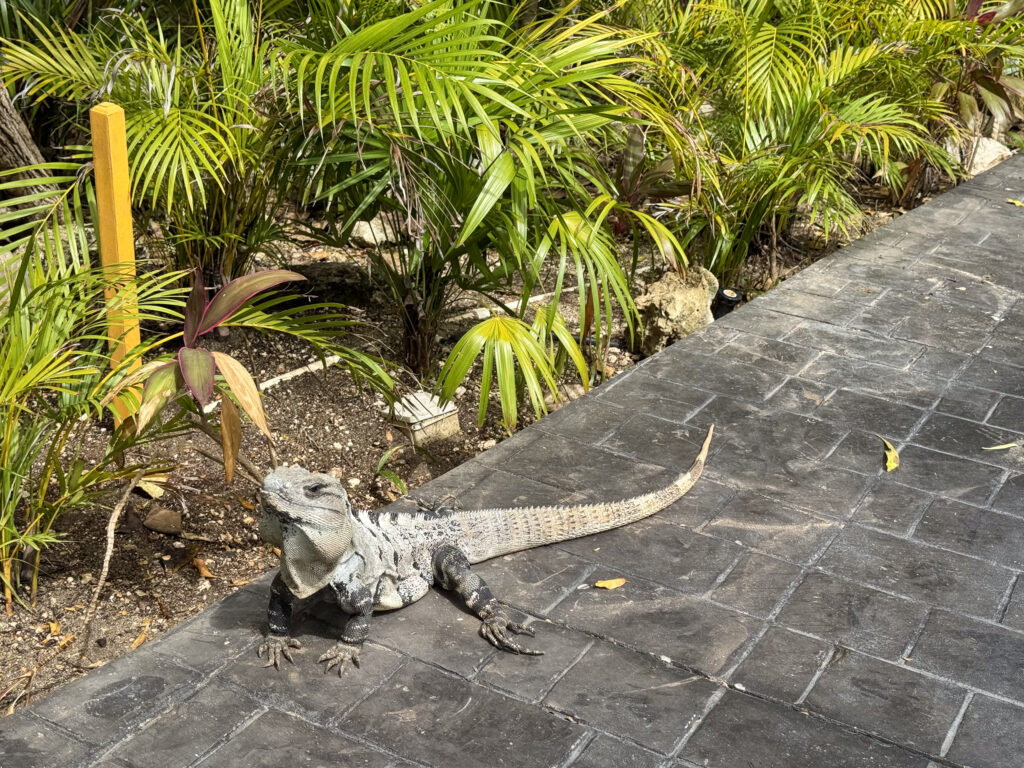
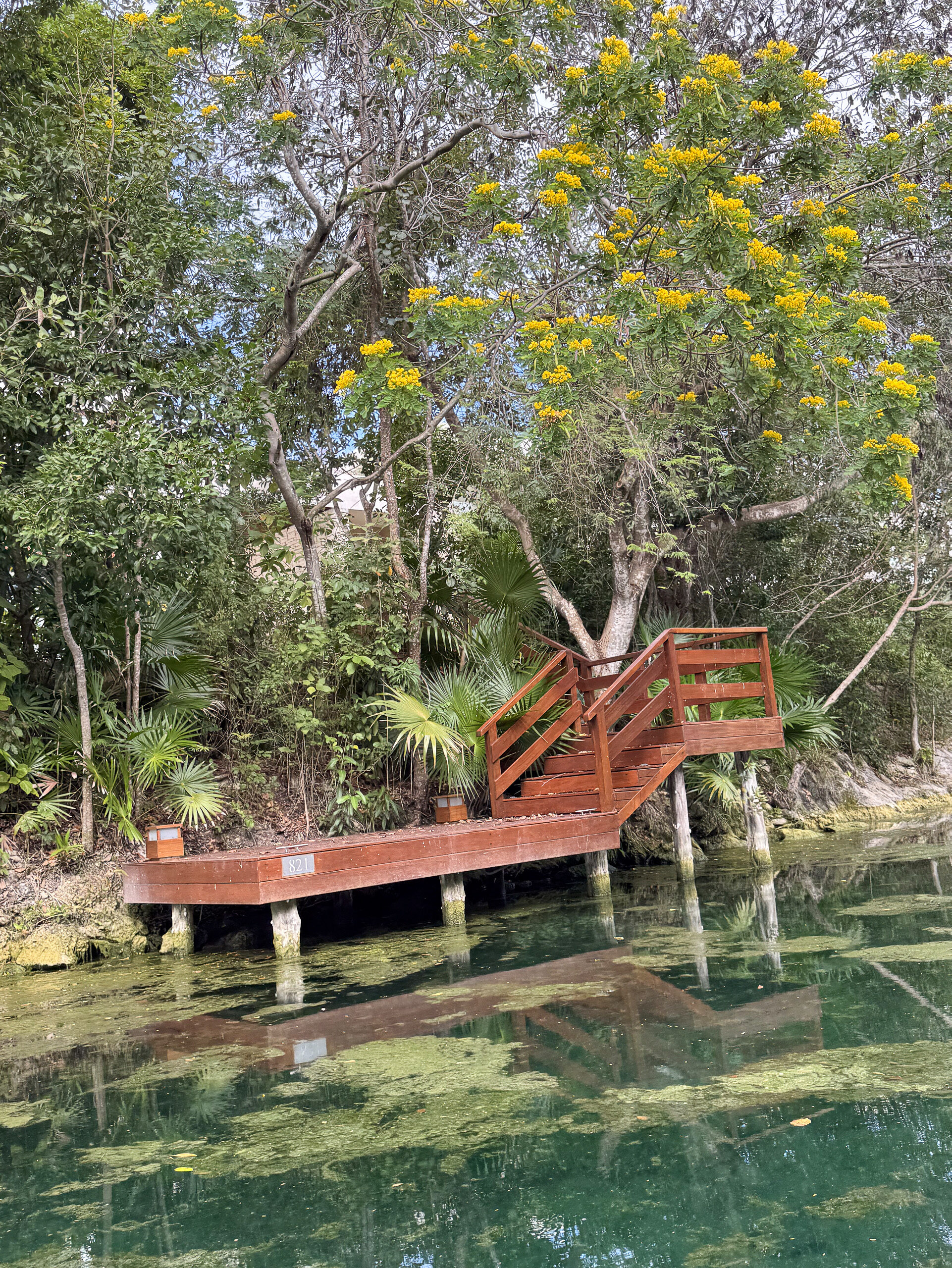
The canals are dug, not natural, but they connect to the limestone that riddles this coast, and what they attract is not decorative: two turtles hauled out on a rock ledge under an overhang a few metres from a guest path, a full-grown iguana holding a footpath in the sun, a bank of limestone undercut by green water with jungle growing straight out of the top of it. The resort runs eco boat tours through the mangrove, and there are cenotes inside the community. Fairmont’s lagoon frontage is longer than its neighbours’ and more of it is public: docks, stair landings, decks that end over the water, all walkable rather than attached to somebody’s villa.
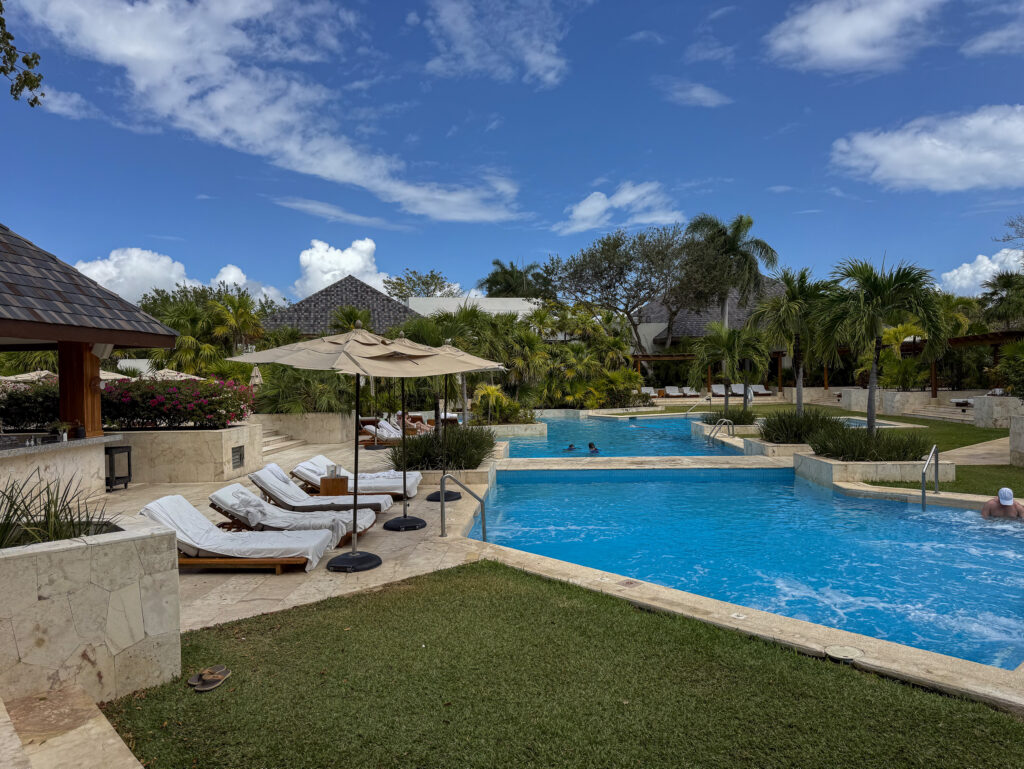
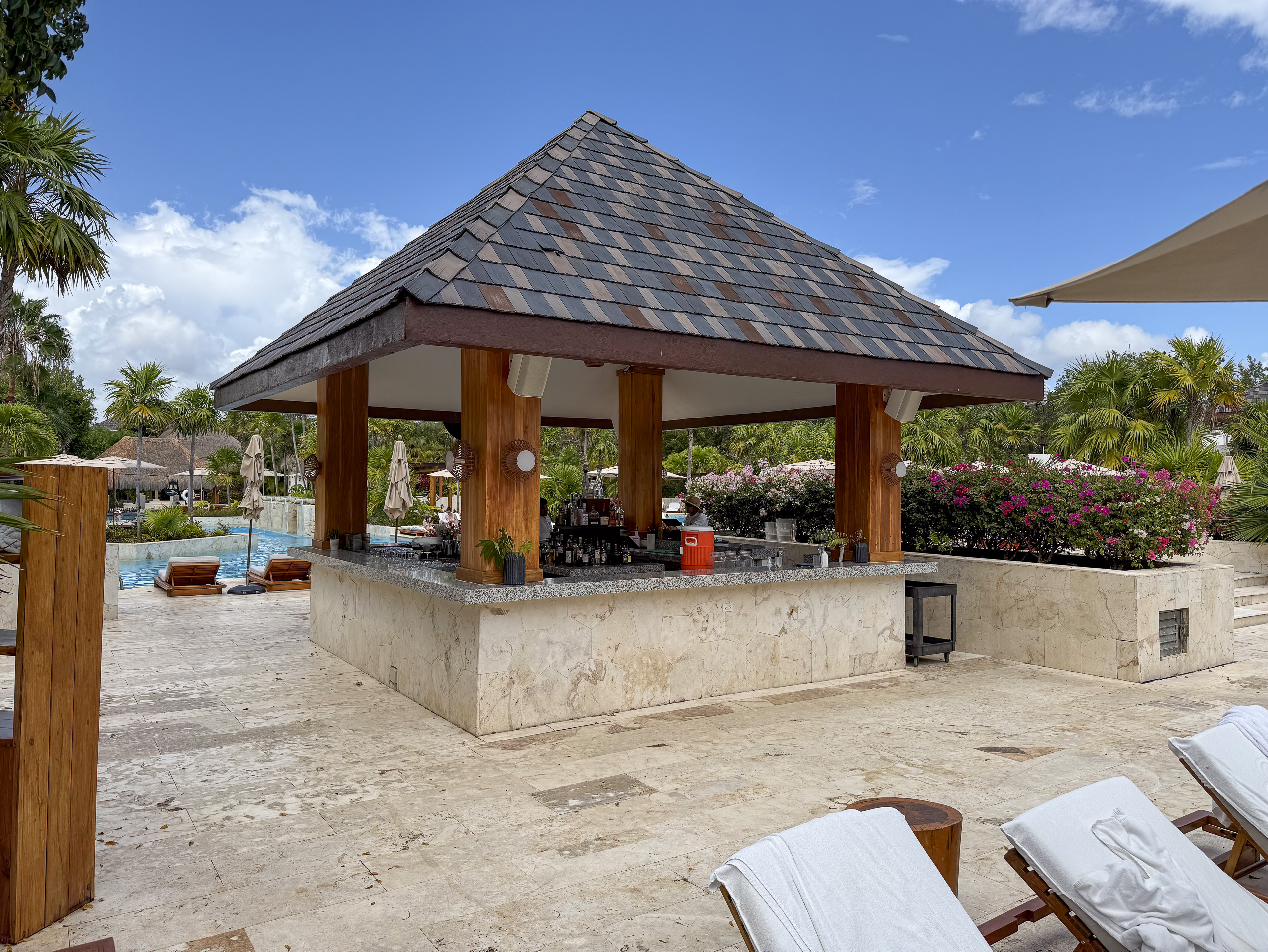
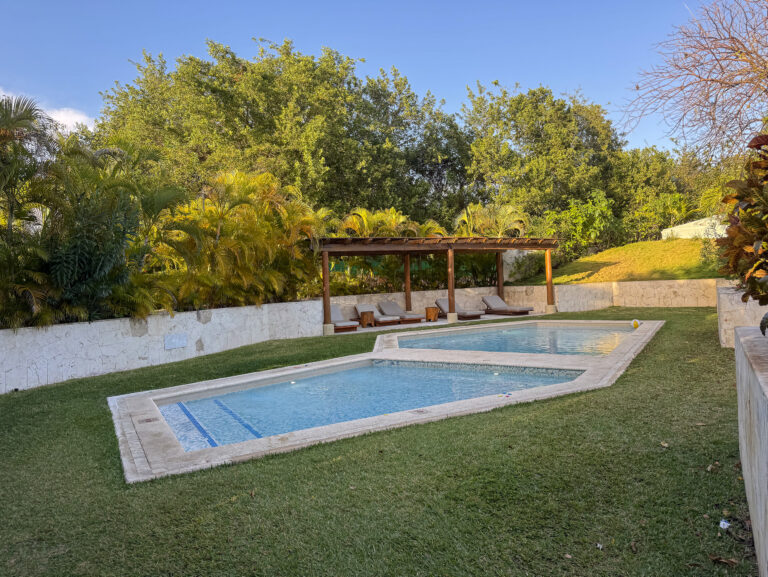
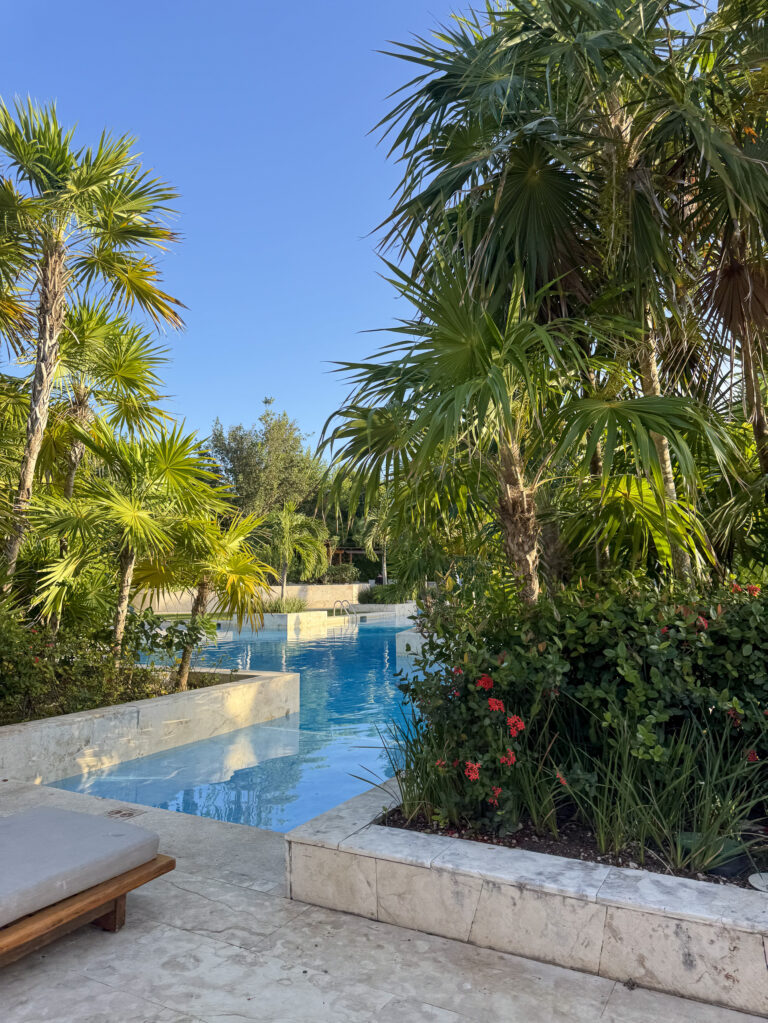
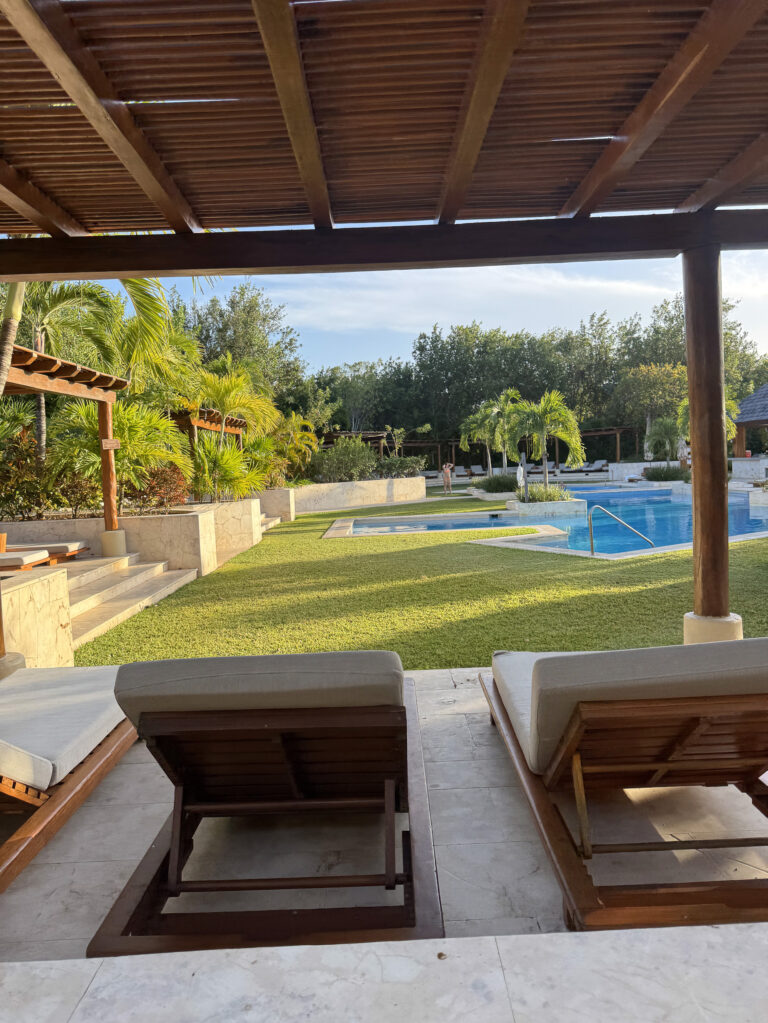
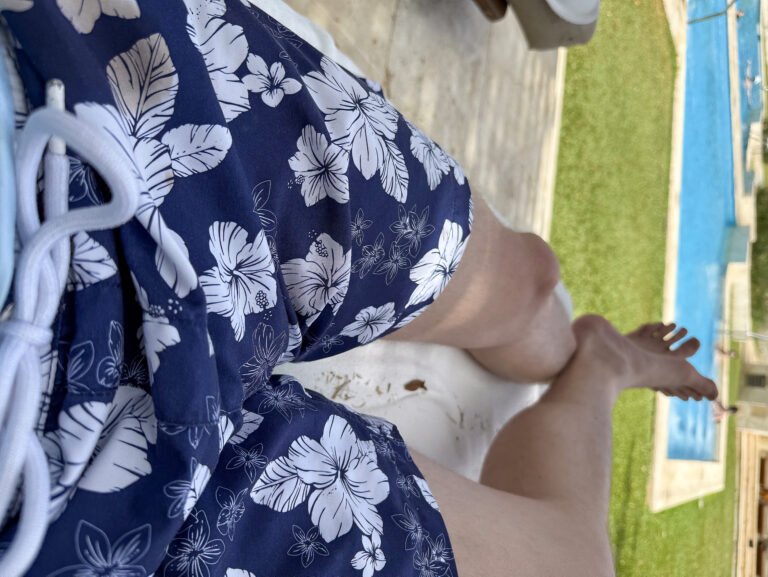
The main pool is a linked series of sections stepping down across limestone terraces and lawn, with a stone swim-up bar under a shingled pyramid roof at one end and enough loungers and canvas umbrellas that the towel-on-the-chair economy never gets going. It is a family pool, unambiguously, and it is very good at being one.
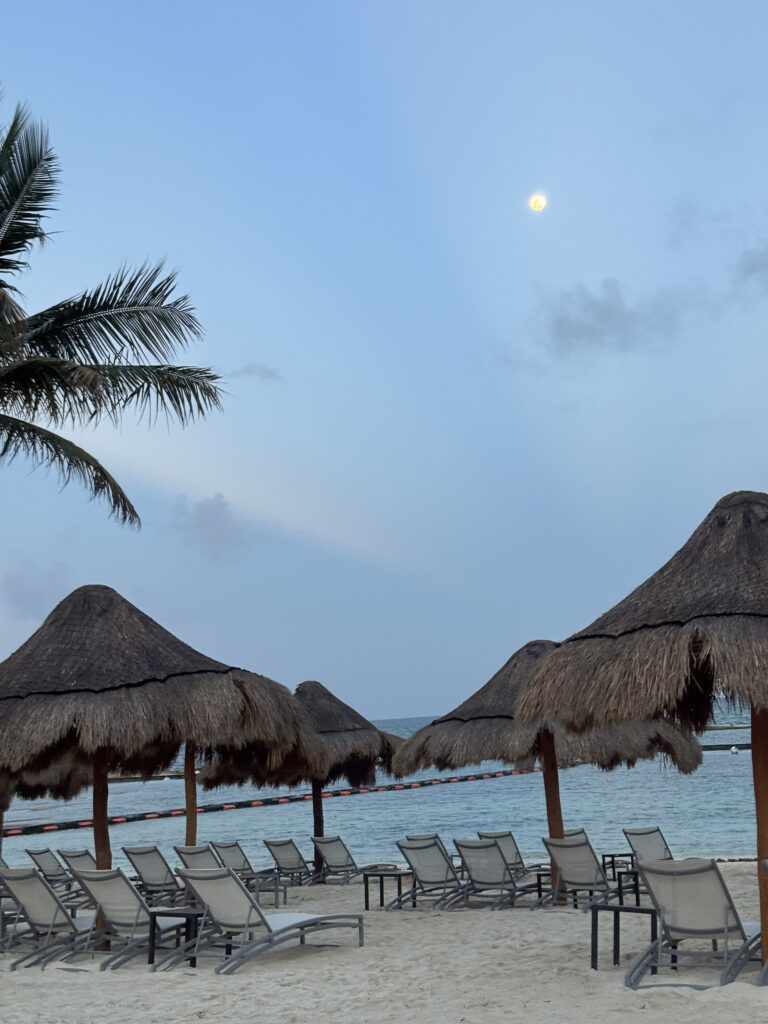
The bigger change is Maykana, the beach club, which brought five places to eat and drink onto the sand at once, including an adults-only rooftop bar over the Caribbean, along with a beachfront pool, cabanas and sunken fire pits. Before it, the beach was the weakest part of a resort whose best material was inland. It is now a reason to book. The beach itself is wide, white, and thoroughly furnished: rows of thatch palapas with sling loungers, a marked swimming area, and enough space between the rows that it does not feel like a lido. The spa is a freestanding building with hydrotherapy pools and a serious gym.
Service moments
The guacamole trolley, made at the table by someone who has made it ten thousand times and still asks how hot you want it. The buggy that appeared at the casita before I had finished the call. The eco-boat guide who cut the engine for the turtles without being asked.
Twenty years in, the Fairmont’s advantage is not novelty. It is the trees.
Who it is for, and who it is not
Come with a family or a group, for a longer stay, or for the golf, and take the beach side: immediate sand, some casitas with their own stair, closer to Maykana and the main pool. Come as a couple and take the lagoon: mangrove at the railing, constant wildlife, quiet, and you choose when to look at the sea.
Pack repellent whichever side you land on, because the mangrove is the whole point and the mangrove has mosquitoes. Do the eco boat tour early in the day. Book the rooftop bar for sunset before you arrive. Walk the canal paths at dusk, when the turtles and the iguanas are still out and the light is on the water. And if the all-inclusive package is on the table, weigh both versions before you commit.
Look elsewhere if you booked Mayakoba for silence: this is not a hideaway, the lobby is a lobby, there are corridors, and at peak season the main pool has children in it, which is the correct outcome for a resort with two kids’ clubs and the wrong one for you. The Banyan Tree next door is the villa version, and I have set the two side by side.
Bottom line
Twenty years in, the Fairmont’s advantage is the trees, and the lagoon does the rest. Take a lagoon casita as a couple, the beach side with children, and walk the canal paths at dusk either way. It is good, not great, so check your Banyans.
See the full set: Fairmont, Mayakoba — in frames. More Mayakoba: the Mayakoba set.
The Fairmont Mayakoba gallery
Every photo on this site is my own, shot on the stay. Slide through →