The Suite Report

Tag: Riviera Maya

  • Where to eat at Banyan Tree Mayakoba

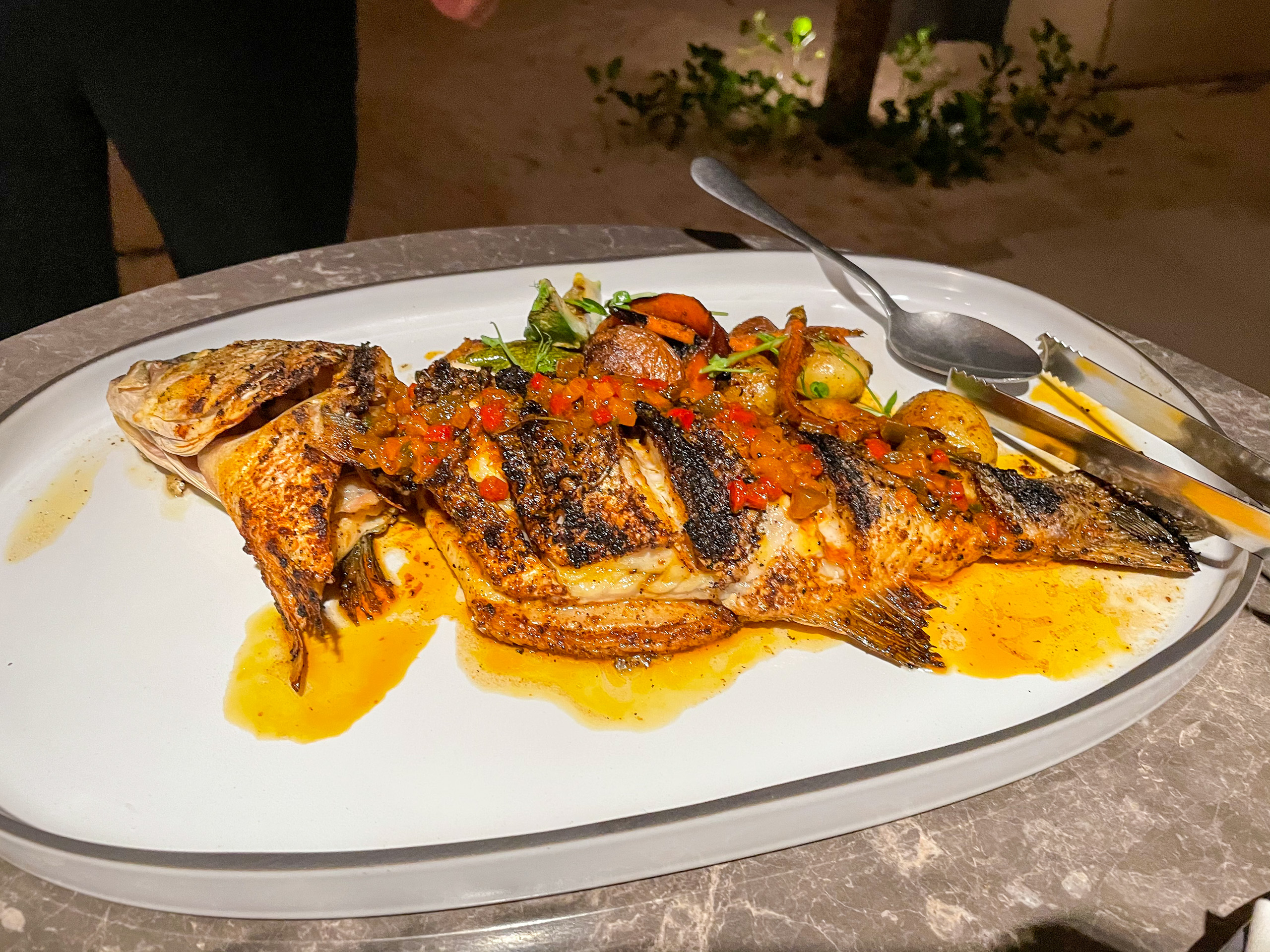
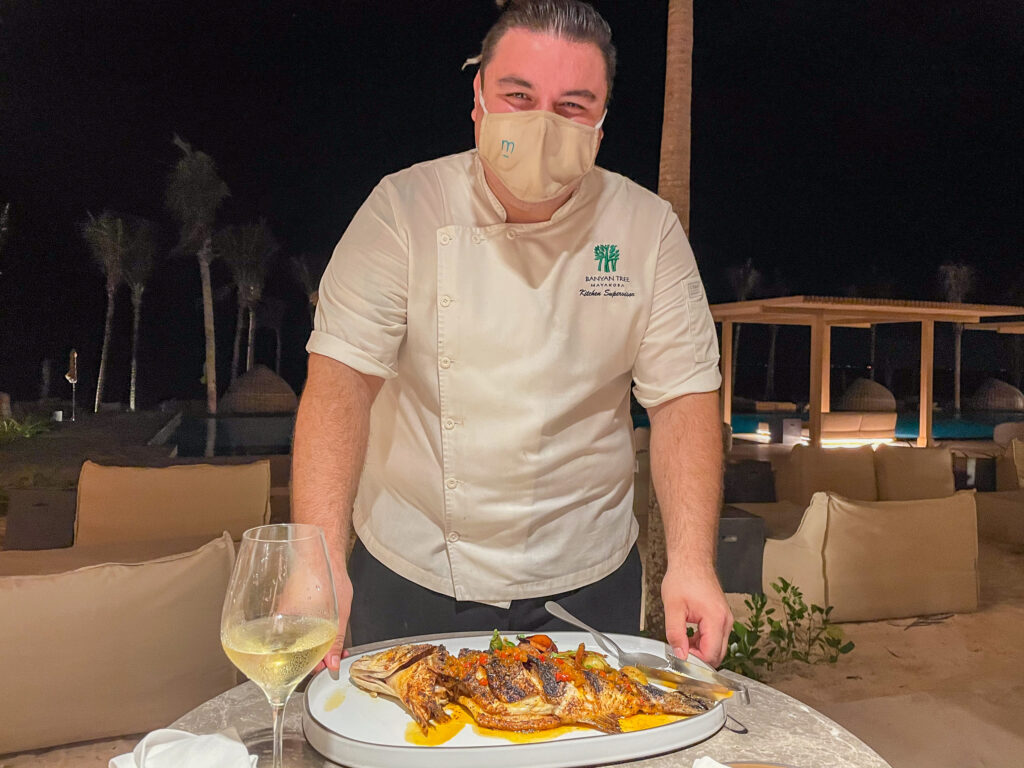
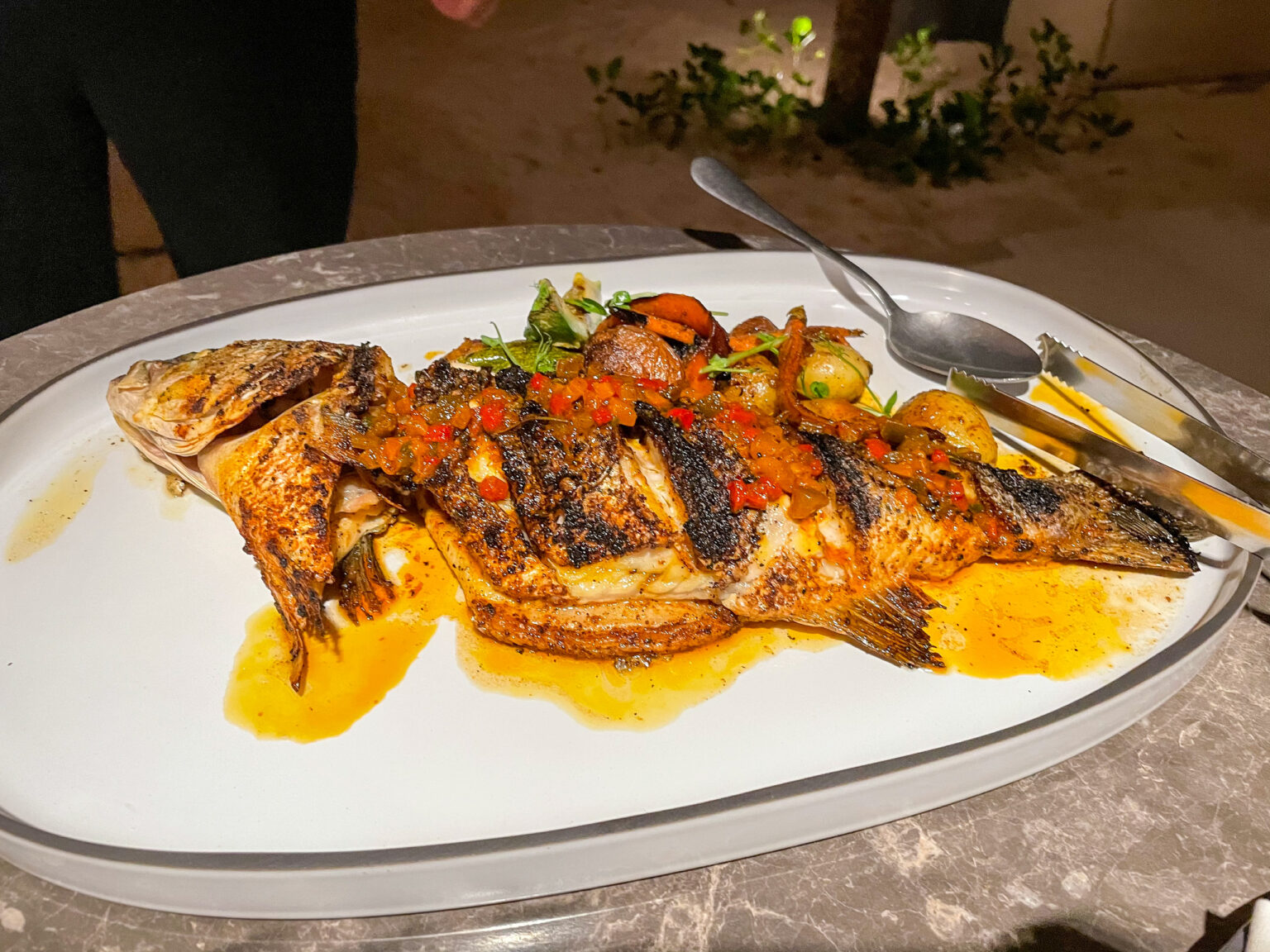
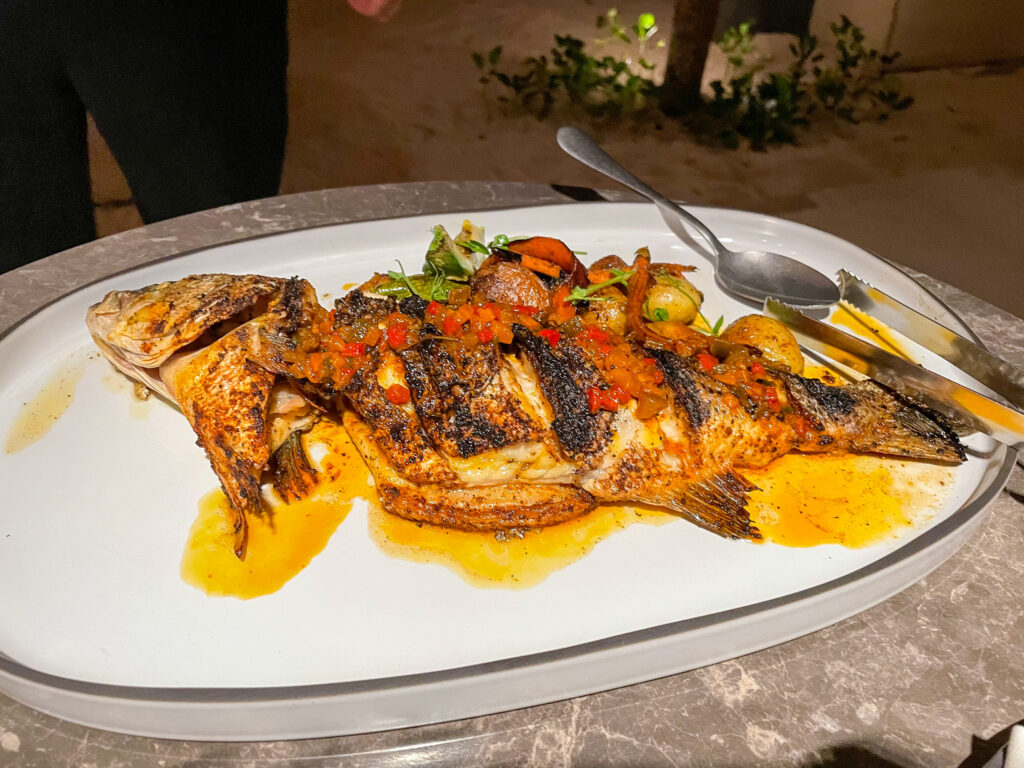
    A whole grilled fish on a white platter with chilli salsa, potatoes and olives, served outdoors after dark

    MAYAKOBA, MEXICO · RESTAURANT · 9 MIN READ

    Where to eat at Banyan Tree Mayakoba

    Seven restaurants, two beach clubs and six destination dinners – and a bill written in two currencies that behave in opposite directions.

    By J.C. Mercer

    Verified meal·paid in full

    • Covers Two, across two stays rather than at one table
    • Dined March 2026
    • Menu À la carte throughout. There is no tasting menu anywhere on the property, not even at the signature restaurant
    • Drinks Cocktails and wine by the glass, ordered off the card. No pairing is offered and no drinks package exists
    • How it was booked The way any other guest would

    Every meal on this site is booked the way any other guest would book it.

    Banyan Tree Mayakoba lists seventeen places to eat, which is true and not much help. Seven are fixed restaurants, two are beach clubs, one is a pool bar. Six are formats rather than rooms – a Mayan dinner over fire, a dinner for two on a flat-bottomed boat, two themed nights, a barbecue at your villa, a sunset cruise. The seventeenth is room service, quietly one of the better options.

    Put like that, the decision is not which restaurant but which night. Two of the seven serve one meal a day, the adults-only beach club shuts at five, one kitchen stays open until one in the morning, and two of the destination dinners run on a single evening a week. Meanwhile the best food on the estate sells out nightly, including to people sleeping a hundred metres from it.

    Two of the seven restaurants are the same room

    The seven: Saffron for Thai, Suna for Nikkei until one in the morning, Cello for Italian, Tomahawk Open Fire Latin Grill for steak, Oriente for breakfast, Cocina Corazón for tacos at El Pueblito, La Copa for a drink.
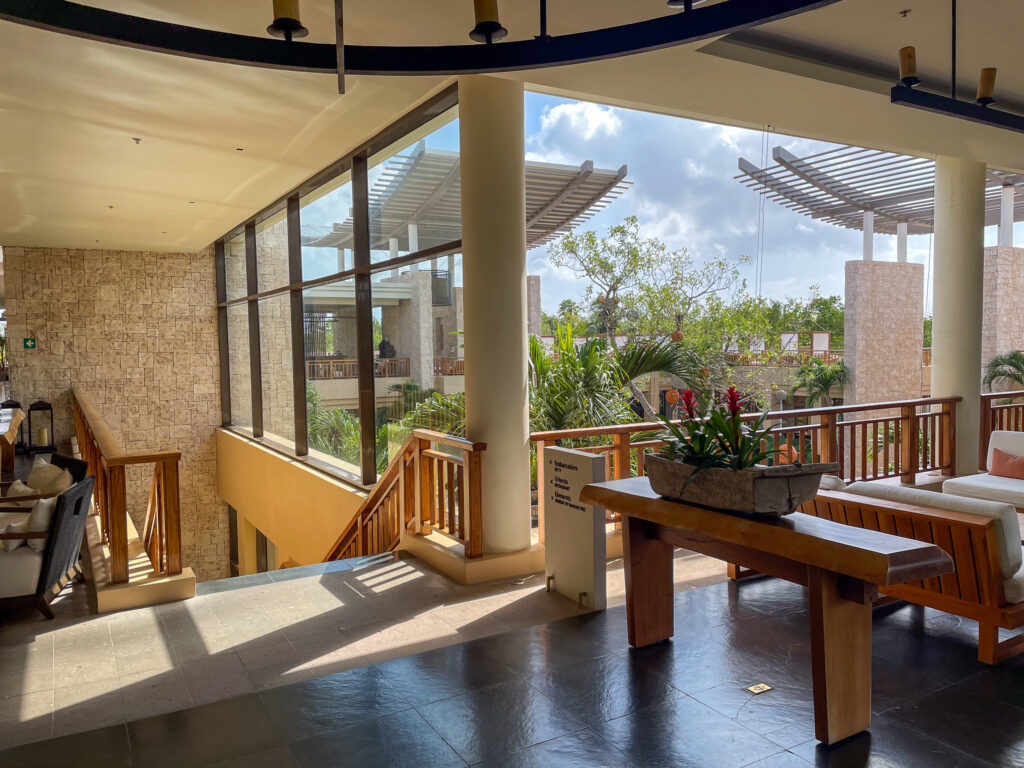
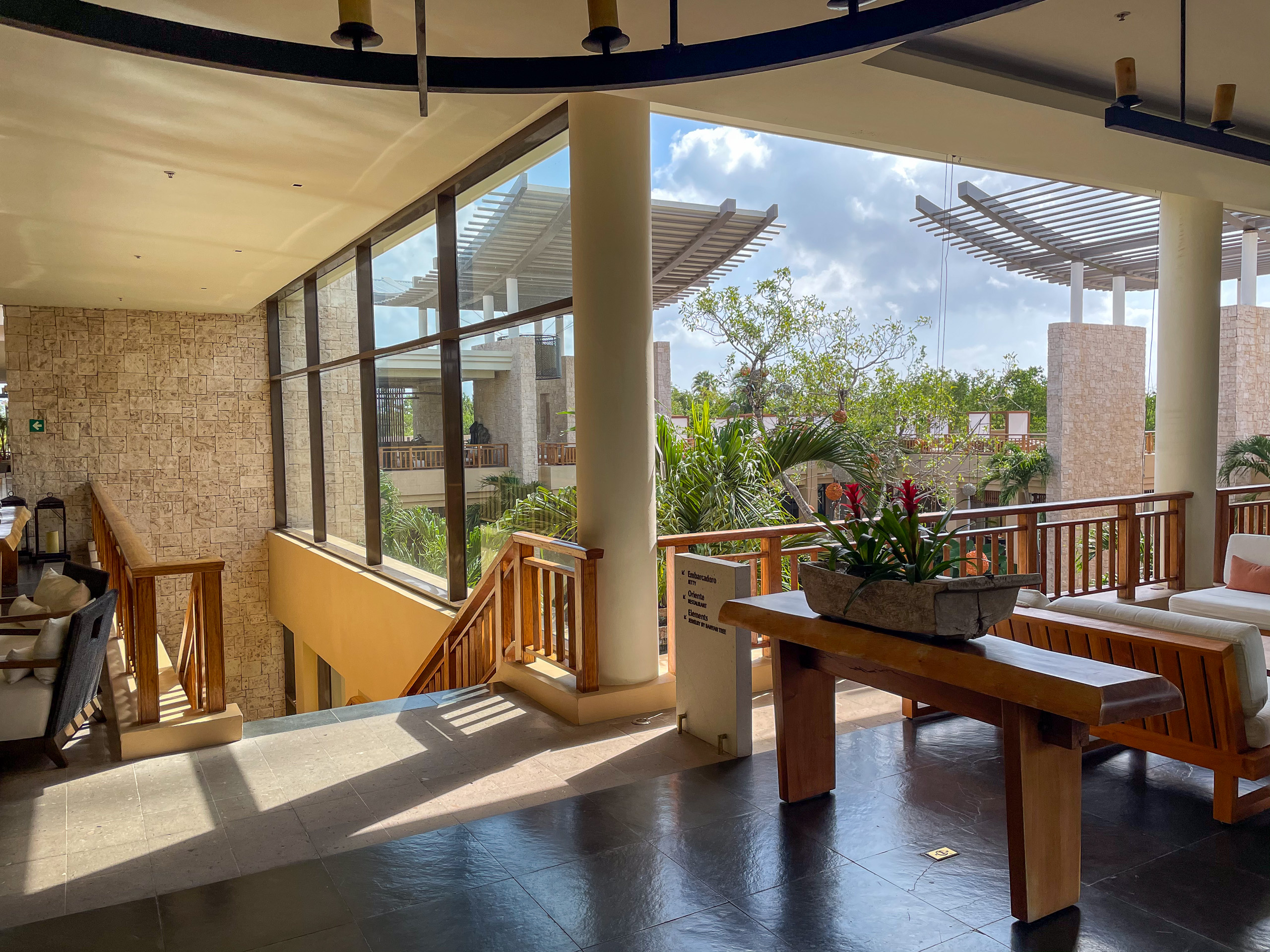
    The open-air lobby lounge, timber benches and a stone bowl of bromeliads looking out to the jungle
    The open-air lobby lounge. La Copa sits out here under the banyan tree, and it is the only place on the property you can get a drink and something to eat at four in the afternoon.

    Two of them are the same room. Oriente serves breakfast in it and closes at eleven; Tomahawk lights the grill in it at half past five. The property presents two restaurants and structurally it is one space used twice a day, which explains the hours and a good deal about how the steakhouse feels. La Copa, meanwhile, does more than a lobby bar usually does: the agave tasting is held there, and it is where you board the lagoon dinner.

    Saffron is the one to book before you fly

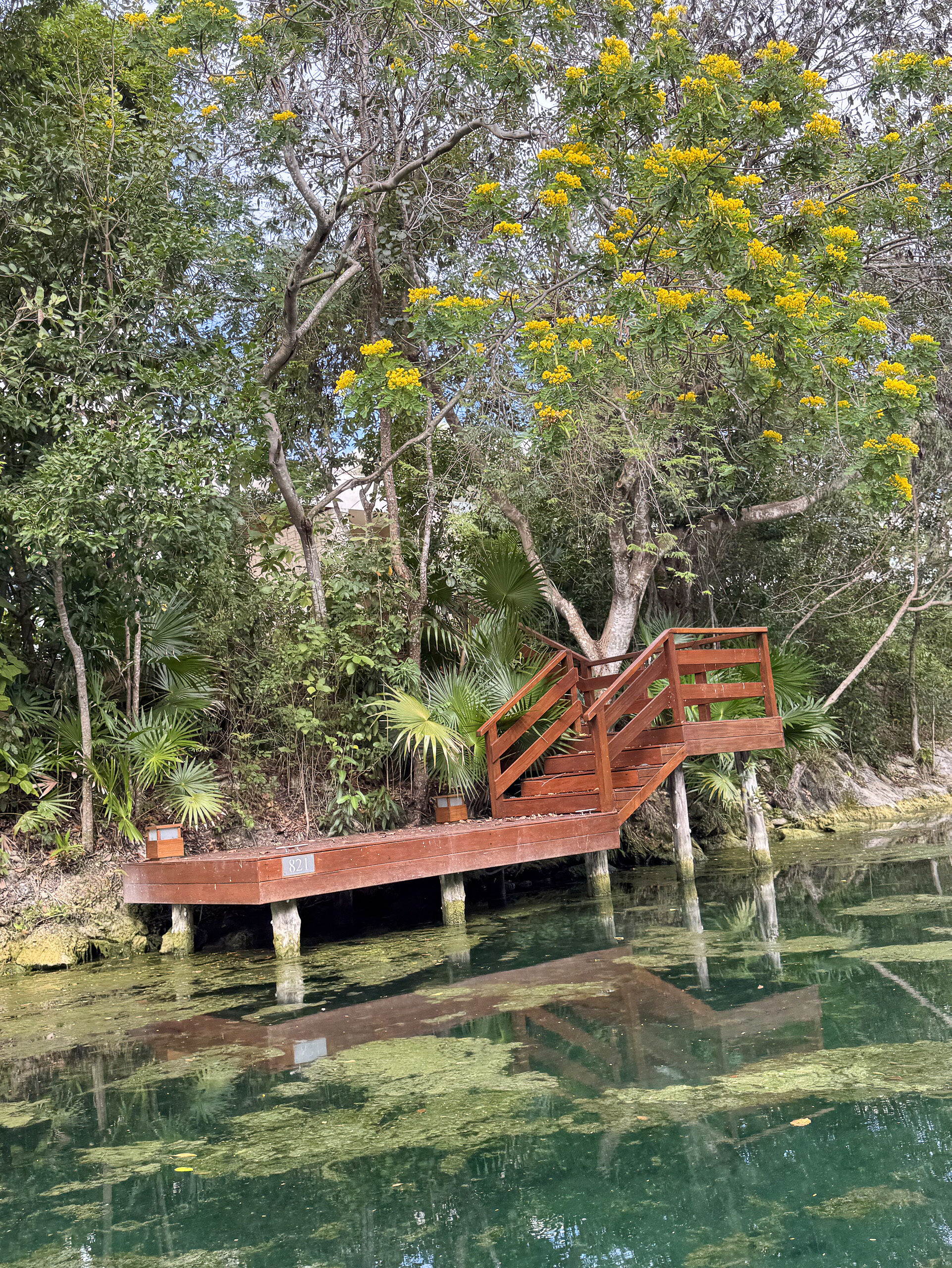
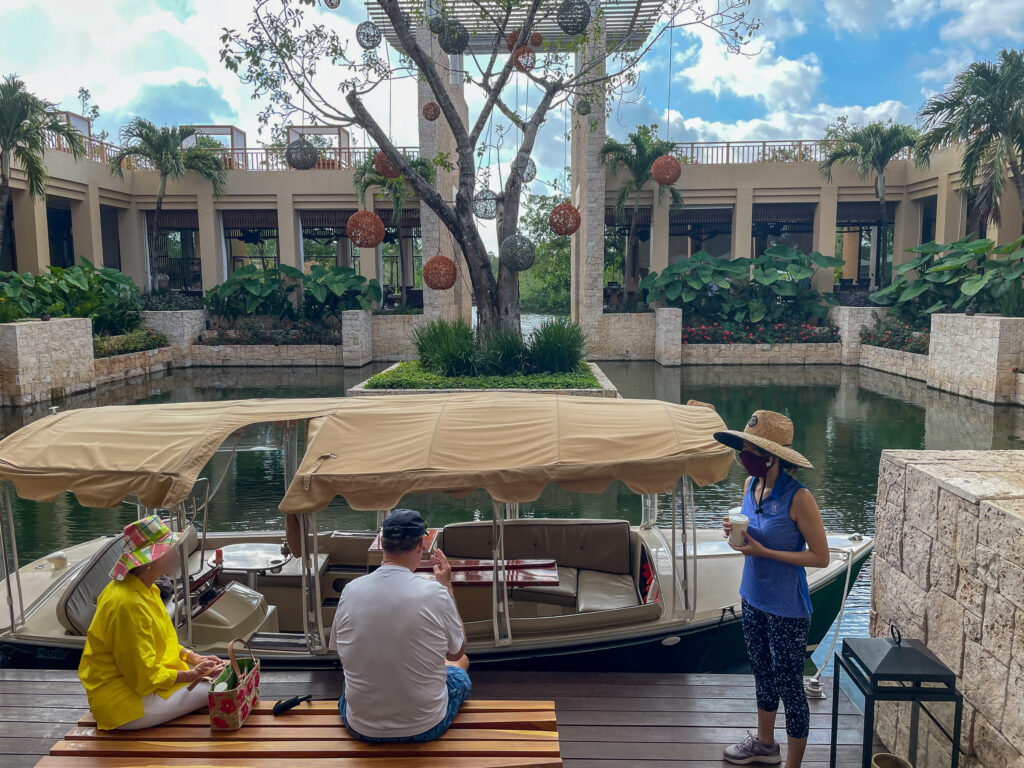
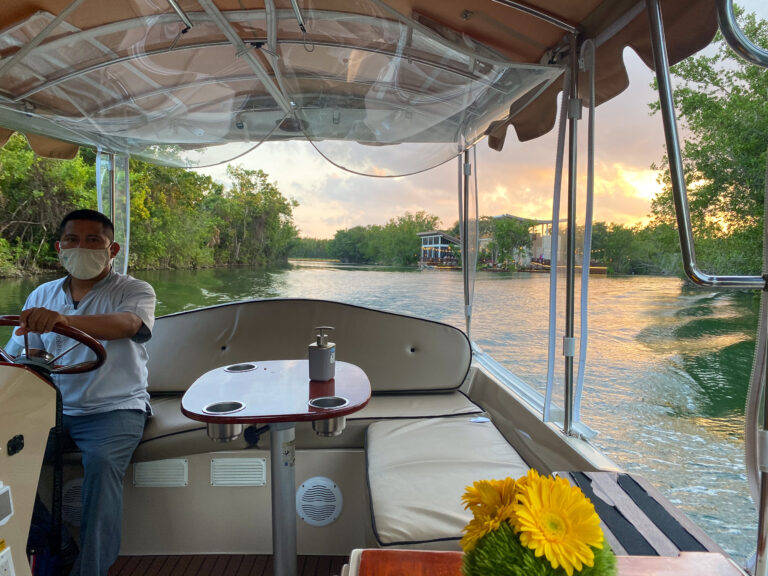
    Saffron sits on low wooden decks over one of the canals, and the intended way to reach it is by electric boat rather than on foot. Dinner only, seven nights. It is the best food inside the gates, and not by a little.

    The lineage matters more than it usually would. The first Saffron opened at Banyan Tree Phuket in 1995 and it is now the group’s signature restaurant at fourteen properties, with a corporate chef who travels between them so that the dish you order in Mexico is the dish you would be handed in Macau. The local kitchen puts the split at roughly eighty per cent corporate recipes it must follow exactly, twenty per cent it can play with.

    There is no tasting menu and no wine pairing, which at this level is unusual and is good news: you order what you want. Curries and wok dishes climb to the tenderloin at the top of the card, and the vegetarian section is a real one – seven mains, all close cousins.

    Two practical notes. Saffron sells out nightly and nothing appears to be held back for guests already on the property, so booking from home is not over-planning – and when it is full the kitchen will cook to your villa, because Saffron is on the all-night room-service card. Second, it opens at half past five, on decks above standing water, in a mangrove. Take the repellent to dinner.

    Breakfast is the one room everybody is in

    Oriente serves from seven until eleven and that is the whole of its day. The buffet is vast – a wall of bread and pastry, a Mexican side and an American one, omelettes and pancakes to order – with a continental tier, a children’s version, and an à la carte card besides. It is also the only crowded space on a resort whose whole selling point is that nothing is crowded. Every child on the property is in there between eight and nine, the kitchen is not staffed for the volume, and a filter coffee can outlast the food.

    Three ways around it. Sands Beach Club does à la carte on the sand from eight to eleven, pancakes at the bottom of the card and an acai bowl at the top. The boat dinner has a breakfast version for two. Or eat on your terrace, where in-villa sets carry a delivery charge on top: dearest of the four, and quietest. Note that Oriente opens at seven and Sands not until eight.

    The two beach clubs split the day between them
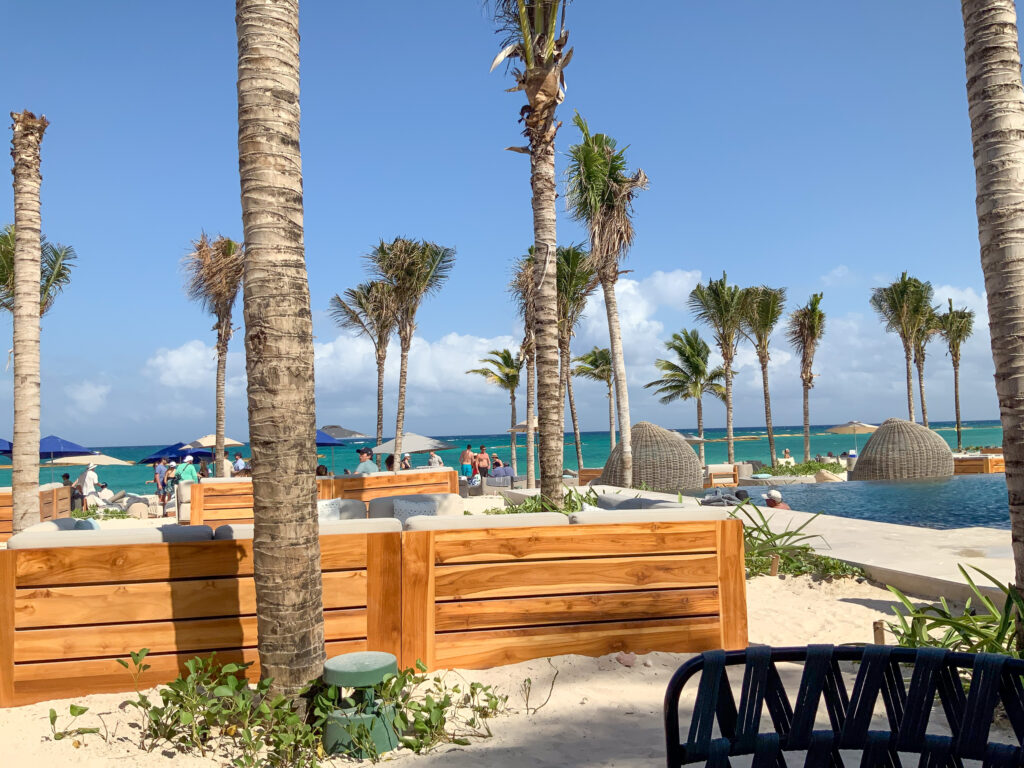
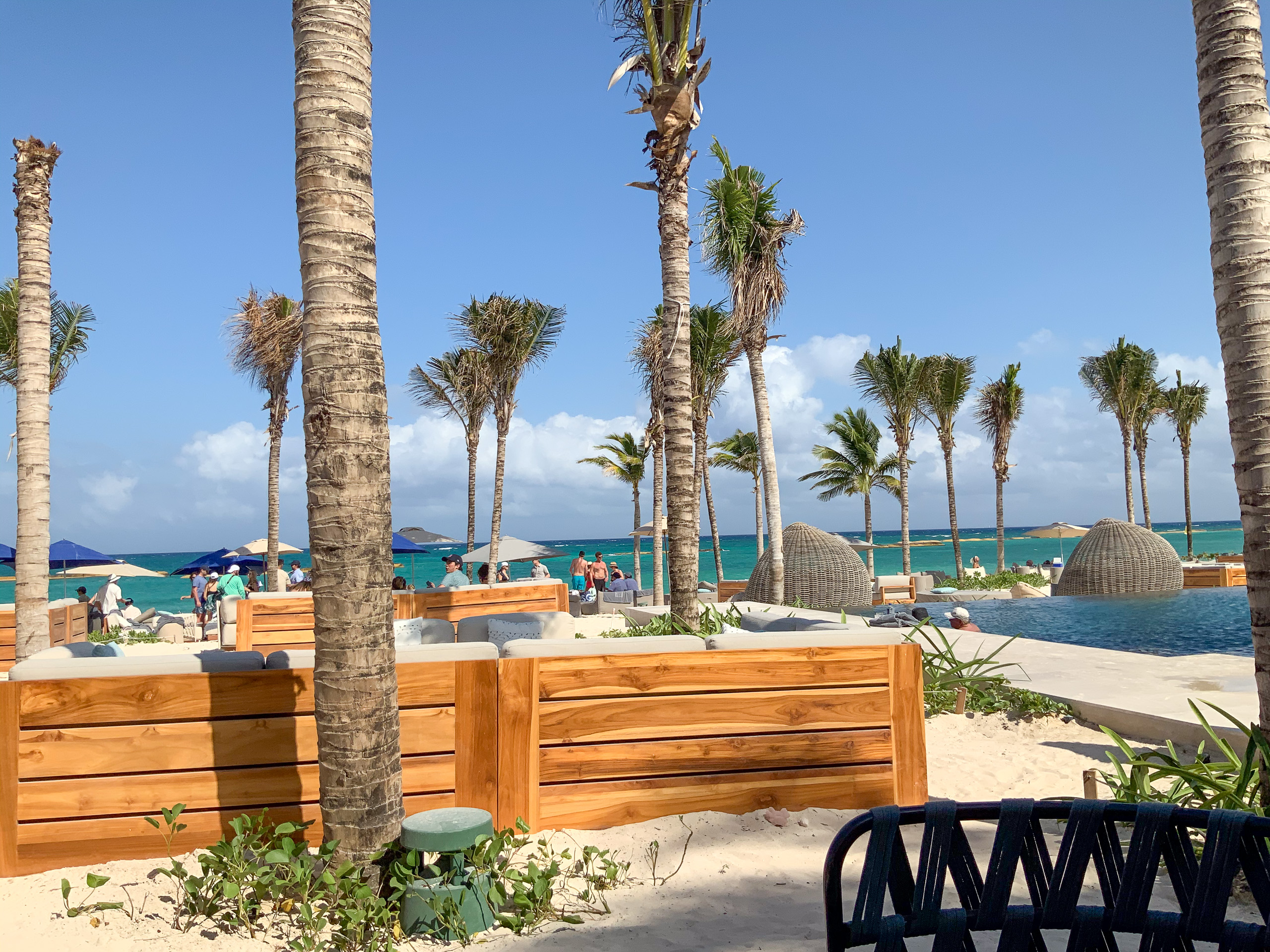
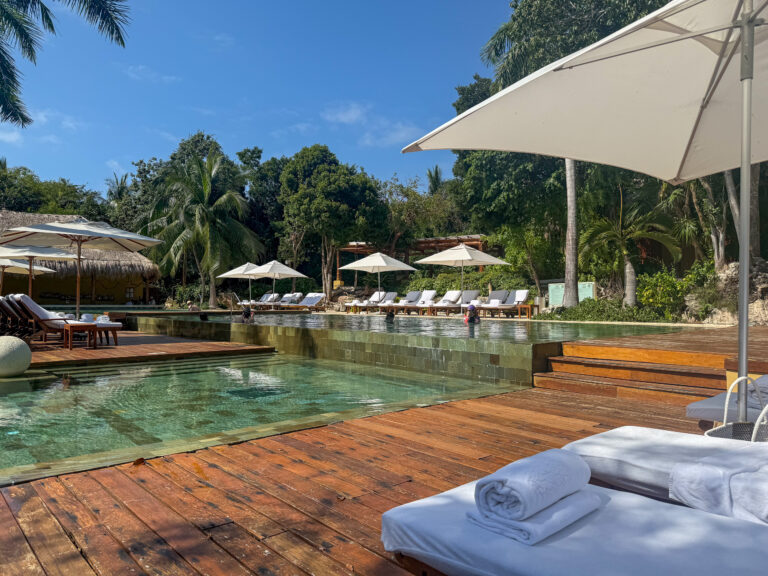
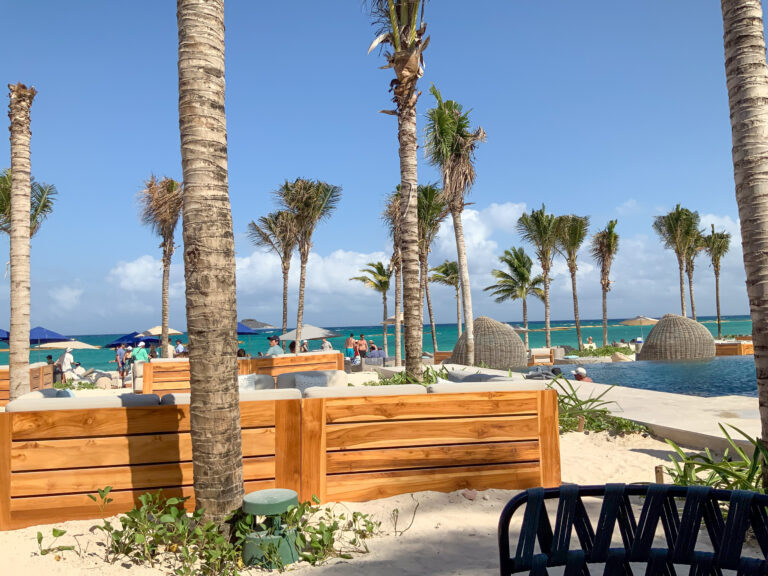
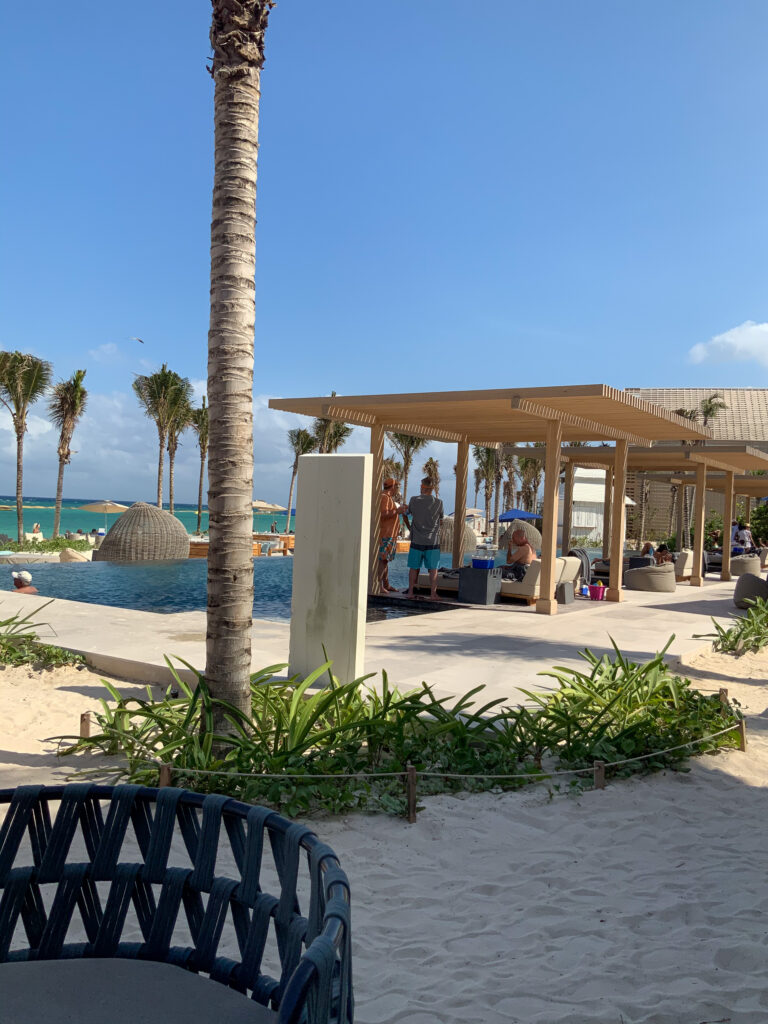
    Teak daybeds and woven pod cabanas on the sand beside the beachfront infinity pool, palms and the Caribbean behind
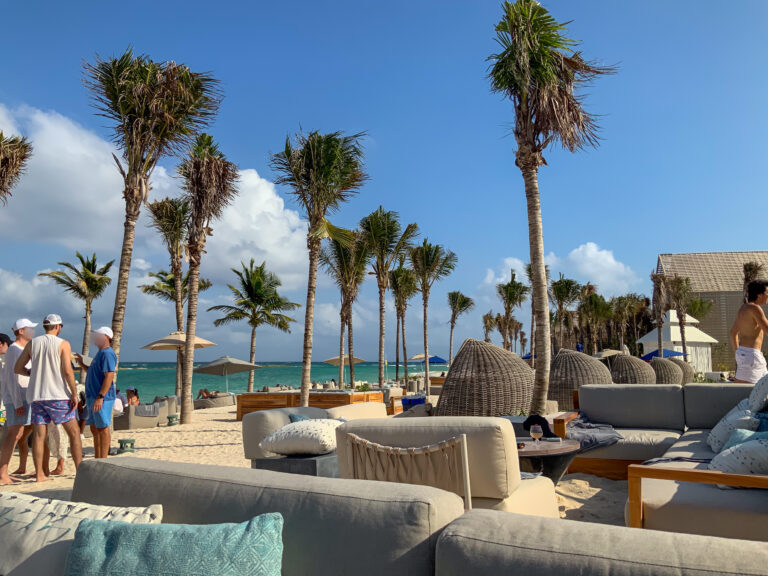
    The beachfront pool and the daybeds beside it. The house states plainly that the daybeds are a daytime arrangement and are not available at dinner.

    Sands is the only venue doing all three meals. Lunch is poke bowls, pizzas and tacos, with a lobster roll at the top of the card. Dinner is a different proposition – the kitchen sets up a seafood market and cooks what you point at – running from lobster tacos to a 300-gram beef tenderloin, the dearest single plate on the property and dearer than anything at the signature restaurant.

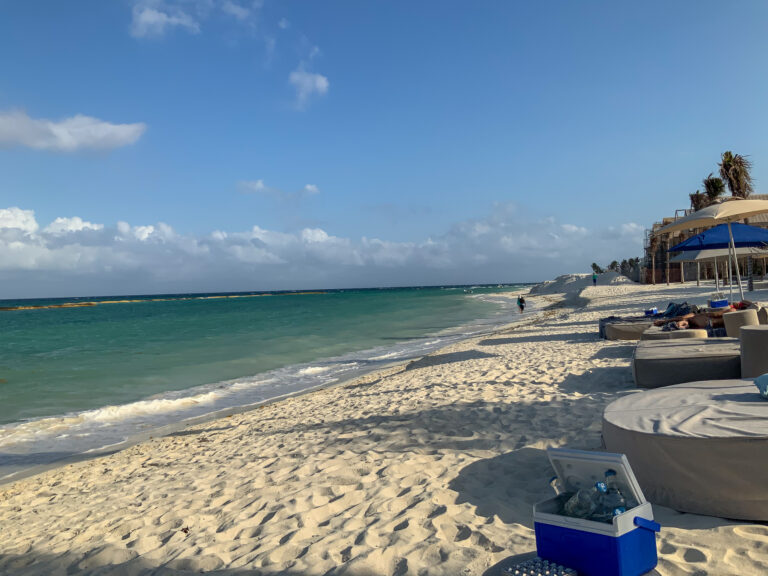
    Sur is the only adults-only dining space here, eleven until five and no dinner at all. That is the useful shape of the day: Sur takes the quiet lunch, Sands takes the children and the evening. It also means only these two and the barbecues on the sand are exposed to the sargassum that reaches this coast from late spring into early autumn. Everything else is lagoon-side or in the village.

    The dinners that only happen if enough people book
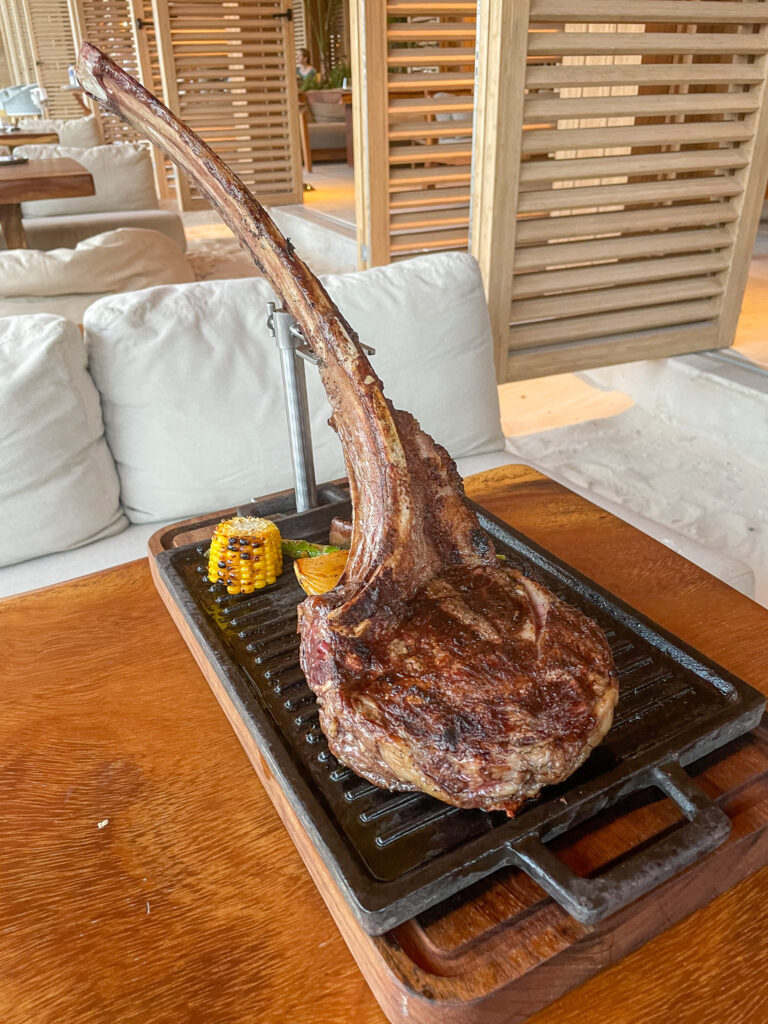
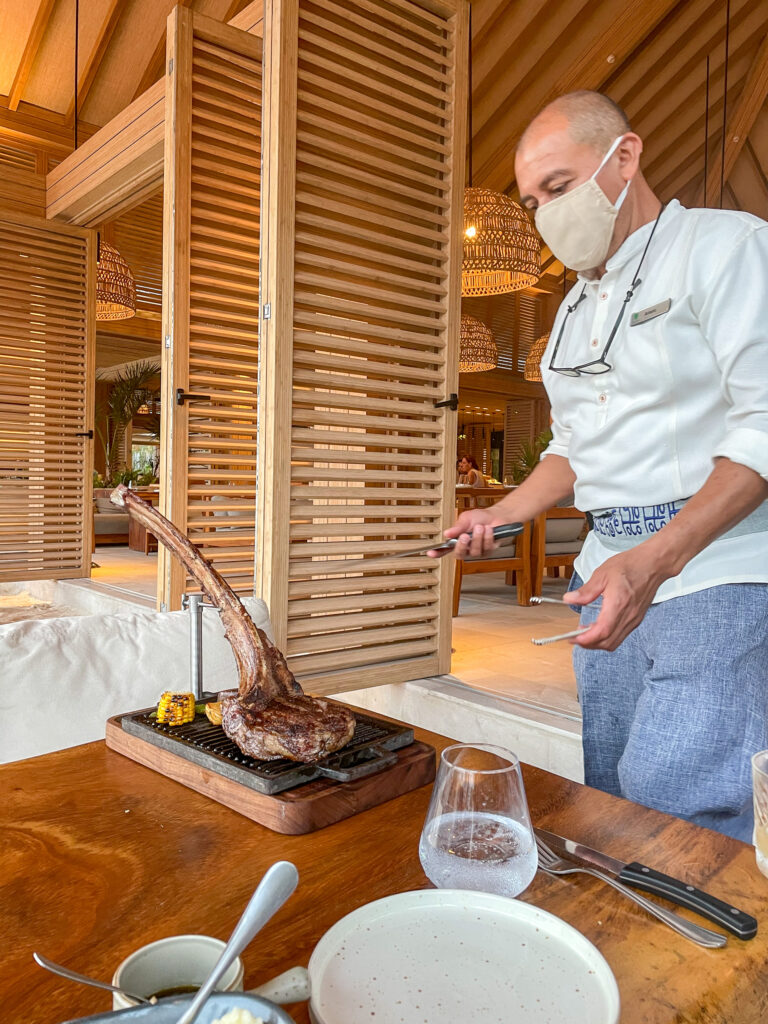
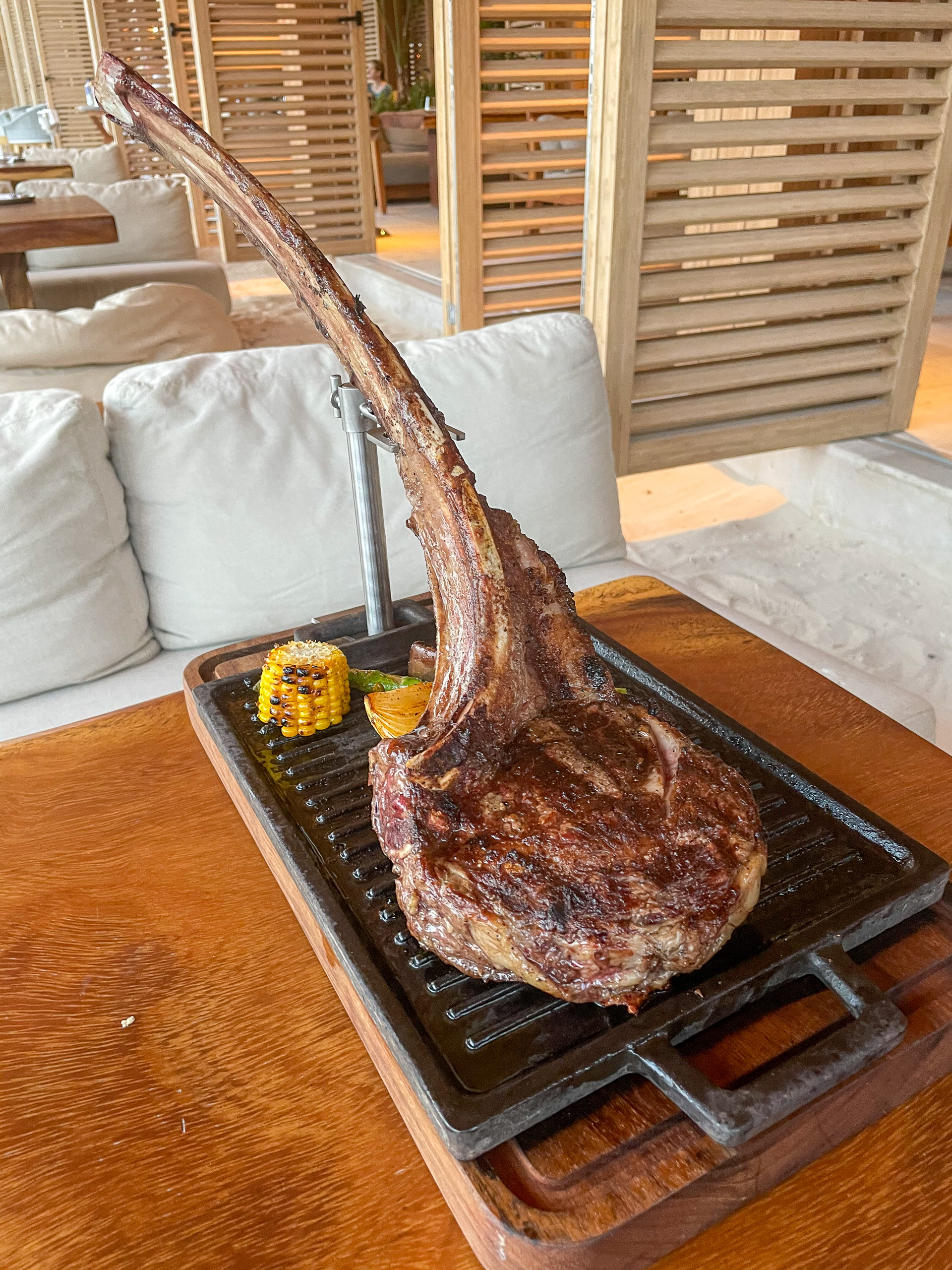
    A tomahawk steak on a cast-iron grill plate with charred corn, served on a low table in the lounge
    A tomahawk and charred corn brought out on a cast-iron plate. The private formats travel: the kitchen will grill at your villa, on the sand, or beside the lounge.

    Six of the seventeen listings are events rather than rooms, and several need a minimum number of diners. If the numbers are not there, the evening does not run. Haab is the headline: a multi-course Mayan dinner in the open air, wines and spirits harmonised into the set menu, song and dance through it. It goes on request rather than on a fixed night, and it can be pulled on the day for want of sign-ups – repeatedly, even in high season. Book it early and hold it loosely. Latin Beach BBQ, on Wednesdays, has the same problem; Mexican Night is Saturdays, mariachi and antojitos.

    Ixchel does not depend on anyone else turning up, because it is private. You board a trajinera at the lobby dock after a cocktail at La Copa and drift the lagoons for about two hours, a captain and a chef aboard, working from one of three menus you choose in advance. Take the Thai: Saffron’s kitchen cooks it. A bottle of wine comes with it. Of everything here, it is the thing I would book twice. The Signature In-Villa BBQ and the Sunset Cruise are email bookings rather than WhatsApp.

    One flat statement, because it matters more than an estimate would: the property publishes no terms for any of the six, nor for the cooking classes or the tastings — get the details in writing first.

    The boat to the other three hotels stops at seven
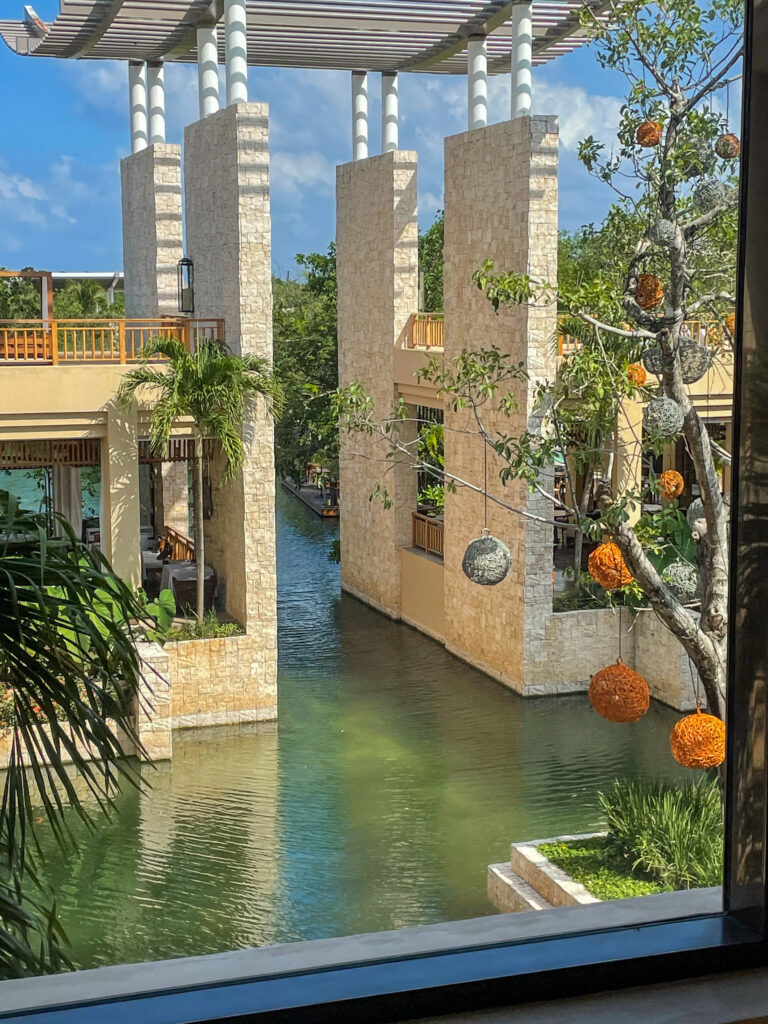
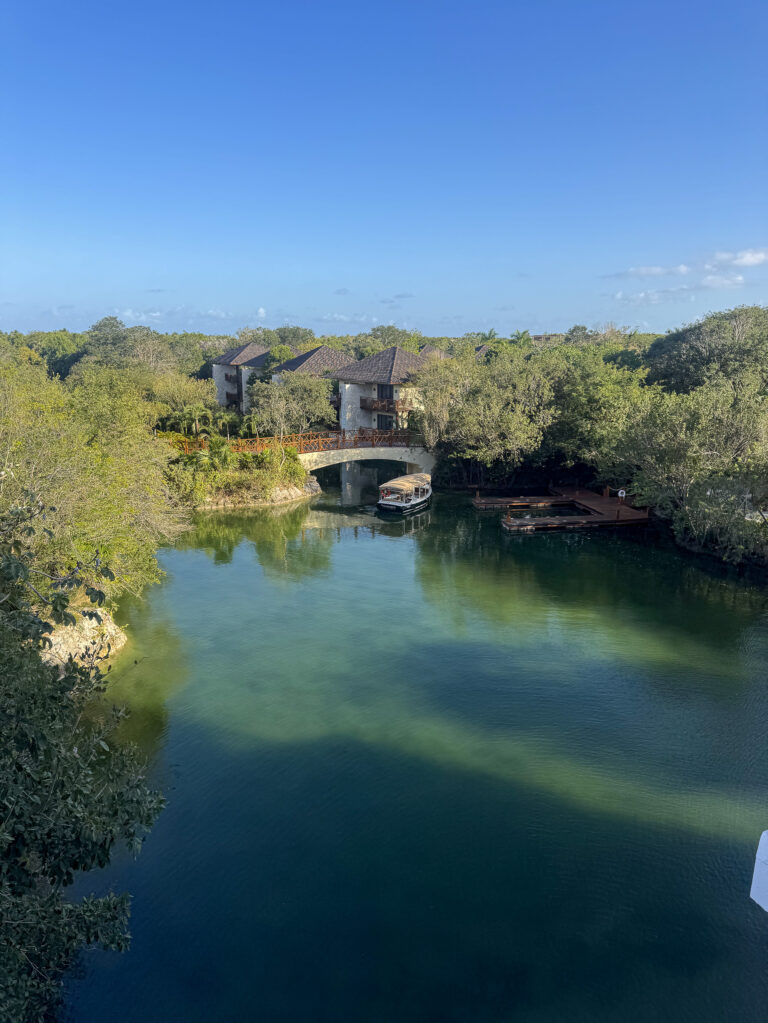
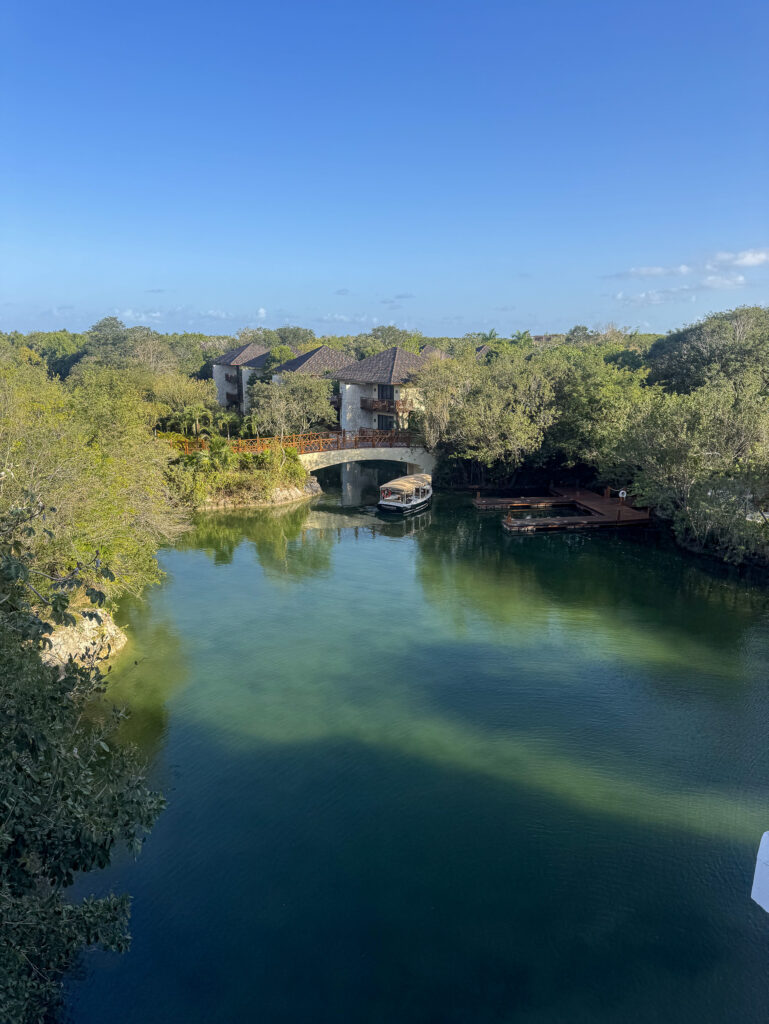
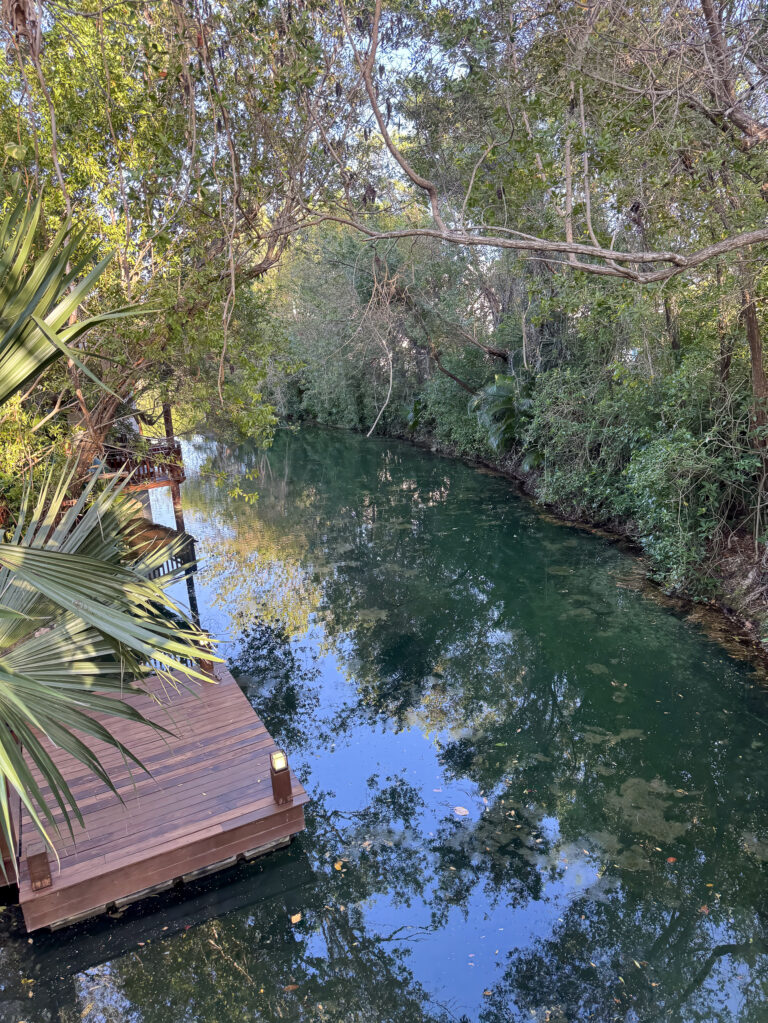
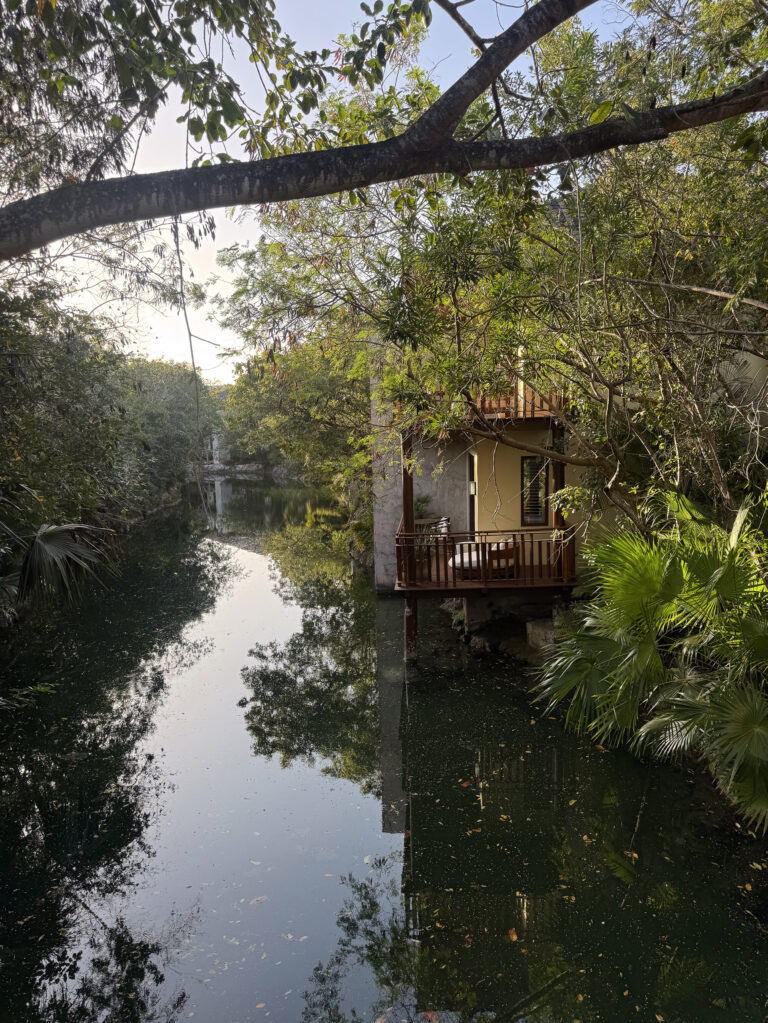
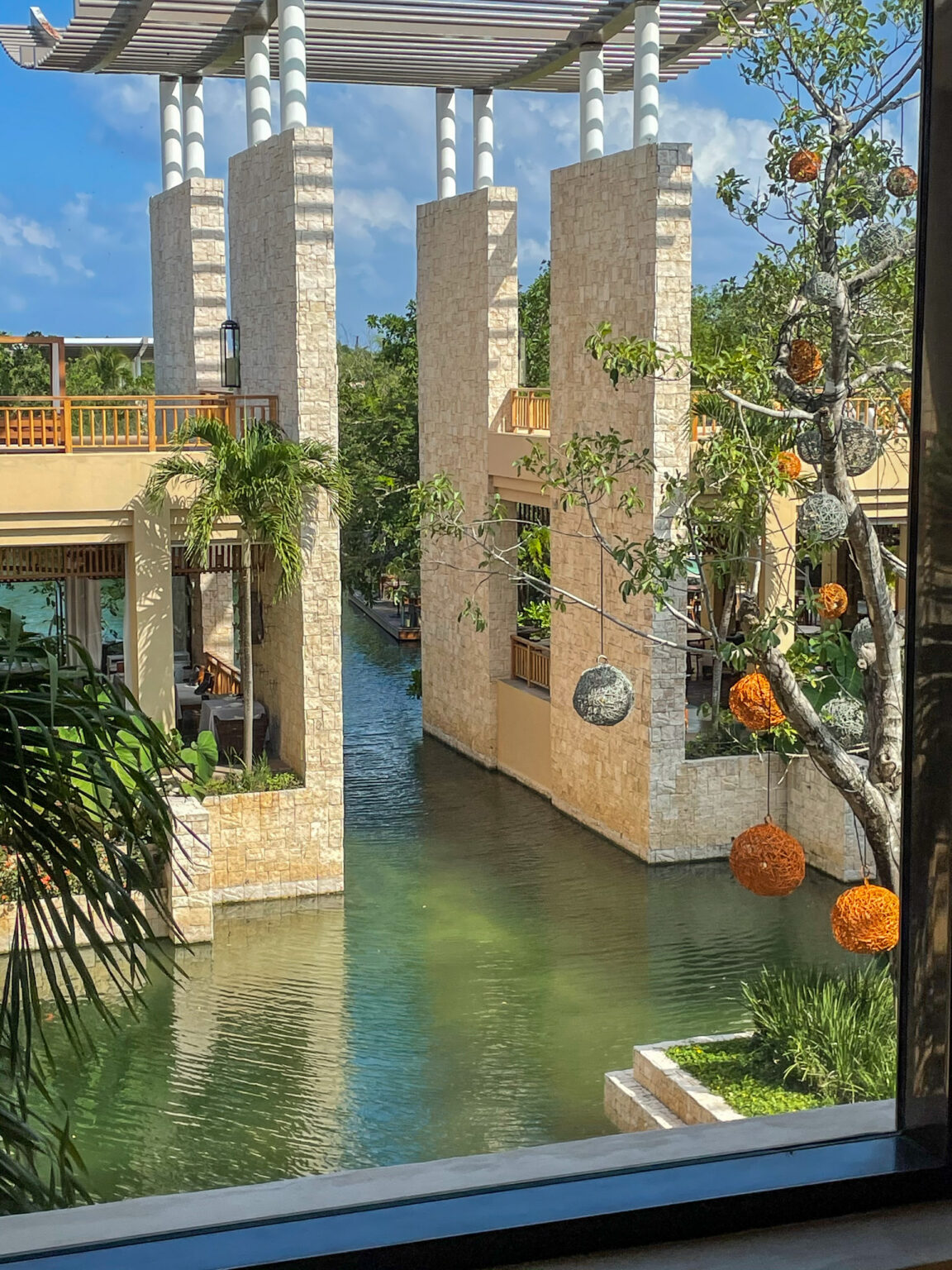
    Canals running between the villa buildings, seen from a window with woven lanterns hanging in the tree outside
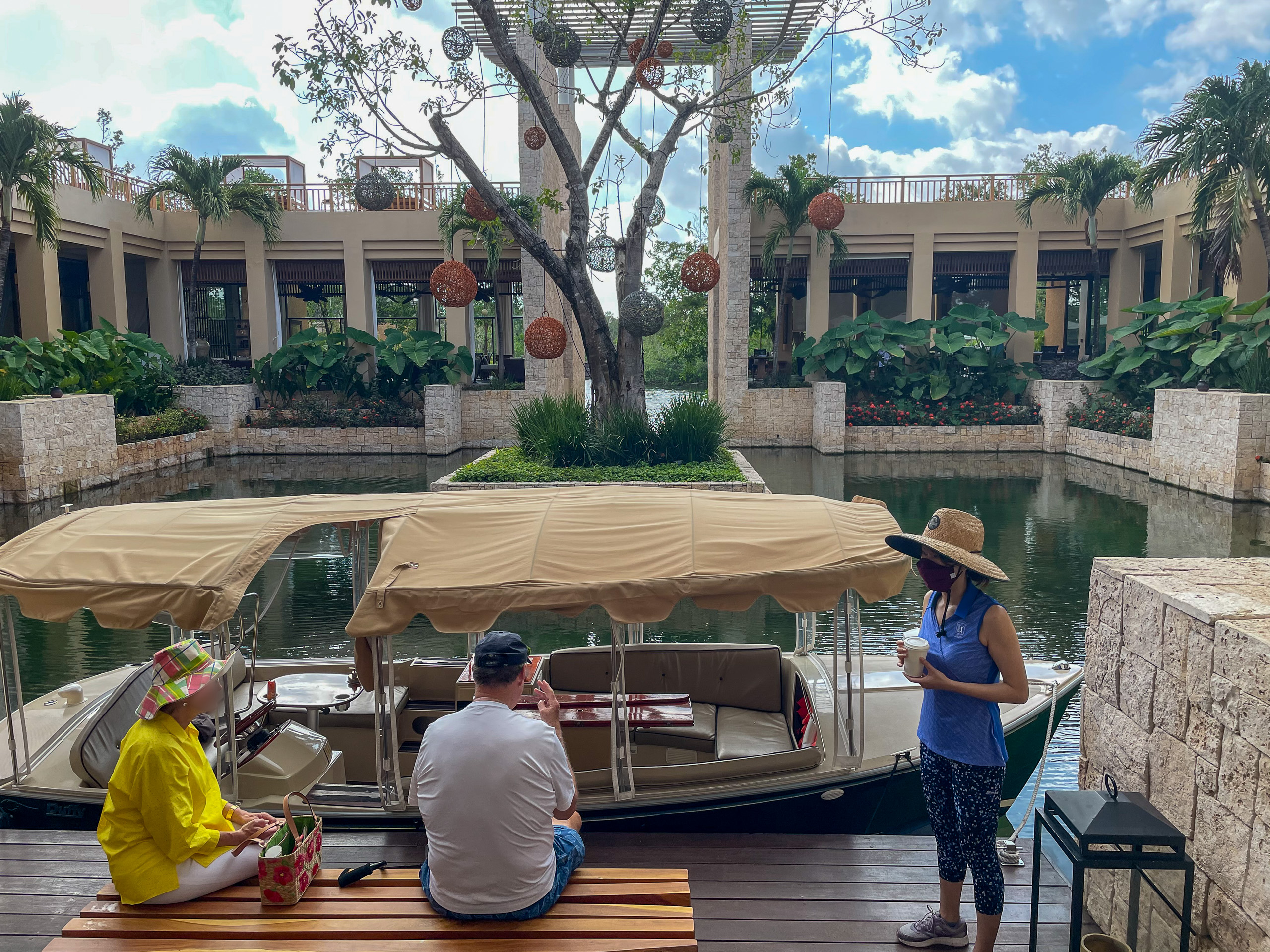
    The canals that link the four hotels. The electric boats run along them all day and stop at seven in the evening.

    Mayakoba is four hotels – Alila, Banyan Tree, Fairmont, which opened first in 2006, and Rosewood – on one gated estate of some 600 acres, and every one of their restaurants is open to every one of their guests. That is a destination-level policy, not a courtesy a single hotel extends. Getting there is by boat, golf cart, bicycle or on foot. Rosewood’s Zapote is a serious cocktail bar with Mediterranean small plates; Fairmont has El Puerto and La Laguna.

    But the boats stop at seven, and that single fact reorganises the idea. Arriving at another hotel’s restaurant by water at dusk, the version everyone pictures, exists only for the early sitting: book half past five and the canal takes you both ways; book eight and you go home in a golf cart, which is fine and is not the same evening. And if you are coming from outside the gates, the booking has to be in the gatehouse’s system, not merely in your inbox.

    The counter-argument

    The problem with eating here is not the cooking at the top. It is everything underneath it, and it is the drinks. Start with the steakhouse, the clearest case. Tomahawk is a grill concept working out of the breakfast room and it shows: no atmosphere of its own, tables that feel like tables put somewhere rather than a restaurant, and a headline product that is not good enough. The cut arrives tough and, more damningly, essentially unseasoned. The bread and the empanadas are the best things on the table, which is not a compliment at a place named after a cut of beef. Skip it.

    Two irritations: every menu is a QR code with no printed card anywhere, and fish listed on the beach-club card is often unavailable.

    The largest objection is the hardest to answer. This is a heritage-rich stretch of Mexico and the best restaurant on the property is Thai, with the Mexican register carried by a lunch room and a bar. The Asian identity is genuine and well executed, and it is also why a week here can feel oddly untethered from the country you flew to. The fix is not on this property. It is a free boat away, and it leaves at seven.

    Know before you go

    Booking is not one system but three: Saffron, Cello, Tomahawk and Sands take online reservations, every other venue is WhatsApp only, and the in-villa barbecue and the sunset cruise are email. Dietary requirements are handled well but on a clock – vegetarian, vegan, gluten-free, halal and kosher meals are all available with at least twenty-four hours’ notice, arranged through the concierge rather than at the table. There is no kosher restaurant here; it is a meal request, and the notice is the whole of the requirement. Dress is resort casual by day, and after dark the rule at the dinner restaurants is no beach shorts and no flip-flops.

    Two timing notes to finish. The hotel states that its restaurants run to seasonality and hours can change without notice, so confirm anything you are building a night around on the day, not the month before. And the venues are open to people not staying here, provided the reservation is confirmed – part of why the best table on this estate is gone by the time you land.

    See the full set: Banyan Tree, Mayakoba — in frames. More Mayakoba: the Mayakoba set.

    Book Saffron from home, keep breakfast early, and let the lagoon run the evenings.

    Don’t miss

    • Book Saffron before you fly. It sells out nightly.
    • Ixchel on the lagoon. Choose the Thai menu.
    • Zapote at Rosewood, booked for six, for the canal boat.
    • Book direct for the daily signature cocktail.
    • Suna after eleven. The only kitchen still working.

    The Banyan Tree gallery

    Every photo on this site is my own, shot on the stay. Slide through →
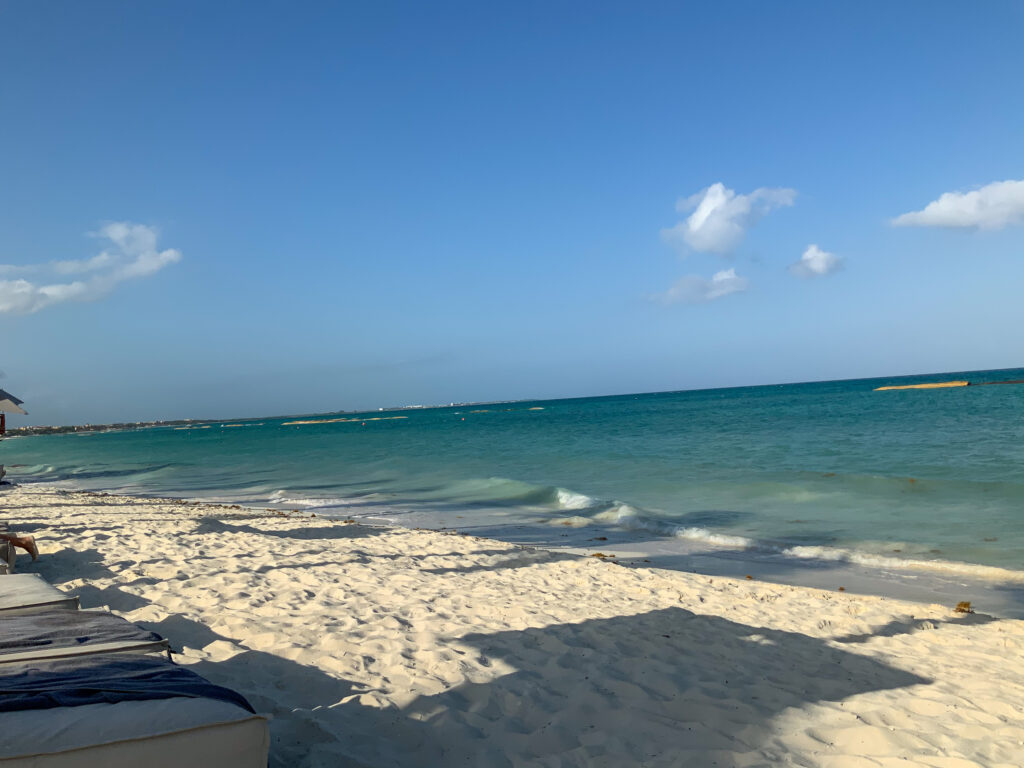
    A whole grilled fish on a white platter with chilli salsa, potatoes and olives, served outdoors after darkA tomahawk steak on a cast-iron grill plate with charred corn, served on a low table in the loungeThe open-air lobby lounge, timber benches and a stone bowl of bromeliads looking out to the jungleCanals running between the villa buildings, seen from a window with woven lanterns hanging in the tree outsideTeak daybeds and woven pod cabanas on the sand beside the beachfront infinity pool, palms and the Caribbean behindCabanas and loungers around the beachfront pool under palmsClear turquoise water and clean white sand on the beach at MayakobaA villa terrace with a private plunge pool above the beachBed, wood floors and a plunge pool looking out to the Caribbean in a beachfront suite
  • The Restaurants of Grand Velas Riviera Maya: Eight Rooms, One Star

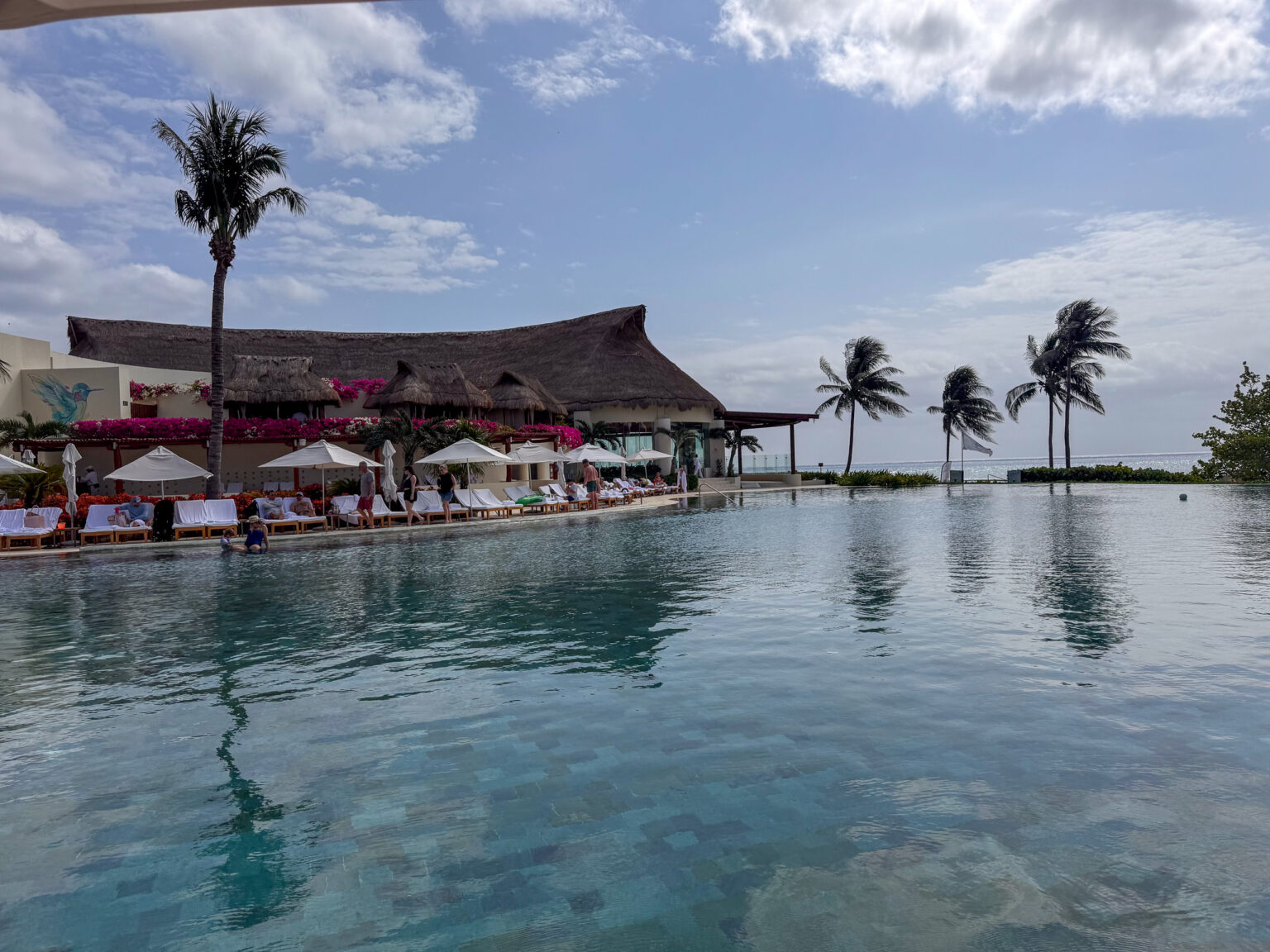
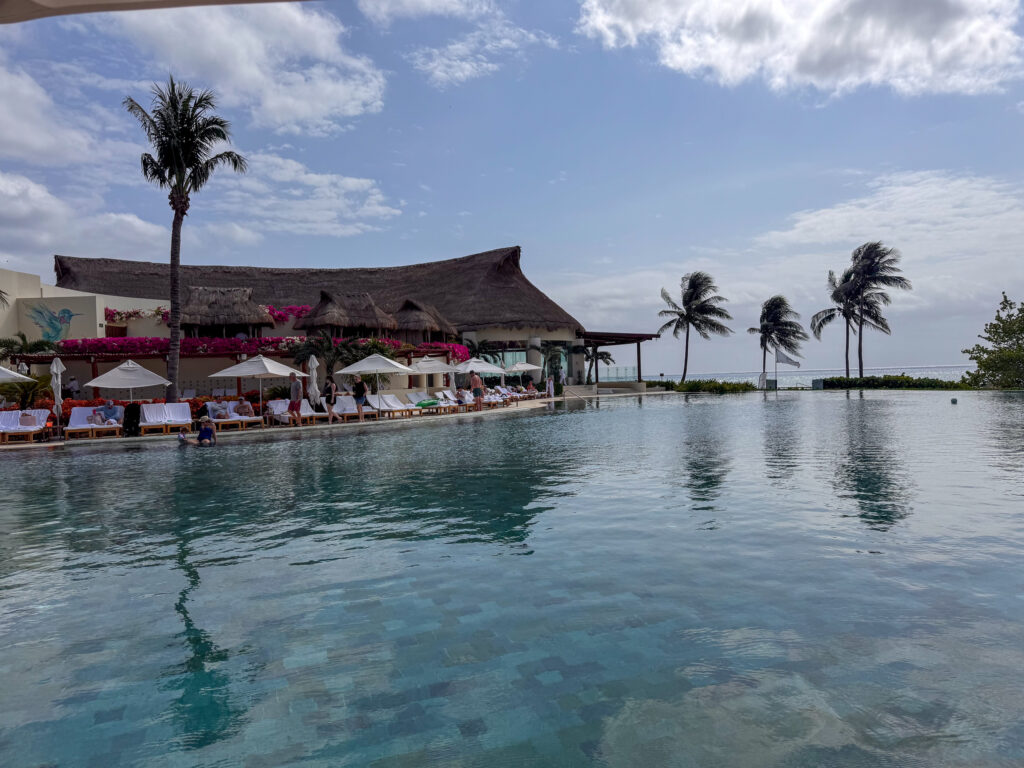
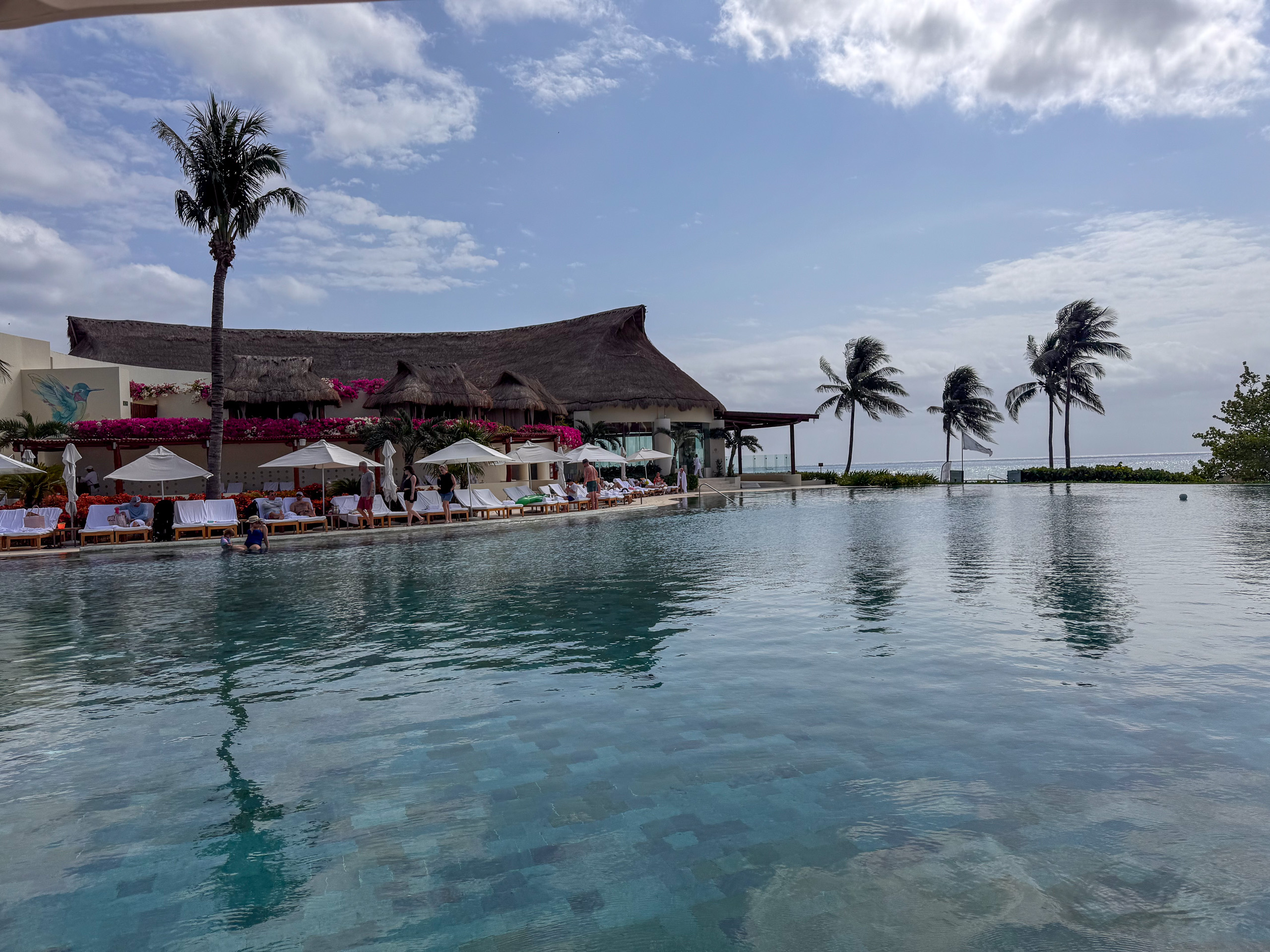
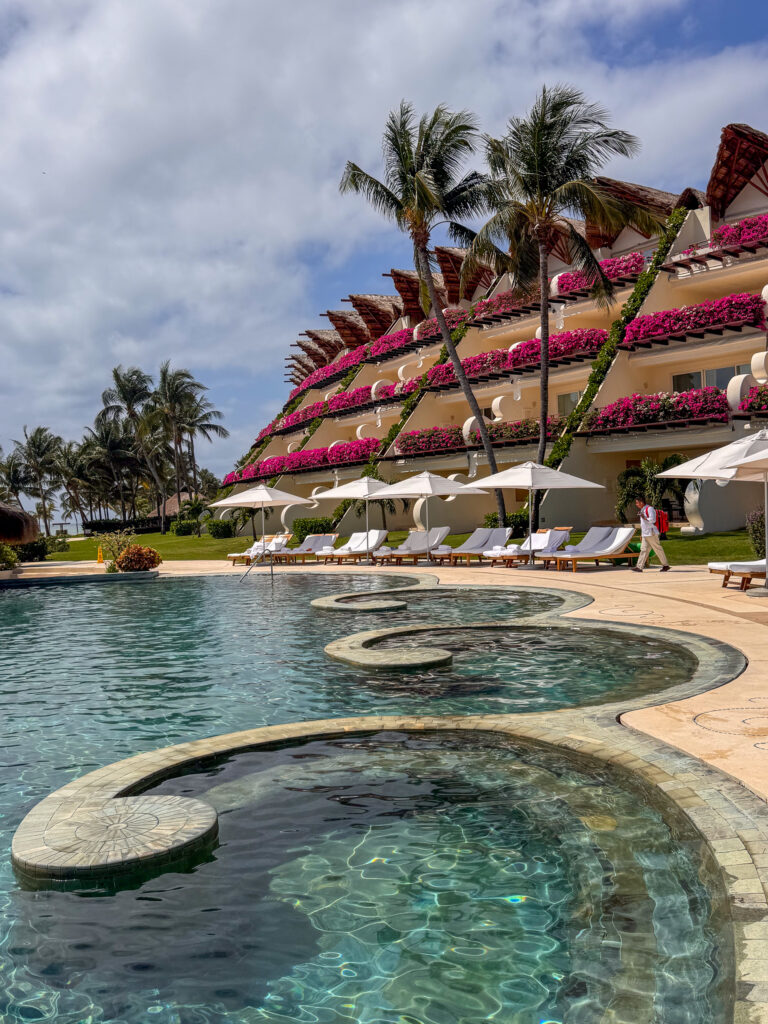
    Infinity pool reaching a thatched-roof pool restaurant hung with bougainvillea, palms bending to the sea

    RIVIERA MAYA, MEXICO · RESTAURANT · 10 MIN READ

    The Restaurants of Grand Velas Riviera Maya: Eight Rooms, One Star

    Eight restaurants come with the room, one of them holds a MICHELIN star, six of them do not open until six in the evening – and there is no Champagne anywhere on the list you are allowed to drink.

    By J.C. Mercer

    Verified meal·paid in full

    • Covers Two, across the stay rather than at one table
    • Dined March 2025
    • Menu Breakfast on the terrace above the loungers, and the à la carte cards in the evening restaurants
    • Drinks From the all-inclusive list – wine by the glass, and a mimosa with breakfast
    • How it was booked The way any other guest would

    Every meal on this site is booked the way any other guest would book it.

    Eight restaurants come with the room here, and one of them holds a MICHELIN star. It is the hardest part of an all-inclusive rate to audit from a brochure, because a rate that includes a tasting menu is a different proposition from one that includes a carvery. What follows is what is on the tables, and what is still charged for.

    The eight divide across the resort’s three sections. Grand Class has Bistro, Piaf and Cocina de Autor; Ambassador has Azul, Frida and Lucca; Zen Grand has Chaká and Sen Lin. You may eat in any of them wherever you sleep, subject to age rules the hotel has written down in three places and not repeated once. A ninth room, Bistro Surf & Turf, is billed as seasonal, and nobody publishes the season.

    The most useful fact about eating here is the clock, not the count: six of the eight do not open until six in the evening.

    Breakfast is the meal this resort gets right

    Three rooms serve breakfast, all from seven until half past eleven. Azul is the buffet: beachfront, enormous, and the one the hotel steers you to. Chaká is open-air on the Zen Grand pool deck. Bistro is oceanfront in Grand Class, the only one of the three with a proper à la carte card, and sixteen and over.

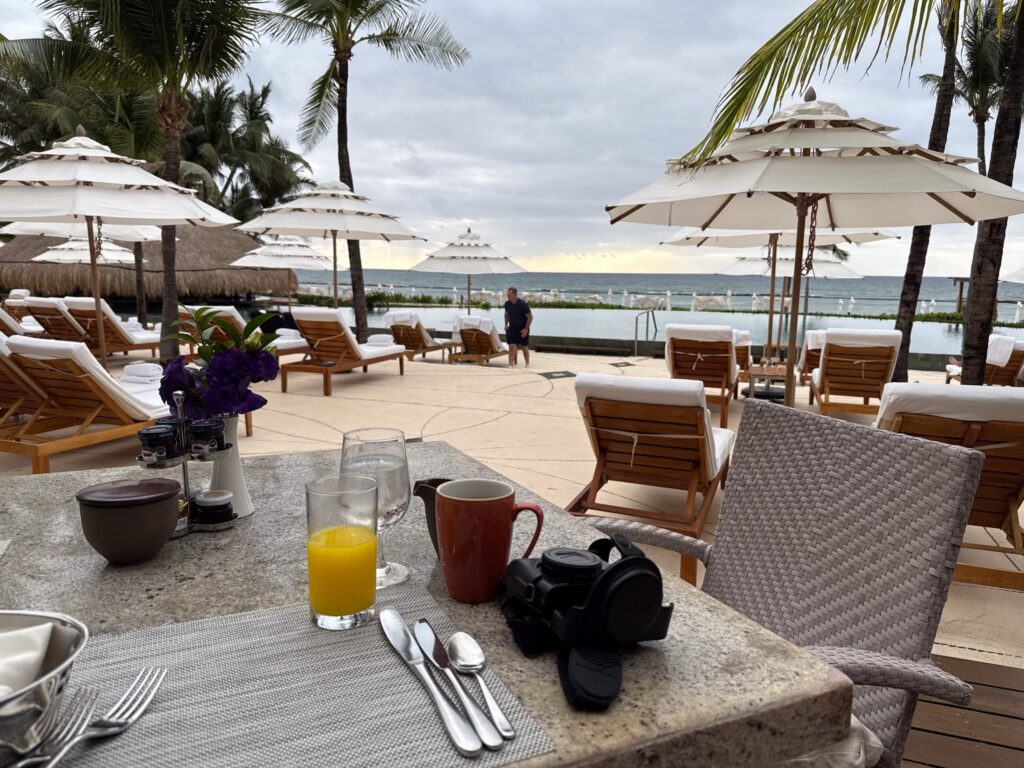
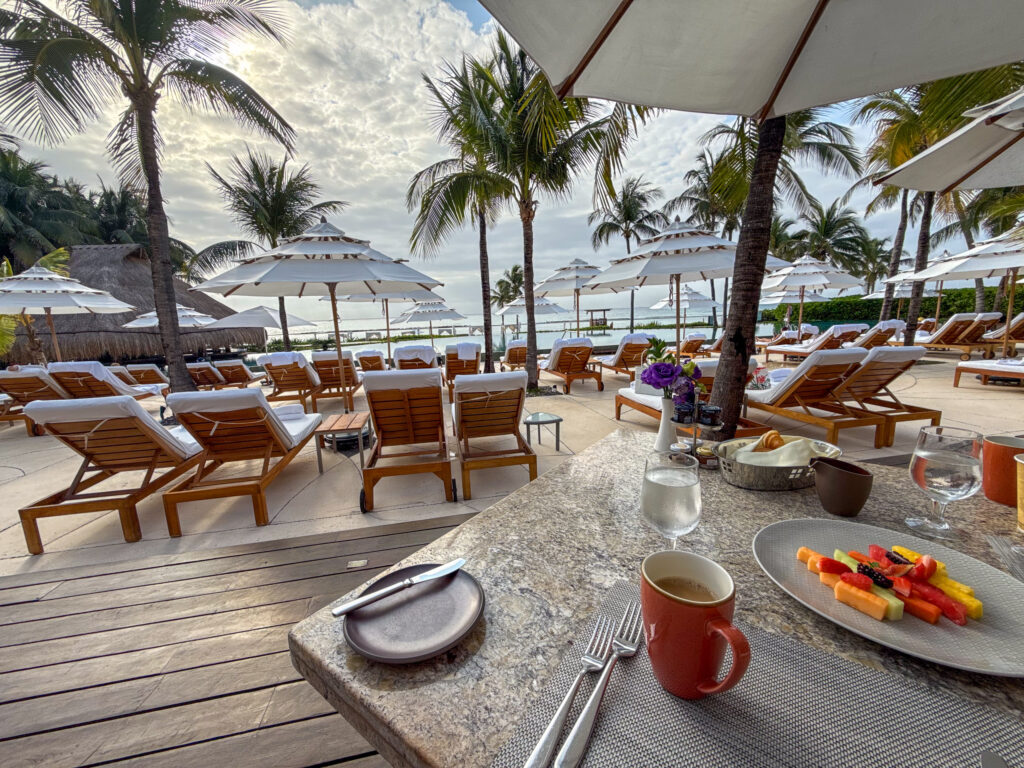
    Breakfast table with juice, coffee and a camera looking out to parasols and the sea
    Breakfast above the loungers, before the parasols fill. This terrace is the reason to get up early here.

    Take the card. Chilaquiles come green or red under sour cream, cotija and raw onion. French toast arrives with Mexican squash purée, sour cream and guava, which is better than it sounds. Juices are pressed to order – a green one of orange, celery, spinach, pineapple and nopal, a vampiro of orange, beetroot and carrot. The American breakfast serves outside diners too; as a guest you simply sit down.

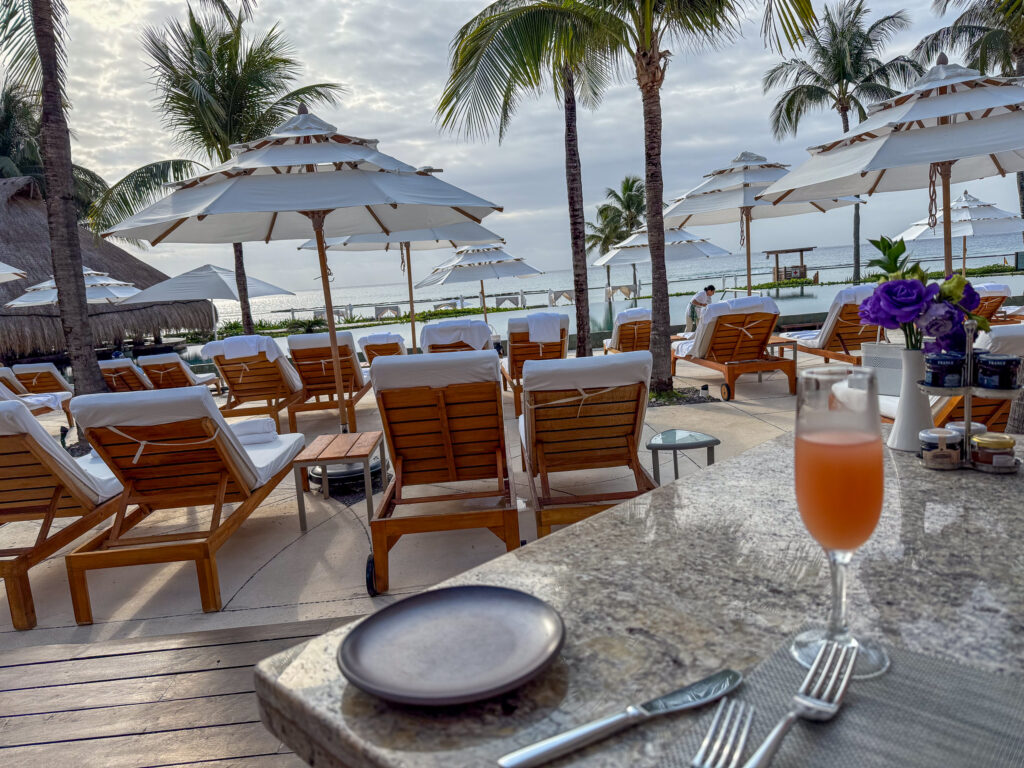
    Mimosa glass and pewter plate on a granite table beside empty teak loungers at first light
    A mimosa and a pewter plate at first light. Sparkling wine at breakfast comes with the room; the bottle it is made from is a Prosecco, and that turns out to matter.

    The reason to cross the resort for it is the table rather than the kitchen. Bistro sits above the loungers with the sea in front of it, the terrace is quiet at seven, and there is nobody small at the next table.

    Lunch is the hole in the day

    Midday is where the promise thins. Azul serves the longest lunch on the property, twelve until five, on the beach. Chaká runs twelve until three by the Zen pool. Bistro runs twelve until three too – but Bistro is sixteen and over, and sits in Grand Class, at the far end of the resort from Zen.

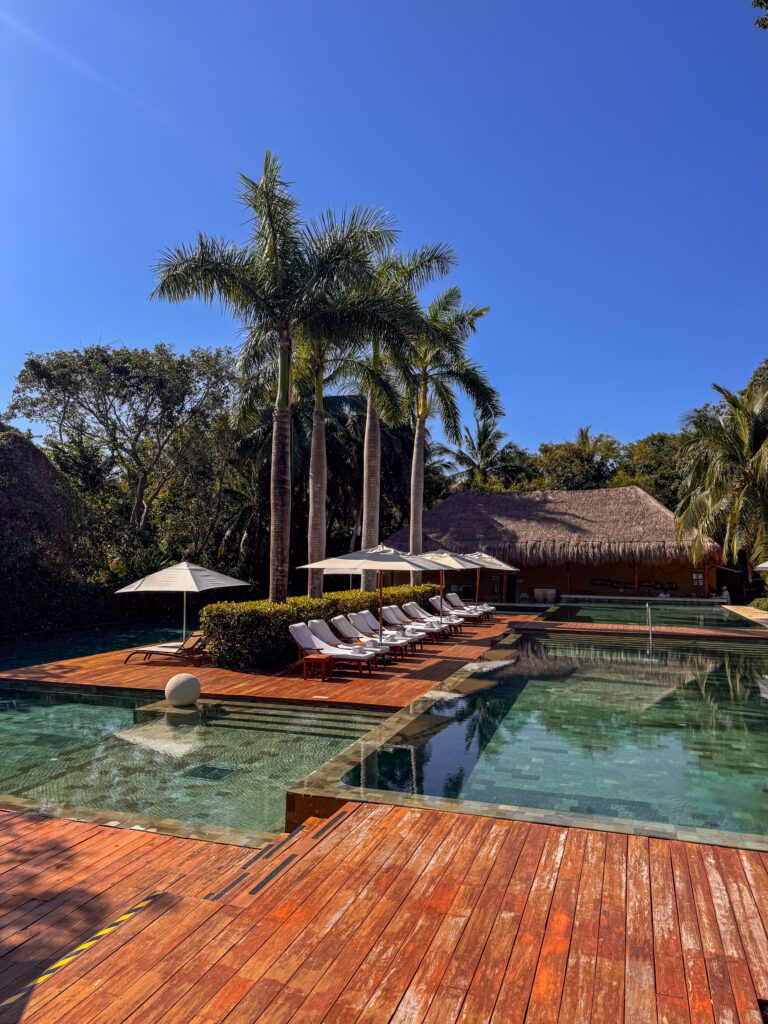
    Two stepped green-tiled pools on hardwood decking below royal palms and a thatched palapa roof
    Zen Grand’s pool deck under thatch. Chaká is the open-air restaurant on the Zen pool, and the only one of the eight that runs breakfast, lunch and dinner.

    So the honest version of the standard complaint – that a resort of this standing has no sit-down lunch – is that there is one, and for a family it may as well not exist. With children, or from Zen Grand and Ambassador, lunch is the buffet or the pool. Four days of that is how breakfast and lunch begin to feel like one meal.

    The pool food is better than its billing: the Grand Class pool runs a lobster-taco bar that is among the best things anybody eats here. The drinks are the weaker half – order stirred or on the rocks, because the frozen ones come out watery.

    Dinner, and the one table everybody wants

    Cocina de Autor is in Grand Class. It holds one MICHELIN star, awarded in the inaugural Mexican edition of the guide in 2024, and it has been AAA Five Diamond since 2013. Its tasting menu comes with the room. To an outside diner it is the flagship booking of the property; to a resort guest it is simply dinner.

    The card runs to eleven named courses and it moves from year to year. At the time of writing it opens with Jack’s World – jackfruit, passion fruit, mint – and works through a nut butter of pecan, foie and brioche, a sea bacon of smoked cream and cured tuna, hamachi in a cactus consommé, an undergrowth course of mushroom, topinambour and huitlacoche, and venison with coffee and cocoa. Jackfruit, huitlacoche and quelites are used as fine-dining ingredients rather than as signals that you are in Mexico, and that is the most interesting thing about the kitchen.

    Rectangular pool lit by strung paper lanterns at dusk, red planter and spiral-set stone paving
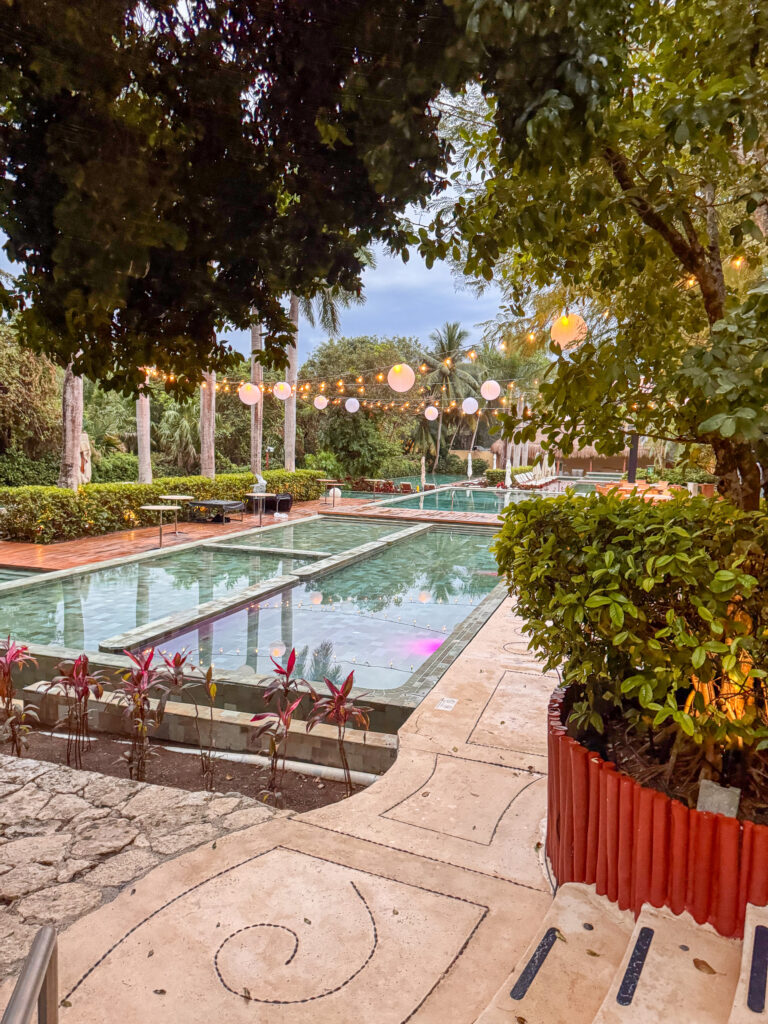
    Paper lanterns over the water at dusk. Six of the eight restaurants open at this hour and not before it.

    Then the problem. The room is small, the menu is long, and the hotel’s own pages cannot agree whether the last table goes in at a quarter to ten or at eleven. Either way, 539 suites are served by one or two sittings a night, and guests routinely fail to get in – including guests who booked ahead. The tell is the cancellation policy: it binds even the resort’s own guests.

    It is sold as an inclusion and rationed like a reservation. Book it before anything else on the property.

    The other seven, and what each one is for

    Piaf is the dressy one: haute French in Grand Class, red and black, Swarovski-crystal curtains, AAA Four Diamond. Foie gras and eel terrine with kaffir-lime ice cream; frog legs and escargots with roasted-pepper coulis; lobster bisque under Champagne sabayon. The lamb rack with shiso, hummus, tomatillo and yellow lentils is the grandest plate on any à la carte card here. Portions are small and the pace is slow – two hours for three courses is a normal evening.

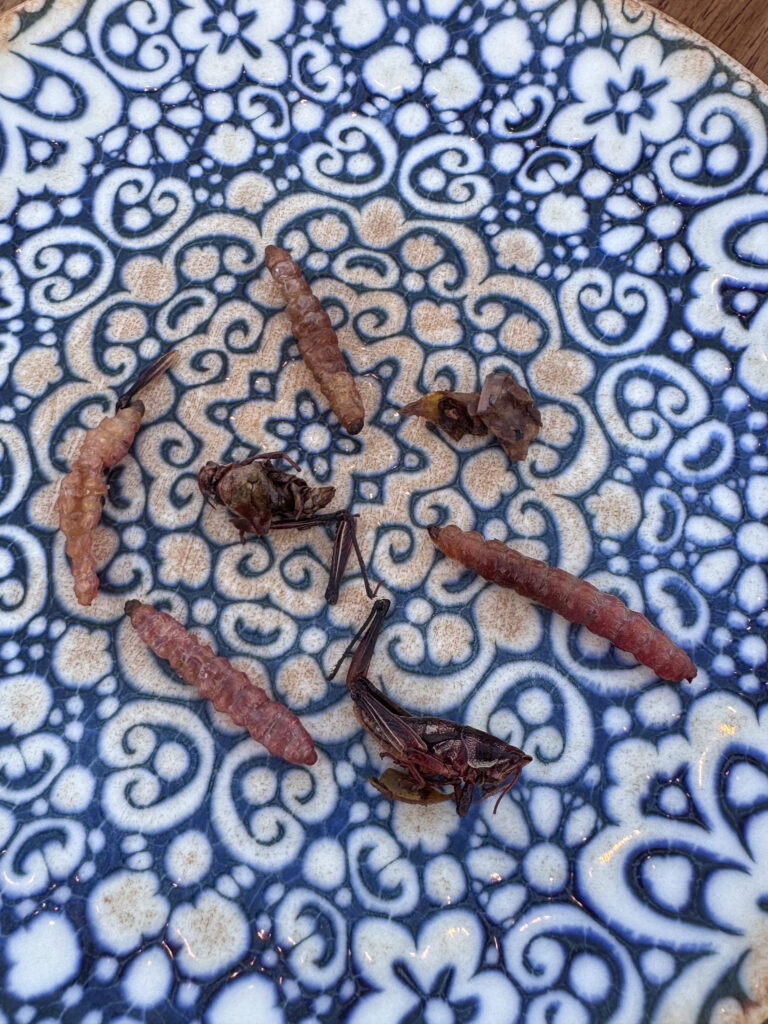
    Frida in Ambassador is the one to book if you book only one of the seven. Four Diamond, all ages, and the only kitchen here cooking regionally: octopus tlayuda in black recado with Valladolid longaniza; a blue-corn gordita of beef birria with bone-marrow sauce and Ocosingo cheese; a black-bean cappuccino under chile ash and Cotija foam; a shrimp taco with grasshoppers. It also has the strongest vegan section of the eight by a distance.

    Grilled beef with charred pear, asparagus and cherry tomatoes between two orange sauce pools
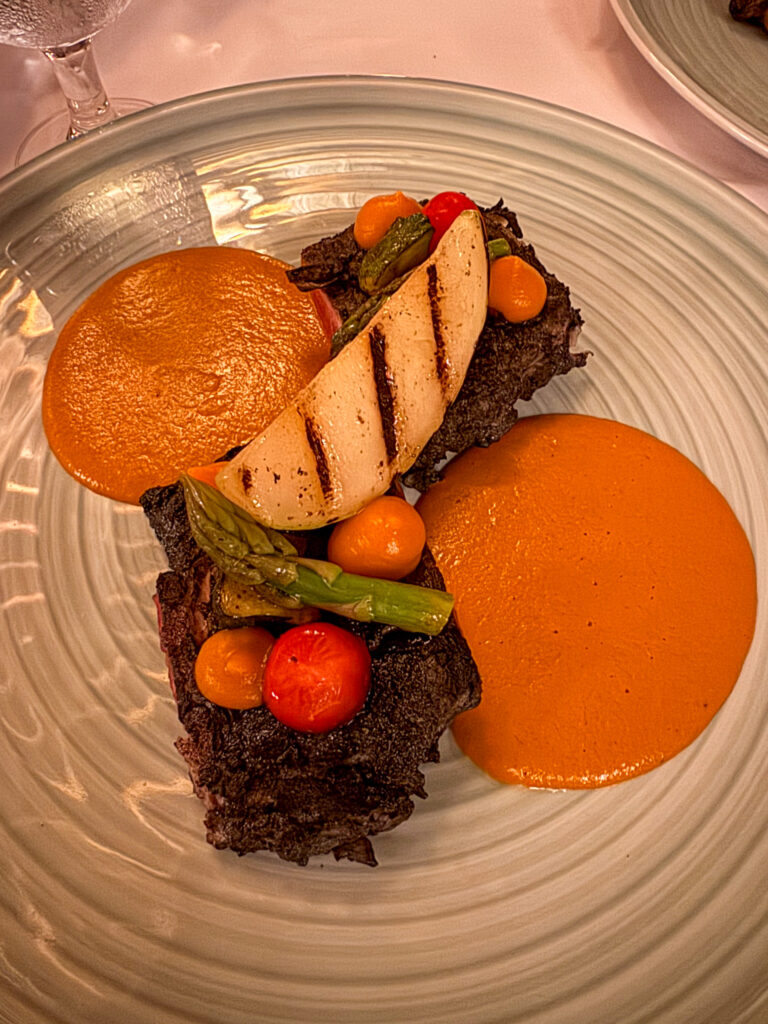
    Grilled beef with charred pear and asparagus between two pools of sauce. The evening kitchens plate at a level the buffet never approaches.

    Lucca, also in Ambassador, is where the families go, and it is Four Diamond too. The pastas are made in the house: spaghetti alle vongole, a lasagne, orecchiette with artichoke and guanciale, and at the top a calamarata with morel, portobello, porcini and truffle that an outsider would pay well for. It has the warmest service on the property and the loudest room, and those are the same fact.

    Sen Lin in Zen Grand is the raw-fish dinner and the one worth crossing the resort for: sashimi of tuna, salmon and the catch of the day; kampachi crudo with grated tuna ham and ponzu; a chocolate hamaguri clam with pork belly. It is the most luxurious protein on any included card here, and the most uneven room of the eight – freshly Four Diamond, and it does not always cook like it.

    That leaves the three you will use without thinking. Azul is the default: beachfront, buffet and à la carte, breakfast and the longest lunch, all ages, no reservation. Chaká is Zen Grand’s local – open-air, no reservation, all three meals, and contemporary Yucatán cooking after dark, which nothing else here does. Bistro is breakfast and lunch only, sixteen and over.

    Square apple tart with crumble and berries beside a quenelle of ice cream
    An apple tart with crumble and a quenelle of ice cream. Pudding is the course the evening rooms are most consistent on.

    In the suite, and after midnight

    In-suite dining runs twenty-four hours and is included, and it is a real service rather than a phrase: the kitchen publishes three separate lists, one for breakfast, one for lunch and dinner, and a midnight menu of its own. It is also the most child-proof food on the property.

    Round white-clothed table of plated desserts and sorbets beside red curtains in a darkened suite
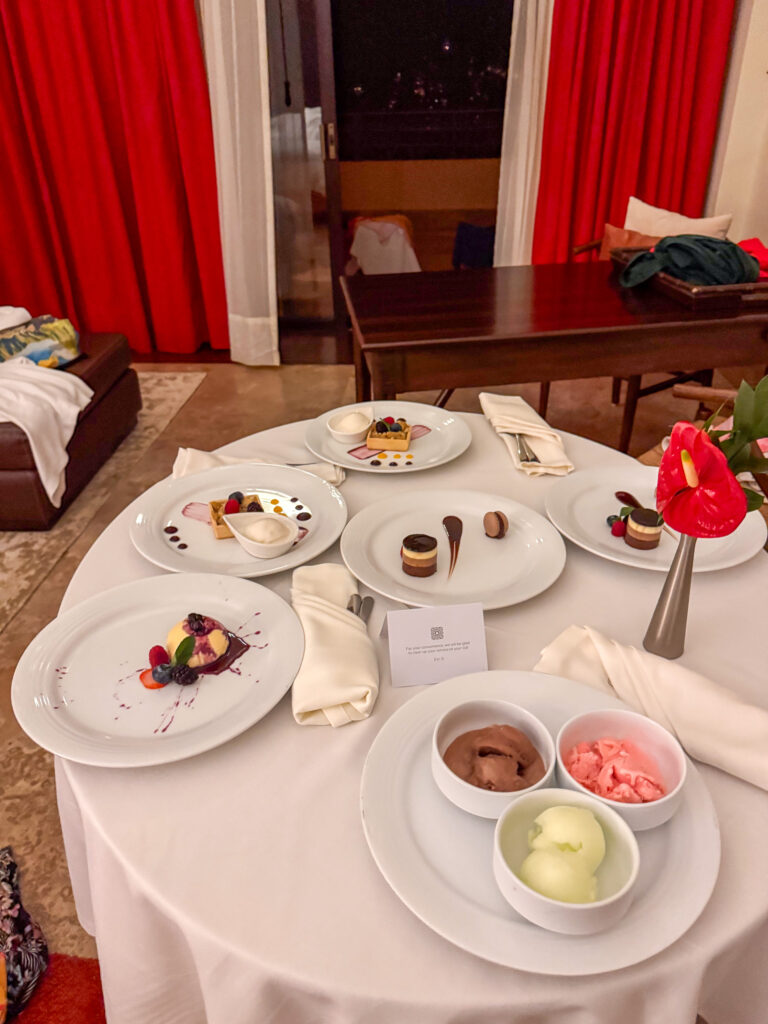
    A round table of plated desserts and sorbets, laid in the suite after dark. Room service here has a midnight card of its own.

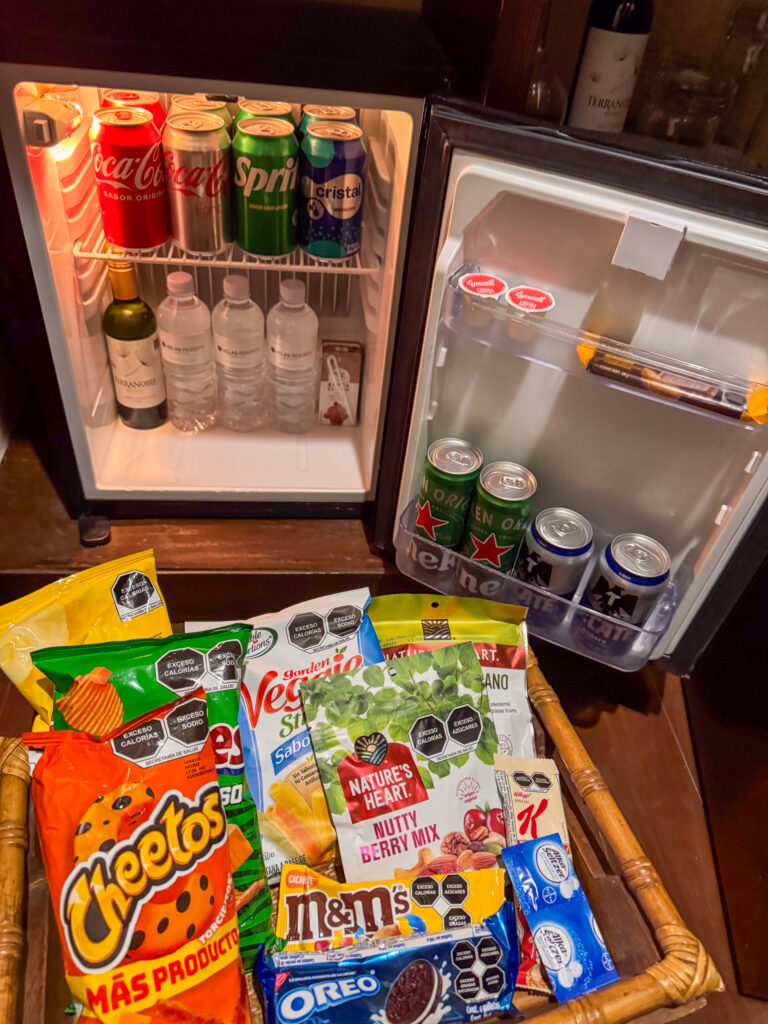
    The minibar is restocked daily and included – spirits, wine, beer, water and snacks – and you can telephone to change what is in it. One caveat catches people out: the tequila and the red and white are one bottle per stay, not per day. A bottle of mezcal is left in the suite on arrival.

    Open minibar of soft drinks, beer, water and wine above a basket of crisps and sweets
    The minibar, restocked daily and included. The spirits in the bars go a good deal further than the wine list does.

    The two wine lists

    Every restaurant menu on the property links to the same two lists, and the gap between them is the most useful thing on this page. The included one is better than it needs to be for still wine: two Monte Xanics from Valle de Guadalupe, a Casa Madero Merlot from Parras, an Alsace Riesling, a Chan de Rosas Albariño, a Louis Latour Chardonnay, a Haut-Médoc, El Coto Mayor Rioja crianza, Famille Perrin Côtes du Rhône Réserve, a Ruffino Chianti, a Kaiken Malbec, a Tío Pepe and a port. To an outside diner that list is charged by the sealed bottle and by the glass, which is what the resort itself says the included tier is worth.

    It also has a ceiling, and the ceiling is low. Above a modest ceiling the included list simply stops. The charged one opens above it, jumps again for anything still and interesting, and runs on to a Vega Sicilia Único and a Cheval Blanc. There is no middle.

    That is not a figure of speech. The included sparkling section is a Prosecco, its rosé twin and a de-alcoholised Californian, and that is all of it. Taittinger, Drappier, Piper-Heidsieck and Armand de Brignac all sit on the charged list, plus service. If Champagne is part of what you assume a rate at this level buys, it is not part of this one.

    The spirits, oddly, go further. Macallan 12, Grey Goose, Hendrick’s, Monkey 47, Zacapa 23, Don Julio 70, Patrón and Hennessy VSOP all come with the room, as does a full mezcal, sotol, bacanora and raicilla section. The bar is more generous than the cellar.

    WhatComes with the room?
    The Cocina de Autor tasting menuYes
    Its wine pairingNot stated anywhere by the hotel
    Missing a Cocina de Autor bookingNo
    À la carte at Piaf, Frida, Lucca and Sen LinYes
    Breakfast à la carte at BistroYes
    Wine from the all-inclusive listYes
    ChampagneNo
    Anything else off the premium wine listNo
    Spirits – Macallan 12, Grey Goose, Don Julio 70, Hennessy VSOP, mezcalYes
    24-hour in-suite dining and the midnight menuYes
    The minibarYes, restocked daily
    Food and drink after midday on departure dayNo

    The counter-argument

    The case against eating at Grand Velas is not a case against its restaurants. It is a case against the hours when most of them are shut, and against the one room everybody wants being the room hardly anybody gets into.

    The buffet is the weak link, and it is where most guests eat most of their lunches. The honest range on it runs from competent to undersized; what is consistent is that it sits several tiers below the evening rooms, and that cold things stop being reliably cold late in a service. At this rate that is a fair complaint, because it is the meal you will eat most often.

    Service is not uniform between the rooms either. Two of the eight are truly warm, two are merely fine, and the gap is obvious on consecutive nights. Dinner runs ninety minutes to two hours as a matter of course. With children and the half-past-eight table that is what remains if you book late, that is the failure mode of a week here.

    Then the closures, which can quietly cost you two of your eight. Zen Grand has shut entirely, pool and restaurants together, with no notice to people already booked, and that takes Chaká and Sen Lin with it. The buffet has closed in low season. Ask what is open for your dates before you pay, and ask again a week out.

    One smaller irritation is real: Lucca, the friendliest room here, is loud in a way a quiet dinner does not survive.

    Know before you go

    Hours first, because they shape the day. Breakfast, seven until half past eleven, at Azul, Bistro and Chaká. Lunch, twelve until three at Bistro and Chaká, twelve until five at Azul. Dinner, six until eleven, at Cocina de Autor, Piaf, Frida, Lucca, Sen Lin and Chaká. Nothing else opens at midday.

    Book every dinner you care about on the day you arrive, and take the six o’clock tables. They go first, and what is left by mid-week is half past eight and nine. Reservations are required everywhere except Azul and Chaká, whatever the softer wording on the booking page suggests.

    The age rules are written down in three places and are not the same in any of them. The venue pages say twelve and over at Bistro, Piaf and Cocina de Autor. The FAQ says sixteen and over, with children of twelve admitted only between six and seven. The booking terms call all three adults-only. Plan on sixteen and ask when you book. Frida, Lucca, Sen Lin, Azul and Chaká take all ages.

    Dress is smart casual at Piaf and Cocina de Autor – no shorts, flip-flops, gym kit or beachwear, enforced from sixteen up. Resort casual at Frida, Lucca and Sen Lin; beach casual at Azul and Chaká. Cocina de Autor wants forty-eight hours’ notice to cancel, and its waiting list takes your slot back if you do not answer within twenty-four.

    Two questions for the concierge before you arrive. Is Bistro Surf & Turf running – the seasonal ninth room, grilling lobster and beef by the sea, whose months nobody publishes. And is Zen Grand open in full, restaurants and pool, for your dates.

    See the full set: Grand Velas, Mayakoba — in frames. More Mayakoba: the Mayakoba set.

    Every restaurant on this property comes with the room. Not one glass of Champagne does.

    Don’t miss

    • Cocina de Autor, booked before anything else.
    • Breakfast at Bistro, à la carte, quiet at seven.
    • Frida for the octopus tlayuda.
    • Sen Lin for the kampachi crudo.
    • The lobster-taco bar at the Grand Class pool.

    The Grand Velas gallery

    Every photo on this site is my own, shot on the stay. Slide through →
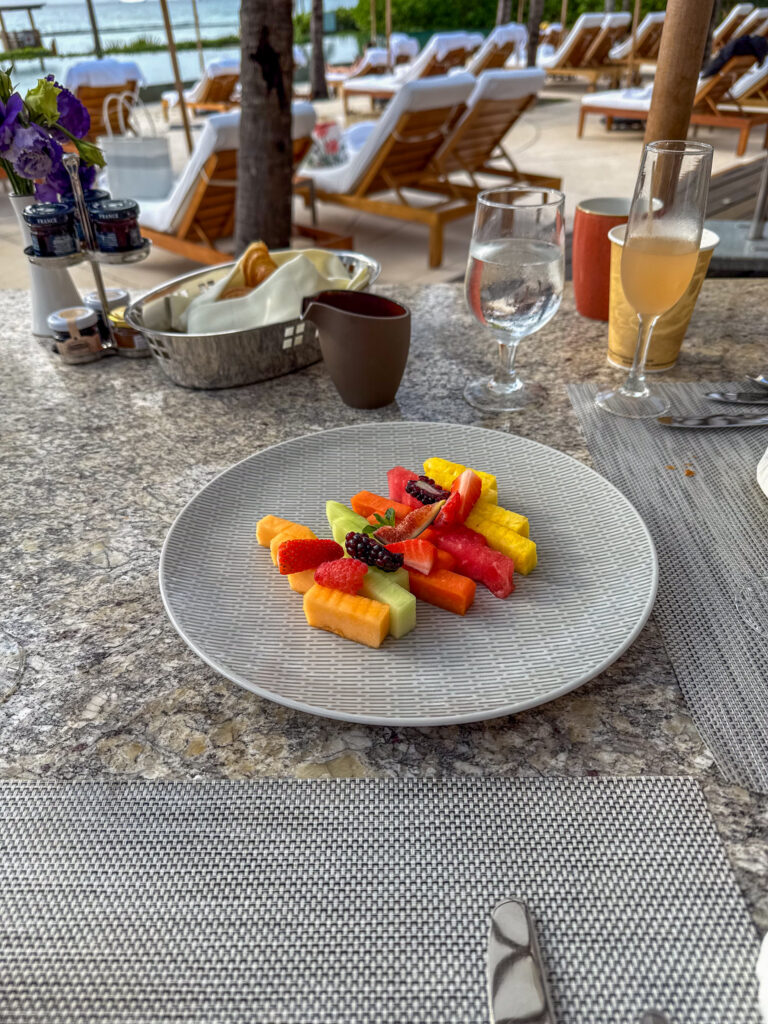
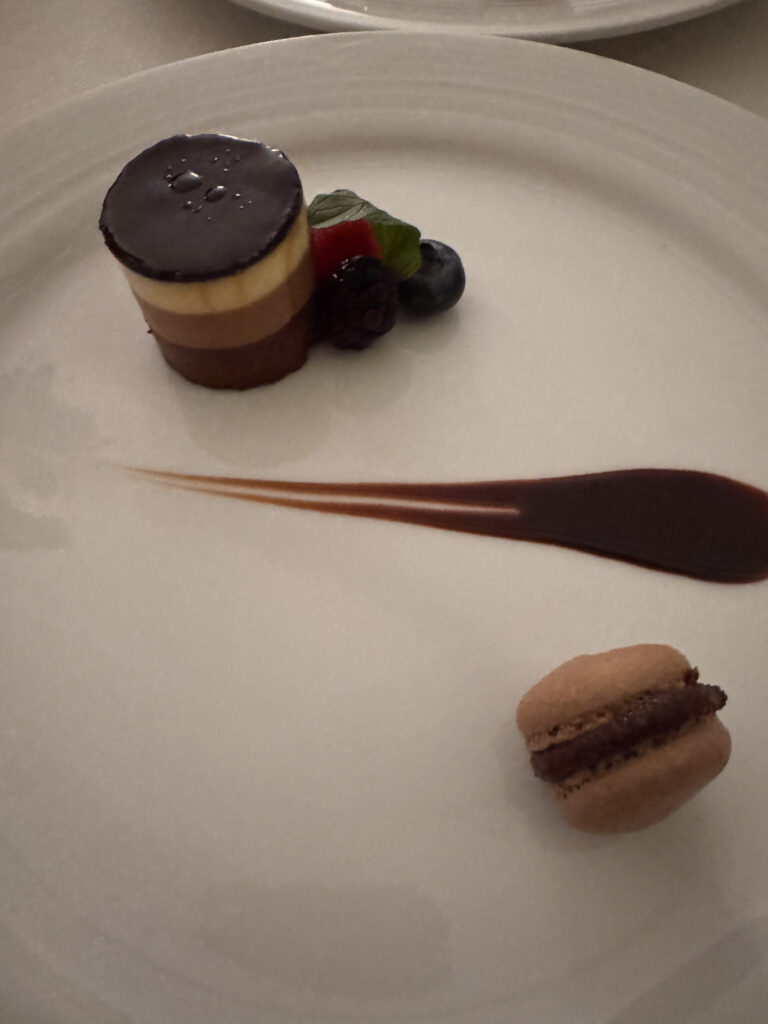
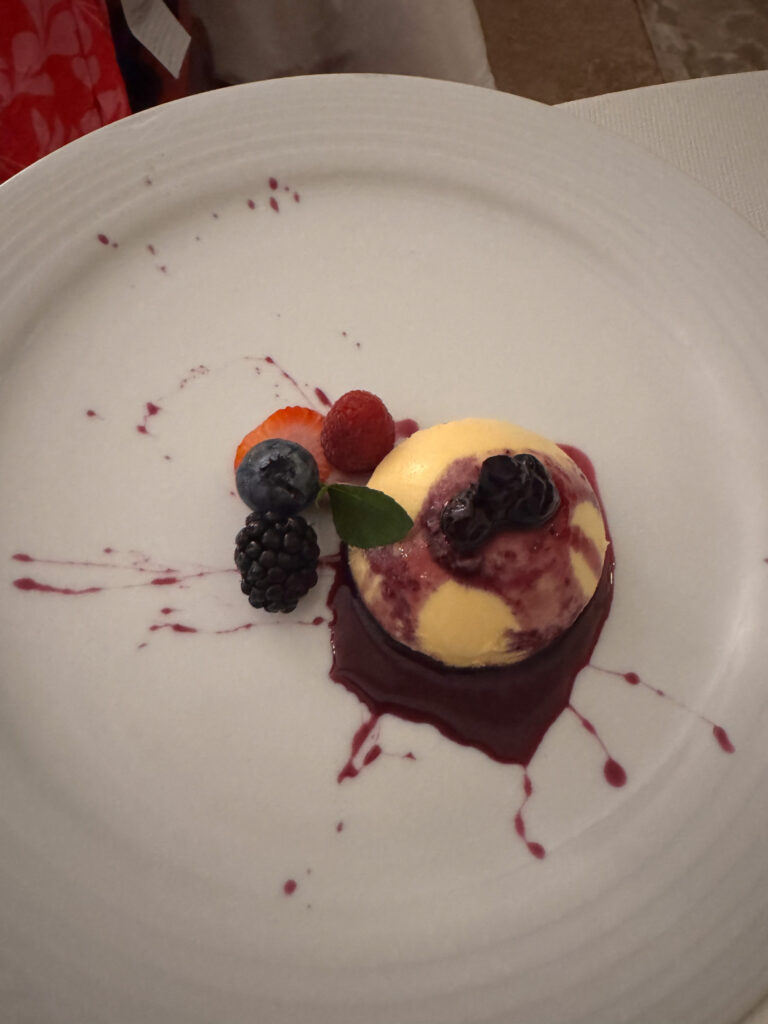
    Infinity pool reaching a thatched-roof pool restaurant hung with bougainvillea, palms bending to the seaBreakfast table with juice, coffee and a camera looking out to parasols and the seaMimosa glass and pewter plate on a granite table beside empty teak loungers at first lightBreakfast table with coffee, juice and fruit looking out over teak loungers, parasols and palmsGranite breakfast table with glasses and coffee overlooking parasols, loungers and a grey seaPreserves caddy and purple lisianthus on a granite table, parasols blurred behind at dawnPlate of cut melon, papaya and berries on a granite table above teak loungers and seaWine glass and preserves caddy with purple flowers on a granite table above the beachGrilled beef with charred pear, asparagus and cherry tomatoes between two orange sauce poolsBeef in dark jus with brussels sprout leaves, potato spheres and a crisp golden tuileSquare apple tart with crumble and berries beside a quenelle of ice creamLayered chocolate and vanilla mousse cake with berries and a chocolate macaron on whiteIce cream quenelle over dark berry coulis with fresh berries and mint on whiteRound white-clothed table of plated desserts and sorbets beside red curtains in a darkened suiteOpen minibar of soft drinks, beer, water and wine above a basket of crisps and sweetsRectangular pool lit by strung paper lanterns at dusk, red planter and spiral-set stone paving
  • Banyan Tree or Fairmont Mayakoba: the Retreat and the Resort

    The main pool at Fairmont Mayakoba, loungers and a parasol on the limestone terrace with palms behind

    BANYAN TREE MAYAKOBA vs. FAIRMONT MAYAKOBA · 4 MIN READ

    Banyan Tree or Fairmont Mayakoba: the Retreat and the Resort

    Four hotels share one jungle estate on the Riviera Maya. Two of them are the real decision — and one of them is not a resort at all. It is a retreat.

    By J.C. Mercer

    Verified stays·paid in full

    Banyan TreeFairmont
    StayedApril 2022March 2026
    Room bookedOceanfront Pool VillaSignature Casita, king
    How it was bookedAmex Fine Hotels + Resorts, public rateAccor ALL, public rate
    What the channel boughtUpgrade to pool villaNothing beyond standard.
    Value verdictWorth it. Beachfront villa excellent. Worth it as the value play to access Mayakoba — with children, a group or a longer stay. It is good, not great.
    When to goAnytime. Book Banyan TreeSpring Break. Book Fairmont

    Both stays booked the way any other guest would book them.

    The question

    Mayakoba is not a hotel. It is a gated stretch of jungle about forty minutes south of Cancún airport, threaded with canals cut out of the limestone and fed by the rivers running underneath the Yucatán. Four luxury hotels sit inside it, with a golf course and a shared village square, and guests move between them by golf cart, bike or boat. Which means the location argument, which usually decides these comparisons, does not exist here. Same jungle, same beach, same drive, same course. What is left is the hotel itself — and the two ask very different levels of commitment for it, with Banyan Tree the bigger ask on any comparable dates.

    Guests boarding a boat at the Mayakoba arrival dock
    The arrival dock. The same boats serve both hotels; the estate is one address.

    I have written each up on its own: Banyan Tree, beachfront or jungle goes through the villa categories, and Fairmont, the one that got here first covers the oldest hotel on the estate. This piece assumes you have narrowed it to these two and want to know which way to jump.

    The short version. Banyan Tree is all villas, every one with its own heated pool, wrapped in Southeast-Asian design and anchored by a Thai-heritage spa; it is the quieter, more design-led property, the one built around wellness, and the one that makes you feel you have left the resort world entirely — a retreat rather than a resort, and it commits from the kerb. Fairmont is rooms, casitas and suites, five pools including one with a waterslide, a kids’ club and a teens’ club, eight restaurants and an optional all-inclusive plan; it is the better-value property and the more practical one for a family. Both share the same canals and the same beach. Neither shares the same temperament.

    What the table cannot hold is the Banyan highlight: the Zen that settles on you somewhere between leaving the cab and leaving the resort, and never once breaks. A surprising amount of it arrives through the nose. The scent of the place is exceptional and pervasive — a keen aromatherapy that follows you from the lobby to the spa to your own villa, until you catch yourself breathing on purpose.

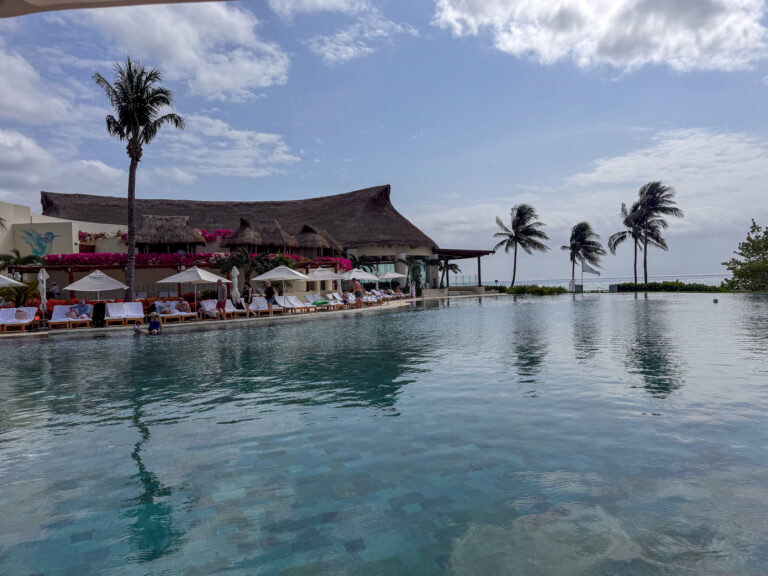
    An infinity pool running towards the sea past a thatched palapa
    An infinity pool running to the sea past a thatched palapa. Which hotel? That is the question.

    Side by side

    WhatBanyan TreeFairmont
    Entry accommodationA villa with a private heated pool; living space and bedroom open onto a terrace and your own waterA room or casita, large and bright, deep marble tub; comfortable rather than memorable
    DesignSoutheast-Asian, softened with Mexican materialsResort-standard; plain for the standing, and the walls are thin
    PoolsBetter beach front club pool, private plunge pool.Numerous on site and by ocean. Including a family pool with a slide and an adults-only infinity pool over the lagoon
    SpaThe Banyan Tree Spa in private villas, and The Rainforest hydrothermal circuit — a reason on its own to visit Very good, without a wellness brand behind it
    EatingSaffron, the Thai room, is the standout on the estate. Steakhouse at the beach is excellent.Average food throughout
    ChildrenWelcomed, no kids’ clubBuilt for them: kids’ club, teens’ club, waterslide, connecting rooms
    ServiceThe strongest on the estate; fewer guests, more attention per villaGood for the size
    Best forCouples, wellness, the villaFamilies, groups, golf, longer stays
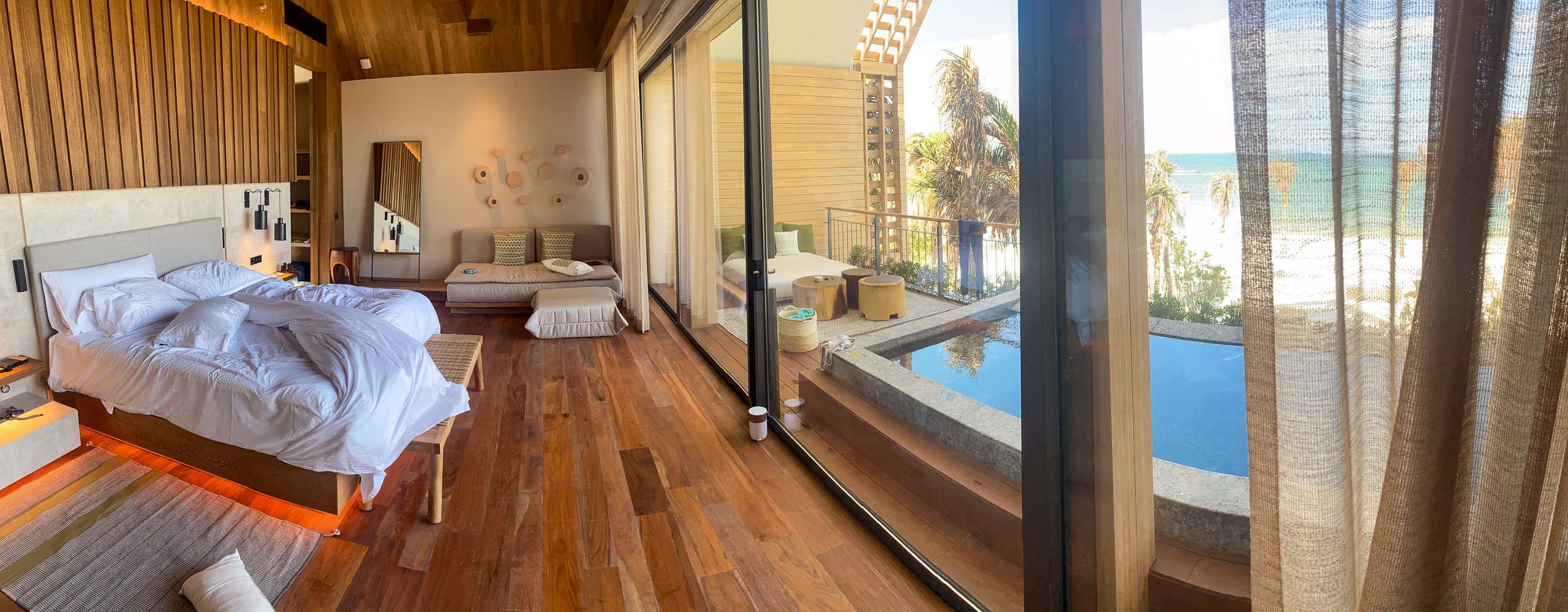
    A Banyan Tree villa bedroom opening onto its private pool and the sea
    Banyan Tree: the villa bedroom opening onto its own pool.
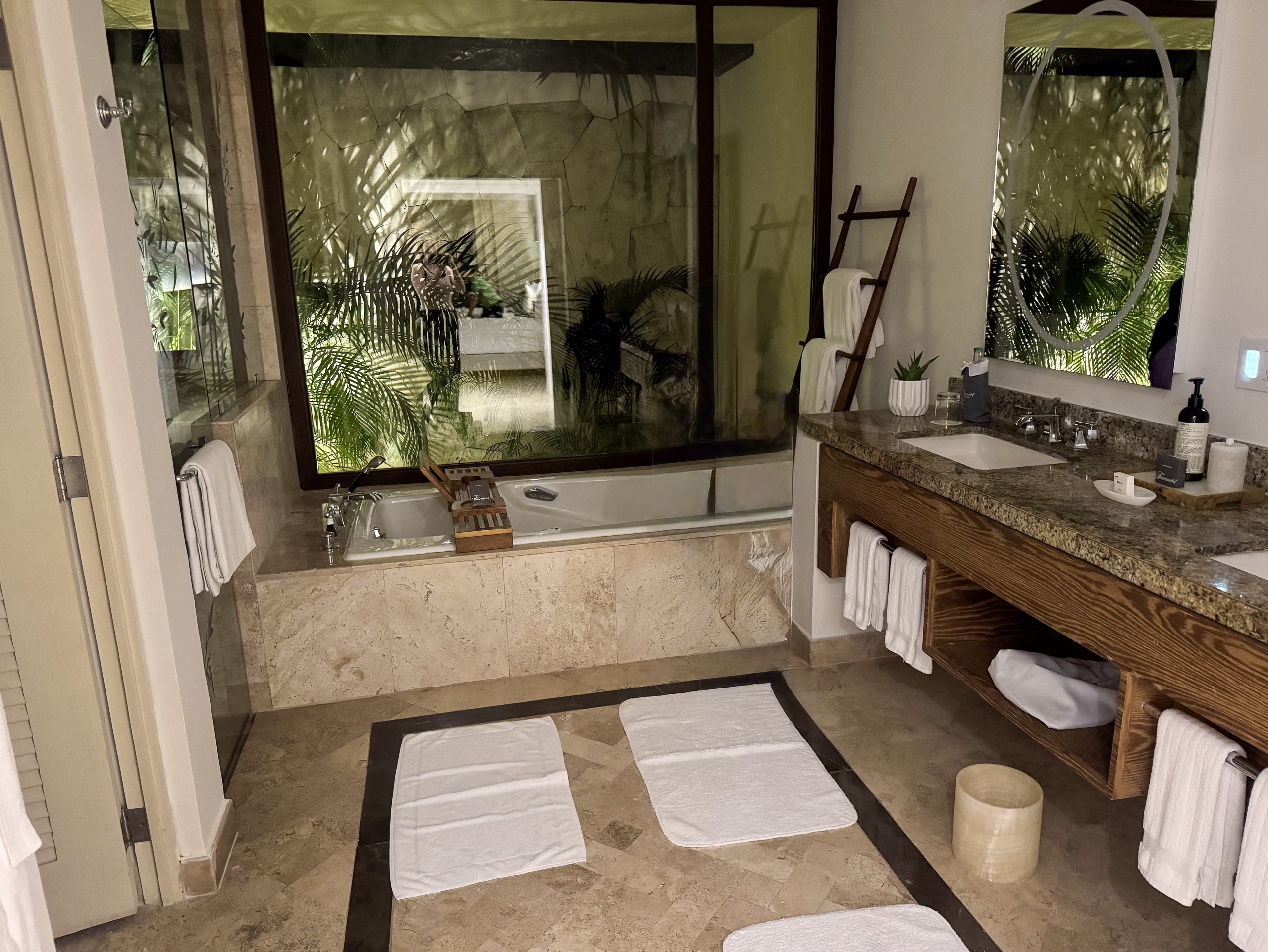
    A stone bathroom with a glass shower and the garden beyond
    Fairmont: the stone bathroom, the garden beyond.

    Noted

    Observed on both stays, not measured.

    WhatBanyan TreeFairmont
    Wi-FiFast, steady across the villaAdequate, weak on the terrace
    NoiseBirds and insects; no neighbours audibleNeighbouring room audible through the wall
    BedKing, medium-firm, excellent linenKing, medium, good linen
    Water pressureStrong; hot almost at onceStrong; a little slower to run hot
    Private poolHeated, cleaned dailyNot in this category
    Time to the beachOn the beach. Ten minutes with the buggy
    Loungers gone byNever an issueNever an issue
    SargassumPresent, barriers in place, cleared each morningPresent, barriers in place, cleared each morning
    Mosquitoes at duskNoticeable on the lagoonNoticeable in the gardens

    Where Banyan Tree wins

    The villa. A private heated pool on every terrace changes how the whole resort feels; the shared water is quieter than the guest count suggests because half the guests are in their own. One tip worth having: the garden and lagoon villas, screened by jungle, sit lower on the ladder and often feel more private rather than less.

    The spa. Thai-influenced treatments in private therapy villas, and The Rainforest, a circuit of steam, ice, heat and sensation pools that you build a slow afternoon around. It is a reason to choose this side on its own. And the service, which is the best on the estate for the plainest reason: fewer guests, and staff who are not stretched across four hundred keys.

    Saffron. The Thai room is the one restaurant on the whole estate worth crossing the water for, and Fairmont guests can — the ferry runs between the hotels. Which is the most useful thing I can tell you about eating at the Fairmont.

    A whole fish plated at dinner
    A whole fish at dinner, at the villa. The kitchen will grill at your pool.

    Where Fairmont wins

    Children, and this is the one category where the gap widens rather than narrows. Kids’ club, teens’ club, waterslide, connecting rooms, and enough space that nobody minds noise. Banyan Tree will put a family in a multi-bedroom villa and arrange babysitting, and it is a couples-and-wellness property at heart. At Fairmont your children are the point. At Banyan Tree they are quietly accommodated. Fairmont is a resort to take the kids to. Banyan Tree is a retreat to recover from them.

    A shaded daybed on a deck above the mangroves
    A shaded daybed on a deck above the mangroves at Fairmont. The lagoon side is the quiet side.

    The grounds, and the wildlife in them, are the luxury at the Fairmont: older trees, longer lagoon frontage, coatis and iguanas on the way to breakfast. The rooms are comfortable rather than memorable, the decor reads plain for the standing, the walls are thin, and maintenance can lag. You will not remember the room. You will remember the iguana.

    A whole grilled fish on the table with guacamole, meat and tortillas around it
    Whole grilled fish, guacamole, tortillas, on the plan.
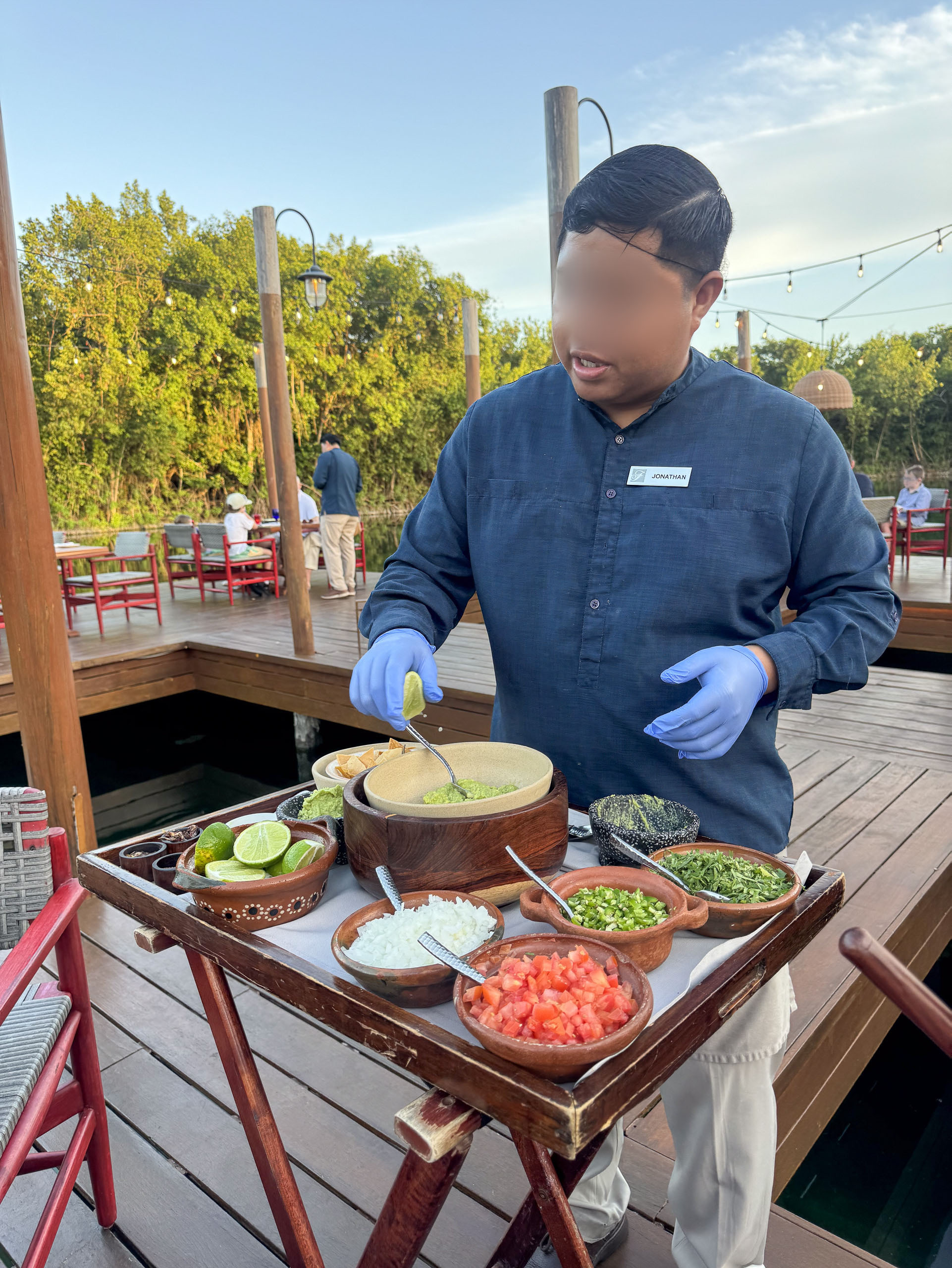
    A waiter spooning guacamole from a tableside trolley set with lime, onion, tomato and herbs
    Guacamole made at the trolley.

    And the honest part, which applies to both: this stretch of coast gets seaweed seasonally, and the offshore barriers used to manage it mean the beach does not look like the brochure. Neither hotel can fix it and both handle it about as well as anyone does. If a flawless Caribbean beach is the point of your trip, come outside seaweed season or look at the Pacific side.

    Verdict by traveller type

    Take Banyan Tree for a honeymoon, an anniversary, or any trip built around the villa and the spa. Take it if wellness is a reason for going, if you want a private pool off your own terrace, and if Southeast-Asian calm is the mood you have been carrying around.

    Take Fairmont with children, with a group, on a golf trip, or on any stay longer than four nights where the dinners start to compound. Take the all-inclusive if you plan to eat in.

    If you can stretch to it and want my answer: four nights in a Banyan Tree villa beat six in a Fairmont room. If it does not stretch, the Fairmont is not a consolation prize. You are in the same jungle, on the same beach, and you can hop the ferry to Saffron for dinner.

    Book Banyan Tree if the villa is the trip. Book Fairmont if the trip is bigger than the room.

    Teak daybeds and woven pod cabanas on the sand beside the beachfront infinity pool, palms and the Caribbean behind
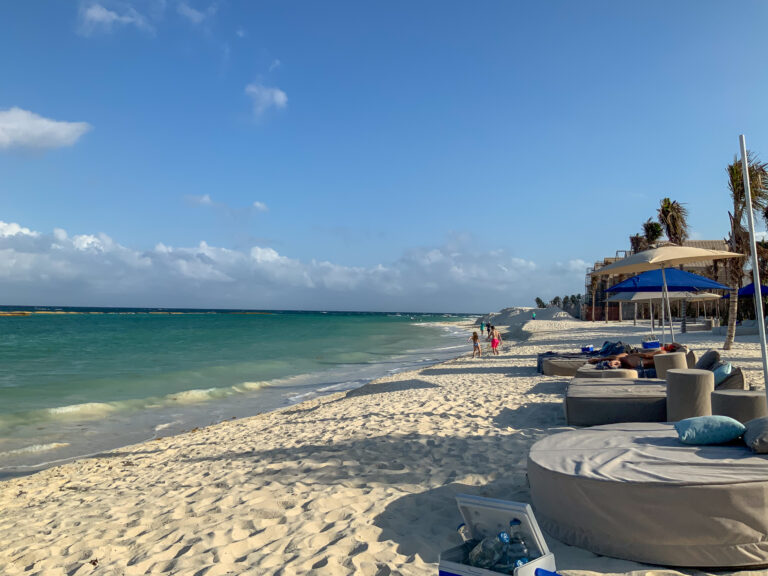
    Teak daybeds and woven cabanas on the sand at Banyan Tree. Both hotels front the same beach.

    Bottom line

    Banyan Tree if the villa is the trip, Fairmont if the trip is bigger than the room. Take the oceanfront upgrade at one, the all-inclusive plan at the other, and eat at Saffron either way.

    See the full set: Banyan Tree, Mayakoba — in frames and Fairmont, Mayakoba — in frames. More Mayakoba: the Mayakoba set.

    Book Banyan Tree if the villa is the trip. Book Fairmont if the trip is bigger than the room.

    The Mayakoba galleries

    Every photo on this site is my own, shot on the stays. Slide through →

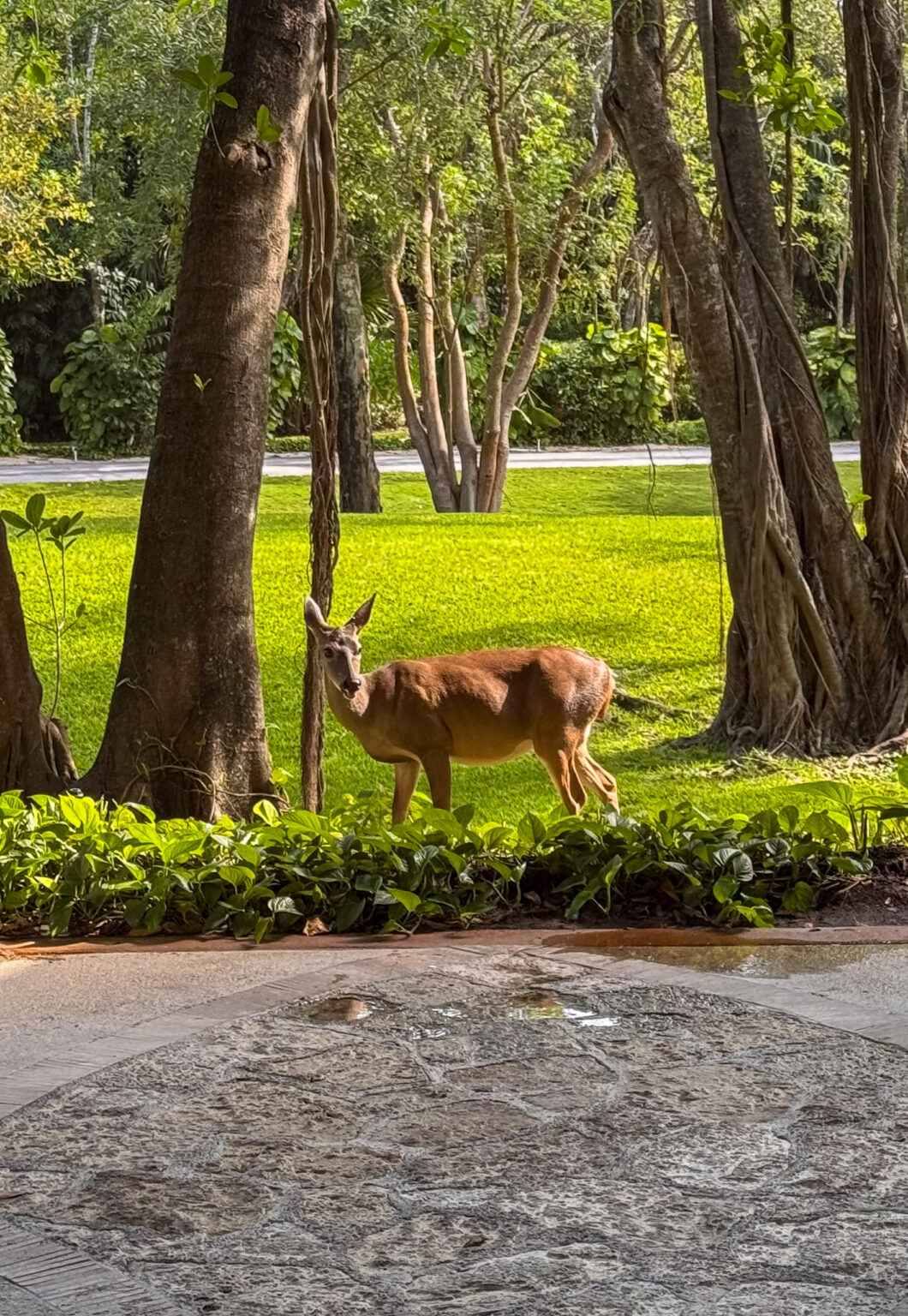
    Banyan Tree MayakobaFairmont MayakobaHotel terraces hung with bougainvillea above a pool and rows of loungersBanyan Tree MayakobaFairmont MayakobaA sand path crossing a palm lawn towards the beachBanyan Tree MayakobaFairmont MayakobaA deer standing among trees on a mown lawn in the groundsA chef carving the steak at the table beside a glass of wine
  • Grand Velas Riviera Maya: Jungle, Beachfront or Grand Class?

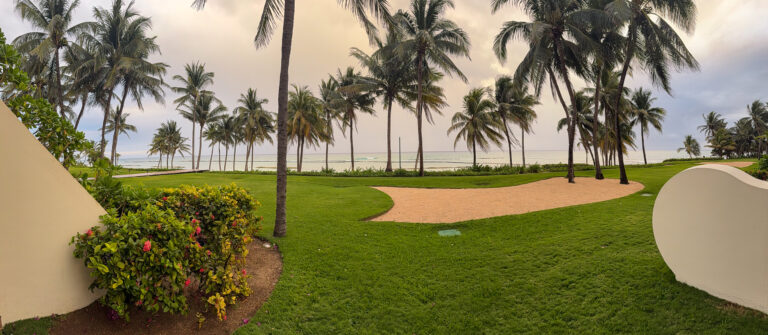
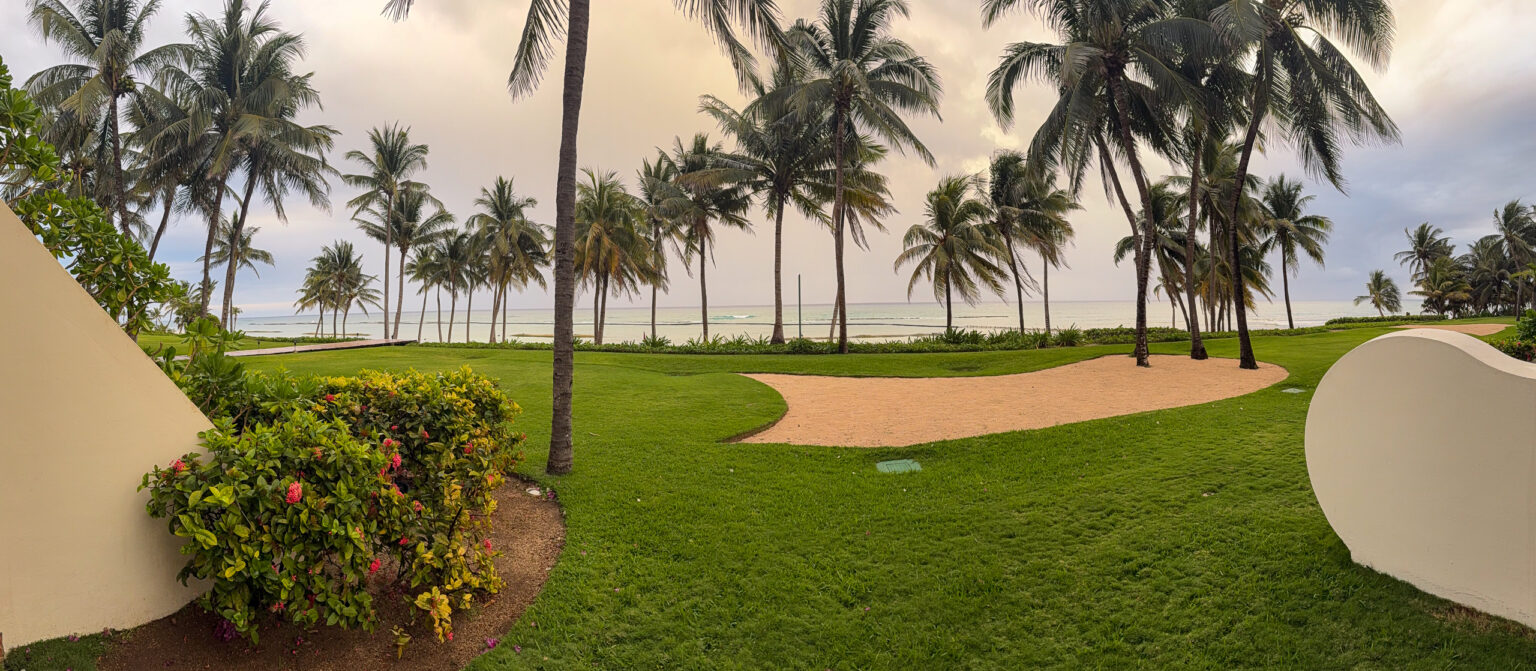
    Wide panorama of lawn, coconut palms and a sand circle framed between two curved white walls

    RIVIERA MAYA, MEXICO · ROOM GUIDE · 5 MIN READ

    Grand Velas Riviera Maya: Jungle, Beachfront or Grand Class?

    Three resorts in one, just next door to Mayakoba: an ultra-luxury beachfront for honeymoons and anniversaries, and a kid-safe playground at the beach and another in the jungle. The only question is which one you are booking.

    By J.C. Mercer

    Verified stay·paid in full

    • Stayed March 2025 and March 2026
    • Room booked Zen Grand Pool Nature View Suite; Grand Class Oceanfront
    • How it was booked Amex Fine Hotels + Resorts, public rate
    • What the channel bought Seemingly nothing — the resort is already all-inclusive, and no upgrade appeared to land.
    • Value verdict The value is there if you appreciate an all-inclusive.
    • When to go Anytime you want the all-inclusive without Hotel Xcaret’s more hectic energy. Book this stay

    Booked the way any other guest would book it.

    The three ambiances

    Grand Velas is not inside Mayakoba, whatever the internet says. It sits just next door, on its own land behind its own gate, and its only tie to the name is a partnered golf course five minutes away. The more useful way to hold it: this is three resorts in one. At Mayakoba your key opens three neighbouring hotels; here it opens three sections of one resort — an ultra-luxury beachfront built for honeymoons and anniversaries, and a kid-safe playground at the beach and another in the jungle. Choosing among them is the whole decision.

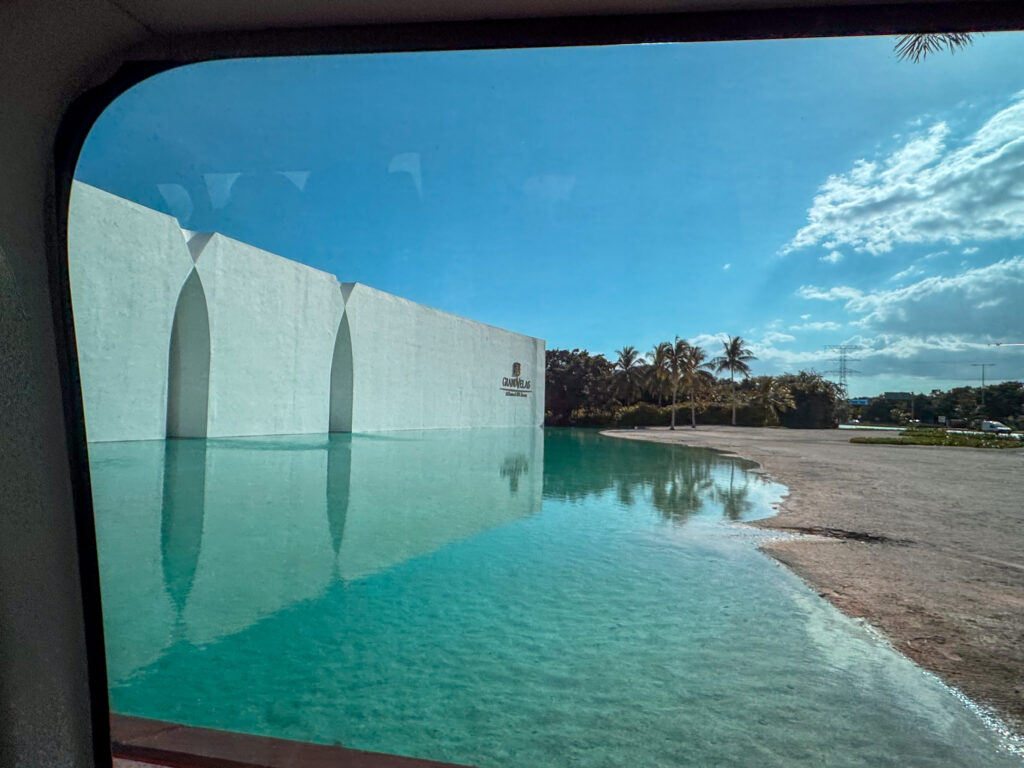
    Curved white wall reflected in a shallow turquoise arrival pool, seen through a vehicle window
    One gate, one drive, and then a fork in the road that decides most of your holiday.

    Most resorts offering a room choice offer two: water or garden. Grand Velas offers three and calls them ambiances rather than wings, which is marketing language over a real structural fact. Each has its own lobby, pool and restaurants, and guests may use all three wherever they sleep. Zen Grand is the biggest, set inland in jungle and mangrove. Ambassador overlooks the beach and has the largest pool complex. Grand Class is oceanfront, with the infinity pool and the starred restaurant. The spa is in Zen. The beach fronts Ambassador. Wherever you sleep, something you want is somewhere else.

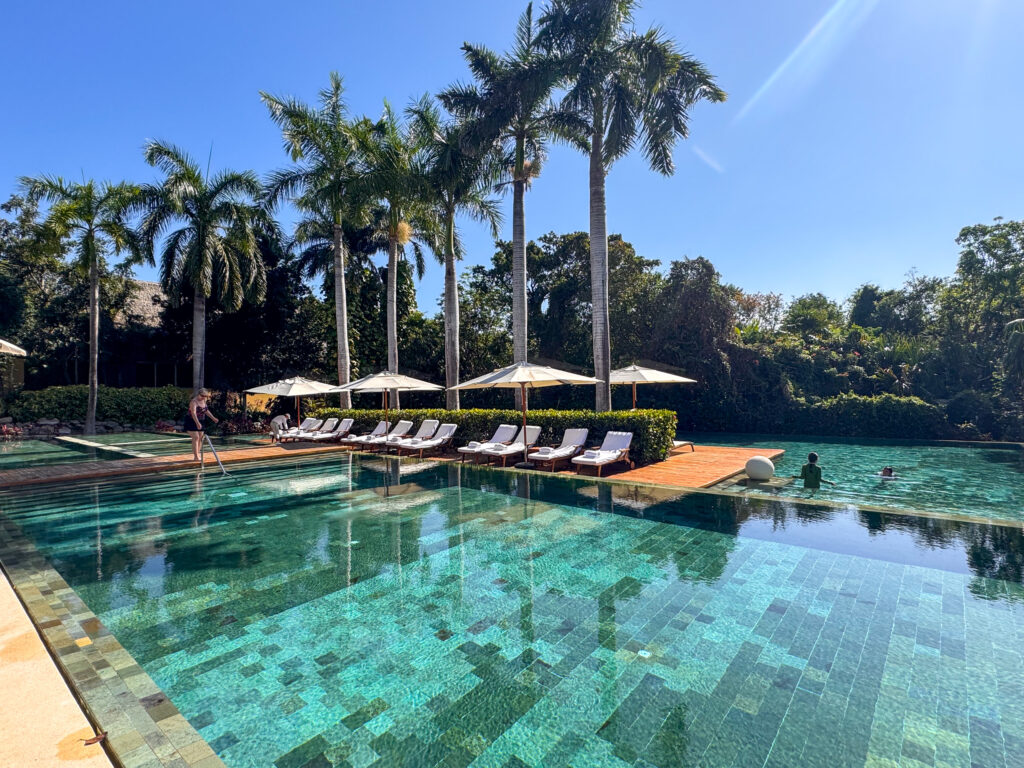
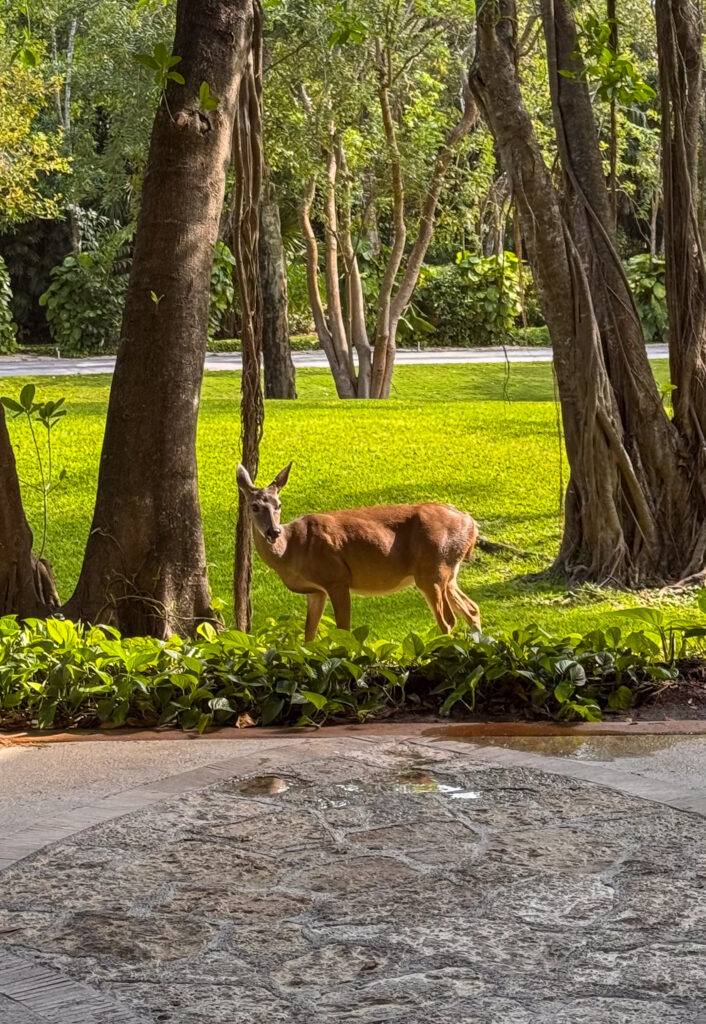
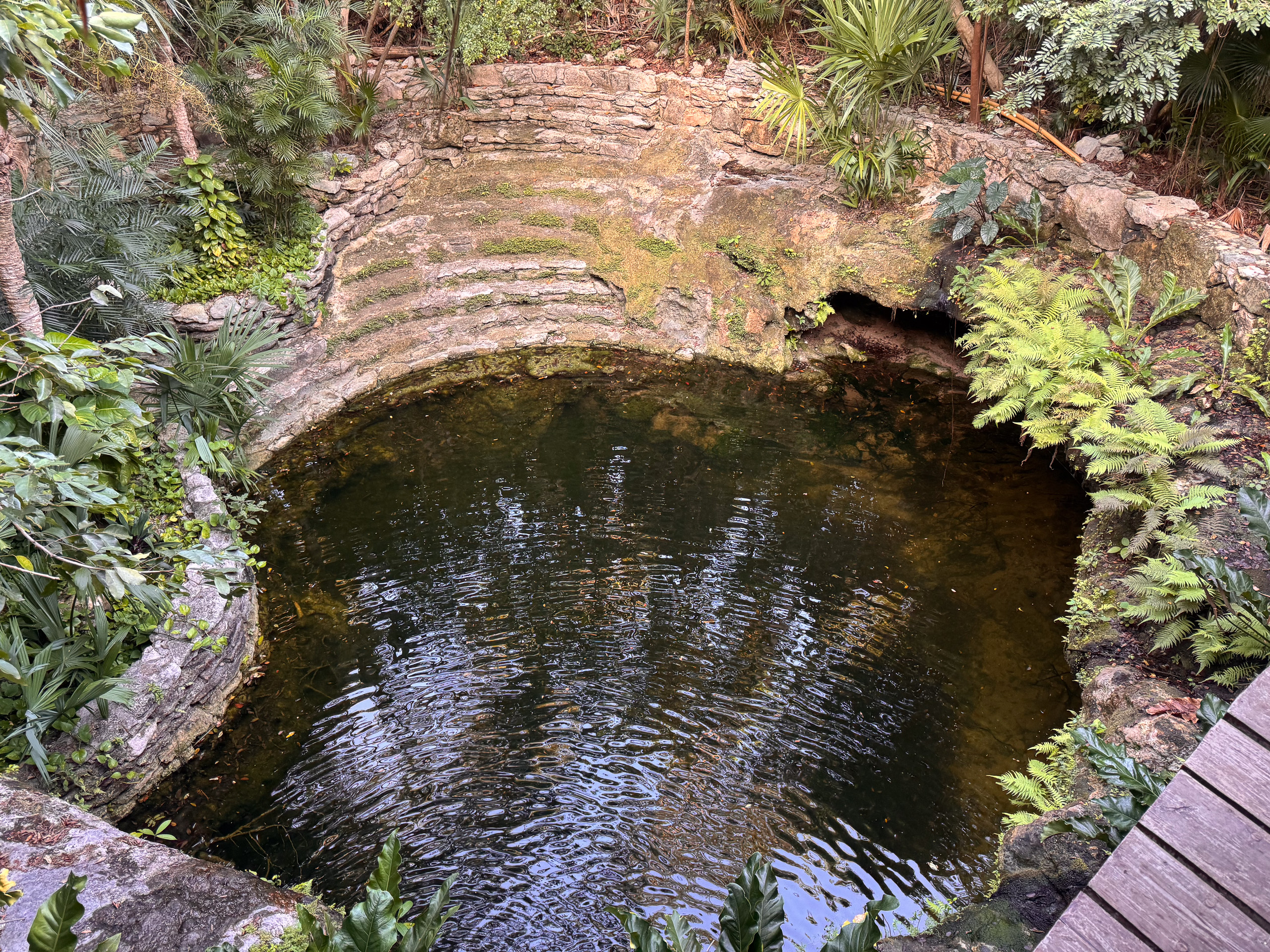
    Zen Grand is the quieter half of the property, and its rewards are the spa, built partly into a natural cenote and the strongest single thing the resort has, and the grounds: a deer grazing between banyan trunks, an oriole working the palm fronds, a stone-walled cenote sunk among ferns a few minutes from the room. The inland pools are tiled emerald rather than blue and sit under the canopy, cooler and quieter than the beachfront ones. The jungle suites are for nature lovers: very relaxed, very secluded, the kind of quiet you keep while waiting for the monkeys to swing through. They came through once — the wait, it turns out, is part of the amenity.

    Emerald mosaic-tiled pool reflecting royal palms, with loungers and umbrellas along the far edge
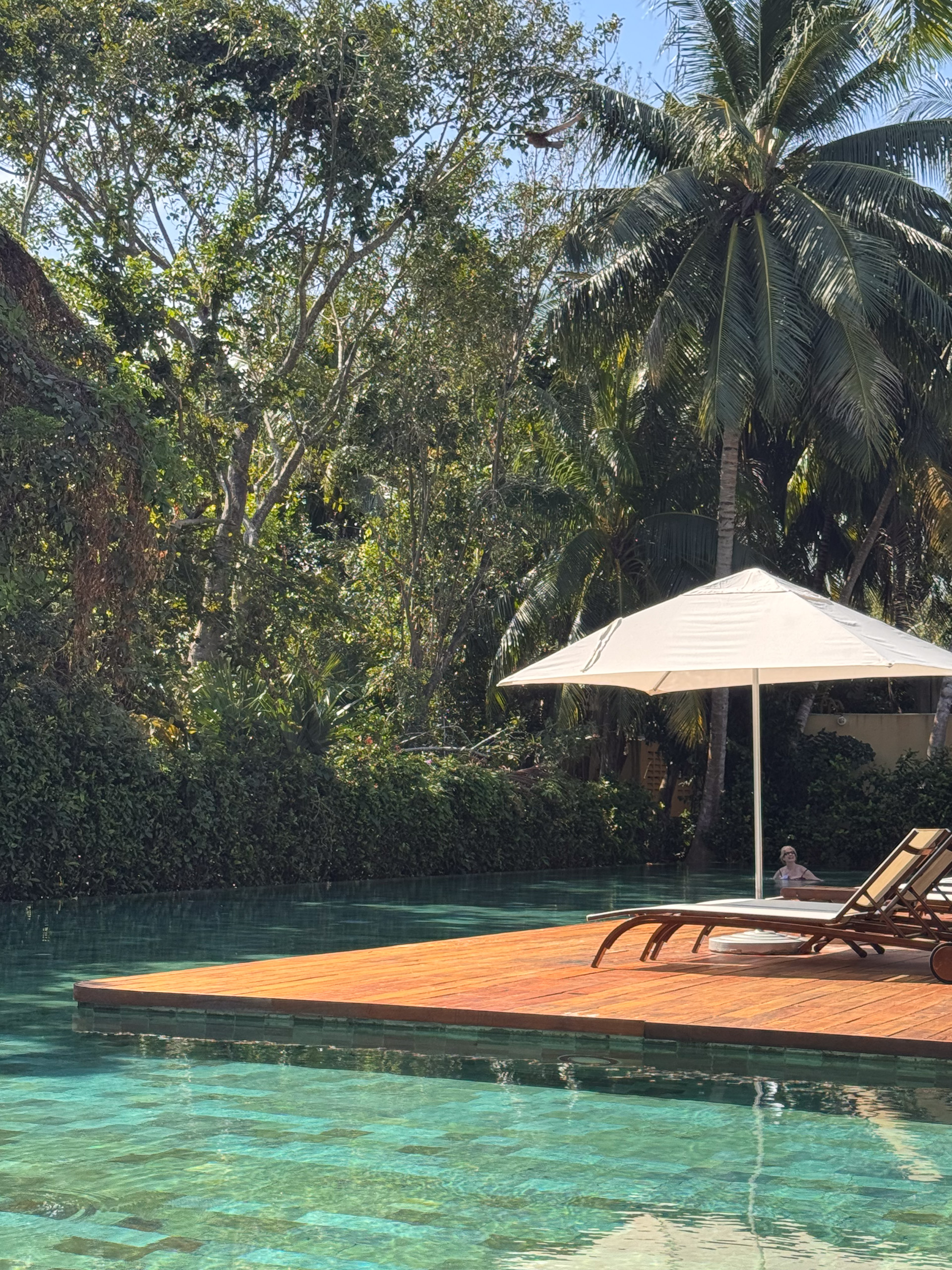
    The inland pools are tiled emerald rather than blue and sit under the canopy – cooler and a good deal quieter than the beachfront ones.

    The cost is distance. The hotel says the shuttle takes two or three minutes, and the drive itself is nearer five; door to door, with the wait, the loading and the other guests dropped on the way, it is closer to ten, which is enough to make you quietly give up on the morning yoga class rather than build a day around a van. Zen sits about a mile back from the water, and it is not a walk you would want to make twice a day in that heat.

    A deer grazing on a sunlit lawn between banyan trunks, seen across a flagstone path
    Real jungle, not a stocked attraction.
    Looking down into the cenote from the walkway
    The cenote, from the walkway.

    And there is a harder problem: the building is older and darker than the other two, and it shows — burned-out bulbs, pictures hanging askew, rooms that want the lights on at midday. Book Zen knowing it is a different product, not the same one seen from further back.

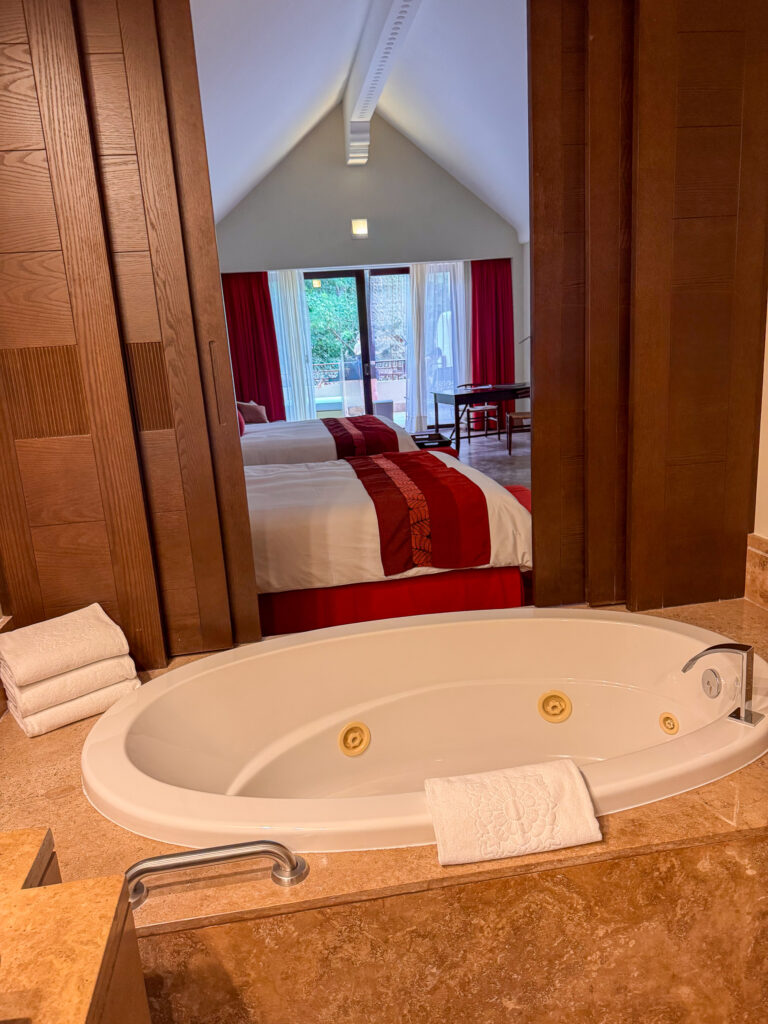
    Ambassador is where families live. The pool is the biggest of the three, with a zero-entry children’s section at the back; the kids’ club and the teens’ club are here; the buffet, the Mexican room and the Italian are here. Every suite has an indoor jacuzzi and a wood screen that opens the bathroom to the room, and the ocean-view suites put the doors at the foot of the bed.

    Two warnings the brochure will not give you: ground-floor suites give up the view — you walk ten feet out of the room before you can see the sea — and they collect mosquitoes; and the stone hallways carry sound, corridor noise after dinner and lift noise all day. Ask for a higher floor, away from the lift.

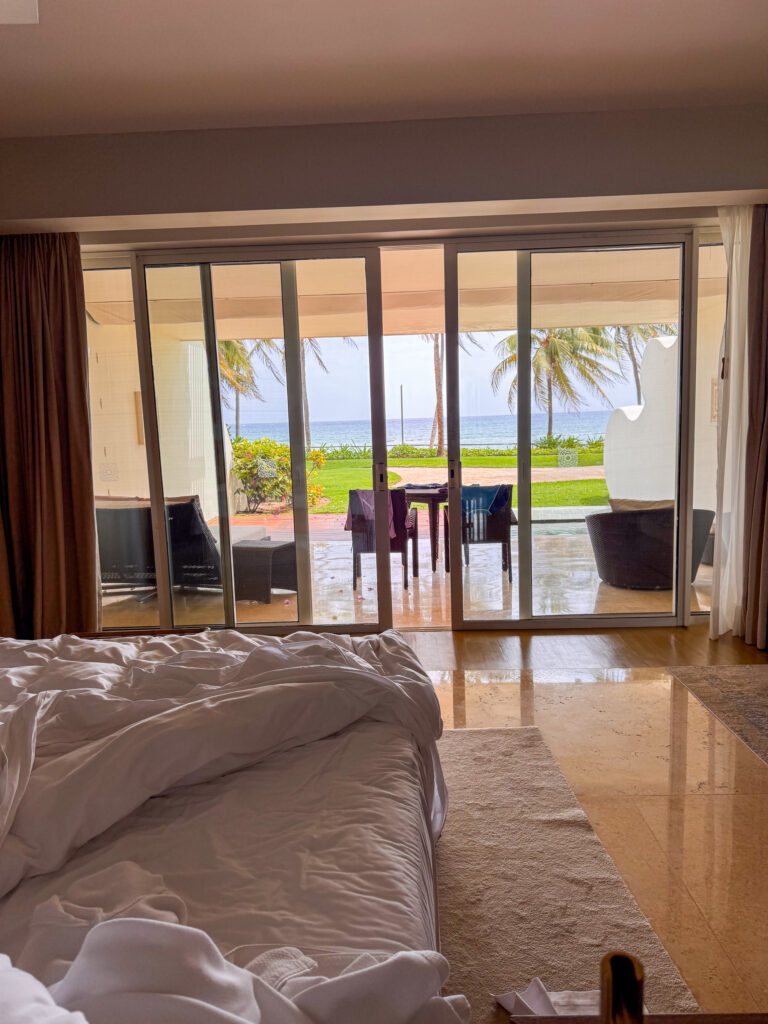
    Rumpled white bed and marble floor facing glass doors open to palms, lawn and sea
    The ocean-view suites put the doors at the foot of the bed. On the ground floor the lawn takes a slice of that view with it.

    Grand Class is directly on the sand, with a smaller, more boutique lobby of its own, terrace plunge pools, and the bistro, the French room and Cocina de Autor. Here is the thing to get right before you book, because the hotel has not. It is marketed as adults only, and the booking sites list it as a separate property with “Adults Only” in the name.

    Oval whirlpool tub in a travertine bathroom looking through to a bed with red runner
    The indoor jacuzzi behind its wood screen.

    What the resort commits to in writing is narrower: the Grand Class pool and bar and its three restaurants are age-restricted; the suites are not, and the hotel’s own booking page for the Oceanfront Suite offers it to three adults and a child. So book Grand Class for the pool, the bar and the restaurants, which really are adults only. Do not book it expecting a childless corridor.

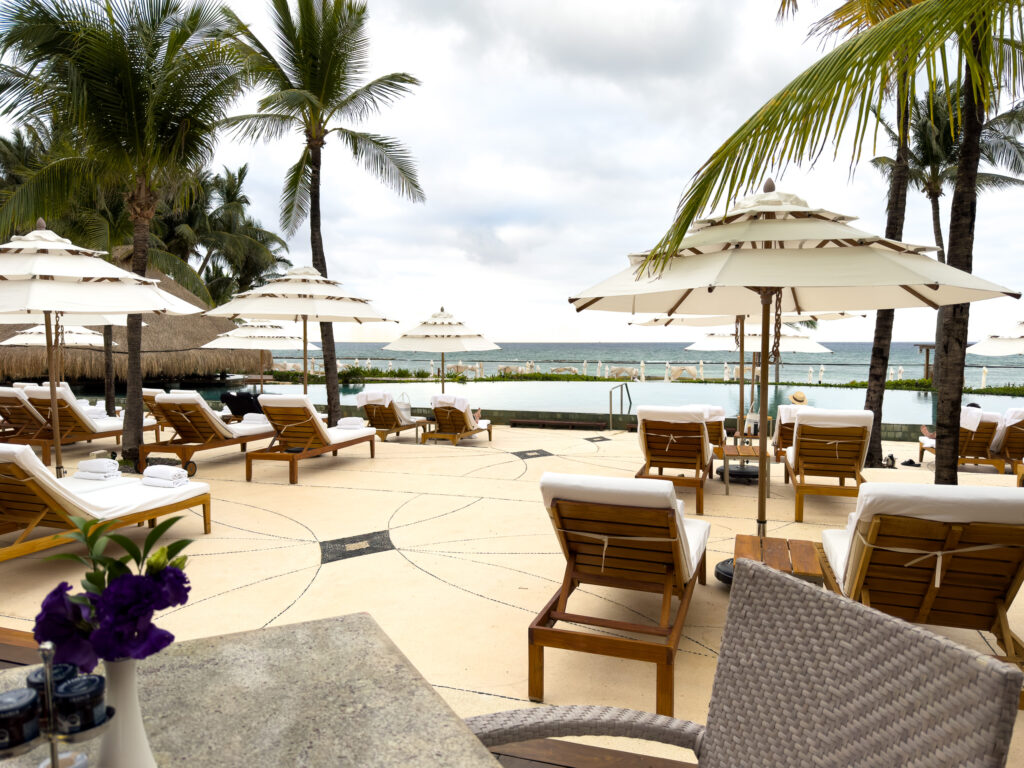
    White parasols and teak loungers on a stone terrace running to an infinity pool above the sea
    The one part of the resort the hotel commits to in writing as adults only. One umbrella per two chairs, and they go early.

    The food is excellent for an all-inclusive — a phrase that usually does the same work as “fast, for a tortoise”, and here does not need the escape hatch. You will not find the variety Hotel Xcaret runs, but the best plates here stand level with the best bites there.

    Side by side

    Zen GrandAmbassadorGrand Class
    To the beachShuttle, about a mileOverlooks itOn it
    Its poolJungle; coolest and quietestLargest; zero-entry children’s sectionInfinity; adults only
    Its restaurantsTwoBuffet, Mexican, ItalianBistro, French, and the starred room
    ChildrenFamily-friendly, in the hotel’s own wordsWhere both clubs areThe facilities are adults only; the suites are not
    The buildingOlder and darker; shows itSound carries in the stone corridorsNewest feel; smaller lobby
    Best forNature lovers — quiet, seclusion, the spaFamilies and short staysHoneymoons and anniversaries
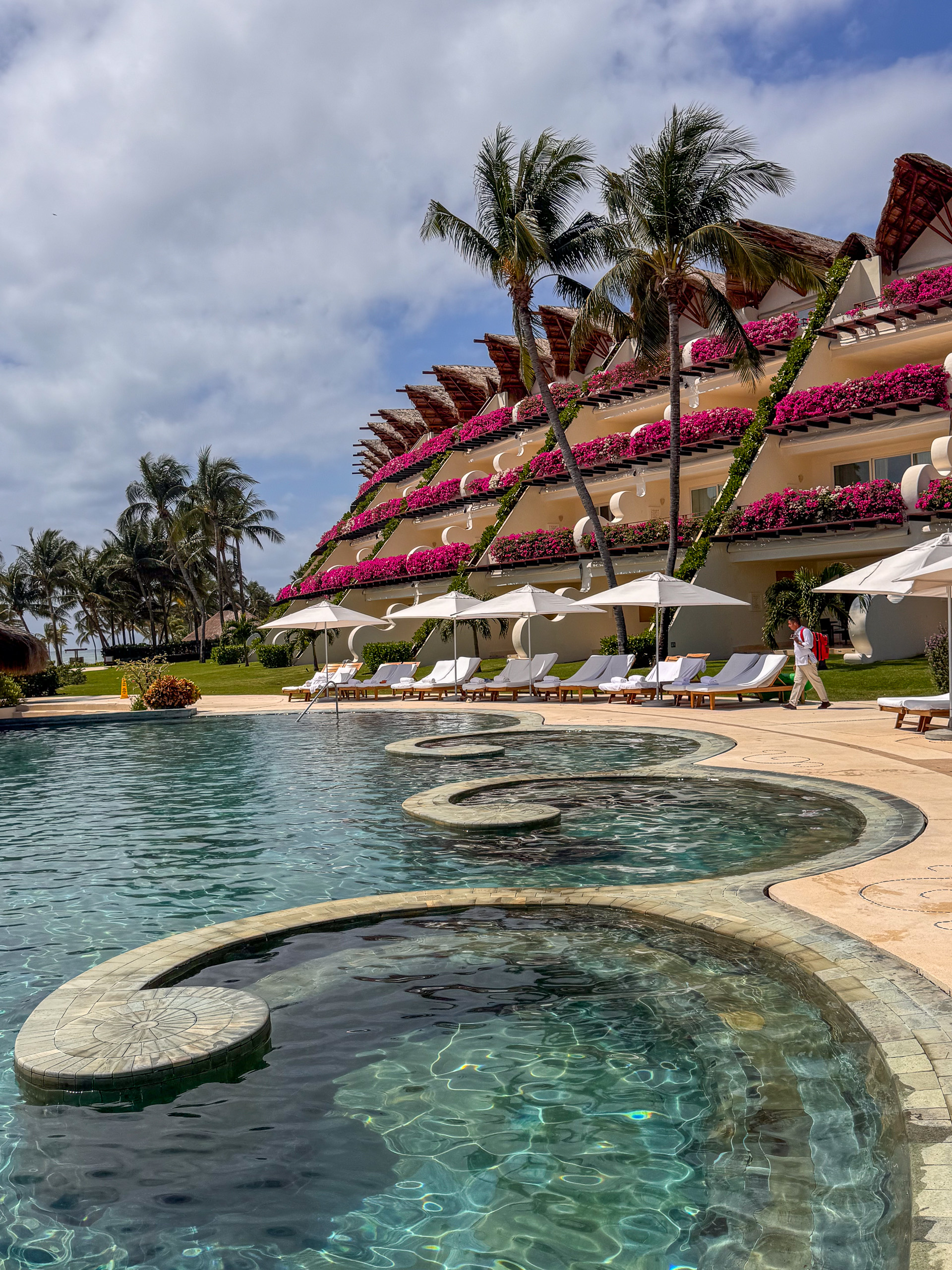
    The terraced guest block above the pool, palms all round
    Ambassador: the terraced block above the pool.
    The pool set into the jungle
    Zen: the pool set into the jungle.

    Which to book, by trip

    Take Grand Class for a honeymoon or an anniversary — the ultra-luxury beachfront is what it is for, terrace plunge pool, sand at the door. Take Ambassador with children: both clubs, the big pool and the beach are there, and the zero-entry shallows make it the kid-safe end of the sand; ask for an upper floor away from the lifts. Take Zen Grand for quiet and seclusion, and accept the shuttle as the toll the calm collects.

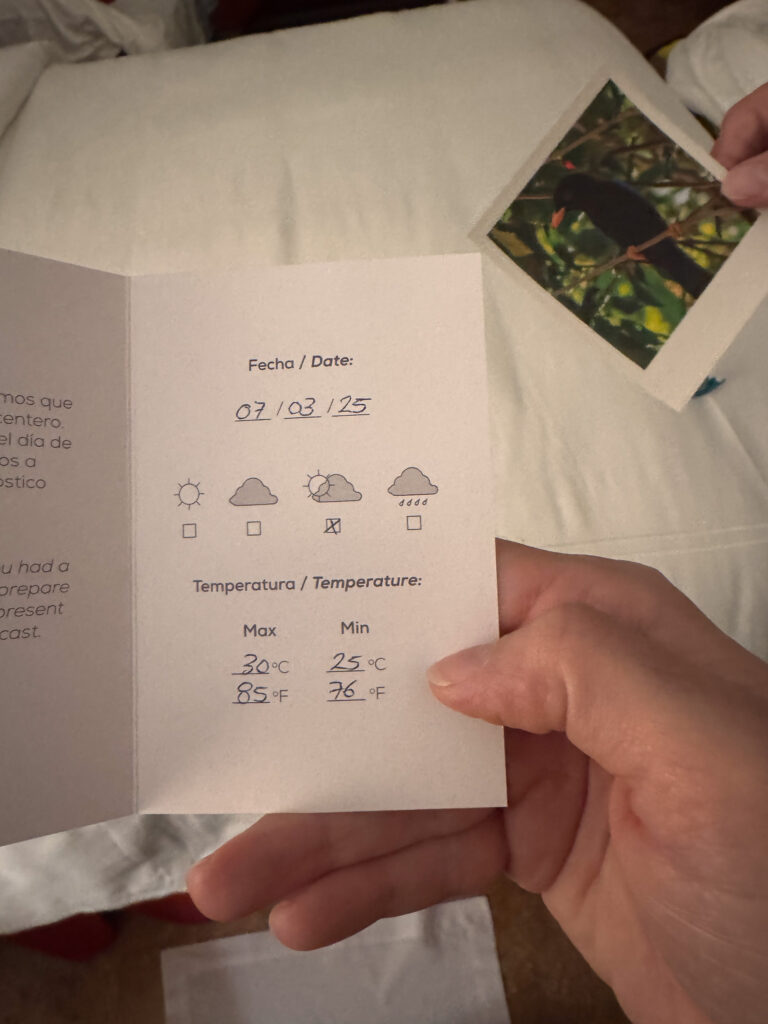
    A hand holding the printed daily weather card, dated 07/03/25, on a white bed
    Turndown leaves a printed card with tomorrow’s forecast — the sort of thing that explains the service scores.

    Take the season seriously if the beach is the reason you are going. The seaweed peaks in early summer and bottoms out in winter, and the cleanest months are November through February. There is a second beach problem that does not go away in the clear months: the resort keeps its sand wide with a submerged breakwater, which flattens the surf and leaves rock underfoot, and the concrete shapes are not much to look at.

    Bring water shoes if you intend to swim rather than look. Book the restaurants before you fly, Cocina de Autor first. Loungers go before breakfast and the chair rules are not enforced. Bring repellent.

    Really, though: Hotel Xcaret would likely be the better stay for ninety per cent of guests — more variety, more energy, more to do in a day than this resort offers in a week. The tenth guest, the one who wants a jungle that holds its silence, already knows who they are. The spa here argues its own case either way.

    The beach is for energy, the jungle is for peace — and the best of the best is up the road.

    Bottom line

    Three resorts in one, next door to Mayakoba. The beach side is the classic beach resort — sun, energy, sand at the door. The jungle side is for relaxing in peace until the monkeys come through. And if you want the real best of the best in the region right now, go to Hotel Xcaret — the full review makes the case.

    See the full set: Grand Velas, Mayakoba — in frames. More Mayakoba: the Mayakoba set.

    The Grand Velas gallery

    Every photo on this site is my own, shot on the stay. Slide through →
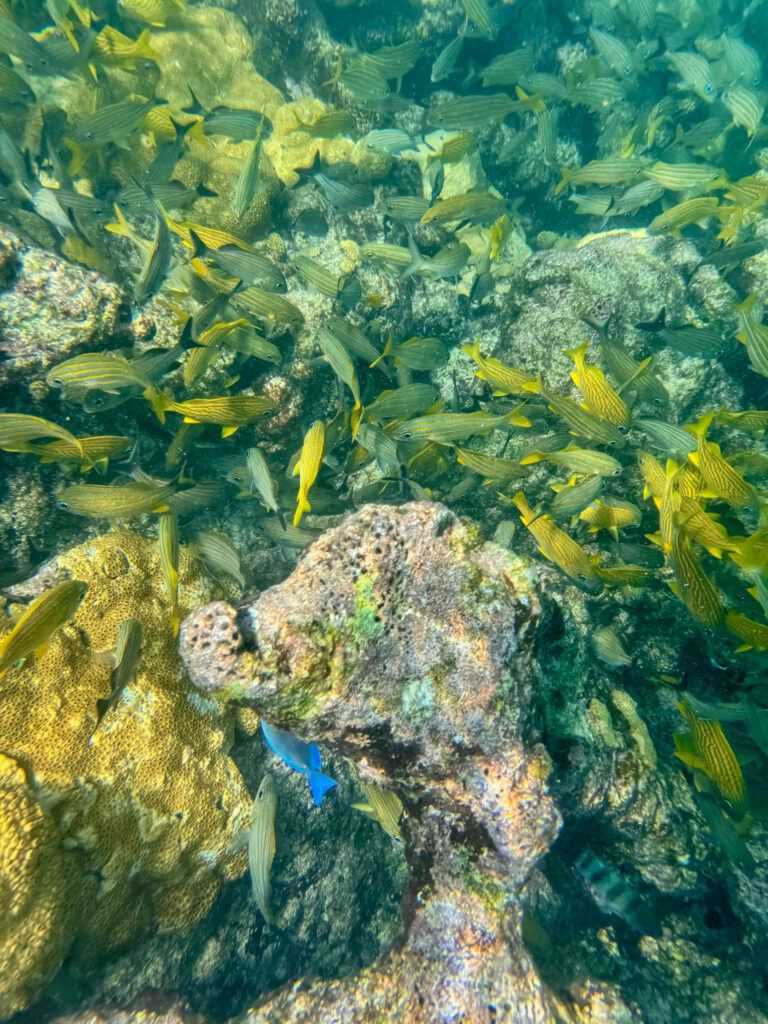
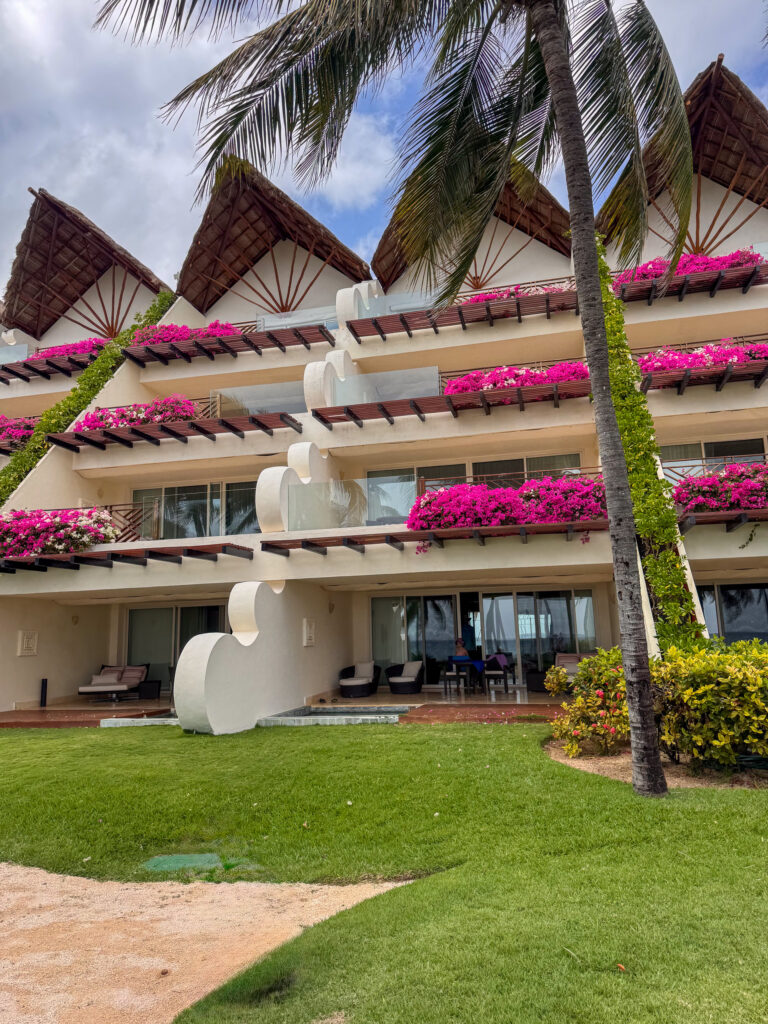
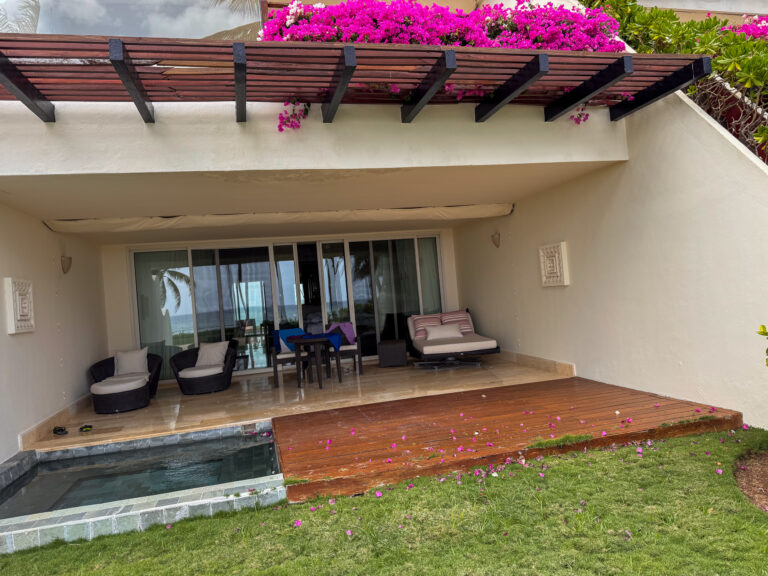
    The pool running out toward the water, the resort behindA daybed and umbrella on the pool deckThe wooden deck and palapa at the poolBreakfast set out on the table in the suiteA school of snapper over the coral, snorkelling off the beachBougainvillea along the terraces of the guest blockThe plunge pool and terrace outside the suiteThe covered terrace and plunge pool looking outTwo palms and the water beyond the poolThe infinity pool and the palapa bar
  • Fairmont Mayakoba: The One That Got Here First

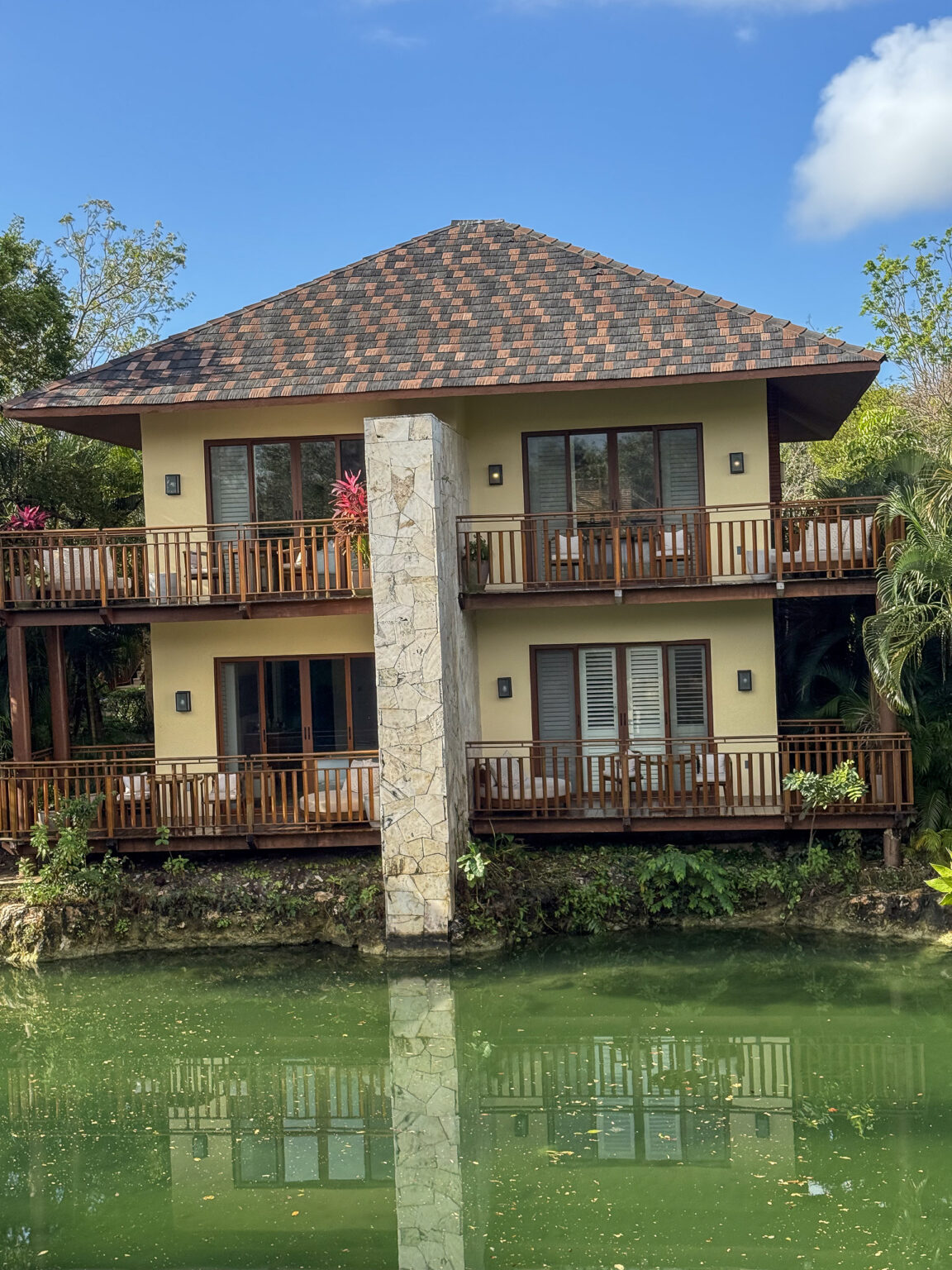
    A two-storey casita of pale stucco and wooden balconies standing directly above the green lagoon

    MAYAKOBA, MEXICO · VERIFIED STAY · 6 MIN READ

    Fairmont Mayakoba: The One That Got Here First

    The resort that opened Mayakoba is the biggest of the four, the least precious about it, and the only one that will sell you the whole stay all-inclusive.

    By J.C. Mercer

    Verified stay·paid in full

    • Stayed March 2026
    • Room booked Deluxe Casita, lagoon side
    • How it was booked Accor ALL, public rate
    • What the channel bought Nothing beyond standard.
    • Value verdict Worth it as the value play to access Mayakoba; a lagoon casita for two is the version that earns it.
    • When to go Spring Break. Book this stay

    Booked the way any other guest would book it.

    Arrival

    Mayakoba is four resorts sharing one address, a private community of clear-water canals cut through mangrove on the Riviera Maya, and Fairmont got here first — before the canals had a reputation and before Rosewood, Banyan Tree and Andaz arrived to give the place its luxury shorthand. That head start explains most of what the resort is now.

    It is the largest of the four and the one that behaves least like a boutique hotel: two kids’ clubs, a main pool you could lose a family in, and an optional all-inclusive package, three things nobody would write about Rosewood next door. Whether that reads as a warning or a relief depends almost entirely on who is travelling with you.

    A wide green canal curving past a two-storey resort building and a low stone bridge under a clear sky
    The canal system is the spine of the whole community. Buildings sit on it rather than beside it, and boats pass under low stone bridges between resorts.

    The single most underrated advantage of arriving first is that your trees are older than everyone else’s. The fan palms lean across the paths rather than standing politely beside them, the planting runs to dark red croton and heliconia thick enough to hide the edging, and the canal banks are properly overgrown. It does not look landscaped. It looks kept.

    The other thing the head start bought is scale. Rosewood and Banyan Tree are villa properties. Fairmont is a resort in the older and more literal sense: buildings, corridors, a lobby with a florist’s arrangement the length of a console table, and a golf course running through the back of it, so that one garden path has a fairway sitting open and green just off the left shoulder. The paths are flat, shaded and long enough that the bicycles are not a novelty.

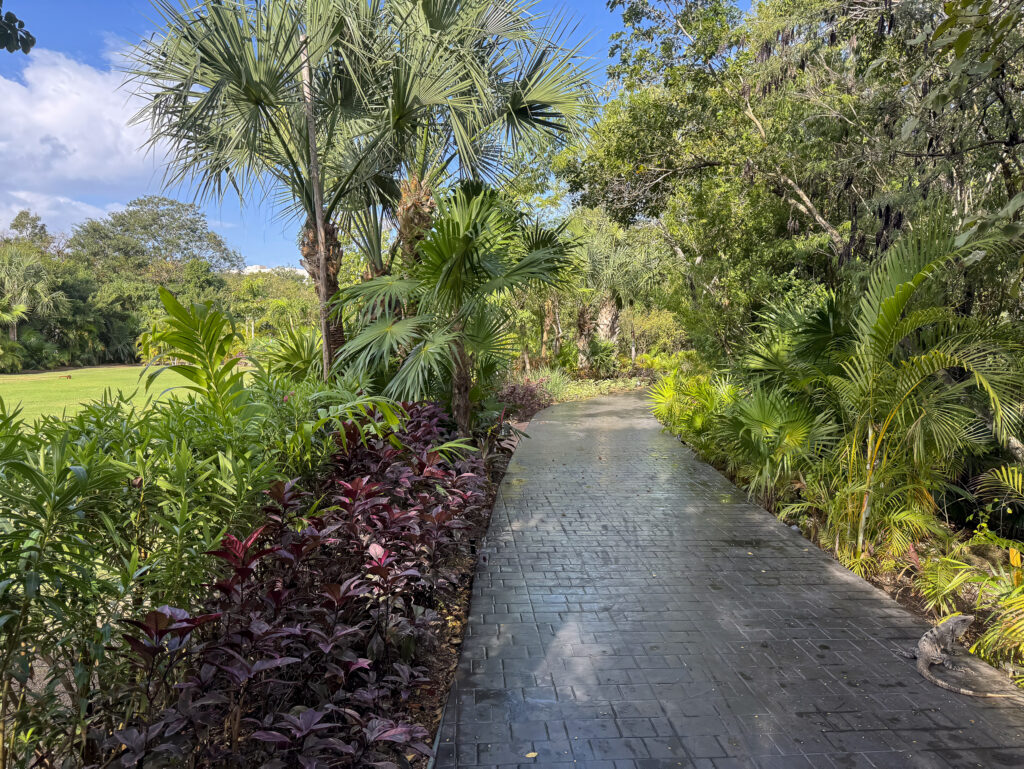
    A brick-paved path curving between fan palms and dark red planting with the golf course beyond
    Paths like this one are the property’s circulation. Flat, shaded, and long enough that the bicycles are not a novelty.

    The room

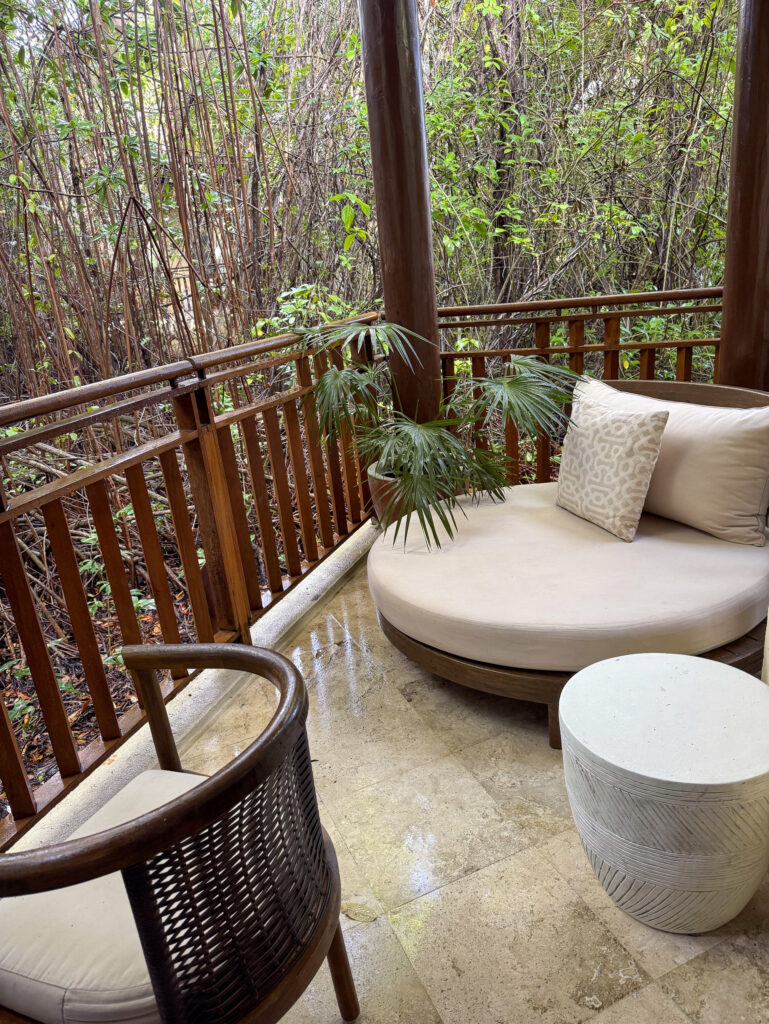
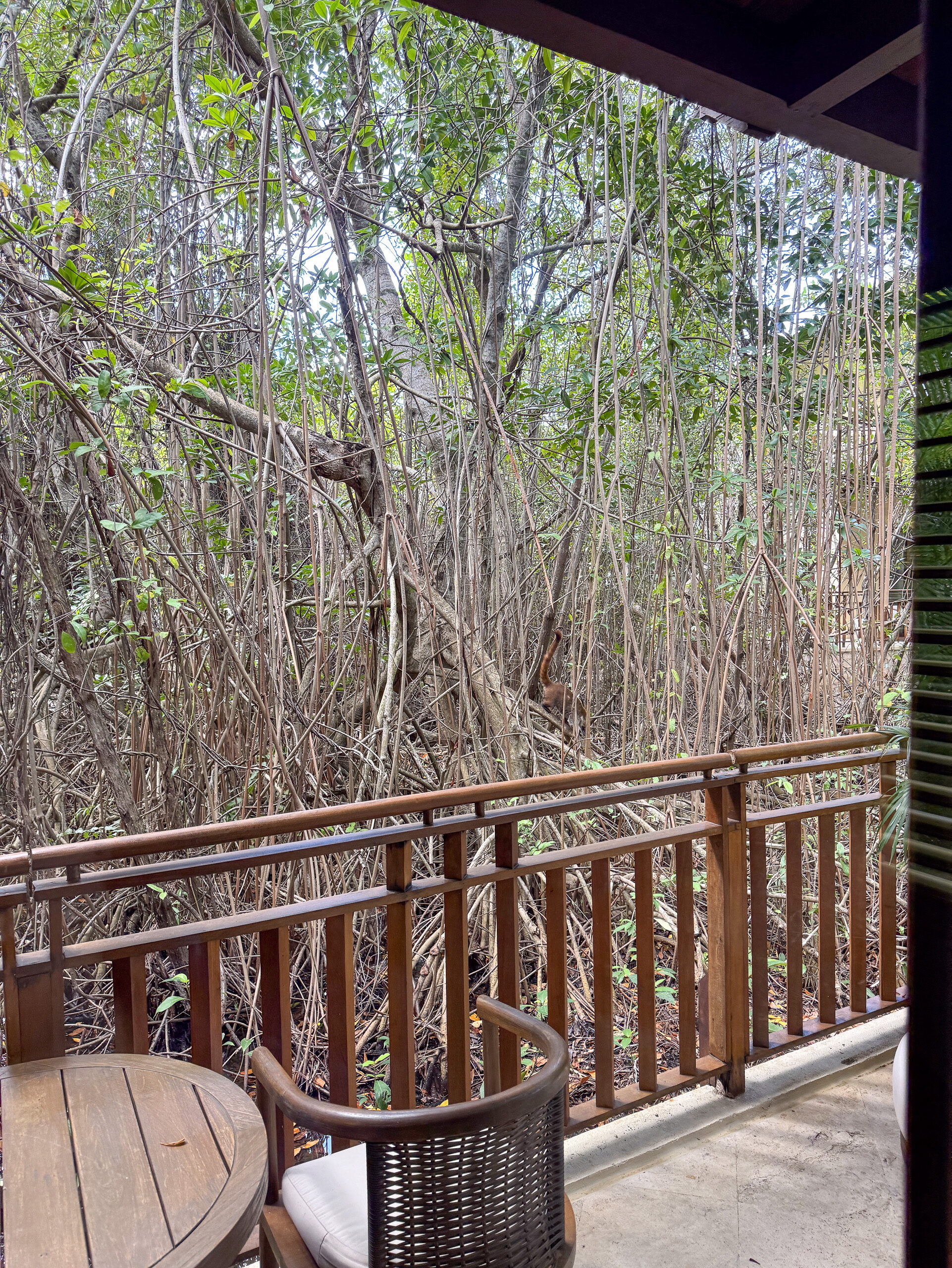
    The building block is the casita: two-storey blocks of a handful of rooms each, dropped into the mangrove along the lagoon or set back from the beach. I had a Deluxe Casita on the lagoon side, and the terrace is the room: a round cushioned daybed, a hardwood railing, and nothing beyond it but mangrove about two metres away, with birds in it. There is no view in the postcard sense. There is a wall of trees, and it is the argument for this side of the property in one frame.

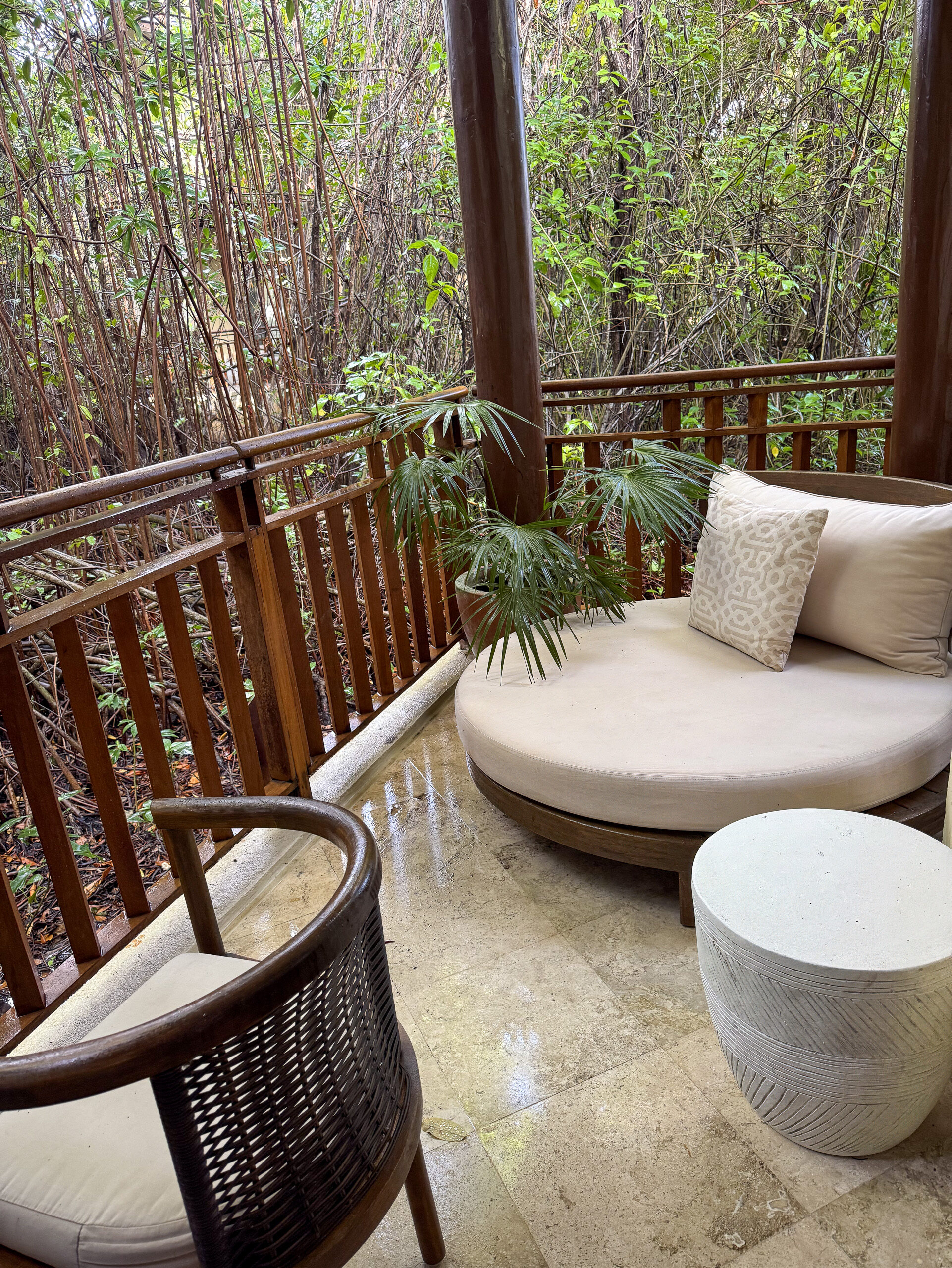
    A round cushioned daybed and wicker chair on a casita terrace looking straight into the mangrove
    A lagoon-side terrace. The railing is about two metres from the mangrove, which is the argument for this side of the property in one frame.

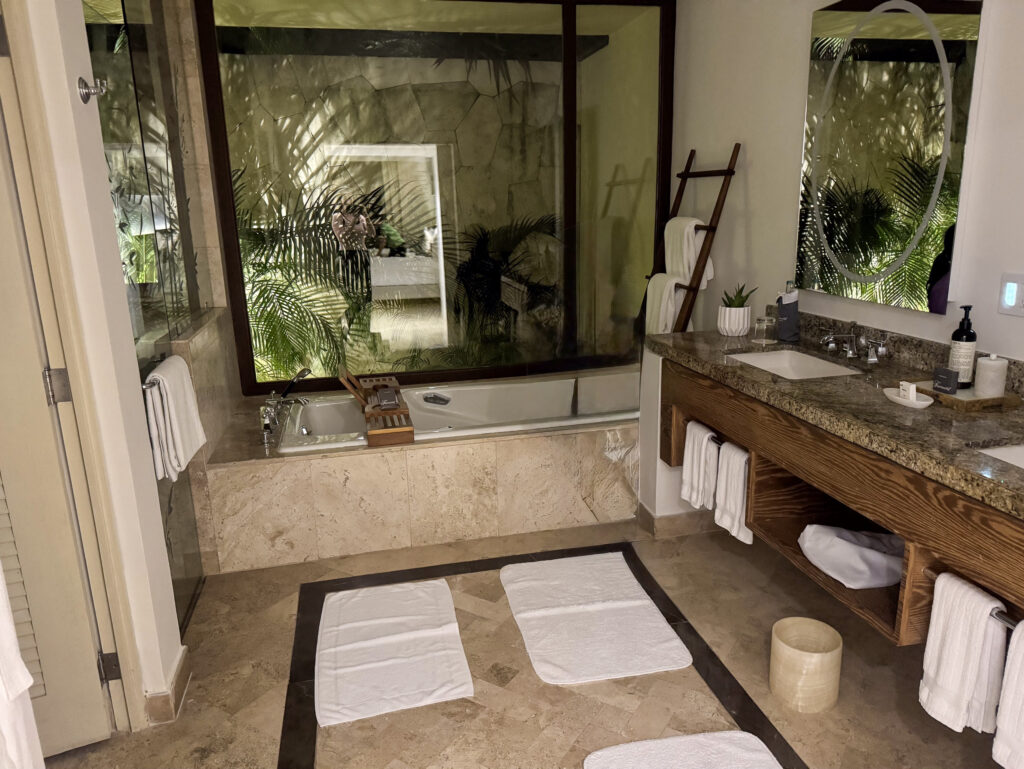
    Inside, the finish is warm rather than fashionable — travertine floors, dark timber, a stone-topped double vanity, a deep tub set against a window that looks straight into planting. It is not the pale, stripped-back palette the newer Mayakoba properties use, and it will read to some people as dated. It also means nothing in the room is trying very hard, which after four days is not a complaint. It is a recommendation.

    A bathroom with a sunken tub beside a garden window, stone-topped double vanity and rolled white towels
    The double vanity, glass shower, garden beyond.
    A blue floral robe on the daybed, mid-afternoon
    Robe weather.
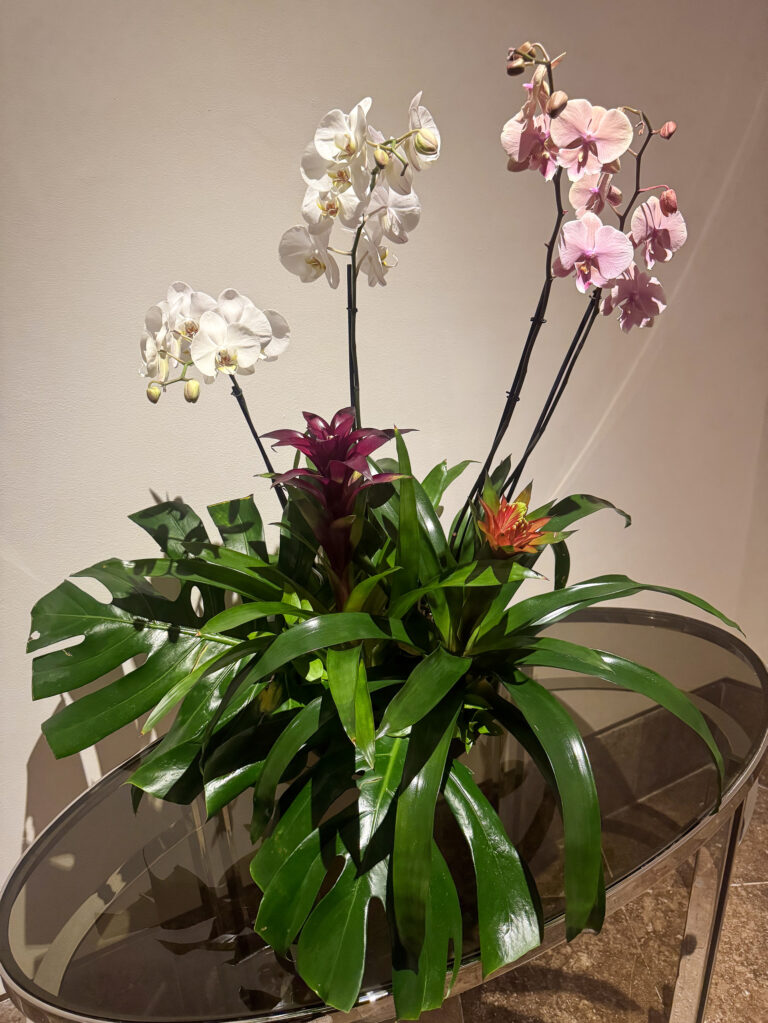
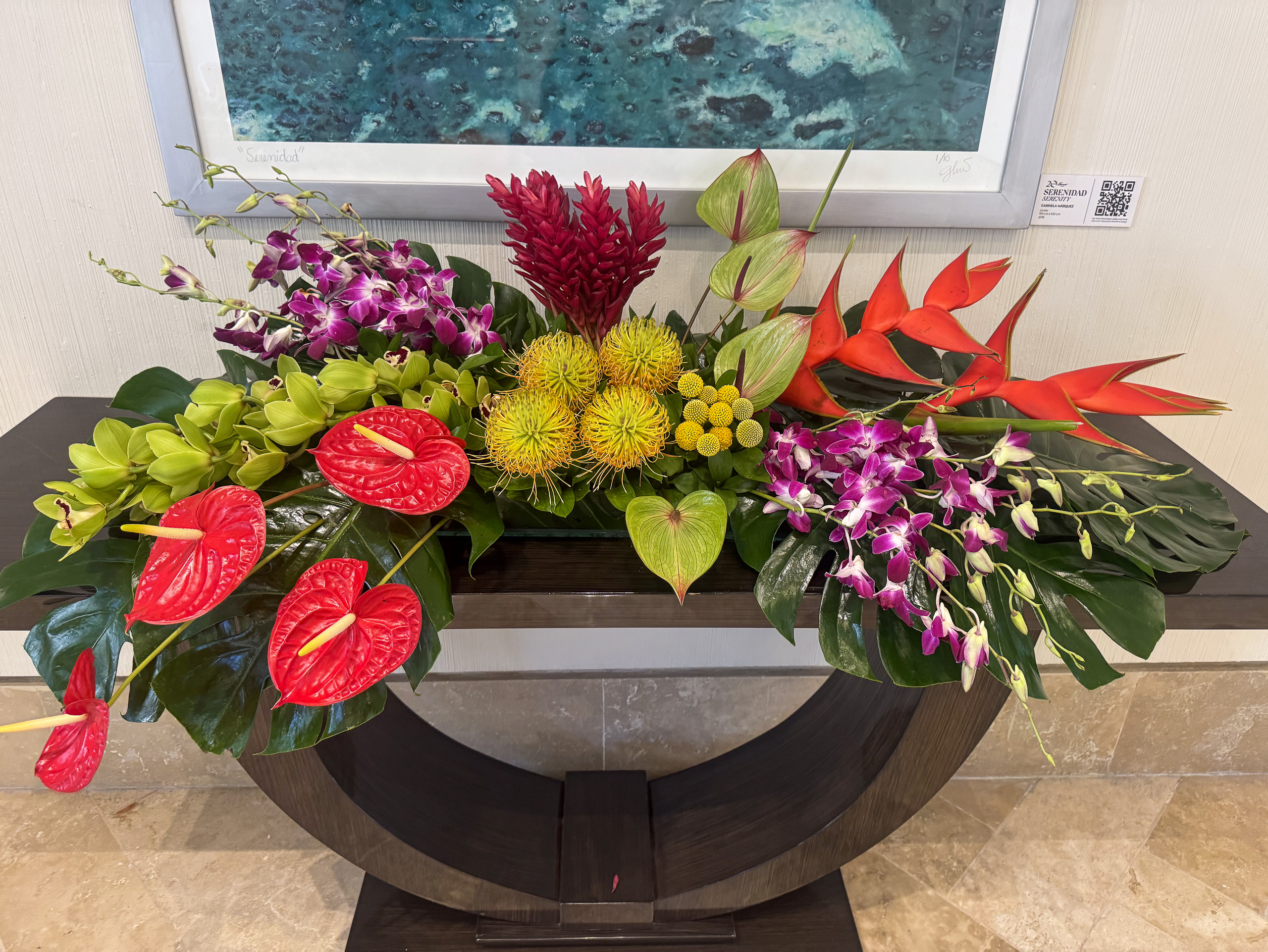
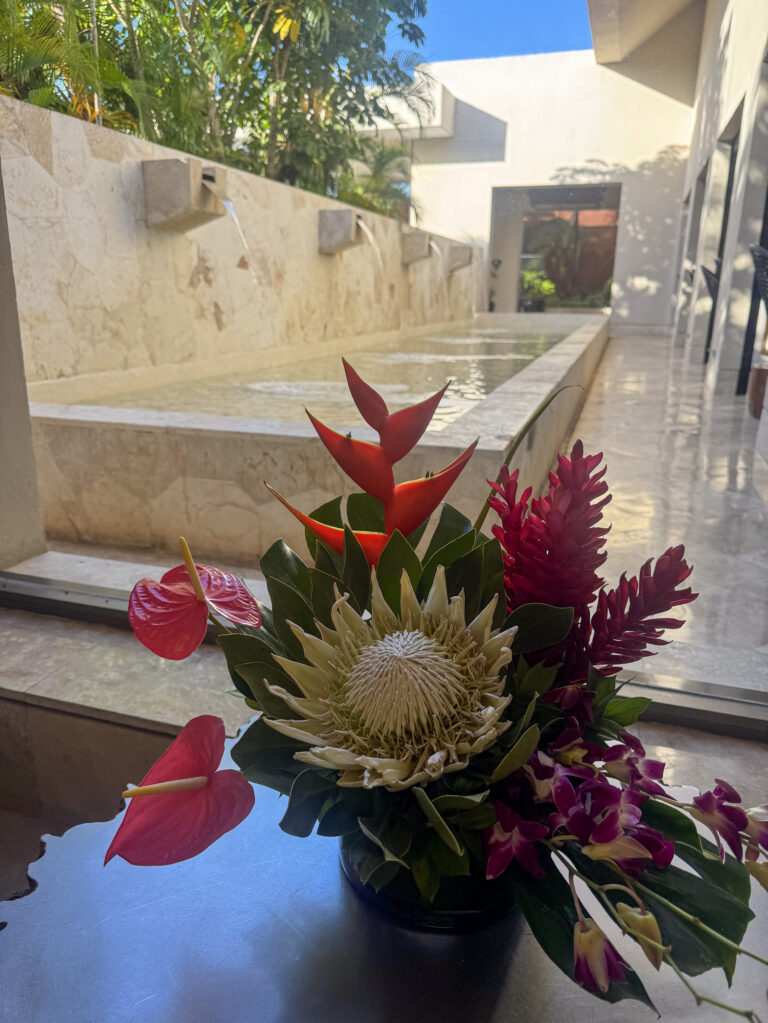
    A long arrangement of anthurium, ginger and orchids on a curved console
    Anthurium, ginger and orchids on the console.

    Eating

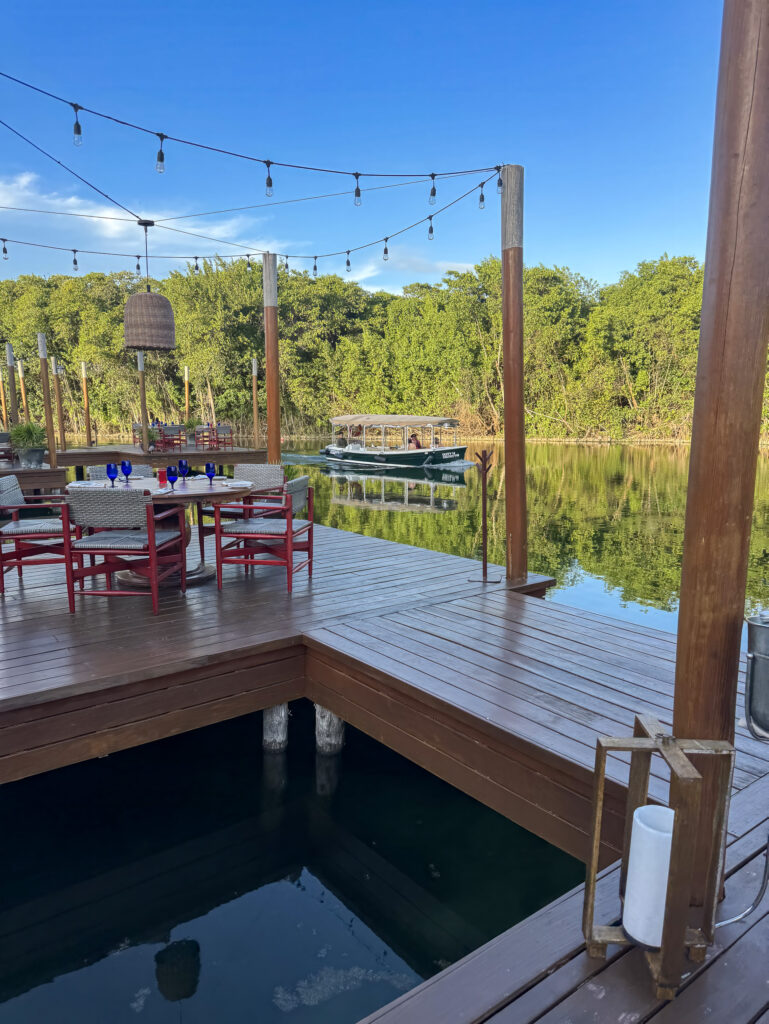
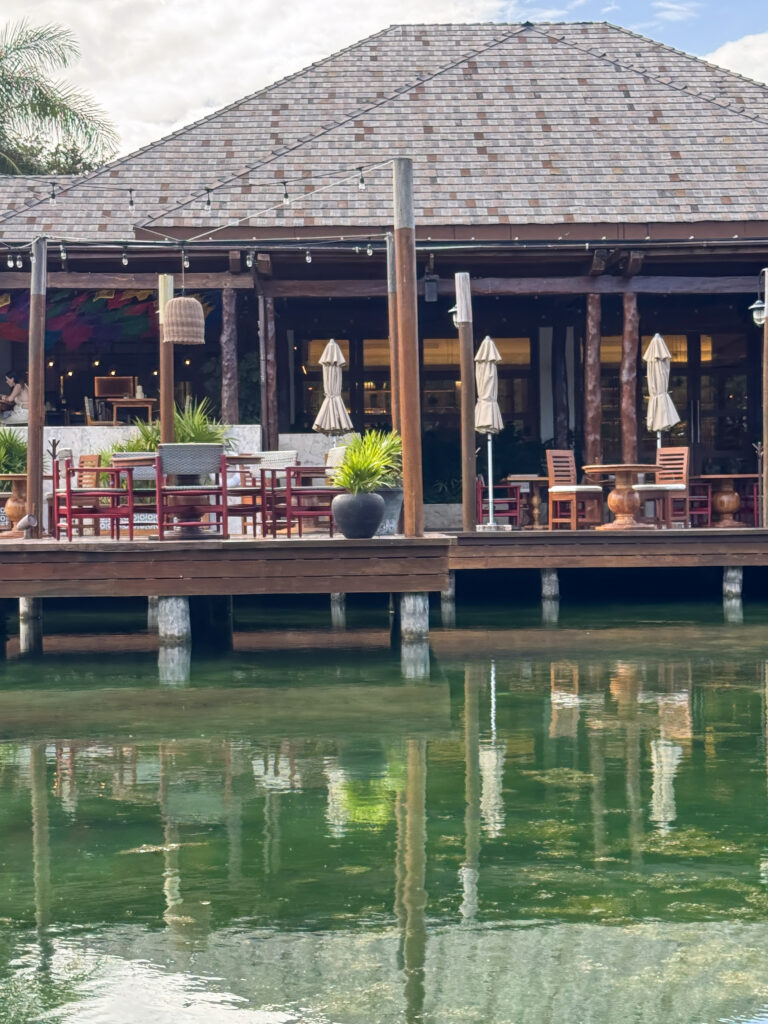
    The list is long for one property: Mexican over the water at La Laguna, a steakhouse, an Italian, a thatch-roofed beach hut, a lobby bar, two more bars, and the five outlets at the beach club. The best room of the lot is the lagoon deck: a shingle-roofed pavilion on pilings with red-painted chairs, woven pendant lamps and festoon lights strung over a hardwood terrace that ends in green water, with a boat going past. It is the only dining room on the property that could not be anywhere else.

    A wooden restaurant deck over the canal set with red chairs and festoon lights, a boat passing behind
    The over-water deck at the lagoon restaurant, laid up before service, with a boat going past on the canal.

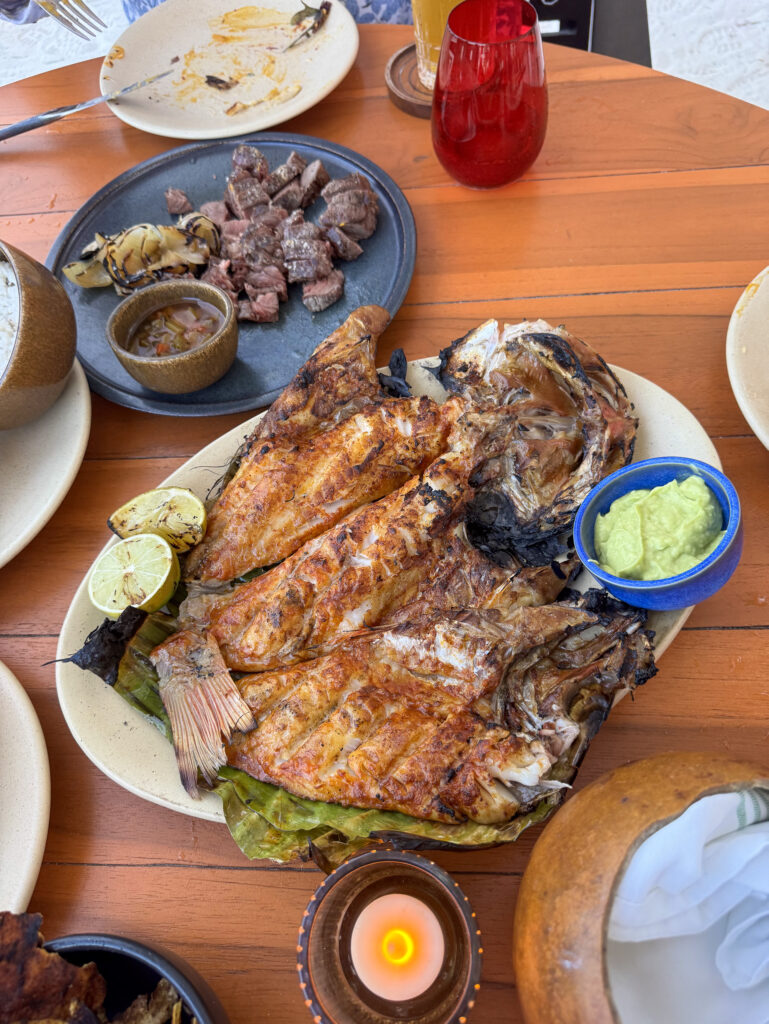
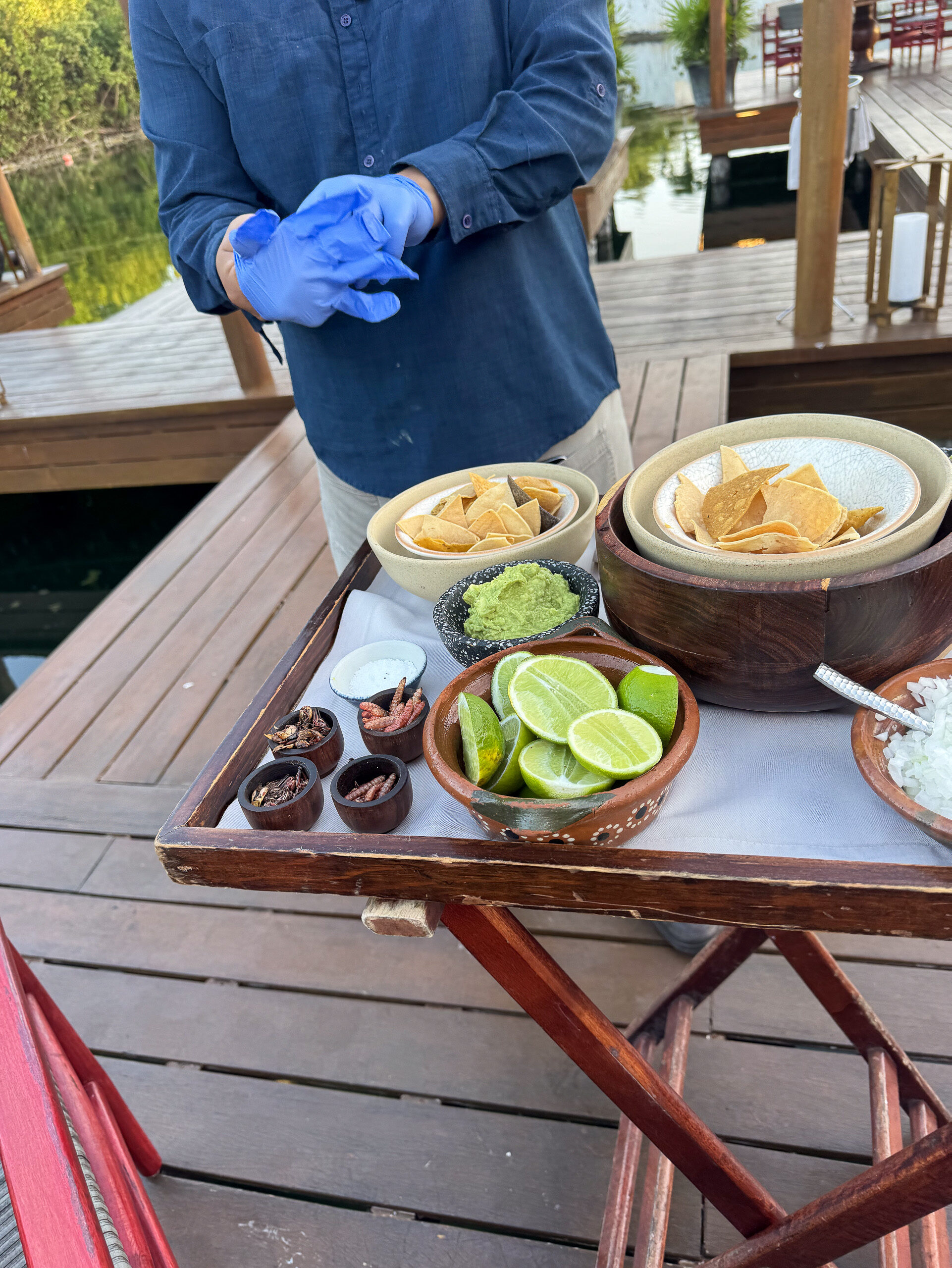
    The service style is old-school in the way Fairmont still does well: a guacamole trolley wheeled to the table and made in front of you, with lime, tomato, cheese, coriander and a dish of chapulines beside it for anyone who wants them. Whole fish comes off the grill and onto the table more or less as it left it. The kitchens lean local and simple, which suits the setting.

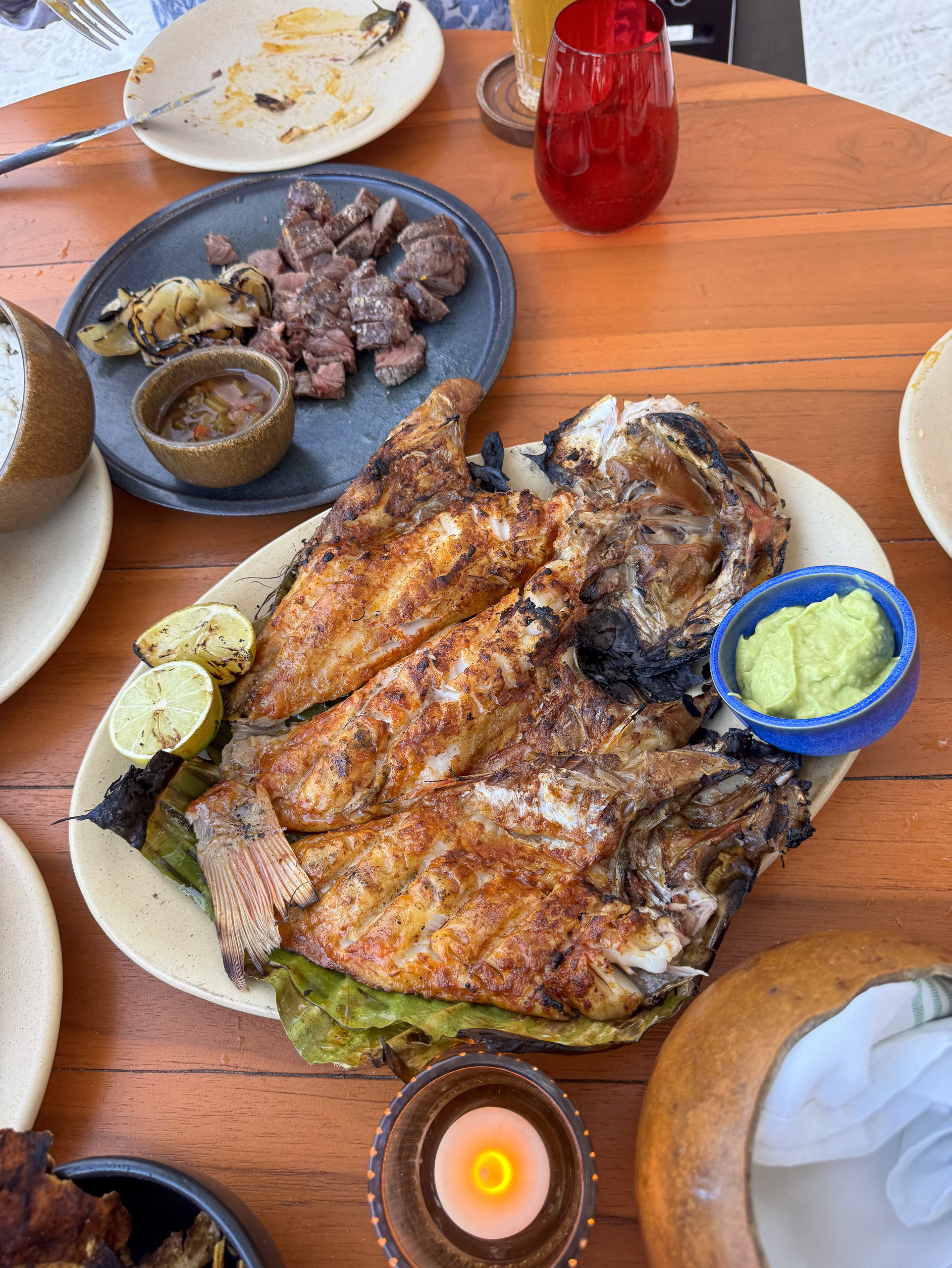
    A whole grilled fish with charred lime, guacamole and grilled steak on a wooden table
    Whole grilled fish, charred lime, guacamole.
    A waiter spooning guacamole from a tableside trolley set with lime, onion, tomato and herbs
    Guacamole made at the trolley, by the table.
    Fairmont Mayakoba
    Breakfast on the terrace, the lagoon behind.

    Then there is the all-inclusive question. Fairmont sells an optional package covering meals and drinks by the glass at the participating restaurants, with premium dishes, bottled wine and breakfast at some rooms outside it. A five-diamond resort with an all-inclusive tick-box is an unusual animal, and it is the clearest signal of how this property differs from its neighbours. It cuts both ways: the room around you changes, because a package with unlimited drinks does not attract the same guest as an à la carte one. Only one of the two versions lets you spend an evening eating at Rosewood.

    The lagoon, the pools, and the beach club

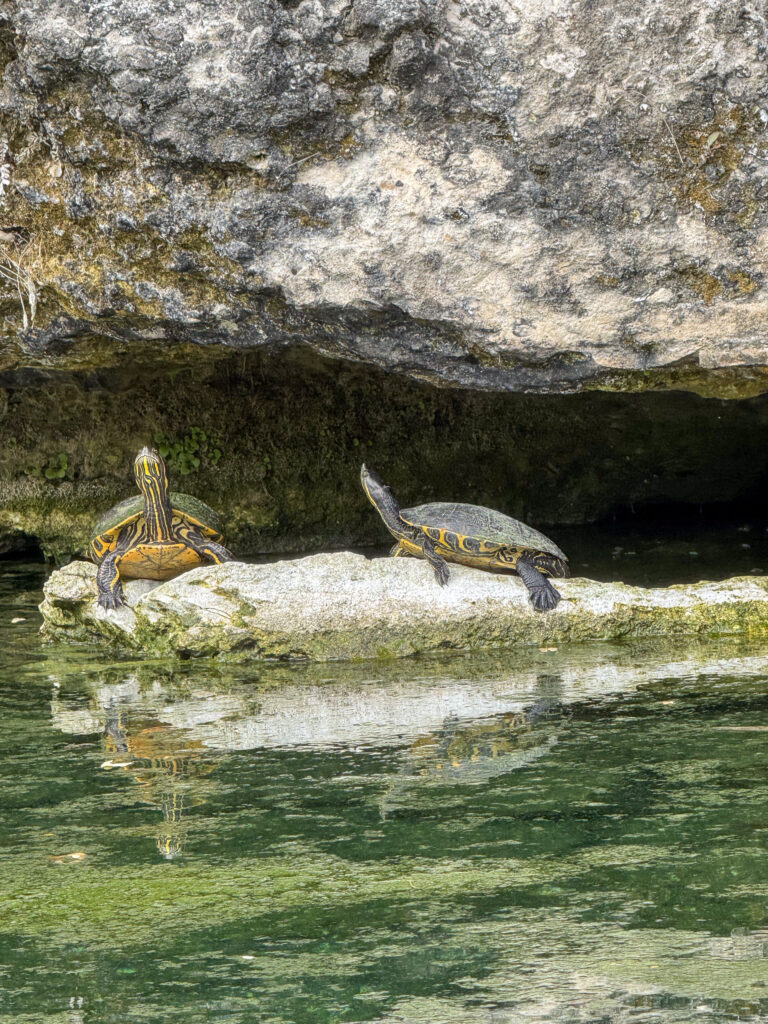
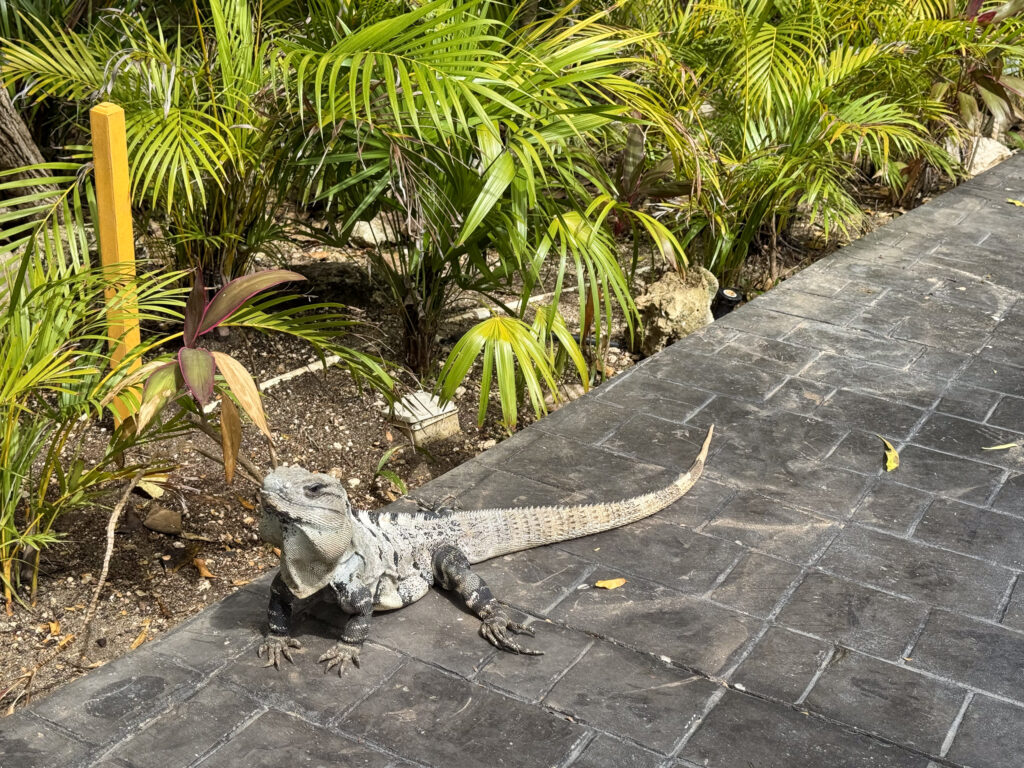
    The canals are dug, not natural, but they connect to the limestone that riddles this coast, and what they attract is not decorative: two turtles hauled out on a rock ledge under an overhang a few metres from a guest path, a full-grown iguana holding a footpath in the sun, a bank of limestone undercut by green water with jungle growing straight out of the top of it. The resort runs eco boat tours through the mangrove, and there are cenotes inside the community. Fairmont’s lagoon frontage is longer than its neighbours’ and more of it is public: docks, stair landings, decks that end over the water, all walkable rather than attached to somebody’s villa.

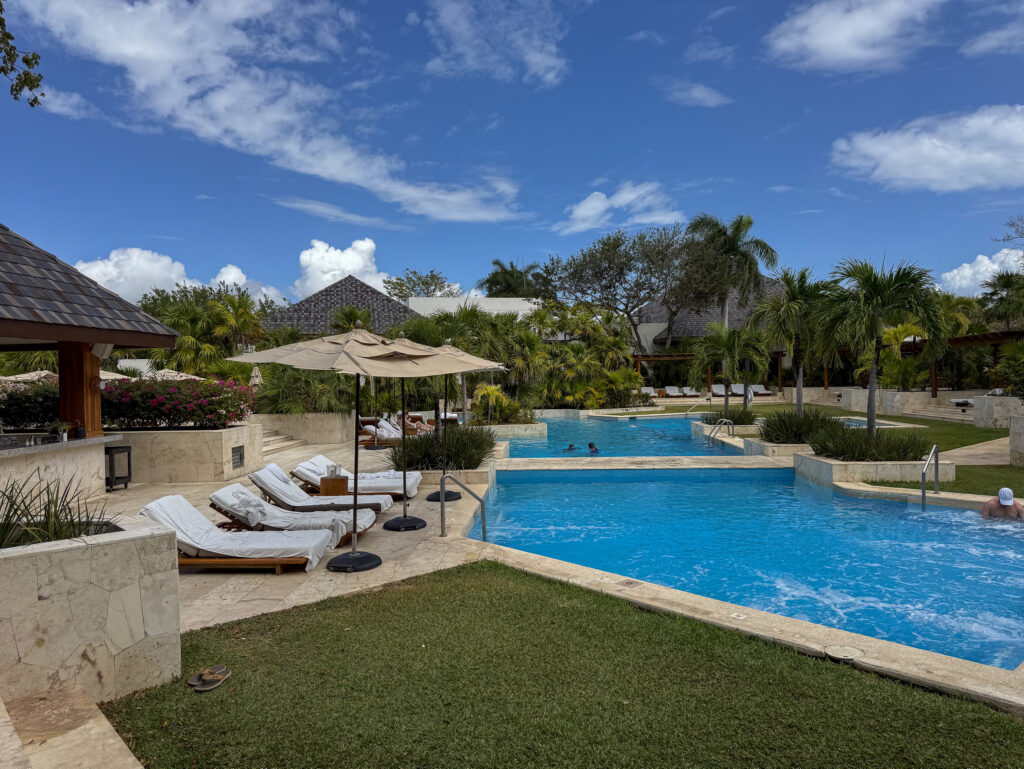
    The main pool stepping down in terraces past umbrellas and lawn under a bright sky
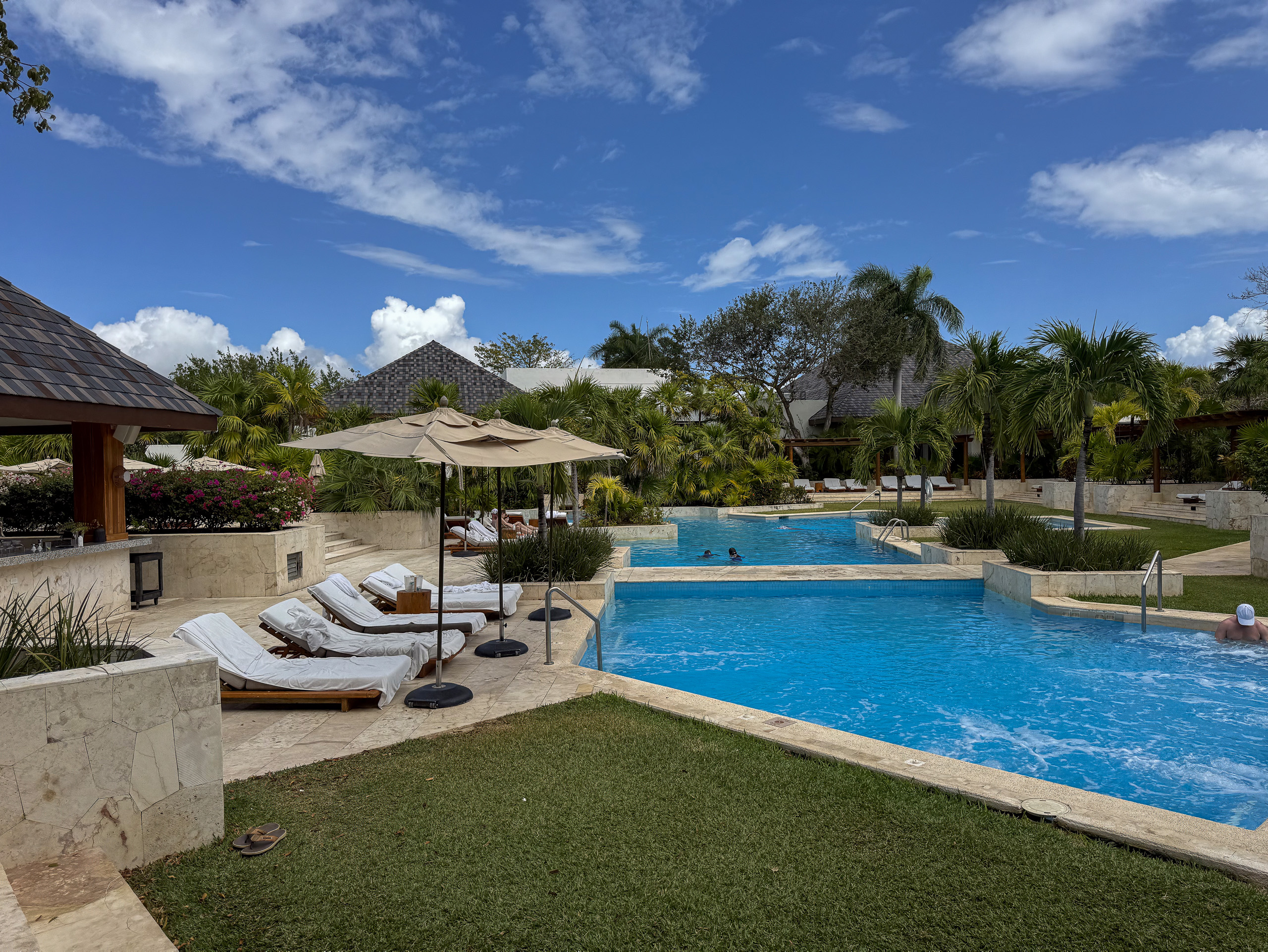
    The main pool steps down in linked sections across limestone terraces and lawn. Loungers are plentiful and the shade is real.

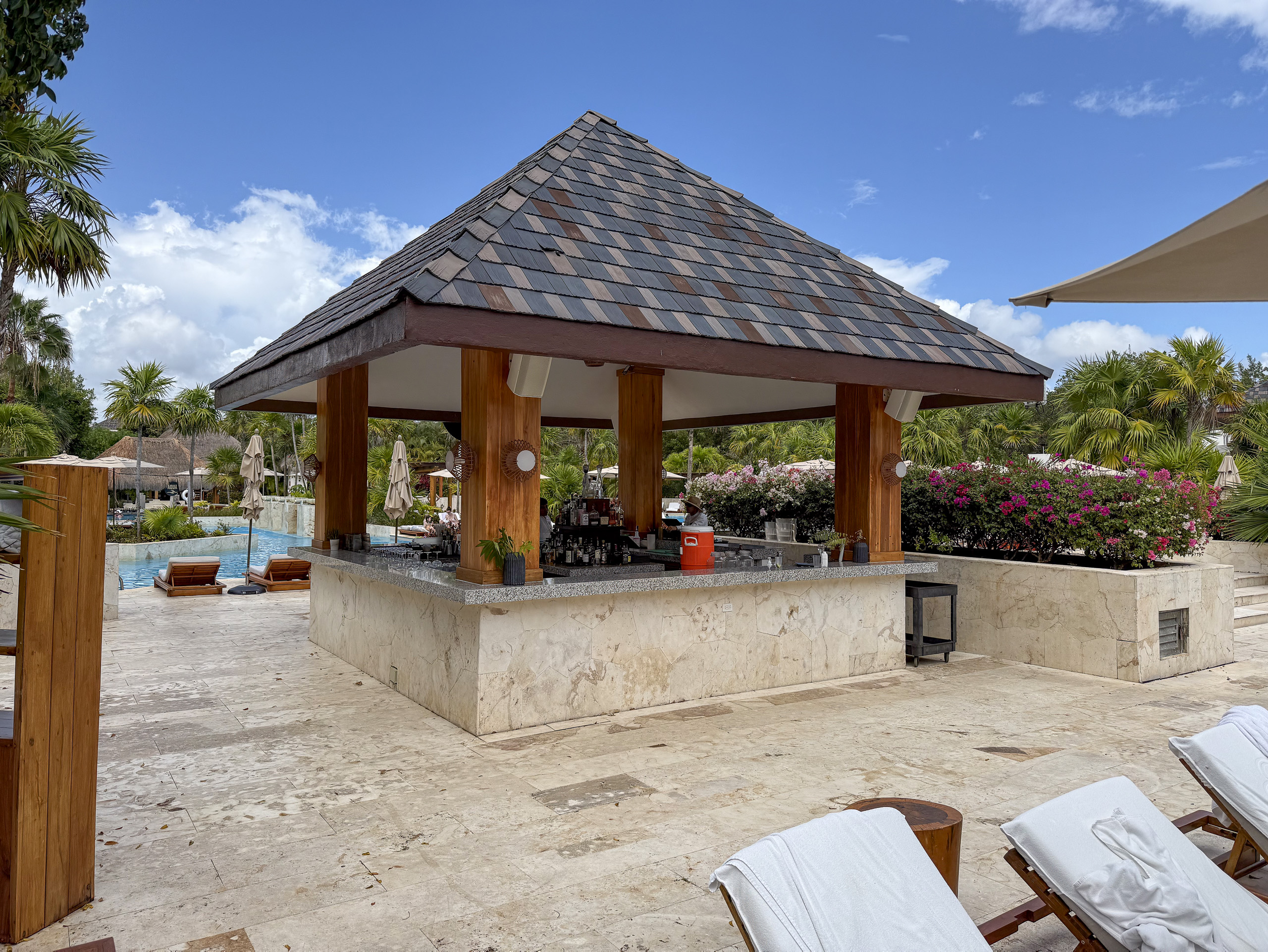
    The main pool is a linked series of sections stepping down across limestone terraces and lawn, with a stone swim-up bar under a shingled pyramid roof at one end and enough loungers and canvas umbrellas that the towel-on-the-chair economy never gets going. It is a family pool, unambiguously, and it is very good at being one.

    Two turtles hauled out on a limestone ledge beneath an overhanging rock at the water's edge
    Turtles on a ledge by the path.
    A large grey iguana sunning on a stamped-concrete path beside palm planting
    You walk around these, not the other way about.
    Fairmont Mayakoba
    Mangrove along the boardwalk.

    The bigger change is Maykana, the beach club, which brought five places to eat and drink onto the sand at once, including an adults-only rooftop bar over the Caribbean, along with a beachfront pool, cabanas and sunken fire pits. Before it, the beach was the weakest part of a resort whose best material was inland. It is now a reason to book. The beach itself is wide, white, and thoroughly furnished: rows of thatch palapas with sling loungers, a marked swimming area, and enough space between the rows that it does not feel like a lido. The spa is a freestanding building with hydrotherapy pools and a serious gym.

    Fairmont Mayakoba
    The pier into the lagoon. The boat to the other three hotels leaves from here and stops at seven.

    Service moments

    The guacamole trolley, made at the table by someone who has made it ten thousand times and still asks how hot you want it. The buggy that appeared at the casita before I had finished the call. The eco-boat guide who cut the engine for the turtles without being asked.

    The over-water restaurant seen across the lagoon, its deck mirrored in still water
    The lagoon restaurant from across the water.

    Twenty years in, the Fairmont’s advantage is not novelty. It is the trees.

    Who it is for, and who it is not

    Come with a family or a group, for a longer stay, or for the golf, and take the beach side: immediate sand, some casitas with their own stair, closer to Maykana and the main pool. Come as a couple and take the lagoon: mangrove at the railing, constant wildlife, quiet, and you choose when to look at the sea.

    Pack repellent whichever side you land on, because the mangrove is the whole point and the mangrove has mosquitoes. Do the eco boat tour early in the day. Book the rooftop bar for sunset before you arrive. Walk the canal paths at dusk, when the turtles and the iguanas are still out and the light is on the water. And if the all-inclusive package is on the table, weigh both versions before you commit.

    Look elsewhere if you booked Mayakoba for silence: this is not a hideaway, the lobby is a lobby, there are corridors, and at peak season the main pool has children in it, which is the correct outcome for a resort with two kids’ clubs and the wrong one for you. The Banyan Tree next door is the villa version, and I have set the two side by side.

    Palapas and rows of loungers on the beach at dusk with the moon over the Caribbean
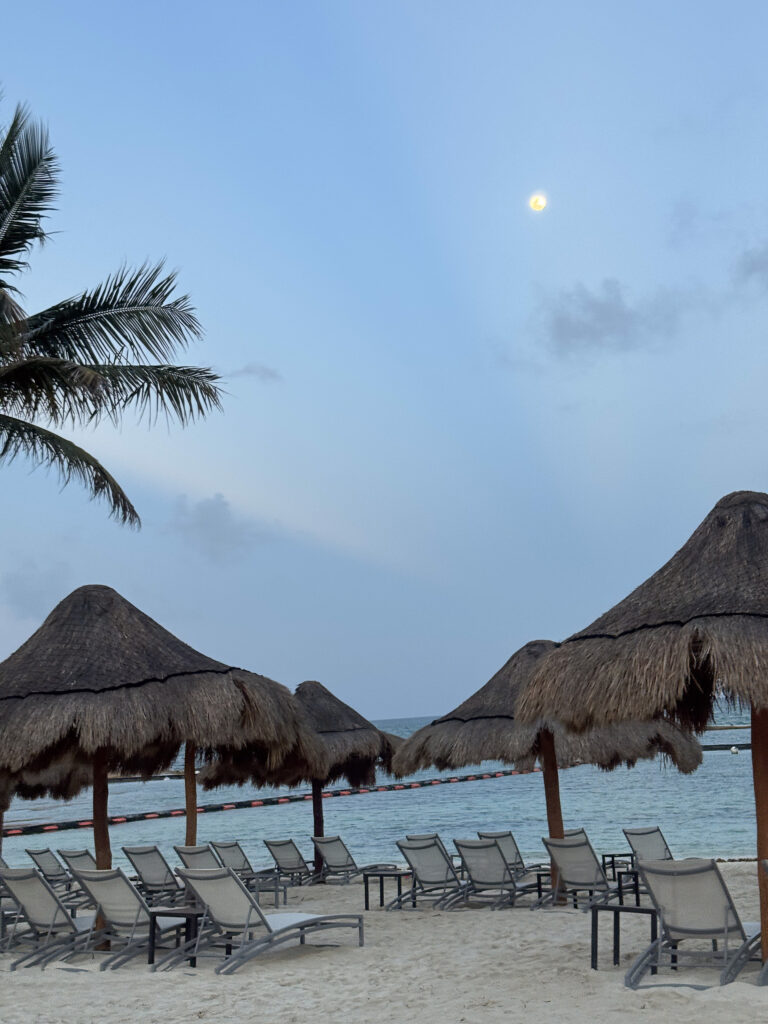
    The beach at dusk. Thatch palapas, sling loungers, and a swimming line marked out beyond them.

    Bottom line

    Twenty years in, the Fairmont’s advantage is the trees, and the lagoon does the rest. Take a lagoon casita as a couple, the beach side with children, and walk the canal paths at dusk either way. It is good, not great, so check your Banyans.

    See the full set: Fairmont, Mayakoba — in frames. More Mayakoba: the Mayakoba set.

    The Fairmont Mayakoba gallery

    Every photo on this site is my own, shot on the stay. Slide through →
    Fairmont MayakobaThe thatched pool bar with towels stacked on its counterFairmont MayakobaFairmont MayakobaFairmont MayakobaFairmont MayakobaFairmont MayakobaFairmont MayakobaTwo loungers under a timber palapa looking out to the lawn and poolFairmont Mayakoba
  • Banyan Tree Mayakoba: Beachfront or Jungle?

    Canals running between the villa buildings at Banyan Tree Mayakoba

    MAYAKOBA, MEXICO · ROOM GUIDE · 5 MIN READ

    Banyan Tree Mayakoba: Beachfront or Jungle?

    There is a private pool behind the door of any villa you book, so the usual room questions answer themselves. The one that is left — sand or mangrove — turns out to be a question about who is coming with you.

    By J.C. Mercer

    Verified stay·paid in full

    • Stayed April 2022
    • Room booked Oceanfront Pool Villa
    • How it was booked Amex Fine Hotels + Resorts, public rate
    • What the channel bought An upgrade to a pool villa.
    • Value verdict Worth it. The beachfront villa was excellent — built for two on a coast full of rooms built for crowds — and the lagoon is the version of this place nobody else can sell you.
    • When to go Anytime. Let the season pick the side. Book this stay

    Booked the way any other guest would book it.

    The two sides

    Mayakoba means village over the water, and the name does most of the explaining. Four resorts share a stretch of Riviera Maya coast threaded with man-made canals cut through mangrove, and the whole complex is built around water rather than beside it. Banyan Tree is the one that leaned hardest into the setting. Every accommodation is a villa. Every villa has a private pool. That flattens most of the usual decisions and leaves one that actually matters: sand or jungle.

    The footprint splits cleanly. A relatively small number of suites and villas sit directly on the beach. The much larger share sits inland along the lagoon, tucked into mangrove and jungle, connected by paths you ride rather than walk. They are not lesser and greater versions of the same room. They are different holidays that happen to share a spa.

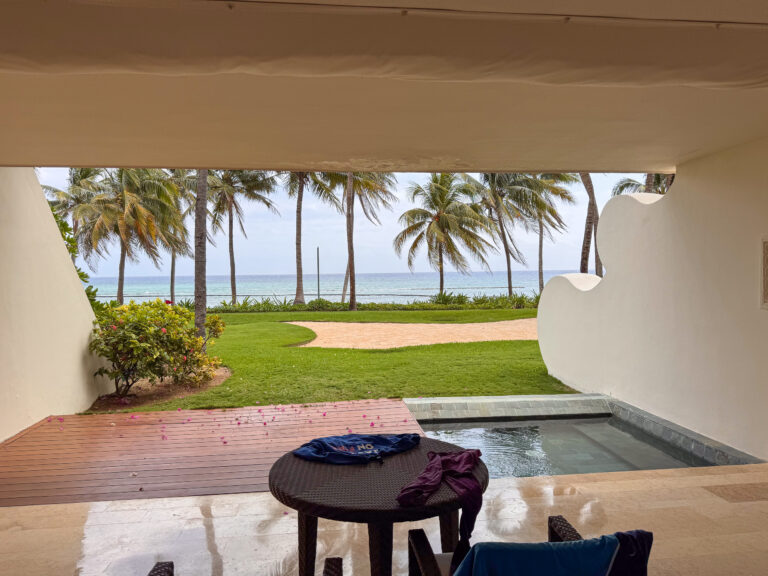
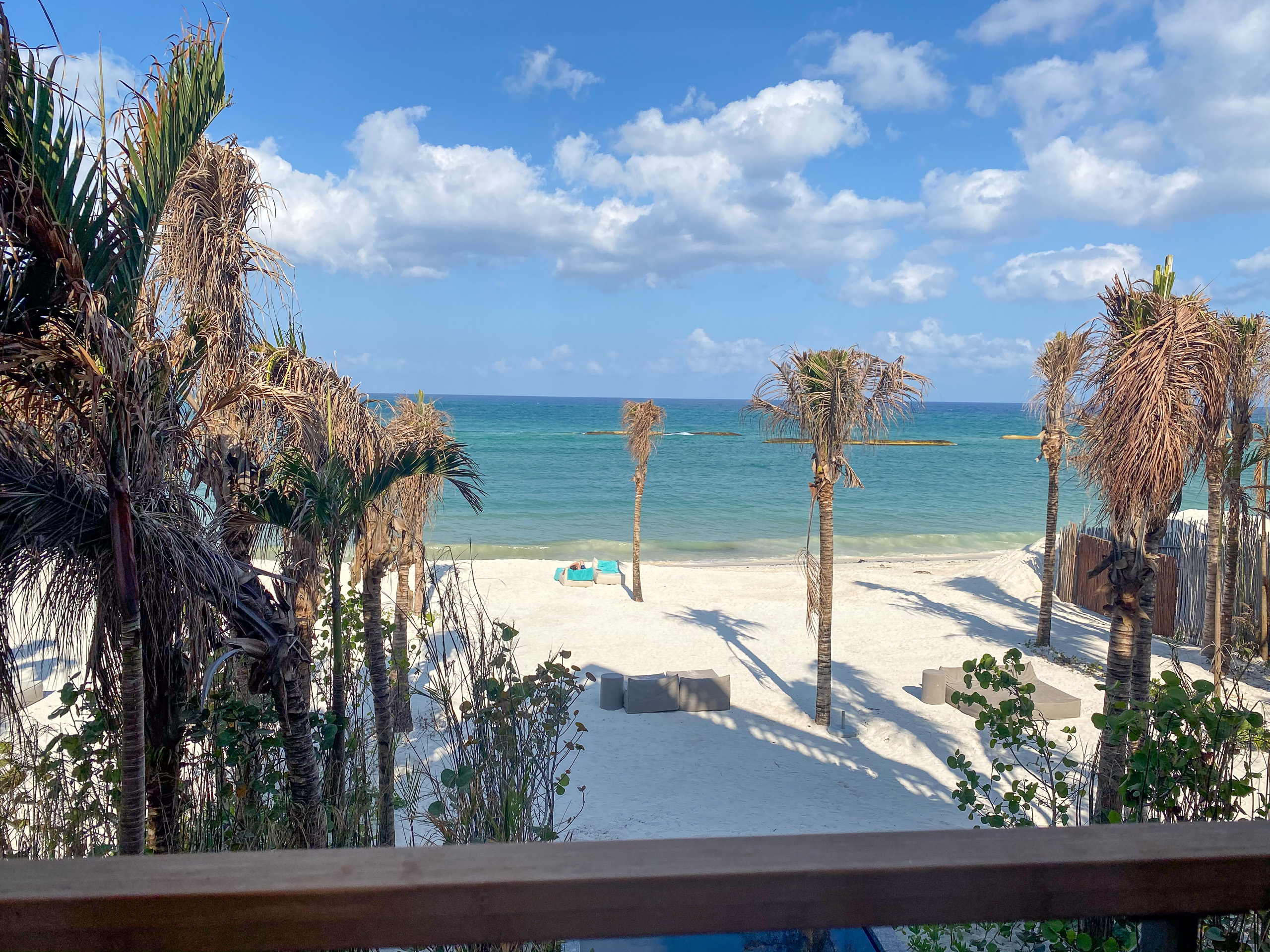
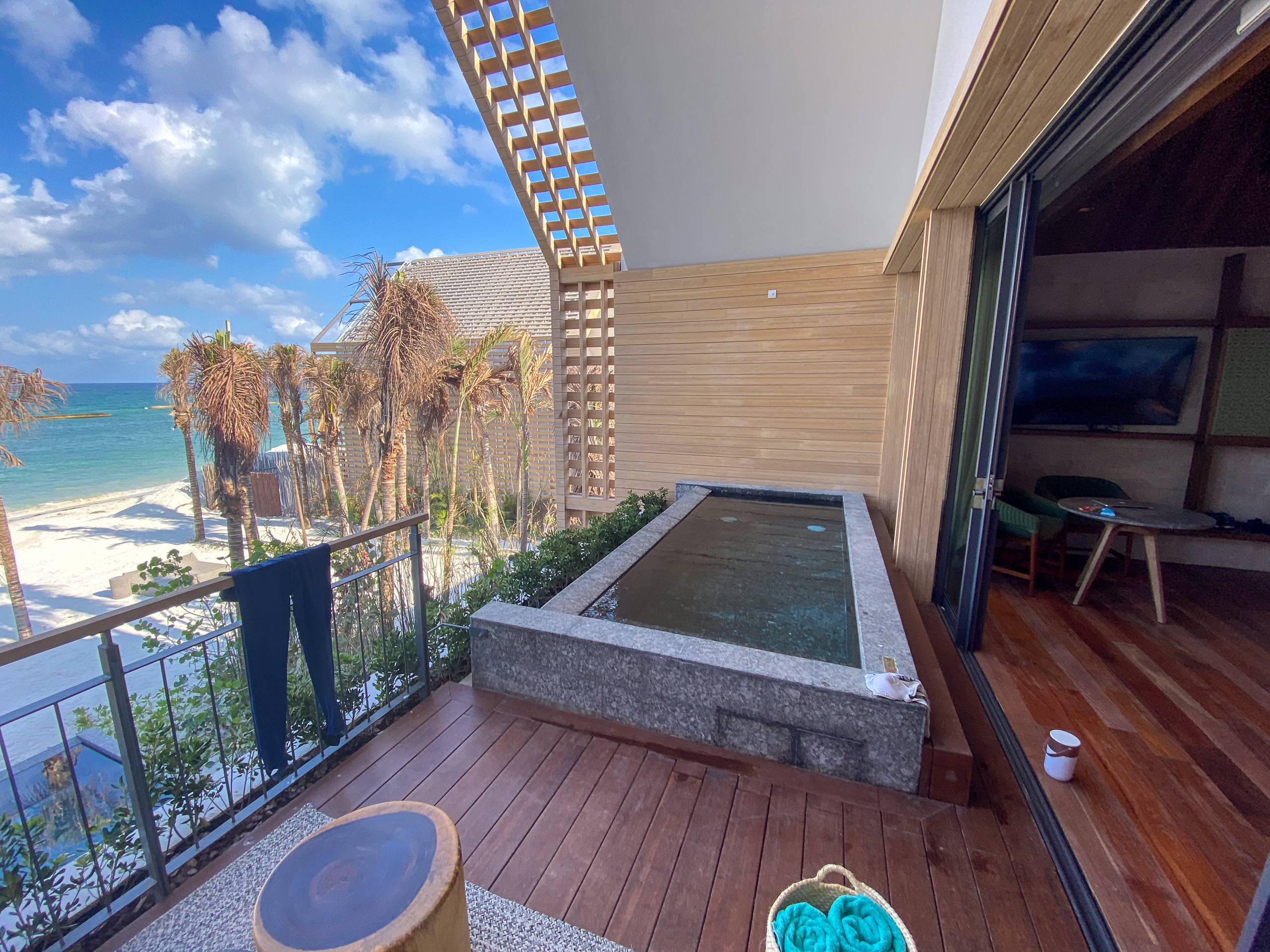
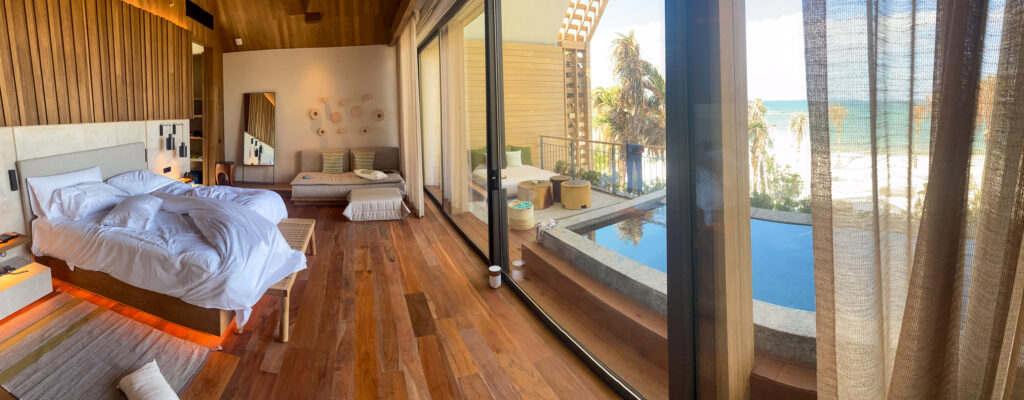
    Bed, wood floors and a plunge pool looking out to the Caribbean in a beachfront suite
    The beachfront suites put a wall of glass between the bed and the Caribbean.

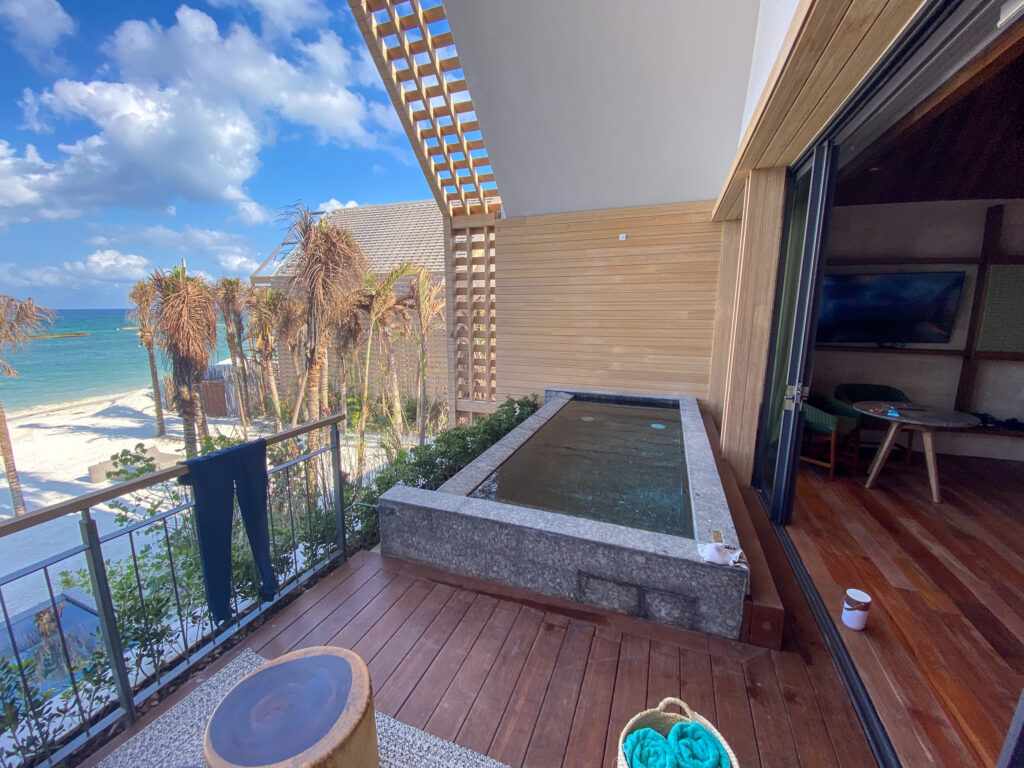
    The beachfront suites are honeymoon suites in all but name: luxury one-bedrooms with a wall of glass between the bed and the Caribbean, a private plunge pool on the deck, and the bed aimed so the sea is the first thing you see. Remote-controlled blinds handle the mornings you would rather not. They are cream of the crop and very tastefully done — restrained where this coast tends to gild.

    What the beach side buys is immediacy: coffee on the sand in a dressing gown, the beachfront grill working next door, the pool kept for adults a few steps beyond it, and no logistics between you and the water. What it is not for is children. A room this romantic is wasted on anyone whose main interest in a plunge pool is the cannonball. This side is for honeymoons and for lovers — the jungle will give a family far more back.

    Cabanas and loungers around the beachfront pool under palms
    The Sands beach club and the beachfront pool, a short walk along the sand.

    Inland, the villas sit in the mangrove with the lagoon at the door. The Deluxe Pool Villas are the volume category and the most common room on the property; above them are versions with separate living rooms, Spa Pool Villas with their own massage porch, and the newest category, rooftop pool villas with a private heated infinity pool and a full seating deck upstairs. The setting is the point. It is also where children belong: more room, more to watch, and none of what makes the beachfront suites special is anything a child will notice.

    Birds, turtles, coatis, and crocodiles the resort tracks and relocates when they get large; you can kayak the canals past cenote entrances into the underground river, and my guide pointed out a crocodile on the way. He was very calm about it. I have decided he was right to be. From a lagoon villa you are inside the preserve rather than looking at it. The trade is distance: bike, walk or call a buggy to reach the beach, which is trivial on day one and, by day four with a toddler and wet towels, is not.

    A small electric boat on the canal beside the villas, lanterns hanging in the trees
    The canals are the transport and the attraction. The sunrise side faces this.

    Side by side

    BeachfrontJungle and lagoon
    Wake up toCaribbean, directMangrove, birds, water
    Private poolYes, a plunge pool on the deckYes; some with a rooftop infinity pool
    Beach accessImmediateBike or buggy, a few minutes
    WildlifeMinimalConstant
    InsectsThe sea breeze helpsRepellent in the warm months
    SargassumYou see it from bedYou choose when to see it
    Best forHoneymoons, anniversaries, lovers’ retreatsChildren, families, longer stays, repeat visits
    Banyan Tree Mayakoba
    Beachfront: the sea through the palms.
    Banyan Tree Mayakoba
    The terrace and plunge pool, either side.

    The obvious assumption is that beachfront sits at the top of the ladder. Here it does not, quite: the newest lagoon category opened above the beachfront suites, and that tells you what the property thinks it is selling. The beach is a Riviera Maya commodity, available at a hundred resorts along this coast. The mangrove is not.

    What both sides share

    The spa is the reason the Banyan Tree name carries weight in Asia, and the Mayakoba outpost holds up. Treatment cabins sit over the water, large enough that I mistook the first one for a guest villa, and the hydrotherapy pools, steam rooms and treatment range are the strongest single amenity on the property.

    Banyan Tree Mayakoba
    The tomahawk, carved at the table.
    Banyan Tree Mayakoba
    Grilled fish under a dark glaze.
    Banyan Tree Mayakoba
    The lobby lounge under the banyan.

    Dining runs deep. Saffron is the signature, Thai food served on decks suspended over the lagoon, and it stands with the best Thai kitchens I have eaten in on this side of the Atlantic. Oriente handles all-day dining and a breakfast buffet worth getting up for; Cello covers Italian; the beach club sits on the beachfront pool; Tomahawk does open-fire Latin grill; there is a burger shop and a kosher restaurant besides. The one to book first is HAAB, an open-air Mayan dinner cooked over fire in the jungle, with a Mayan host talking you through it and dancers in traditional body paint. It is the meal I still describe to people months later.

    A chef presenting a whole grilled fish on a platter beside the lit pool after dark
    Haab is cooked over fire in the jungle and served with a Mayan blessing. Both sides book it.

    The villas come with bicycles, and the flat terrain makes them the sensible way to move; golf carts run you to the main building for meals when the evening calls for real shoes. The cart to dinner starts as a courtesy and ends as a lifestyle. Room keys open the restaurants at Rosewood, Fairmont and Andaz next door, which effectively triples the dining options, and El Pueblito, the small village inside the complex, has shops, a chapel and its own cenote. Food and drink are a full-dress resort operation, and the quality holds, which is not always true in this region.

    Which to book, by trip

    Summer, May to October: a lagoon villa, and that argument alone should decide it. Seaweed washes onto the Caribbean-facing beaches along this coast seasonally, the resort rakes and manages it, and some weeks are fine; but a beachfront villa in August is a room with a view of whatever the tide brought, with no version of the stay where you can look somewhere else. A lagoon villa has a mangrove view that is never affected and a beach you visit on the days it looks good. I went in April and found the beach clear, which is luck rather than planning.

    Clear turquoise water and clean white sand on the beach at Mayakoba
    A clear week in March. Between May and October the same view can carry sargassum.

    A honeymoon, an anniversary, a trip the children sat out: the beachfront suite, and do not overthink it — that is what it is built for. Travelling with children: the jungle side, where the canals and the coatis do half the entertaining and nothing about the room is wasted on them. A longer stay or a return visit: the lagoon, in the volume category unless the private rooftop is truly what you want. Pack repellent regardless of which side you land on; outdoor dining needs it in the warm months and the decks at Saffron are the worst of it. Reserve HAAB and Saffron before arrival. Take the bikes seriously as transport, and the golf carts to dinner. And leave one evening free for a meal at a neighbouring resort, because the room key that opens Rosewood’s restaurants is one of the best things about staying anywhere inside Mayakoba.

    Look elsewhere if you want everything within thirty steps. The villa density that gives you privacy also means the gym, the lobby, the spa and the beach are all a ride from each other.

    The beach is a Riviera Maya commodity. The mangrove is not.

    Bottom line

    Sand or mangrove is really lovers or family. The beachfront suites are a honeymoon in room form — plunge pool, grill next door, the adults’ pool beyond it. Children belong on the jungle side, and the mangrove is what the hotel is really selling. HAAB and Saffron either way.

    See the full set: Banyan Tree, Mayakoba — in frames. More Mayakoba: the Mayakoba set.

    The Banyan Tree gallery

    Every photo on this site is my own, shot on the stay. Slide through →
    Banyan Tree MayakobaBanyan Tree MayakobaA chef carving the steak at the table beside a glass of wineBare feet on the rail of the terrace under a deep blue night skyThe boatman steering the covered launch along the lagoon at duskBanyan Tree MayakobaBanyan Tree MayakobaThe plunge pool, the terrace rail and the sea beyond through the palms