THE AMERICAS · ATLANTIS vs. HOTEL XCARET · 5 MIN READ
Atlantis or Xcaret: the two resorts that became worlds
Both belong on the before-you-die list: a lost city at mammoth scale, and a hotel grown out of the limestone. I stayed at both, love both, and if it can only be one, the answer is at the bottom.
Both stays booked the way any other guest would book them.
The question
Two resorts in the Americas have crossed the line from hotel into world: a lost city at mammoth scale on Paradise Island, and a hotel grown out of the limestone of the Riviera Maya. I have stayed at both, love both without reservation, and put both on the before-you-die list — which makes the question honest for once. If you can only do one, which one?
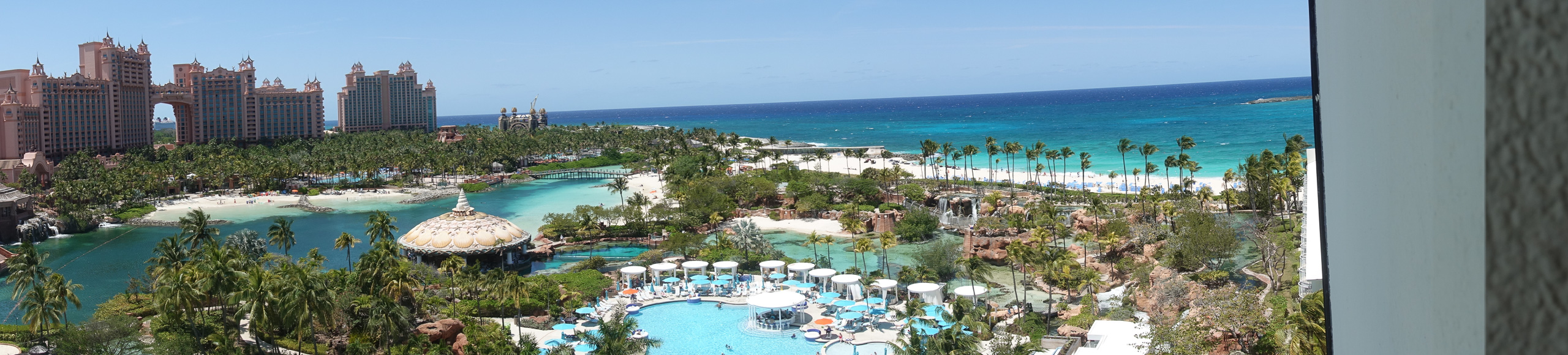
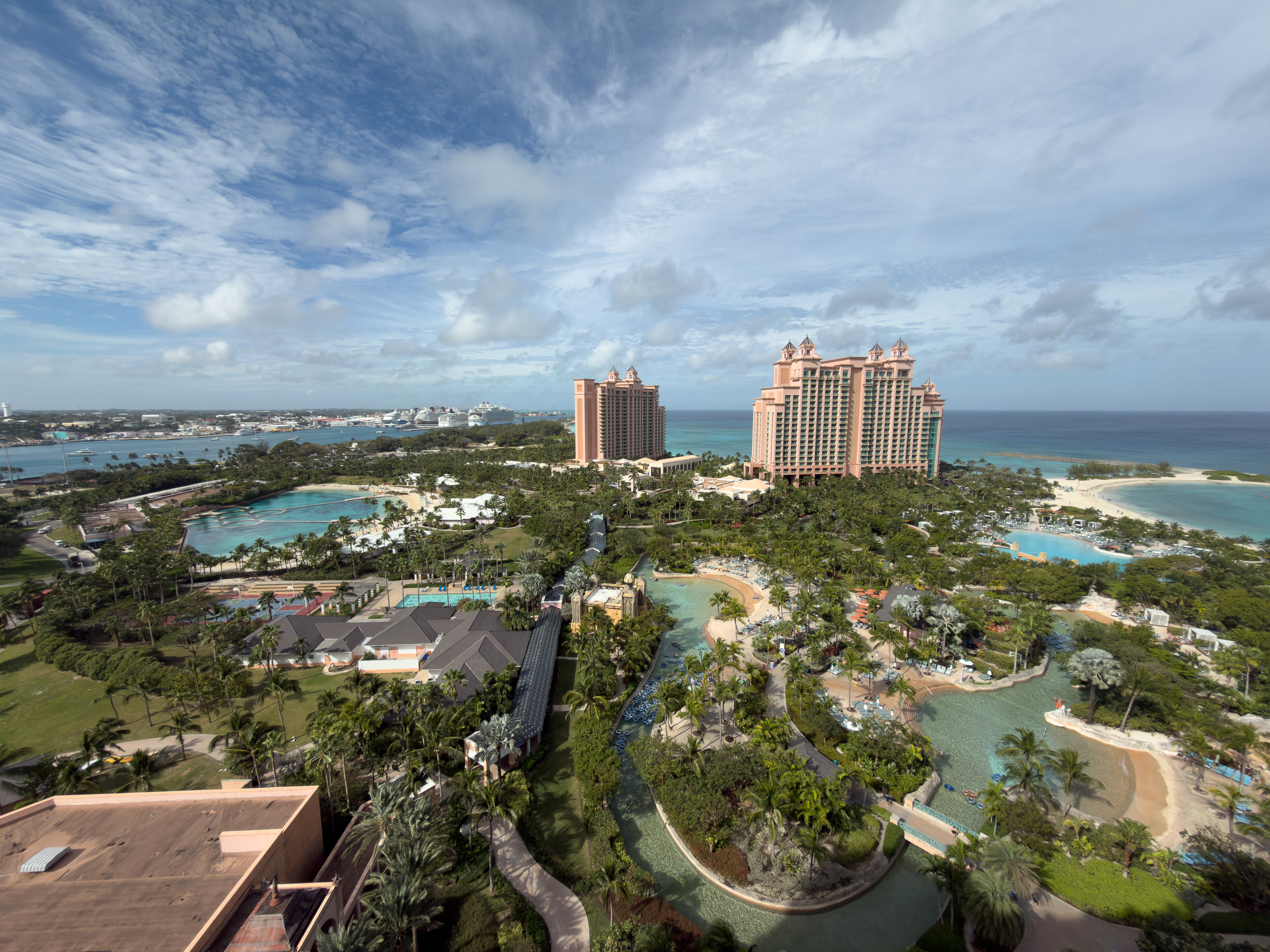
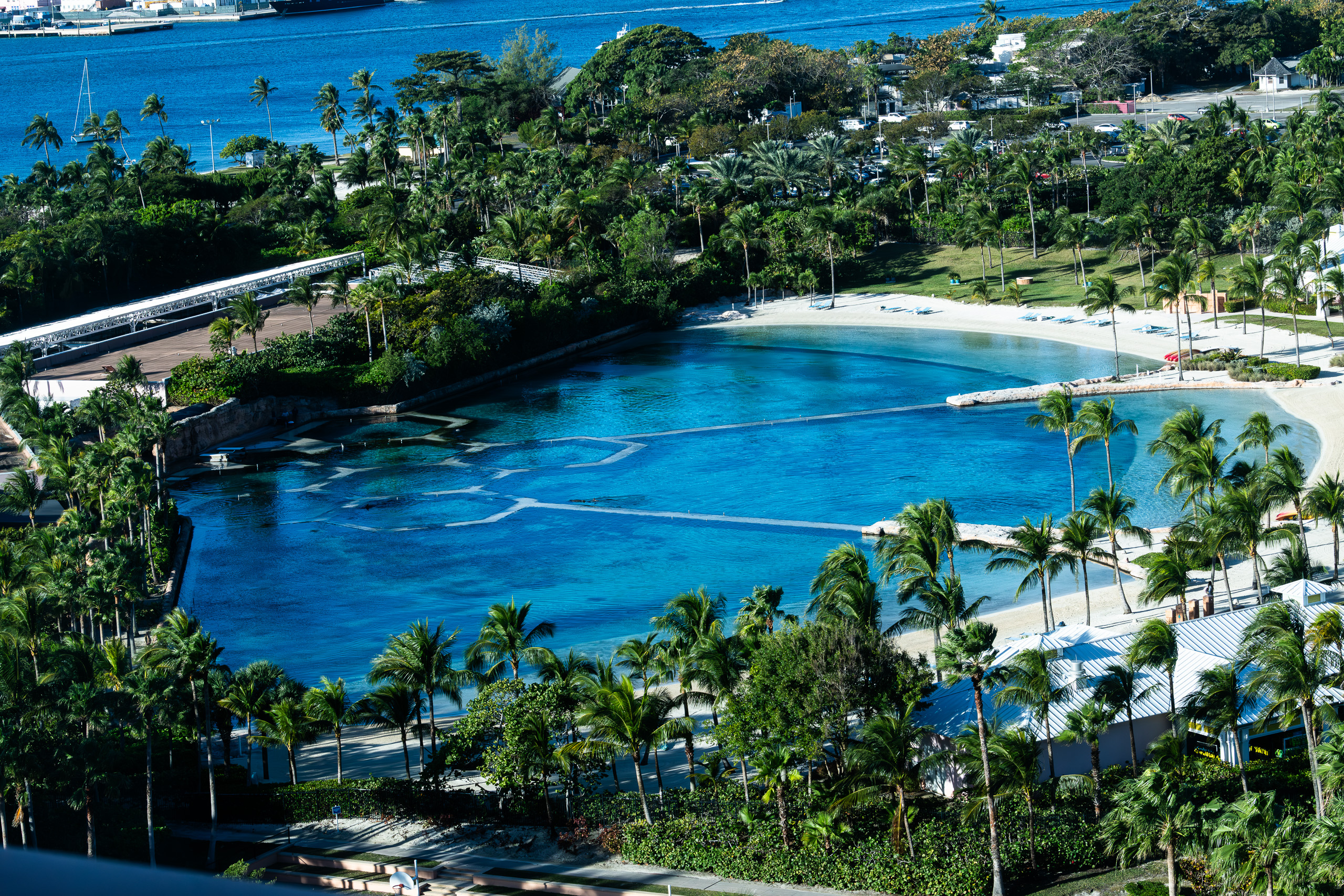
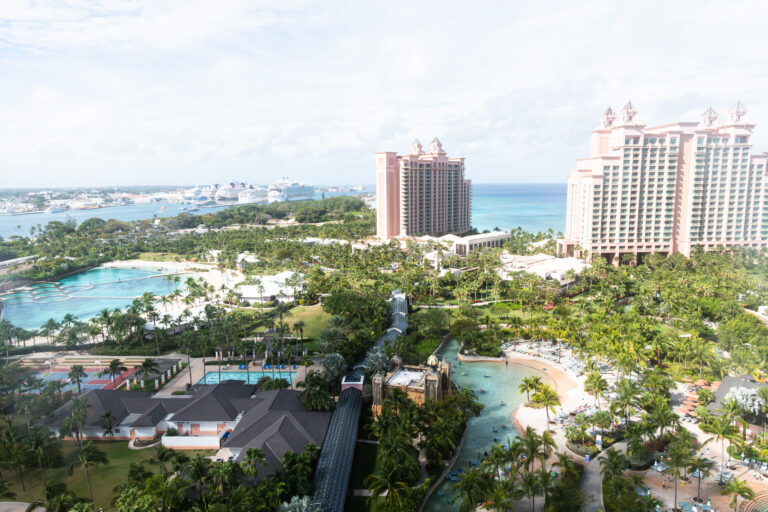
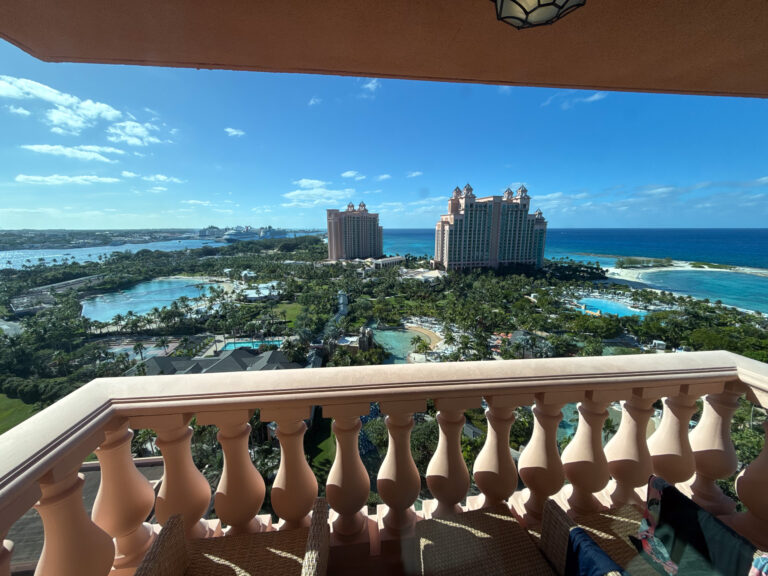
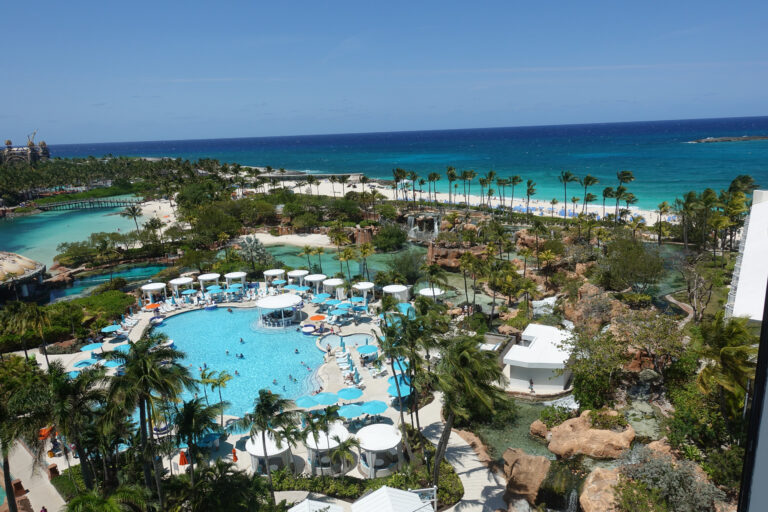
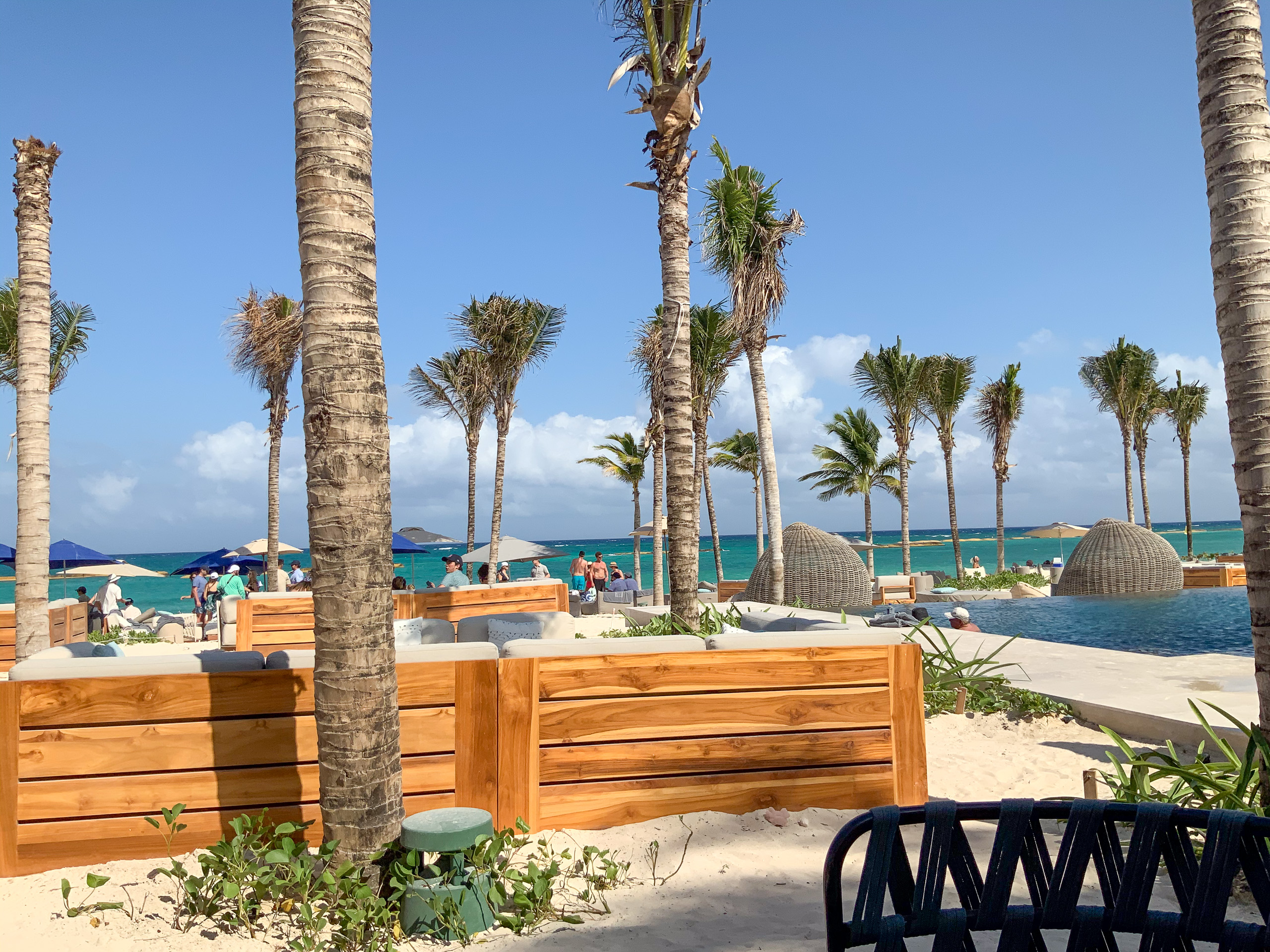
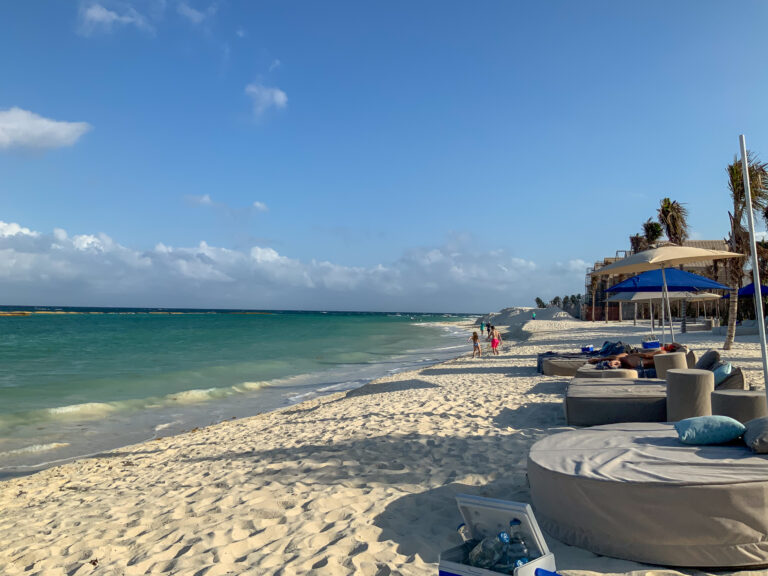
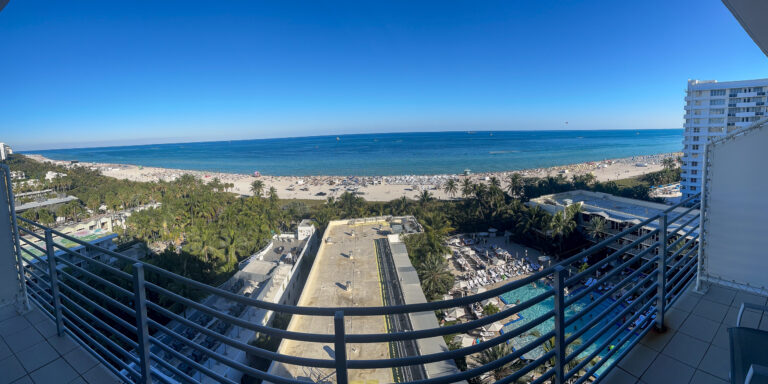
Atlantis: the towers over the lagoons, the river winding through the grounds.
The short version: Atlantis is the greatest single park anyone has attached a hotel to. Xcaret is the greatest hotel anyone has attached a coast to. The rest of this piece is me refusing to leave it at that for two worthy destinations.
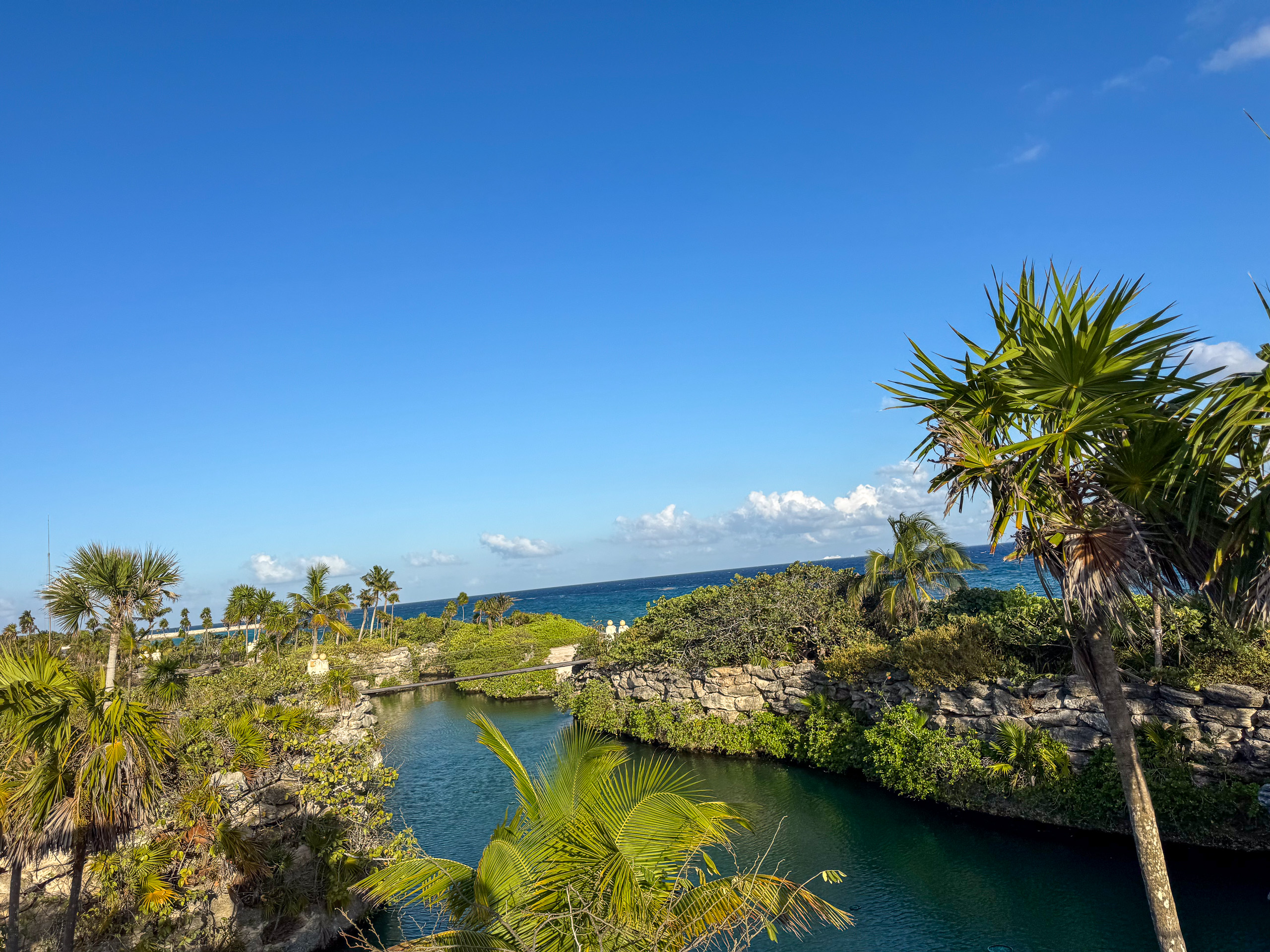
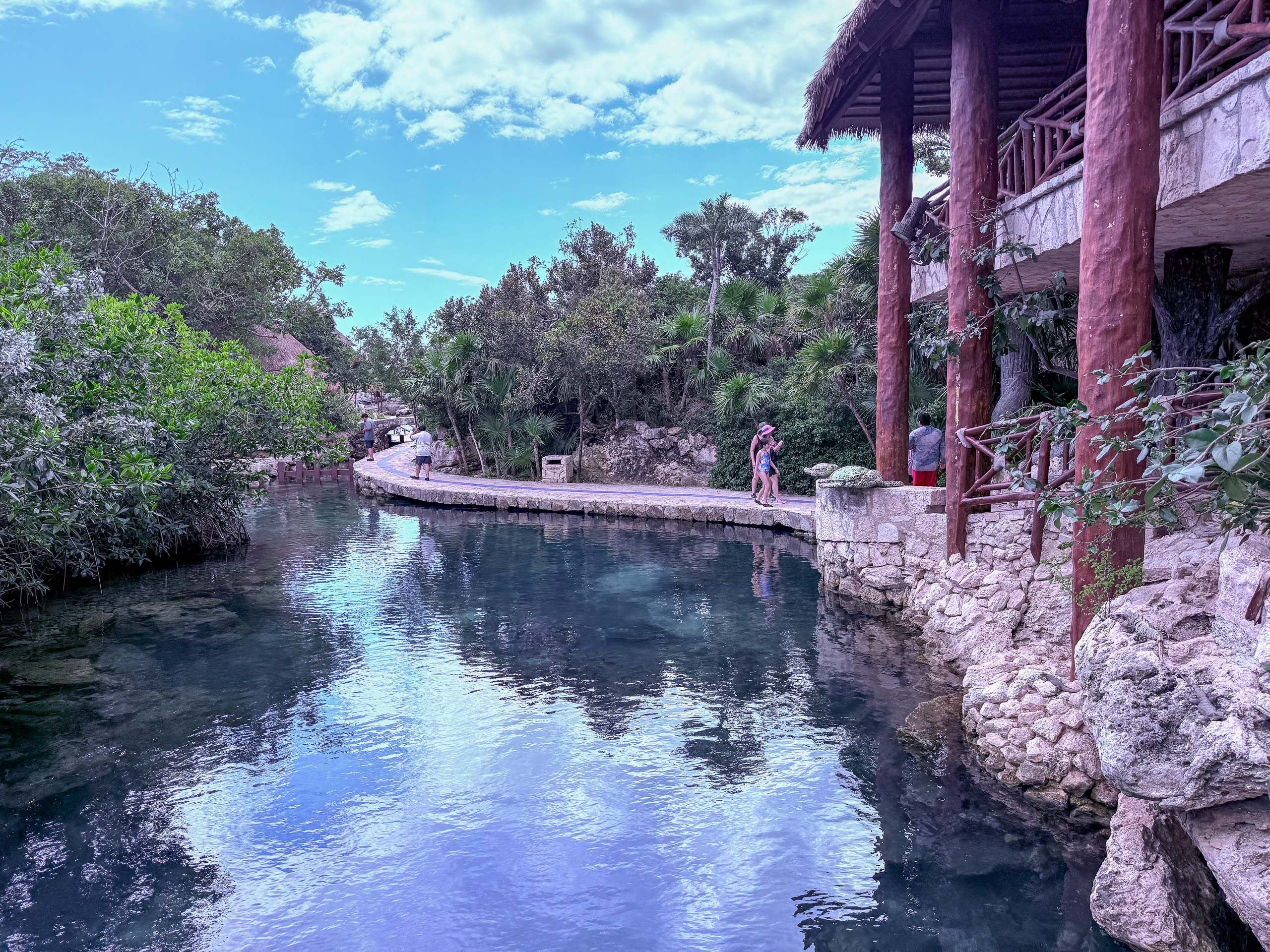
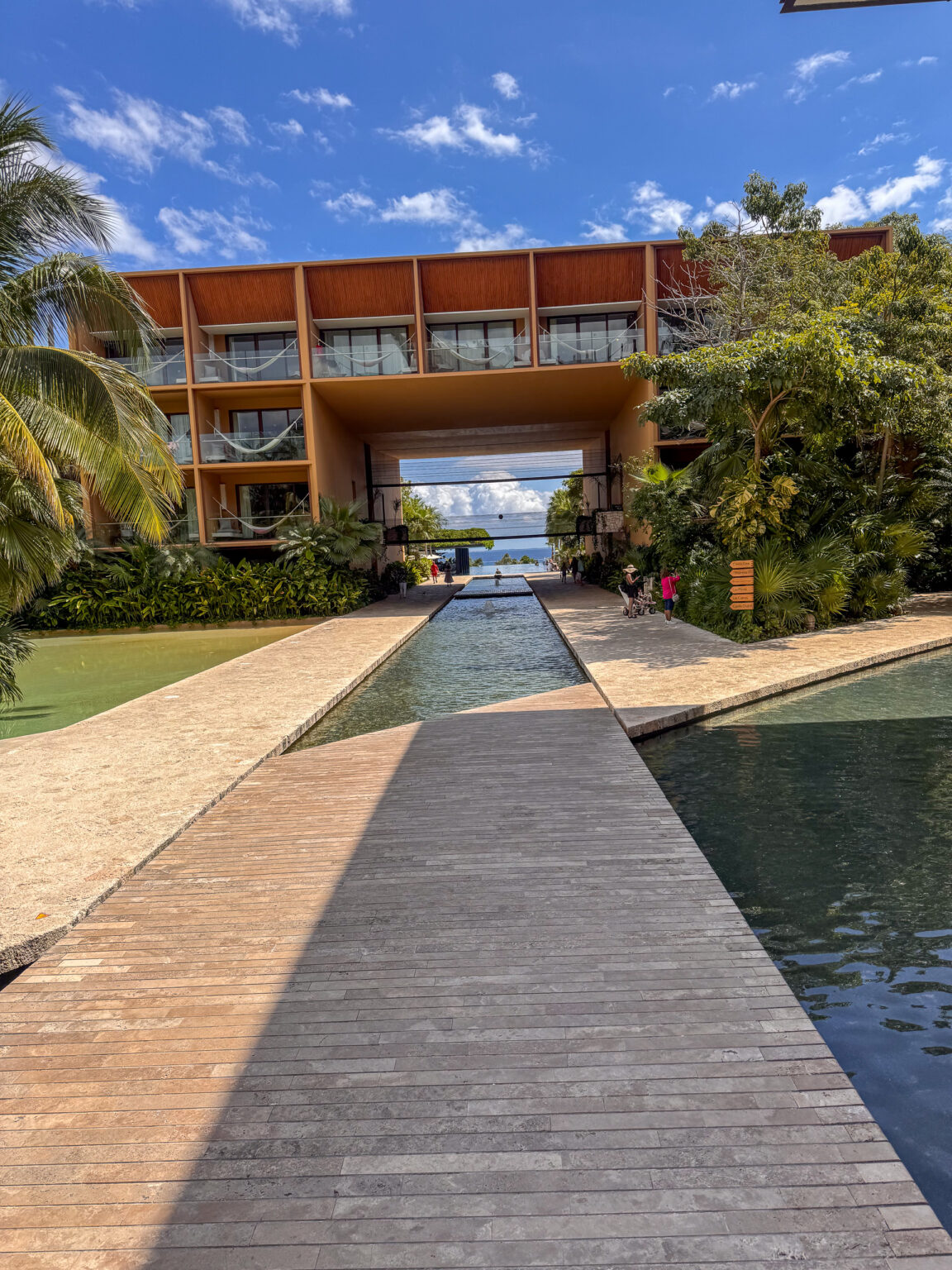
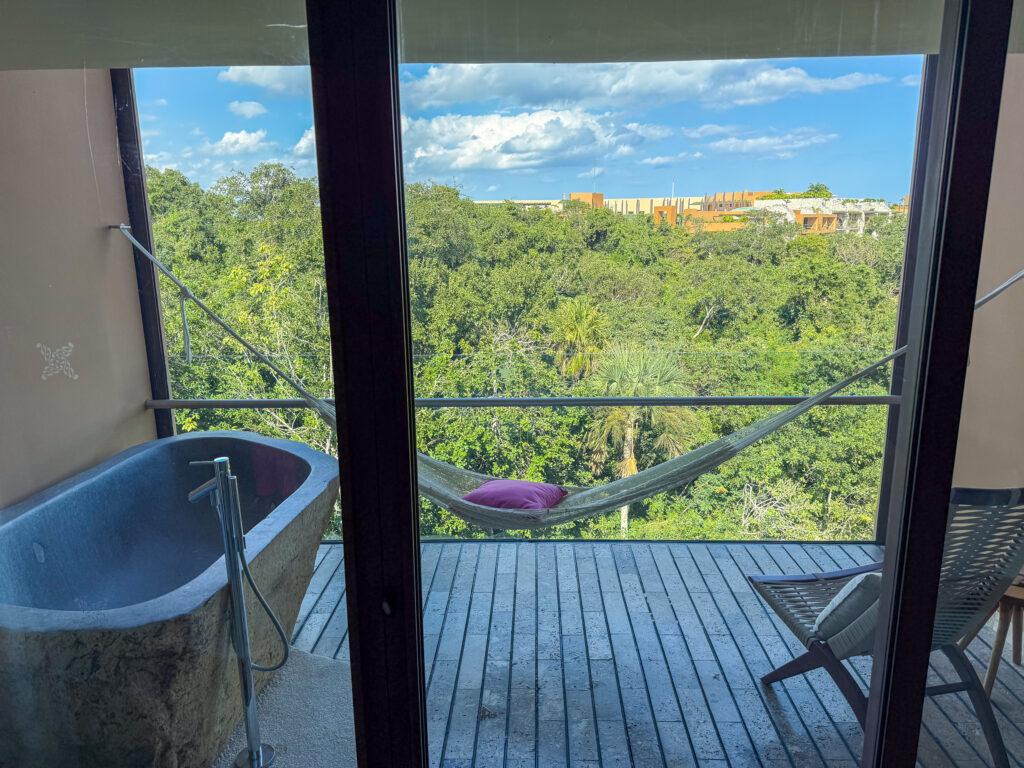
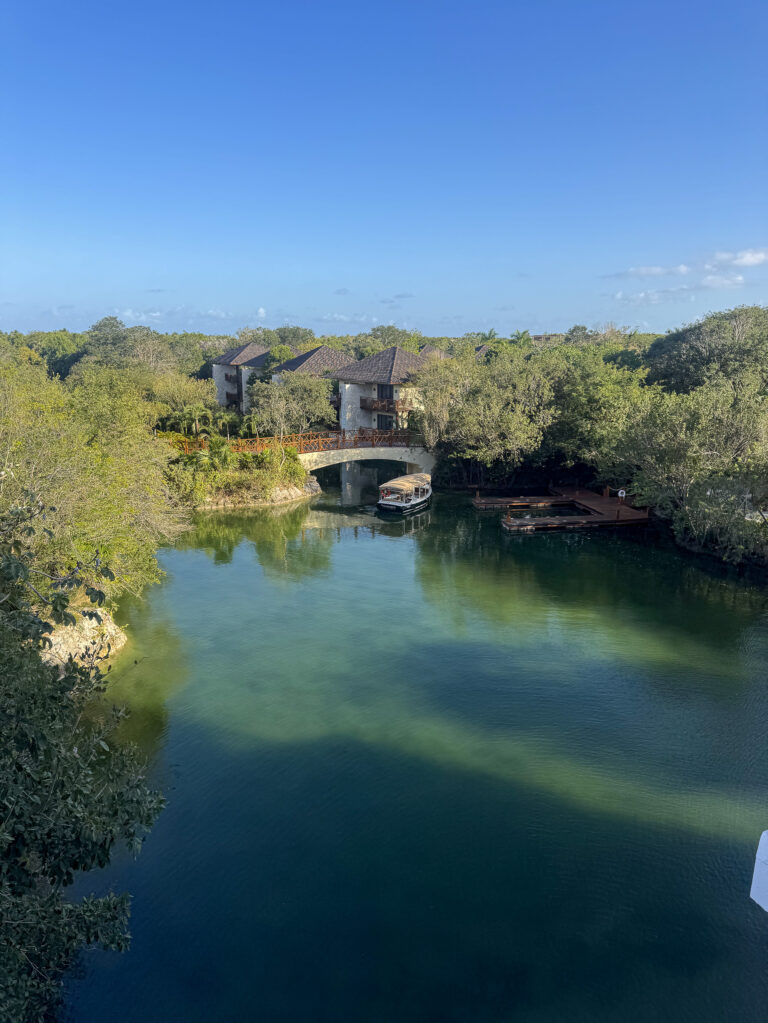
Xcaret: the inlets, the jungle and the sea from high above the resort.
Side by side
What
Atlantis
Hotel Xcaret
The idea
A lost city by the sea, at a scale that reads prehistoric
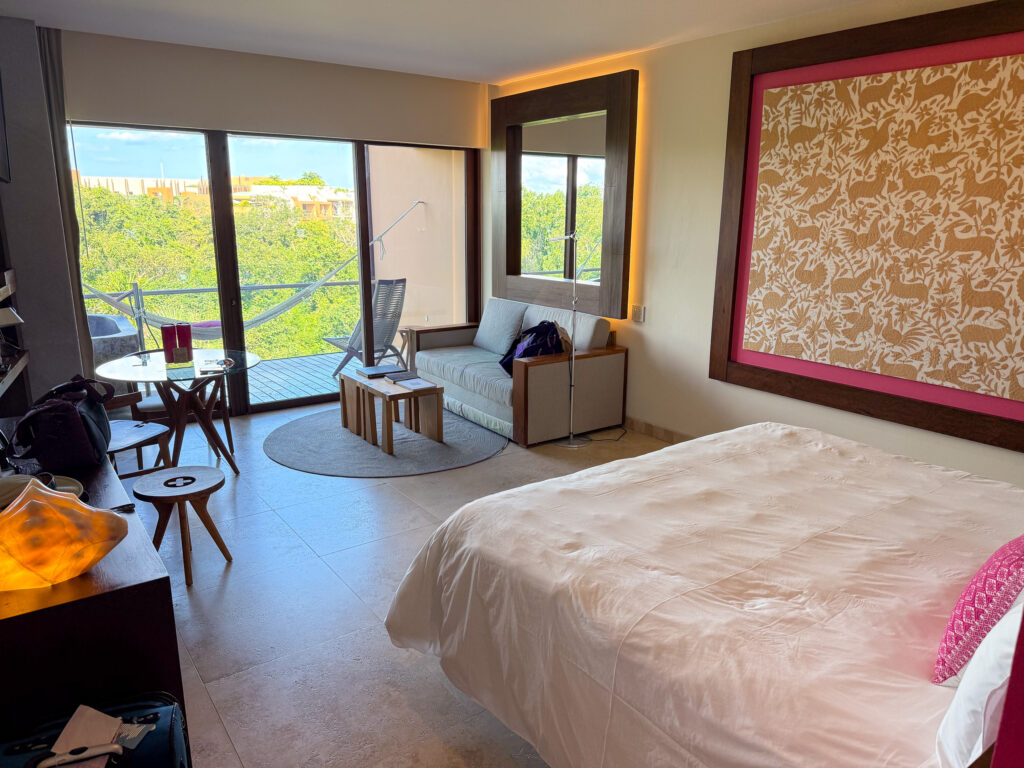
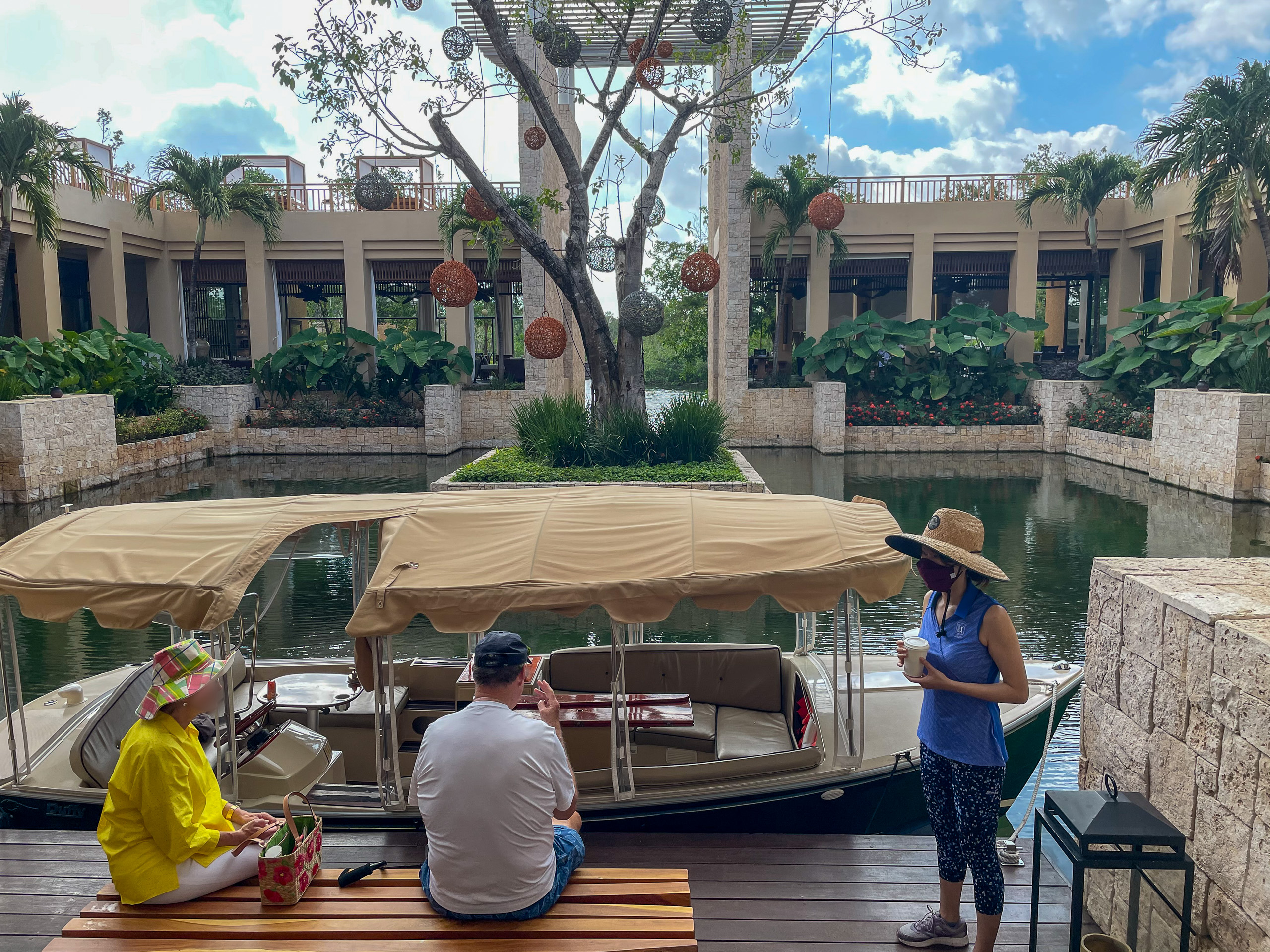
A hotel cut into the limestone, rivers running between the wings
The grounds
Many territories, every one mature: towers, lagoons, a river, beaches
Old side exceptional; the new half more so; nothing unfinished anywhere
The water
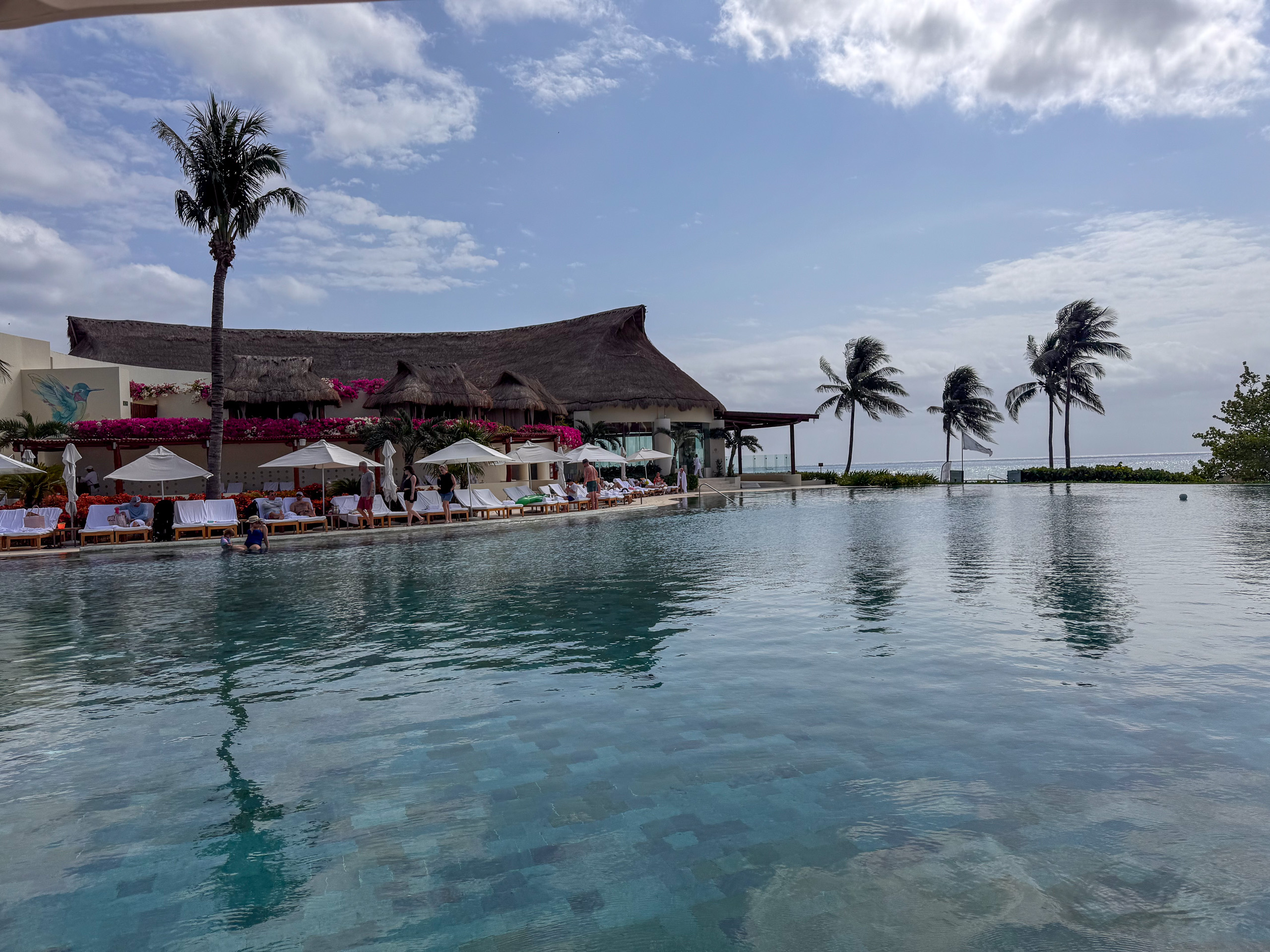
Aquaventure: the river, the slides, the predator lagoons, Dolphin Cay
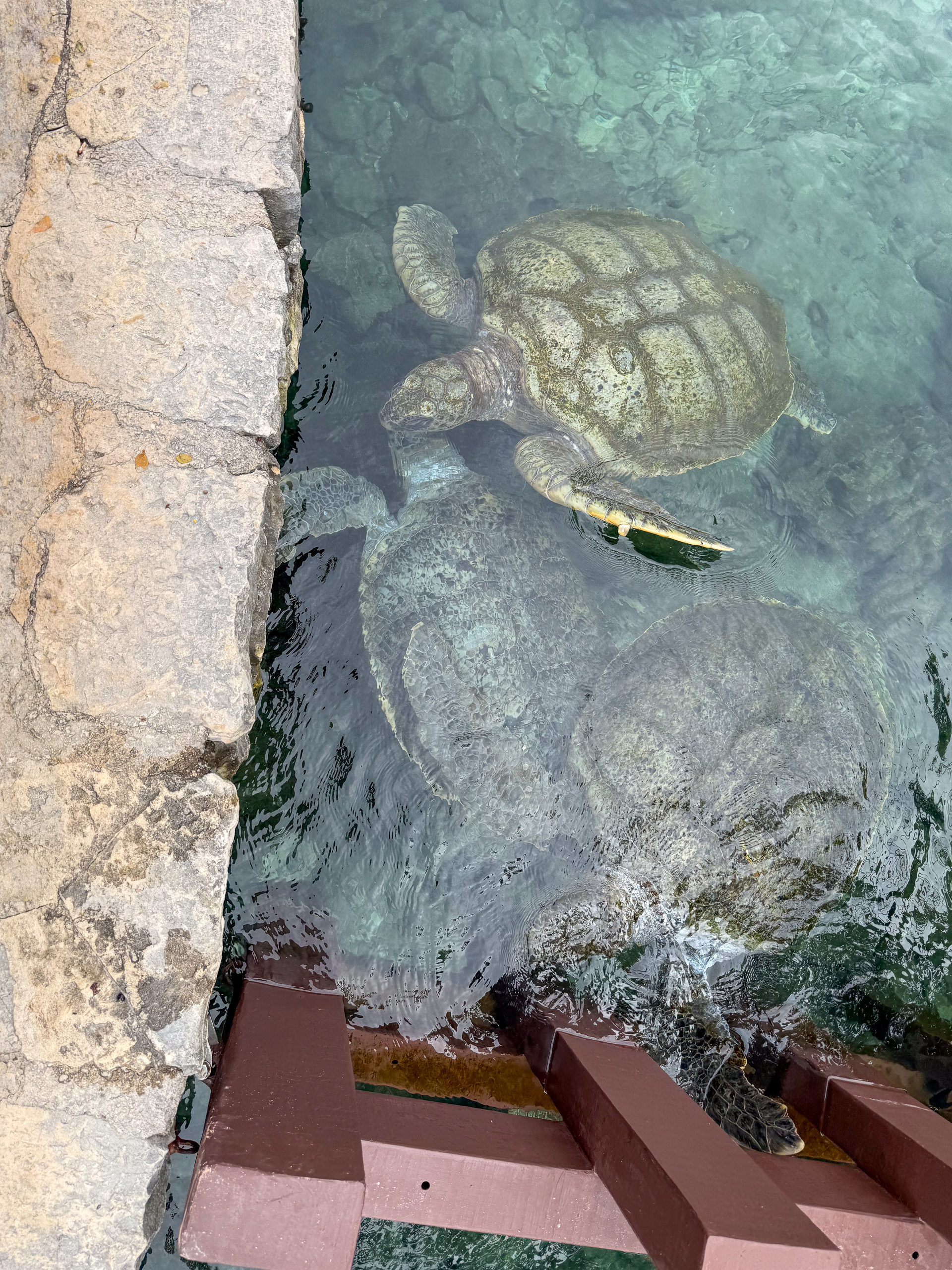
Inlets, rock pools with turtles, cenote-cut channels, and the parks beyond
The days
One enormous park, inexhaustible for a week
A different world each day: river, sea, caves, shows, jungle
Eating
So-so in the towers; the harbour quarter earns the short walk
Every restaurant outstanding, without exception
Service
Not the product; staffed for volume, and the desk shows it
The astonishment: the best of three regions, gathered in one place
The crowd
Families abound, all of them smiling; better solo than anyone admits
Families built for, couples hidden from them well
The catch
Check-in under five stars, a casino going out of date, slides that catch long legs
A world with no city outside it, and it asks for your whole week
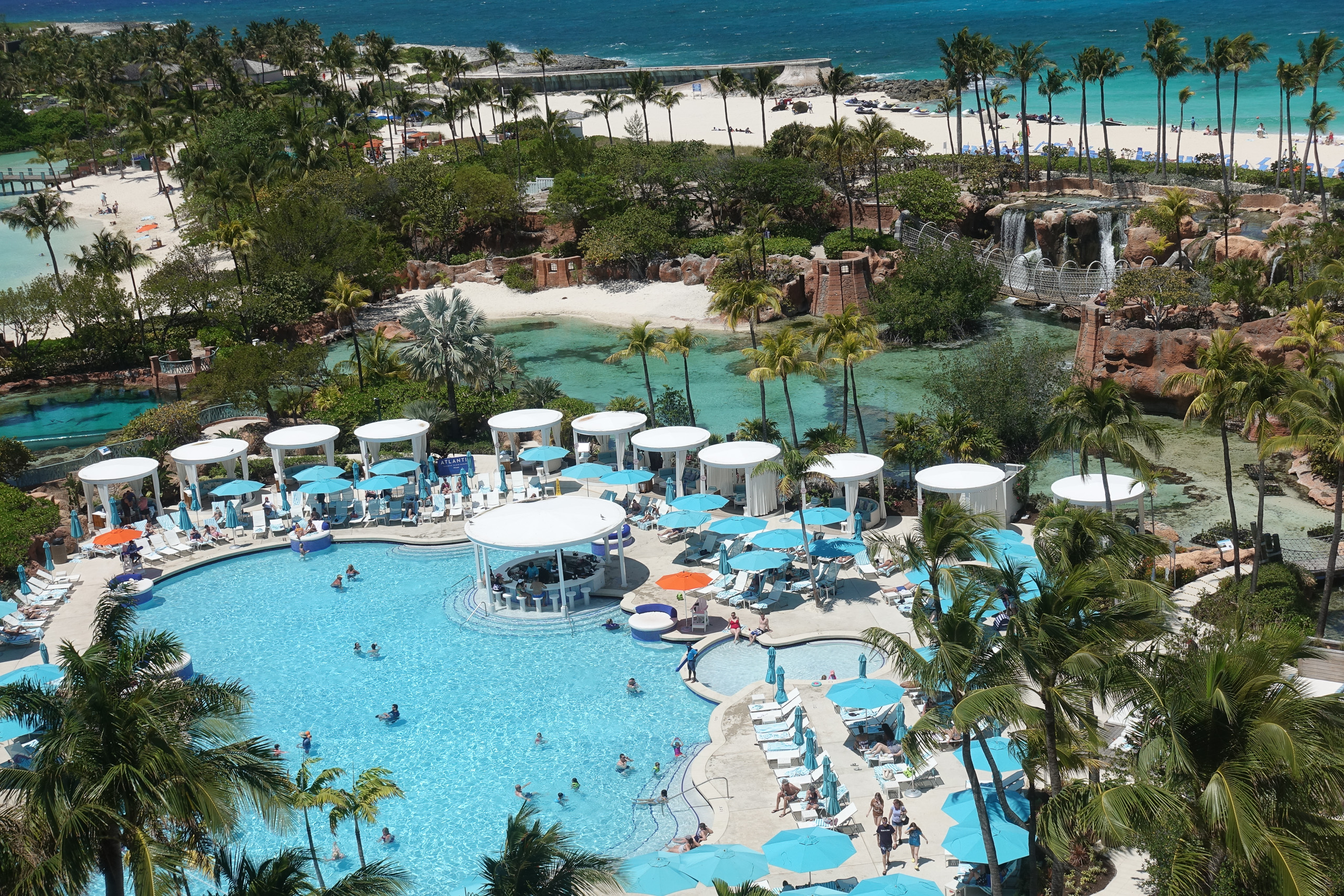
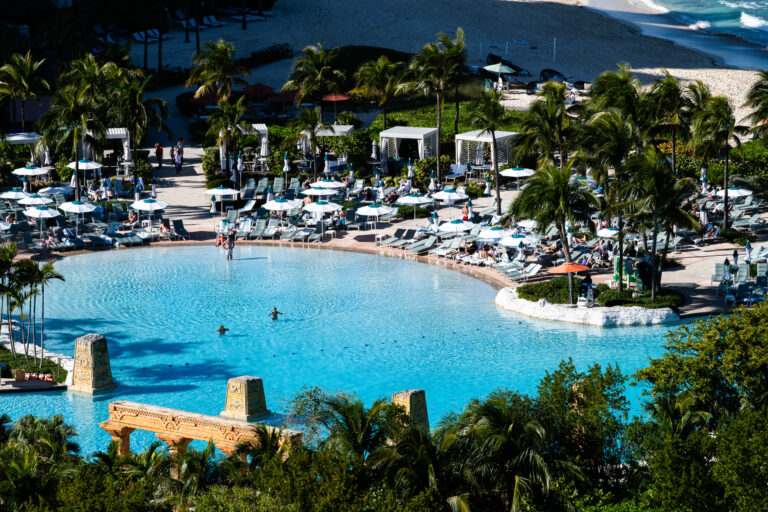
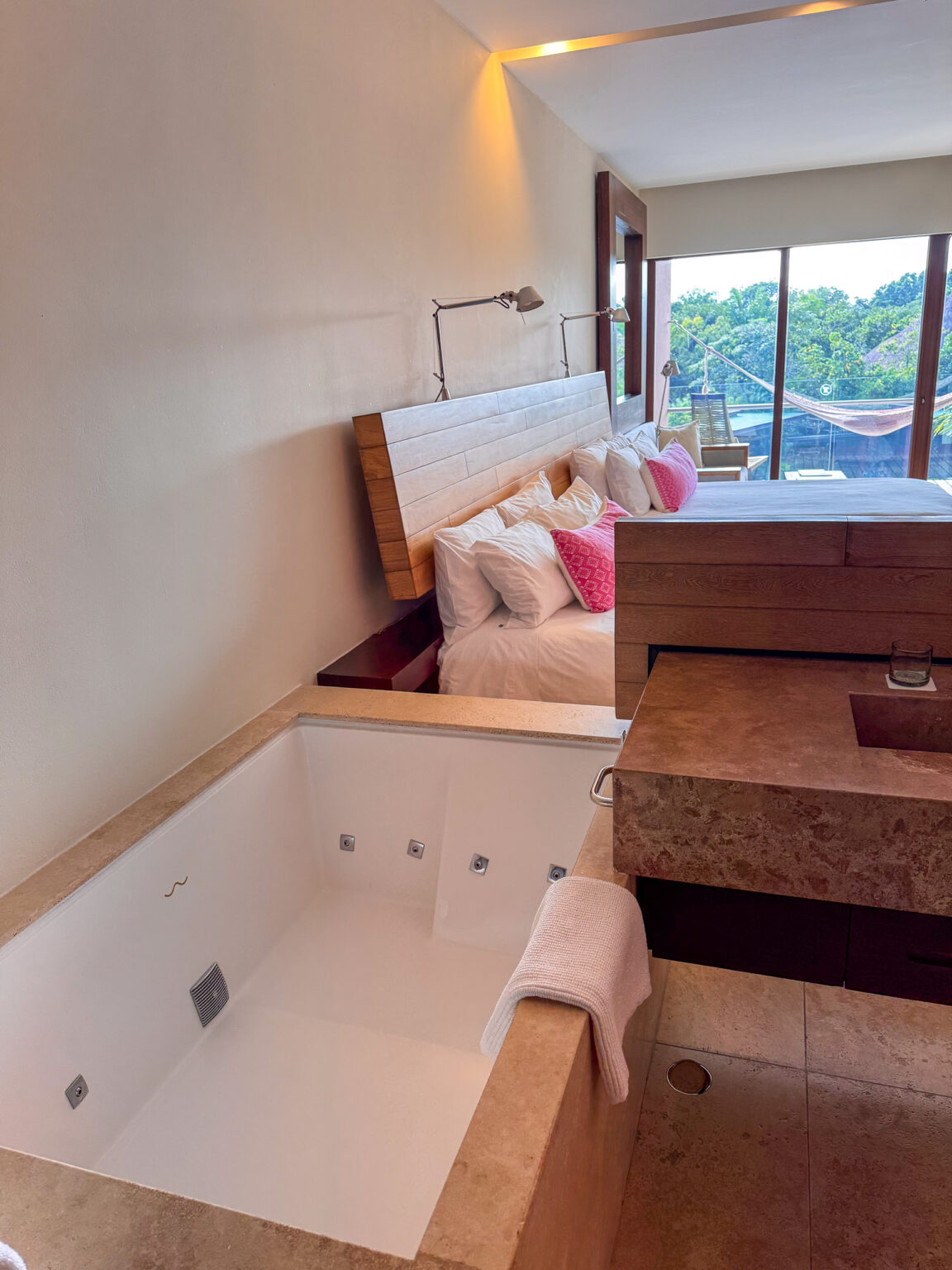
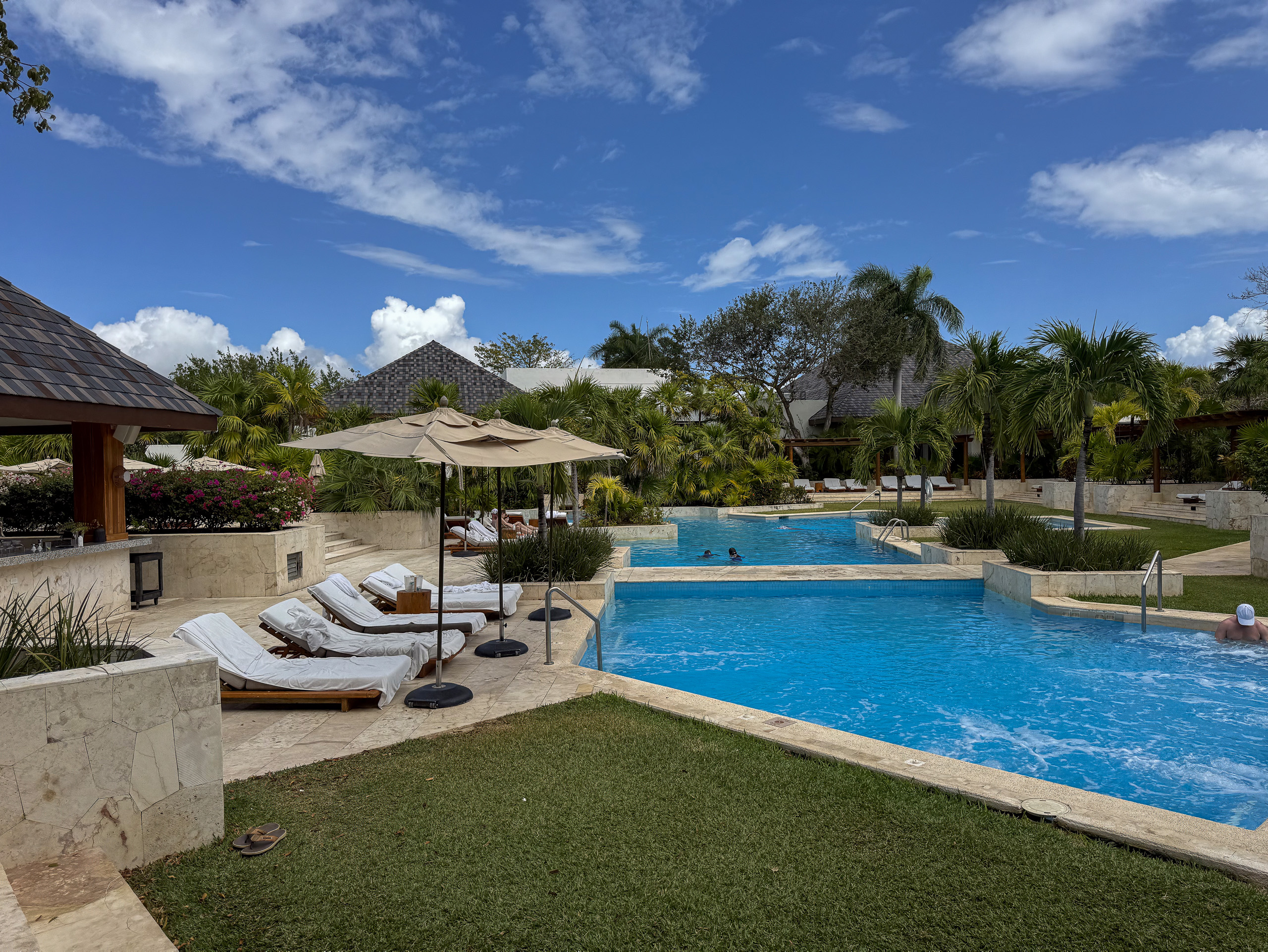
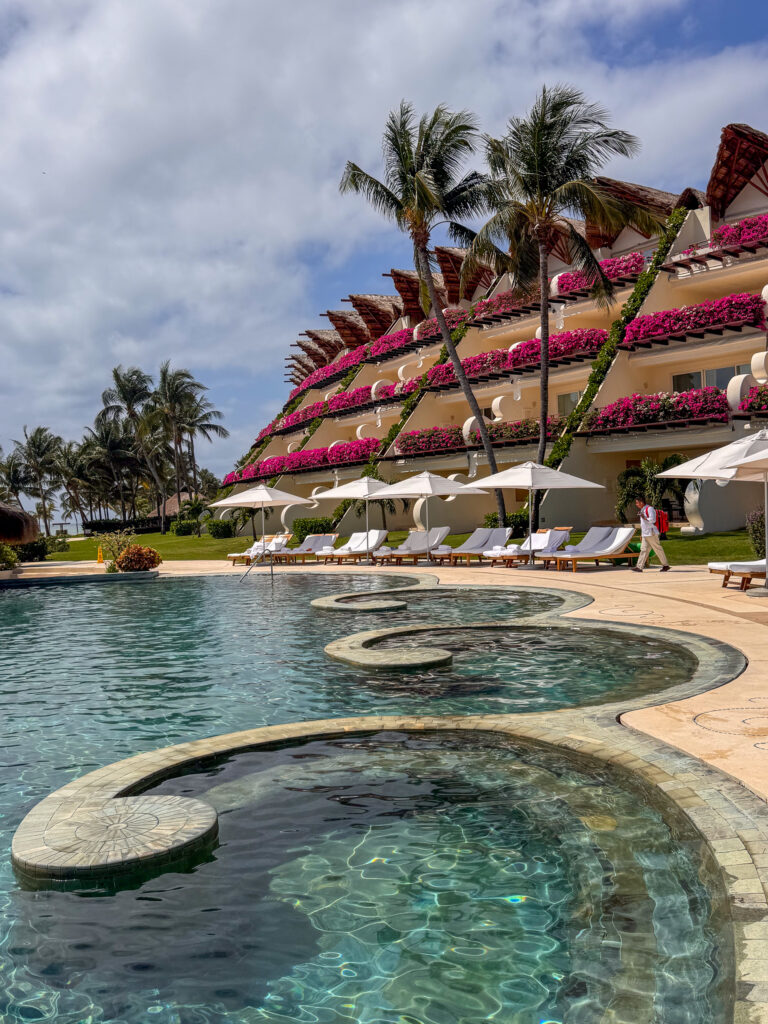
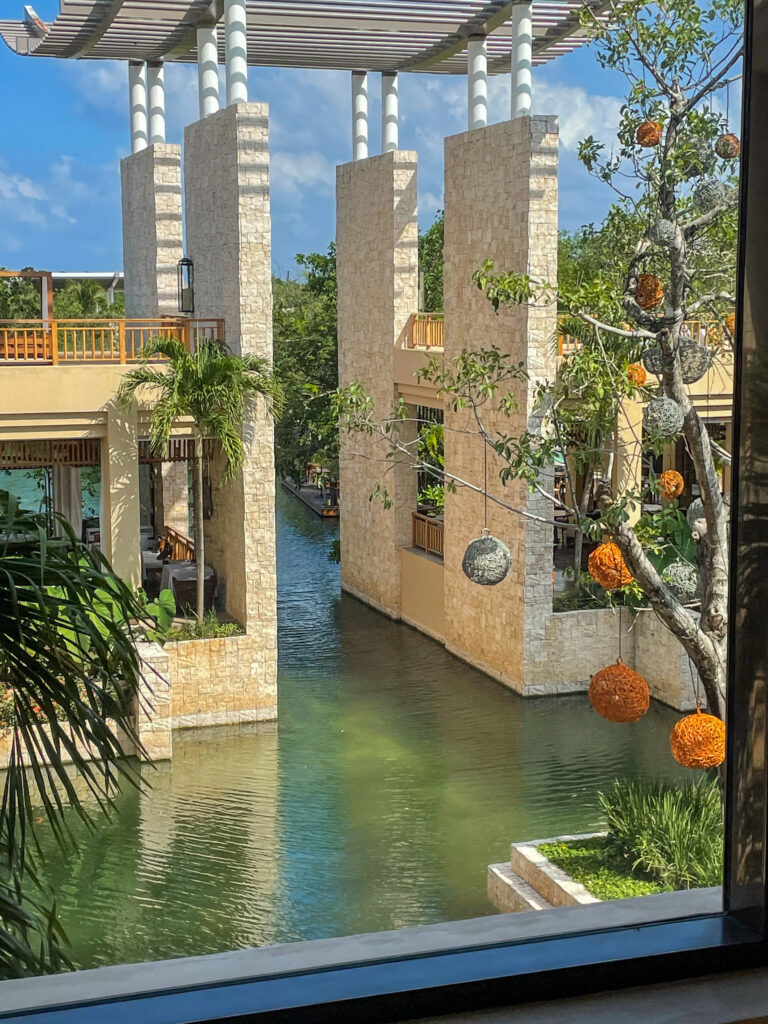
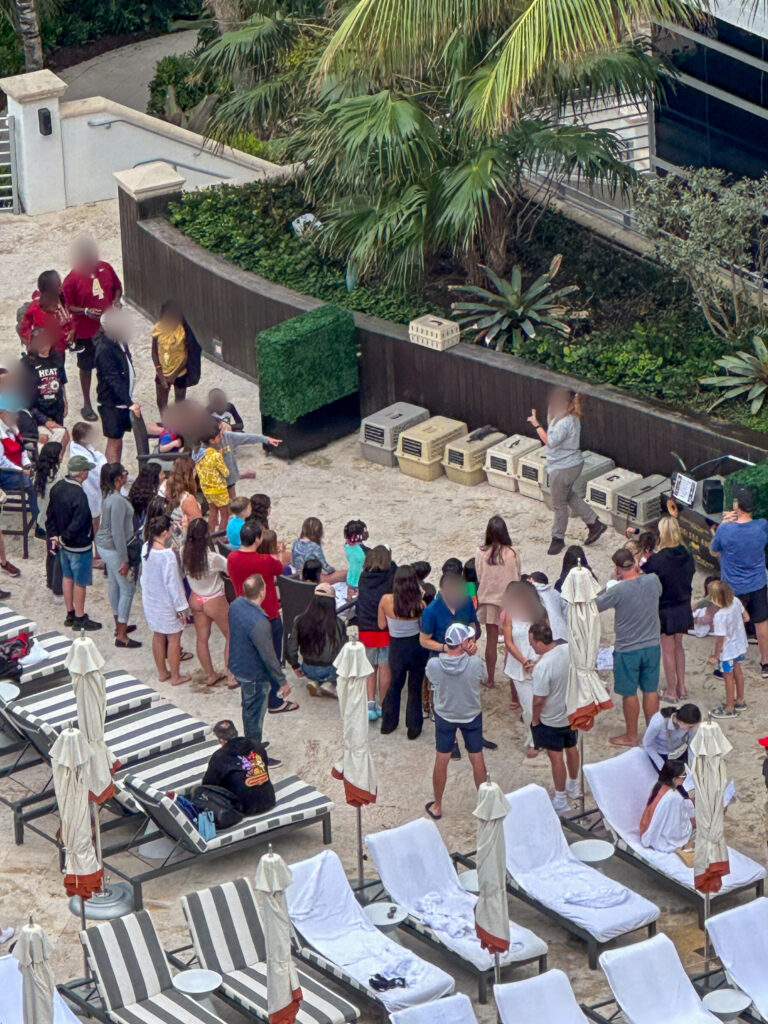
Atlantis: the main pool from a high floor.Xcaret: the river channel between the rock walls.
Noted
Observed on both stays, not measured.
What
Atlantis
Hotel Xcaret
Wi-Fi
Strong in the hotel; spotty on the park grounds
Strong
Water pressure
Strong
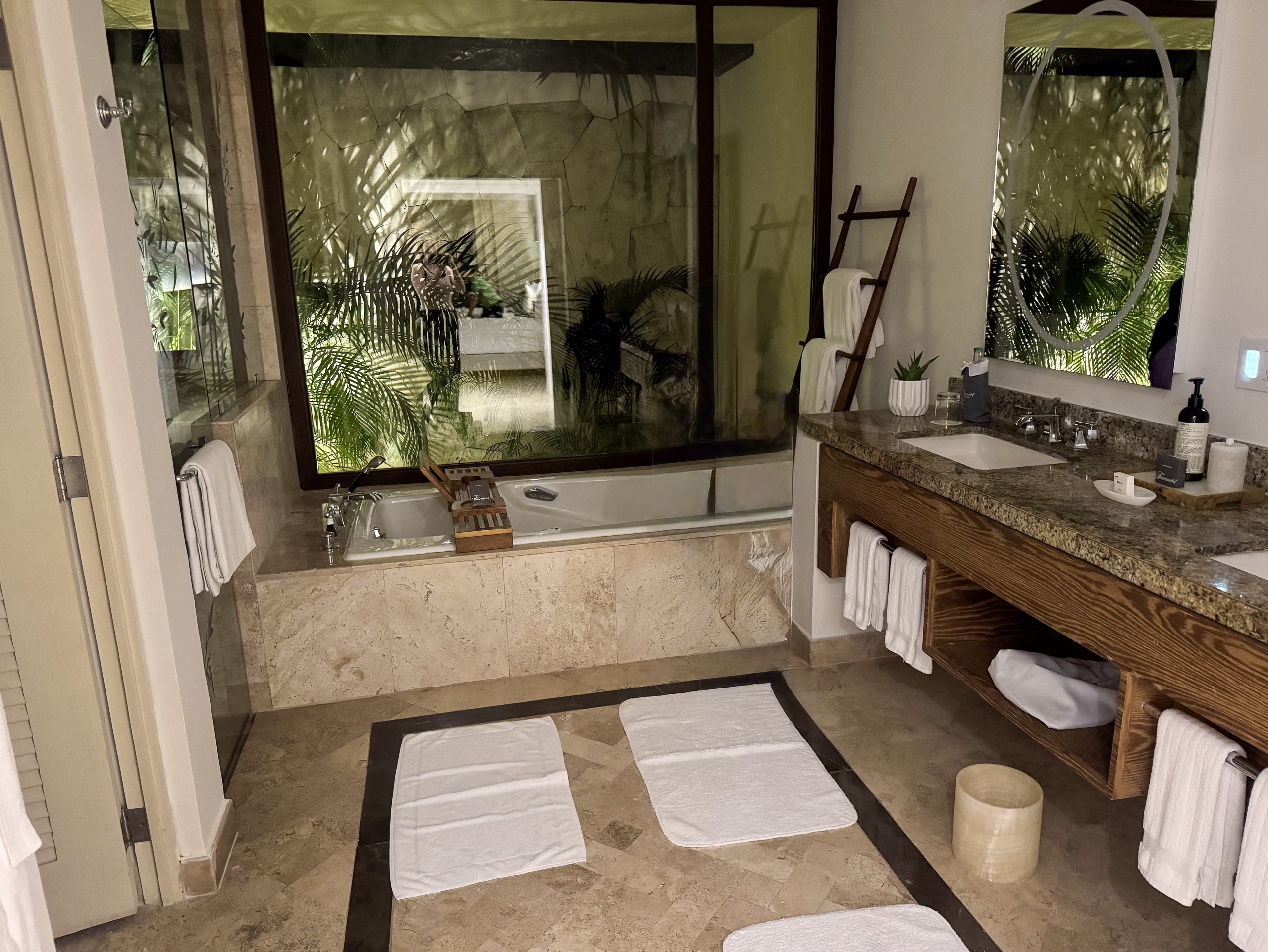
Excellent
Air conditioning
Noisy, but not unbearable; humidity under control
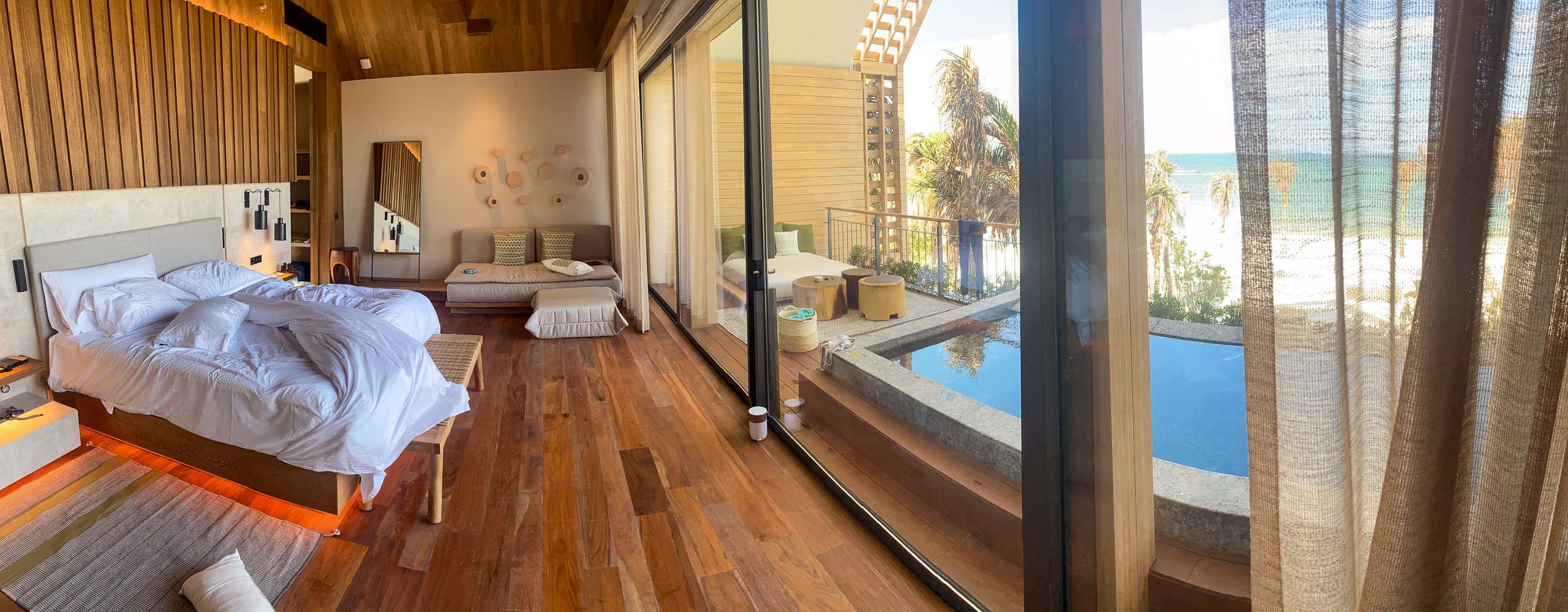
Noisy and weak in one room; strong and silent in another
Bed
Medium, and it sleeps hot
—
Blackout
Mediocre curtains
Great
Noise
The park is inaudible from the room
The outside audible; the hallway through one door, not the other
Where Atlantis wins
Scale, and what scale does. No property on earth gives you the feeling of walking through the grounds of Atlantis: the towers over the lagoons, the river carrying you under bridges for hours, the sense of mammoths and mastodons somewhere just out of frame. The park is the best of its kind anywhere, and it is not close.
It also wins the accidental holiday. I arrived solo and the river handed me an afternoon of company; families are everywhere and every one of them is smiling. A resort that can host both of those moods on the same afternoon is doing something no brochure can fake.
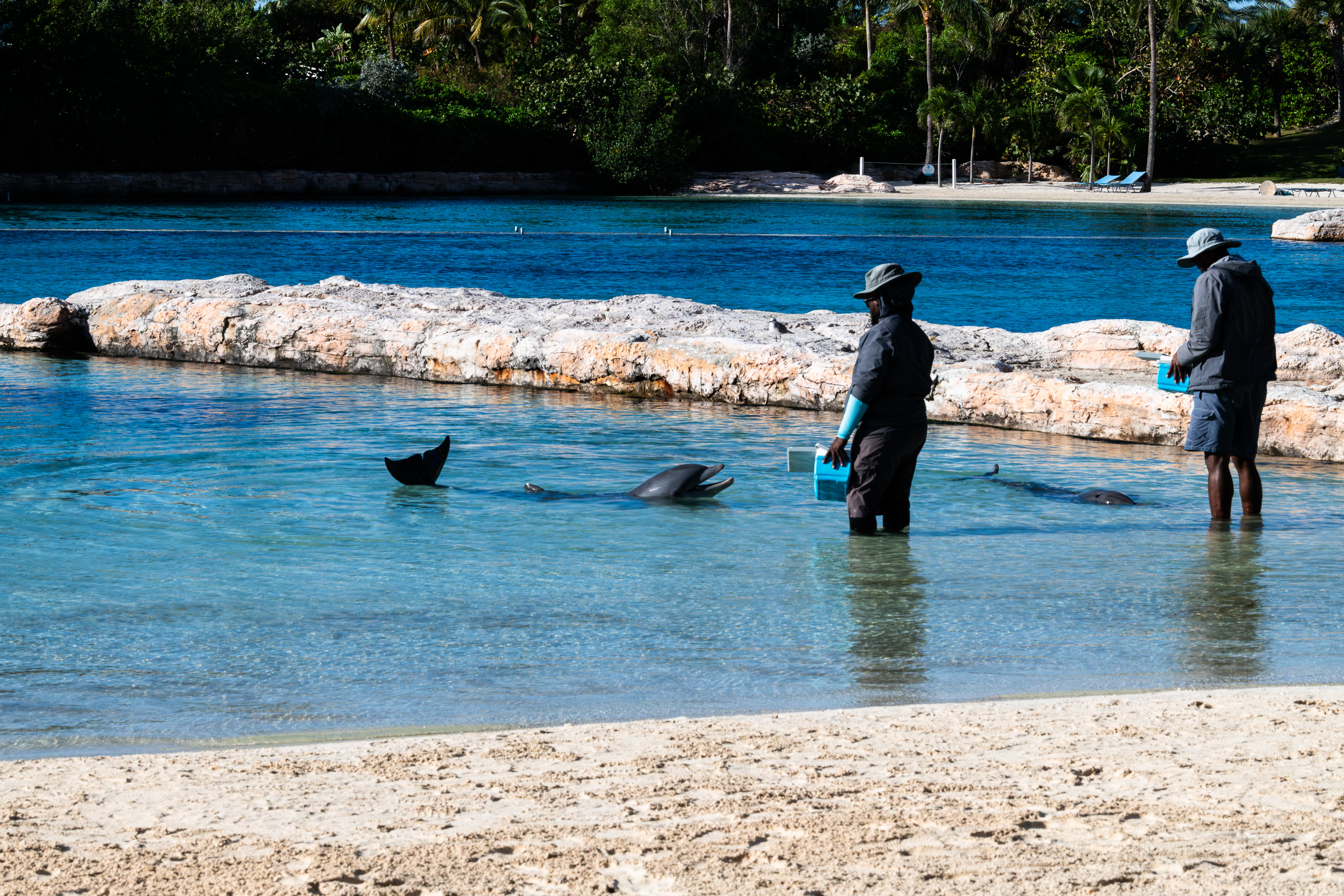
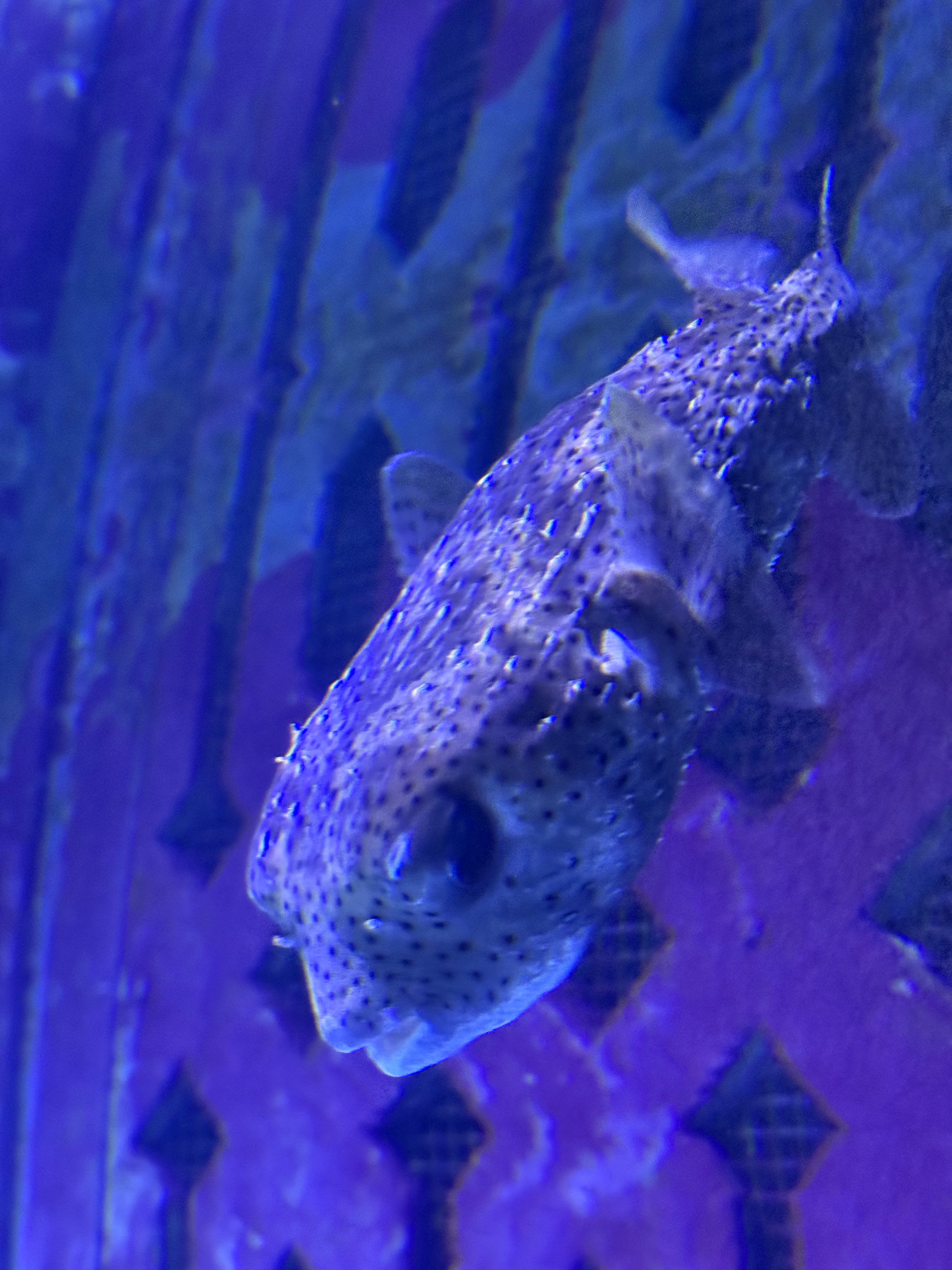
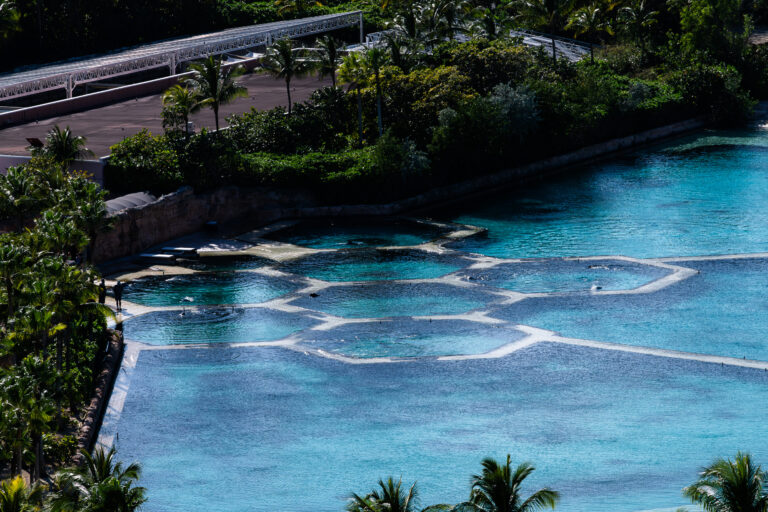
The swimming lagoon and its buoy line.Dolphin Cay, trainer in the shallows.The Dig, violet and silent.
Where Xcaret wins
Service and food, by a distance that embarrasses the comparison. At Xcaret it is as if the best service workers of the surrounding three regions were gathered onto one property; at Atlantis the desk would not survive an Asian five-star audit, and knows better than to sit one. Every restaurant at Xcaret is outstanding; Atlantis eats best down in the harbour quarter, and nobody has ever called its weakest room outstanding.
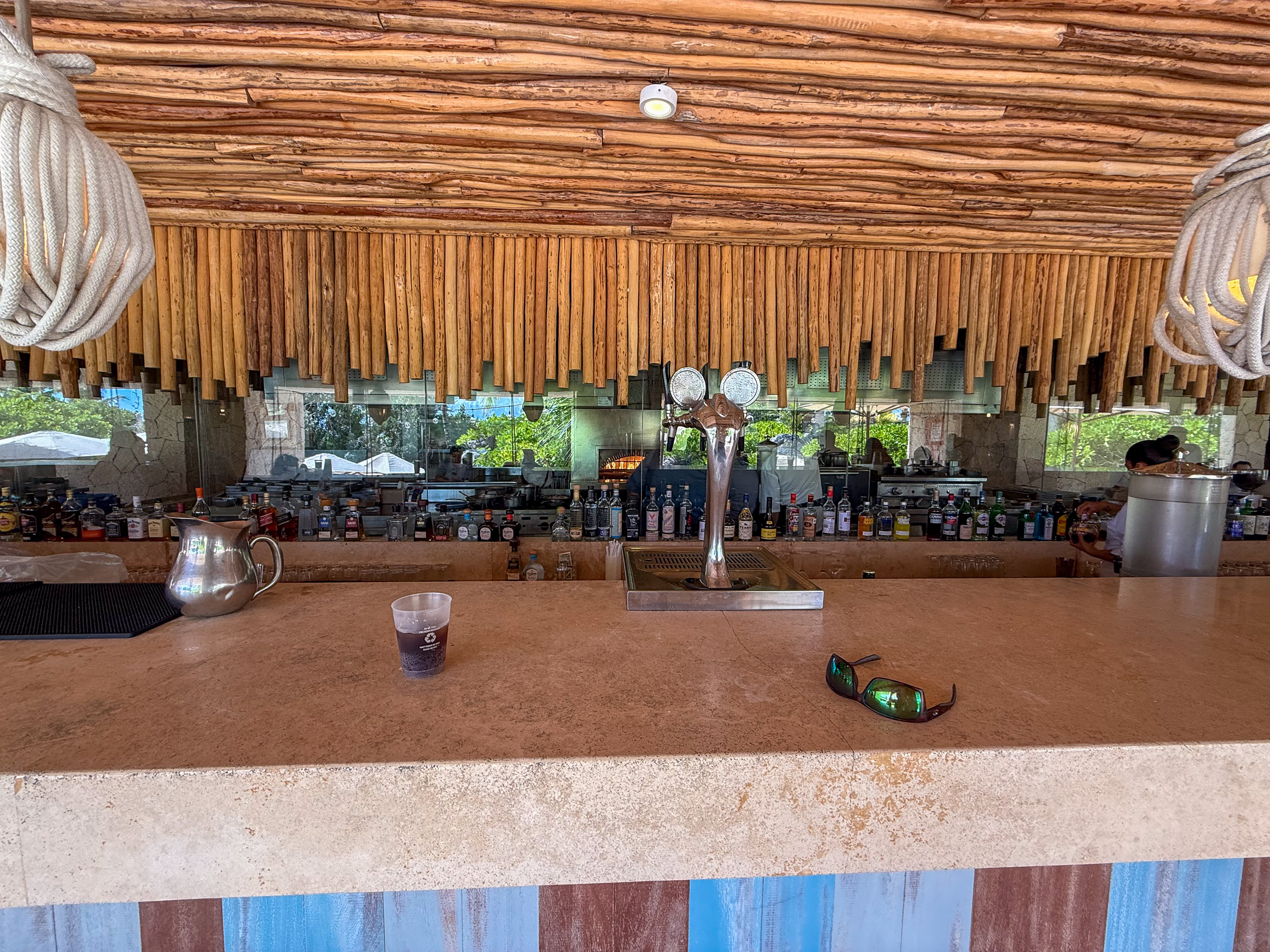
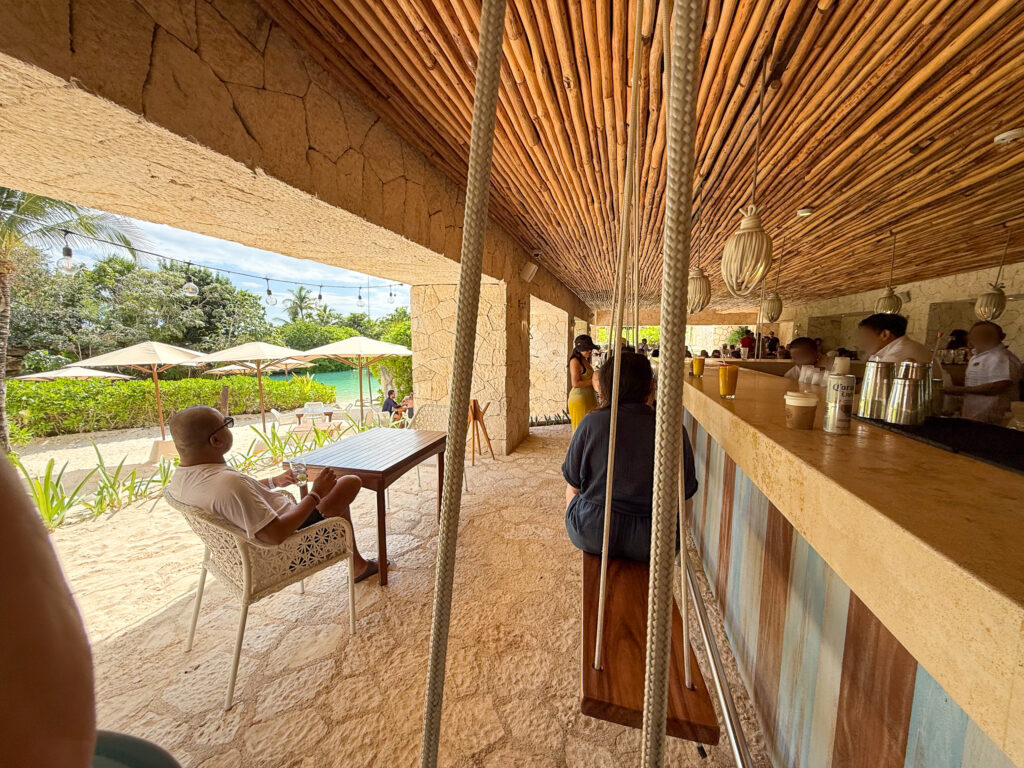
A bar you would cross a city for, under a reed ceiling — and it is the ordinary one.
It wins on diversity too. Atlantis is one magnificent theme played fortissimo for a week. Xcaret changes the programme daily — river, sea, caves, shows, the property itself — and the build-out keeps outdoing its own best work: just when you conclude the old side cannot be improved on, the new half opens and is amazing. I have been back three times in eighteen months, which is its own review.
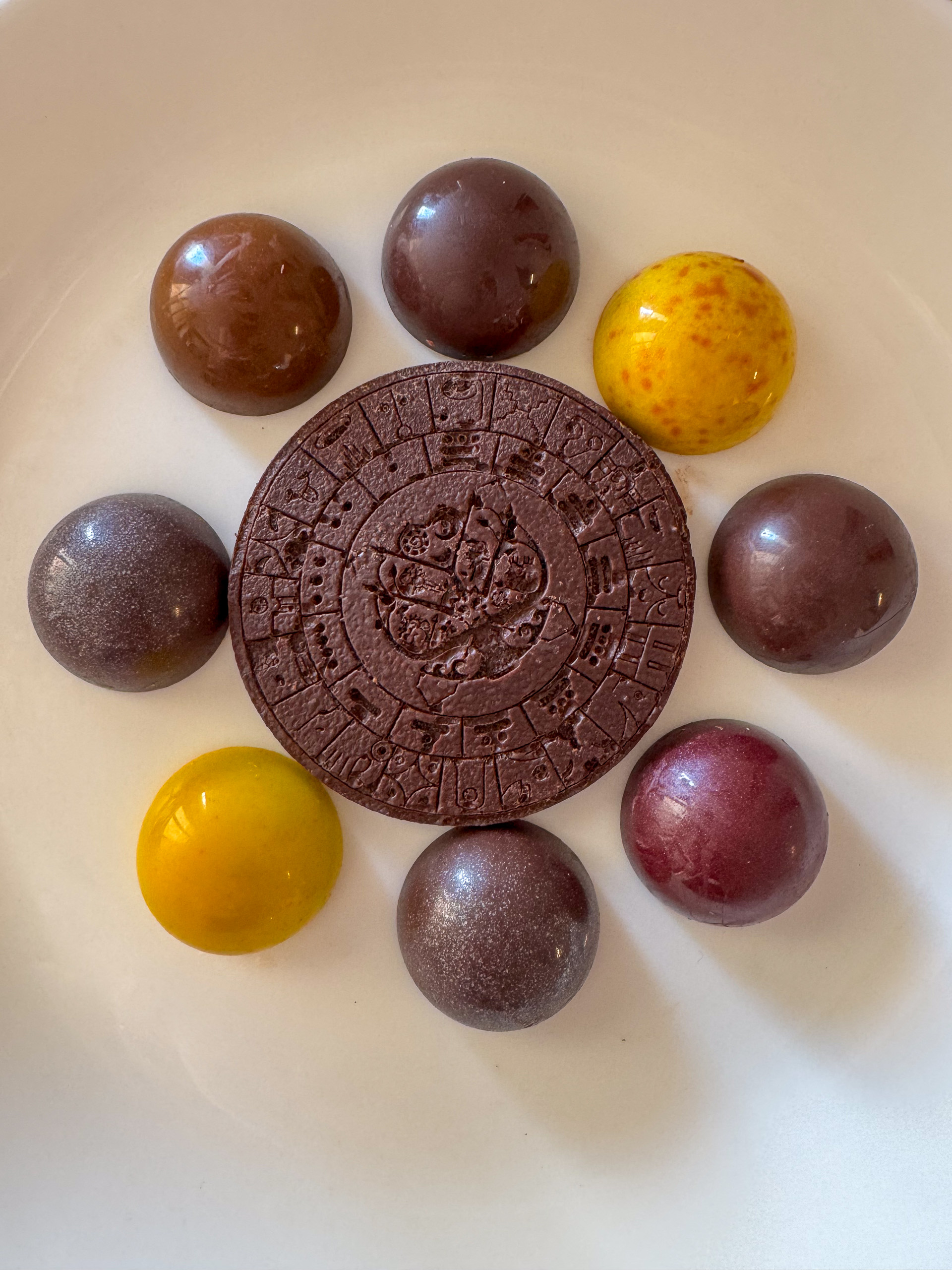
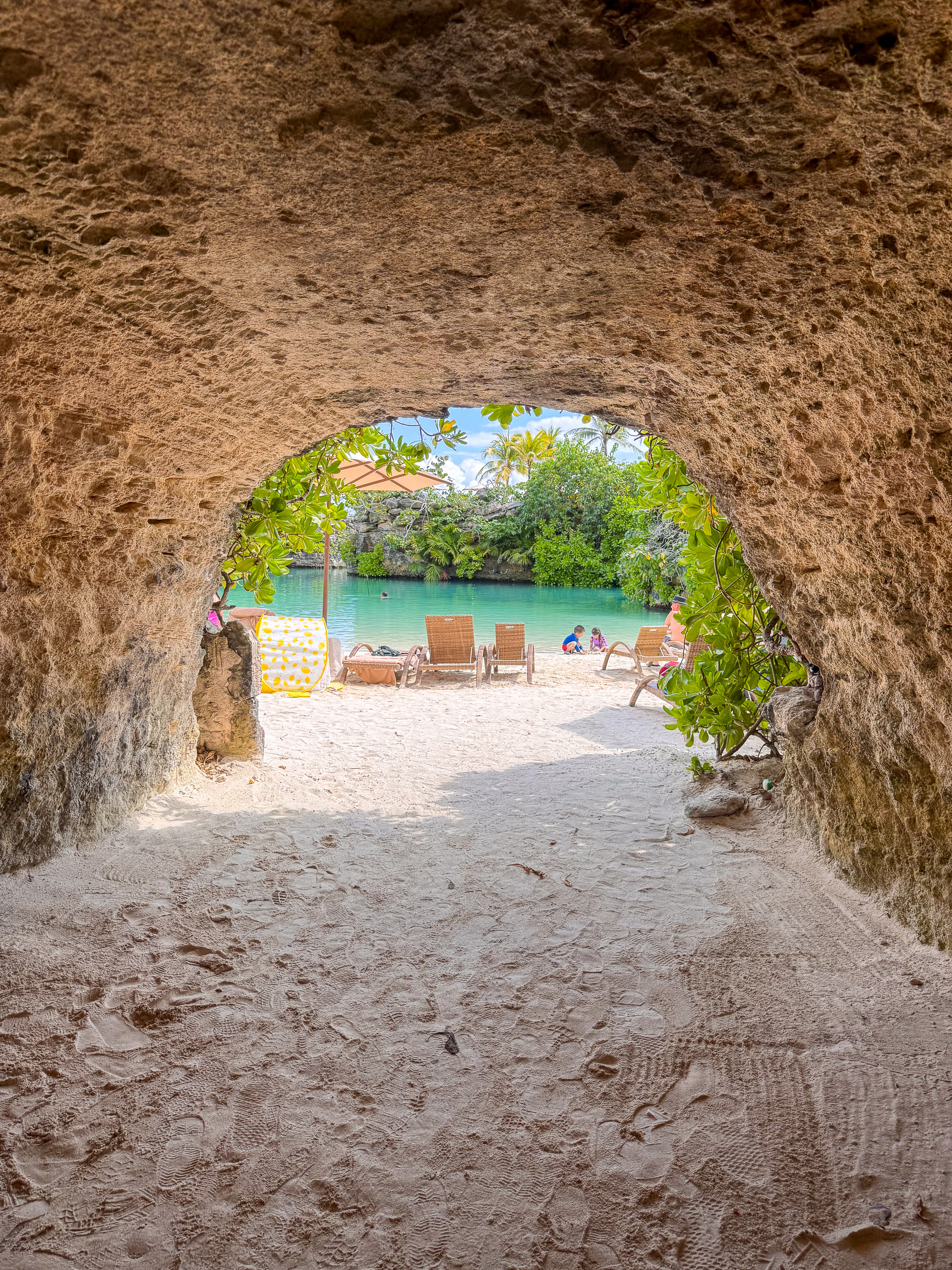
Turtles working a rock pool.Chocolate work that would hold up in a city.A passage cut through the limestone.
Verdict by traveller type
The water-park family, the reunion, the first big trip the children will remember: Atlantis, and see it before you die regardless.
The eaters, the couples, the travellers who rank service above spectacle, and any table where no two people want the same day: Xcaret, and stretch for it if you have to — the stretch buys more here than anywhere on that coast.
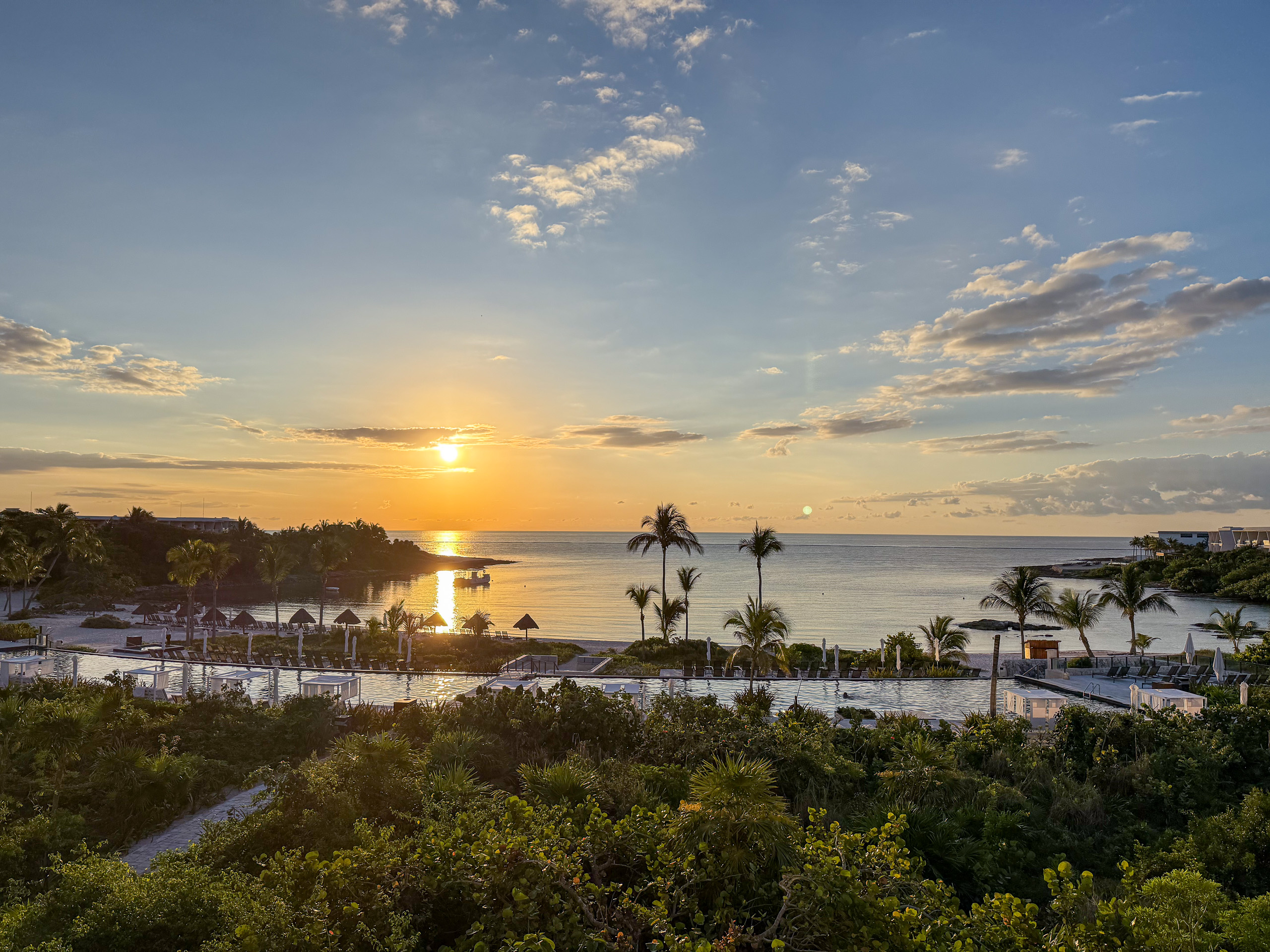
Xcaret’s sun going down beyond the palms. The food and the days decide it.
If you can only ever do one: Xcaret — and I say it with a tube-shaped hole in my heart. The diversity of the activities and the food settle it.
Take the children before they are twelve, while the wonderment still works. And on timing: Atlantis is a winter-months trip; Xcaret is for whenever you need a break, which is its own verdict.
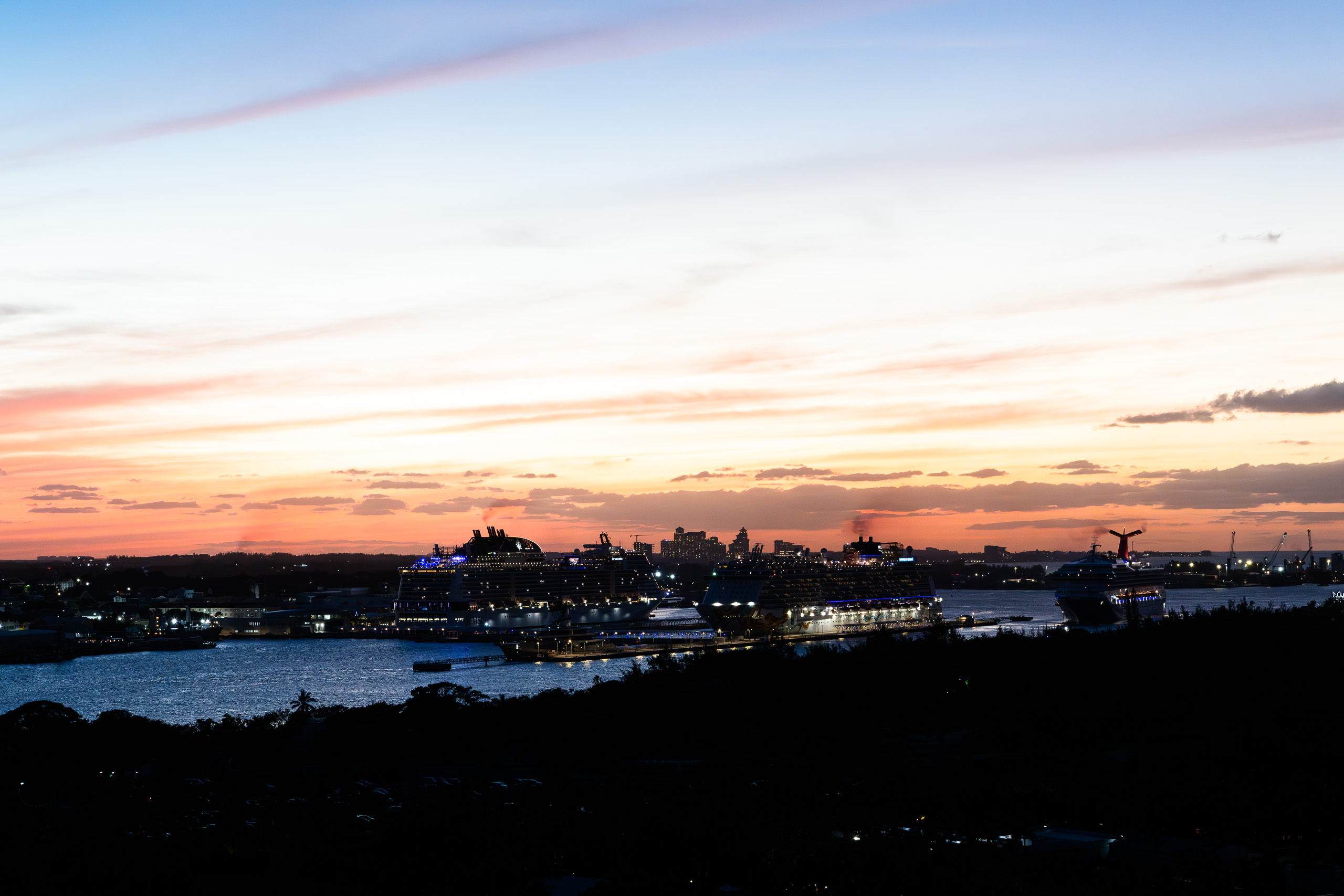
Atlantis in silhouette at the last orange. See it before you die anyway.
Bottom line
Both belong on the MUST DO before-you-die list: Atlantis for the greatest waterpark ever attached to a hotel, Xcaret for the greatest hotel ever attached to a coast. That makes two on this coast of the Americas — and if you can only do one of Atlantis or Xcaret, do Xcaret: the diversity of the activities and the food settle it.
ISTANBUL · ÇIRAĞAN vs. FOUR SEASONS SULTANAHMET · 5 MIN READ
Çırağan or Four Seasons: the water or the walls, in Istanbul
Both are excellent, and the right answer depends on how many days you have. Two: the old city. Three or more: at least one night on the water. Four: both, in the same trip.
Both stays booked the way any other guest would book them.
The question
Istanbul is two cities pretending to be one, and these two hotels are the cleanest way to choose between them — with the honest complication that both are excellent. The Çırağan sits on the Bosphorus with the last sultan’s palace at its heart and a pool a metre above the shipping lane. The Four Seasons sits in the old city two hundred paces from Hagia Sophia. I stayed at both in the same April, booked the same way, in the entry-level room at each.
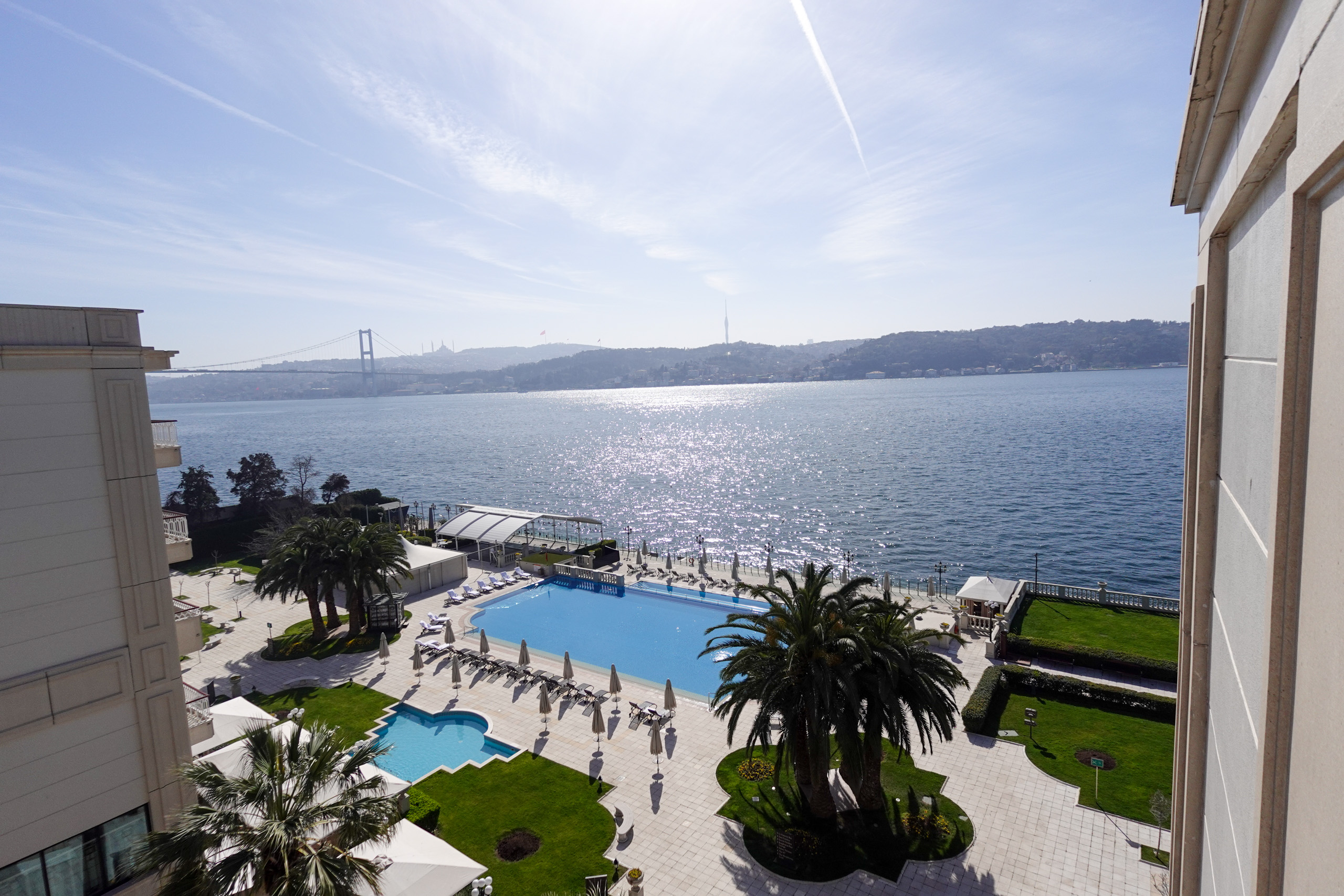
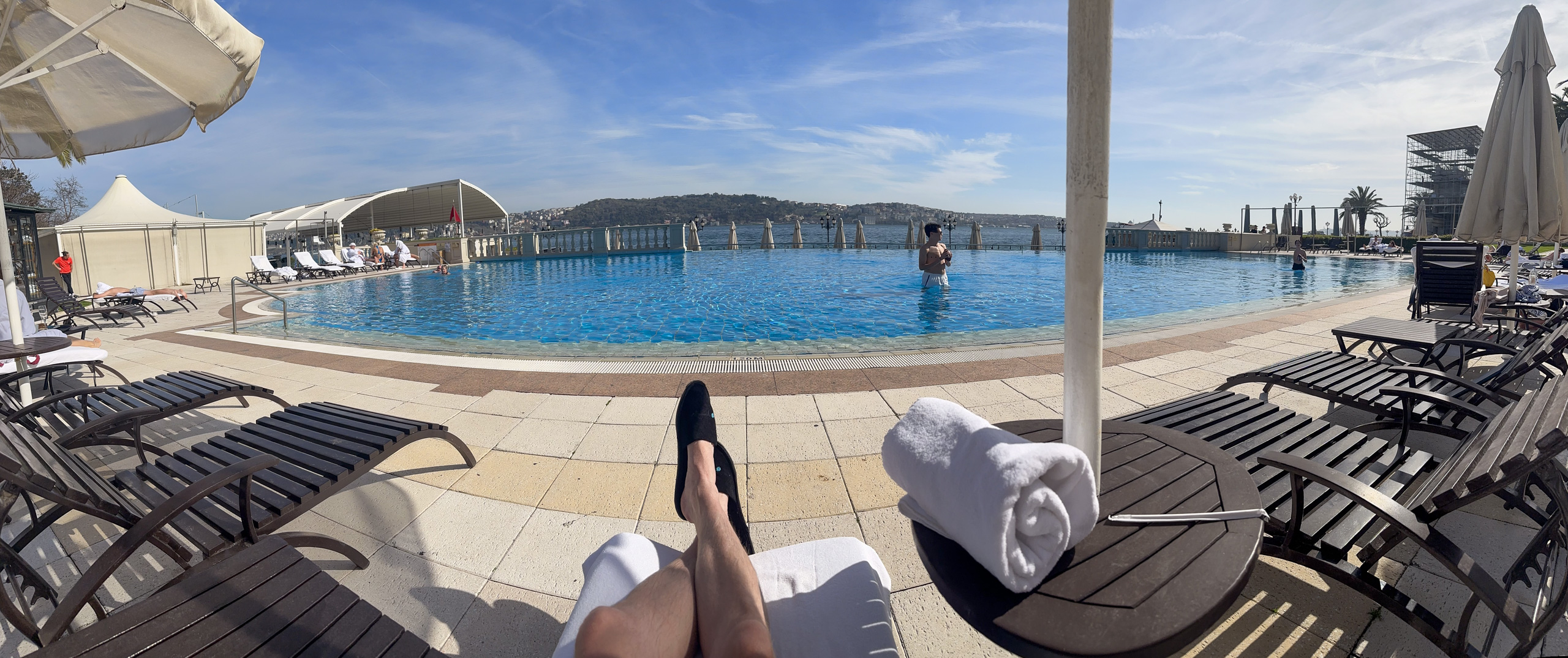
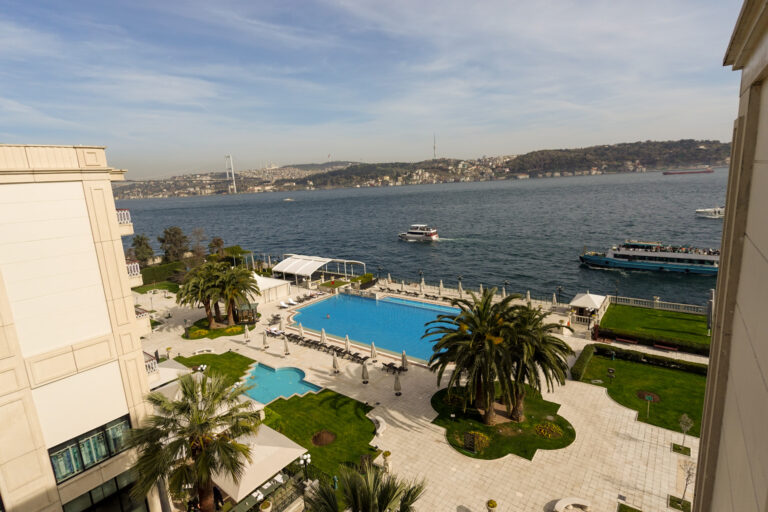
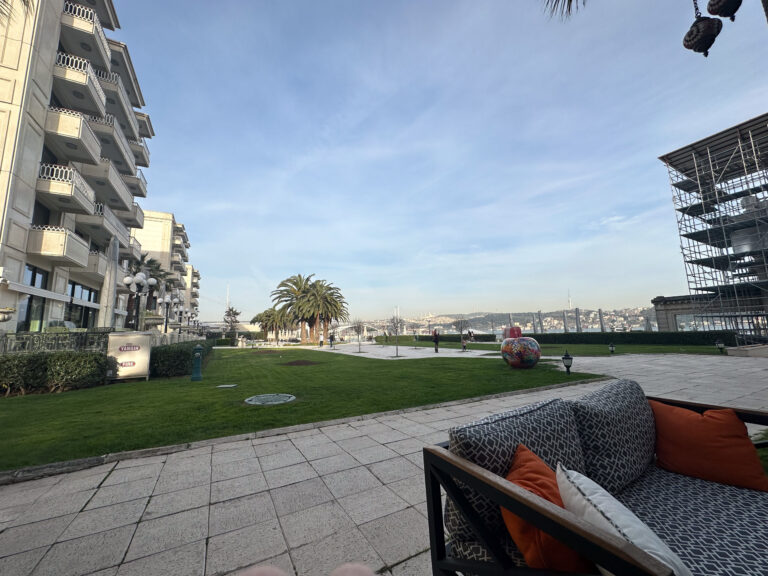
Çırağan: the pool terrace and the strait in full sun, the bridge in the distance. A ship goes past at arm’s length.
The real question is not which hotel is better. It is how many days you have. The correct answer, from three days up, is a ferry ticket between the two.
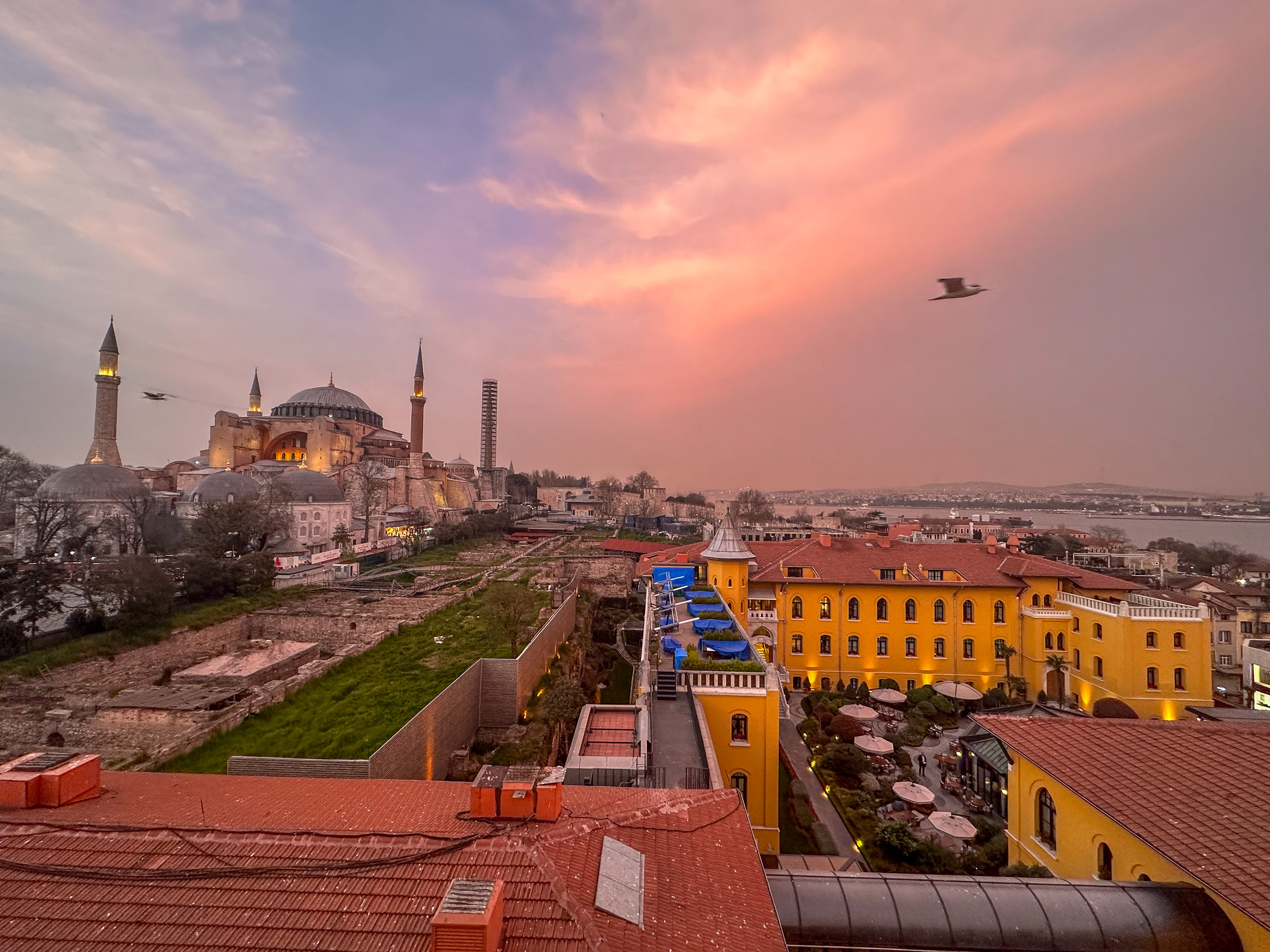
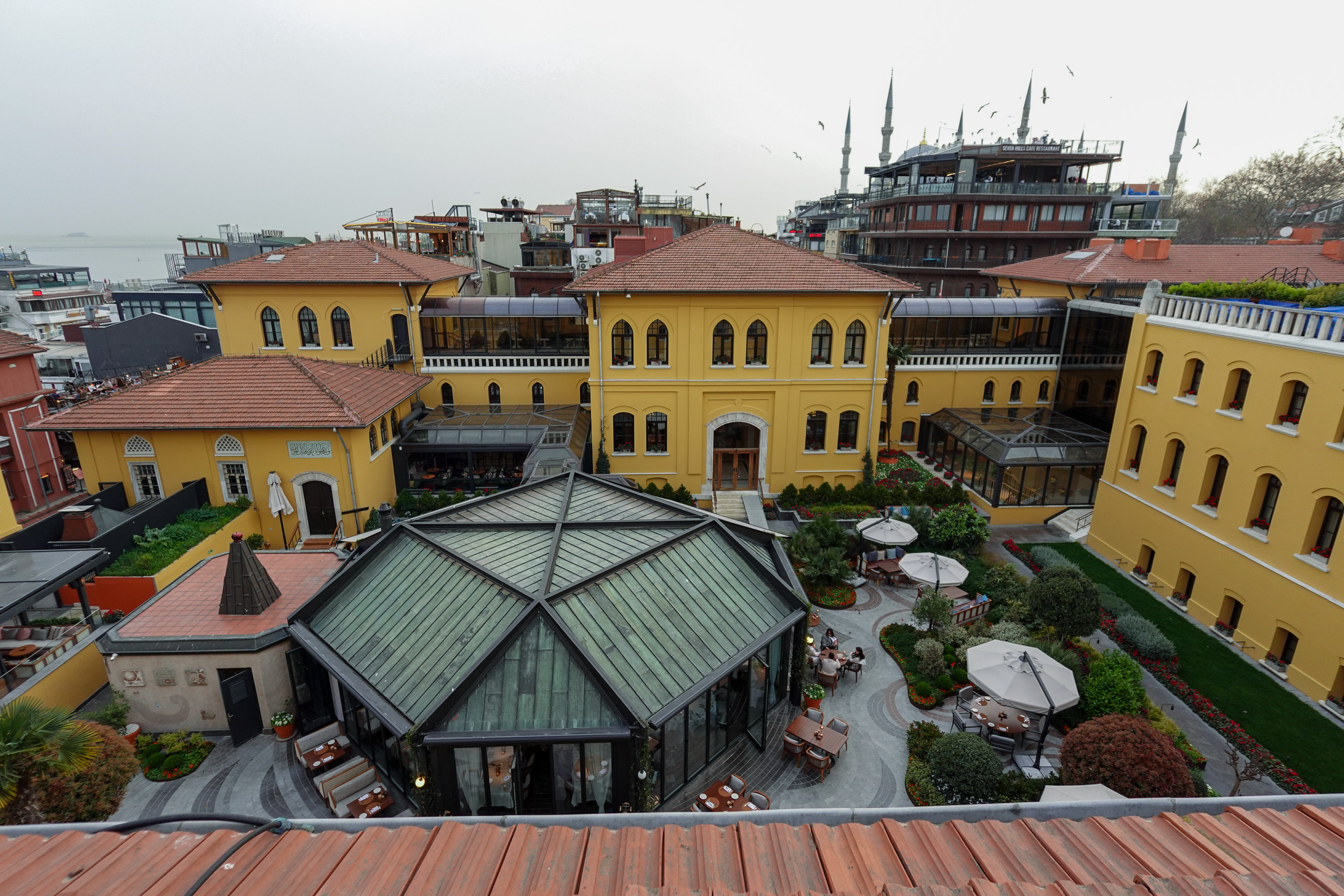
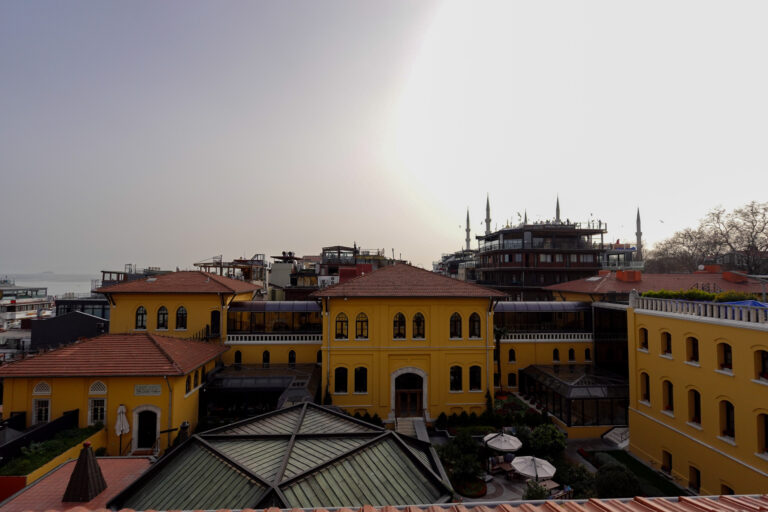
Four Seasons: the old exercise yard, now a garden with a glazed pavilion between the ochre wings.
Side by side
What
Çırağan
Four Seasons
Where
The Bosphorus shore, on the last open waterfront before the city closes up
The old city, beside Hagia Sophia, above the Marmara
The building
The last sultan’s palace at its heart, with a history wing the equal of any hotel’s
A former prison, converted; the exercise yard is now the garden
Entry room
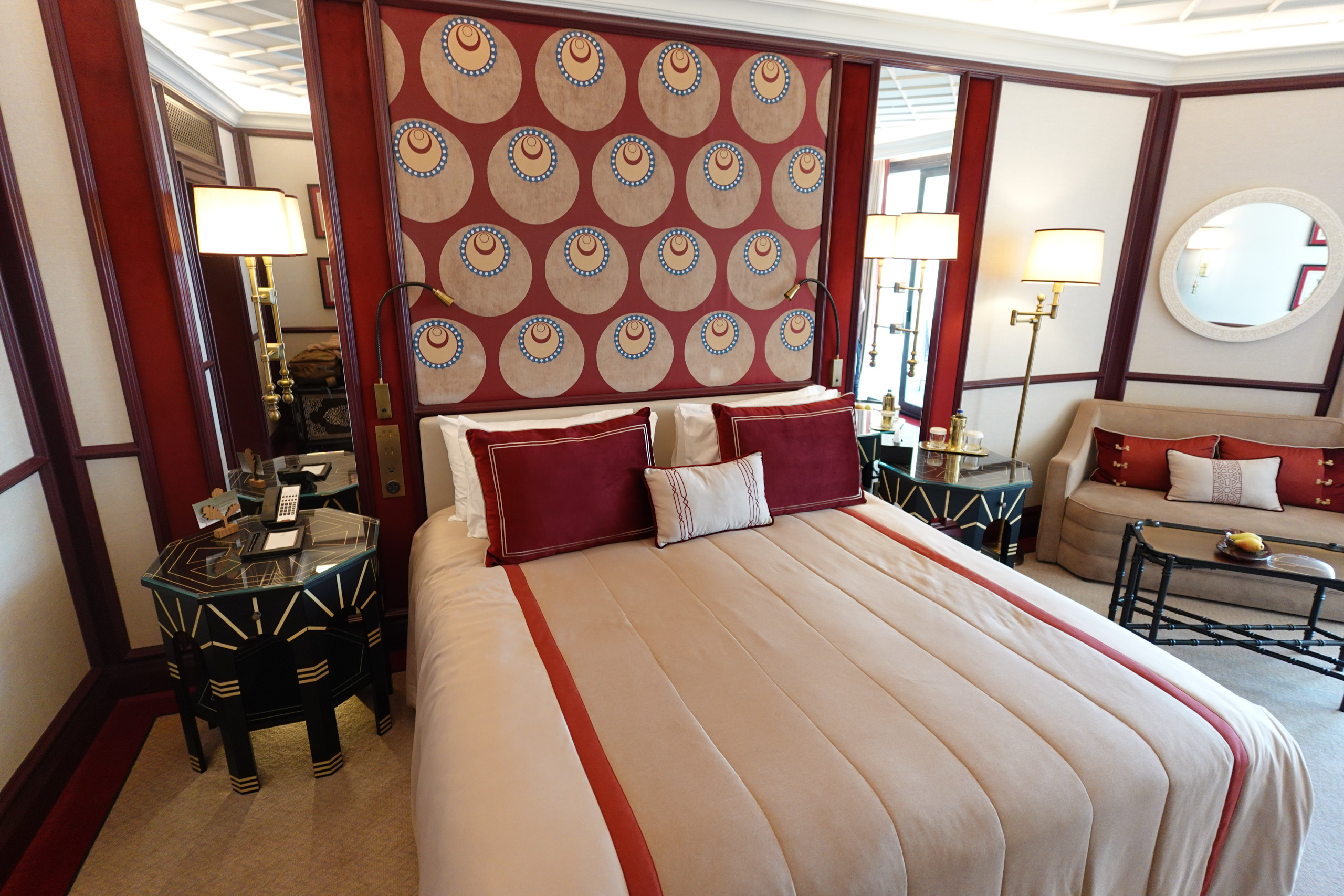
Superior Bosphorus View, king: committed Ottoman revival, generous throughout
Deluxe, courtyard side: warm, low-lit, thick walls, deep reveals
Service
The more attentive of the two — more people on the floor, and it shows
Small-house warmth; names by the first morning
Pool
On the water, a metre above the strait — a tranquil haze all afternoon
None; guests are sent across town to the sister hotel
Inside the hotel
The palace, art worth hours of wandering, and a tour that may end in the sultan’s suites
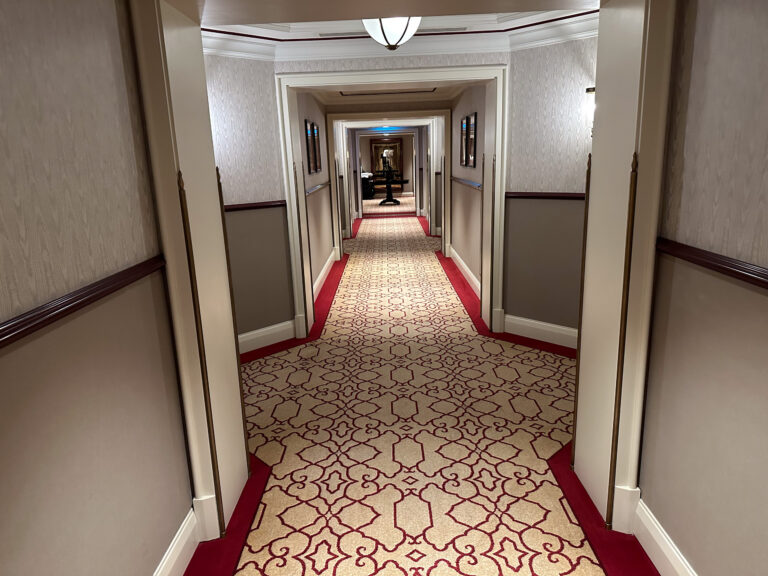
The roof, and the building’s own history told on the corridor wall
Eating
Excellent — and Tuğra, in the palace, is exceptional: the Anatolian wine pairing alone justifies dinner
Excellent — Avlu draws locals across town, and the roof closes the evening
Families
The better fit: grounds, pool, and room to run
Tighter quarters, busier pavements
The days
Tranquil: the pool, the nargile at the rail, the art, Ortaköy on foot
Nonstop: all of Istanbul in a day, starting at the front door
Getting about
A car or a boat; the drive bottlenecks at six
On foot; tram or boat to cross to the modern city
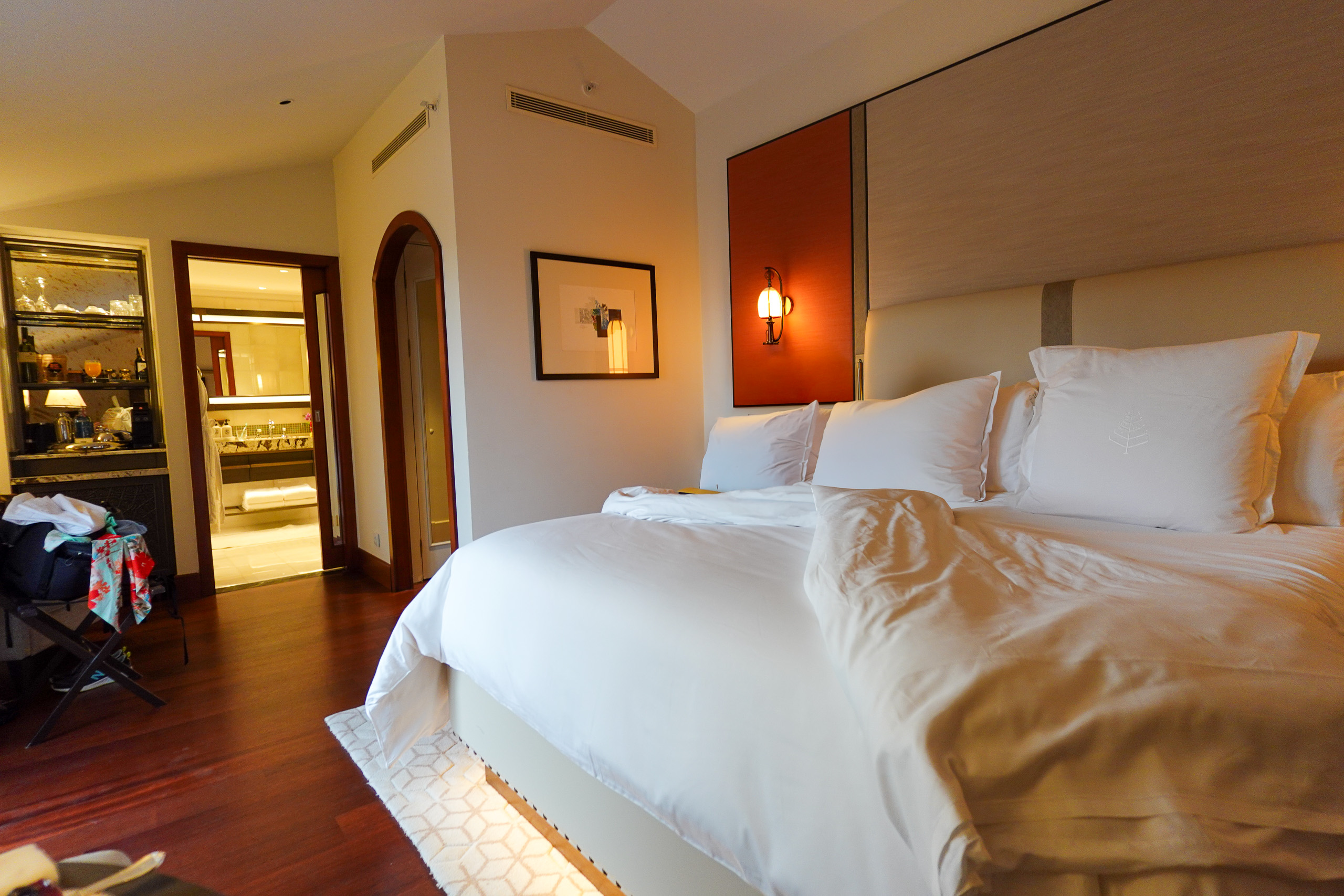
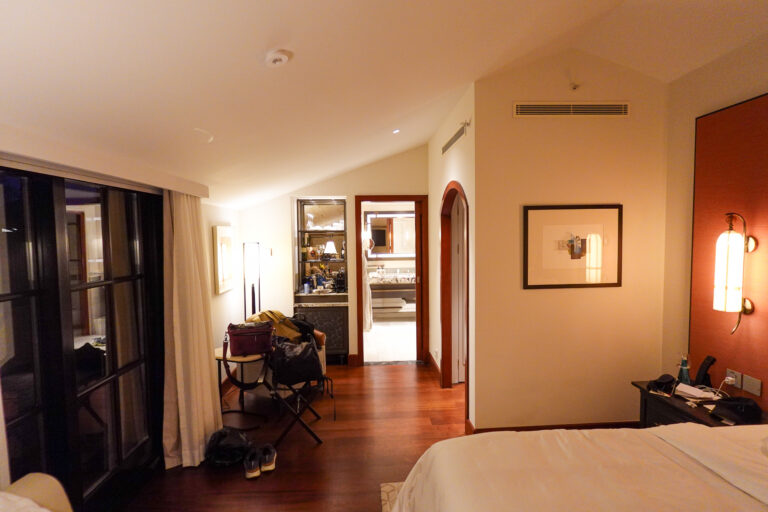
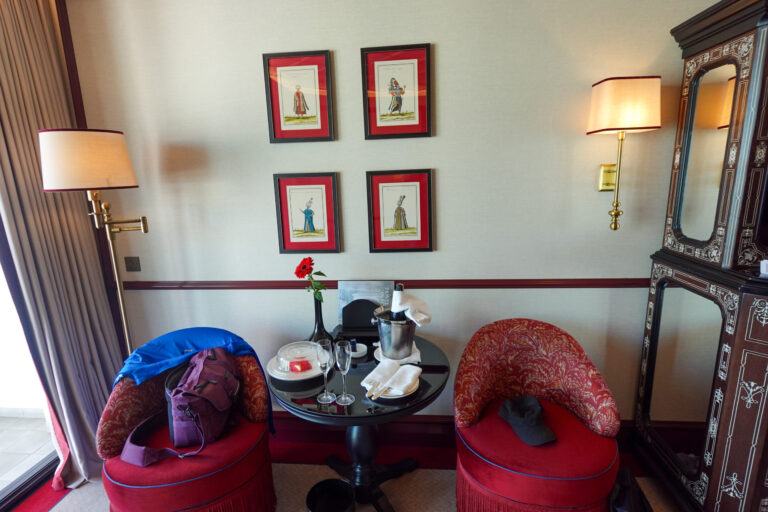
Çırağan: the room, Ottoman revival without apology.Four Seasons: deep reveals, thick walls, a courtyard Deluxe.
Noted
Observed on both stays, not measured.
What
Çırağan Palace
Four Seasons Sultanahmet
Wi-Fi
Strong in the room; spotty through the property
—
Noise
Quiet in the room; the street audible on the land side, the call to prayer each night through the window; blackout curtains weak
Silent in the room; the call to prayer carries on the roof, which is the point
Bed
King, medium-firm
King, medium-firm
Water pressure
Strong and hot
Strong and hot, no wait
Spa
—
Kurna Spa — hammam, steam and sauna; books out
The walk that matters
Ortaköy, about fifteen minutes along the shore
Hagia Sophia, three minutes
Where Çırağan wins
Service, to begin with, which surprises people: more staff on the floor means more eyes on you, and it shows in the details — at the Çırağan a screw from my eyeglasses, dropped invisibly to the floor, came back to me via housekeeping and the manager presented like it was the Sultan’s jewel.
The long pool from a lounger, towel rolled, the strait doing what the strait does. Nothing in the old city can answer this.
The pool is the other half of the argument: a metre above the strait, ships at arm’s length, and a tranquil haze that settles over the water side for whole afternoons. Nothing in the old city can answer it, and the Four Seasons does not try.
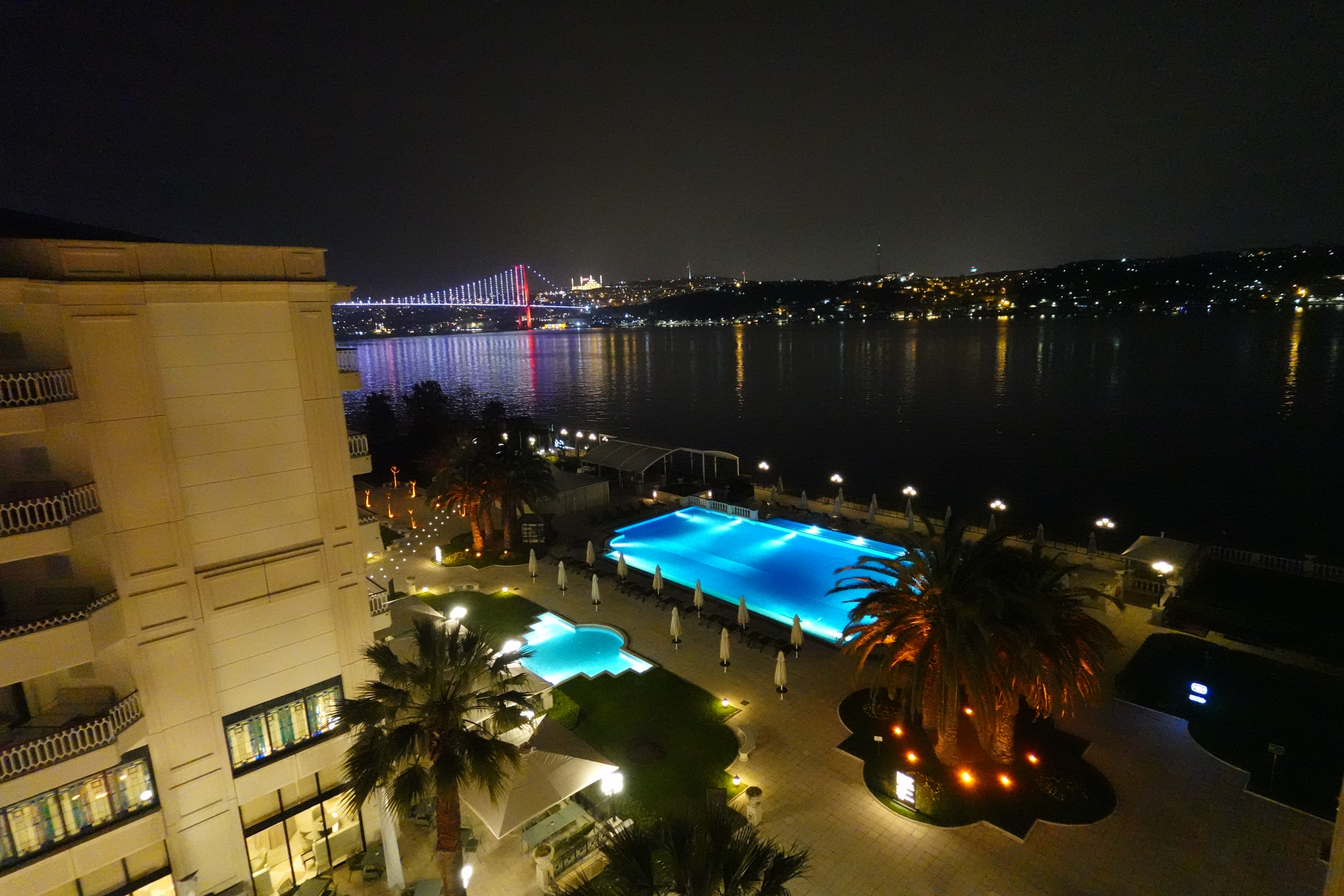
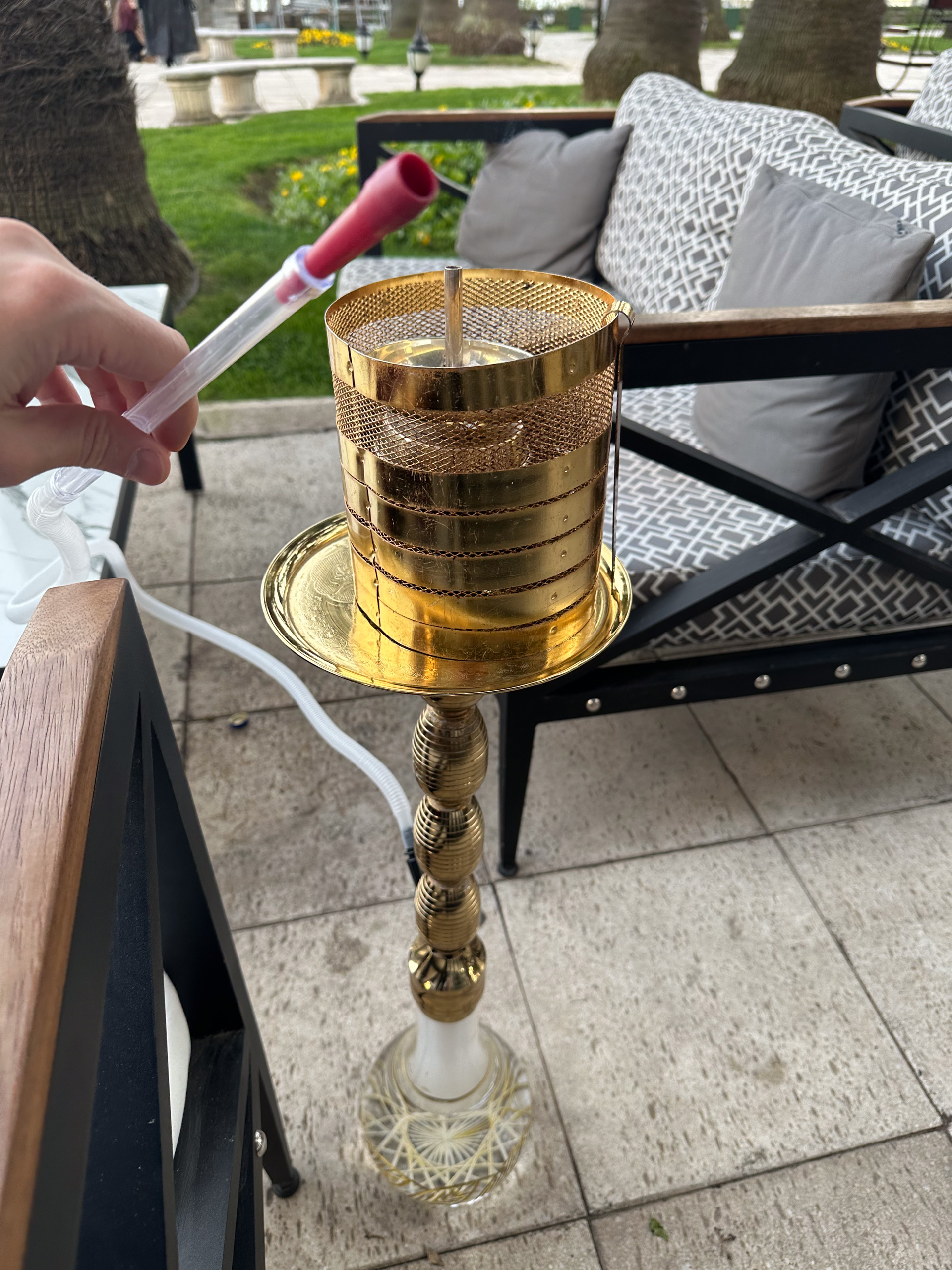
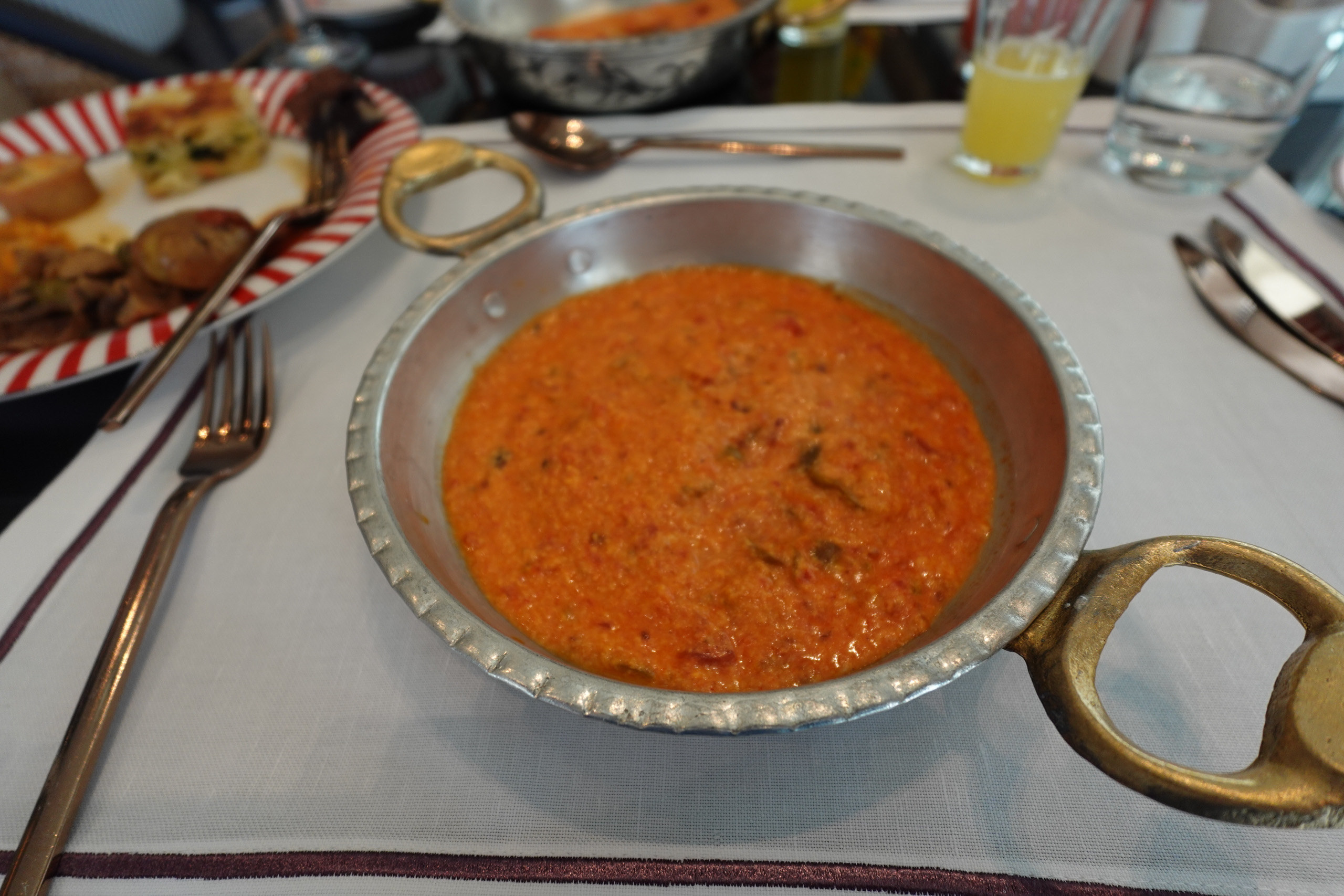
The walk to dinner: the pool lit blue, the bridge lit red.The nargile at the rail, held ready.Menemen in its copper pan, on the terrace.
And there is more to see without leaving the building: the palace itself, a history wing the equal of any publicly accessible hotel’s, art worth several unhurried hours, and a front-desk tour that might end in the sultan’s suites. Dinner at Tuğra — Anatolian wines packaged by a sommelier who is unreasonably good at it, at a table over the water in the palace — is the single table I would book first at either hotel. Families fit better here too: grounds, pool, and room to run.
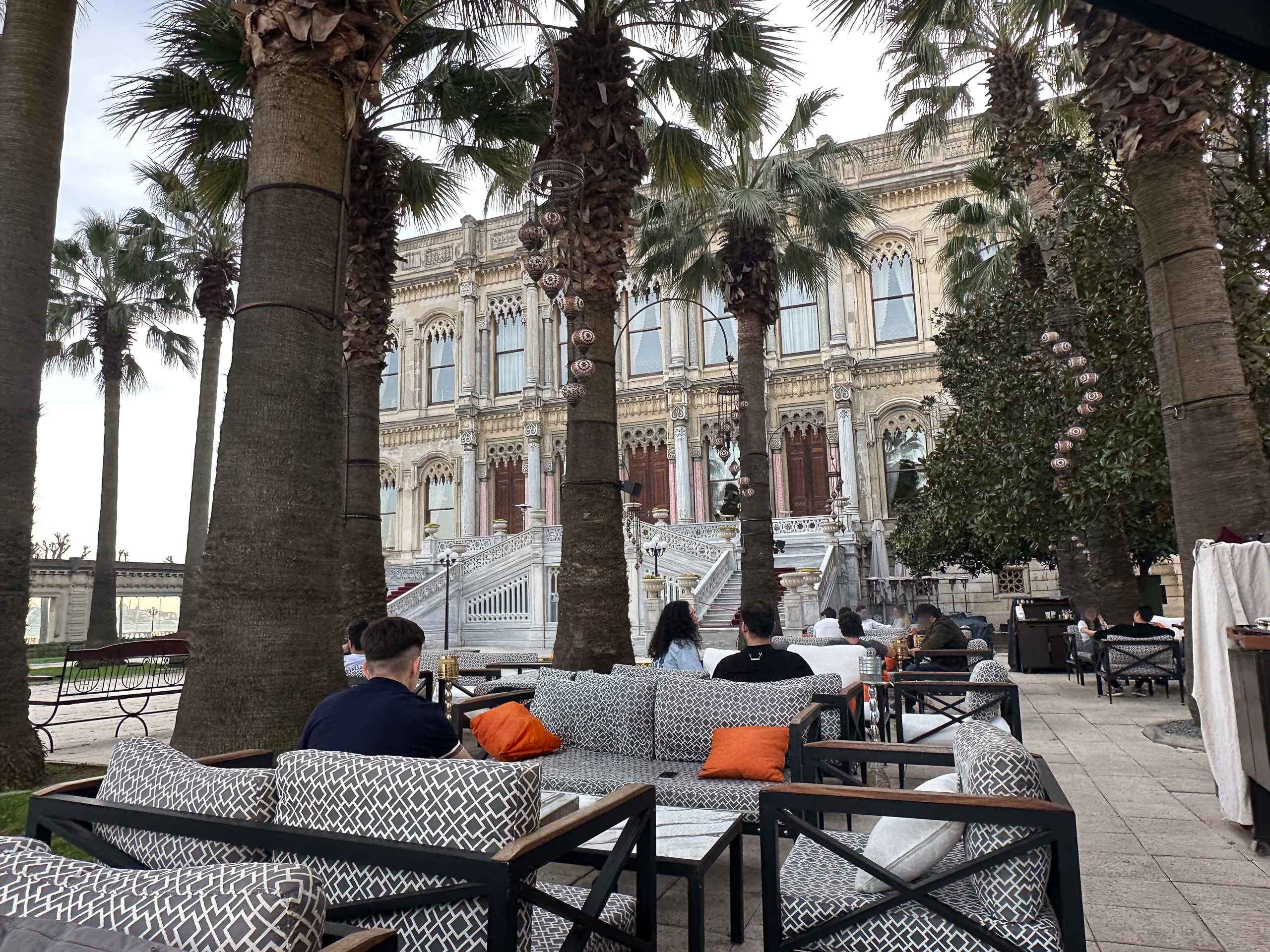
The palace through the palms. Ask the front desk for the tour; it may end in the sultan’s suites.
Where Four Seasons wins
Ease. If Istanbul is a two-day stop, this is the base and it is not close: Hagia Sophia is three minutes away, the Blue Mosque is on the ridge above, and the whole of the old city is a walk. It is the see-all-of-Istanbul-in-a-day home base, and the action outside the door is nonstop and in your face, in the way a first visit wants.
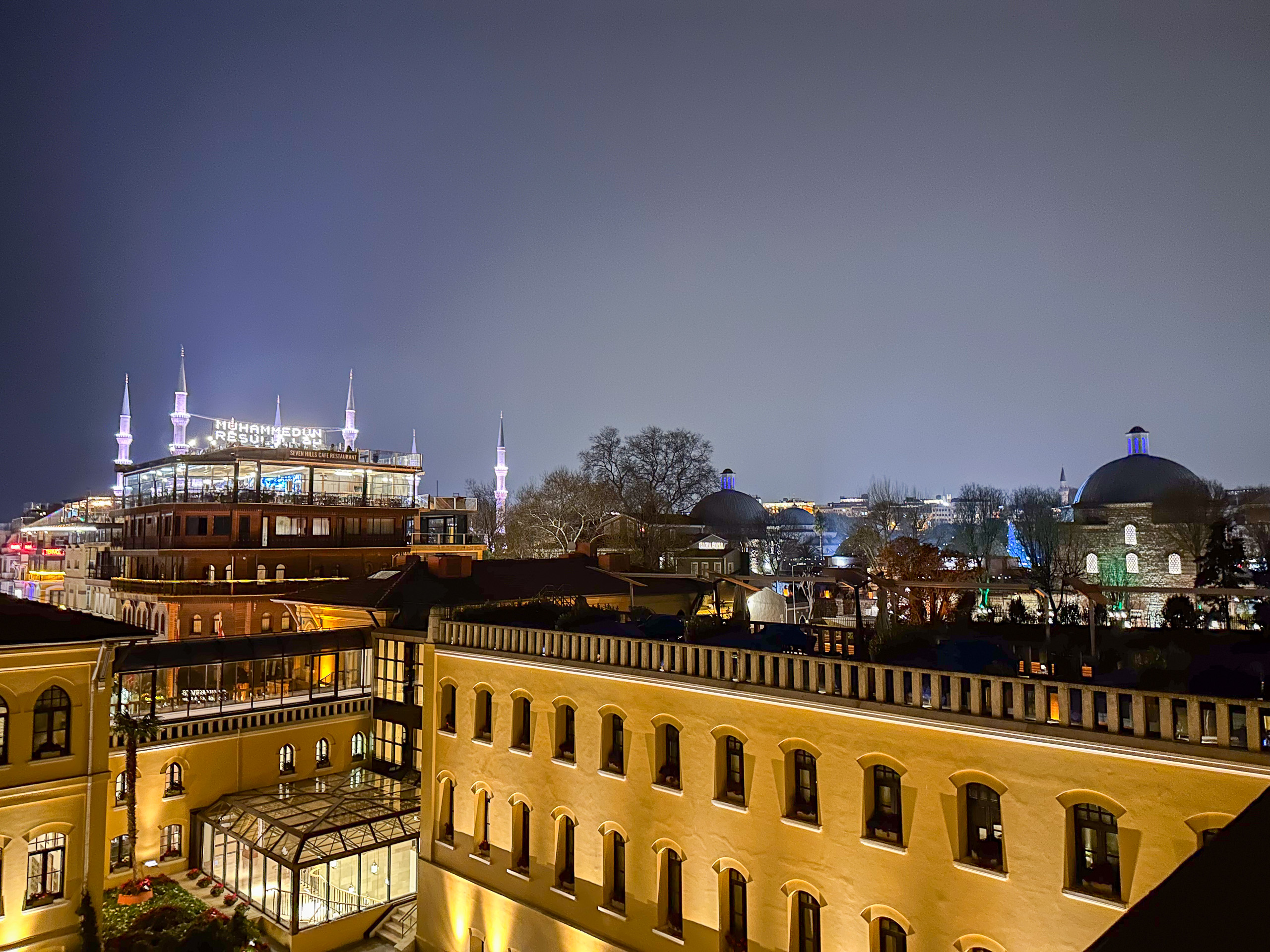
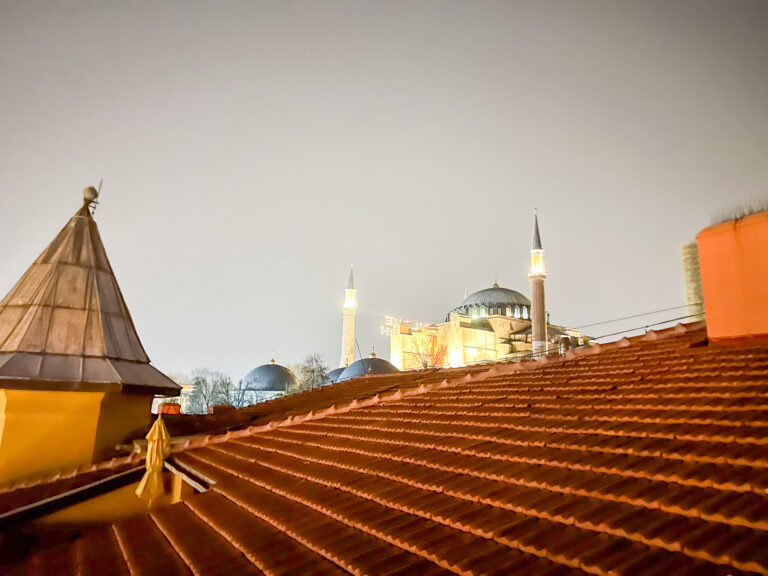
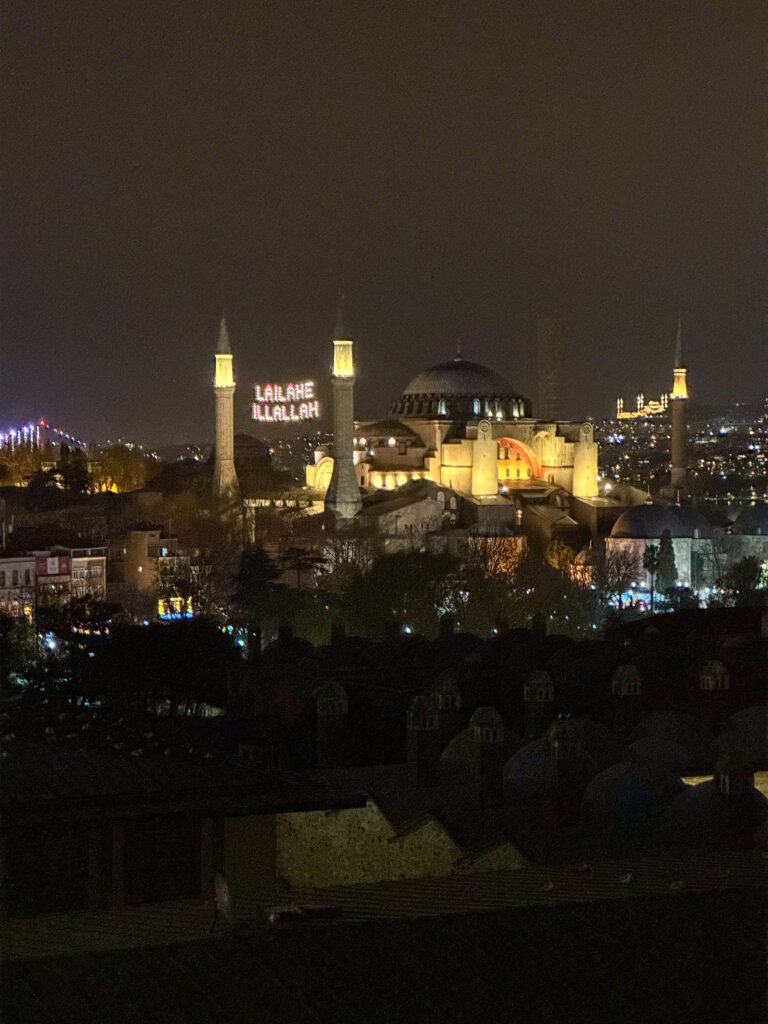
The hotel lit gold at dusk, the mosque going violet behind it. This is what the address buys, and nothing on the Bosphorus has it.
The roof remains the best single view either hotel owns — Hagia Sophia square in front of you, the Marmara opening out beyond — and the small-house warmth is real: names by the first morning, breakfast under a blanket without asking.
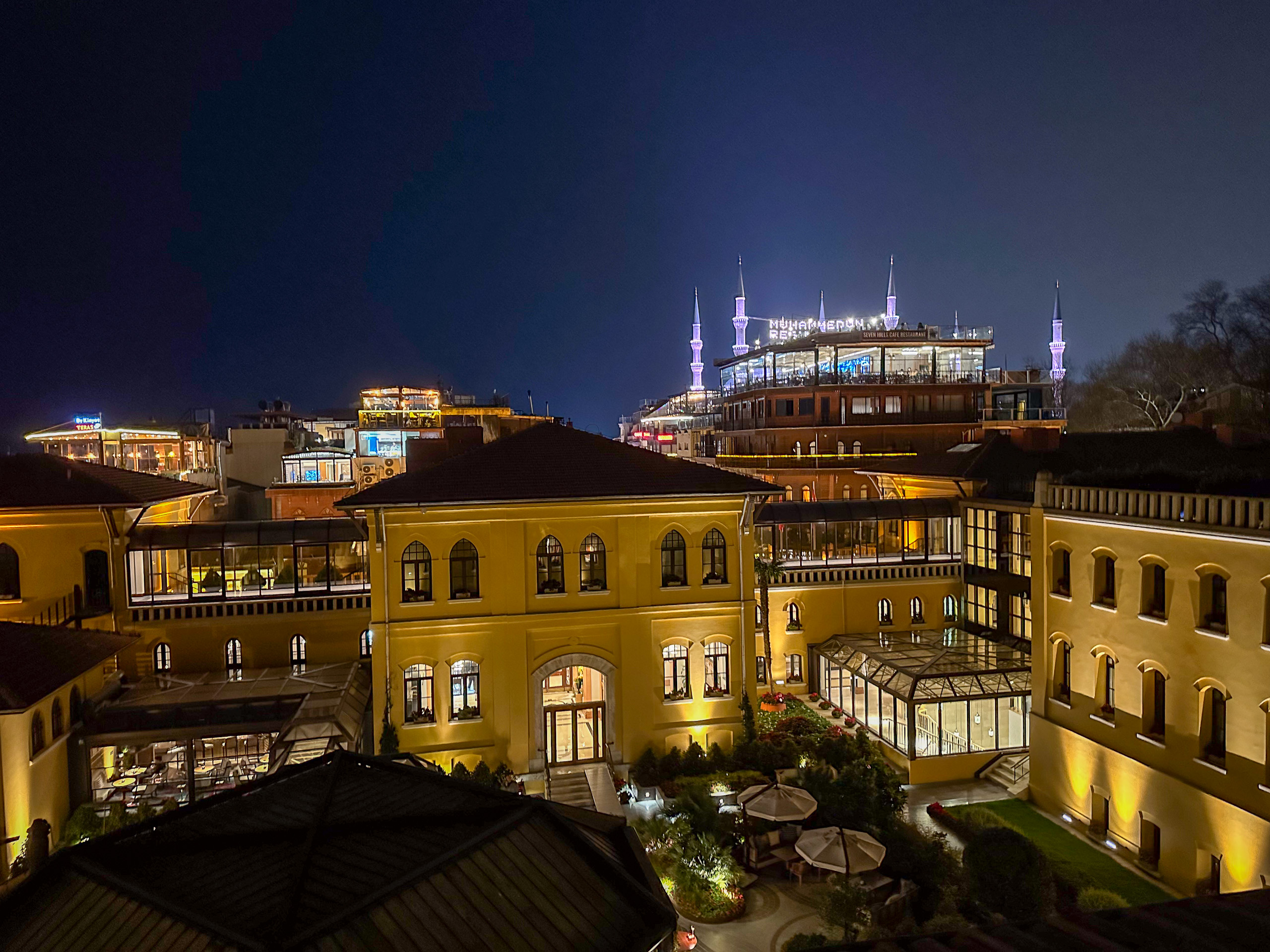
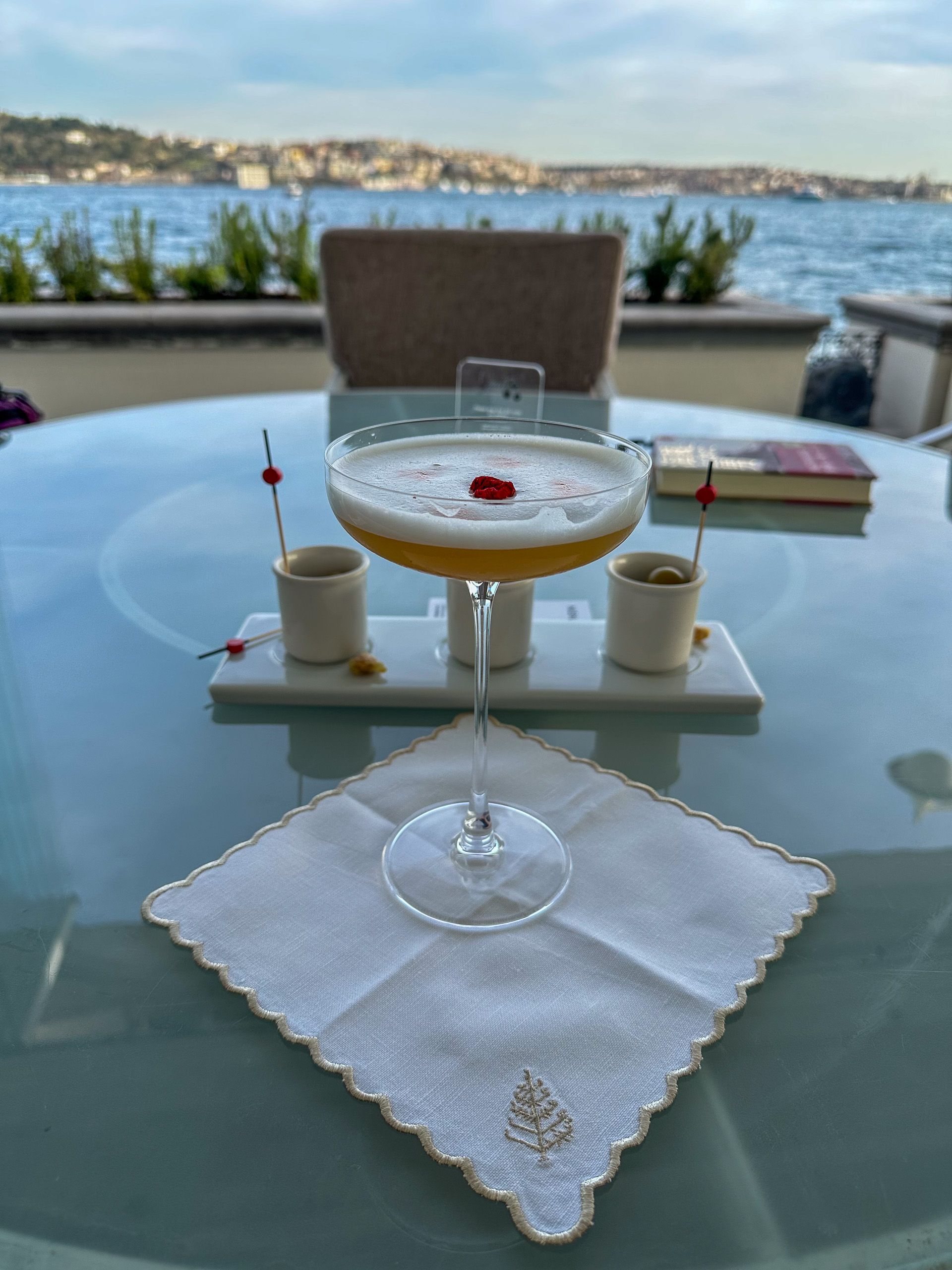
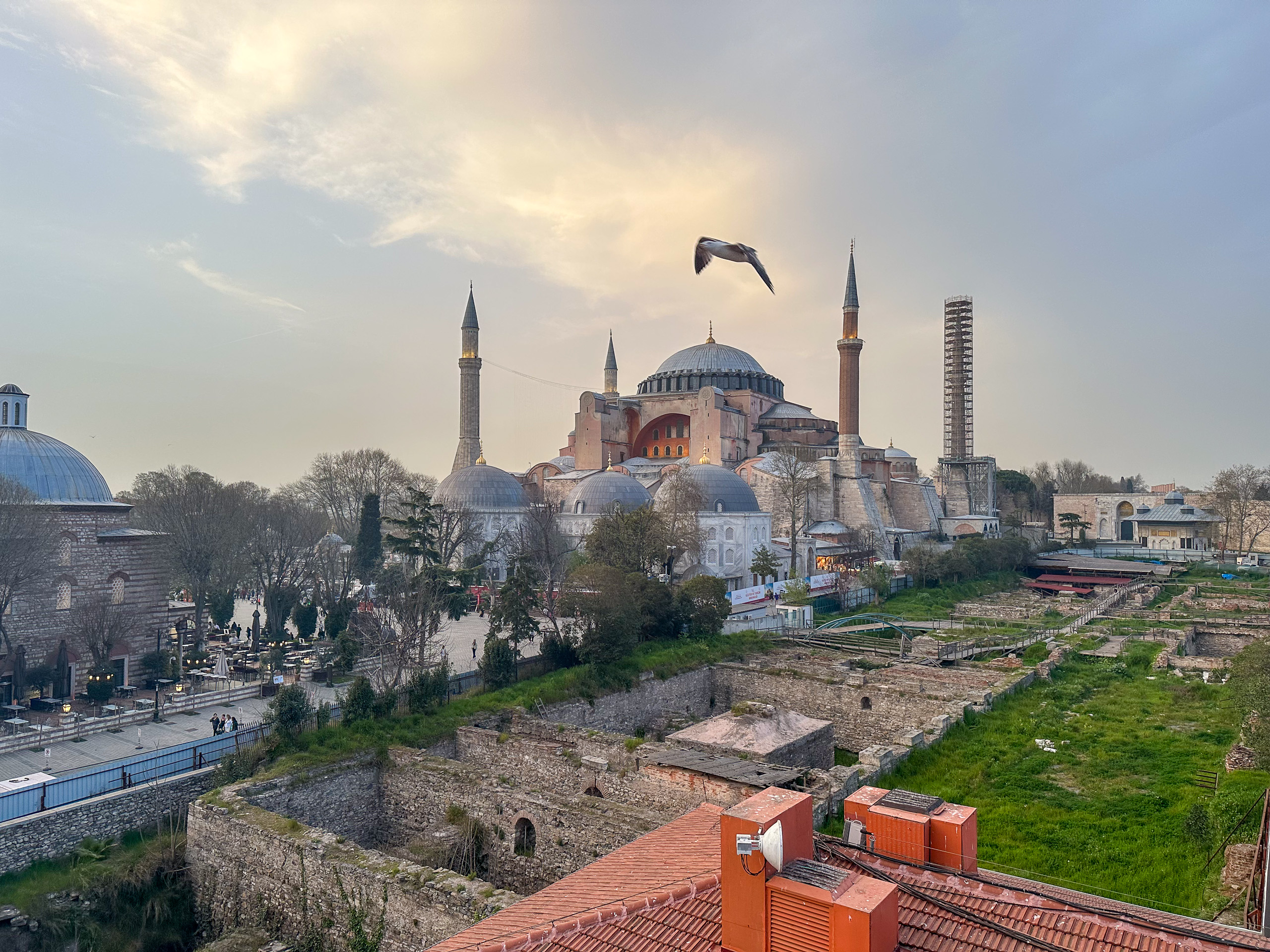
The courtyard lit at night, the Blue Mosque behind.A cocktail and its tray on the roof.A gull crossing Hagia Sophia at dawn.
Verdict by traveller type
Two days in the city: the Four Seasons, for ease of travel, and be on the roof half an hour before sunset.
Three days or more: spend at least one of them — preferably two — at the Çırağan. The pace change is the point: the old city at full speed, then the water at none.
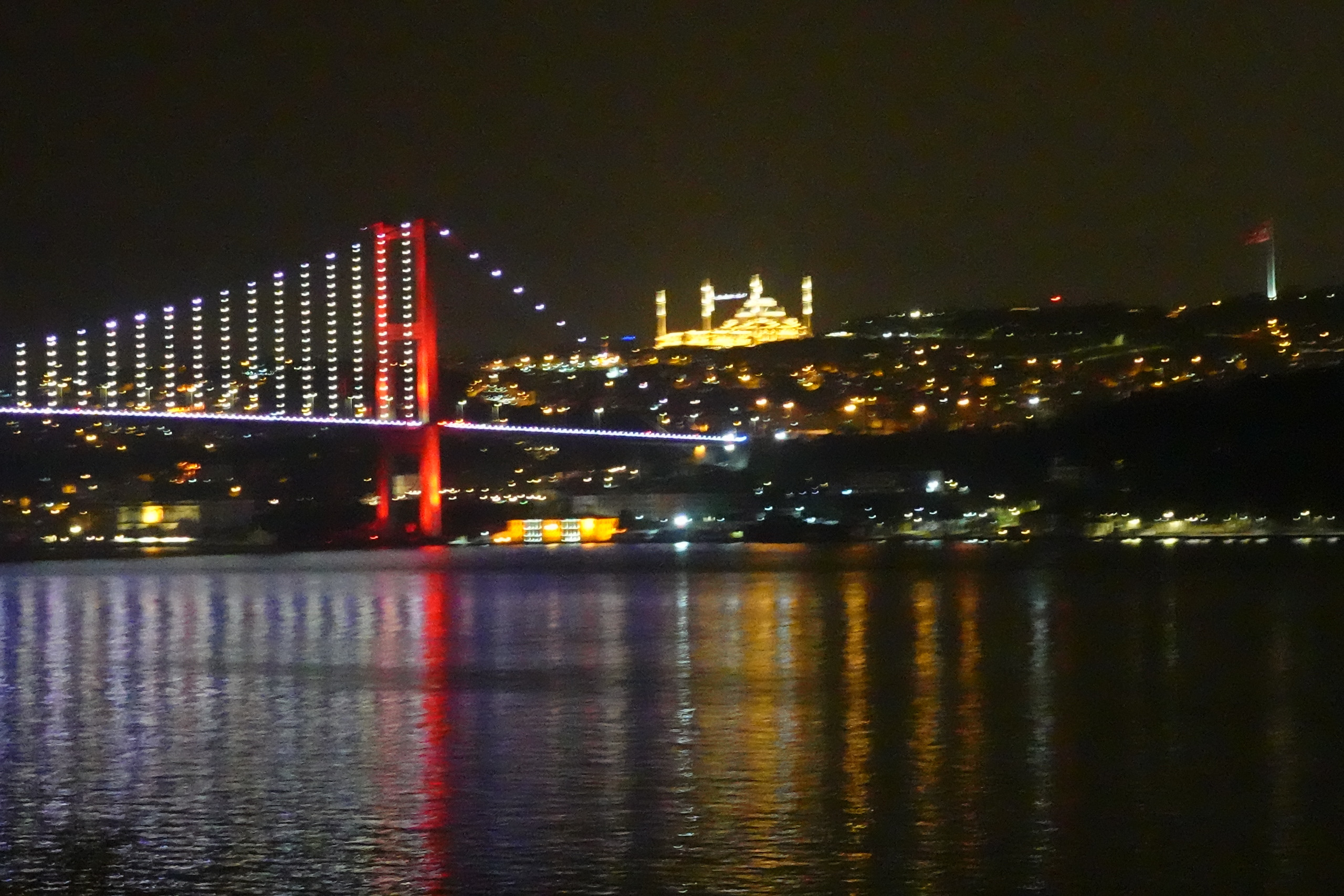
The bridge at night, the mosque floodlit on the far shore. The Four Seasons does not have this. It also has no pool.
Four days or better: do both in the same trip, and I mean that strongly. They are different cities that happen to share a name, and the boat between them is one of the great cheap pleasures on earth.
With children: the Çırağan, for the grounds and the pool. For a first visit on a tight clock: Sultanahmet, and take the tram.
Bottom line
Both are excellent. Two days: Sultanahmet, for ease. Three or more: at least one night, preferably two, at the Çırağan. Four or more: both in the same trip, and thank me from the ferry.
PROVIDENCIALES, TURKS & CAICOS · SAPODILLA BAY vs. GRACE BAY · 5 MIN READ
Sapodilla Bay vs. Grace Bay
Fifteen minutes apart on the same small island: one coast has water you can swim in and somewhere to eat, the other has water you can stand in and a kitchen of your own.
The south-west corner of Providenciales, on high ground above the shallows, ten miles from the strip
The north coast, at the western end of the strip, on the stretch the maps call the Bight
What I booked
A private house; there is no hotel on this bay, so there was nothing else to book
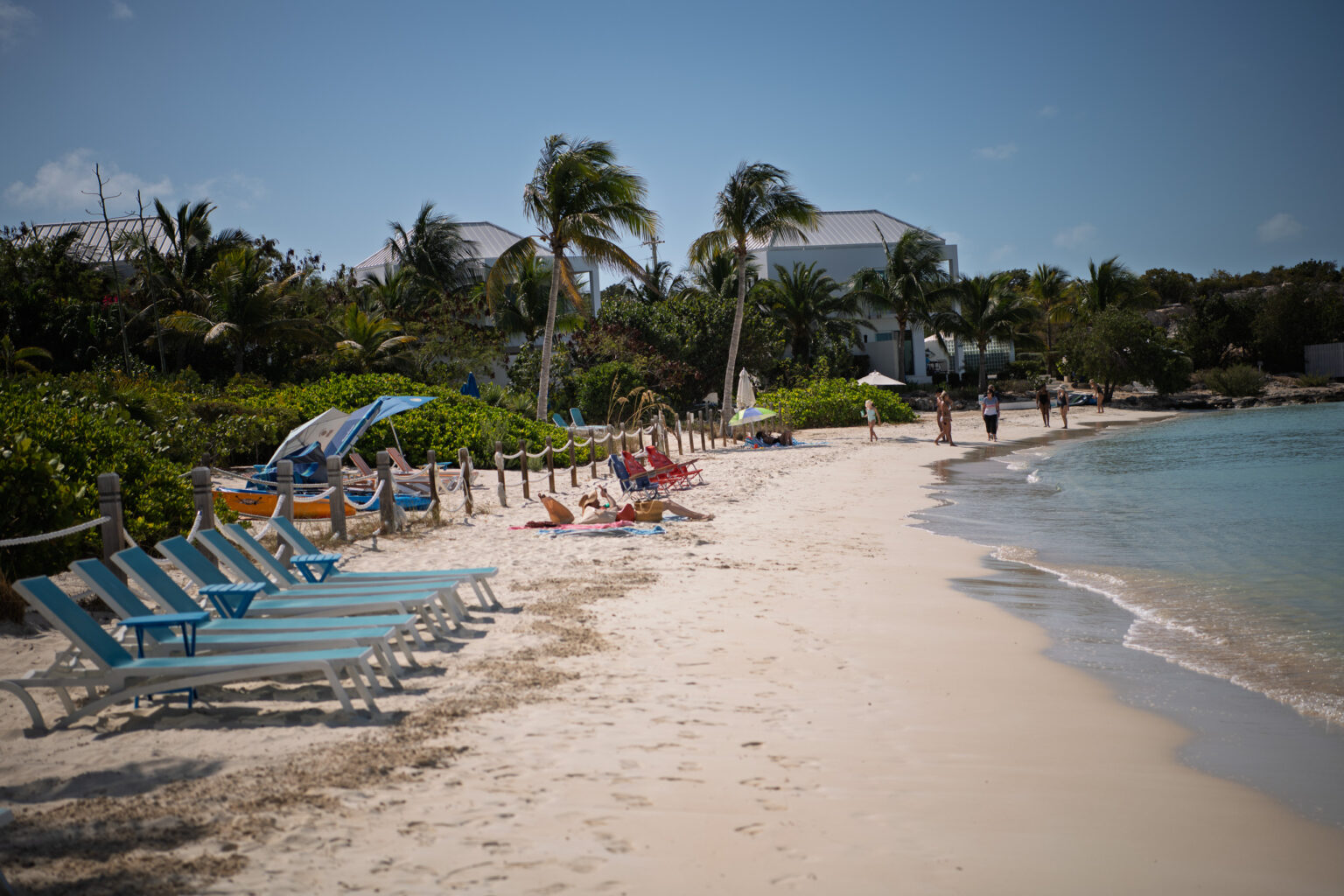
Days on the sand from the public accesses; the loungers belong to the hotels
The beach
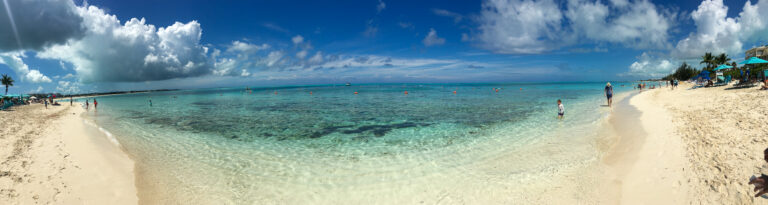
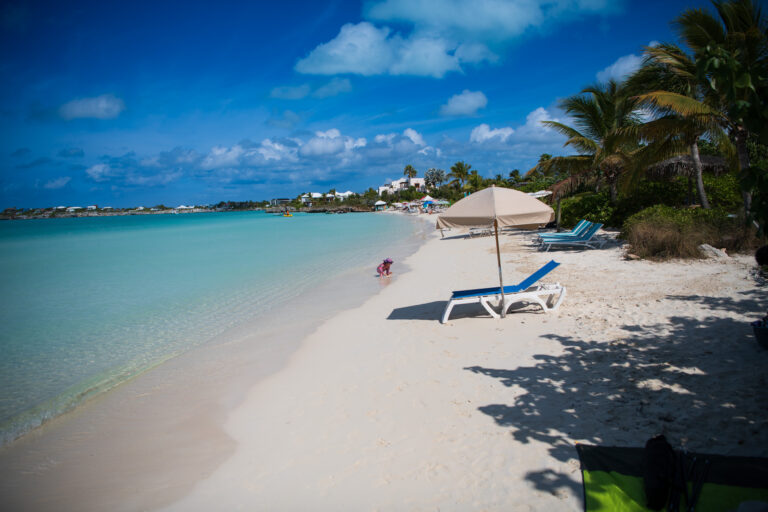
One cove, reached by car and shared with everybody else on this side of the island
Miles of it, resorts and condominiums behind the sea grape, two casual restaurants standing in the dune
Value verdict
Worth it for six or more with small children; for two it is eight people’s worth of house to avoid a drive.
Worth it for two or four who intend to swim, snorkel and walk to dinner.
When to go
Outside hurricane season there is no narrow window to chase. On Sapodilla, sooner beats later — each of the last three visits was busier than the one before.
Booked the way anyone else would book it.
The question
Almost everybody who books Providenciales books Grace Bay, and most of them have never heard of the other one. That is a defensible choice and it is not always the right one. This island has two beaches worth the flight, they sit on opposite coasts about a quarter of an hour apart, and they are so unlike each other that a week on the wrong one is a disappointing holiday. Nobody tells you that, because the photographs of the two are almost interchangeable. The difference is not in the pictures. It is in the depth of the water, the number of front doors behind the sand, and how many of you are travelling.
Grace Bay is the north coast: a long white strip behind a barrier reef that takes the Atlantic swell before it arrives, which is why the water is calm and why the floor under it is deep, clean and sandy. Behind the sea grape there is a resort, then another resort, then a condominium block, then a bar. You can swim from the sand and you can eat three meals a day without starting a car.
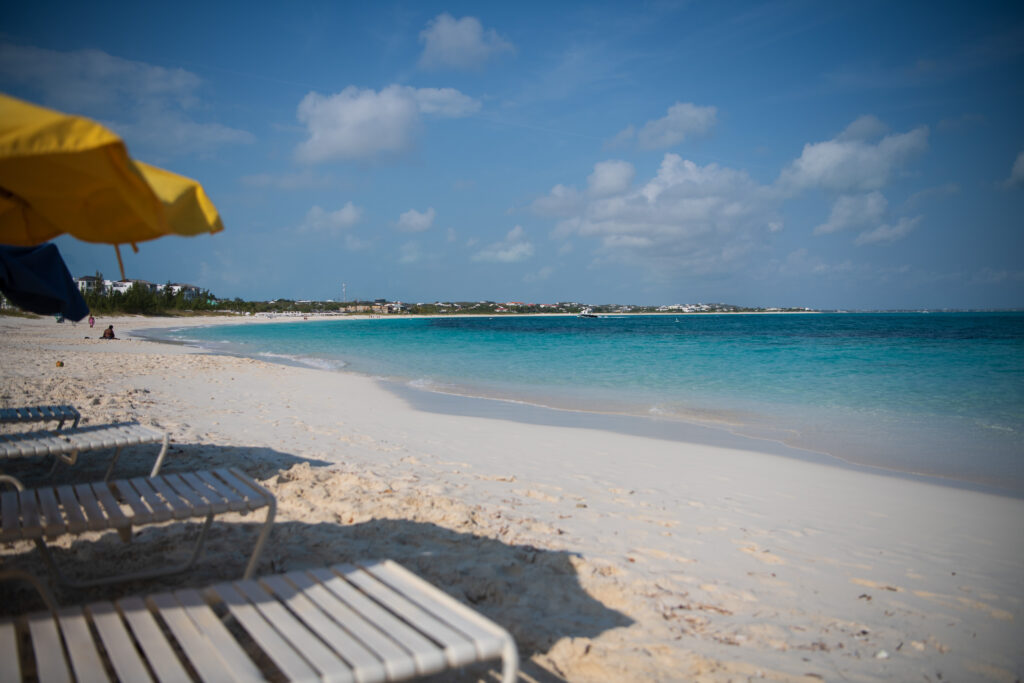
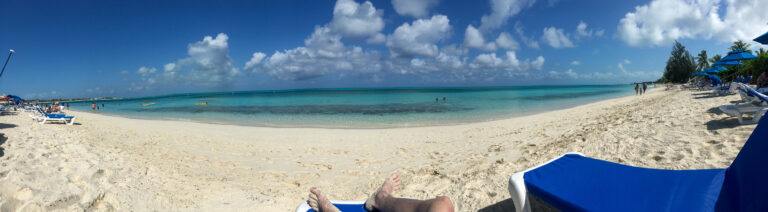
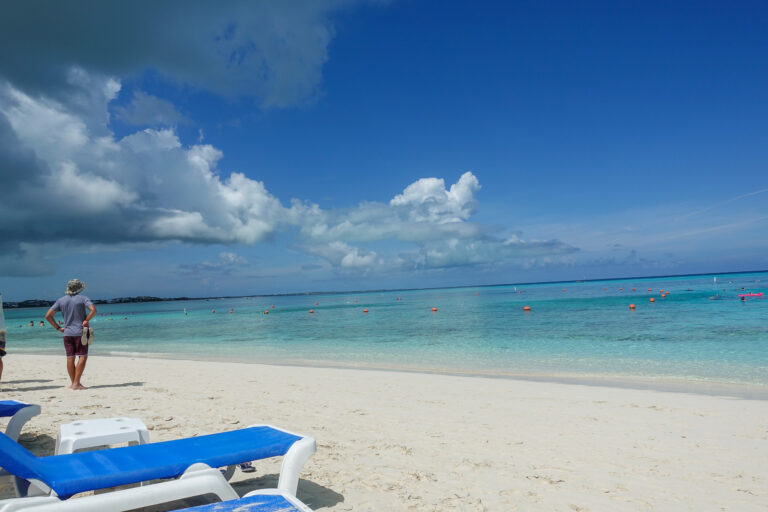
The north shore between two accesses. The scale is the point: the strip is long enough that stretches of it are empty at eleven in the morning.
Sapodilla Bay is the south coast: a single small cove facing a shallow bank that is nowhere deep. There is no hotel on it. The frontage and the ridge behind are private houses, and they are the only thing there is to book. There is no restaurant within walking distance, no beach bar, no water-sports desk, no lifeguard and no lavatory. The water rarely gets above about four feet deep for the first hundred yards. Everything else follows from those two paragraphs.
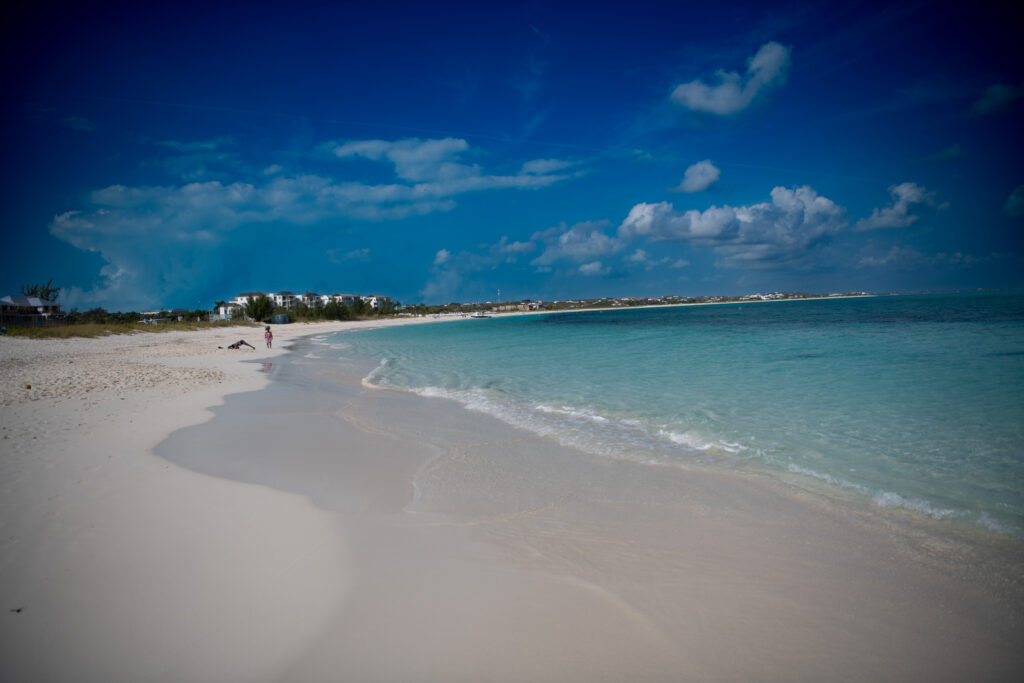
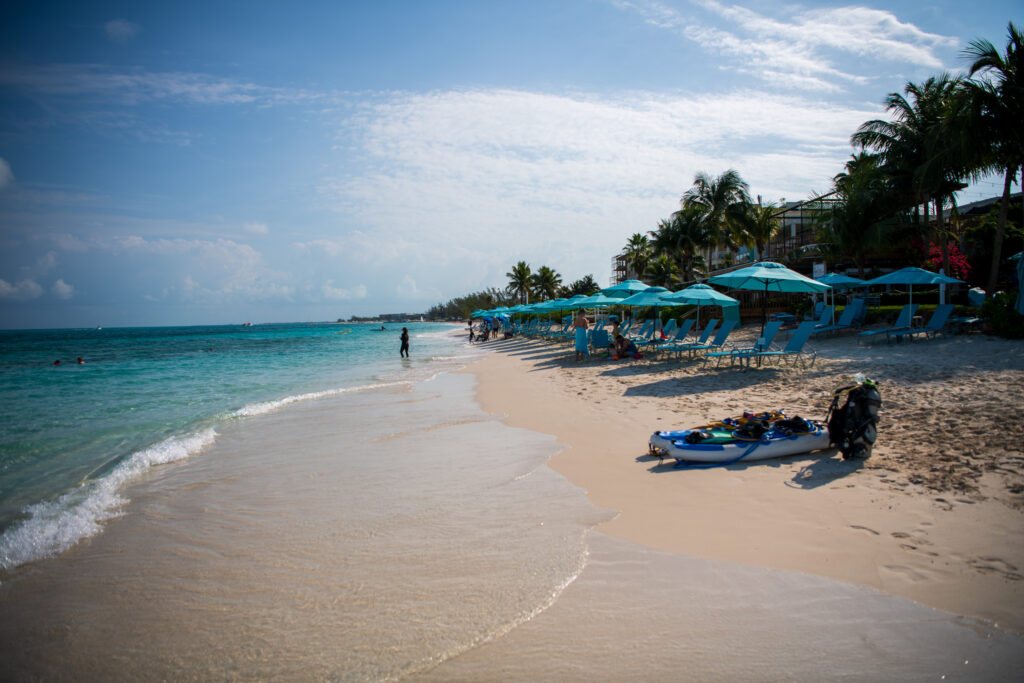
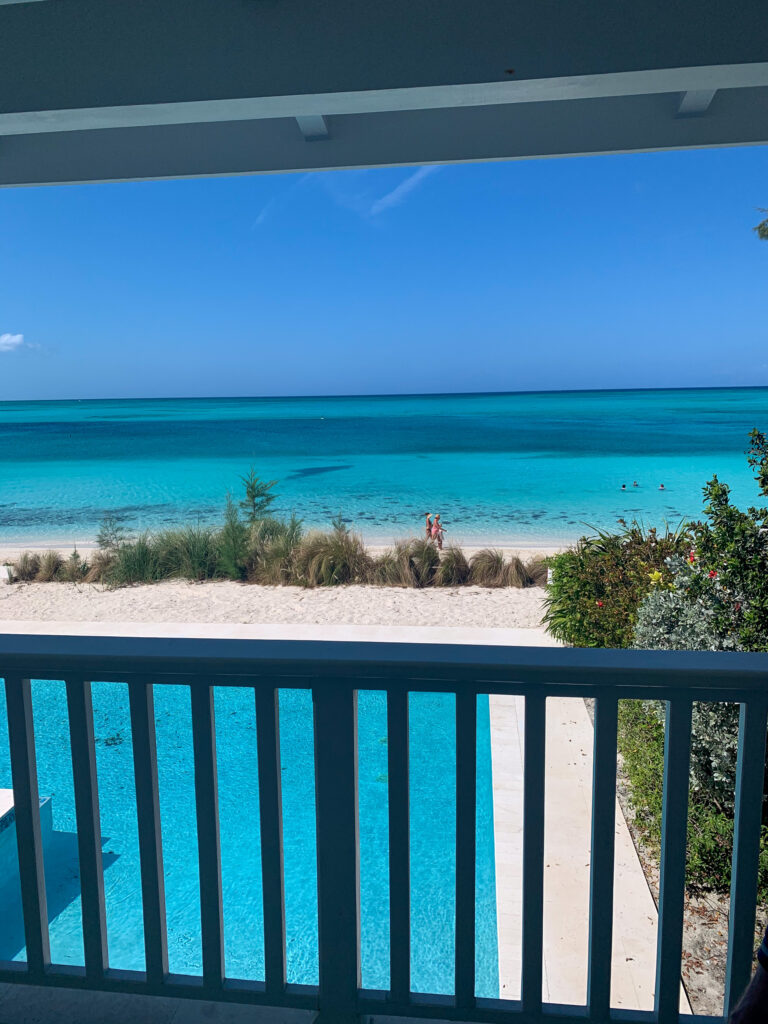
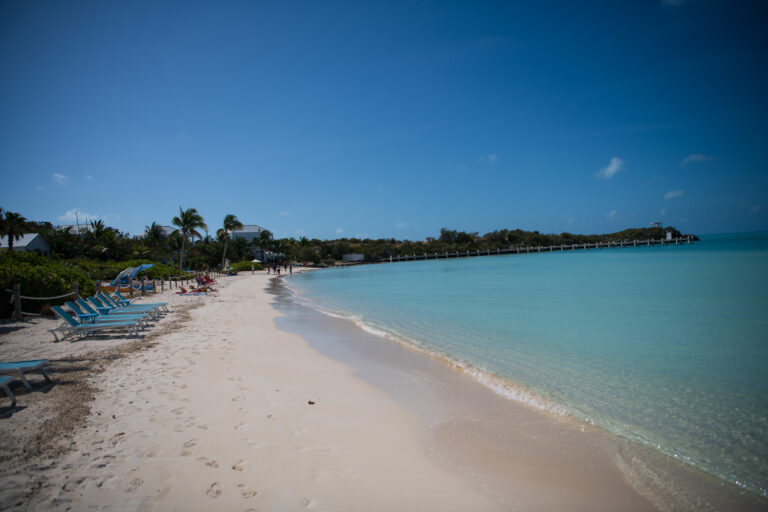
Sapodilla Bay from the sand. The whole surface is flat because nothing arrives here with any energy left in it.
Side by side
What
Sapodilla Bay
Grace Bay
Coast
South, facing the shallow bank
North, behind a barrier reef
Water
Rarely over four feet for a hundred yards; the warmest water on the island; wade, do not swim
Deep, clean, sandy floor; swimming within a few strides of the sand
Waves
Effectively none outside hurricane season
Small; the reef takes the swell
Snorkelling
Thin: small schools, the odd ray near the pier, a wreck that is a serious swim
The country’s best shore-entry reef, at the western end, no boat needed
Where you sleep
Private houses only, from one bedroom to nine; no hotel on the bay
Resorts, hotels and condominiums the length of the strip
Dinner
Nothing within walking distance; you drive to every meal you do not cook
Dozens of tables, several of them on the sand
Beach service
None; two loungers and an umbrella from a vendor by the day
Hotel loungers and shade, bars, water-sports desks — the hotels’ furniture, not yours
Getting around
A car is a condition of the booking; closer to the airport than the strip is
Walkable; taxis everywhere; most people never drive
Quiet
Small enough to feel full by mid-morning; the quiet is at the house
Long enough to absorb people; the noise is powerboats offshore
Best for
Six to twelve people, small children, self-catering
Two to four, swimmers, snorkellers, anyone without a car
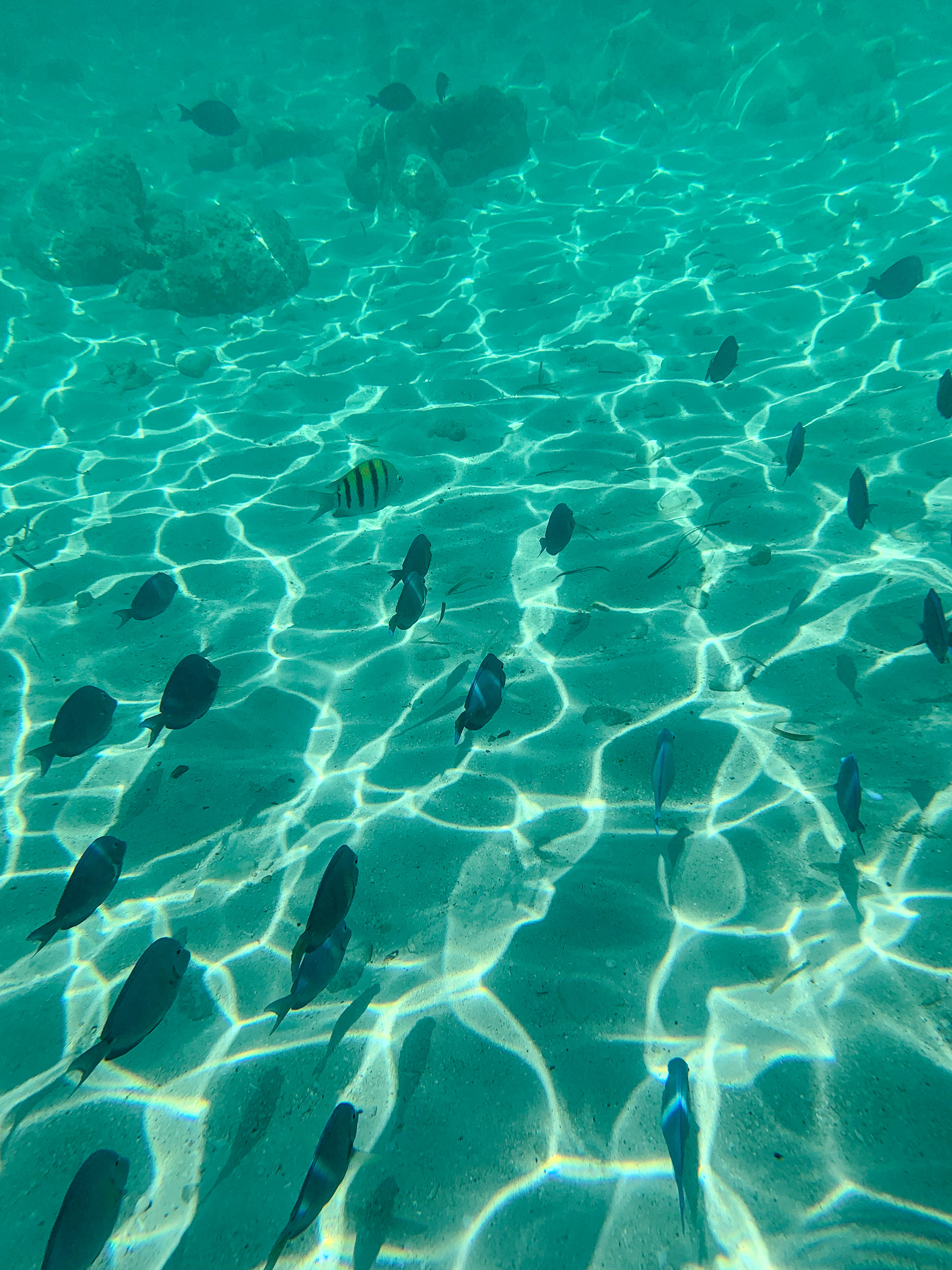
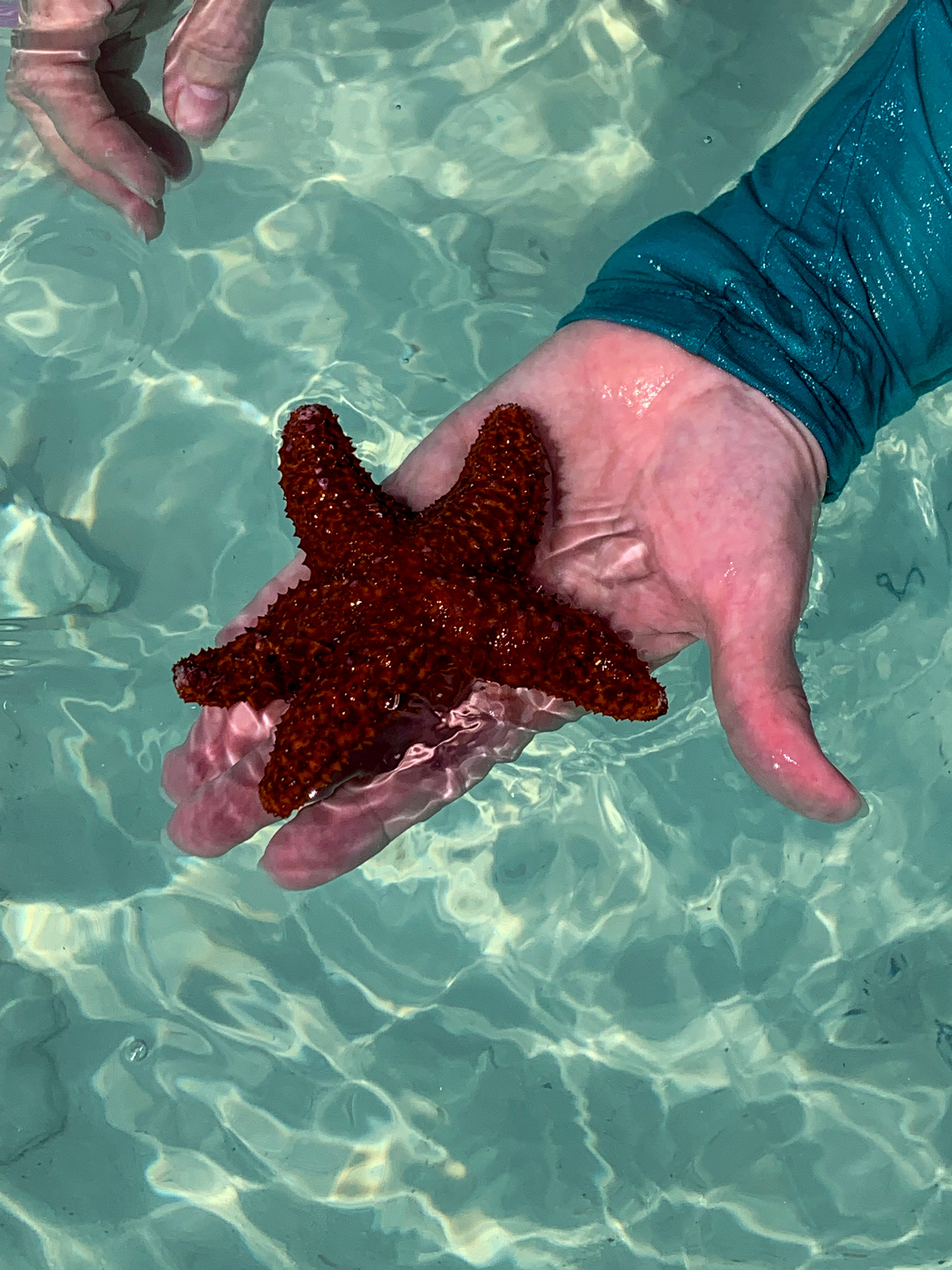
Grace Bay: small fish over rippled sand, waist deep.Sapodilla: a starfish lifted from six inches of water, and put back.
Noted
Observed on both stays, not measured.
The villas are the variable. They differ widely along this shore, and the differences are the booking: research the location first — Taylor’s Bay and Sapodilla Bay read as one strip in the listings and are not the same beach — and research the shore access second, because many of the villas along the strip sit on rocky or cliff access rather than sand.
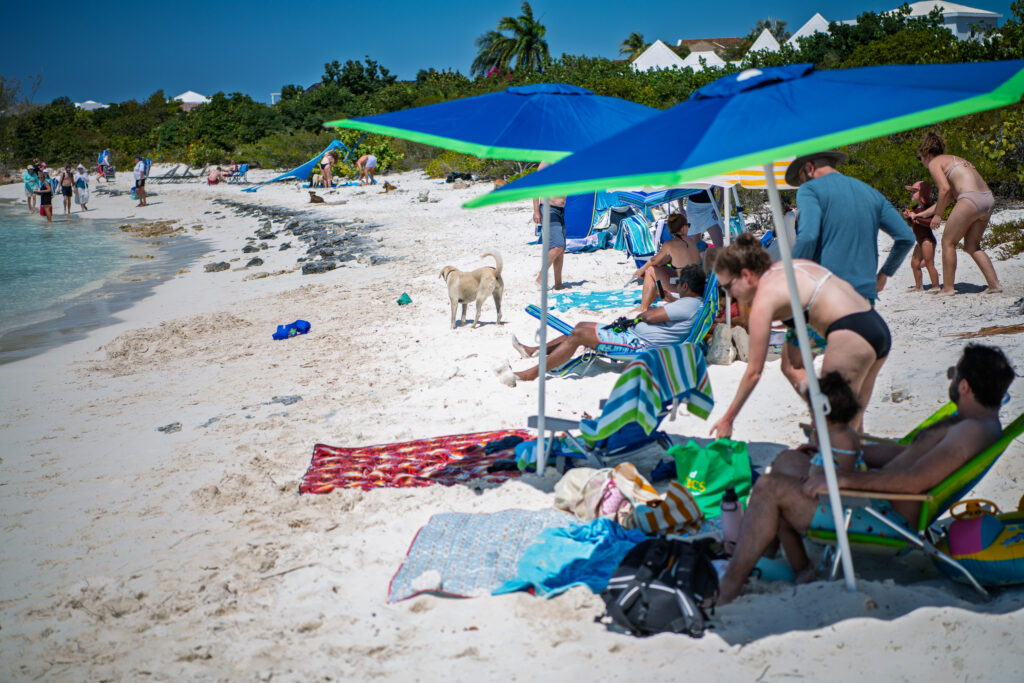
Sapodilla has been busier on each of the last three visits, and the window for clear days may be a limited one. There was also a pack of local dogs we were told had been released to “control the foreigners.” They never actually accosted us; we watched each other with professional respect. Worth knowing they are about.
Where Grace Bay wins
The water, which is most of the argument. At Grace Bay you walk in from the sand and within a few strides you are swimming: arms over, going somewhere, out past the line of people standing about. At Sapodilla you can walk a hundred yards straight out to sea and the water will still be at your ribs.
If somebody in your party swims lengths at home and intends to swim here, that is a defect and it is not a small one. The snorkelling is not close either: the western end of the strip holds the best shore-entry reef in the country, a single coral ridge you swim to from the beach without a boat or a ticket, and it is busy for a reason.
The reputation is earned. Grace Bay is habitually ranked the best beach on the planet — a title with more electors than the Oscars, and for once the winner deserves it — and billions of investment in the luxury hotels behind it keep the whole strip impeccable. It has two temperaments: the polished resort vibe holds the east side, and the west end runs chiller and more bohemian.
Our recommended medium is Windsong, on the reef toward the west side, with lunches at Somewhere Café on the sand nearby. Several locals called the reef off Windsong the best on the island, and the mornings backed them up: a tiger ray and more fish than we could count, each day, before breakfast.
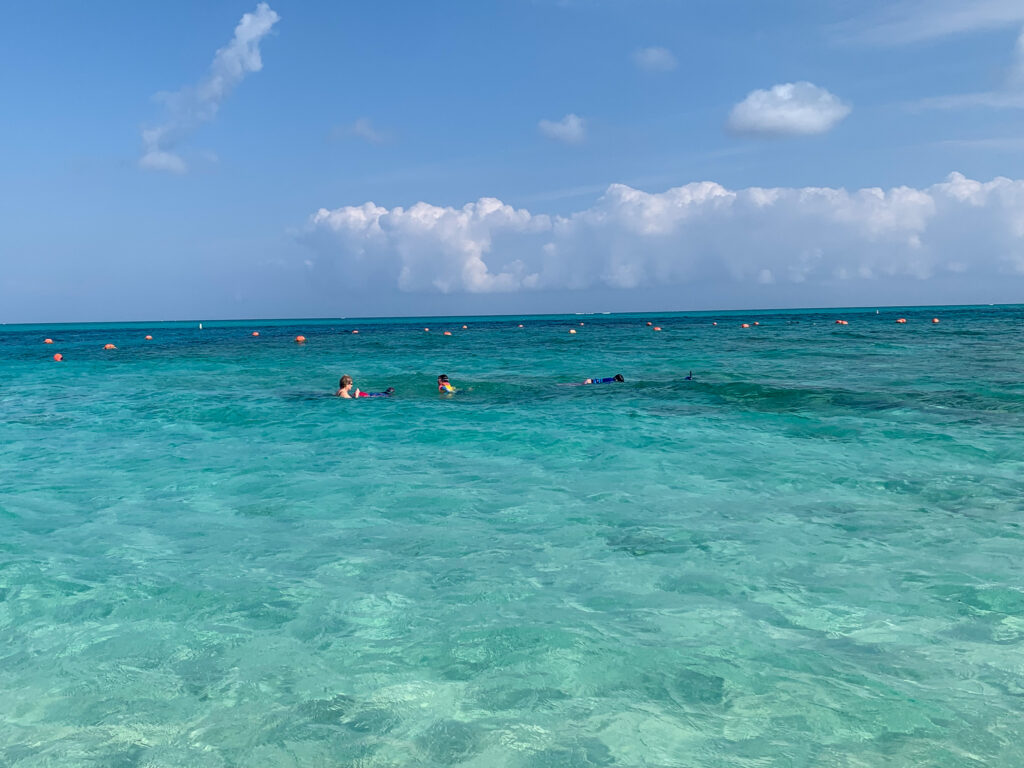
The north shore, inside the buoy line. Depth you can float in, coral you can reach from the sand, and no boat involved.
Dinner. Grace Bay is a hotel beach in the fullest sense: you book a room, the room has a restaurant, and there are twenty more within a walk or a very short taxi. At Grace Bay dinner is a decision you make at seven in the evening. At Sapodilla it is a decision you made on the way in from the airport, at the supermarket, which is the most consequential shop of the week and the only one where I have felt entirely unqualified.
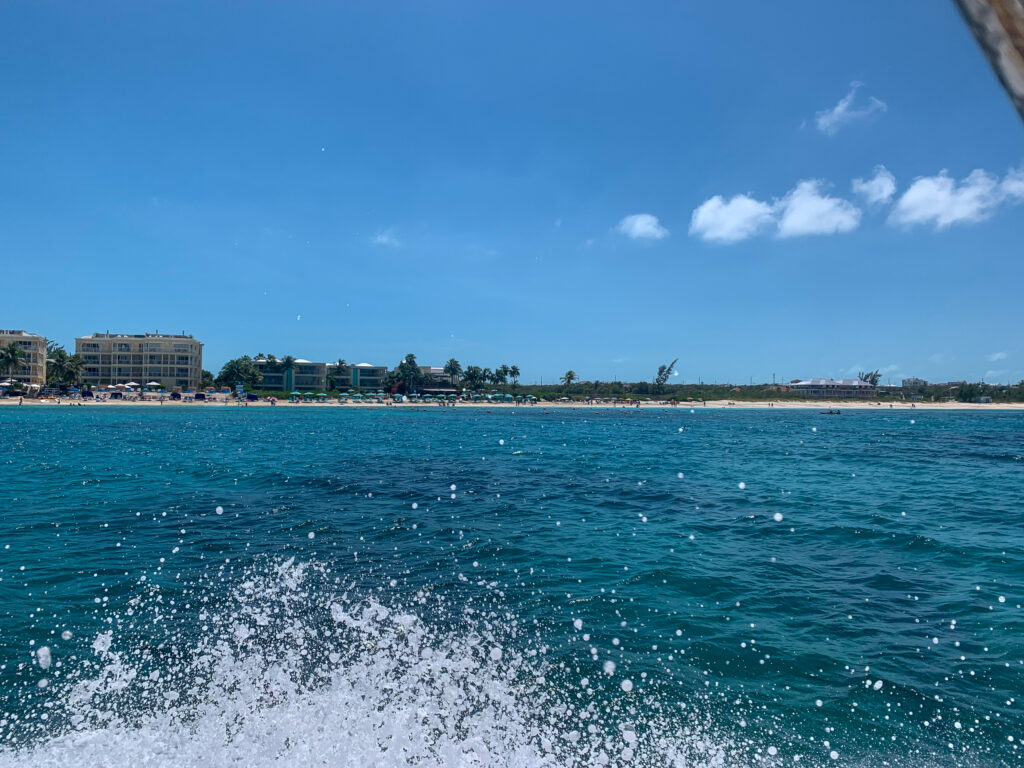
The strip from the water. Every one of those buildings has somewhere to eat in it, and that is the practical difference between the two coasts.
And the finding that surprises people: the developed beach is the quieter one to sit on. Grace Bay is long, with public accesses spaced along the back, so the people spread out and stretches of it read as empty in the middle of the morning. The loungers in rows belong to the hotels behind them, which keeps the sand orderly, and if you are not staying in one of those hotels, none of that furniture is yours.
Loungers, shade and a building with a kitchen in it, thirty yards from the waterline. That is what the north coast sells.
Where Sapodilla Bay wins
Small children. Warm, glassy, ankle-to-waist, no current and no undertow is about as forgiving as a sea gets, and if the person you are worried about is four years old, the shallowness is the entire reason to come. The south coast is warmer for the same reason a puddle is warmer than a lake, and waves outside hurricane season are close to a non-event. The sand is finer, worn to something nearer silt, powdery underfoot and quick to hang in the water when a crowd stirs it up; parts of the entry are limestone shelf rather than sand.
Sapodilla on a good afternoon. Note the grey shelf breaking through at the waterline: parts of the entry are limestone rather than sand.
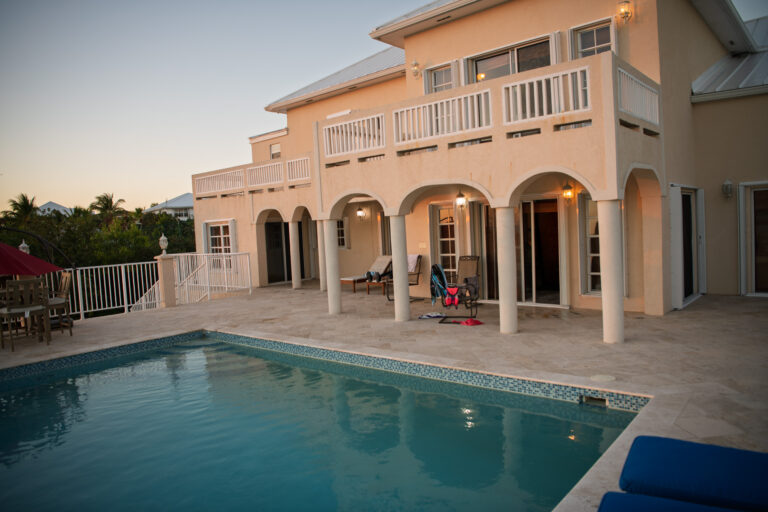
The house. The market runs from one-bedroom cottages to estates sleeping twenty-four, and for six, eight or twelve people the house makes its own case: a kitchen, a pool, a terrace and doors you can close — the kind of space no pair of hotel rooms gives you. The houses sit up on the ridge, and what you get at the end of the day is the whole sky twice over.
The quiet on the south coast is real, but it is at the house rather than on the beach: by late morning the cove is a line of rented umbrellas, a jet-ski stand, a speaker, and somebody walking the sand asking whether you want anything. Take the middle of the day back up to the pool and the week looks very different.
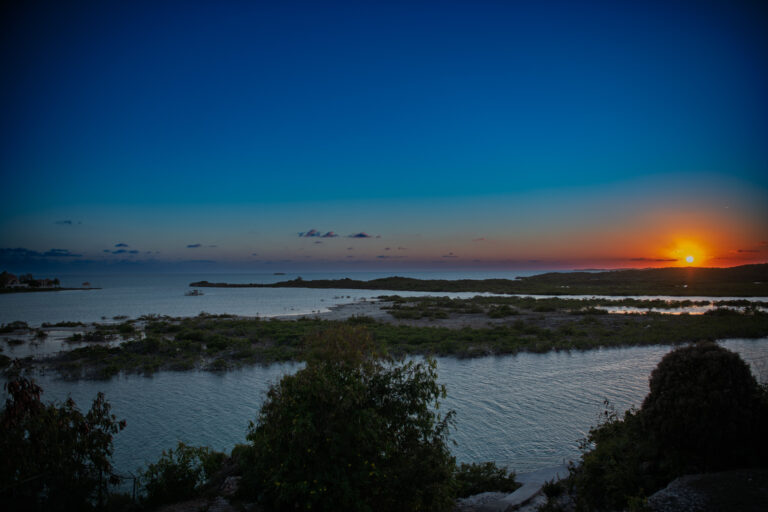
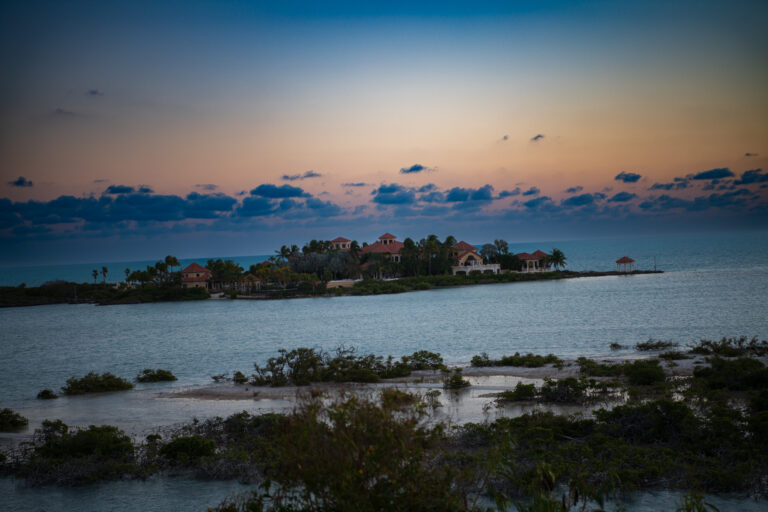
The compensation on the south coast. The houses sit up on the ridge, and what you get at the end of the day is the whole sky twice over.
Position. You are nearer the airport than the strip is, which is worth more than it sounds on a day with small children and a late flight, and five minutes from the things people drive across the island to see. Chalk Sound, the islet-studded lagoon behind the beach, is a national park and the best of them; you kayak on it, you do not swim off it. In exchange the car is a condition of the booking, and the parking at both beach approaches is unpaved and unkind to a low-slung compact.
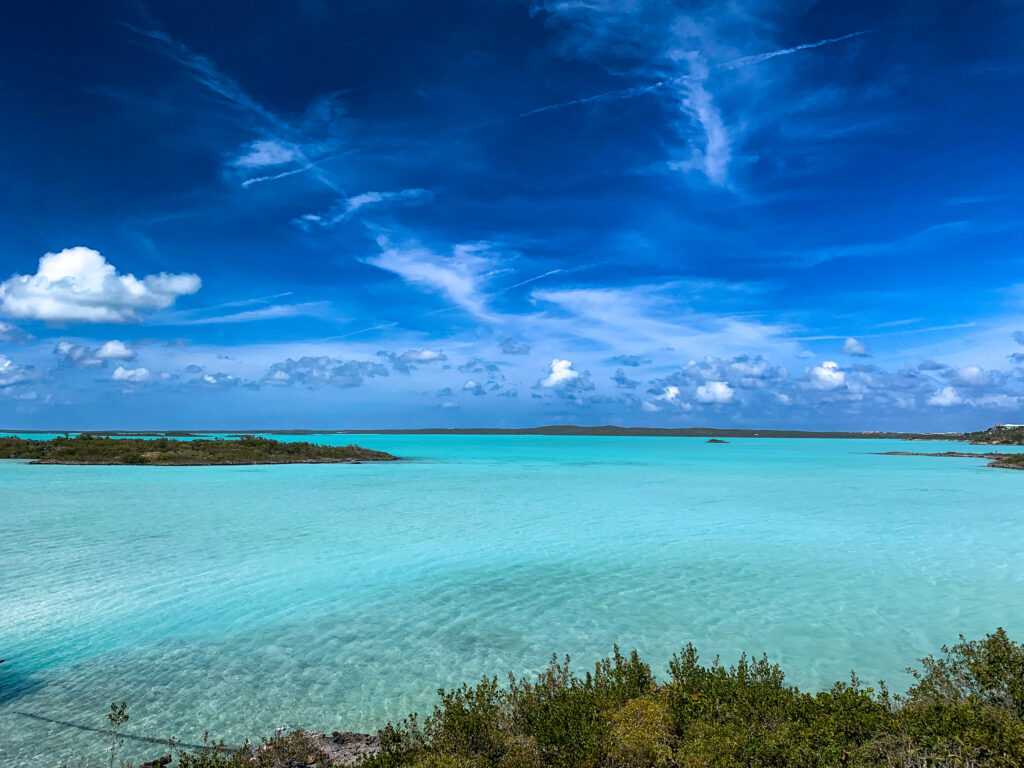
Chalk Sound, five minutes from Sapodilla Bay. A lagoon rather than a beach: you kayak on it, you do not swim off it.
Two things are true of both coasts. Neither has lifeguards, and the real hazard on this island is not the sea but powerboats: there is a speed limit inside the national park on the north shore and it is not universally observed, and at Sapodilla yachts anchor in the bay itself, so watch for traffic rather than surf. Both escape the seaweed that lands elsewhere in the region in summer.
Verdict by traveller type
Book Grace Bay if there are two or four of you; if anyone intends to swim rather than stand; if snorkelling is on the list; if you would like to eat somewhere different every night and walk home along the sand; and if nobody wants to drive. It is also the safer first visit. You will not have to think about a single logistical thing for a week, and the beach earns its reputation.
Book Sapodilla Bay if you are six, eight, twelve: a family group or two couples travelling together, because the house does what no hotel can: a kitchen, a pool and doors you can close. Book it if the water needs to be safe rather than deep, if you would rather cook than queue, if the sunset from a terrace beats the sunset from a bar, and if you accept that you have volunteered to be the one who drives. Book the car before you book anything else.
Do not book Sapodilla for a honeymoon for two, for a swimmer, or for anyone who expects a lounger to appear with a towel on it. Do not book Grace Bay for a party of ten who want to eat together every night, unless you have imagined booking ten dinners a night for seven nights and did not flinch.
For all the sorting, both are a strong recommendation — together they sit at the top of the list of places to visit before you die, morbid phrasing for somewhere this sunny, but the list is not wrong. Whichever you stay on, take a day trip to the other: the argument settles itself in fifteen minutes by car.
Book Grace Bay if there are two of you. Book Sapodilla Bay if there are eight.
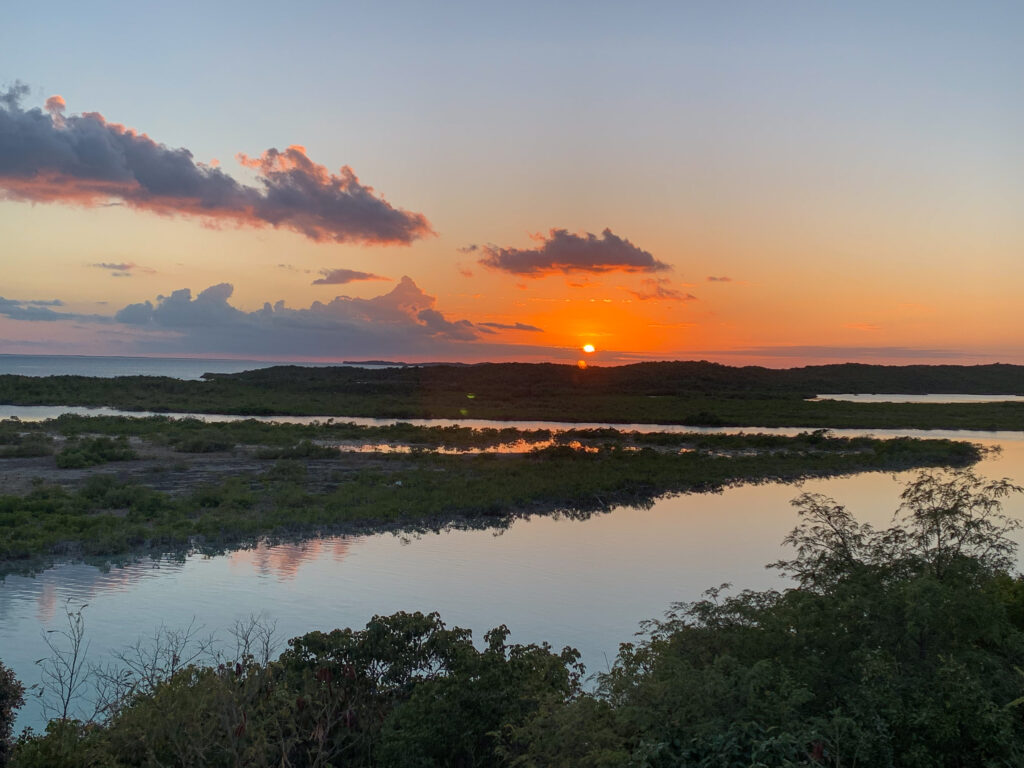
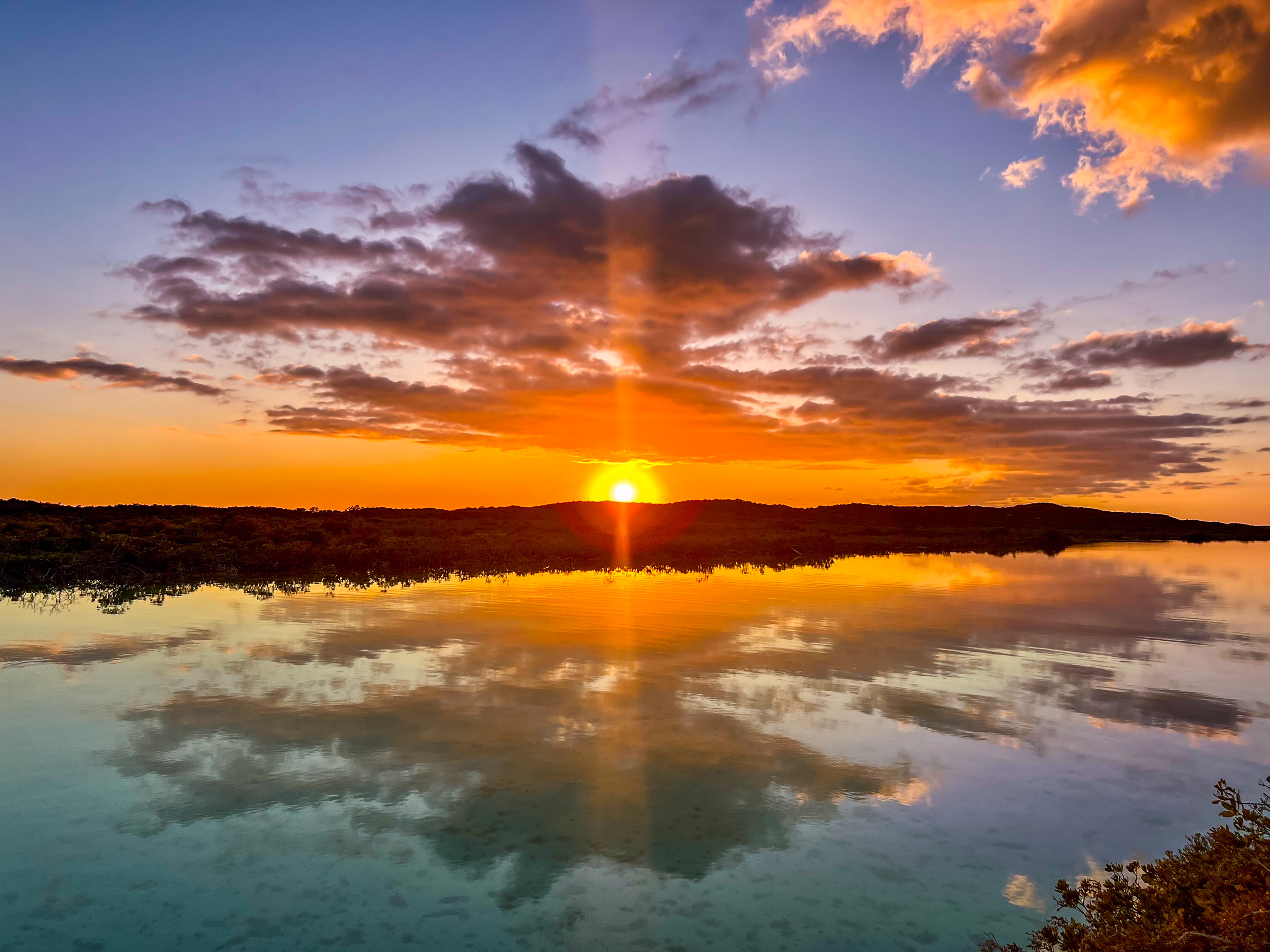
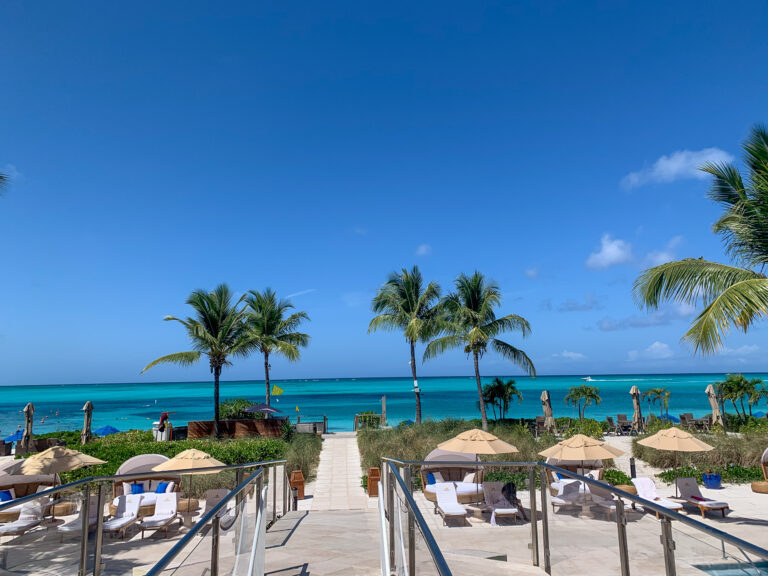
A vivid sunset mirrored in the still water of the flats. The sunset is the one thing the south coast wins outright.
Bottom line
Two beaches, one island, both a strong recommendation — top of the list of places to visit before you die. Party size picks the base: Grace Bay for two or four who want to swim and walk to dinner, Sapodilla Bay for six or more with small children and a kitchen of their own. Whichever you choose, take the day trip to the other — it is fifteen minutes away.
Two, across a four-night stay split between the two hotels
Menu
The set tasting menu; there is no other
À la carte across the restaurants, bars and lounges of both hotels
Drinks
The wine pairing
By the glass and from the bar lists
Value verdict
The best meal I have ever eaten, in any country. Go once before you die.
Worth it every other night — and some of Phra Nakhon’s plates matched Sorn’s.
Booked the way any other guest would book it.
The question
Sorn is the most difficult table to get in the country. I have talked to more than a dozen people, inside and outside Thailand, who tried numerous times and failed. It is also the best meal I have ever eaten in my life, in any country, and anyone who can possibly afford it should go once before they die. So the heading above looks like a joke at Sorn’s expense. It is not. Everyone knows about Sorn. What nobody would guess is that a hotel dining room with no stars could put some plates beside it. That is the point of this piece.
Sorn is a destination and behaves like one. One southern Thai tasting menu, dinner only, one sitting a night from six, built from the produce of the southern provinces and cooked over charcoal and in clay pots, with three stars on the door. You cannot order anything else, you cannot come at eight, and the booking is final a month or two before you sit down. It is the best restaurant in Thailand and I have written it up on its own.
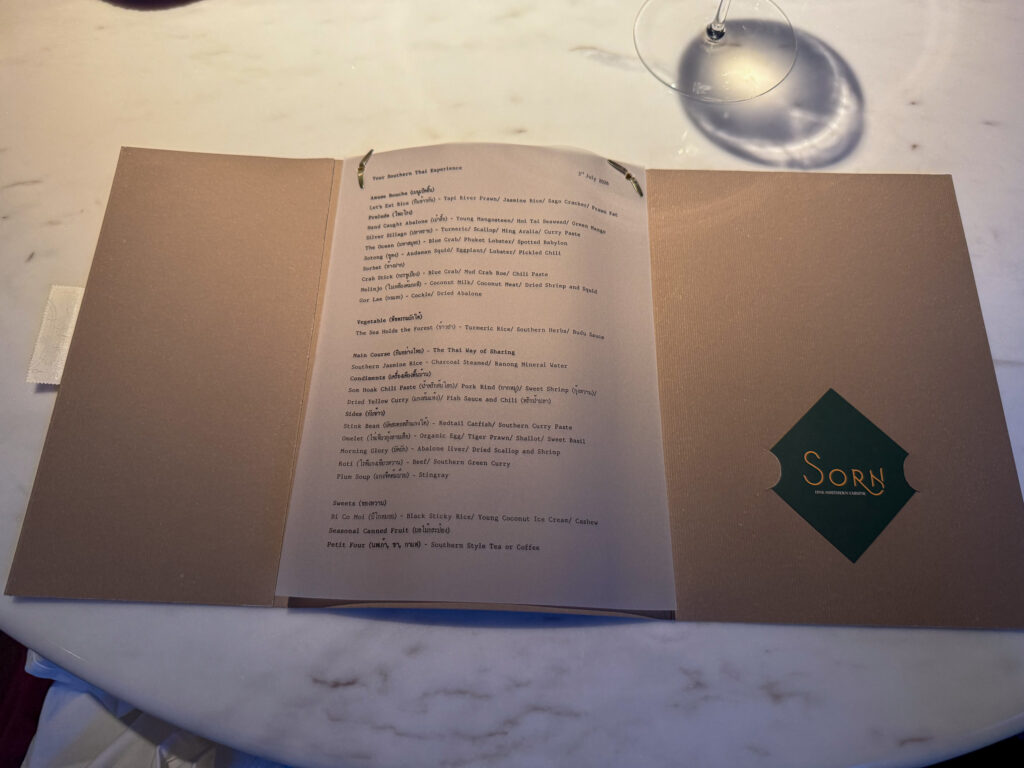
The whole of Sorn’s offer, printed on one card. There is nothing on the other side of it.
The Chao Phraya Estate is the opposite proposition, and the extreme version of it: two hotels, one driveway, more than a dozen places to eat and drink between them. Cantonese, French, Italian, Riviera, Thai, a patisserie coffee at seven in the morning, a bar the city crosses the river for. Both hotels take outside bookings at every room, so none of it requires a key. Nothing needs deciding a month out. And one of those rooms, Phra Nakhon at Capella, came nearer to Sorn than any hotel kitchen has a right to.
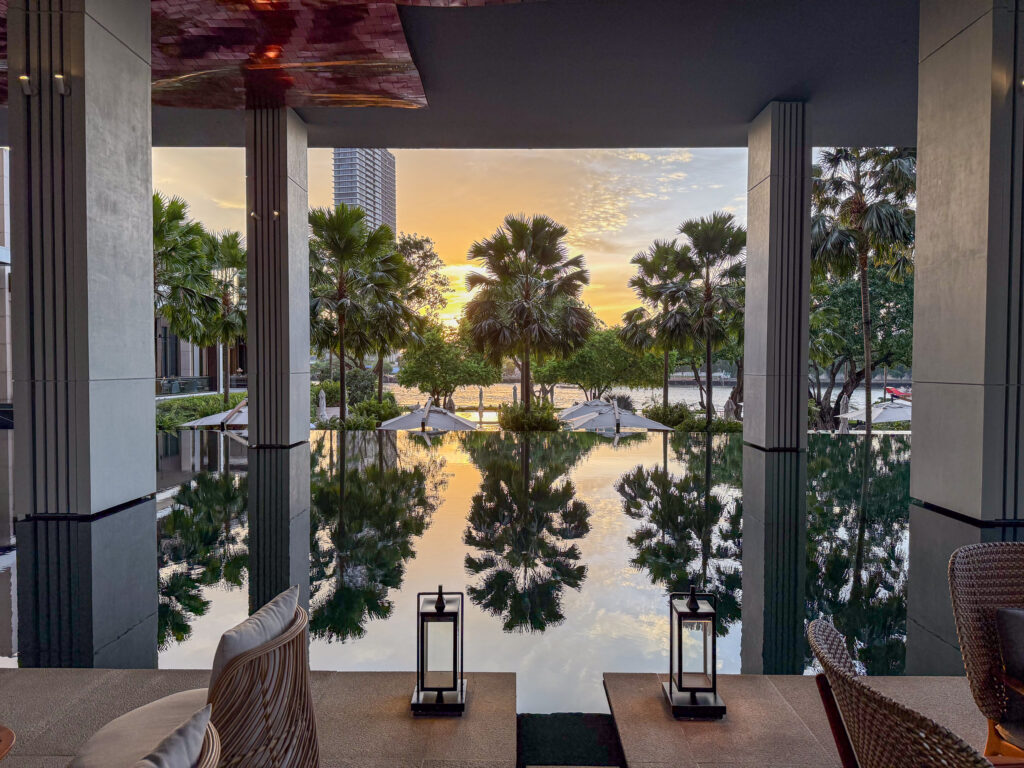
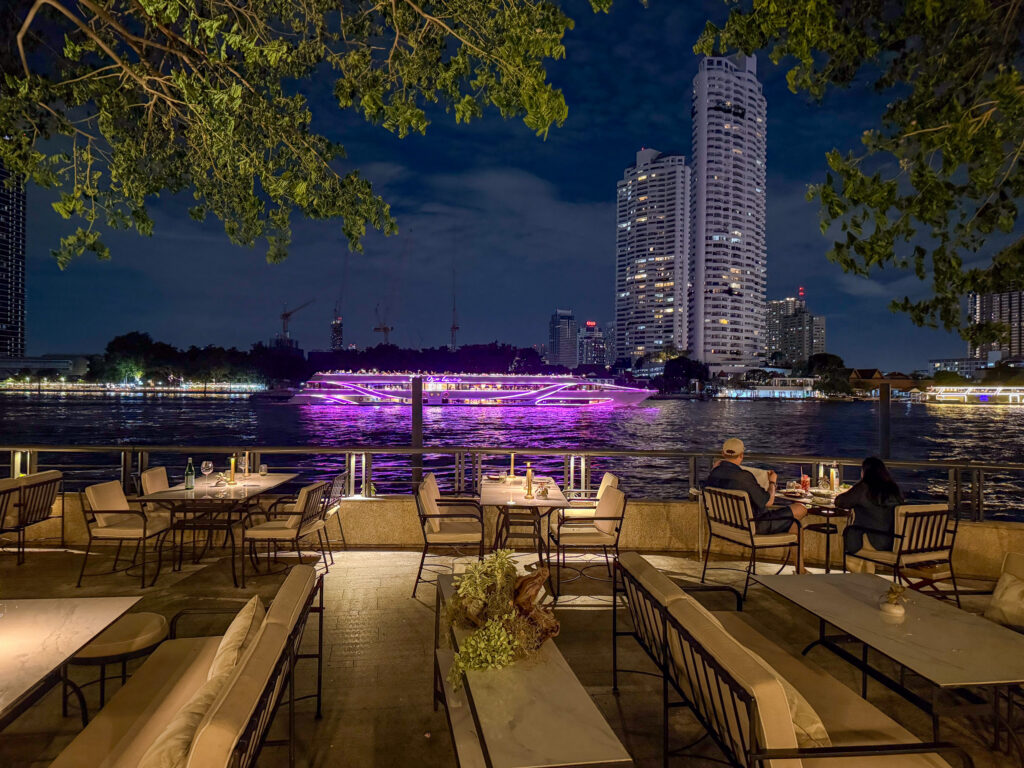
The Four Seasons at dusk. Water and lanterns, and eight kitchens within four minutes of each other, which is most of what a hotel dining room actually sells.
Side by side
What
Sorn
The hotel dining rooms
The menu
One set tasting menu; nothing else
Everything, across a dozen rooms; a Thai omelette in the lounge to a nine-course carte blanche upstairs
How far ahead
A monthly release for the month ahead; plan one to two months out and set two alarms
A date, a party size and a time; same day is normal
The commitment
Final on confirmation — no changes, no transfers
None
If you are late
More than thirty minutes and the booking is void
Nothing happens
Who it cannot feed
No vegetarian or vegan menu; no shellfish allergy of any degree; eight core ingredients it will not substitute
Separate vegan and vegetarian menus at the Cantonese room; Côte has no printed menu and simply asks
The stars
Three
Two at Côte, Capella; none at Yu Ting Yuan, whatever the internet says
The table lottery
Book for four rather than two — there are more tables that size
The same lottery at the top of the house: two suites with one name, one on the river and one not
Best for
The trip built around a meal
The meal that has to fit around a trip
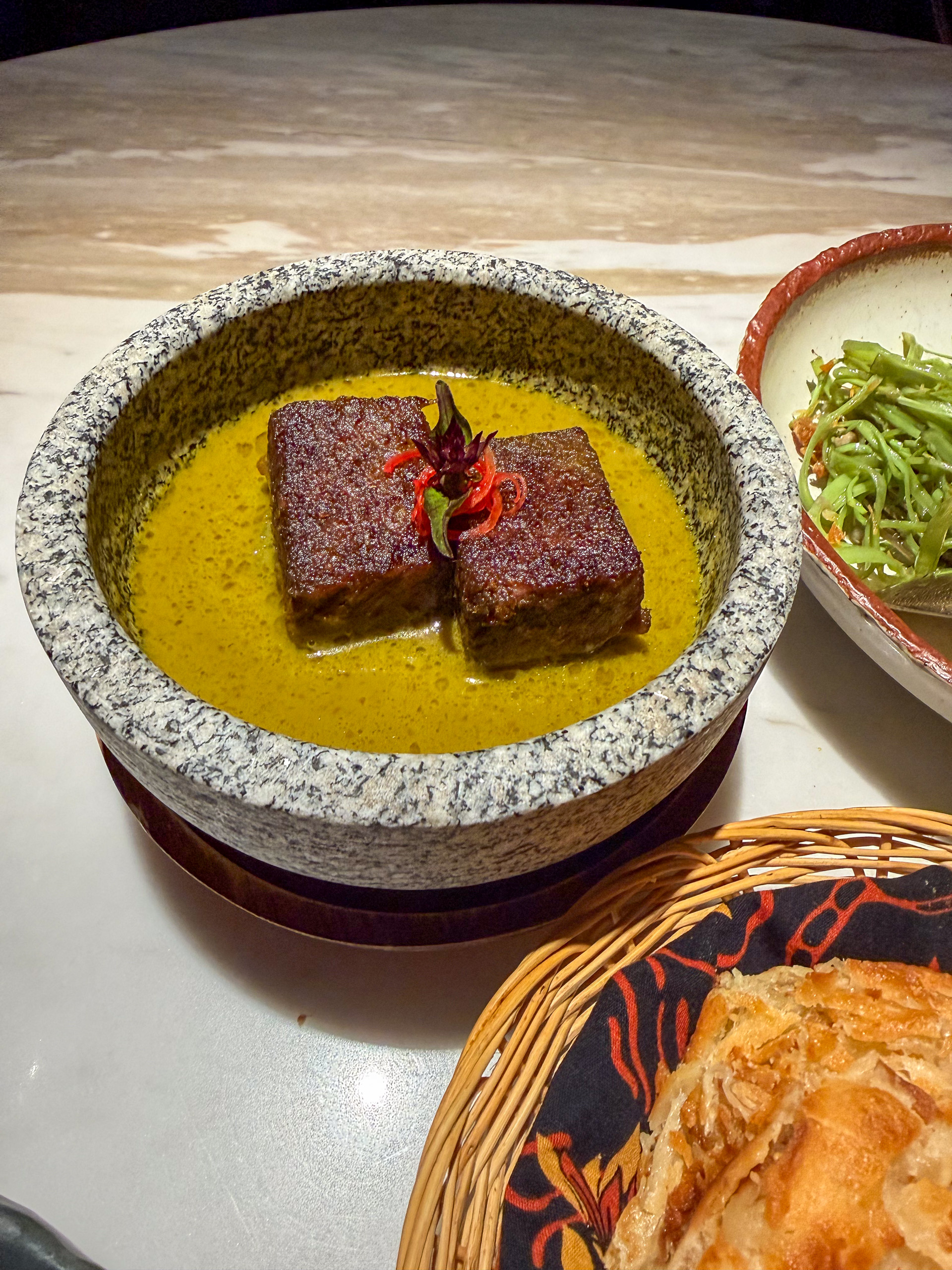
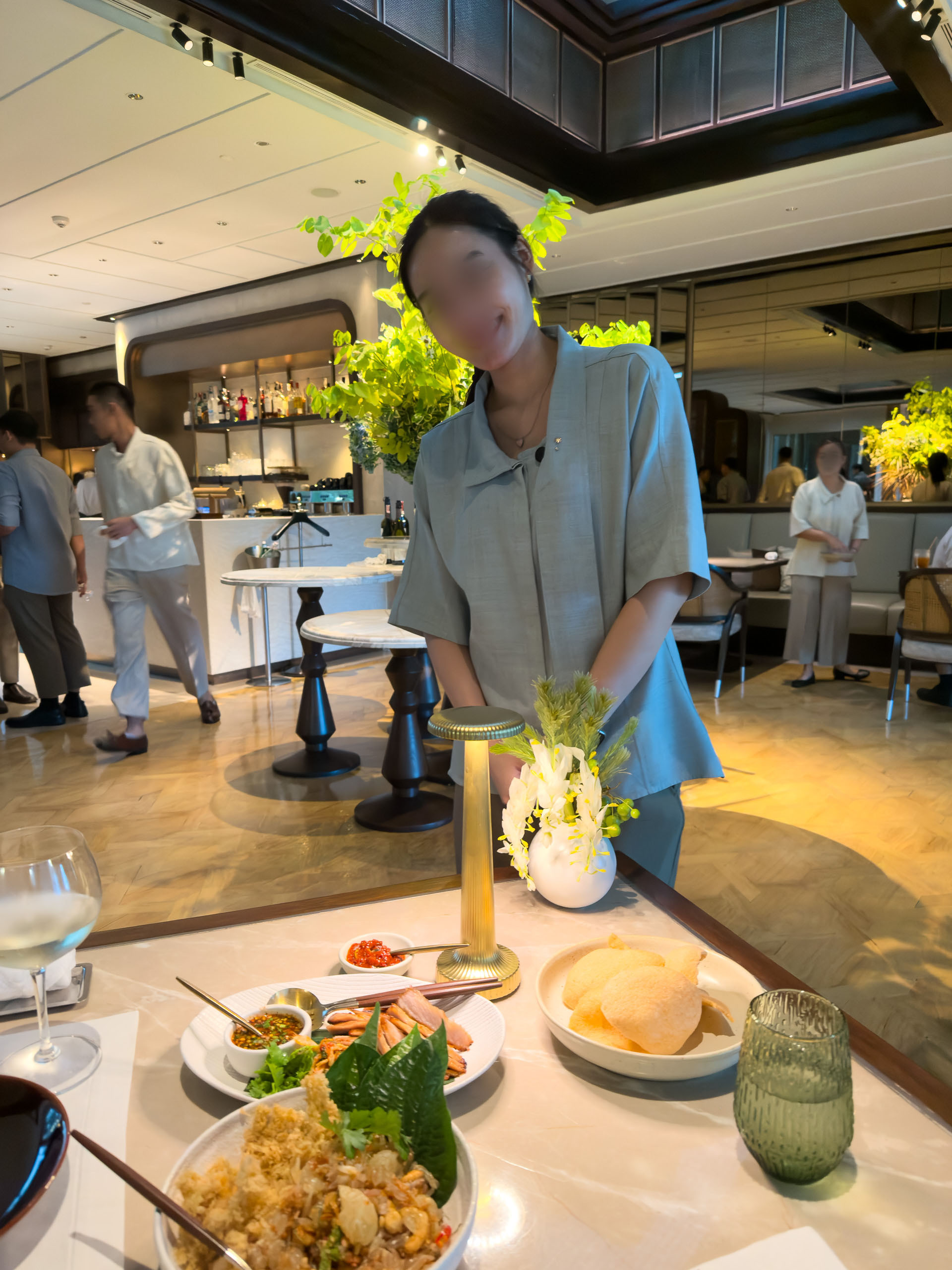
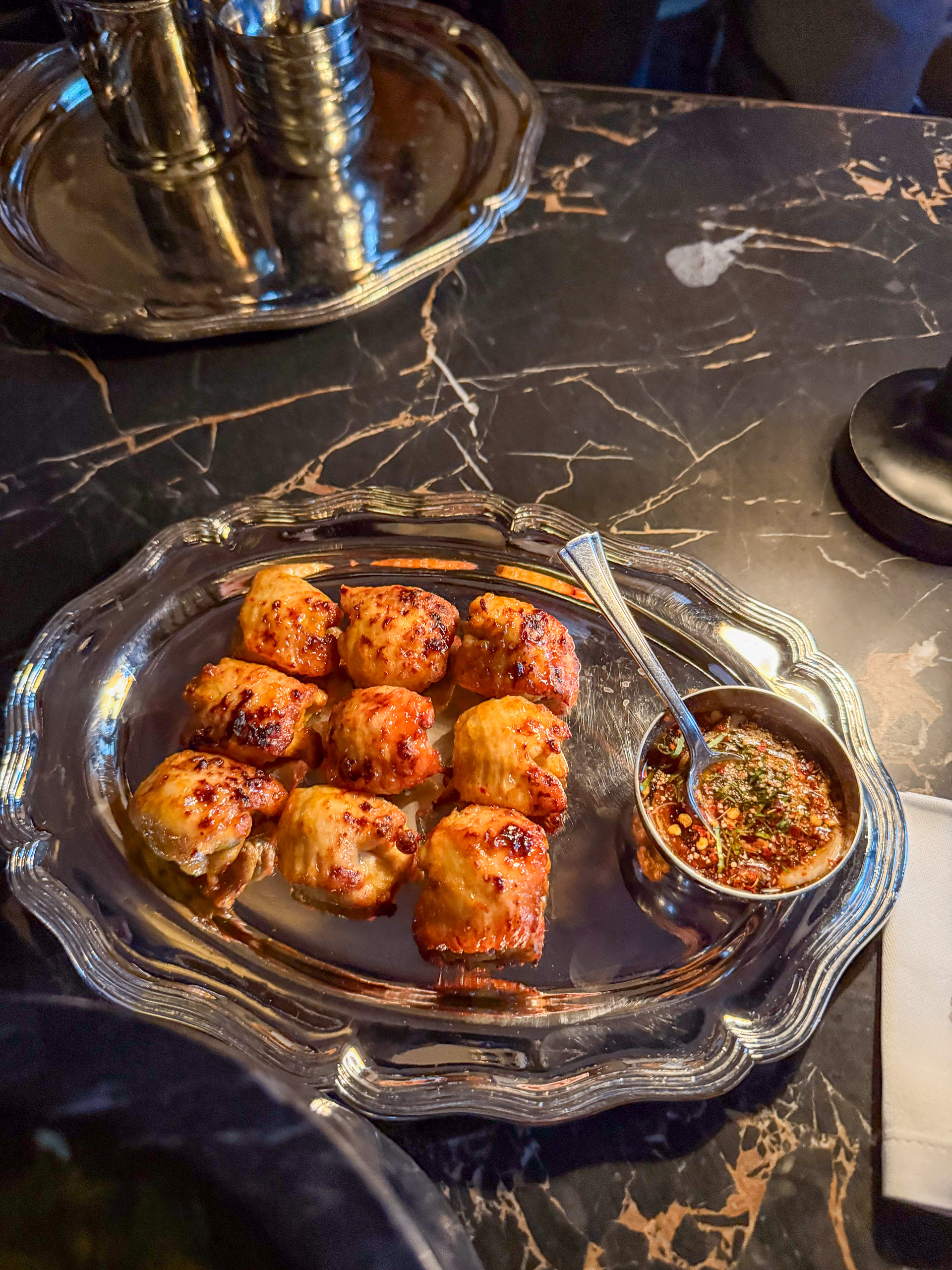
Sorn: the curry in the stone bowl.Capella: Chef Kannika’s open counter at Phra Nakhon.Four Seasons: grilled morsels at the terrace bar.
Where Sorn wins
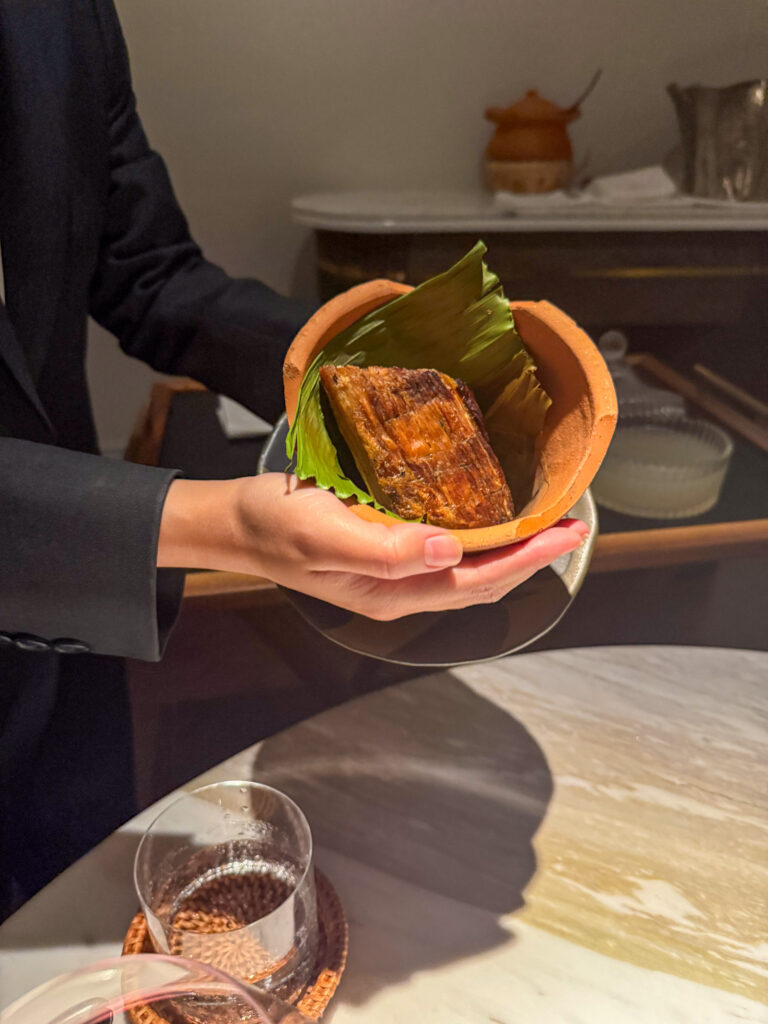
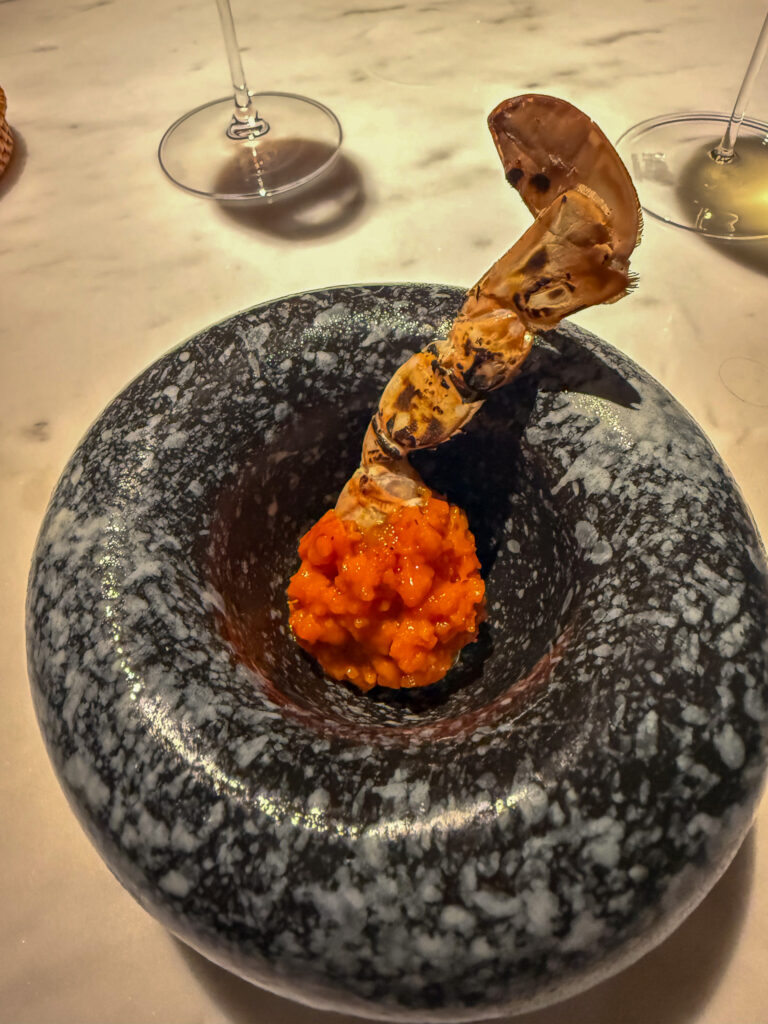
The argument. One kitchen making one case for three hours about the food of a region most visitors never eat: a clay pot broken open at the table, roe and a charred prawn tail in a stone mortar, a card with the whole of the evening printed on one side and nothing on the other. Nobody on the river is trying to do this, and nobody should.
A clay pot broken open at the table. This is the sort of thing the second option is not trying to do.Roe and a charred prawn tail in a stone mortar.
Arrive more than thirty minutes late and the reservation is void, which in this city’s traffic is not a theoretical risk. I left the hotel at half past four for a six o’clock table and arrived, as planned, embarrassingly early. Against that, the estate asks for a date, a party size and a time. So the honest framing is committed against uncommitted — the two-star room at Capella asks the same commitment for the evening.
Where the hotel dining rooms win
Phra Nakhon, and this is the sentence the piece exists for: some of what Chef Kannika Jitsangworn cooked for us at Capella’s Thai room was just as good as some of what Sorn served. It lacked the same feeling of excitement and it was far from the same experience, because that is not what it was trying to be. But taste? She has the goods. Her yellow crab curry stands with the best foods I have ever eaten, and it arrived by walking downstairs.
There are moments in these starred food hunts when you come across an essence. The essence of tomato at Moss in Iceland. The essence of shrimp at Masa in New York. The essence of taro at Fufu Kawaguchiko. This was the essence of crab: she used the powers of the accompanying spices in the liquid to present your mouth with what you knew a crab should be.
She came out afterwards and spent twenty minutes on the spices, sourced from the far reaches of the country. The room runs from late morning to late evening, takes a booking for tonight, and is three minutes’ walk from either bed on the estate. She is a gem, and they must not let her go.
The argument for eating where you sleep, in one frame: marble tables, a working river, and no taxi at the end of it.
The starred table is not where you think. Côte by Mauro Colagreco, on the second floor at Capella, holds two stars and cooks the coast between Nice and Genoa; its long menu asks the same commitment as Sorn’s. It closes two days a week, which no hotel restaurant is supposed to do, has no printed menu, and asks about allergies at the table.
Yu Ting Yuan, the Cantonese room at Four Seasons, is the one most people think has a star and does not; it is still a very good Cantonese restaurant with the most approachable of the three long menus, an open kitchen and a lit reflecting pool in the window, and it will seat you tonight.
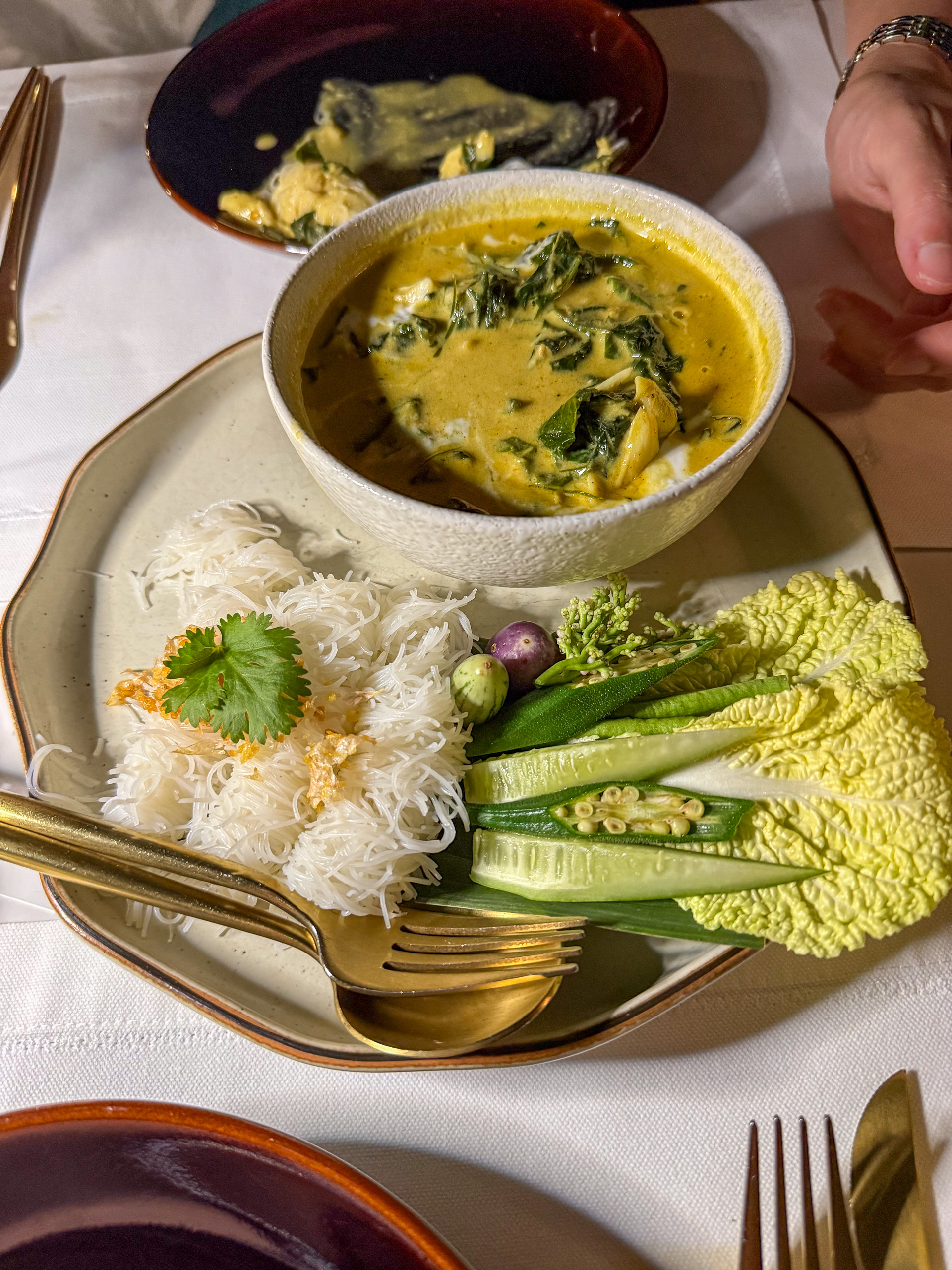
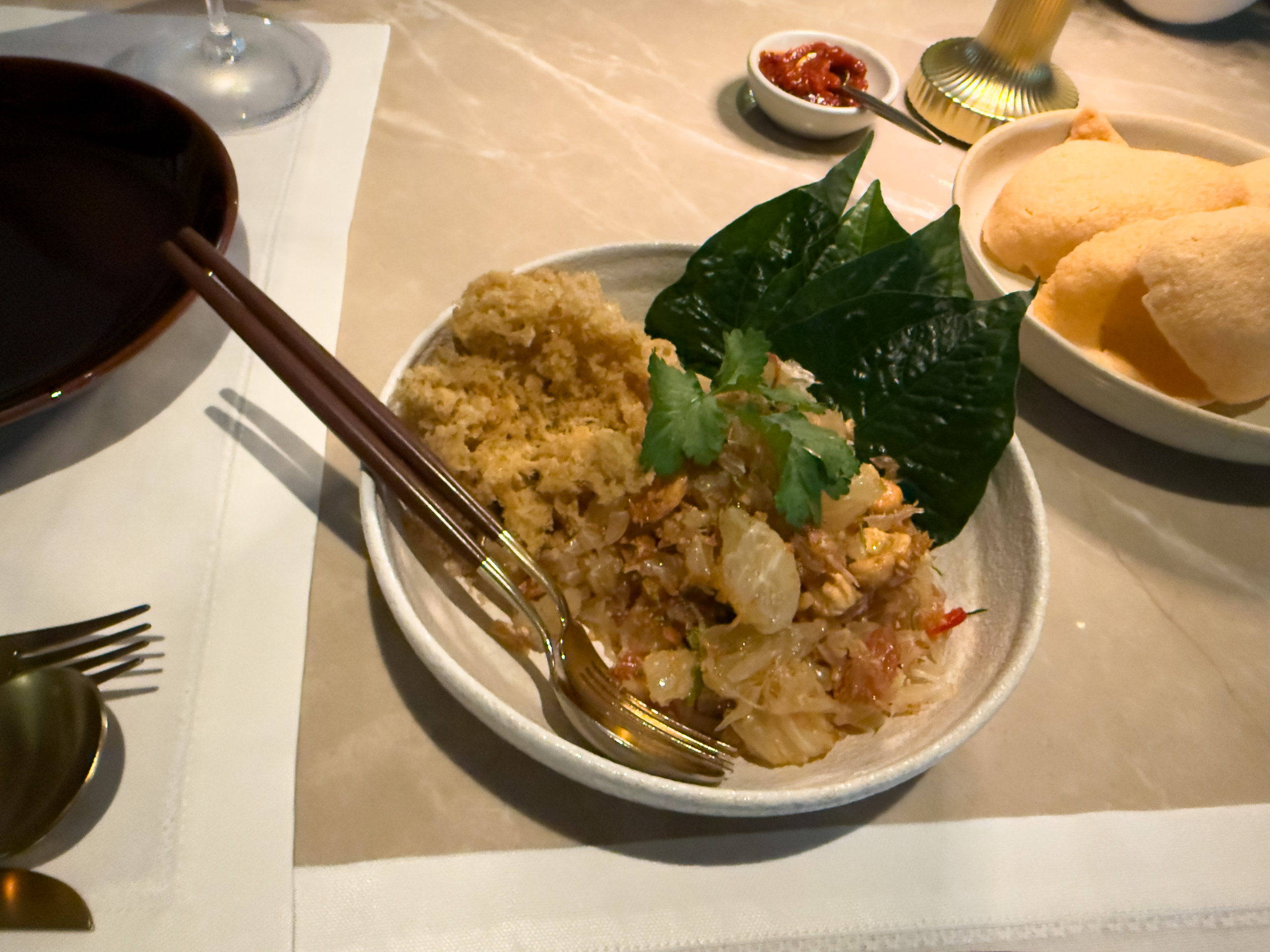
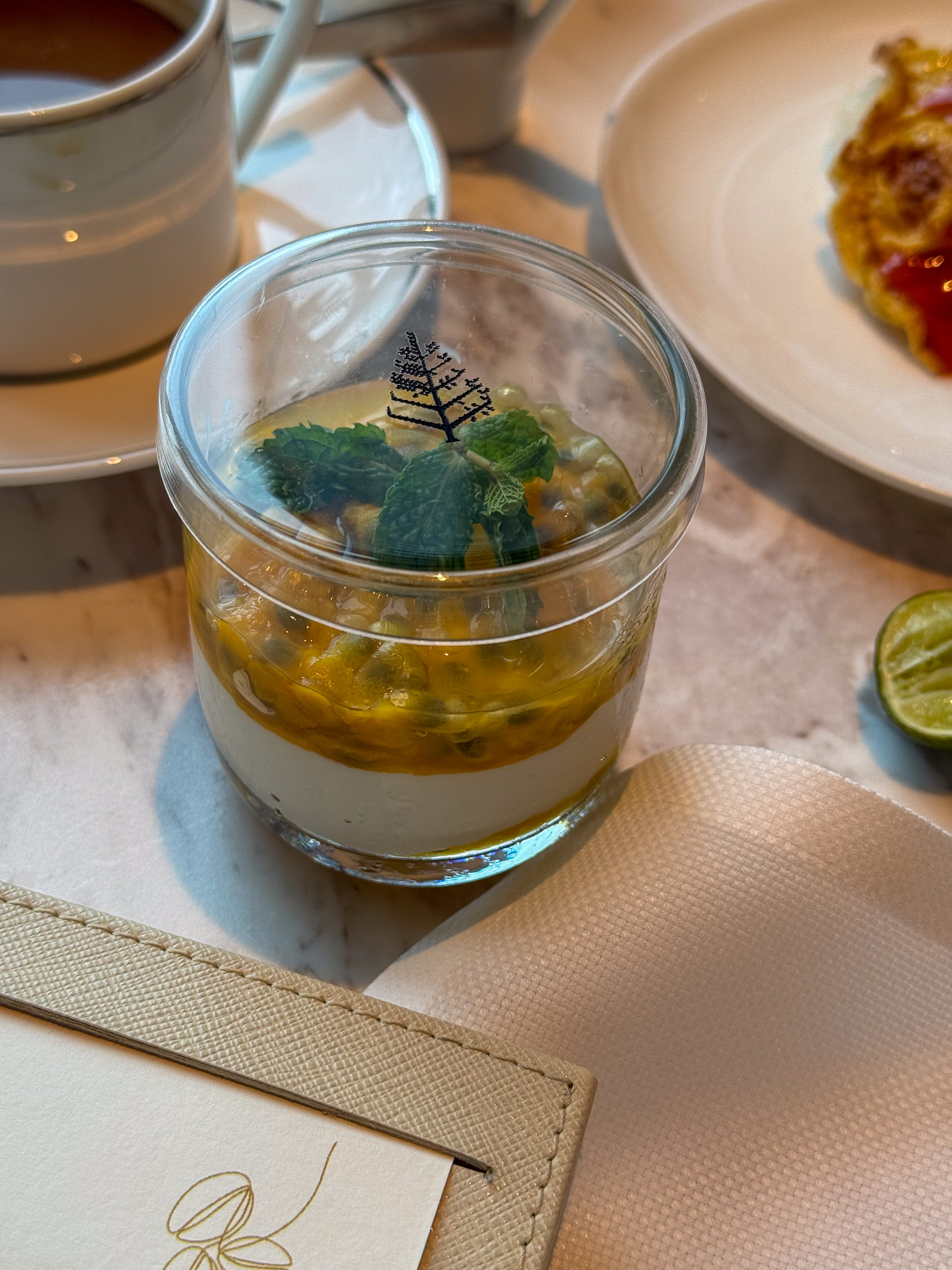
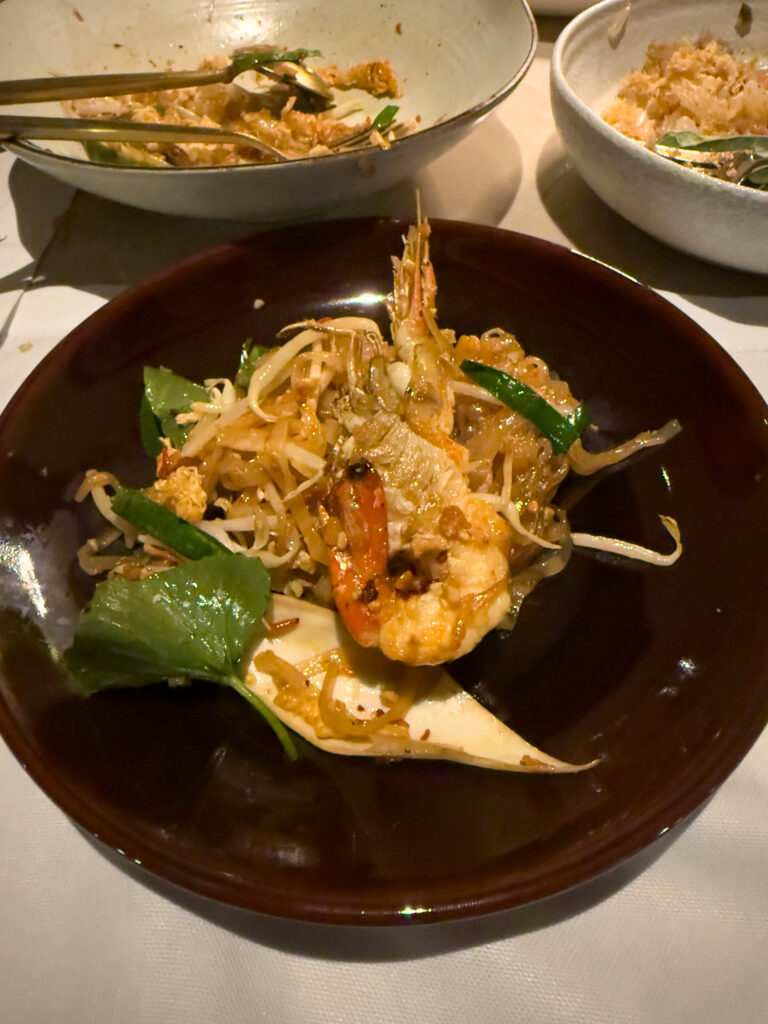
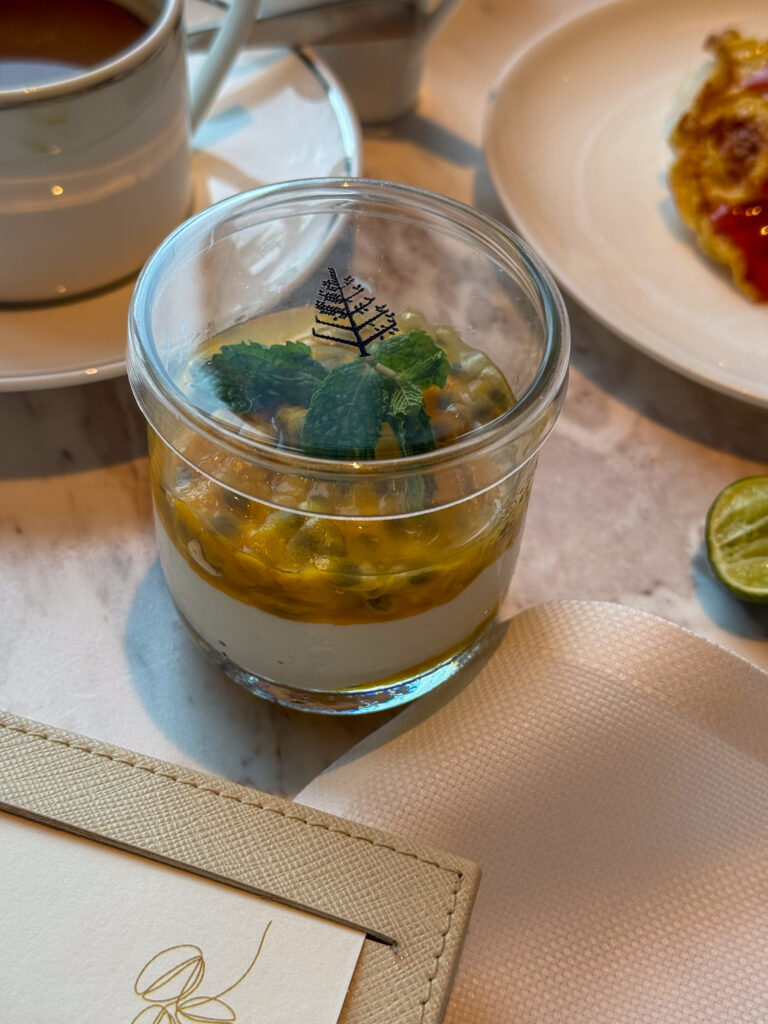
Green curry and rice noodles, downstairs at Capella.Fried rice with crab, cooked to order.Dessert in a jar at the Four Seasons.
Anyone with a restriction. Sorn’s terms are unusually blunt and you find them on the page that takes your card: no vegetarian or vegan menu, no shellfish allergy of any degree, eight core ingredients it will not substitute. The hotel side has the opposite problem, which is to say none. If anyone in your party has a hard restriction, the comparison is over before it starts.
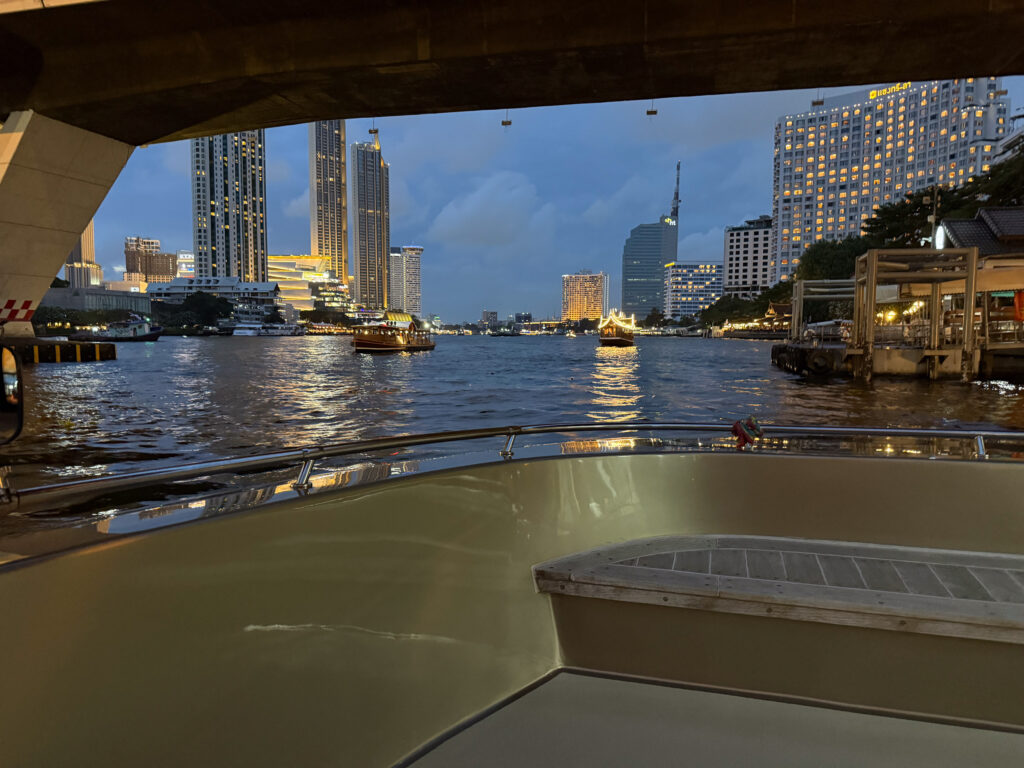
The estate from the water at dusk. Both hotels run shuttle boats, and either will take you to a table at the other.
One caution for high summer: the Four Seasons’ own Thai restaurant is an outdoor charcoal grill and closes for the season, so in August the Four Seasons cannot put a proper Thai dinner in front of you. Capella can.
Verdict by traveller type
Book Sorn if this dinner is the point of the trip; if you will plan two months out, set two alarms and accept that the commitment is final whatever happens; if nobody in the party is vegetarian, allergic to shellfish or unable to eat any of eight ingredients; and if you can be in Sukhumvit 26 by half past six with certainty. Book for four rather than two if you can.
Book the hotel dining rooms if the trip is bigger than the meal; if you would rather eat well on four consecutive nights than brilliantly on a fixed Tuesday in six weeks’ time; if you want to eat at nine because the flight was late; if there is a dietary restriction anywhere in the party; or if you want a starred table without the scramble, in which case walk to Capella. And book Phra Nakhon on the first night, ask Chef Kannika to decide, and book it again.
Do not book Sorn for a party with mixed dietary needs, for anyone who might not make the date, or on the theory that three stars means the grandest room in town. Do not book the Four Seasons expecting a starred kitchen or, in summer, a Thai dinner; it has neither.
Book Sorn if the dinner is the reason for the trip. Book the hotel dining room if the trip has other reasons.
Sorn’s sweets under glass. Two alarms, two months, and this at the end.
Bottom line
Everyone knows about Sorn — the hardest table in the country and the best meal of my life. Nobody would guess the no-star hotel dining room could compare, and some plates did. Sorn if the dinner is the reason for the trip; the estate if the trip has other reasons — Phra Nakhon first, the yellow crab curry on the table. Book Sorn for four, two months out; book Chef Kannika for tonight.
Both stays booked the way any other guest would book them.
The question
These two hotels are a ten-minute walk apart on the same side of the same harbour, they are both very good, and almost nobody needs to agonize over the choice for as long as they do. One is the last of the great colonial waterfront hotels still doing it properly. The other is the best argument anyone has made in decades for what a new luxury hotel should be. The 2025 rankings had it as the number one hotel in the world. I am not sure I would go that far — what, Chief Kong of the Rankers never heard of Capella? The right answer depends on one question, which is not about the rooms, and which I will come to.
Everything below is from a split stay in June, three nights in each, in the entry harbour-view category at both (both then upgraded to something nicer — thanks, AmEx). The booked part matters: a suite at one against a standard room at the other would tell you nothing, so the room verdicts below judge the categories I booked, with the upgrades enjoyed and set aside.
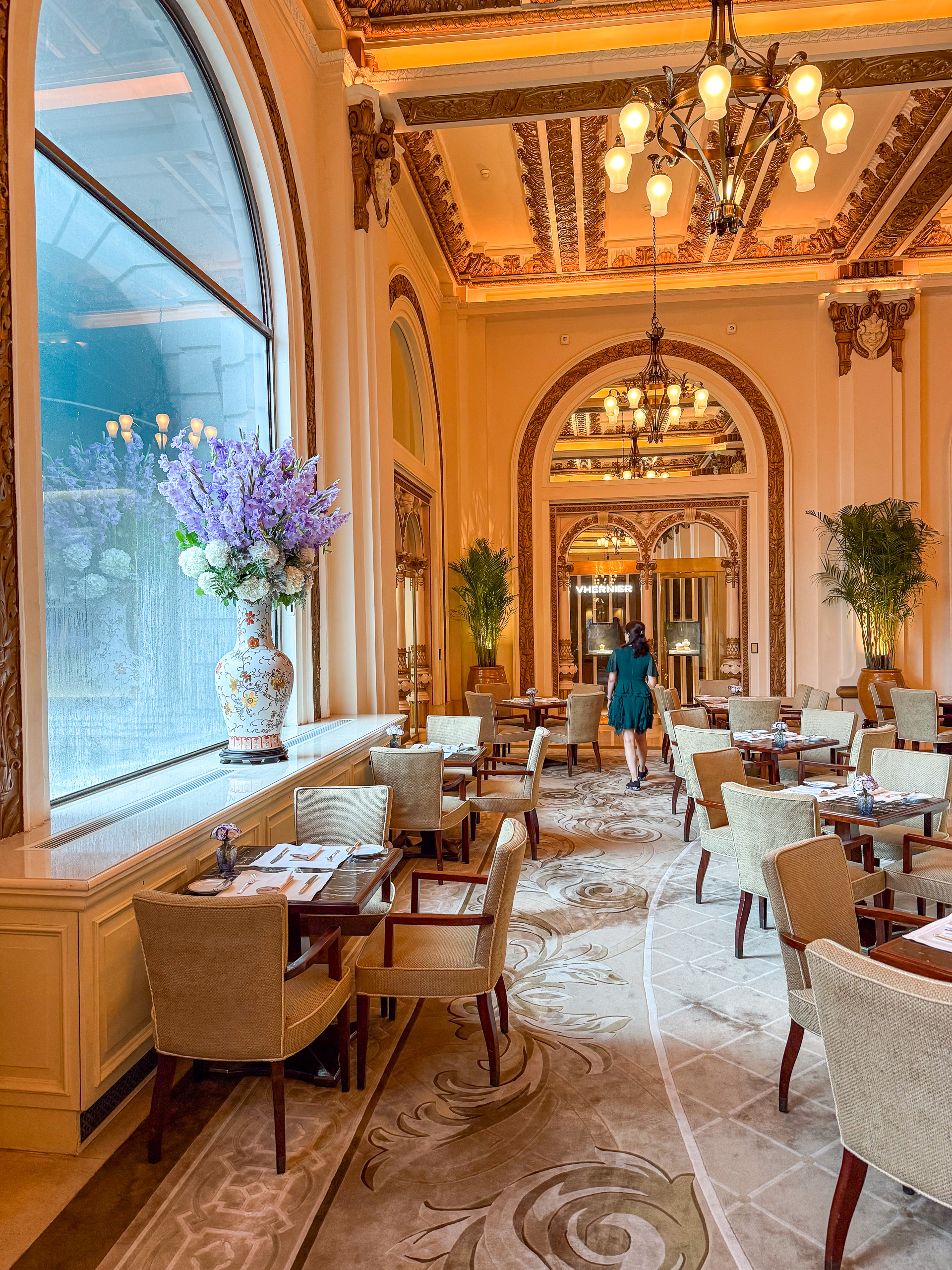
The Peninsula lobby, columns and strings. Ten minutes’ walk from the other one.
Both are in Tsim Sha Tsui, on the Kowloon side, which is the side you want because it looks at the skyline rather than being part of it. The Peninsula sits on Salisbury Road, set back from the water behind the Cultural Centre and the Space Museum, with a forecourt, a fountain and a fleet of green Rolls-Royces in front of it.
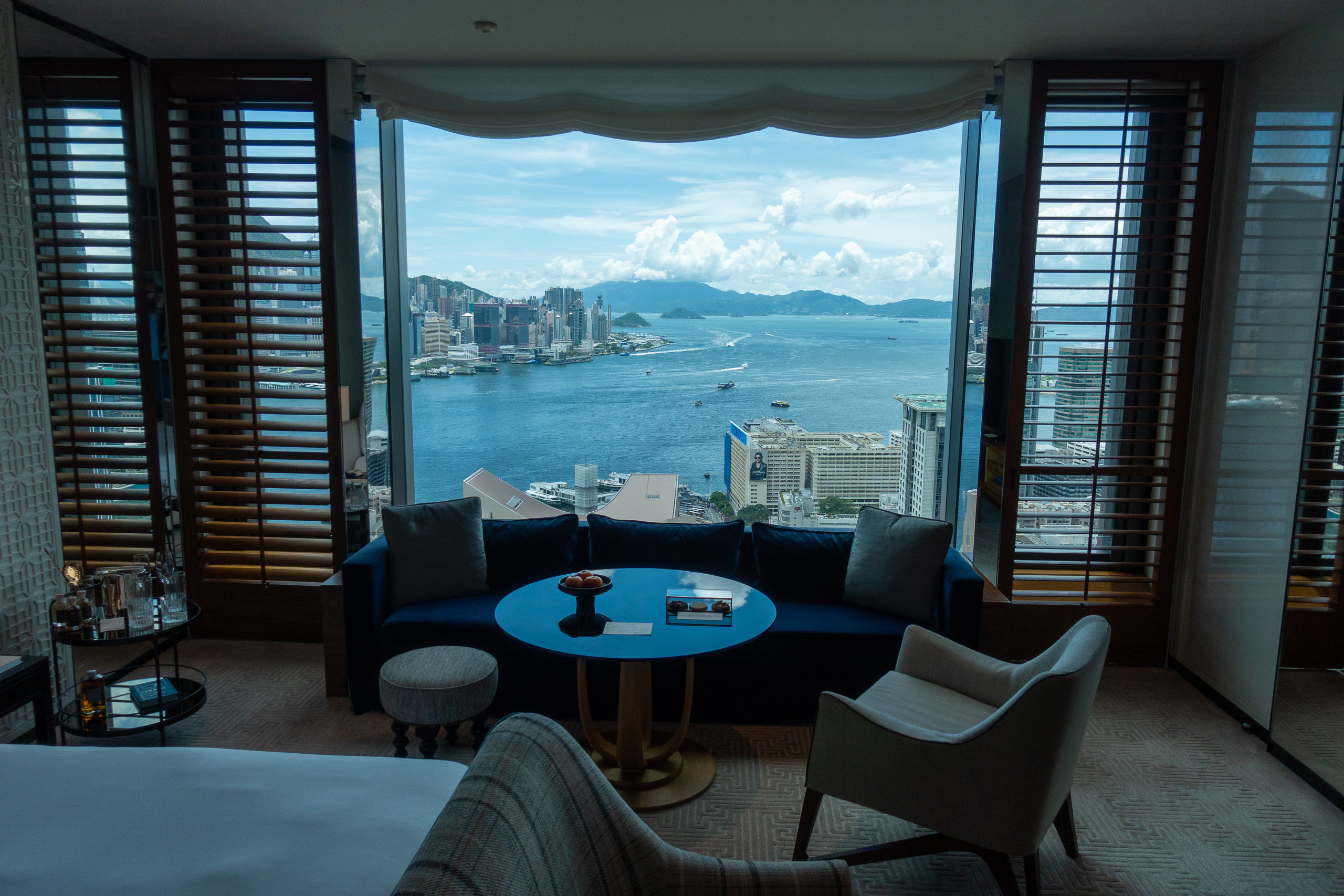
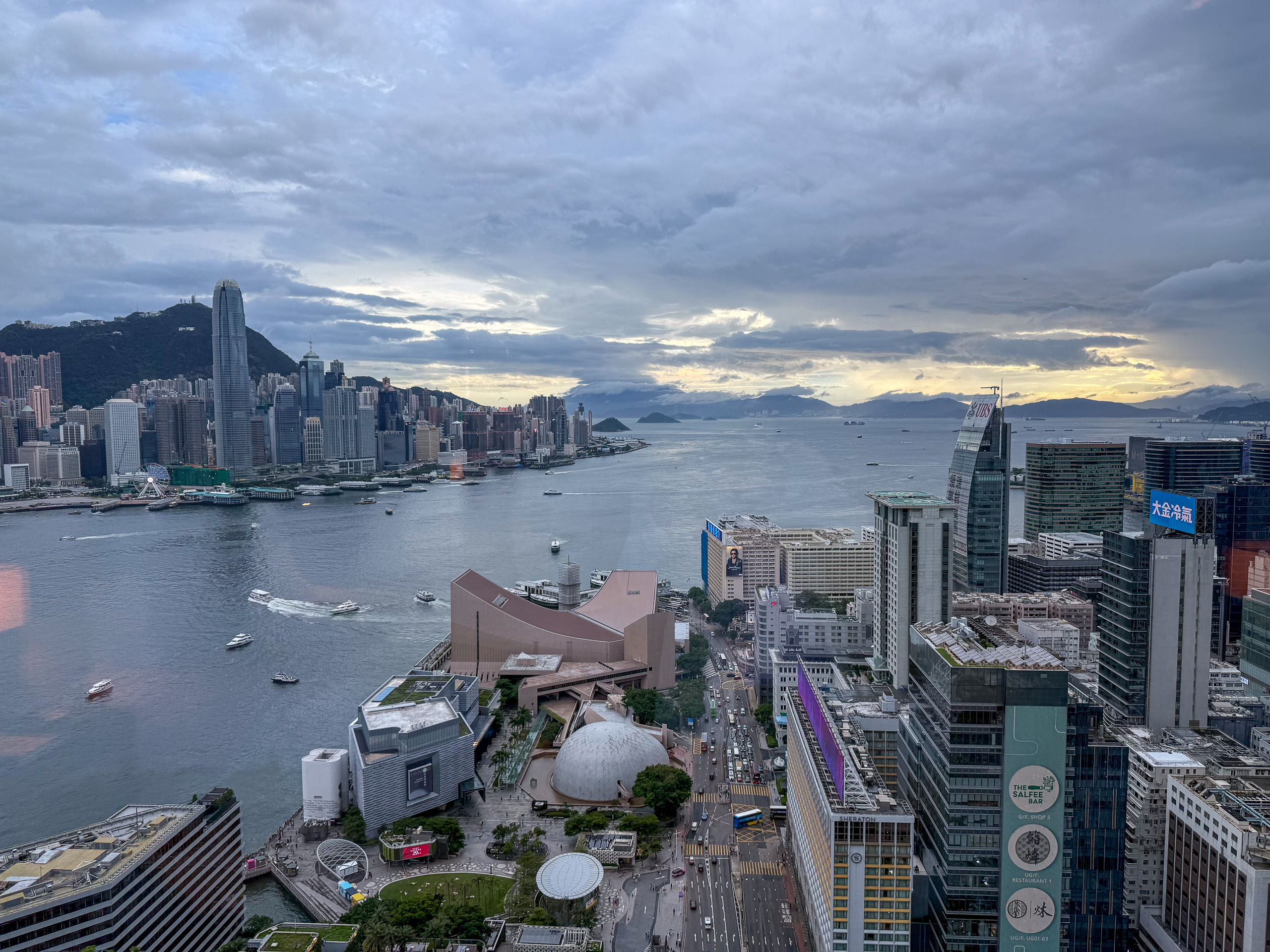
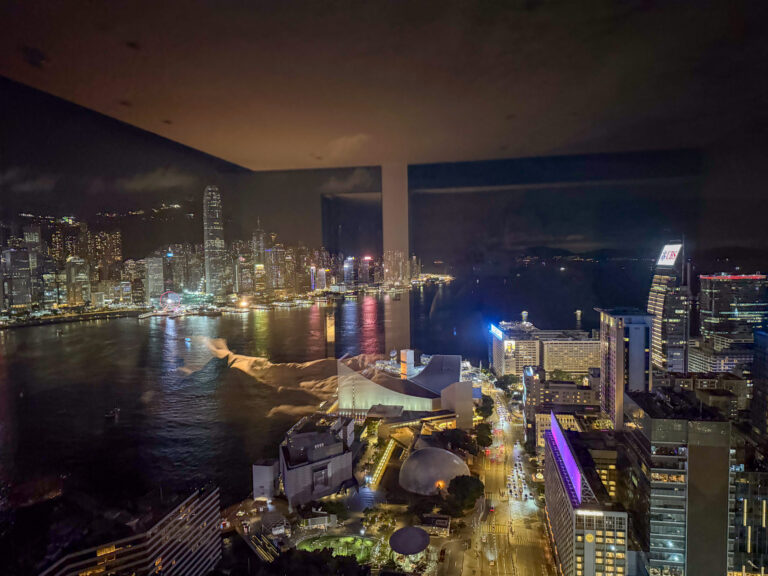
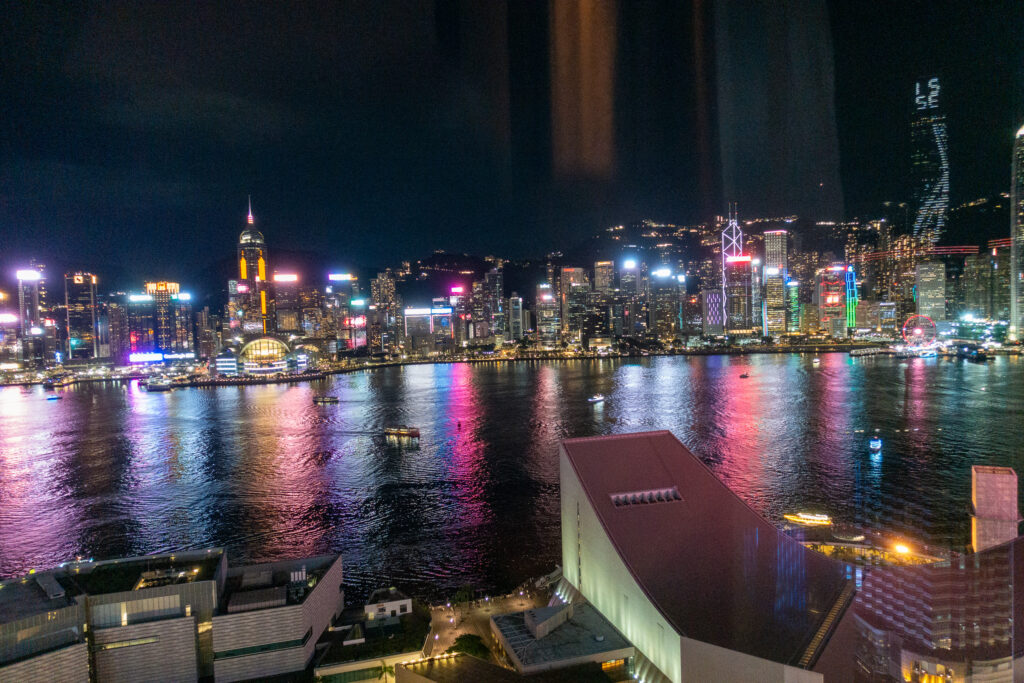
Rosewood is at Victoria Dockside, directly on the waterfront at the end of the promenade, with the harbour immediately below. The practical difference is a hundred metres of ground and about forty years of urban planning: the Peninsula has a front door that is an event and a view with one row of buildings in it; Rosewood has an unremarkable arrival through a retail podium and a view with nothing in it at all.
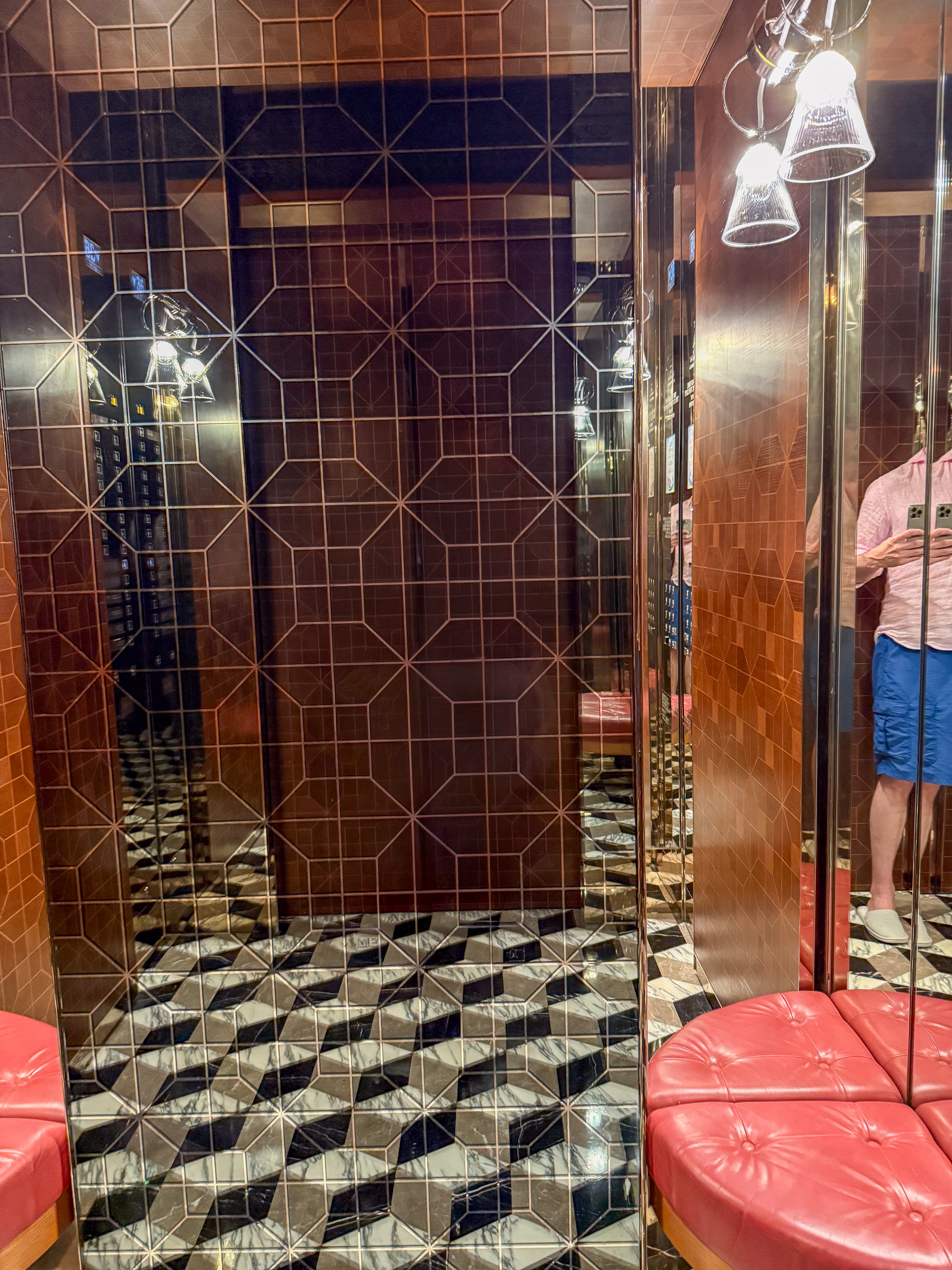
Rosewood’s lobby: chequerboard floor, mirrored doors, no strings.
Side by side
What
The Peninsula
Rosewood
Where
Salisbury Road, set back behind the Cultural Centre
Victoria Dockside, on the water
The view
Harbour, with one row of buildings in it
Harbour, with nothing in it
Arrival
A green Rolls-Royce and a forecourt
A lift from a retail podium
The room
Formal, generous; the bathroom is the best part
Residential, low-lit; the best entry room in the city
The public rooms
The lobby is the great room in Hong Kong
Designed to be walked through, not sat in
Eating
Six rooms, an estate rather than a list; tea in the lobby
Narrower and, dish for dish, sharper; the bar the city crosses the harbour for
Service
Formal and slightly ceremonial
Quieter; closer to a good private house
Best for
A first visit, and anyone who wants the occasion
A second visit, and anyone who wants the room
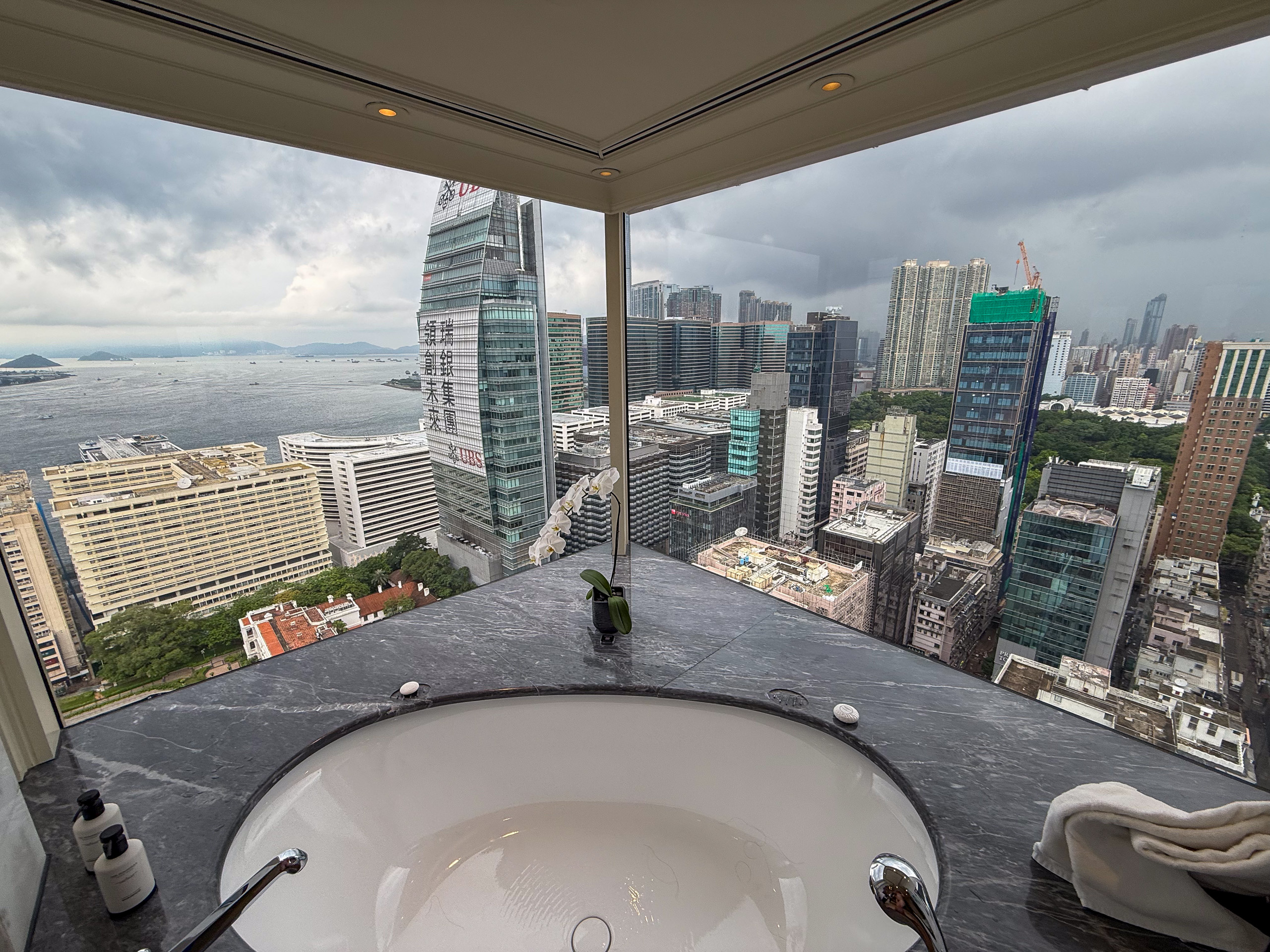
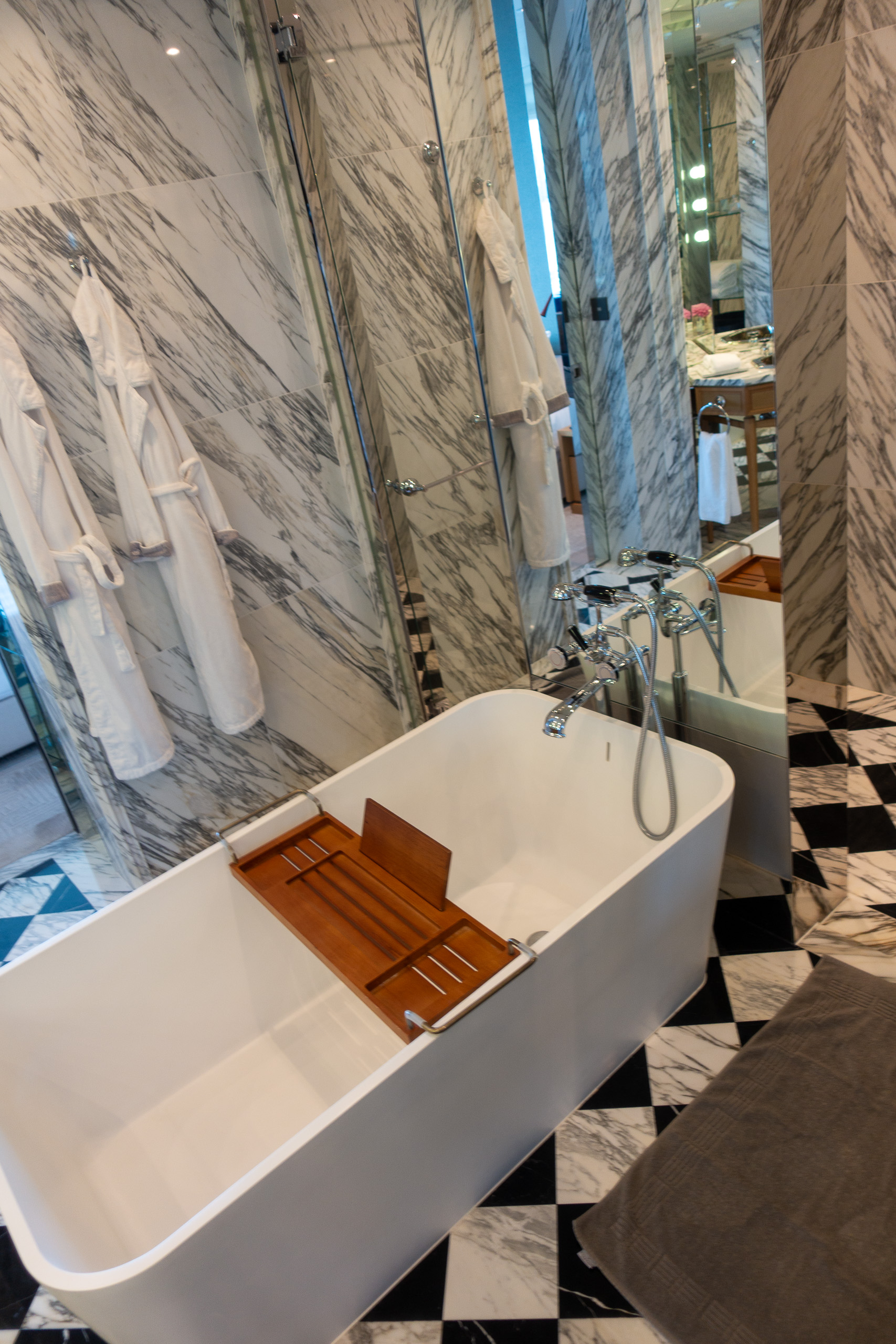
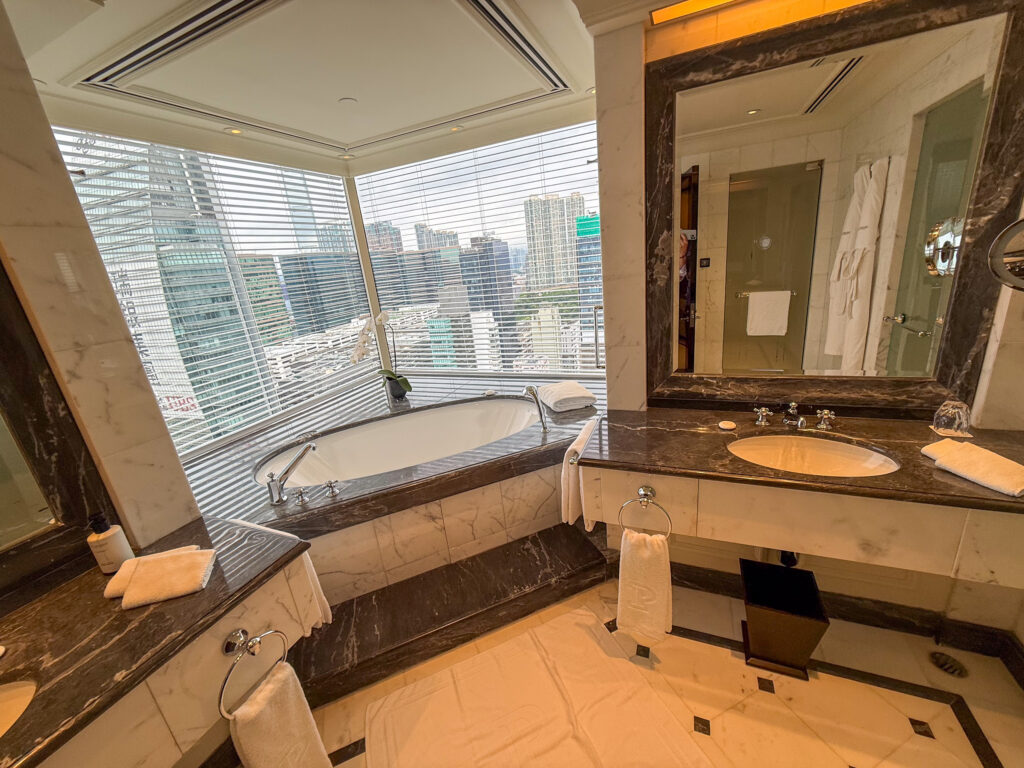
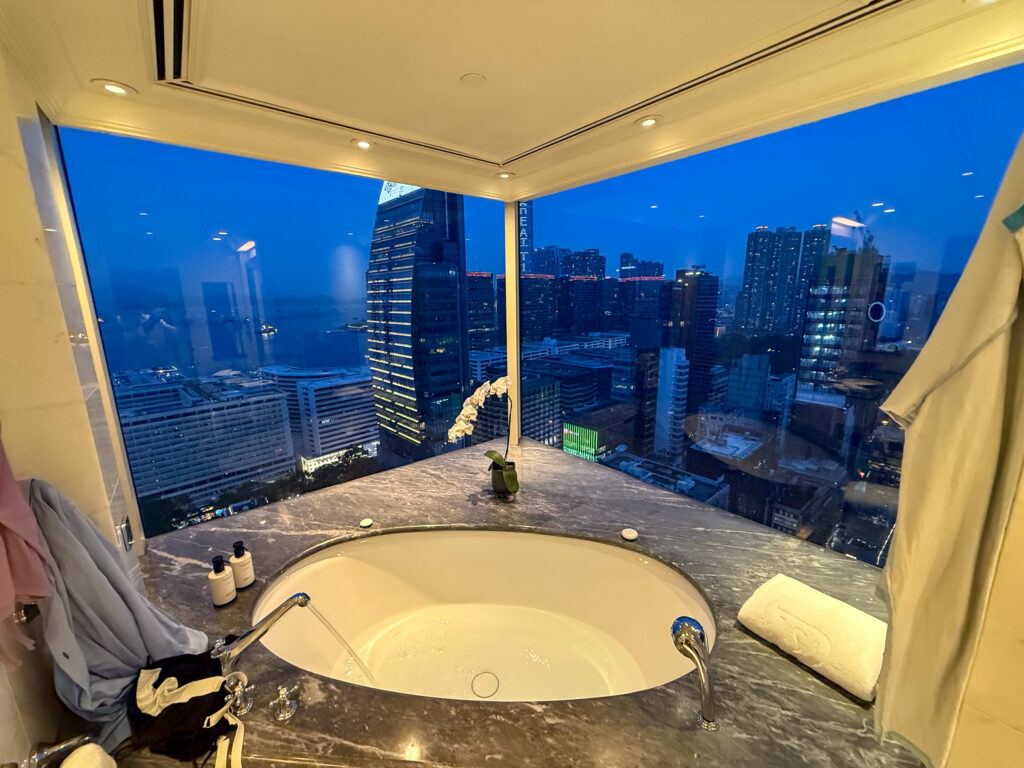
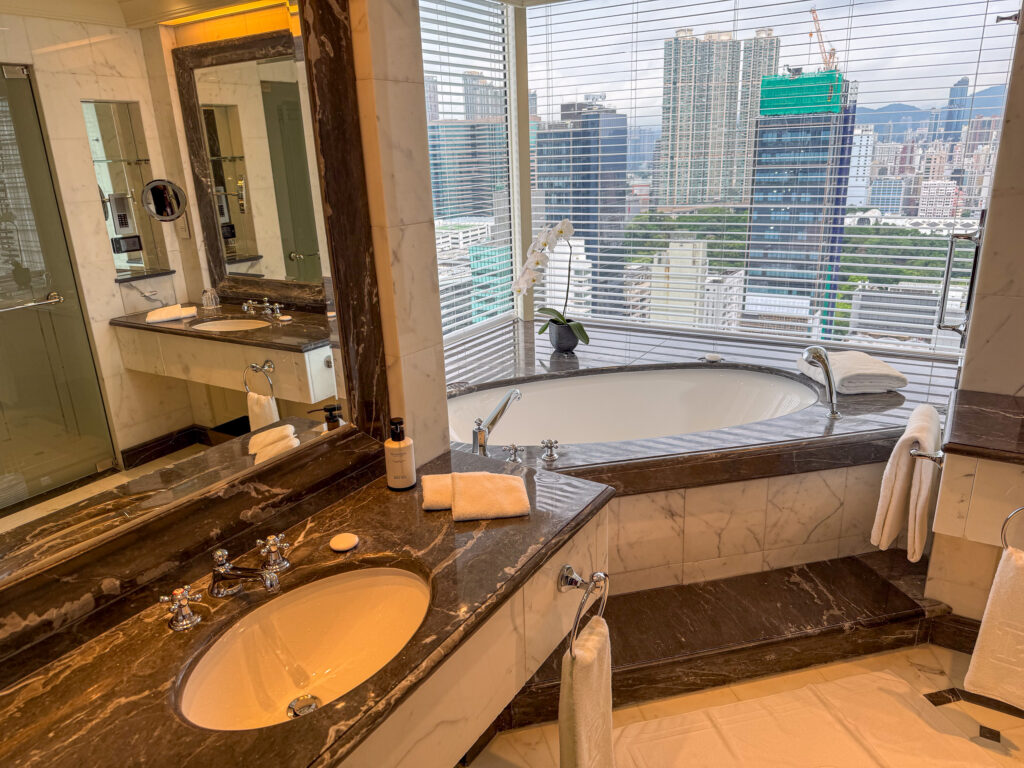
Peninsula: the tub at the window, the towers beyond.Rosewood: the tub, the tray, the robes.
Where the Peninsula wins
The arrival, and the thing you cannot get twice. The Peninsula sends a Phantom in the hotel’s own green to collect you, and if that sounds like theatre it is because it is theatre, staged well, by people who have been doing it for fifty years.
It is the single most memorable arrival in Asian hospitality and it is worth having once, on the way in, when you are tired enough to enjoy being handled. Rosewood’s arrival is a car park under a shopping centre. That is the plainest way to put it. Once you are upstairs none of it matters, but the first four minutes of the two hotels are not in the same category and the Peninsula knows it.
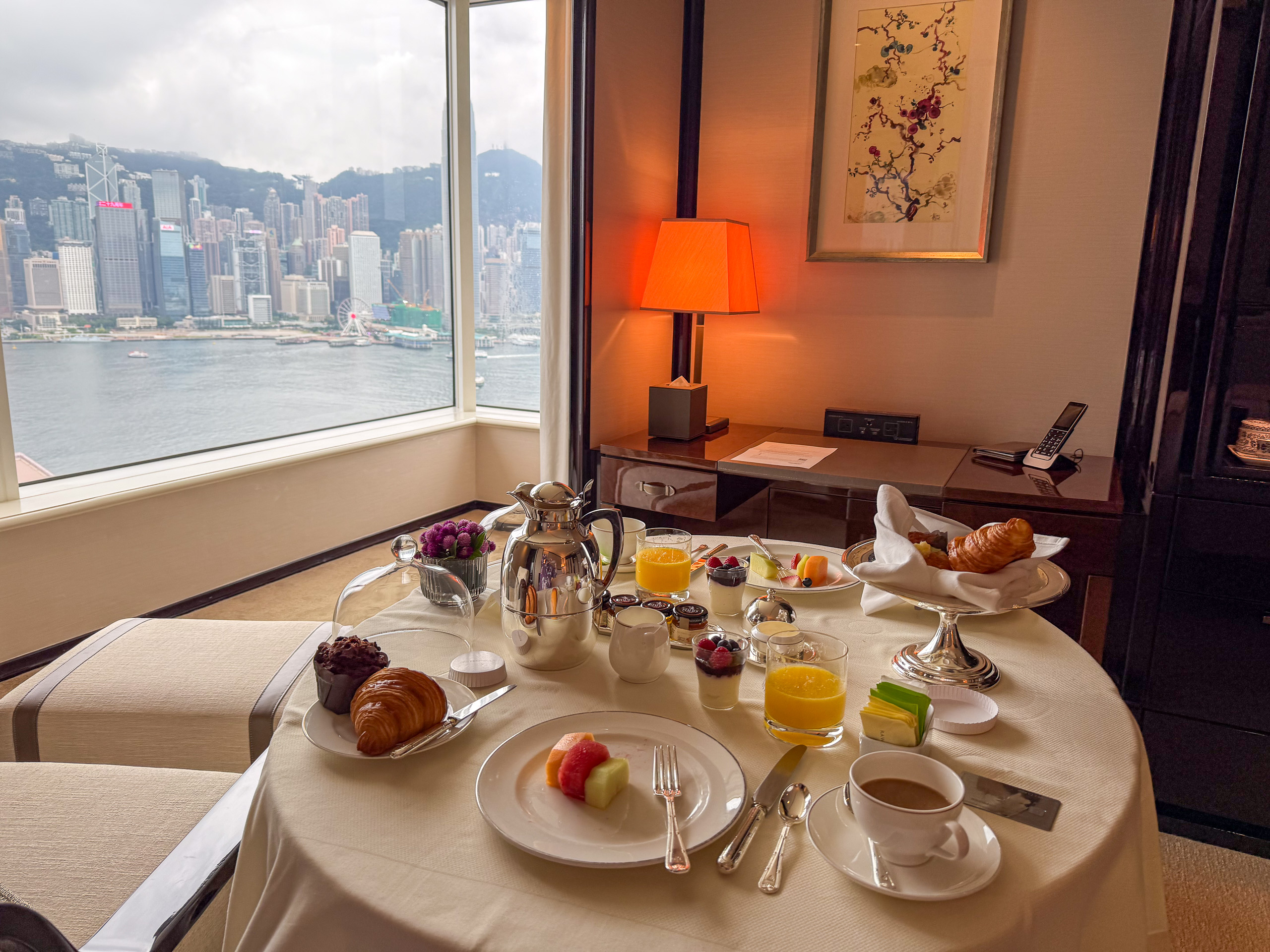
Breakfast at the round table by the window. The Peninsula does this without being asked twice.
The lobby. A colonnaded double-height hall with a gilded ceiling, palms in urns, a string quartet on the balcony and afternoon tea running below it, and it belongs to the city more than to the hotel. Rosewood has nothing like it and does not try: there is nowhere in that hotel to simply be. The Peninsula has a room for that. It is the lobby, and there is a queue for it.
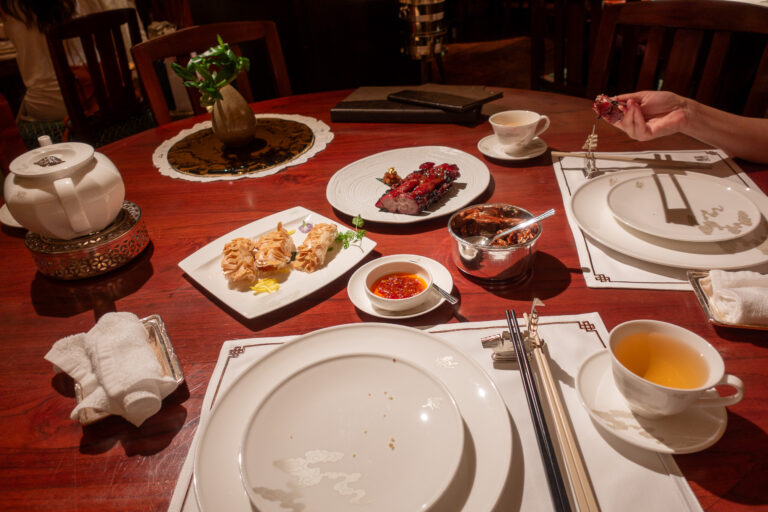
The estate. Six rooms including a starred Cantonese one, a formal grand restaurant, a Philippe Starck bar on the twenty-eighth floor that has aged into something close to camp, and a Swiss chalet on the ground floor serving fondue in subtropical Kowloon. Tea in the lobby is an institution with the queue to prove it; take it at seven in the evening, when there is none.
The Peninsula answers with this. The tub at the glass is the room’s whole argument.
Where Rosewood wins
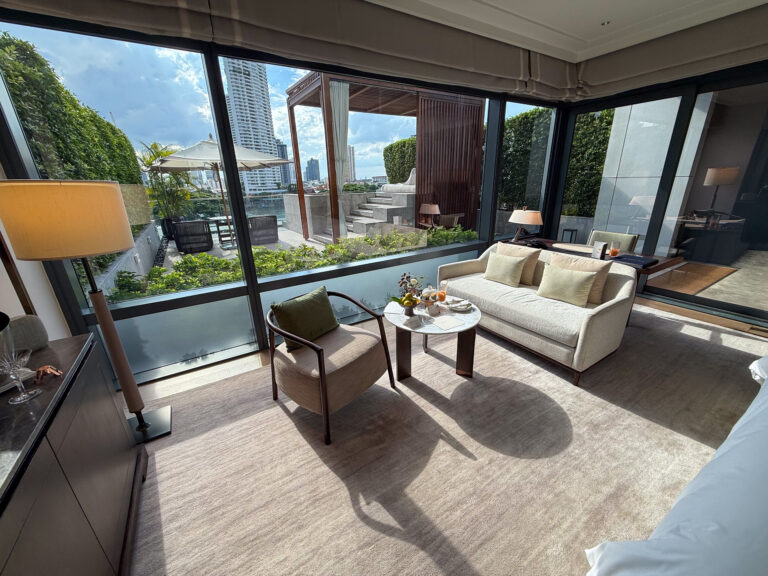
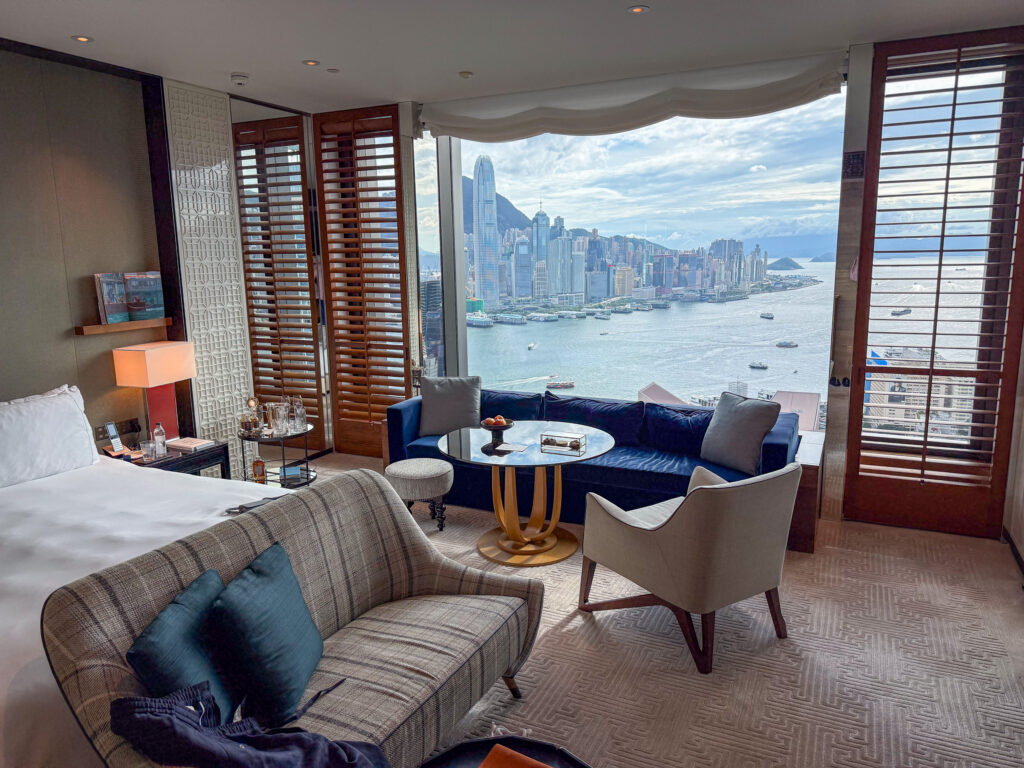
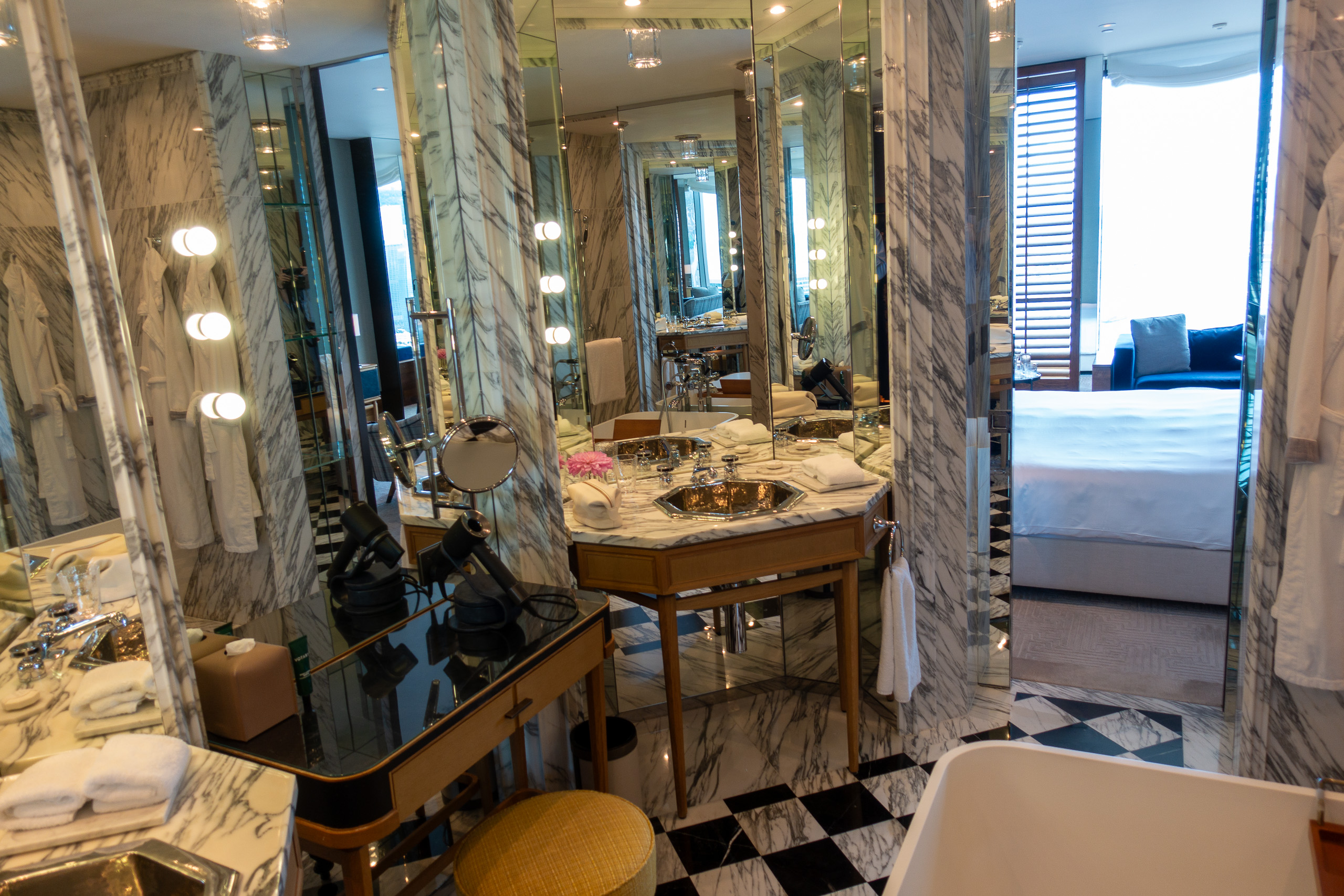
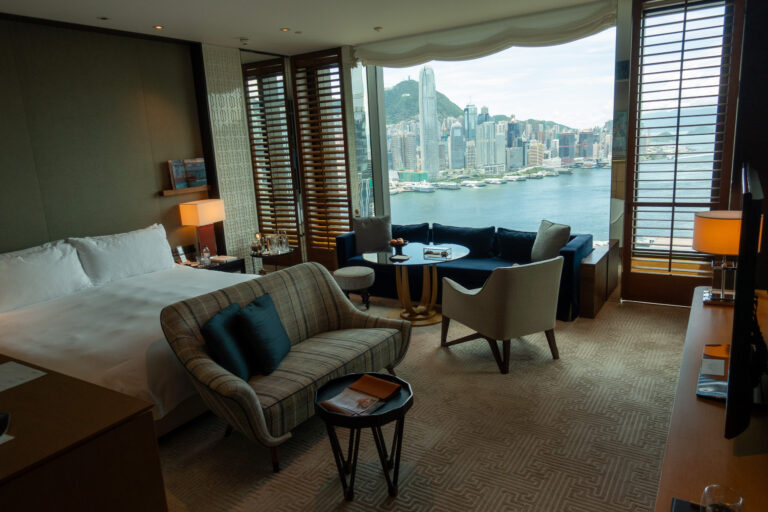
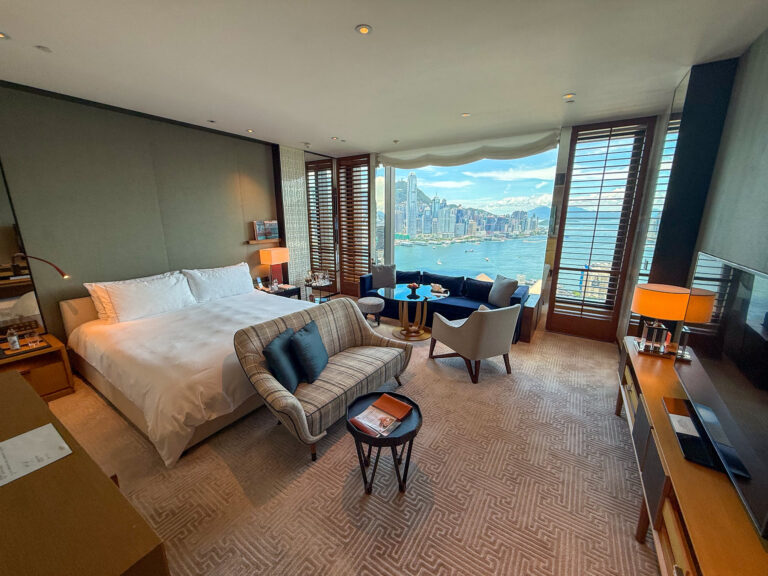
The room, and this is where it stops being close. The Rosewood harbour room is a wide, low-lit, deeply comfortable space with plantation shutters folded back off a window that runs the width of it, a seating nook set into the glass, a proper writing desk, and a marble bathroom with a checkerboard floor and a freestanding tub placed where it can see the water.
The room is organised around the harbour without ever saying so. The Peninsula’s is handsome, generous and slightly more formal, with a bathroom that is the best part of it — the tub at the corner window is one of the great hotel-bathroom views anywhere — and technology that was famous fifteen years ago and is now maintained the way a family maintains a grandfather clock.
Rosewood, entry harbour category. The shutters fold right back and the window is the wall.
The building, if you like the new kind. Dark timber, brass, low light, art everywhere, corridors that feel like a private floor, and a lobby you walk through rather than sit in: the least hotel-like large hotel I have stayed in.
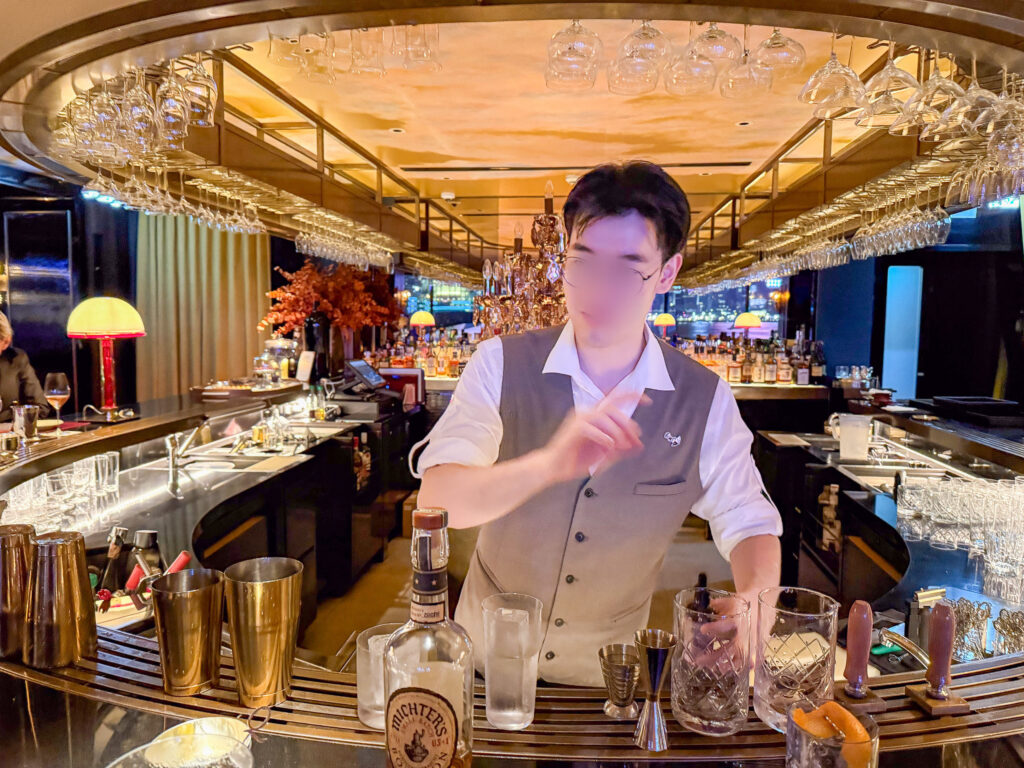
The bar, and the sharper kitchen. The Legacy House is the Cantonese room and it is very serious about old recipes done exactly. The bar is the one people cross the harbour for, and on a Friday it is full of Hong Kong rather than full of guests, which is the mark of a bar that works.
Rosewood’s bar on a weekday. By Friday you will not get this view of it.
Service is the category where the gap closes completely. Both are staffed by people who are very good at this and have been for a long time, both anticipate rather than react, and neither made a mistake across six nights. The difference is register: the Peninsula is formal and slightly ceremonial, Rosewood is quieter and closer to how a good private house would run. Neither is better. Pick the one you would rather be greeted by at seven in the morning.
The daybed at the glass, feet up.The round blue table at the window.The marble bathroom, the bedroom through the door.
Verdict by traveller type
Here is the question, and it is not about rooms. Is this your first time in Hong Kong?
If it is, stay at the Peninsula. The building, the lobby, the car and the tea are part of the city in a way that a hotel room, however good, is not, and you will remember arriving there for the rest of your life. Take the room with the harbour in it, take the Rolls once, and accept that you are paying for an occasion.
If it is not, stay at Rosewood. You already know the city, you do not need the introduction, and what you want is the best room on the best view with the fewest people in the way. That is what it is, comfortably, and it is not close.
And if you have four nights or more, do what I did and split it. They are ten minutes apart, the contrast is the most interesting thing about either of them, and neither hotel will mind. One caution for both: March in Hong Kong can be grey and wet for days at a time, and every argument above is about a view. Neither hotel can do anything about that, and both will charge you for it regardless.
One of them is the arrival. The other is the room. Almost nobody needs both, and everybody thinks they do.
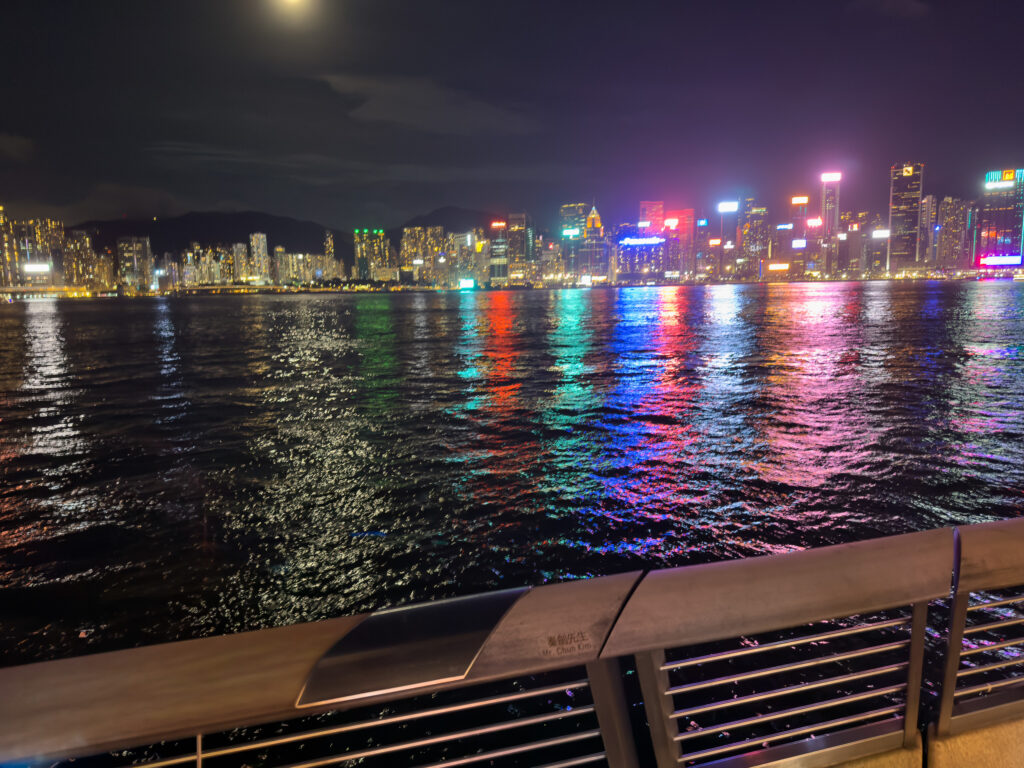
The harbour at dusk from the Rosewood side. Kowloon, either way.
Bottom line
The Peninsula for the occasion, Rosewood for the room and the definition of luxury. First visit, the Peninsula and the car once; been before, Rosewood on a high floor.
Both stays booked the way any other guest would book them.
The question
Mayakoba is not a hotel. It is a gated stretch of jungle about forty minutes south of Cancún airport, threaded with canals cut out of the limestone and fed by the rivers running underneath the Yucatán. Four luxury hotels sit inside it, with a golf course and a shared village square, and guests move between them by golf cart, bike or boat. Which means the location argument, which usually decides these comparisons, does not exist here. Same jungle, same beach, same drive, same course. What is left is the hotel itself — and the two ask very different levels of commitment for it, with Banyan Tree the bigger ask on any comparable dates.
The arrival dock. The same boats serve both hotels; the estate is one address.
The short version. Banyan Tree is all villas, every one with its own heated pool, wrapped in Southeast-Asian design and anchored by a Thai-heritage spa; it is the quieter, more design-led property, the one built around wellness, and the one that makes you feel you have left the resort world entirely — a retreat rather than a resort, and it commits from the kerb. Fairmont is rooms, casitas and suites, five pools including one with a waterslide, a kids’ club and a teens’ club, eight restaurants and an optional all-inclusive plan; it is the better-value property and the more practical one for a family. Both share the same canals and the same beach. Neither shares the same temperament.
What the table cannot hold is the Banyan highlight: the Zen that settles on you somewhere between leaving the cab and leaving the resort, and never once breaks. A surprising amount of it arrives through the nose. The scent of the place is exceptional and pervasive — a keen aromatherapy that follows you from the lobby to the spa to your own villa, until you catch yourself breathing on purpose.
An infinity pool running to the sea past a thatched palapa. Which hotel? That is the question.
Side by side
What
Banyan Tree
Fairmont
Entry accommodation
A villa with a private heated pool; living space and bedroom open onto a terrace and your own water
A room or casita, large and bright, deep marble tub; comfortable rather than memorable
Design
Southeast-Asian, softened with Mexican materials
Resort-standard; plain for the standing, and the walls are thin
Pools
Better beach front club pool, private plunge pool.
Numerous on site and by ocean. Including a family pool with a slide and an adults-only infinity pool over the lagoon
Spa
The Banyan Tree Spa in private villas, and The Rainforest hydrothermal circuit — a reason on its own to visit
Very good, without a wellness brand behind it
Eating
Saffron, the Thai room, is the standout on the estate. Steakhouse at the beach is excellent.
Average food throughout
Children
Welcomed, no kids’ club
Built for them: kids’ club, teens’ club, waterslide, connecting rooms
Service
The strongest on the estate; fewer guests, more attention per villa
Good for the size
Best for
Couples, wellness, the villa
Families, groups, golf, longer stays
Banyan Tree: the villa bedroom opening onto its own pool.Fairmont: the stone bathroom, the garden beyond.
Noted
Observed on both stays, not measured.
What
Banyan Tree
Fairmont
Wi-Fi
Fast, steady across the villa
Adequate, weak on the terrace
Noise
Birds and insects; no neighbours audible
Neighbouring room audible through the wall
Bed
King, medium-firm, excellent linen
King, medium, good linen
Water pressure
Strong; hot almost at once
Strong; a little slower to run hot
Private pool
Heated, cleaned daily
Not in this category
Time to the beach
On the beach.
Ten minutes with the buggy
Loungers gone by
Never an issue
Never an issue
Sargassum
Present, barriers in place, cleared each morning
Present, barriers in place, cleared each morning
Mosquitoes at dusk
Noticeable on the lagoon
Noticeable in the gardens
Where Banyan Tree wins
The villa. A private heated pool on every terrace changes how the whole resort feels; the shared water is quieter than the guest count suggests because half the guests are in their own. One tip worth having: the garden and lagoon villas, screened by jungle, sit lower on the ladder and often feel more private rather than less.
The spa. Thai-influenced treatments in private therapy villas, and The Rainforest, a circuit of steam, ice, heat and sensation pools that you build a slow afternoon around. It is a reason to choose this side on its own. And the service, which is the best on the estate for the plainest reason: fewer guests, and staff who are not stretched across four hundred keys.
Saffron. The Thai room is the one restaurant on the whole estate worth crossing the water for, and Fairmont guests can — the ferry runs between the hotels. Which is the most useful thing I can tell you about eating at the Fairmont.
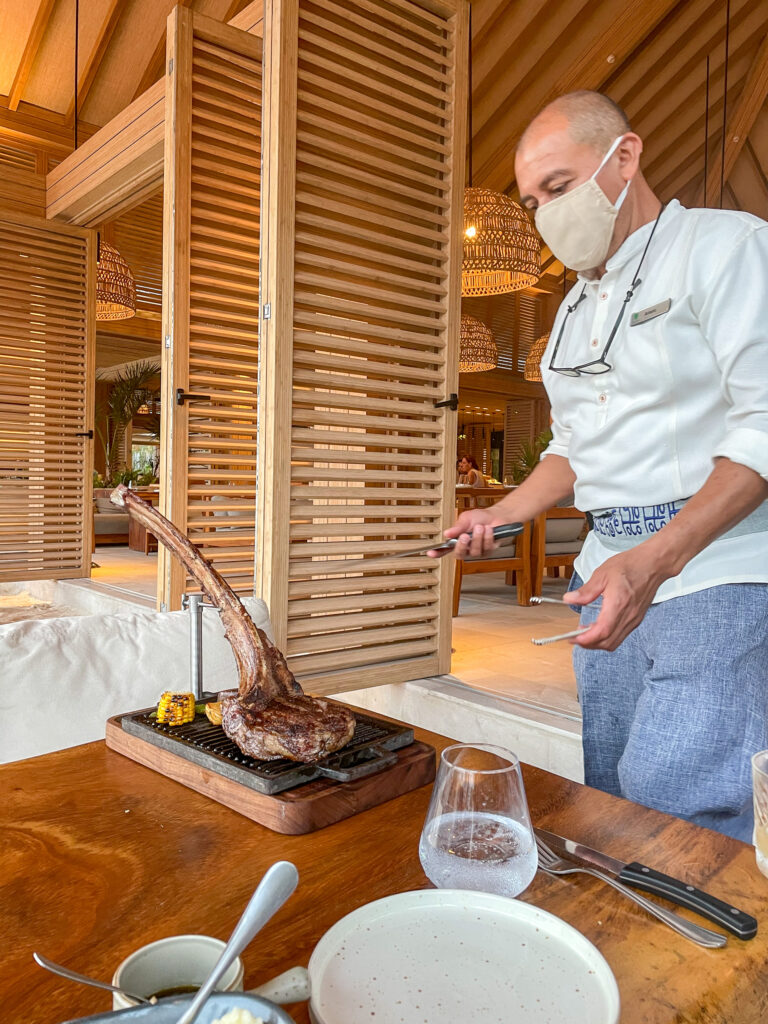
A whole fish at dinner, at the villa. The kitchen will grill at your pool.
Where Fairmont wins
Children, and this is the one category where the gap widens rather than narrows. Kids’ club, teens’ club, waterslide, connecting rooms, and enough space that nobody minds noise. Banyan Tree will put a family in a multi-bedroom villa and arrange babysitting, and it is a couples-and-wellness property at heart. At Fairmont your children are the point. At Banyan Tree they are quietly accommodated. Fairmont is a resort to take the kids to. Banyan Tree is a retreat to recover from them.
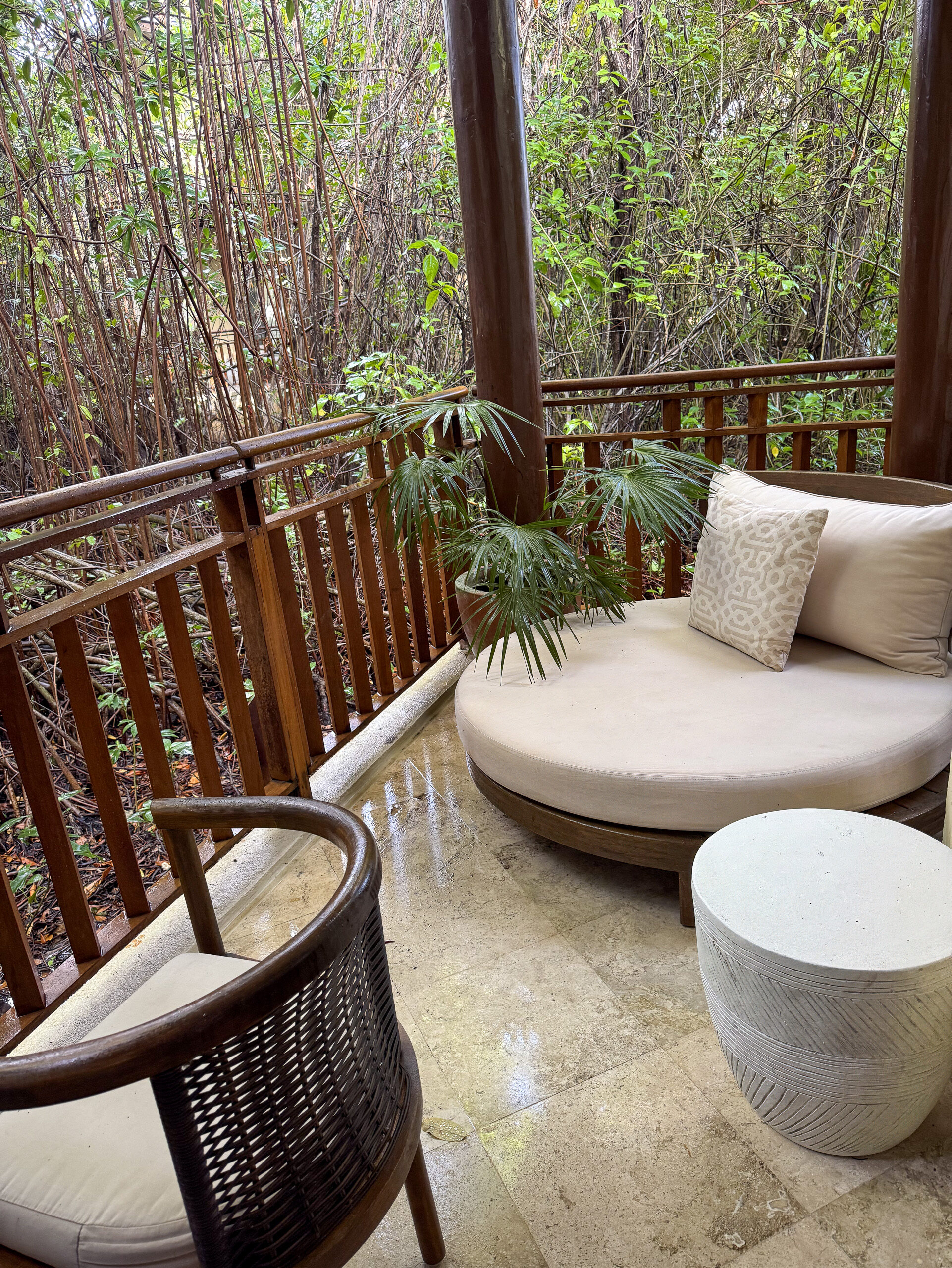
A shaded daybed on a deck above the mangroves at Fairmont. The lagoon side is the quiet side.
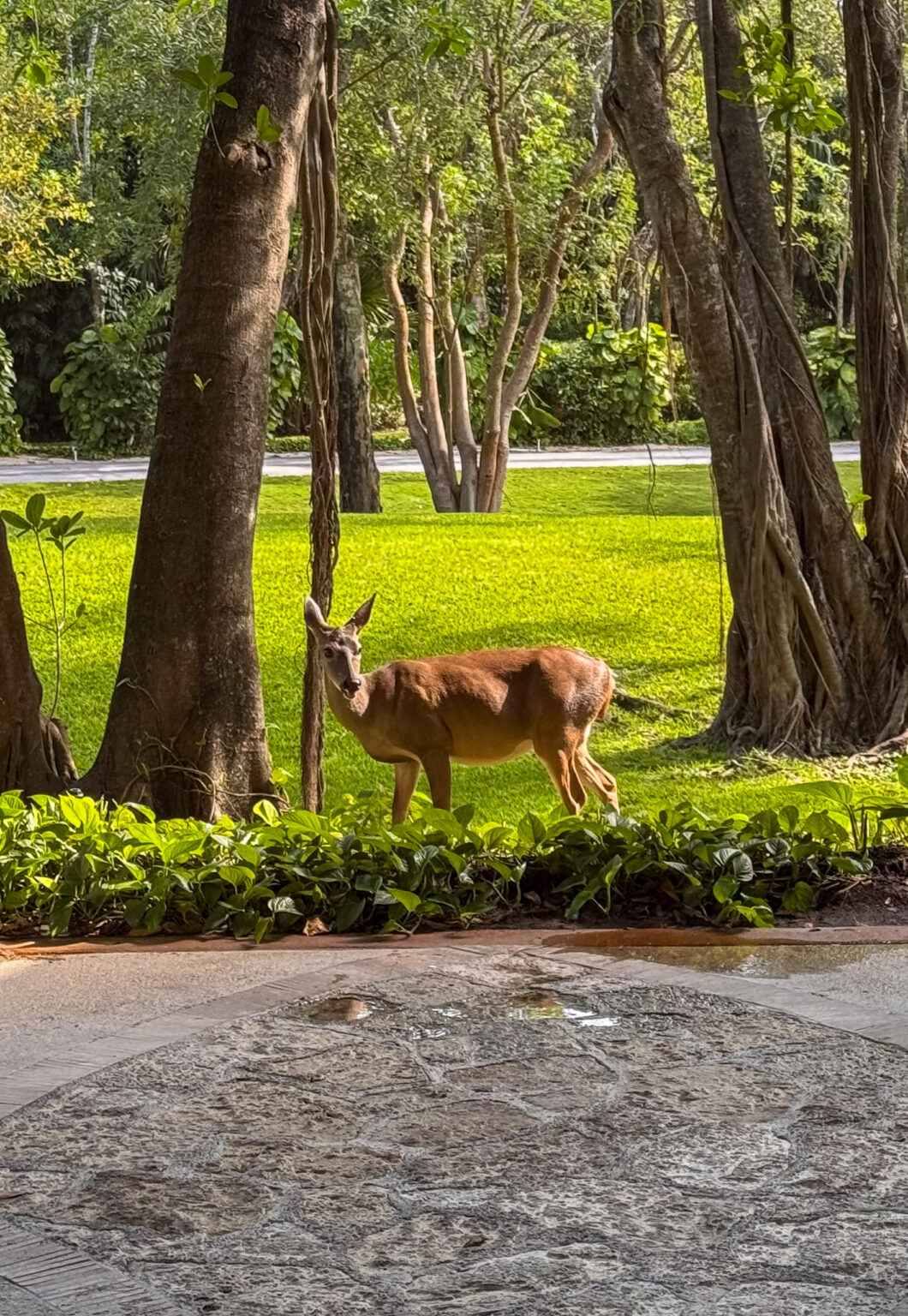
The grounds, and the wildlife in them, are the luxury at the Fairmont: older trees, longer lagoon frontage, coatis and iguanas on the way to breakfast. The rooms are comfortable rather than memorable, the decor reads plain for the standing, the walls are thin, and maintenance can lag. You will not remember the room. You will remember the iguana.
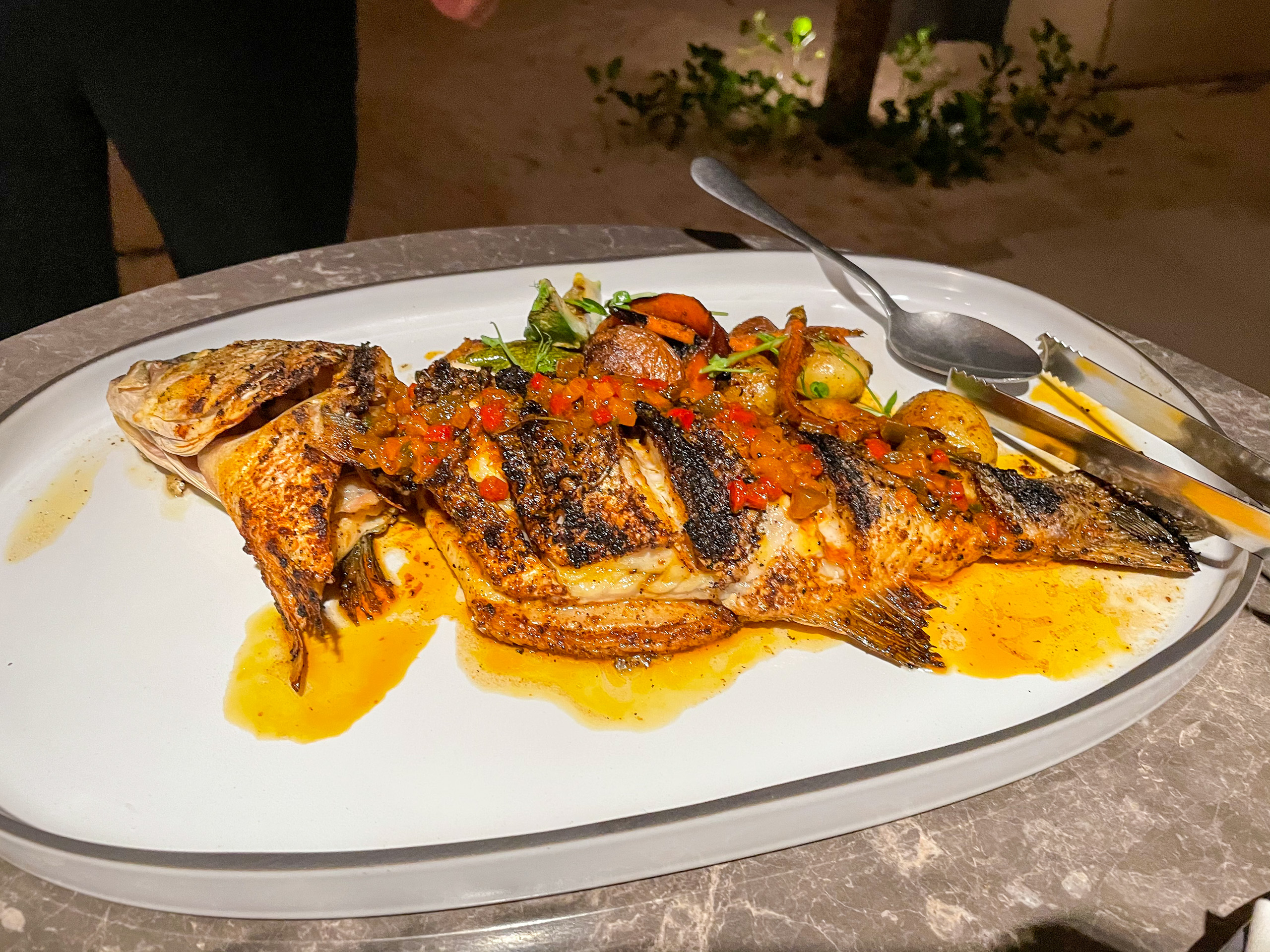
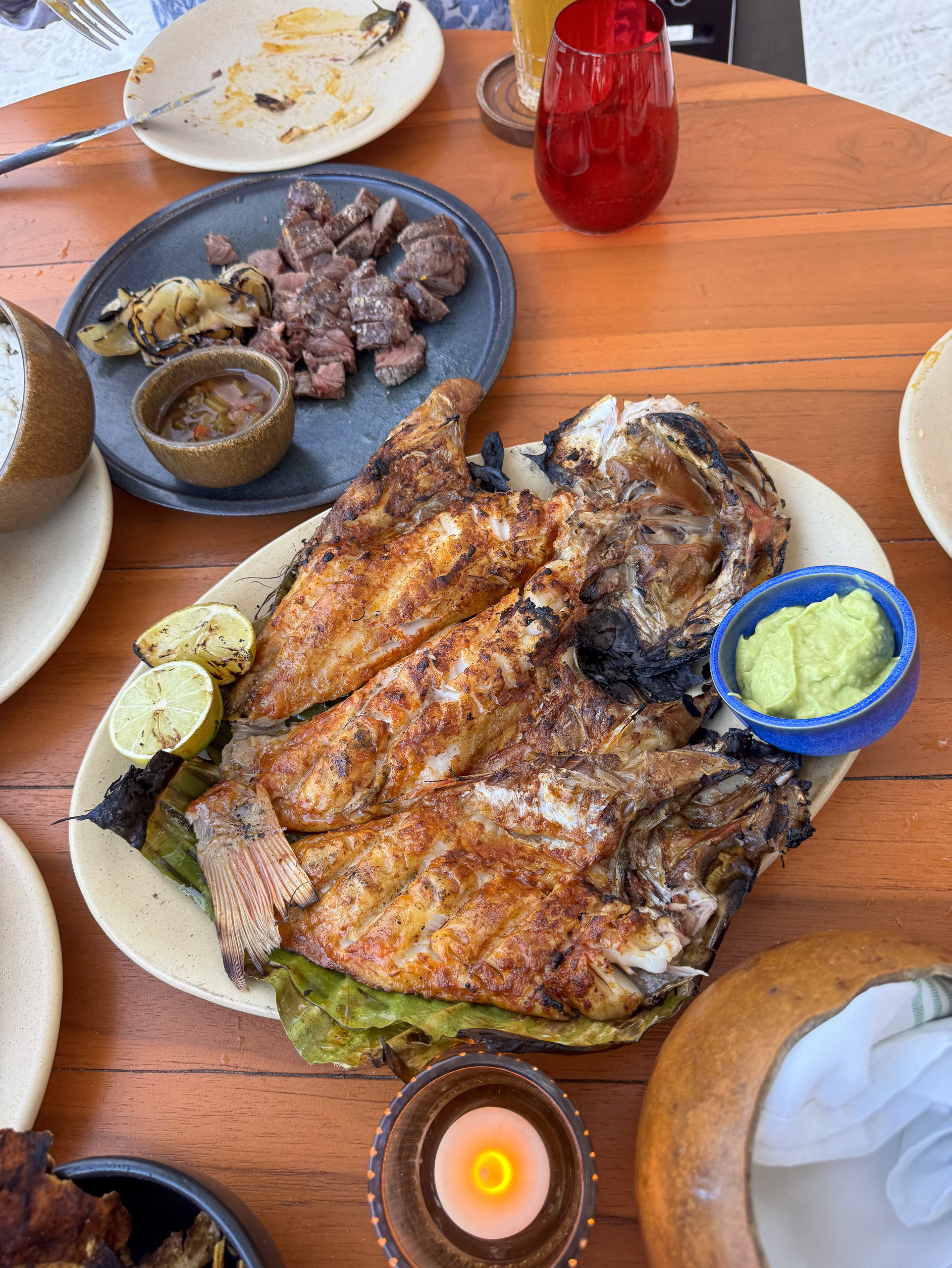
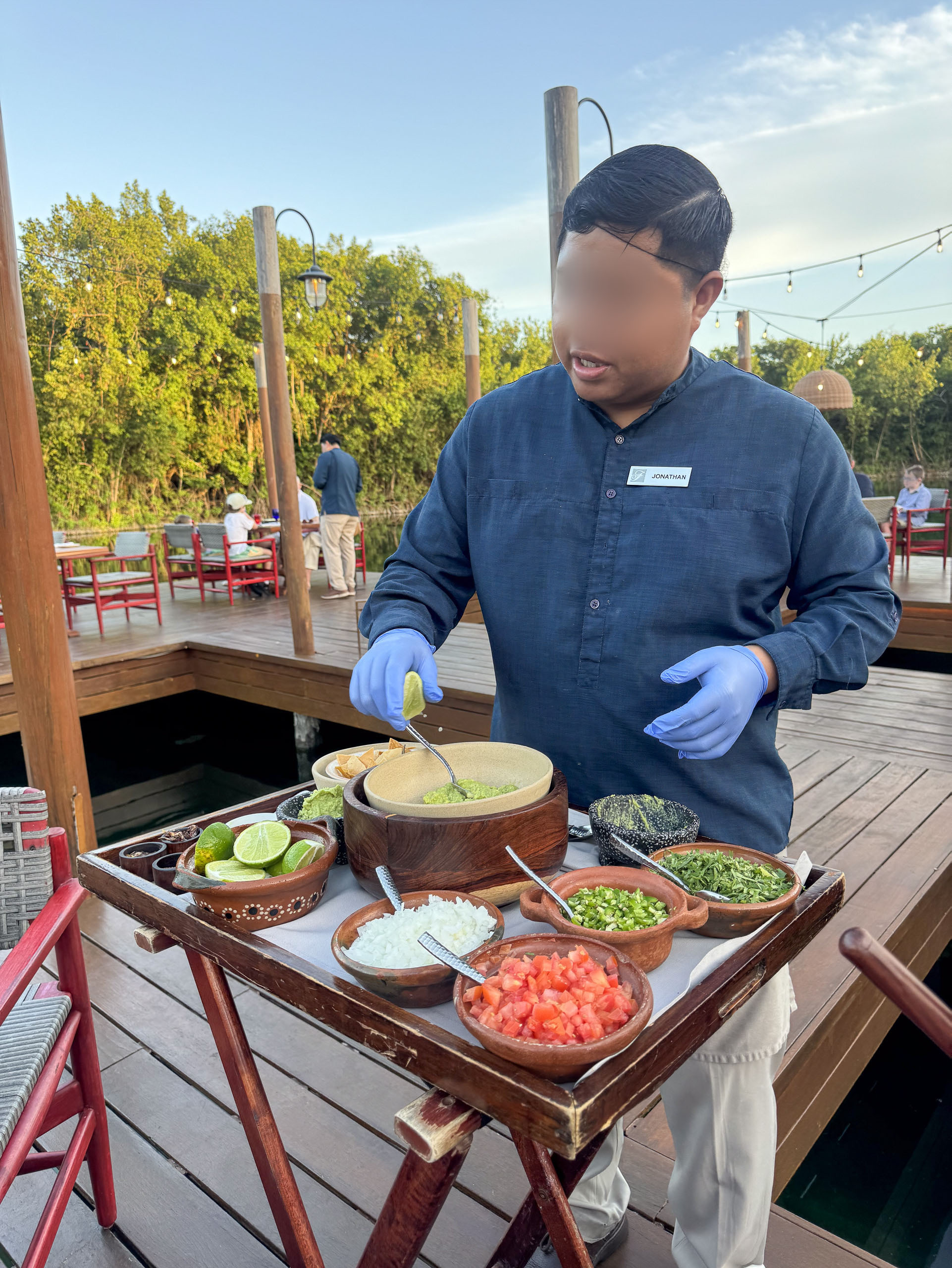
Whole grilled fish, guacamole, tortillas, on the plan.Guacamole made at the trolley.
And the honest part, which applies to both: this stretch of coast gets seaweed seasonally, and the offshore barriers used to manage it mean the beach does not look like the brochure. Neither hotel can fix it and both handle it about as well as anyone does. If a flawless Caribbean beach is the point of your trip, come outside seaweed season or look at the Pacific side.
Verdict by traveller type
Take Banyan Tree for a honeymoon, an anniversary, or any trip built around the villa and the spa. Take it if wellness is a reason for going, if you want a private pool off your own terrace, and if Southeast-Asian calm is the mood you have been carrying around.
Take Fairmont with children, with a group, on a golf trip, or on any stay longer than four nights where the dinners start to compound. Take the all-inclusive if you plan to eat in.
If you can stretch to it and want my answer: four nights in a Banyan Tree villa beat six in a Fairmont room. If it does not stretch, the Fairmont is not a consolation prize. You are in the same jungle, on the same beach, and you can hop the ferry to Saffron for dinner.
Book Banyan Tree if the villa is the trip. Book Fairmont if the trip is bigger than the room.
Teak daybeds and woven cabanas on the sand at Banyan Tree. Both hotels front the same beach.
Bottom line
Banyan Tree if the villa is the trip, Fairmont if the trip is bigger than the room. Take the oceanfront upgrade at one, the all-inclusive plan at the other, and eat at Saffron either way.
Both stays booked the way any other guest would book them.
The question
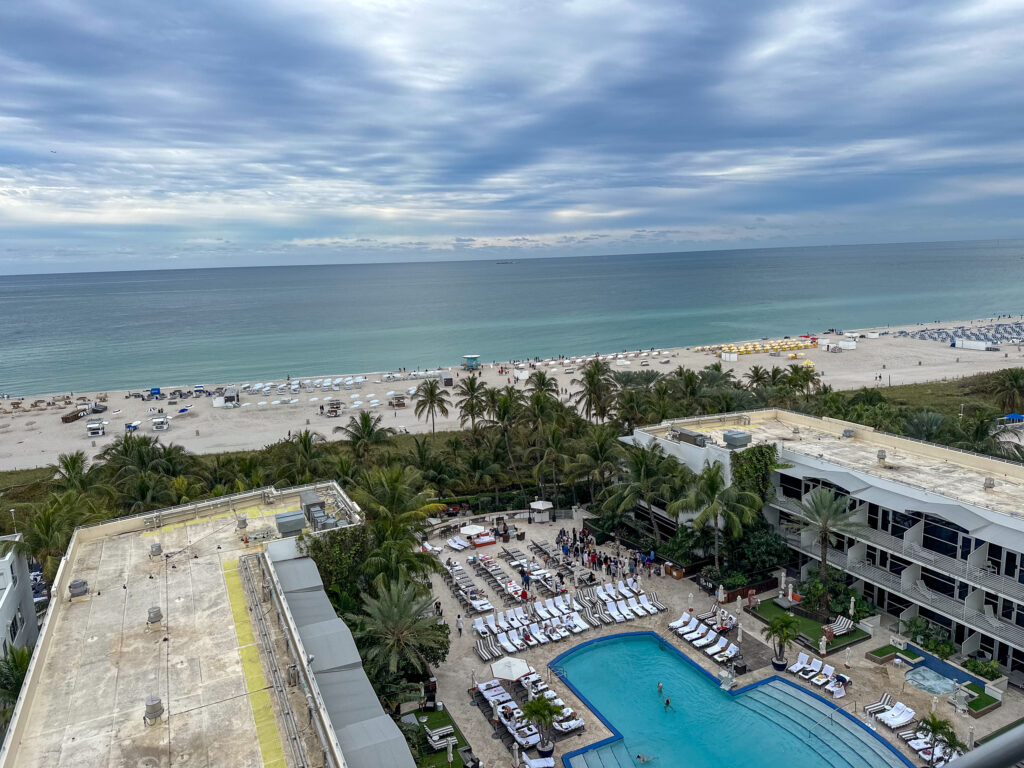
The Ritz-Carlton from above: one cross-shaped pool, a garden, and a short walk to the sand. Compact by Miami Beach standards, and deliberately so.
The short version: the Ritz-Carlton is a hotel at the top of South Beach with a preserved mid-century lobby, one beautiful pool, a large spa and a level of quiet that surprises people who booked it for the location. The Fontainebleau is a resort city in Mid-Beach with towers, ten pools, a nightclub in the basement and a lobby that has been a tourist attraction since Sinatra. Book the Ritz if you want a hotel. Book the Fontainebleau if you want a destination and can handle the crowd that comes with it.
The Ritz sits on the sand at the corner where Lincoln Road meets Collins: the Lincoln Road Mall in a couple of minutes, Ocean Drive in about nine. That location is the single strongest thing the hotel owns, and the trade is that the restaurants immediately around it are tourist traps, so walk a few blocks before you eat. The Fontainebleau is on the stretch of Collins still called Millionaire’s Row, and there is nothing to walk to. The resort is the destination, which is either the appeal or the problem depending on how you travel.
Side by side
What
Ritz-Carlton
Fontainebleau
Where
South Beach, on the sand; Lincoln Road a couple of minutes on foot
Mid-Beach; nothing to walk to, the resort is it
The building
The DiLido kept: terrazzo, the staircase, the chrome sphere wall
The theatre kept: the curves, the chandeliers, the Staircase to Nowhere
The room
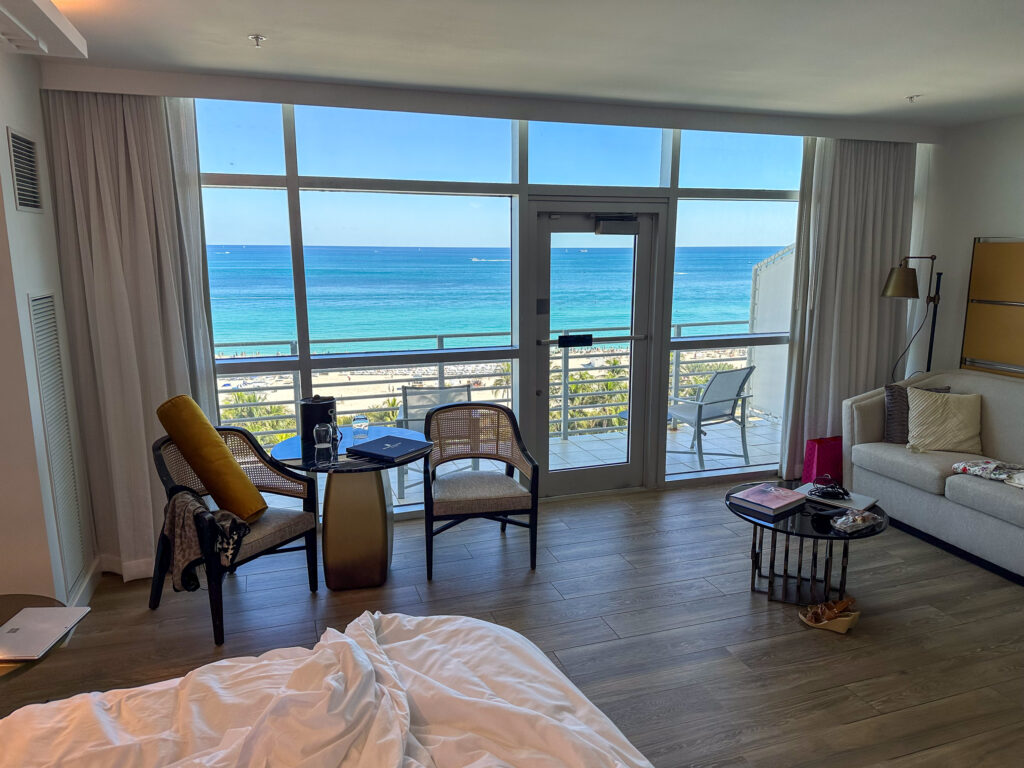
Small, but the ocean view earns it; mid-century chairs and a balcony that makes it
Generous in a good tower, tired in a bad one; balconies in Trésor
Pools
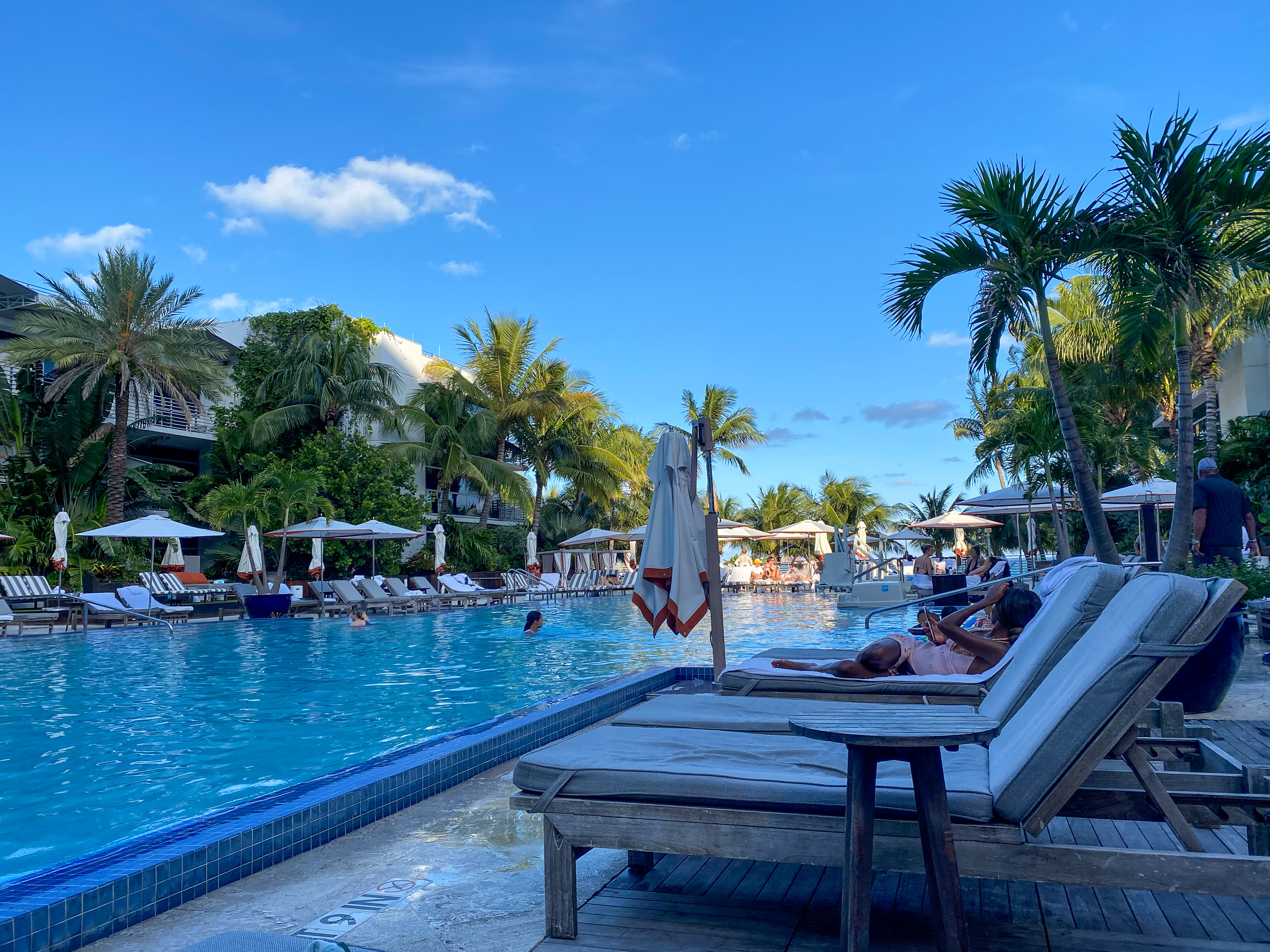
One, cross-shaped, elevated over the sand; never filled
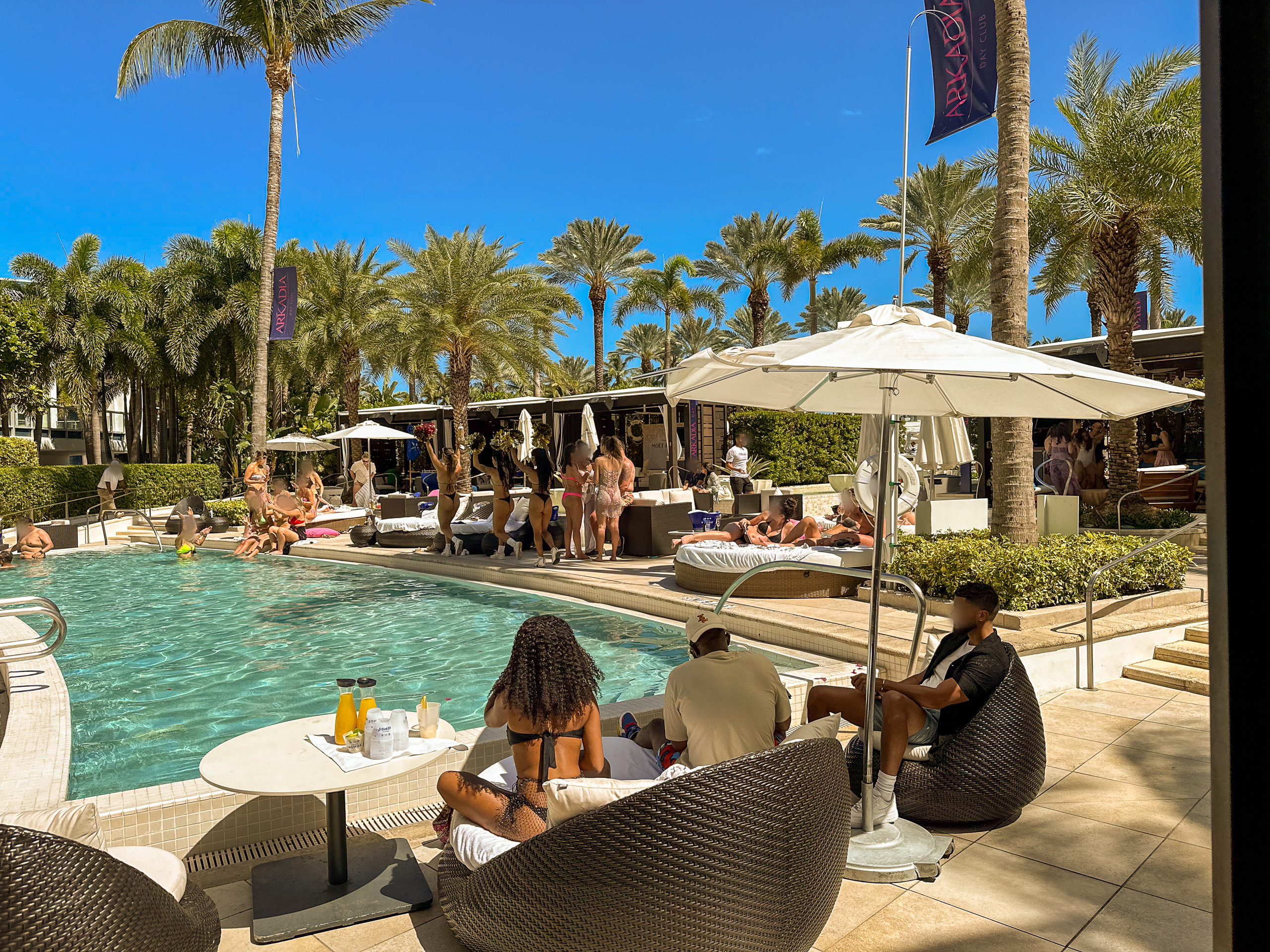
Ten, from the calm Bowtie to a day club with DJs; loungers gone by half past ten
Spa
The better spa for a treatment
The better spa for a whole afternoon; mineral pools and a jetted pool
Eating
Three, all good; the beach bar on the sand is the one to book
Eight to twelve depending on the quarter, uneven; a starred Cantonese room; LIV below
Children
Welcome, not built for them
A kids’ club, a playground, a waterscape; noise at breakfast disappears
Best for
Quiet, the spa, the location, the building
Families, facilities, the scene
Ritz: the pool between the palms.Fontainebleau: the pool club at three.
Noted
Observed on both stays, not measured.
What
Ritz-Carlton
Fontainebleau
Wi-Fi
Fast, steady
Adequate, spotty at the pool
Noise
No noise in the room.
You can get a quiet room if you ask — I have had both
Bed
King, medium-firm, feather top
King, medium, pillow menu
Water pressure
Strong; hot almost at once
Strong; slower to run hot
Blackout
Full, manual, small light gap
Full, motorised, no gap
Loungers gone by
Not an issue; the deck never filled
10:30am at the Bowtie Pool
Walk to Lincoln Road
A couple of minutes on foot
Not walkable
Lift wait, peak
Never waited
Waits at checkout hour
Where the Ritz wins
The building, if you like to stand still and look. Black terrazzo floors, the grand staircase, a curved wall of polished cherry, and the original chrome sphere light wall that remains the focal point of the multi-level lobby. The refresh worked around the historic fabric rather than through it. The Fontainebleau kept the theatre instead — the curves, the chandeliers, and the Staircase to Nowhere, which Lapidus built so a woman could leave her coat at the top and make an entrance coming back down. One building rewards standing still. The other rewards walking through it.
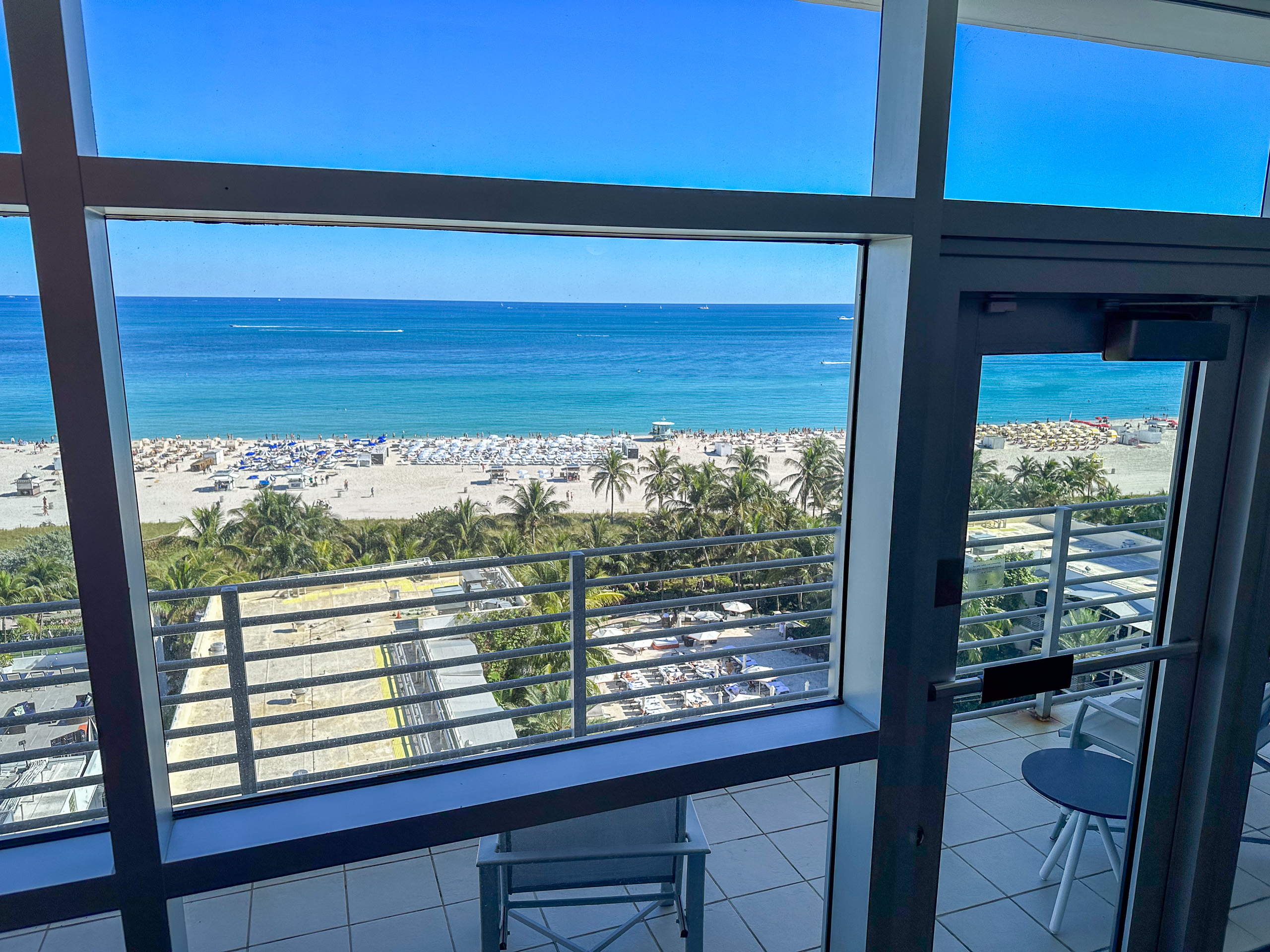
Ocean and beach through the glass of an oceanfront room at the Ritz. The view gap is bigger than the category gap.
The quiet. One cross-shaped pool elevated over the sand, a deck that never filled, and poolside service from the Lapidus Bar. It is a stunner and it is also, by any resort standard, small. That is underwhelming if you arrived expecting scale and exactly right if you arrived expecting quiet. I arrived expecting quiet, and then I checked the booking and expected scale, and then I lay down and stopped expecting anything.
The spa, for a treatment: serious for a hotel this size, with couples’ suites and a full salon, and the strongest amenity on the property. And the eating is short and good: Zaytinya for eastern Mediterranean, the Lapidus Bar in bronze with live music, and the DiLido Beach Bar, one of the very few restaurants in South Beach that actually sits on the sand. Three outlets, all good. The beach bar is the one to book.
An oceanfront room at the Ritz. Mid-century chairs, a writing table, and the balcony doors that make the room.
Where the Fontainebleau wins
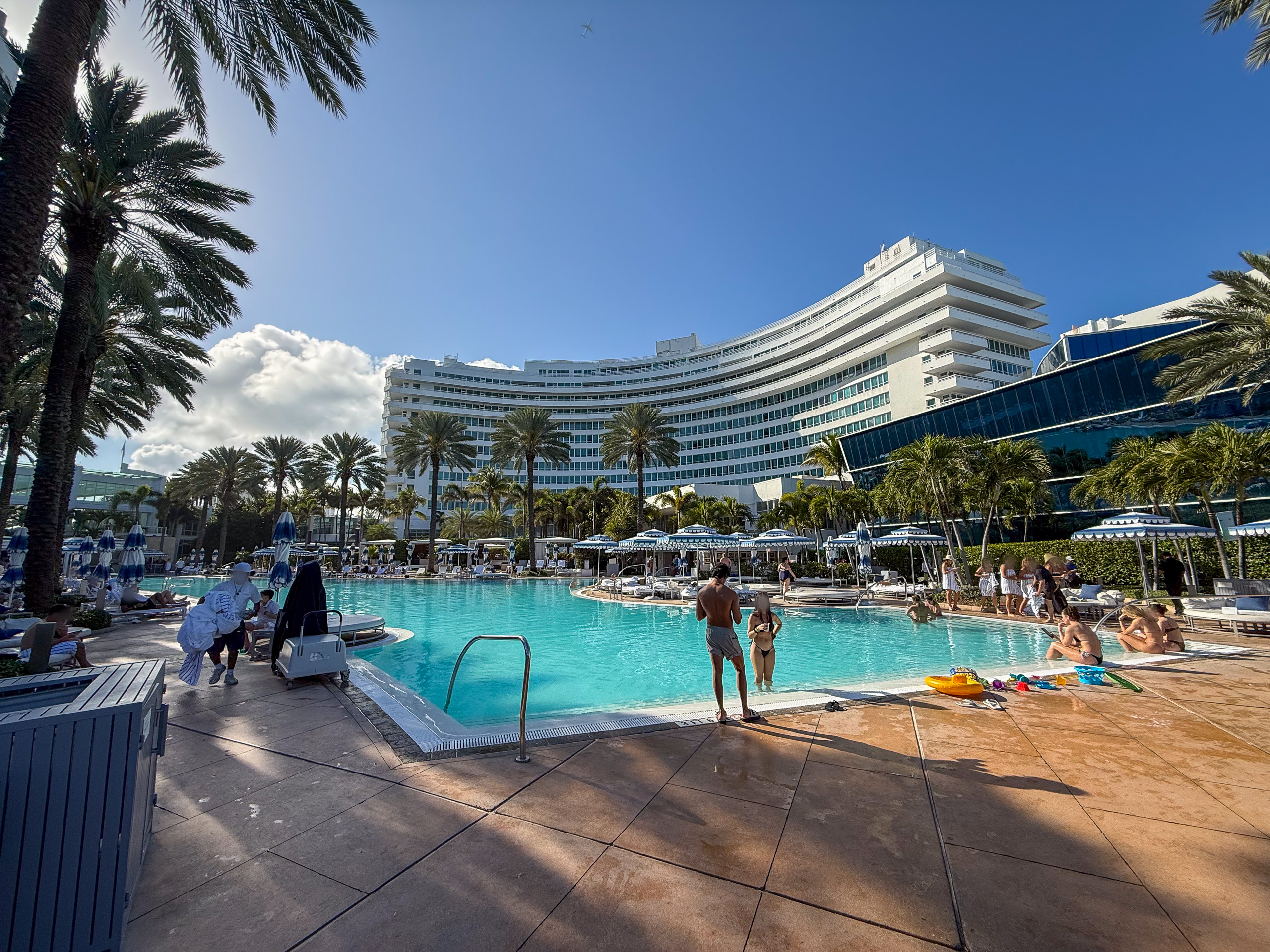
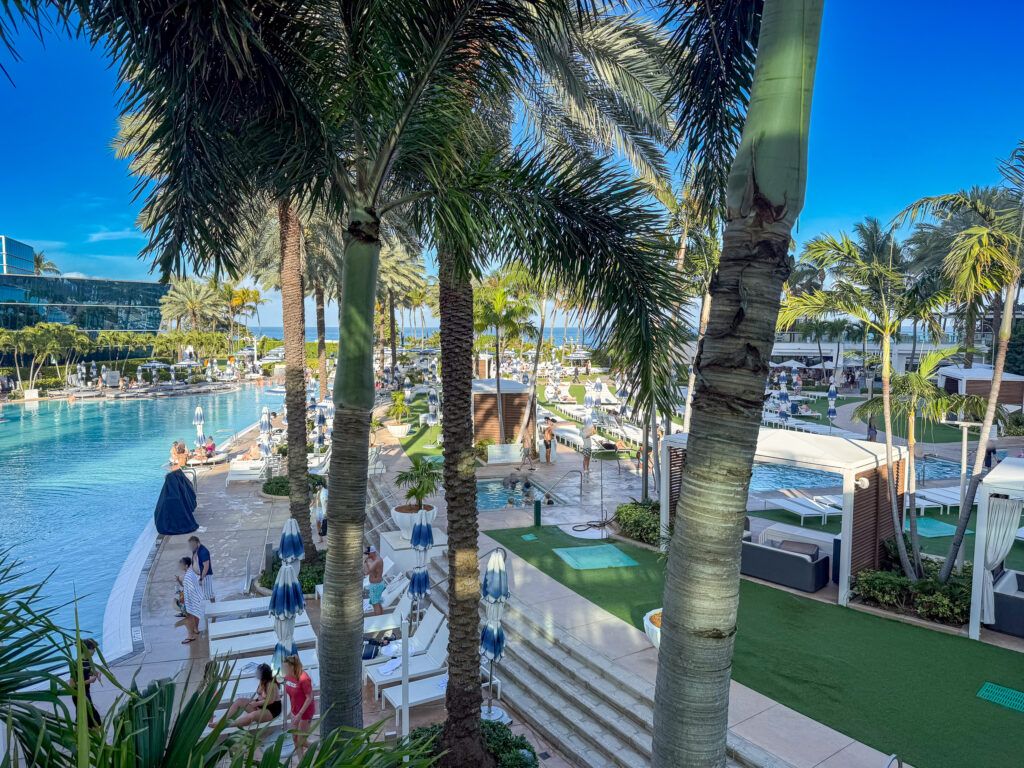
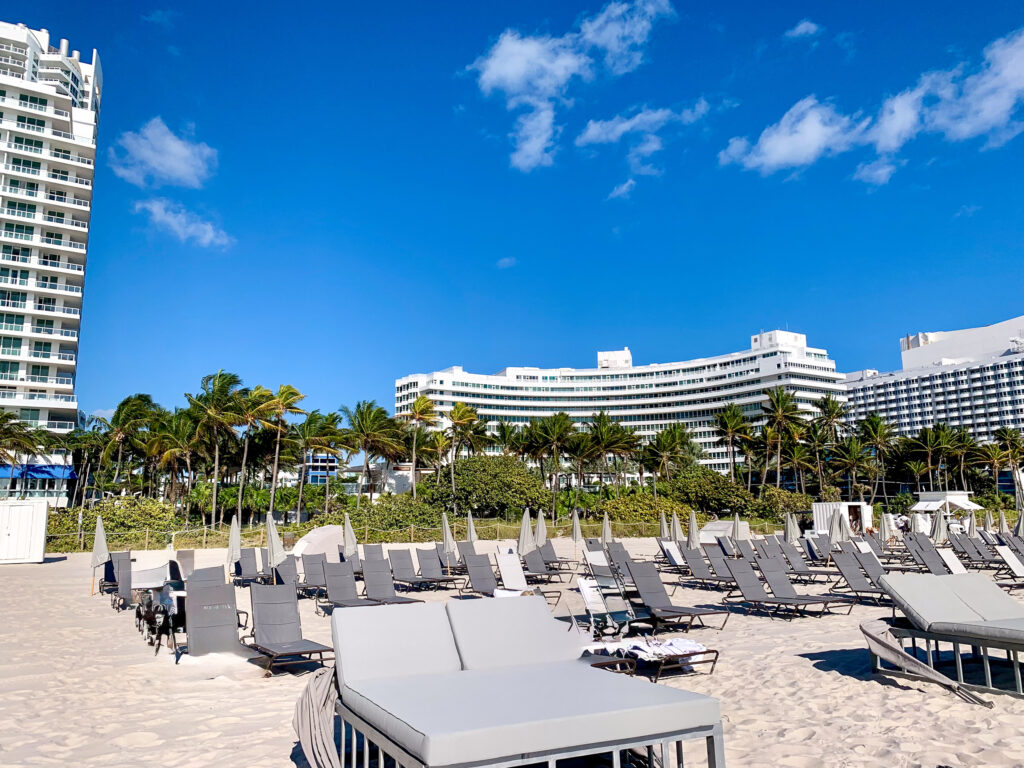
Scale, and everything that comes with it. Ten pools across a poolscape that runs the length of the property onto the beach: the Bowtie Pool is the photographed one and the calmer one; Arkadia is the adults-only day club with DJs and bottle service; there is a family pool, a kids’ waterscape and a playground. Cabanas and daybeds rent, food comes to your chair, loungers are gone by mid-morning unless you go down early, and music plays from late morning at the main pool. Nobody is pretending otherwise.
The Fontainebleau’s pool complex runs deep — cabanas, turf lawn, and the ocean past the palms.
The room, when you land in a good tower. My Trésor room had a furnished balcony and more floor than the Ritz gives you; which tower you are in matters more than the category, and the bay-facing rooms in the older blocks look at Biscayne Bay and downtown, not the ocean. Generous when you get a good one, tired when you do not.
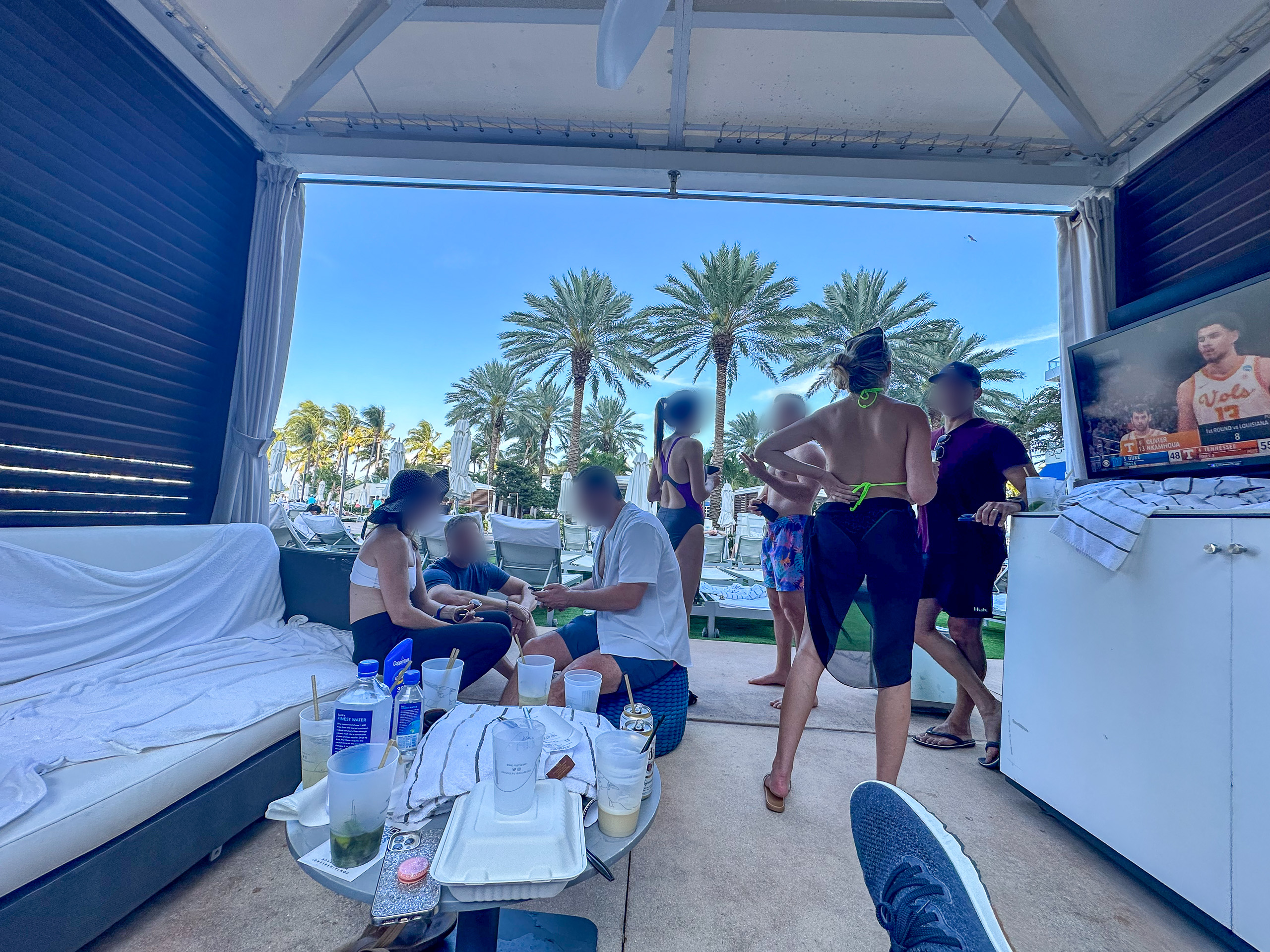
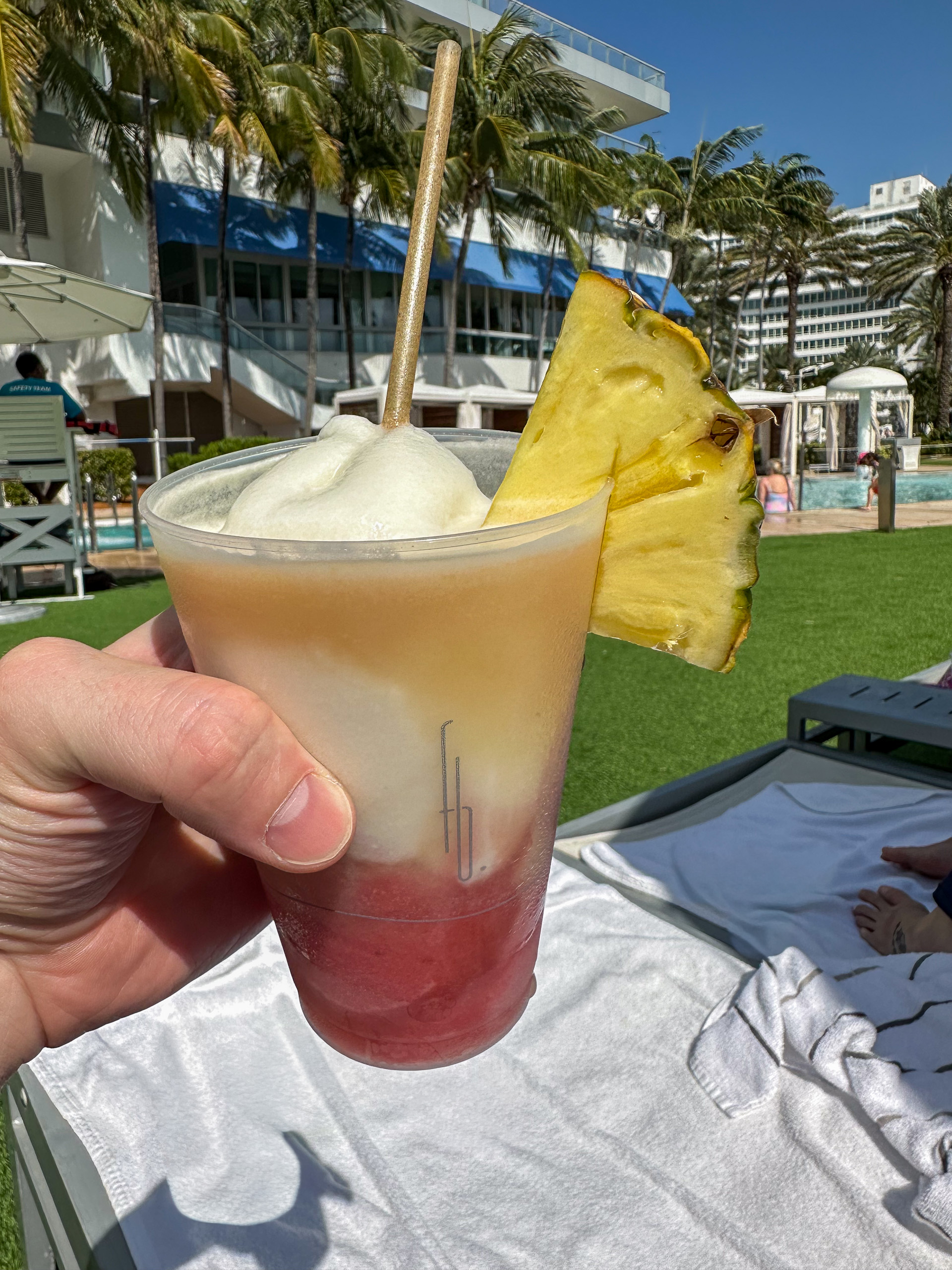
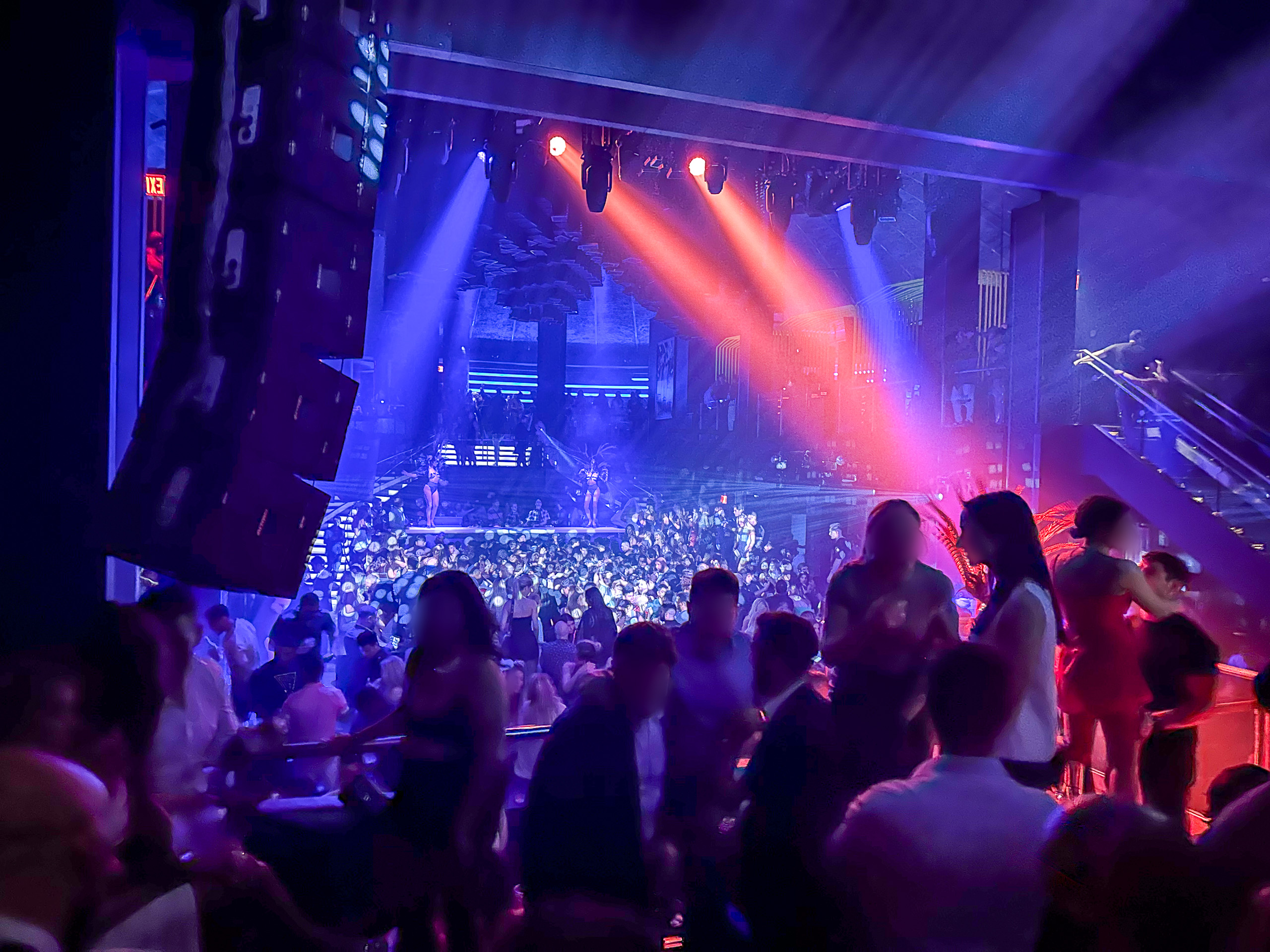
Inside a beach cabana: daybed, drinks table, television.A frozen cocktail with a pineapple wedge, in front of the lawn.The nightclub, lights and a stage. It is in the hotel.
Range. A starred Cantonese room, a high-end Italian, a steakhouse cut from its own ageing room, a sushi bar, a brasserie doing all three meals, a beach club, a bakery, a pool bar and the Bleau Bar in the lobby, and downstairs LIV, which remains one of the loudest nightclubs in the city — and, for me, still the best in it. If you would rather have three good options than nine uneven ones, the Ritz. If variety decides it, this wins by a distance. The spa, Lapis, is built around water — mineral pools, steam, a long jetted pool — and is the better spa to spend a whole afternoon in.
Lapidus’s curve, seen from the sand. The Chateau tower is still the building everyone photographs.
Neither hotel runs a spotless operation, and neither is consistent room to room; that is the honest headline on both. With that many rooms the Fontainebleau simply has more chances to get one interaction wrong on any given day than a house a quarter of its size does. It takes them.
Verdict by traveller type
Take the Ritz-Carlton if you want to walk everywhere, if the spa is a reason for the trip, if one good pool beats ten busy ones, and if you would rather stay in a restored building than a restored city. Book the ocean side; the difference between a city view and an ocean view here is larger than the category gap suggests.
Take the Fontainebleau if you are travelling with children, if you want ten pools and nine restaurants and a nightclub without leaving, if the scene is the point, or if the scene is simply where you want to wake up. Ask for a Trésor tower room and say so at booking. The valet is the only way to park.
Neither is the safest luxury bet in Miami Beach. Both are the most interesting buildings on it.
Book the Ritz if you want the quiet. Book the Fontainebleau if you want the noise.
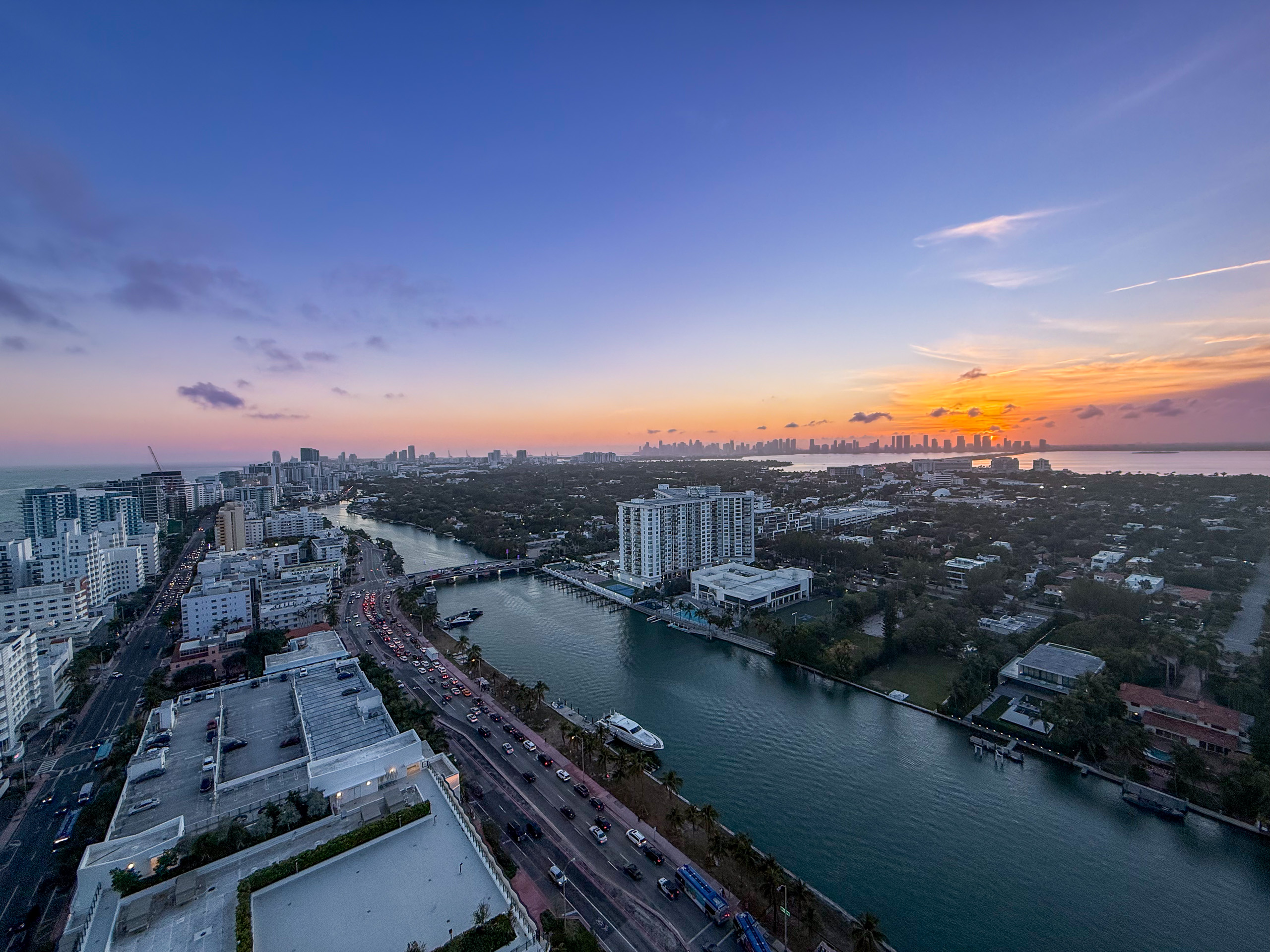
Twilight over the Miami Beach rooftops and Indian Creek, from a Fontainebleau tower room. The tower matters more than the category.
Bottom line
The Ritz if you want a hotel, the Fontainebleau if you want a destination. Book the ocean side at the Ritz and the Trésor tower at the Fontainebleau, and do not expect either to be consistent room to room — both are a case for the upgrade.
Both stays booked the way any other guest would book them.
The question
The same company built both hotels on the same stretch of the east bank. They share a driveway. They share a river shuttle. You can walk from one lobby to the other in about three minutes, past a security post that waves you through without asking which guest you are. The awards lists put them next to each other too and disagree about the order, which is the most useful thing an awards list has ever done. In 2025 the World’s 50 Best list had Four Seasons at number two and Capella at number three; I rank them the other way around. But it all depends on what you want out of your stay, which is the whole of this piece.
I stayed at both back to back, booked the same way, in the entry river room at each — and the channel upgraded me at both: a suite with a plunge pool at Capella, an annex suite with a balcony at Four Seasons. Back to back is the way to do it, and I recommend it without reservation, which is not a word I use lightly about hotels. The short version: Four Seasons is a resort that happens to sit in a city — three pools, six places to eat and drink, a spa with a boxing ring in it, enough going on that you can stay four days without leaving. Capella is low-rise, every room facing the river with a balcony that opens, a personal assistant assigned to your room, and a hush over the whole place. And Capella gave me the best service I have had in any hotel, anywhere, which settles more of this than I expected.
The view that comes with every Capella room.
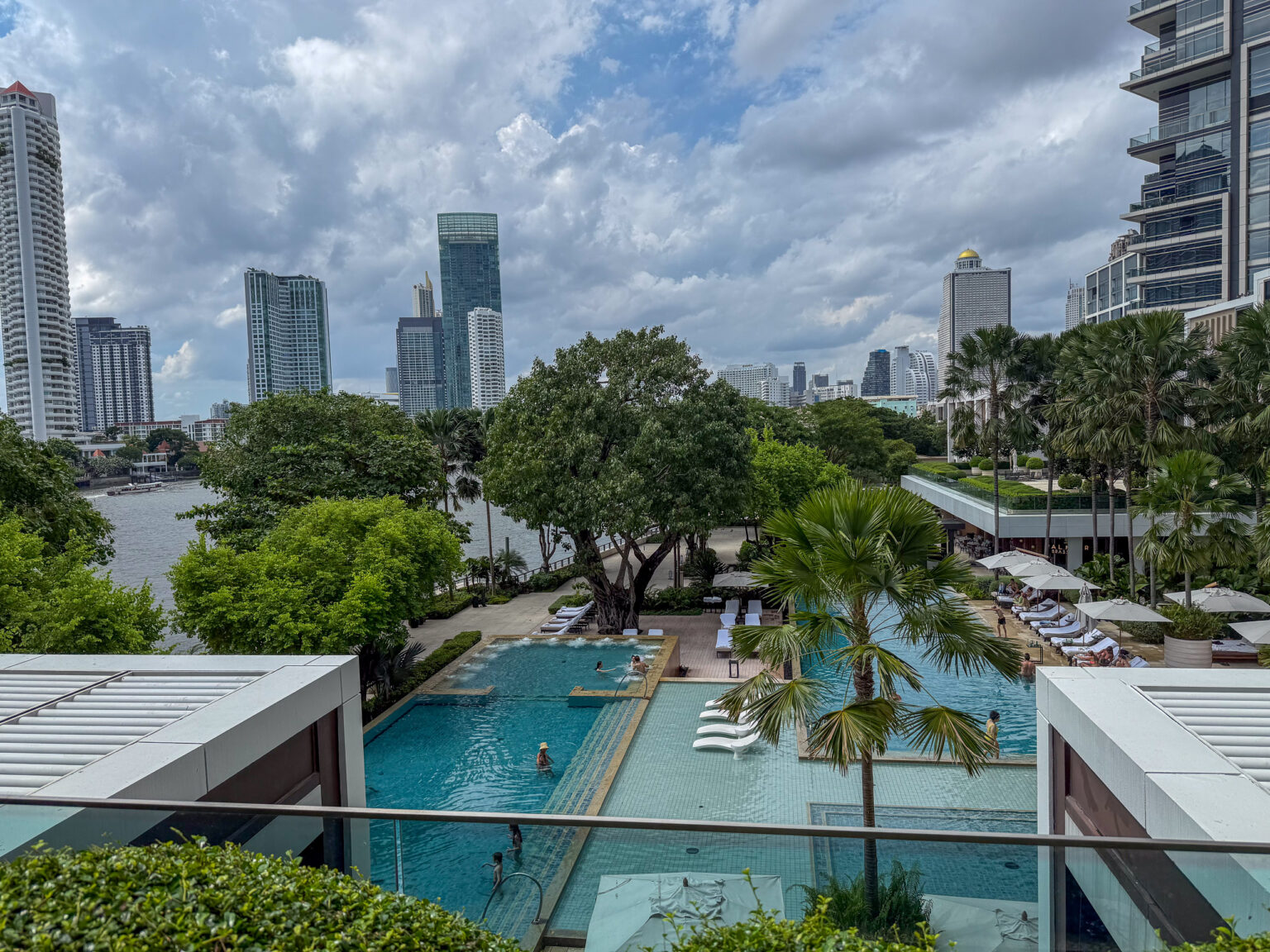
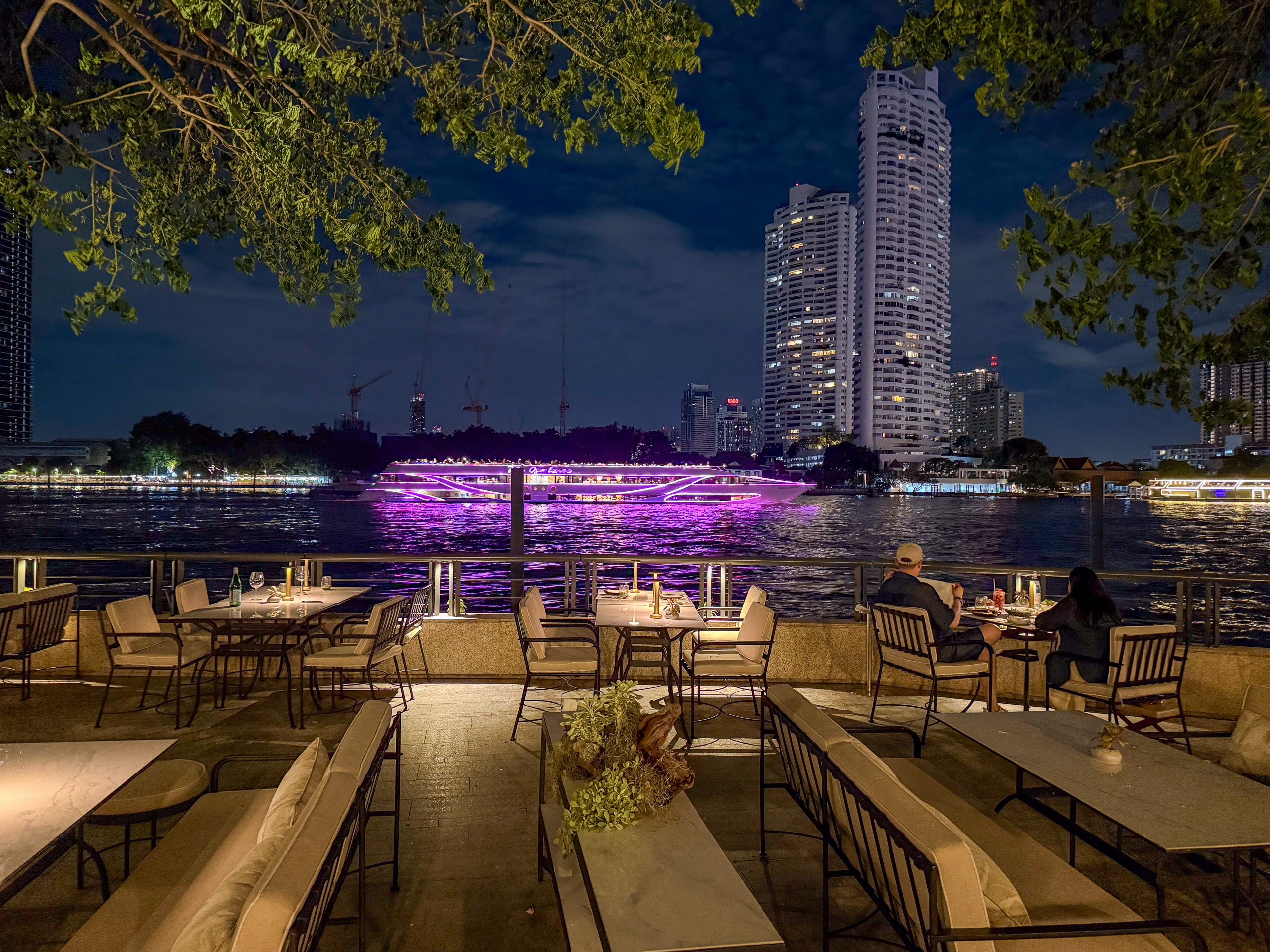
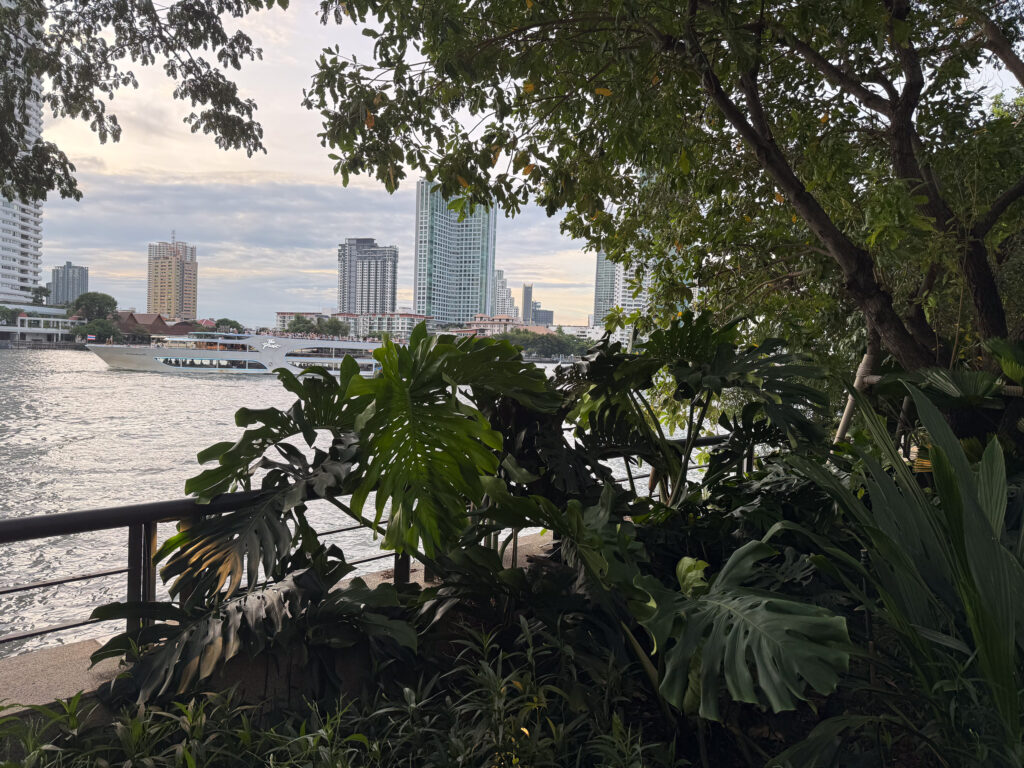
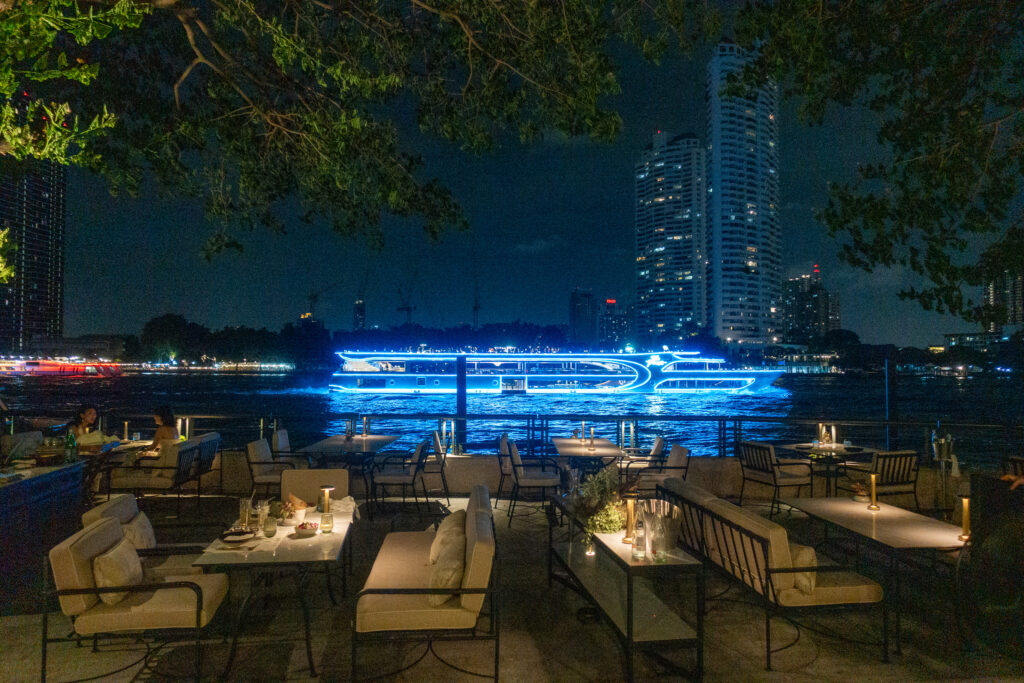
Both sit on Charoen Krung, the oldest paved road in the city and the most interesting neighbourhood either could have landed in: galleries, coffee roasters, old shophouses running north toward Chinatown. The shared shuttle boat is the thing to use. ICONSIAM, across the water, is a world-class mall and a five-minute run by boat, every hour on the hour, with a two-minute walk on either side of it — I popped over for a snack and a drink more than once, and a summer afternoon there is time well spent. Sathorn pier and the Skytrain put the rest of the city twenty minutes beyond. Guests of either hotel can board, and the crews do not check.
The shared river shuttle — guests of either hotel can board.
Side by side
What
Capella Bangkok
Four Seasons Bangkok
Location
East bank, low-rise, set back from the road
East bank, same estate, three minutes north
Entry room
Riverfront, private balcony on every room
River or courtyard by category; no balcony
View
River from every room, no exceptions
River or courtyard, depending on category
Vibe
Boutique hideaway, close to silent
Urban resort, full of life
Pools
One infinity pool, quiet
Three, including a lap pool long enough to train in
Spa
Auriga, seven suites; the couples’ room is the beauty
Two floors: heated indoor pool, boxing ring, aerial yoga
Gym
Adequate
Among the best hotel gyms anywhere
Signature table
Côte by Mauro Colagreco
Yu Ting Yuan
Bar
Stella, intimate
BKK Social Club, the best drink on the estate
Breakfast
Better ceiling, less reliable floor
Bigger, safer, never wrong
Service model
Named Culturist, 24 hours — the best service I have had anywhere
Deep bench, consistent, less personal
Children
Fine, but book a villa
Kids’ club, children’s pool, room to spread out
Best for
Being looked after; the river from every window; slowing down
Families, facilities, dining, a full day in
Noted
Observed on both stays, not measured.
What
Capella
Four Seasons
Noise
Long-tail boats from 6am with the balcony door open; silent shut
Silent; road noise never reached the room
Bed
King, medium-hard — a true delight of a night’s sleep
King, medium-firm, pillow menu — nuff said
The bath
An attendant will draw it
—
Late checkout
—
Nine at night on the channel, with full run of the pools and spa
Water pressure
Strong; hot almost at once
Strong, hot on demand
Air conditioning
Quiet, held temperature overnight
Quiet, held temperature overnight
Shuttle boat to Sathorn pier
About ten minutes across; every half hour or so by the timetable
About ten minutes across; every half hour or so by the timetable
Time to first greeting, mornings
Immediate, both days
Immediate, both days
Where Capella wins
The room, if the river is why you came. Every room faces it and every room has a balcony that opens; at Four Seasons the entry rooms face the river or the courtyard and none has a balcony — the channel upgraded me into an annex suite that had one, which proves they exist and that you cannot book one by category. The courtyard is beautiful, planted with reeds standing in for rice fields. It is not the river.
At Capella, every room faces the river.
The service, and not by a little. The Culturist is a personal assistant with a better name: mine got a same-day table for two at Gaggan on two hours’ notice, and phoned ahead as I walked past the restaurants so that staff I had never met greeted me by name.
When I was late for the boat, someone from the front desk, without a radio, ran down the garden to hold it. I have built the Capella review around this and will not repeat all of it here. Four Seasons service is professional, consistent and impersonal by design; with that many rooms nobody is learning your coffee order by Tuesday. The floor never drops. It also never rises.
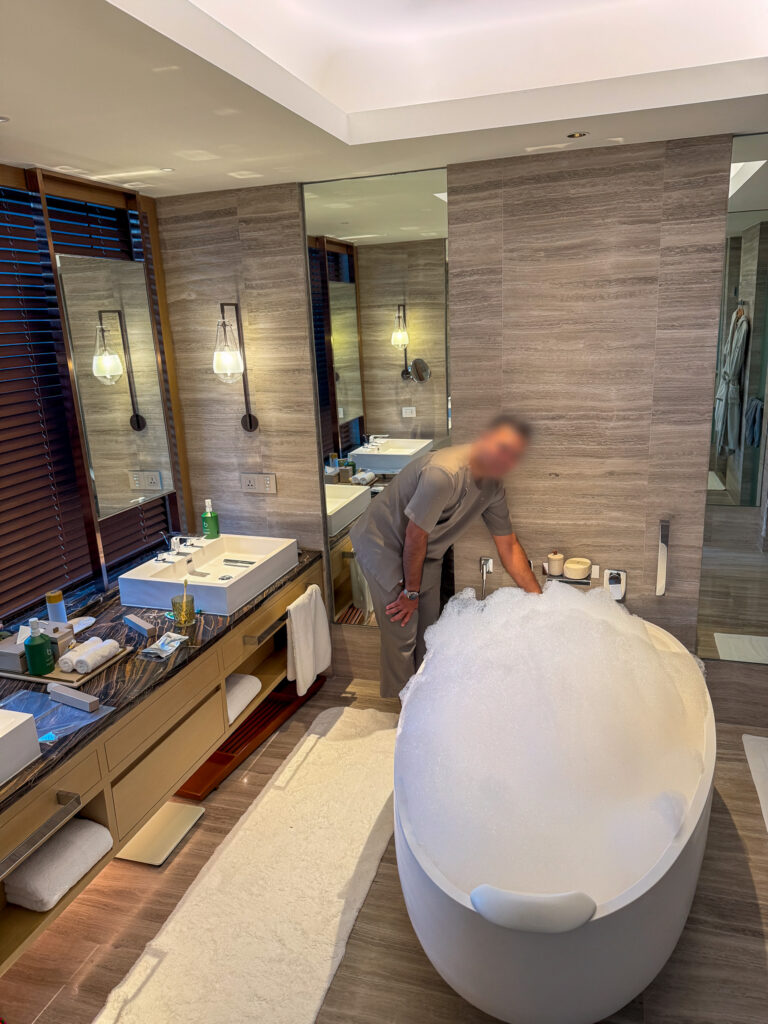
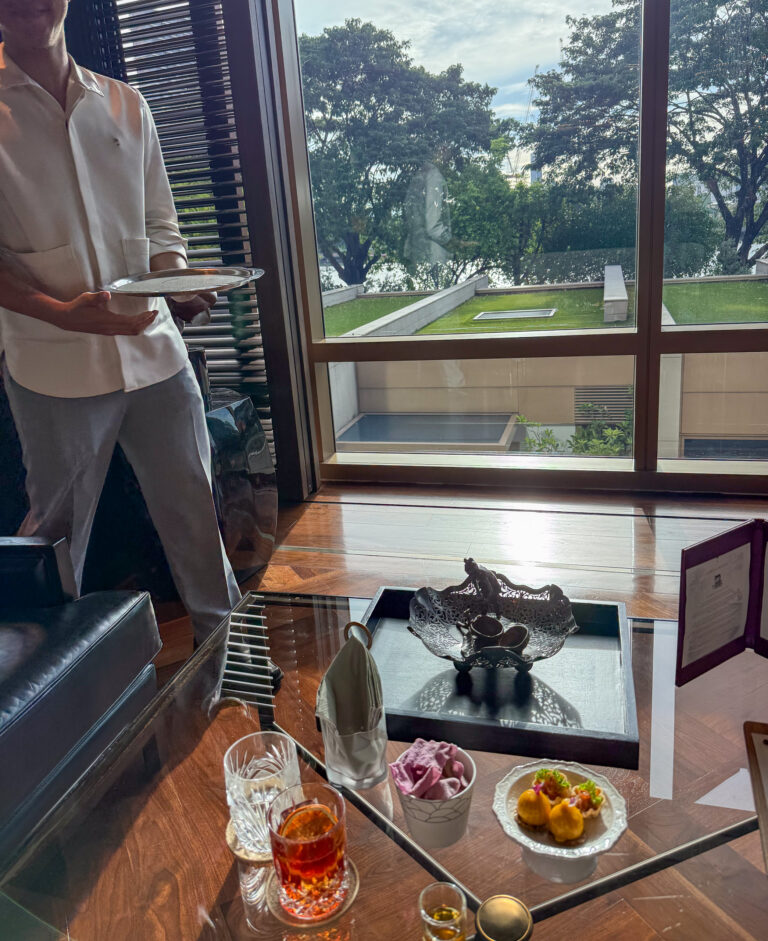
The bath, drawn by an attendant.Service, in the suite.Canapés, unasked.
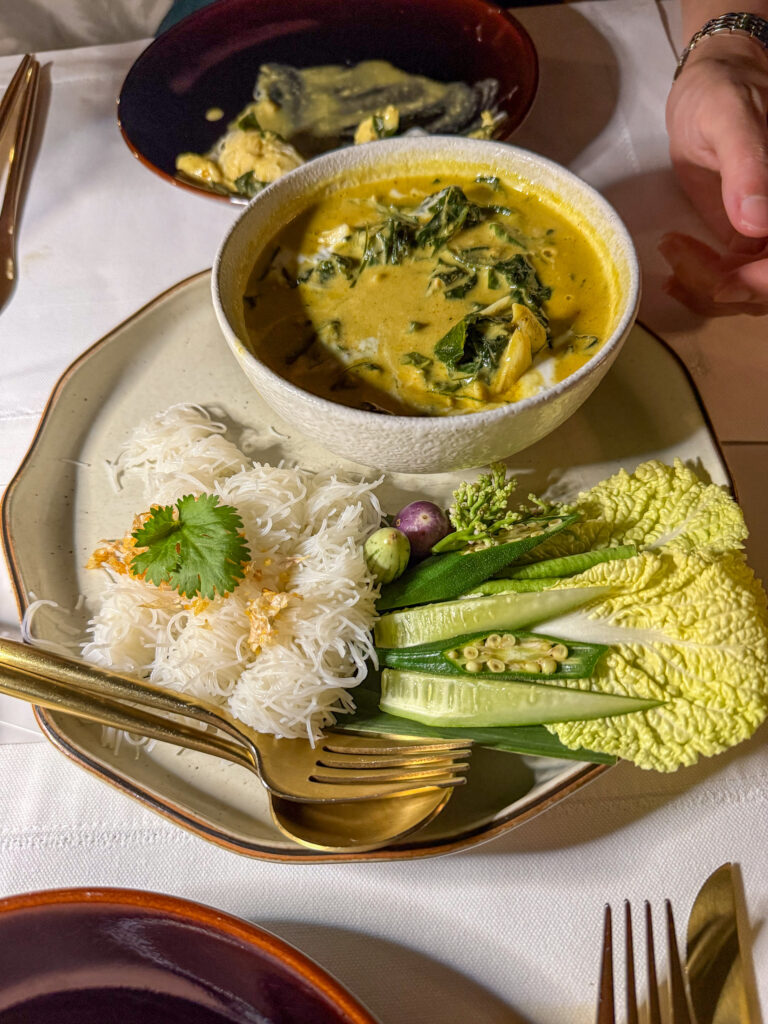
Thai food. Phra Nakhon gave me the best Thai meal I had in the city; by the second night the chef was cooking to order and came out to explain the spices. Côte, the Riviera room, is the harder table to get, so reserve before you fly. Breakfast at Capella, on the terrace, is the better meal when it lands.
Phra Nakhon’s table, shared.The open kitchen, mid-service.Dessert, Four Seasons side.
Dinner at Phra Nakhon, the best Thai meal I had in the city.
Quiet. One infinity pool that stayed calm through a weekend in high season with loungers going spare, which no Four Seasons pool will ever manage, and a couples’ room in the spa that is the most beautiful spa space I have been inside.
Capella keeps a single, quiet infinity pool.
Where Four Seasons wins
Range. Yu Ting Yuan holds a star and does dim sum and Peking duck over the water garden; Brasserie Palmier does the French, Riva del Fiume the Italian and the breakfast that is bigger, safer and never wrong. BKK Social Club is the single best room on the estate in which to have a drink, and half of Bangkok knows it. Go before nine.
Riverside at Four Seasons, where BKK Social Club draws the crowd.
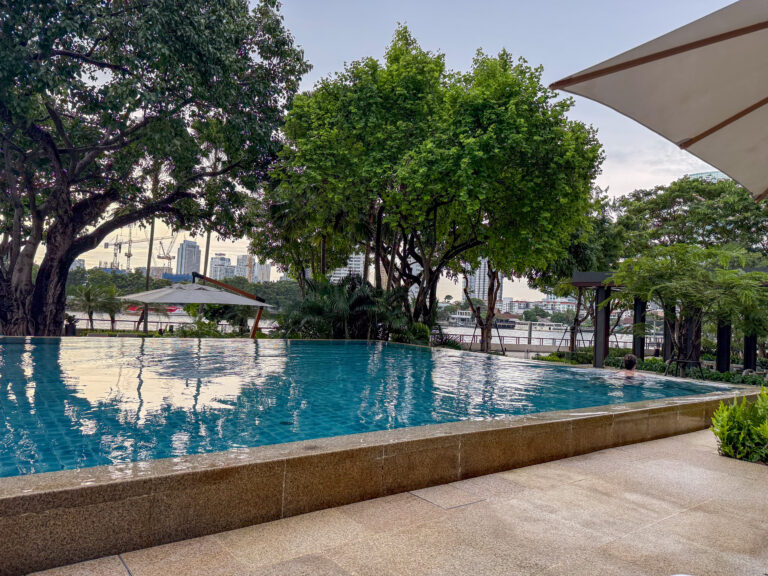
Water and iron. Three outdoor pools stepping down toward the river, a lap pool long enough to train in, and a wellness centre across two floors with a heated indoor pool, a boxing ring and an aerial yoga studio. You can take a paddleboard class in the lap pool, which is either delightful or absurd, and I came down on delightful. Capella’s gym is adequate; Capella guests should walk over.
The main pool, mid-morning.The reflecting pools at the door.A treatment room, upstairs.
Four Seasons stacks three pools toward the river.
The bed. The beds at Four Seasons are the best thing in either building — high ceilings, picture windows, a pillow menu — and the Noted box agrees.
Children. A kids’ club, a children’s pool, three pools to spread a family across, and enough rooms that nobody notices a loud table at breakfast. Capella takes children and treats them well, but the place is built around quiet; with children, book a villa.
Arrival, if you like a show. Four Seasons announces itself: reflecting pools, carved white elephants, a lobby holding more contemporary Thai art than most galleries in the city. I checked in during a rush and it stayed calm, cold towels and coconut water arriving before the bags were down. Capella’s lobby is small enough that staff clock you on arrival and keep clocking you. One hotel wants you to look at it. The other one is looking at you.
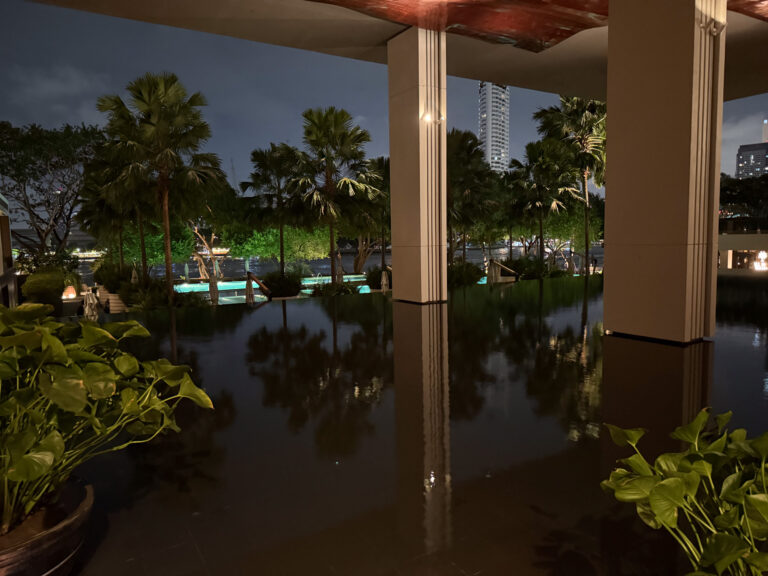
One driveway, one security post, two hotels.
Verdict by traveller type
A couple, or anyone travelling alone who wants to be looked after: Capella, without hesitation. A family: Four Seasons, without much argument. A gym person, or anyone who will use three pools: Four Seasons. A first visit to Bangkok with the restaurants as the point: Four Seasons for range, then cross the driveway to eat at Phra Nakhon. Anyone who has stayed in enough hotels to have stopped being impressed by them: Capella. That was me, and it worked.
Can you do both? Yes, and I would. Two nights each is enough to see the difference, and the walk between lobbies takes three minutes with a bag. Both open their restaurants to outside guests, so treat the estate as one menu and book across it. Do Capella second, and take the tired flight.
And for balance, because the service story above tilts one way: the Four Seasons desk produced its own quiet marvel — a late checkout at nine at night, with full run of the pools and the spa until the car came. No tired flight has ever been better prepared for.
Book Four Seasons if you want the days full. Book Capella if you want to be looked after.
Bottom line
Capella for the service, which is the best I have had in any hotel anywhere; Four Seasons for the days you want full. Book the high-floor river room at whichever you choose, and eat at the other one.