The Suite Report

Category: Verified stay

  • Pompano Beach Club: Seventy Years, One Family, and a Quarter Mile of Sandbar

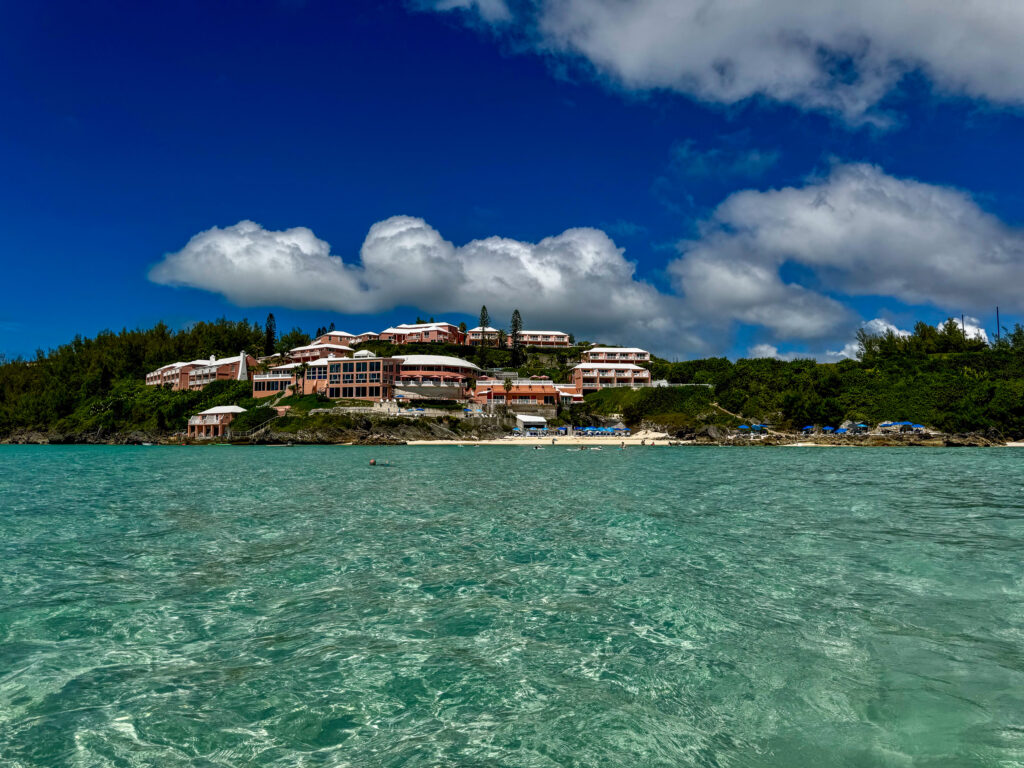
    The pink and white buildings of the club stepping down a green cliff to a small beach with blue umbrellas, seen from out on the water over clear turquoise shallows

    SOUTHAMPTON, BERMUDA · STAYED JULY 2026 · 5 MIN READ

    Pompano Beach Club: Seventy Years, One Family, and a Quarter Mile of Sandbar

    A family-run club on a Bermuda cliff, a heated pool that never closes, and a sandbar you can walk out into until the shore looks small.

    By J.C. Mercer

    Verified stay·paid in full

    Pompano Beach Club

    • Stayed July 2026
    • Room booked Ocean-view king with balcony
    • How it was booked Direct with the hotel, on the half-board package
    • What the channel bought Nothing beyond the public rate.
    • Value verdict Worth it between May and October, on the package, for a week. In winter it is a good hotel with a heated pool and half the reason to come is shut.
    • When to go August–September. Book this stay

    Booked the way any other guest would book it.

    Arrival

    At low tide you can walk out from the beach for about four hundred yards and the water does not get above your chest. It is one of the strangest and best things I have done at a hotel. You keep going, the sand stays firm and rippled underfoot, the colour of the water changes three or four times, and at some point you turn round and the club is a small pink thing on a green cliff a very long way behind you, and there is nobody else within two hundred yards.

    That flat is why the place exists. It began as a fishing club, and the fishing was the sandbar: a bonefish and pompano flat, which is what the club is named after, and the front desk will still hand you a rod and light tackle for nothing at any hour of the day. If you catch something worth eating, the kitchen will cook it. I did not, and the kitchen was kind enough not to ask.
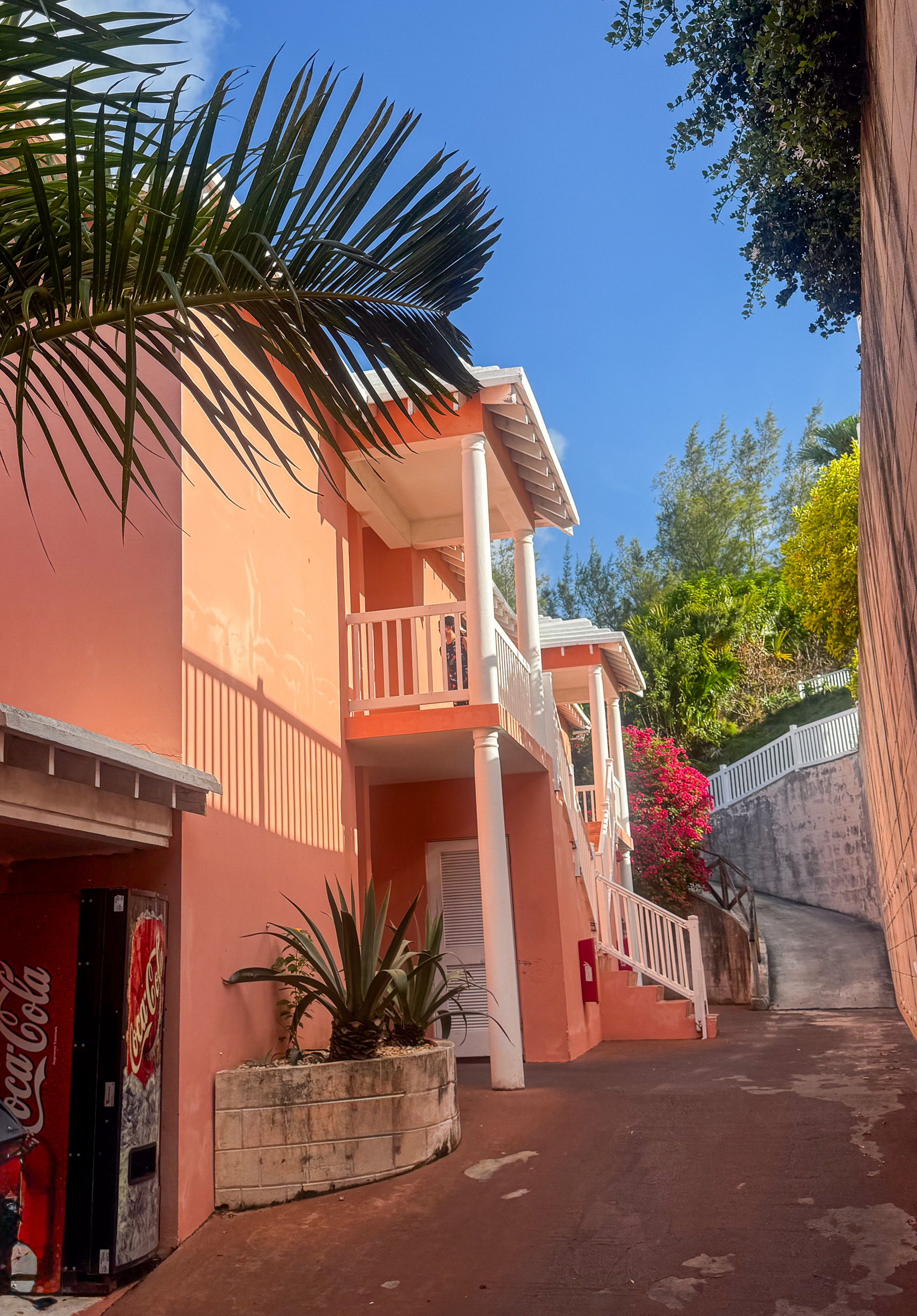
    Salmon-pink cottages stepping down the path to the water
    Salmon-pink cottages stepping down the path to the water. The family that opened it still runs it.

    The same family has run it since it opened, and there are not many rooms. Those two facts produce almost everything that is distinctive here. Nobody is optimising this hotel. There is no brand standard being rolled out and no repositioning under way. The people at the desk have worked there for a long time and behave accordingly. The word “club” misleads: it is not a members’ club and not a day-pass beach club, but a small family-owned resort on a cliff on the south-west shore, and it kept the word because it started as one.

    The property is stacked vertically. Reception and the dining rooms are at the top, the rooms step down the slope in low pink and white buildings, the pool terrace sits below those, and the beach is at the bottom, reached by several flights of steps. Every level has a view because every level is above the one below it. Every trip to the beach is also a climb back.
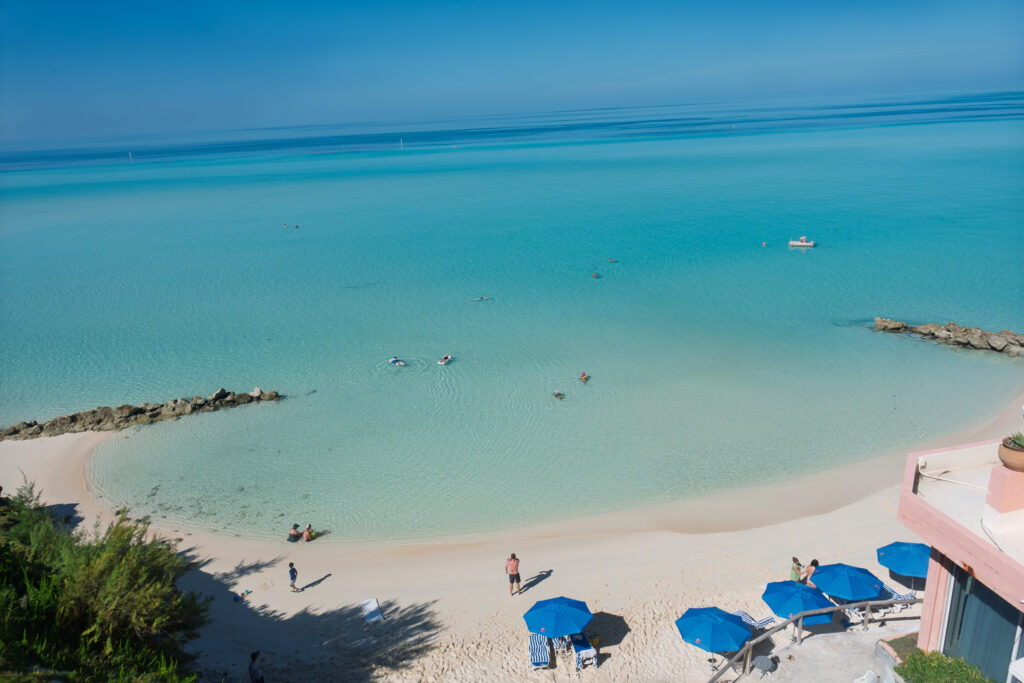
    The club's beach from above, pale sand and blue umbrellas beside a rock groyne, with a vast pale turquoise shallow flat extending far out to a boat on the horizon
    The flat. The boat on the skyline is roughly where the shallow water finally gives up.

    The room

    I had an ocean-view king with a balcony. The rooms are comfortable rather than designed: well kept, generously sized, and almost all of them face the water, which is the thing that actually matters. Nobody is going to photograph the furniture. Ask for one low enough on the cliff that the steps do not become the subject of the holiday, and ask about the shuttle, which runs around the grounds as well as off them.
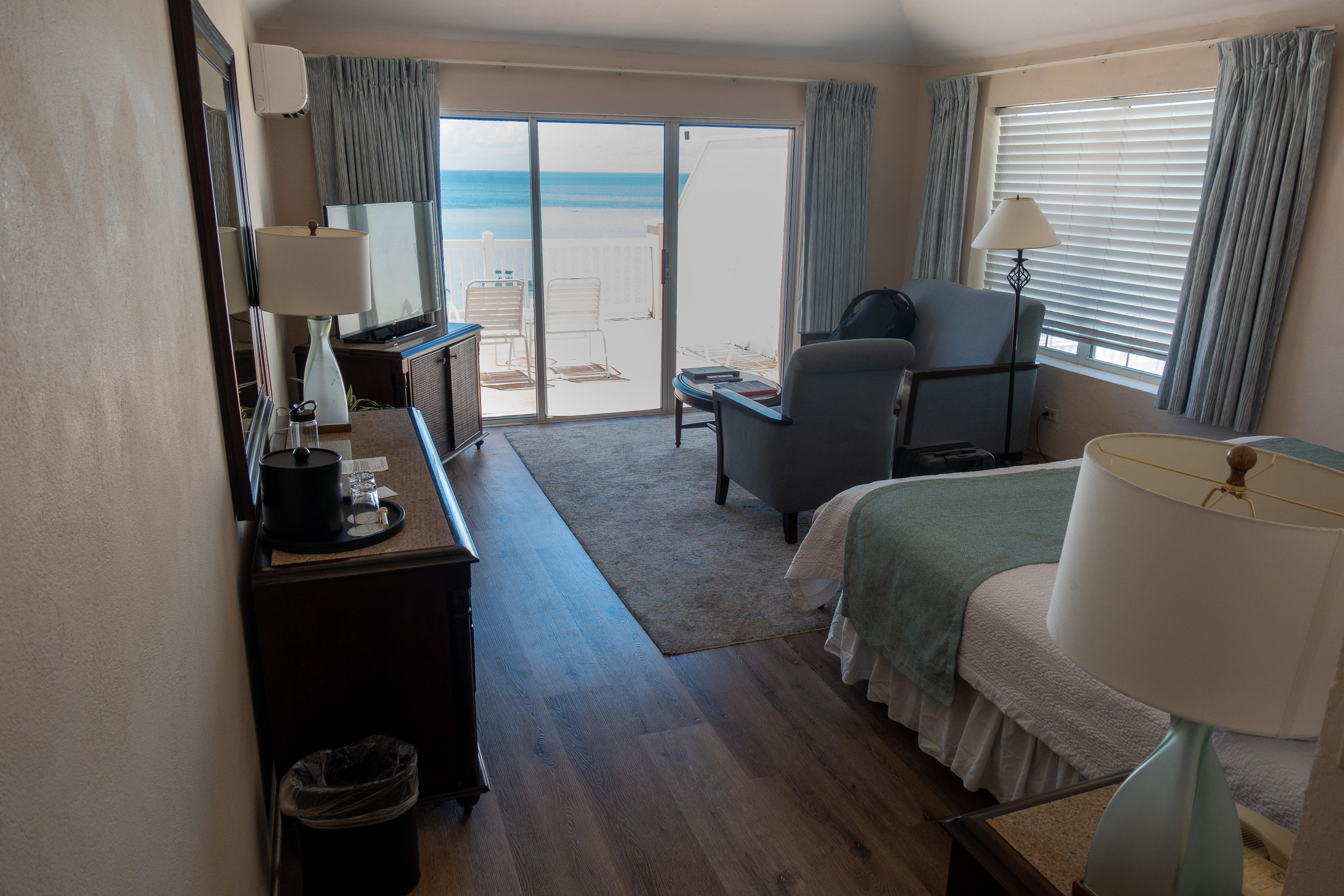
    The room looking out through the sliding doors to the sea
    The room, looking out through the sliding doors to the sea. Nothing in it is trying.

    Noted

    Observed on the stay, not measured.

    WhatChecked on the stay
    SandbarAbout 400 yards, knee to chest deep at low tide
    PoolHeated, waist to chest deep, open around the clock, no lifeguards
    Hot tubsThree, including one that spills into the pool
    BoathouseMid-May to late October only
    AirportAbout 45 minutes; Hamilton about 25
    Car hireNot available to visitors anywhere in Bermuda
    Wi-FiSpotty in the room, weak through the resort
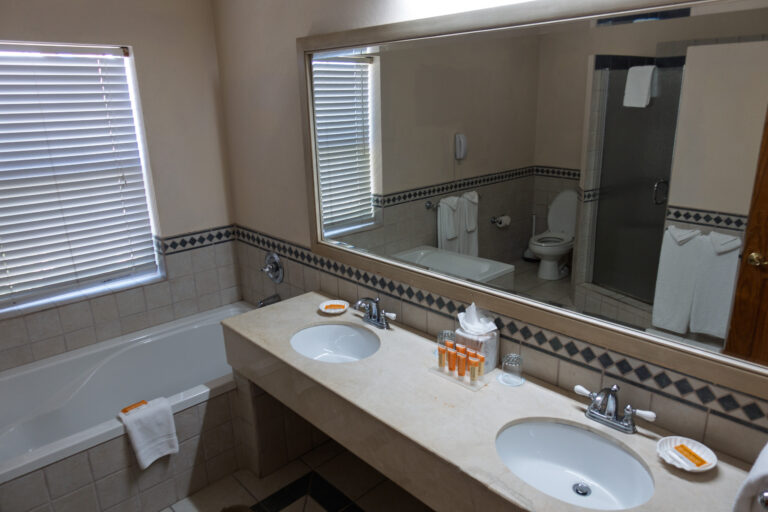
    Water pressureNot great, and the fixtures are dated

    Eating

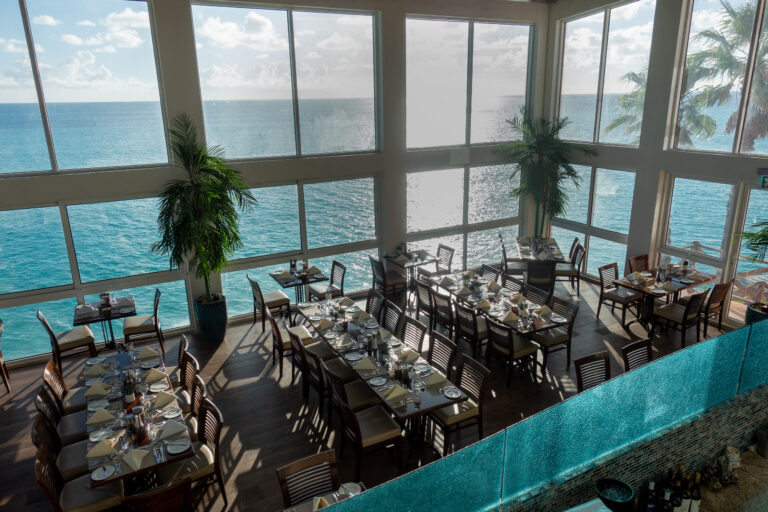
    Ocean Grill is the dinner room and the good-looking one: double height, coffered ceiling, glass on two sides, and the sea filling every window so completely that on a bright day the room is lit turquoise. It takes reservations. The house dish is a spiced fillet of pompano, which is the correct thing for this hotel to serve and it is properly done.
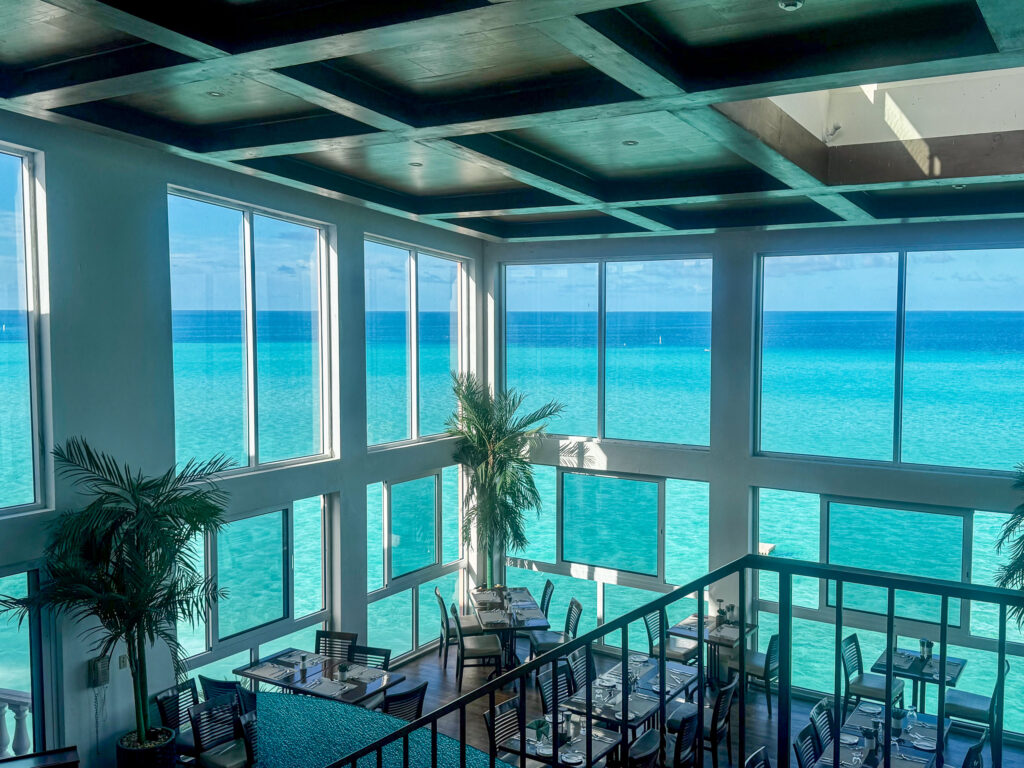
    The Ocean Grill dining room, double height with a coffered ceiling and floor-to-ceiling glass on two sides, tables laid and turquoise ocean filling every window
    Ocean Grill at lunchtime. The colour in the room is coming entirely from outside it.

    The Cedar Room is the other one, panelled in dark cedar, with outdoor tables and no reservation system, and it is the room most guests end up preferring by the third night. There is a Monday barbecue, which is an event and which not everyone likes more than the ordinary menu.

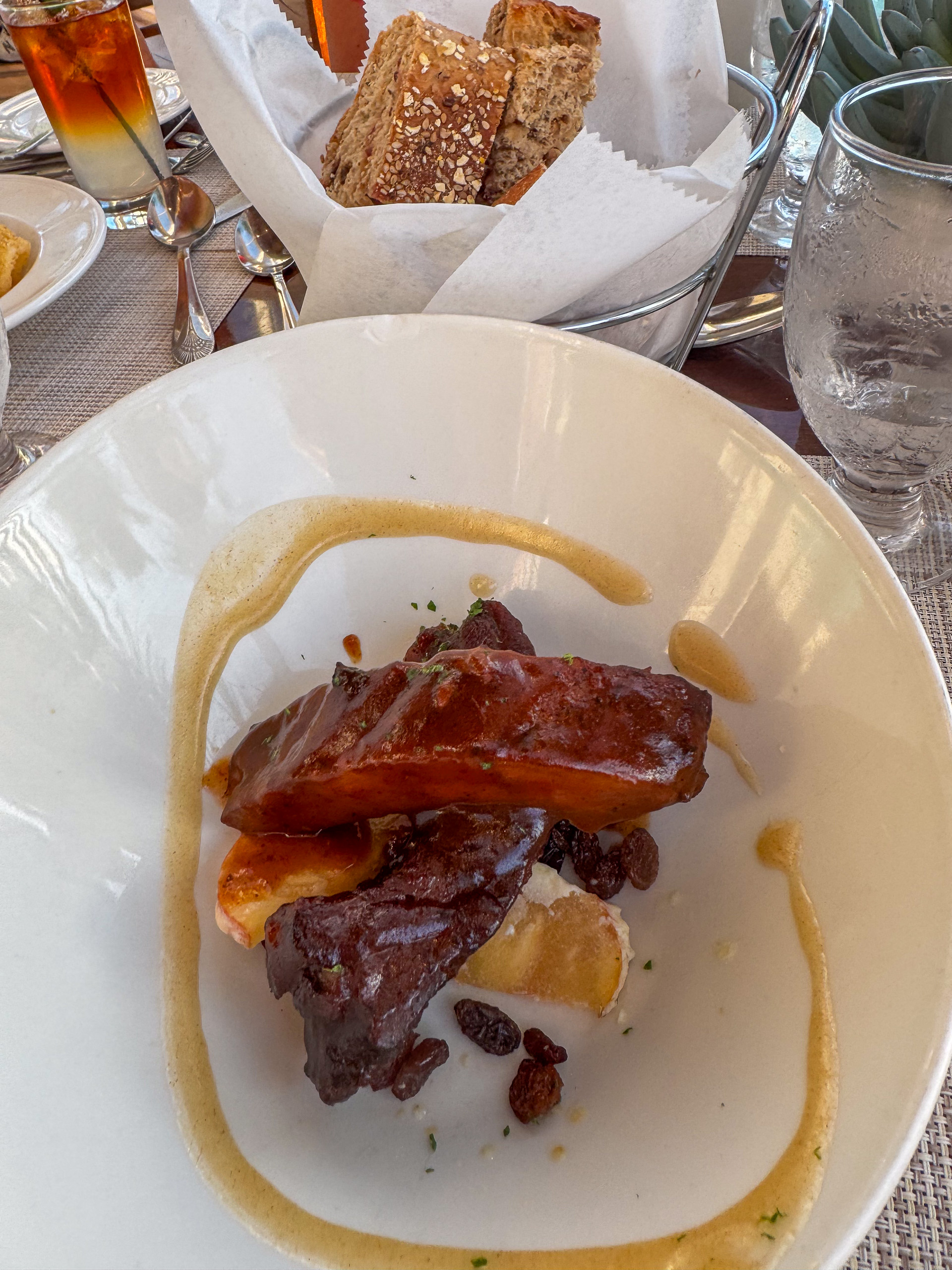
    An honest note on the cooking, because the property is sold on half-board and the food therefore matters more than usual. This is hotel cooking done properly and generously — five courses, cooked to order, consistent night after night. It is not destination cooking and does not set out to be. The fish is the thing to order, every time.
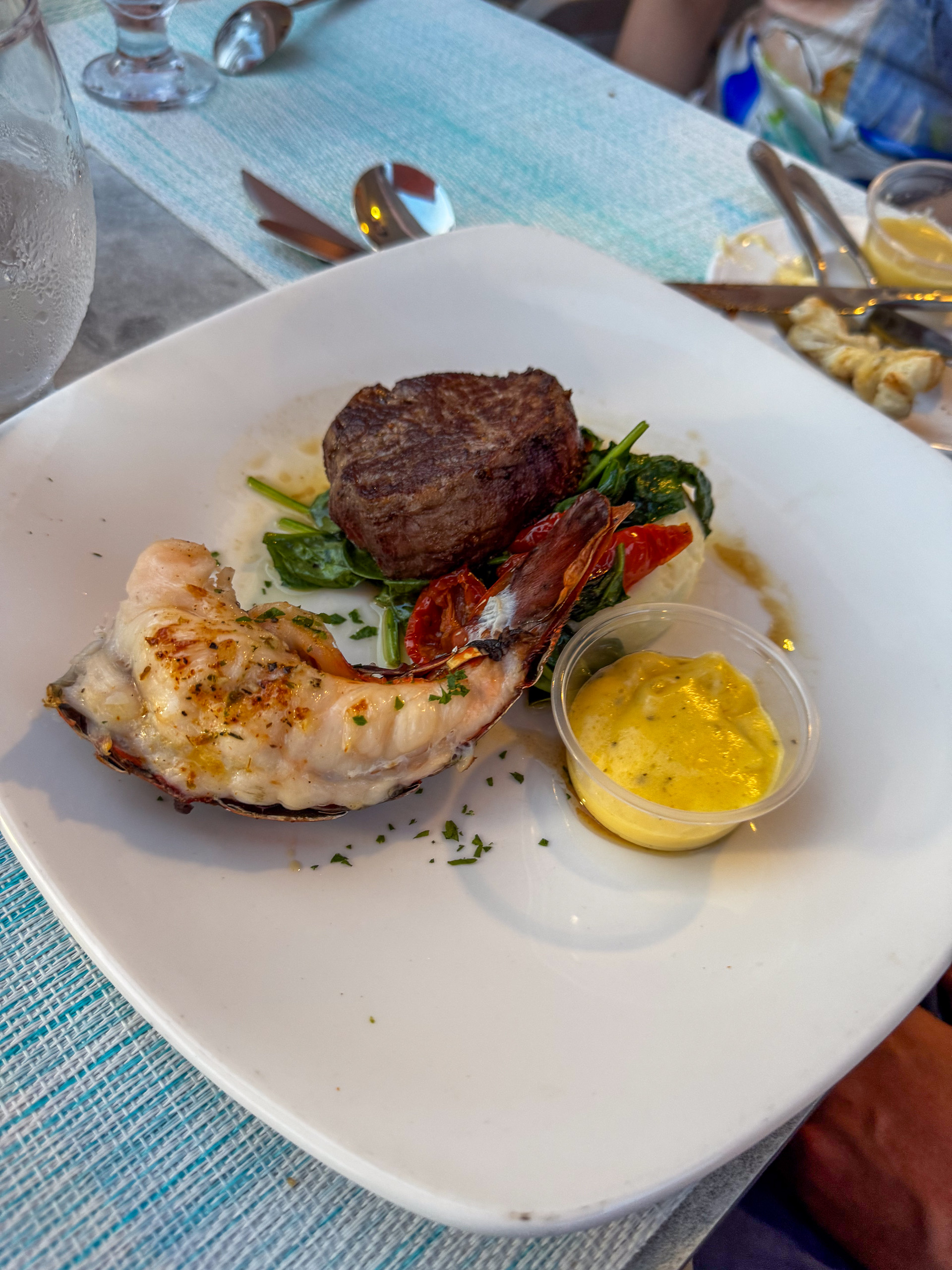
    Steak and eggs plated with tomato and greens
    Steak and eggs, tomato and greens.
    Poached eggs and bacon on a muffin, hollandaise over the top
    Poached eggs and bacon on a muffin.
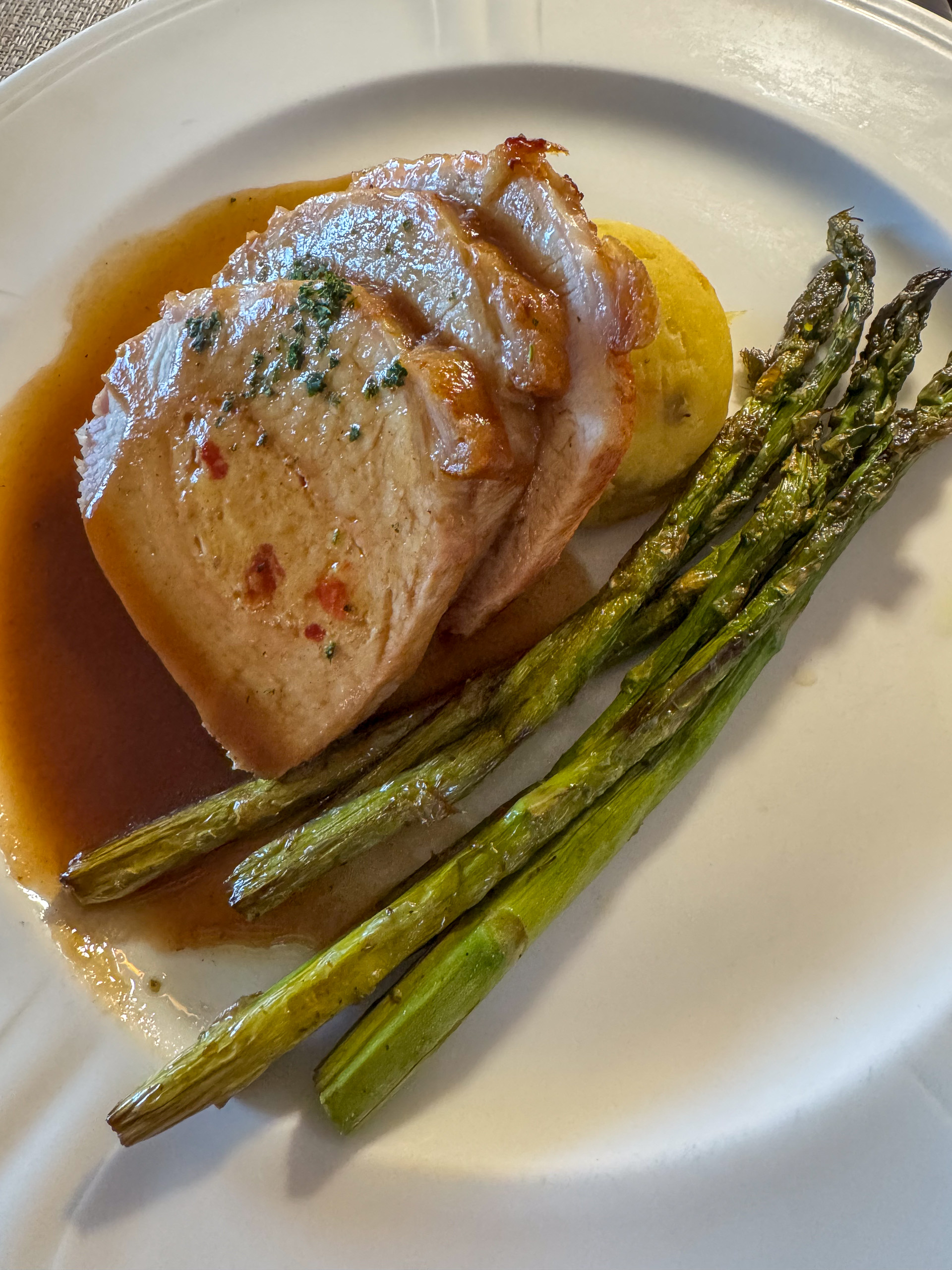
    Scallops with asparagus in a clear broth
    Scallops with asparagus in a clear broth.

    The pool, the reef, and the flat

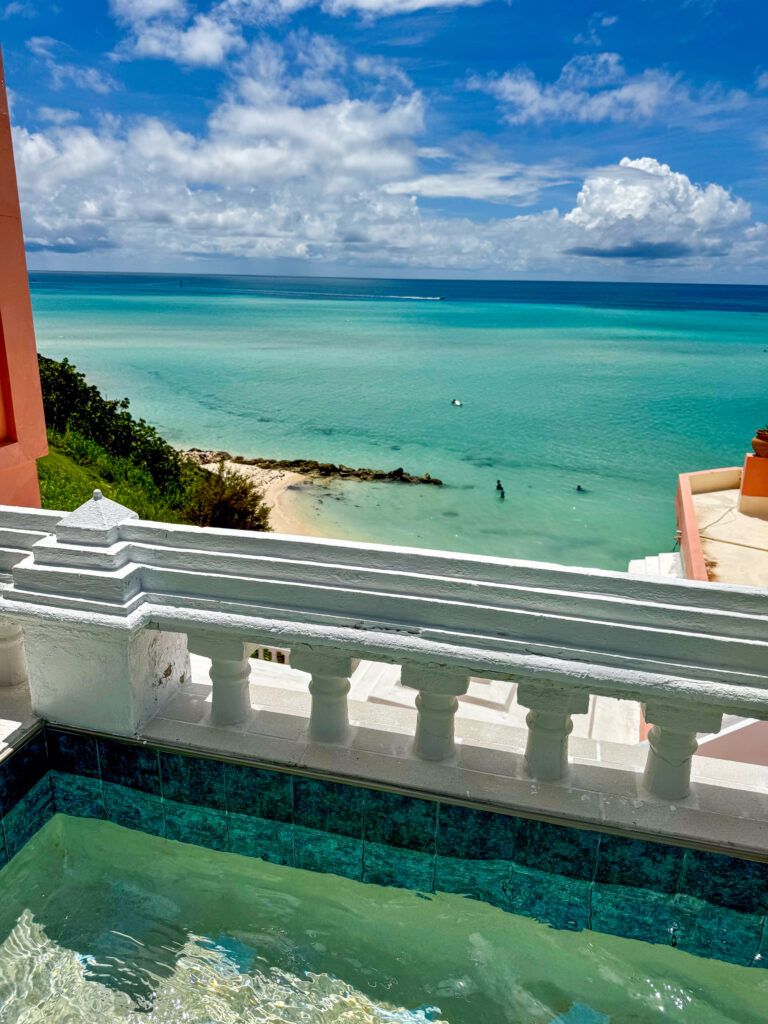
    The main pool is heated, waist to chest deep the whole way, and set behind a white balustrade directly above the sea, so that swimming in it you are looking straight out at the reef line. A circular hot tub with a glass-fronted waterfall spills into it, and there are two more jacuzzis lower down the cliff.
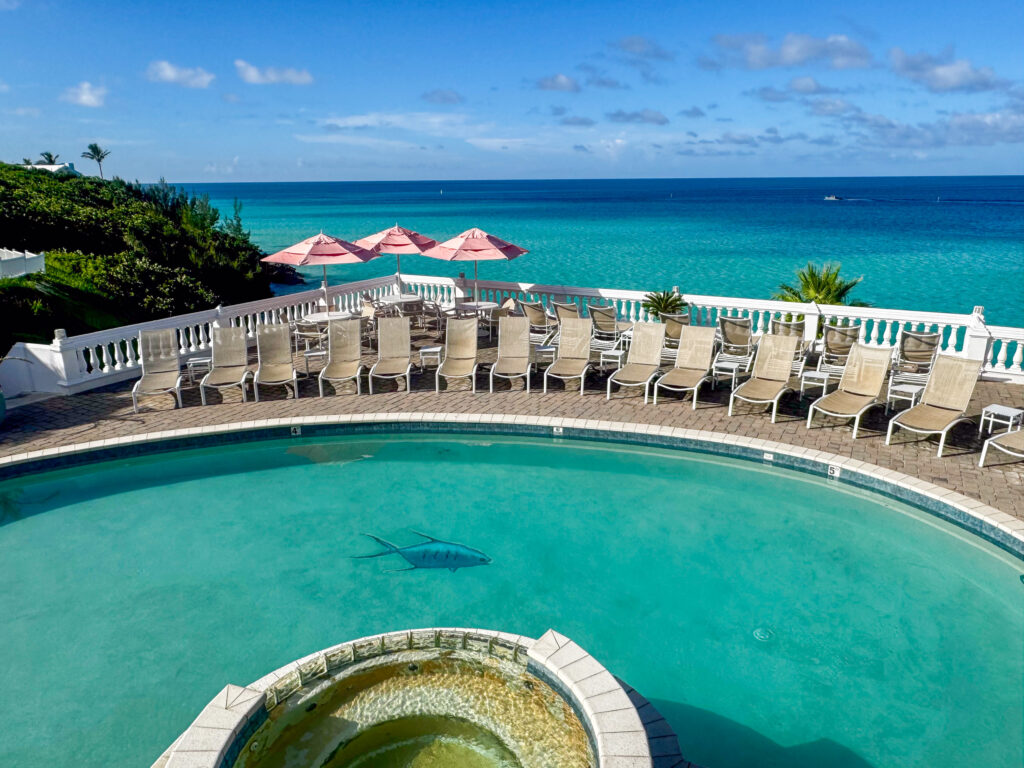
    The heated pool from above, kidney-shaped and turquoise behind a white balustrade, rows of cream loungers and pink umbrellas, with a circular hot tub spilling into it
    The hot tub empties into the pool. Both are open at three in the morning.

    All of it is open twenty-four hours. There are no lifeguards, which is the reason a larger operator would never allow it and the reason it is worth mentioning. Getting into a heated pool above a dark ocean at one in the morning, with the Milky Way up and nobody else awake, is not an experience most hotels are still willing to offer. I recommend it to anyone who can find their room afterwards. Even better — last time I went was during a meteor shower and I borrowed a pool float lounger and floated out into the flats until it was dark enough to see EVERYTHING. It was SPECTACULAR. No light pollution — meteors have colors.
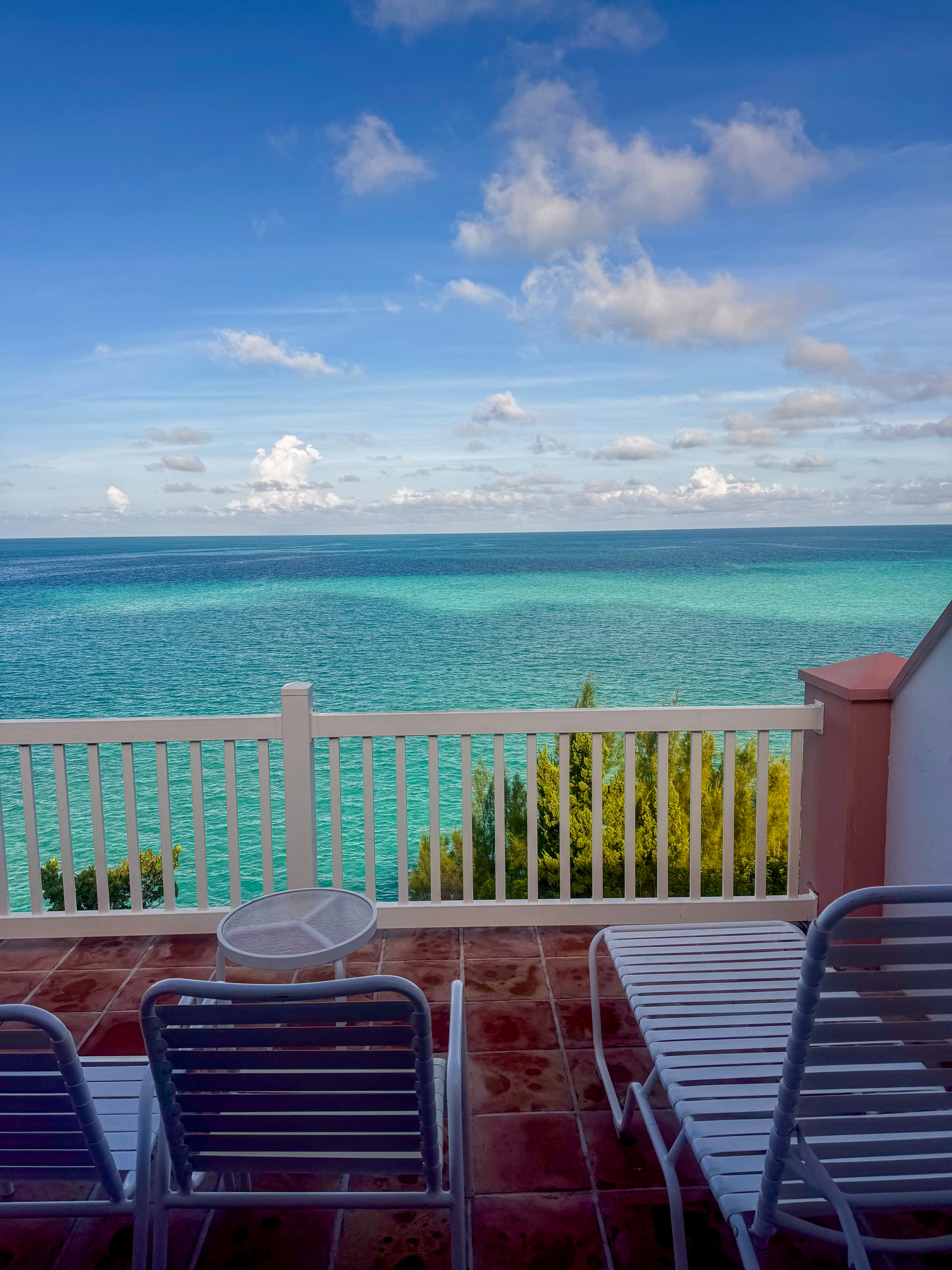
    Blue chairs at the rail, the water running out in bands of turquoise
    Blue chairs at the rail, the water running out in bands.
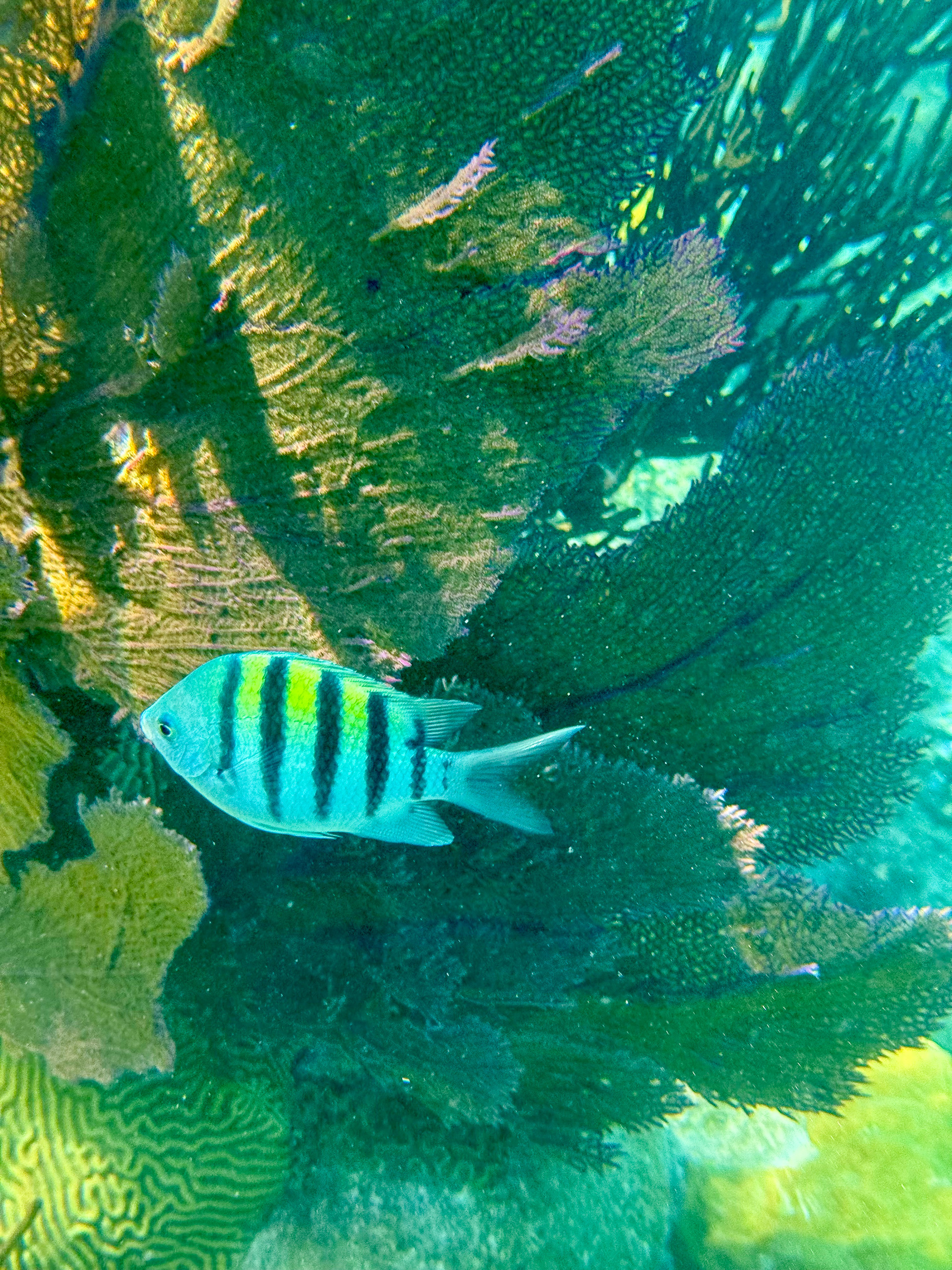
    A striped fish holding over the coral
    A striped fish holding over the coral.
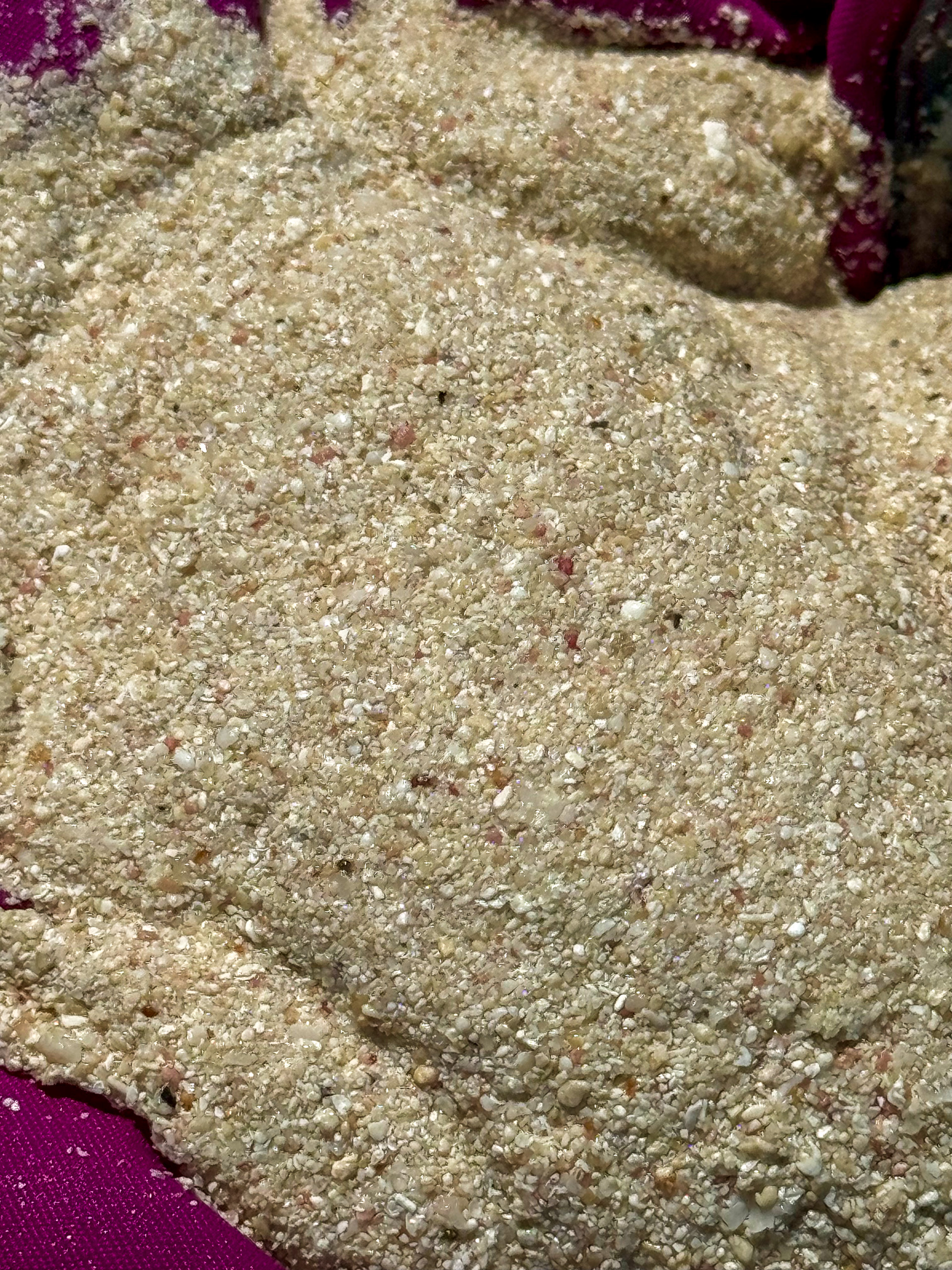
    The sand close up, pink where the shell has broken down into it
    The sand close up, pink where the shell has broken down.

    The snorkelling is the reason to come between May and October rather than in winter. Two swim platforms are anchored offshore, one just off the beach and one out at the edge of the flat by the coral, and the reef around the second is dense with sea fans and small fish and shallow enough to see everything without diving for it. The boathouse rents snorkel gear, kayaks, glass-bottomed kayaks, paddleboards and small catamarans by the hour, from the middle of May to the end of October. Outside those months it is shut.
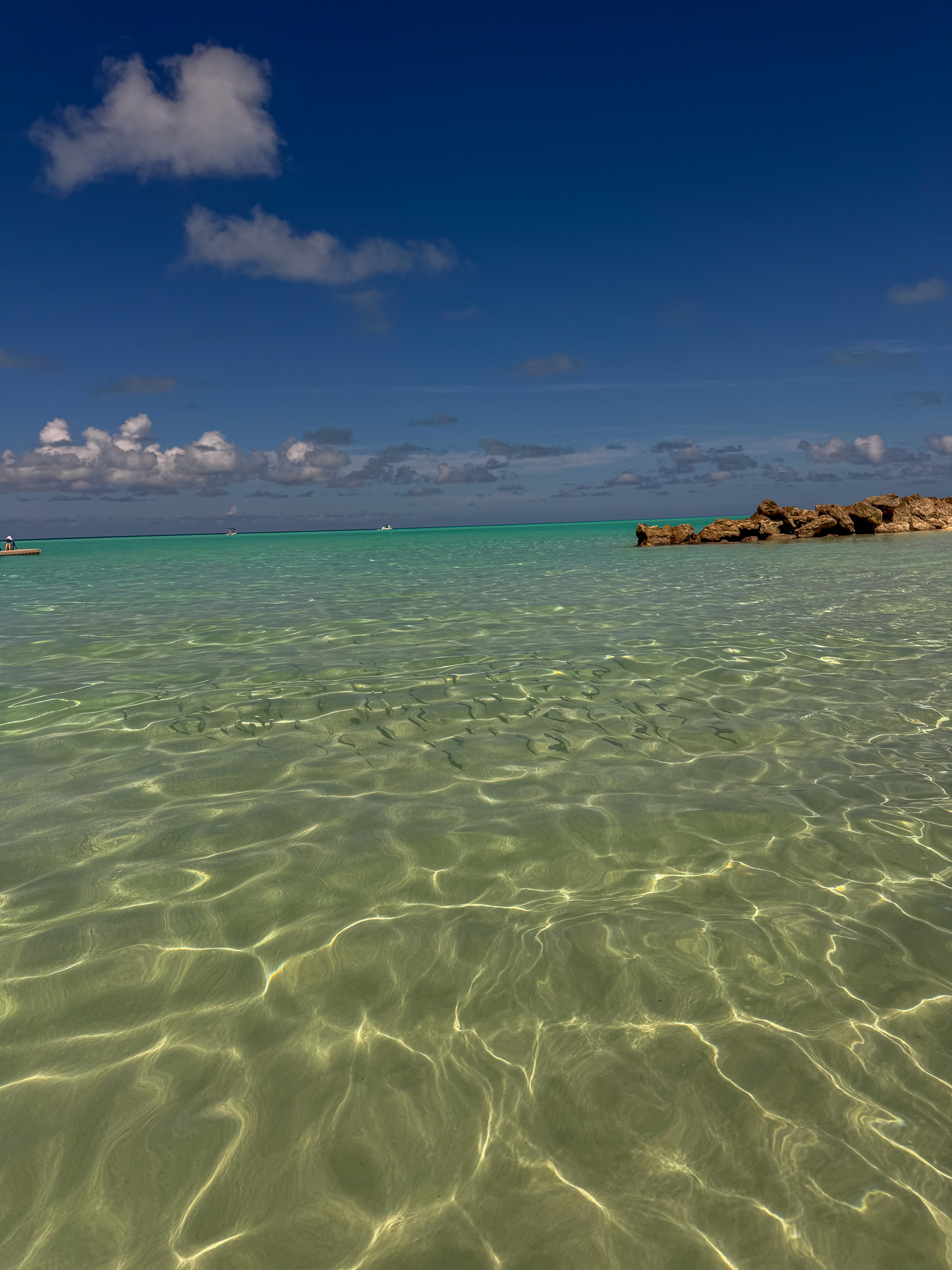
    Clear water over rippled sand, rock breaking through at the edge
    The flat at low water: clear over rippled sand, rock breaking through at the edge. You walk this for an hour.

    Visitors cannot rent a car in Bermuda; it is the law, and it catches people out every year. What you can rent, on site, is a moped, a scooter or a small electric two-seater. The alternative is the hotel shuttle, which is free and unusually generous: the ferry, the bus stops, the Railway Trail, the grocery, the golf course and the marina, as well as anywhere on the grounds. The buses and ferries are good and the front desk sells the tickets. The golf course next door is a short walk.

    Service moments

    The rod handed over the desk without a form. The shuttle driver who knew which ferry I meant before I had finished the sentence. A tide table, unasked, on the first morning.
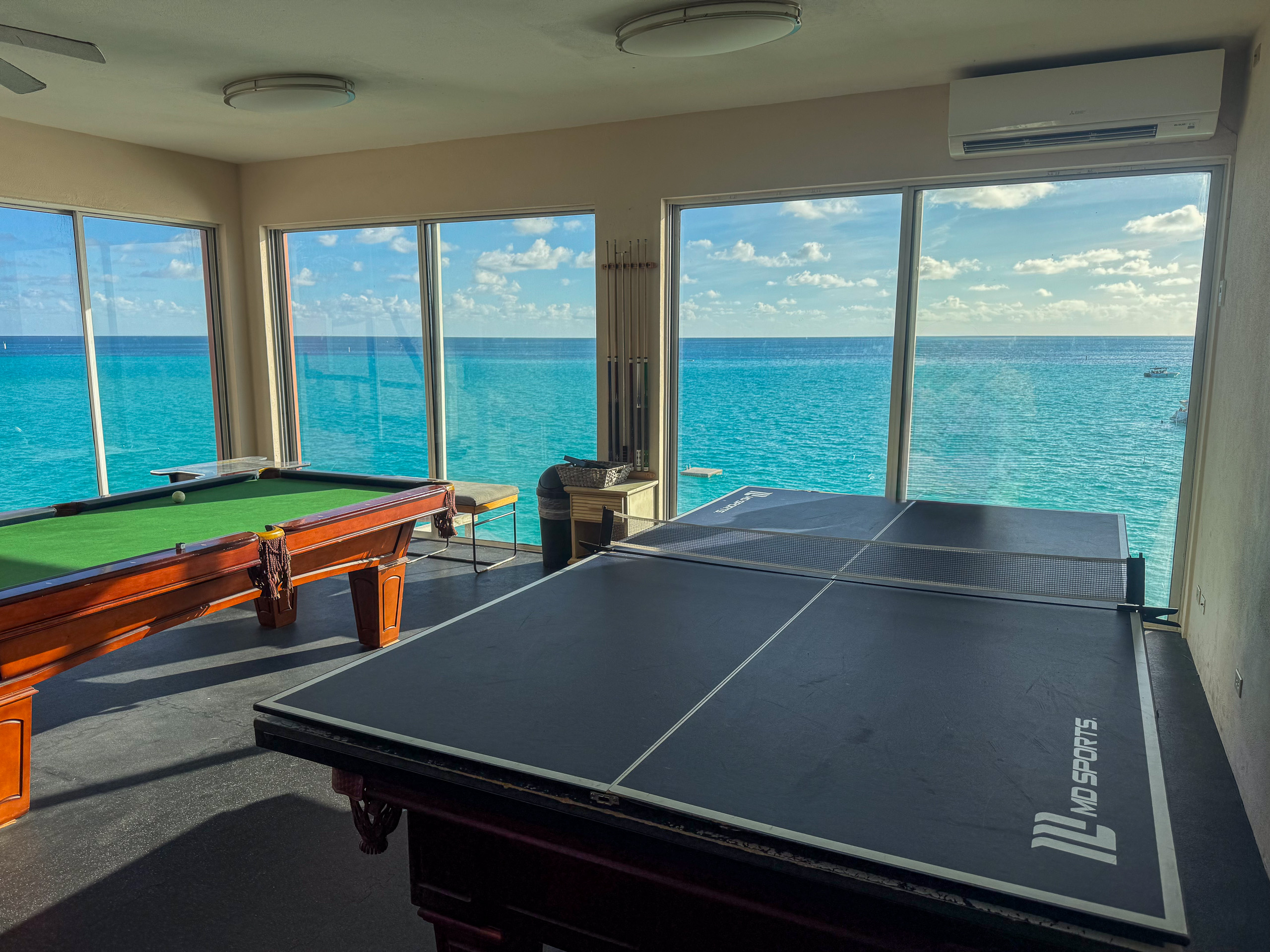
    The games room, the table set up in front of the windows
    The games room, the table set up in front of the windows. Nobody is going to organise you.

    Seventy years of the same family, and a beach you can walk a quarter of a mile into. Nothing here needs improving.

    Who it is for, and who it is not

    Come between May and October, on the package, for a week. Check the tide table on the first morning and plan one walk out onto the flat at low water. Take a towel down with you, because they are stocked at the pool and not on the beach. Book the Ocean Grill for one night and let the Cedar Room have the others. Borrow a rod at least once, because they will hand you one for the asking, and it is the reason the place is called what it is.

    Look elsewhere in winter if the beach and the reef are why you are coming: the hotel stays open and the heated pool and hot tubs stay open around the clock, and it is a perfectly good winter hotel, but it is not the property in the photographs. Look elsewhere if a knee or a stroller is coming with you: four flights of steps between the room and the sand, several times a day, is a real physical fact. And look elsewhere if you want the room to be the point; here the room is where you sleep between the sea and dinner.
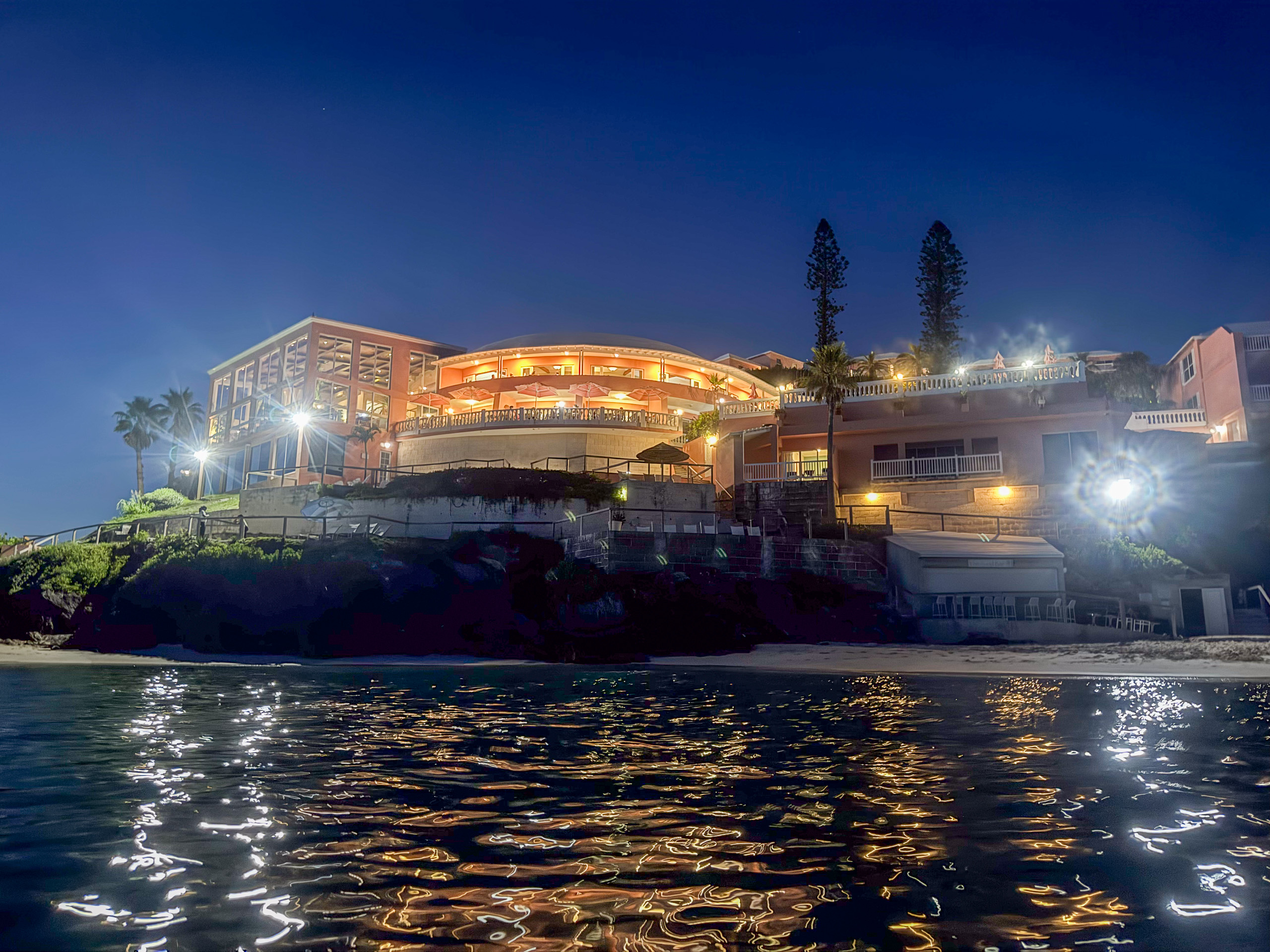
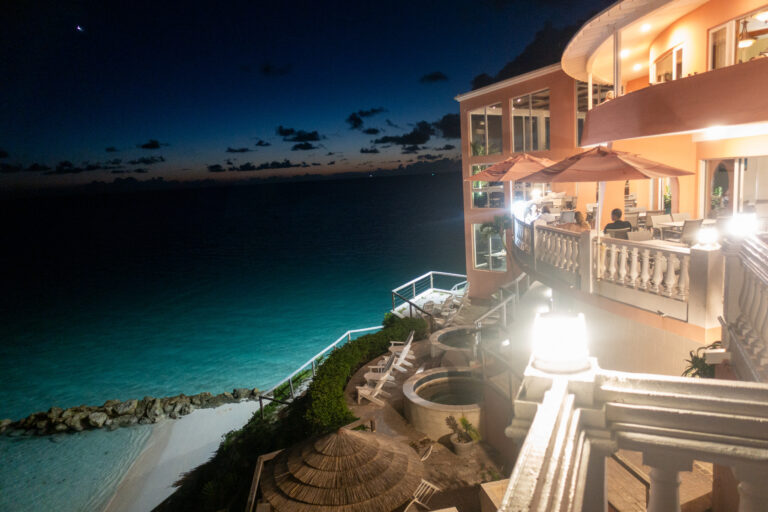
    The buildings lit along the water, reflections running out towards the lens
    The buildings lit along the water after dark, reflections running out towards the lens.

    Bottom line

    Pompano Beach Club is a family-run club on a cliff with a pool that never closes and a sandbar you can walk a quarter of a mile into, and nothing about it needs improving. Come between May and October, take a low room, and walk the flat at low tide. Wading out into this ocean is a MUST DO before you die.

    See the full set: Pompano Beach Club, Bermuda — in frames.

    Pompano Beach Club gallery

    Every photo on this site is my own, shot on the stay. Slide through →
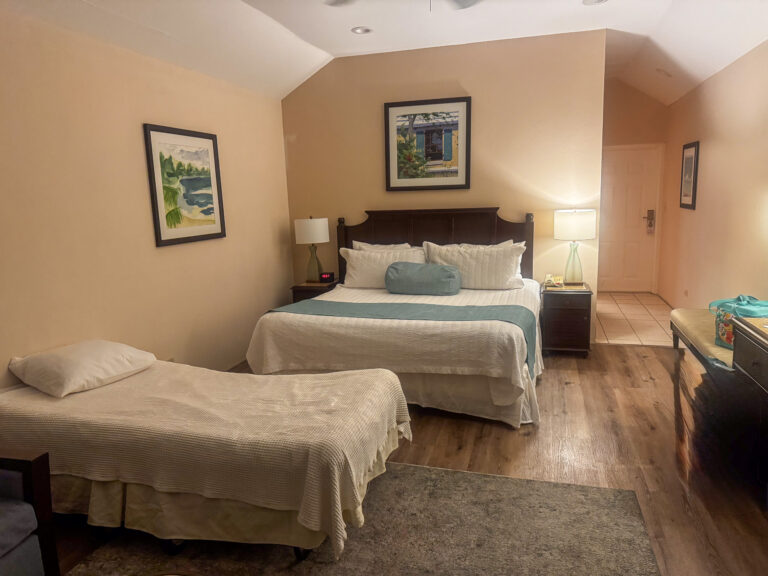
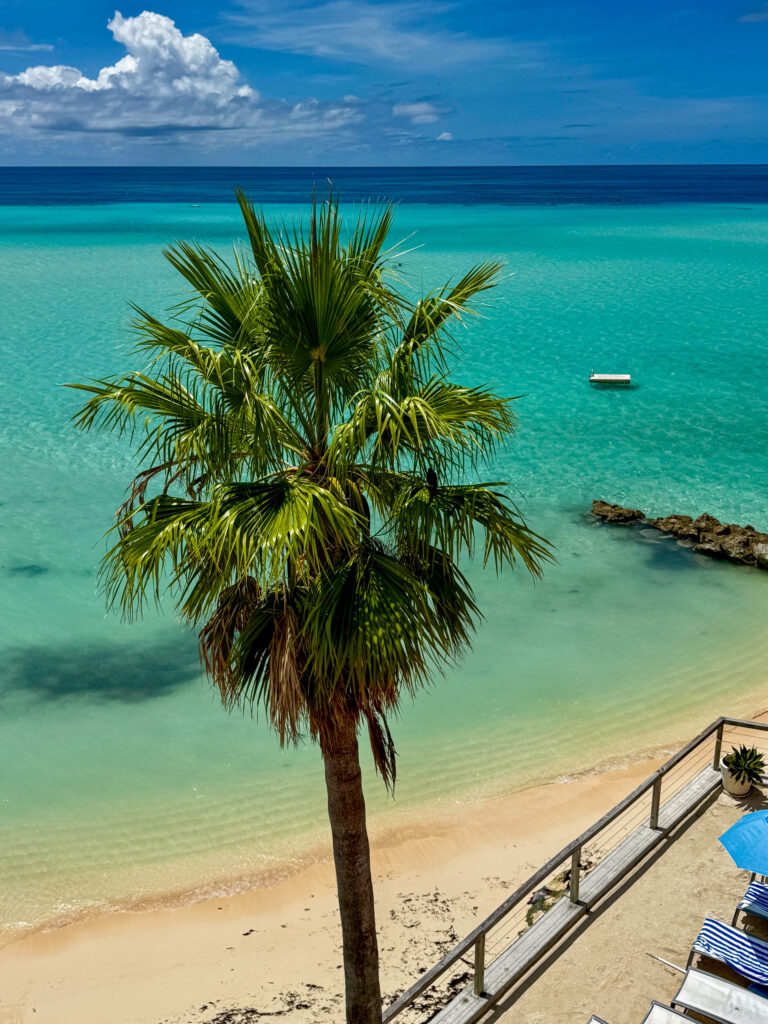
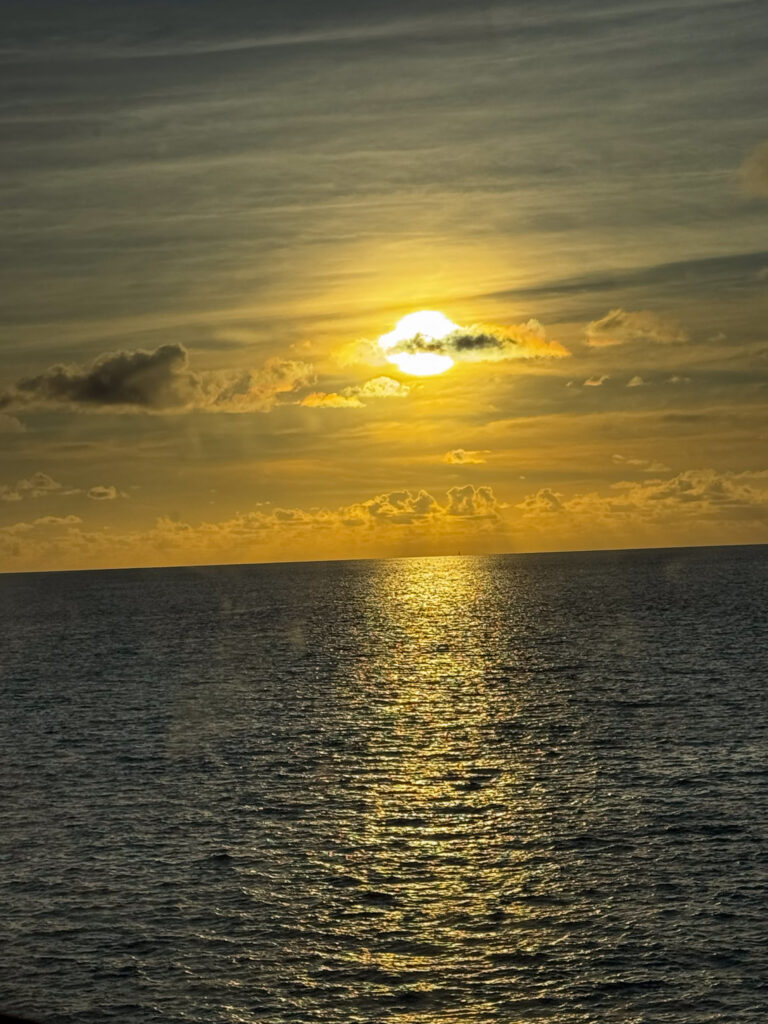
    Twin beds made up in white, framed prints on the wall behind themLoungers set out on the brick terrace, the sea framed between the wallsA long exposure over the water as the last green holds on the horizonA guest room with a blue armchair by the windowThe bathroom's double vanity under a long mirrorThe restaurant laid for dinner, the sea running the length of the windowsA single palm on the sand, the bay flat and pale behind itThe lit buildings along the bluff above the dark beachThe white balustrade above the beach, the water beyond itThe sun dropping to the horizon, a track of light across the sea
  • Fairmont Mayakoba: The One That Got Here First

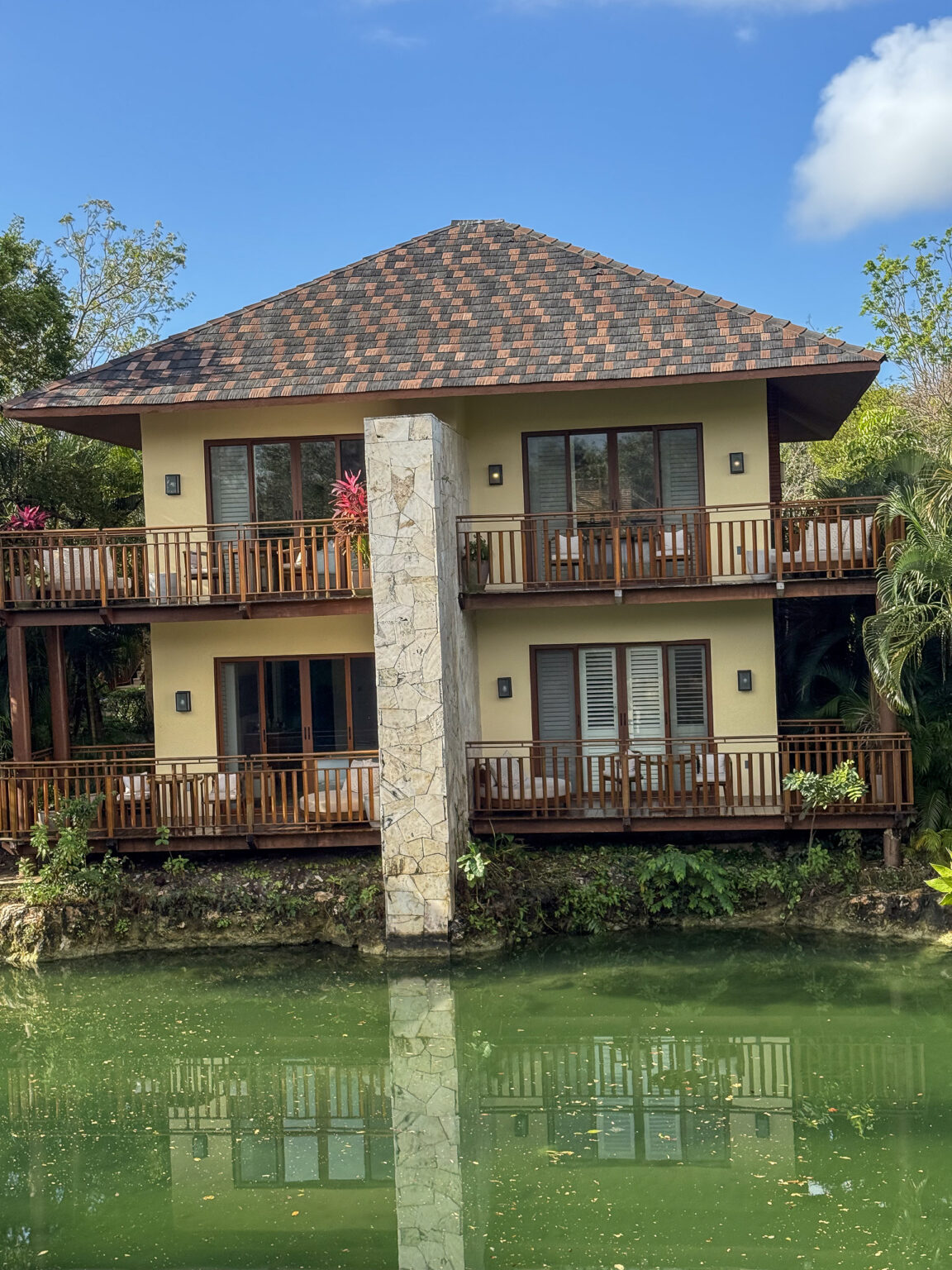
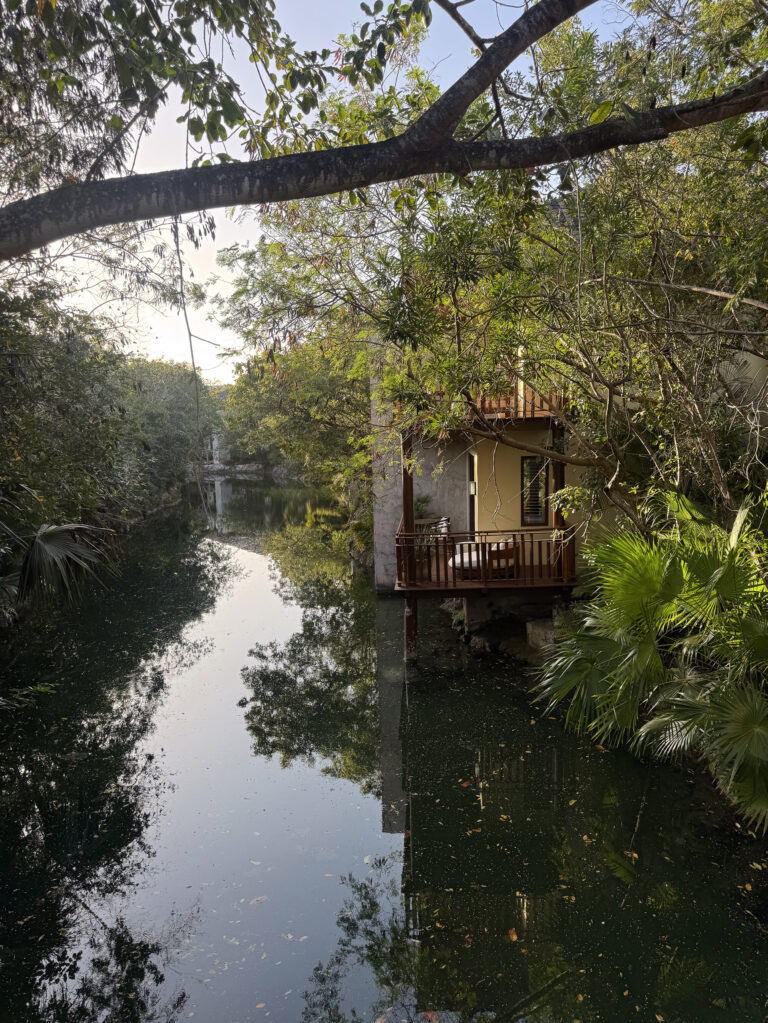
    A two-storey casita of pale stucco and wooden balconies standing directly above the green lagoon

    MAYAKOBA, MEXICO · VERIFIED STAY · 6 MIN READ

    Fairmont Mayakoba: The One That Got Here First

    The resort that opened Mayakoba is the biggest of the four, the least precious about it, and the only one that will sell you the whole stay all-inclusive.

    By J.C. Mercer

    Verified stay·paid in full

    • Stayed March 2026
    • Room booked Deluxe Casita, lagoon side
    • How it was booked Accor ALL, public rate
    • What the channel bought Nothing beyond standard.
    • Value verdict Worth it as the value play to access Mayakoba; a lagoon casita for two is the version that earns it.
    • When to go Spring Break. Book this stay

    Booked the way any other guest would book it.

    Arrival

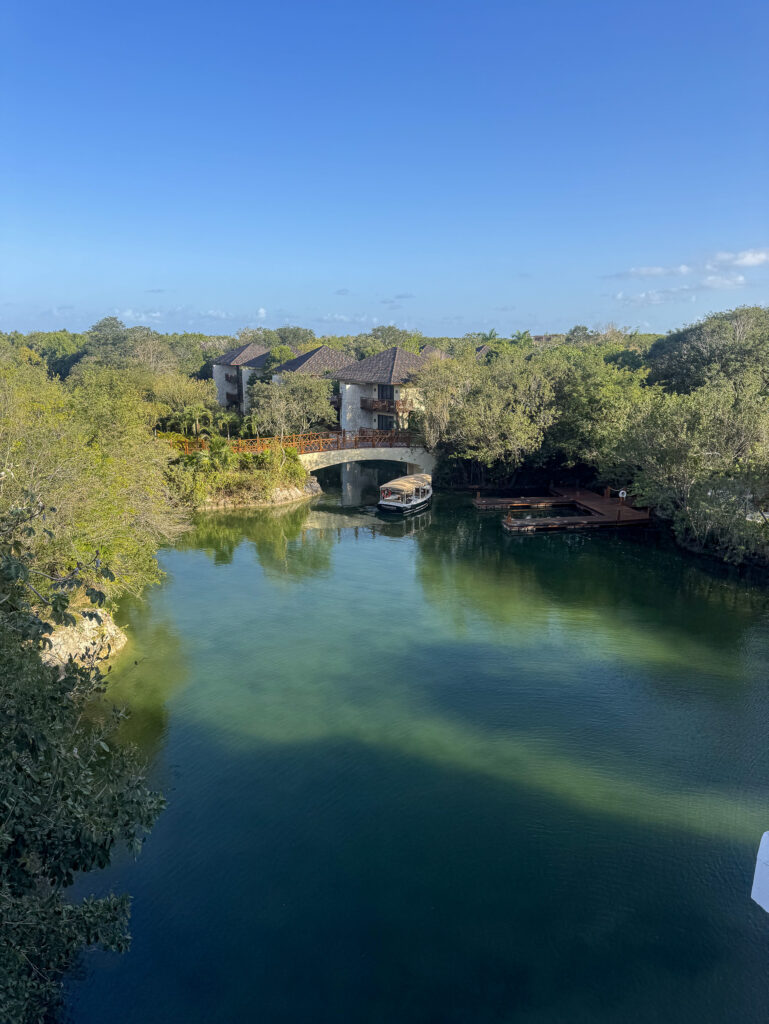
    Mayakoba is four resorts sharing one address, a private community of clear-water canals cut through mangrove on the Riviera Maya, and Fairmont got here first — before the canals had a reputation and before Rosewood, Banyan Tree and Andaz arrived to give the place its luxury shorthand. That head start explains most of what the resort is now.

    It is the largest of the four and the one that behaves least like a boutique hotel: two kids’ clubs, a main pool you could lose a family in, and an optional all-inclusive package, three things nobody would write about Rosewood next door. Whether that reads as a warning or a relief depends almost entirely on who is travelling with you.

    A wide green canal curving past a two-storey resort building and a low stone bridge under a clear sky
    The canal system is the spine of the whole community. Buildings sit on it rather than beside it, and boats pass under low stone bridges between resorts.

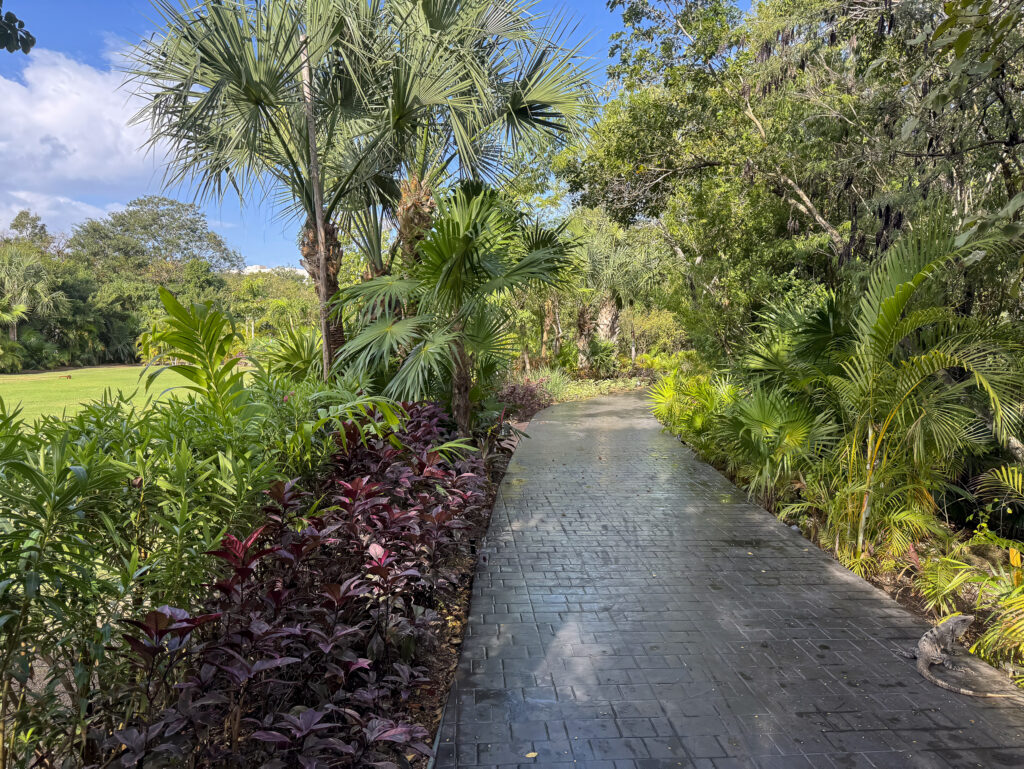
    The single most underrated advantage of arriving first is that your trees are older than everyone else’s. The fan palms lean across the paths rather than standing politely beside them, the planting runs to dark red croton and heliconia thick enough to hide the edging, and the canal banks are properly overgrown. It does not look landscaped. It looks kept.

    The other thing the head start bought is scale. Rosewood and Banyan Tree are villa properties. Fairmont is a resort in the older and more literal sense: buildings, corridors, a lobby with a florist’s arrangement the length of a console table, and a golf course running through the back of it, so that one garden path has a fairway sitting open and green just off the left shoulder. The paths are flat, shaded and long enough that the bicycles are not a novelty.

    A brick-paved path curving between fan palms and dark red planting with the golf course beyond
    Paths like this one are the property’s circulation. Flat, shaded, and long enough that the bicycles are not a novelty.

    The room

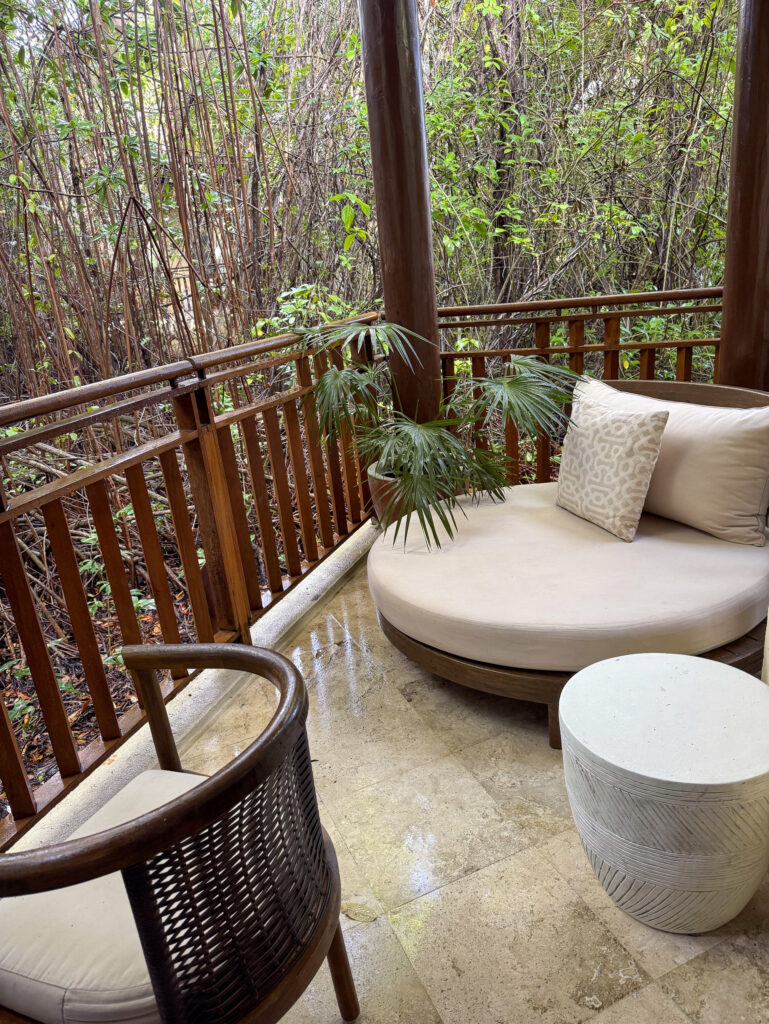
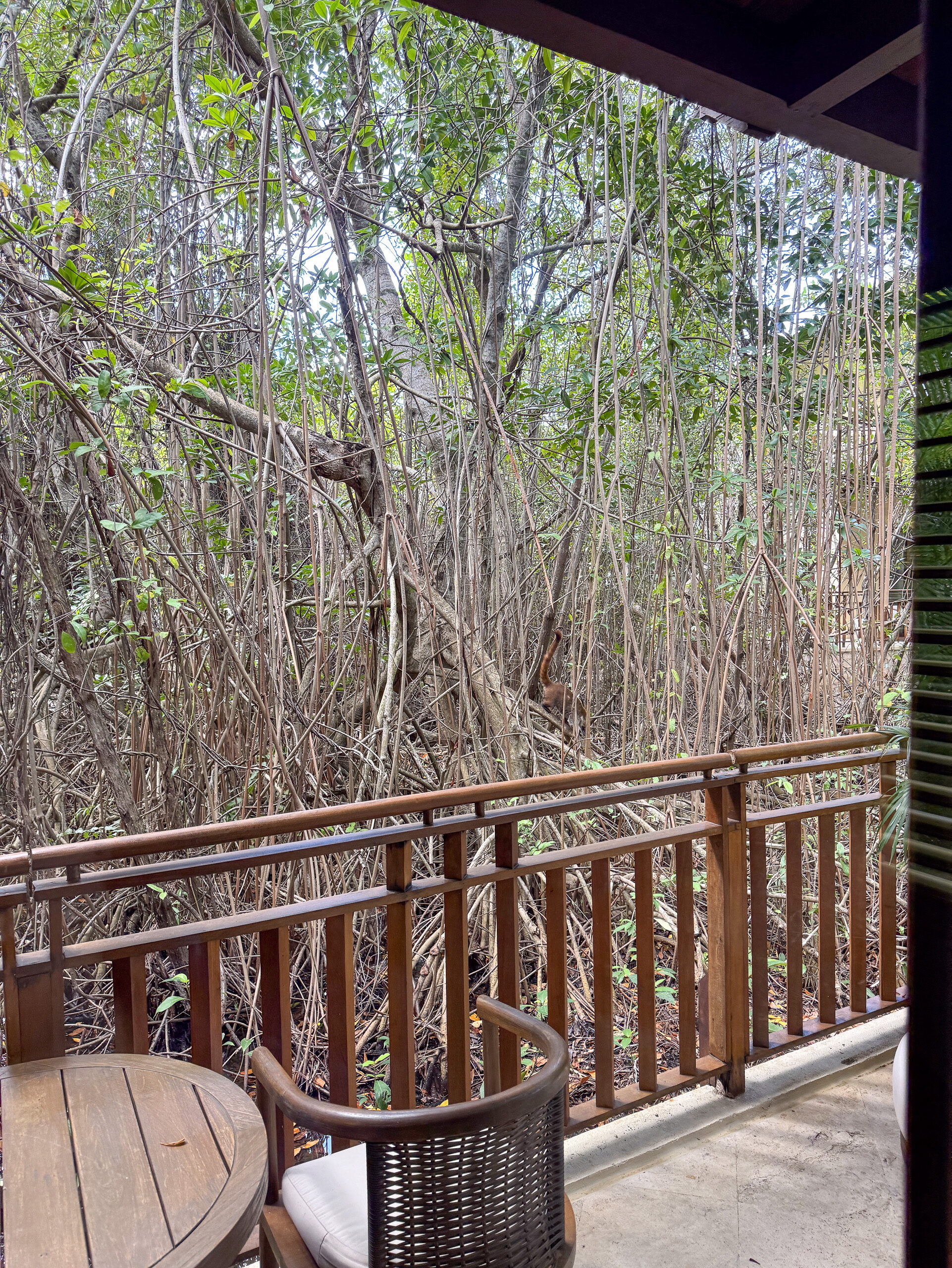
    The building block is the casita: two-storey blocks of a handful of rooms each, dropped into the mangrove along the lagoon or set back from the beach. I had a Deluxe Casita on the lagoon side, and the terrace is the room: a round cushioned daybed, a hardwood railing, and nothing beyond it but mangrove about two metres away, with birds in it. There is no view in the postcard sense. There is a wall of trees, and it is the argument for this side of the property in one frame.

    A round cushioned daybed and wicker chair on a casita terrace looking straight into the mangrove
    A lagoon-side terrace. The railing is about two metres from the mangrove, which is the argument for this side of the property in one frame.

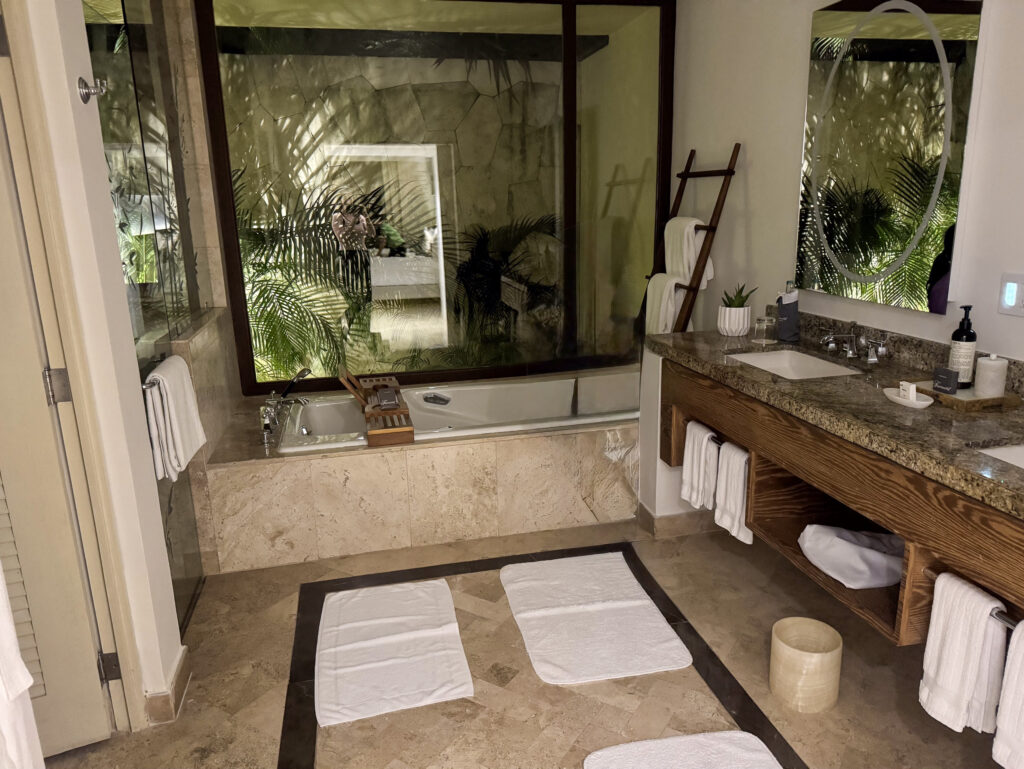
    Inside, the finish is warm rather than fashionable — travertine floors, dark timber, a stone-topped double vanity, a deep tub set against a window that looks straight into planting. It is not the pale, stripped-back palette the newer Mayakoba properties use, and it will read to some people as dated. It also means nothing in the room is trying very hard, which after four days is not a complaint. It is a recommendation.

    A bathroom with a sunken tub beside a garden window, stone-topped double vanity and rolled white towels
    The double vanity, glass shower, garden beyond.
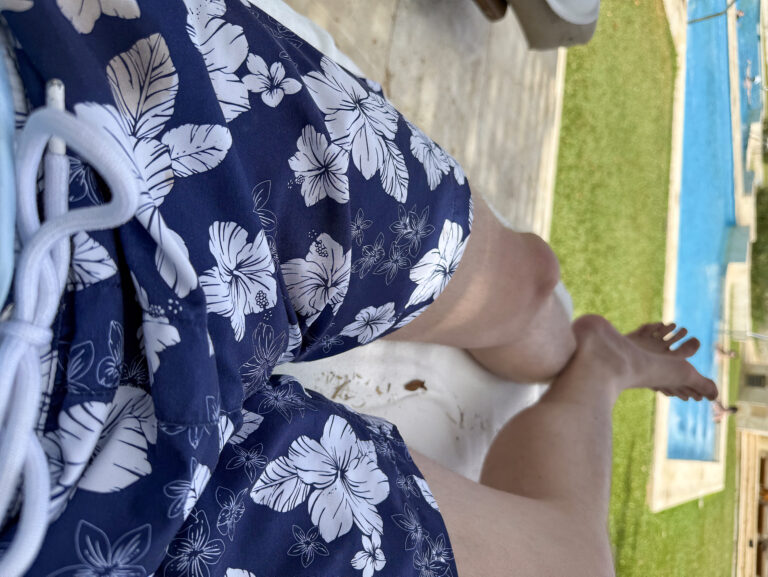
    A blue floral robe on the daybed, mid-afternoon
    Robe weather.
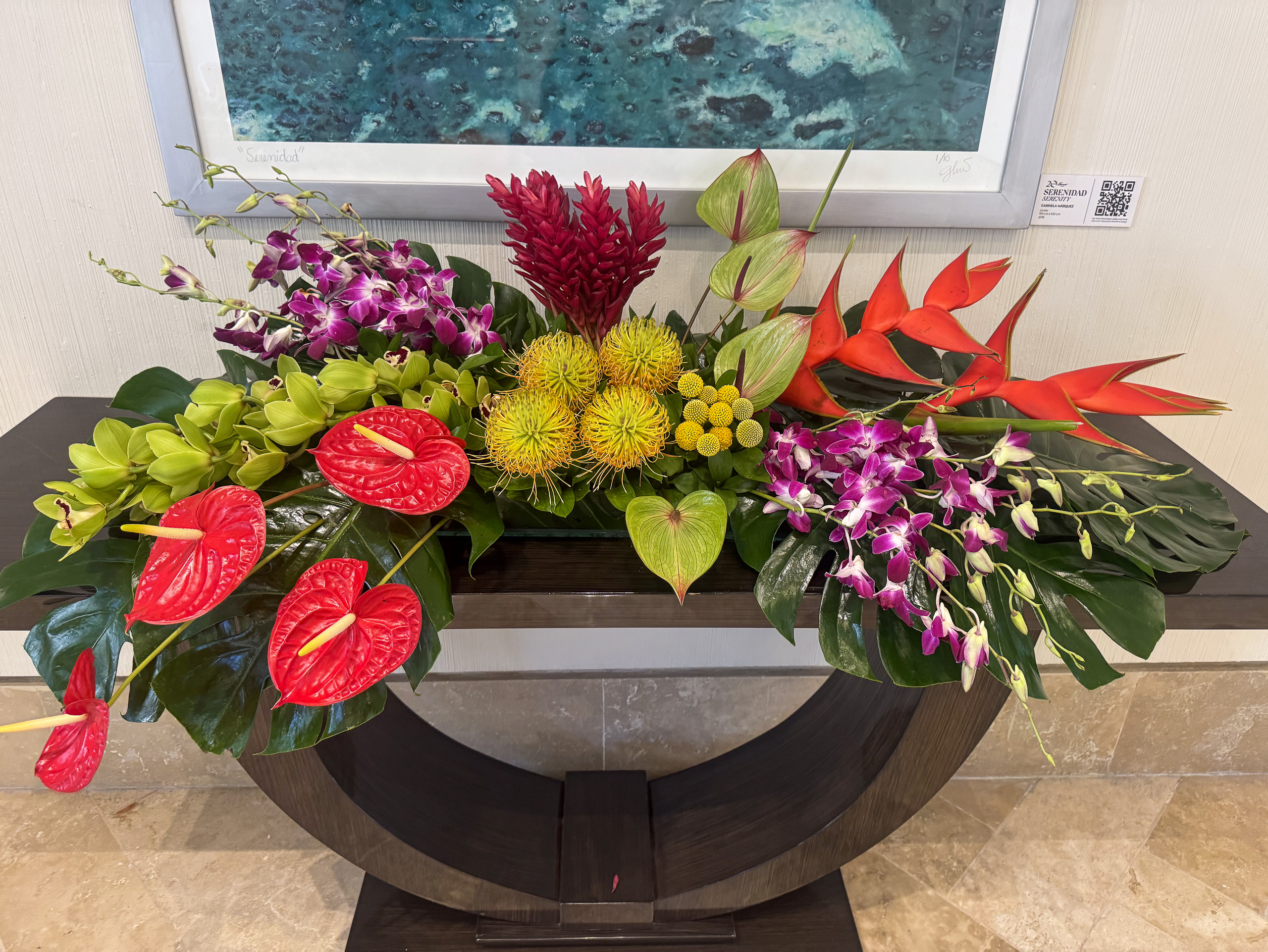
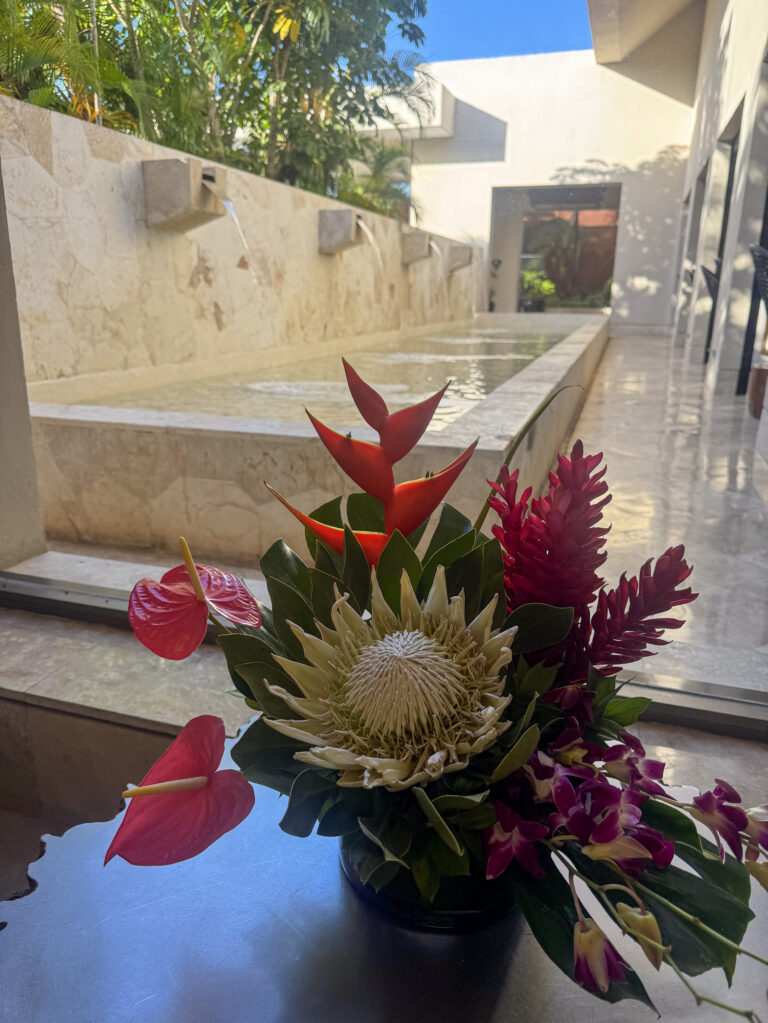
    A long arrangement of anthurium, ginger and orchids on a curved console
    Anthurium, ginger and orchids on the console.

    Eating

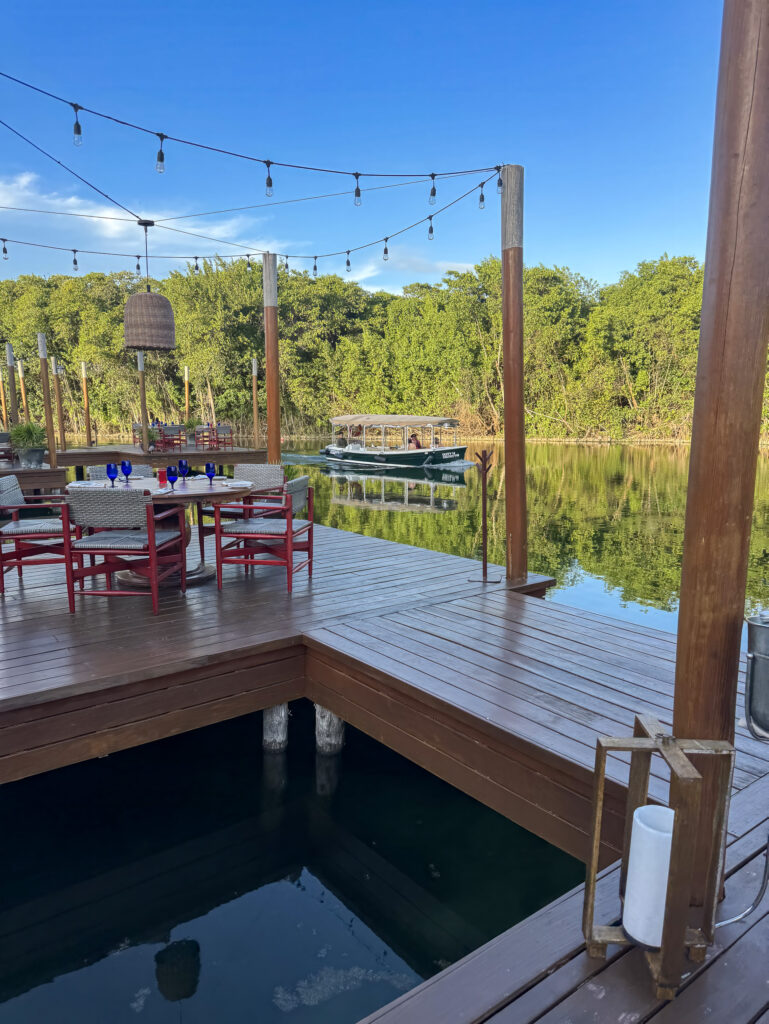
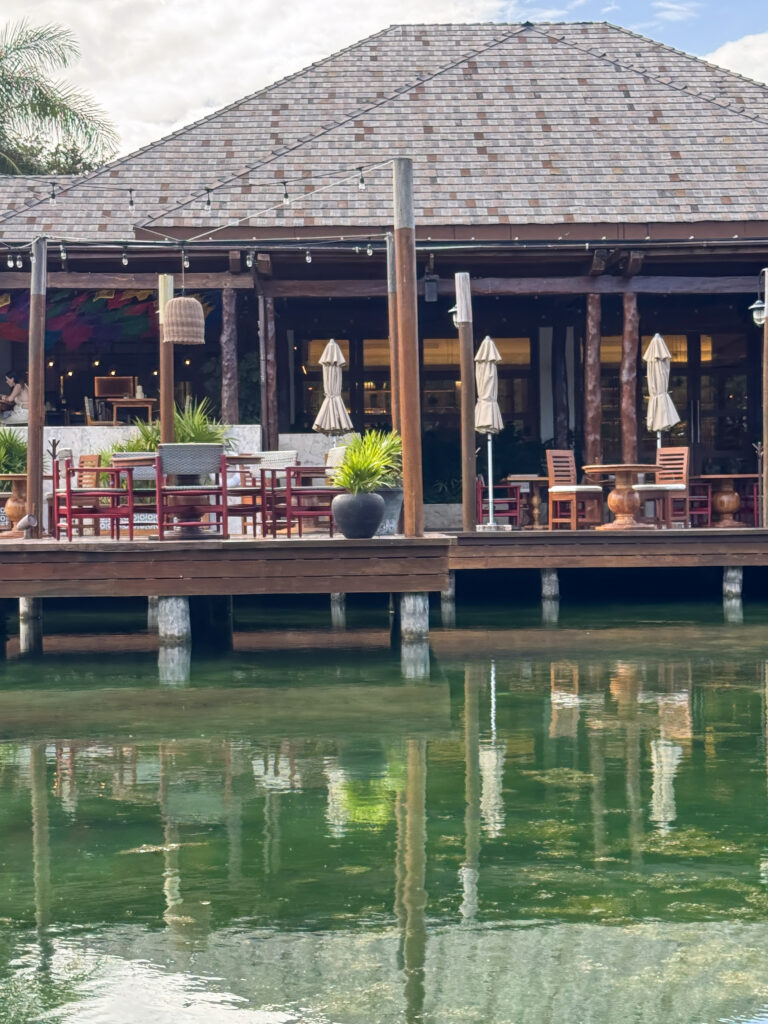
    The list is long for one property: Mexican over the water at La Laguna, a steakhouse, an Italian, a thatch-roofed beach hut, a lobby bar, two more bars, and the five outlets at the beach club. The best room of the lot is the lagoon deck: a shingle-roofed pavilion on pilings with red-painted chairs, woven pendant lamps and festoon lights strung over a hardwood terrace that ends in green water, with a boat going past. It is the only dining room on the property that could not be anywhere else.

    A wooden restaurant deck over the canal set with red chairs and festoon lights, a boat passing behind
    The over-water deck at the lagoon restaurant, laid up before service, with a boat going past on the canal.

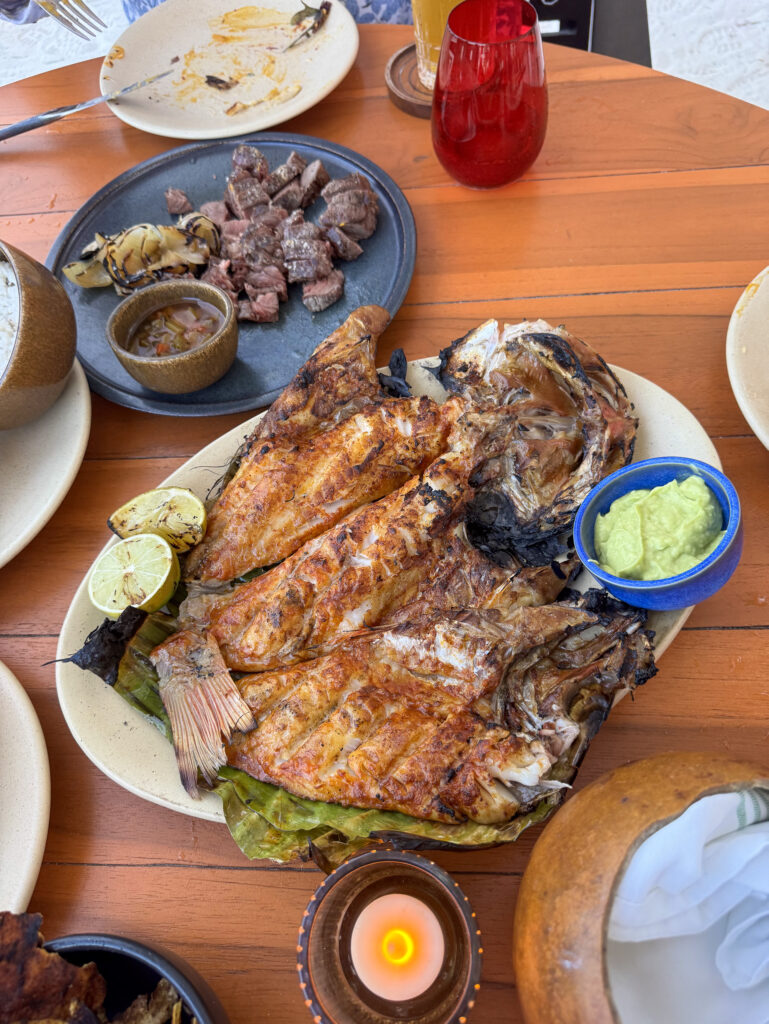
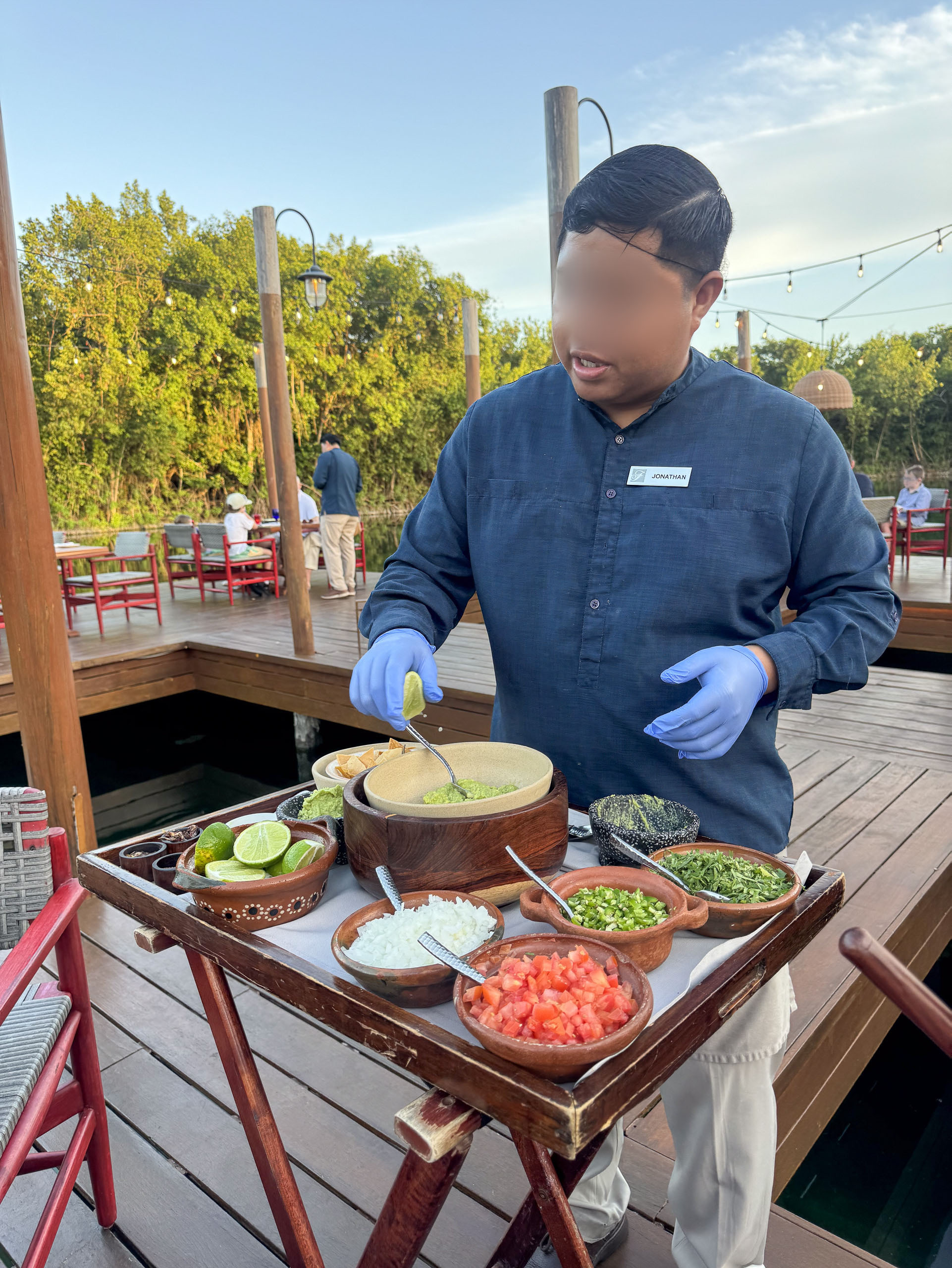
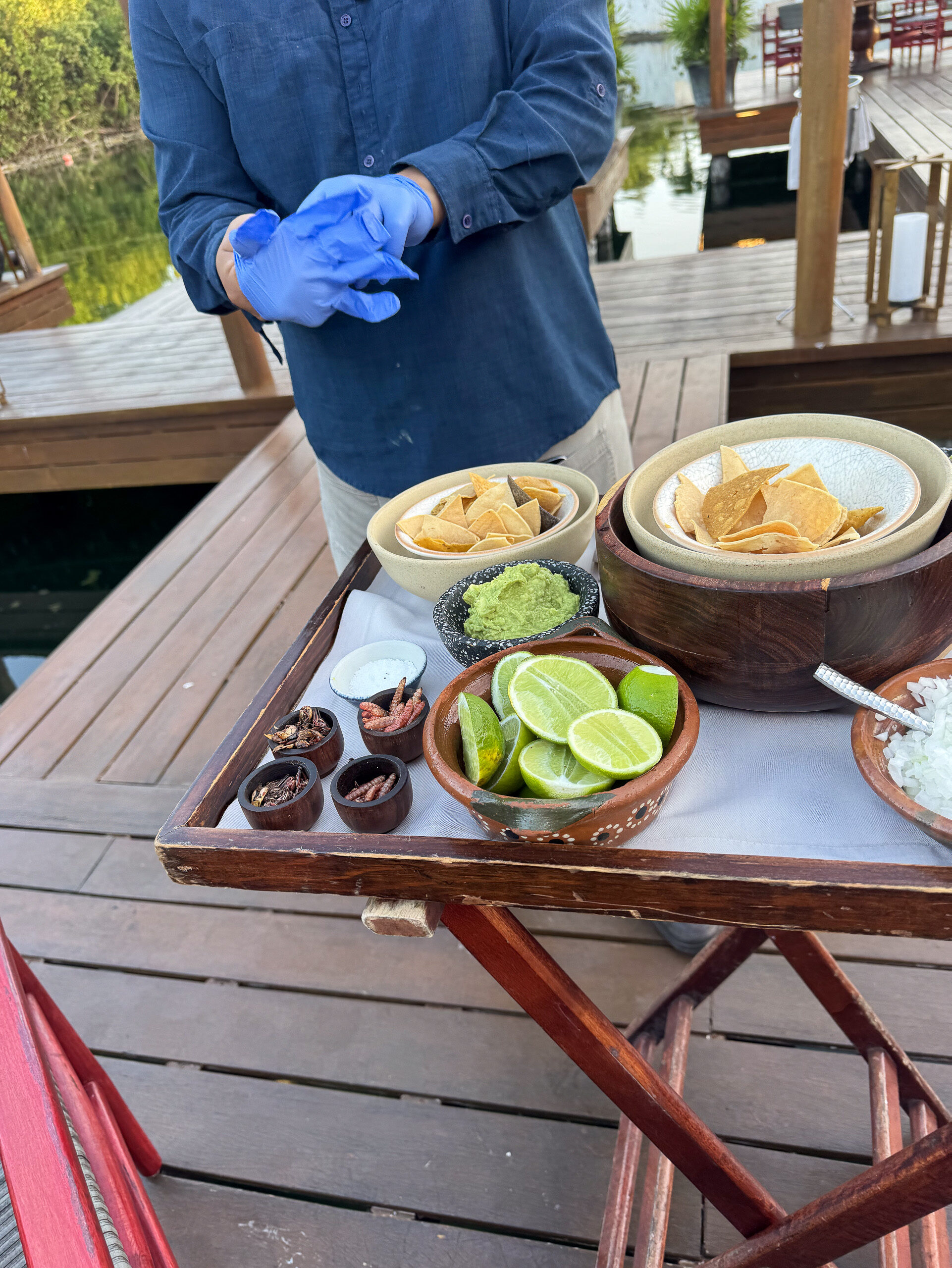
    The service style is old-school in the way Fairmont still does well: a guacamole trolley wheeled to the table and made in front of you, with lime, tomato, cheese, coriander and a dish of chapulines beside it for anyone who wants them. Whole fish comes off the grill and onto the table more or less as it left it. The kitchens lean local and simple, which suits the setting.

    A whole grilled fish with charred lime, guacamole and grilled steak on a wooden table
    Whole grilled fish, charred lime, guacamole.
    A waiter spooning guacamole from a tableside trolley set with lime, onion, tomato and herbs
    Guacamole made at the trolley, by the table.
    Fairmont Mayakoba
    Breakfast on the terrace, the lagoon behind.

    Then there is the all-inclusive question. Fairmont sells an optional package covering meals and drinks by the glass at the participating restaurants, with premium dishes, bottled wine and breakfast at some rooms outside it. A five-diamond resort with an all-inclusive tick-box is an unusual animal, and it is the clearest signal of how this property differs from its neighbours. It cuts both ways: the room around you changes, because a package with unlimited drinks does not attract the same guest as an à la carte one. Only one of the two versions lets you spend an evening eating at Rosewood.

    The lagoon, the pools, and the beach club

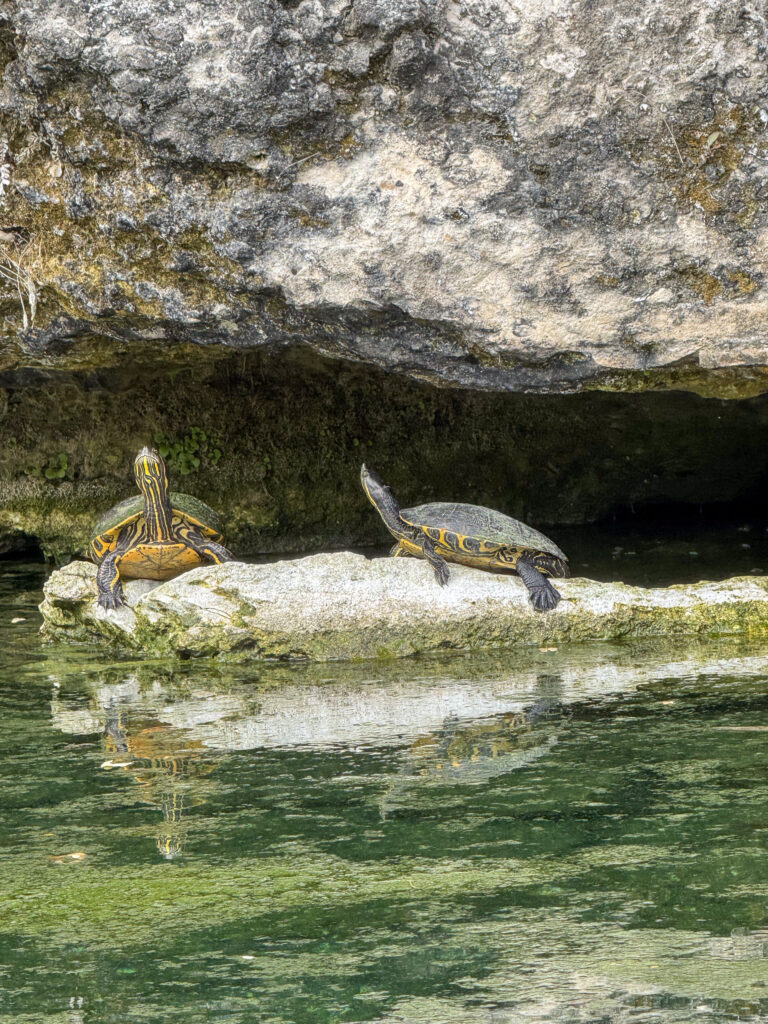
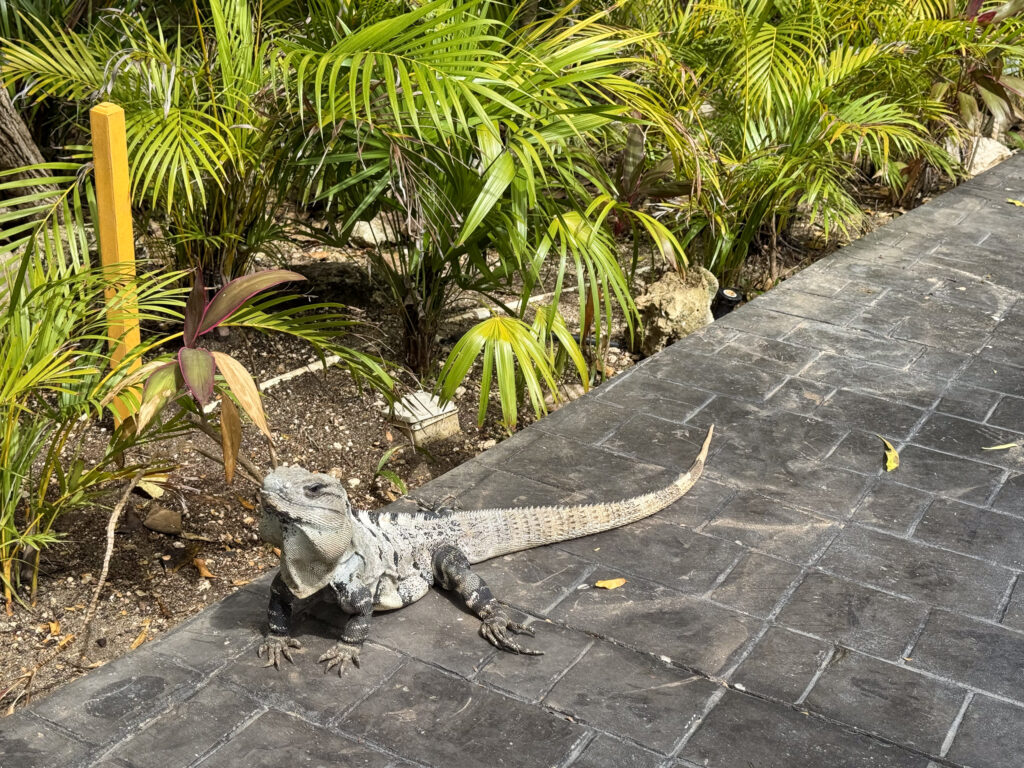
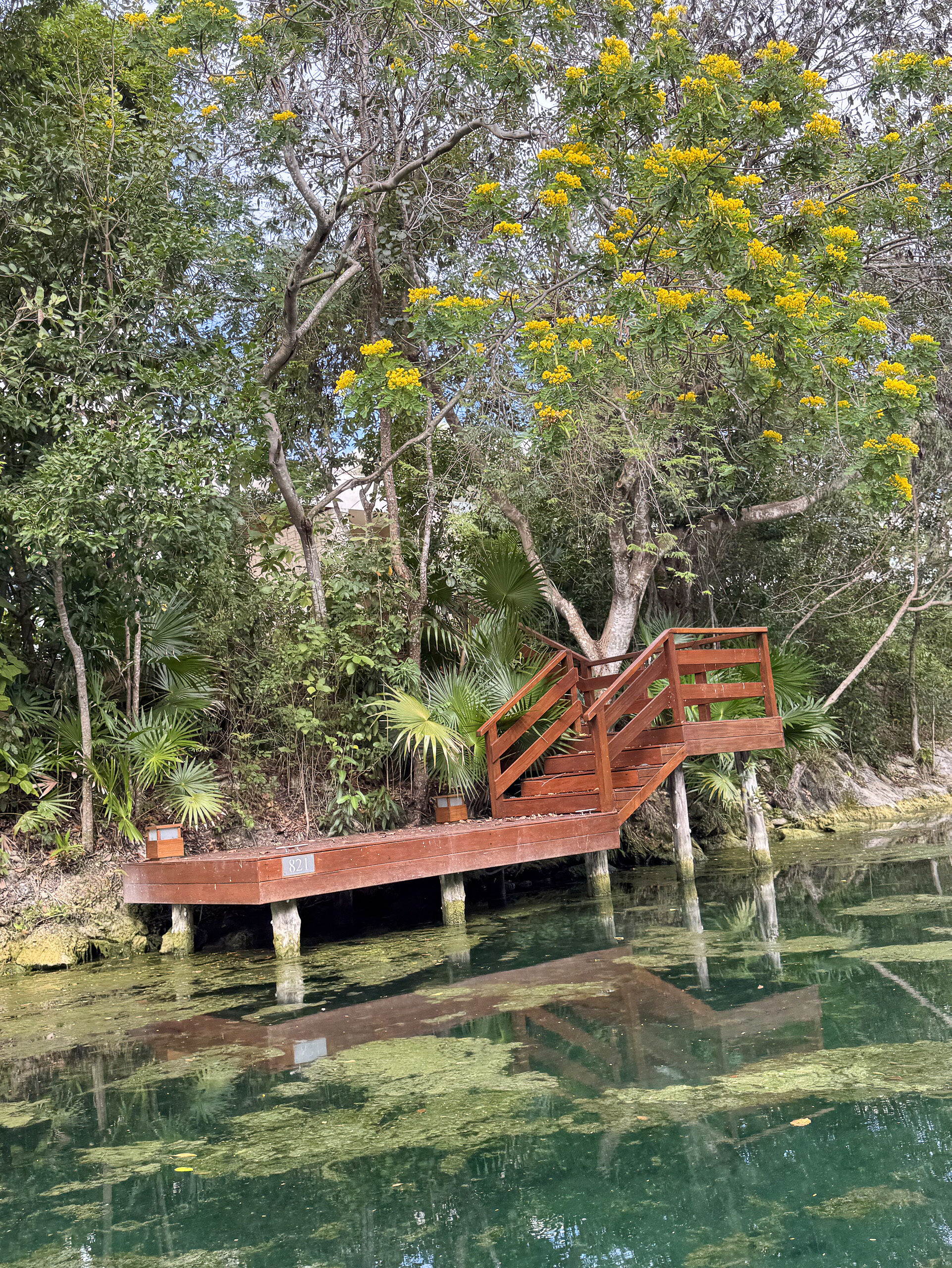
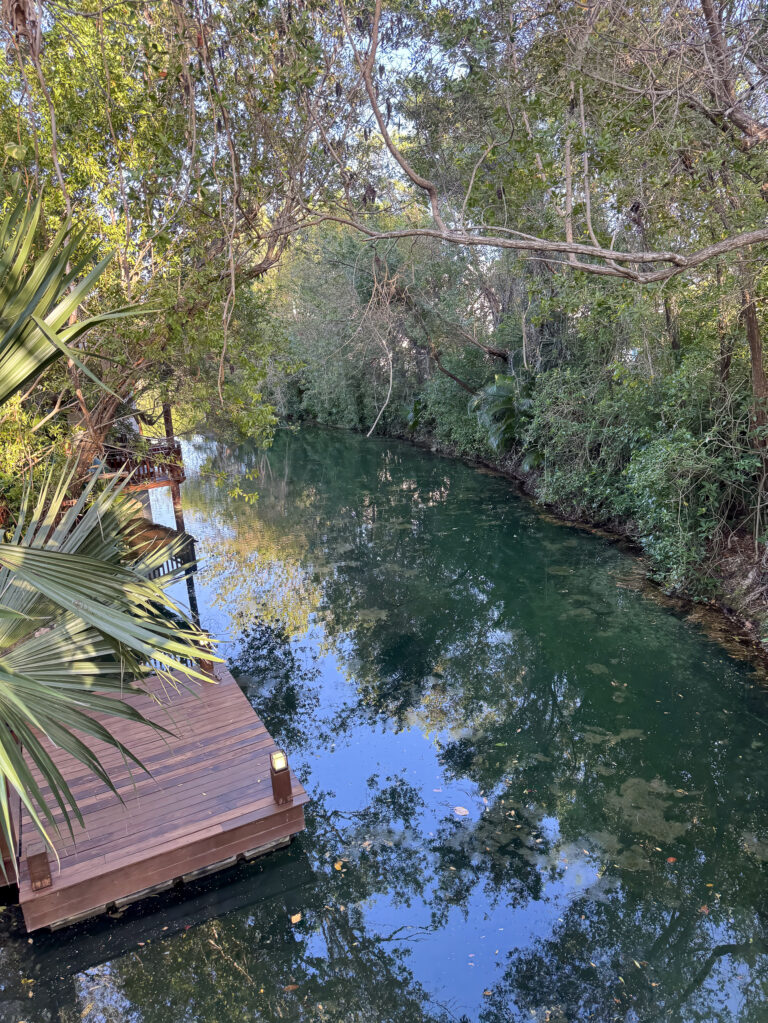
    The canals are dug, not natural, but they connect to the limestone that riddles this coast, and what they attract is not decorative: two turtles hauled out on a rock ledge under an overhang a few metres from a guest path, a full-grown iguana holding a footpath in the sun, a bank of limestone undercut by green water with jungle growing straight out of the top of it. The resort runs eco boat tours through the mangrove, and there are cenotes inside the community. Fairmont’s lagoon frontage is longer than its neighbours’ and more of it is public: docks, stair landings, decks that end over the water, all walkable rather than attached to somebody’s villa.

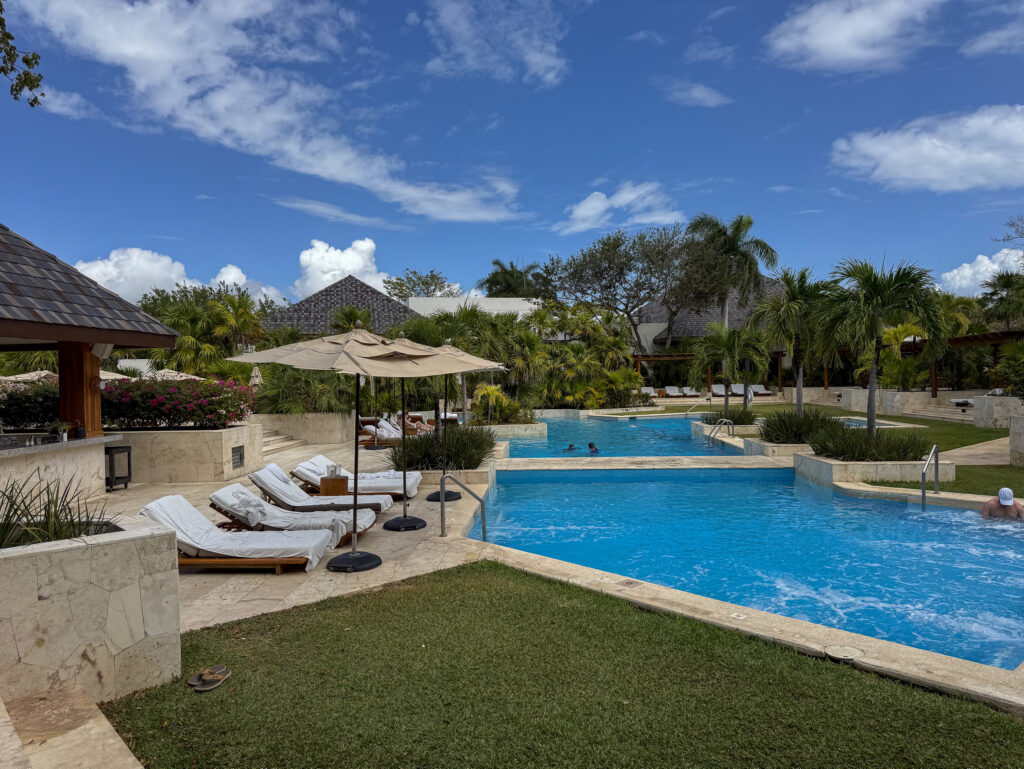
    The main pool stepping down in terraces past umbrellas and lawn under a bright sky
    The main pool steps down in linked sections across limestone terraces and lawn. Loungers are plentiful and the shade is real.

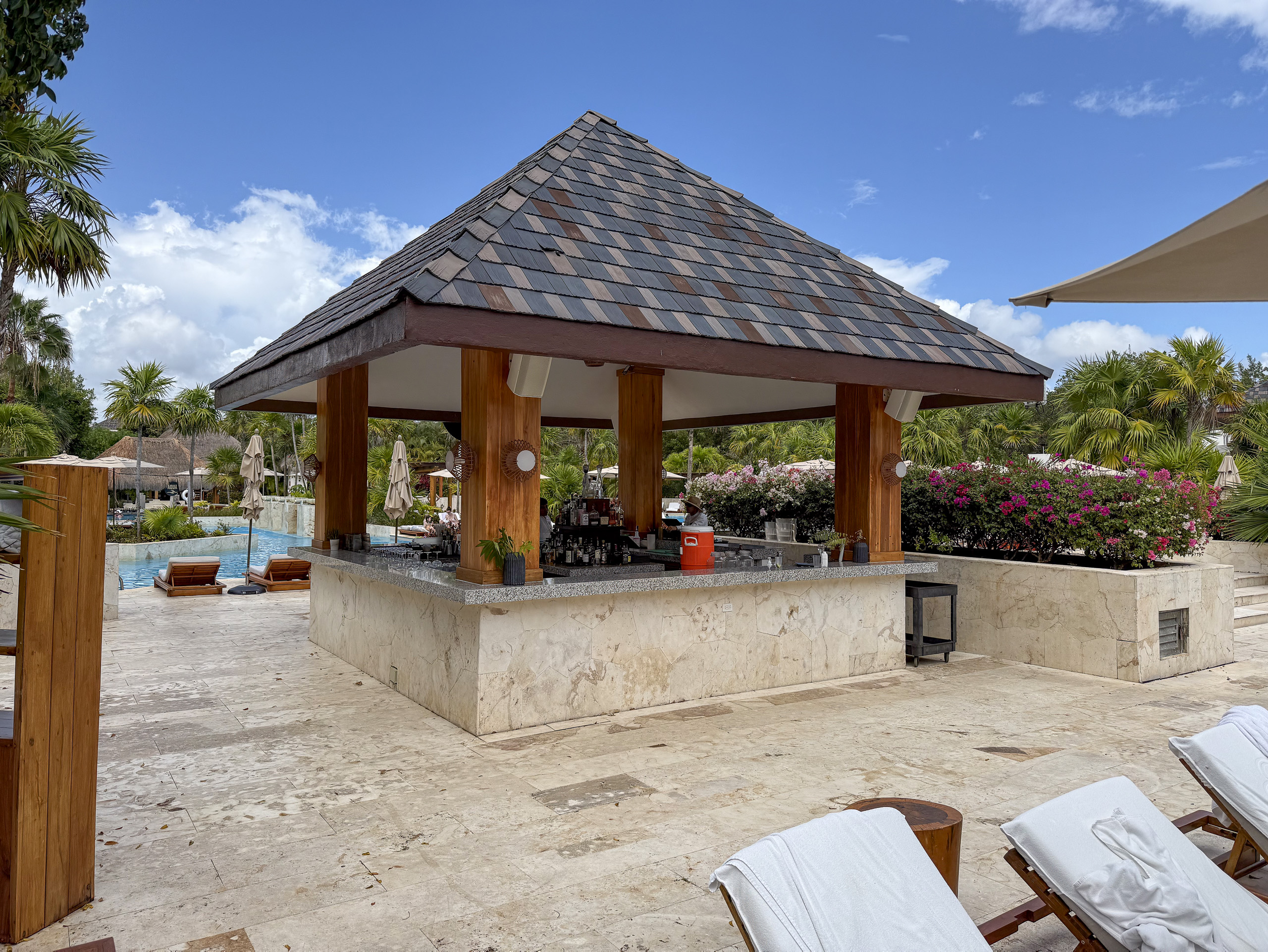
    The main pool is a linked series of sections stepping down across limestone terraces and lawn, with a stone swim-up bar under a shingled pyramid roof at one end and enough loungers and canvas umbrellas that the towel-on-the-chair economy never gets going. It is a family pool, unambiguously, and it is very good at being one.

    Two turtles hauled out on a limestone ledge beneath an overhanging rock at the water's edge
    Turtles on a ledge by the path.
    A large grey iguana sunning on a stamped-concrete path beside palm planting
    You walk around these, not the other way about.
    Fairmont Mayakoba
    Mangrove along the boardwalk.

    The bigger change is Maykana, the beach club, which brought five places to eat and drink onto the sand at once, including an adults-only rooftop bar over the Caribbean, along with a beachfront pool, cabanas and sunken fire pits. Before it, the beach was the weakest part of a resort whose best material was inland. It is now a reason to book. The beach itself is wide, white, and thoroughly furnished: rows of thatch palapas with sling loungers, a marked swimming area, and enough space between the rows that it does not feel like a lido. The spa is a freestanding building with hydrotherapy pools and a serious gym.

    Fairmont Mayakoba
    The pier into the lagoon. The boat to the other three hotels leaves from here and stops at seven.

    Service moments

    The guacamole trolley, made at the table by someone who has made it ten thousand times and still asks how hot you want it. The buggy that appeared at the casita before I had finished the call. The eco-boat guide who cut the engine for the turtles without being asked.

    The over-water restaurant seen across the lagoon, its deck mirrored in still water
    The lagoon restaurant from across the water.

    Twenty years in, the Fairmont’s advantage is not novelty. It is the trees.

    Who it is for, and who it is not

    Come with a family or a group, for a longer stay, or for the golf, and take the beach side: immediate sand, some casitas with their own stair, closer to Maykana and the main pool. Come as a couple and take the lagoon: mangrove at the railing, constant wildlife, quiet, and you choose when to look at the sea.

    Pack repellent whichever side you land on, because the mangrove is the whole point and the mangrove has mosquitoes. Do the eco boat tour early in the day. Book the rooftop bar for sunset before you arrive. Walk the canal paths at dusk, when the turtles and the iguanas are still out and the light is on the water. And if the all-inclusive package is on the table, weigh both versions before you commit.

    Look elsewhere if you booked Mayakoba for silence: this is not a hideaway, the lobby is a lobby, there are corridors, and at peak season the main pool has children in it, which is the correct outcome for a resort with two kids’ clubs and the wrong one for you. The Banyan Tree next door is the villa version, and I have set the two side by side.

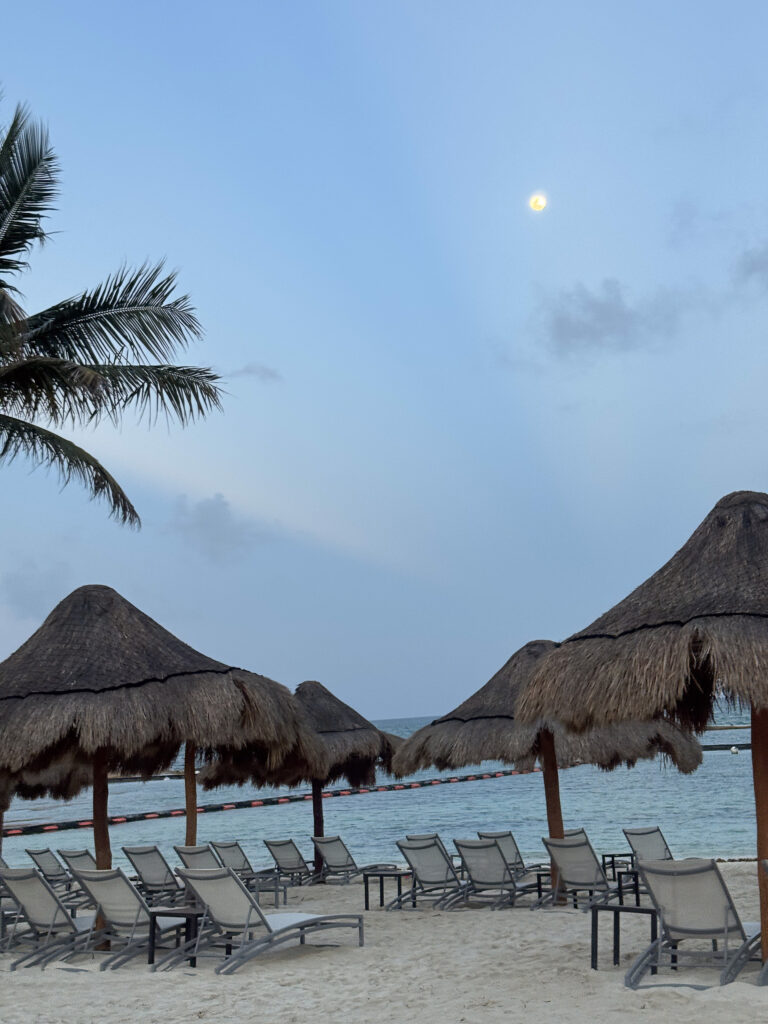
    Palapas and rows of loungers on the beach at dusk with the moon over the Caribbean
    The beach at dusk. Thatch palapas, sling loungers, and a swimming line marked out beyond them.

    Bottom line

    Twenty years in, the Fairmont’s advantage is the trees, and the lagoon does the rest. Take a lagoon casita as a couple, the beach side with children, and walk the canal paths at dusk either way. It is good, not great, so check your Banyans.

    See the full set: Fairmont, Mayakoba — in frames. More Mayakoba: the Mayakoba set.

    The Fairmont Mayakoba gallery

    Every photo on this site is my own, shot on the stay. Slide through →
    Fairmont MayakobaThe thatched pool bar with towels stacked on its counterFairmont MayakobaFairmont MayakobaFairmont MayakobaFairmont MayakobaFairmont MayakobaFairmont MayakobaTwo loungers under a timber palapa looking out to the lawn and poolFairmont Mayakoba
  • The Long Run South: Fishing Kadavu’s Underwater Mountain

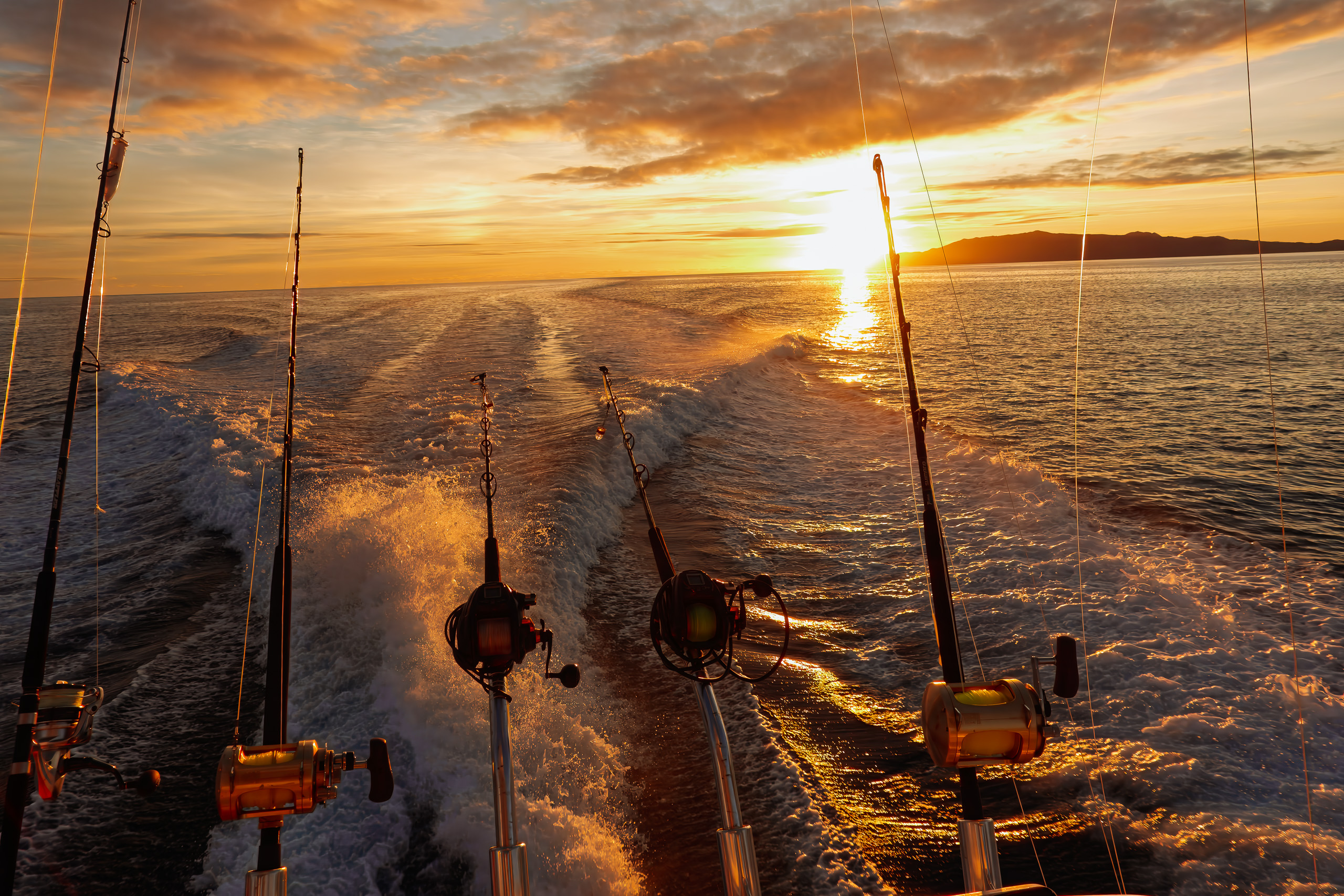
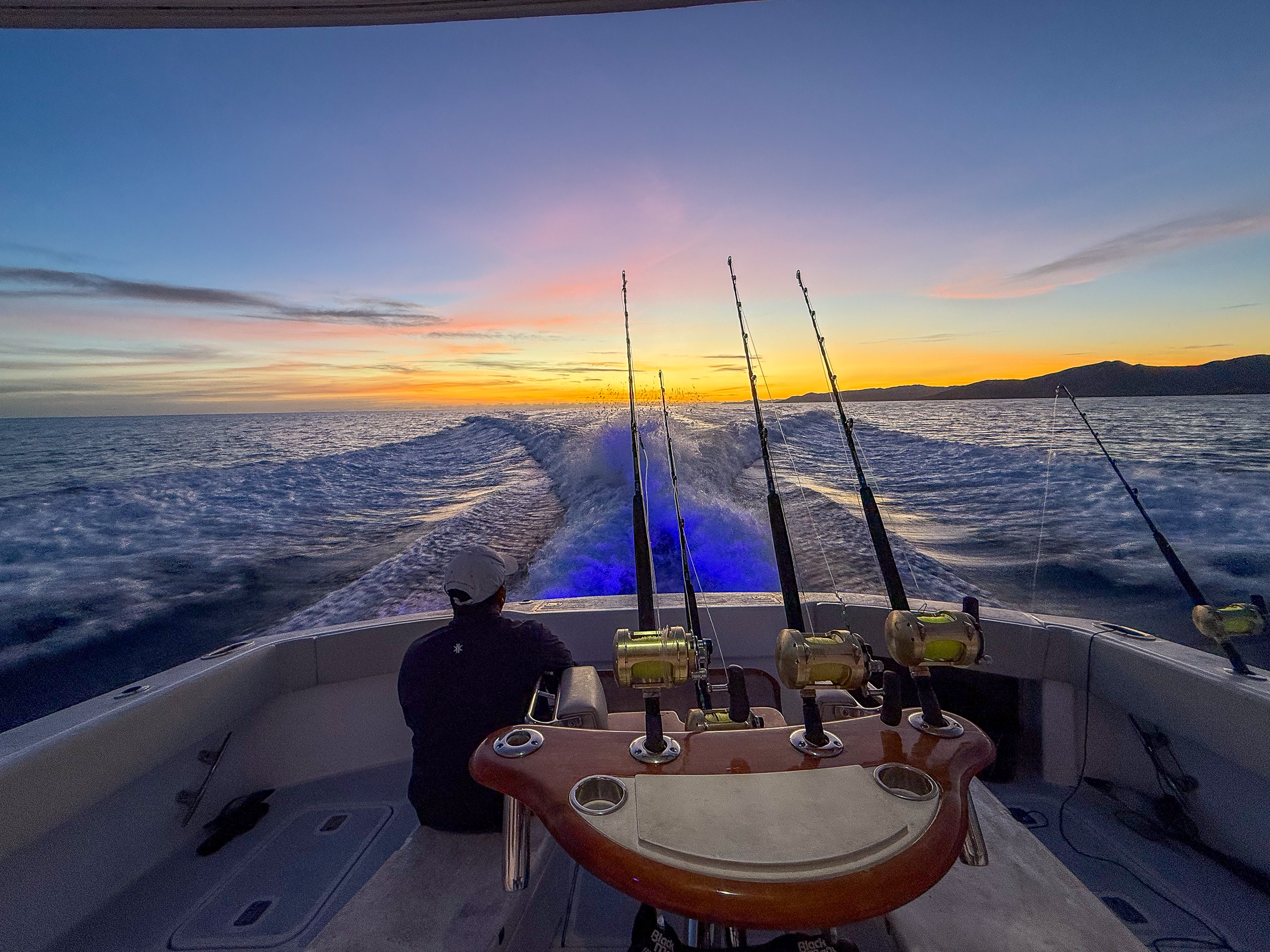
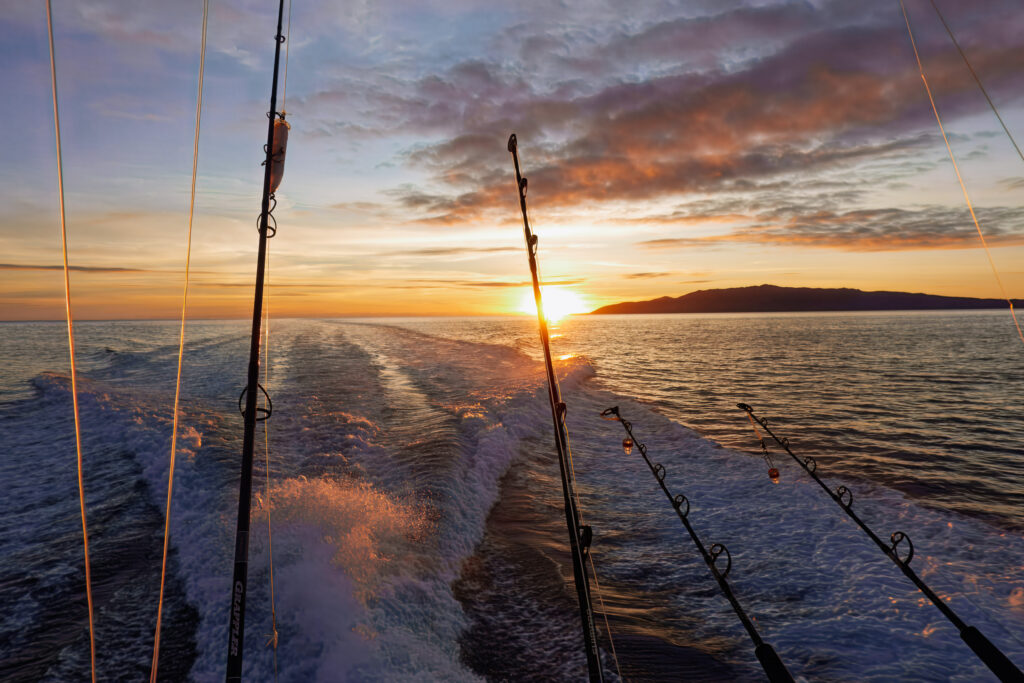
    Trolling rods silhouetted against sunrise on the run south from Kokomo, Fiji

    KOKOMO PRIVATE ISLAND, FIJI · FISHING · 9 MIN READ

    The Long Run South: Fishing Kadavu’s Underwater Mountain

    Past the end of the Astrolabe, a seamount rises out of 3,000 feet of water off the last island in Fiji. It is the reason to give up a whole day of a Kokomo stay.

    By J.C. Mercer

    Verified stay·paid in full

    • Stayed April–May 2026
    • Room booked One-Bedroom Beachfront Villa, sunrise side
    • How it was booked Amex Fine Hotels + Resorts, public rate
    • Book this stay

    Every stay on this site is booked the way any other guest would book it.

    Most fishing days out of Kokomo do not go far, and they do not need to. The Great Astrolabe Reef ends a short run from the dock, and the drop-off there produces enough that plenty of guests never see anything else. Wahoo patrol the edge through winter, yellowfin stack on the outer seamounts through summer, and you are back for lunch at Kokocabana.

    Then there is the long day. Southwest, down the length of Kadavu, to where the island runs out and the seafloor does something worth the fuel.

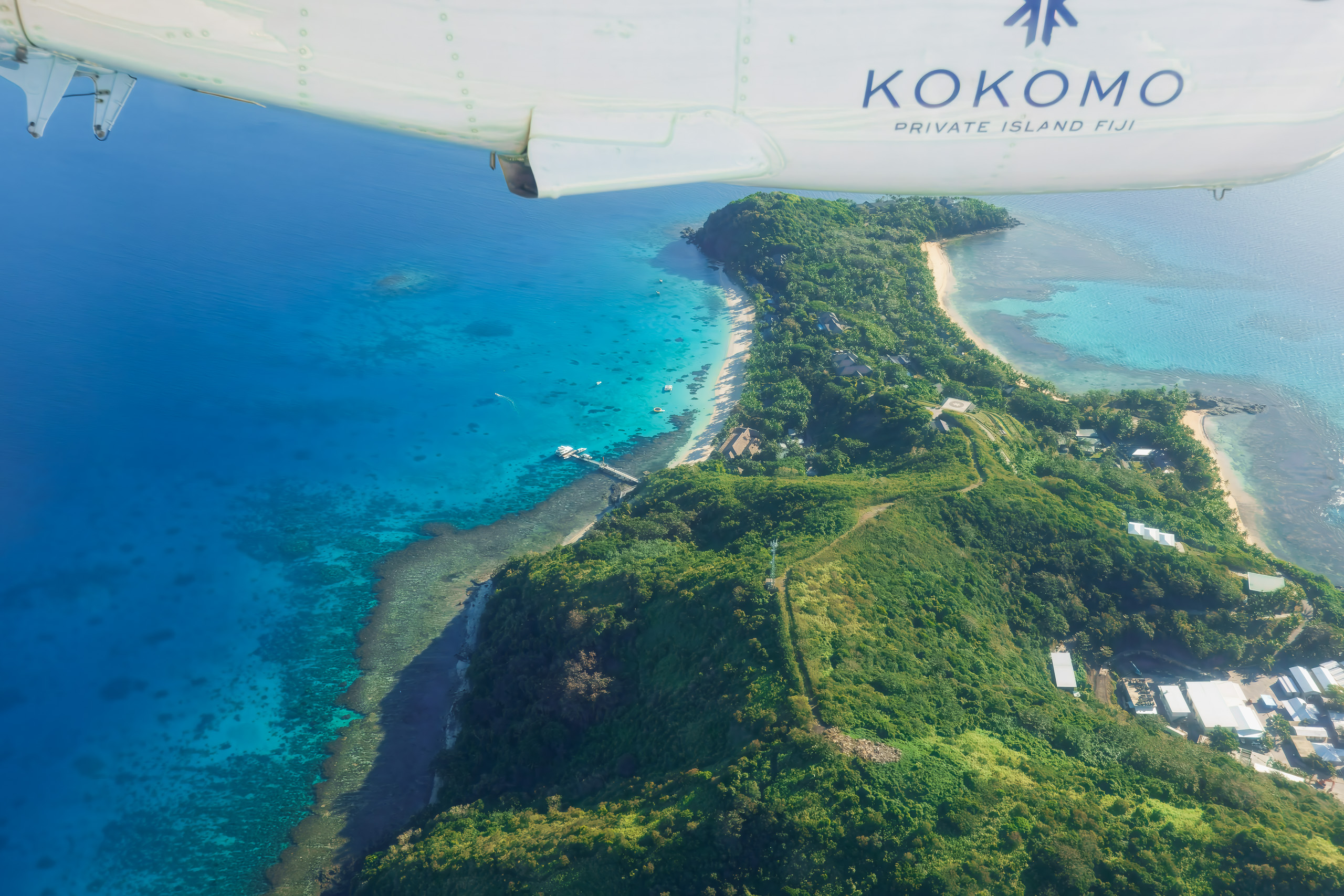
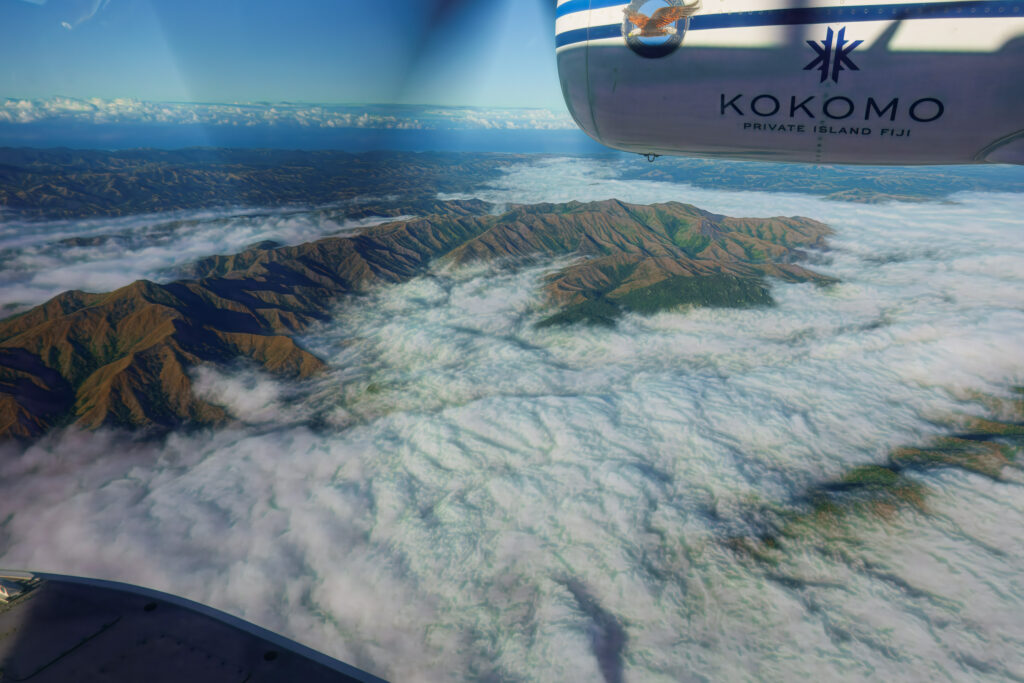
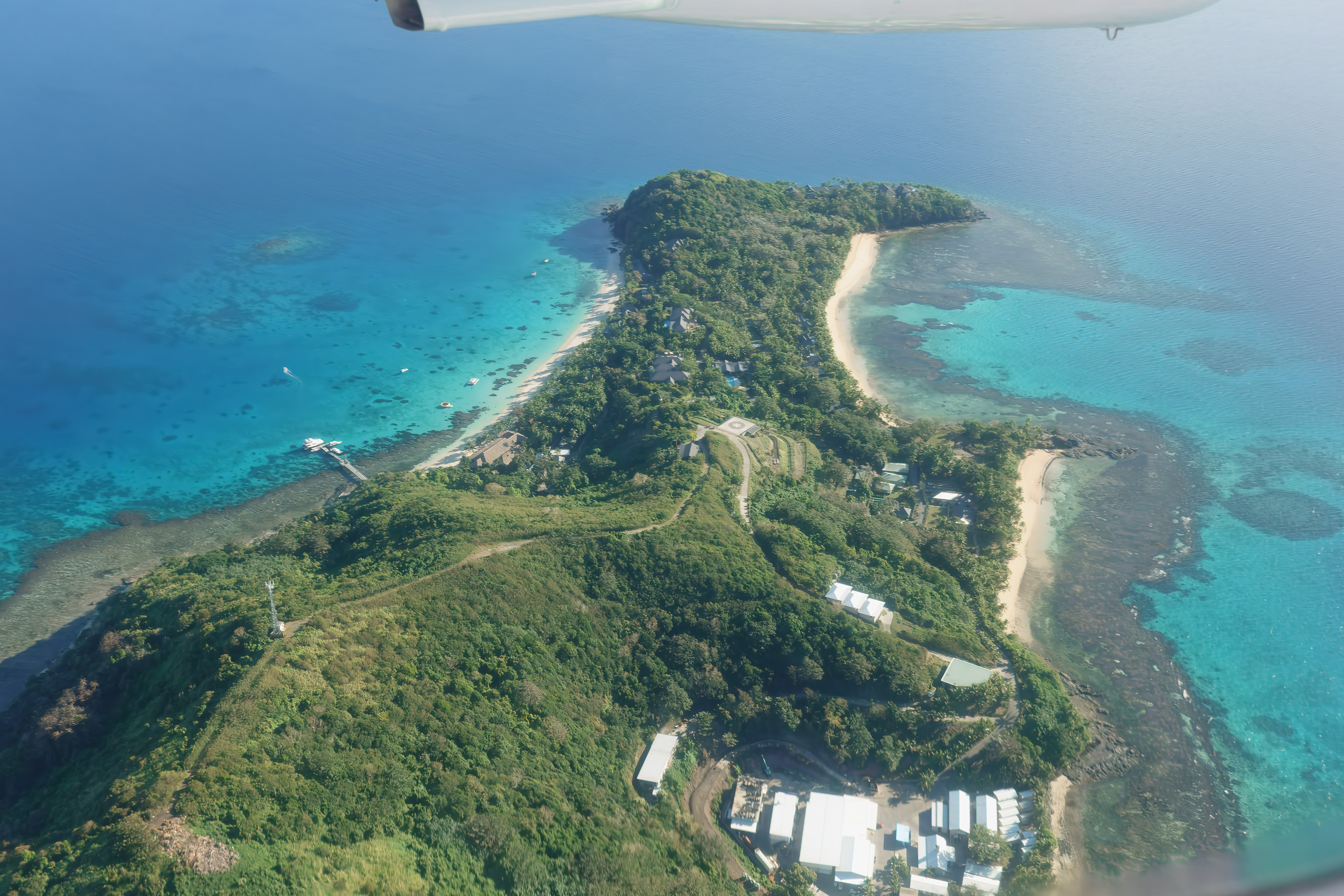
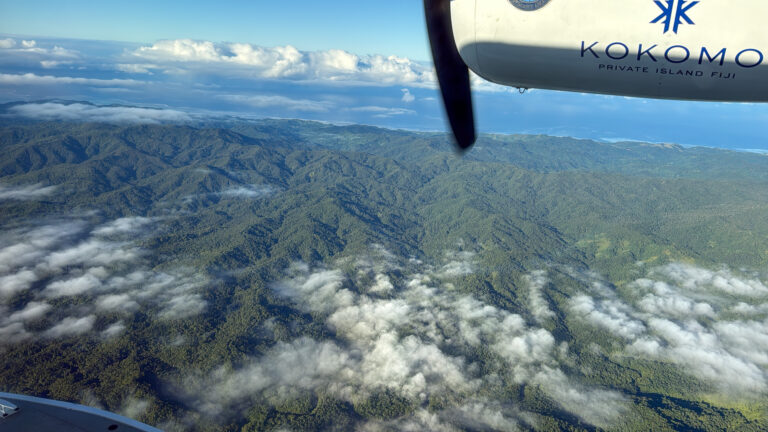
    Aerial view of Kadavu from a seaplane window, Fiji
    Kokomo sits at the northeast end of Kadavu. The fishing in this story happens at the other end of the island.

    Why go that far

    At the southwestern tip of Kadavu sits Nagigia, 26 acres of privately held rock marked on some charts as Denham Island. Surfers know it for its reef breaks. What draws anglers is underneath.

    The island sits on the edge of a trench that drops to 6,000 feet. Parts of it hang directly over a 1,000-foot wall, close enough that you can fish genuine deep water standing on rock, which is a sentence that applies to almost nowhere else in Fiji. Seven miles further south, a sea mountain rises off the floor and stops 120 feet below the surface, its flanks falling away to 3,000.

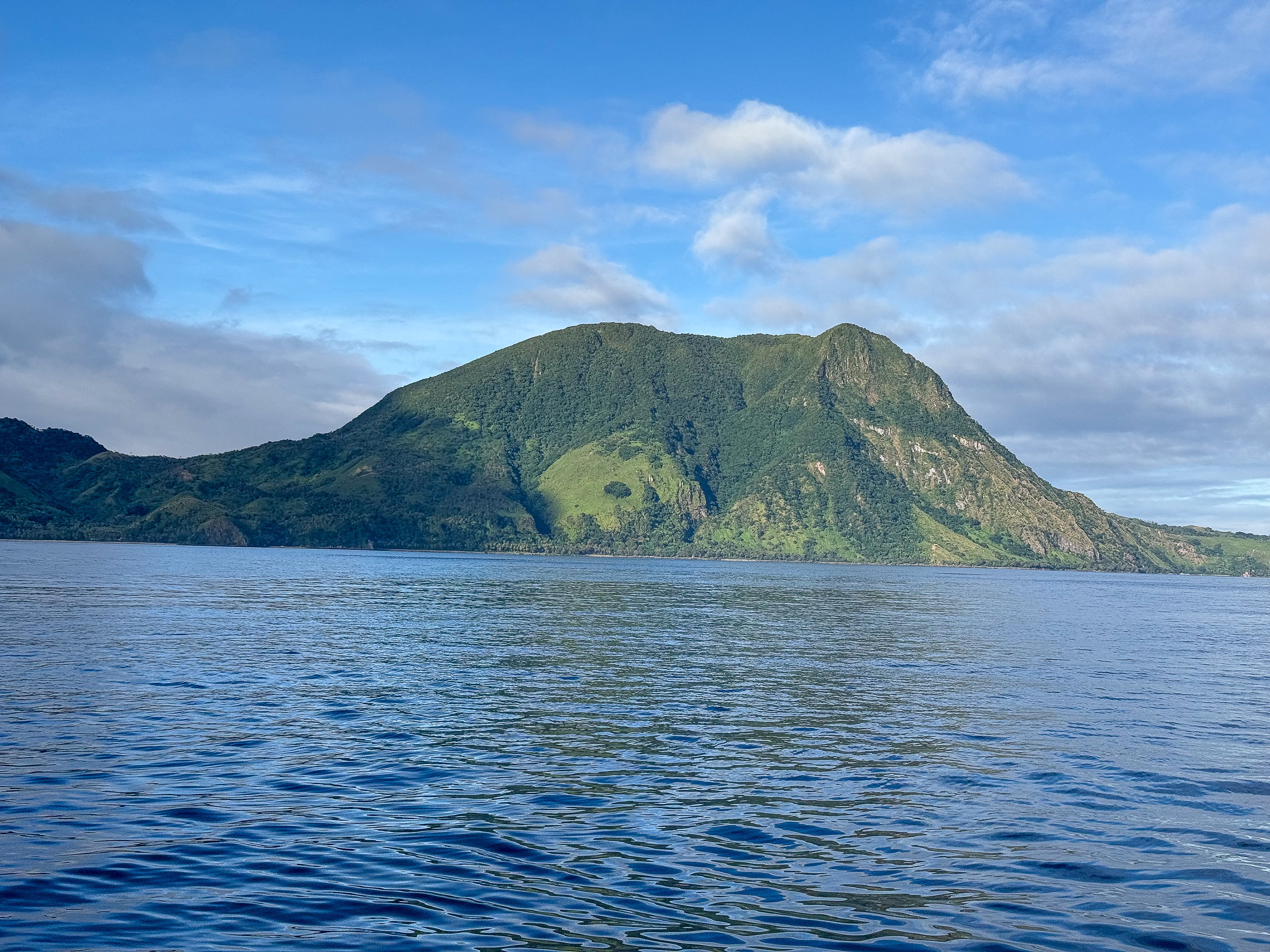
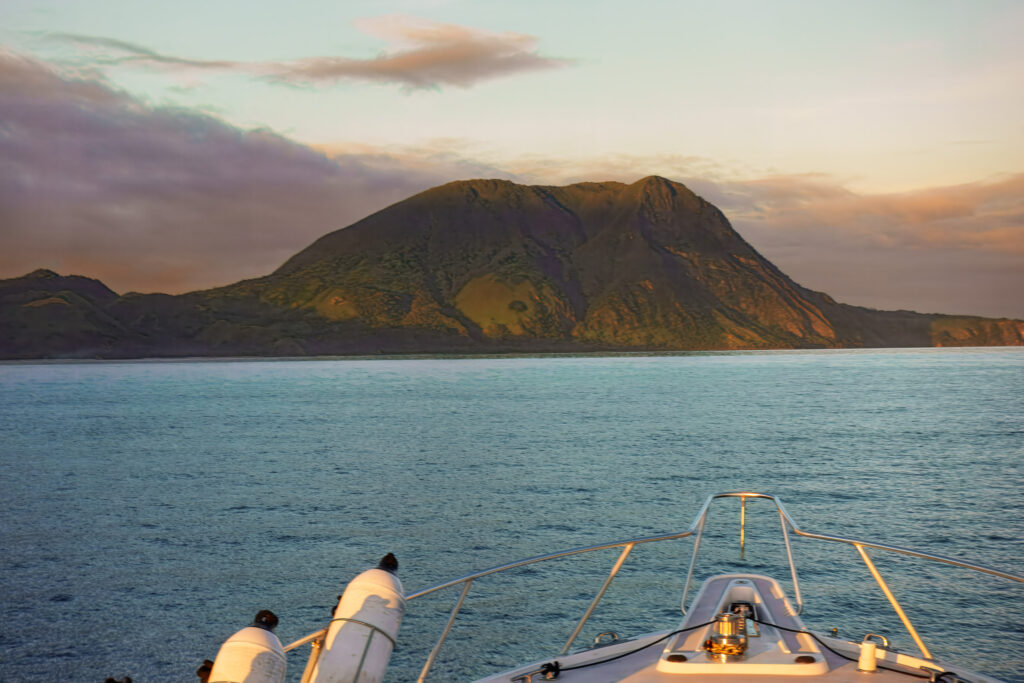
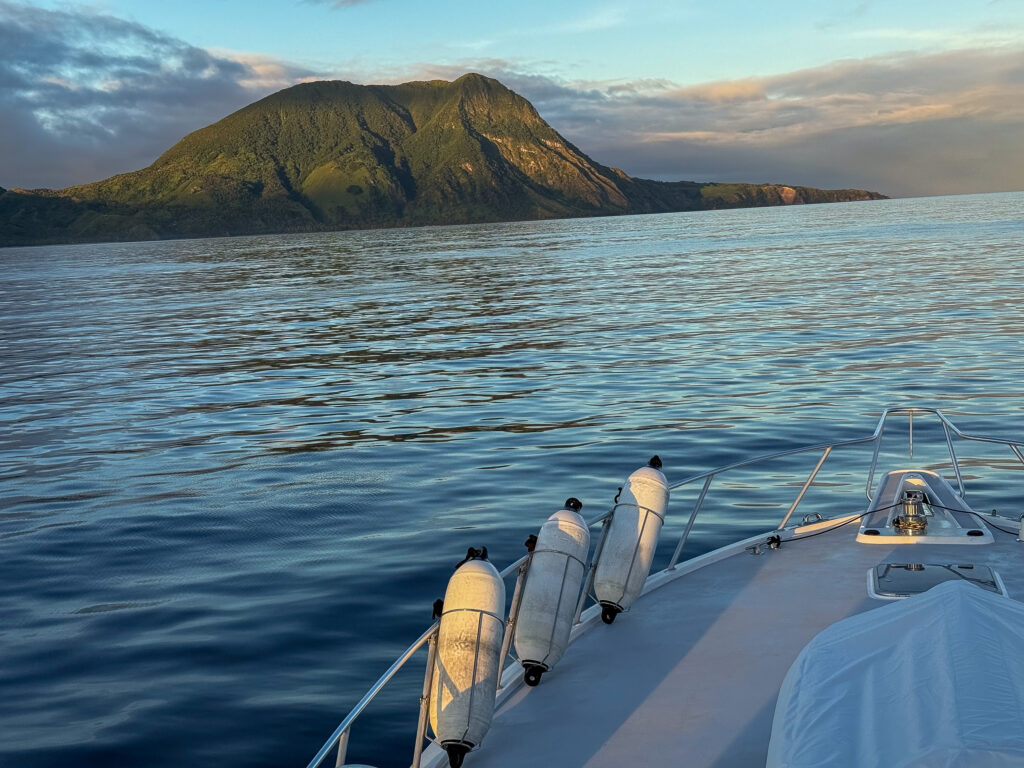
    A steep green island rising out of open ocean off Kadavu, Fiji
    The land runs out before the water does. Kadavu tapers to rock, and the seafloor drops away underneath it.

    That last number is the trip. Current moving across open ocean hits the mountain, gets forced vertically up its sides, and pins bait against the top. Predators learn the address. Fish that would otherwise be scattered across thousands of square miles stack into a spot a sounder can find and a boat can hold over.

    The records bear it out. Fiji’s all-tackle national record for dogtooth tuna came off the Kadavu seamount, and the province holds several IGFA wahoo world records taken along outer reef edges nearby. That is not marketing copy. It is what the terrain does.

    What is running, and when

    SeasonMonthsWaterWhat is on
    WarmerOct to Apr26 to 30°CLarge yellowfin on the seamounts, mahi-mahi working flying fish, blue and black marlin in the deep
    CoolerMay to Sep23 to 26°CWahoo packs and sailfish along the Astrolabe and Solo edges, mid-size yellowfin, walu and Spanish mackerel
    Year-roundAnyEitherDogtooth tuna and giant trevally, both territorial, both released

    Kadavu’s summer, January through May, brings the calmest water and the best conditions for casting poppers and dropping jigs down a seamount wall. This is also when the big yellowfin move through, with the largest fish around February and March.

    The winter trades from June to October make the run rougher but bring the wahoo, which is what this coast is actually famous for. They gather into packs along the reef edge and the fishing turns into something closer to a fight than a wait.

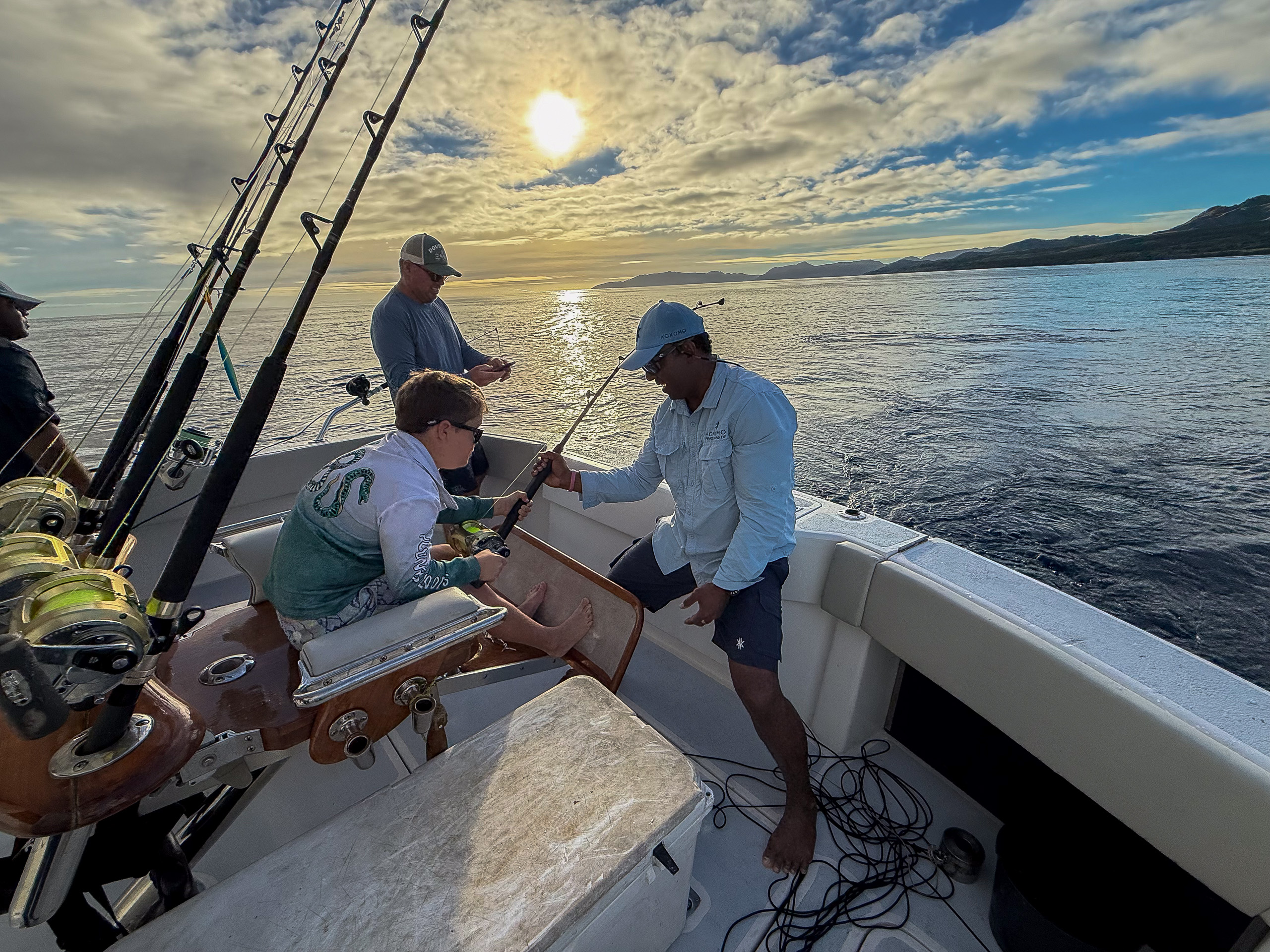
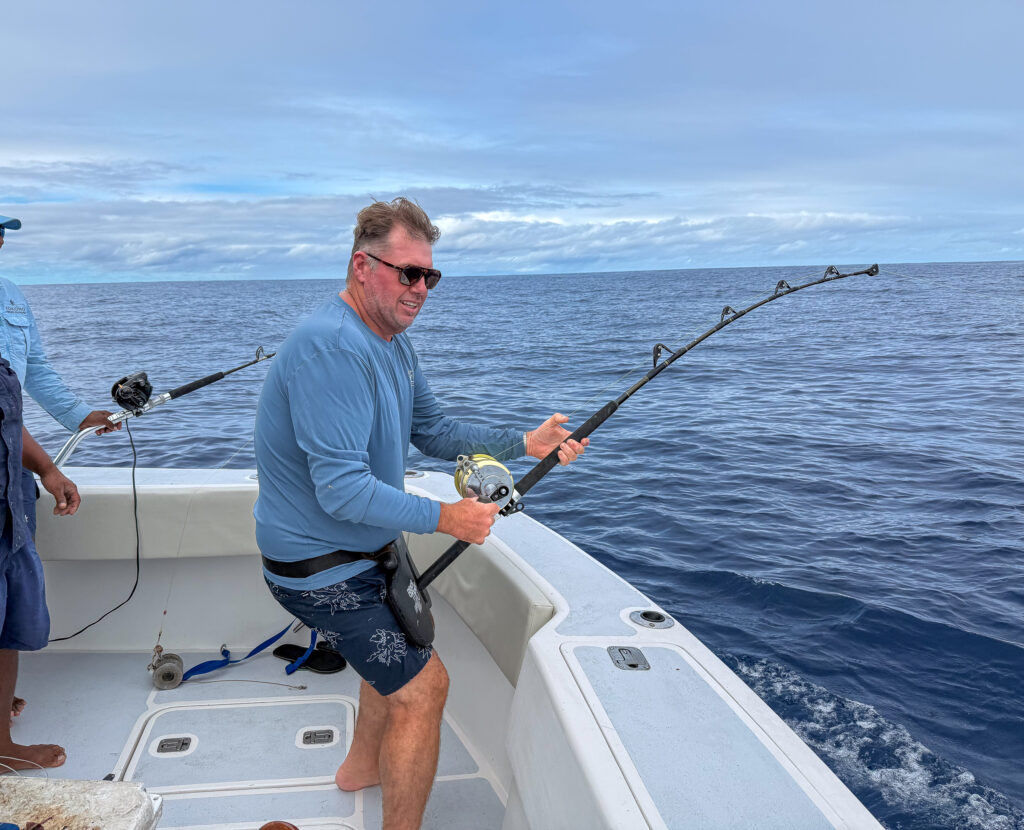
    Anglers working a hooked fish at the stern of a sportfishing boat
    Wahoo gather into packs along the reef edge, and the fishing turns into something closer to a fight than a wait.

    The island’s shape and the barrier reef always leave a workable lee side, so there is no dead month. There are only different tactics and different odds that 70km each way will be comfortable.

    How the day runs

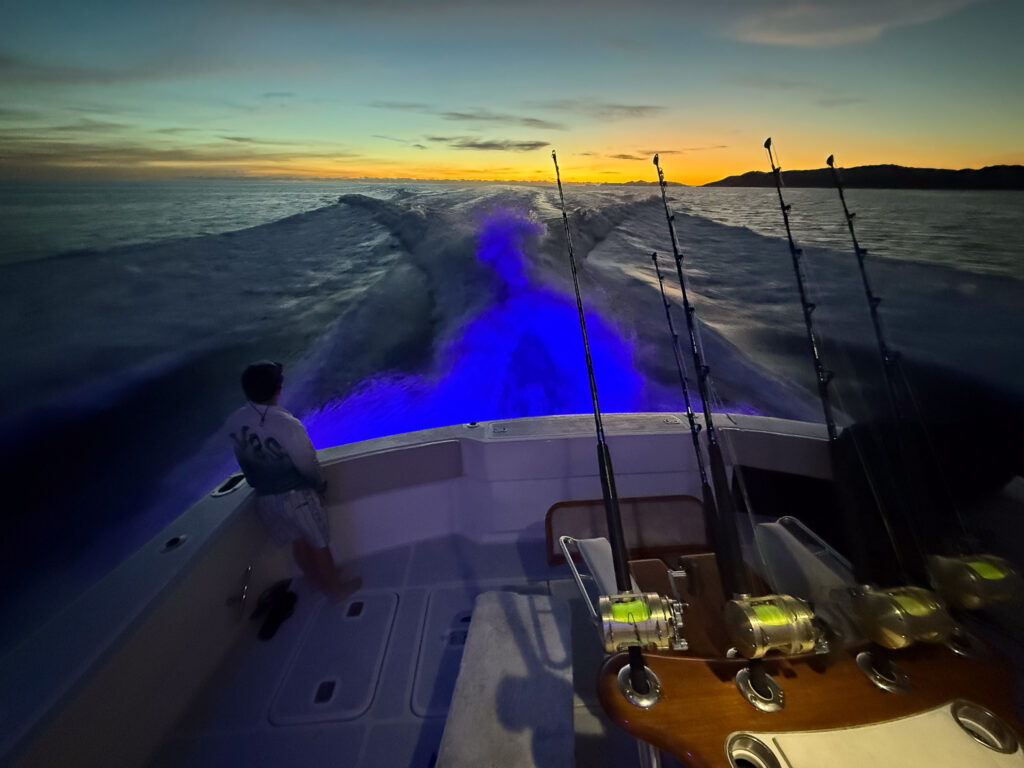
    Leave in the dark. A run of this length eats daylight and the mountain fishes best early.

    Troll the whole way down, because the water between Kokomo and the southwest tip is not empty and there is no reason to run it dry. Expect the crew to work the Astrolabe edge on the way through and to stop for anything that shows on the surface.

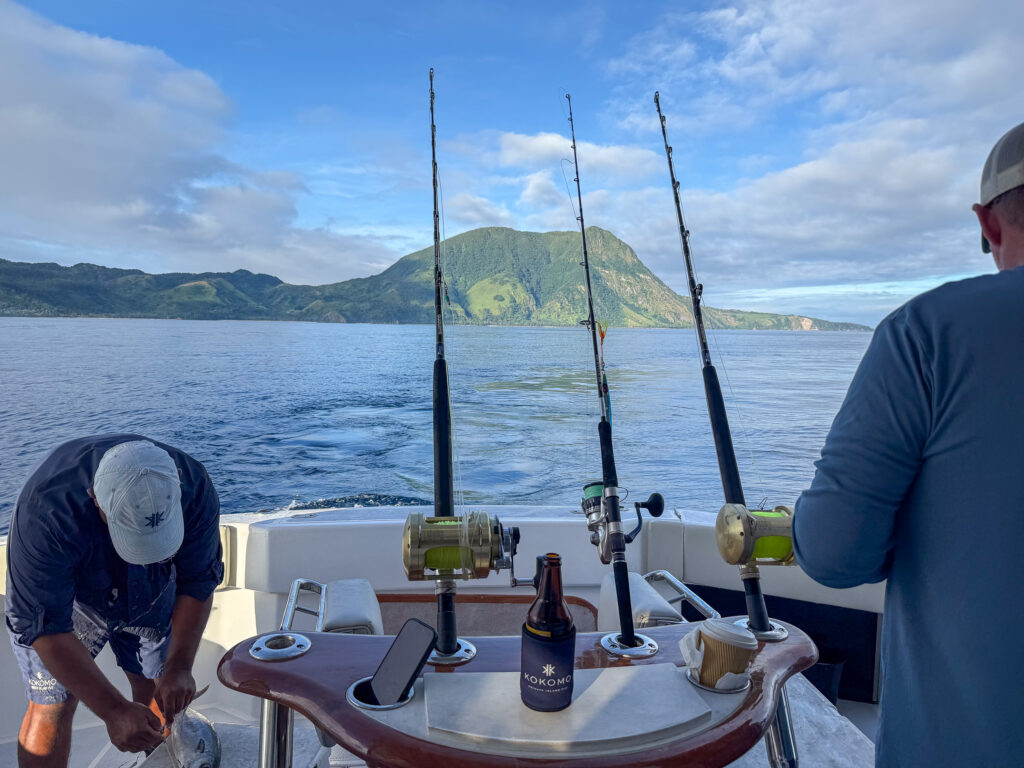
    Trolling rods set in the holders as the sun comes up over the wake
    Leave in the dark, and the first hour of light happens somewhere off the Astrolabe.

    At the mountain, the sounder does the work: find the top, find the bait stacked against it, then jig the flanks or cast into whatever is breaking. Dogtooth pull straight down into structure and will take the rig with them if the drag is set politely. Set it rudely.

    The rocks at Nagigia are the other option, and the strangest fishing available in the country. You stand on land and cast into a thousand feet of water.

    Tackle and protocol

    Bring your own if the seamount is the point. Popper rods rated for a 50kg trevally and jigging gear that survives a dogtooth heading for the bottom are not things a small operation stocks in your preferred action. Resort tackle is adequate for trolling the reef edge and will feel thin on the mountain.

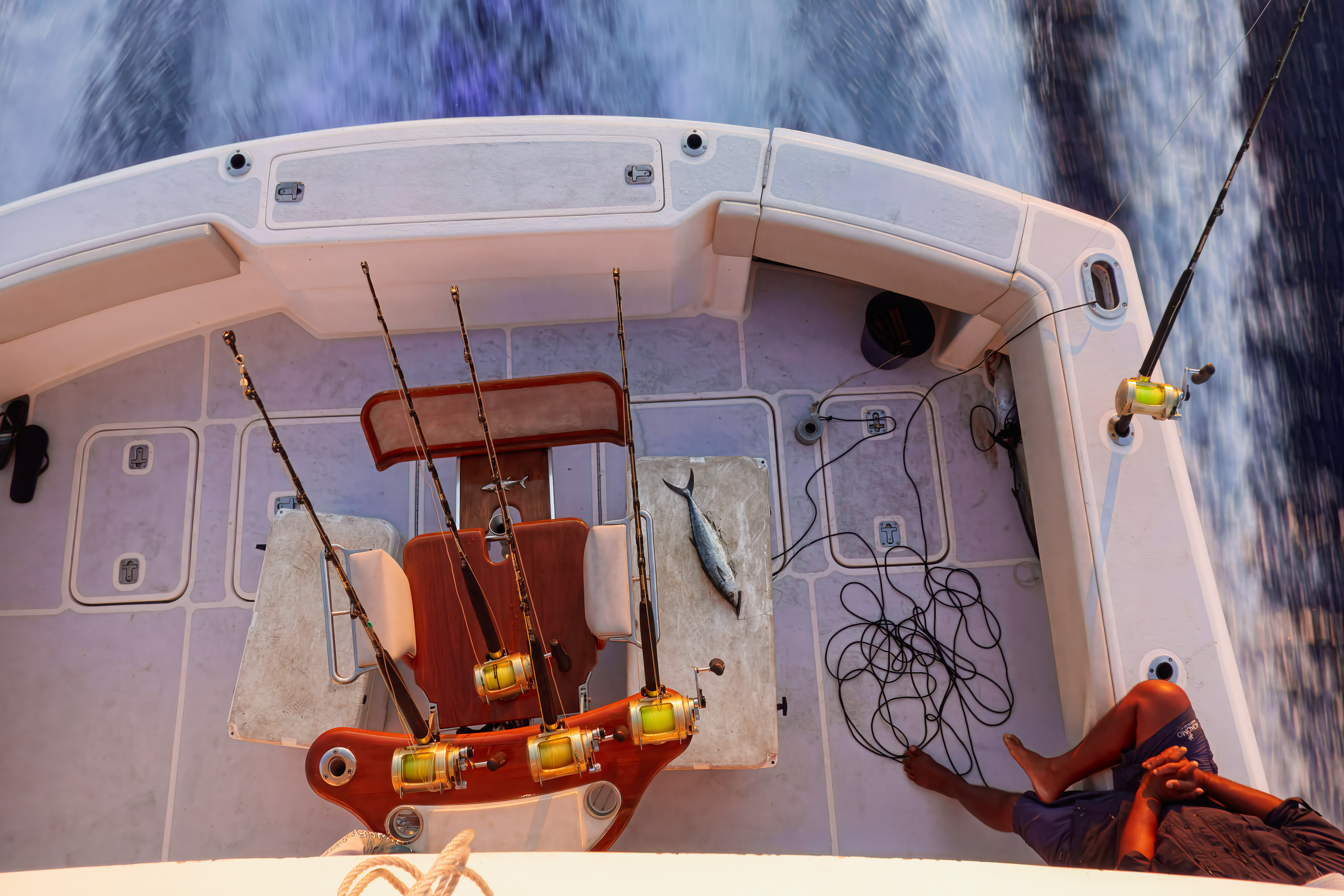
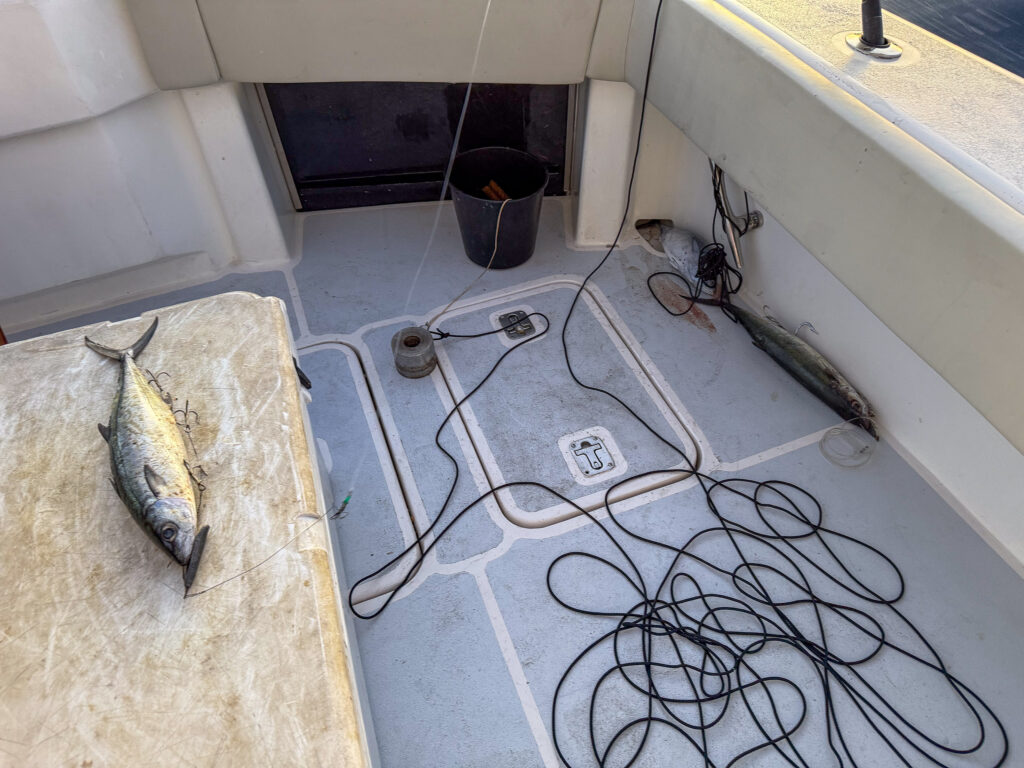
    Trolling rods, reels and the fighting chair set up on the back deck
    Bring your own if the seamount is the point. Resort tackle is fine for the reef edge and thin on the mountain.

    Catch and release is standard on trevally and dogtooth. Both are territorial, both are slow to repopulate, and Kadavu crews raise it before you do, which tells you something good about the crews.

    Dinner

    Back at Kokomo, the catch goes to the kitchen. The resort runs a dock-to-dish program, and walu, mahi-mahi, and yellowfin all survive the trip well. Radio ahead with what you are keeping.

    Chef Caroline at Walker d’Plank works without a set menu and builds dinner around whatever came off the boat that day regardless, so arriving with your own fish simply makes you part of the supply chain rather than a guest being accommodated.

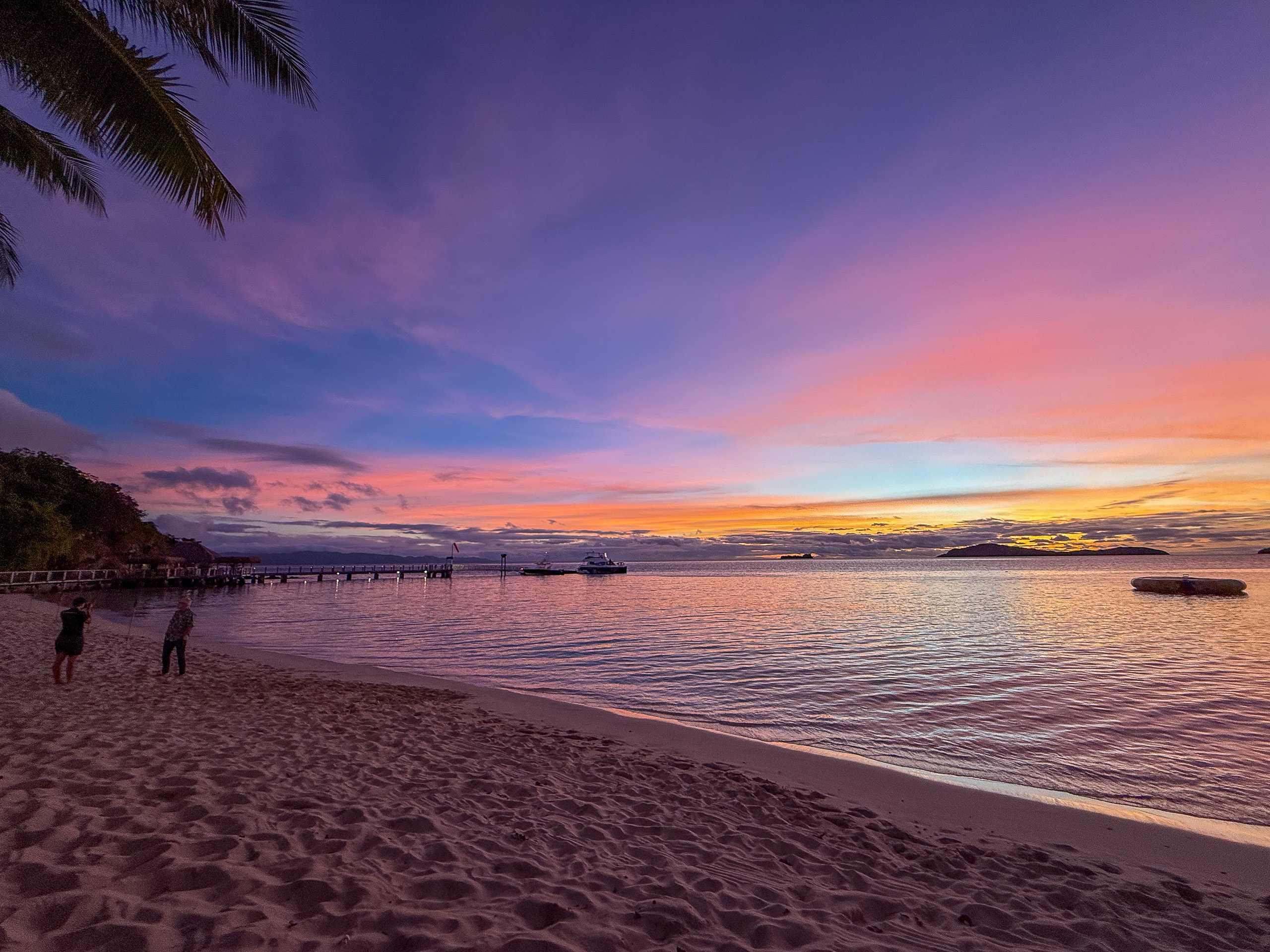
    Sunset over the water from the beach at Kokomo Private Island, Fiji
    Back in time for the light. Whatever you kept goes straight to the kitchen.

    The counterargument

    This is a long way to go for a day that can produce nothing. Seamounts concentrate fish, they do not guarantee them, and when the current runs wrong the structure goes silent and you are four hours from your villa with nothing to show.

    Weather governs the whole thing. A run this long needs a settled forecast, and the trade wind months from June through August cancel more days than anyone advertises. Book it at the front of your stay so a blown-out morning is not the end of the idea.

    There is also an honest case against making the trip at all. The outer Astrolabe and Solo reefs are twenty minutes from Kokomo’s dock, hold wahoo, sailfish, walu, and mid-size yellowfin depending on the month, and give you the afternoon back. Unless the mountain is specifically what you came for, the short day is the better day.

    And fishing is not part of the stay. Meals, non-alcoholic drinks, laundry, pressing, nanny service, kids and teens clubs, and non-motorized watersports are all included at Kokomo. Charters, diving, and excursions are not.

    Know before you go

    Confirm the long run is even on the table before you arrive, since it depends on the boat, the crew, and a forecast nobody can promise you in advance. Tell them what you are targeting before you leave the dock, because rigging for marlin and rigging for a seamount are different days and the boat gets set up differently for each. Take seasickness tablets whether or not you think you need them, since the water past the reef line moves and the run is long enough to matter. Bring polarized lenses and more sunscreen than seems reasonable for a day spent mostly sitting down. And put nothing on the calendar for the afternoon you get back.

    See the full set: the fishing day — in frames. More Fiji: Kokomo Private Island.

    Reef fishing gives you variety. A mountain gives you size.

    Don’t miss

    If you only do five things:

    • Leave in the dark and troll the whole way down
    • One drift over the seamount top
    • Deep water off the rocks at Nagigia
    • Poppers at the Astrolabe drop-off
    • Your own fish, cooked that night

    The whole fishing day

    Every frame my own, shot on the boat. Slide through →

    Aerial view of the reef off Kadavu, FijiTrolling rods against the sunrise on the run southThe island at first light from the deckA rocky islet close alongside the boat off southwest KadavuRods out over the wake at dawnA fish on the deck beside the gearRods out with the island on the horizonTwo anglers hooked up in open water
  • Kokomo Private Island: the Seaplane, the Mantas and the Farm

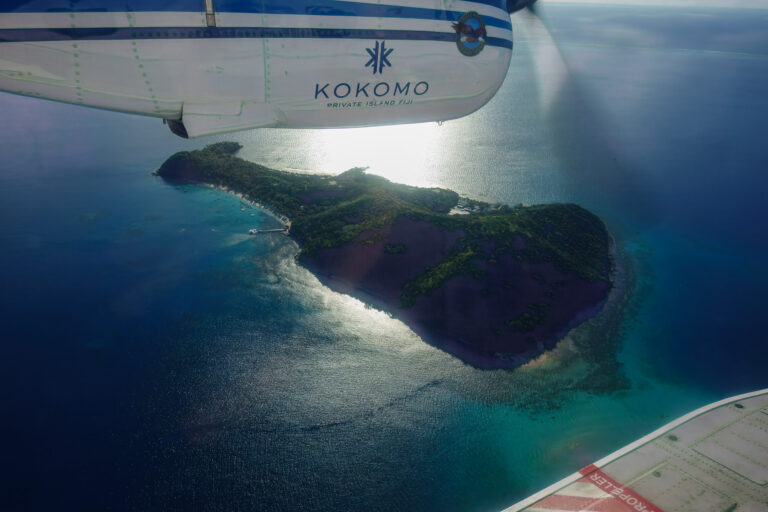
    Aerial view of Kokomo Private Island and its reef, Fiji

    KOKOMO PRIVATE ISLAND, FIJI · ISLAND GUIDE · 5 MIN READ

    Kokomo Private Island: the Seaplane, the Mantas and the Farm

    The seaplane, the mantas, Chef Caroline, and what there is to do on a private island once the boat drops you.

    By J.C. Mercer

    Verified stay·paid in full

    • Stayed April–May 2026
    • Room booked One-Bedroom Beachfront Villa, sunrise side
    • How it was booked Amex Fine Hotels + Resorts, public rate
    • What the channel bought Standard FHR inclusion.
    • Value verdict Worth it for a week or more, in the manta months; a short stay buys you the transfer, not the island.
    • When to go Whenever you can. Book this stay

    Booked the way any other guest would book it.

    Arrival

    Kokomo sits in the Kadavu group, a forty-five-minute flight south of Nadi over water so clear you can read the reef from the air. The transfer burns most of a travel day at each end, and the island has enough going on that you will not repeat yourself. It never holds more than a few dozen guests, and the villas are spaced so that you rarely see another one.

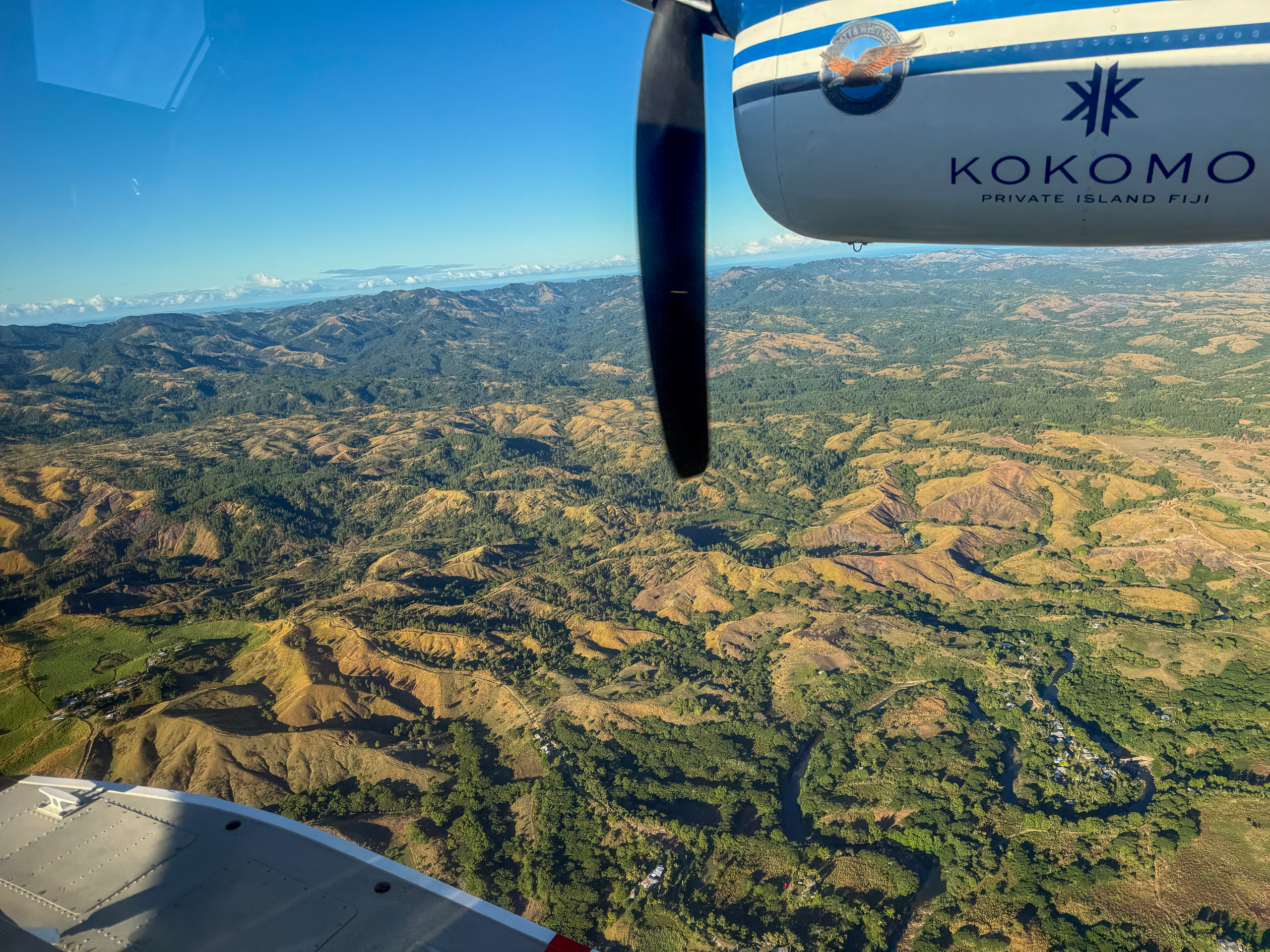
    Wing over the green hills on the flight out
    From the seaplane: the hills of the main island going, then forty-five minutes of water.

    The resort runs its own seaplane and helicopter out of a private lounge at Nadi, which is where the trip starts feeling expensive in a good way. The sequence does not vary much: the hangar, the flight over the Astrolabe reef, then a jetty welcome with singing and cut coconuts. Book the helicopter if you can. I flew the seaplane in and the helicopter out, and the return leg is the better of the two for views, and the only one on which I stopped taking photographs and looked.

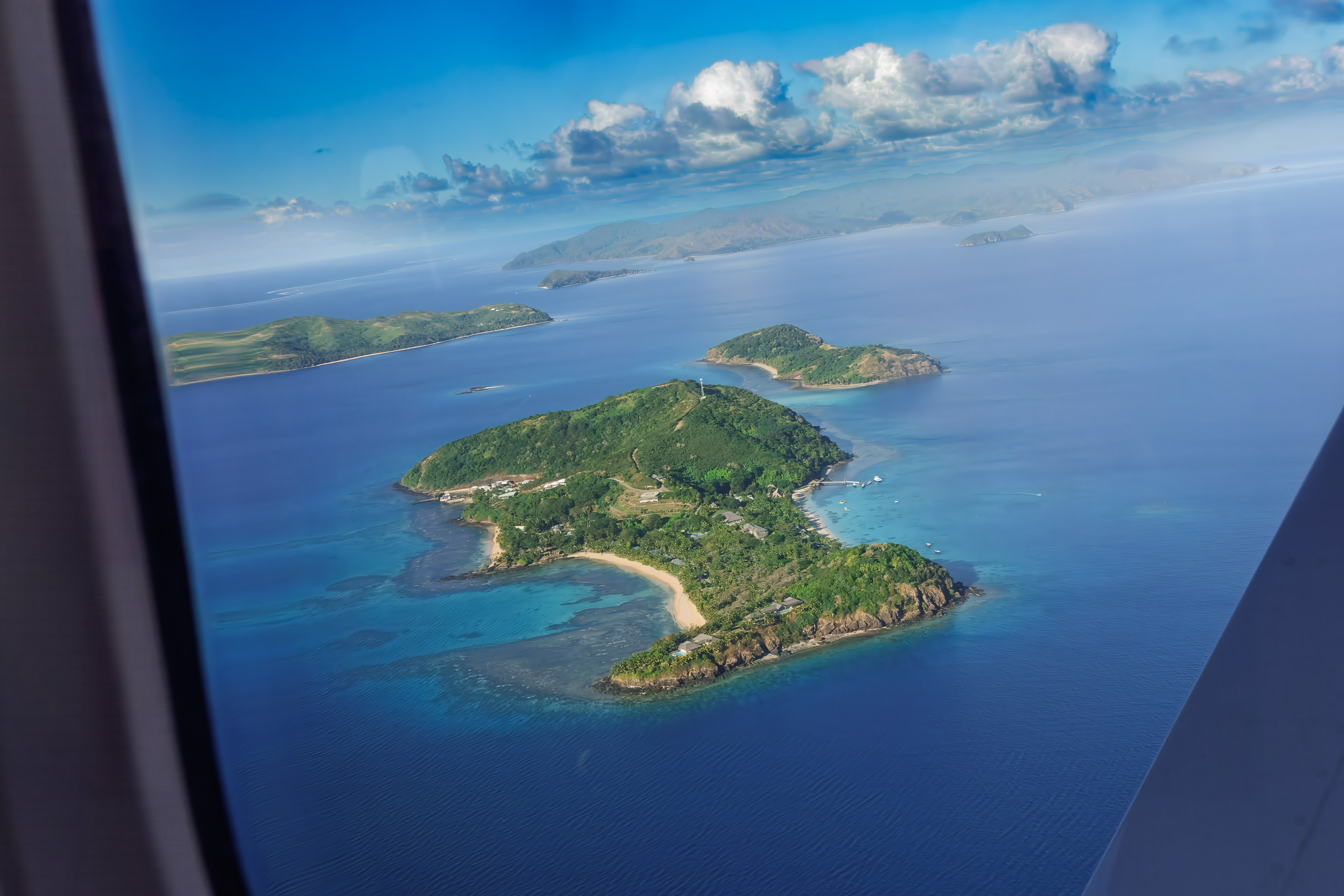
    The island seen through the aircraft window
    The island from the aircraft window, ten minutes before the water landing.

    Build a buffer night in Nadi on the way home. Seaplane transfers move with the weather and international departures do not.

    The villa

    The villas run along both shores. Sunset villas get calmer water, less wind, and the obvious evening payoff; sunrise villas trade that for morning light and a little more breeze. I stayed on both sides, and the sunset shore is the one to hold. Request it when you reserve, not on arrival.

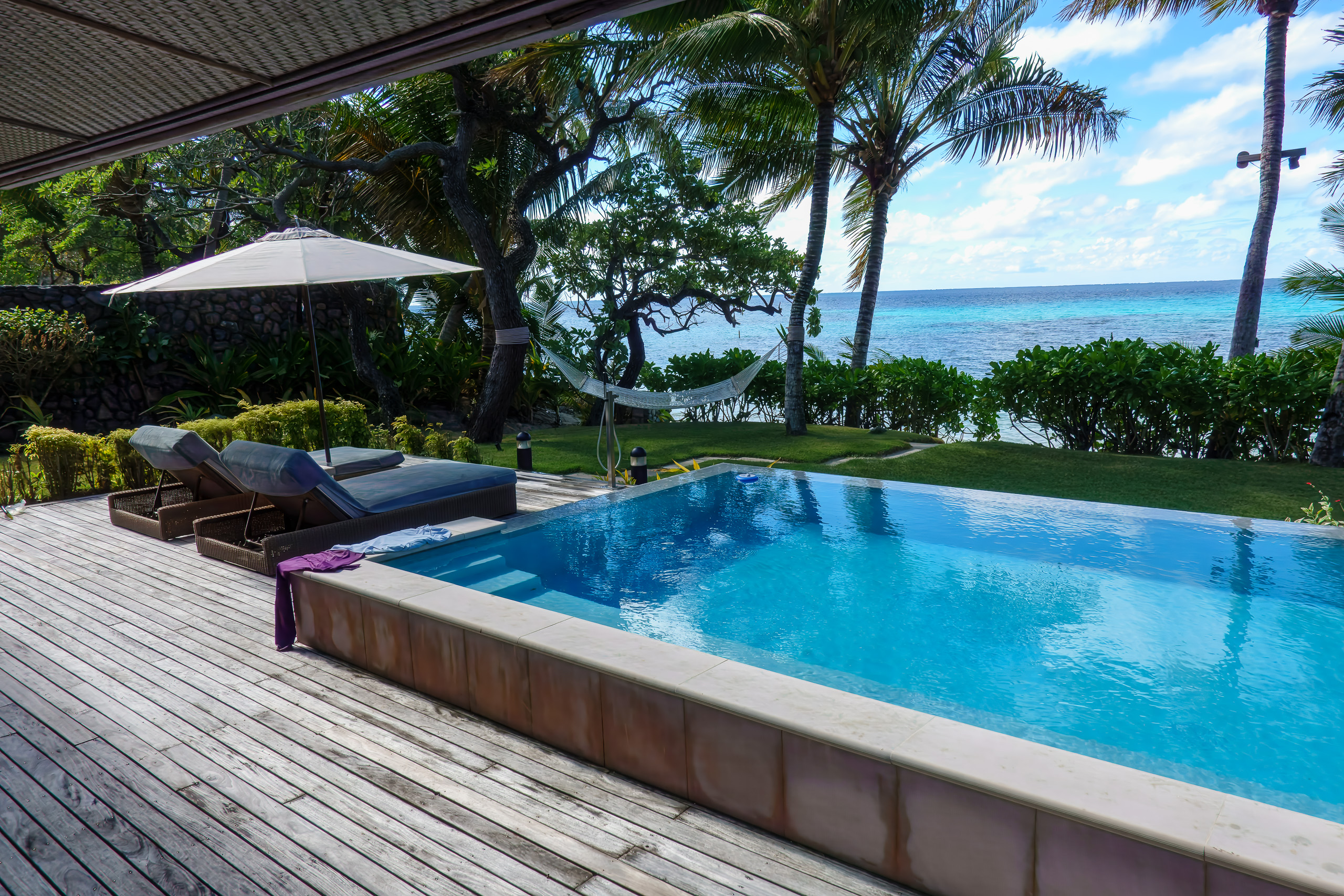
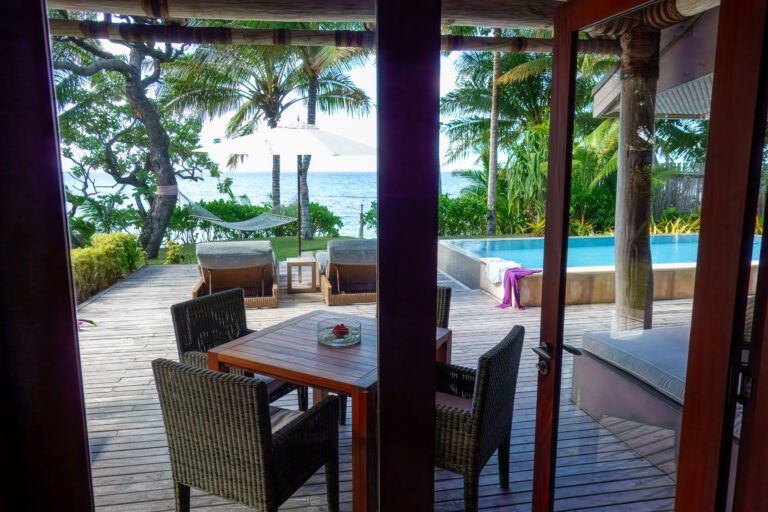
    Private infinity pool on the deck of a beachfront villa at Kokomo
    Every villa, including the one-bedroom, comes with its own infinity pool and direct beach access.

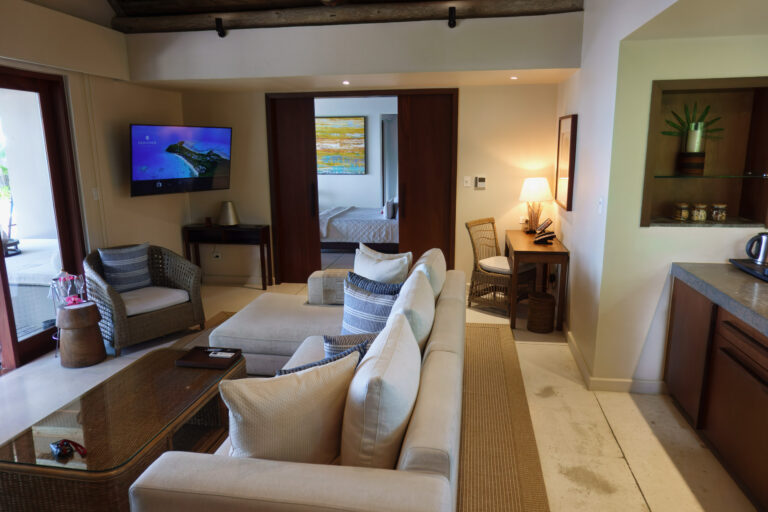
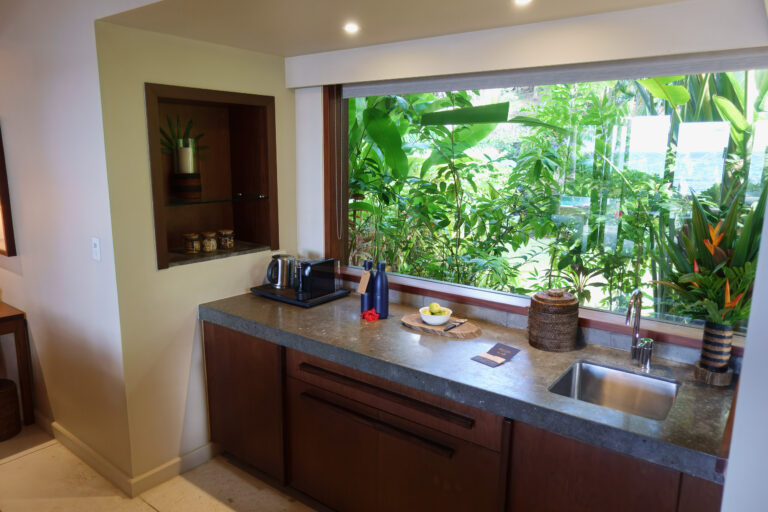
    Even the one-bedroom comes with its own infinity pool, a hammock, direct beach access, indoor and outdoor showers and a stone soaking tub. The espresso set-up is the detail I keep describing to people: a Nespresso machine, a drawer of ten pod varieties, a milk frother, and your preferred milk stocked before arrival. Housekeeping restocks the cookies daily and does your laundry at no charge. The residences on the hill in the middle of the island run to several bedrooms with full kitchens, private pools and butler and nanny service, and are the answer for a wedding party or three generations travelling together.

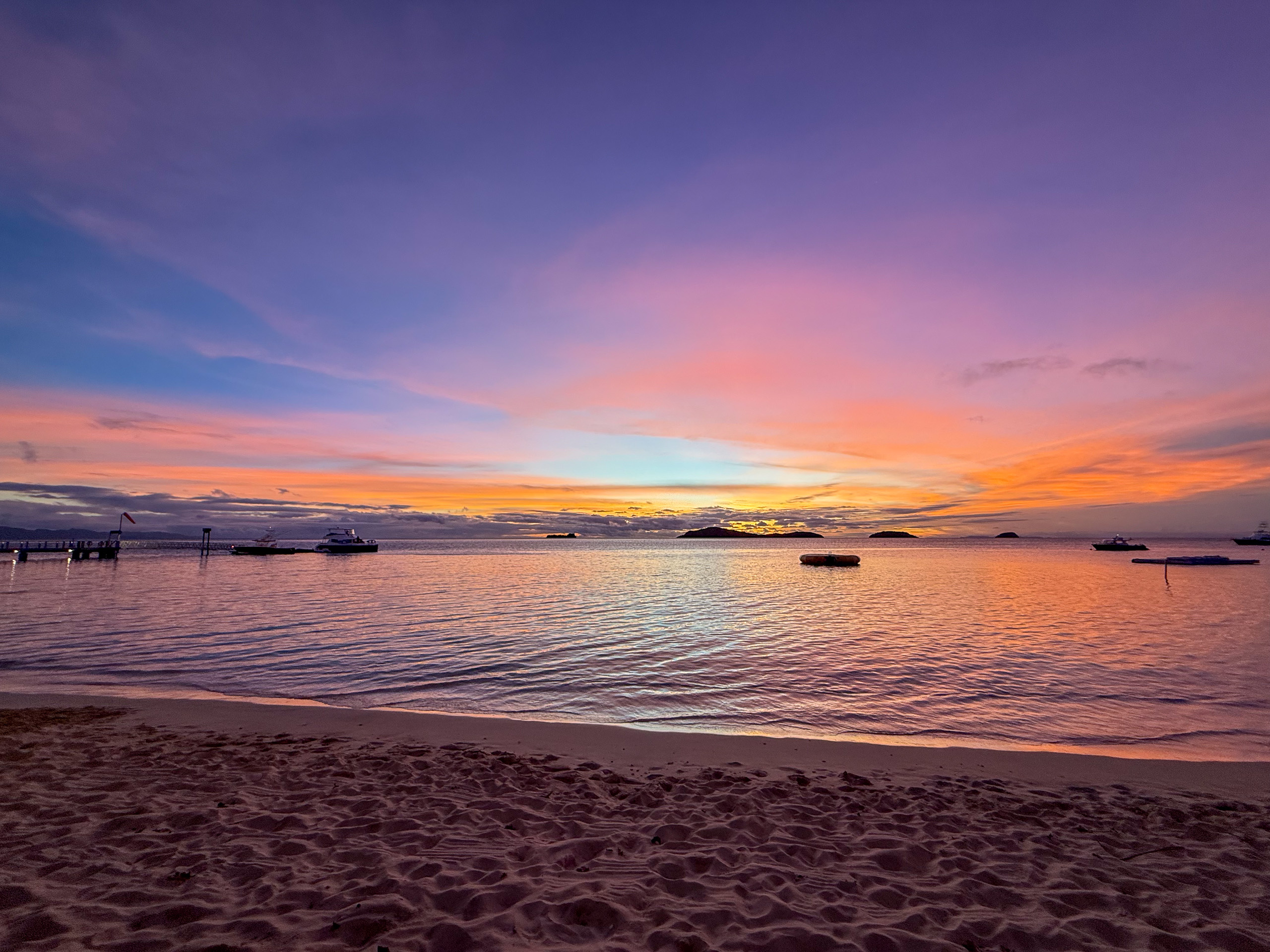
    Sunset over the lagoon at Kokomo Private Island
    The sunset shore is the one to request when you reserve, not on arrival.

    The best of everything. I woke up breathing deeply and cleanly and spent about a minute thinking actively about “what is it about this suite that I am waking so clear-headed and full of spirits?” I decided it must be the organic building material.

    Eating

    All meals come with the island, which changes how you eat. There is no menu fatigue and nothing to sign, so people order more adventurously than they would elsewhere. The Beach Shack is the main room: a continental spread and made-to-order hot dishes at breakfast, fresh-caught fish and farm vegetables at lunch, a five-course tasting at dinner. Kokocabana is the pool club, with wood-fired pizza, charcuterie and unlimited gelato, aimed at children and used by everyone. Private dining on your own deck, or a cookout on the beach, is arranged on request.

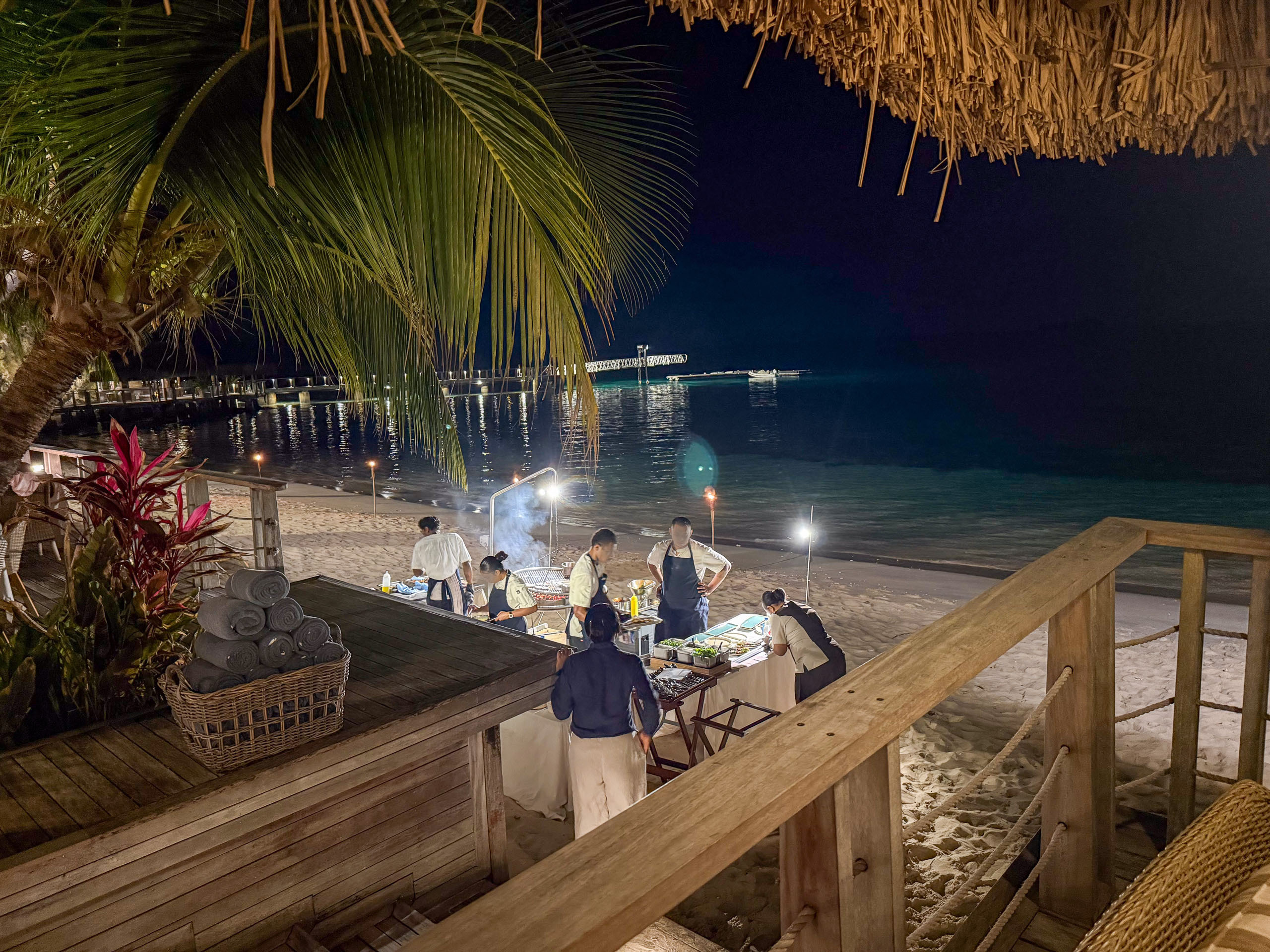
    A private table set on the sand for dinner at night on Kokomo
    Private beach dinners are arranged on request, in addition to the four restaurants.

    Walker d’Plank is built over the water past the jetty and is on its own reason enough for the flight. There is no menu. Chef Caroline comes to the table, asks what you feel like, and cooks around whatever came off the boat that day. Plan more than one meal with her; I have written the dinner up separately. She has a certain charisma to her unlike most people you will have met. A kind of charm to her way of interaction that leaves you enraptured with her almost as much as with her morsels.

    The kitchen pulls from the island’s organic farm, with salt beds, beehives and a hen house. Ask for the farm tour early. The food tastes different once you have seen where the eggs and the honey come from, and the hens are less impressed by you than anyone else on the island.

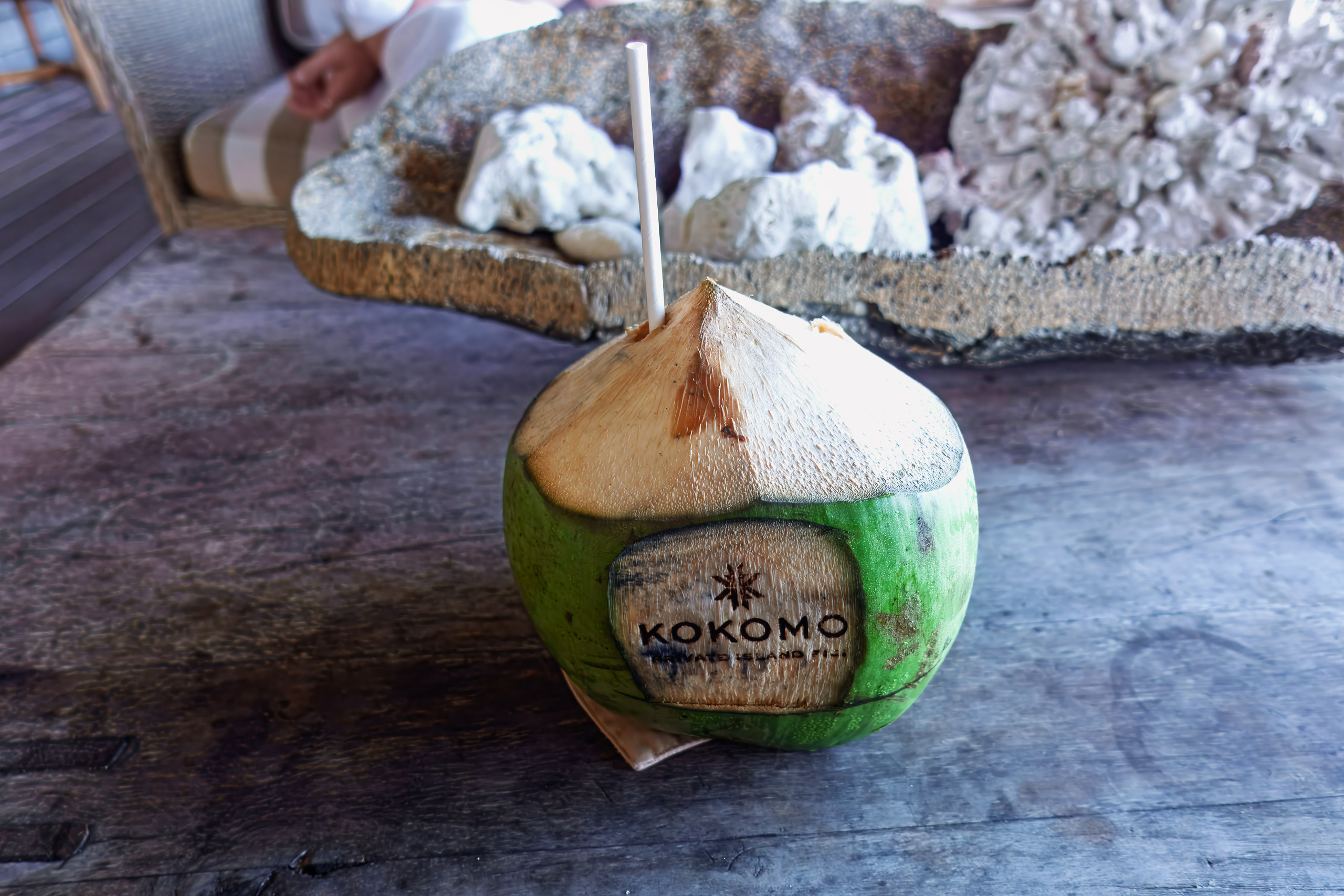
    A cold coconut set down on arrival
    A cold coconut, set down on arrival.
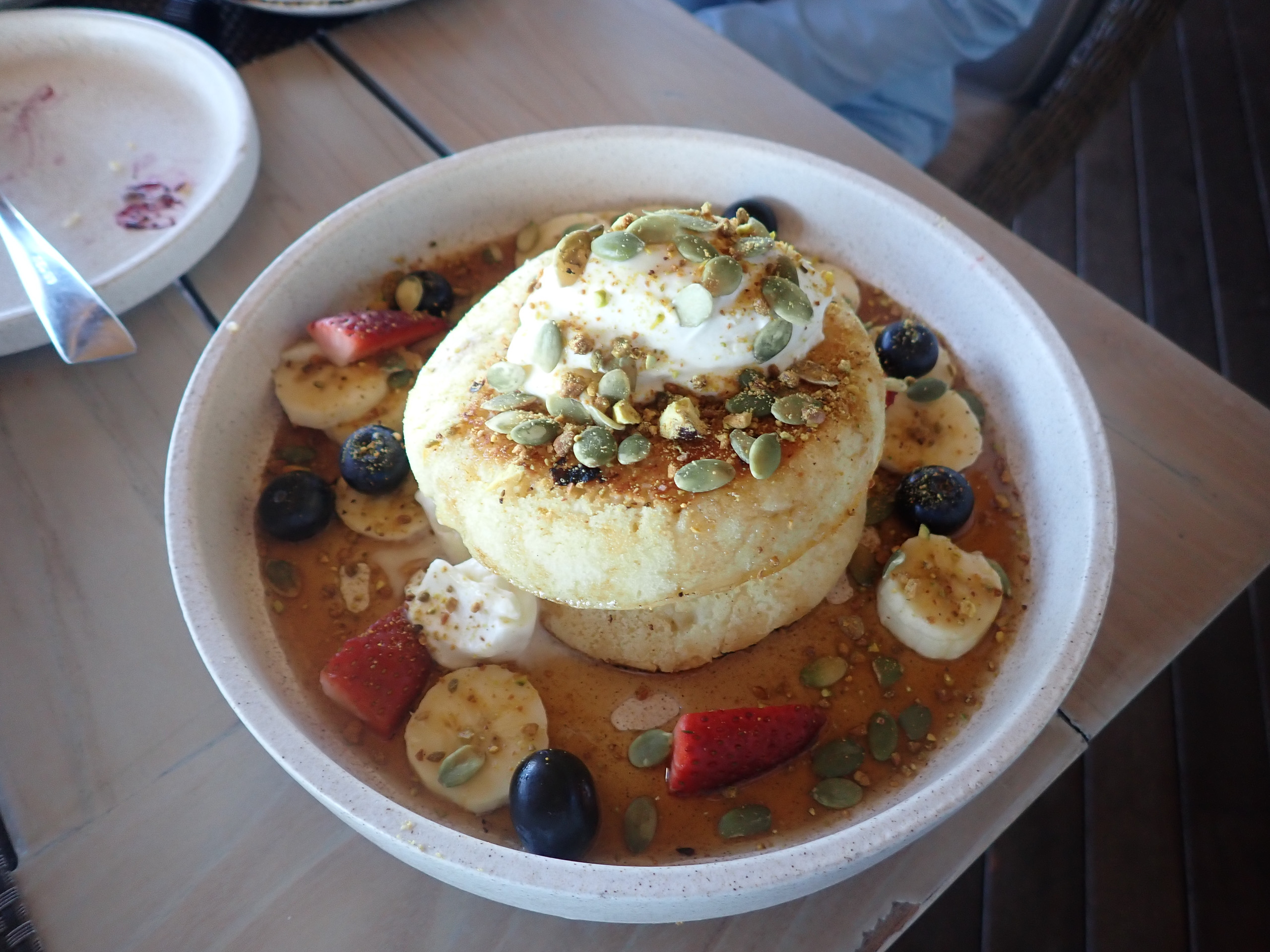
    Fruit and coconut in a bowl at breakfast
    Fruit and coconut in a bowl at breakfast.
    A plate of tomato and greens
    Tomato and greens from the farm.

    The reef, the spa, and the days

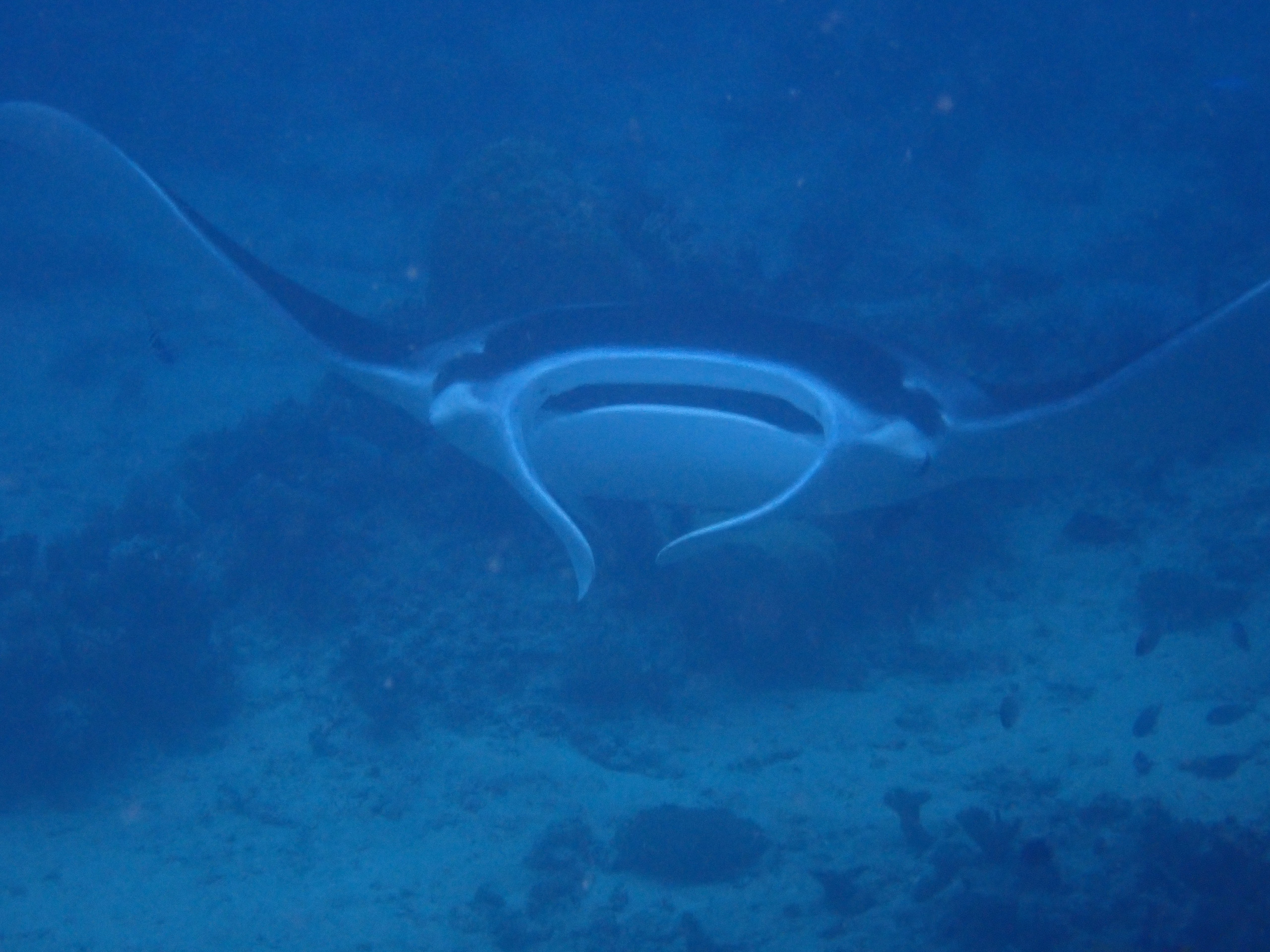
    This is the argument for Kokomo over a resort in the Mamanucas. The Great Astrolabe Reef runs the length of Kadavu, and Kokomo reaches dive sites other operators do not visit; the coral has stayed healthy because almost nobody comes. Manta rays gather between May and October, when plankton draws them to cleaning stations along the reef, and the snorkel trips go to a spot about ten minutes out by boat. The marine team runs a tagging and identification programme and a coral restoration project, and guests can adopt a ray. If mantas are why you are going, book July through September and accept the cooler water.

    A manta ray gliding over the reef off Kokomo Private Island
    Mantas gather at cleaning stations along the Great Astrolabe between May and October.

    Nothing here is a schedule; the island runs on what the ocean is doing that morning. As a frame: do not book anything on the arrival day. Do the manta snorkel early in your stay, because it depends on the weather and the good mornings go fast. Walk the farm and then take the spa, before your best dinner. Dive the Astrolabe once. Take the half-day waterfall hike on a neighbouring island as a break from the sand. Fish, or spend a nothing day on the pontoon and let the staff bring lunch out. Finish with yoga at the shala on the island’s high point and a last dinner over the water.

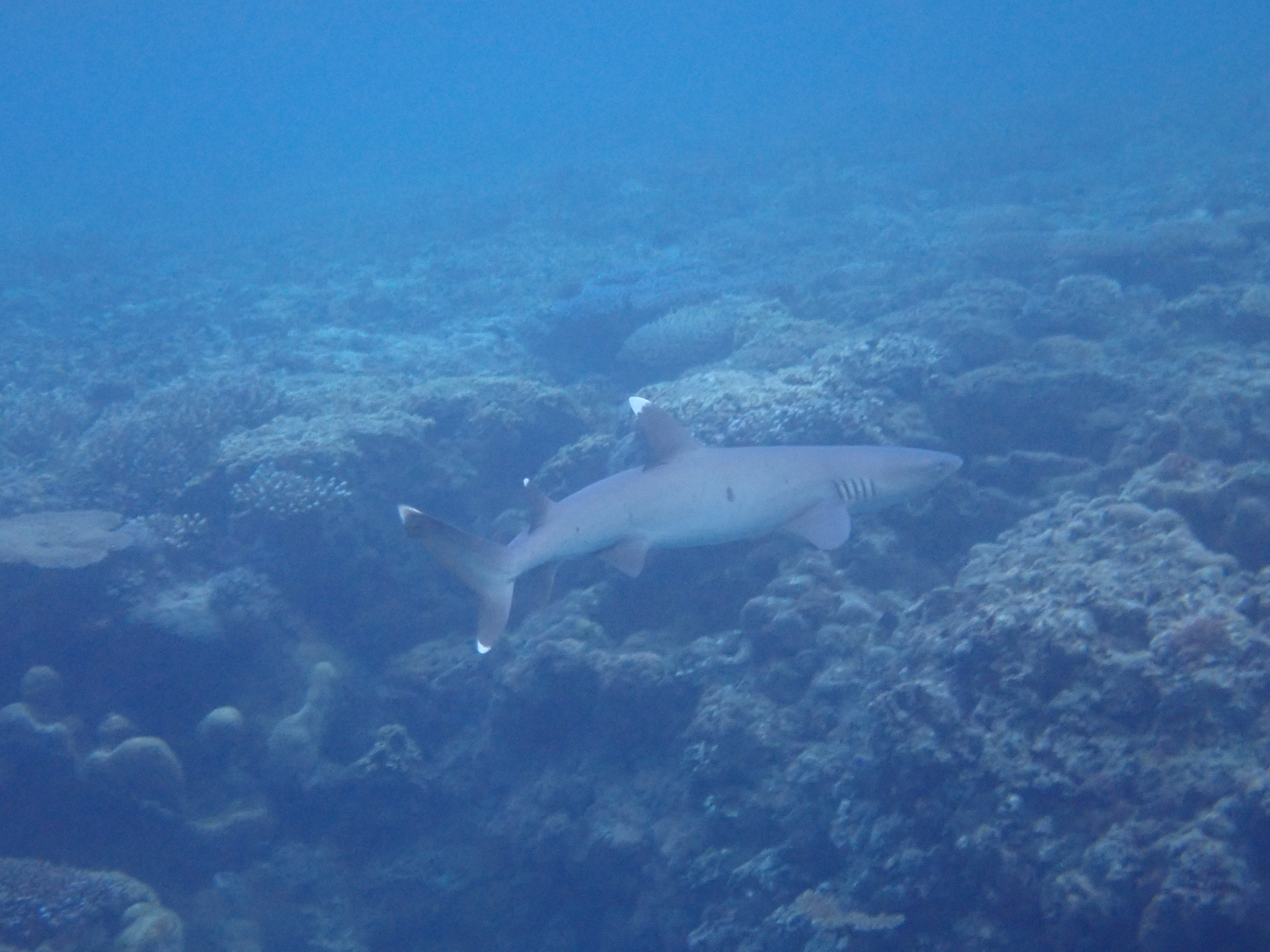
    A reef shark over the sand
    A reef shark over the sand.
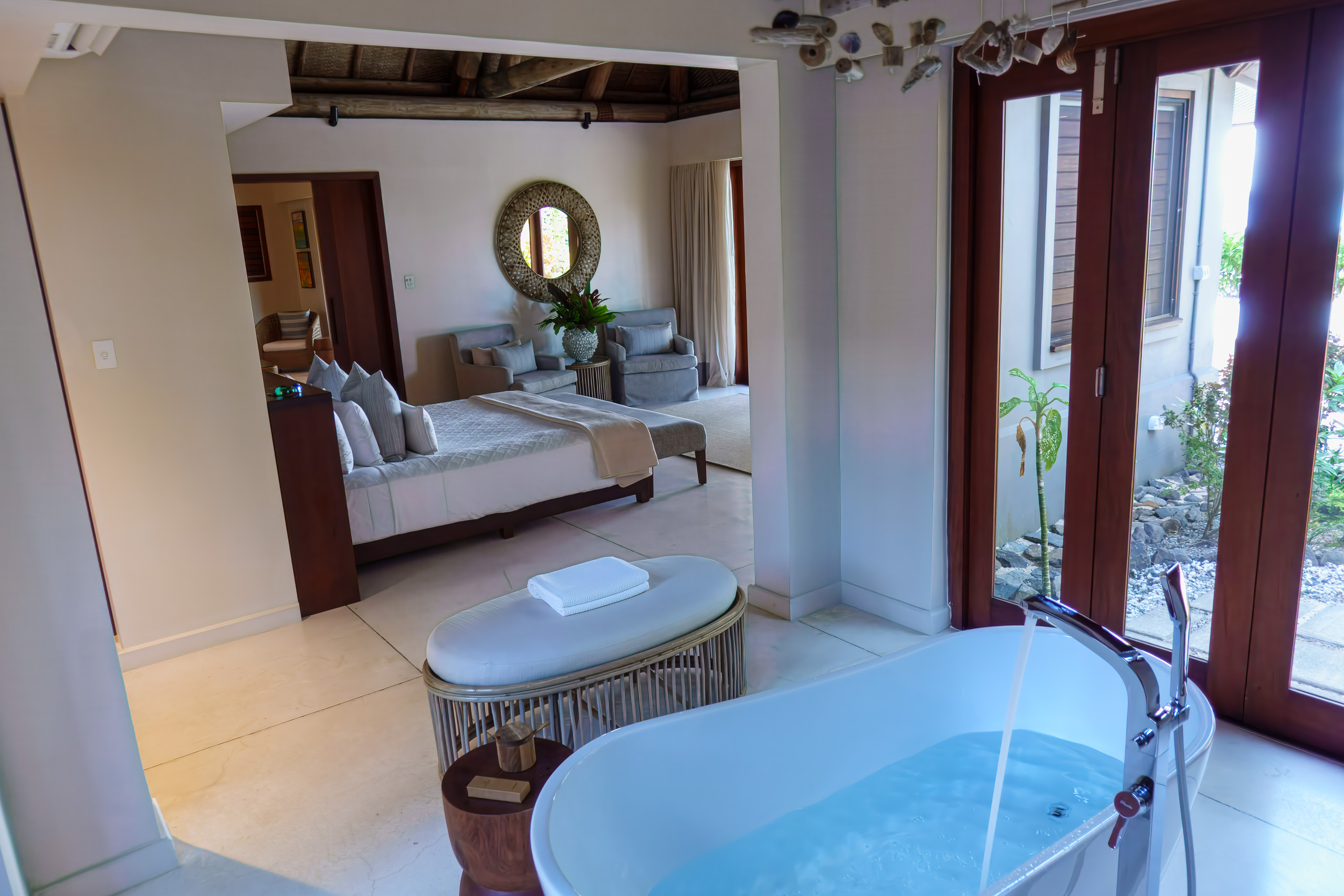
    The tub in the villa bathroom
    The tub in the villa bathroom, for afterwards.

    The spa has private treatment rooms and couples’ rooms, and therapists who rework a treatment around what your body needs that day. I overdid the sun early on and walked in to an aloe wrap instead of the massage I had booked. The gym sits up by the helipad, so the walk is the warm-up and the view is the reward; a trainer is on call around the clock, and the fridge holds cold coconuts.

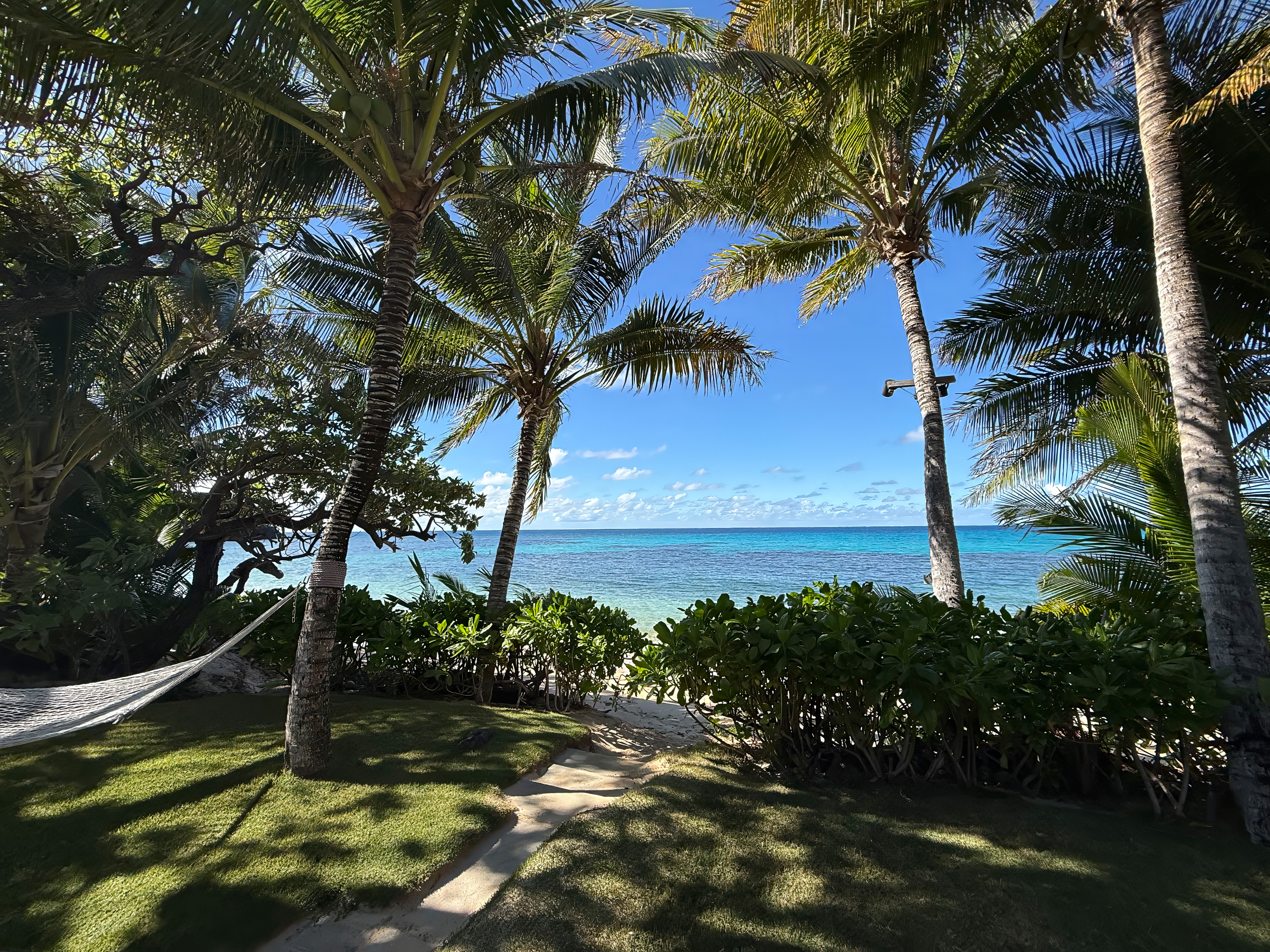
    A hammock strung between the palms
    A hammock between the palms. The days that do not need a plan are the good ones.

    Service moments

    The milk you drink, in the fridge before you land. The therapist who changed the treatment after one look at me. Chef Caroline at the table with a question instead of a menu. Laundry back the same day without a form or a charge.

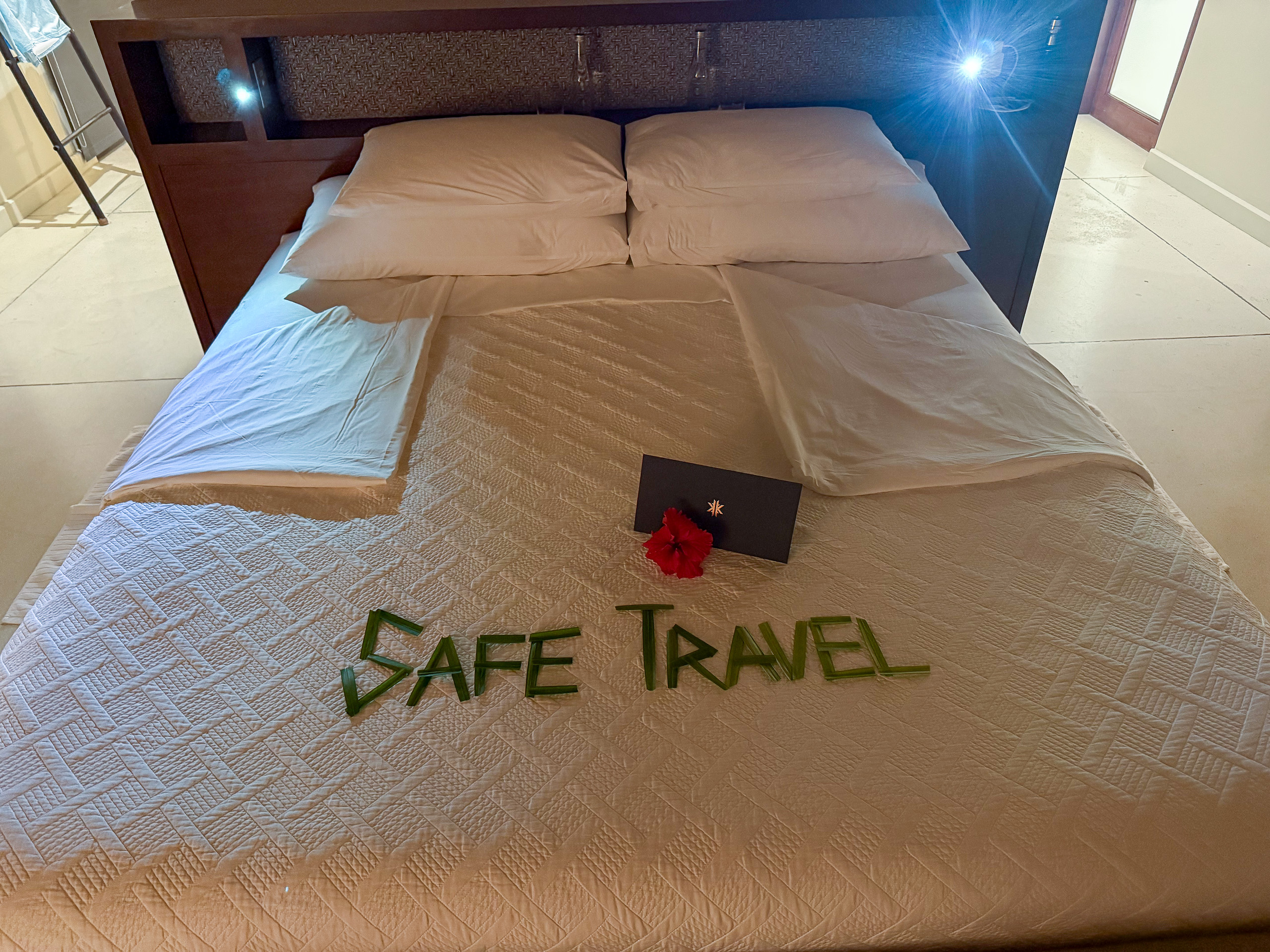
    The bed turned down, a message left in leaves
    The bed turned down, a message left in leaves. Nobody was asked.

    There was a slight snafu with some local villagers where we were blocked from getting off the dive boat upon getting to the manta feeding station. Turns out it is a sacred area for the local village and they had temporarily removed our permissions. We humbly returned to shore thinking “well that’s that”. Guess what — two days later they had had a village-to-village parley, the Chief agreed to let us back in the waters — check the galleries to see the results.

    Book longer than you think. A short stay buys you the transfer, not the island.

    Who it is for, and who it is not

    Come as a couple for the private beach dinners, the in-villa service and the spacing between villas. Come as a family, even with an infant or a toddler, because this is the rare property at this level where that does not feel like a compromise: a kids’ club, a teen club, a splash pool beside the main pool, and enough watersports gear to keep a fourteen-year-old busy. Bring reef-safe sunscreen and more of it than you think. Tell the kitchen about allergies when you arrive and they will work around them for the rest of your stay.

    Look elsewhere for a short stay; three nights here is a transfer with a swim in the middle. If you can afford to come here, you should come here.

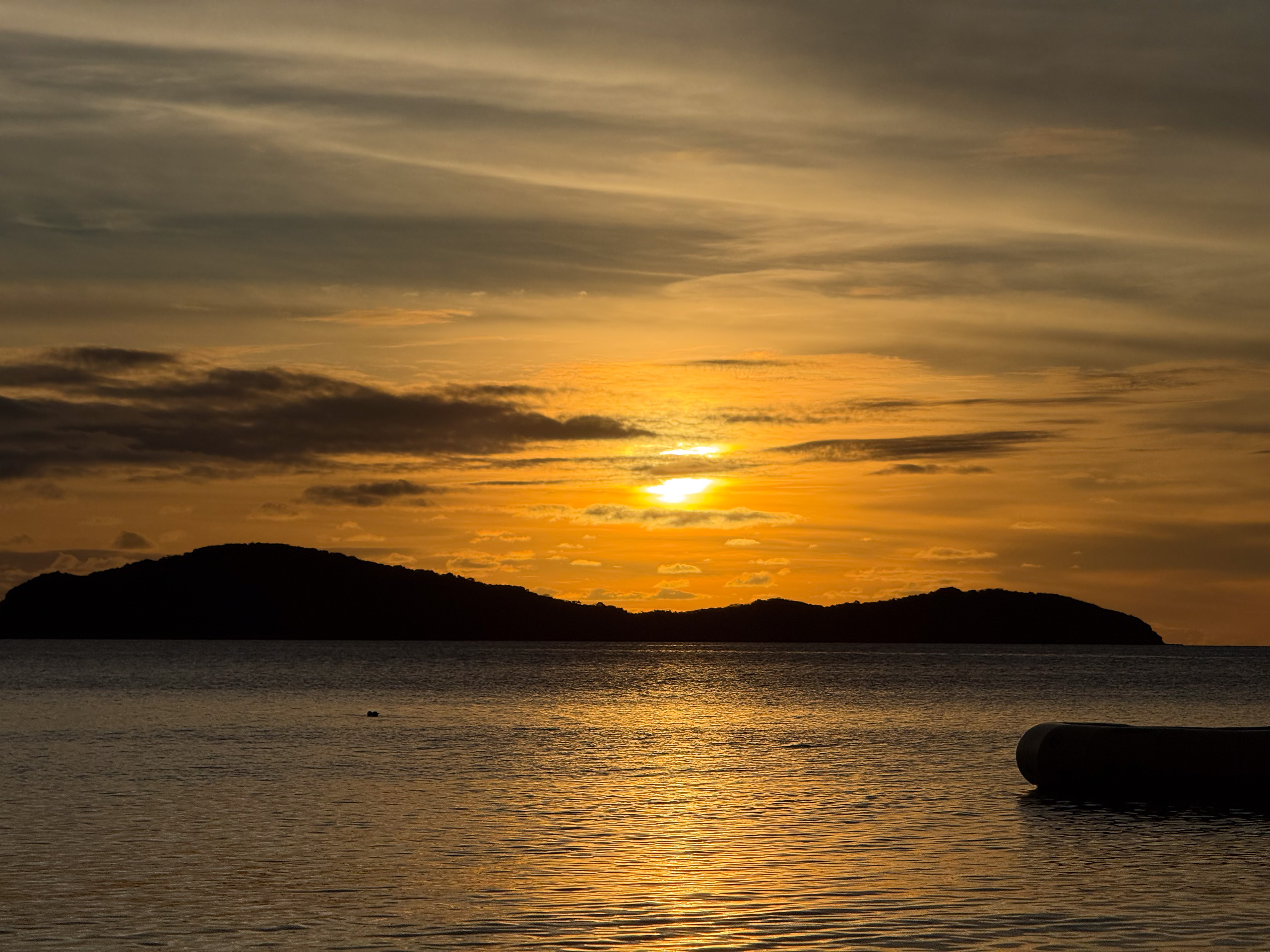
    The last of the sun behind the island
    The last of the sun behind the island. The seaplane comes back for you in the morning.

    Bottom line

    Kokomo is the most private island in the Pacific that still feeds you properly, and the reef is the reason to fly past the Mamanucas to reach it. Book a sunset-side villa for a week in the manta months, and eat with Chef Caroline more than once. If you can get here by hook or by crook, the memories will bring smiles forever.

    See the full set: Kokomo Private Island, Fiji — in frames. More Fiji: the Fiji set.

    The Kokomo gallery

    Every photo on this site is my own, shot on the stay. Slide through →
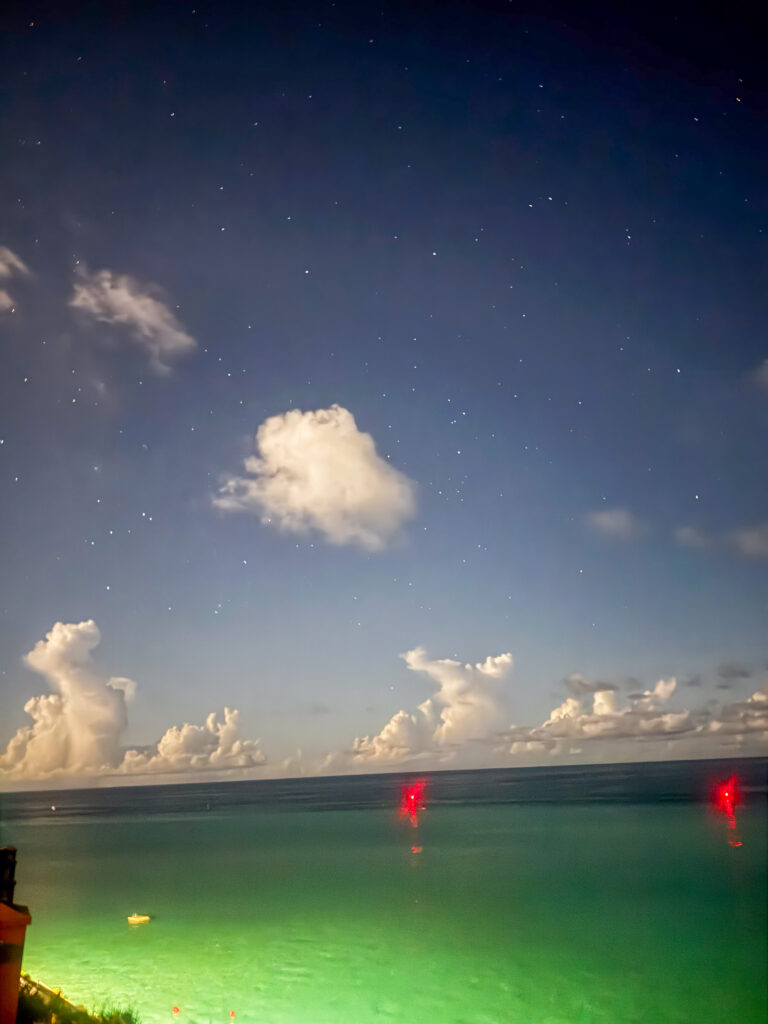
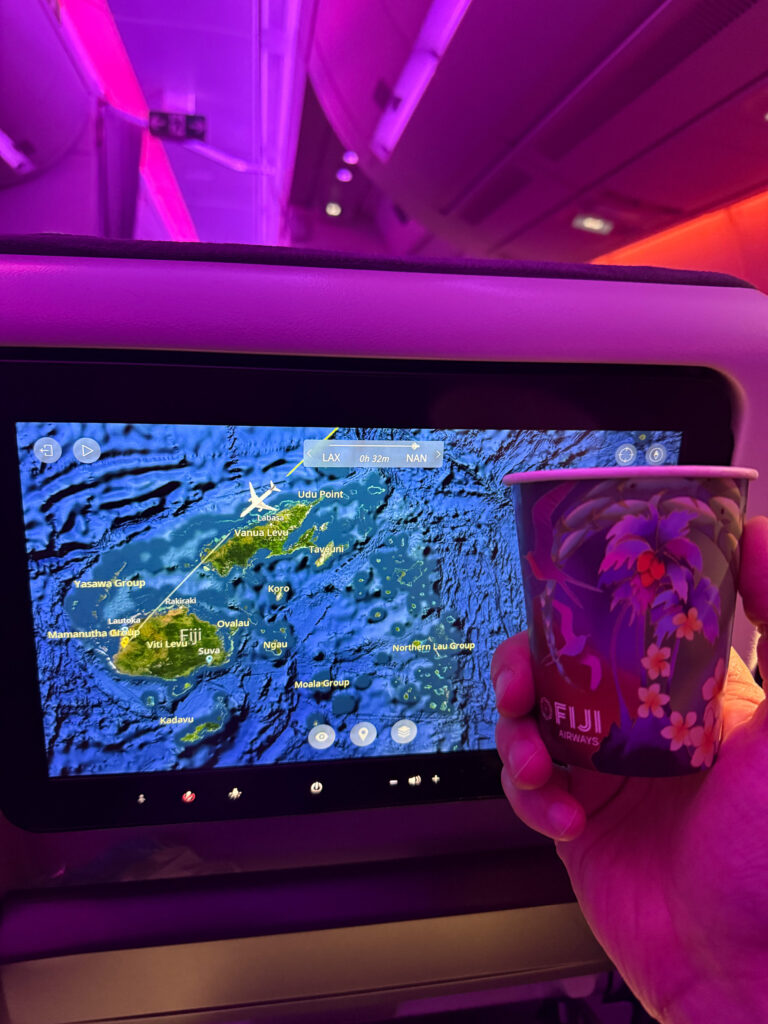
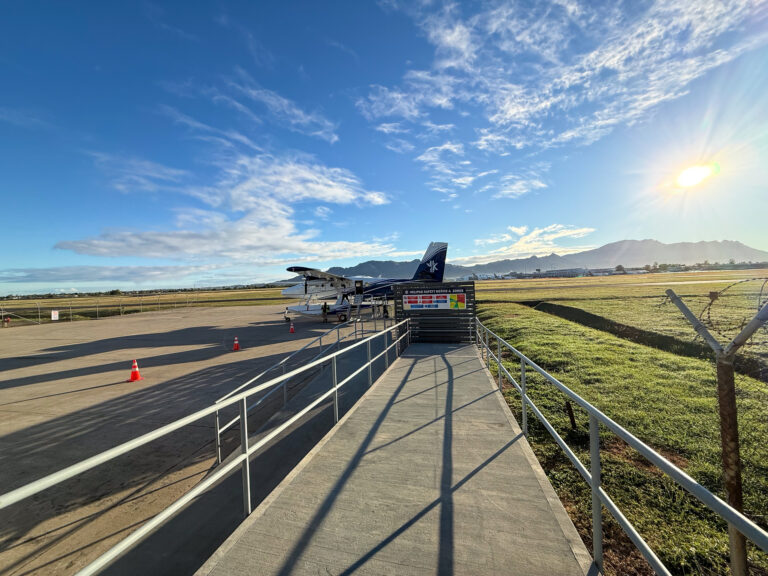
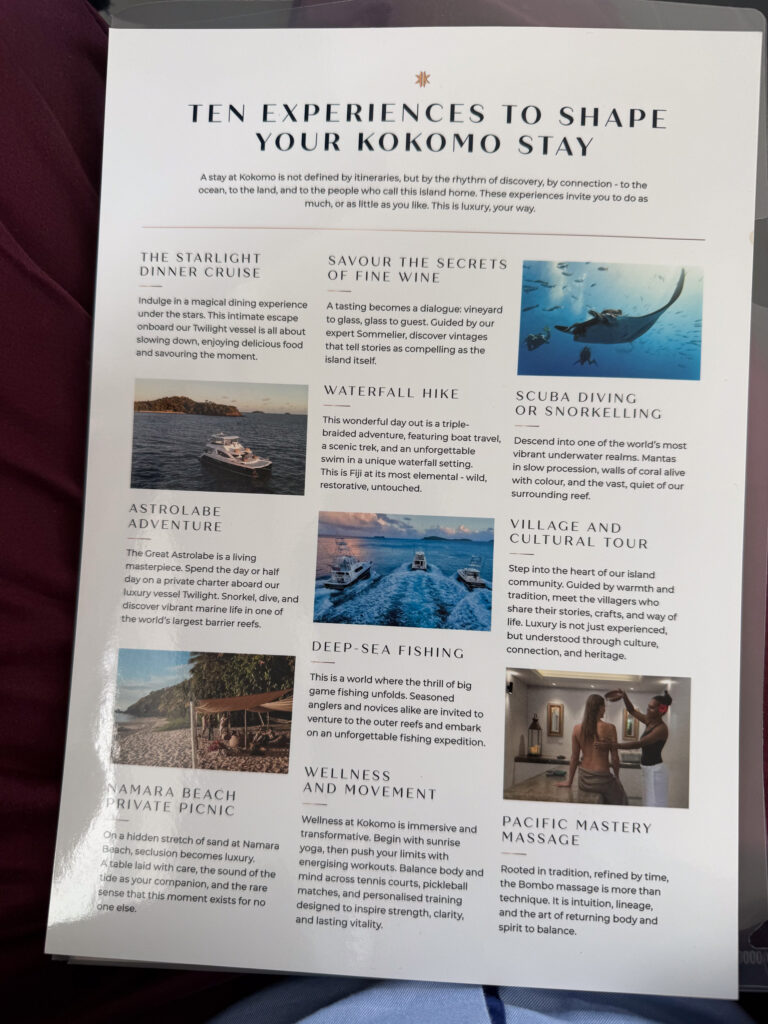
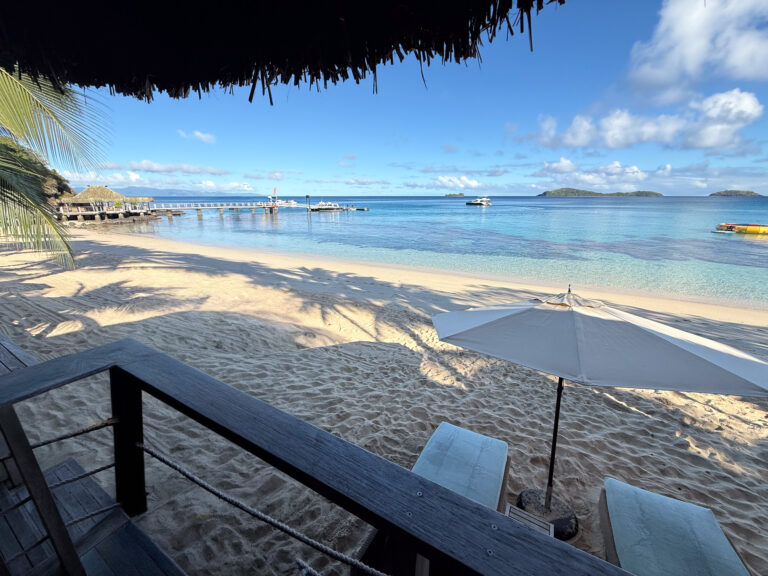
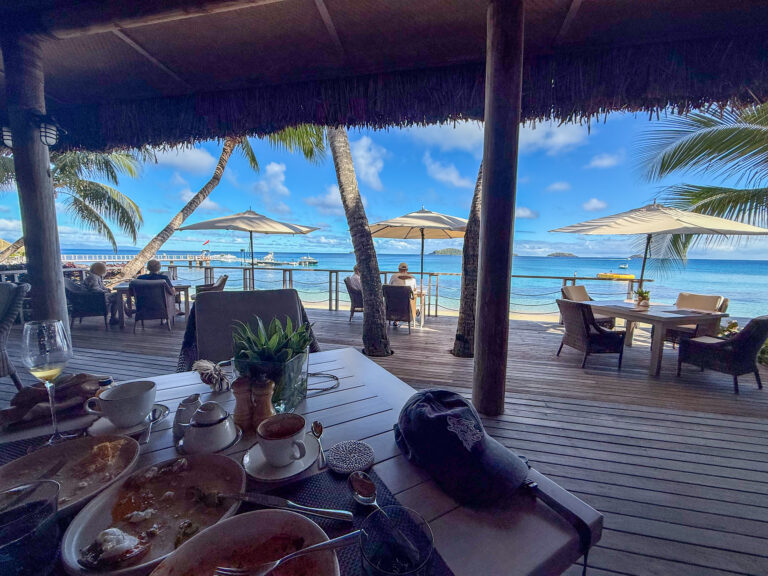
    The route map on the screen on the overnight flight inThe airstrip on the way throughCloud and reef from the aircraft windowThe printed briefing on the way inThe beach and the water from under the thatchThe villa deck looking out to the waterThe island from the air on the way inThe sitting room in the villaThe bathroom vanity with the garden behindThe table on the deck, the pool and the water beyond
  • The Peninsula, and the Rolls-Royce that comes to collect you

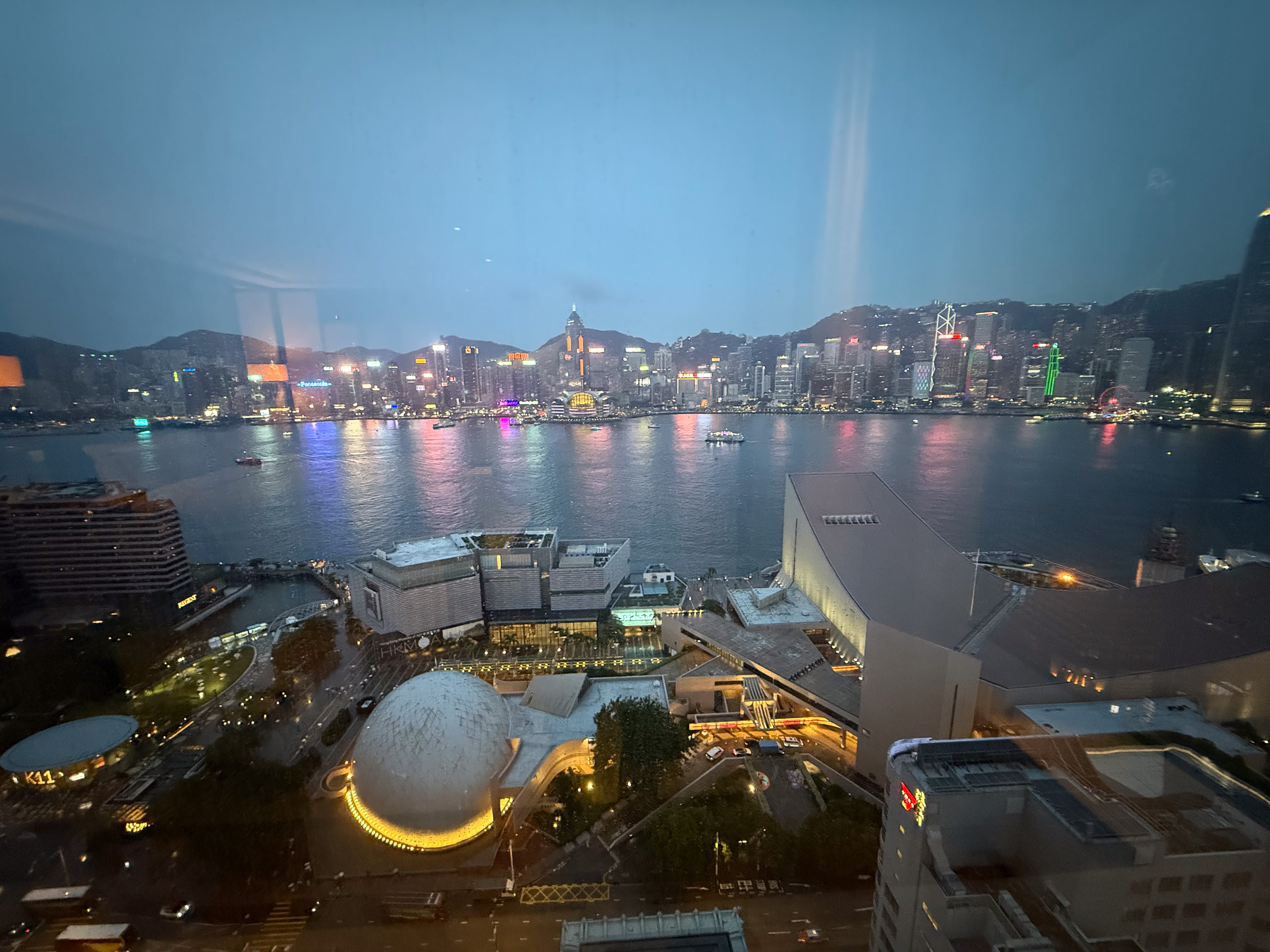
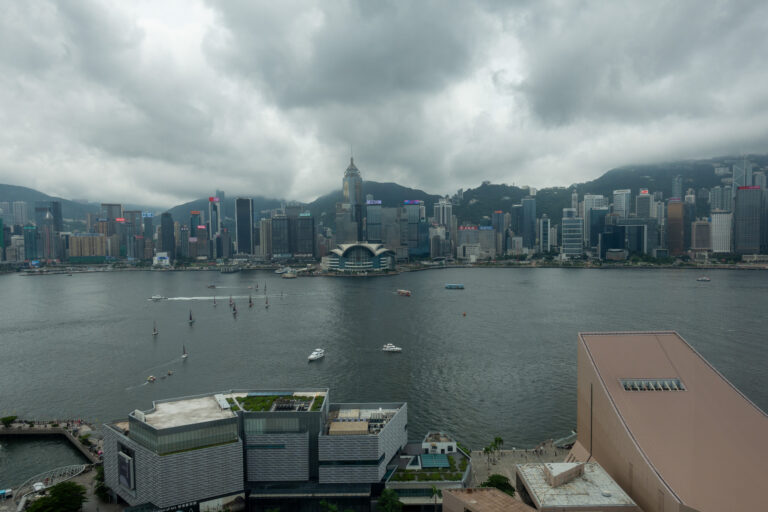
    The Hong Kong Island skyline at dusk across Victoria Harbour, seen from The Peninsula

    HONG KONG · STAYED MARCH 2026 · 6 MIN READ

    The Peninsula, and the Rolls-Royce that comes to collect you

    Inside Hong Kong’s grande dame — the fleet, the suites, and the service that still sets the standard.

    By J.C. Mercer

    Verified stay·paid in full

    • Stayed June 2026
    • Room booked Grand Deluxe Harbour View, king, 24th floor — the Tower
    • How it was booked American Express Platinum, Fine Hotels and Resorts
    • What the channel bought Free upgrade to the harbour side · breakfast for two at The Verandah · a property credit · four o’clock checkout · 8 am check-in
    • Value verdict Worth it in the Tower, harbour side. The 1928 building asks no less and looks at Salisbury Road.
    • When to go Spring. June was humid and rainy Book this stay

    Booked the way any other guest would book it.

    Arrival

    My driver was standing at the arrivals barrier. He already had the flight number, the surname and the bag count, and he said good morning as though he had collected me a dozen times before. That is the first thing to understand about The Peninsula. The performance starts a forty-minute drive from the building.

    The car was a Phantom Extended Wheelbase in Peninsula Green, the hotel’s own colour, with the crest of The Hongkong and Shanghai Hotels on the rear door. Chilled water in the console; curtains on the rear glass that draw at the touch of a switch. I spent the run over the Tsing Ma Bridge doing what everyone does in that car, which is pressing buttons to see what they do, then pretending I had not.

    A member of staff loading luggage into the green Rolls-Royce at the terminal
    The Phantom at the terminal. The buttons are inside, and I pressed all of them.

    The fleet is not a marketing exercise. The green belongs to the hotel and the cars are ordered in batches rather than one at a time; the doorman told me they have been buying Rolls-Royces since the 1970s and have never seriously considered anything else. The one to look for sits at the front of the driveway most mornings, a pre-war Phantom kept in better condition than most cars a fraction of its age.

    You pull up past the fountain into a colonnade of page boys in white, and the doors open before the car has settled. We were greeted at the door by name, and moved to our ready-room for check-in– upstairs, in the room, with full tea. Equal to the best hotel arrival of my life and it starts the stay with a feeling of harmony.

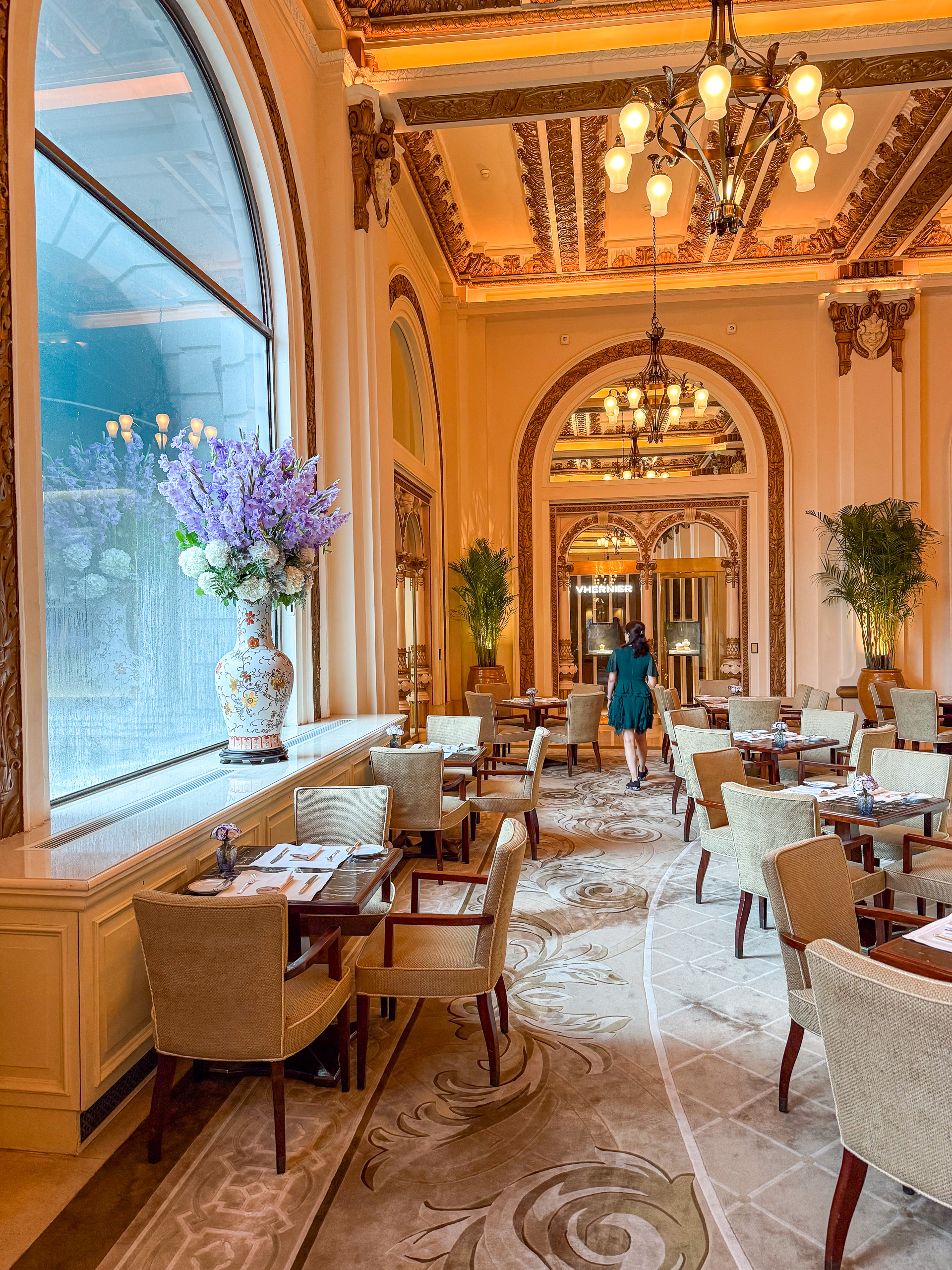
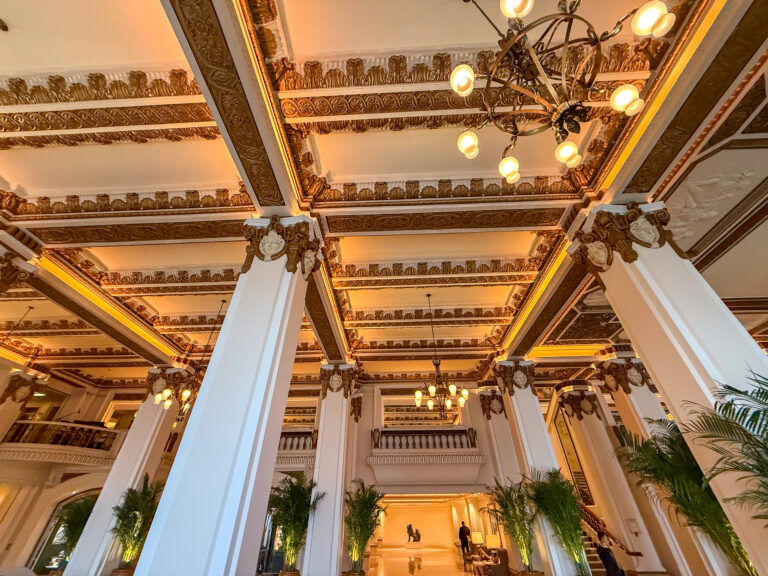
    Armchairs beneath the arched windows of the lobby, a chandelier above
    The lobby at four. The strings are behind the columns and the tea trolley finds you.

    The lobby is the finest room in Hong Kong and it does not belong to the hotel’s guests. Between two and six in the afternoon it belongs to everyone: the queue for tea forms before service opens, snakes past the columns and does not disappear until closing. Reservations are not taken.

    Gilt ceilings, palms, a string quartet on the mezzanine, a hundred people photographing a tiered stand, and one man photographing the hundred people. I joined the line on the first day at ten to two and sat by twenty past, which is a good outcome. If the host tells you the wait is long, supposedly Felix on the 28th floor serves a version of the tea with the harbour in the window and no queue at all. Felix was just cocktails for me later. The scones are the same. The room is not, and I would take the lobby every time if I had the afternoon to spend.

    The performance starts a forty-minute drive from the building.

    The room

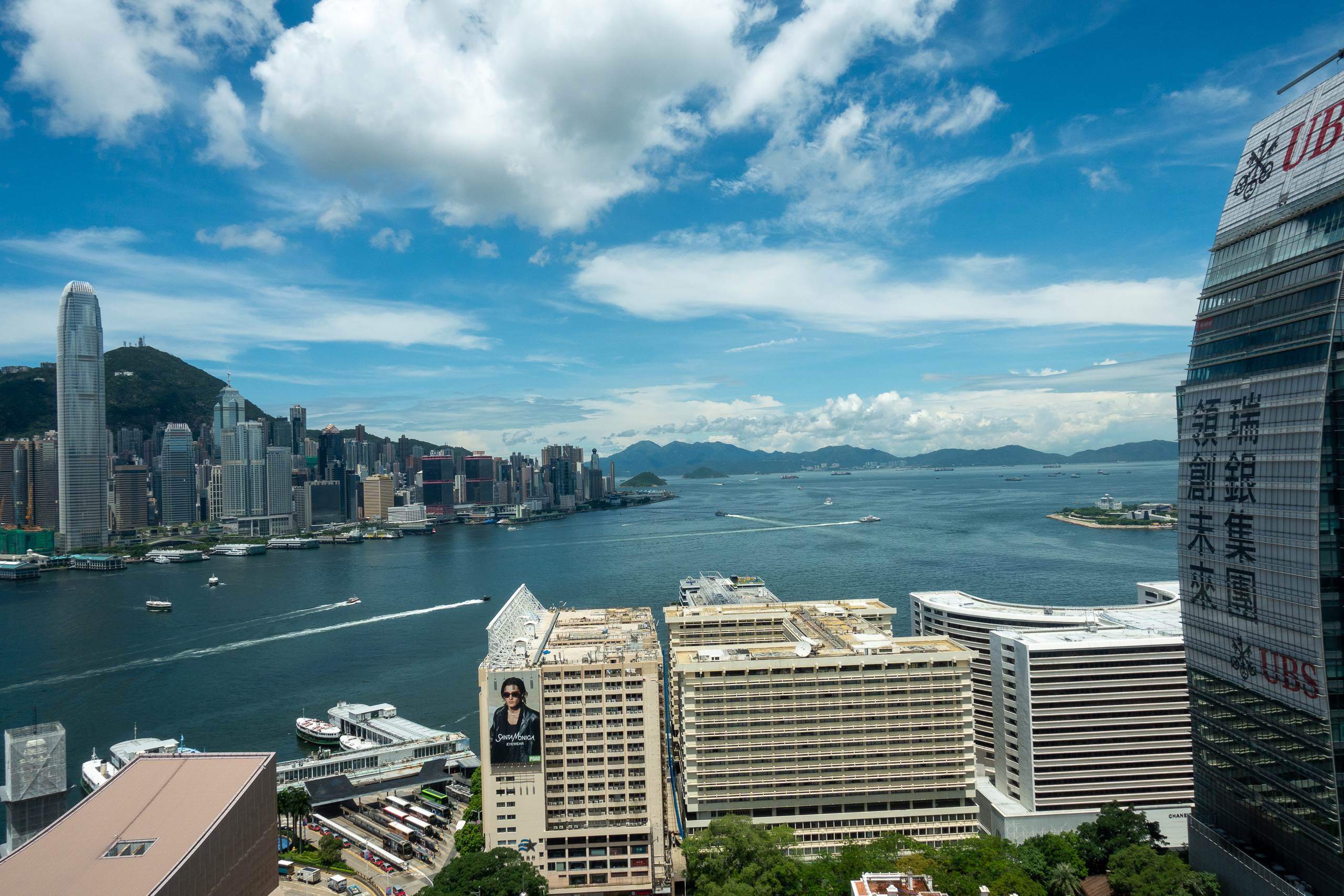
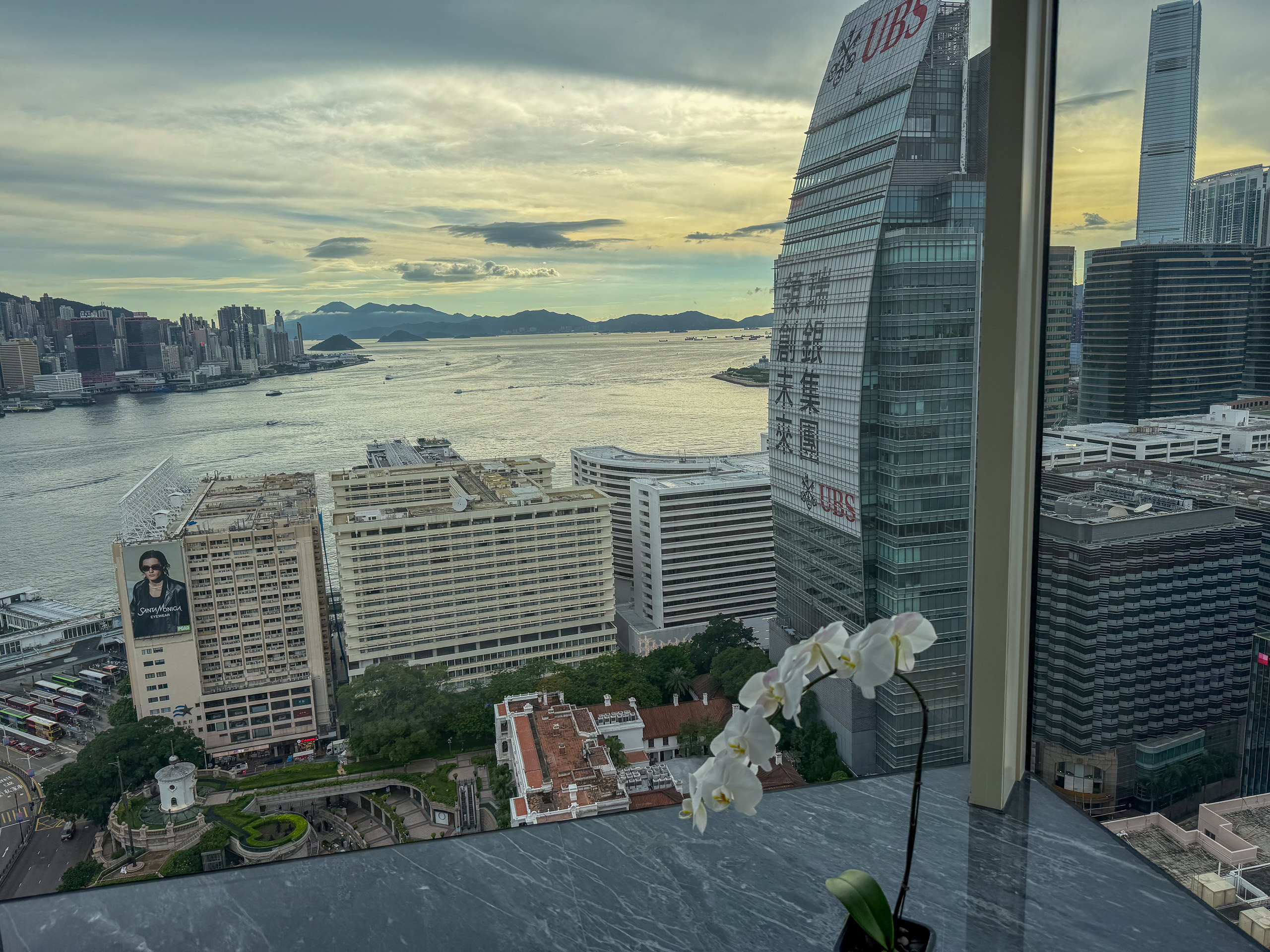
    I was in the Tower, high enough that the window wall framed Hong Kong Island end to end. The 1928 building has the taller ceilings and the better bones, but its rooms look over Salisbury Road and the shopping streets. If the harbour is why you are coming, take the Tower and the highest floor they will give you (or Rosewood…).

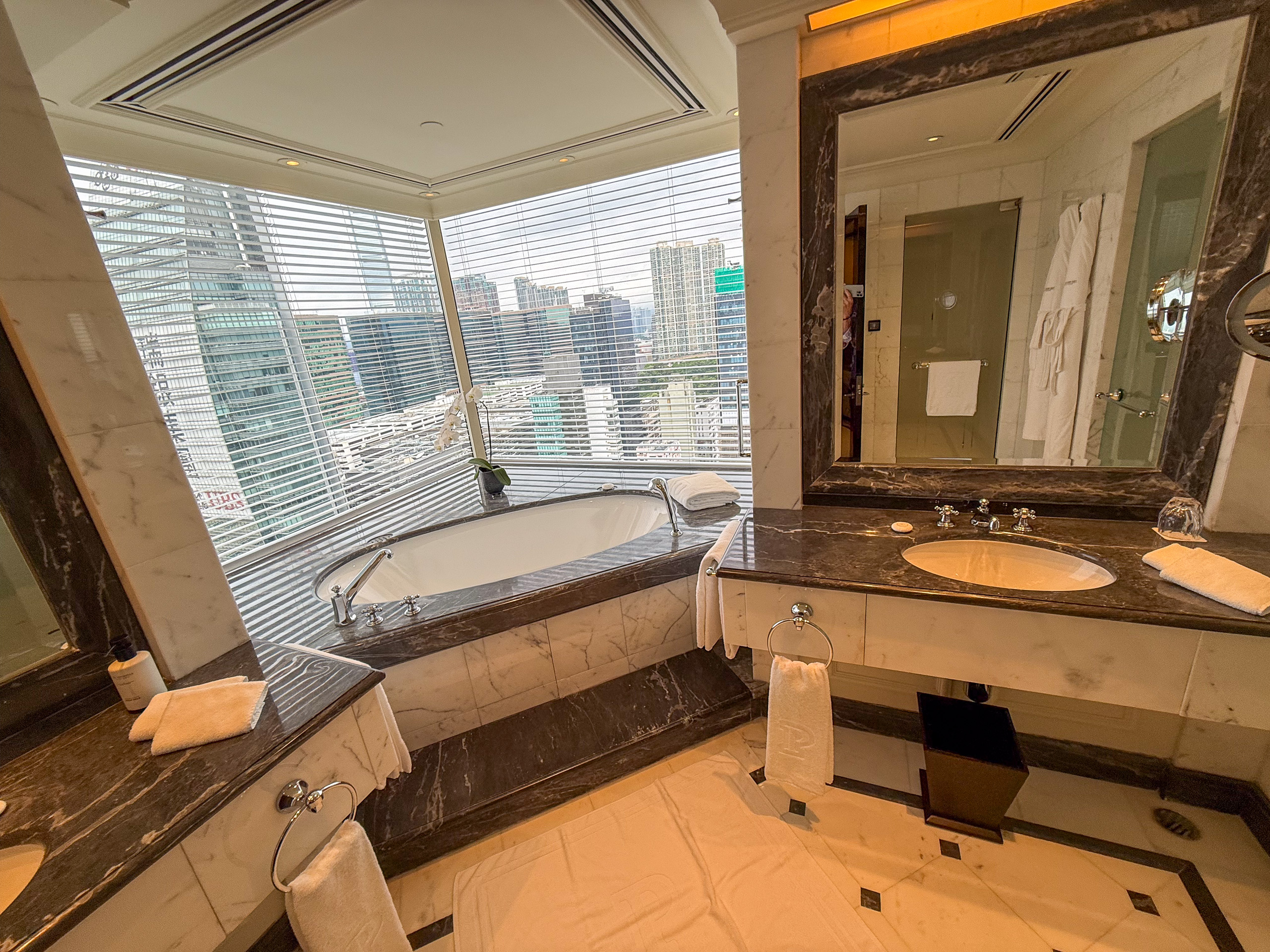
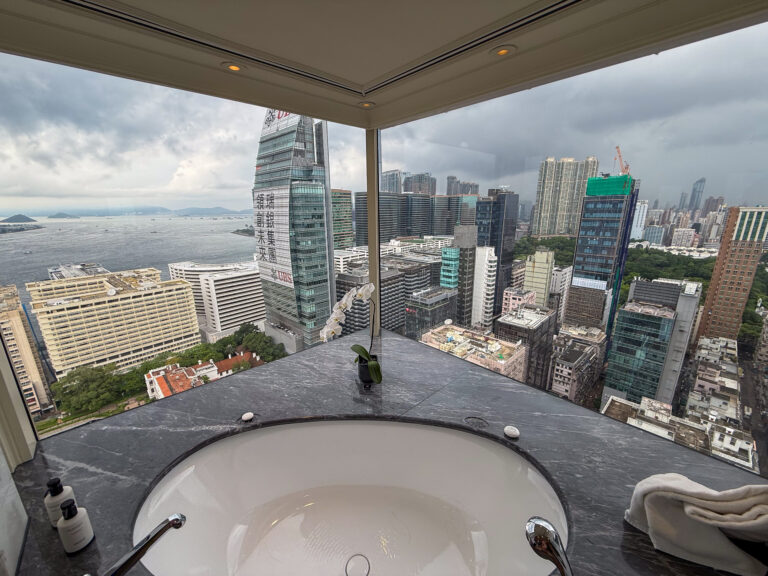
    A corner bath set into marble beneath the window, the city outside
    The tub sits at the glass; the city does the rest.

    The room is a study in restraint that hides an absurd amount of engineering. Three tablets control everything, preset in a long list of languages: lights, curtains, temperature, the television, room service, spa bookings, the weather, your flight status. What makes them work is that they stay out of the way until you want them.

    The details that stay with you are smaller. A valet box beside the door with a hatch on each side, so the newspaper and the pressed shirts arrive without anyone knocking. A vanity mirror that rises out of the dressing table at the touch of a button and vanishes again. A slot for shoes that need shining. A nail dryer built into the vanity, which I laughed at on day one and used on day two. Nespresso machine, Dyson dryer, a proper Chinese tea set, Evian on the tray.

    The bathroom is marble on every surface: a deep tub at the glass, a television set into the mirror above it, a separate shower and a separate WC. Bath salts appear at turndown, and so does something from the bakery. I’m a sucker for the see and be seen bathtub and this was one of my all-time favorites.

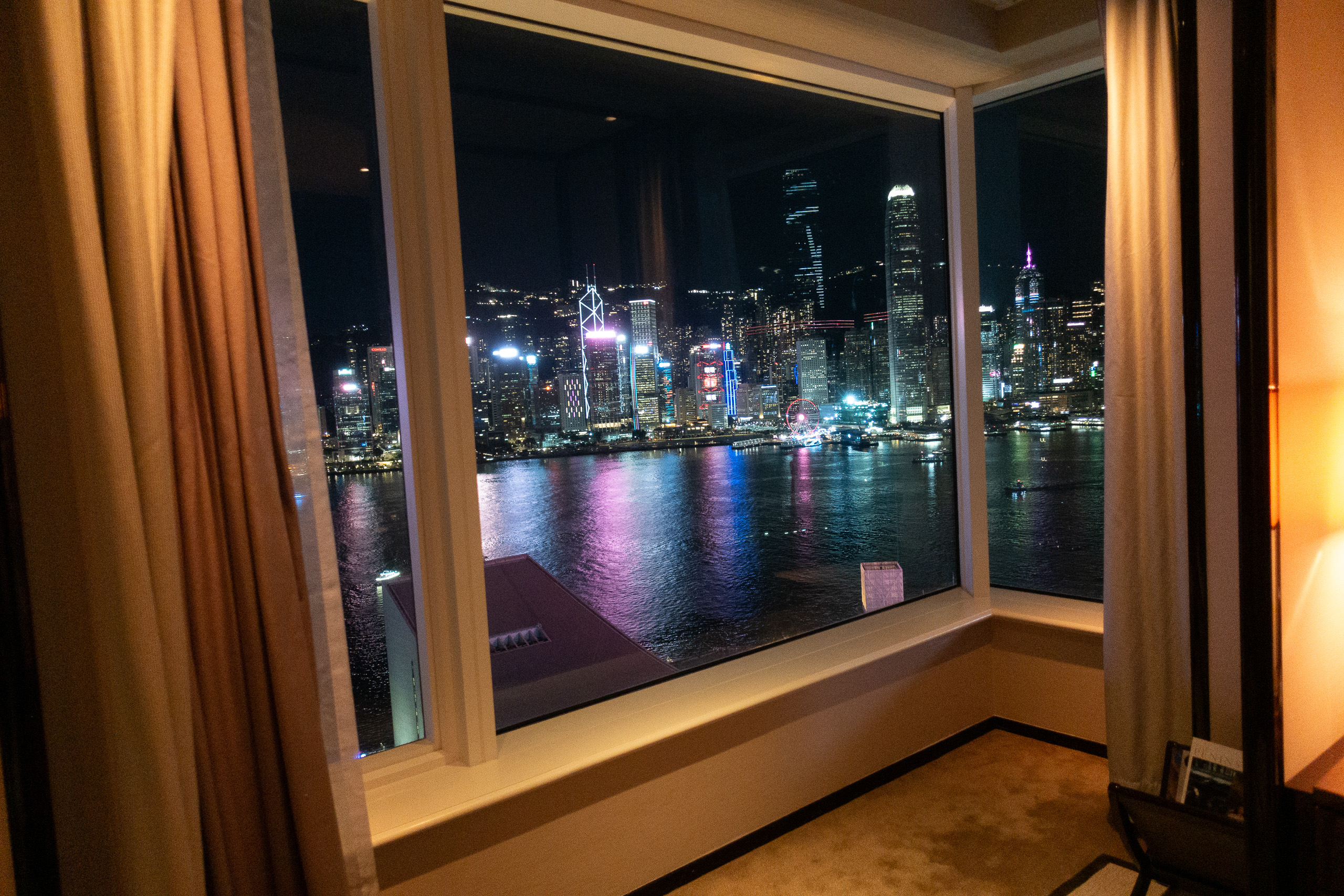
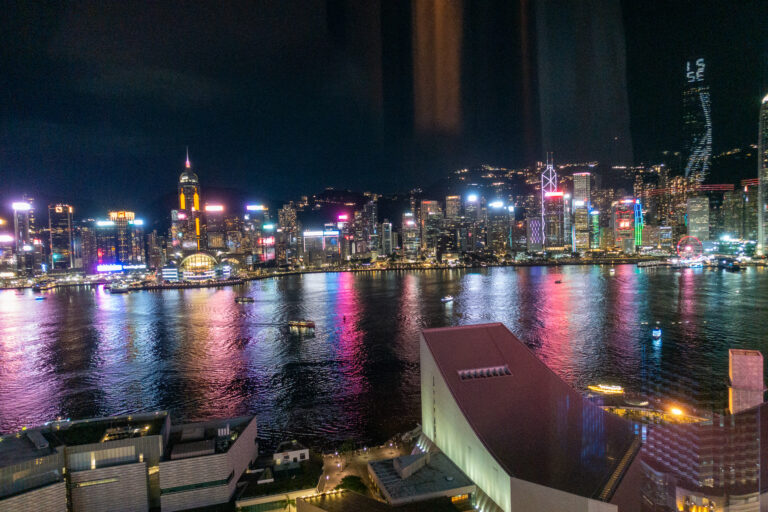
    At eight each evening the Symphony of Lights runs across the harbour, and you can watch the whole thing from the bed without moving. I did.

    The island and the harbour in full daylight from the window
    The window at nine.
    Late light across the harbour, an orchid on the sill
    The window at six.
    The harbour at night framed by the curtains of the darkened room
    The window at eleven.

    Noted

    Observed on the stay, not measured.

    WhatChecked on the stay
    Wi-Fi speedFast, and it held across three days
    NoiseSilent inside; faint ferry horns around 6am
    BedKing, medium-firm, four pillow options on the tablet
    Water pressureStrong; hot almost at once
    Air conditioningQuiet, holds the set temperature overnight
    Blackout curtainsFull, motorised, no light gap
    Lift waitNever waited

    Eating

    Six restaurants and bars, several of which people cross the harbour for.

    Breakfast laid on a round table at the window, the harbour beyond
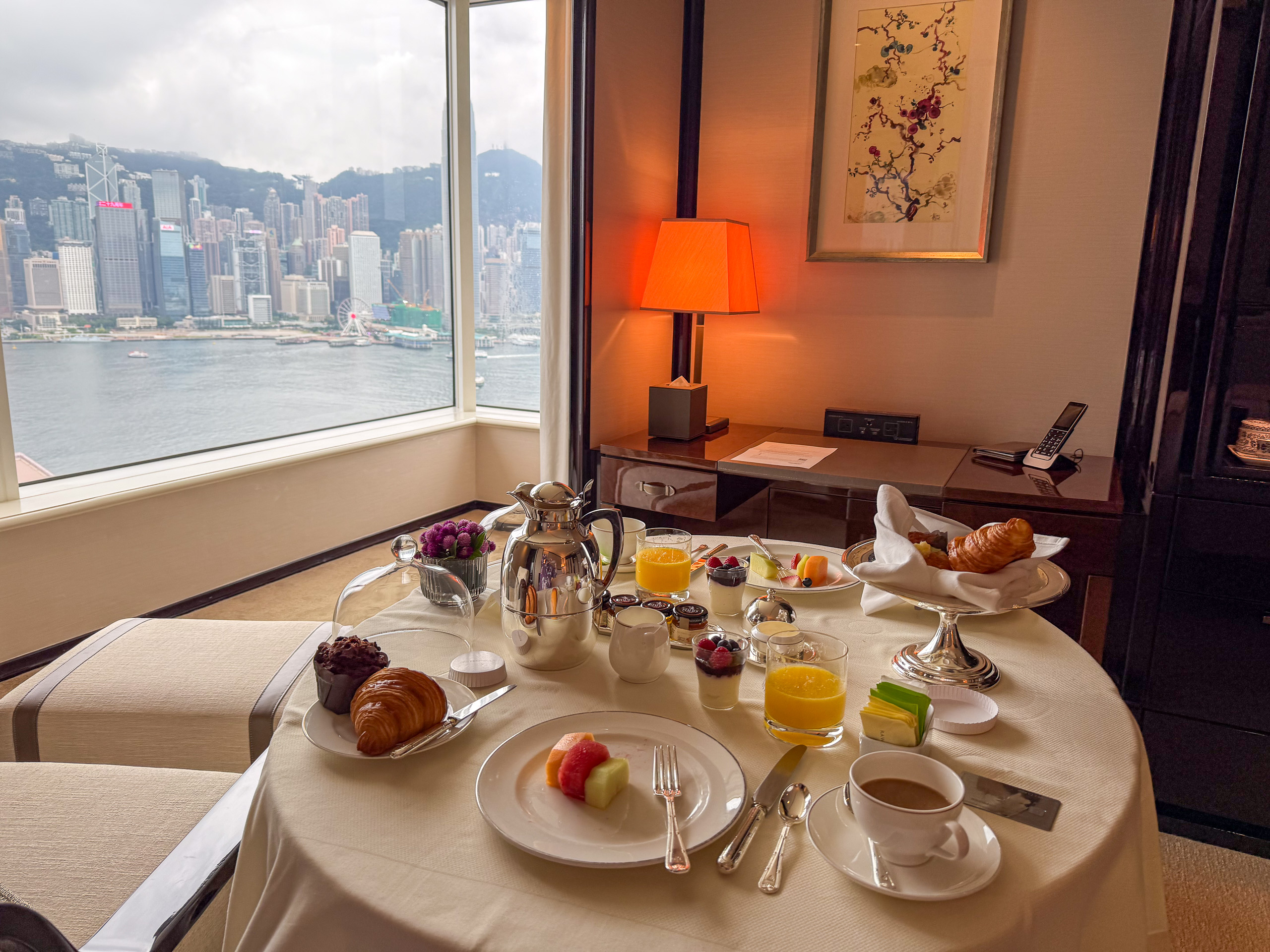
    Breakfast in the room, harbour included. The round table is there for exactly this.

    The Verandah does breakfast, and it is worth having it included. The buffet runs a noodle station cooked to order, congee, dim sum, a Japanese section, an Indian section and the full European spread. GREAT BREAKFAST.

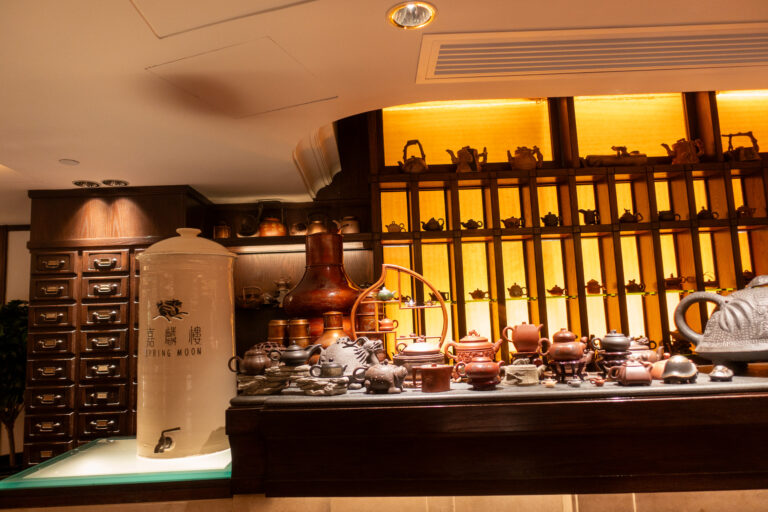
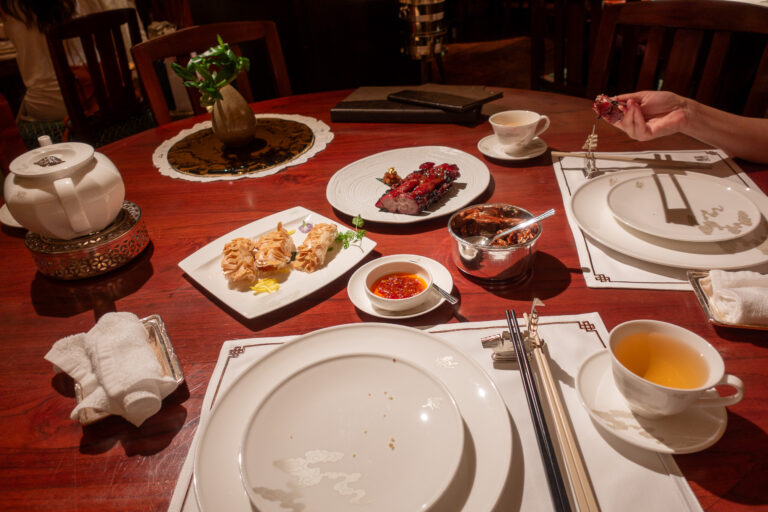
    Spring Moon is a formal bite but go for lunch if you need. Refined Cantonese, a Michelin star, a tea master who will talk you through the list, and an XO sauce the hotel now sells by the jar. Order the sauce with anything. Though wonderful in setting, two of the dishes were a miss so be careful there with you ordering. They must film movies here though- it is indeed a classy period film- beauties and business men abound.

    Gaddi’s is the grandest and most formal of the rooms, and carries it without apology. Elegant attire, and they mean it. Felix, on the 28th floor, is a Philippe Starck interior that has aged into something close to camp, in the best way; go for the view and a drink before dinner elsewhere.

    A lacquer tray with caviar and its accompaniments on the stone counter
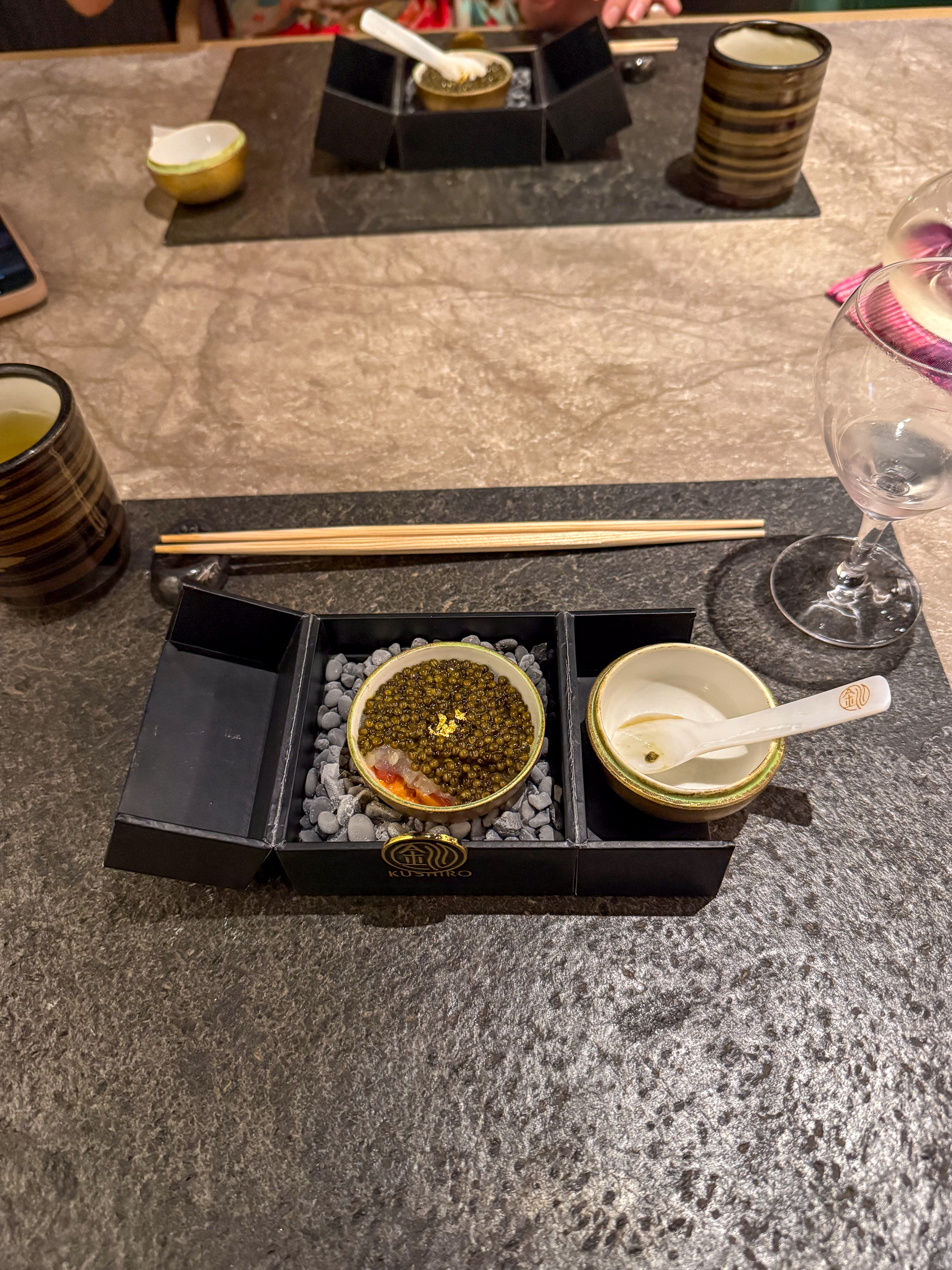
    Caviar on the stone counter.
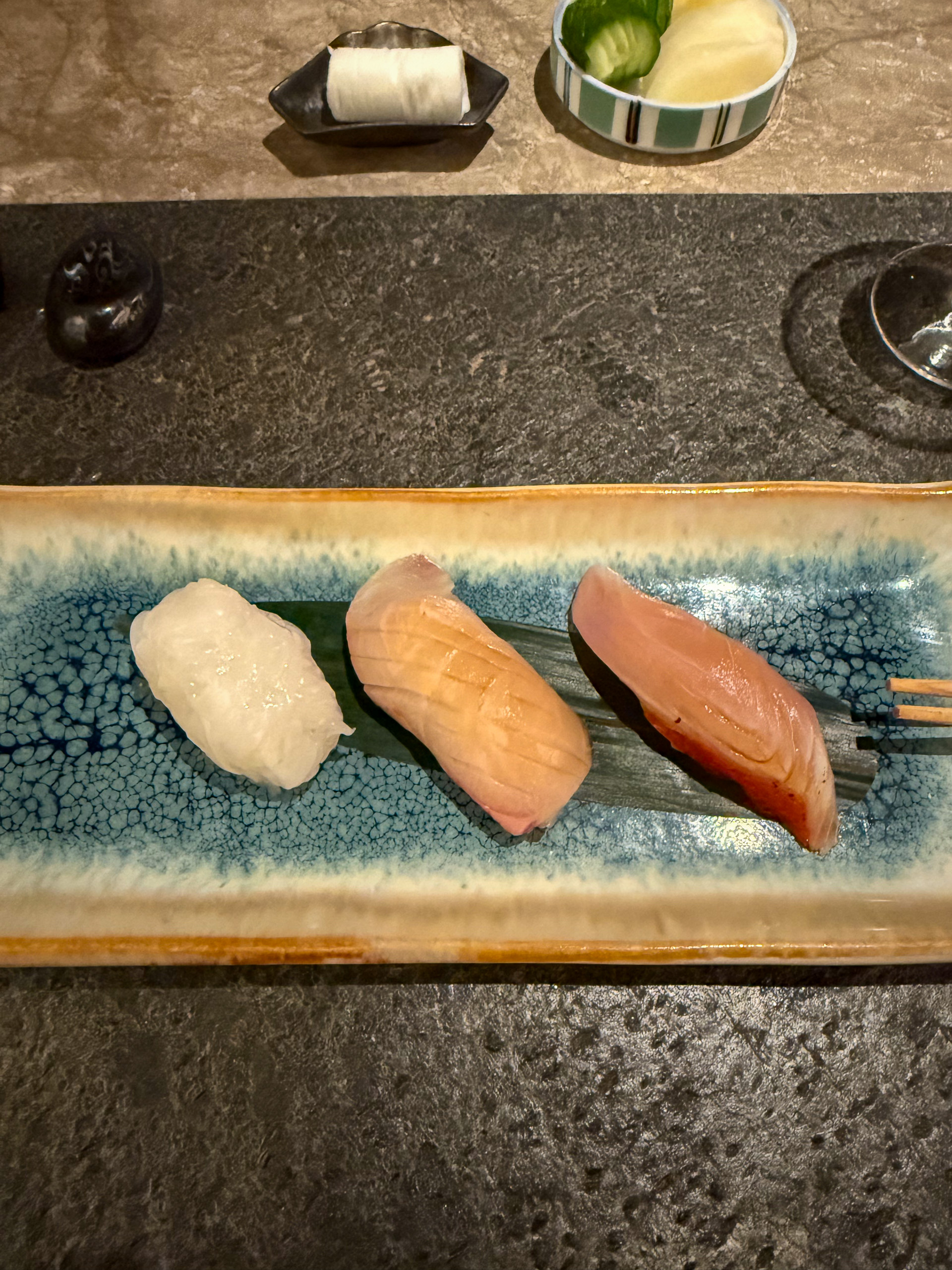
    Three pieces of nigiri on a pale glazed board
    Three pieces of nigiri, on the glazed board.
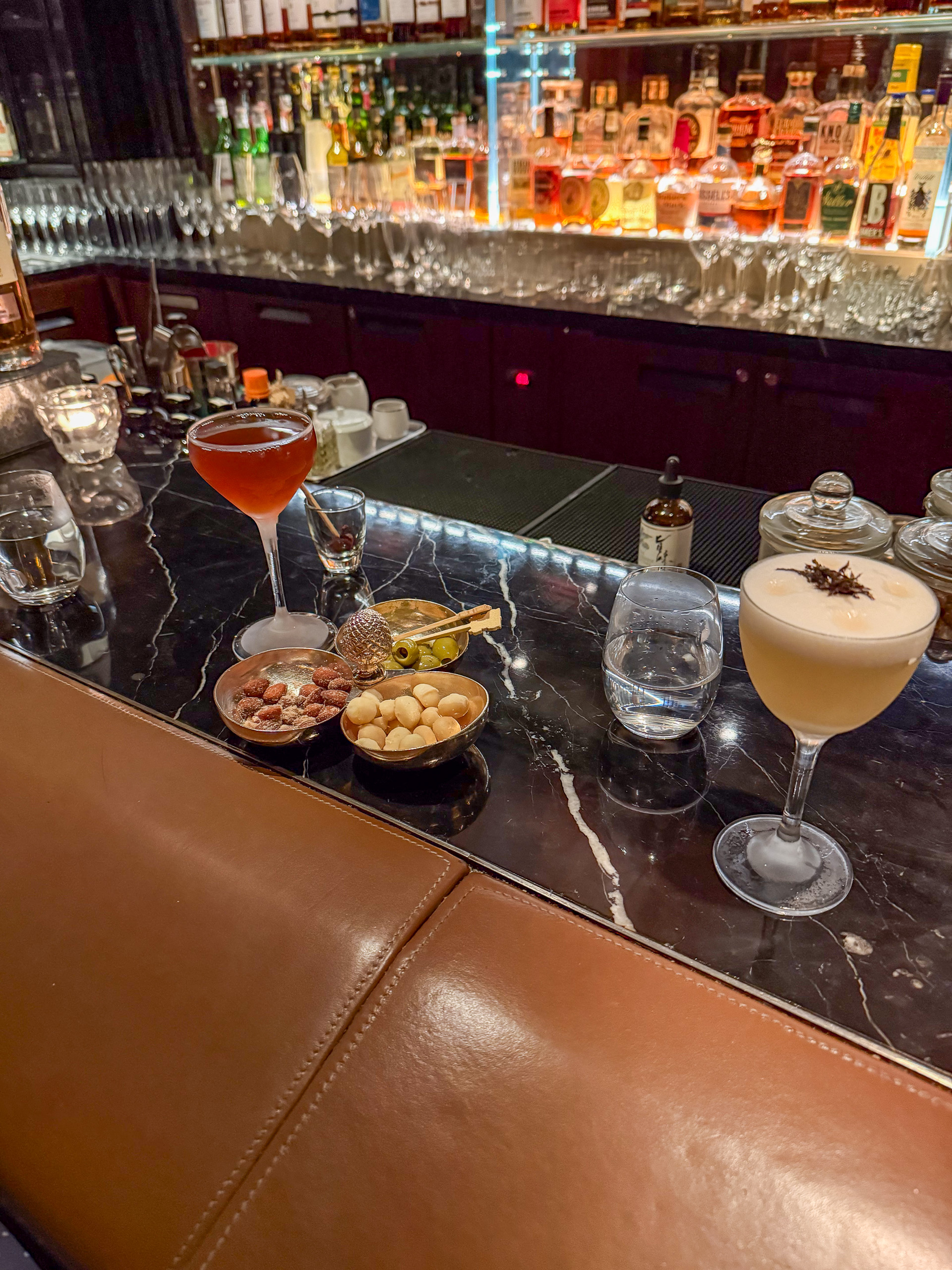
    Cocktails and a bowl of snacks on the marble bar counter
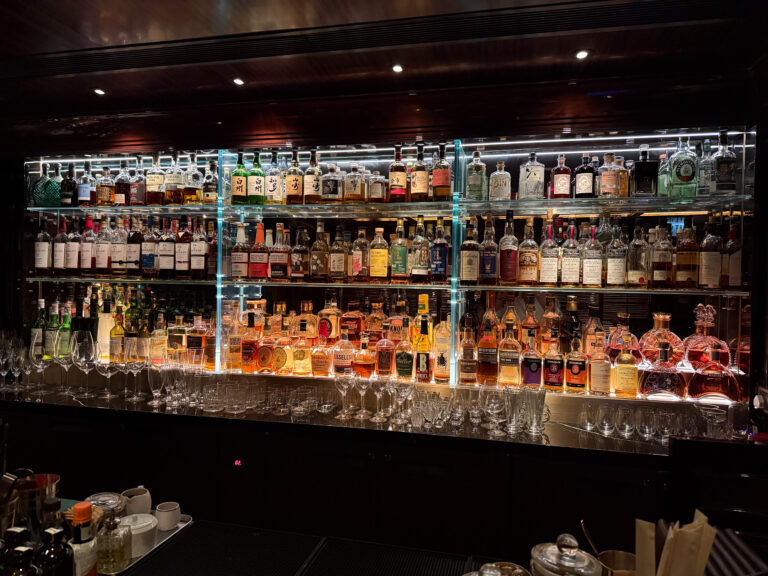
    The bar, and the snacks that arrive unasked.

    Kushiro is downstairs, and it is the one to book if you only have one night. The concierge found me an omakase seat the same day I asked. Sake and sushi paired course by course, including uni auctioned in Japan that morning. If you care about sushi, do not leave the city without eating here. Just note – a fellow diner thought it was too much show and questioned why they need to brag about the uni auction. My mouth didn’t question its rank though- delicious!

    Spa and pool

    The spa is big and it books out, so reserve before you arrive. The pool is the showpiece: a Roman bath in style, colonnaded, with friezes and a wall of glass over the harbour. This is the kind of pool people mention when you say you are going to the hotel. Happened in Fiji. There is a firm no-photography sign, which is the correct policy and also the reason you have never seen a good picture of it.

    The gym is well equipped and plain. Everything works; nothing in it was designed to be looked at.

    Service moments

    The service here is the product, and it is the least photographable thing about the place. What I can offer instead is a list.

    The driver who was plainly happy. The check-in that happened over tea in the room rather than at a desk. The doorman who tells the story of the old Phantom as if for the first time. The valet hatch, which meant three days passed without a knock at the door. The concierge who produced a same-day seat at Kushiro as though it were nothing. He sent us to great places for watches and shoes, again seemingly content with his job. Turndown that came with bath salts and a pastry, at the hour I had gone down to dinner and not a minute before, which means somebody was watching the lift, and I have decided to find that reassuring.

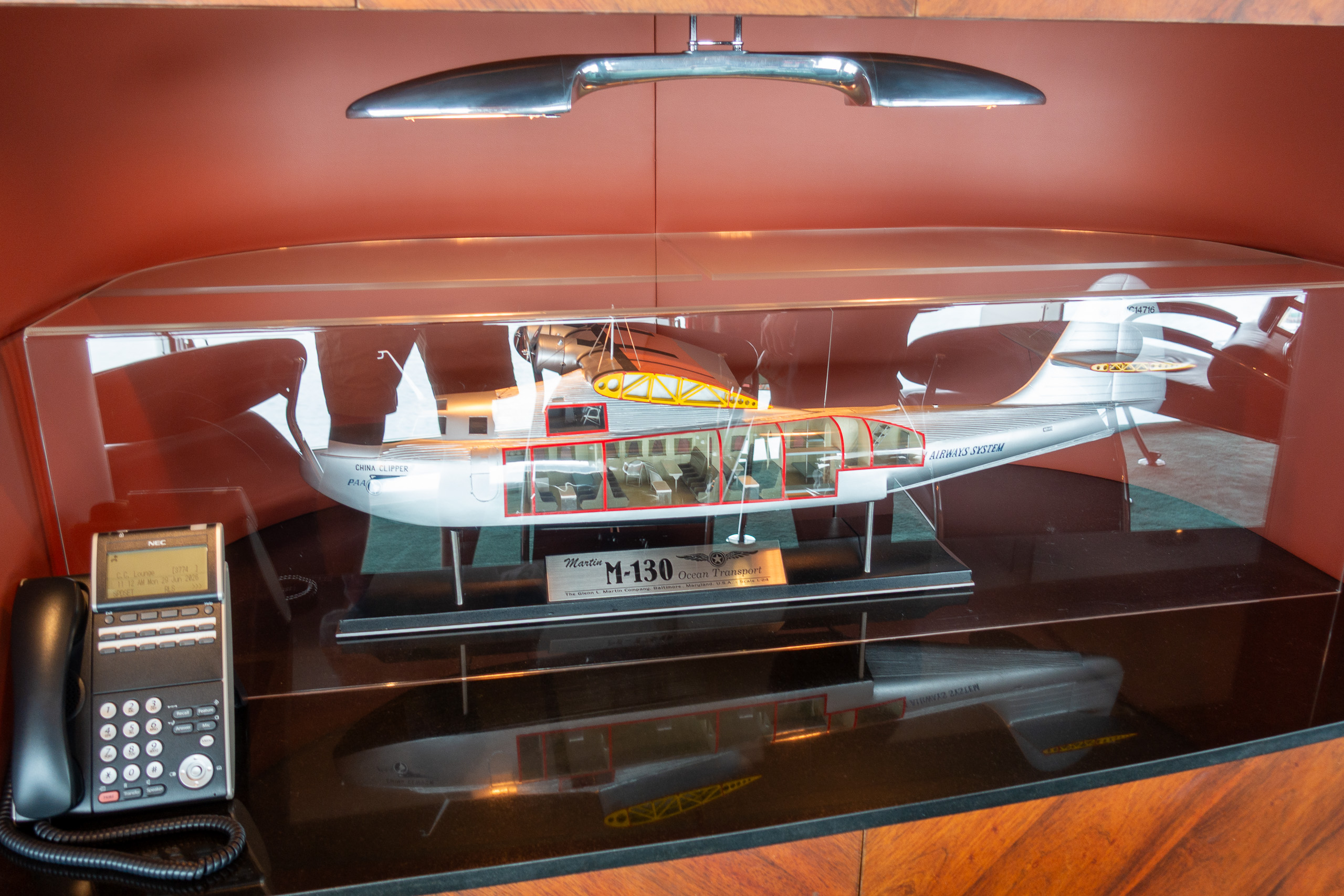
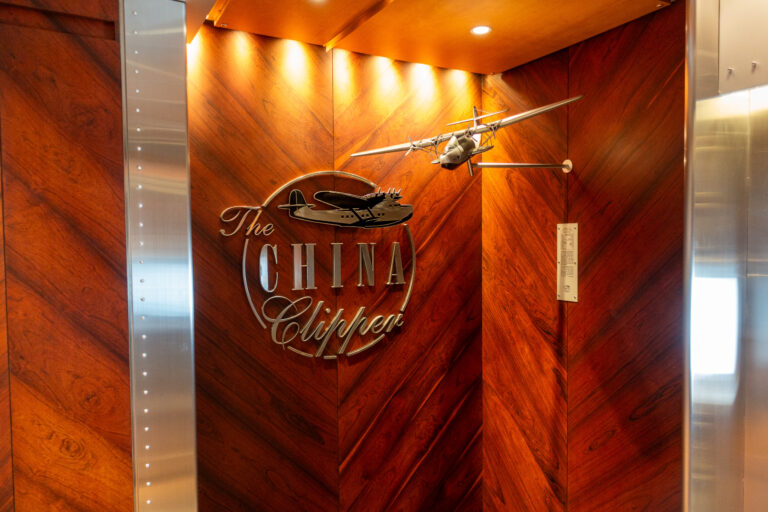
    A cased model of a Martin M-130 flying boat above the desk
    The flying boat above the desk. The hotel has never quite got over how you used to arrive.

    Who it is for, and who it is not

    Through the hotel none of it is showy. Almost all of it happened without my asking, which is the point.

    Come if this is your first visit to Hong Kong, if the trip is an occasion, or if you want the lobby, the harbour and the car in the same building. Come if you would rather be looked after than left alone, and if you can give an afternoon to a queue for the pleasure of the room at the end of it.

    Look elsewhere if the room itself is what you are paying for. The Rosewood, ten minutes’ walk along the waterfront, has the better bling with the better view, and I have set the two side by side in Peninsula or Rosewood. Look elsewhere too if you want the harbour without Kowloon; the Island side is a different city and a different stay and I shan’t speak to that.

    The Peninsula, Hong Kong
    The harbour the lobby looks out on. It is the reason the lobby faces the way it does.

    Bottom line

    The Peninsula is still the standard for service in Hong Kong, and a harbour-side room in the Tower is the way to see it. Book that room, take the car once, and have tea at seven rather than three.

    See the full set: The Peninsula, Hong Kong — in frames. More Hong Kong: Rosewood, Hong Kong.

    The Peninsula gallery

    Every photo on this site is my own, shot on the stay. Slide through →
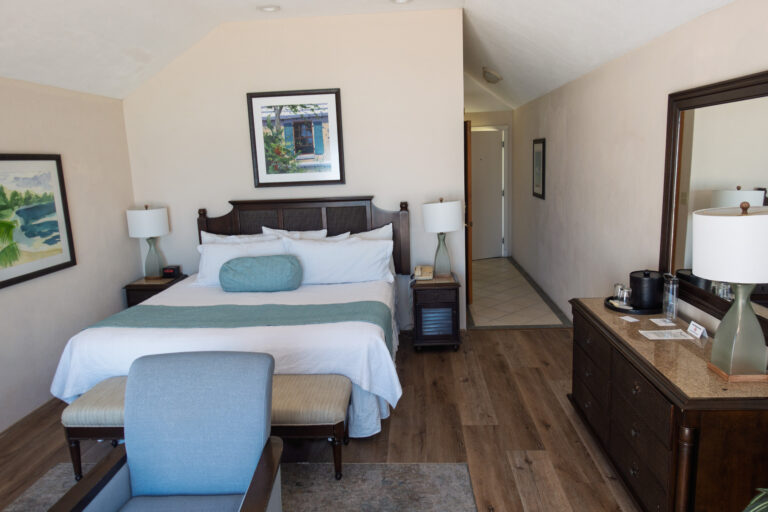
    A lit display of teapots and canisters behind a lacquered counterDumplings and small plates on a red lacquer table with a pot of teaThe Peninsula, Hong KongThe cabin of the hotel Rolls-Royce, the driver at the wheelA long back-bar of bottles lit from beneath, glassware ranged along the counterA model flying boat mounted on a burr-walnut wall beside the liftHeavy cloud over the harbour and the island seen from high upThe tub in the window with the towers and the water beyondThe gilded coffered ceiling and columns of the lobby from belowA place setting of chopsticks and porcelain on a red lacquer table