The Suite Report

Tag: Istanbul

  • Çırağan or Four Seasons: the water or the walls, in Istanbul

    ISTANBUL · ÇIRAĞAN vs. FOUR SEASONS SULTANAHMET · 5 MIN READ

    Çırağan or Four Seasons: the water or the walls, in Istanbul

    Both are excellent, and the right answer depends on how many days you have. Two: the old city. Three or more: at least one night on the water. Four: both, in the same trip.

    By J.C. Mercer

    Verified stays·paid in full

    Çırağan PalaceFour Seasons Sultanahmet
    StayedApril 2025April 2025
    Room bookedSuperior Bosphorus View, kingDeluxe Room, king, courtyard side
    How it was bookedAmex Fine Hotels + Resorts, public rateAmEx Fine Hotels + Resorts, public rate
    What the channel boughtNot clear if upgraded, but a great view from an otherwise standard roomThe full FHR package, with an upgraded room
    Value verdictTremendously outsized value, especially in the shoulder season.Worth it for the old city days; the ideal trip pairs it with the water.
    When to goApril to June, or September to October. Book ÇırağanApril to June. Book Four Seasons

    Both stays booked the way any other guest would book them.

    The question

    Istanbul is two cities pretending to be one, and these two hotels are the cleanest way to choose between them — with the honest complication that both are excellent. The Çırağan sits on the Bosphorus with the last sultan’s palace at its heart and a pool a metre above the shipping lane. The Four Seasons sits in the old city two hundred paces from Hagia Sophia. I stayed at both in the same April, booked the same way, in the entry-level room at each.
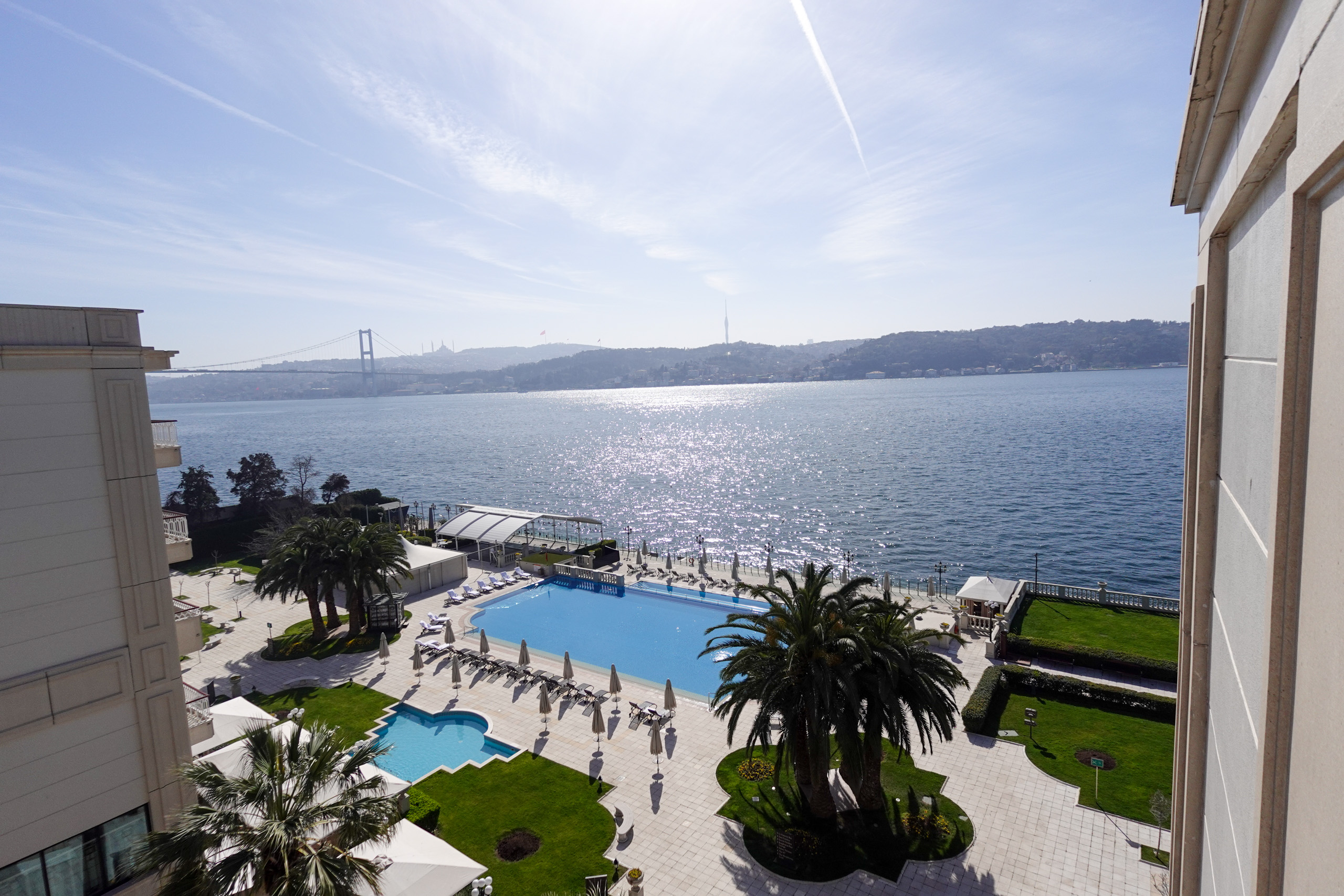
    The pool terrace and the Bosphorus in full sun, the suspension bridge in the distance
    Çırağan: the pool terrace and the strait in full sun, the bridge in the distance. A ship goes past at arm’s length.

    The real question is not which hotel is better. It is how many days you have. The correct answer, from three days up, is a ferry ticket between the two.
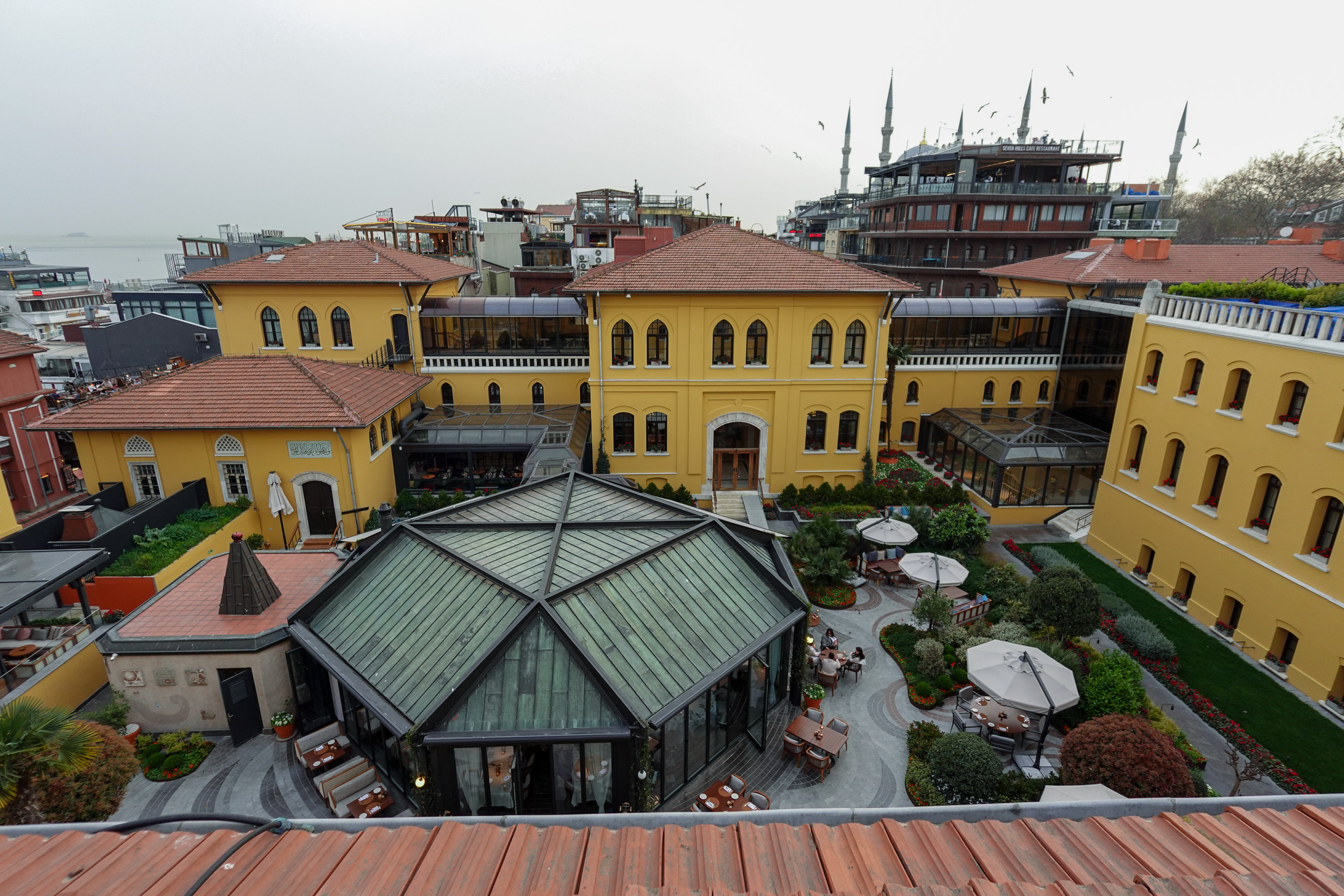
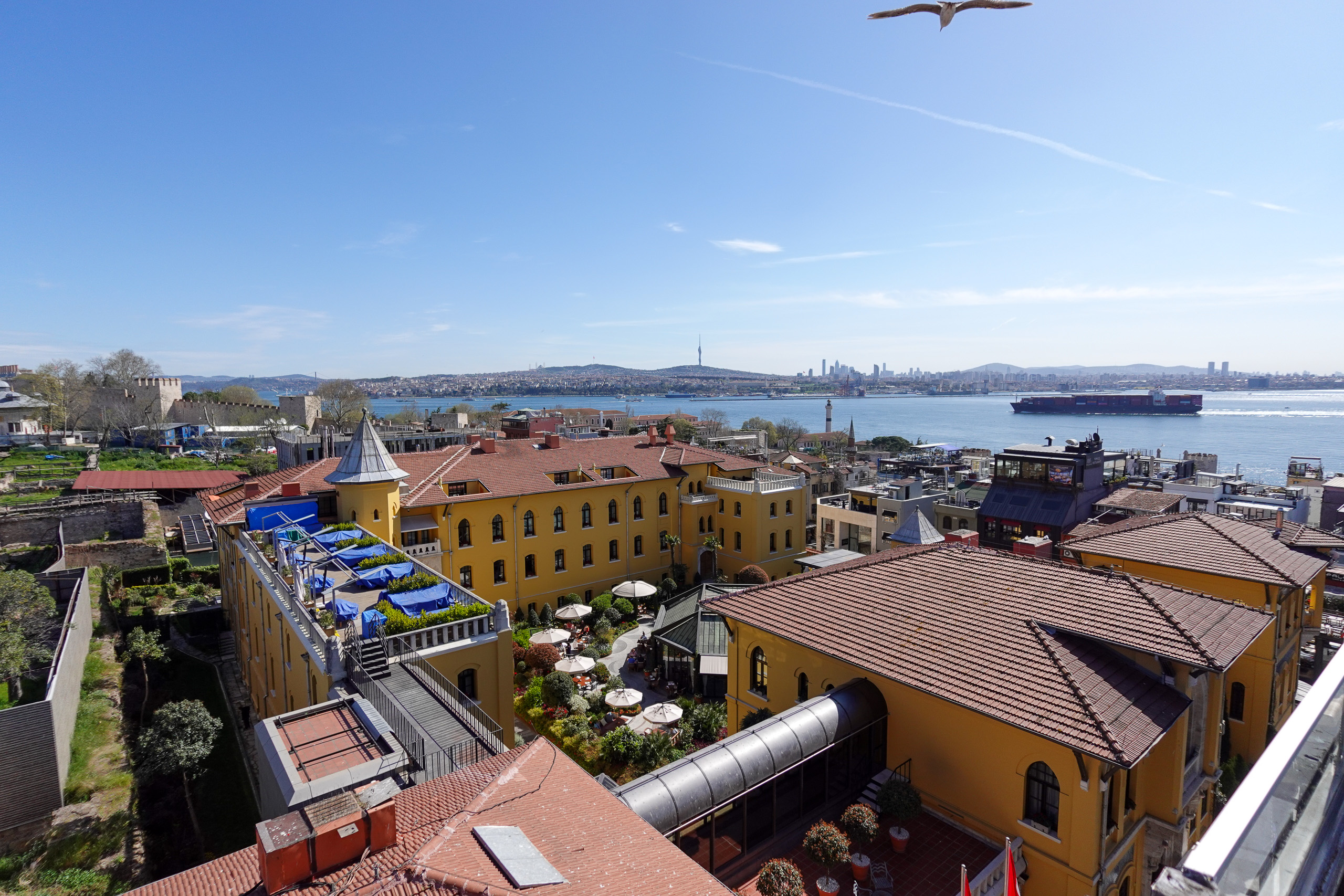
    Looking down into the courtyard, its glazed pavilion set among the ochre wings
    Four Seasons: the old exercise yard, now a garden with a glazed pavilion between the ochre wings.

    Side by side

    WhatÇırağanFour Seasons
    WhereThe Bosphorus shore, on the last open waterfront before the city closes upThe old city, beside Hagia Sophia, above the Marmara
    The buildingThe last sultan’s palace at its heart, with a history wing the equal of any hotel’sA former prison, converted; the exercise yard is now the garden
    Entry roomSuperior Bosphorus View, king: committed Ottoman revival, generous throughoutDeluxe, courtyard side: warm, low-lit, thick walls, deep reveals
    ServiceThe more attentive of the two — more people on the floor, and it showsSmall-house warmth; names by the first morning
    PoolOn the water, a metre above the strait — a tranquil haze all afternoonNone; guests are sent across town to the sister hotel
    Inside the hotelThe palace, art worth hours of wandering, and a tour that may end in the sultan’s suitesThe roof, and the building’s own history told on the corridor wall
    EatingExcellent — and Tuğra, in the palace, is exceptional: the Anatolian wine pairing alone justifies dinnerExcellent — Avlu draws locals across town, and the roof closes the evening
    FamiliesThe better fit: grounds, pool, and room to runTighter quarters, busier pavements
    The daysTranquil: the pool, the nargile at the rail, the art, Ortaköy on footNonstop: all of Istanbul in a day, starting at the front door
    Getting aboutA car or a boat; the drive bottlenecks at sixOn foot; tram or boat to cross to the modern city
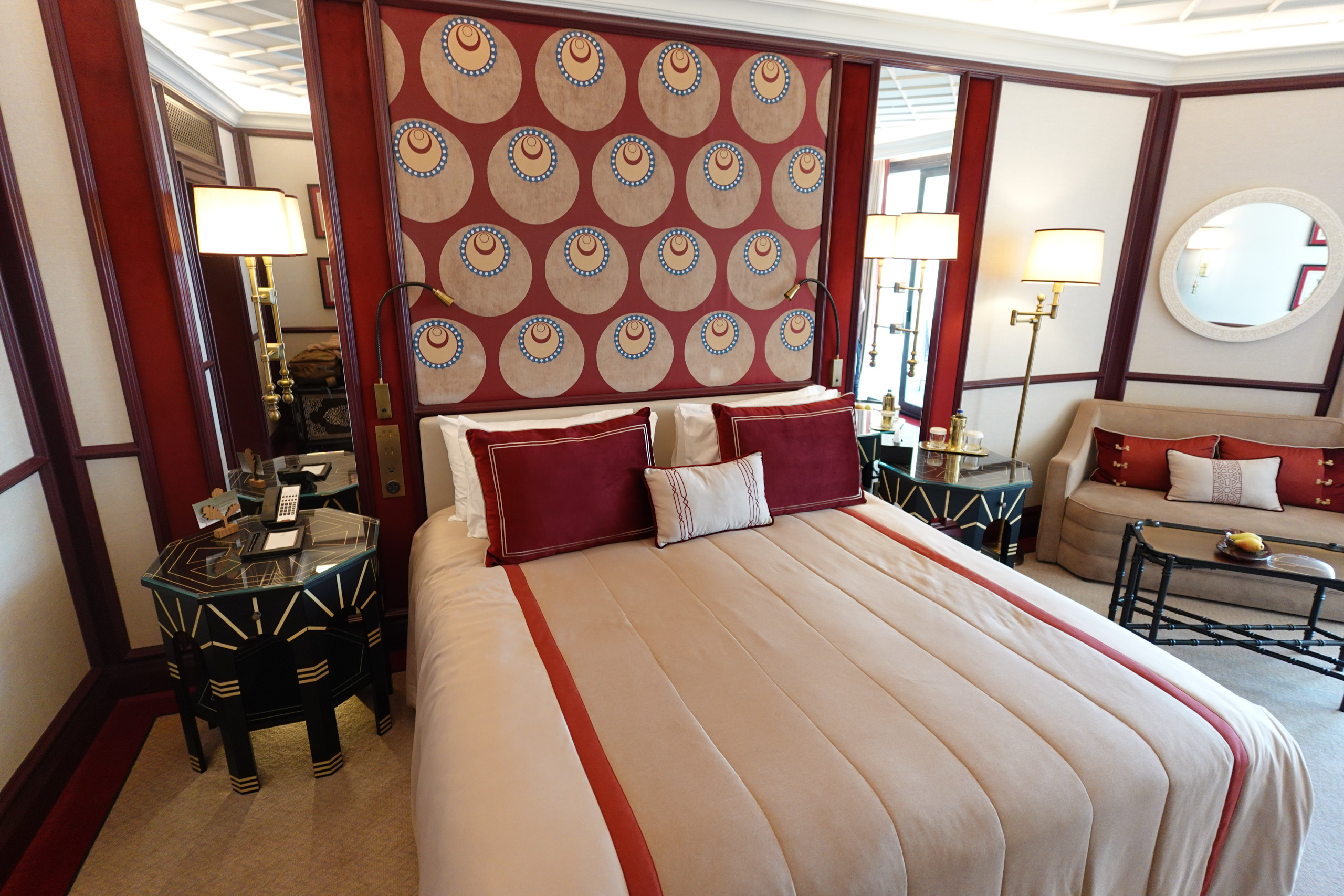
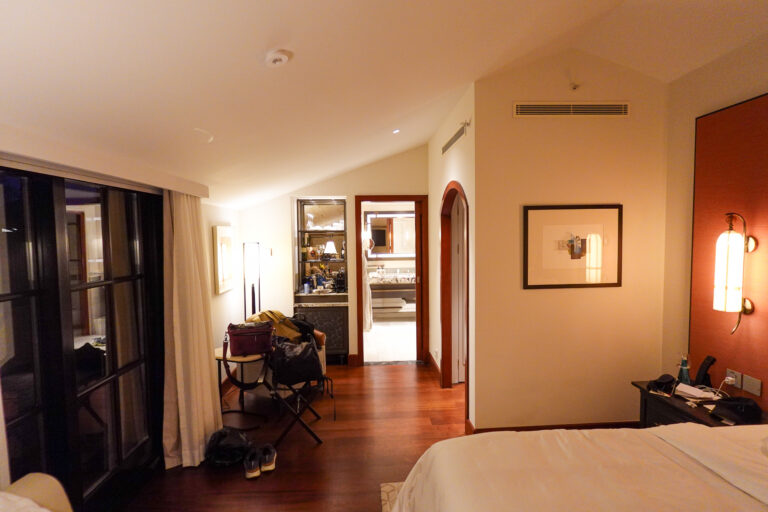
    A bed with a red runner against a patterned headboard wall, lamps either side and a seating area beyond
    Çırağan: the room, Ottoman revival without apology.
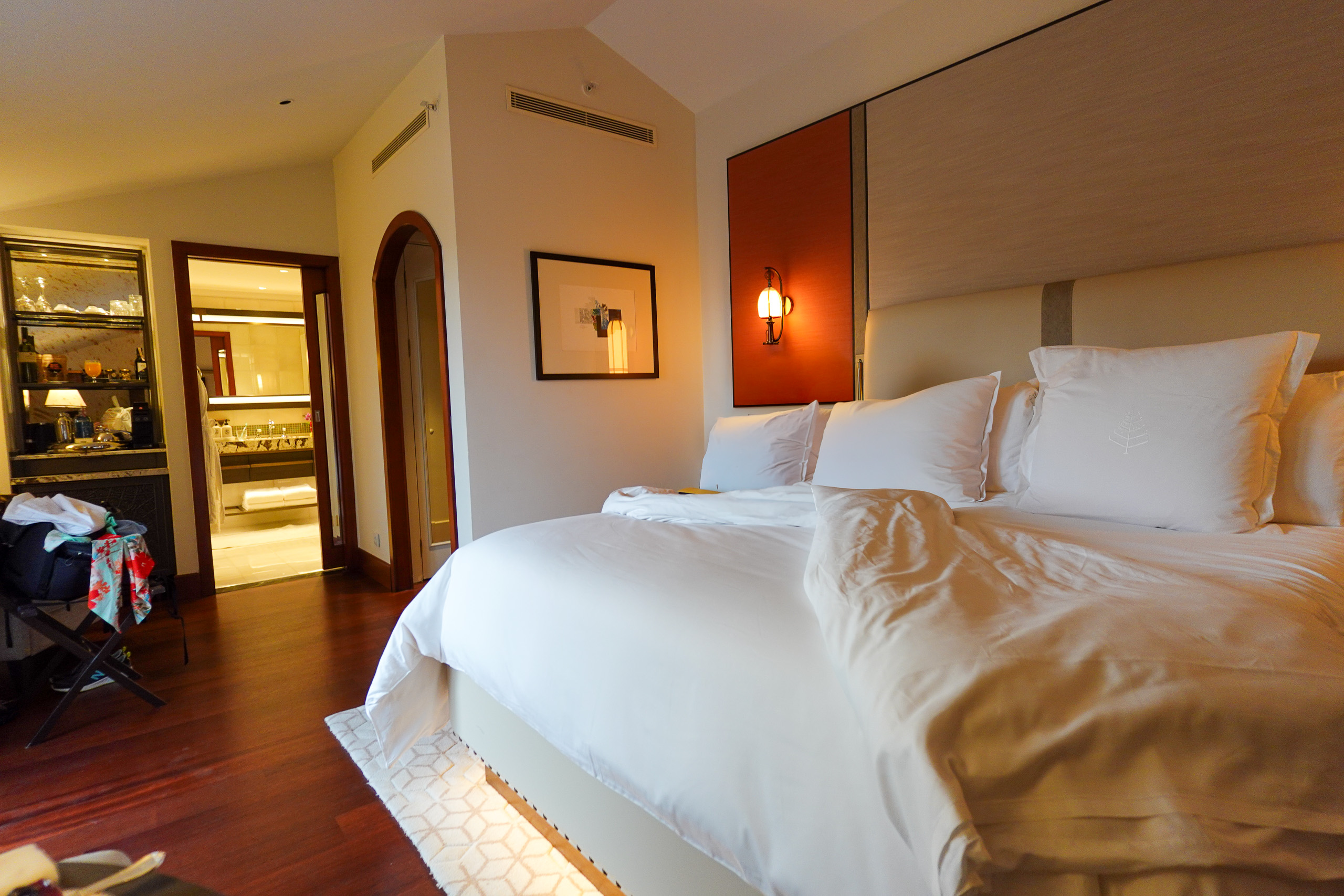
    White linen and a warm bedside lamp, with the door to the sitting room ajar
    Four Seasons: deep reveals, thick walls, a courtyard Deluxe.

    Noted

    Observed on both stays, not measured.

    WhatÇırağan PalaceFour Seasons Sultanahmet
    Wi-FiStrong in the room; spotty through the property—
    NoiseQuiet in the room; the street audible on the land side, the call to prayer each night through the window; blackout curtains weakSilent in the room; the call to prayer carries on the roof, which is the point
    BedKing, medium-firmKing, medium-firm
    Water pressureStrong and hotStrong and hot, no wait
    Spa—Kurna Spa — hammam, steam and sauna; books out
    The walk that mattersOrtaköy, about fifteen minutes along the shoreHagia Sophia, three minutes

    Where Çırağan wins

    Service, to begin with, which surprises people: more staff on the floor means more eyes on you, and it shows in the details — at the Çırağan a screw from my eyeglasses, dropped invisibly to the floor, came back to me via housekeeping and the manager presented like it was the Sultan’s jewel.
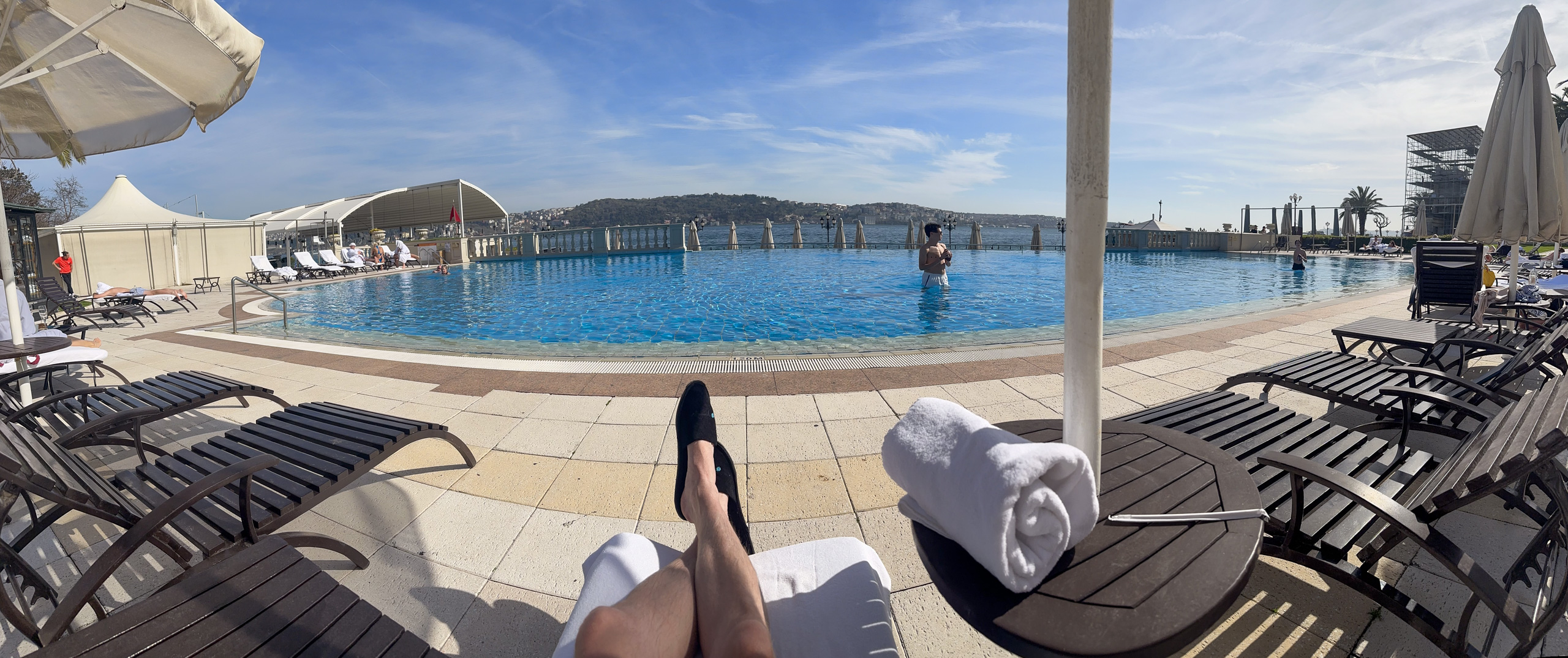
    The long outdoor pool seen from a sun lounger, a rolled towel on the chair alongside
    The long pool from a lounger, towel rolled, the strait doing what the strait does. Nothing in the old city can answer this.

    The pool is the other half of the argument: a metre above the strait, ships at arm’s length, and a tranquil haze that settles over the water side for whole afternoons. Nothing in the old city can answer it, and the Four Seasons does not try.
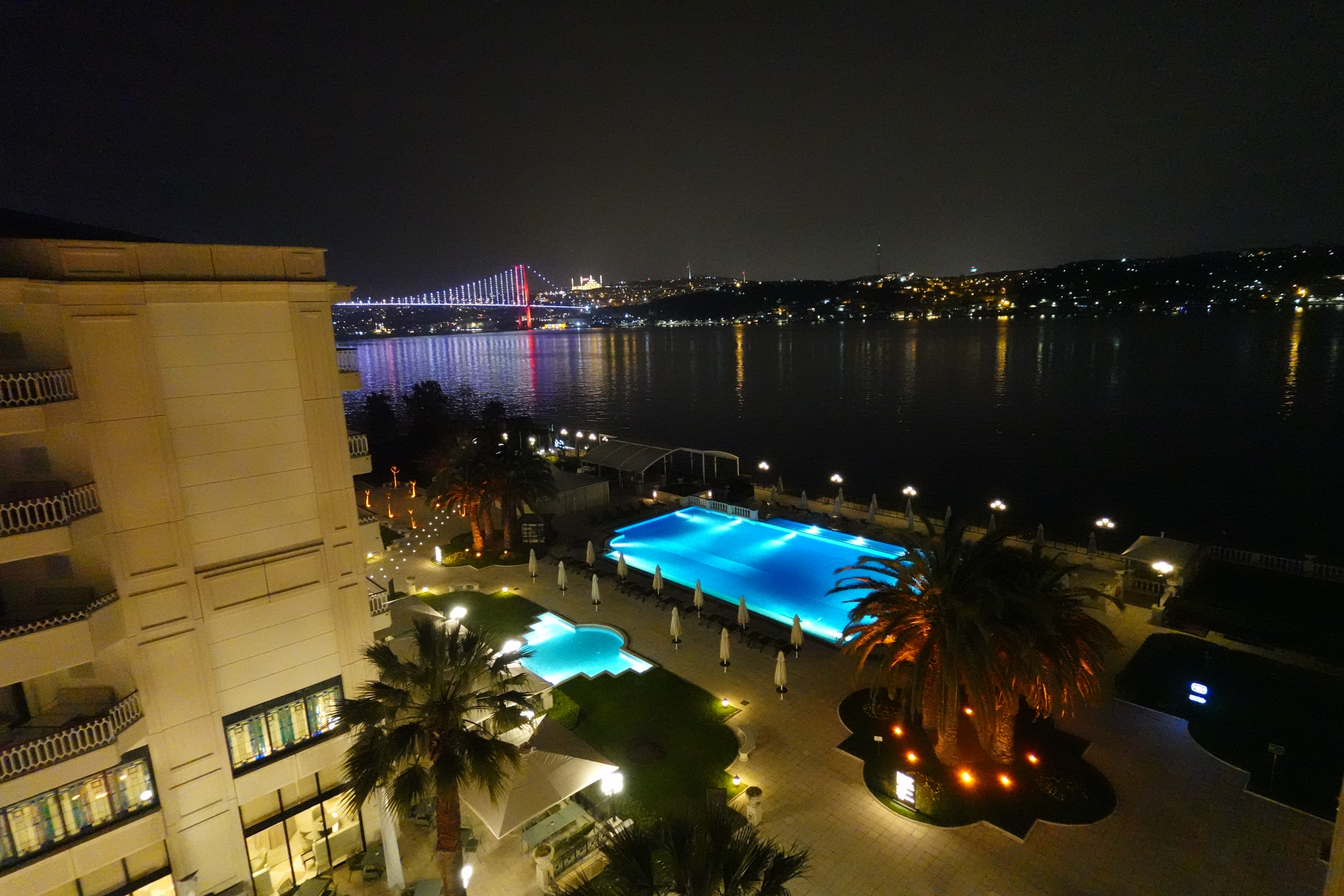
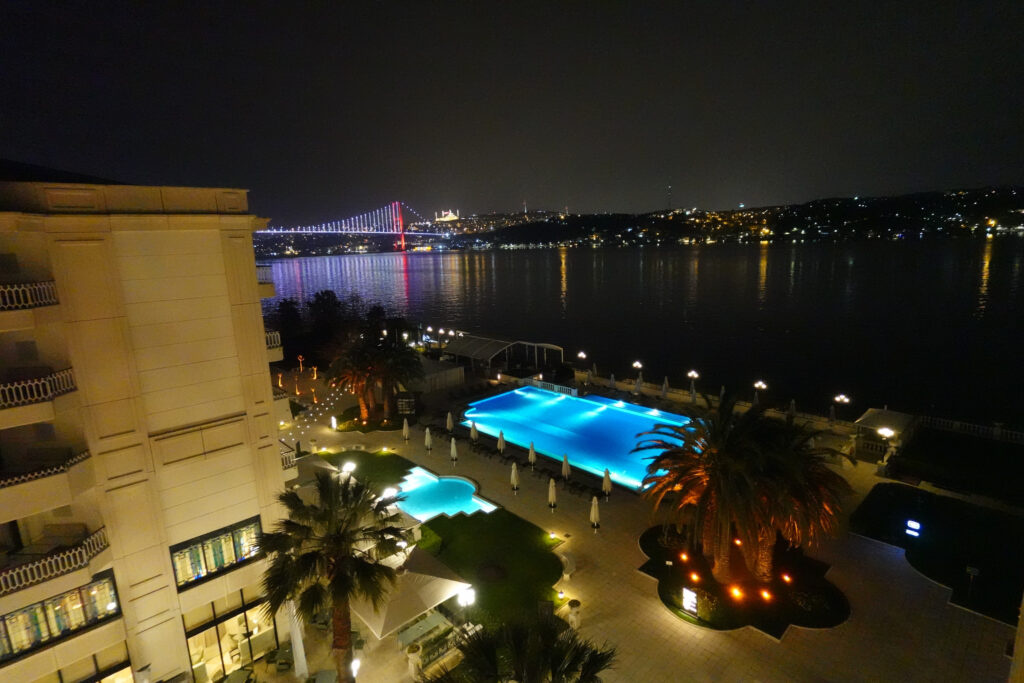
    The pool lit blue after dark, the illuminated bridge and city across the water
    The walk to dinner: the pool lit blue, the bridge lit red.
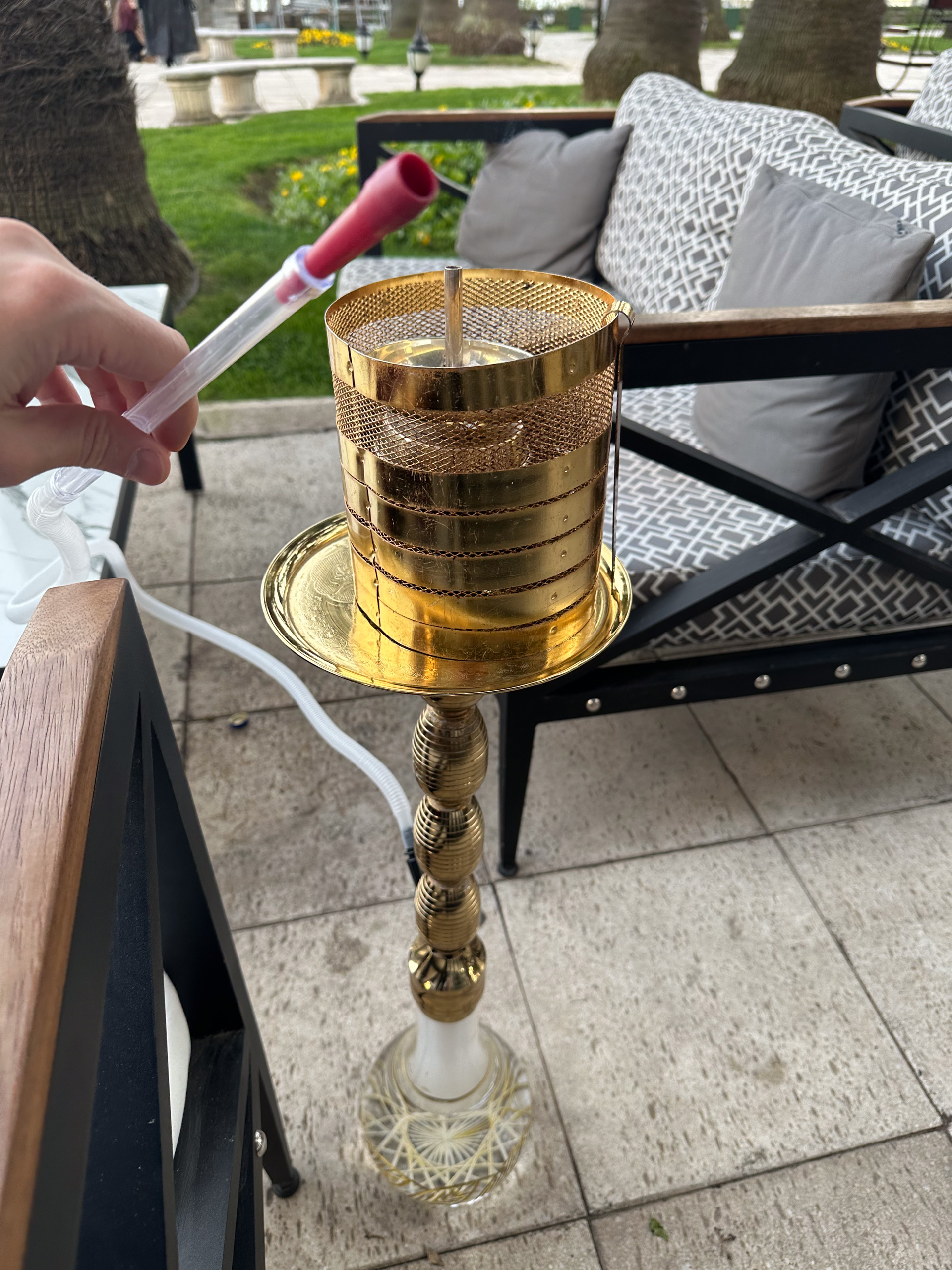
    A brass water pipe standing on the terrace, its mouthpiece held ready
    The nargile at the rail, held ready.
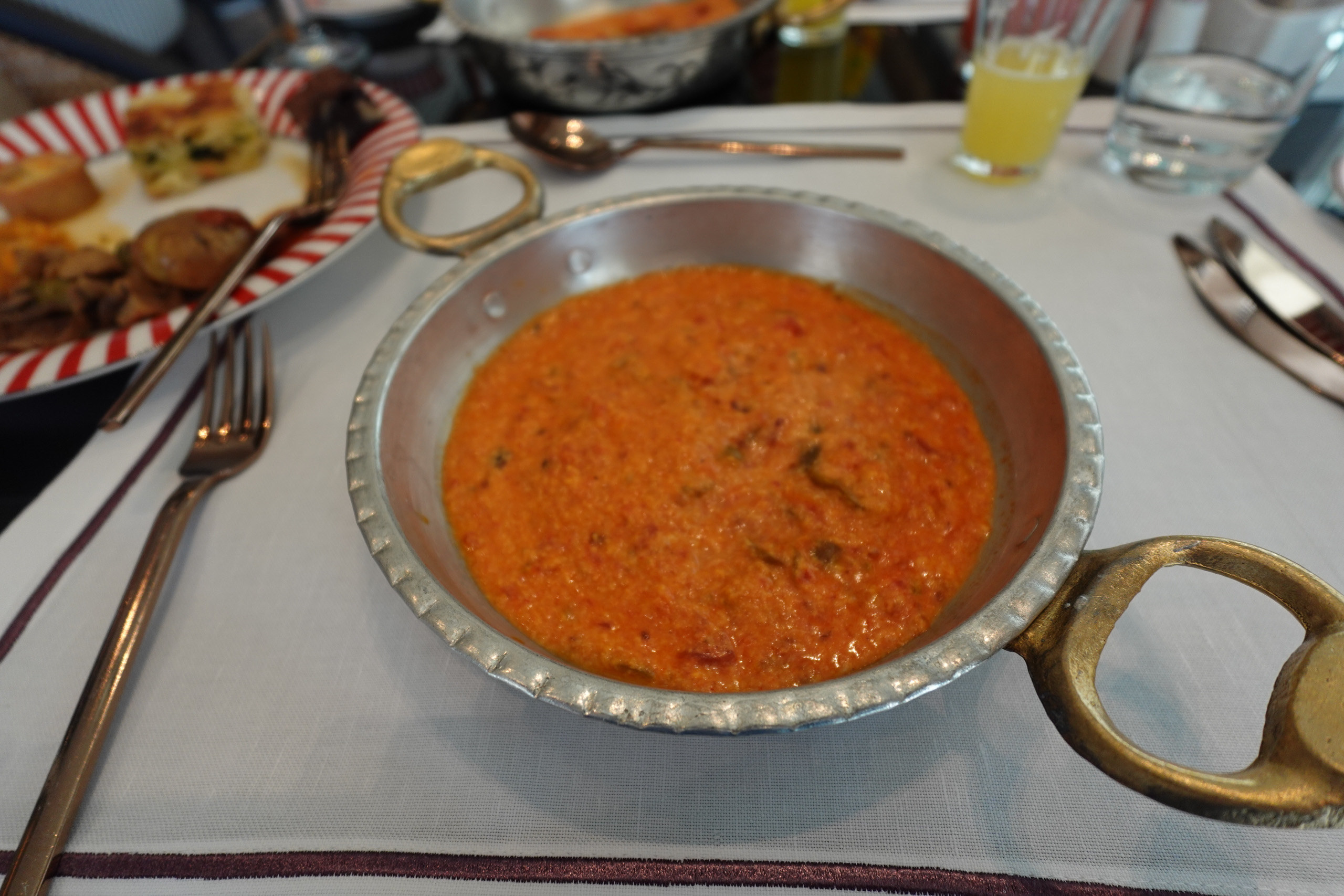
    A copper pan of tomato and egg at the breakfast table, plates and juice set around it
    Menemen in its copper pan, on the terrace.

    And there is more to see without leaving the building: the palace itself, a history wing the equal of any publicly accessible hotel’s, art worth several unhurried hours, and a front-desk tour that might end in the sultan’s suites. Dinner at Tuğra — Anatolian wines packaged by a sommelier who is unreasonably good at it, at a table over the water in the palace — is the single table I would book first at either hotel. Families fit better here too: grounds, pool, and room to run.
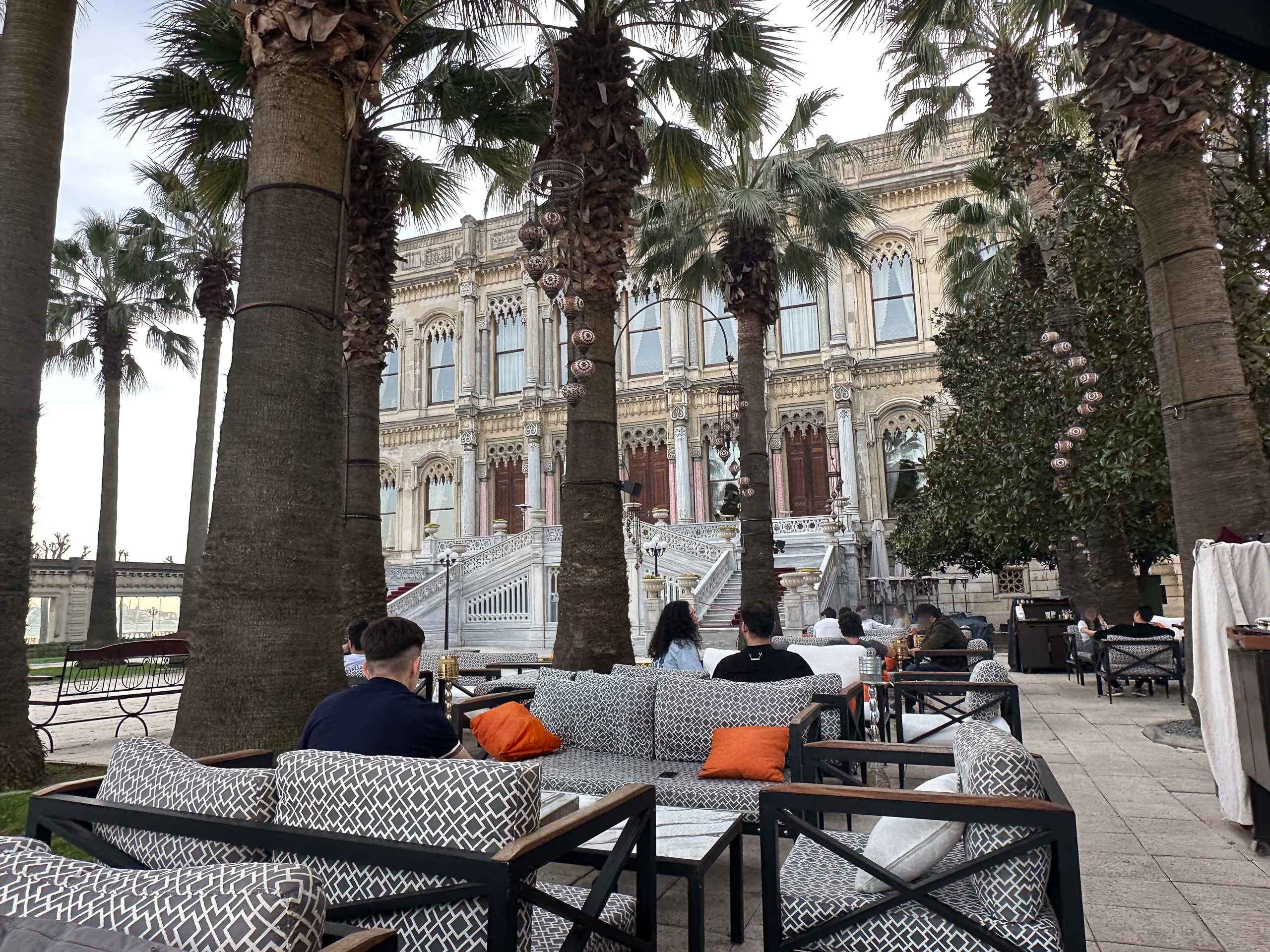
    The ornate palace facade seen through palm trunks from the terrace cafe
    The palace through the palms. Ask the front desk for the tour; it may end in the sultan’s suites.

    Where Four Seasons wins

    Ease. If Istanbul is a two-day stop, this is the base and it is not close: Hagia Sophia is three minutes away, the Blue Mosque is on the ridge above, and the whole of the old city is a walk. It is the see-all-of-Istanbul-in-a-day home base, and the action outside the door is nonstop and in your face, in the way a first visit wants.
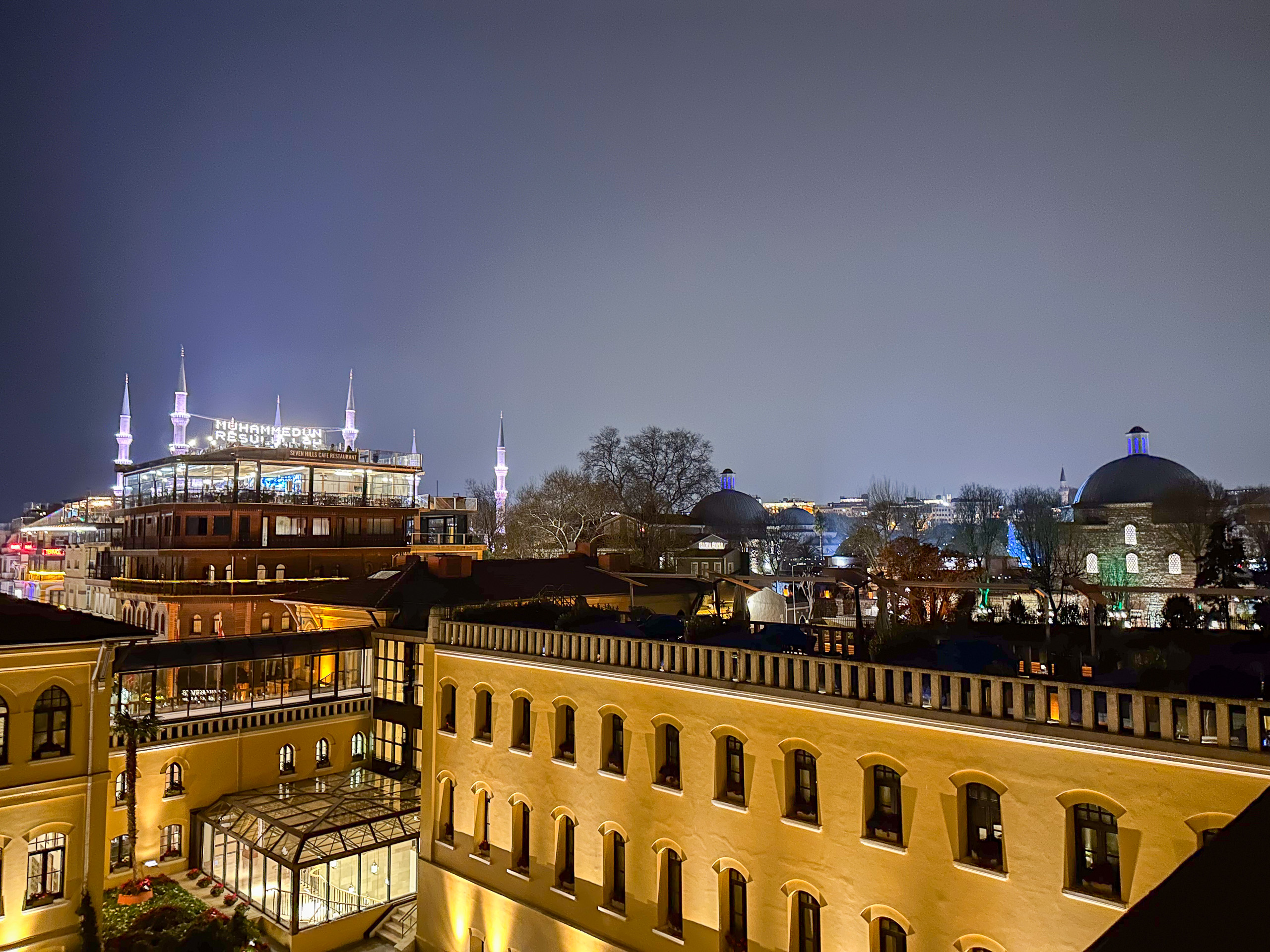
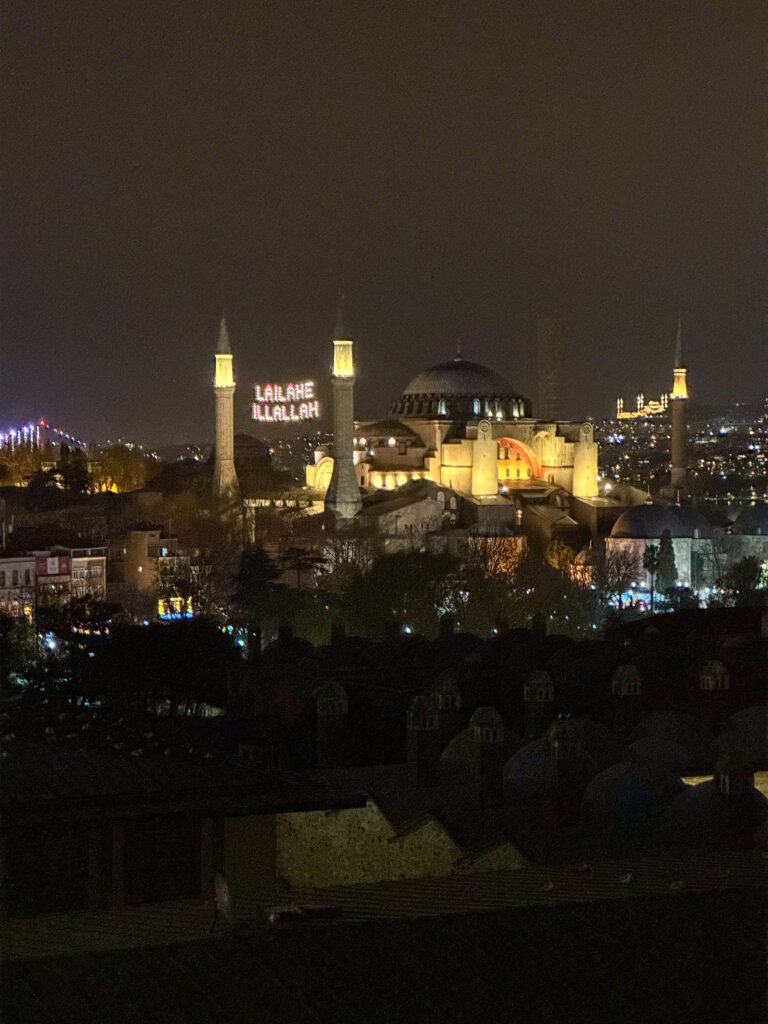
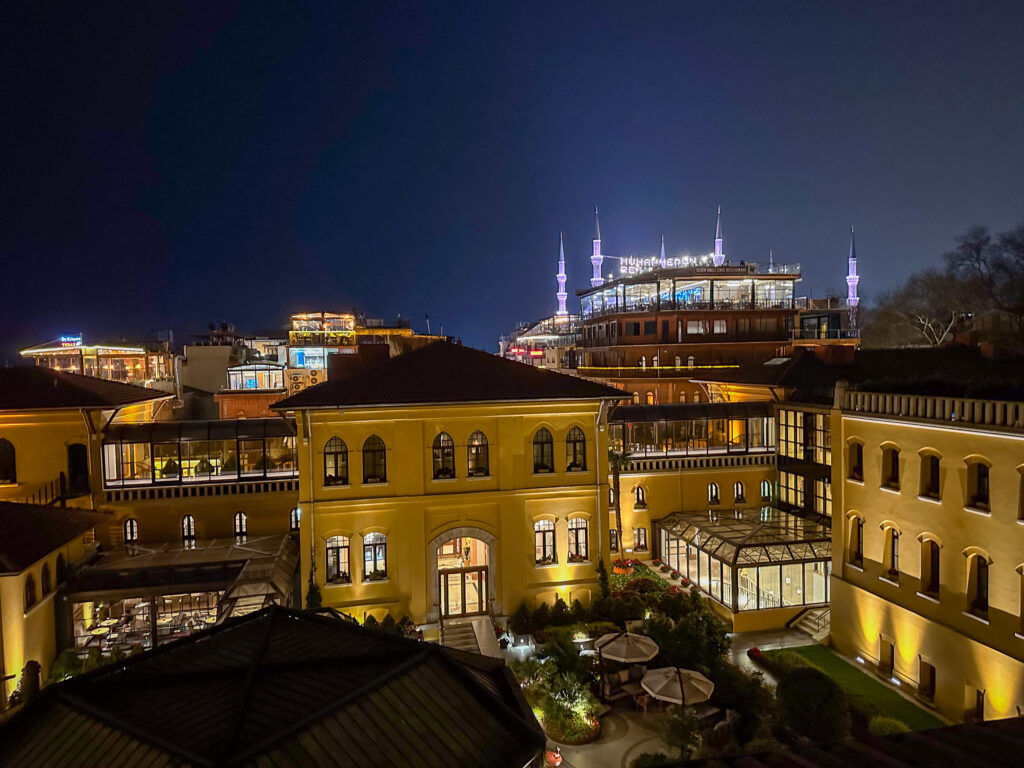
    The illuminated hotel facade at dusk with the mosque glowing violet on the skyline
    The hotel lit gold at dusk, the mosque going violet behind it. This is what the address buys, and nothing on the Bosphorus has it.

    The roof remains the best single view either hotel owns — Hagia Sophia square in front of you, the Marmara opening out beyond — and the small-house warmth is real: names by the first morning, breakfast under a blanket without asking.
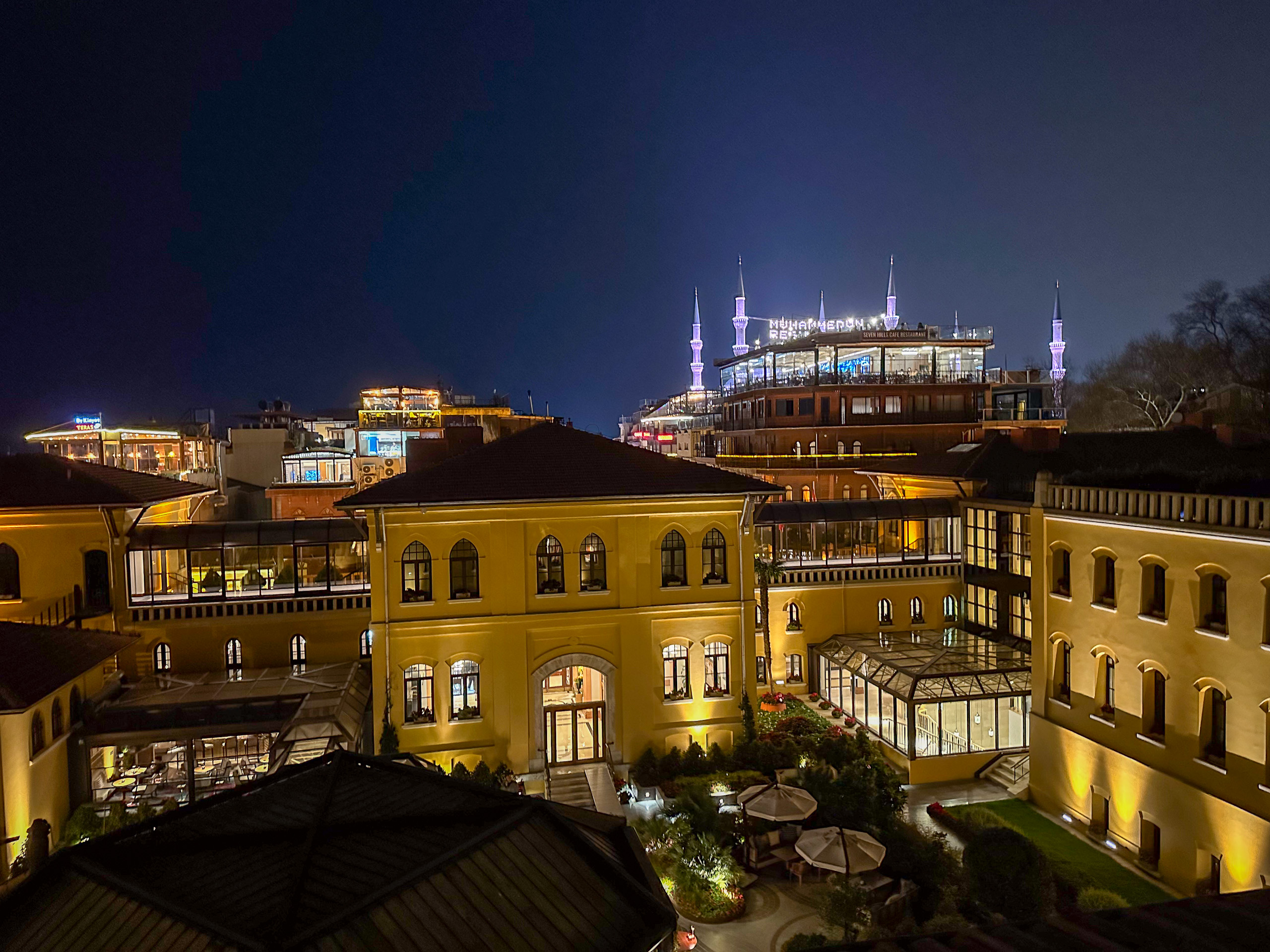
    The lit courtyard from above, with the floodlit domes and minarets of the Blue Mosque behind it
    The courtyard lit at night, the Blue Mosque behind.
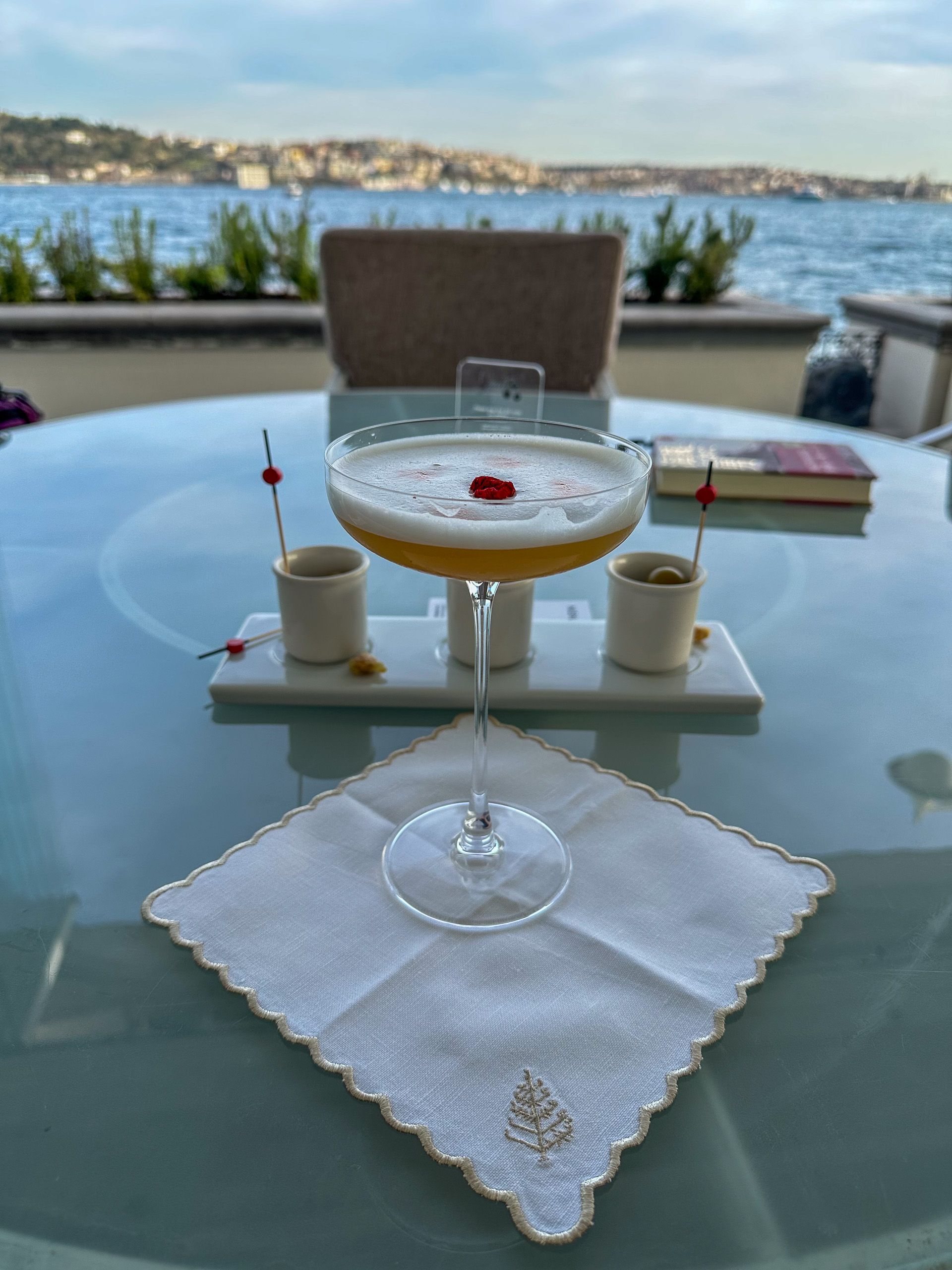
    A cocktail and its accompaniments on a tray, on a glass table looking out to the water
    A cocktail and its tray on the roof.
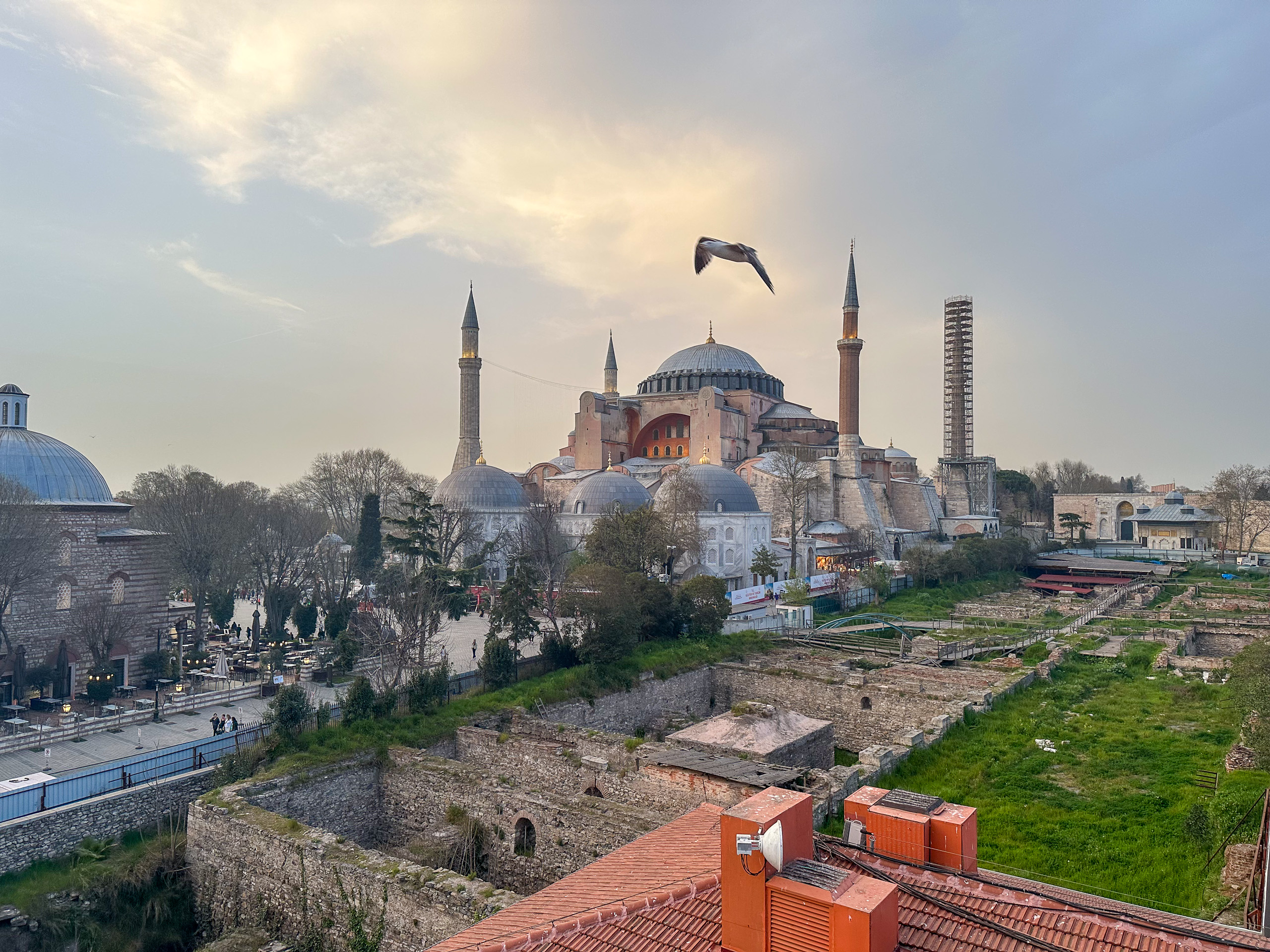
    A gull crossing a pink dawn above the gardens, with Hagia Sophia at the left
    A gull crossing Hagia Sophia at dawn.

    Verdict by traveller type

    Two days in the city: the Four Seasons, for ease of travel, and be on the roof half an hour before sunset.

    Three days or more: spend at least one of them — preferably two — at the Çırağan. The pace change is the point: the old city at full speed, then the water at none.
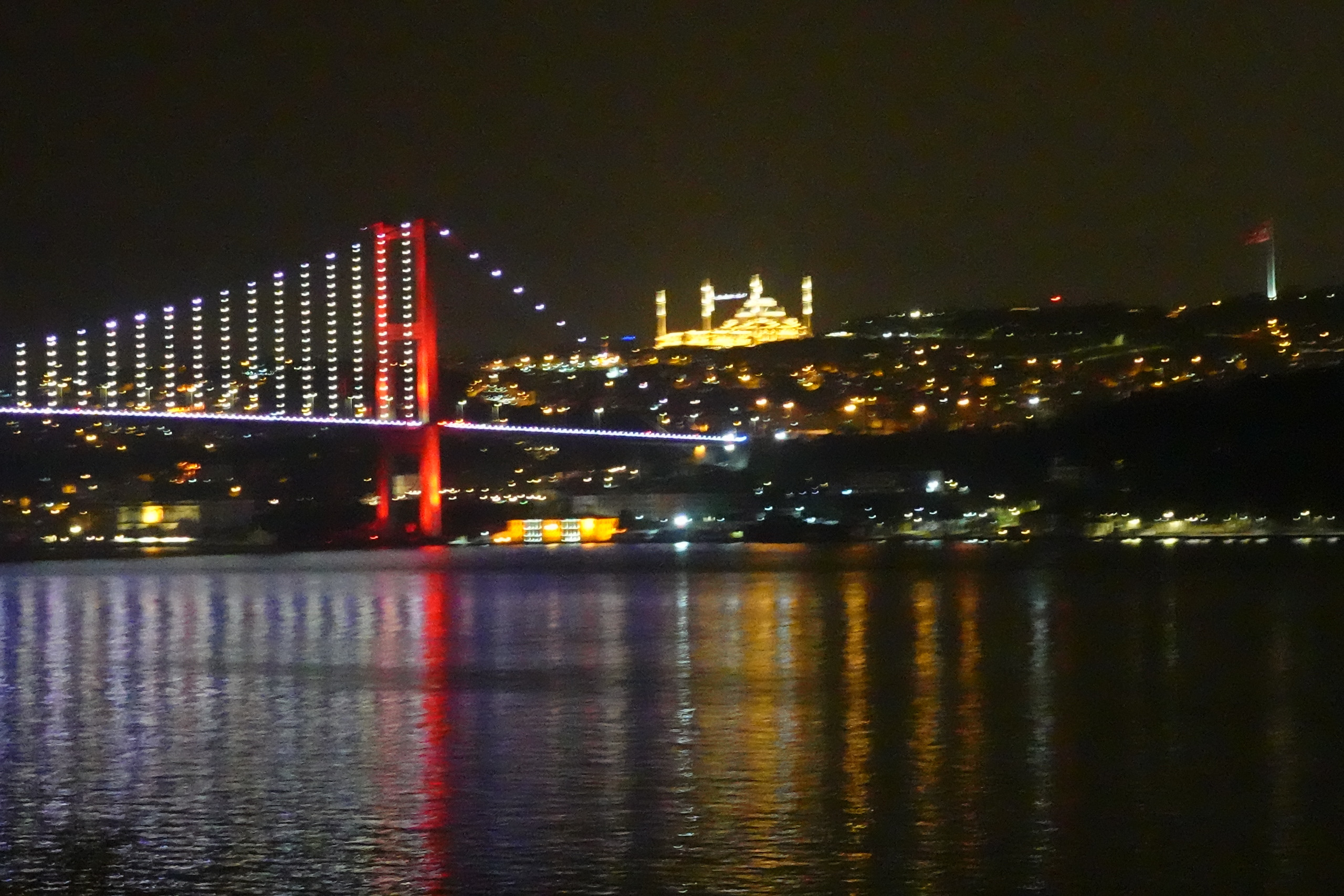
    The suspension bridge lit red across the Bosphorus at night, a floodlit mosque on the far shore
    The bridge at night, the mosque floodlit on the far shore. The Four Seasons does not have this. It also has no pool.

    Four days or better: do both in the same trip, and I mean that strongly. They are different cities that happen to share a name, and the boat between them is one of the great cheap pleasures on earth.

    With children: the Çırağan, for the grounds and the pool. For a first visit on a tight clock: Sultanahmet, and take the tram.

    Bottom line

    Both are excellent. Two days: Sultanahmet, for ease. Three or more: at least one night, preferably two, at the Çırağan. Four or more: both in the same trip, and thank me from the ferry.

    See the full set: Çırağan Palace Kempinski — in frames and Four Seasons Sultanahmet — in frames. The stays: Çırağan and Four Seasons Sultanahmet.

    The Istanbul galleries

    Every photo on this site is my own, shot on the stay. Slide through →
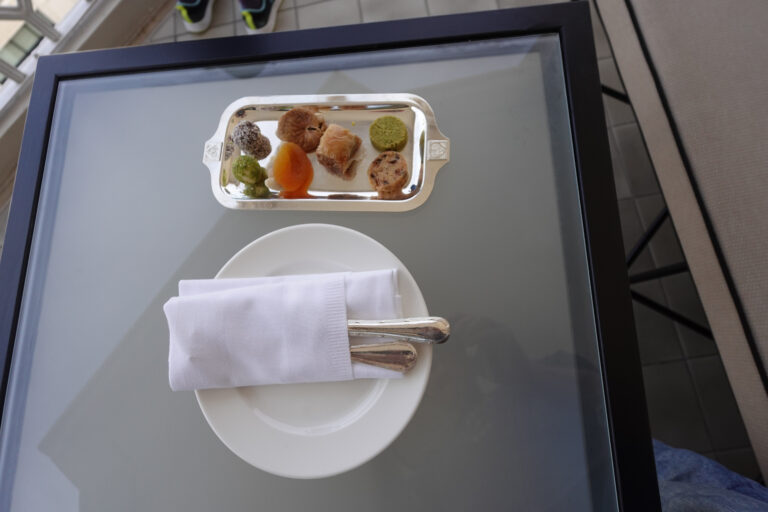
    A tray of Turkish sweets set beside a folded napkin and plate on a glass tableThe ochre wings of the hotel and the rooftops of Sultanahmet under a pale, hazy skyThe outdoor pool and gardens seen from above, ferries crossing the Bosphorus beyondA warm, low-lit passage with framed pictures and an open door to the room beyondTwo red tub chairs at a round table with an ice bucket, framed Ottoman prints on the wall aboveClose-packed roof tiles in the foreground, the mosque rising through a warm dusk beyond themTerrace seating on the lawn looking towards the water in early lightHagia Sophia and the Blue Mosque lit above the dark gardens between themA long corridor with a patterned red and cream carpet running towards a lit windowThe mosque's minarets picked out in floodlight above the silhouetted rooftops

  • Galeyan: The Menu Tells You What Month It Is

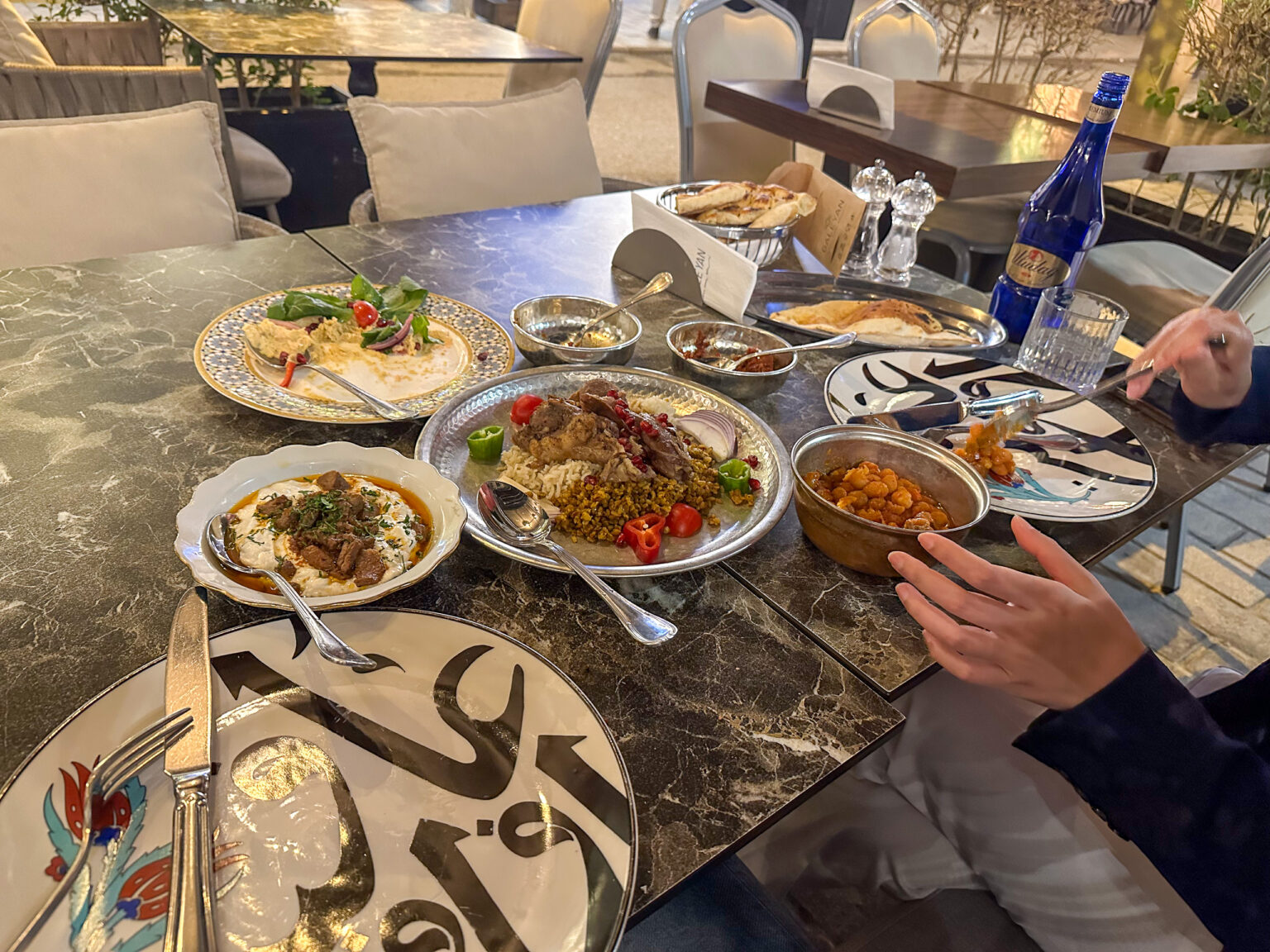
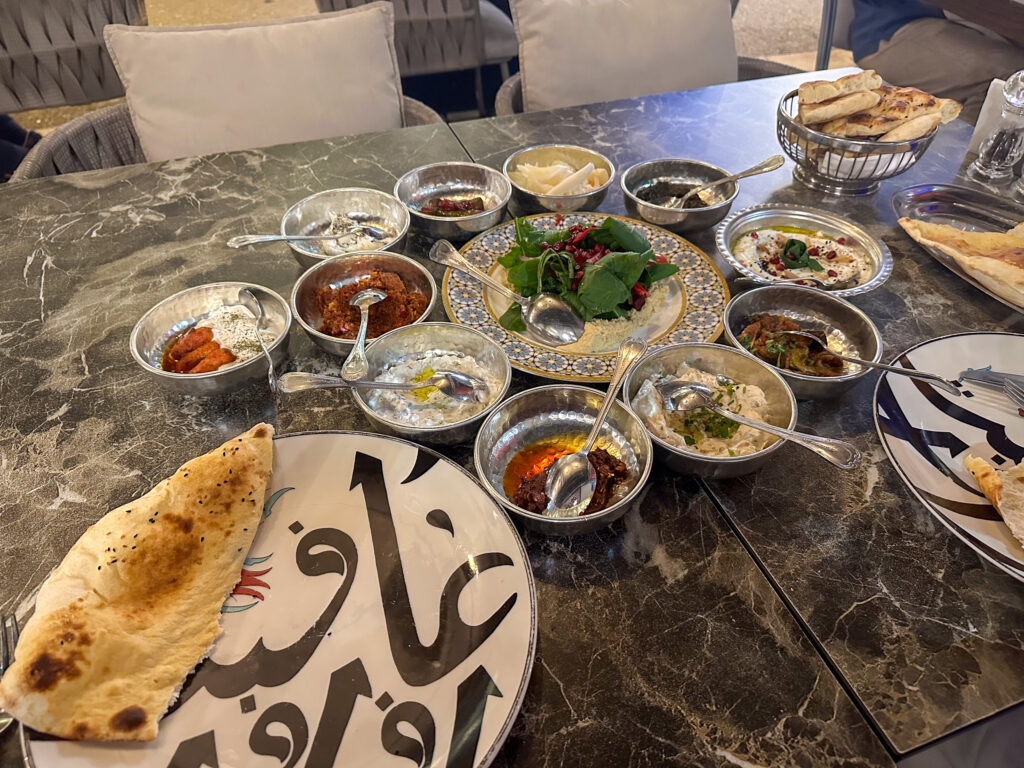
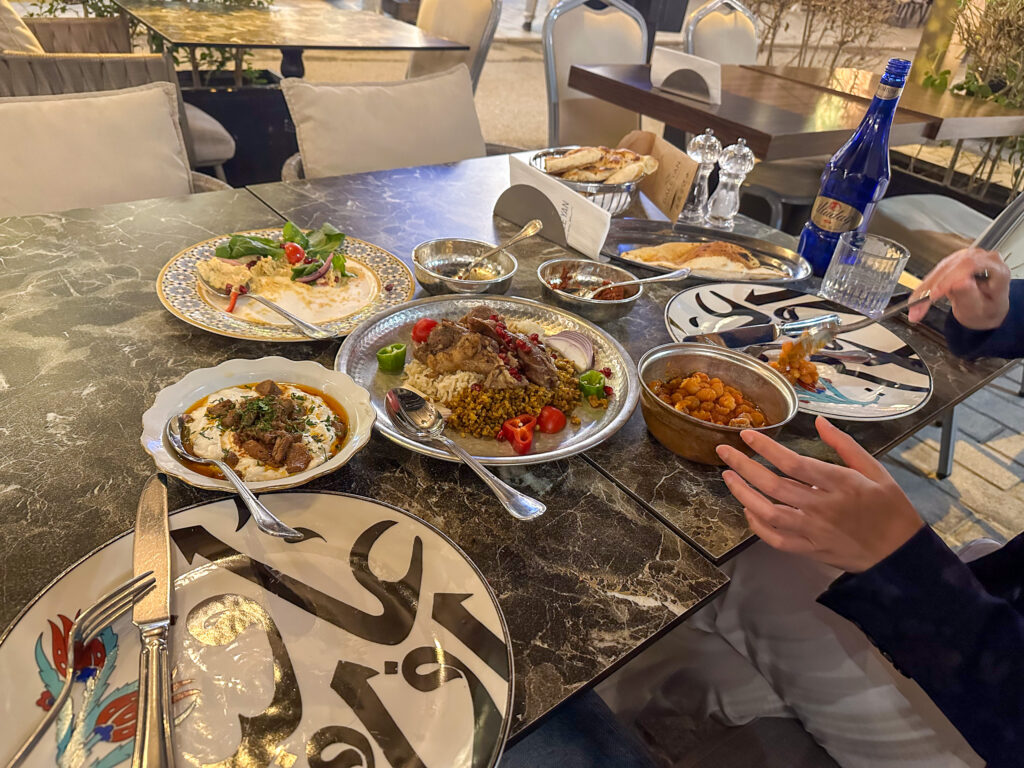
    Hummus under dressed greens, a platter of grilled meat over rice and freekeh and a copper pot of chickpeas on a dark marble terrace table

    ISTANBUL, TÜRKİYE · RESTAURANT · 8 MIN READ

    Galeyan: The Menu Tells You What Month It Is

    An Anatolian kitchen beside Hagia Sophia that prints the months against its kebabs, opens at nine in the morning, and publishes not so much as a menu.

    By J.C. Mercer

    Verified meal·paid in full

    • Covers Two, on the terrace
    • Menu À la carte: mezes, bread and grills, not the tasting menu
    • Drinks No pairing is offered
    • How it was booked The way any other guest would

    Every meal on this site is booked the way any other guest would book it.

    Galeyan stands on Ticarethane Sokak, a narrow lane in Sultanahmet lined end to end with restaurants, inside Sura Design Hotels & Suites and a short walk from Hagia Sophia. That address usually tells you what to expect: laminated photographs of the food, a man outside with a clipboard, a kitchen built for people who are never coming back. Galeyan is on that street and is not that restaurant, and the evidence is its own menu, which runs to forty pages and prints the months beside several of its dishes.

    The cooking is southeastern. Gaziantep and Antakya above all, with dishes from Kilis, Birecik, Siverek and Urfa scattered through the list, served in a hotel dining room in the most visited quarter of the city. This is not a reinterpretation of Anatolian food into something new; it is a regional recipe book, cooked straight. It holds one toque and 11.5 out of 20 from Gault&Millau Türkiye, entered in 2023. It is not in the MICHELIN Guide, which did not reach Istanbul at all until October 2022.

    What it does not do is publish a menu. Not on its website, which is a single page; not on the menu it puts online, where the numerals are set in a font that will not read; not anywhere else, in any language. At the top end of a tourist quarter, that is worth knowing before you sit down.

    A menu with the months printed on it

    The printed menu was last revised in April 2026 and reprinted in July. Most of it is the standing list any good southeastern kitchen carries: mezes, kebabs, pilafs, a long breakfast, a short seafood section. Then, under headings for spring–summer and autumn–winter, individual dishes carry a service window. Not a vague note about seasonality. Months, against dishes.

    The truffle kebab runs March to May, and the truffle in question is keme, the pale desert truffle that comes up out of the southeastern steppe after the spring rain and has nothing to do with the ones sold by the gram in Piedmont. The loquat kebab runs April to June, roughly as long as loquats are worth eating. Then tomato takes high summer, Birecik aubergine takes the autumn, and the onion kebab appears in November and again in February and at no point in between.

    DishOn the menuWhat it is
    Keme kebabıMarch to MayKebab with keme, the southeastern desert truffle
    Taze enginarApril to JuneFresh artichoke in olive oil
    Yeni dünya kebabıApril to JuneLoquat kebab
    Taze fasulyeApril to JuneGreen beans in olive oil
    Domates kebabıJune to AugustTomato kebab
    Şiveydiz çorbasıJune and SeptemberMeat, chickpea and fresh-garlic soup
    Patlıcan kebabıJuly to NovemberAubergine kebab, made with Birecik aubergine
    Soğan kebabıNovember and FebruaryOnion kebab, two months, not consecutive
    Taze kerevizNovember to FebruaryFresh celery in olive oil

    Read down that middle column and the year has a shape: truffle and artichoke in spring, loquat in early summer, tomato in the heat, aubergine through the autumn, onion and celery in the months when the southeast has always fallen back on onion and celery. A restaurant that only wanted to look seasonal would print the word and leave itself room. This one has committed to dates in ink, which means a good part of its own list is deliberately unavailable at any given time.

    One caution, and it is the reason to telephone rather than assume: a printed window is a promise, not a service record. If you have picked your month for the keme kebab, ask when you book whether it is actually on.

    What arrives first

    Eleven hammered steel bowls of meze ringed around a tiled plate of hummus, with a folded sesame flatbread on a calligraphy-painted plate
    Eleven bowls before anything is ordered from the grill. The hummus, centre, comes as a salad rather than a dip.

    The meze arrive in hammered steel and copper bowls, ten or eleven at once, covering the table before anything else is decided: chilli paste slicked with oil, red pepper paste, cacık, a whitened aubergine purée, braised aubergine in tomato, thick yoghurt under dill. The bread is a long flatbread flecked with black sesame, folded once across a hand-painted plate, warm, and it keeps coming.

    The dish at the centre is the one to order. The hummus here is not a dip: it is spread wide and flat across a blue-and-white tiled plate, dressed with oil, then heaped with leaves and pomegranate seeds so that you eat it in forkfuls rather than scoop at it. There is a version with pastırma over the top. It is the single dish this kitchen is most often named for, and the photograph explains why in a way the menu line does not.

    Past the mezes the set pieces are the southeastern ones: içli köfte, semsek, testi kebabı sealed in clay and broken open at the table, ali nazik, hünkâr beğendi, firik pilavı made with green freekeh. The grills arrive on a wide steel platter over rice and freekeh with a charred green pepper, a tomato, sumac onion and pomegranate, a format anyone who has eaten in Antep will recognise on sight.

    A terrace on a restaurant street

    Every photograph I came away with is of the terrace, so that is what I can describe. It runs along the front of the hotel under a fixed canopy, heaters slung from the frame and lights strung through it, which makes it usable in a cold Istanbul spring. The tables are dark green-black marble, square and slightly too small once eleven bowls are down; the chairs are woven rattan with heavy white cushions, closer to a hotel lounge than a lokanta.

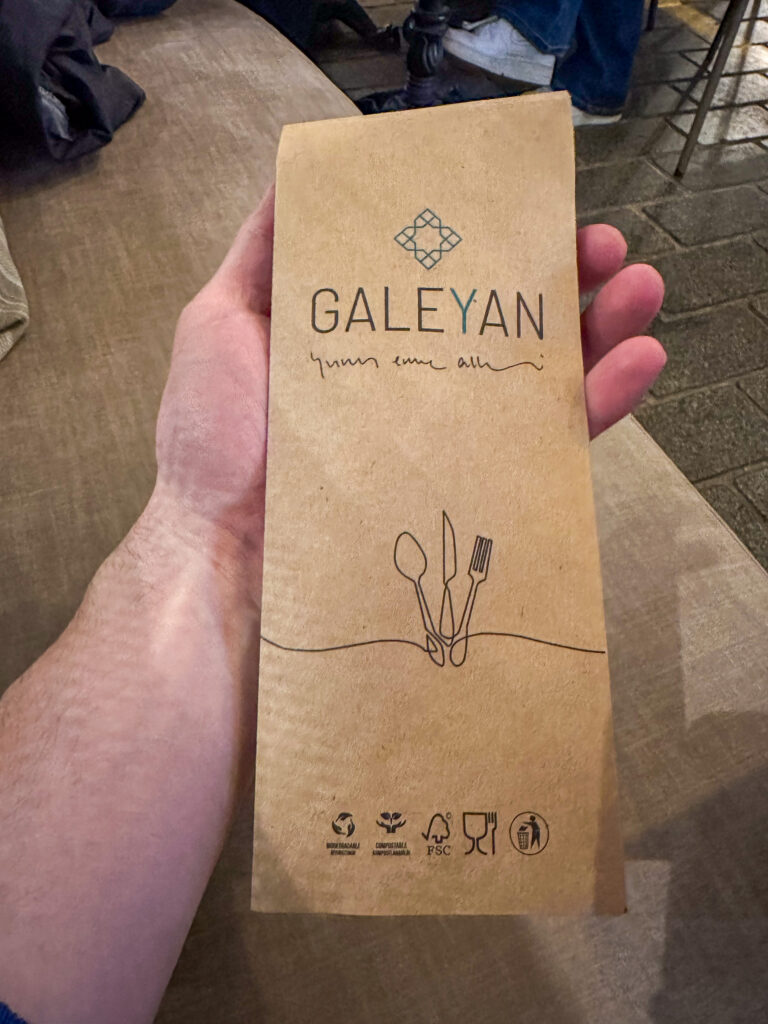
    The tableware is where the ambition has gone. The plates are hand-painted, black Ottoman calligraphy sweeping across white with a carnation or tulip in one corner, and no two settings are quite the same. Water comes in cobalt glass bottles, salt and pepper in cut-glass mills, and the cutlery arrives folded into a printed kraft sleeve stamped compostable, a level of attention most of this street does not bother with.

    A hand holding a kraft paper cutlery sleeve printed with a tile emblem and a line drawing of a spoon, knife and fork
    The cutlery sleeve: a tile emblem, a single-line drawing of spoon, knife and fork, and a compostable stamp on the base.

    The terrace also gives you the street, and Ticarethane Sokak is not quiet: you look across a few metres of lane at another dining room and a lit façade. In warm weather that is the pleasure of the place. In February it is the argument for sitting inside, a room I cannot show you because I did not photograph it.

    Open at nine, and it will feed anyone

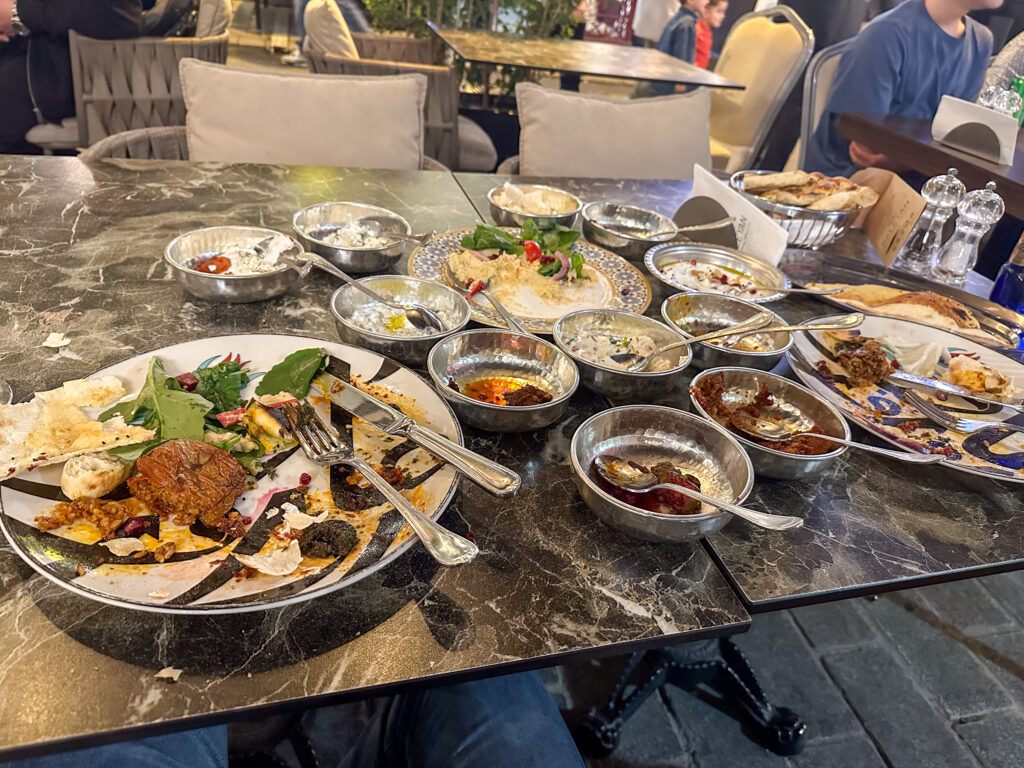
    A marble table halfway through the meal, meze bowls half emptied and a calligraphy plate scattered with freekeh and pomegranate
    Halfway through. Nothing here is portioned to be eaten by one person in one sitting.

    The doors open at nine in the morning and do not shut until midnight, seven days a week, and that single fact explains the restaurant better than any description of the cooking. Breakfast is a proper draw: plates loaded with cheeses, pistachio halva, honey and cream, curd, olives and pepper paste; hot plates of spiced potatoes, fried Antep cheese and pan eggs; poached eggs with pastırma on sourdough. In Ramadan the kitchen runs iftar menus, as it has for years.

    It is also, unusually for an ambitious Turkish kitchen, easy to eat in. Vegetarian, vegan and gluten-free options are on the list, and the printed menu asks you to declare an allergy before you have to raise it yourself. Highchairs are available and there is no minimum age. Cards are taken, Amex included.

    A tasting menu exists alongside the à la carte and has done since at least 2022, as do set menus for groups. Neither is described anywhere: no course count, no sample list, nothing at all. If that is what you want, it is a telephone call, not a click. The house reckons about thirty minutes from order to table, worth knowing if you hold a ticket for something afterwards.

    The counter-argument

    The case against Galeyan is narrow and consistent: not that the food disappoints, but that people walk out feeling the evening promised more than it delivered. Two versions of it circulate, and they contradict each other instructively. One says the cooking was fine, the room pleasant, the service warm — and still the promise outran the plate. The other says the food fell short of the setting. Both are complaints about the promise. Neither is a kitchen complaint.

    It is worth naming what nobody complains about, because that silence is louder. Not the service, which is the most consistently praised thing about the place. Not the room, the portions, the pacing, or how allergies and diets were handled. There is no recurring story of a bad table, a slow kitchen or a party turned away.

    So weigh it for what it is. A hotel restaurant in the most visited quarter in Istanbul, open nine to midnight, in a quarter that turns over a great many visitors a day. Two things are true at once: the cooking is truly regional and truly careful, and you are paying an Old City address for it. The same recipes exist in Gaziantep, a very long way from Hagia Sophia.

    Know before you go

    Book by telephone or WhatsApp: the restaurant’s line is +90 212 513 83 90, its reservations number +90 531 372 4489. There is no online booking of any kind. The “Book a Table” button on the website scrolls you down the page rather than taking you anywhere, and the entire English site is that one page. Email reaches them at info@galeyann.com, with the double N the domain uses and the restaurant does not.

    Two questions are worth asking on the call. Which of the seasonal dishes are running this week; and terrace or inside; the terrace is the better room in warm weather and the wrong one in a cold March.

    It is an easy restaurant to use, rarer in Sultanahmet than it should be. It opens at nine, so a late breakfast or a quiet lunch needs no planning and dinner is the sitting to secure. Order fewer mezes than the table wants and add more. And if you are coming for one dish off that calendar, come in its month, because the kitchen has already told you when that is.

    See the full set: Galeyan — in frames. More Istanbul: Türk Fatih Tütak.

    The seasonal dishes are the smallest part of this menu. They are the only part that tells you what the kitchen is for.

    Don’t miss

    • Ask which seasonal dishes are actually on.
    • The hummus, spread flat, not as a dip.
    • A terrace table, requested when you book.
    • Breakfast from nine, a separate reason to return.
    • Reserve on WhatsApp. There is no online booking.

    The Galeyan gallery

    Every photo on this site is my own, shot on the night. Slide through →

    Hummus under dressed greens, a platter of grilled meat over rice and freekeh and a copper pot of chickpeas on a dark marble terrace tableEleven hammered steel bowls of meze ringed around a tiled plate of hummus, with a folded sesame flatbread on a calligraphy-painted plateA marble table halfway through the meal, meze bowls half emptied and a calligraphy plate scattered with freekeh and pomegranateA hand holding a kraft paper cutlery sleeve printed with a tile emblem and a line drawing of a spoon, knife and fork
  • Four Seasons Sultanahmet: A Former Prison, Two Hundred Paces from Hagia Sophia

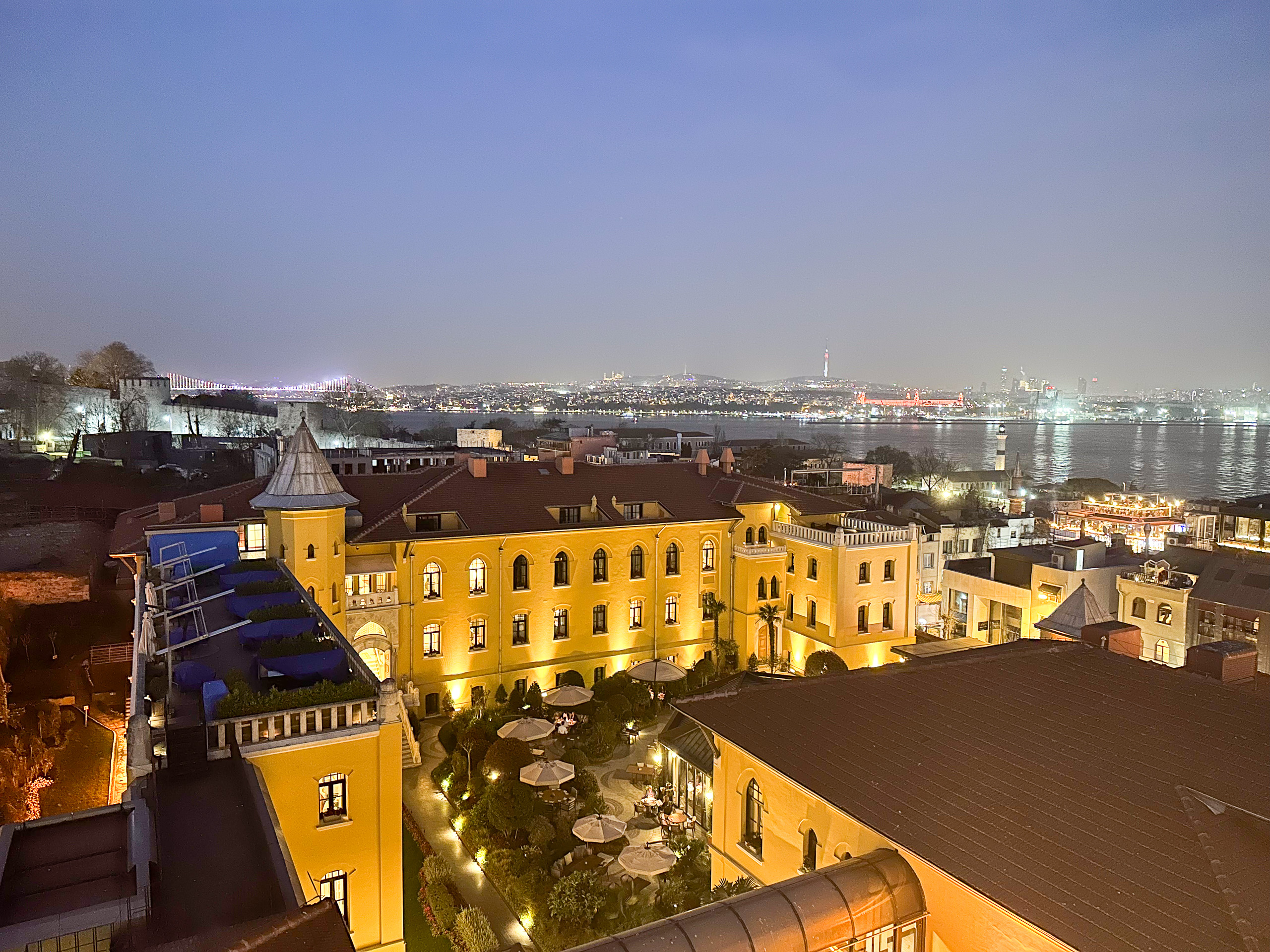
    The ochre hotel lit at night from a rooftop, its glazed courtyard pavilion below and the floodlit minarets of the Blue Mosque on the ridge behind

    ISTANBUL, TÜRKİYE · STAYED APRIL 2025 · 5 MIN READ

    Four Seasons Sultanahmet: A Former Prison, Two Hundred Paces from Hagia Sophia

    A former prison two hundred paces from Hagia Sophia, and what the conversion did and did not solve.

    By J.C. Mercer

    Verified stay·paid in full

    Four Seasons Istanbul at Sultanahmet

    • Stayed April 2025
    • Room booked Deluxe Room, king, courtyard side
    • How it was booked AmEx FHR
    • What the channel bought Full Fine Hotels and Resorts Package w/ Upgraded Room
    • Value verdict Worth it for two nights in the old city; not as a base for a week.
    • When to go April-June Book this stay

    Booked the way any other guest would book it.

    Arrival

    The street is called Tevkifhane Sokak, which means detention house street, and the hotel is the reason. For half a century this ochre building held prisoners, a good number of them writers and journalists, and the address kept the name after the function changed. Nobody at the hotel is coy about it; the history is on the wall in the corridor, which is the right decision, because a building this shape cannot pretend to have been anything else.

    It stands about two hundred paces from Hagia Sophia, with the Blue Mosque on the ridge above and the Sea of Marmara below. There is no hotel site in Istanbul like it, and there is not going to be another one. The quarter has a rhythm you learn by the second day: at seven in the morning the square is yours, by nine the coaches have arrived, and by seven in the evening it has emptied again.

    Looking down into the courtyard, its glazed pavilion set among the ochre wings
    The exercise yard, now the best room in the hotel: a glazed pavilion between the ochre wings.

    You can read the plan. Corridors run straight and long because they were galleries. Rooms sit in a rhythm because cells did. The proportions are tall and narrow in a way no hotel architect would choose, and the effect is better than it sounds: high ceilings, deep window reveals, thick walls that make the place quiet in a quarter that is not. It is the only hotel I know where “the walls are thick” is a matter of public record.

    The exercise yard is now a garden with a glazed pavilion in the middle, and every route through the building crosses it. It is a small hotel, and the scale is the single most important thing to understand about staying here: staff learn your name on the first morning because there are not enough guests for them not to, and the courtyard never feels crowded even when the house is full. There is no lobby scrum, no queue at the desk, and no moment at breakfast when the room turns over and the staff visibly change gear. Small hotels are not automatically better than large ones. This one uses its size properly.

    The room

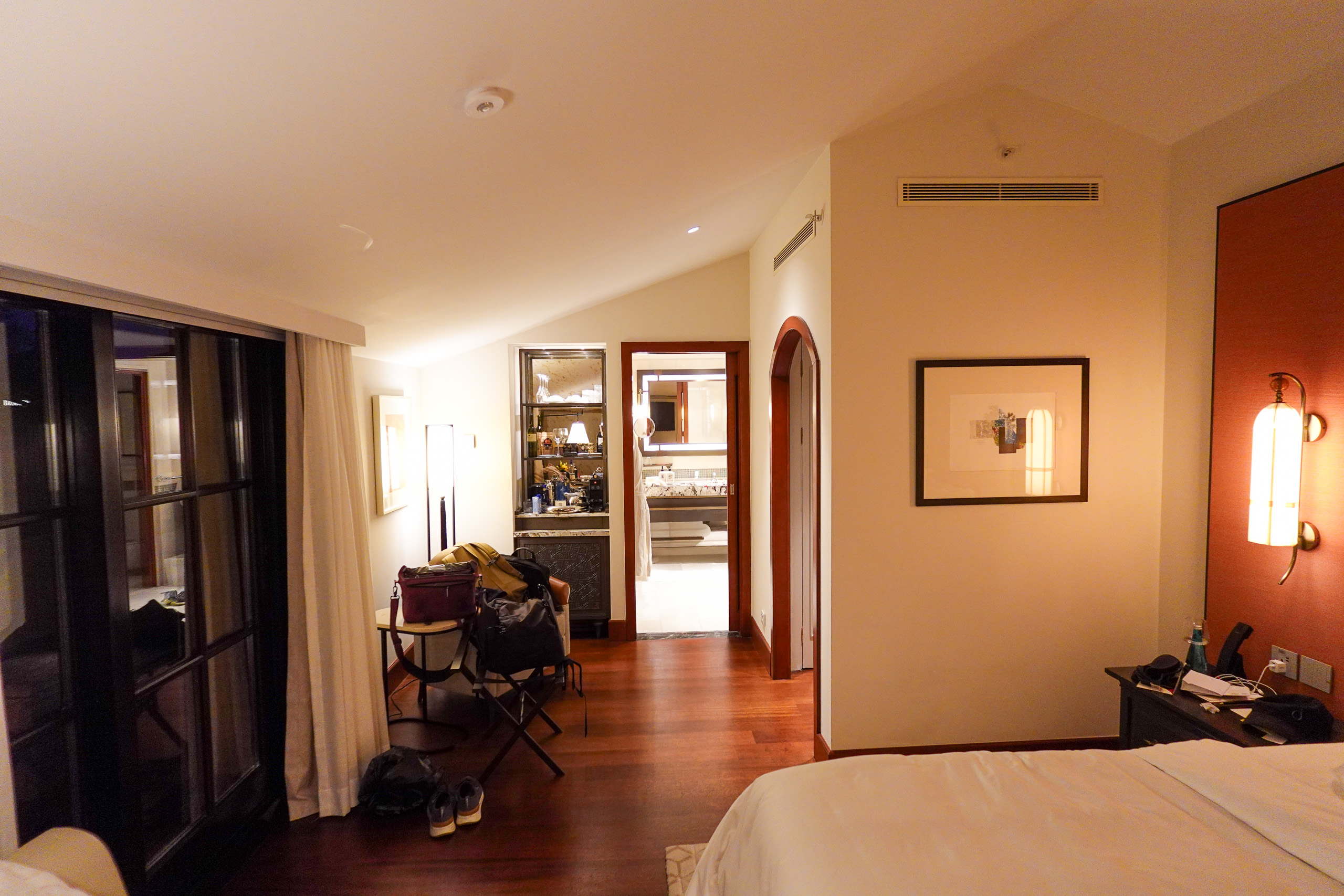
    I had a Deluxe Room on the courtyard side. Warm ochre walls, a dark timber headboard, an arched doorway through to the bathroom, a wall sconce rather than a downlight, dark boards underfoot. It is a warm, low-lit, slightly old-fashioned room, and it is a great deal more comfortable than the exterior leads you to expect.

    White linen and a warm bedside lamp, with the door to the sitting room ajar
    Deep reveals, thick walls, and a room that is quieter than the address suggests.

    The variation between rooms is real and worth managing. The building has a fixed geometry and the rooms were fitted into it rather than the other way round, so some look at the courtyard, some at a wall, and a small number look at the monuments. If the view is why you are booking, name it at the time of booking and be specific. The difference in the room is small. The difference in what is outside it is enormous. Nobody will volunteer this at check-in, for the same reason nobody volunteers the view from the lesser seats.

    A warm, low-lit passage with framed pictures and an open door to the room beyond
    The lamp, the framed prints, the door to the sitting room.
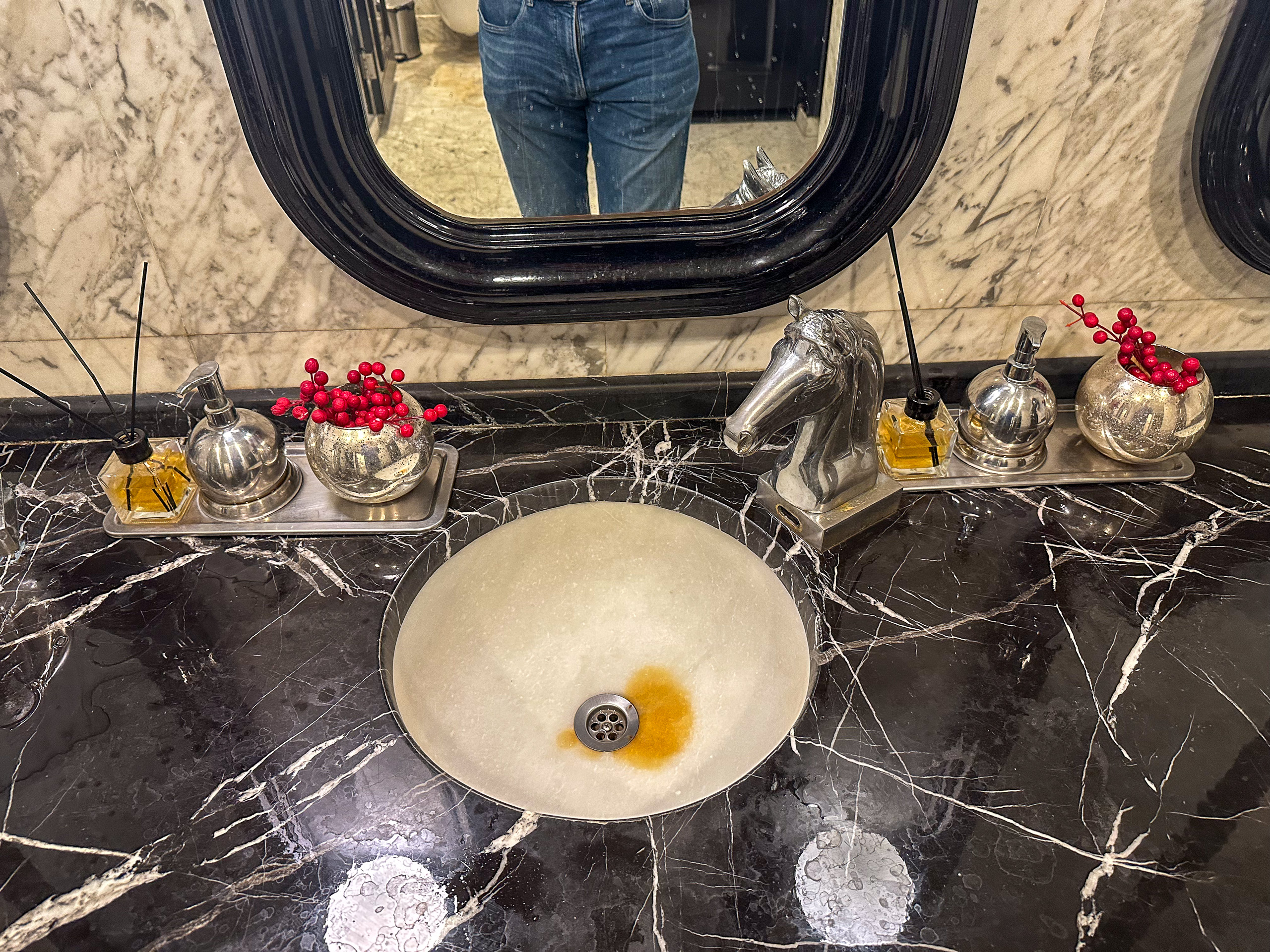
    An alabaster basin set into black marble, silver fittings and a dark oval mirror above
    The alabaster basin in black marble.
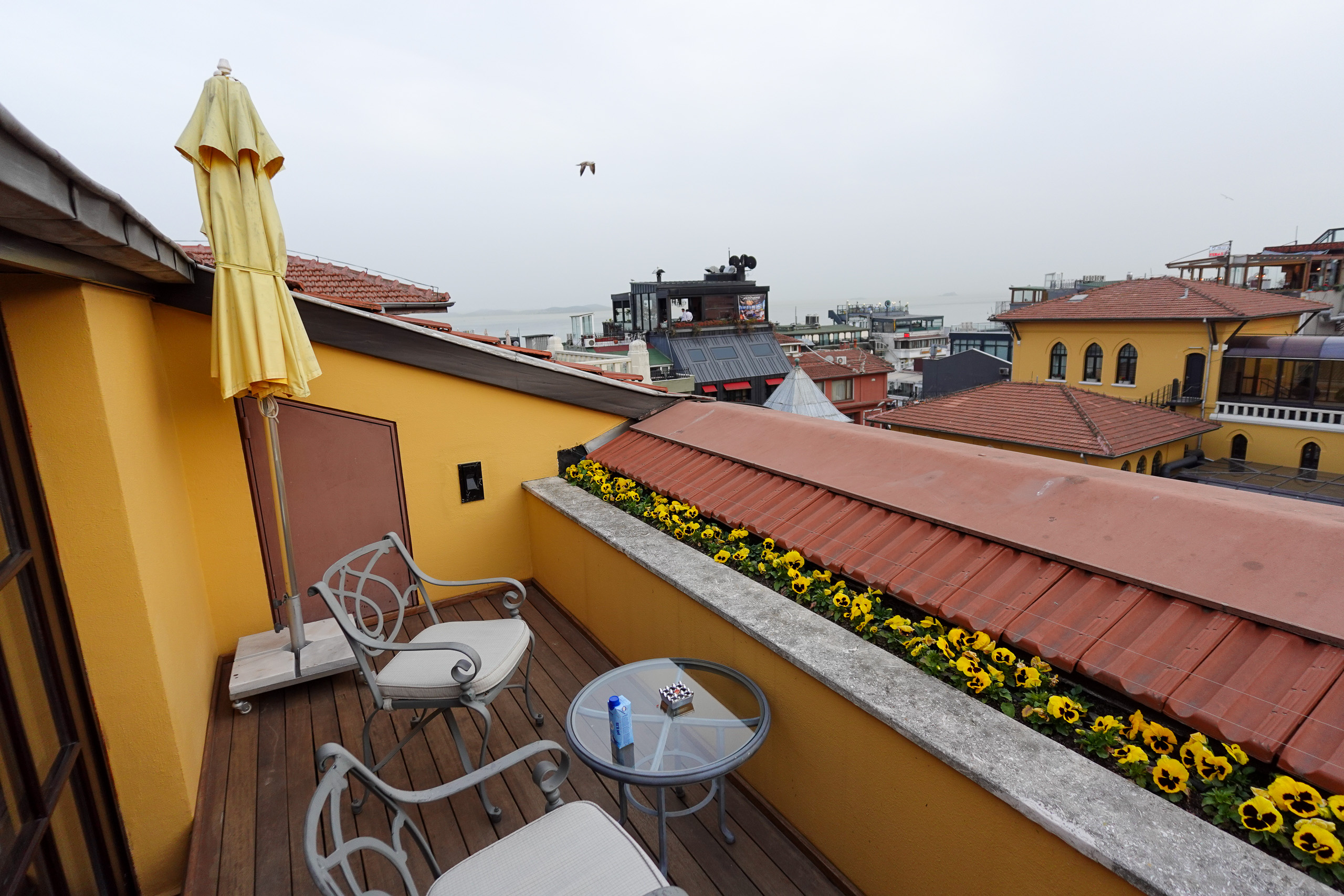
    A parasol, two chairs and planted boxes on a private roof terrace above the tiles
    A private roof terrace, two chairs, the tiles.

    Noted

    Observed on the stay, not measured.

    WhatChecked on the stay
    Walk to Hagia SophiaThree minutes, and you are inside the site boundary before that
    NoiseSilent in the room; the call to prayer carries on the roof, which is the point
    BedKing, medium-firm
    Water pressureStrong and hot, no wait
    PoolNone on site — guests use the pools at the sister hotel on the Bosphorus
    SpaKurna Spa, hammam, steam and sauna; books out

    Eating

    Avlu is the courtyard and the pavilion, contemporary Anatolian, and it is the rare hotel dining room in a monument quarter that locals will cross town for. Breakfast there is the meal to plan around rather than the one to rush: a full Turkish spread rather than a continental one with olives added, served outside under a blanket in April. Have it included, and book the dinner before you arrive. Best in class honeycomb and bread. DO NOT SKIP.

    A cocktail and its accompaniments on a tray, on a glass table looking out to the water
    A cocktail and its accompaniments on the roof, on a tray, looking out to the water.

    Lingo Lingo is the bar and restaurant, La Pistache the patisserie, and The Rooftop is where the evening ends. Four rooms in a hotel this size is generous, and none of them feels like a room that exists because the brand standard required one.

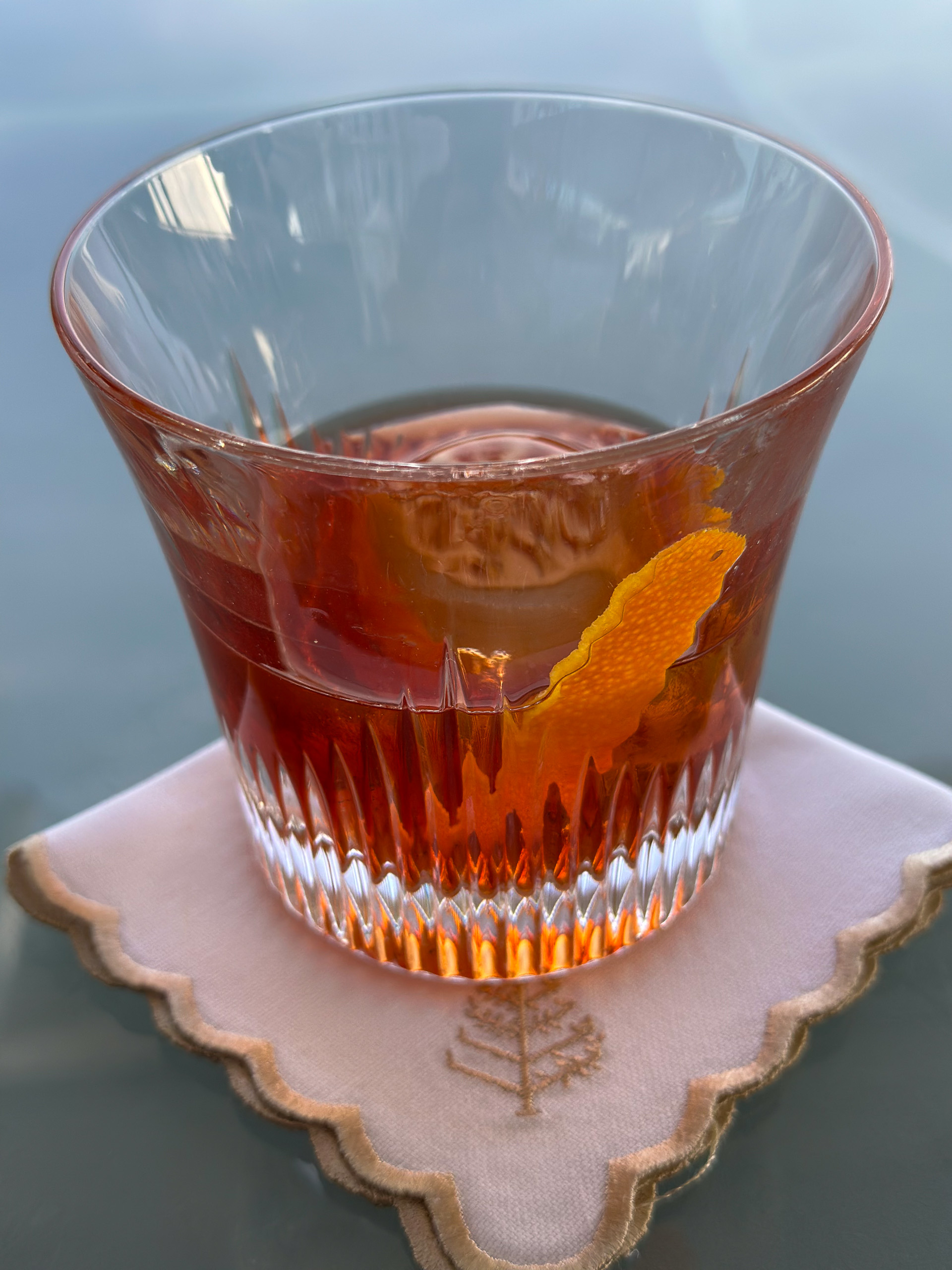
    A negroni with a twist of orange in a cut glass, set on a scalloped linen coaster
    A negroni, the orange twisted, on linen.
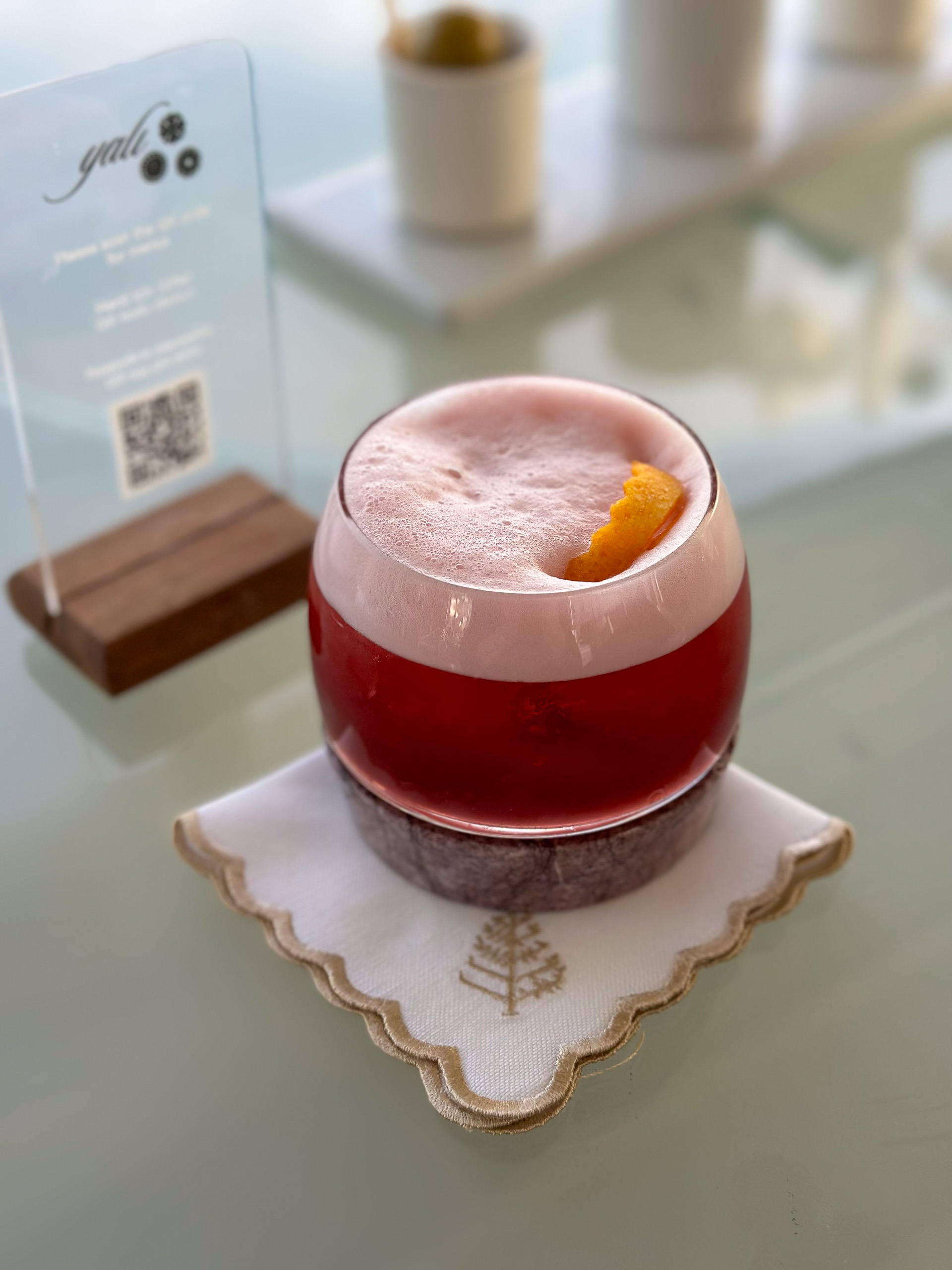
    A foamed pink cocktail with a citrus garnish on marble, the card standing behind it
    The pink one, foamed, on marble.
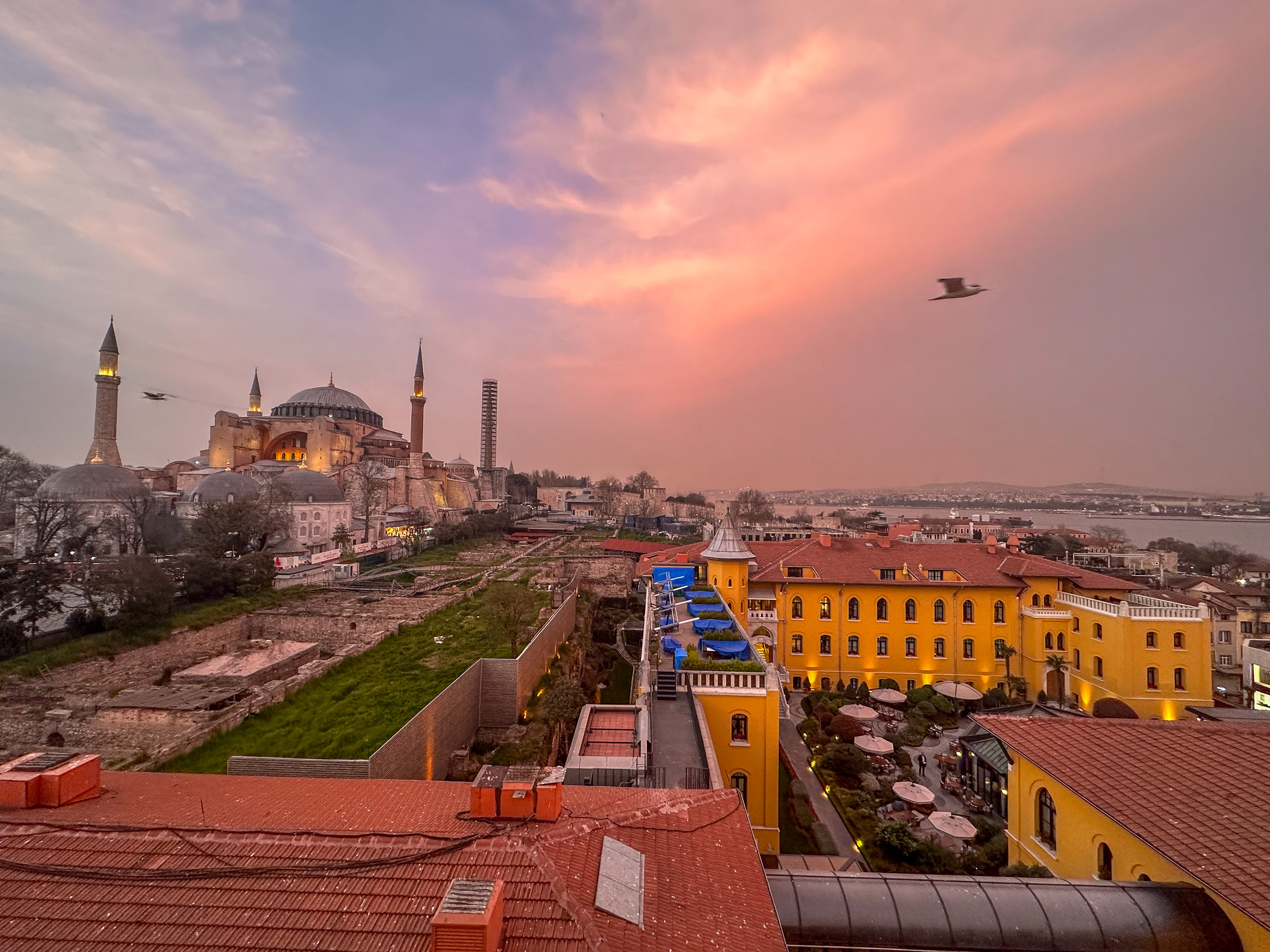
    A gull crossing a pink dawn above the gardens, with Hagia Sophia at the left
    A gull crossing Hagia Sophia at dawn, from the same table.

    The roof, the hammam, and the pool that is not here

    The Rooftop is the single best thing the hotel owns. From it, Hagia Sophia sits square in front of you across the archaeological garden, the Blue Mosque rises to the right, and the Marmara opens out beyond both with the shipping lane running across it. Go half an hour before sunset and stay through the call to prayer. In April the sky went pink and stayed pink for twenty minutes.

    The sky turning coral above the old town, the sea a flat band on the horizon
    Half past seven in April. This is what the address buys.

    Half the people up there are not staying in the hotel, which tells you two things: that it is a destination in its own right, and that you should go up before the hour everybody else does. Go on the first evening rather than the last, because if the weather turns you want the second chance.

    The spa is built around a hammam, which is the correct thing for a hotel to offer in this city and an easy thing to do badly. This one is done properly: marble, heat, a scrub that is not a gentle exfoliation, and a rest afterwards you should allow an hour for rather than the twenty minutes you will be tempted to take. Book it for the afternoon of a heavy walking day, and book it before you arrive, because every guest in the house wants the same two slots. A Hammam of this quality is a must do before death.

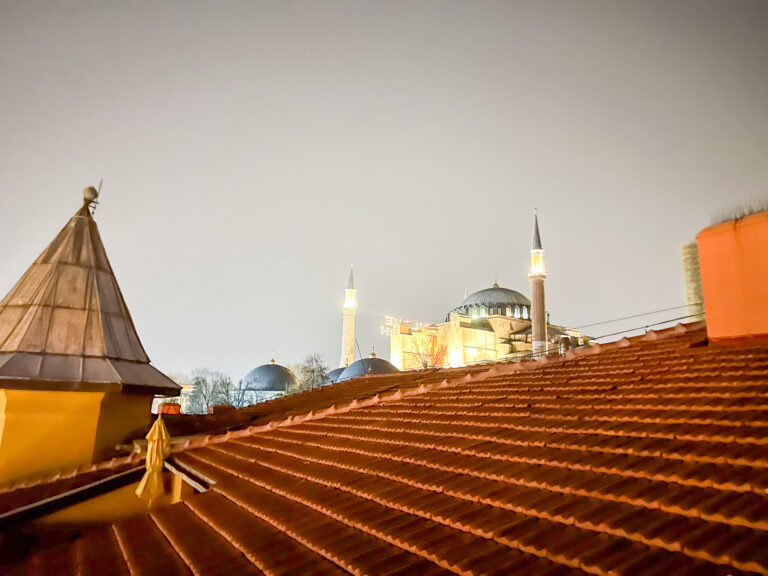
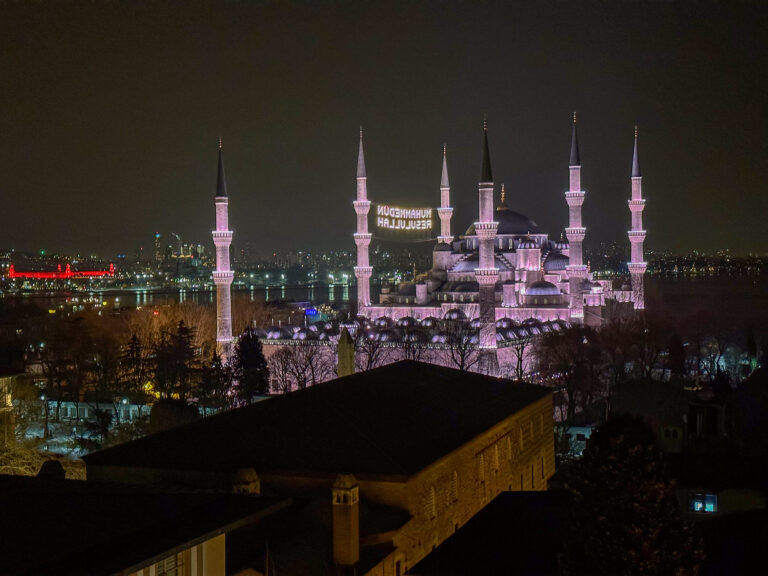
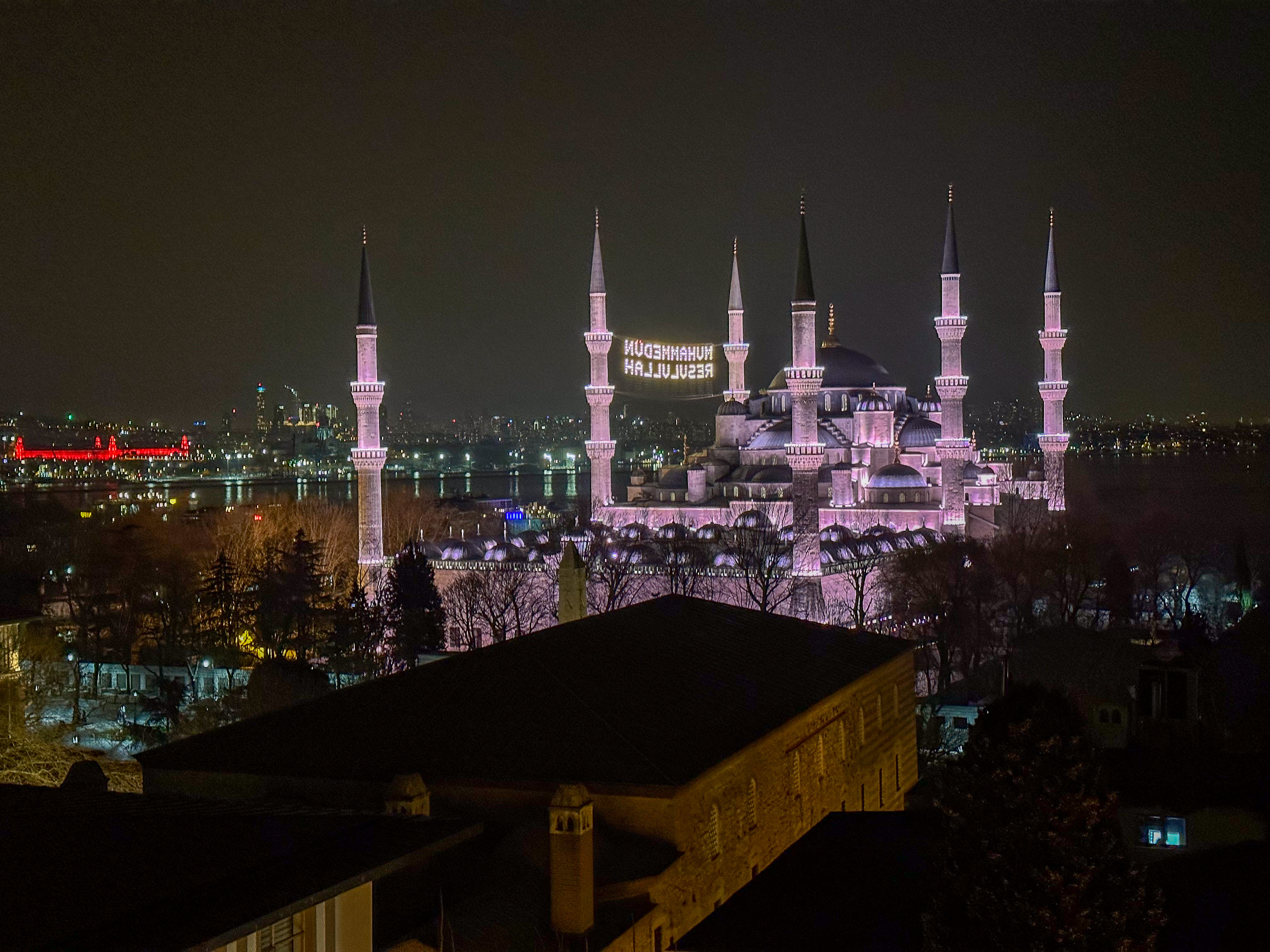
    The mosque's minarets picked out in floodlight above the silhouetted rooftops
    The Blue Mosque at night from the roof, the minarets picked out in floodlight.

    There is no pool. Guests are sent to the sister hotel on the Bosphorus, which is a car ride across the city, and on a hot day in July that is not a facility, it is an outing. I did it and vote worth it. The hammam is excellent, but nobody has ever done lengths in one.

    Service moments

    The concierge desk is expert on the old city, which is rarer than it should be in a quarter this heavily toured, and the advice I was given about when to walk to which monument was better than anything I had planned. Ask, and then do what they say. Spend on a guide rather than on the minibar; the monuments are better with one, and the desk will find you one who does not end the tour in a carpet shop.

    Names by the first morning. Breakfast under a blanket without having to ask for the blanket. A second Turkish coffee that arrived because the first cup was empty, not because I had looked up. The history of the building told to me in the corridor by someone who had clearly told it a hundred times and still liked it.

    The courtyard and surrounding streets lit at dusk, the city running down to the water
    The streets running down to the water at dusk, from the roof. The hammam is under them.

    The address is the argument. Everything else here is good; nothing else here is unrepeatable.

    Who it is for, and who it is not

    Come for two or three nights of the old city on foot, for a first visit to Istanbul, or for the roof at sunset. Walk to Hagia Sophia at opening rather than after breakfast. Take the tram or a boat rather than a car when you cross to the modern city, because the traffic on the bridges will otherwise decide your evening for you.

    Look elsewhere if a pool is part of what you are buying; the other Four Seasons in this city has one and this one does not pretend to. Look elsewhere for a week-long base: Sultanahmet empties at seven and fills with coach parties at nine, and the eating and drinking that make Istanbul worth a week are across the water in Karaköy, Beyoğlu and Cihangir. Every evening here involves a decision to leave. The Çırağan, on the Bosphorus, is the other way to do this city, and I have written it up.

    Daylight over the rooftops of the old town, with shipping on the water beyond
    Daylight over the old town, shipping on the water beyond. Two hundred paces to Hagia Sophia, and this.

    Bottom line

    There is no other site like it in Istanbul, and the hotel knows not to compete with it. Book a courtyard-facing Deluxe for two nights, and be on the roof half an hour before sunset.

    See the full set: Four Seasons Sultanahmet — in frames. More Istanbul: Çırağan Palace Kempinski.

    Four Seasons Sultanahmet gallery

    Every photo on this site is my own, shot on the stay. Slide through →
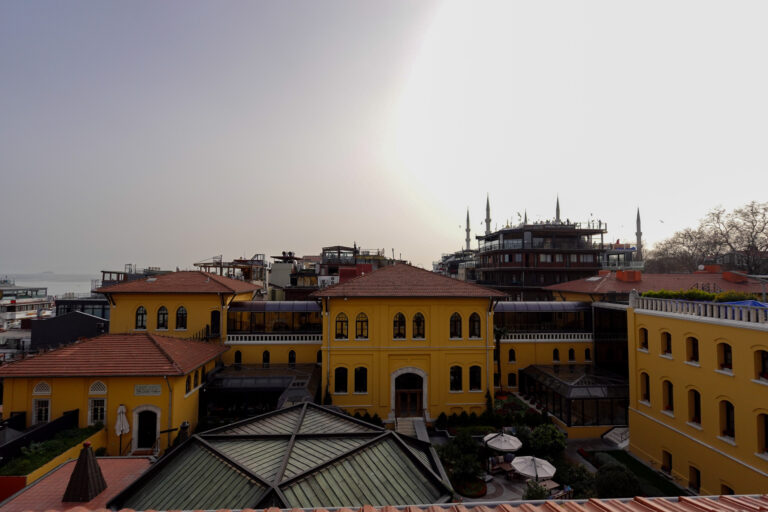
    The ochre wings of the hotel and the rooftops of Sultanahmet under a pale, hazy skyClose-packed roof tiles in the foreground, the mosque rising through a warm dusk beyond themThe illuminated hotel facade at dusk with the mosque glowing violet on the skylineHagia Sophia and the Blue Mosque lit above the dark gardens between themThe hotel lit gold against a deep blue evening, the water flat beyond the rooftopsThe great dome and its minarets across the archaeological gardens under moving cloudCoral cloud over the tiled roofs, with the water and the far shore beyond
  • Çırağan Palace Kempinski: A Palace on the Bosphorus, and a Tremendous Value

    The hotel's lit outdoor pool at night on the edge of the Bosphorus, palms around it and the illuminated Bosphorus Bridge in the distance

    ISTANBUL, TÜRKİYE · STAYED APRIL 2025 · 5 MIN READ

    Çırağan Palace Kempinski: A Palace on the Bosphorus, and a Tremendous Value

    A palace on the Bosphorus, a pool a metre above the shipping lane, art worth an afternoon, and a dinner you should not die without.

    By J.C. Mercer

    Verified stay·paid in full

    Çırağan Palace Kempinski

    • Stayed April 2025
    • Room booked Superior Bosphorus View, king
    • How it was booked Amex Fine Hotels + Resorts, public rate
    • What the channel bought Not clear if upgraded, but a great view from an otherwise standard room
    • Value verdict Worth it! Tremendously outsized value in the shoulder season.
    • When to go April – June or Sept-Oct Book this stay

    Booked the way any other guest would book it.

    Arrival

    The pool is six or seven metres from the Bosphorus and about a metre above it, and the first thing that happens when you swim here is that a container ship goes past at what feels like arm’s length. It is the single most memorable amenity in Istanbul, it belongs to this hotel and no other, and it is the honest answer to why people book the Çırağan and keep booking it.

    The address is on the European shore, on the last piece of open waterfront before the city closes up again. From the terrace you can see the bridge, the Ortaköy mosque, and a strait that has been the busiest thing in the neighbourhood for three thousand years — and at the heart of the property stands the last sultan’s palace itself, restored, open to its guests, and carrying a history wing the equal of any publicly accessible hotel anywhere. Smoke a hookah on the deck!

    The ornate palace facade seen through palm trunks from the terrace cafe
    The palace through the palms, from the terrace café. Ask the front desk for the tour.

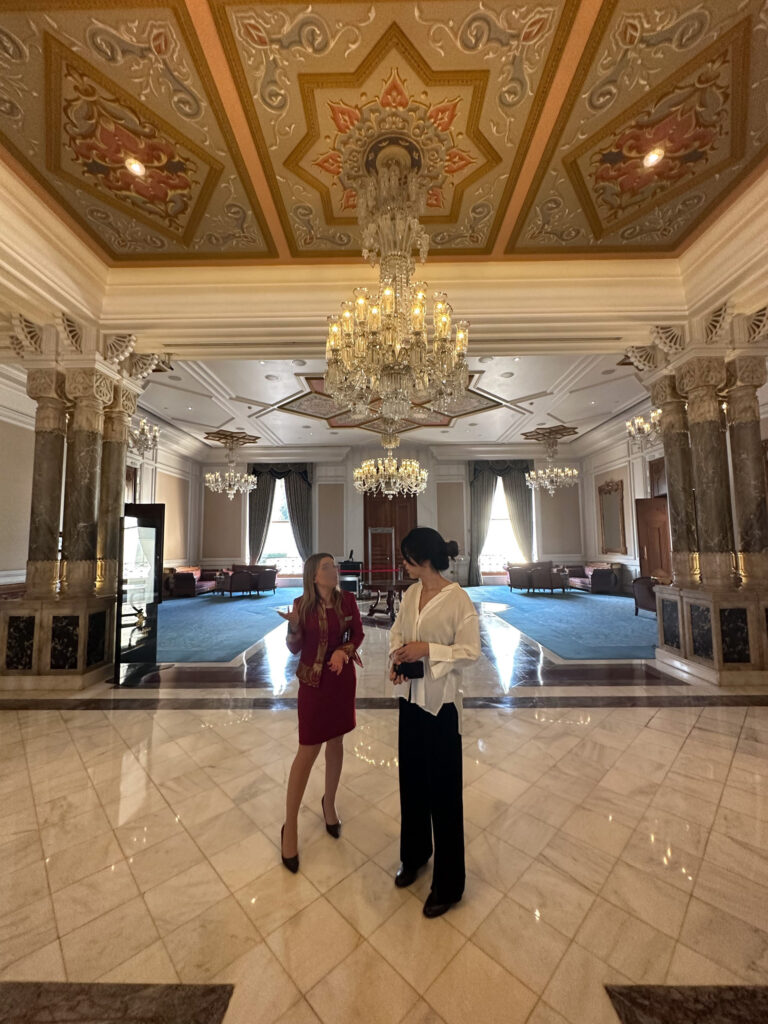
    Ask the front desk for a tour of the palace side and they might take you into the sultan’s suites themselves. They took us into the one a very famous guest had left the week before — J.Lo, since you ask. The palace suites book like anything else on the property, and we are already plotting the return trip that puts us in one.

    The front drive at peak arrival is the one soft spot: the road, the security check and the volume of cars combine into a bottleneck nobody on the property can really solve. Arrive at four and you will be the only car. Arrive at six and you will meet everyone else’s.

    The room

    I had a Superior Bosphorus View room. The decoration is committed Ottoman revival: a tall headboard of gold medallions on deep red, red bolsters, an octagonal black and gold side table, red-framed panelling. It is not the pale, quiet beige the rest of the luxury industry has converged on, and by day three I preferred the commitment.

    A bed with a red runner against a patterned headboard wall, lamps either side and a seating area beyond
    Ottoman revival, without apology.

    The proportions are generous, the storage is generous, the bathroom is marble and large, and everything works. The corridors are wide and quiet. Book a Bosphorus-facing room in writing and confirm it again the week before: the water side is serene, the land side is a main road, and the rooms know the difference.

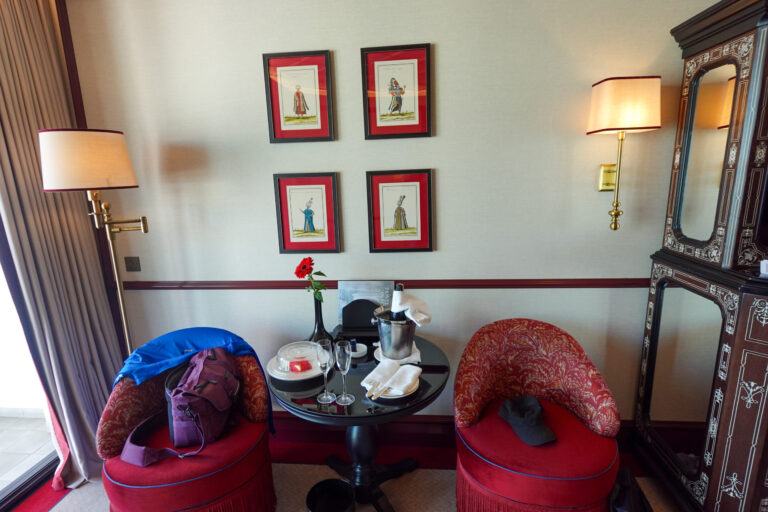
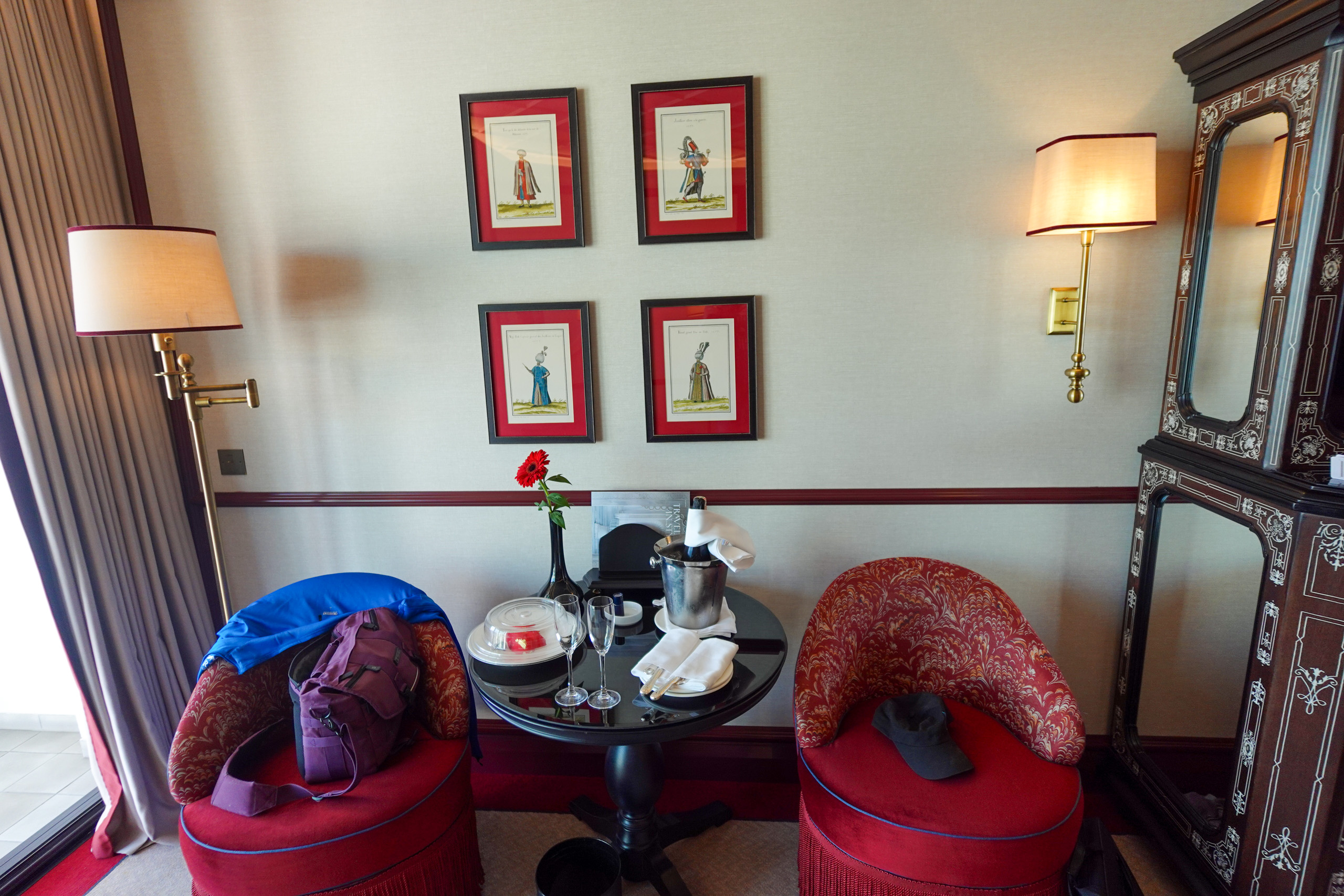
    Two red tub chairs at a round table with an ice bucket, framed Ottoman prints on the wall above
    The two red tub chairs, the ice bucket, the prints.
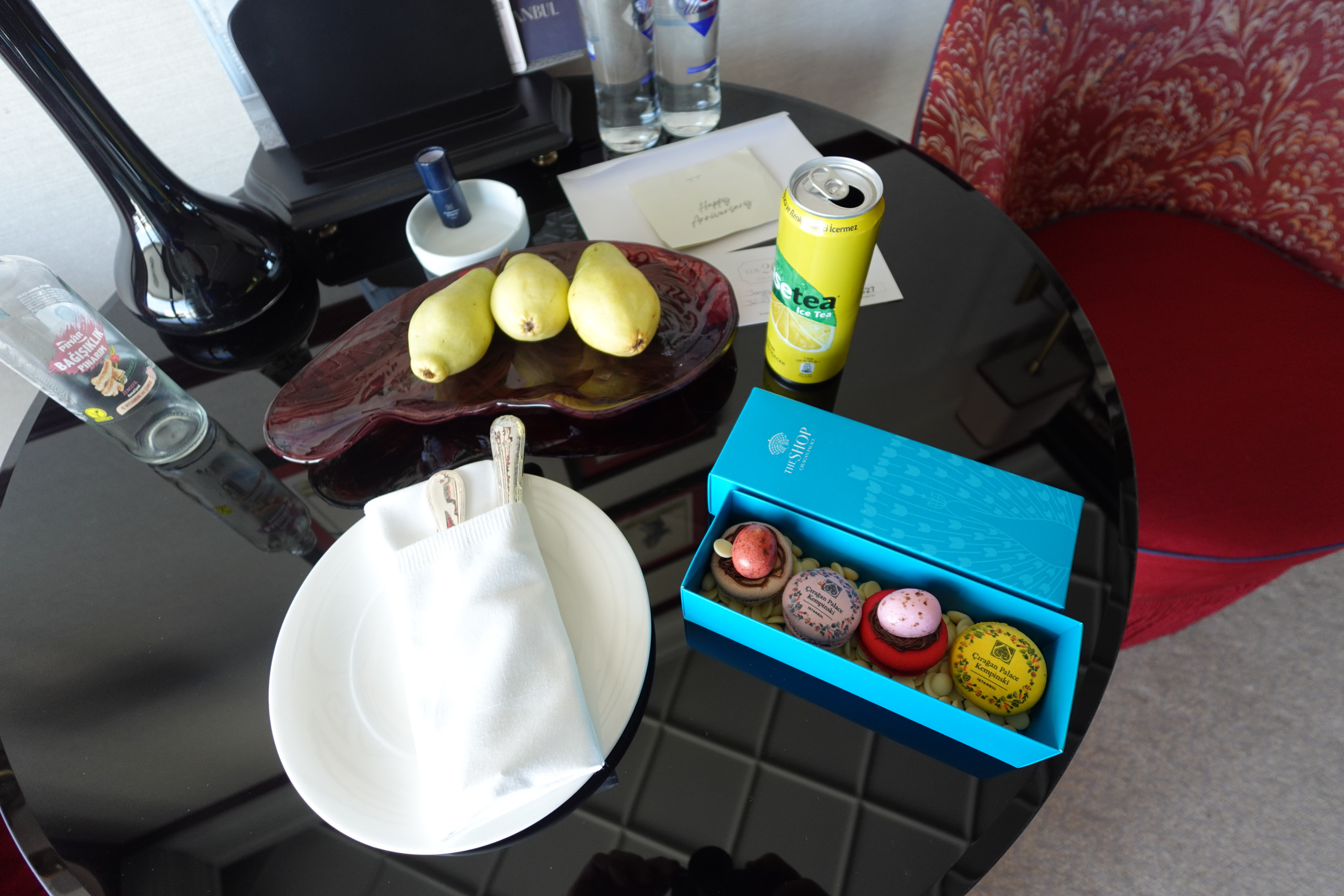
    A box of macarons, a bowl of lemons and a drink laid out on the desk
    Macarons, lemons and a drink, waiting on the desk.
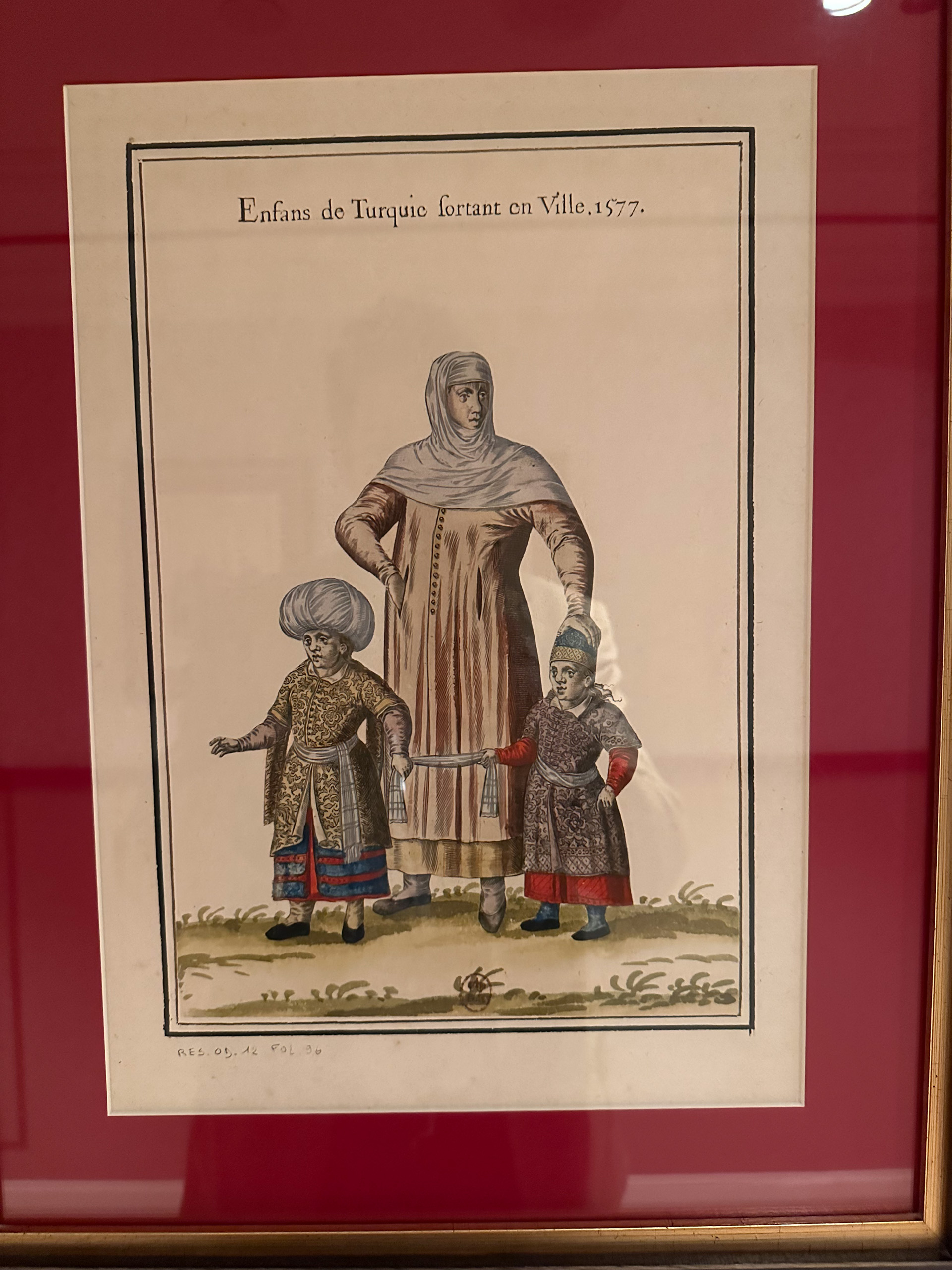
    A framed hand-coloured engraving titled Enfans de Turquie sortant en Ville, dated 1577, hung on a red wall
    The engraving over the bed, dated 1577.

    Noted

    Observed on the stay, not measured.

    WhatChecked on the stay
    WiFiStrong in Room, Spotty through property
    NoiseQuiet in the room; Çırağan Caddesi is audible on the land side, call to prayer each night through the window. Blackout curtains weak.
    BedKing, medium-firm
    Water pressureStrong and hot
    Walk to OrtaköyAbout fifteen minutes along the shore

    Eating

    Breakfast is the meal that tells you where you are. A proper Turkish spread rather than a European buffet with olives added at the end, and the thing to order is menemen, brought to the table in its own copper pan and still moving. Ask for Turkish coffee rather than filter, and take the second one. Have breakfast included and eat it outside every morning the weather allows.

    A copper pan of tomato and egg at the breakfast table, plates and juice set around it
    Breakfast on the terrace: the copper pan of tomato and egg, plates set around it.

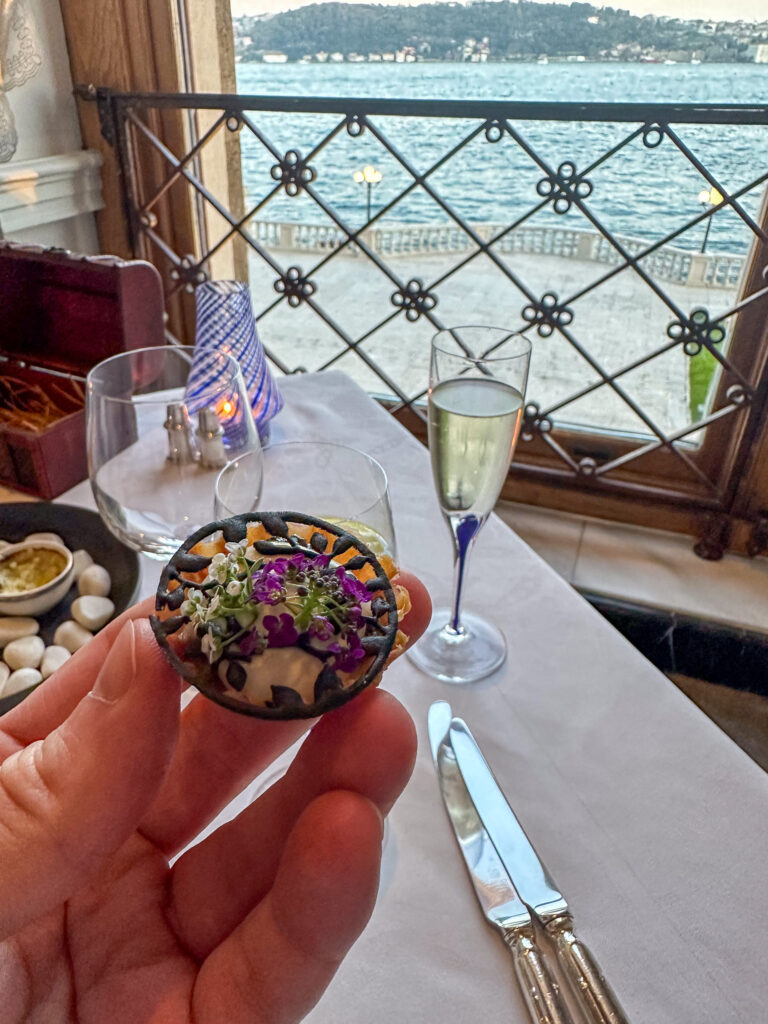
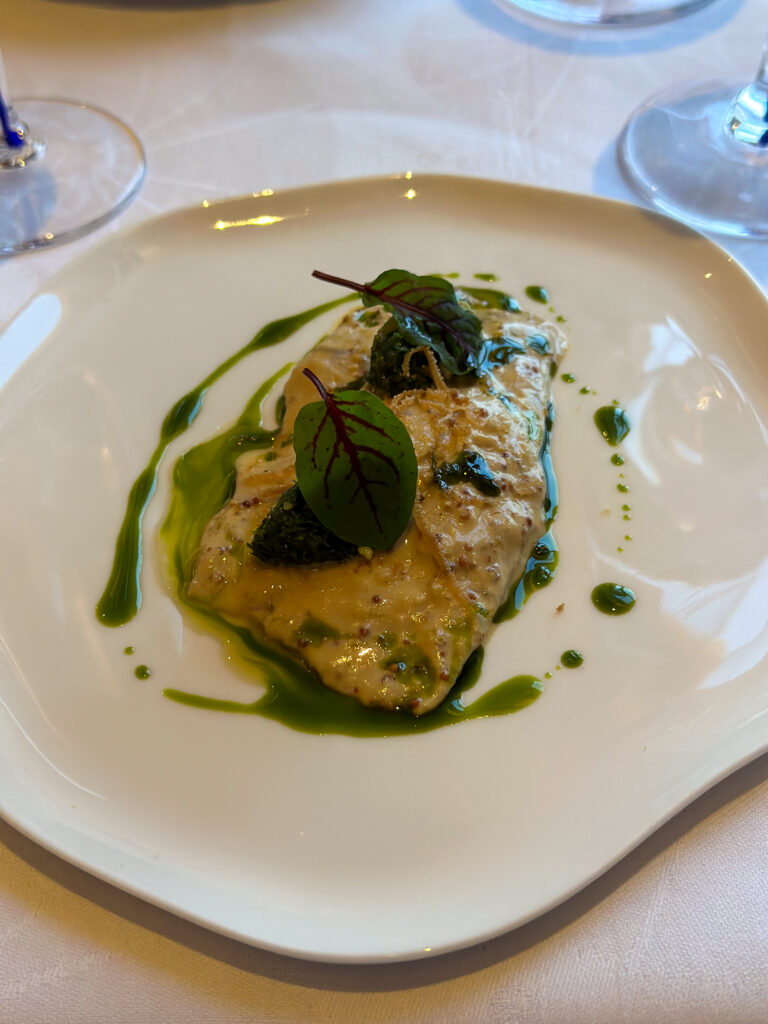
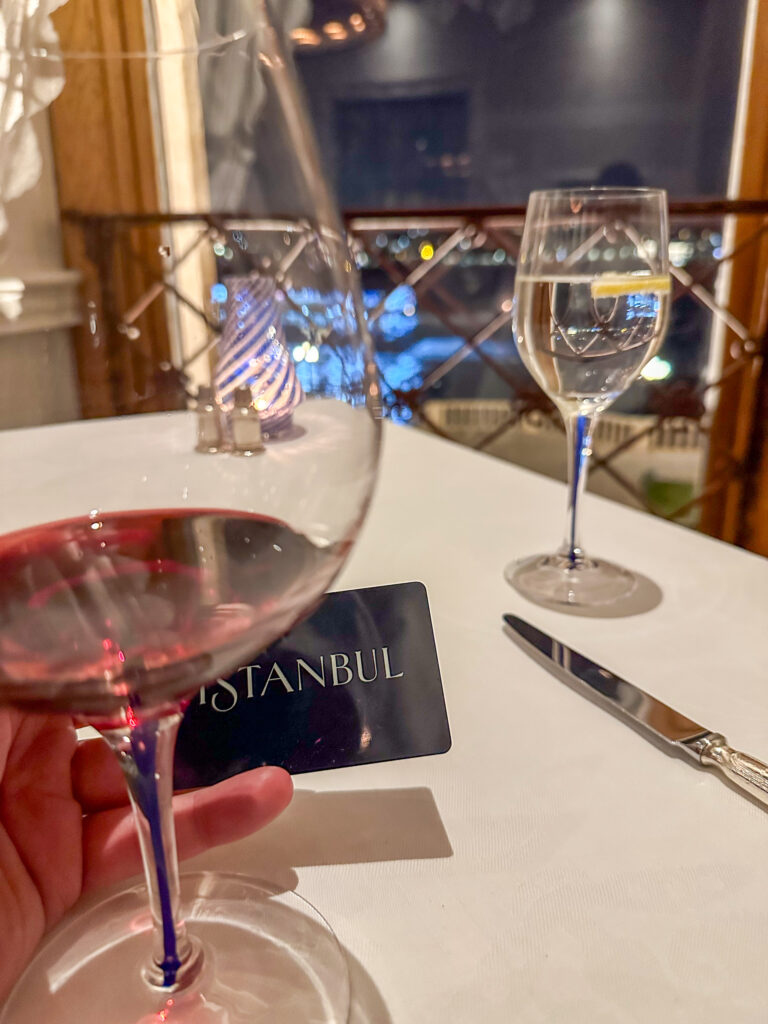
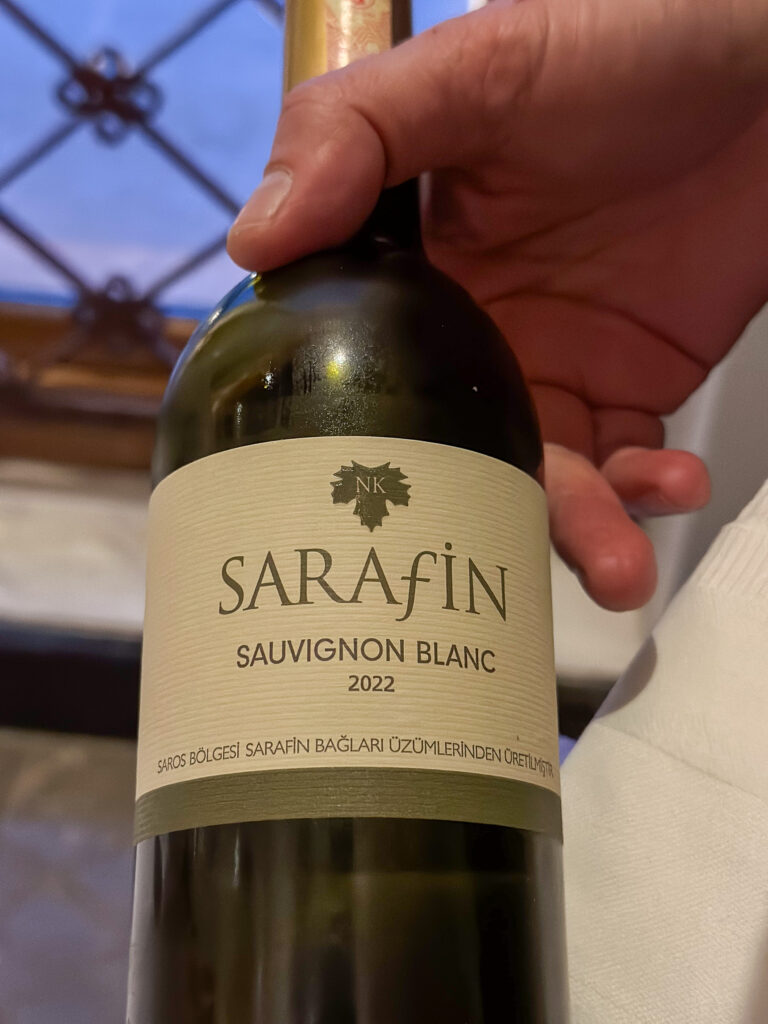
    And then Tuğra, in the palace itself, which is the dinner to plan the trip around: EXCEPTIONAL, and a must-do before death. You eat under the palace ceilings at a table overlooking the Bosphorus, and the sommelier packages Anatolian wines from around the region in a way that is unreasonably good. Who knew Turkey had excellent wine? Everyone except Americans, it turns out. What you get is a truly world-class introduction to the finest varieties this country grows, paired with delightful Turkish cooking, in the last sultan’s palace. Book it before you fly.

    A jewelled first bite held up at the window at Tuğra, champagne and the Bosphorus behind
    The first bite, held up to the window.
    A plated course under green herb oil at Tuğra
    A course under green herb oil.
    A glass of red at the window table, the strait beyond the leaded glass
    The window table, the strait beyond.
    A Sarafin Sauvignon Blanc presented at the table
    A Sarafin white, shown first.
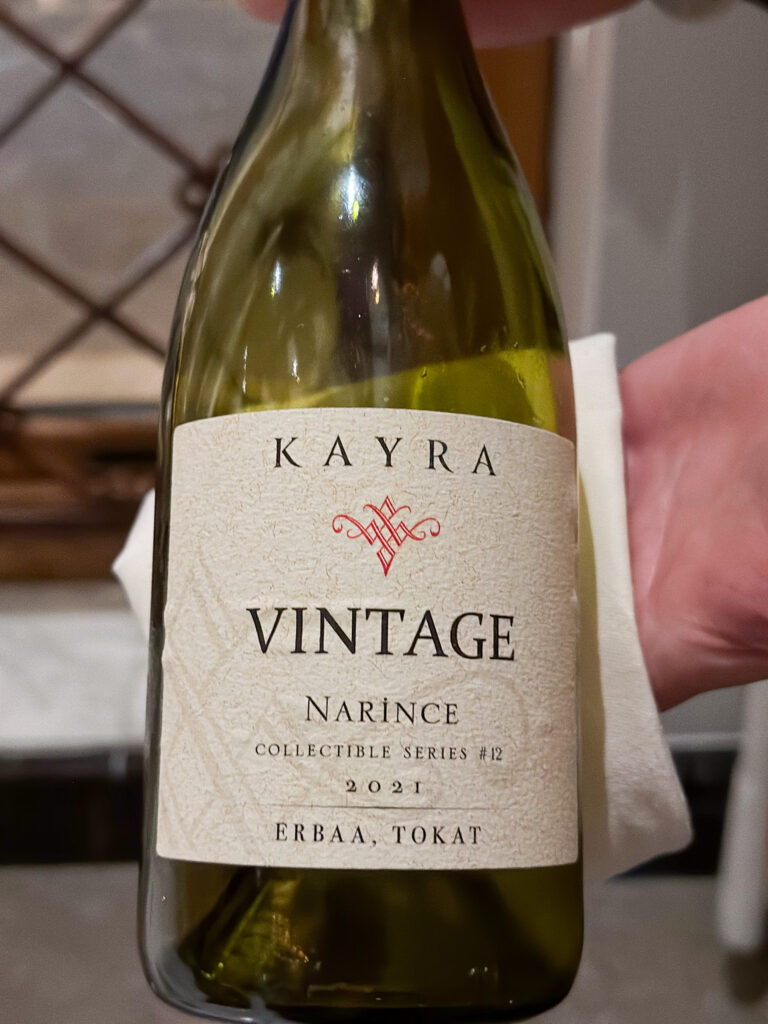
    A Kayra Vintage Narince shown before pouring
    Kayra’s Narince — the grape to learn.
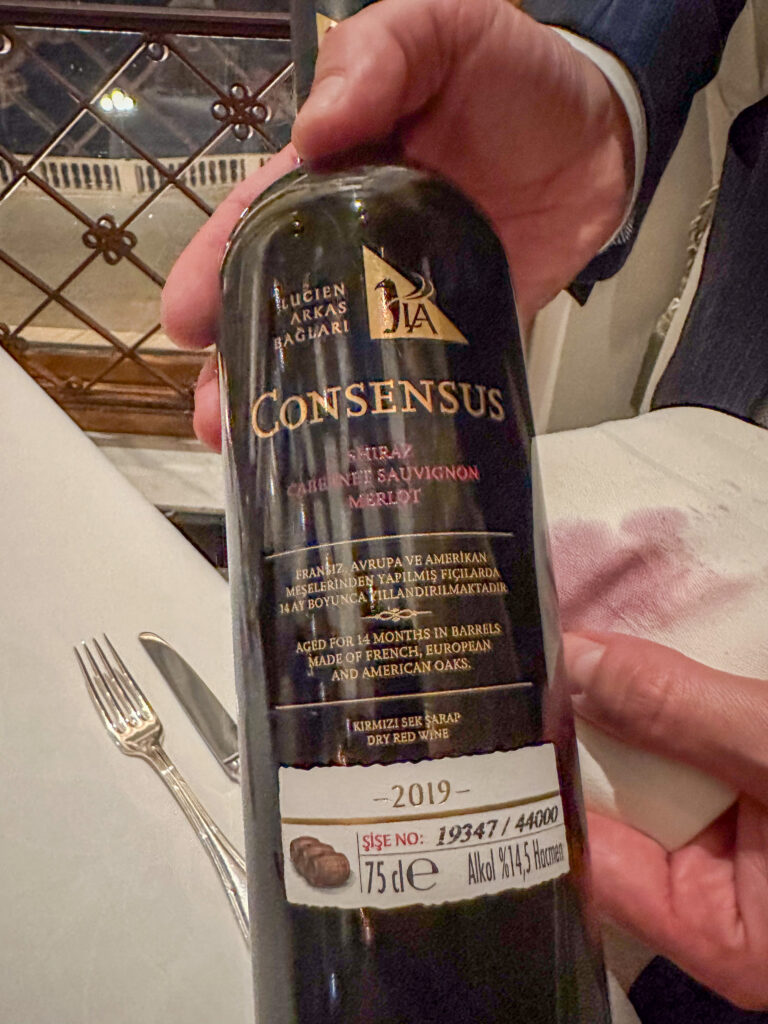
    A Consensus red brought to the table
    The reds arrive with the dark.

    The pool, the palace and the art

    By day the pool sits in a lawn of palms with the strait immediately beyond it and the bridge in the distance, and the light comes off the water and back up at you all afternoon. By night it is lit turquoise against black water and the bridge changes colour on a cycle behind it. Go early and take a lounger on the water side; by eleven in April the good ones were gone, and in summer that will happen an hour earlier.

    The pool terrace and the Bosphorus in full sun, the suspension bridge in the distance
    Mid-morning. The shipping lane is roughly where the far palm is.

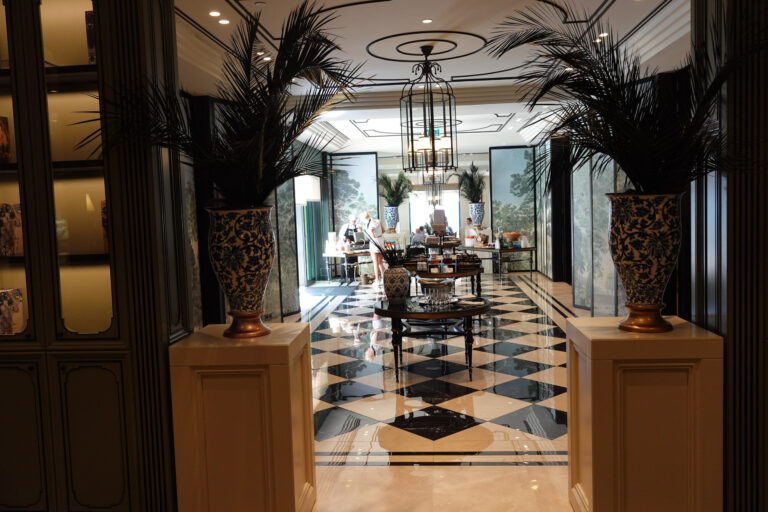
    The artwork throughout the hotel is extremely well done — well chosen, well hung, and worth several unhurried hours of wandering. The gallery through the palace is black and white marble underfoot, palms in patterned urns, lantern chandeliers, and mirrored panels that make it read longer than it is. Slow down through all of it; the walls are half the collection.

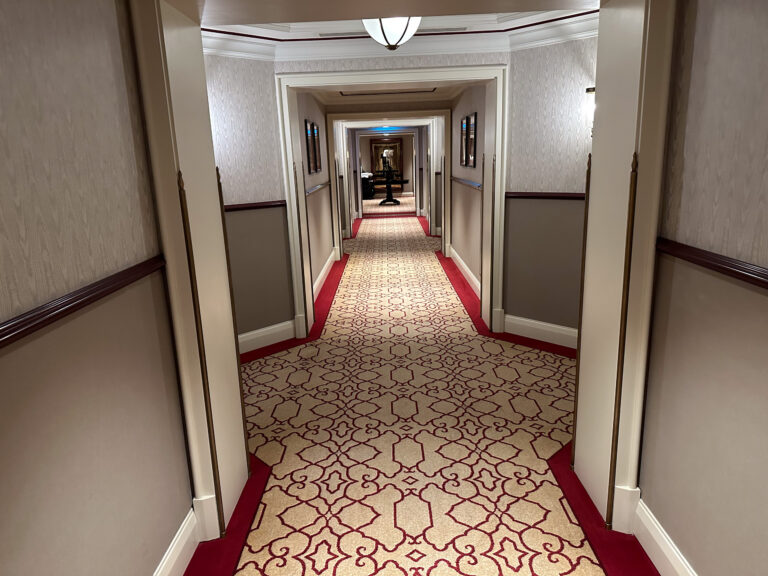
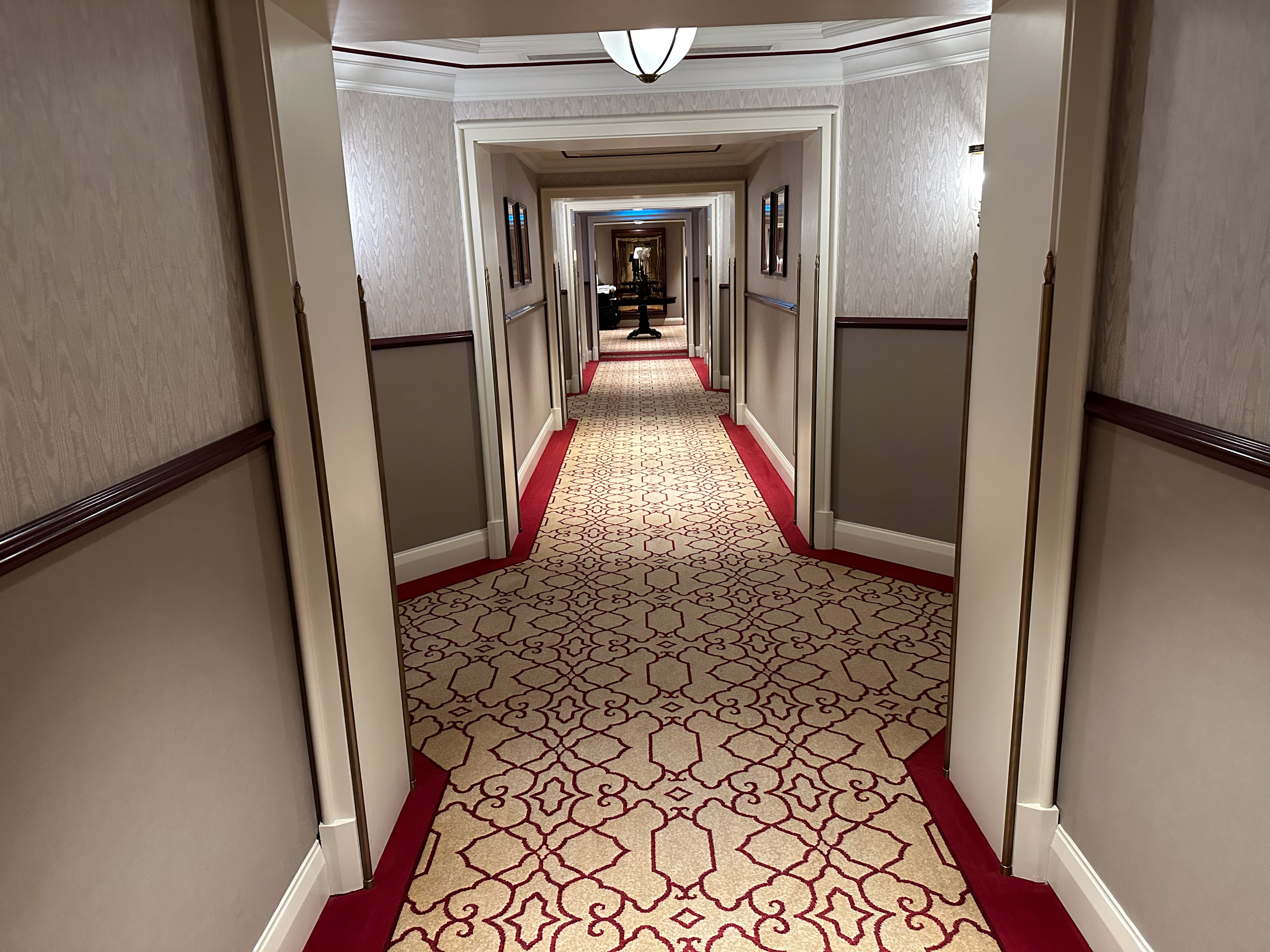
    A long corridor with a patterned red and cream carpet running towards a lit window
    The history wing: patterned red carpet to a lit window, and art worth hours on the walls either side.

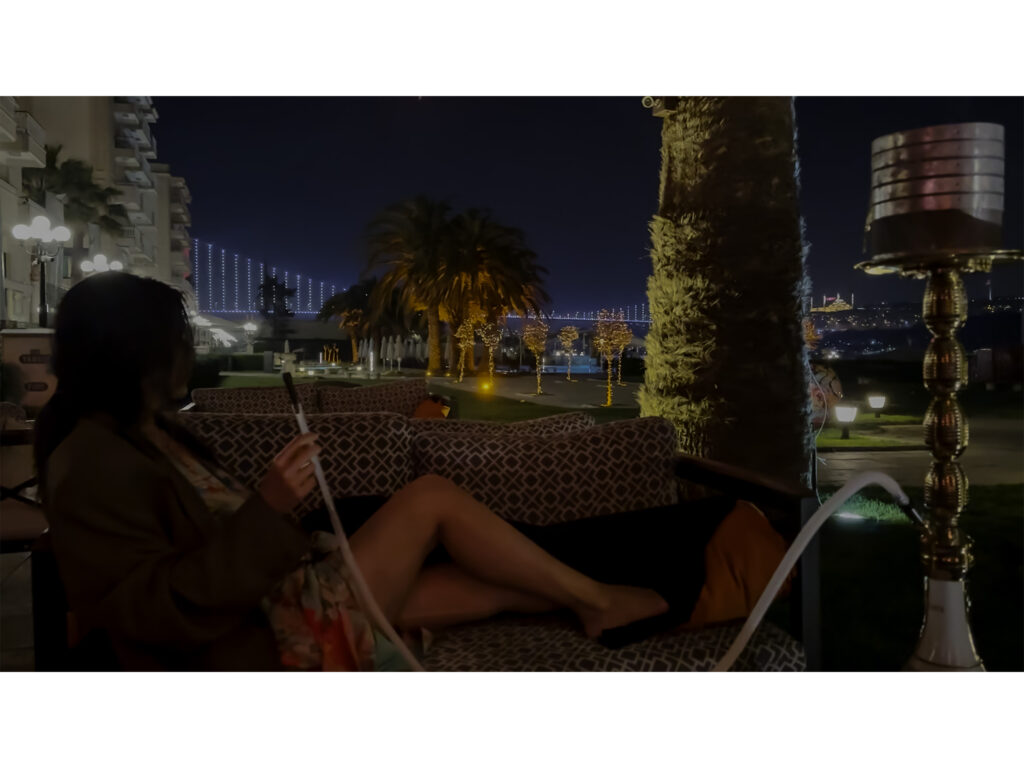
    There is a hammam and a spa, and a terrace above the water where the hotel will set up a nargile in the evening. It is the sort of thing that could easily be a costume, and here it is not: set up properly, at the rail, at dusk, the best hour of the day to be outside on this property. Take it after dinner rather than before.

    The nargile on the terrace after dark, the city lit across the water
    The nargile at the rail after dark, the city lit across the water. This is the hour.
    The long outdoor pool seen from a sun lounger, a rolled towel on the chair alongside
    The long pool from a lounger, towel rolled, the strait doing what the strait does.

    Service moments

    Warm, formal and slightly old-fashioned, in keeping with everything else. Requests are met without fuss and without the performance of being met. The copper pan arrived at the same table every morning after the first without my asking, and the coffee with it.

    And the moment that tells you everything. A screw came loose from my eyeglasses and fell to the floor of the room — a part so small you would not find it if you knew it was there. Housekeeping found it cleaning, walked it to the front desk, and the manager brought it to me presented like it was the Sultan’s jewel. I cannot stress how small this item was. That is what clean means here, and what care means.

    A circular ottoman beneath a palm in the marble lobby, lamps ranged along the walls
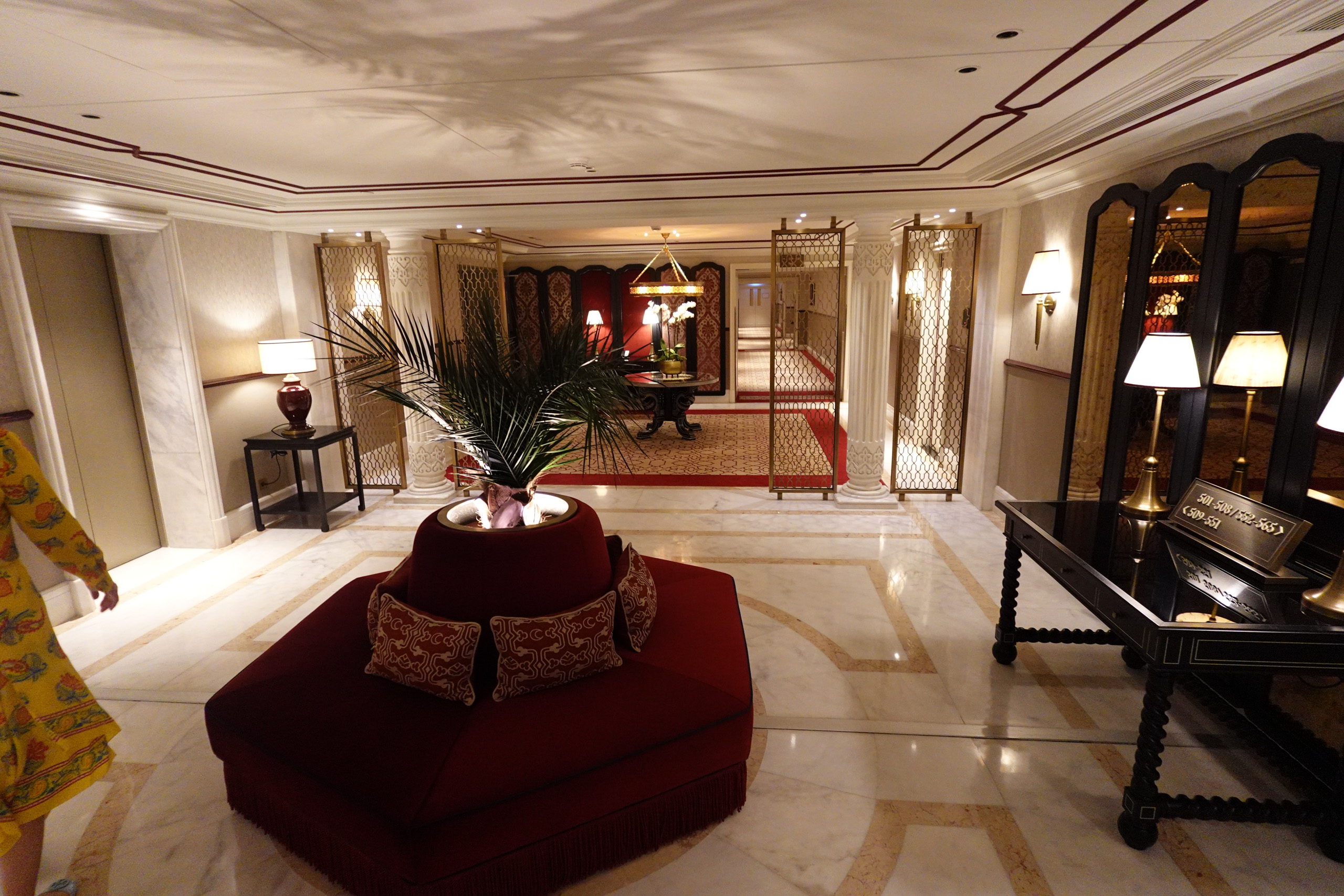
    The marble lobby, a circular ottoman under a palm. Arriving at four and arriving at six are different hotels.

    Who it is for, and who it is not

    Come for a view-first stay, an occasion, the pool season, or simply the most outsized value at this level in the city. Walk to Ortaköy along the shore in the evening rather than taking a car; the traffic outside will take longer than your legs will. Boats along the Bosphorus leave from a short walk away and are one of the great cheap pleasures of the city, which is worth remembering on a property that will happily arrange a private one.

    Look elsewhere only if you want a small hotel where the desk knows your name by the second day — the Four Seasons in Sultanahmet does that, and I have written it up. It has no pool, no palace, and no ships at arm’s length. Nothing in this city is simple.

    The suspension bridge lit red across the Bosphorus at night, a floodlit mosque on the far shore
    The bridge at night, the mosque floodlit on the far shore. The Four Seasons does not have this. It also has no pool.

    Bottom line

    A beautiful hotel and a tremendous value, with the last sultan’s palace at its heart, art worth an afternoon, and a dinner at Tuğra you should not die without. Book the water side in writing, and ask for the tour.

    See the full set: Çırağan Palace Kempinski — in frames. More Istanbul: Four Seasons Sultanahmet.

    Çırağan Palace gallery

    Every photo on this site is my own, shot on the stay. Slide through →
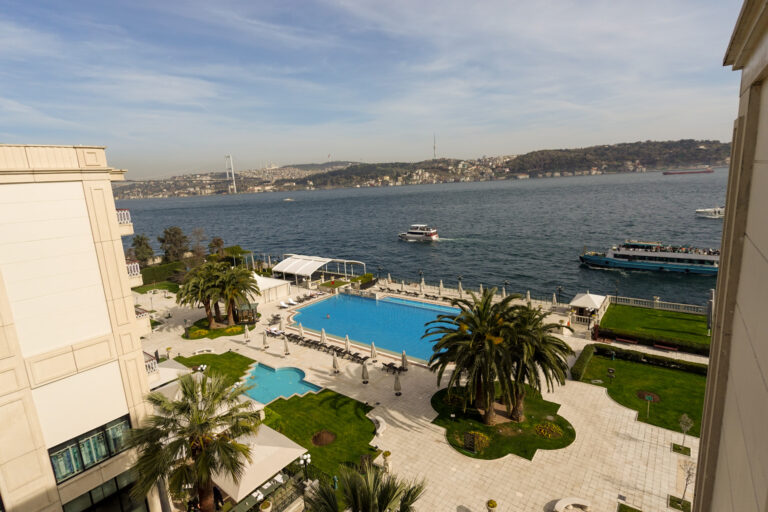
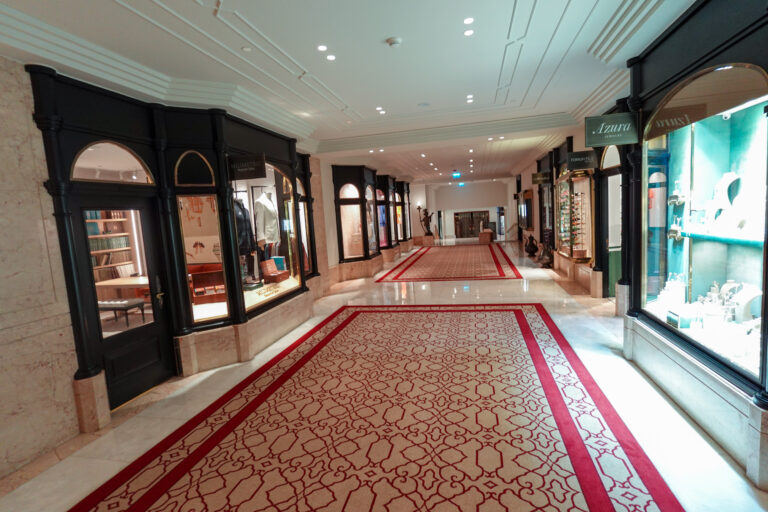
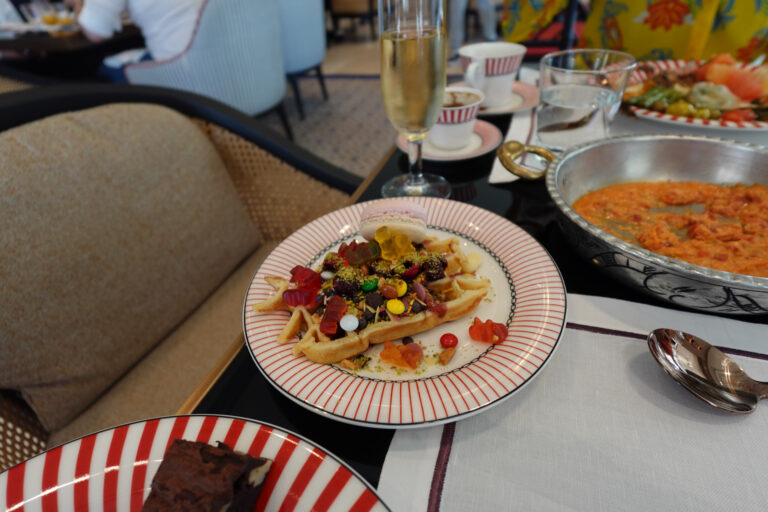
    The outdoor pool and gardens seen from above, ferries crossing the Bosphorus beyondTerrace seating on the lawn looking towards the water in early lightA shopping arcade lined with boutique windows, patterned carpet running down the centreA plate of pasta scattered with vegetables, a glass of sparkling wine beside itAn entrance flanked by tall black feather arrangements over a chequerboard marble floorThe palace ballroom beneath a painted and gilded ceiling with a chandelier at its centre
  • TURK Fatih Tutak: Modern Anatolian, Two Stars

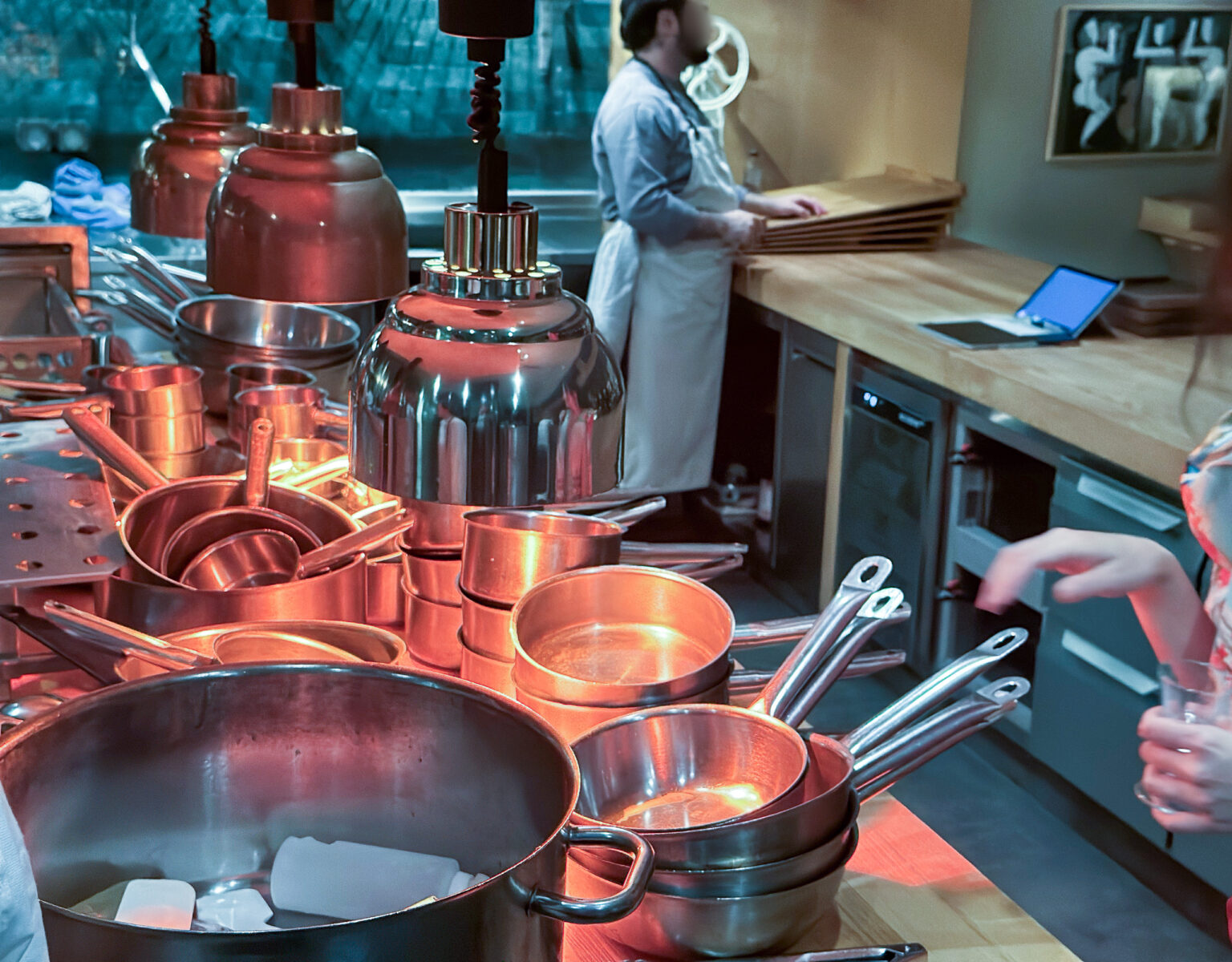
    Copper pans stacked on the kitchen pass under brass heat lamps, a cook working at the counter behind

    ISTANBUL, TÜRKİYE · RESTAURANT · 5 MIN READ

    TURK Fatih Tutak: Modern Anatolian, Two Stars

    A clean, well-oiled machine of a restaurant, with just enough flair and showmanship — and the perfect amount of behind-the-curtains action.

    By J.C. Mercer

    Verified meal·paid in full

    • Covers Two, 7pm
    • Dined April 2025
    • Menu The tasting menu
    • Drinks Wine pairing
    • How it was booked The way any other guest would
    • Value verdict A terrific introduction to Anatolian cuisine and wines, and a gem of an evening. STRONGLY RECOMMENDED.

    Booked the way any other guest would book it.

    The room and the counter

    TURK Fatih Tutak sits in a unit in the Now Bomonti building in Şişli, inland, with no Bosphorus to sell, in the neighbourhood anchored by the old beer factory reopened as a cultural complex. Two stars on the door, one fixed tasting menu and nothing else. The house line is that it is creating a new alphabet for Turkish cuisine. In practice that means a pantry: named growers, named regions, a named knife-maker in Mersin. The flair is real, but measured: just enough showmanship out front, and the right amount of machinery behind the curtain.

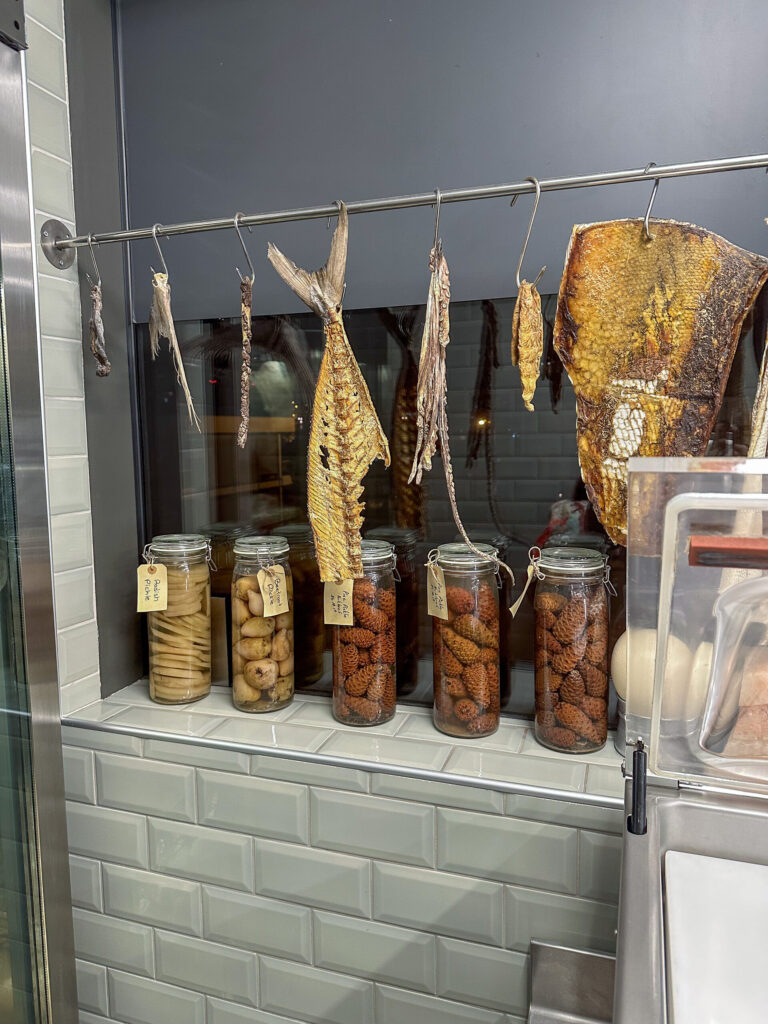
    Whole fish hung to dry on a rail beside glass jars of preserved figs and dried chillies
    Fish drying on a rail above jars of figs and chillies. The store is not hidden behind the kitchen.

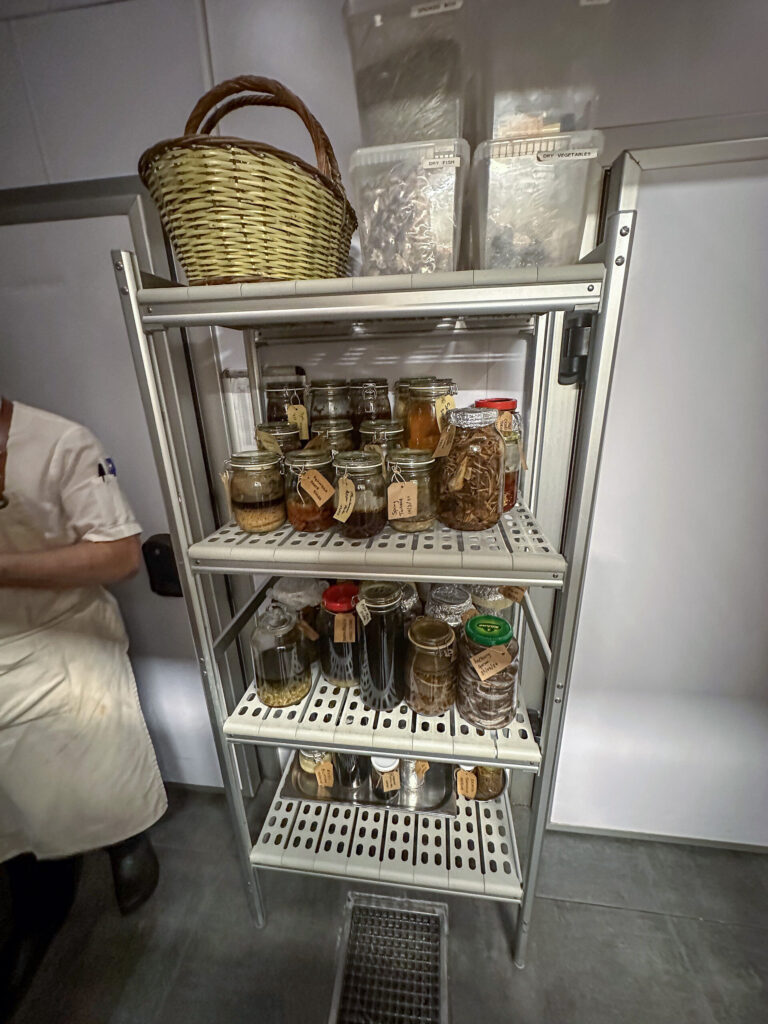
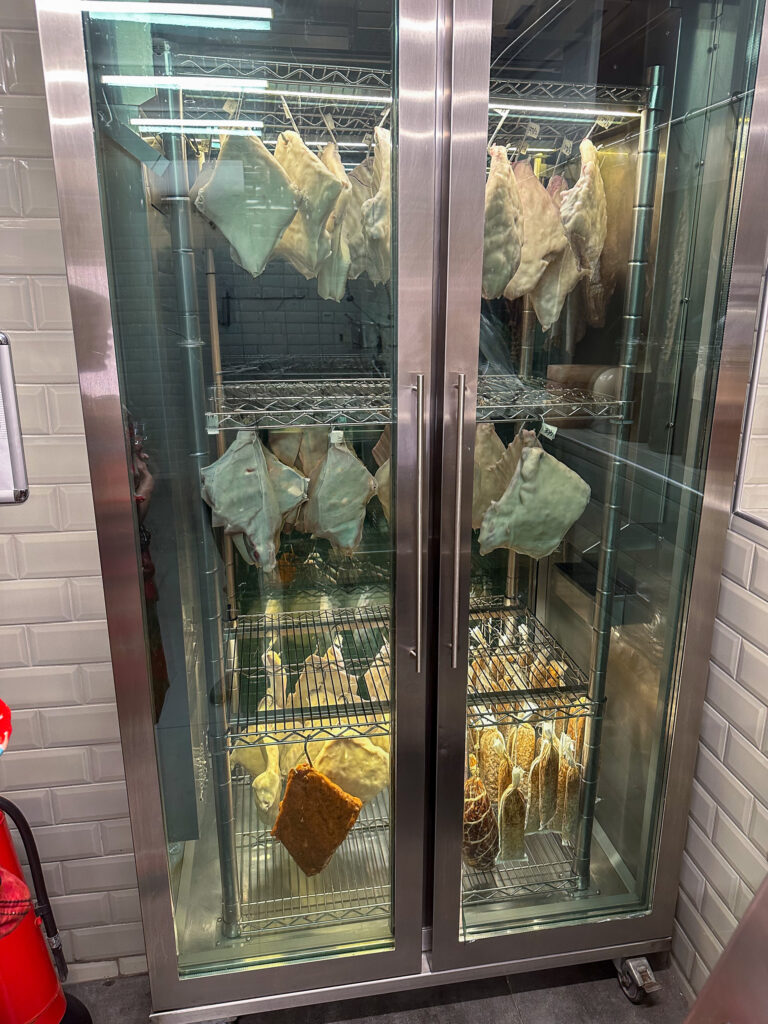
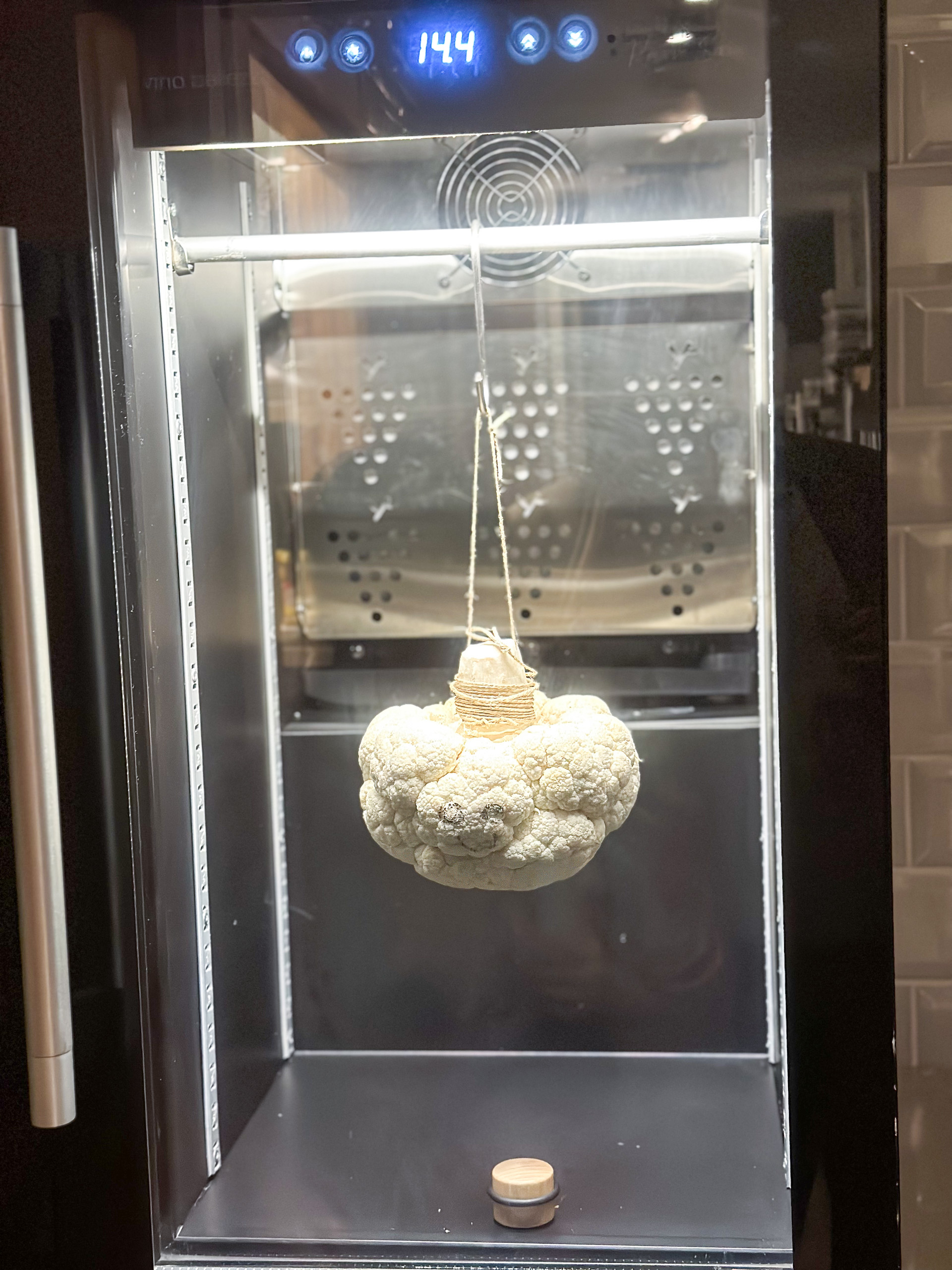
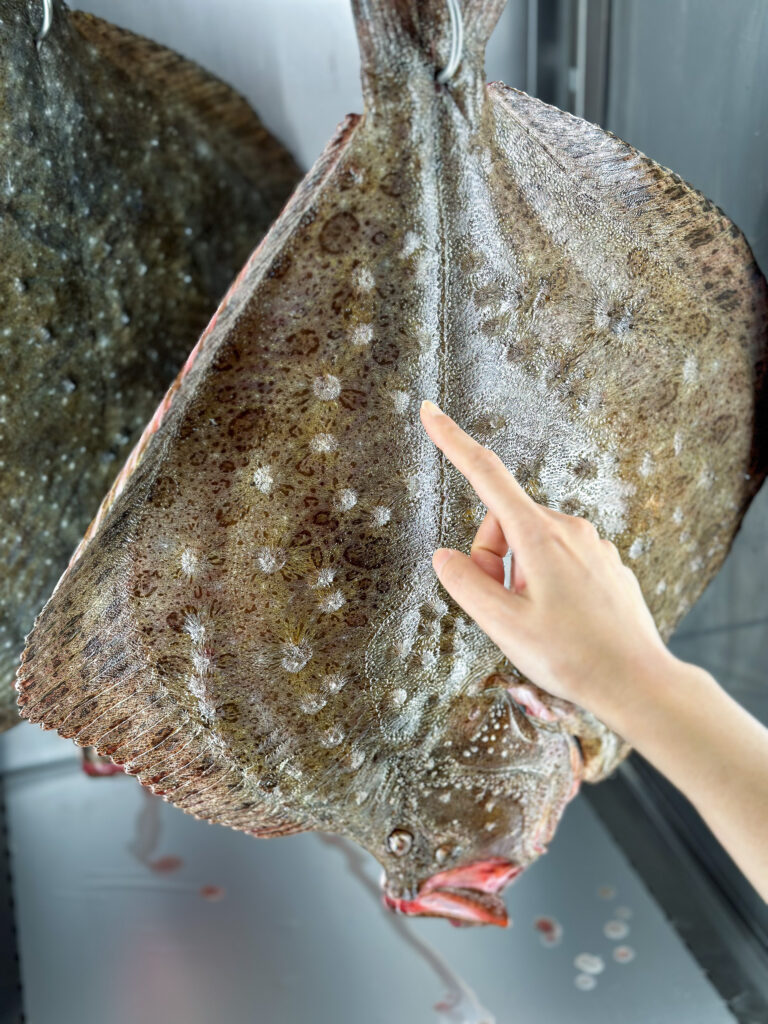
    Back-lit cabinets of ingredients stand in the room like furniture, and the sourcing behind them is the most concrete thing about the place: honey from hives at three thousand metres, pomegranate molasses aged for years in barrel, water-buffalo yoghurt, turbot from the Black Sea, butter from Trabzon, bulgur from Urfa. A rolling rack of labelled preserves is the habit that got the kitchen through the lockdown year, when the chef kept buying from his producers and turned the harvest into garums and pickles. A two-door ageing cabinet hangs with fish and flatbreads. Pantry as decor, taken to its logical end, and the only restaurant I know where you can read the wallpaper.

    A rolling rack of labelled preserving jars and bottles in the kitchen, a wicker basket resting on top
    The rolling rack of labelled preserves.
    Two glass-fronted cabinets hung with drying fish and flatbreads on wire racks
    The two-door ageing cabinet, fish and flatbreads.
    A whole cauliflower hung on twine inside a glass-fronted ageing cabinet reading 144
    A whole cauliflower on twine, cabinet reading 144.

    The room beyond is long, narrow and dark, with a bar down one side and an open kitchen fronted by six counter seats. Once it fills it is loud, closer to a bar than a dining room, which some people love and others resent at this level. The tableware makes the pantry’s argument in another material: Turkish ceramics, olive-wood pieces oiled in-house and never put through a dishwasher, and knives for the meat course made by a third-generation craftsman in Mersin, which the shop will sell you on the way out.

    How the meal runs

    The evening does not start at the table. It starts in the courtyard lounge, where the first canapés come out, and you can be four courses in before anyone shows you to a seat. Then twelve to fourteen courses, depending how you count a course, over about three and a half hours. The menu is micro-seasonal, so any dish list is a record of one night rather than a promise. A few things recur: a double-boiled chicken broth in a Turkish tea glass to open; the mussel dolma, rice-stuffed mussels inside an edible squid-ink shell, which everyone photographs; and the mantı called “From My Mom,” which is still the signature.

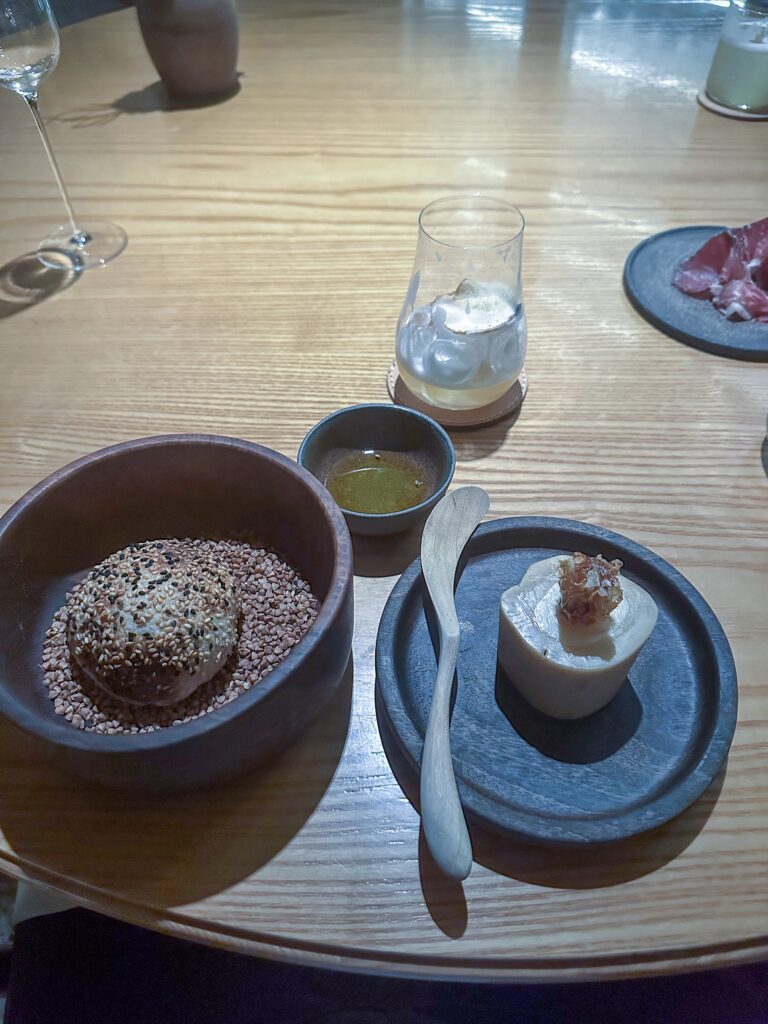
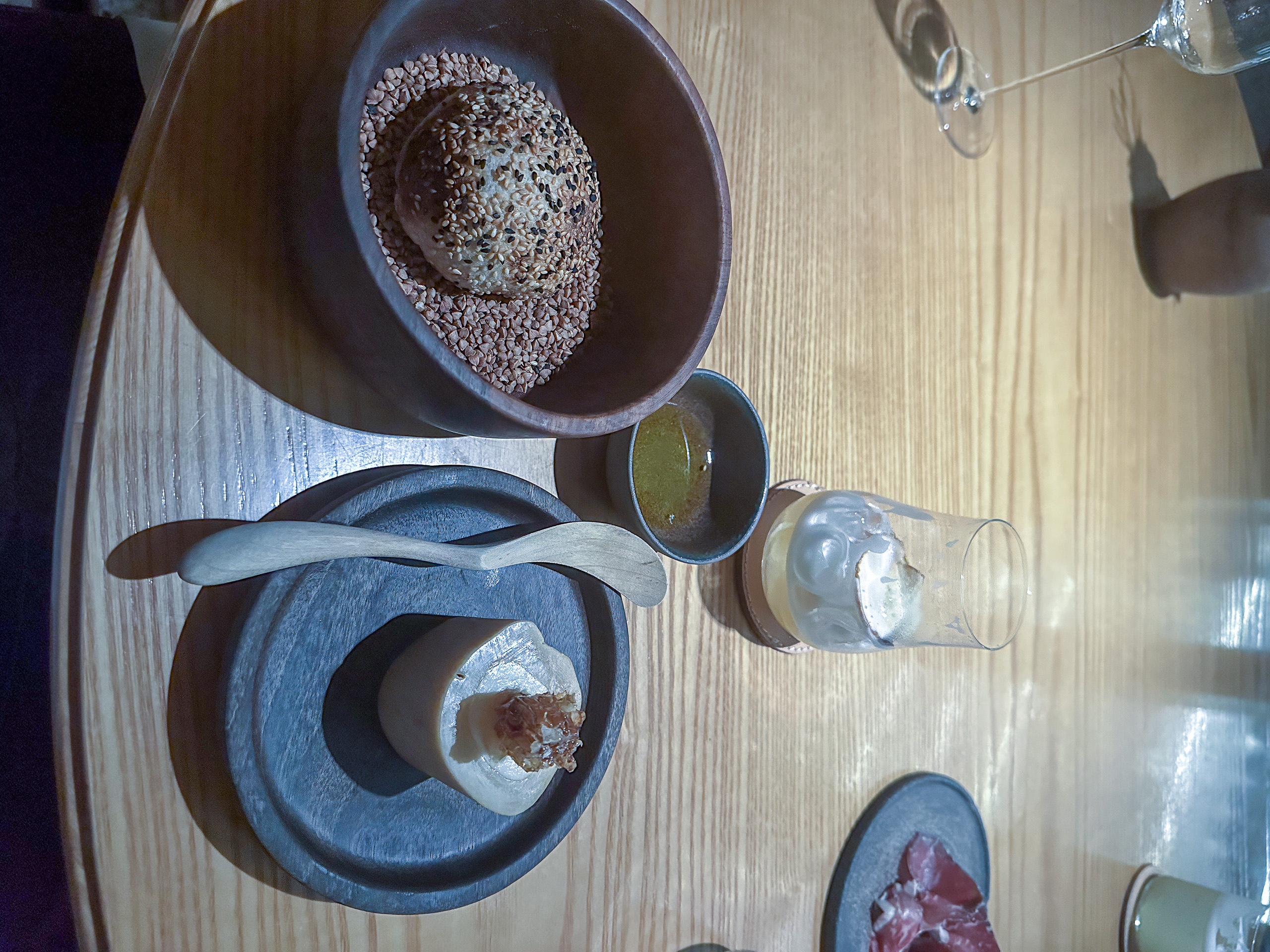
    The bread course: a sesame-crusted roll in a bowl of buckwheat, a cylinder of cheese on a slate dish, olive oil and a wooden spreader
    The bread course: a sesame roll bedded in buckwheat, cheese on slate, a wooden spreader.

    Water, coffee and tea come with the meal. The meal ends with a kitchen tour led by the chef or one of his cooks, and you leave with a handwritten menu in a box with two chocolates and a small bottle of something like limoncello. Say yes to the tour.

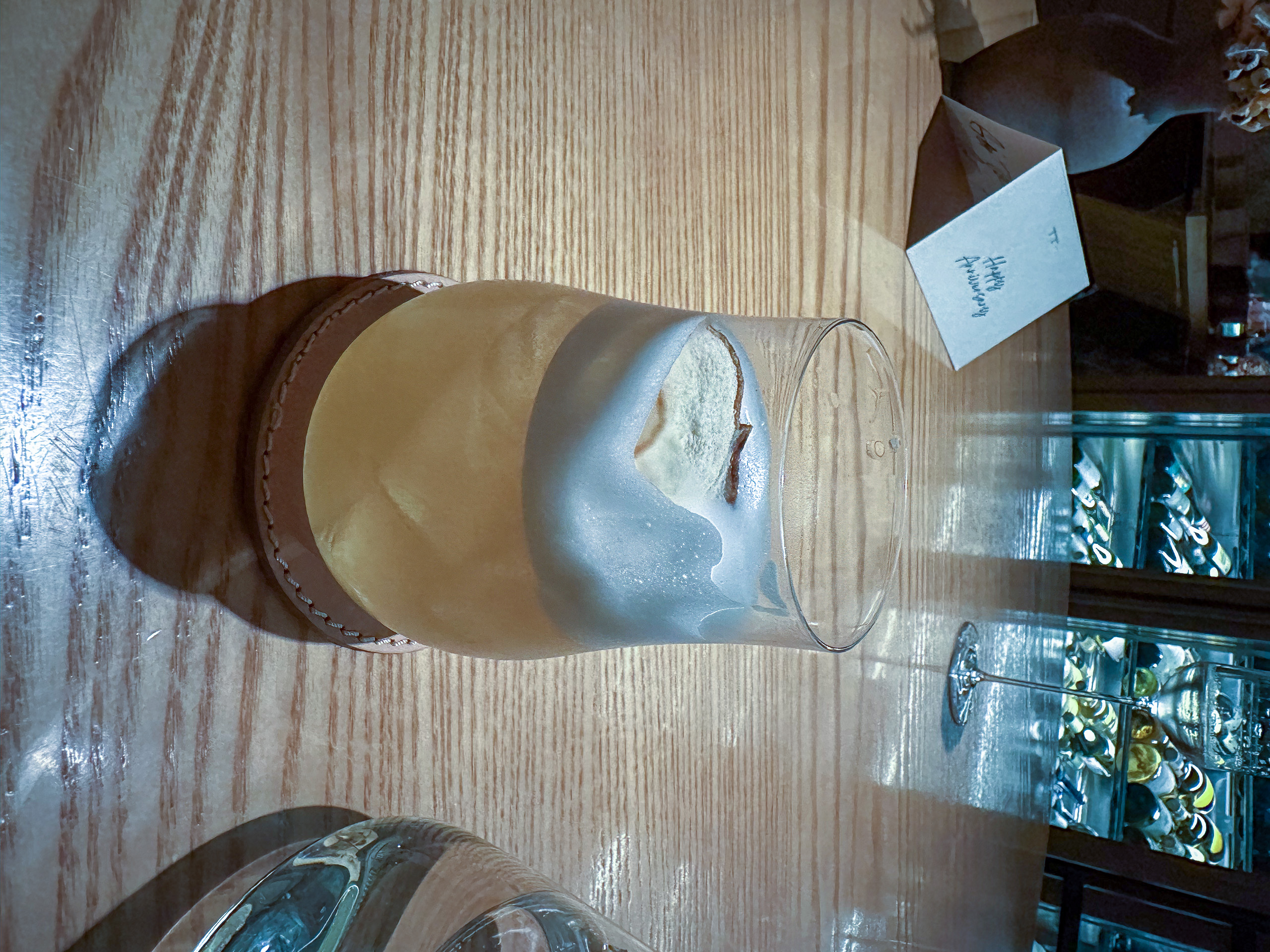
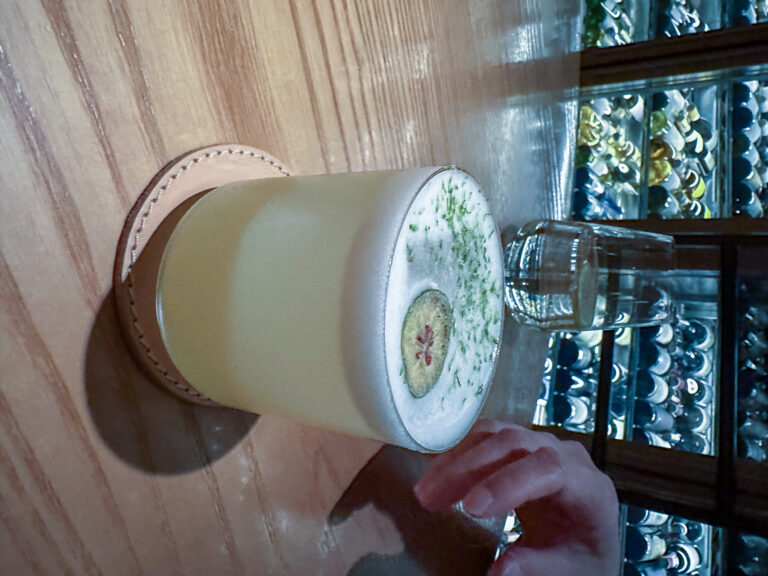
    A cocktail under a thick foam cap on the timber bar counter
    The first cocktail, under a thick foam cap, in the courtyard.
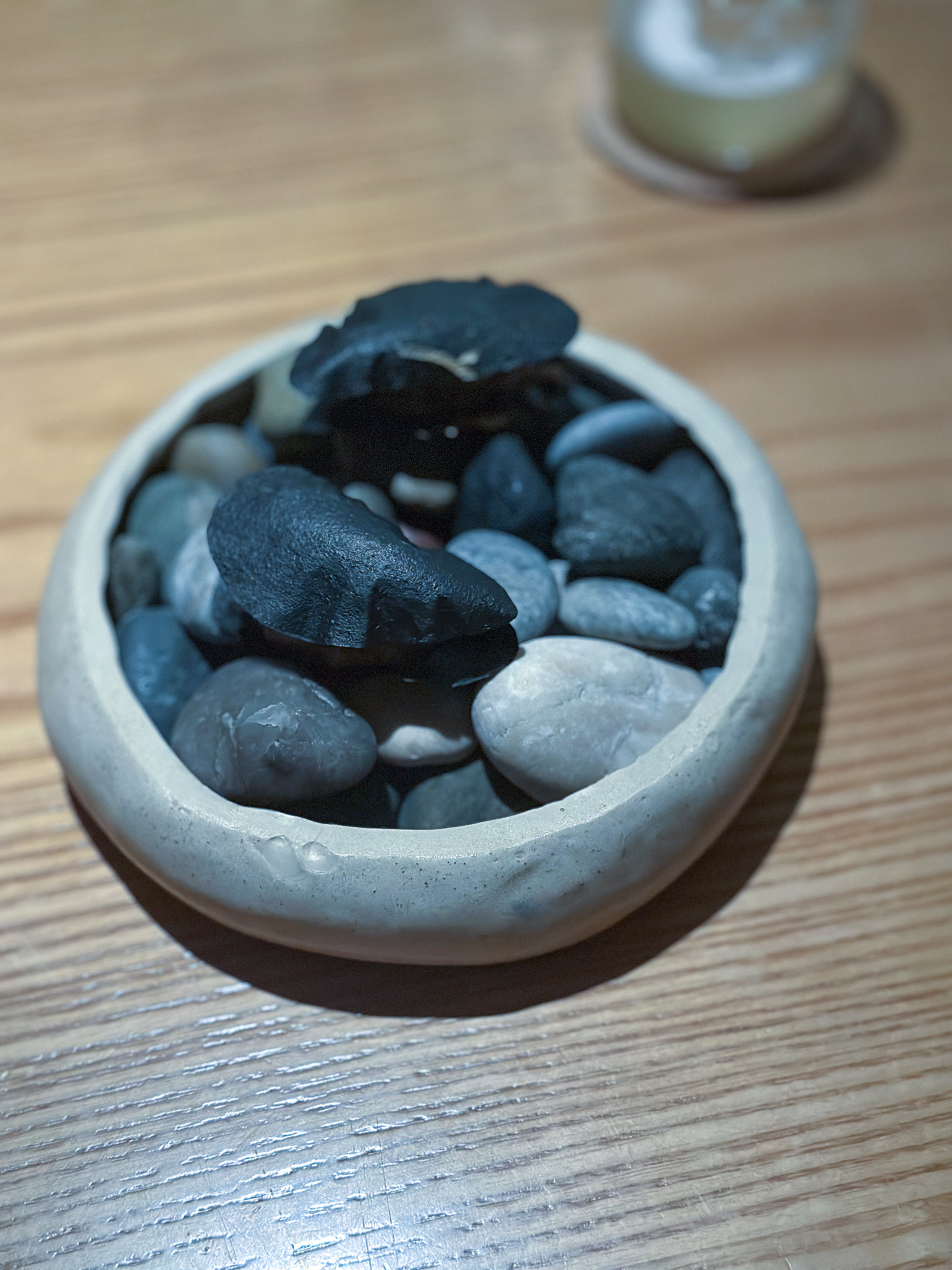
    A dish disguised as river stones, dark shapes set among grey pebbles in a stone bowl
    A dish disguised as river stones, in a stone bowl.
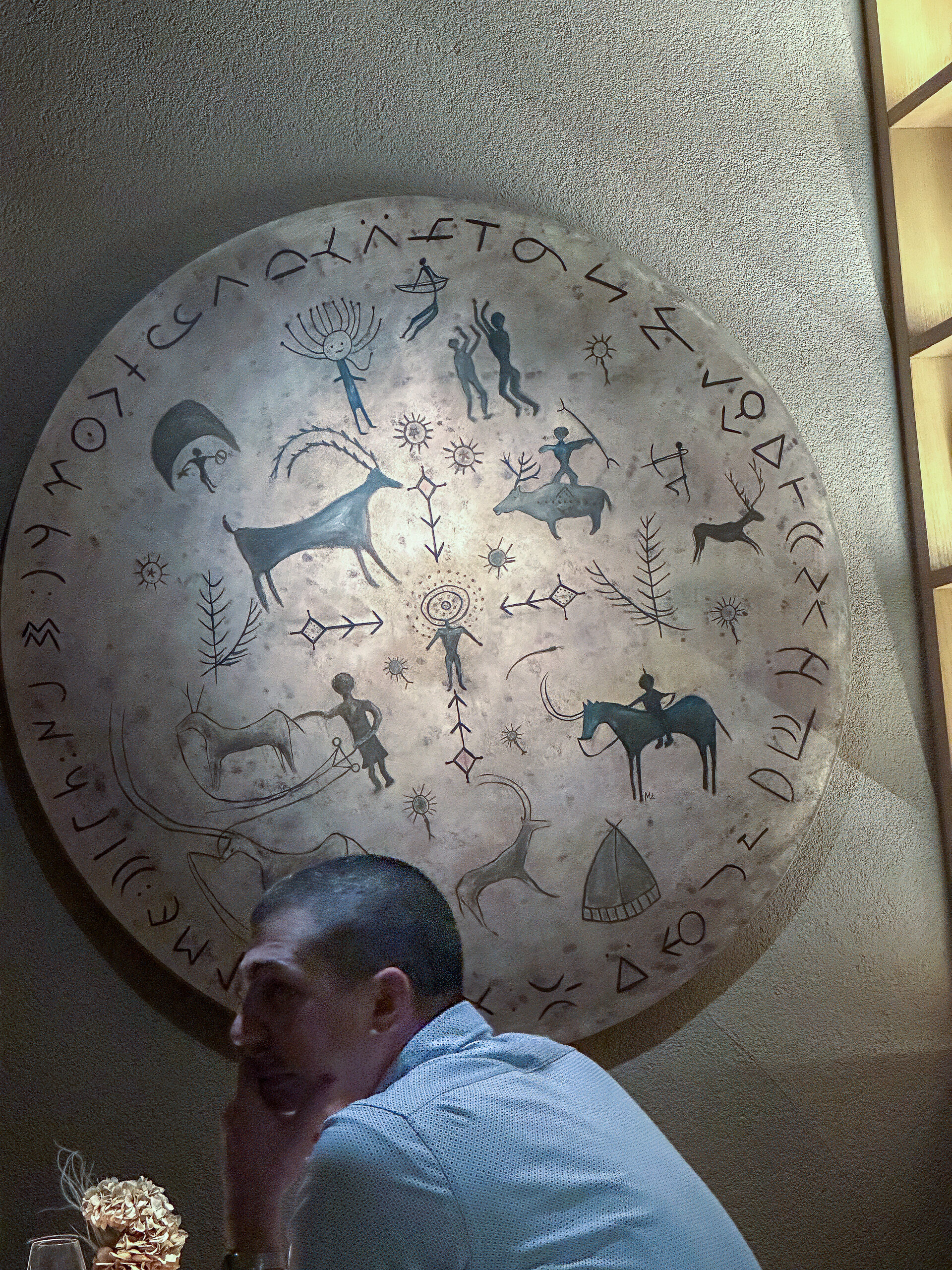
    A diner seated beneath the large round wall disc painted with Anatolian rock-art figures and runic script
    The wall disc painted with Anatolian rock-art figures.

    Three dishes that mattered

    The bread course: a sesame roll bedded in buckwheat, cheese on slate, a wooden spreader, and the first moment the pantry stops being a display and becomes dinner.

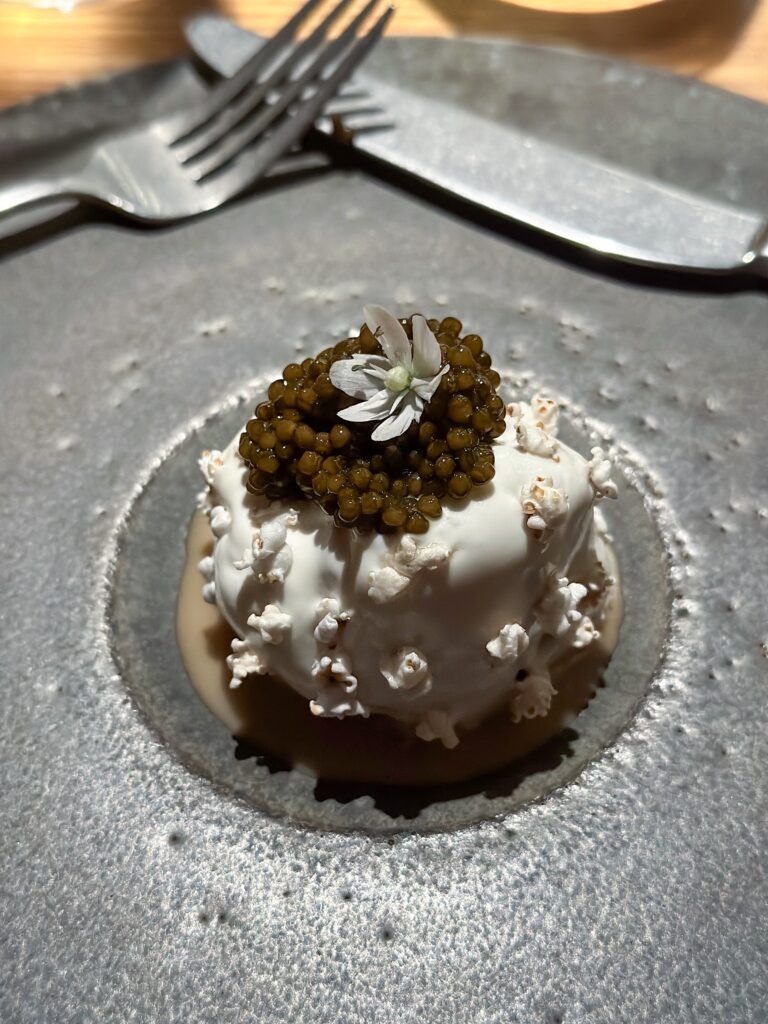
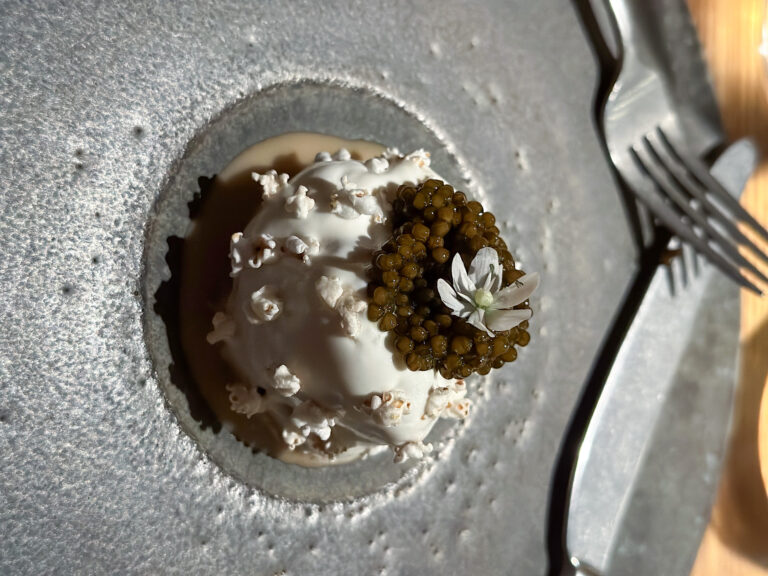
    A quenelle of cream scattered with popcorn and crowned with caviar and a white flower, set in the hollow of a stone plate
    A quenelle of cream under caviar and popcorn, set into the hollow of a stone plate.

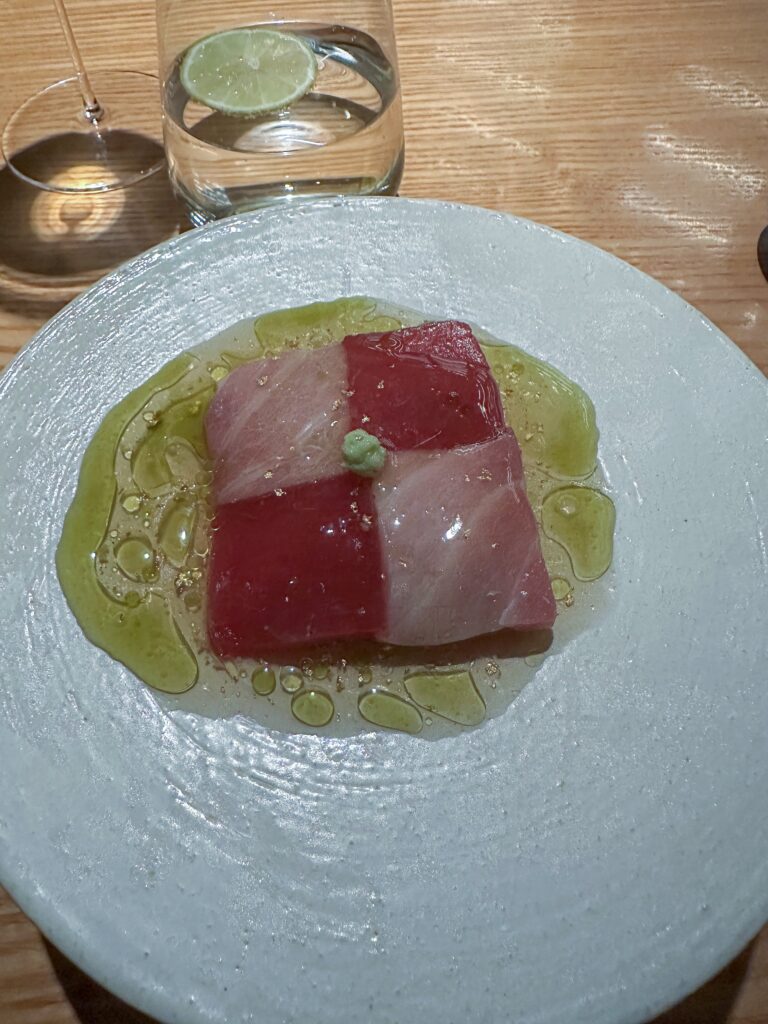
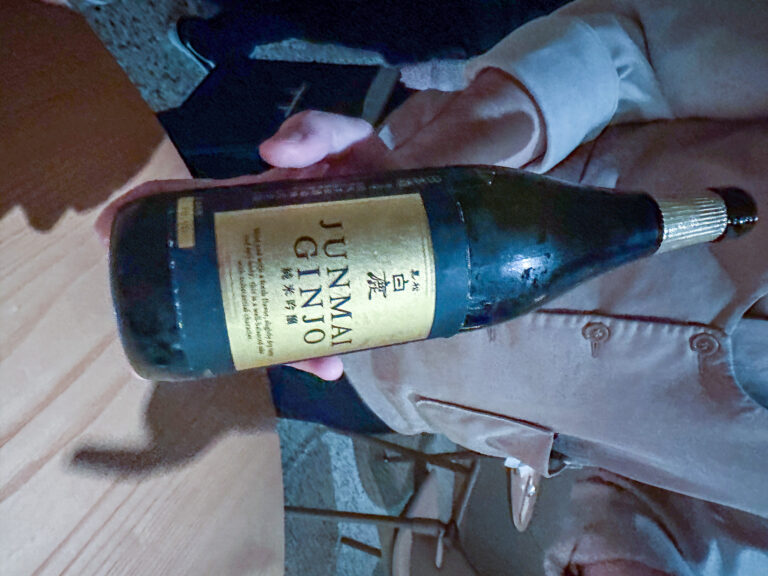
    A quenelle of cream under caviar and popcorn, set into the hollow of a stone plate, which is the kind of thing that should not work and did. And the tuna, loin and belly laid out as a checkerboard in green olive oil, which is the dish that raises the question the whole restaurant lives with: the chef’s years in Tokyo and Copenhagen are not hidden, and there is a bottle of Japanese sake on the list.

    Checkerboard slices of tuna loin and belly in green olive oil on a pale ceramic plate, a glass of water alongside
    Tuna loin and belly laid out as a checkerboard in green olive oil. The Tokyo years are not hidden.

    Is this Japanese technique pointed at Anatolian produce, trading on the claim to be Anatolian? His answer is that the Turks came from Central Asia and the kitchen develops what it finds there. The menu does not settle it. You decide at the table.

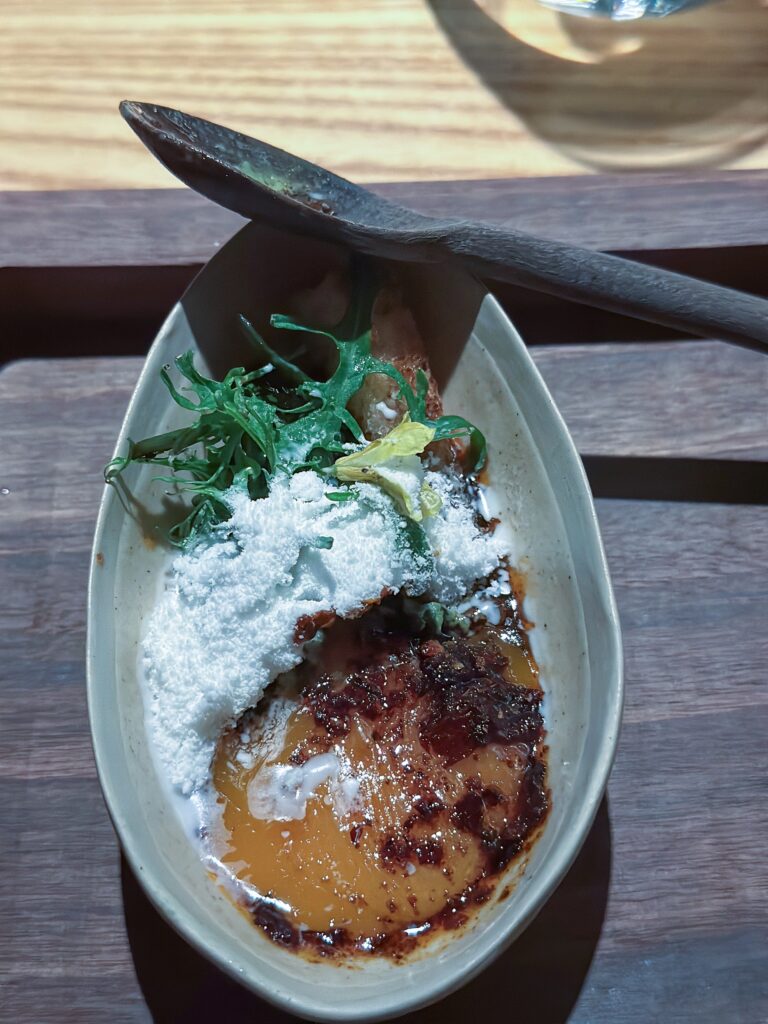
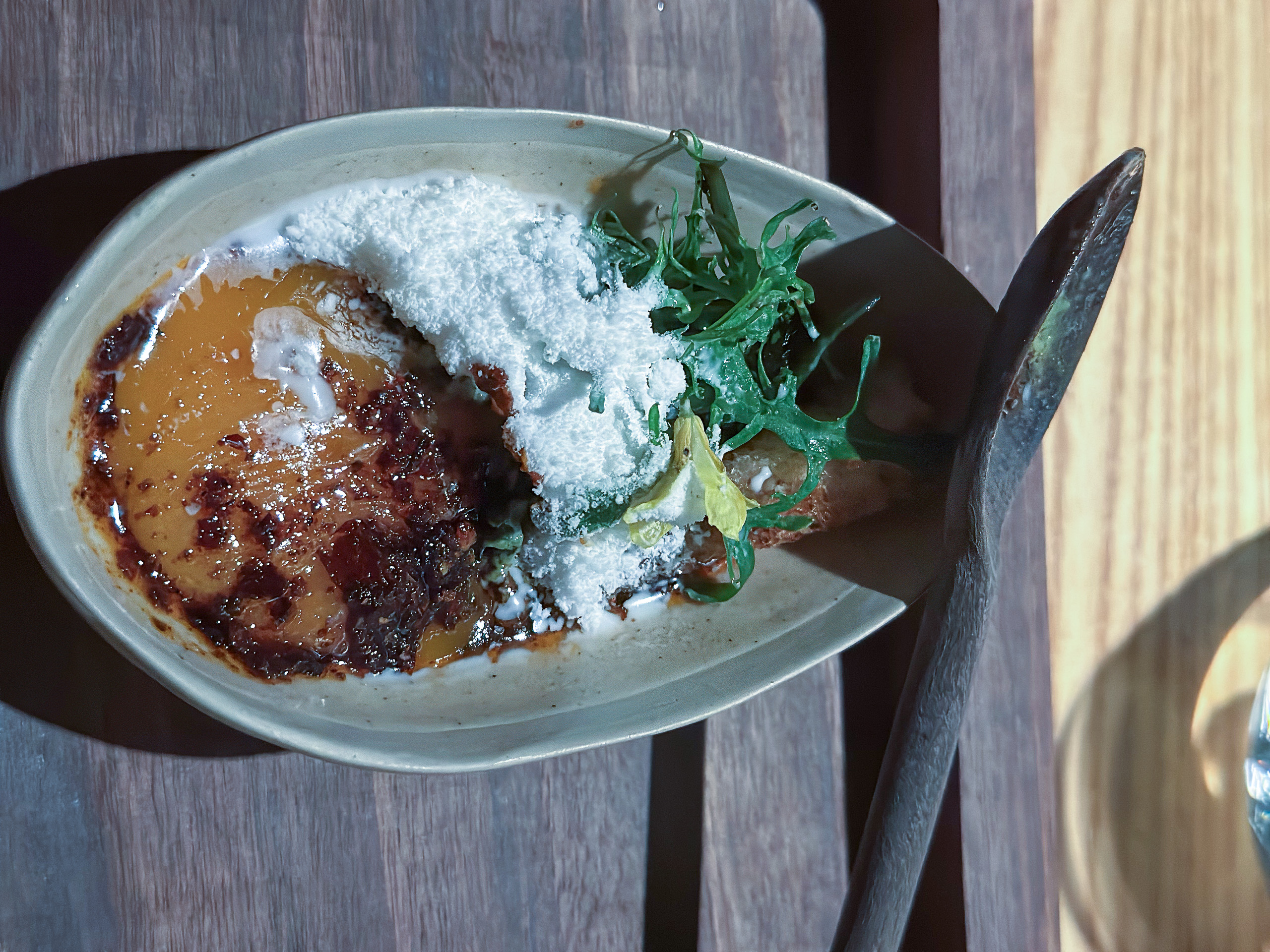
    A bruleed custard under a drift of grated white cheese and a curl of green herb in an oval dish
    A brûléed custard under grated white cheese, olive-wood spoon.
    A dish under orange sauce and white crumb with herbs, in a pale bowl
    A dish under orange sauce and white crumb with herbs.
    Small dishes and a cocoa-dusted bite set in stone bowls on the table
    Small dishes and a cocoa-dusted bite in stone bowls.

    The glass

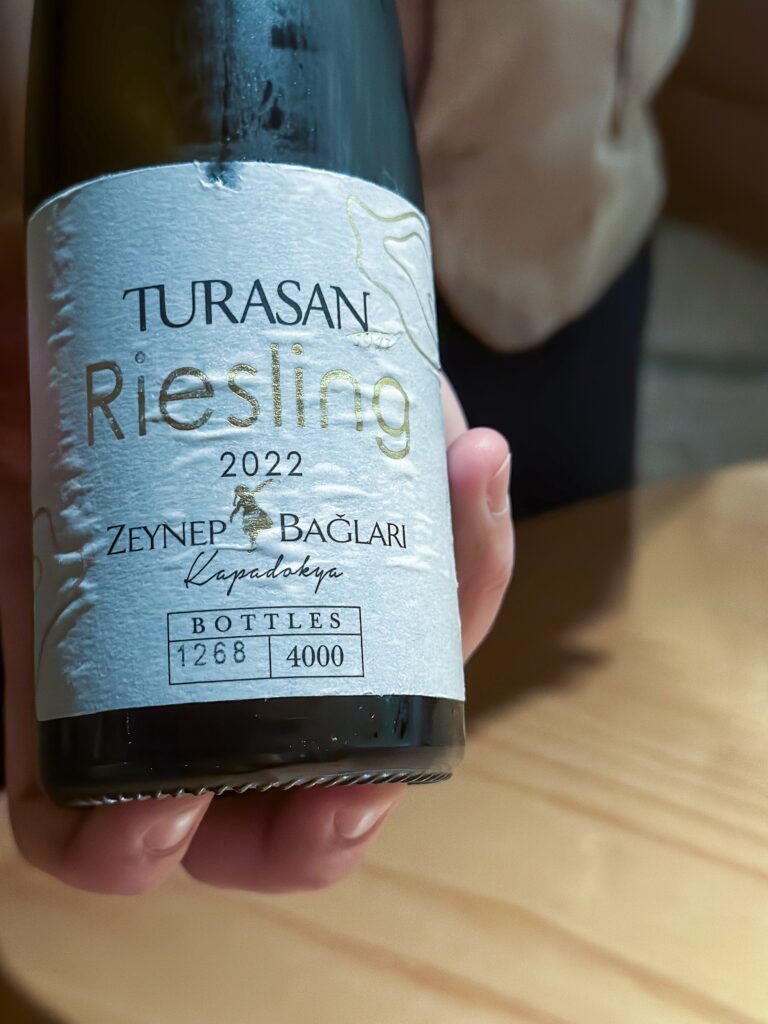
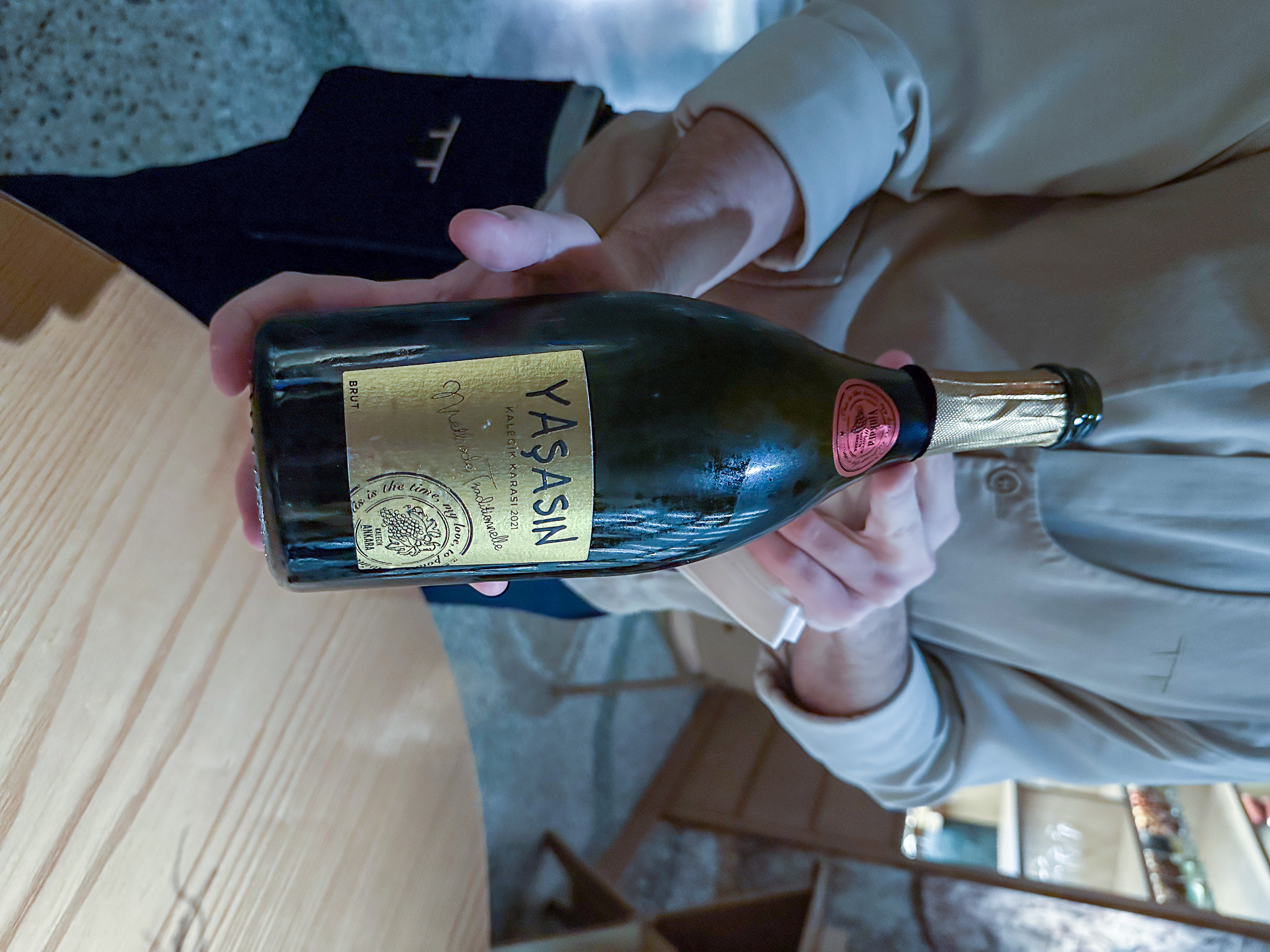
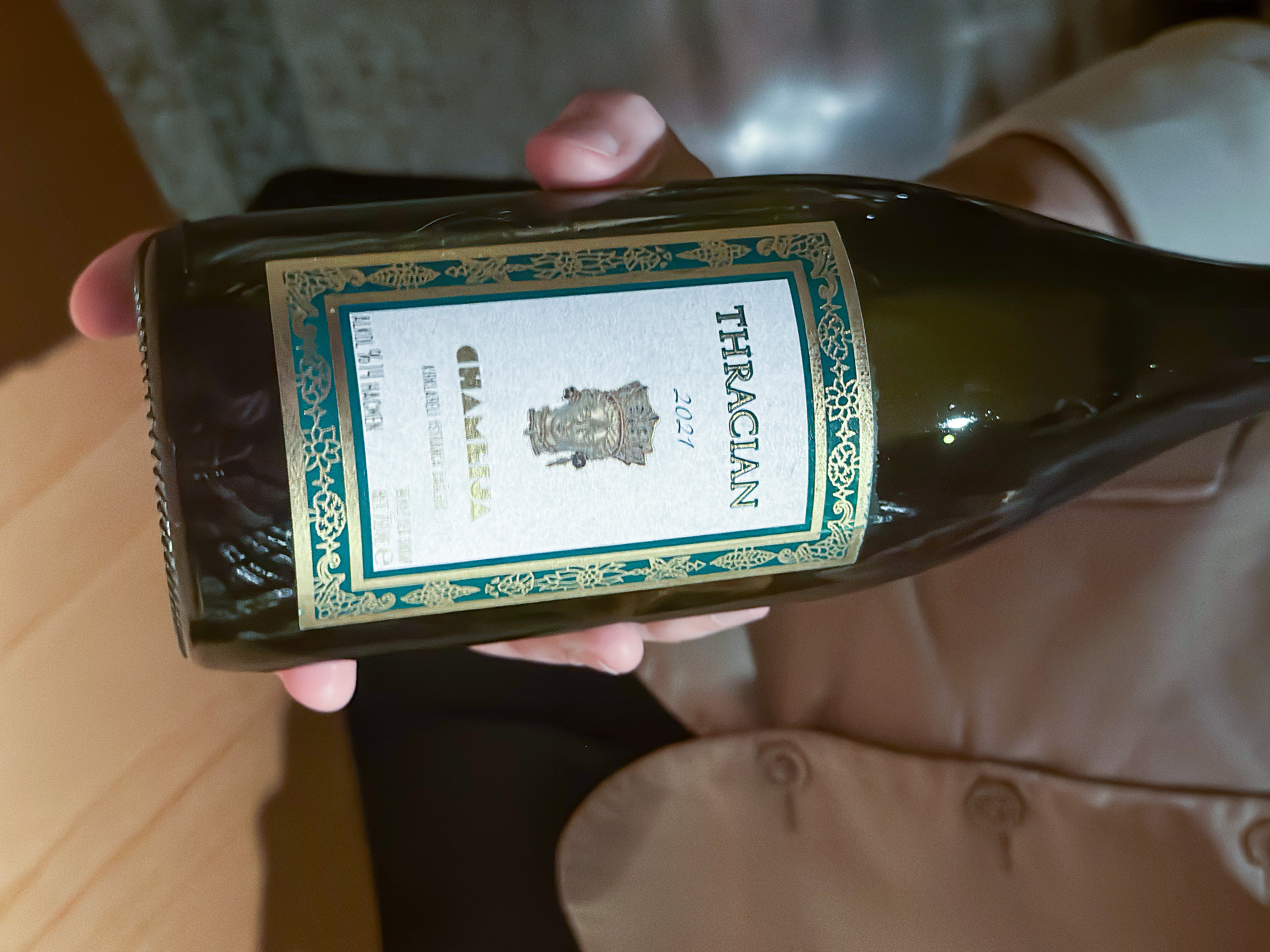
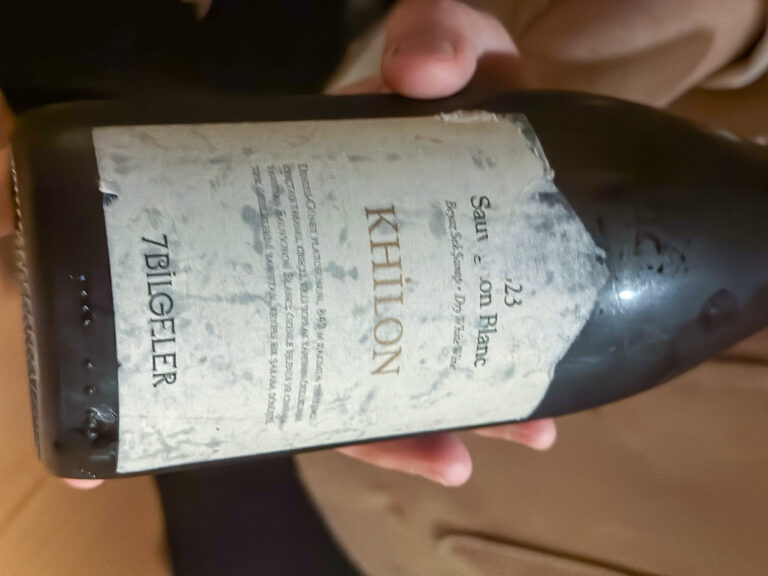
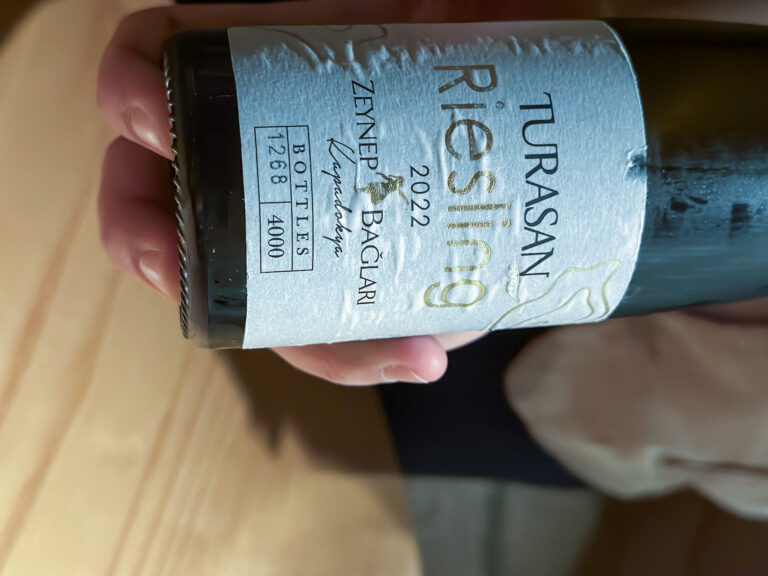
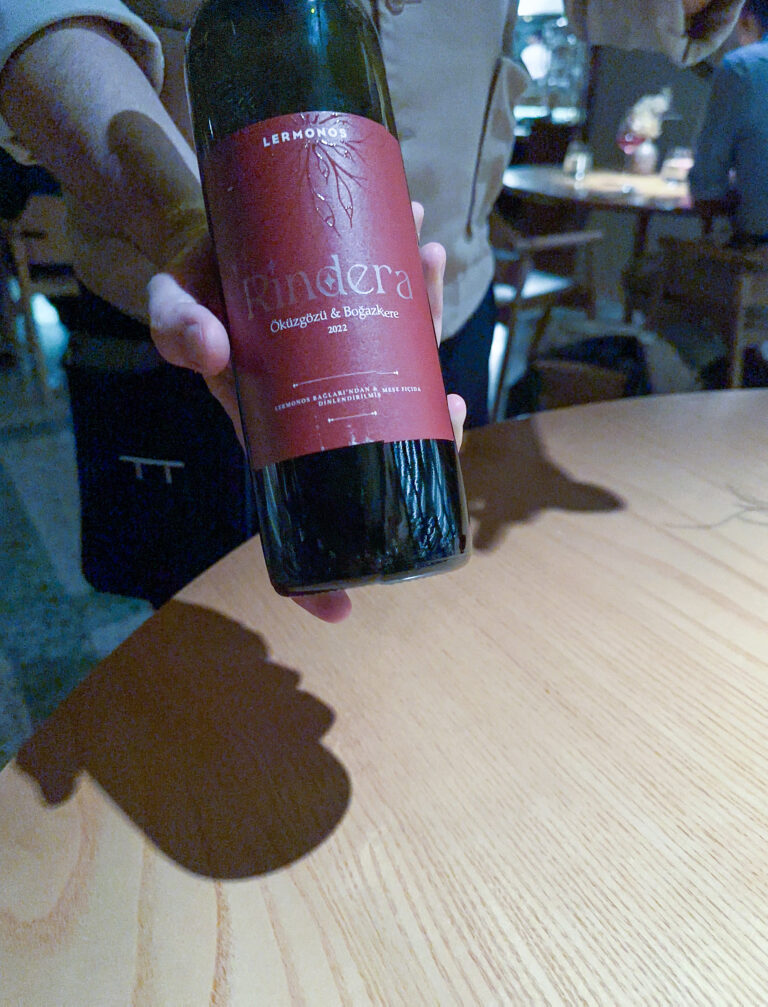
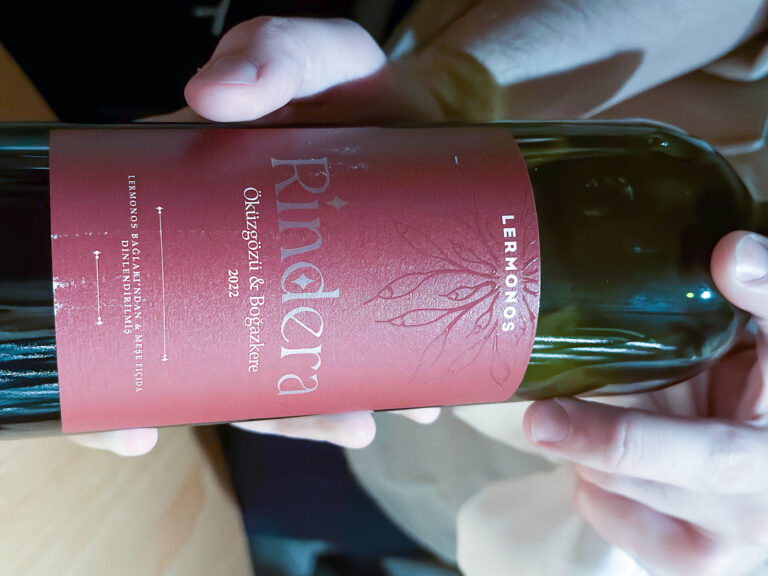
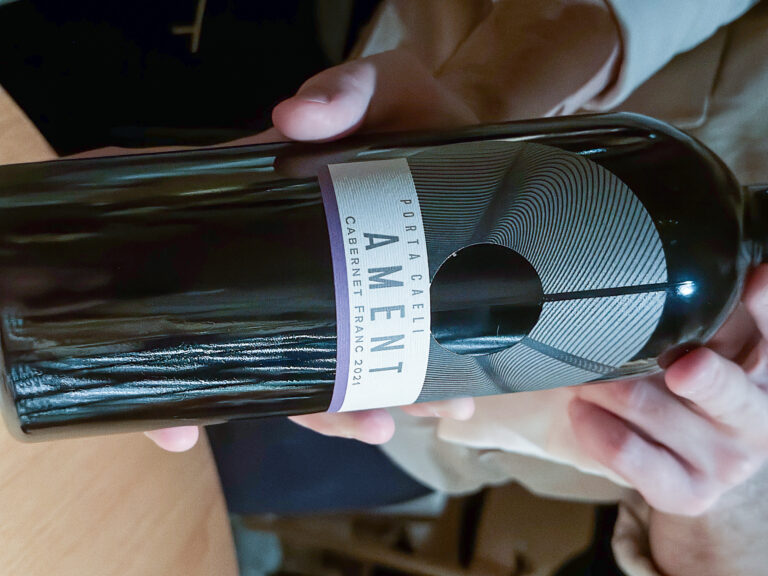
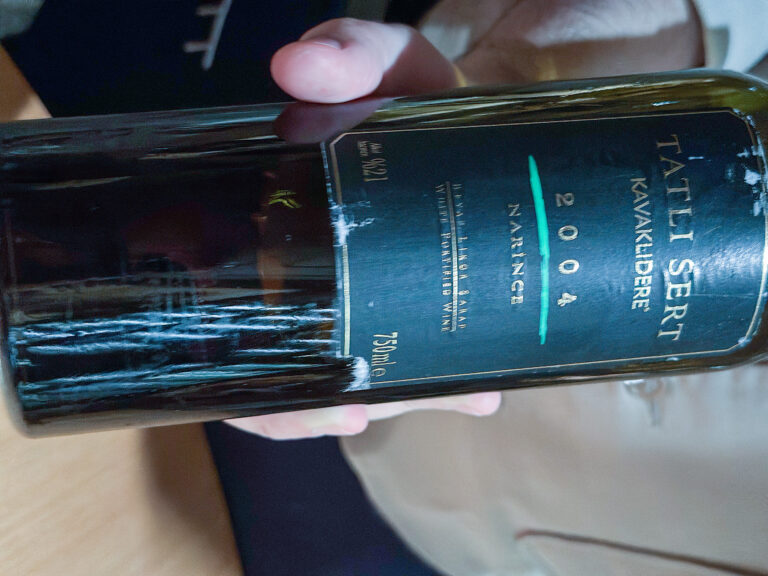
    The wine pairing runs seven wines chosen to walk you around Turkish terroir rather than flatter the food with imports: a brut from Kalecik Karası, a Cappadocian Riesling whose label records the bottle number, a Thracian red, a blend of Öküzgözkü and Boğazkere. Take it: the pairing is a must here. The wine adds to the food and the food adds to the wine — many places fail at exactly that, and TURK has it right. Ask for an extra sip of the Anatolian wines. The non-alcoholic pairing runs six house-made drinks, and the fermented elderflower and rose is good enough to make the wine drinkers at the table look over.

    A hand holding a bottle of Turasan Riesling from Zeynep Baglari in Cappadocia
    The Turasan Riesling; the label records the bottle number.
    A bottle of Yasasin sparkling wine held out across the table
    A Yaşasın sparkling, held out across the table.
    A bottle of Thracian white held across the table
    A Thracian white.

    Booking reality

    Book through the restaurant’s own site and nowhere else. Nothing is confirmed until the email arrives; cancellation closes three days out, and the commitment counts per seat, not per table. Solo diners are seated only at the chef’s table. Two to three weeks ahead is enough midweek; make it three to four for a weekend. Dinner only, Tuesday to Saturday.

    Who it is for, and who it is not

    Come here for Turkish fusion. Come for the wine pairing. Come if you are open to trying new things and want to see the kitchen — look at the cabinets on the way in and say yes to the tour at the end.

    Look elsewhere if anyone in the party is vegetarian, vegan, gluten-free or lactose-intolerant, because the answer is no before you sit down. Look elsewhere if you want the chef at the pass, because he has other rooms in the city now and is not necessarily in this one on a given night, which at thirty covers matters more than it would somewhere larger. And know that the room is dark and, by nine, loud. If you came for a quiet word, have it in the courtyard.

    The pantry is not decoration. It is the one thing on the menu nobody else can copy.

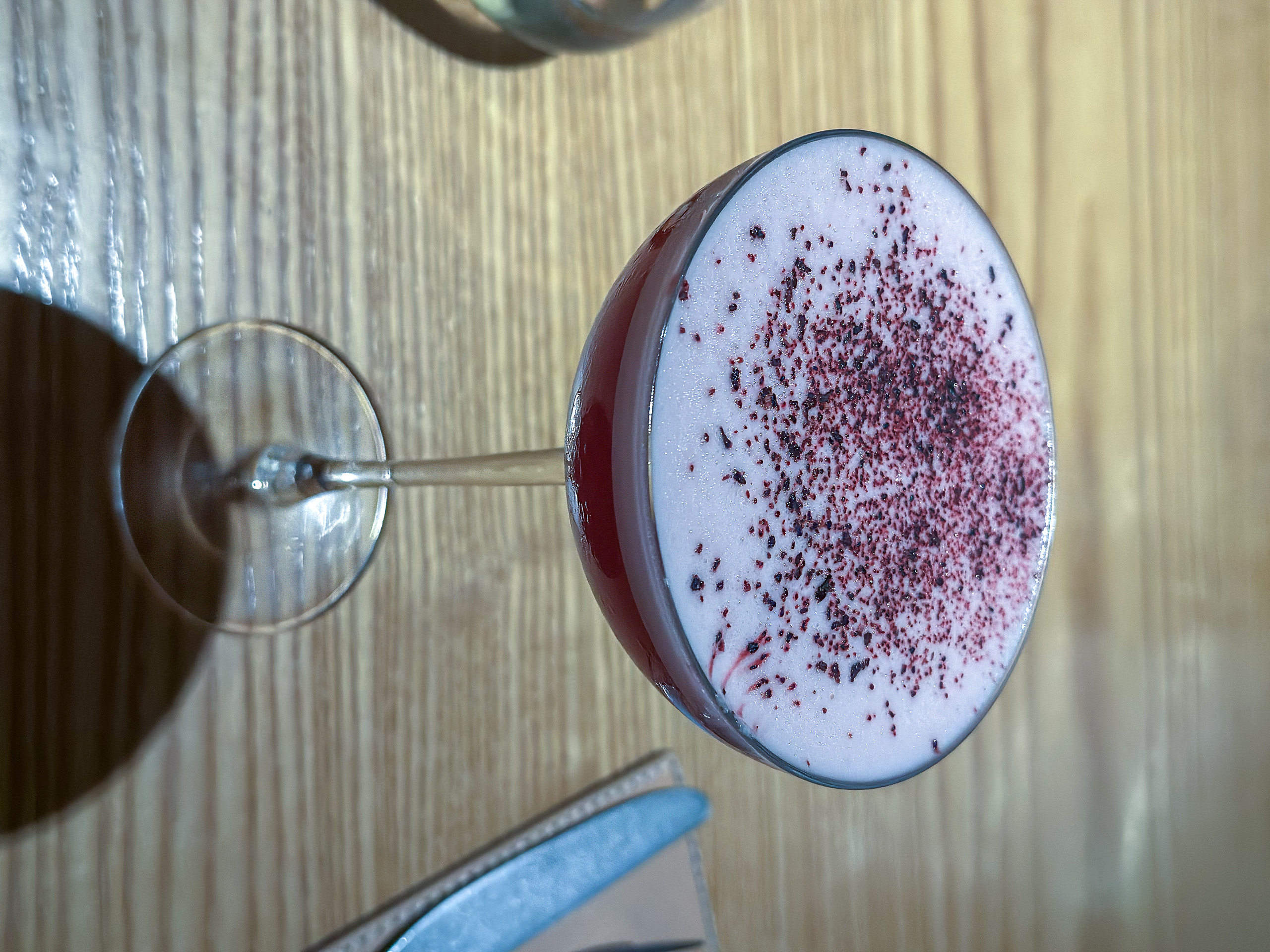
    A cocktail under foam dusted deep red, seen from above
    A cocktail under foam, dusted deep red. If you came for a quiet word, have it here.

    Bottom line

    TURK is a terrific introduction to Anatolian cuisine and wines, and it was a gem of an evening. STRONGLY RECOMMENDED. Book a weekend three to four weeks out, take the Turkish pairing, and read the dietary policy before you book.

    See the full set: Türk Fatih Tütak — in frames. More Istanbul: Kempinski, Istanbul.

    The TURK Fatih Tutak gallery

    Every photo on this site is my own, shot on the night. Slide through →
    A pale green cocktail dressed with herbs, held above the counterA bottle of Khilon sauvignon blanc held up, its label facing outA bottle of junmai ginjo sake presented over the tableA bottle of Turasan riesling held out, the vintage showingCaviar over cream in a rough stone bowl, a flower set on topA bottle of Rindera held up in the dining roomThe Rindera label held close, its pink script filling the frameA dark bottle of Ament cabernet turned to the labelA bottle of Tatli Sert from 2004 held up to the lightA hand pointing at a whole turbot hanging in the dry-ageing room, more flatfish behind it