The Suite Report

Author: admin

  • TURK Fatih Tutak: Modern Anatolian, Two Stars, and the Best Table in Istanbul

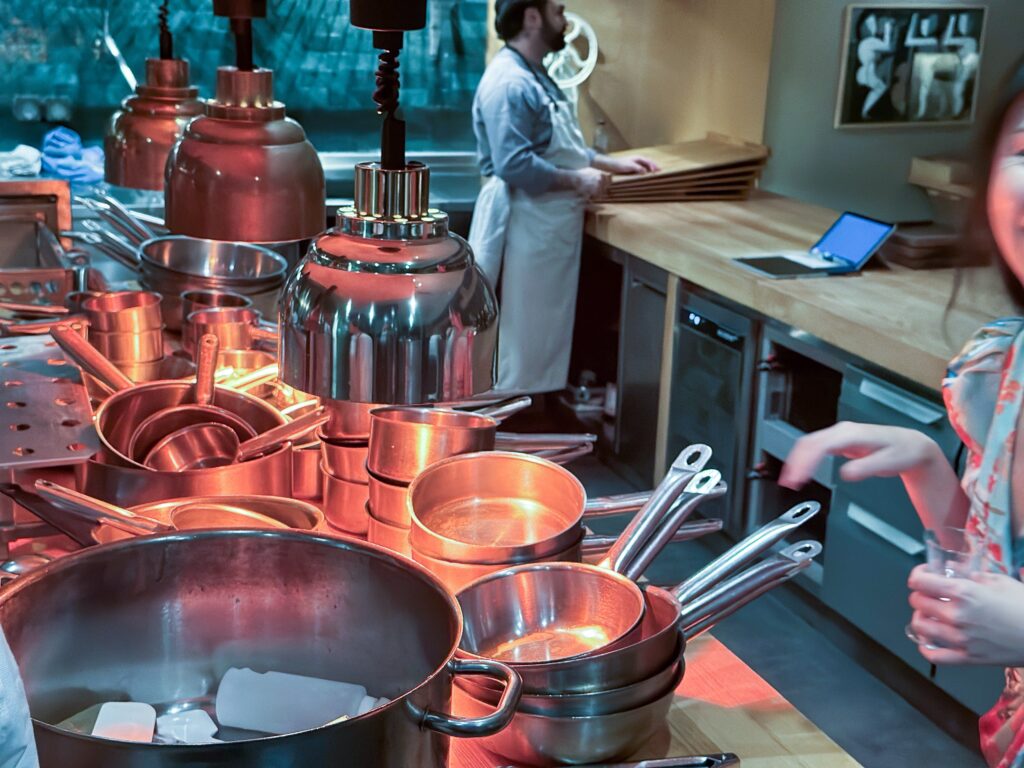
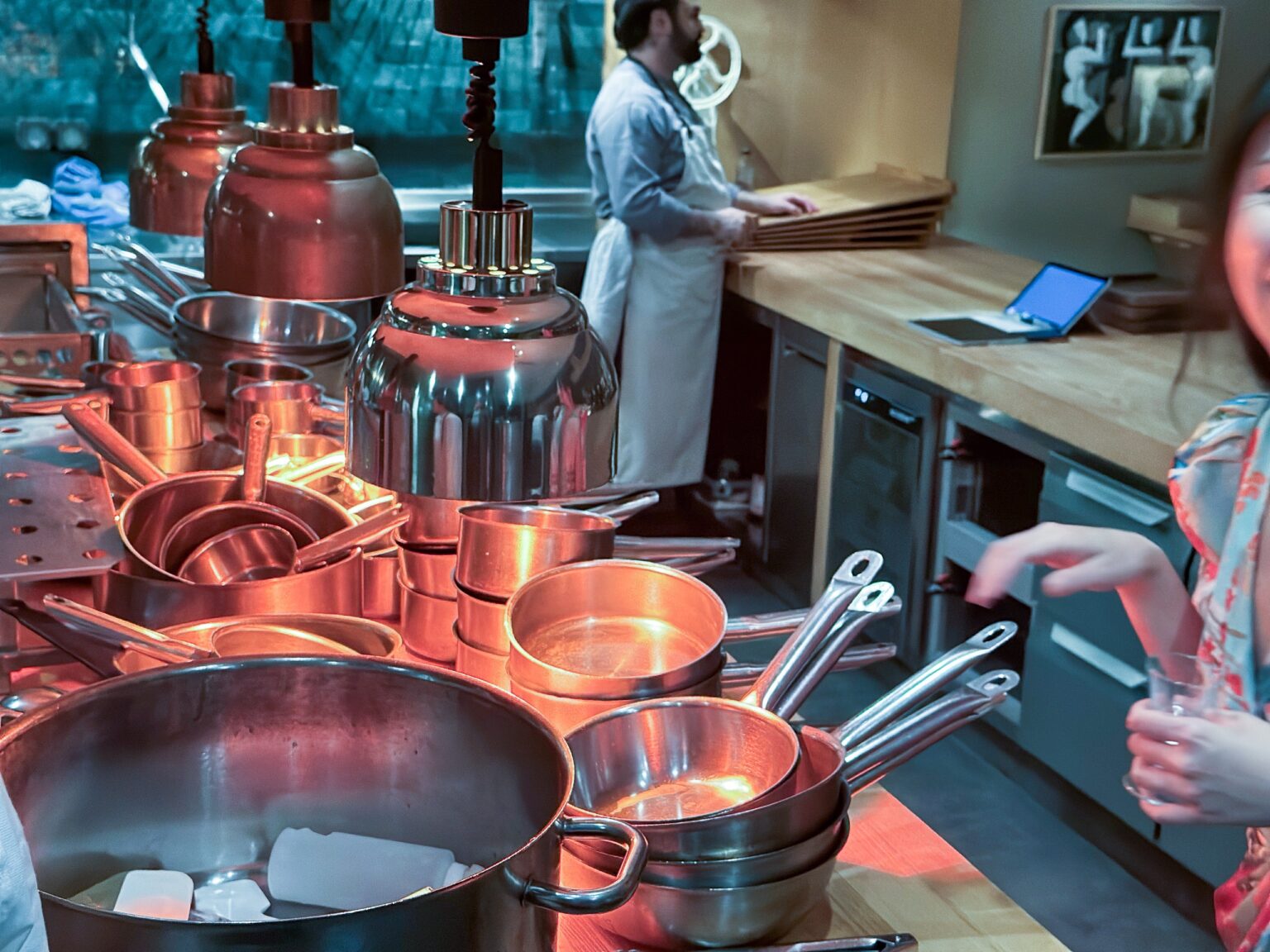
    Copper pans stacked on the kitchen pass under brass heat lamps, a cook working at the counter behind

    ISTANBUL, TÜRKİYE · RESTAURANT · 9 MIN READ

    TURK Fatih Tutak: Modern Anatolian, Two Stars, and the Best Table in Istanbul

    One fixed menu, built from a pantry with names and postcodes on every jar. The case for it is the provenance. The case against is that the provenance is the show.

    By J.C. Mercer

    Know before you go

    • Where the Now Bomonti building, Şişli – two minutes’ walk from Osmanbey on the M2, and its address since day one
    • The format one fixed tasting menu, dinner only, Tuesday to Saturday. No à la carte, and no vegetarian, vegan, gluten-free or lactose-free menu
    • What it costs one fixed price per head, published on the restaurant’s own page – VAT in, service added at the end
    • Booking turkft.com only, held with a per-person deposit inside 24 hours. Full refund at 72 hours’ notice, nothing after
    • The stars two in the first MICHELIN Guide Istanbul, October 2022, retained in 2024, 2025 and 2026. It never held one

    Every meal on this site is paid for in full and booked the way any other guest would book it.

    TURK Fatih Tutak occupies a unit in the Now Bomonti building in Şişli, and has occupied that same unit since it opened on 5 December 2019. Listings filing it under Beyoğlu, or Osmanbey, or Halide E. Adıvar are wrong: it has never moved. What changed is what it serves. It opened à la carte – four courses, four choices in each – and now serves one fixed tasting menu and nothing else.

    Tutak was born in Istanbul in 1985 and worked through Qingdao, Beijing and Hong Kong, but two rooms matter more than the rest: three-star Nihonryori Ryugin in Tokyo, and Noma in Copenhagen. In Bangkok he put a Turkish menu on the pass at The House of Sathorn and took it into Asia’s 50 Best. Then he came home and opened his own restaurant at thirty-four.

    The house line is that it is “creating a new alphabet for Turkish cuisine.” In practice that means a pantry: named growers, named regions, a named knife-maker in Mersin. It is also, if you are feeling unkind, a show. Both can be true at once. The question is how much of the second you are paying for in order to get the first.

    I ate here

    TURK Fatih Tutak, Istanbul

    • Covers Two, 7pm
    • Dined April 2025
    • Menu The tasting menu
    • Drinks Wine pairing
    • How it was paid for I paid in full

    Two stars, in a single step

    Almost everyone gets this slightly wrong. Istanbul had no MICHELIN Guide until October 2022. TURK had by then been open nearly three years without a star, because there was no guide to give it one. In that first selection it was the only restaurant in the city awarded two, making Tutak Türkiye’s first two-star chef. It did not work its way up; it went from unstarred to two in one move. Some biographies date the award to 2023, wrongly.

    It has held the two ever since. TURK is no longer the only two-star restaurant in the country, but it is still the only one in the city. La Liste made it the best restaurant in Türkiye in 2023 and 2024, and it entered the World’s 50 Best extended list at No. 66 in 2023 without ever becoming a fixture there.

    The pantry is the argument
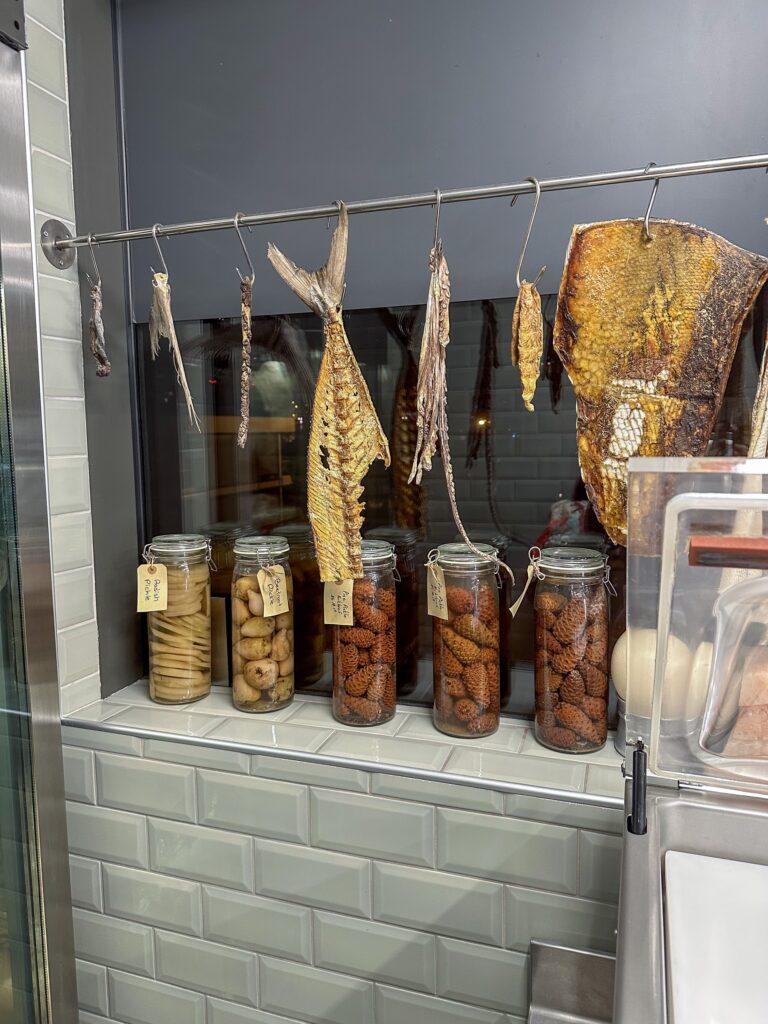
    Whole fish hung to dry on a rail beside glass jars of preserved figs and dried chillies
    Fish drying on a rail above jars of figs and chillies. The store is not hidden behind the kitchen.

    Back-lit cabinets of ingredients stand in the room like furniture, and the sourcing behind them is the most concrete thing about the restaurant. Honey from Erzincan, from hives at three thousand metres. Pomegranate molasses from Hatay, barrel-aged seven years and then cellared further. Cold-pressed vinegar and water-buffalo yoghurt from Manisa; turbot from Sinop, squid from Çanakkale, lamb from Thrace, butter from Trabzon, bulgur from Urfa. Tutak shops the Bomonti organic market himself on Saturdays.
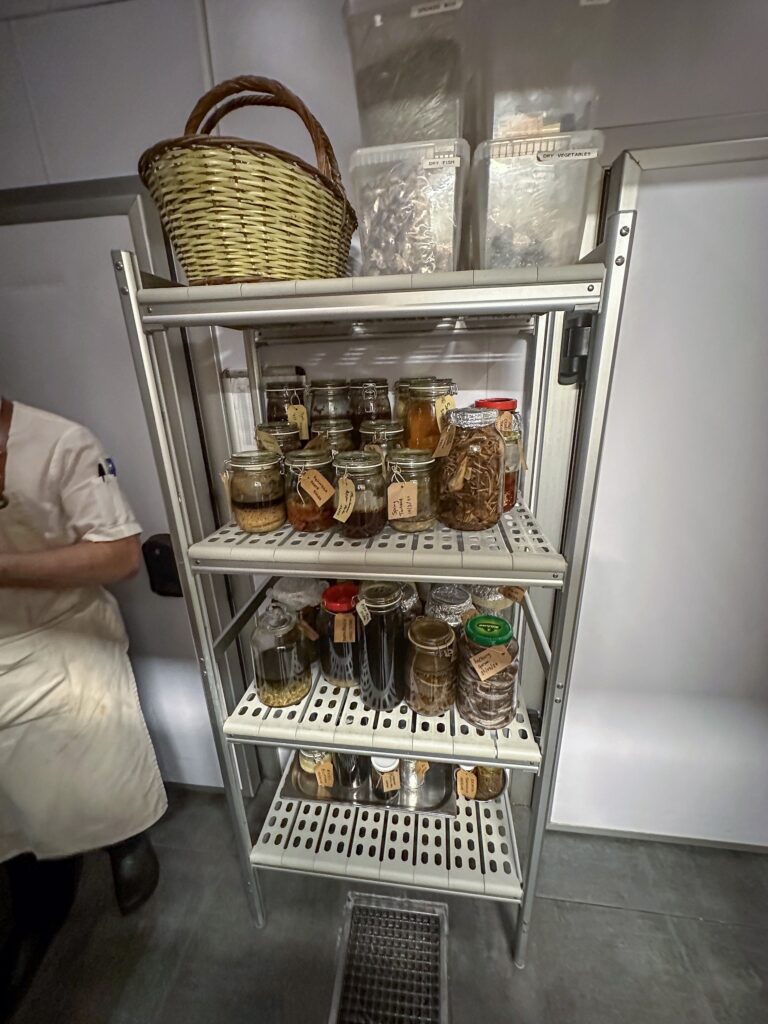
    A rolling rack of labelled preserving jars and bottles in the kitchen, a wicker basket resting on top
    A rolling rack of labelled preserves – the habit that got the kitchen through 2020.

    That habit has a decent origin story. When the restaurant was shut for the 2020 lockdown, Tutak went on buying from his producers anyway and turned the harvest into garums, misos, tarhanas and pickles to serve on reopening. The tableware makes the same argument in another material: four Turkish ceramic artists, plus olive-wood pieces oiled in-house and never put through a dishwasher. The knives for the meat course are made by Tüfekçi Karadayı, a third-generation craftsman in Mersin; the restaurant’s shop will sell you one.
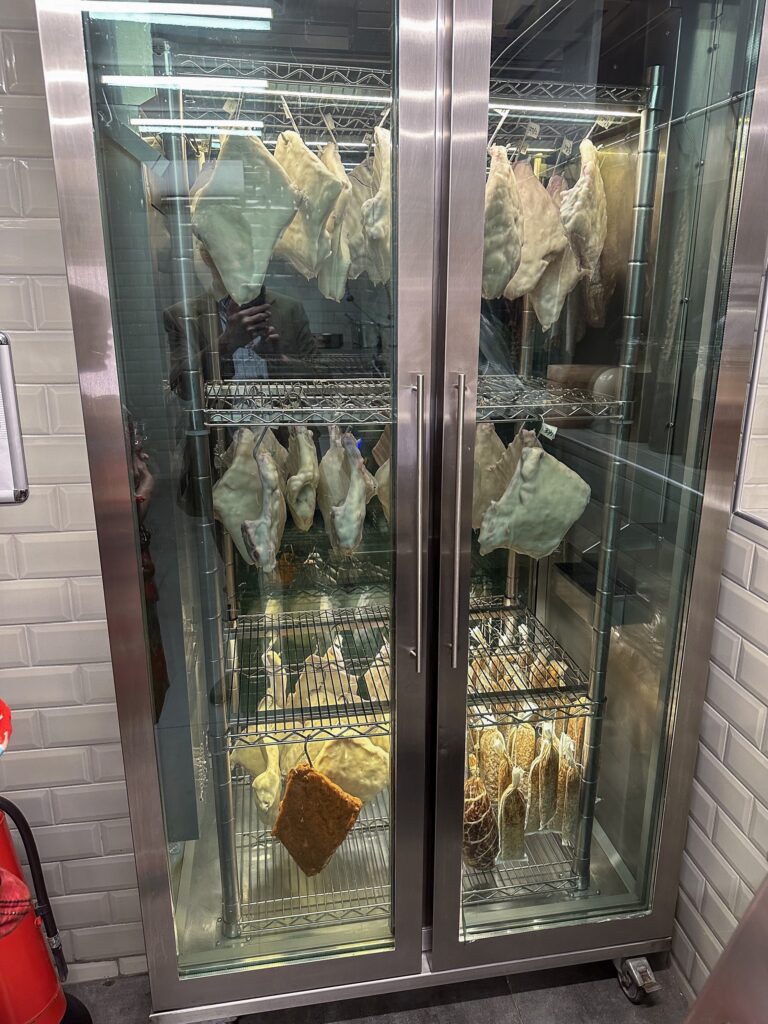
    Two glass-fronted cabinets hung with drying fish and flatbreads on wire racks
    The two-door ageing cabinet, hung with fish and flatbreads. Pantry-as-decor, taken to its logical end.

    One menu, twelve courses or fourteen

    The evening does not start at the table. It starts in AVLU – “the courtyard” – where the first canapés come out, and you can be four courses in before anyone shows you to a seat. The room beyond is long, narrow and dark, with a bar down one side and an open kitchen fronted by six counter seats. The house cooks for thirty guests a night with a staff of twenty-seven, which tells you most of what you need to know about the pace of the thing.
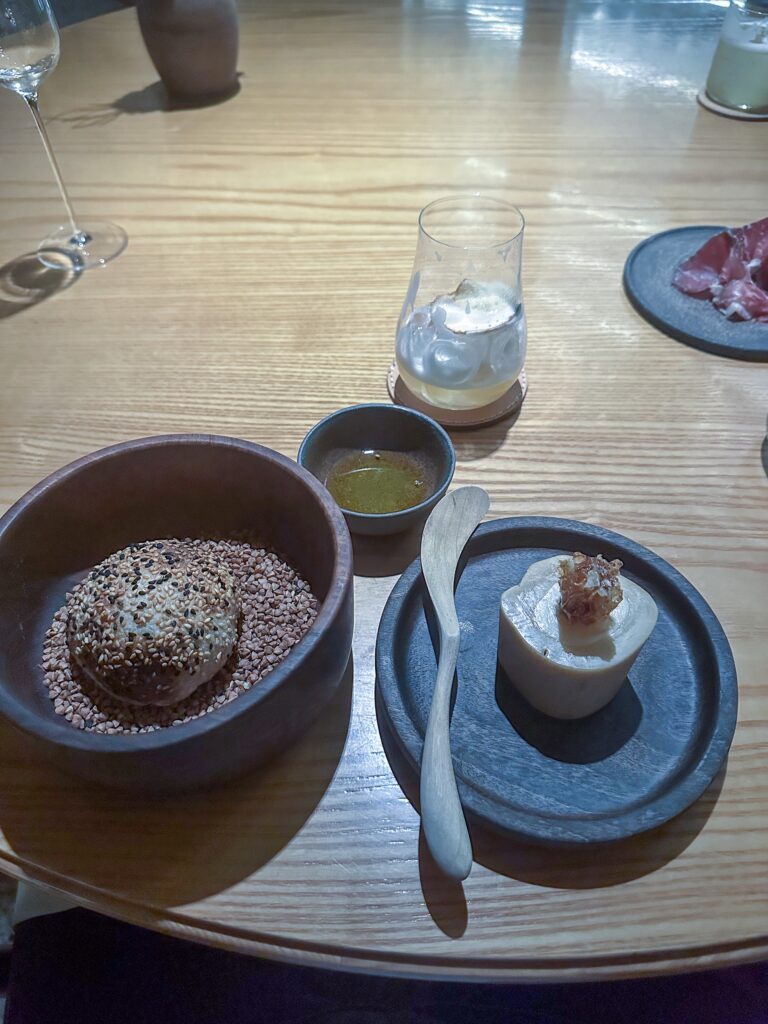
    The bread course: a sesame-crusted roll in a bowl of buckwheat, a cylinder of cheese on a slate dish, olive oil and a wooden spreader
    The bread course: a sesame roll bedded in buckwheat, cheese on slate, a wooden spreader.

    The menu is micro-seasonal, so any dish list is a record of one night rather than a promise. A few things recur: a double-boiled chicken broth in a Turkish tea glass, which has opened the meal since at least 2024; the mussel dolma, rice-stuffed mussels inside an edible squid-ink shell, the dish everyone photographs; and the mantı called “From My Mom,” which followed Tutak from Bangkok and is still the signature. Recent menus have added wagyu çiğ köfte, a 64°C egg yolk with truffle shaved at the table, and a dessert developed with an AI flavour-modelling tool that the kitchen calls “the AI.”
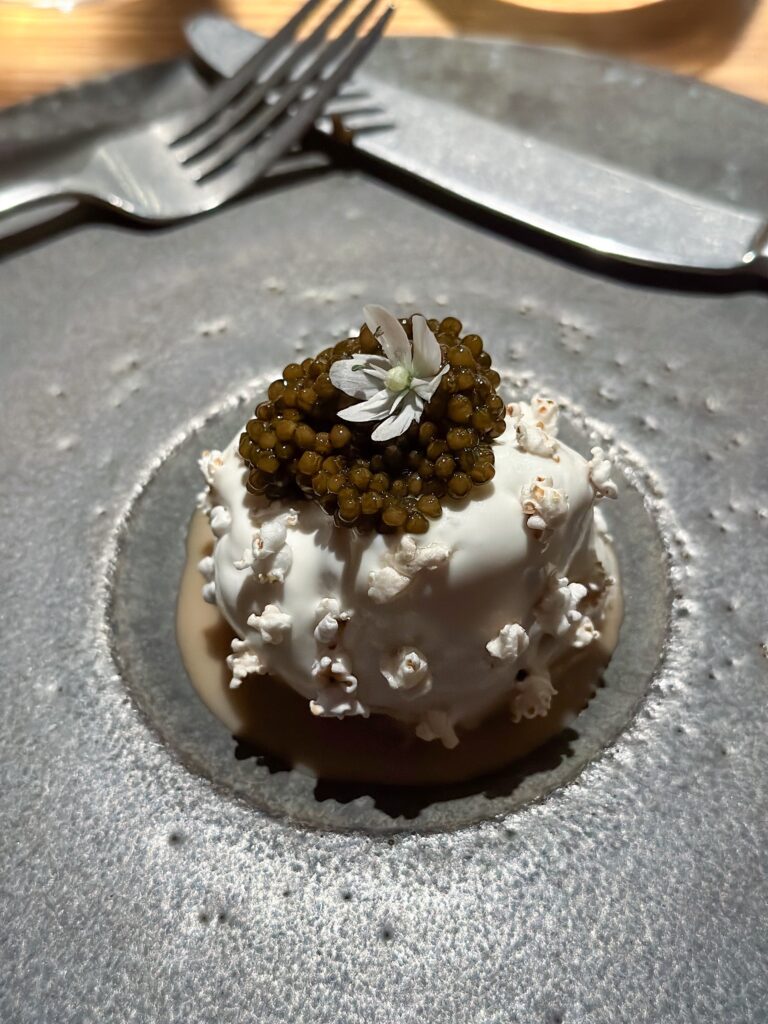
    A quenelle of cream scattered with popcorn and crowned with caviar and a white flower, set in the hollow of a stone plate
    A quenelle of cream under caviar and popcorn, set into the hollow of a stone plate.
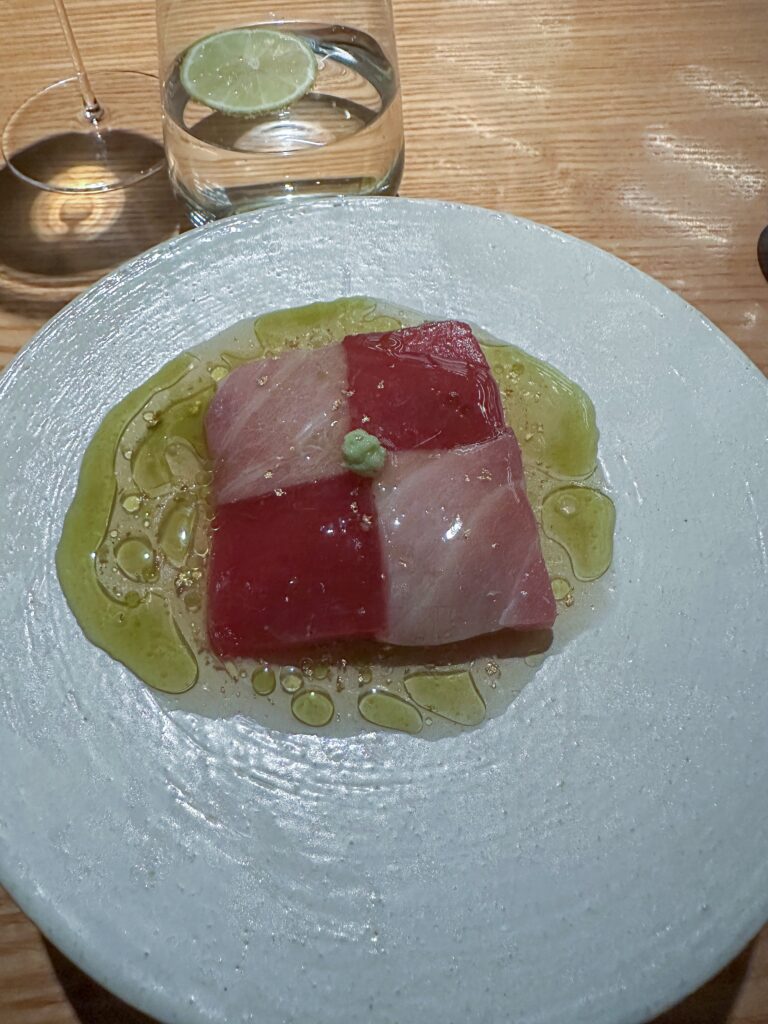
    Checkerboard slices of tuna loin and belly in green olive oil on a pale ceramic plate, a glass of water alongside
    Tuna loin and belly laid out as a checkerboard in green olive oil. The Tokyo years are not hidden.

    Tutak puts it plainly: “Turkish cuisine is not just about kebabs… Kebab is part of it, maybe 5% but there is so much more than kebabs.”

    The pantry is not decoration. It is the one thing on the menu nobody else can copy.
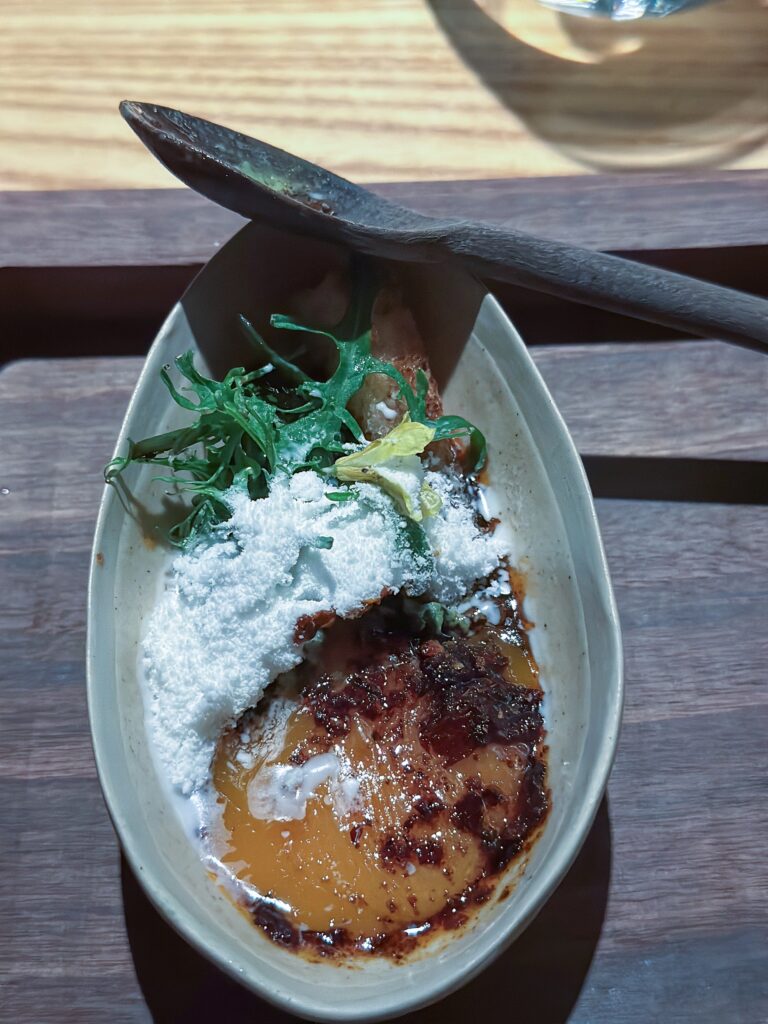
    A bruleed custard under a drift of grated white cheese and a curl of green herb in an oval dish
    A brûléed custard under grated white cheese, with one of the hand-oiled olive-wood spoons.

    Water, coffee and tea are in the price. The meal ends with a kitchen tour led by Tutak or one of his chefs, and you leave with a handwritten menu in a box with two chocolates and a limoncello-style spirit.

    What is in the glass

    The wine pairing runs seven wines chosen to walk you around Turkish terroir rather than flatter the food with imports, from a list of more than 490 labels. The non-alcoholic pairing runs six house-made drinks, one of which – a fermented elderflower and rose called Özlem – is good enough that one write-up reckoned wine drinkers briefly regret their choice.
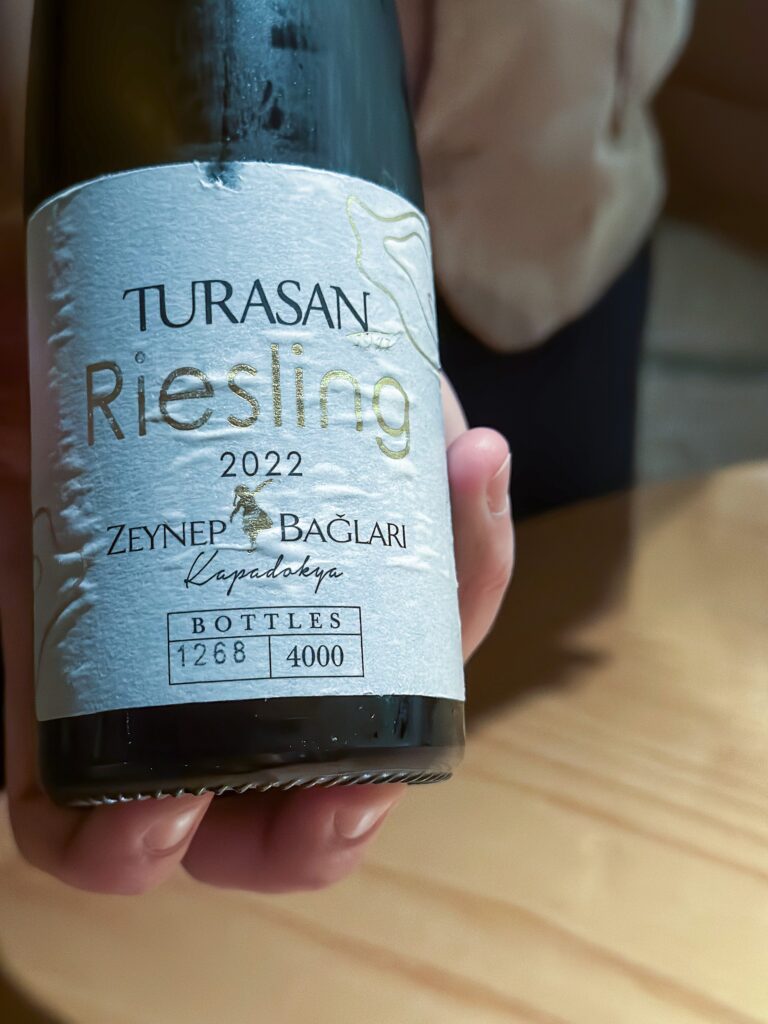
    A hand holding a bottle of Turasan Riesling from Zeynep Baglari in Cappadocia
    Turasan Riesling 2022 from Zeynep Bağları in Cappadocia – the label records it as bottle 1,268 of 4,000.

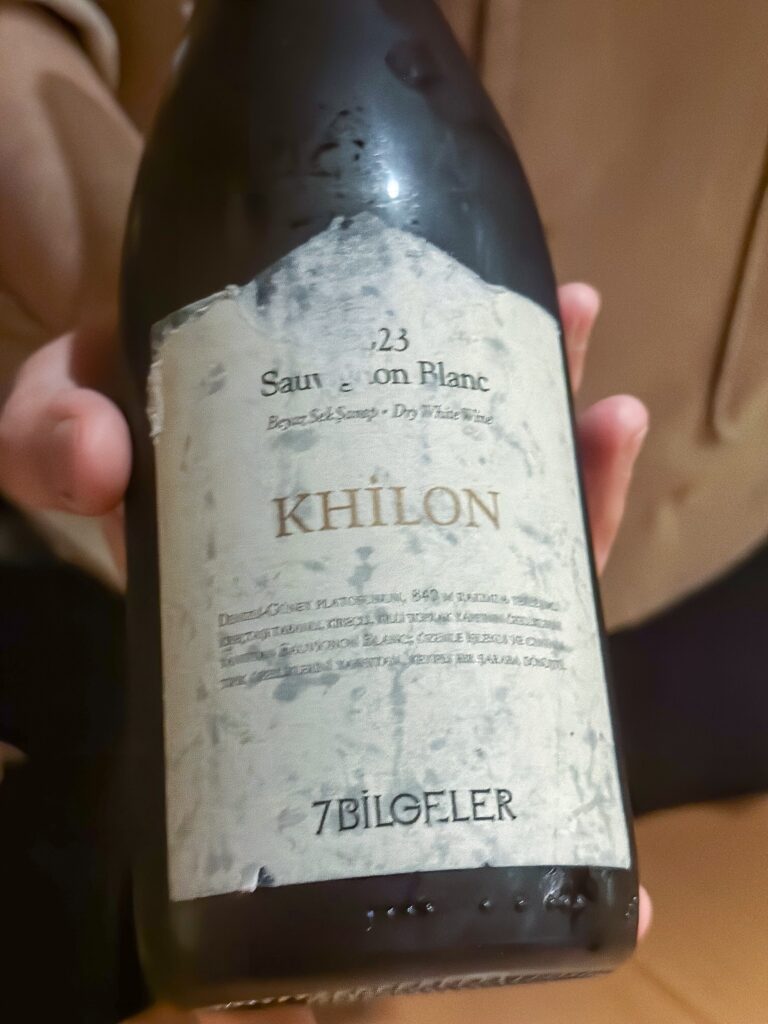
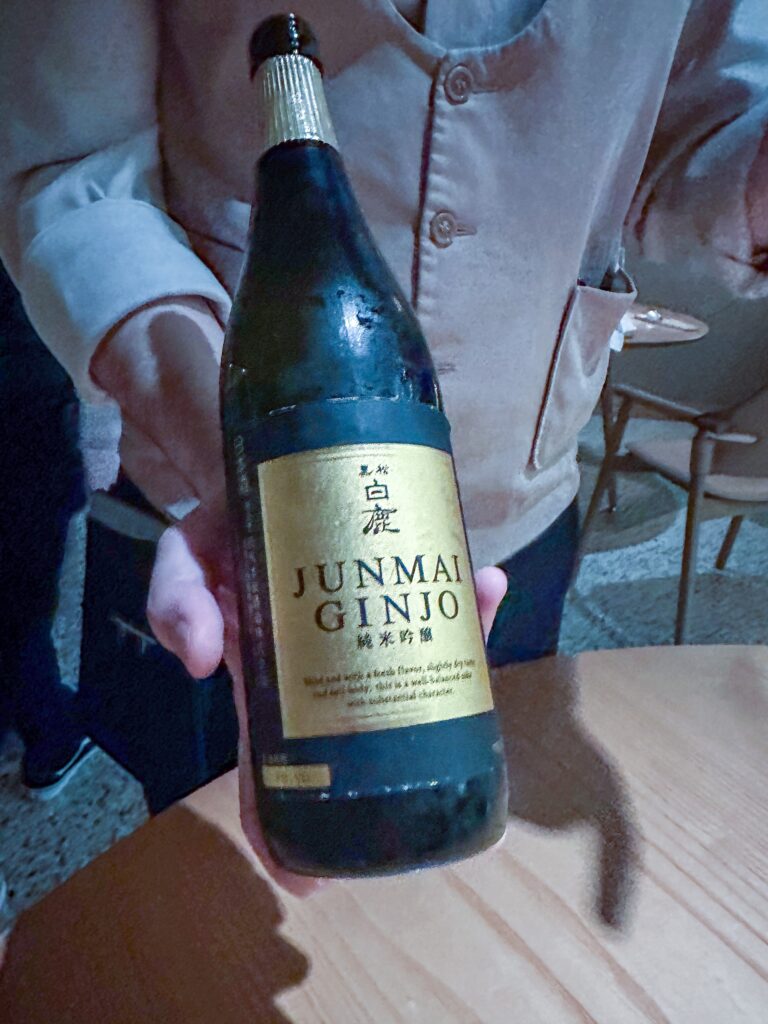
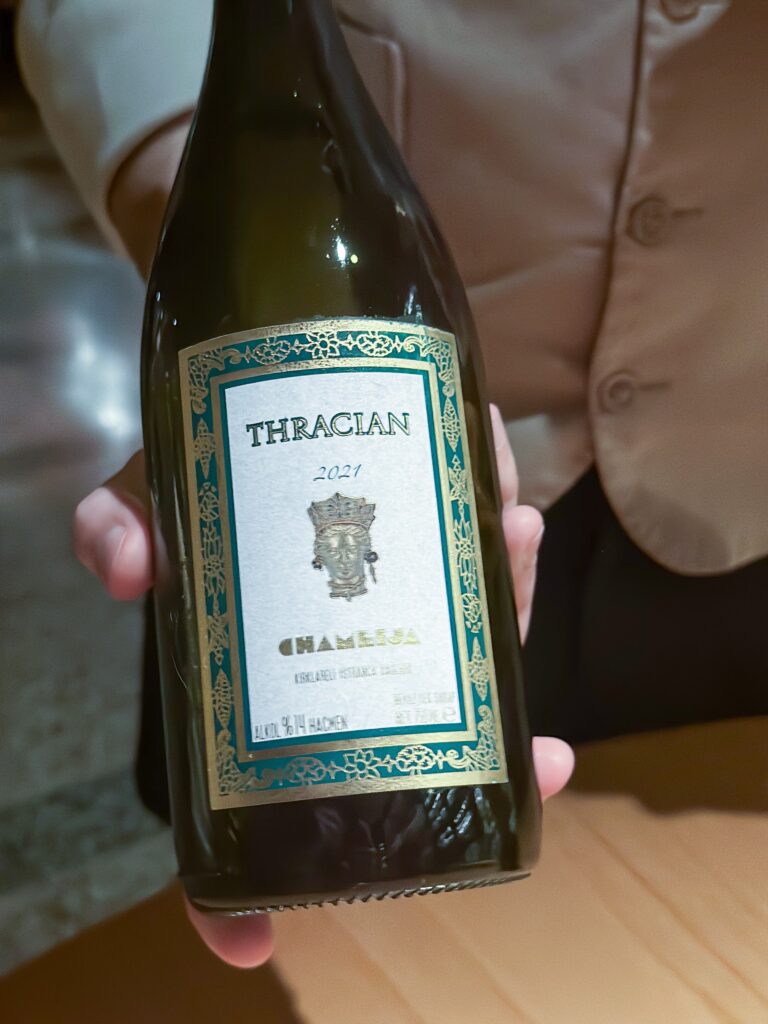
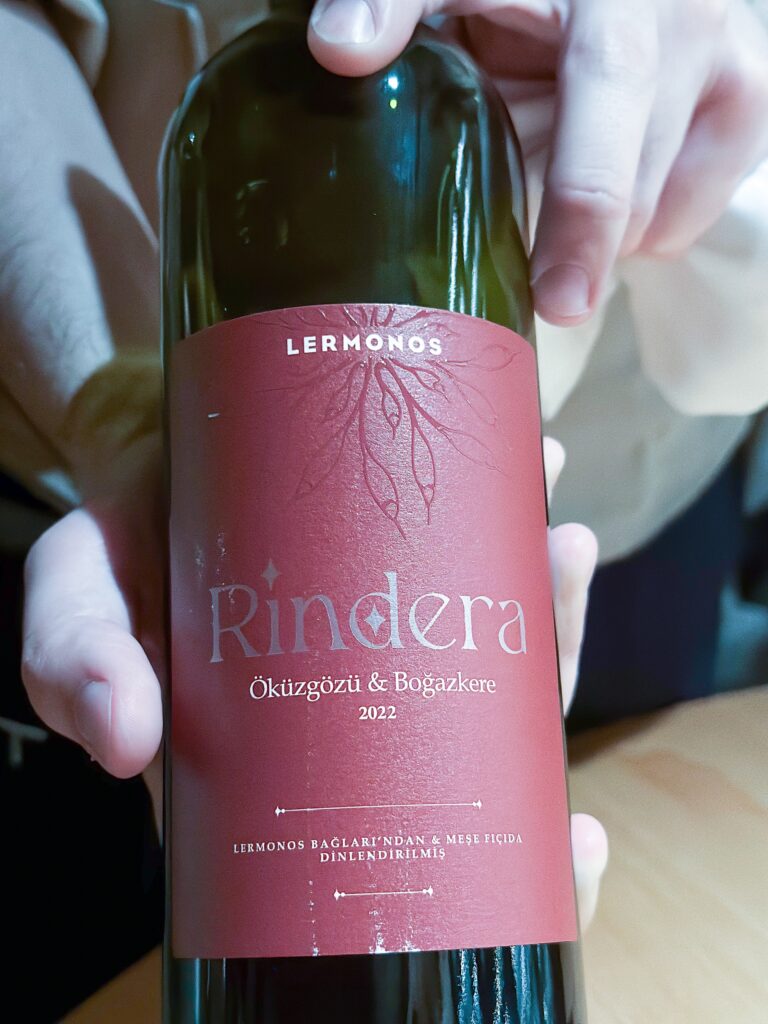
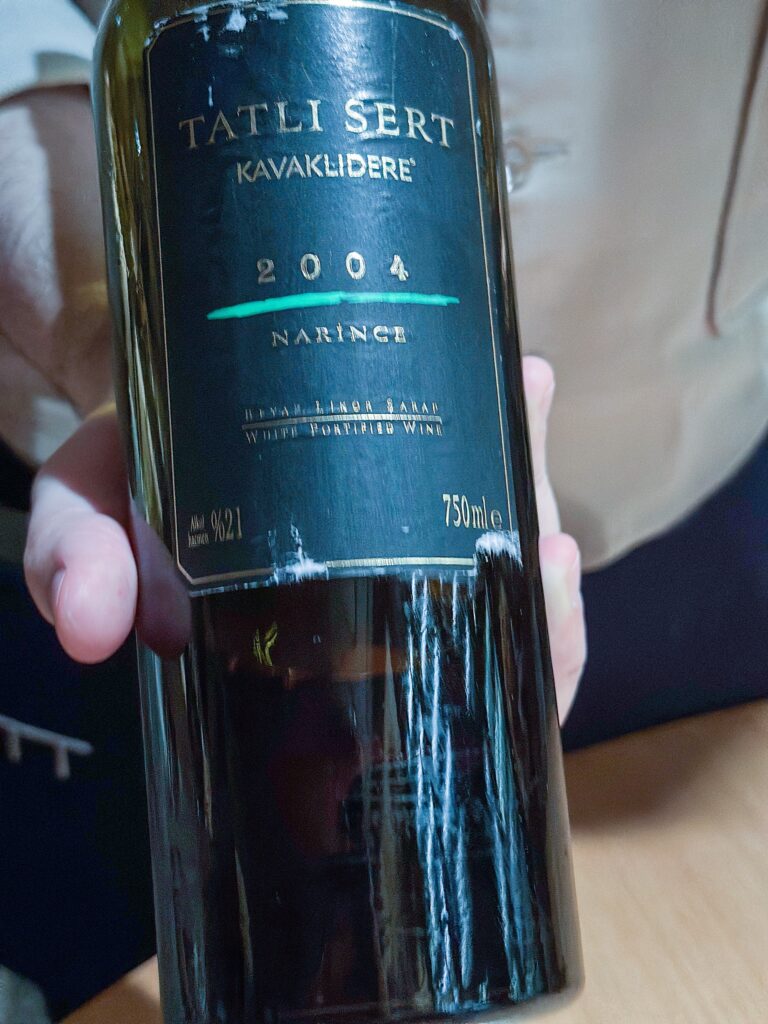
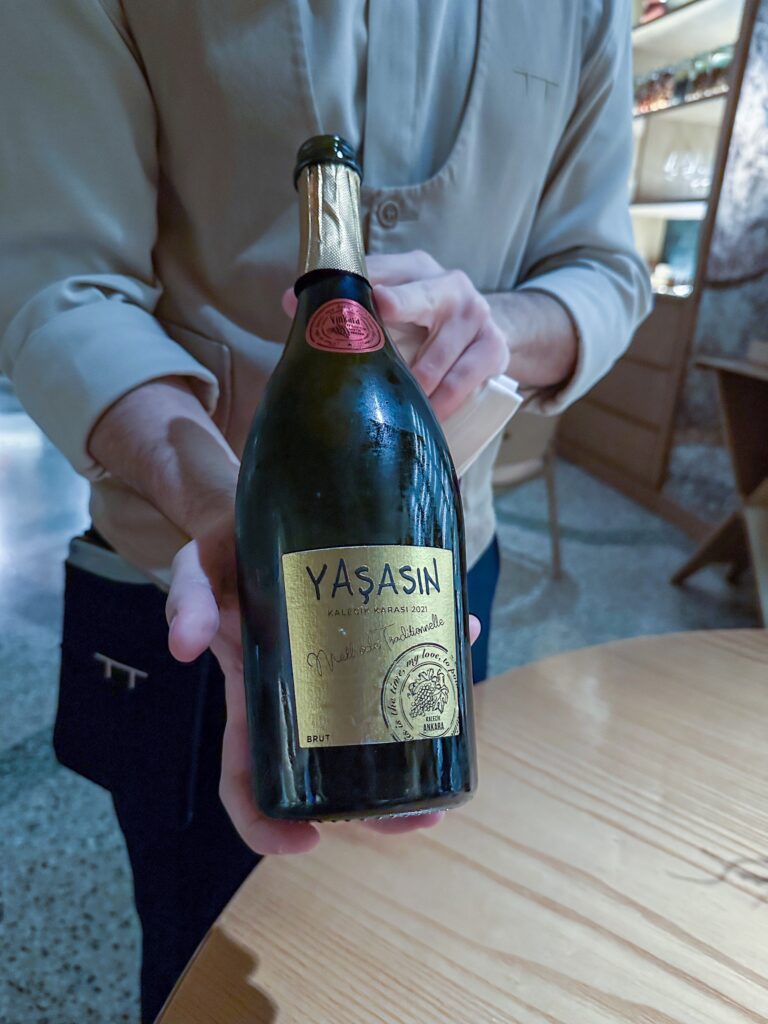
    The bottles in my photographs give a fair sense of the range: a Yaşasın brut from Kalecik Karası, 7Bilgeler’s Khilon Sauvignon Blanc, that Cappadocian Riesling, a Chamlija Thracian, a Lermonos Rindera blending Öküzgözü and Boğazkere. There is also a bottle of Japanese Junmai Ginjo sake in the same set of frames – less a criticism than a clue, and it returns below.

    What you actually get

    FormatOne fixed tasting menu, dinner only, Tuesday to Saturday. No à la carte
    CoursesTwelve to fourteen, depending how you count a course
    LengthAllow three and a half hours
    Starts inAVLU, the courtyard lounge – canapés before you are seated
    Ends withA kitchen tour, a handwritten menu, two chocolates and a spirit
    DrinksWine pairing or non-alcoholic pairing; water, coffee and tea included
    Cannot accommodateVegan, vegetarian, gluten-free, lactose-free

    The counter-argument

    The complaints about TURK are consistent enough to take seriously, and they sort into three: the room, the plate, and the claim.

    The room first. It is dark, and once it fills it is loud – closer to a bar than a dining room, which some people love and others resent at this price. Then the absent-chef question, which is fair and checkable. Tutak took on Gallada and Topside Bar at The Peninsula Istanbul when they opened in 2023, and he is not necessarily in this kitchen on any given night. At two stars, with one seating and thirty covers, that matters more than it would somewhere larger.

    Then the plate. The misses, when they come, are misses of seasoning and restraint rather than technique: squid dialled too far down, a dessert carrying a lump of something fatty in an otherwise light dish, a nectarine ice cream that does not taste of nectarines. Nothing disastrous, and nothing that would trouble a one-star kitchen. But at this price the near-misses are the ones that stay with you.

    The hardest thing about TURK is who it will not feed. It cannot accommodate vegan or vegetarian diets, lactose intolerance or coeliac disease; the menu leans on seafood it cannot remove, and onions, garlic, milk and dairy are not coming out either. Tutak’s own framing is that a menu is a film, and if you do not like the film you should not come to the cinema. That is a defensible position for a fixed menu, and it is also, plainly, a restaurant deciding who it is not for. The policy is published. Read it before you pay the deposit, not after.

    Then the objection worth taking most seriously: that this is Japanese technique pointed at Anatolian produce, at a price justified by the claim to be Anatolian. Given Ryugin, given Noma, given a tuna checkerboard and a bottle of Junmai Ginjo sitting in my own photographs from the night, that is not an unreasonable reading. Tutak’s answer is on the record and is not a denial: the Turks came from Central Asia, he has spent sixteen years travelling it, and the kitchen develops new techniques from what it finds. Whether that makes the result Anatolian cooking is not something the menu settles. You decide at the table.

    What it costs

    Prices here move too fast to be worth printing, and the restaurant publishes its own. What is worth saying plainly is the shape of it: TURK is not expensive by two-star standards in Paris or Tokyo, and it is very expensive by the standards of the city it is in. Payment is in Turkish lira only, VAT is inside the quoted price, and a service charge is added at the end.

    Know before you go

    Book through turkft.com and nowhere else – the old Rezervem listing is dead, and there is no OpenTable or Resy. Nothing is confirmed until the email arrives, and a per-person deposit is due within 24 hours and comes off the bill. Cancel with 72 hours’ notice or more and you get it all back; inside that window, or a no-show, and you lose it, and shrinking the party costs you the deposit on each missing seat. Solo diners are seated only at the Chef’s Table, which takes at most six a night. Two to three weeks ahead is enough midweek; make it three to four for a weekend.

    Dress is semi-formal and specified: for men, a collar and long trousers, and no shorts, sportswear, tracksuits, hoodies, caps or flip-flops. The age limit is twelve. Bomonti is not the Istanbul most visitors book – inland in Şişli, no Bosphorus to sell, anchored by Bomontiada, the 1890 beer factory reopened as a cultural complex in 2015. A restaurant that puts its pantry where other places put a window is in exactly the right neighbourhood.

    Don’t miss

    If you only do five things:

    • Re-read the price on turkft.com the week you book – it moves faster than the guides
    • Read the dietary policy before you pay the deposit, not after
    • Take the wine pairing for the Turkish list, not the count of glasses
    • Look at the ingredient cabinets on the way in – they are the argument
    • Say yes to the kitchen tour at the end

    The TURK Fatih Tutak gallery

    Every photo on this site is my own, shot on the night. Slide through →
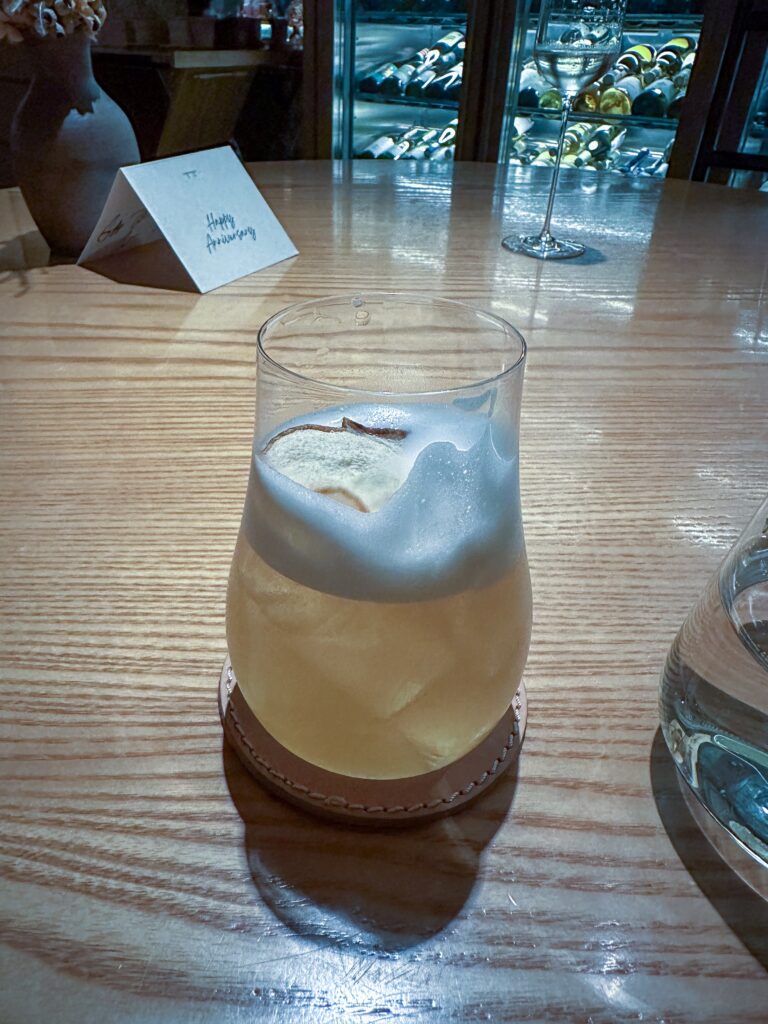
    A sommelier presenting a bottle of Yasasin brut sparkling wine over the tableA tall glass of cloudy amber cocktail under a foam cap dusted with cinnamon, on a leather coasterThe bread course: a sesame-crusted roll in a bowl of buckwheat, a cylinder of cheese on a slate dish, olive oil and a wooden spreaderA hand holding a bottle of 7Bilgeler Khilon Sauvignon Blanc, its paper label torn and weatheredA bruleed custard under a drift of grated white cheese and a curl of green herb in an oval dishA sommelier holding a bottle of Junmai Ginjo sake with a gold labelCheckerboard slices of tuna loin and belly in green olive oil on a pale ceramic plate, a glass of water alongsideA hand holding a bottle of Turasan Riesling from Zeynep Baglari in CappadociaA quenelle of cream scattered with popcorn and crowned with caviar and a white flower, set in the hollow of a stone plateA hand holding a bottle of Chamlija Thracian white wine with a turquoise and gold labelThe label of Lermonos Rindera 2022 held close, Okuzgozu and Bogazkere lettered in white on deep redA hand holding a bottle of Kavaklidere Tatli Sert 2004, a fortified white made from Narince grapesA rolling rack of labelled preserving jars and bottles in the kitchen, a wicker basket resting on topTwo glass-fronted cabinets hung with drying fish and flatbreads on wire racksWhole fish hung to dry on a rail beside glass jars of preserved figs and dried chilliesCopper pans stacked on the kitchen pass under brass heat lamps, a cook working at the counter behind
  • Banyan Tree or Fairmont Mayakoba: Is the Villa Worth the Premium?

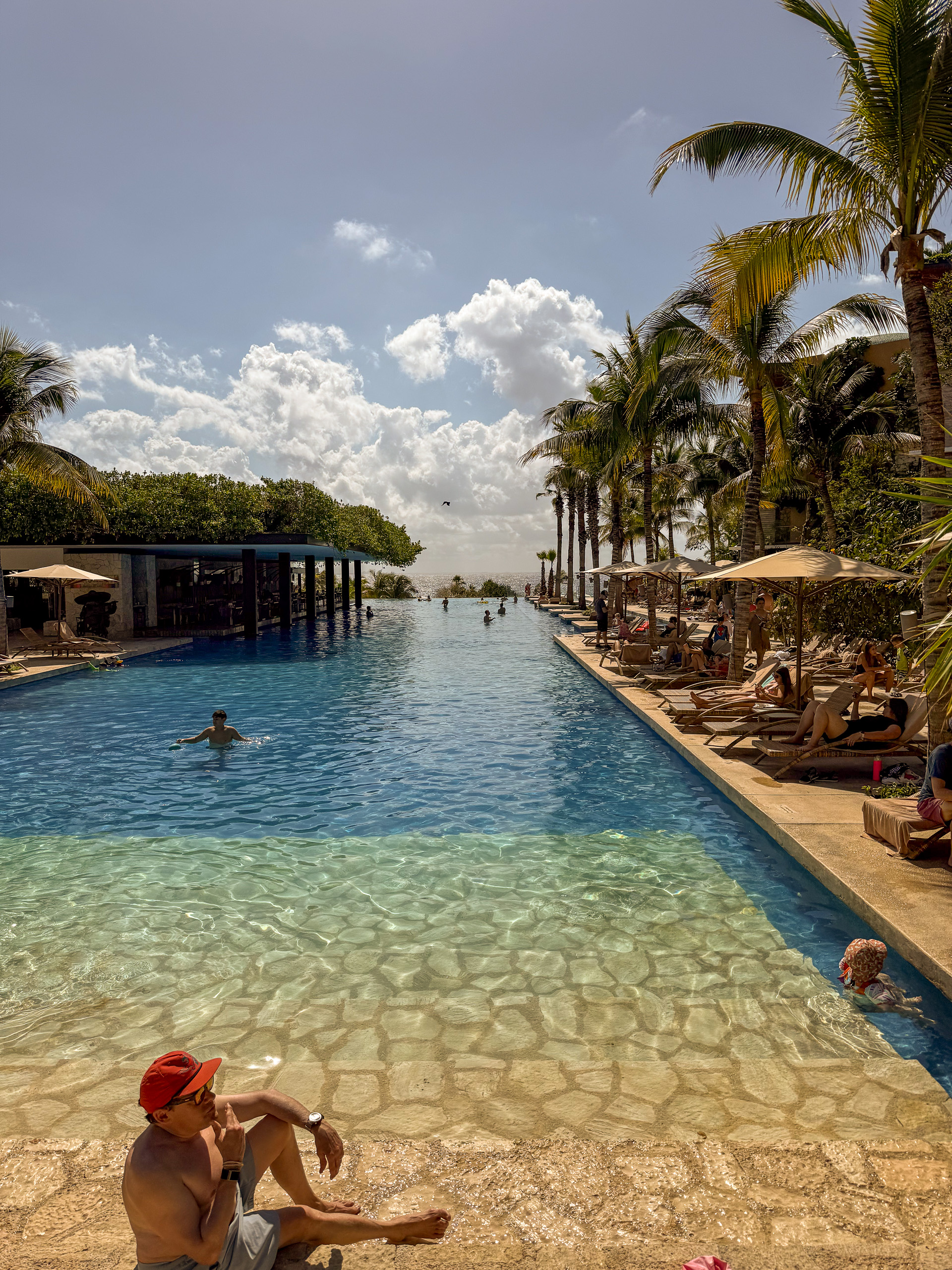
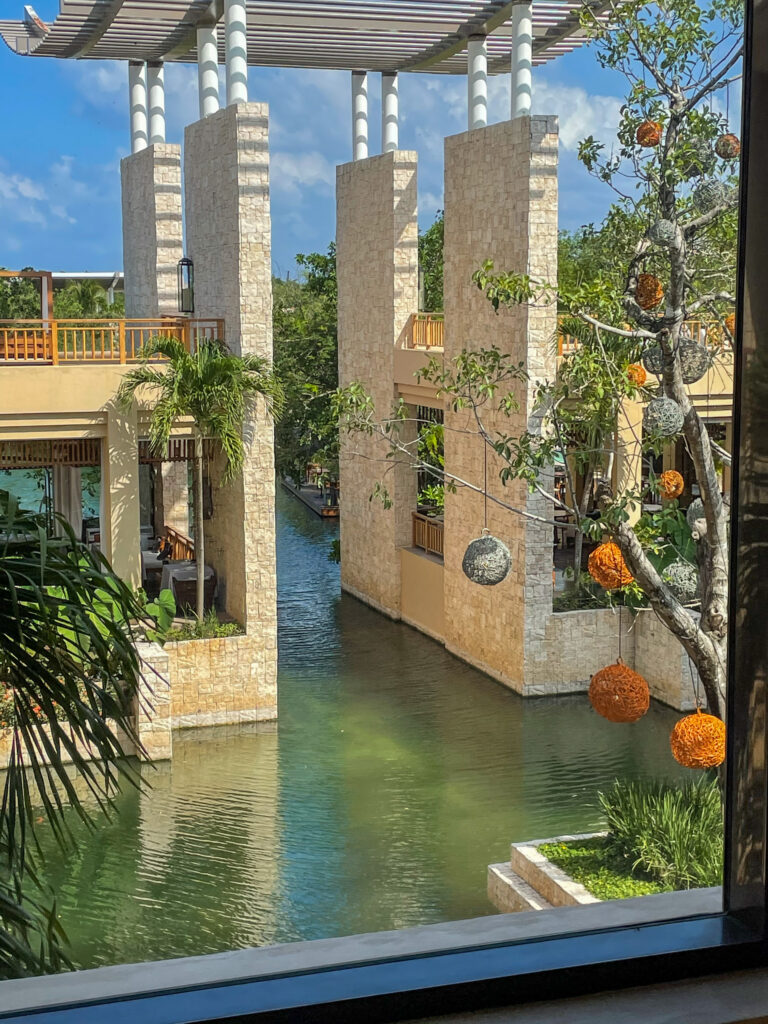
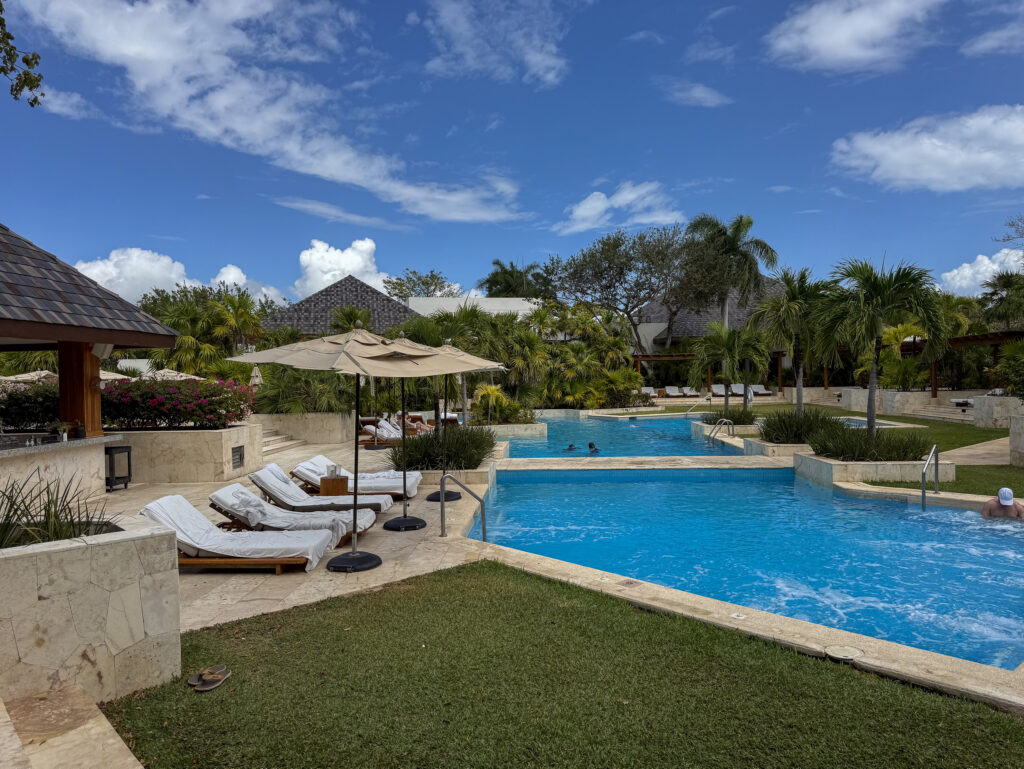
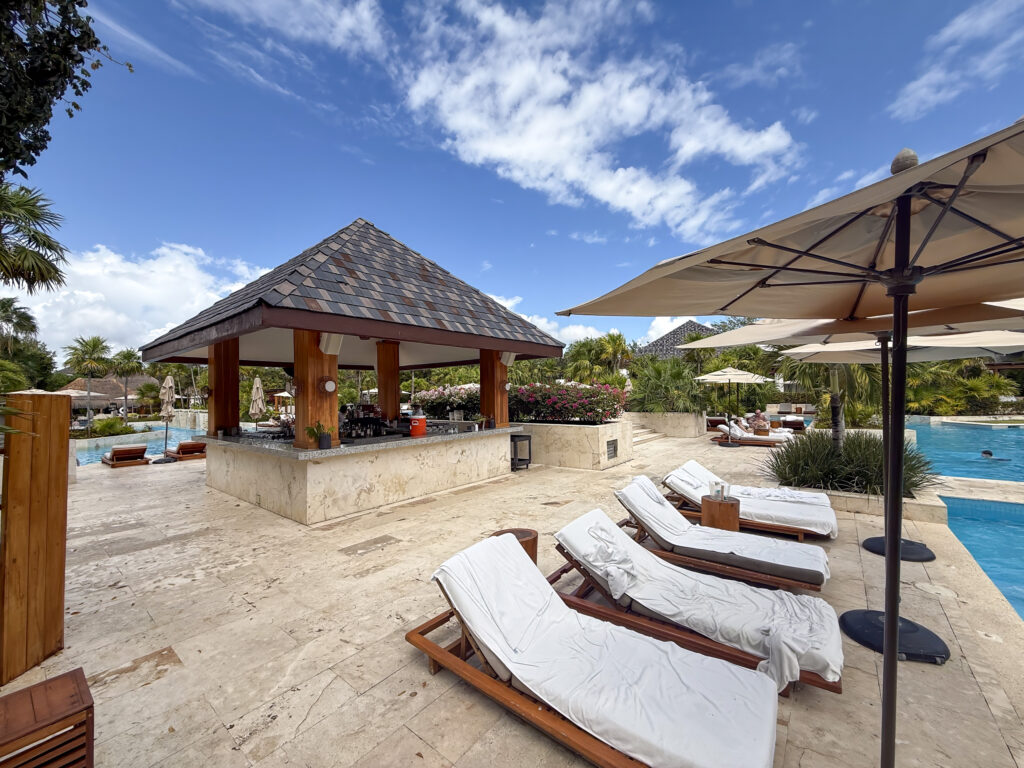
    The long lagoon-edge pool at Mayakoba, palms along one side

    BANYAN TREE MAYAKOBA vs. FAIRMONT MAYAKOBA · 13 MIN READ

    Banyan Tree or Fairmont Mayakoba: Is the Villa Worth the Premium?

    Four hotels share one jungle estate on the Riviera Maya. Two of them are the real decision, and the gap between them is a few hundred dollars a night.

    By J.C. Mercer

    At a glance

    • The estate Mayakoba, about 600 gated acres north of Playa del Carmen
    • The matchup Banyan Tree Mayakoba vs. Fairmont Mayakoba
    • Banyan Tree in a line about 160 villas, every one with a private pool, and a Thai-heritage spa
    • Fairmont in a line 401 rooms, five pools, a waterslide, an all-inclusive option

    Every stay on this site is paid for in full and booked the way any other guest would book it.

    Mayakoba is not a hotel. It is roughly 600 acres of gated jungle about forty minutes south of Cancún airport, threaded with canals that were cut out of the limestone and fed by the underground rivers running beneath the Yucatán. Four luxury hotels sit inside it, along with a Greg Norman golf course that has hosted tour events and a shared village square called El Pueblito. Guests move between the properties by golf cart, bike or boat.

    Which means the location argument, which usually decides these comparisons, does not exist here. Same jungle, same beach, same drive, same course. What is left is the hotel itself and the rate, and the rate is where this gets interesting: Banyan Tree runs well above the Fairmont on comparable dates, roughly half as much again at entry and more up the villa categories.

    The question is whether the villa is worth the premium. The answer is more complicated than the star ratings suggest.

    I have written each hotel up on its own, at length: Banyan Tree Mayakoba: Beachfront or Jungle? goes through the villa categories, and Fairmont Mayakoba: The One That Got Here First covers the oldest hotel on the estate. This piece assumes you have narrowed it to these two and want to know which way to jump.

    I slept here

    Banyan Tree Mayakoba

    • Nights 3
    • Stayed February 2026
    • Room booked Oceanfront Pool Villa
    • How it was booked Amex Fine Hotels + Resorts, public rate
    • Rate band $$$$Check current rates

    Fairmont Mayakoba

    • Nights 3
    • Stayed March 2026
    • Room booked Signature Casita, king
    • How it was booked Amex Fine Hotels + Resorts, public rate
    • Rate band $$$$Check current rates

    The short version

    Banyan Tree is all villas, around 160 of them, every one with its own private pool, wrapped in Southeast-Asian design and anchored by a Thai-heritage spa. It is the quieter, more design-led property, the one built around wellness, and the one that will make you feel you have left the resort world entirely.

    Fairmont lists 401 rooms, casitas and suites across 45 acres, five pools including one with a waterslide, a kids’ club and a teens’ club, eight restaurants and an optional all-inclusive plan. It is the better-value property and the more practical one for a family.

    Both share the same canals and the same beach. Neither shares the same bill.

    The arrival

    The arrival is a gentler difference here than it is at some of the estate’s other hotels, but it still sets the tone.

    At Banyan Tree you arrive into a lobby built around a living banyan tree that rises out of the lagoon, and you are handed a cold green juice and a fresh-flower bracelet before anyone talks logistics. You move around by buggy, by bike, or by boat along the canals. It is a calm, deliberate welcome, and the Southeast-Asian design language is set from the first minute.

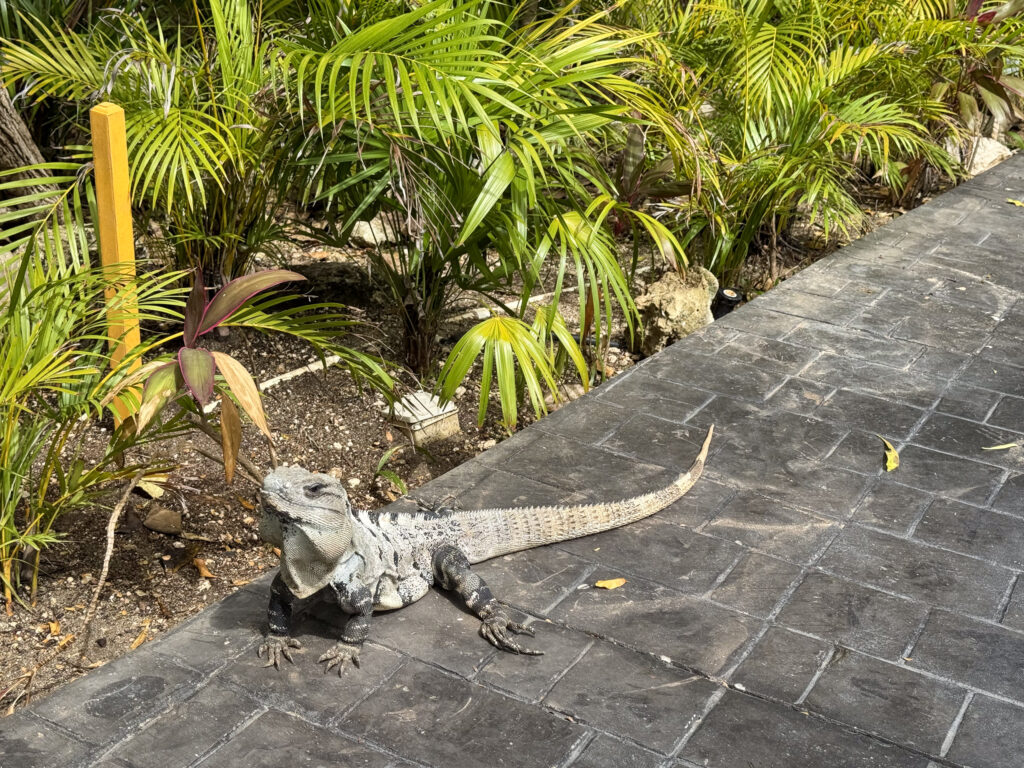
    At Fairmont you arrive by road and move around by golf cart, bike or on foot, with boats on the canals as an activity rather than as transport. The grounds are lush and genuinely full of wildlife – coatis, iguanas and birds are part of the walk to breakfast, not an excursion you book. It is a lovely arrival at a resort. It is simply a busier one.

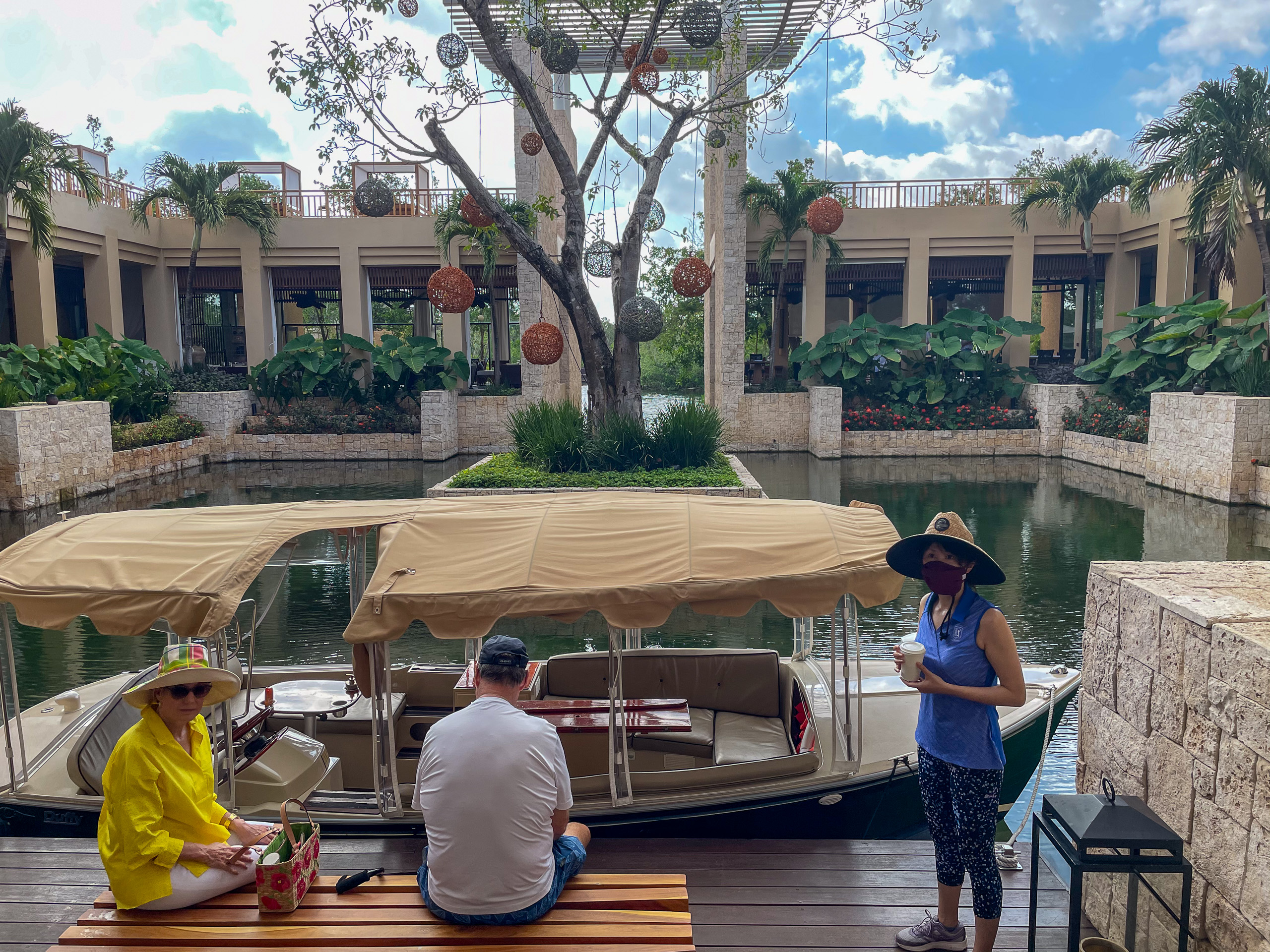
    Guests boarding a boat at the Mayakoba arrival dock

    The rooms

    Banyan Tree is all villas, a listed 160 of them, each with a private, heated pool, entry categories published at around 1,600 square feet, in a pared-back Southeast-Asian style softened with Mexican materials. Living space and bedroom open onto a terrace and your own water, whether you book garden, lagoon or oceanfront.

    One tip worth having: the garden and lagoon villas run noticeably cheaper than the oceanfront ones and, screened by jungle, often feel more private rather than less.

    Fairmont’s 401 rooms, casitas and suites are large and bright with deep marble soaking tubs, and some categories have private plunge or infinity pools. The honest note is that the decor reads plain for a hotel at this price: wooden furniture, beige marble floors, a level of finish that does not match the setting outside the window. The walls are thin, too, and maintenance can lag. The grounds are the luxury here. The rooms are comfortable rather than memorable.

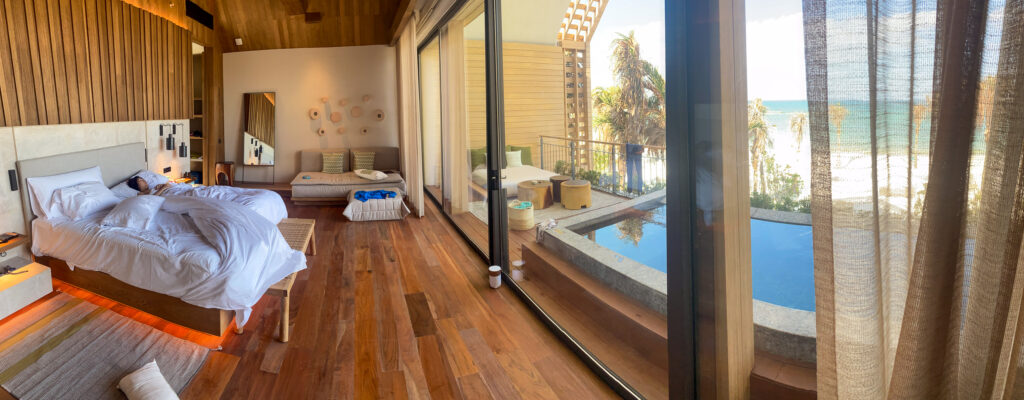
    A Banyan Tree villa bedroom opening onto its private pool and the sea

    Food, and the all-inclusive maths

    Banyan Tree runs around nine venues and leans into its Asian heritage rather than international hotel food. Saffron is the signature Thai room and the standout. Oriente handles canal-view breakfasts and international plates. Tomahawk is an open-fire Latin grill, Cello does Italian, Suna covers Nikkei, and La Copa and Cocina Corazón take Mexican onto the terrace and into the street-food register. Two beach clubs, Sands and Sur, run the daytime.

    Fairmont runs eight venues built around a partnership with chef Richard Sandoval: El Puerto for the gourmet end, La Laguna for modern Mexican with a tequila bar, a beachside grill, coffee shops including one in El Pueblito, and a lobby lounge. It is a strong programme without a single standout comparable to Saffron.

    Then there is the plan. Fairmont offers an all-inclusive option covering unlimited dining and premium drinks, charged per room per night on top of the rate. Run the numbers before dismissing it. Two people eating three meals a day at resort prices in the Riviera Maya, with wine at dinner and drinks by the pool, will clear that figure without trying. For a family of four it stops being close. If you plan to eat on property most days, the all-inclusive is the cheaper way to stay at the Fairmont, and it is the single strongest argument in this comparison.

    Banyan Tree has no equivalent. You pay per plate, and the plates are priced for a resort of this level.

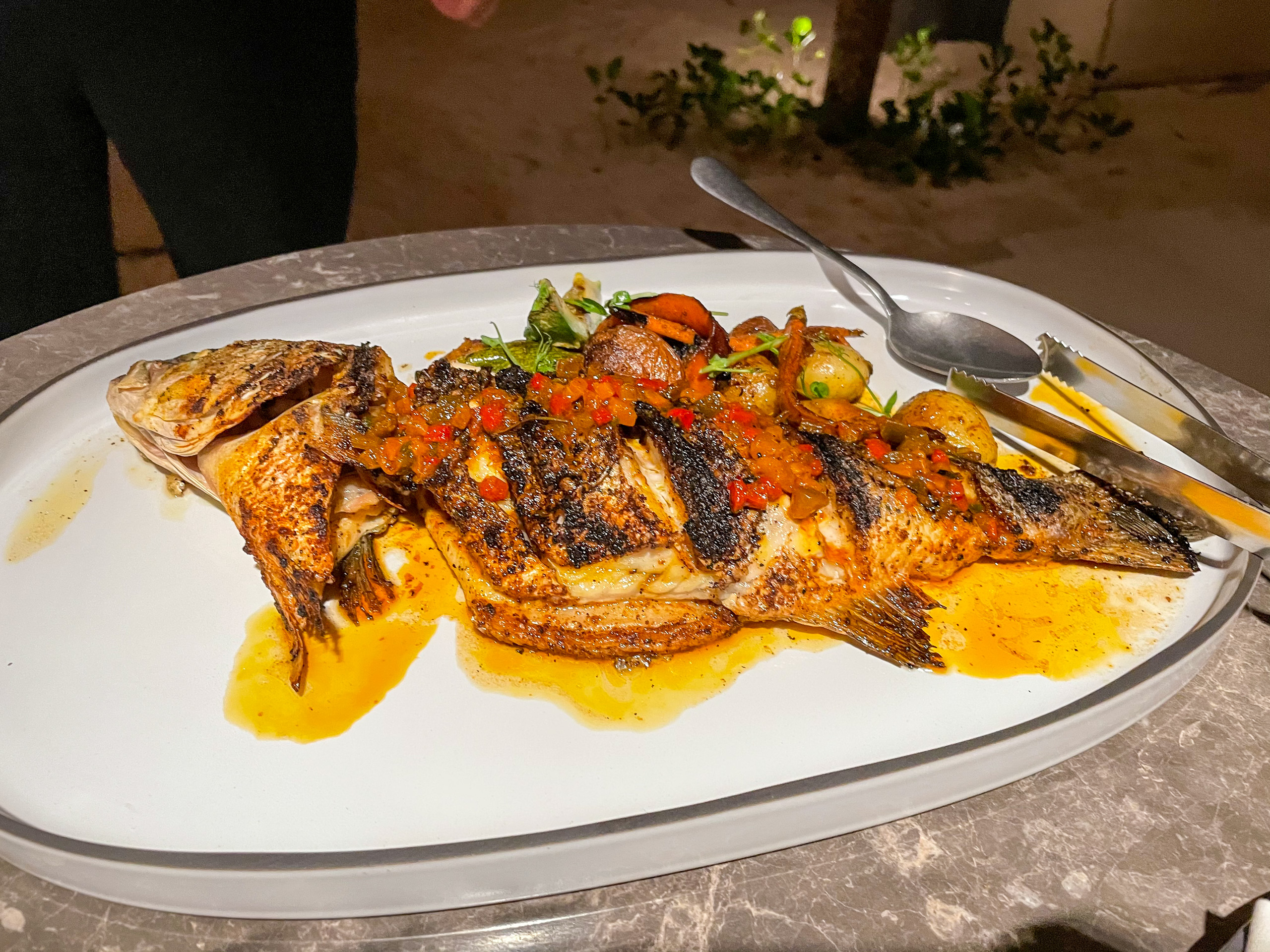
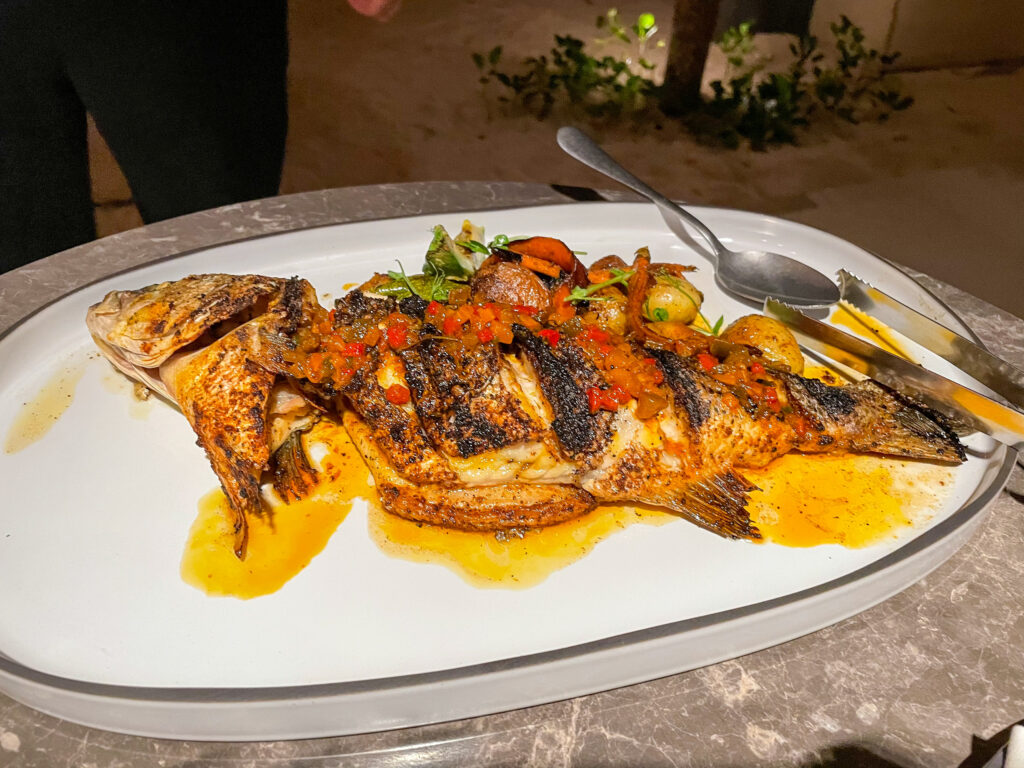
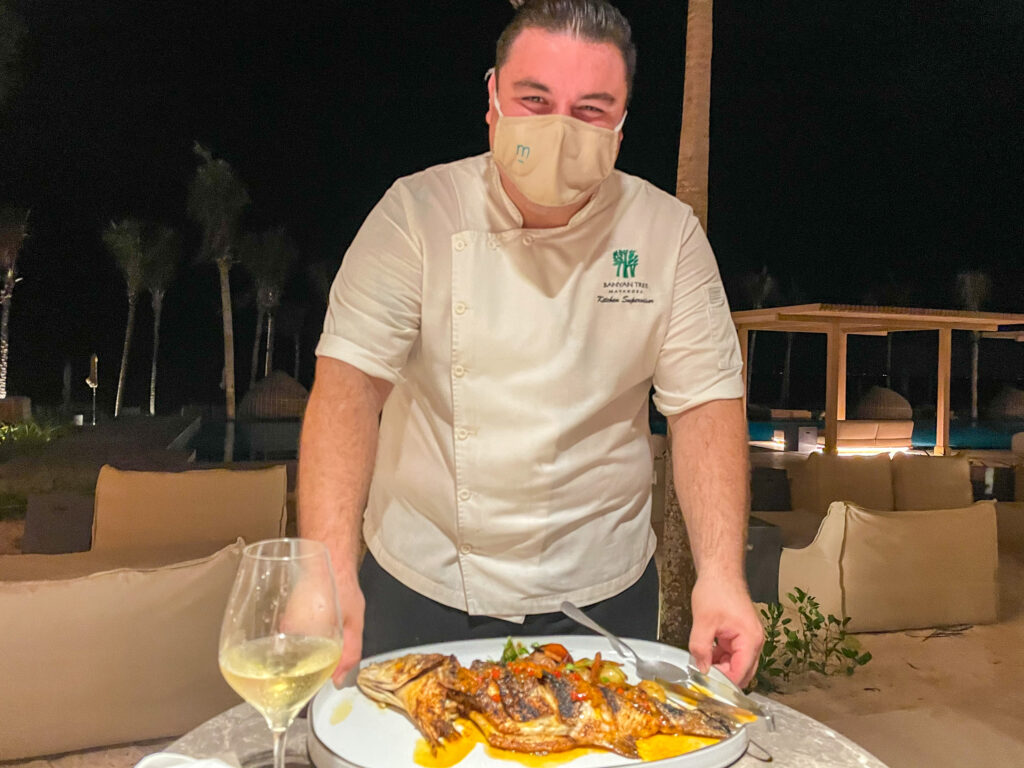
    A whole fish plated at dinner

    Pools, beach and the thing nobody wants to mention

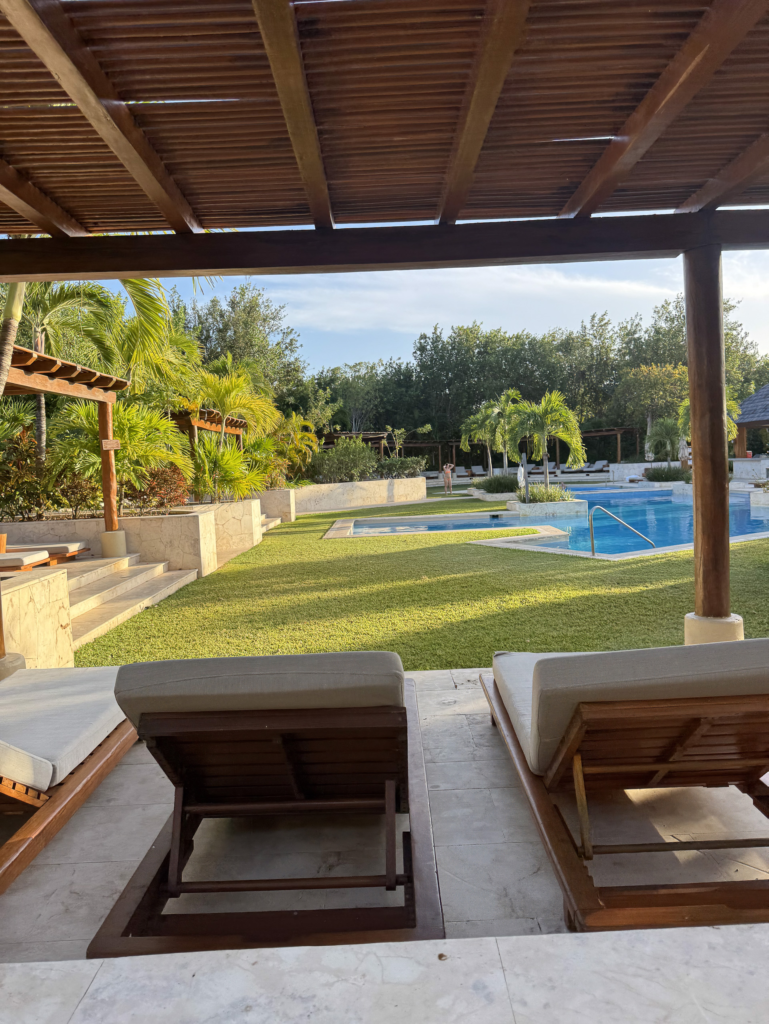
    Banyan Tree gives every villa its own pool, which changes how the resort feels: the shared water is quieter than the guest count suggests. The Sands Beach Club anchors the public pools with a waterfront swim-up bar, and there is more water across the grounds if you want to leave your terrace.

    Fairmont has five, including a family pool with a waterslide, a beachfront pool and an adults-only infinity pool that looks over the lagoon into the jungle. For a resort of 401 rooms that is enough water to avoid a lounger scramble most days.

    Now the honest part, and it applies to both. This stretch of the Riviera Maya gets sargassum seaweed seasonally, and the offshore barriers used to manage it mean the beach does not look like the brochure. Banyan Tree guests raise it as their one disappointment. Fairmont guests raise it alongside past beach construction work. Neither hotel can fix it and both handle it about as well as anyone does. If a flawless Caribbean beach is the point of your trip, look at the Pacific side or come outside sargassum season and check recent guest photos before you book.

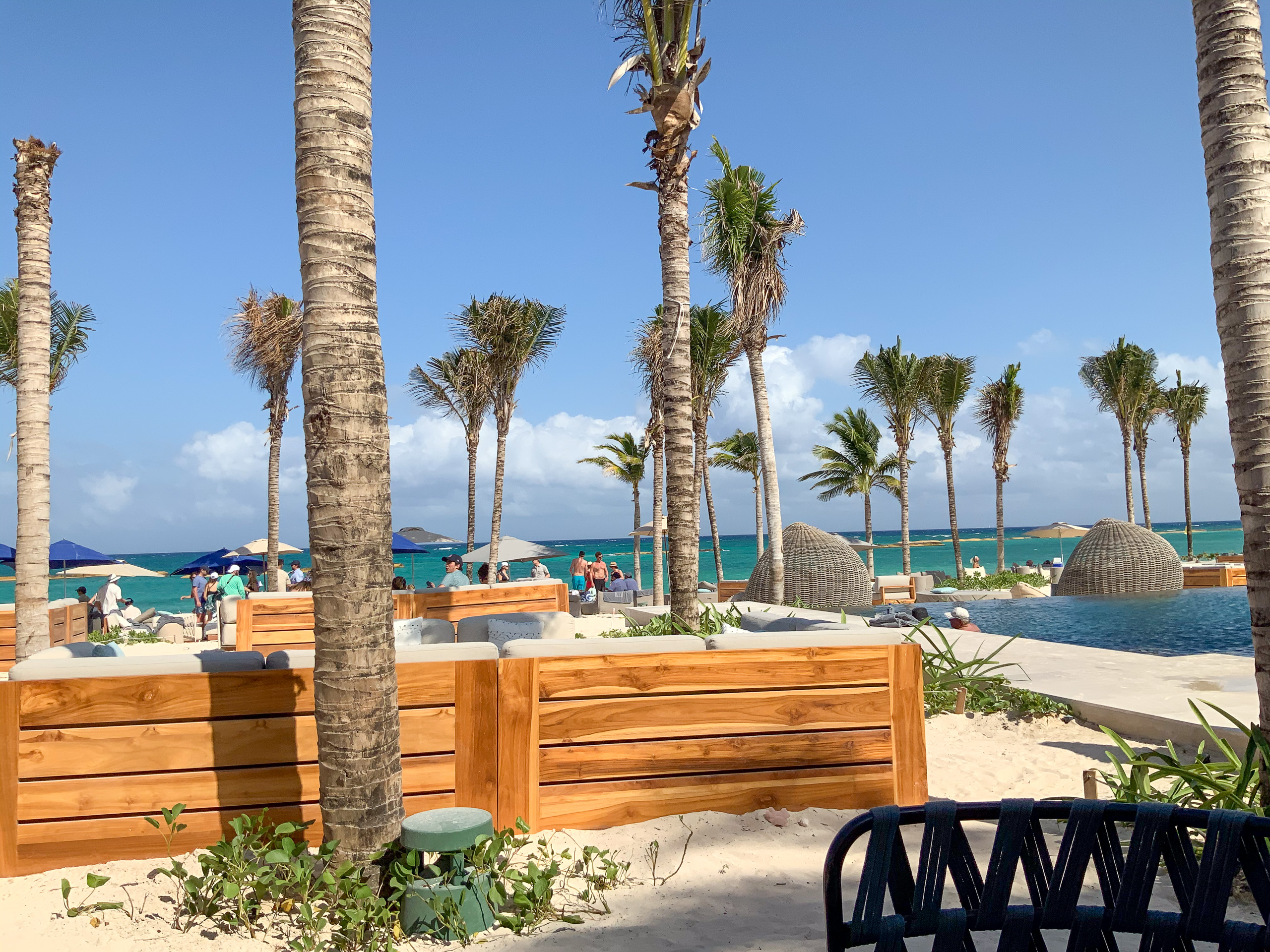
    Teak daybeds and woven pod cabanas on the sand beside the beachfront infinity pool, palms and the Caribbean behind

    Spa

    Banyan Tree brings its Asian wellness heritage to Mexico, and the spa is a reason to choose this side on its own. The Banyan Tree Spa runs Thai-influenced treatments in private therapy villas, and The Rainforest, a hydrothermal circuit of steam, ice, heat and sensation pools, is the thing you build a slow afternoon around. It is one of the more serious wellness offerings on the estate.

    Fairmont’s spa is very good, and it sells the afternoon rather than the hour: a private spa pool, a coffee bar, an outdoor hot tub. It simply is not built on a wellness brand the way Banyan Tree’s is.

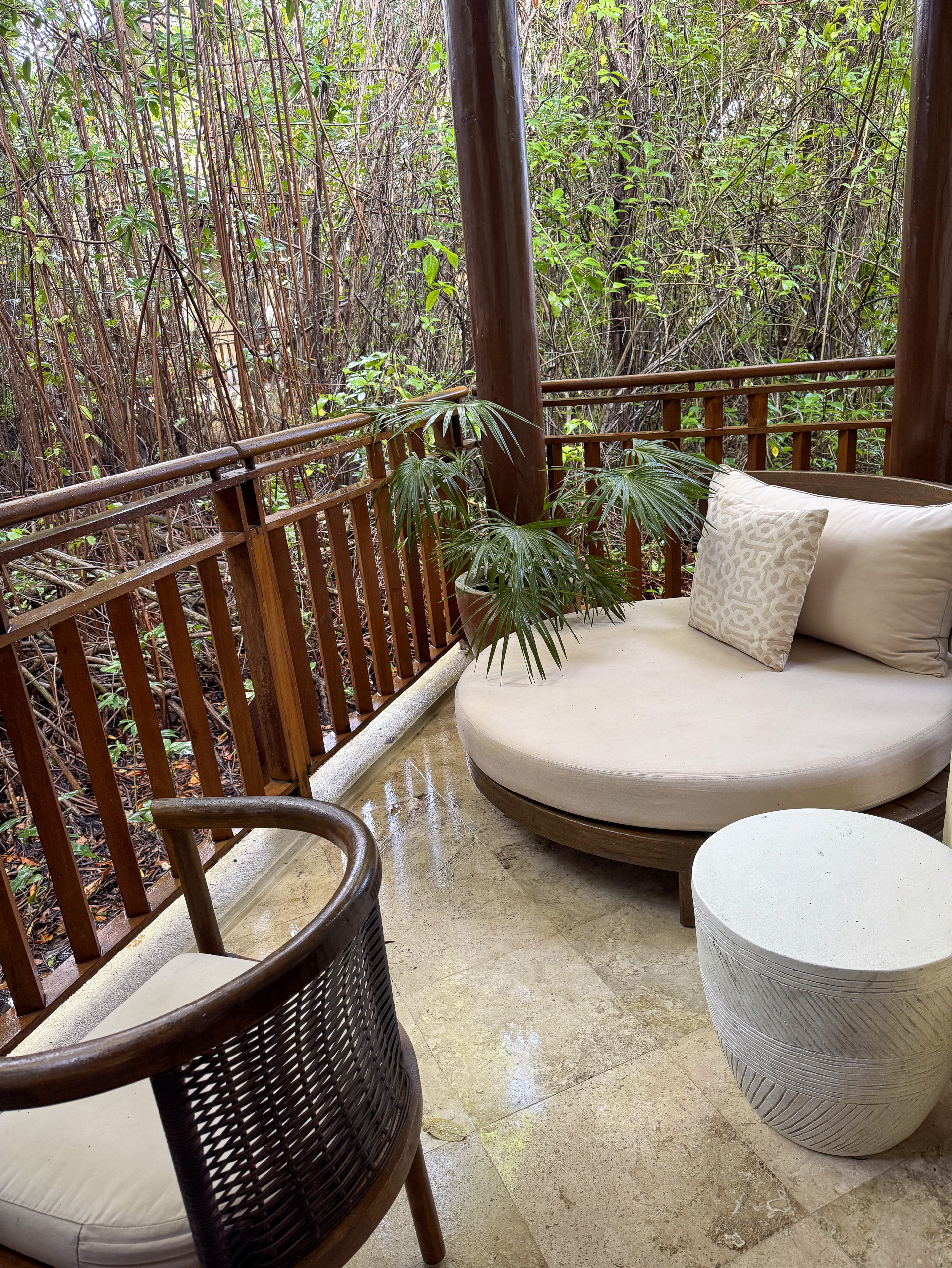
    A shaded daybed on a deck above the mangroves

    Families

    This is the one category where the gap widens rather than narrows.

    Fairmont is built for families: kids’ club, teens’ club, waterslide, connecting rooms, and enough space that nobody minds noise. It is also pet friendly, with dog kits.

    Banyan Tree leans the other way. It is a couples-and-wellness property at heart, with no dedicated kids’ club, though it will put families in multi-bedroom Harmony villas or a Family Residence and arrange babysitting on request. It is, for what it is worth, also pet friendly, with dogs of any size welcome for a small fee.

    The real difference: at Fairmont your children are the point. At Banyan Tree they are quietly accommodated, and the resort is happiest when the villas are full of couples.

    Service

    Banyan Tree is the best-served hotel on the estate, and the all-villa model is why. Fewer guests, more attention per room, and staff who are not stretched across four hundred keys.

    Fairmont is a step behind, and the pattern is the familiar one at this size: individuals who go conspicuously out of their way, alongside restaurant service and housekeeping that can drop. Location and cleanliness are consistently strong. Service and value are where it wobbles, and the misses are memorable when they come – which is part of what a big resort costs you.

    Is Banyan Tree worth the premium?

    On comparable dates Banyan Tree opens a clear tier above Fairmont, and climbs steeply up the villa categories and in high season. Both swing hard with the season, Fairmont further than Banyan Tree.

    For that you get a private pool on every terrace, the Thai-heritage spa and The Rainforest, Southeast-Asian design, and an all-villa resort of around 160 keys instead of 401. Those are real, and the difference in feel is not subtle.

    But the premium is smaller than it first looks. Banyan Tree is not twice the Fairmont; it is closer to half as much again. Add the all-inclusive to a Fairmont booking and the two rates land closer still, with all the food and drink covered on the Fairmont side. That gap buys a lot of trip elsewhere.

    Which one

    Take Banyan Tree for a honeymoon, an anniversary, or any trip built around the villa and the spa. Take it if wellness is a reason for going, if you want a private pool off your own terrace, and if Southeast-Asian calm is the mood you have been carrying around.

    Take Fairmont with children, with a group, on a golf trip, or on any stay longer than four nights where the food bill compounds. Take the all-inclusive if you plan to eat in.

    If the budget stretches and you want my answer: four nights in a Banyan Tree villa beats six in a Fairmont room. If it does not stretch, the Fairmont is not a consolation prize. You are in the same jungle, on the same beach, and you can hop the ferry to Saffron for dinner.

    The comparison

    WhatBanyan Tree MayakobaFairmont Mayakoba
    SizeAbout 160 pool villas and suites401 rooms, casitas and suites
    GroundsVilla estate on the Mayakoba lagoons45 acres within the same estate
    ArrivalBuggy, bike or canal boat; banyan-tree lobbyBy road, then cart or bike
    Entry accommodationVilla, around 1,600 sq ft, private poolRoom or casita, comfortable but plain
    Private poolEvery villaSome categories only
    DesignSoutheast-Asian, villa-ledResort-standard, family-led
    PoolsBeach-club pools, plus your ownFive, including a waterslide
    SpaBanyan Tree Spa and The Rainforest hydrothermalVery good, praised by guests, no wellness brand
    DiningAround nine venues, Saffron the standoutEight venues, Richard Sandoval partnership
    All-inclusiveNot offeredOptional, charged per room per night
    ChildrenWelcomed, no dedicated kids’ clubKids’ club, teens’ club, built for families
    PetsDogs welcome, small feeDog kits, pet friendly
    ServiceThe strongest on the estate – fewer guests, more attentionGood, and occasionally uneven at 401 keys
    Typical rateA clear tier above the FairmontLower, and further still in low season
    Best forCouples, wellness, the villaFamilies, groups, golf, longer stays

    Measured, not guessed

    Here is what I measured and noted across both stays, rather than what the websites promise. This is the part I always want from a review and rarely get.

    WhatBanyan TreeFairmont
    Accommodation size1,610 sq ft villa plus private pool645 sq ft plus terrace
    Wi-Fi speed132 Mbps down, steady across the villa88 Mbps down, weak on the terrace
    NoiseBirds and insects; no neighbours audibleNeighbouring room audible through the wall
    BedKing, medium-firm, excellent linenKing, medium, good linen
    Water pressureStrong, hot in about ten secondsStrong, hot in about fifteen
    Private poolHeated, cleaned dailyNot in this category
    Time to reach the beach5 minutes by buggy from the villa6 minutes on foot
    Loungers gone byNever an issue in three days10am at the family pool
    Sargassum on the beachPresent, barriers in place, cleared each morningPresent, barriers in place, cleared each morning
    Mosquitoes at duskNoticeable on the lagoonNoticeable in the gardens

    Measured, not guessed

    Quick verdict

    Which side are you?

    • Book Banyan Tree for the private-pool villa, the Thai-heritage spa and Southeast-Asian calm
    • Book Fairmont for the space, the waterslide and the all-inclusive maths
    • Travelling with children or a group? Lean Fairmont
    • Celebrating something? Lean Banyan Tree

    Book Banyan Tree if the villa is the trip. Book Fairmont if the trip is bigger than the room.

    The Mayakoba galleries

    Every photo on this site is my own, shot on the stays. Slide through →

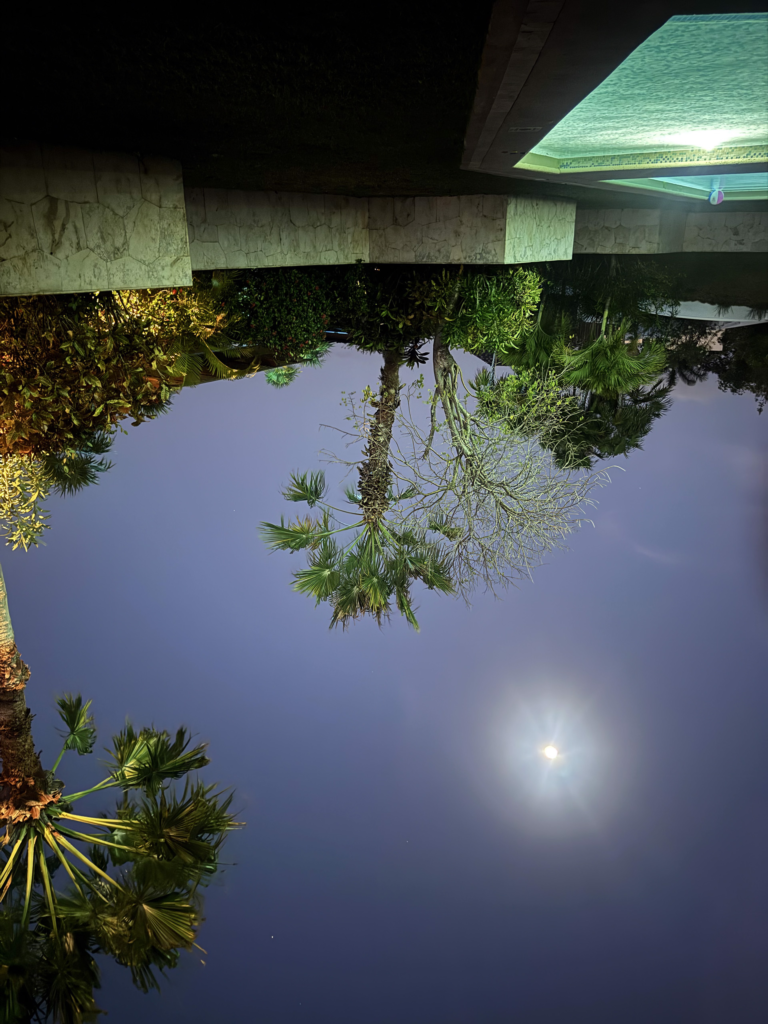
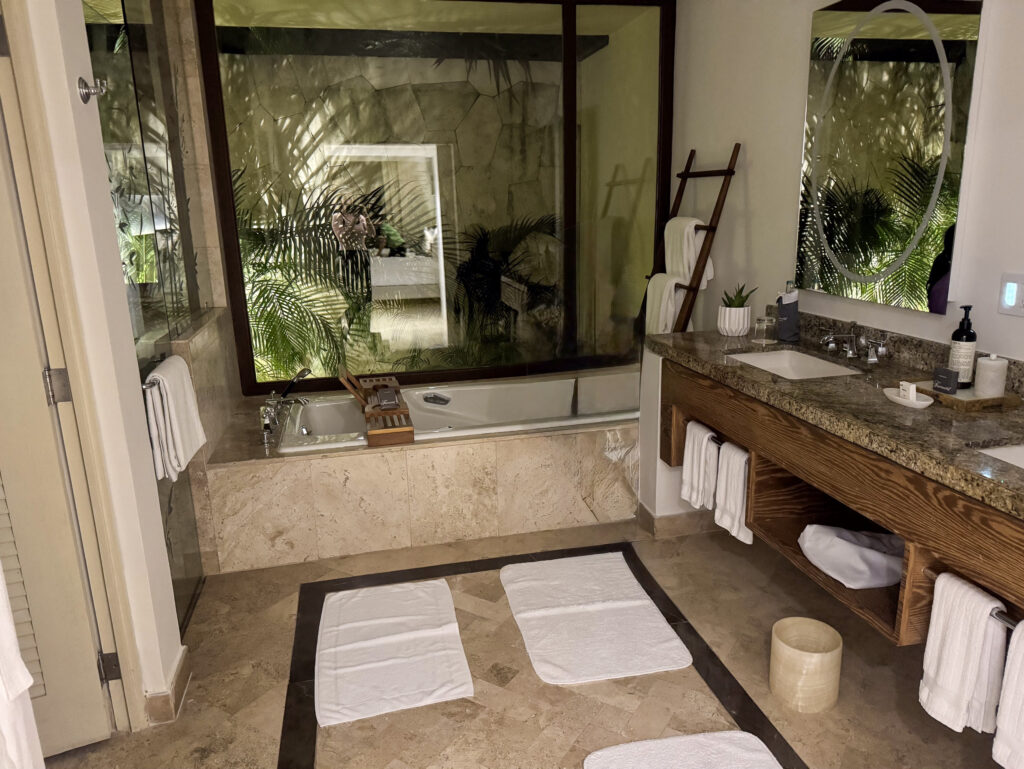
    Canals running between the villa buildings at Banyan Tree MayakobaPolished metal letters spelling mayakoba on a low stone wall beside the highway, seen through a car windowBed and plunge pool looking out to the Caribbean in a beachfront suiteTwo wooden loungers under a timber pergola looking across lawn to the resort poolA villa terrace with a private plunge pool above the beachA wooden restaurant deck over the canal set with red chairs and festoon lights, a boat passing behindCabanas around the beachfront poolA waiter in blue gloves preparing guacamole at a wooden trolley of chips, limes and salsas on the deckClear water and clean sand on the beach at MayakobaA waiter spooning guacamole from a tableside trolley set with lime, tomato, cheese and chapulinesThe beachfront pool under palmsDried chillies, chapulines and a grasshopper arranged on a blue-and-white patterned plateA tomahawk steak from the open-fire grillPalms, a lit stone colonnade and the moon reflected in a still black reflecting pool at nightWhole fish from the kitchenA bathroom with a sunken tub beside a garden window, stone-topped double vanity and rolled white towels
  • Sorn: Three Stars, and Worth Planning a Trip Around

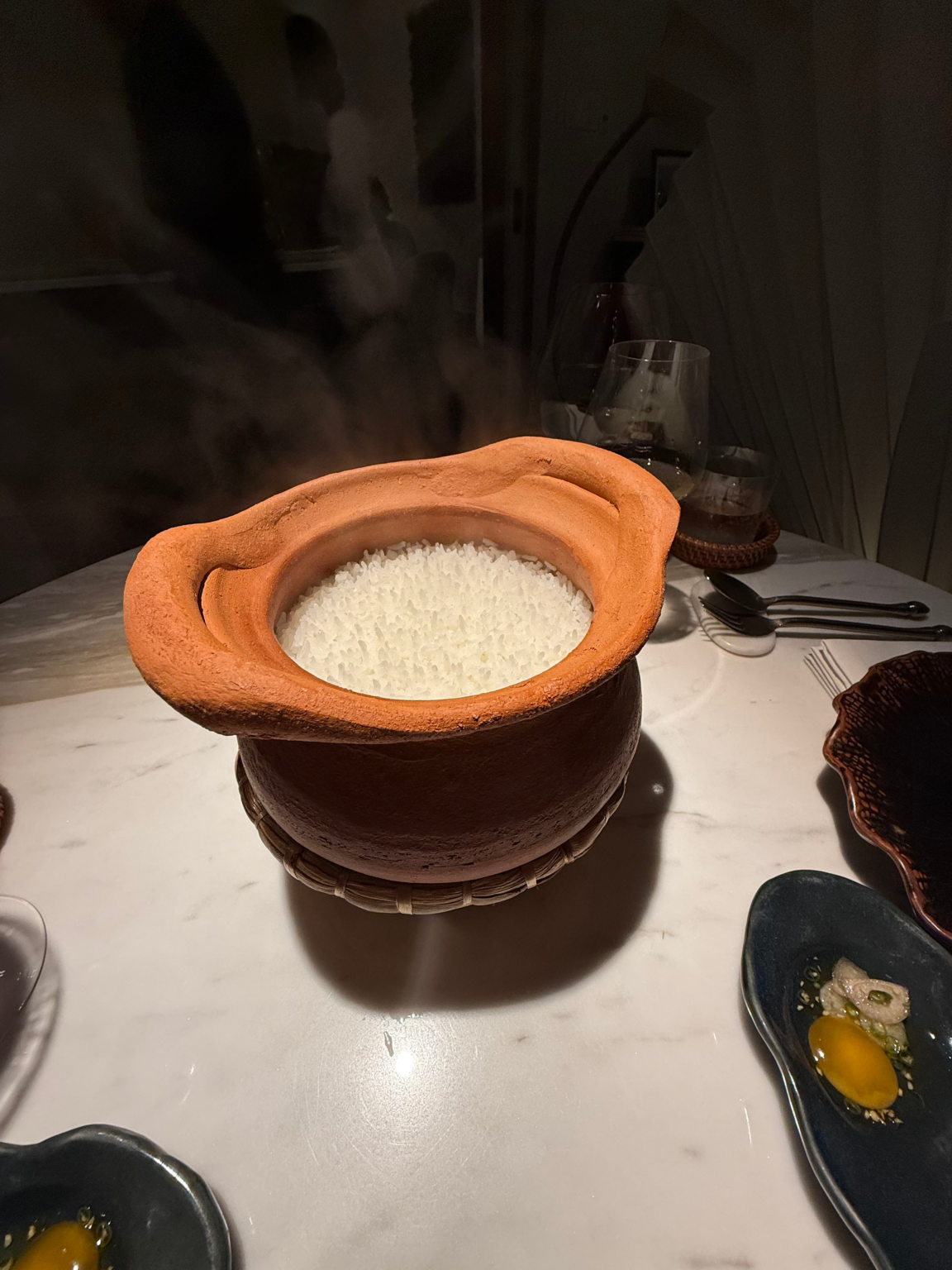
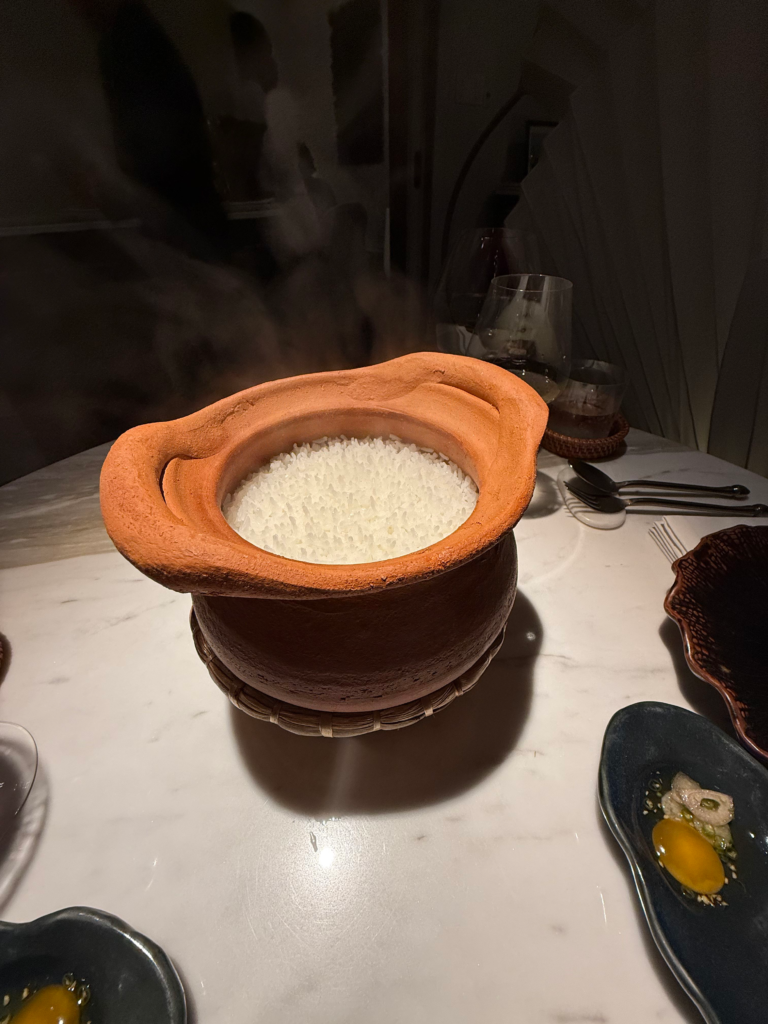
    A terracotta pot of steaming jasmine rice set in a woven basket on the marble table

    BANGKOK, THAILAND · RESTAURANT · 9 MIN READ

    Sorn: Three Stars, and Worth Planning a Trip Around

    One southern Thai tasting menu, one sitting a night, paid for in full weeks in advance and refundable under no circumstances. The hard part is not the meal. It is the booking.

    By J.C. Mercer

    Know before you go

    • Where 56 Soi Sukhumvit 26, Bangkok – a restored house down a residential lane, fifteen minutes on foot from BTS Phrom Phong
    • The format one set southern Thai tasting menu, dinner only, from 6pm. No à la carte, no vegetarian menu
    • What it costs one fixed price per person on the restaurant’s own booking page, with service and VAT added on top
    • Booking paid in full at booking, non-refundable, non-transferable, impossible to reschedule. Email opens on the 15th; the online release is at noon on the 25th
    • The stars one in the 2019 Michelin Guide Thailand, two in 2020, three in the 2025 guide announced November 2024, held since

    Every meal on this site is paid for in full and booked the way any other guest would book it.

    Sorn is a restored house down a quiet residential lane off Sukhumvit 26, and you would walk straight past it if you did not know. By the guide’s own count it was the first Thai restaurant anywhere to be given three Michelin stars, and for a year it was the only one in the country. It is not the only one now, but it got there first. What it actually does is narrower than three stars suggests: one set menu, dinner only, built entirely from the food of the south, cooked over charcoal and in clay pots.

    Supaksorn Jongsiri – Ice, to everyone – is from Nakhon Si Thammarat, never went to culinary school, and learned to cook from his grandmother. By his own account, before opening in 2018 he spent two years driving all fourteen southern provinces, eating and writing things down. That is the whole restaurant in a sentence: this is not southern Thai food interpreted for Bangkok, it is southern Thai food brought north intact.

    Almost nobody argues about the cooking. The argument is about getting in – and that part is won or lost weeks before you eat.

    I ate here

    Sorn, Bangkok

    • Covers Two, 6pm
    • Dined May 2026
    • Menu The tasting menu
    • Drinks Wine pairing
    • How it was paid for Prepaid in full at booking
    • What it cost the fixed menu price per person, plus service and VAT, before any drinks

    The hardest table in Thailand

    It may be the hardest table in Thailand. There is one seating a night, and the room is small: somewhere between twenty and forty covers depending on how the tables are laid. Demand is not small at all.

    There are two ways in. Booking from outside Thailand, you email the restaurant from midnight Bangkok time on the 15th, for the following month. Everyone else goes through TableCheck, which opens at noon on the 25th, again for the month ahead, moving to the 24th if the 25th falls on a Saturday.

    Do not treat those dates as gospel. The restaurant has run other systems – a monthly application window, different release times – and the guidance floating around online contradicts itself constantly. Email early, set one alarm for the 15th and another for noon on the 25th, and check the restaurant’s own channels the week before.

    By emailOnline, via TableCheck
    OpensMidnight Bangkok time on the 15thNoon Bangkok time on the 25th, or the 24th if the 25th is a Saturday
    Who forInternational guestsAnyone; parties of one to twelve
    How you payThe full menu price, at the moment of booking. Visa, Mastercard and AMEX only
    The catchReplies reported at three weeks, or neverThe month reported gone within seconds

    What you buy at that moment is not a reservation in the ordinary sense. The full price is charged up front and the terms are hard: final on confirmation, no rescheduling, no cancellation, and the credit covers the menu only, never drinks. Arrive more than thirty minutes late and the booking is void, which in Bangkok traffic is a real risk. Turn up with fewer people than you booked and you pay for the empty seats anyway.

    One piece of advice worth taking: book for four rather than two. There are simply more tables for four, and which table you get matters more here than it should.

    What the kitchen is actually doing

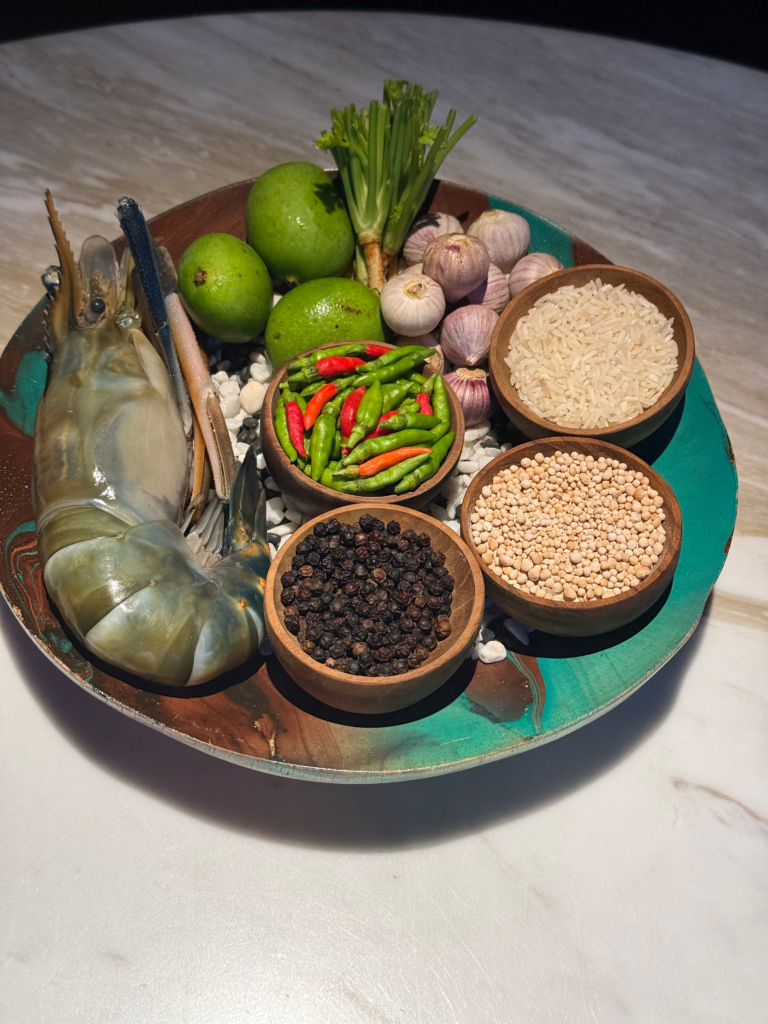
    A ceramic tray of raw ingredients: a whole river prawn, green mangoes, garlic, bird's eye chillies, jasmine rice and black and white peppercorns
    The tray that opens the meal: river prawn, green mango, garlic, bird’s eye chilli, jasmine rice, peppercorns. Sorn shows you the components before the dish.

    Southern Thai cooking is the most aggressively seasoned food in the country, and there is a reason for it. The intensity comes from a time when people foraged and travel took days: the stronger the chilli paste, the more rice it could carry, and the further a small amount went. That logic is still on the plate.

    Almost everything on the table comes from the south, and from fourteen provinces of it. Tapi River prawns and Surat Thani crab arrive each morning, lobster from Phuket, squid from the Andaman, rice from Nakhon Si Thammarat. Even the water the rice is cooked in comes from Ranong – in a clay pot, over charcoal.

    None of it goes through a supplier company. A board on the wall names the individual people who source for the kitchen, which is the argument made as an object: not knowing where the ingredients come from, but knowing who they come from. Accepting his third star, Jongsiri talked about southern farmers burning surplus mangosteen for want of a buyer while Bangkok restaurants imported fruit from Europe.

    One menu, somewhere north of twenty courses

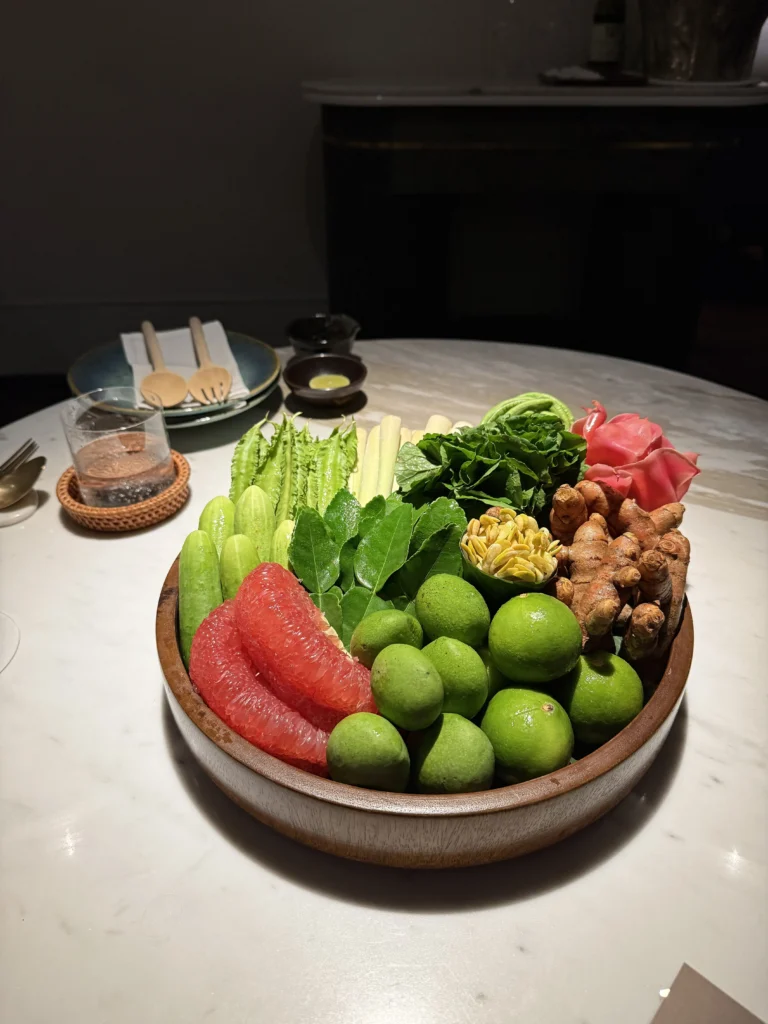
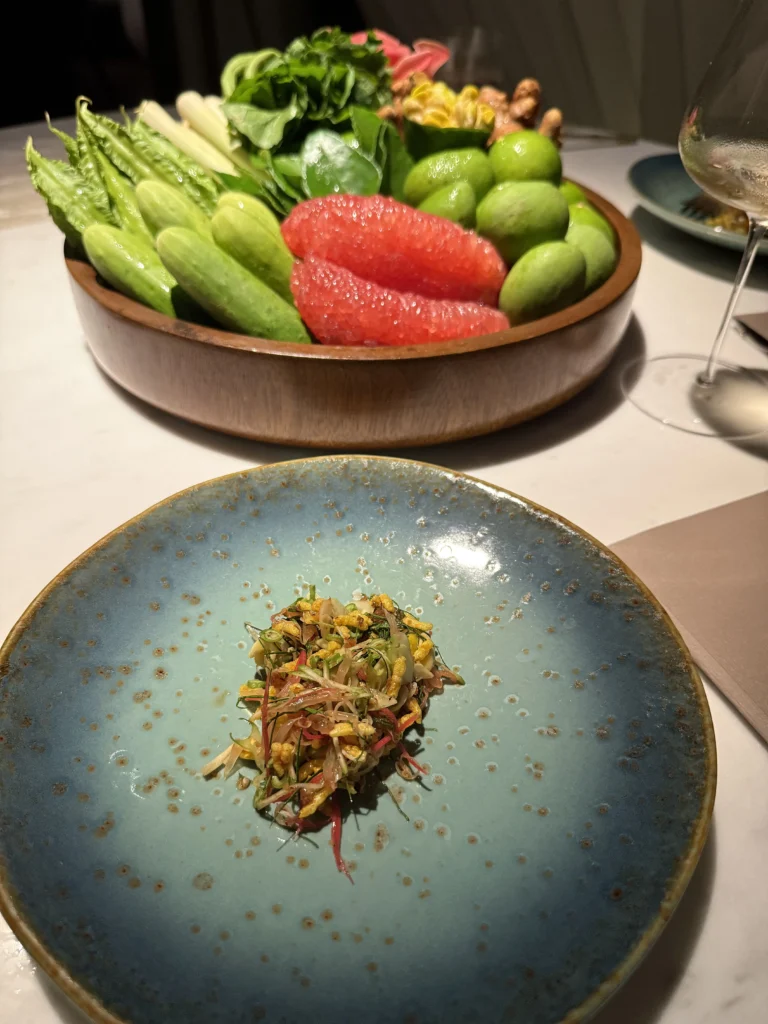
    A wooden bowl of raw southern Thai produce: winged beans, cucumbers, baby corn, betel leaves, torch ginger flower, fresh turmeric, pomelo and green mangoes
    The bowl for the vegetable course: winged beans, baby corn, betel leaves, torch ginger, turmeric, pomelo, green mango. Presented whole, then dressed at the table.

    Nobody agrees how many courses this is, and the disagreement is really about the unit – one course can arrive as three plates. Expect something north of twenty, across about three hours.

    The shape is consistent. The first act is individually plated and small: raw and lightly worked seafood, a sequence labelled “The Ocean,” a sorbet to clear. Then it pivots. Rice arrives from a clay pot with a spread of condiments – chilli pastes, pork rinds, dried stingray, sweet shrimp, quail egg, herbs – and the southern classics come out family-style: soup, curry, stir-fry, something fried. Then desserts, then the trolley.

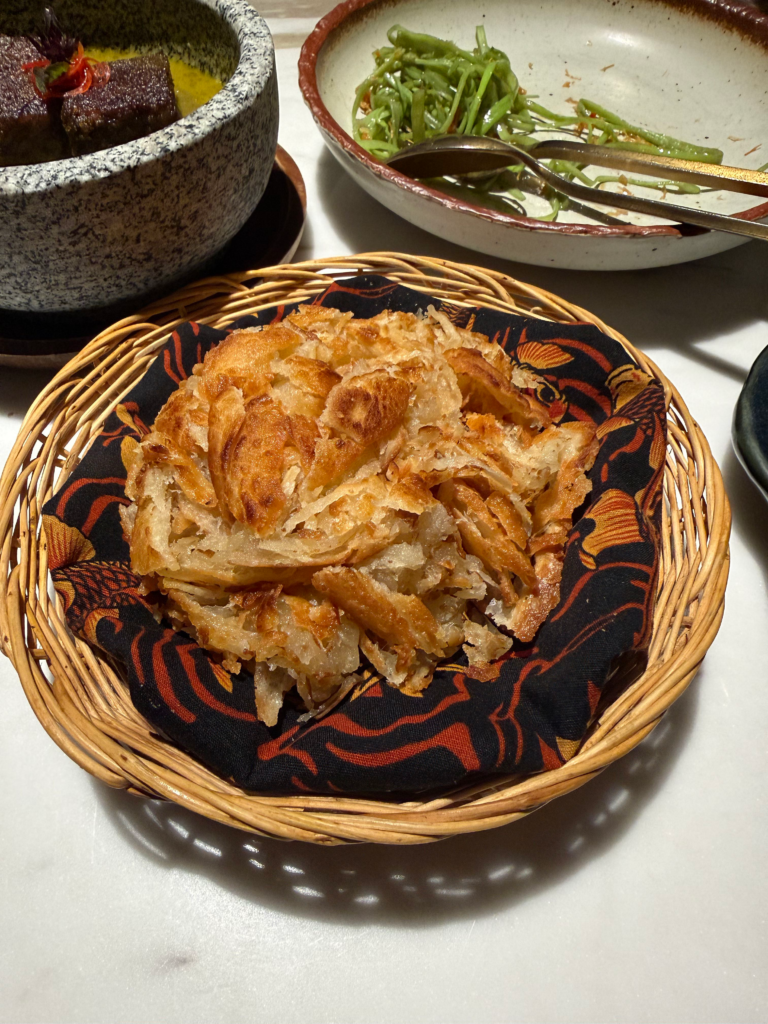
    Torn layers of flaky roti in a cloth-lined basket beside a curry and a bowl of greens
    Roti beside a curry. The green curry is the one to save room for.figcaption>

    The rice is the centre of gravity here, not a side dish: southern jasmine from Nakhon Si Thammarat, cooked in a clay pot over charcoal, and good enough that it is the thing you will still be thinking about a week later. Everything alongside is built to be eaten with it, which is why the middle of the meal looks less like fine dining than the opening did. That is deliberate. The fine-dining format is borrowed from the West, as Jongsiri has put it, and it is not who this kitchen is.

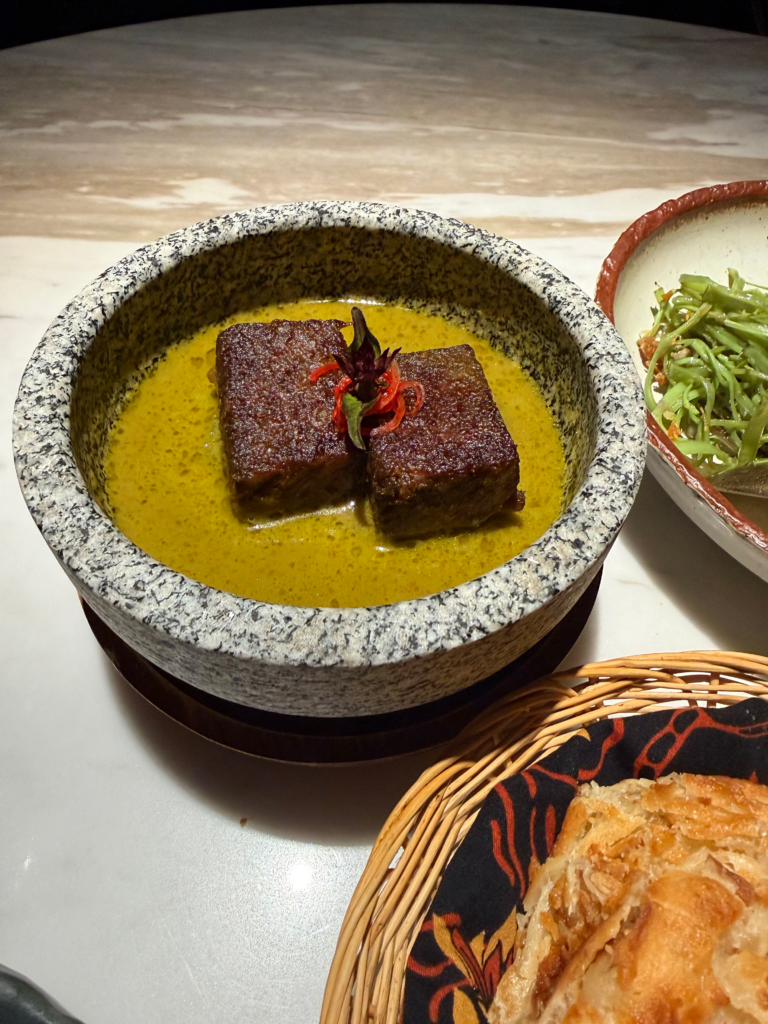
    Two blocks of dark braised meat in a yellow curry served in a granite mortar, a basket of roti alongside
    Braised meat in a yellow curry, served in a granite mortar. Every chilli paste in the house is pounded by hand.

    “I focus on food that complements rice, not courses,” the chef has said.

    You pay in full weeks before you eat. The only thing left to chance is the table.

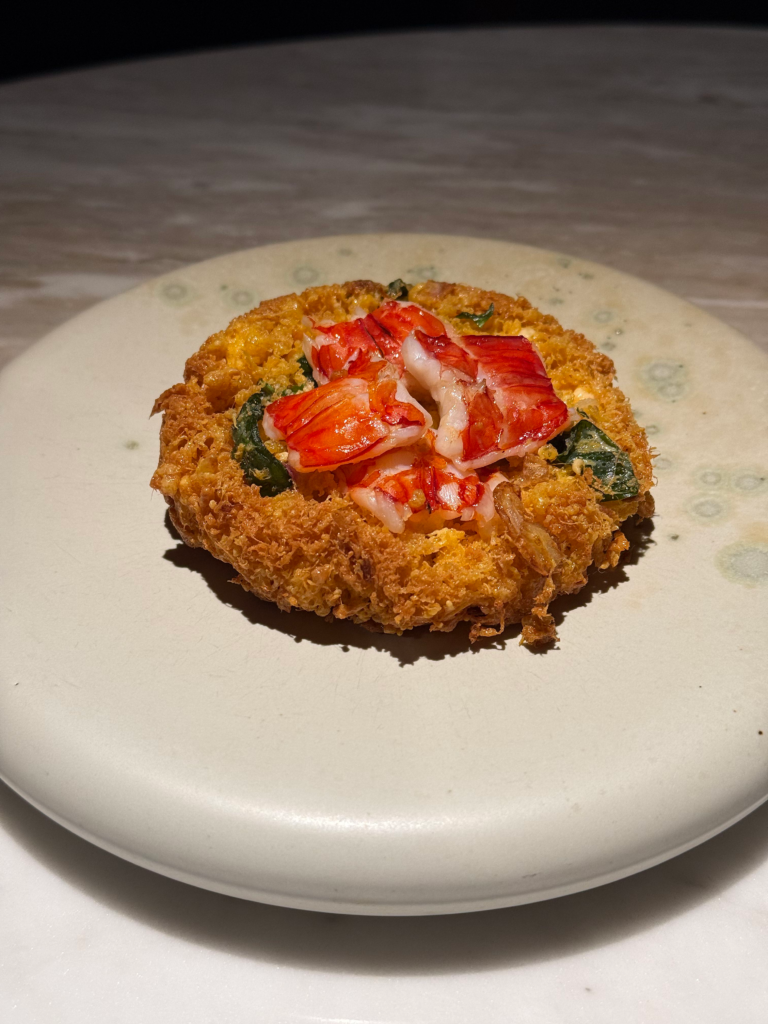
    A crisp golden omelette ringed around chunks of lobster meat and greens on a pale ceramic plate
    A crisp golden omelette built around shellfish and greens, from the family-style half of the meal.

    Spice is the one variable you control. The kitchen asks about allergies and heat before service and will set it per person, anywhere from full southern to mild. Two things are worth knowing. The curries are made in batch and cannot be turned down, and they are the hottest things on the menu. And mild here is still, by most standards, hot.

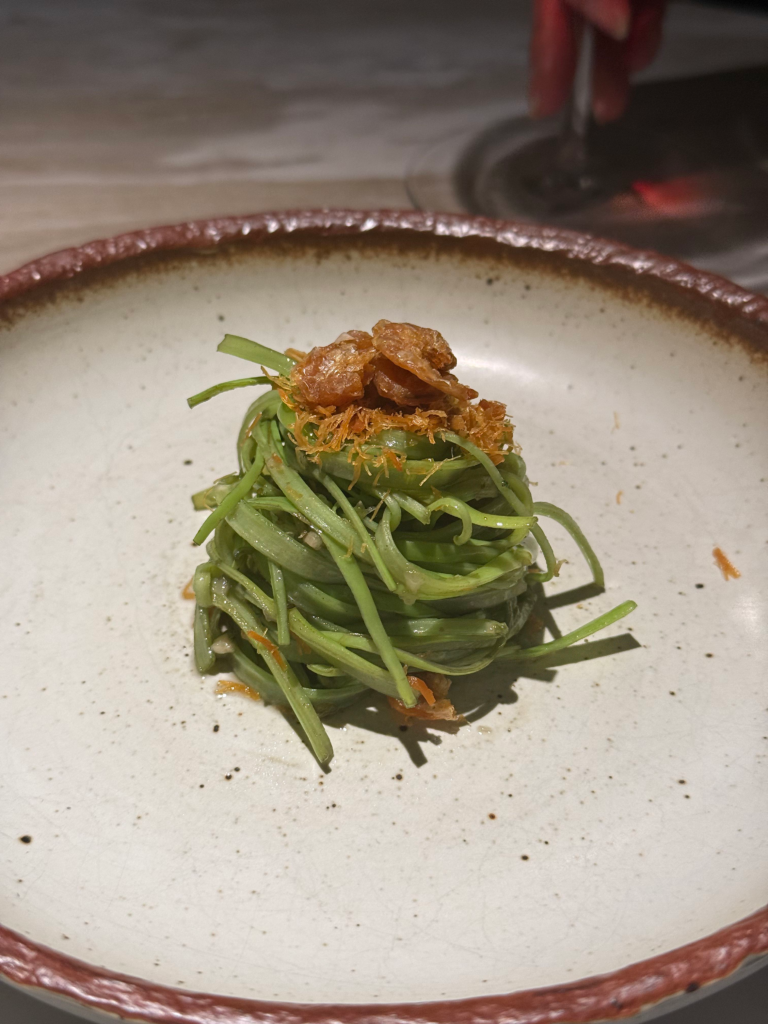
    A tangle of stir-fried morning glory crowned with crisp fried garlic and shallots in a rustic bowl
    Stir-fried morning glory under crisp fried garlic and shallots. By now the plates are shared.

    The last act

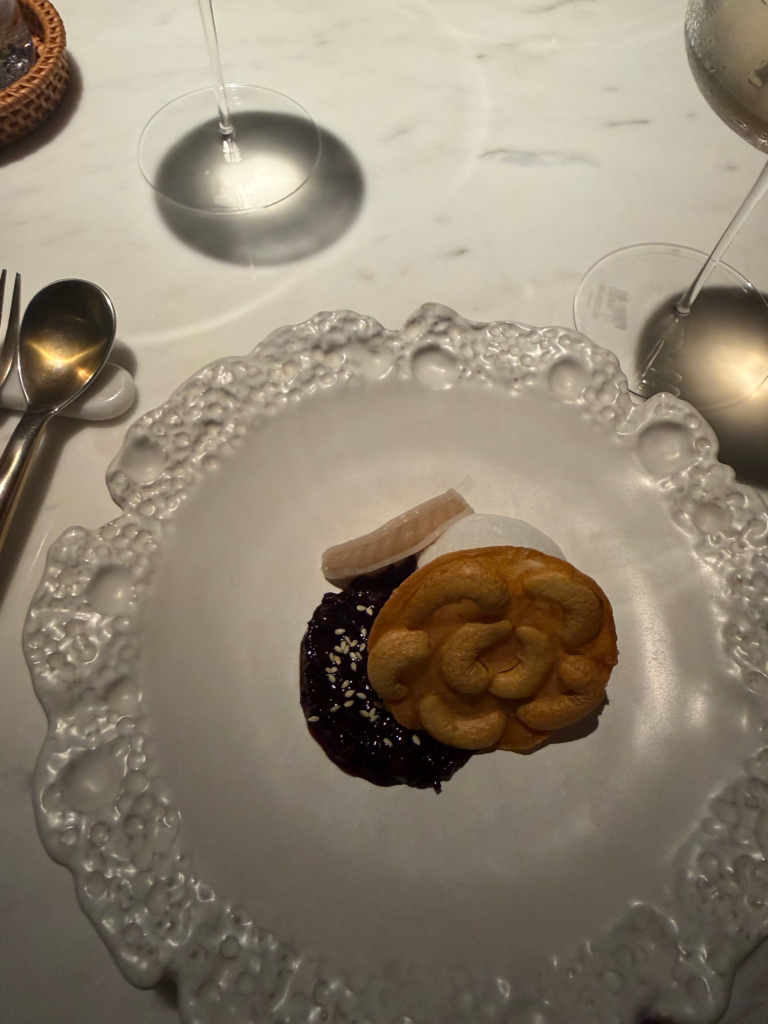
    A dessert of black sticky rice with sesame, coconut ice cream and a cashew-studded wafer on a textured white plate
    Black sticky rice with sesame, coconut ice cream and a cashew wafer – the dessert Thai kitchens call bee koh moy.

    Desserts run through coconut, black rice, sago and fruit, and then a trolley arrives carrying more than anyone can reasonably eat – eight or so kinds of petit four, and no expectation that you stop at one.

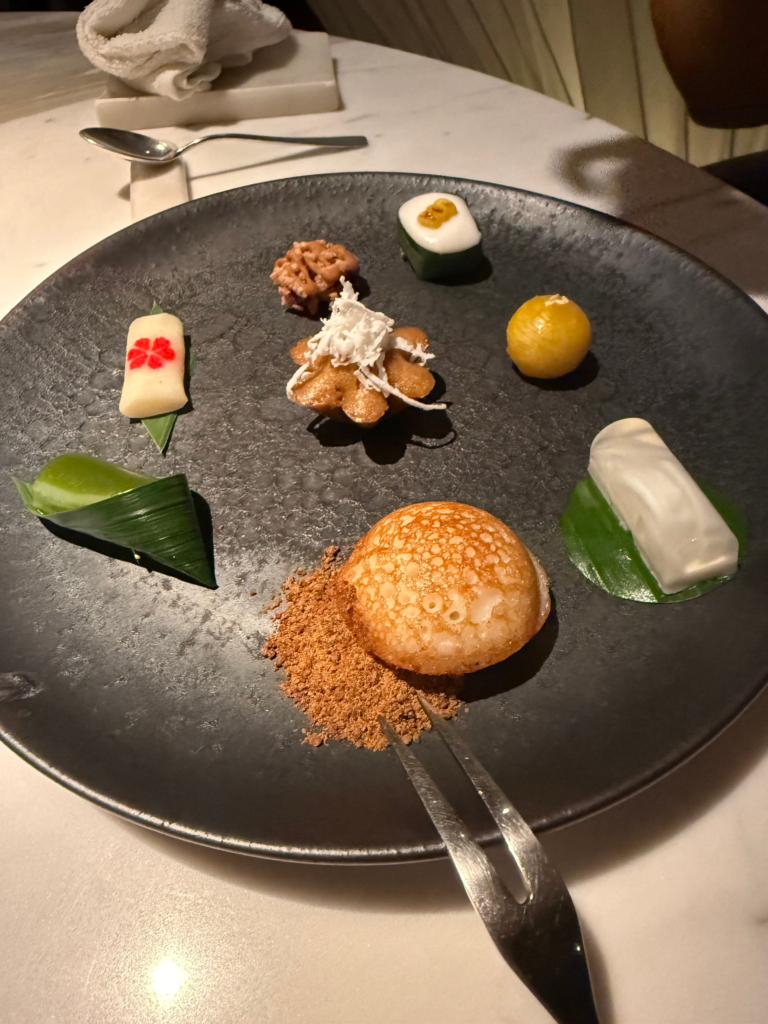
    Seven Thai petits fours arranged on a dark slate plate, a coconut crisp sitting on a heap of palm sugar
    Seven petits fours on slate, a coconut crisp balanced on a heap of palm sugar. The trolley does not ration.
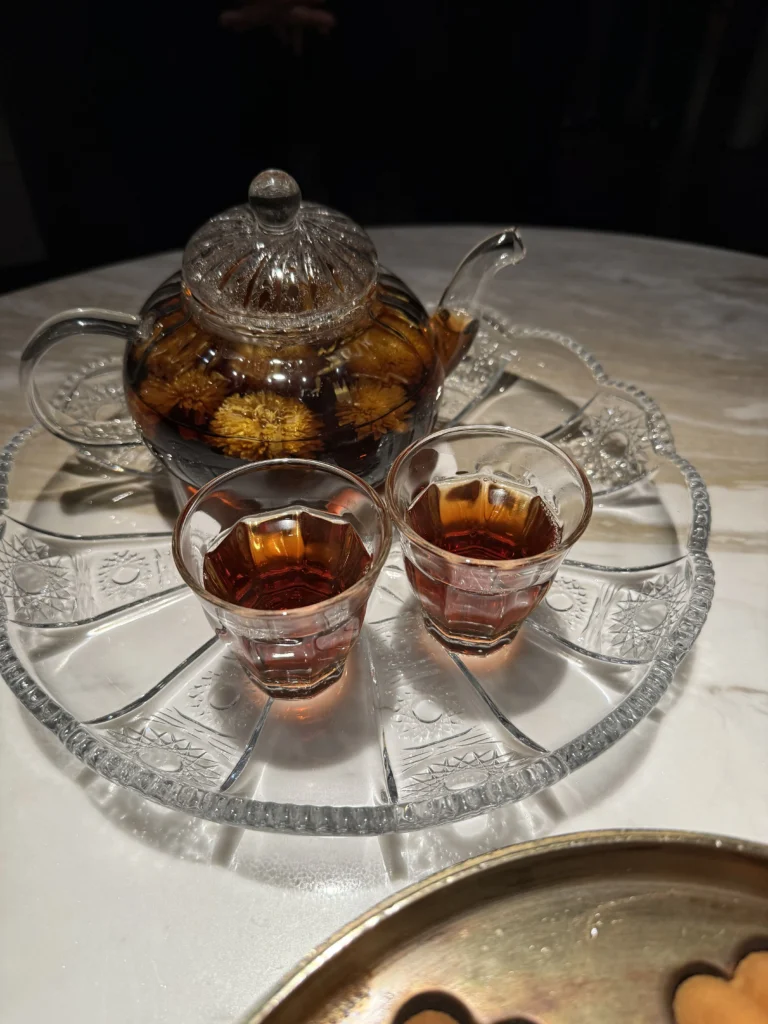
    A glass teapot of flowering chrysanthemum tea and two amber-filled cups on an etched glass tray
    Flowering chrysanthemum tea to close, poured at the table.

    Who Sorn cannot feed

    This needs saying plainly, because the money is gone before you find out. Sorn’s booking terms state there is no vegetarian or vegan menu: the kitchen is “unable to cater to guests who do not consume meat.” It cannot accommodate any degree of shellfish allergy – “even if limited to a single variety” – nor guests who simply do not eat shellfish. And it names eight core ingredients it will not substitute for allergy or intolerance: coriander root, onion, garlic, peppercorns, shrimp paste, coconut, chilli and fish sauce. It is published on the same page that takes your card.

    The counter-argument

    Whatever there is to hold against Sorn is almost never about the food. It is about getting in, and about where you sit once you have.

    The second one is real. There is a table upstairs in a corner between three walls, facing the dumbwaiter, beside the door to the restrooms. Draw it and you will spend the evening watching the service traffic and the queue for the lavatory. At over nine thousand baht a head, paid weeks in advance, that is a great deal to leave to a draw – and it is the strongest argument there is for booking a four-top.

    The pace is quick, and it is deliberate rather than careless: a lot of these dishes are temperature-critical and are meant to reach you fast. The descriptions come just as quickly, and if you want to hear one twice you may find yourself pointed at the printed menu instead. You will also be too full well before the trolley. And ask what the water costs – it is not cheap, and the price is published nowhere.

    What it costs

    The restaurant publishes one fixed price per person on its own booking page; service and VAT are added on top. It has roughly tripled in the eight years since opening. Drinks are separate, and the prepaid credit does not touch them. There are two wine pairings, six glasses and nine, and the shorter one is not all wine. Corkage is one for one: every bottle you bring means buying one from the list.

    Know before you go

    The house is down Soi Sukhumvit 26, fifteen minutes on foot from BTS Phrom Phong. On-site parking is very limited, but there is a complimentary shuttle from the Four Wings Hotel car park in the same lane, where parking is charged by the hour. Allow far more time than the map suggests; the thirty-minute forfeit is real.

    There is no published dress code; smart and unfussy is right. Bring a layer, because the room runs cold. Answer the spice question honestly when it comes. Budget three hours. And if this meal is going to shape the trip, book it before you book the flights.

    Two things Sorn does not publish: which days it opens, and what its hours are. What you will find online contradicts itself. One phone call settles it, and it is worth making before you build a day around it.

    Don’t miss

    If you only do five things:

    • Set two alarms: the 15th for email, noon on the 25th for the online release
    • Book for four rather than two – there are more tables that size
    • Answer the spice question truthfully when the chef asks
    • Read the supplier board on the wall before you sit down
    • Leave room for the petit-four trolley

    The Sorn gallery

    Every photo on this site is my own, shot on the night. Slide through →
    The closed menu, a grey card folder sealed with a Thai postage stamp, held above the marble tableA ceramic tray of raw ingredients: a whole river prawn, green mangoes, garlic, bird's eye chillies, jasmine rice and black and white peppercornsA single bite of jasmine rice topped with shellfish and glazed red strips, on a blue and white glazed plateA clear consomme in a fluted glass bowl, two cubes and a mint leaf at its centre, the glass lid set asideTwo glazed skewers resting on a wire mesh over a small terracotta charcoal potA wooden bowl of raw southern Thai produce: winged beans, cucumbers, baby corn, betel leaves, torch ginger flower, fresh turmeric, pomelo and green mangoesA small herb and pomelo salad heaped on a speckled blue plate, the bowl of raw produce behind itA terracotta pot of steaming jasmine rice set in a woven basket on the marble tableA crisp golden omelette ringed around chunks of lobster meat and greens on a pale ceramic plateTorn layers of flaky roti in a cloth-lined basket beside a curry and a bowl of greensTwo blocks of dark braised meat in a yellow curry served in a granite mortar, a basket of roti alongsideA dessert of black sticky rice with sesame, coconut ice cream and a cashew-studded wafer on a textured white plateA whole mangosteen dessert on a glazed plate in front of a Thai tin of canned mangosteenA glass teapot of flowering chrysanthemum tea and two amber-filled cups on an etched glass traySeven Thai petits fours arranged on a dark slate plate, a coconut crisp sitting on a heap of palm sugar
  • Grand Velas Riviera Maya: Jungle, Beachfront or Grand Class?

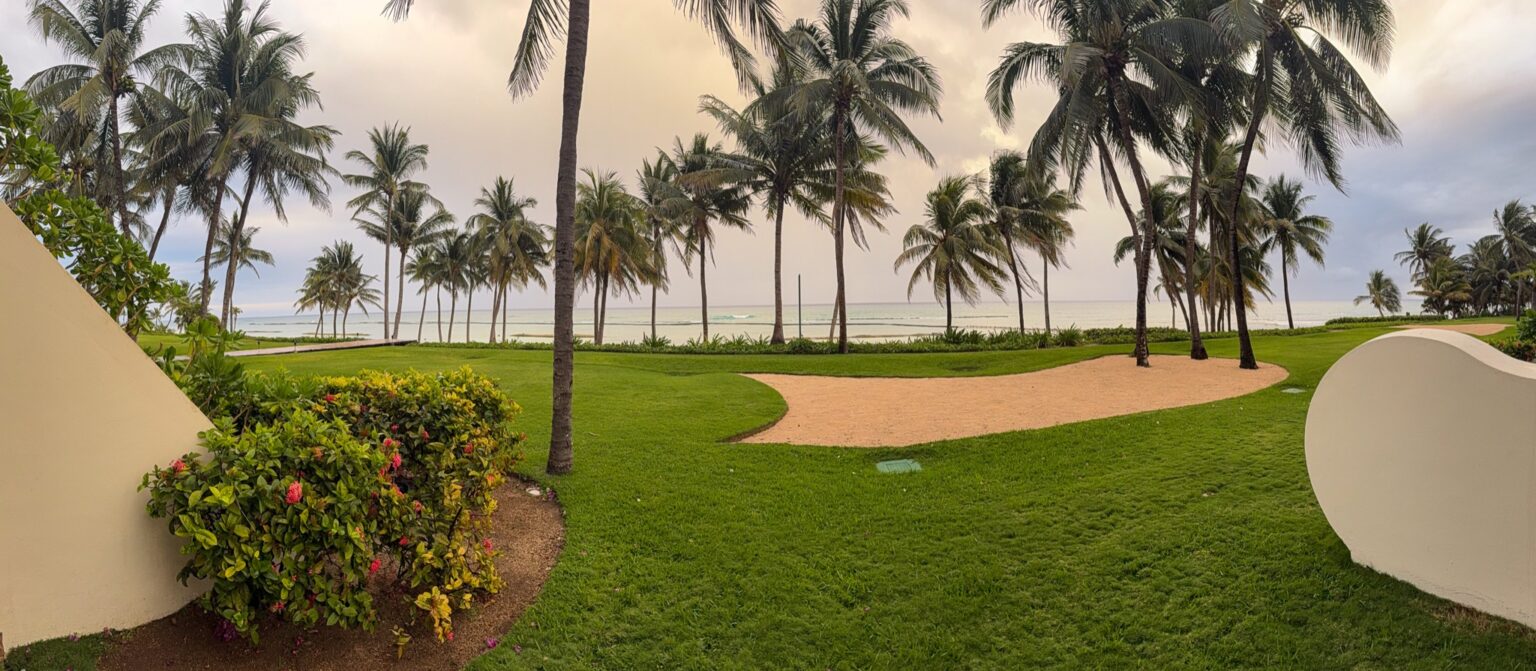
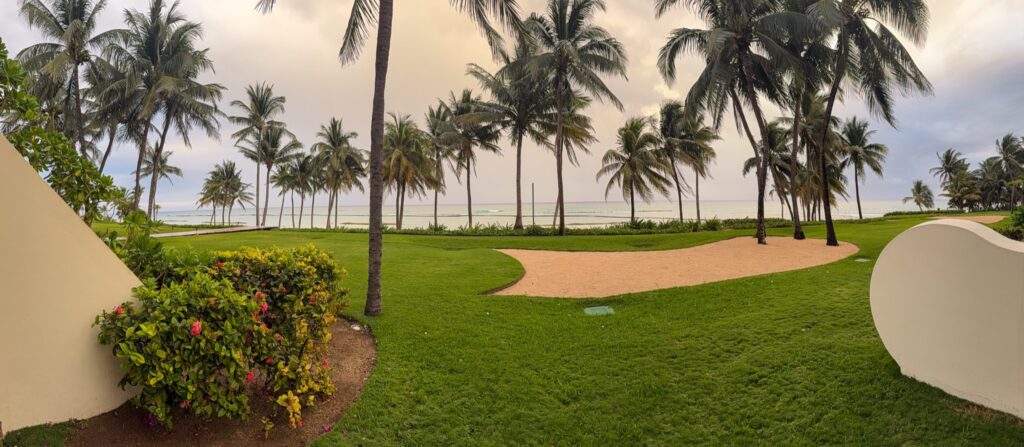
    Wide panorama of lawn, coconut palms and a sand circle framed between two curved white walls

    RIVIERA MAYA, MEXICO · ROOM GUIDE · 10 MIN READ

    Grand Velas Riviera Maya: Jungle, Beachfront or Grand Class?

    Three resorts share one gate, one rate card and a listed 539 suites between them. The question here is not beachfront or jungle. It is which of three answers you want, and the cheapest one is a mile from the sea.

    By J.C. Mercer

    Know before you go

    • Where the Cancún–Tulum highway at Km 62, four miles from Playa del Carmen. Not in Mayakoba, whatever the search results say
    • The property all-suite, 539 suites, opened November 2008, on roughly 200 acres by the hotel’s own count
    • The choice Zen Grand in the jungle, Ambassador above the beach, Grand Class on the sand — each with its own lobby, pool and restaurants
    • Rates the resort’s own booking engine quotes per person per night, with Grand Class a tier above the entry suites
    • Getting around a 24-hour shuttle van links the three lobbies; the hotel calls the Zen-to-beach run two to three minutes

    Every stay on this site is paid for in full and booked the way any other guest would book it.

    Grand Velas Riviera Maya is not in Mayakoba. That needs saying at the top, because much of the internet says otherwise and so, embarrassingly, does the label on the folder my own photographs live in. Mayakoba is a gated development of some 595 acres holding exactly four hotels — Alila, Banyan Tree, Fairmont and Rosewood. Grand Velas is none of them. It sits on its own land further up the Cancún–Tulum highway, behind its own gate. Its only link to the name is El Camaleón Mayakoba, the golf course it partners with, five minutes away.

    The distinction has one practical consequence. At Mayakoba your key opens three neighbouring hotels. At Grand Velas it opens three neighbouring sections of the same resort — and choosing between them is the whole decision.

    I slept here

    Grand Velas Riviera Maya

    • Nights 4
    • Stayed March 2026
    • Room booked Zen Grand Pool Nature View Suite
    • How it was booked Amex Fine Hotels + Resorts, public rate
    • Rate band $$$$Check current rates

    Three ambiances, not two

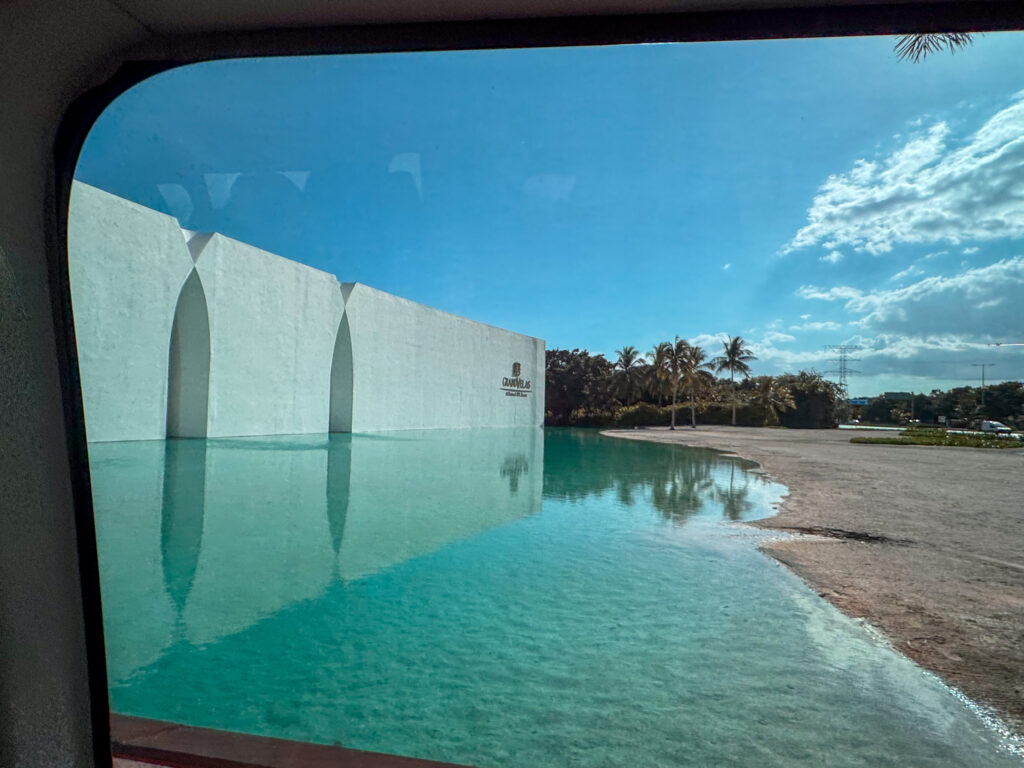
    Curved white wall reflected in a shallow turquoise arrival pool, seen through a vehicle window
    One gate, one drive, and then a fork in the road that decides most of your holiday.

    Most resorts offering a room choice offer two: water or garden. Grand Velas offers three, and calls them ambiances rather than wings — marketing language over a real structural fact. Each has its own lobby, pool and restaurants, and guests may use all three wherever they sleep, with one age caveat I will come to.

    Zen Grand is the biggest of the three at a listed 254 suites, set inland in jungle and mangrove with two restaurants and a pool. Ambassador holds 195 overlooking the beach, with three restaurants and the largest pool complex. Grand Class is 90 oceanfront suites, three restaurants and an infinity pool. That comes to 539, which is the number the group publishes – a rare case of a hotel’s arithmetic reconciling. If you see 491 quoted anywhere, it is describing a property that still had iPod docks in it.

    What follows is a resort that is genuinely three resorts. The spa and the convention centre sit in Zen Grand. The beach fronts Ambassador. The Michelin-starred restaurant is in Grand Class. Wherever you sleep, something you want is somewhere else.

    Zen Grand: the jungle side

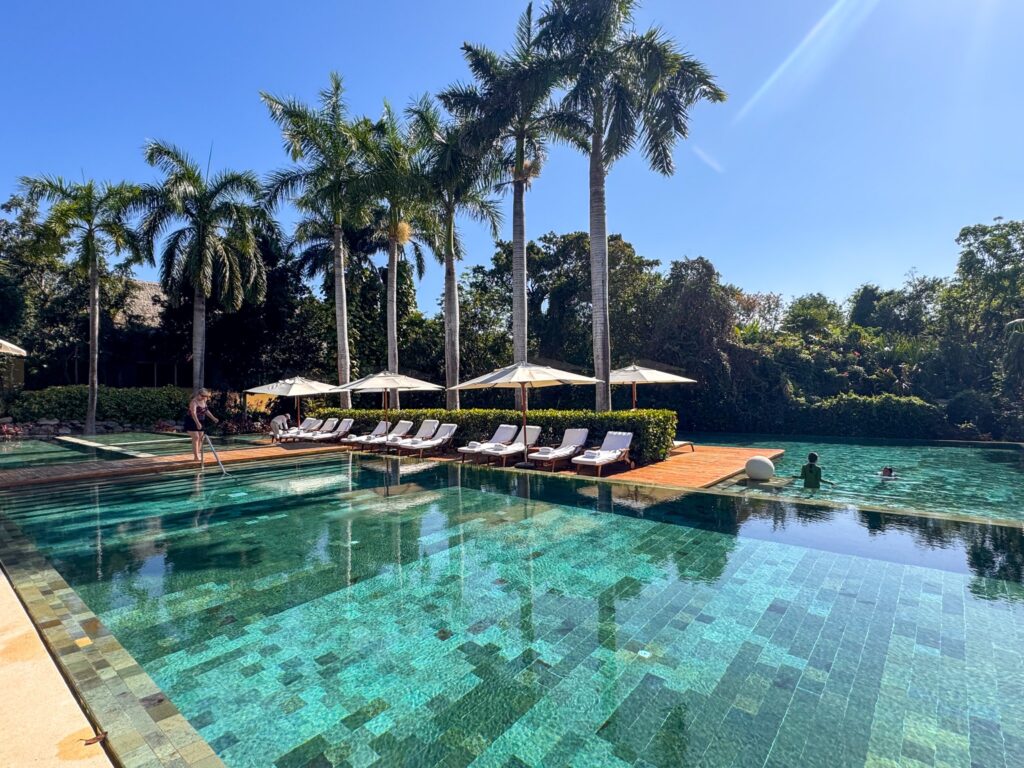
    Emerald mosaic-tiled pool reflecting royal palms, with loungers and umbrellas along the far edge
    The inland pools are tiled emerald rather than blue and sit under the canopy – cooler and a good deal quieter than the beachfront ones.

    The entry Zen Grand Nature View Suite is a published 1,377 square feet with a jungle terrace and an indoor jacuzzi. Above it: a plunge-pool version, a two-bedroom family suite at 2,368 square feet, a presidential at 3,518. The hotel calls this section family-friendly in its own words — worth holding onto for later.

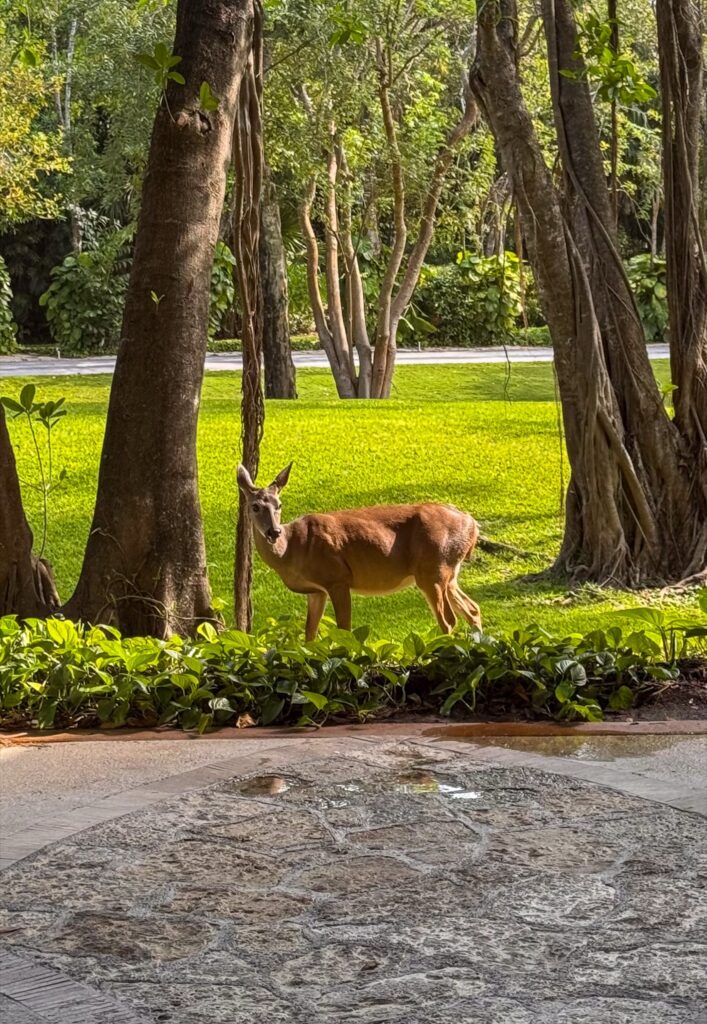
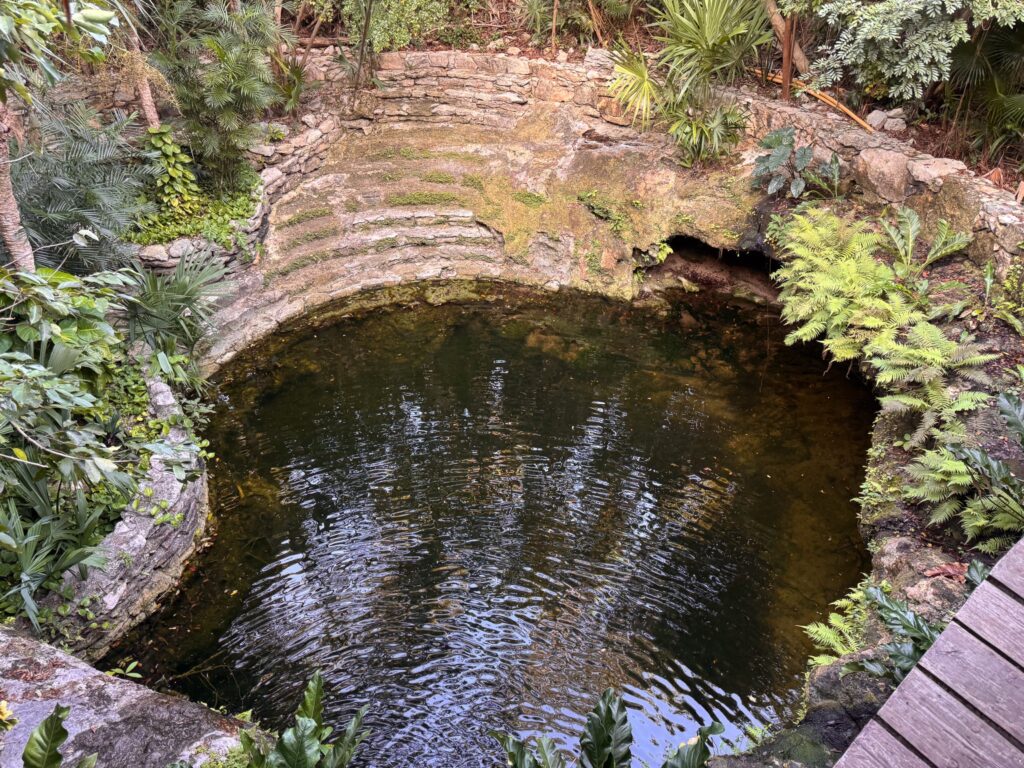
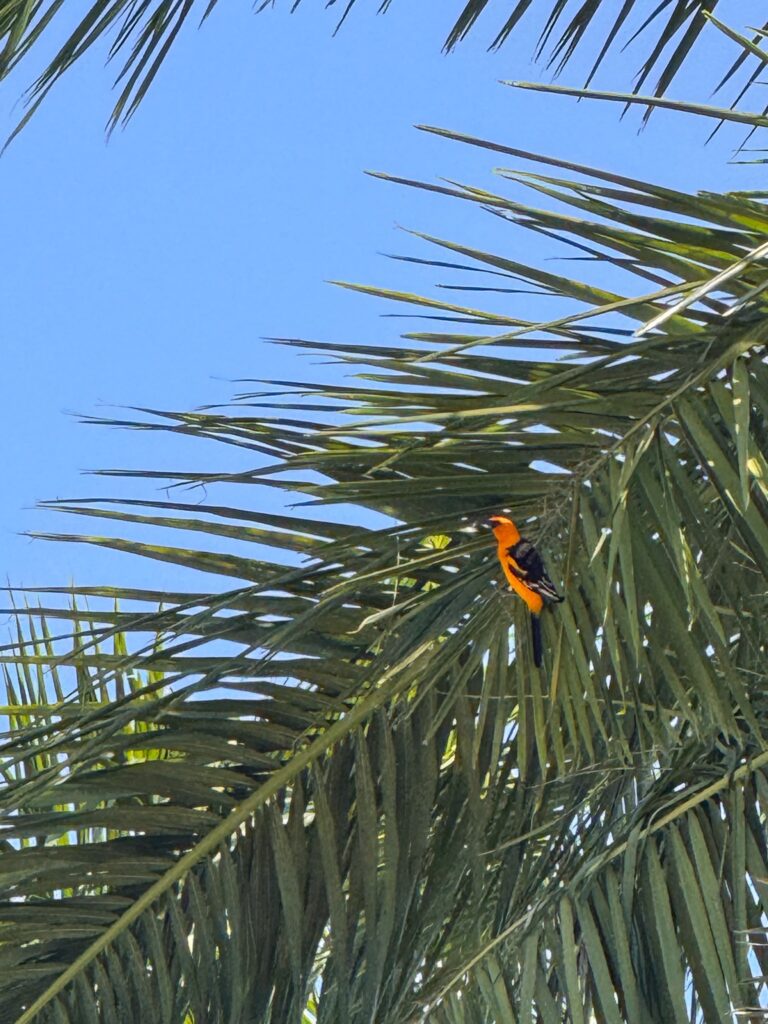
    What you get for the inland address is the quieter half of the property. The spa is here, and it is the strongest single thing Grand Velas has – five Forbes stars, built partly into a natural cenote. The grounds are the other reward. On this side I found a deer grazing between banyan trunks, an oriole working the palm fronds, and a stone-walled cenote sunk among ferns a few minutes from the room.

    A deer grazing on a sunlit lawn between banyan trunks, seen across a flagstone path
    Not a stocked attraction. The inland grounds run into real jungle, and the wildlife comes with the postcode.

    The cost is distance, and it is the thing people argue about most. The hotel says a complimentary shuttle runs 24 hours and takes two to three minutes. In practice the drive is nearer five. Zen sits about a mile back from the water, and it is not a walk you would want to make twice a day in that heat.

    Three minutes is true and also beside the point. Door to door – waiting for the van, loading, dropping other guests on the way – is closer to ten. Nobody waits long for the shuttle itself; the friction is everything either side of it. It is enough to make you quietly give up on the morning yoga class rather than build a day around a van.

    There is a harder problem with Zen, and it is not the distance. The building is older and darker than the other two, and it shows: burned-out bulbs, pictures hanging askew, and rooms that want the lights on at midday. Book Zen knowing it is a different product, not a cheaper view of the same one.

    Ambassador: the beachfront middle

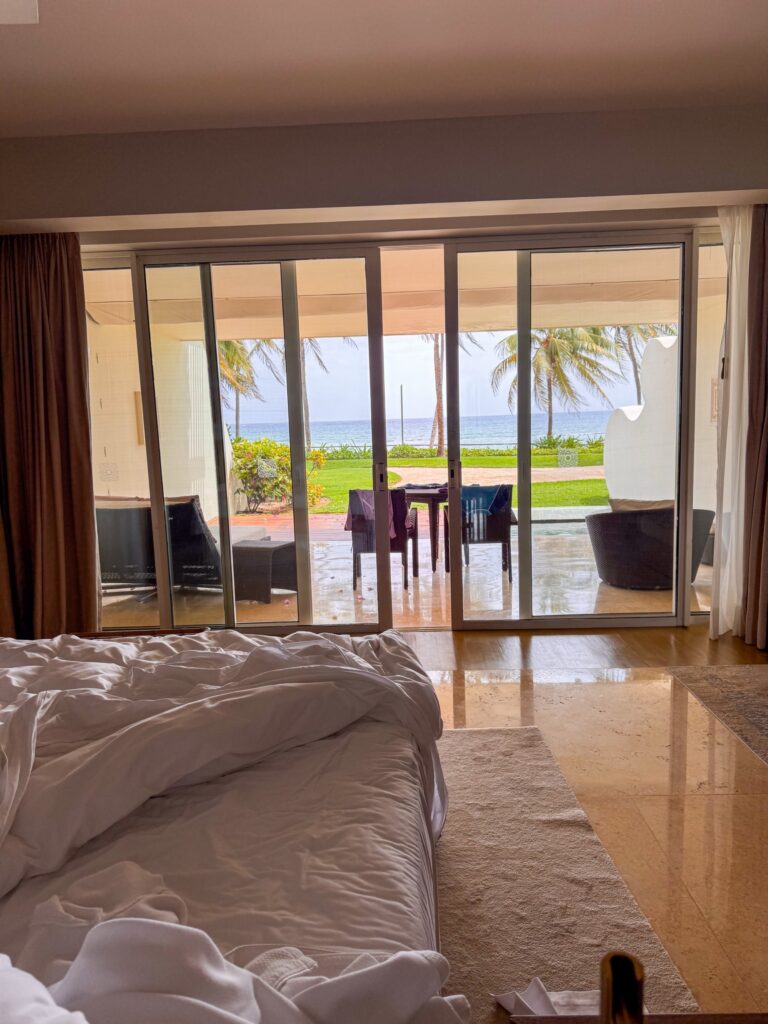
    Rumpled white bed and marble floor facing glass doors open to palms, lawn and sea
    The ocean-view suites put the doors at the foot of the bed. On the ground floor the lawn takes a slice of that view with it.

    Ambassador is the largest section and the one that fronts the beach. Its entry Ocean View Suite is 1,270 square feet — the smallest category the hotel publishes anywhere, which tells you the scale of the place. Above it: a Pool Ocean Front, a 2,540 square foot family suite, a Governor with in-suite massage, a presidential at 3,084. Three of those carry a “recently renewed” flag, part of a refurbishment the group puts at over four million dollars.

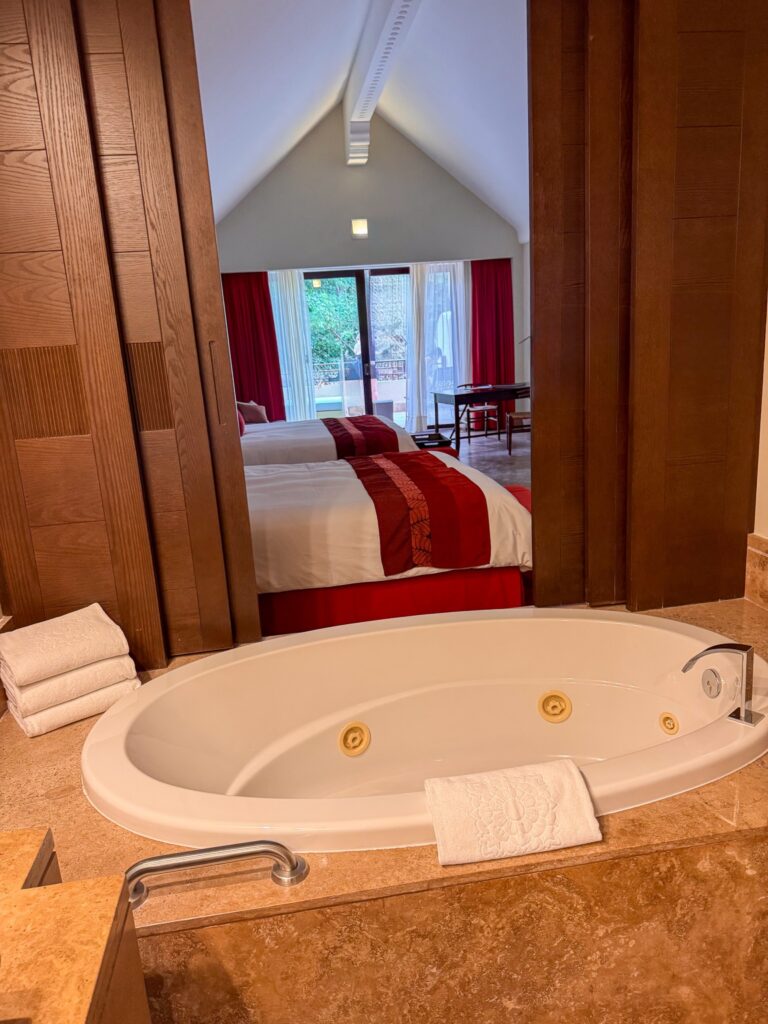
    Oval whirlpool tub in a travertine bathroom looking through to a bed with red runner
    Every suite has an indoor jacuzzi and a wood screen that opens the bathroom to the room.

    This is where families live. The Ambassador pool is the biggest of the three, with a zero-entry children’s pool at the back. The Kids’ Club runs 4 to 12 and opens at nine; the Teens’ Club takes 13 to 18 and runs to midnight. Azul does the buffet, Frida the Mexican haute cuisine, Lucca the Italian.

    Two warnings the brochure will not give you. Ground-floor suites give up the view – you have to walk ten feet out of the room before you can see the sea – and they collect mosquitoes. And the stone hallways carry sound: corridor noise after dinner, lift noise all day. Ask for a higher floor, away from the lift.

    Grand Class: oceanfront, and the adults-only muddle

    White parasols and teak loungers on a stone terrace running to an infinity pool above the sea
    The one part of the resort the hotel commits to in writing as adults only. One umbrella per two chairs, and they go early.

    Ninety suites, directly on the sand, with a smaller and more boutique-feeling lobby of their own. The Grand Class Oceanfront Suite is published at 1,377 square feet with a terrace plunge pool; the Presidential runs to 3,796 across two bedrooms, with a private butler rather than one shared with ten rooms. Bistro, Piaf and Cocina de Autor are here, with the Sky Bar and the infinity pool.

    Here is the thing to get right before you book, because the hotel has not. Grand Class is marketed as adults only. Agents sell it as an adults-only oceanfront retreat, and the booking sites list it as a separate property with “Adults Only” in the name.

    What the resort commits to in writing is narrower. Its rate terms name the adults-only zones precisely: the Grand Class pool and bar, and the restaurants Piaf, Cocina de Autor and Bistro. The suites are not on that list – and the hotel’s own booking page for the Oceanfront Suite calls it ideal for three adults and one minor aged nought to fifteen.

    So book Grand Class for the pool, the bar and the three restaurants, which really are age-restricted. Do not book it expecting a childless corridor. The hotel’s own pages contradict each other, and the safe assumption is the one its booking engine will sell you.

    Side by side

    Zen GrandAmbassadorGrand Class
    Suites25419590
    Entry suite1,377 sq ft, nature view1,270 sq ft, ocean view1,377 sq ft, oceanfront
    To the beachShuttle, about a mileOverlooks itOn it
    Its restaurantsChaká, Sen LinAzul, Frida, LuccaBistro, Piaf, Cocina de Autor
    Its poolJungle, coolest, quietestLargest, zero-entry kids’ sectionInfinity, adults only
    ChildrenFamily-friendly, the hotel’s wordWhere both clubs areFacilities are 16+, the suites are not
    Entry rate, per personLowest of the threeLevel with Zen, rising in peakA tier above both
    Best forThe spa, the wildlife, the priceFamilies and short staysCouples who want the sand

    What the rate actually covers

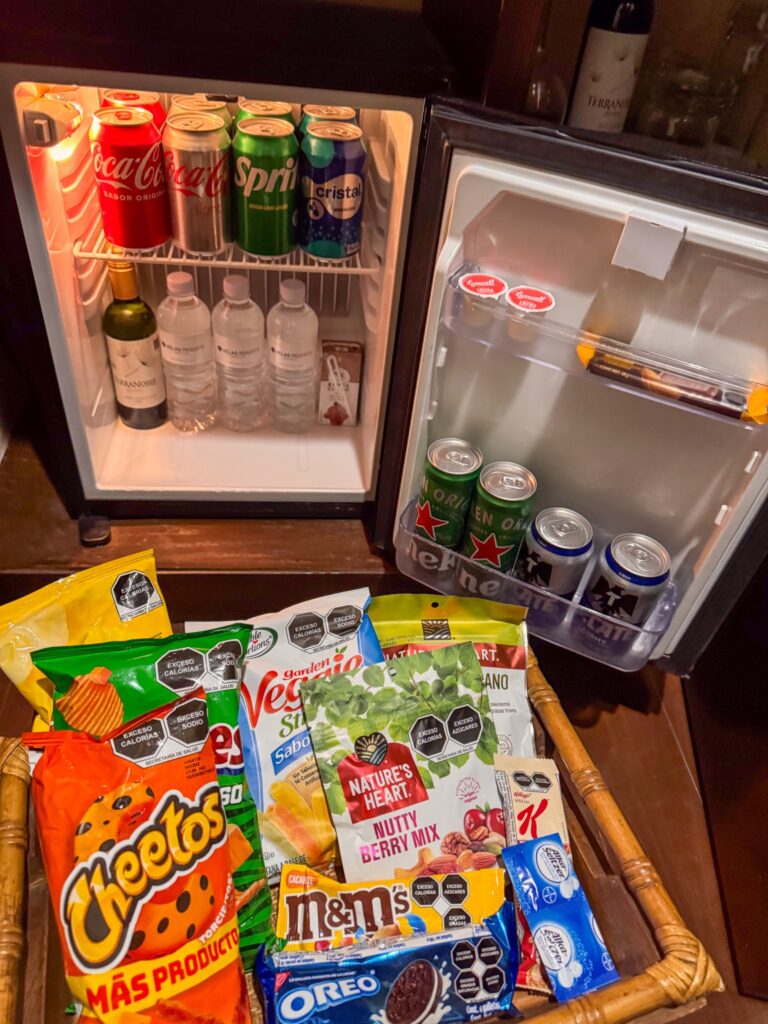
    Open minibar of soft drinks, beer, water and wine above a basket of crisps and sweets
    Restocked daily and included – with one caveat: the tequila and the wine are one bottle each per stay, not per day.

    Every rate plan the resort’s booking engine returns carries the same sentence: rates are per person per night on double occupancy, taxes and gratuities included. The widget then displays the room total rather than the per-person figure it just quoted, which explains most of the disagreement online.

    Grand Velas quotes per person and shows you per room. Half the argument about what this place costs is that one conversion.

    Zen and Ambassador cost the same to the dollar. One of them is a mile from the sea.

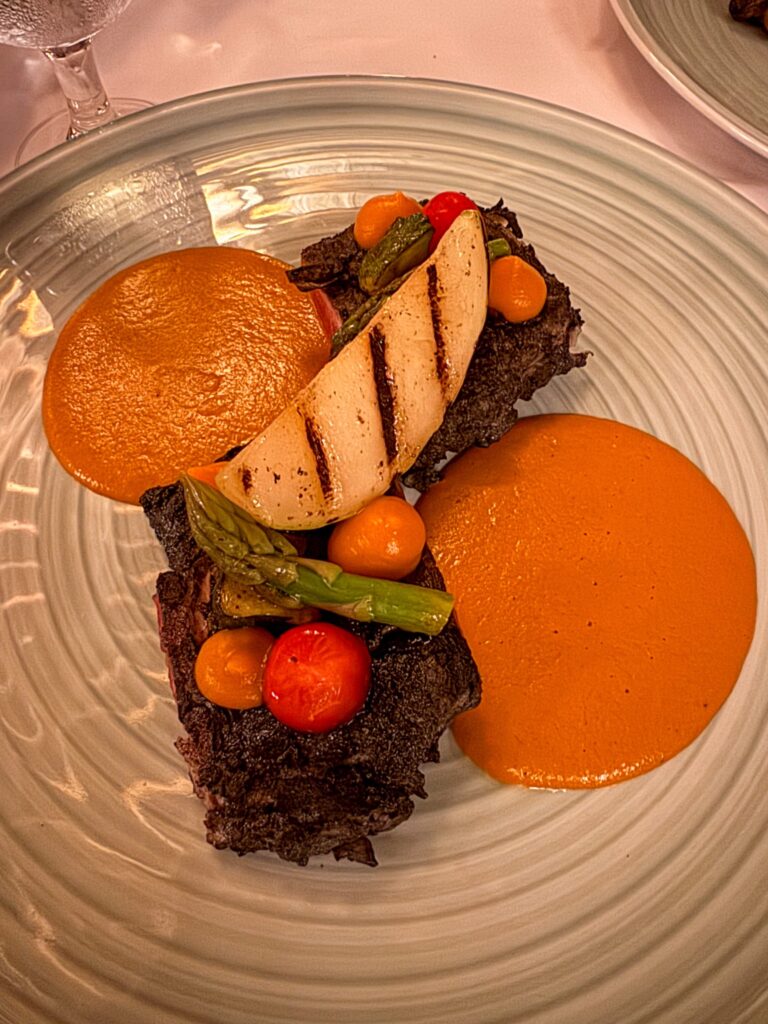
    Inside the rate: all meals at all eight restaurants, buffet and à la carte, plus 24-hour in-suite dining at no surcharge. Every menu runs two parallel wine lists, one included and one charged, and the included tier is not token — the same bottles go to outside diners at around MXN 1,100. The spirits run to Macallan 12, Don Julio, Grey Goose and Zacapa 23. Add a welcome bottle of mezcal, a shared butler, and a fifty-dollar spa credit per adult per day.

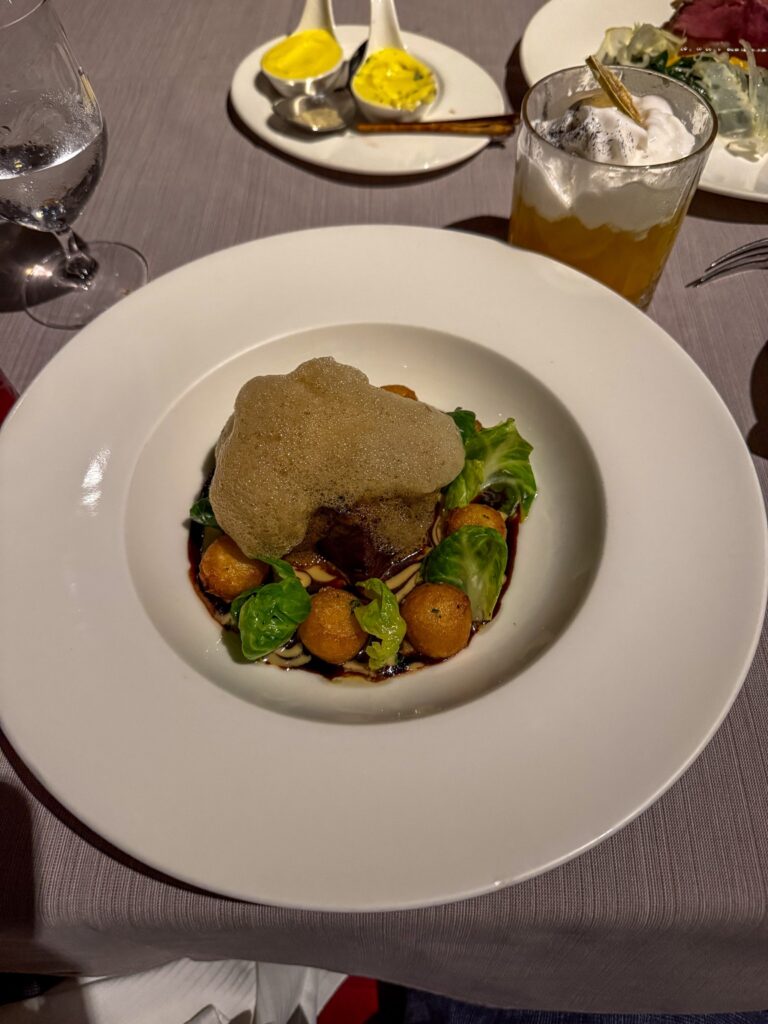
    Beef in dark jus with brussels sprout leaves, potato spheres and a crisp golden tuile
    Dinner is where the kitchen earns the price. Lunch is where it does not.

    The headline inclusion is Cocina de Autor, which took a star in the inaugural MICHELIN Guide to Mexico in 2024 and held it in 2025. The tasting menu is included for resort guests — the official menu page prices it only “for external customers,” which is the giveaway.

    Outside the rate: spa treatments, priced on the 2026 menu; the hydrotherapy Water Ceremony, free with any treatment of fifty minutes or more; airport transfers; babysitting; connecting rooms. The state Visitax is paid separately online, and Quintana Roo’s environmental levy is collected at checkout in pesos.

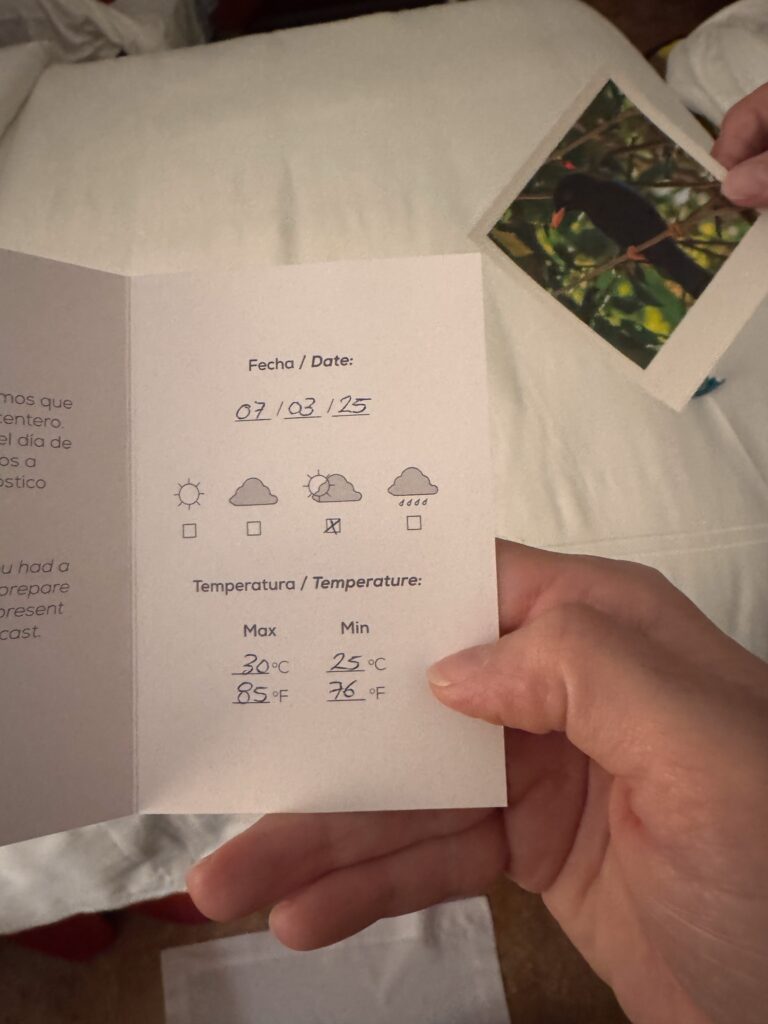
    A hand holding the printed daily weather card, dated 07/03/25, on a white bed
    Turndown leaves a printed card with tomorrow’s forecast — the sort of thing that explains the service scores.

    The counter-argument

    The counter-argument here is not really about the resort. It is about the price. People love the suites, the grounds and the service, and are noticeably cooler about what all of it costs.

    Put sharply: if a hotel charges Four Seasons money, it ought to deliver a Four Seasons experience, and this does not quite. There is a hard number behind the feeling. The resort markets its AAA Five Diamond award hard, but Forbes rates the hotel four stars and the spa five. The spa is the five-star part.

    The beach is the most consistent complaint, and it is really two problems. One is seasonal: the Atlantic sargassum belt peaks in June and July and bottoms out in winter, and the grumbling tracks that almost exactly. The other is structural and does not go away in the clear months. Grand Velas keeps its sand wide with a submerged breakwater of sand-filled geotubes and concrete forms, which flattens the surf and leaves rock underfoot – and the concrete shapes are not much to look at.

    Then the operational stuff, which repeats. The included Michelin-starred dinner can feel like a promise the resort cannot keep. Tables are scarce enough that the resort charges its own guests MXN 850 a head for missing one, which tells you how hard they are to refill. Book it the day the calendar opens or you will not eat there at all. Lunch is buffet or poolside only; there is no sit-down option at a resort charging four figures a night. Loungers go before breakfast and the chair rules are not enforced. And although gratuities are in every rate plan, a tab still lands at the end of every meal reading zero, which is there so that you will tip on top.

    What it costs

    Published figures are close to useless here, because quotes swing wildly depending entirely on whether the number is per person or per room. The resort’s own booking engine is steadier.

    In mid-September the entry Zen Grand Nature View and the entry Ambassador Ocean View come out level with each other, taxes and gratuities in, with Grand Class a step above. Move to February or April 2027 and both rise, but not by much.

    That is the counter-intuitive part, and it contradicts the seasonal tables you will find elsewhere. Outside the holiday weeks the spread between low and high season is only about four to ten per cent. The premium sits almost entirely in Christmas and New Year, when the entry Zen suite jumps and an Ambassador Ocean View over New Year roughly triples, with a seven-night minimum from 27 December.

    The quote carries exactly 21 per cent tax — Mexico’s 16 per cent IVA plus the five per cent Quintana Roo lodging tax — and no American-style resort fee appears anywhere. Over Christmas and New Year the cheap non-refundable plan disappears and only the flexible rate is sold.

    Know before you go

    Book the restaurants before you fly, and Cocina de Autor first – wait, and you are eating at half past nine or not at all. Take the season seriously if the beach is the reason you are going: the cleanest months are November through February, and the people who sell this place will tell you plainly to avoid May to October. Bring repellent, and water shoes if you intend to swim rather than look.

    On the room: take Zen Grand if the spa, the wildlife and the price are what you came for, and accept ten minutes door-to-door to the sea. Take Ambassador if you have children, because both clubs, the big pool and the beach are there. Take Grand Class to step from your suite onto the sand — but not on the promise of a childless section, because the hotel does not make that promise where it counts. Ask for an upper floor away from the lifts, and bring more cash than “gratuities included” suggests.

    Don’t miss

    If you only do five things:

    • Cocina de Autor, booked the day the calendar opens
    • The Water Ceremony at SE Spa, free with any treatment of fifty minutes or more
    • Lobster tacos at the Grand Class pool bar
    • The Melipona bee eco-tour, Wednesday mornings, reservation required
    • Sunrise over the reef from the beach lawn

    The Grand Velas gallery

    Every photo on this site is my own, shot on the stay. Slide through →

    Wide panorama of lawn, coconut palms and a sand circle framed between two curved white wallsCurved white wall reflected in a shallow turquoise arrival poolEmerald mosaic-tiled pool reflecting royal palms, with loungers along the far edgeThatched open walkway lit warm orange, running on rough-hewn posts through palms and jungleCircular stone-walled cenote of dark still water sunk among ferns and jungle plantingAn orange and black oriole perched among palm fronds against a clear blue skyRumpled white bed and marble floor facing glass doors open to palms, lawn and seaWhite parasols and teak loungers on a stone terrace running to an infinity pool above the seaGrilled beef with charred pear, asparagus and cherry tomatoes between two orange sauce pools
  • Fairmont Mayakoba: The One That Got Here First

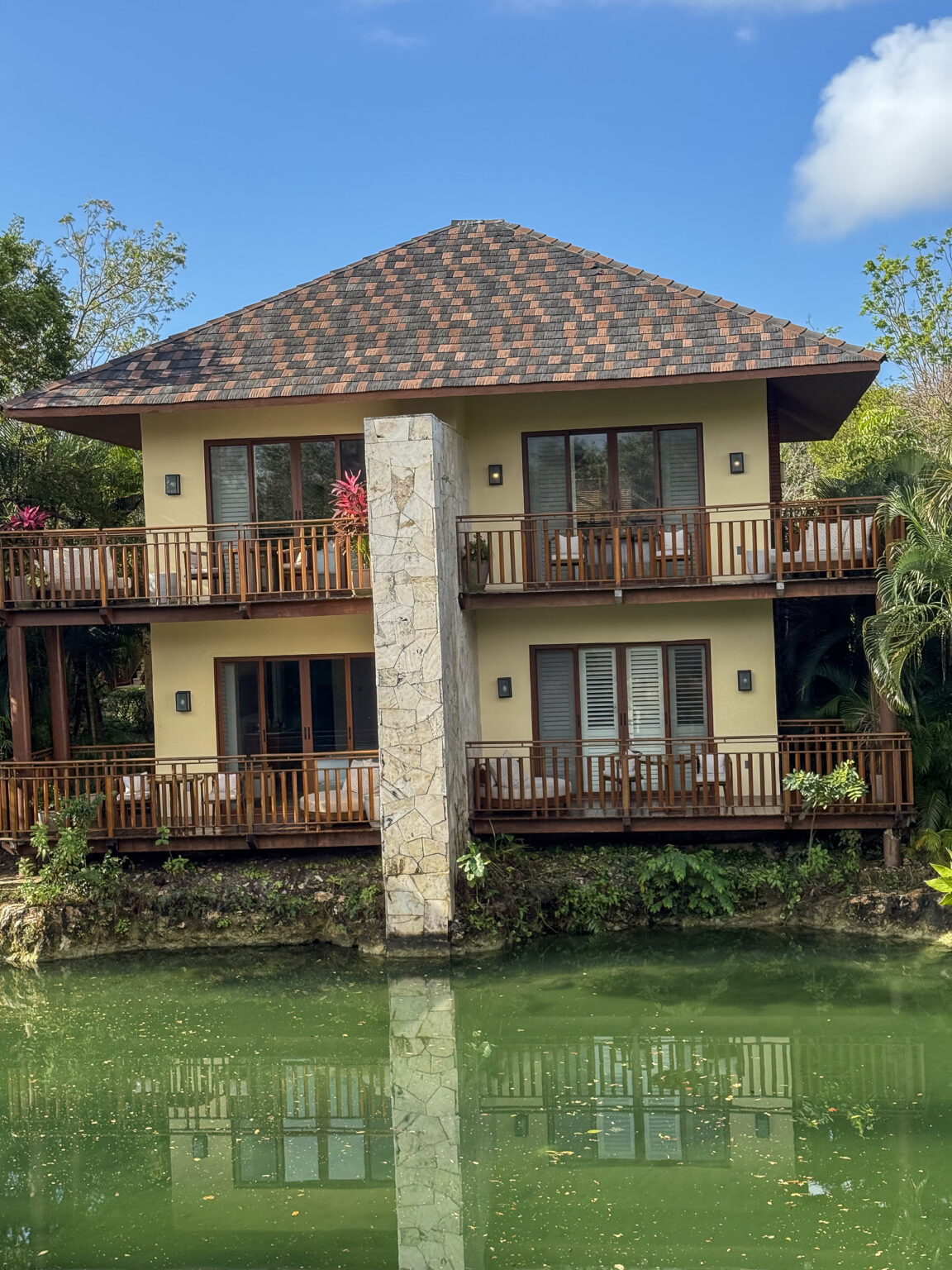
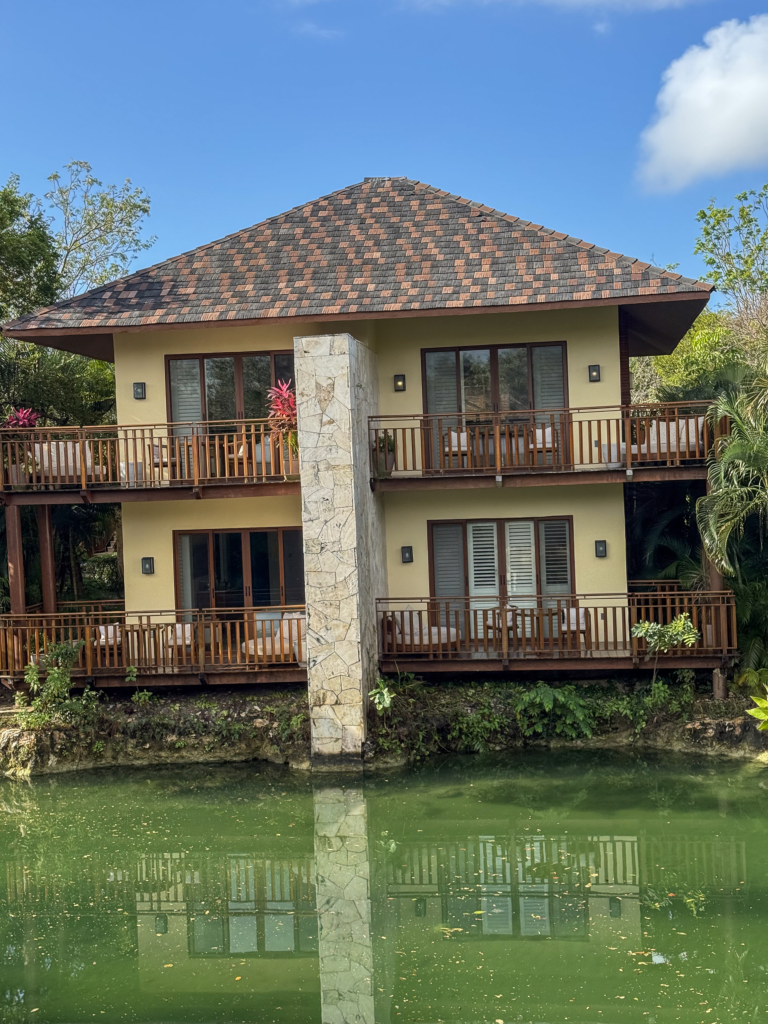
    A two-storey casita of pale stucco and wooden balconies standing directly above the green lagoon

    MAYAKOBA, MEXICO · VERIFIED STAY · 9 MIN READ

    Fairmont Mayakoba: The One That Got Here First

    Twenty years on, the resort that opened Mayakoba is the biggest of the four, the least precious about it, and the only one that will sell you the whole stay all-inclusive.

    By J.C. Mercer

    Know before you go

    • Where Mayakoba, Riviera Maya, about 25 minutes north of Playa del Carmen and 45 from Cancún airport
    • The property 401 rooms and suites on roughly 45 acres, inside the gated Mayakoba community; opened 2006 as the first of the four resorts here
    • The choice two-storey casitas along the lagoon and the mangrove, or casitas and suites on the beach side
    • Rates all-inclusive nights for two, published by the hotel
    • Getting around paths, bicycles and golf carts; guests at any Mayakoba resort can dine at the others on their room key

    Every stay on this site is paid for in full and booked the way any other guest would book it.

    Mayakoba is four resorts sharing one address, a private community of clear-water canals cut through mangrove on the Riviera Maya. Fairmont got here first. It opened in 2006, before the canals had a reputation and before Rosewood, Banyan Tree and Andaz arrived to give the place its luxury shorthand, and in 2026 it is marking twenty years with a programme of art exhibitions called Past, Present and Paradise.

    That head start explains most of what the resort is now. It is the largest of the four, with a listed 401 rooms and suites spread across roughly 45 acres of the wider community, and it is the one that behaves least like a boutique hotel. There are two kids’ clubs, a main pool you could lose a family in, and an optional all-inclusive package — three things nobody would write about Rosewood next door.

    Whether that reads as a warning or a relief is the whole question, and it depends almost entirely on who is travelling with you.

    I slept here

    Fairmont Mayakoba

    • Nights 4
    • Stayed March 2026
    • Room booked Deluxe Casita, lagoon side
    • How it was booked Amex Fine Hotels + Resorts, public rate
    • Rate band $$$$Check current rates

    Twenty years of planting

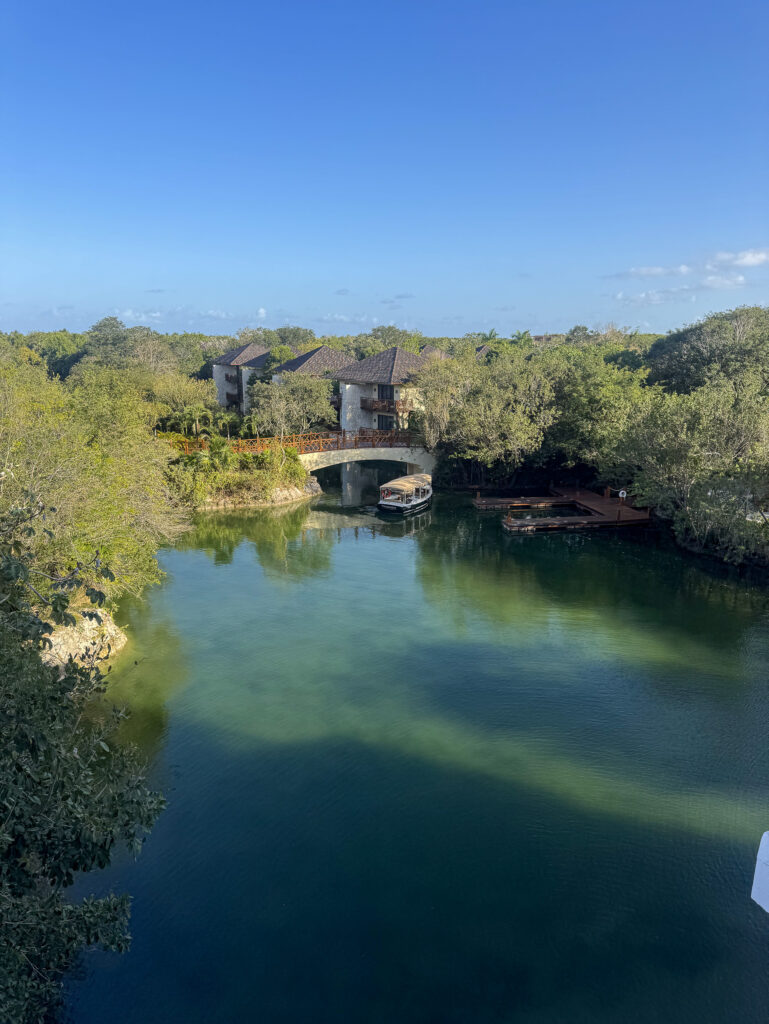
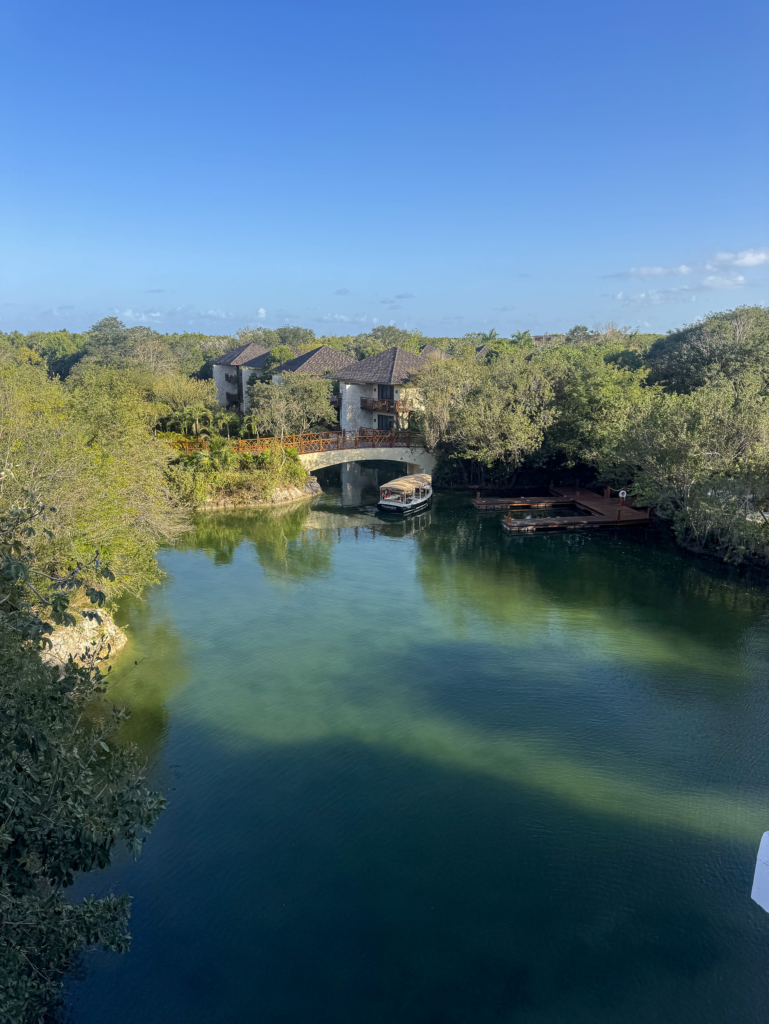
    A wide green canal curving past a two-storey resort building and a low stone bridge under a clear sky
    The canal system is the spine of the whole community. Buildings sit on it rather than beside it, and boats pass under low stone bridges between resorts.

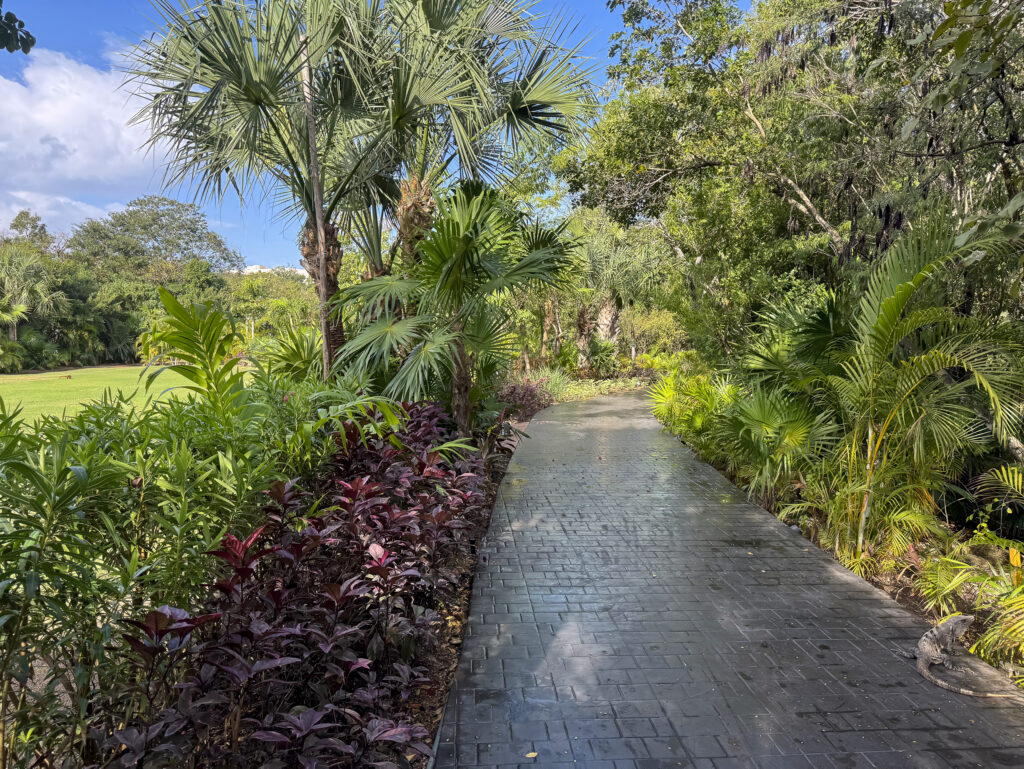
    The single most underrated advantage of arriving first is that your trees are older than everyone else’s. Fairmont’s own material describes Mayakoba as a private community of some 594 acres of jungle; the Fairmont’s slice of it has had two decades to close over. In my photographs the fan palms lean across the paths rather than standing politely beside them, the planting beds run to dark red croton and heliconia thick enough to hide the edging, and the canal banks are properly overgrown. It does not look landscaped. It looks kept.

    The other thing the head start bought is scale. Rosewood and Banyan Tree are villa properties. Fairmont is a resort, in the older and more literal sense: buildings, corridors, a lobby with a florist’s arrangement the length of a console table, a golf course running through the back of it. El Camaleón, the Greg Norman course that hosts the PGA Tour’s World Wide Technology Championship, sits directly against the property, and one of my photographs of a garden path has the fairway sitting open and green just off the left shoulder.

    A brick-paved path curving between fan palms and dark red planting with the golf course beyond
    Paths like this one are the property’s circulation. Flat, shaded, and long enough that the bicycles are not a novelty.

    The casitas

    The building block here is the casita: two-storey blocks of a handful of rooms each, dropped into the mangrove along the lagoon or set back from the beach. Fairmont’s own room list runs from Beach Area and Beachfront Casitas at ground level, through the taller Fairmont Rooms and View Rooms, up to Signature Casita Suites with butler service, two named Presidential suites — El Camaleón and La Tortuga — and a set of multi-bedroom Residences with private pools and grills.

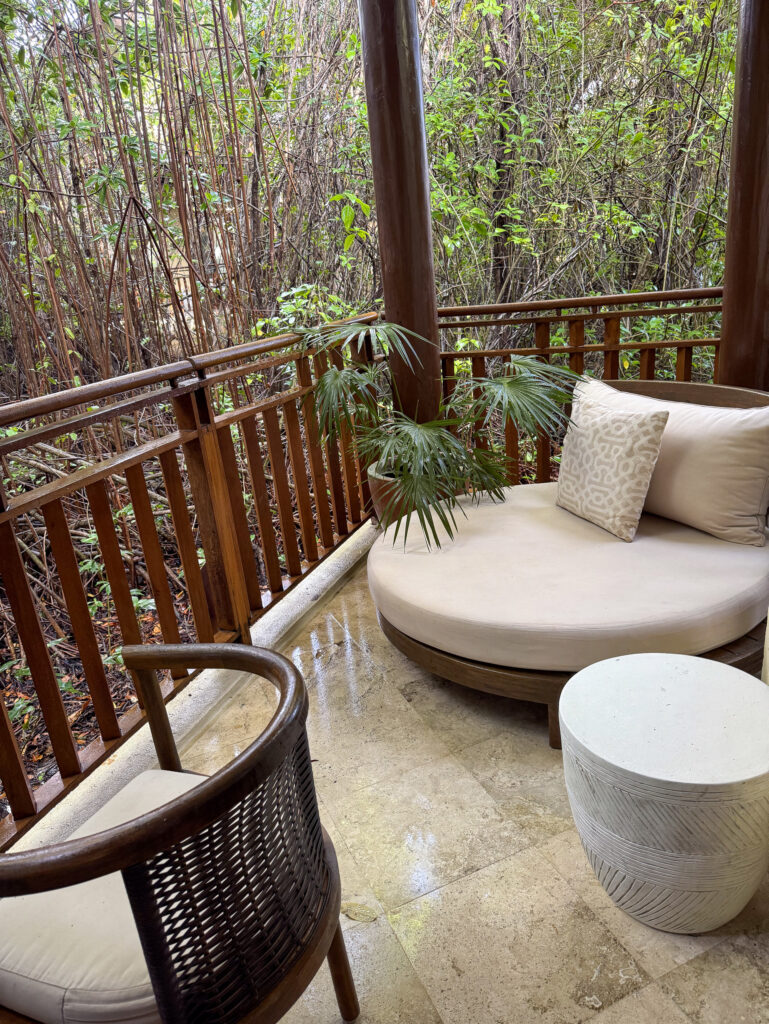
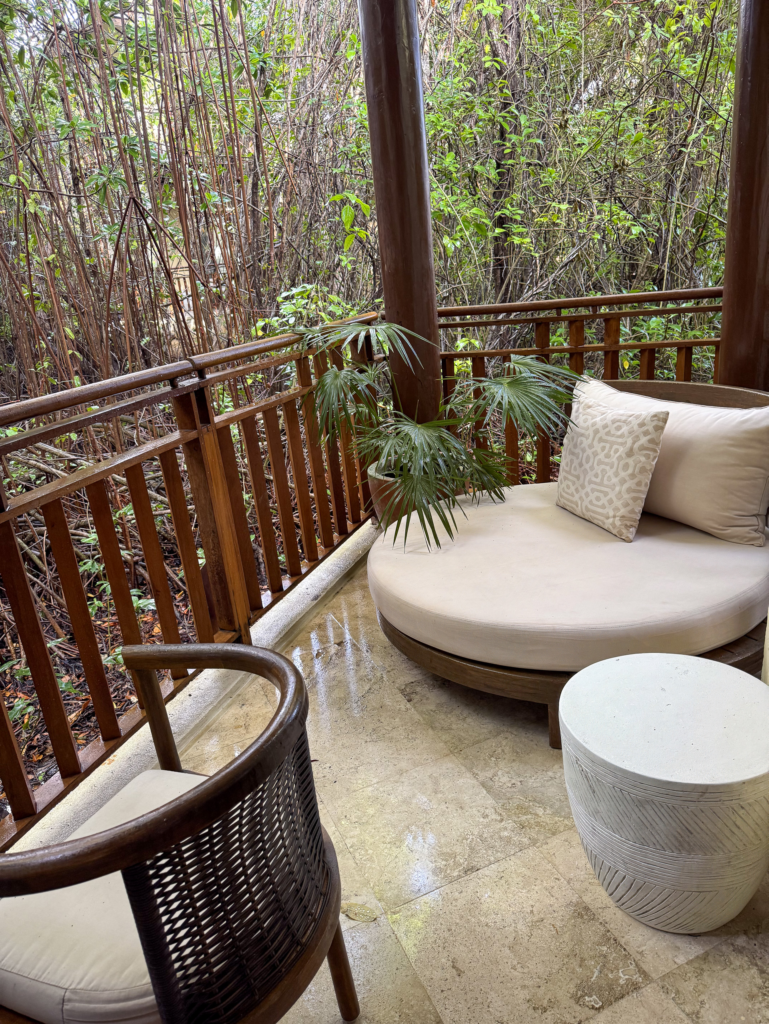
    A round cushioned daybed and wicker chair on a casita terrace looking straight into the mangrove
    A lagoon-side terrace. The railing is about two metres from the mangrove, which is the argument for this side of the property in one frame.

    What the photographs show, consistently, is that the terraces are the room. Every casita balcony I shot has furniture that assumes you will sit on it for a while: a round cushioned daybed on one, a table and a pair of wicker chairs on another, and in both cases a hardwood railing with nothing beyond it but mangrove. There is no view in the postcard sense. There is a wall of trees a few feet away, and birds in it.

    A bathroom with a sunken tub beside a garden window, stone-topped double vanity and rolled white towels
    The bathrooms are the strongest part of the room: a double vanity in stone, a deep tub, and a window that puts jungle at eye level from the bath.

    Inside, the finish is warm rather than fashionable — travertine floors, dark timber, a stone-topped double vanity, a deep tub set against a window that looks straight into planting. It is not the pale, stripped-back palette the newer Mayakoba properties use, and it will read to some people as dated. It also means nothing in the room is trying very hard, which after four days is not a complaint.

    The lagoon does most of the work

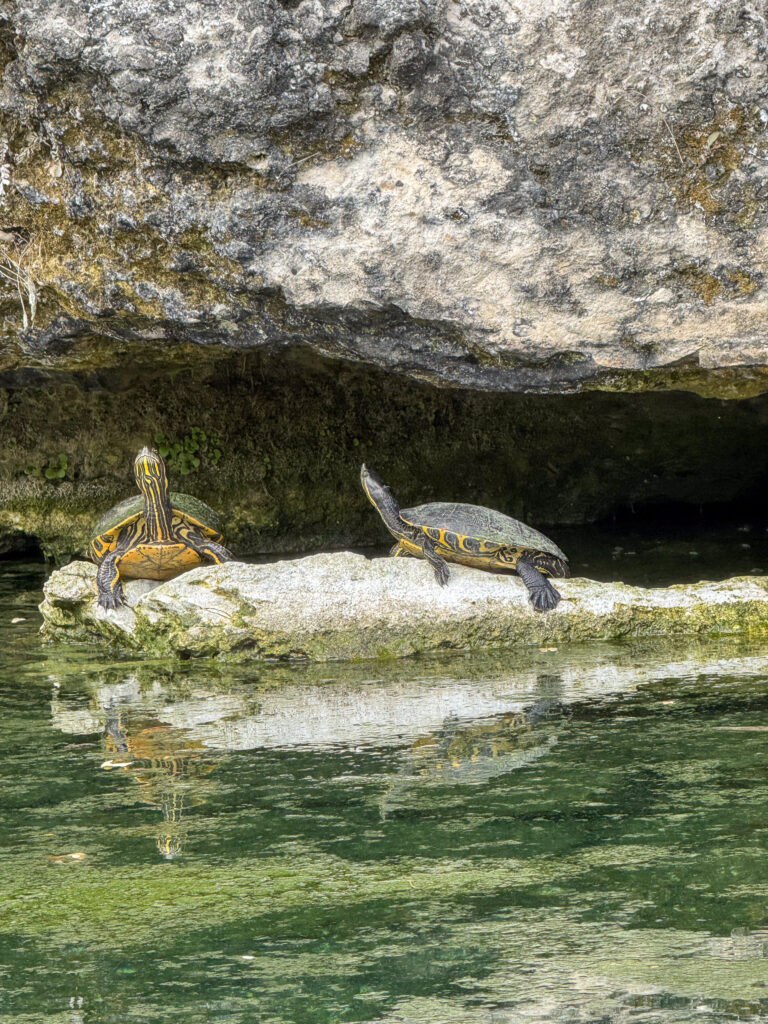
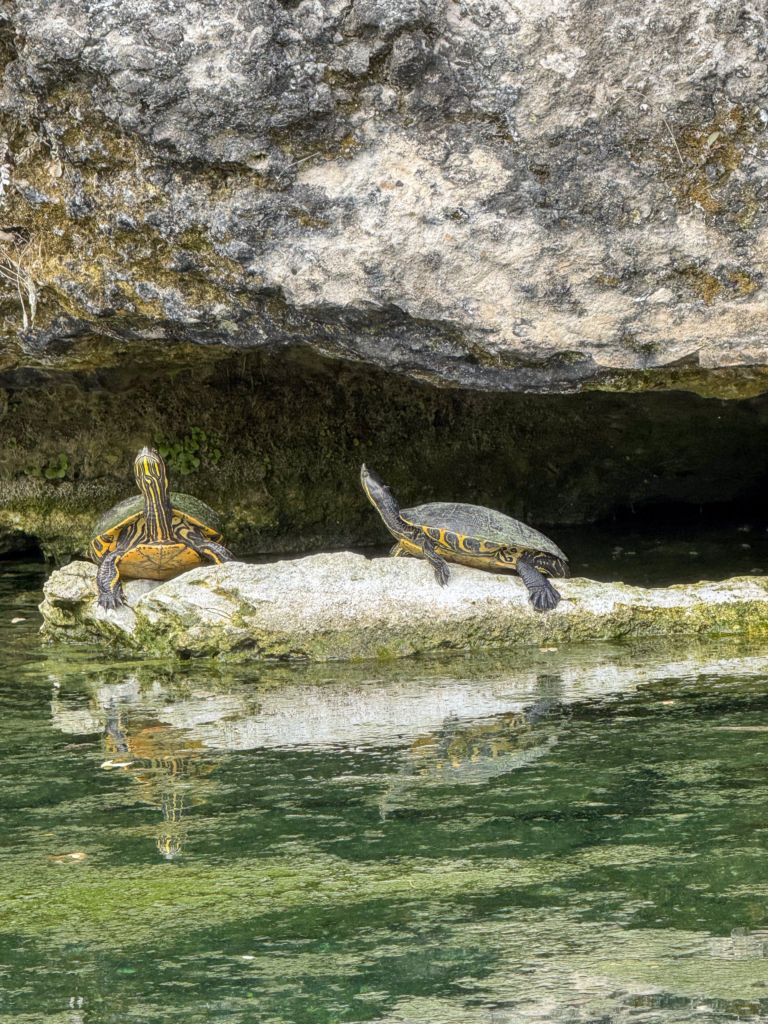
    Mayakoba’s canals are dug, not natural, but they connect to the limestone that riddles this coast, and what they attract is not decorative. My own frames from the water’s edge include two turtles hauled out on a rock ledge under an overhang, a full-grown iguana holding a footpath in the sun, and a bank of limestone undercut by green water with jungle growing straight out of the top of it.

    Two turtles hauled out on a limestone ledge beneath an overhanging rock at the water's edge
    Turtles on a ledge, a few metres from a guest path. The canals are stocked with nothing; this is what turns up.

    The resort runs eco boat tours through the mangrove, and there are cenotes inside the community. If you have read my piece on Banyan Tree, the wildlife argument is the same argument, because it is the same water. The difference is that Fairmont’s lagoon frontage is longer and more of it is public: docks, stair landings, decks that end over the water, all of them walkable rather than attached to somebody’s villa.

    A large grey iguana sunning on a stamped-concrete path beside palm planting
    You will walk around these rather than the other way about.

    Pools, and the beach club that reset the property

    The main pool stepping down in terraces past umbrellas and lawn under a bright sky
    The main pool steps down in linked sections across limestone terraces and lawn. Loungers are plentiful and the shade is real.

    The main pool is a linked series of sections stepping down across limestone terraces and lawn, with a stone swim-up bar under a shingled pyramid roof at one end and enough loungers and canvas umbrellas that the towel-on-the-chair economy never gets going. It is a family pool, unambiguously, and it is very good at being one.

    The bigger change is Maykana, the beach club Fairmont opened in September 2022 at the end of a multi-million-dollar renovation. It brought five food and drink outlets to the sand at once — Brisas, Fuego, Aqua, the signature Gaia, and Cielo, an adults-only rooftop bar over the Caribbean — along with a beachfront pool, private cabanas and sunken fire pits. Before Maykana, the beach was the weakest part of a resort whose best material was inland. It is now a reason to book.

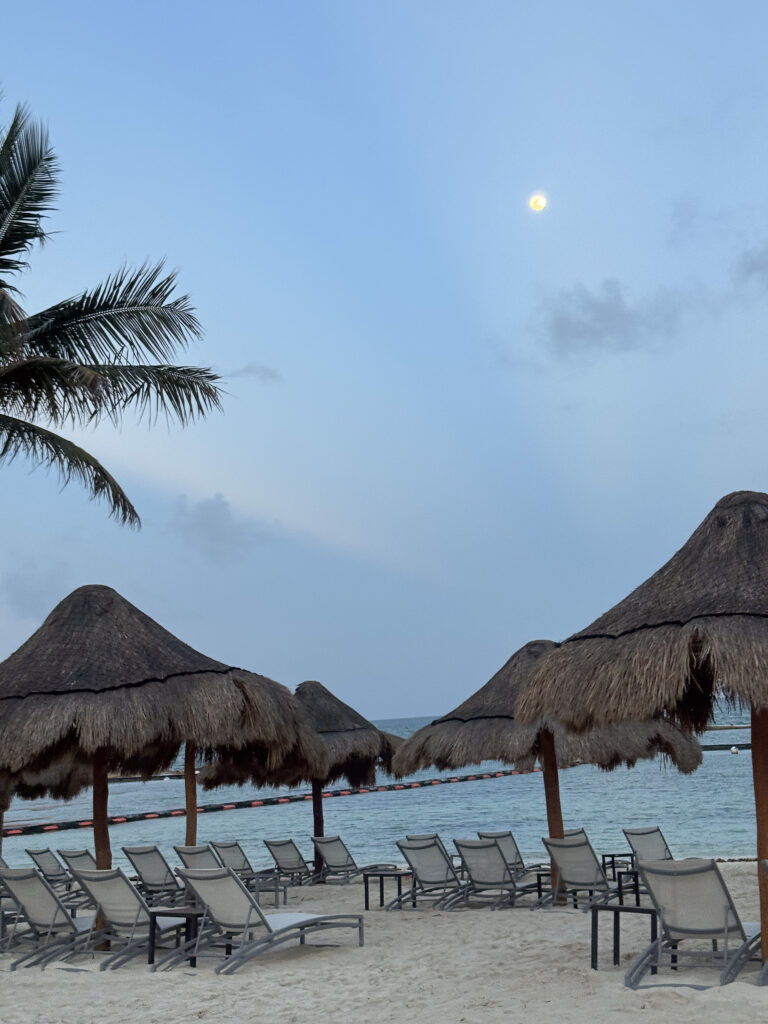
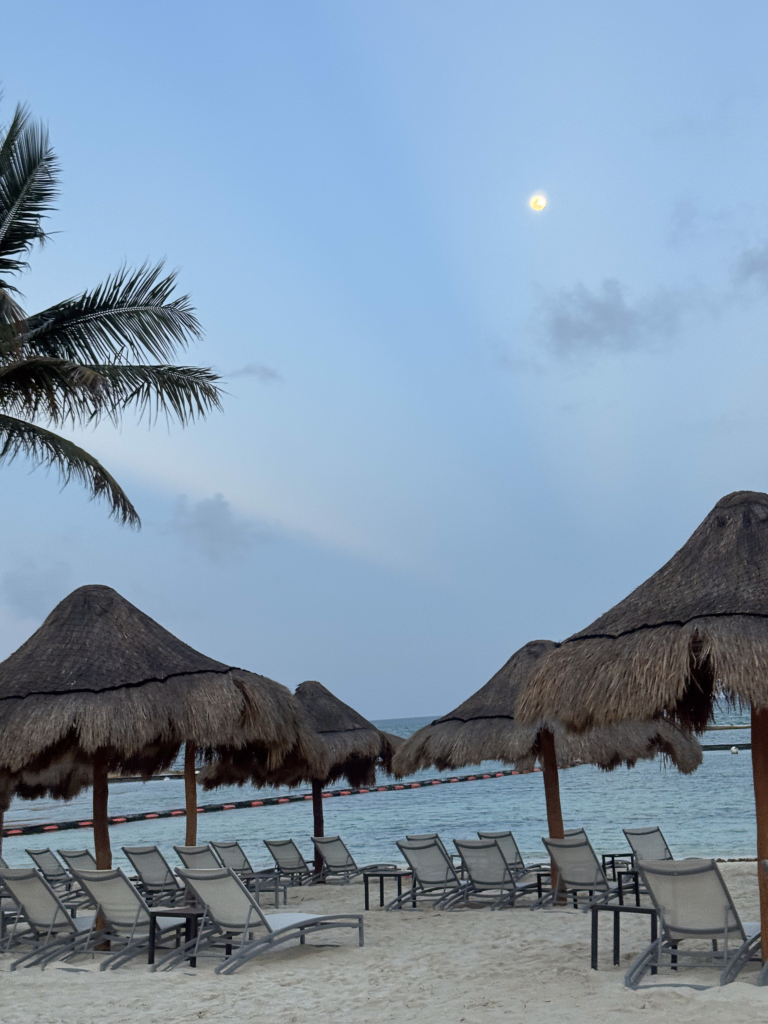
    Palapas and rows of loungers on the beach at dusk with the moon over the Caribbean
    The beach at dusk. Thatch palapas, sling loungers, and a swimming line marked out beyond them.

    The beach itself is wide, white, and thoroughly furnished: rows of thatch palapas with sling loungers under them, a marked swimming area, and enough space between the rows that it does not feel like a lido. On the day I photographed it, the water was clear to the swim line.

    Behind all of it sits the Fairmont Spa, a freestanding building the hotel puts at about 37,000 square feet, with roughly twenty treatment rooms, hydrotherapy pools and a Technogym-fitted gym.

    Eating here

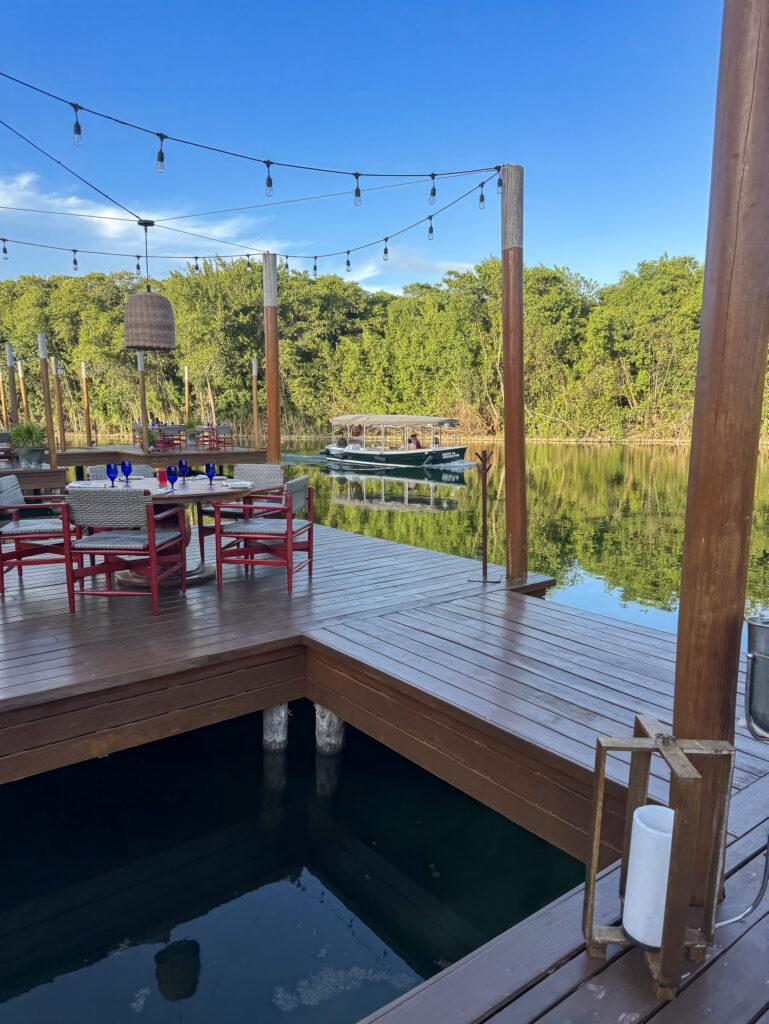
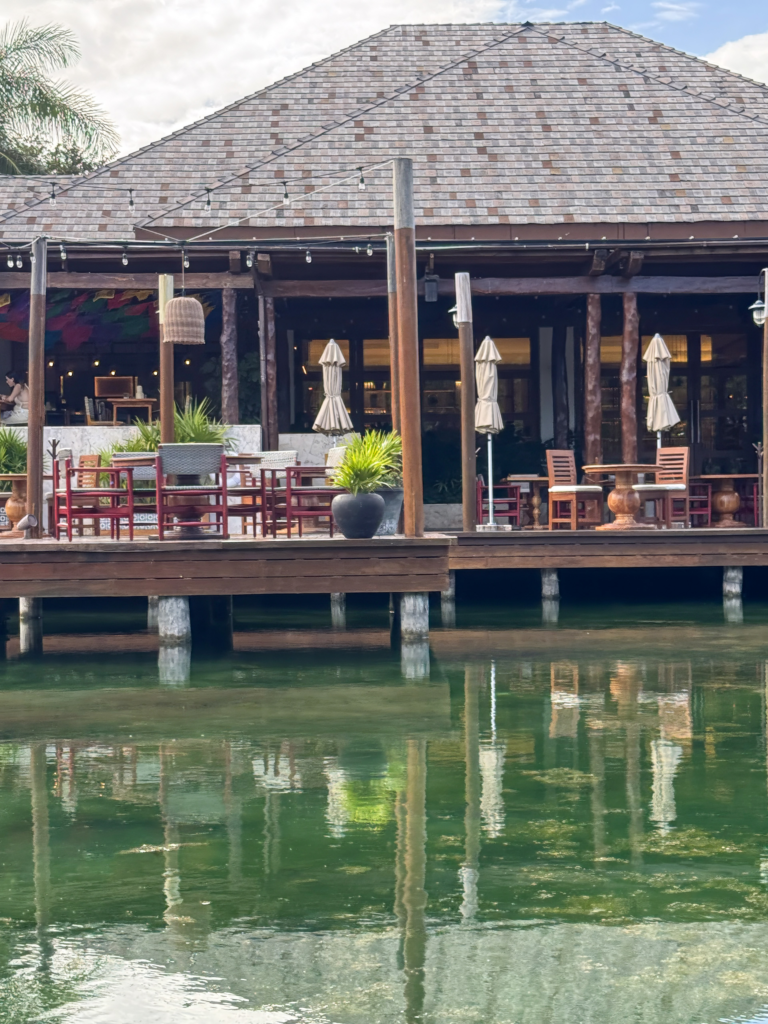
    A wooden restaurant deck over the canal set with red chairs and festoon lights, a boat passing behind
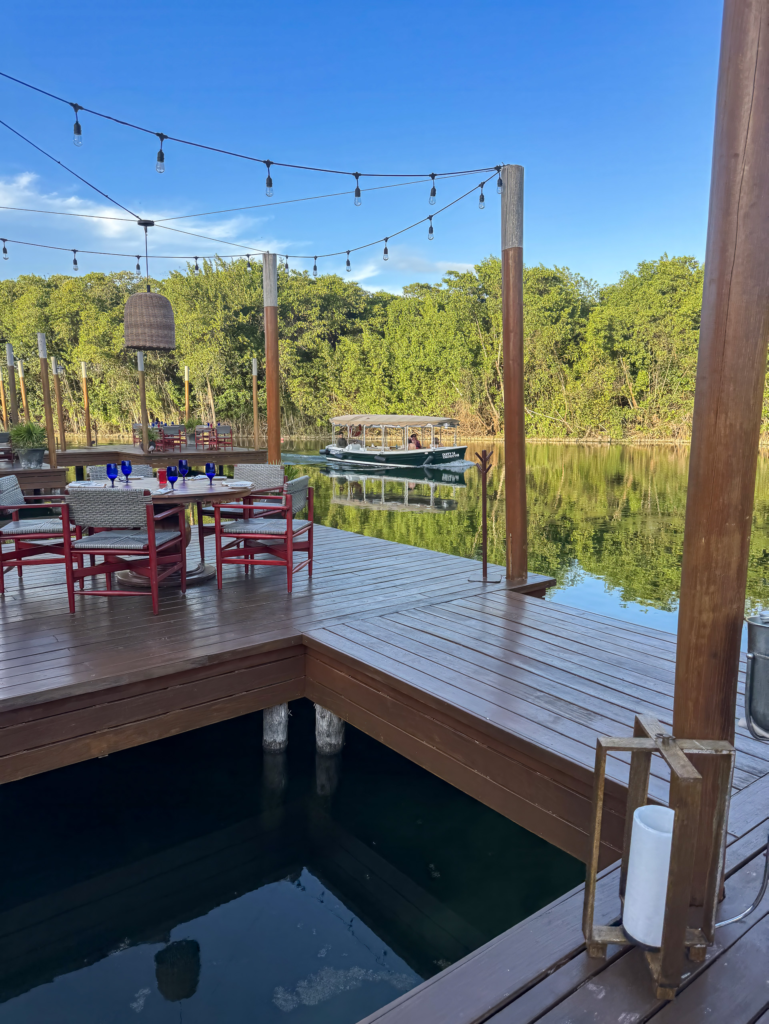
    The over-water deck at the lagoon restaurant, laid up before service, with a boat going past on the canal. [UNVERIFIED: I believe this is La Laguna at La Isla — confirm before publishing.]

    The list is long for a single property. La Laguna does Mexican over the water at La Isla; Tauro is the steakhouse; Bassano covers Italian; Café Maya is the thatch-roofed beach hut; Hix is the lobby bar and lounge; La Cantina and Las Olas handle drinks; and Maykana adds Brisas, Fuego, Aqua and Cielo on the sand.

    The best room of the lot, on the evidence of my own photographs, is the lagoon deck: a shingle-roofed pavilion on pilings with red-painted chairs, woven pendant lamps and festoon lights strung over a hardwood terrace that ends in green water. It is the only dining room on the property that could not be anywhere else.

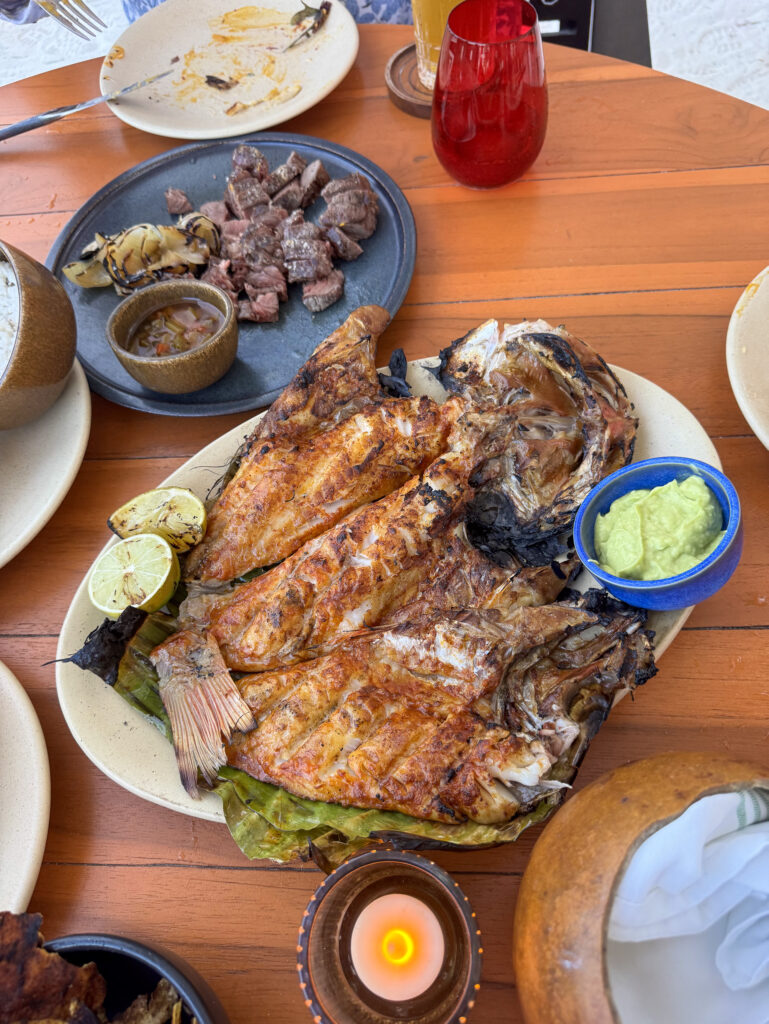
    A whole grilled fish with charred lime, guacamole and grilled steak on a wooden table
    Whole grilled fish, charred lime and guacamole. The kitchens lean local and simple, which suits the setting.

    The service style is old-school in the way Fairmont still does well: a guacamole trolley wheeled to the table and made in front of you, with lime, tomato, cheese, coriander and a dish of chapulines beside it for anyone who wants them. Whole fish comes off the grill and onto the table more or less as it left it.

    Then there is the all-inclusive question. Fairmont Mayakoba sells an optional all-inclusive package covering meals and drinks by the glass at participating outlets, and several booking channels now list the hotel under an “All Inclusive” name. The exclusions are the part to read: premium menu items, bottled wine, and breakfast at some restaurants sit outside it. A five-diamond resort with an all-inclusive tick-box is a genuinely unusual animal, and it is the clearest signal of how this property differs from its neighbours.

    Lagoon side or beach side

    Lagoon and mangroveBeach side
    What you seeMangrove at the railing, canal belowGarden, sand, open sky
    Walk to the seaSeveral minutes, or a buggyImmediate; some casitas have their own stair
    WildlifeConstant — birds, iguanas, turtlesOccasional
    InsectsRepellent, in warm monthsSea breeze helps
    Sargassum exposureYou choose when to lookYou see it from the room
    NoiseQuiet; away from the poolsCloser to Maykana and the main pool
    Best forCouples, longer stays, second visitsFamilies, short stays, first visits

    The counter-argument

    Four hundred and one rooms is four hundred and one rooms. This is not a hideaway, and anyone arriving expecting the hush of Rosewood or the villa-per-guest privacy of Banyan Tree will spend the first day recalibrating. The lobby is a lobby. There are corridors. At peak season the main pool has children in it, which is the correct outcome for a resort with two kids’ clubs and entirely the wrong one if you booked for silence.

    The all-inclusive option cuts both ways. It makes the bill predictable at a destination where dining costs are the usual complaint, and it also changes the room around you: a package that includes unlimited drinks does not attract the same guest as an à la carte one. If that matters to you, book room-only and eat where you like, including at the neighbouring resorts.

    And the sargassum season applies here exactly as it does everywhere on this coast. Seaweed washes onto Caribbean-facing beaches along the Riviera Maya seasonally, heaviest from roughly late spring into early autumn. Mayakoba rakes and manages it; nobody can prevent it. A beach-side room in August is a room with a view of whatever the tide brought, and a lagoon casita is not.

    What it costs

    The Deluxe Casita is quoted all-inclusive for two, before a nightly room tax and a small per-guest environmental fee paid at the hotel.

    Banyan Tree, next door, sits a clear tier above on rate. Fairmont is not competing there and is not trying to. It is the volume luxury option inside a compound of low-volume ones, and the gap is most of the reason to consider it.

    Rates move hard by season here, with December to April carrying the premium and the summer months discounting against heat and seaweed.

    Know before you go

    Take a lagoon casita if you are two people and coming for the setting, and a beach-side room if you are travelling with children or coming for four nights or fewer. Pack repellent whichever side you land on, because the mangrove is the whole point and the mangrove has mosquitoes. Do the eco boat tour early in the day. Book Cielo for sunset if the adults-only rooftop is the kind of thing you want, and book it before you arrive. Walk the canal paths at least once at dusk, when the turtles and the iguanas are still out and the light is on the water. And if the all-inclusive package is on the table, price both versions before you commit — the sums are closer than you would expect, and only one of them lets you spend an evening eating at Rosewood.

    Twenty years in, the Fairmont’s advantage is not novelty. It is the trees.

    Don’t miss

    If you only do five things:

    • Dinner on the over-water deck at La Laguna
    • Sunset at Cielo, the rooftop bar at Maykana
    • The eco boat tour through the mangrove canals
    • A treatment and the hydrotherapy circuit at the spa
    • One evening eating at a neighbouring Mayakoba resort

    The Fairmont Mayakoba gallery

    Every photo on this site is my own, shot on the stay. Slide through →

    A two-storey casita of pale stucco and wooden balconies standing directly above the green lagoonA wide green canal curving past a two-storey resort building and a low stone bridgeA round cushioned daybed on a casita terrace looking into the mangroveA bathroom with a sunken tub beside a garden window and a stone double vanityThe main pool stepping down in terraces past umbrellas and lawnLoungers and canvas umbrellas along the main pool with the shingled pool bar behindA shingle-roofed restaurant on stilts over the lagoon with red chairsTwo turtles hauled out on a limestone ledge at the water's edgePalapas and rows of loungers on the beach at dusk with the moon over the CaribbeanA large grey iguana sunning on a path beside palm planting
  • The Long Run South: Fishing Kadavu’s Underwater Mountain

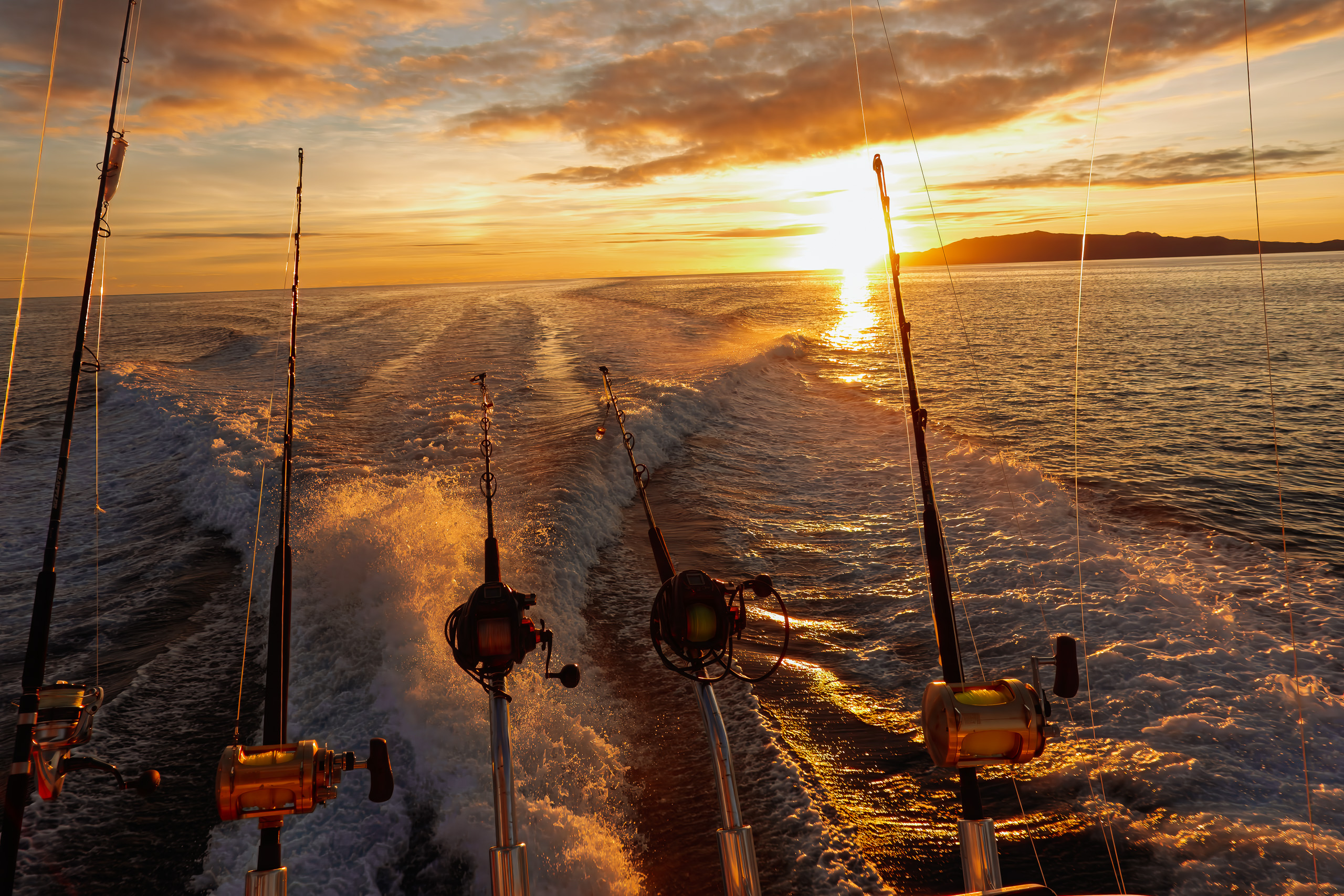
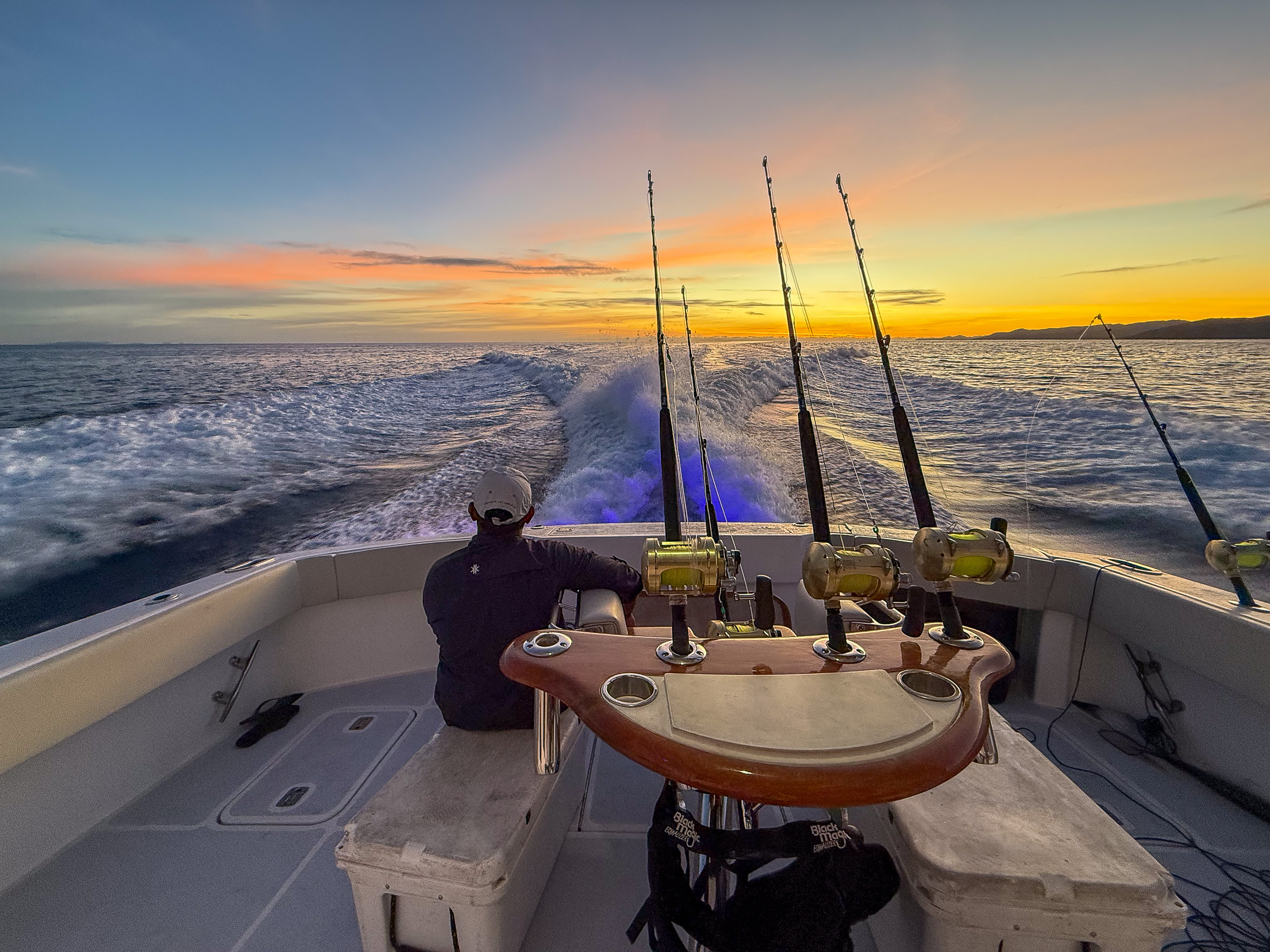
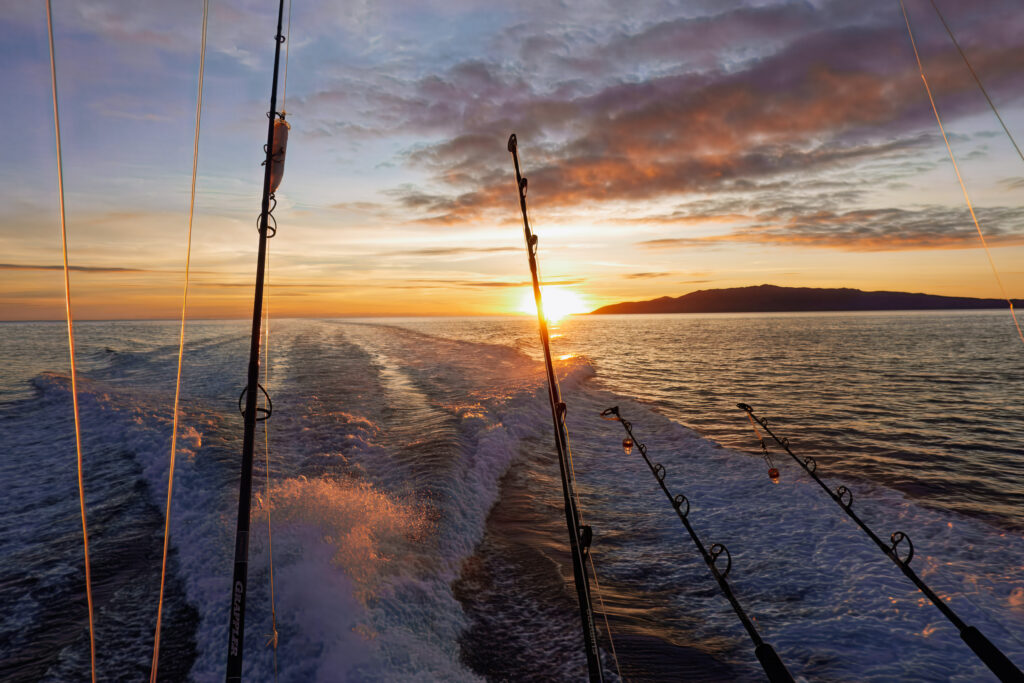
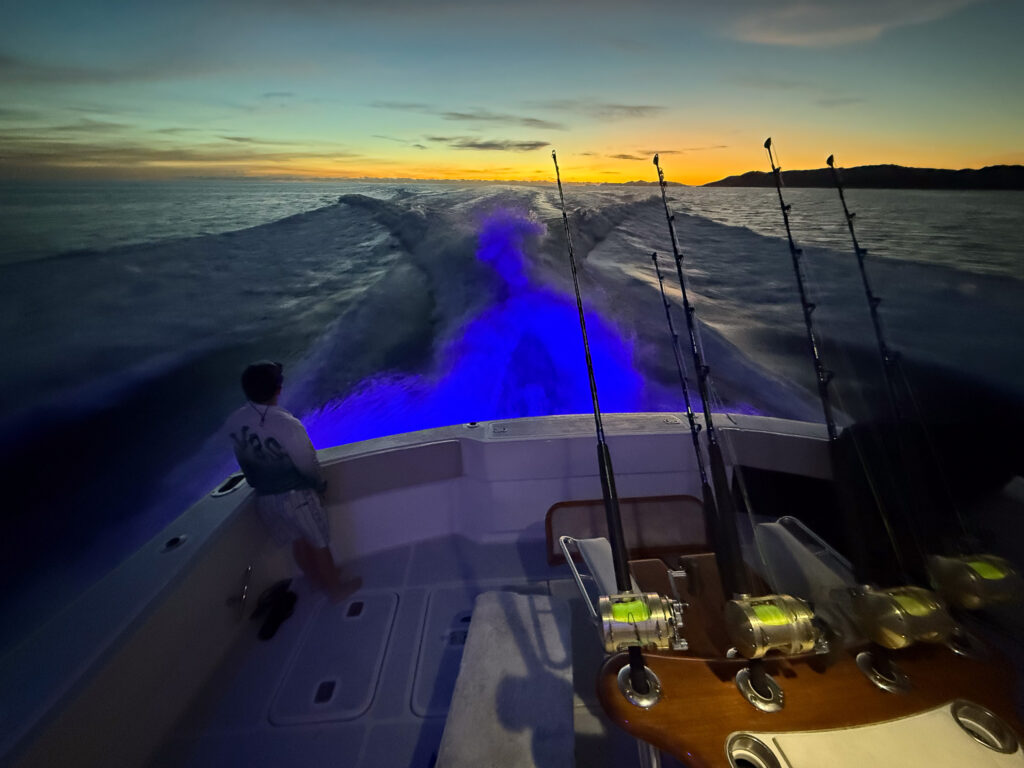
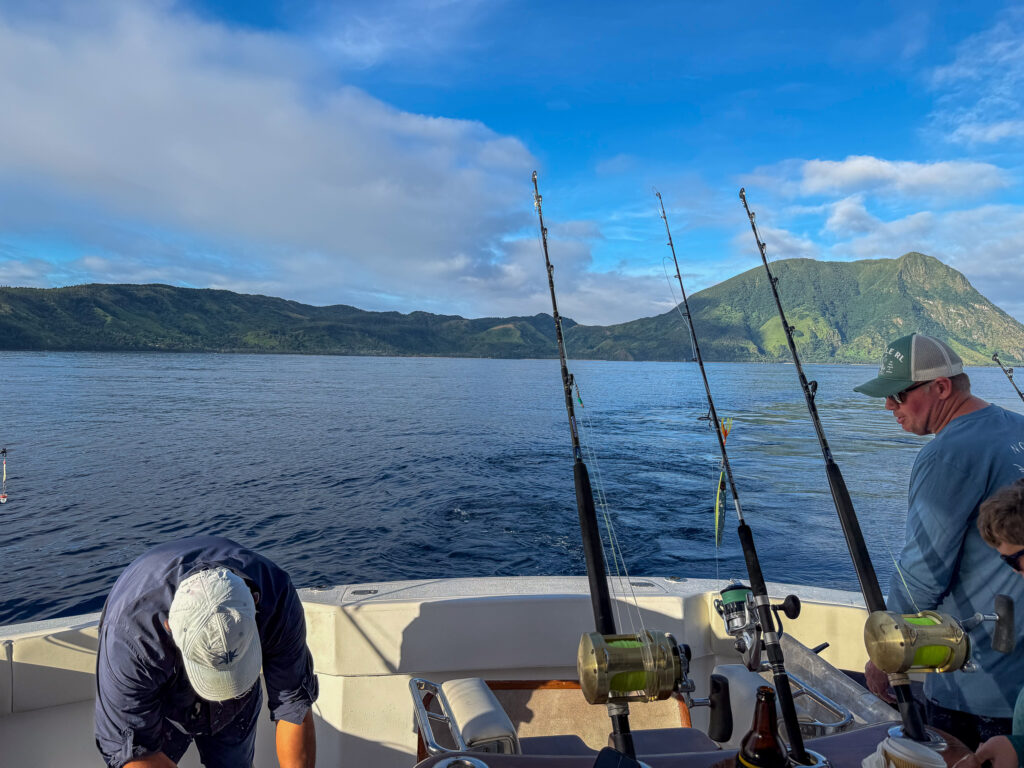
    Trolling rods silhouetted against sunrise on the run south from Kokomo, Fiji

    KOKOMO PRIVATE ISLAND, FIJI · FISHING · 9 MIN READ

    The Long Run South: Fishing Kadavu’s Underwater Mountain

    Past the end of the Astrolabe, a seamount rises out of 3,000 feet of water off the last island in Fiji. It is the reason to give up a whole day of a Kokomo stay.

    By J.C. Mercer

    Know before you go

    • Base Kokomo Private Island, northeast Kadavu
    • The run about 70km southwest to Nagigia, roughly the length of the island
    • The ground a 6,000-foot trench, a 1,000-foot wall off the rocks, a seamount seven miles south
    • Best months January to May for calm water and jigging, June to September for the wahoo run
    • Charters full-day private charters are quoted per boat, not per angler

    Every stay on this site is paid for in full and booked the way any other guest would book it.

    Most fishing days out of Kokomo do not go far, and they do not need to. The Great Astrolabe Reef ends a short run from the dock, and the drop-off there produces enough that plenty of guests never see anything else. Wahoo patrol the edge through winter, yellowfin stack on the outer seamounts through summer, and you are back for lunch at Kokocabana.

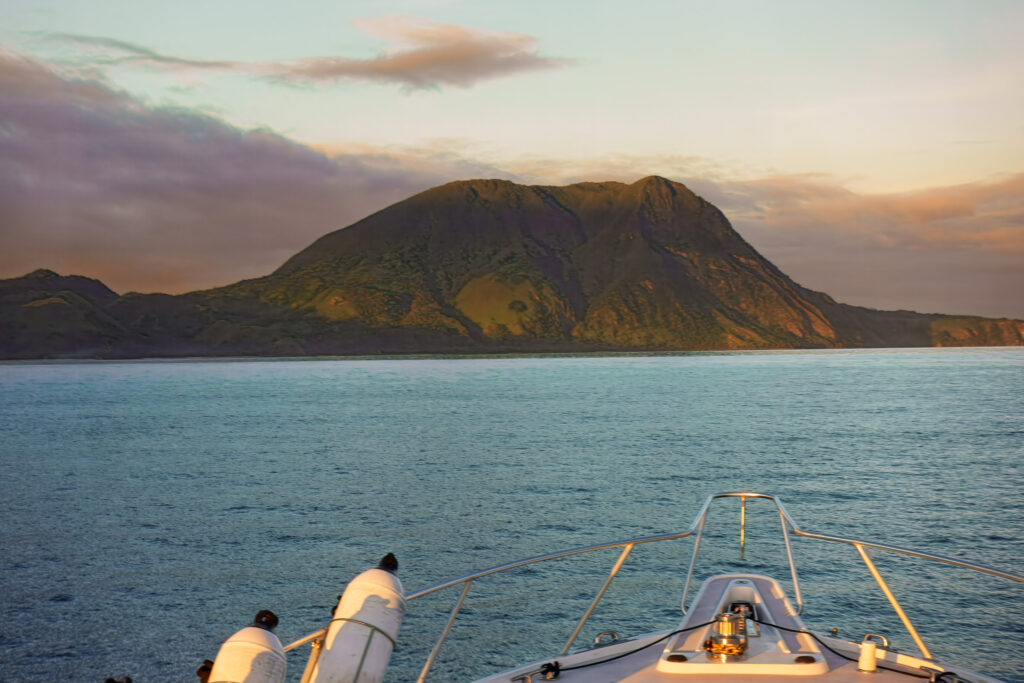
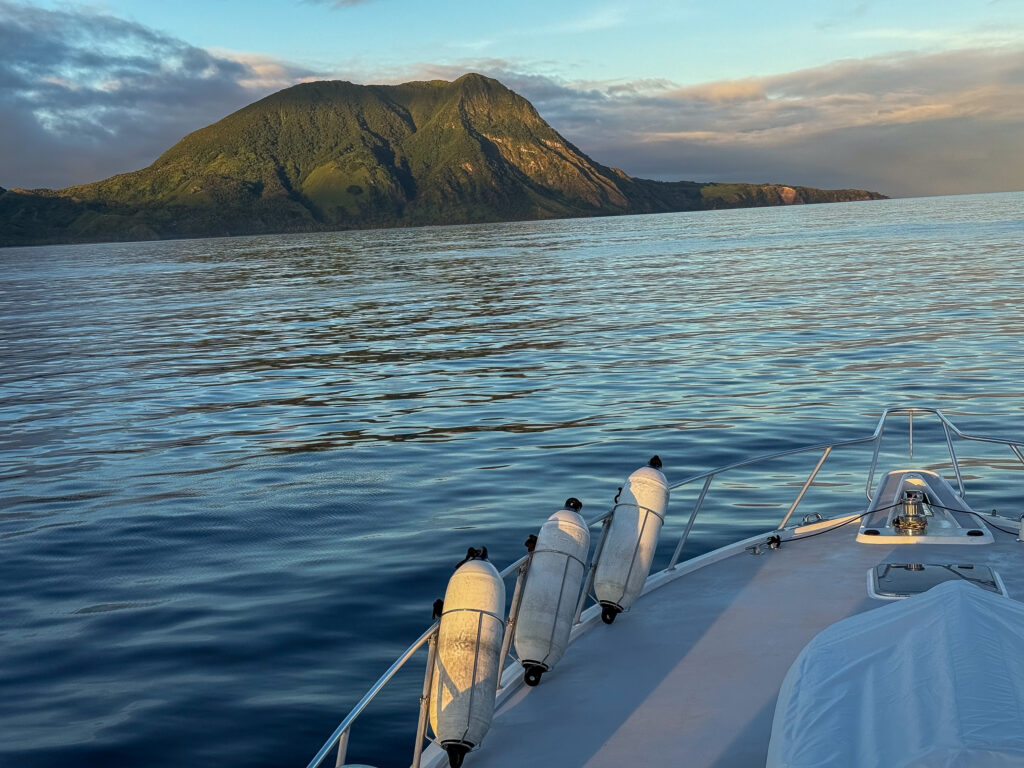
    Then there is the long day. Southwest, down the length of Kadavu, to where the island runs out and the seafloor does something worth the fuel.

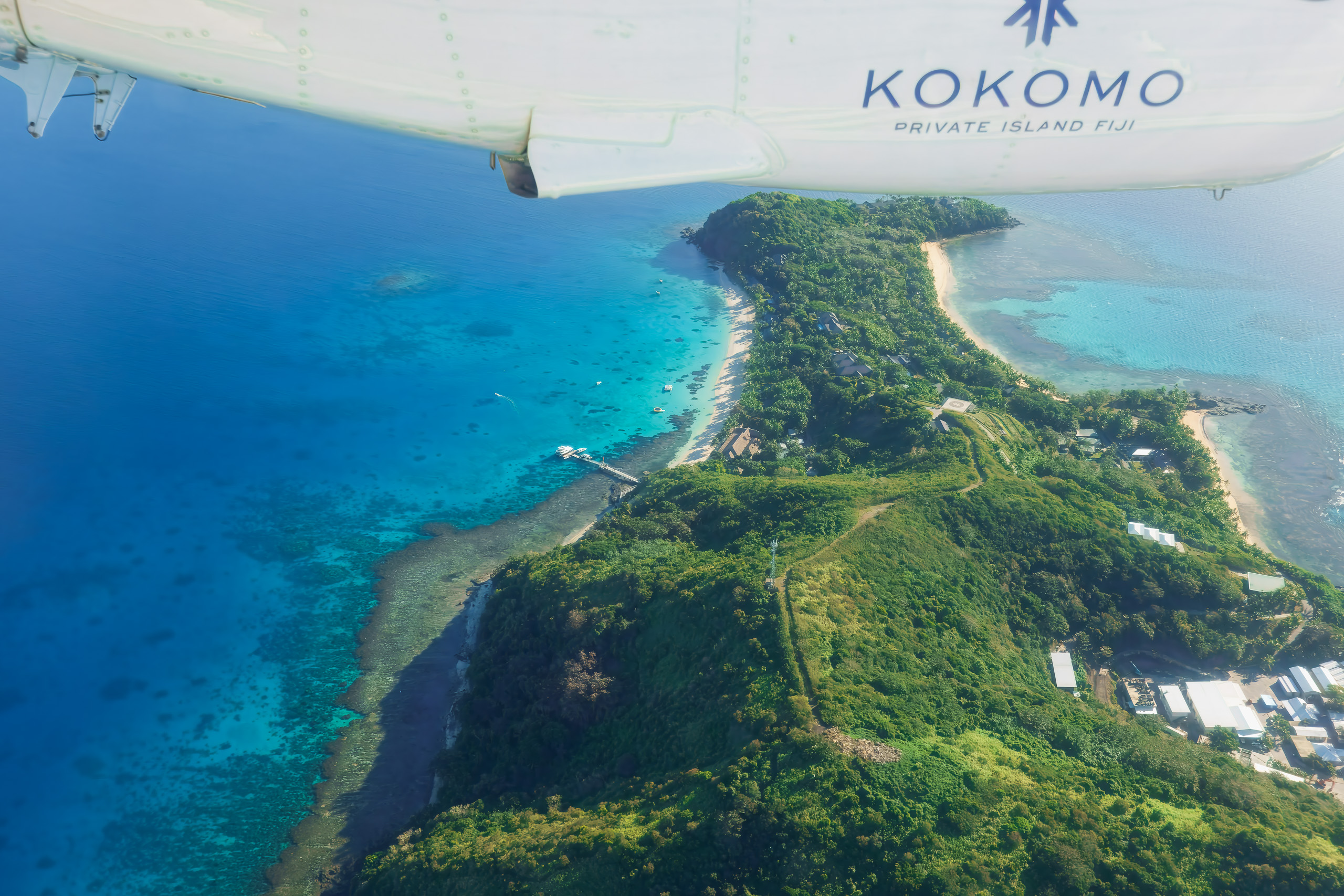
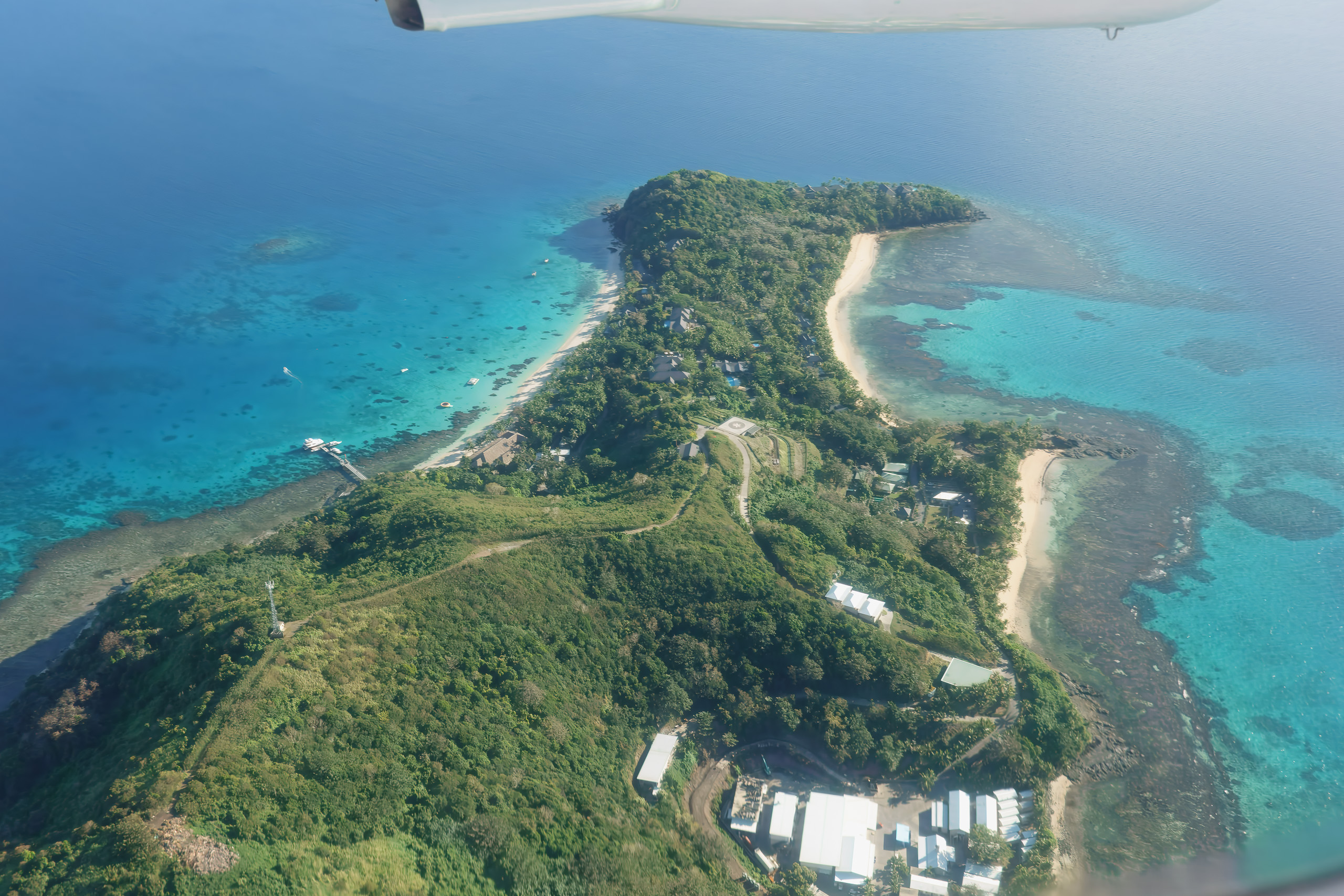
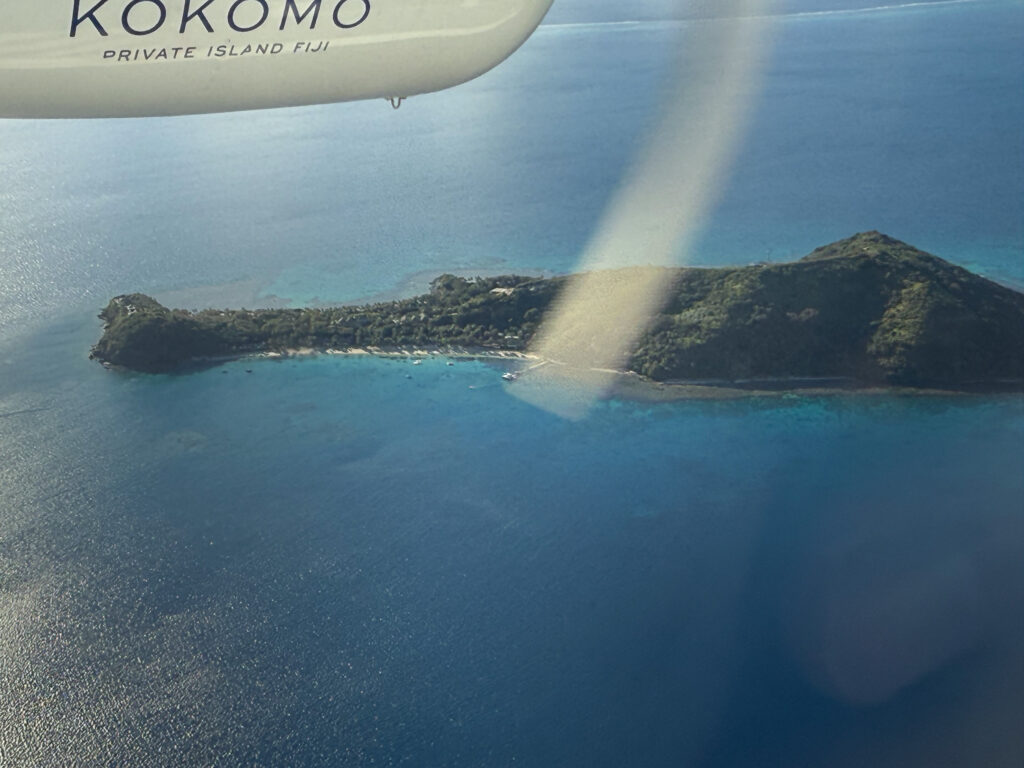
    Aerial view of Kadavu from a seaplane window, Fiji
    Kokomo sits at the northeast end of Kadavu. The fishing in this story happens at the other end of the island.

    I slept here

    Kokomo Private Island, Fiji

    • Nights 7
    • Stayed April–May 2026
    • Room booked One-Bedroom Beachfront Villa, sunrise side
    • The fishing day 28 April 2026
    • How it was booked Amex Fine Hotels + Resorts, public rate
    • Rate band $$$$Check current rates

    Why go that far

    At the southwestern tip of Kadavu sits Nagigia, 26 acres of privately held rock marked on some charts as Denham Island. Surfers know it for its reef breaks. What draws anglers is underneath.

    The island sits on the edge of a trench that drops to 6,000 feet. Parts of it hang directly over a 1,000-foot wall, close enough that you can fish genuine deep water standing on rock, which is a sentence that applies to almost nowhere else in Fiji. Seven miles further south, a sea mountain rises off the floor and stops 120 feet below the surface, its flanks falling away to 3,000.

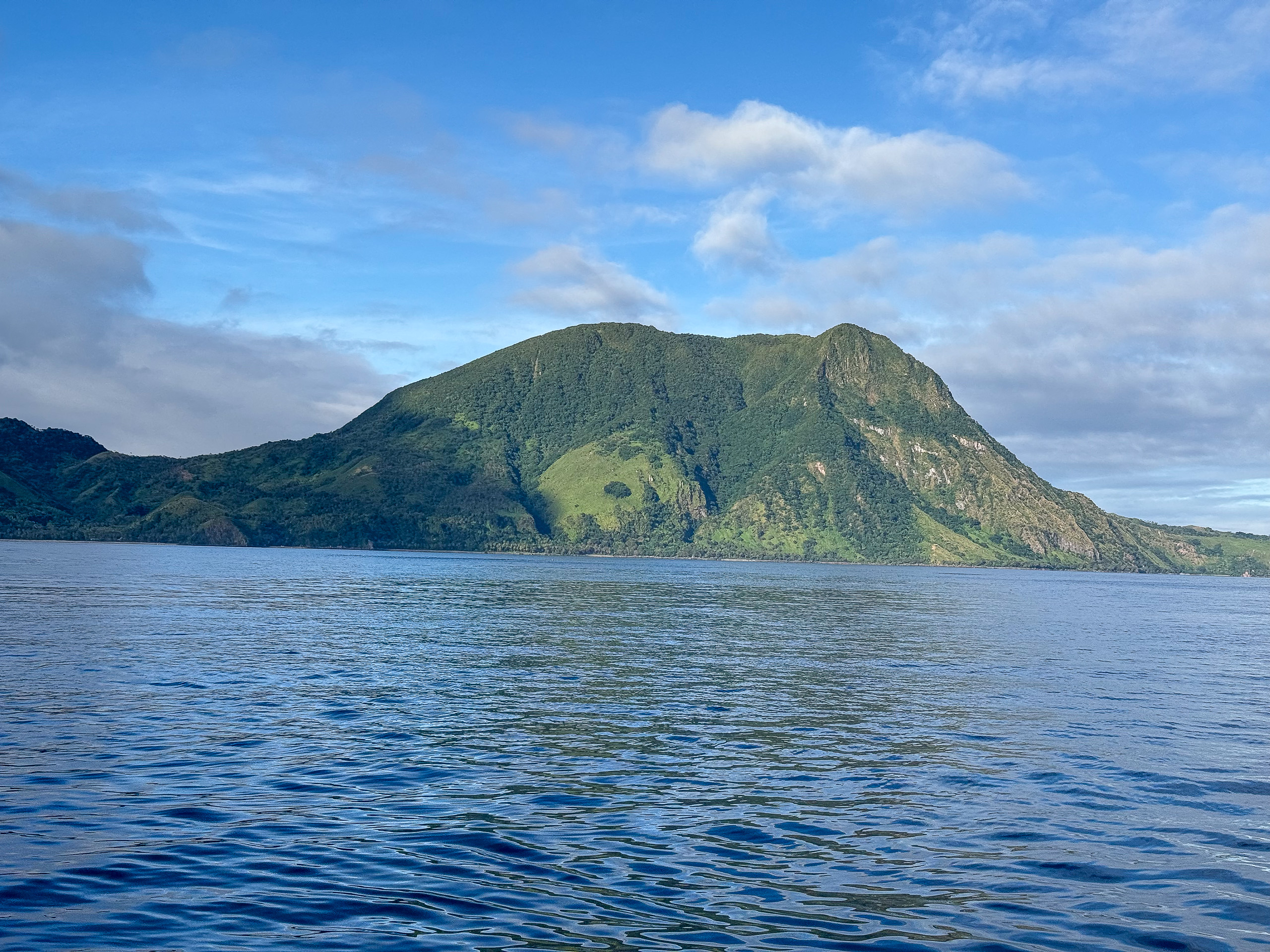
    A steep green island rising out of open ocean off Kadavu, Fiji
    The land runs out before the water does. Kadavu tapers to rock, and the seafloor drops away underneath it.

    That last number is the trip. Current moving across open ocean hits the mountain, gets forced vertically up its sides, and pins bait against the top. Predators learn the address. Fish that would otherwise be scattered across thousands of square miles stack into a spot a sounder can find and a boat can hold over.

    The records bear it out. Fiji’s all-tackle national record for dogtooth tuna came off the Kadavu seamount, and the province holds several IGFA wahoo world records taken along outer reef edges nearby. That is not marketing copy. It is what the terrain does.

    What is running, and when

    SeasonMonthsWaterWhat is on
    WarmerOct to Apr26 to 30°CLarge yellowfin on the seamounts, mahi-mahi working flying fish, blue and black marlin in the deep
    CoolerMay to Sep23 to 26°CWahoo packs and sailfish along the Astrolabe and Solo edges, mid-size yellowfin, walu and Spanish mackerel
    Year-roundAnyEitherDogtooth tuna and giant trevally, both territorial, both released

    Kadavu’s summer, January through May, brings the calmest water and the best conditions for casting poppers and dropping jigs down a seamount wall. This is also when the big yellowfin move through, with the largest fish around February and March.

    The winter trades from June to October make the run rougher but bring the wahoo, which is what this coast is actually famous for. They gather into packs along the reef edge and the fishing turns into something closer to a fight than a wait.

    Anglers working a hooked fish at the stern of a sportfishing boat
    Wahoo gather into packs along the reef edge, and the fishing turns into something closer to a fight than a wait.

    The island’s shape and the barrier reef always leave a workable lee side, so there is no dead month. There are only different tactics and different odds that 70km each way will be comfortable.

    How the day runs

    Leave in the dark. A run of this length eats daylight and the mountain fishes best early.

    Troll the whole way down, because the water between Kokomo and the southwest tip is not empty and there is no reason to run it dry. Expect the crew to work the Astrolabe edge on the way through and to stop for anything that shows on the surface.

    Trolling rods set in the holders as the sun comes up over the wake
    Leave in the dark, and the first hour of light happens somewhere off the Astrolabe.

    At the mountain, the sounder does the work: find the top, find the bait stacked against it, then jig the flanks or cast into whatever is breaking. Dogtooth pull straight down into structure and will take the rig with them if the drag is set politely. Set it rudely.

    The rocks at Nagigia are the other option, and the strangest fishing available in the country. You stand on land and cast into a thousand feet of water.

    Tackle and protocol

    Bring your own if the seamount is the point. Popper rods rated for a 50kg trevally and jigging gear that survives a dogtooth heading for the bottom are not things a small operation stocks in your preferred action. Resort tackle is adequate for trolling the reef edge and will feel thin on the mountain.

    Trolling rods, reels and the fighting chair set up on the back deck
    Bring your own if the seamount is the point. Resort tackle is fine for the reef edge and thin on the mountain.

    Catch and release is standard on trevally and dogtooth. Both are territorial, both are slow to repopulate, and Kadavu crews raise it before you do, which tells you something good about the crews.

    Dinner

    Back at Kokomo, the catch goes to the kitchen. The resort runs a dock-to-dish program, and walu, mahi-mahi, and yellowfin all survive the trip well. Radio ahead with what you are keeping.

    Chef Caroline at Walker d’Plank works without a set menu and builds dinner around whatever came off the boat that day regardless, so arriving with your own fish simply makes you part of the supply chain rather than a guest being accommodated.

    Sunset over the water from the beach at Kokomo Private Island, Fiji
    Back in time for the light. Whatever you kept goes straight to the kitchen.

    The counterargument

    This is a long way to go for a day that can produce nothing. Seamounts concentrate fish, they do not guarantee them, and when the current runs wrong the structure goes silent and you are four hours from your villa with nothing to show.

    Weather governs the whole thing. A run this long needs a settled forecast, and the trade wind months from June through August cancel more days than anyone advertises. Book it at the front of your stay so a blown-out morning is not the end of the idea.

    There is also an honest case against making the trip at all. The outer Astrolabe and Solo reefs are twenty minutes from Kokomo’s dock, hold wahoo, sailfish, walu, and mid-size yellowfin depending on the month, and give you the afternoon back. Unless the mountain is specifically what you came for, the short day is the better day.

    And fishing is not in the rate. Meals, non-alcoholic drinks, laundry, pressing, nanny service, kids and teens clubs, and non-motorized watersports are all included at Kokomo. Charters, diving, and excursions are not.

    What it costs

    Kokomo does not publish charter pricing, so ask when you book and budget against the national market. Full-day private offshore charters are quoted per boat rather than per angler; half days and inshore reef charters cost less and typically cover boat, crew, tackle, bait and ice.

    A resort-operated boat on a long offshore run sits at the top of the market or above, and fuel for 140km of round trip is the reason. Split across four anglers it lands in the same range as a couple of spa treatments. Tipping the crew is customary for a full day.

    Know before you go

    Confirm the long run is even on the table before you arrive, since it depends on the boat, the crew, and a forecast nobody can promise you in advance. Tell them what you are targeting before you leave the dock, because rigging for marlin and rigging for a seamount are different days and the boat gets set up differently for each. Take seasickness tablets whether or not you think you need them, since the water past the reef line moves and the run is long enough to matter. Bring polarized lenses and more sunscreen than seems reasonable for a day spent mostly sitting down. And put nothing on the calendar for the afternoon you get back.

    Reef fishing gives you variety. A mountain gives you size.

    Don’t miss

    If you only do five things:

    • Leave in the dark and troll the whole way down
    • One drift over the seamount top
    • Deep water off the rocks at Nagigia
    • Poppers at the Astrolabe drop-off
    • Your own fish, cooked that night

    The whole fishing day

    Every frame my own, shot on the boat. Slide through →
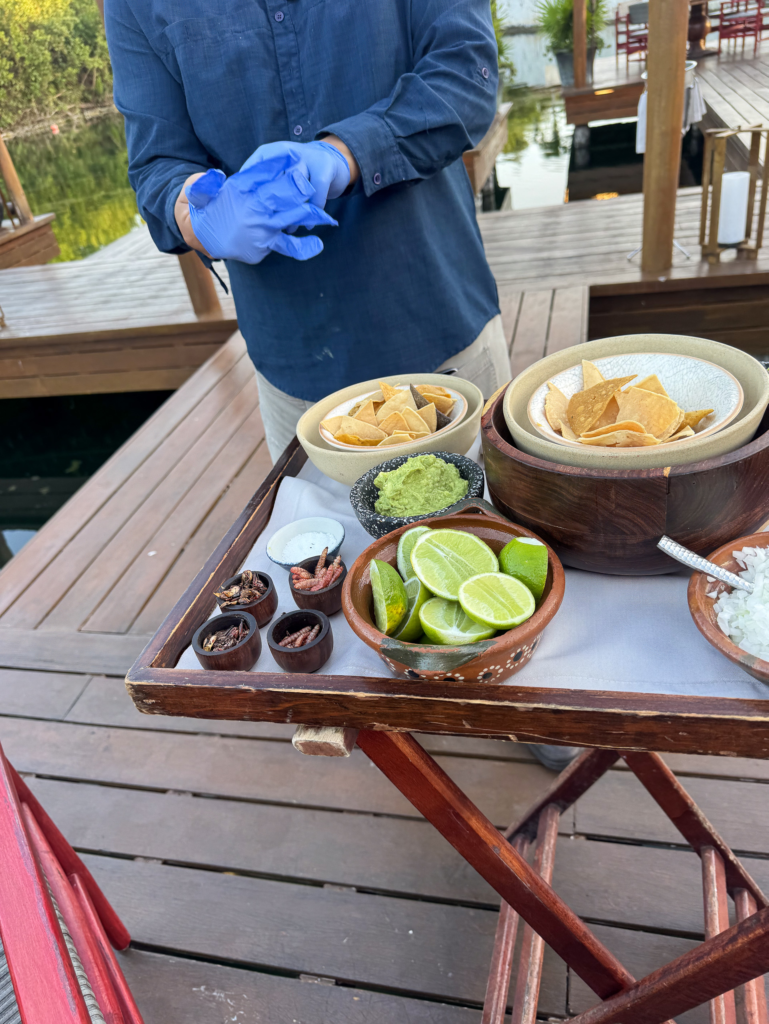
    Aerial view of the reef off Kadavu, FijiTrolling rods against the sunrise on the run southThe island at first light from the deckA rocky islet close alongside the boat off southwest KadavuRods out over the wake at dawnA fish on the deck beside the gearRods out with the island on the horizonTwo anglers hooked up in open water
  • Banyan Tree Mayakoba: Beachfront or Jungle?

    Canals running between the villa buildings at Banyan Tree Mayakoba

    MAYAKOBA, MEXICO · ROOM GUIDE · 10 MIN READ

    Banyan Tree Mayakoba: Beachfront or Jungle?

    Every villa here has its own pool. The only real decision is whether you want to wake up to the Caribbean or to the mangrove, and the pricing does not point the way you would expect.

    By J.C. Mercer

    Know before you go

    • Where Mayakoba, 25 minutes north of Playa del Carmen, about 45 from Cancún
    • The property all-villa, every villa with a private pool, inside a 595-acre four-resort complex
    • The choice beachfront suites on the sand, or lagoon and jungle villas in the mangrove
    • Rates published by the resort; rooftop villas sit above beachfront suites
    • Getting around bicycles come with every villa, golf carts on call

    Every stay on this site is paid for in full and booked the way any other guest would book it.

    Mayakoba means village over the water, and the name does most of the explaining. Four resorts share a 595-acre stretch of Riviera Maya coast threaded with man-made canals cut through mangrove, and the whole complex is built around water rather than beside it. Fairmont opened here first, in 2006, but Banyan Tree is the one that leaned hardest into the setting.

    Every accommodation is a villa. Every villa has a private pool. That flattens most of the usual decisions and leaves one that actually matters: sand or jungle.

    I slept here

    Banyan Tree Mayakoba

    • Nights 4
    • Stayed March 2026
    • Room booked Lagoon Deluxe Pool Villa
    • How it was booked Amex Fine Hotels + Resorts, public rate
    • Rate band $$$$Check current rates

    The two sides

    Banyan Tree’s footprint splits cleanly. A relatively small number of suites and villas sit directly on the beach. The much larger share sits inland along the lagoon system, tucked into mangrove and jungle, connected by paths you ride rather than walk.

    They are not lesser and greater versions of the same room. They are different holidays that happen to share a spa.

    The beachfront side

    Bed, wood floors and a plunge pool looking out to the Caribbean in a beachfront suite
    The beachfront suites put a wall of glass between the bed and the water. The blinds are remote-controlled, which matters more than it sounds.

    The Beachfront Terrace Pool Suites put you on the sand with a wall of glass between your bed and the Caribbean. Floor-to-ceiling windows take up an entire wall, the private deck holds a plunge pool, and the bed is positioned so the sea is the first thing you see. Remote-controlled blinds handle the mornings you would rather not.

    Above that sit the Beachfront Sunrise Pool Suites and, at the top, five Harmony Three-Bedroom Beachfront Villas published at 5,500 square feet each, with a heated pool, a jet pool, a full kitchen, and a private pavilion a few steps from the water.

    Cabanas and loungers around the beachfront pool under palms
    The Sands Beach Club and the beachfront pool are a short walk from the beachfront suites and a bike ride from everywhere else.

    What you gain is immediacy. Coffee on the sand in your dressing gown, the Sands Beach Club and the beachfront pool within a short walk, no logistics between you and the water. If you are traveling with small children, this is the side to take, and it is not close.

    What you give up is the thing the property is actually famous for.

    The jungle and lagoon side

    A small electric boat on the canal beside the villas, lanterns hanging in the trees
    The canals are the transport and the attraction. The sunrise boat tour is the one to book.

    Inland, the villas sit in the mangrove with the lagoon at the door. The Deluxe Pool Villas are the volume category and the most common room on the property. Above them are versions with separate living rooms, Spa Pool Villas with their own massage porch, and the newest category, the Lagoon and Sunset Rooftop Pool Villas, which add a private rooftop with a heated infinity pool and a full seating deck.

    The setting is the point. Mayakoba holds more than 100 species of birds, plus turtles, coatis, and crocodiles that the resort tracks and relocates when they get large. You can kayak the canals past cenote entrances that open into the underground river system. My guide pointed out a crocodile on the way. This is a nature preserve that happens to have a hotel in it, and from a lagoon villa you are inside it rather than looking at it.

    The trade is distance. From an inland villa you bike, walk, or call a golf cart to reach the beach, which sounds trivial and is trivial on day one. By day four, with a toddler, wet towels, and a schedule, it is not.

    Side by side

    BeachfrontJungle and lagoon
    Wake up toCaribbean, directMangrove, birds, water
    Private poolYes, plunge on the deckYes, some with rooftop infinity
    Beach accessImmediateBike or buggy, a few minutes
    WildlifeMinimalConstant
    InsectsSea breeze helpsRepellent in warm months
    Sargassum exposureYou see it from bedYou choose when to see it
    Entry rateThe lower of the twoRooftop villas sit above it
    Best forFamilies, short stays, first visitsCouples, longer stays, repeat guests

    The pricing inversion

    The obvious assumption is that beachfront costs more. Here it does not. The newest lagoon category, the rooftop pool villas, opened at a starting rate meaningfully above the beachfront suites.

    That tells you what the property thinks it is selling. The beach is a Riviera Maya commodity, available at a hundred resorts along this coast. The mangrove is not. Banyan Tree has priced accordingly, and the market has agreed with them.

    It also means the frugal choice and the sea view are the same choice, which is unusual enough to be worth knowing before you book.

    What both sides share

    The spa is the reason the Banyan Tree name carries weight in Asia, and the Mayakoba outpost holds up. Treatment cabins sit over the water, large enough that I mistook the first one for a guest villa. Therapists train at the Banyan Tree academies in Thailand and Indonesia. The hydrotherapy pools, steam rooms, and treatment range are the strongest single amenity on the property.

    A chef presenting a whole grilled fish on a platter beside the lit pool after dark
    HAAB is cooked over fire in the jungle and served with a Mayan host talking you through it. Book it before you arrive.

    Dining runs deep. Saffron is the signature, Thai food served on decks suspended over the lagoon, and it stands with the best Thai kitchens I have eaten in on this side of the Atlantic. Oriente handles all-day dining and a breakfast buffet worth getting up for. Cello covers Italian, Sands Beach Club sits on the beachfront pool, Tomahawk does open-fire Latin grill, and there is a burger shop and a kosher restaurant besides.

    The one to book first is HAAB, an open-air Mayan dinner cooked over fire in the jungle, served with cultural explanation from a Mayan host and a performance by dancers in traditional body paint. It is the meal I still describe to people months later.

    Every villa comes with bicycles, and the flat terrain makes them the sensible way to move. El Camaleón, the golf course the PGA Tour visits each year for the World Wide Technology Championship, runs through three ecosystems on the same property. Room keys open the restaurants at Rosewood, Fairmont, and Andaz next door, which effectively triples your dining options. El Pueblito, a small village inside the complex, has shops, a chapel, and its own cenote.

    The sargassum question

    Clear turquoise water and clean white sand on the beach at Mayakoba
    A clear week in March. Between May and October the same view is a lottery, and a beachfront villa gives you no way to look elsewhere.

    Nobody’s marketing mentions this and every honest review does. Sargassum seaweed washes onto Caribbean-facing beaches along this coast seasonally, generally heaviest from late spring through early autumn, and Mayakoba is not exempt. I went in mid-March and found the beach clear, which is luck rather than planning.

    The resort rakes and manages it, and some weeks are fine. But a beachfront villa in August is a room with a view of whatever the tide brought, and there is no version of that stay where you can look somewhere else. A lagoon villa gives you a mangrove view that is never affected, and a beach you visit on the days it looks good.

    If you are traveling between May and October, that argument alone should probably decide it.

    The counter-argument

    The real drawback of the jungle setting shows up in the warmer months. Outdoor dining needs serious insect repellent, and the decks at Saffron, suspended over the lagoon, are the worst of it. A nature preserve is a nature preserve at dusk.

    Cost is the other thing to weigh. Food and drink are priced at full resort levels, and the bill at the end of a week is steep even by the standards of this coast. The counterpoint is that the quality tracks the price, which is not always true in this region.

    And the property is large. The villa density that gives you privacy also means the gym, the lobby, the spa, and the beach are all a ride from each other. If you want everything within thirty steps, look at a smaller property.

    What it costs

    Lagoon rooftop pool villas sit above beachfront suites, and the larger multi-bedroom villas well above both. Rates move sharply by season, with the December to April high season commanding the most and the summer months discounting against the heat and the seaweed.

    Meals are extra and not modest. Budget for dining as a real line item rather than a rounding error, and use the cross-resort access at Rosewood, Fairmont, and Andaz to spread it around.

    Know before you go

    Book a lagoon villa if you are coming in summer, a beachfront suite if you are coming with small children in winter, and the rooftop category only if the private deck is genuinely what you want, because it is the most expensive room on the property. Pack repellent regardless of which side you land on. Reserve HAAB and Saffron before arrival, since both fill. Take the bikes seriously as your main transport rather than a novelty. And leave one evening free for a meal at a neighboring resort, because the room key that opens Rosewood’s restaurants is one of the best things about staying anywhere inside Mayakoba.

    The beach is a Riviera Maya commodity. The mangrove is not.

    Don’t miss

    If you only do five things:

    • Saffron on the deck over the lagoon
    • HAAB, the Mayan dinner in the jungle
    • An overwater treatment at the spa
    • The sunrise eco boat tour of the canals
    • Dinner at Rosewood, on your room key

    The Banyan Tree gallery

    Every photo on this site is my own, shot on the stay. Slide through →
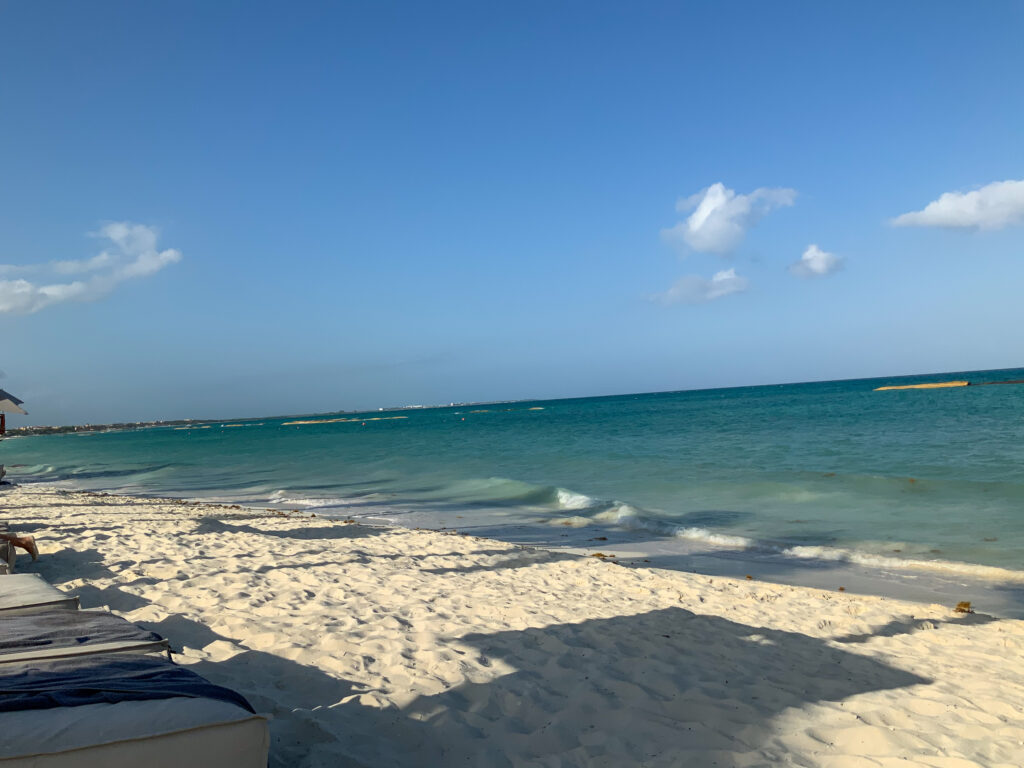
    Canals running between the villa buildings at Banyan Tree MayakobaBed and plunge pool looking out to the Caribbean in a beachfront suiteA villa terrace with a private plunge pool above the beachCabanas around the beachfront poolClear water and clean sand on the beach at MayakobaThe beachfront pool under palmsA tomahawk steak from the open-fire grillWhole fish from the kitchenThe open-air lobby lounge, timber sofas and a stone planter looking out to the pergolas and gardens
  • A Week on Kokomo: How to Fill Seven Days on a 140-Acre Island

    Aerial view of Kokomo Private Island and its reef, Fiji

    KOKOMO PRIVATE ISLAND, FIJI · ISLAND GUIDE · 9 MIN READ

    A Week on Kokomo: How to Fill Seven Days on a 140-Acre Island

    The seaplane, the mantas, Chef Caroline, and why five nights is the minimum that justifies the journey.

    By J.C. Mercer

    Know before you go

    • Getting there 45 minutes by seaplane or helicopter from Nadi
    • Best time May to October for mantas and clear water
    • Stay 5 to 7 nights, or the transfer eats the trip
    • Rates published by the resort; all meals included
    • Size 21 villas and 5 residences on 140 acres

    Kokomo sits in the Kadavu group, a 45-minute flight south of Nadi over water so clear you can read the reef from the air. Australian developer Lang Walker bought an abandoned resort site here and spent years rebuilding it. What he left behind is 21 beachfront villas, five hilltop residences, a working farm, and a marine biology team, all on a 140-acre island that never holds more than a few dozen guests.

    Most people book three or four nights and regret it. The transfer alone burns most of a travel day on each end, and the island has enough going on to fill a week without repeating yourself. Here is what those seven days actually looked like.

    I slept here

    Kokomo Private Island, Fiji

    • Nights 7
    • Stayed April–May 2026
    • Room booked One-Bedroom Beachfront Villa, sunrise side
    • How it was booked Amex Fine Hotels + Resorts, public rate
    • Rate band $$$$Check current rates

    Getting there

    Fiji Airways flies direct to Nadi from Los Angeles. From there, Kokomo runs its own seaplane and helicopter transfers out of a private lounge at the airport, which is where the trip starts feeling expensive in a good way. The sequence does not vary much: the hangar, the flight over the Astrolabe reef system, then a jetty welcome with singing and cut coconuts.

    Book the helicopter if you can. I flew the seaplane in and the helicopter out, and the return leg is the better of the two for views.

    Where you sleep

    Private infinity pool on the deck of a beachfront villa at Kokomo
    Every villa, including the one-bedroom, comes with its own infinity pool and direct beach access.

    Sunrise side or sunset side

    The villas run along both shores. Sunset villas get calmer water, less wind, and the obvious evening payoff. I split my week across both sides, and the sunset shore is the one to hold for a full stay. Sunrise villas trade that for morning light and slightly more breeze.

    What is in the villa

    Even the one-bedroom comes with a private infinity pool, a hammock, direct beach access, indoor and outdoor showers, and a stone soaking tub. The espresso setup is the detail I keep describing to people: a Nespresso machine, a drawer of ten pod varieties, a milk frother, and your preferred milk stocked before arrival. Housekeeping restocks the cookies daily and does your laundry at no charge.

    Residences

    Five residences sit on the hill in the middle of the island, running three to six bedrooms with full kitchens, private pools, and butler and nanny service. They read more contemporary than the beachfront villas. Best for a wedding party or three generations traveling together.

    Seven days, roughly

    Nothing here is a schedule. Kokomo runs on what the ocean is doing that morning. Use this as a frame:

    DayAnchorWhy
    1Arrival, orientation lunch, villa poolDo not book anything. The travel day is long
    2Manta snorkel with the marine teamMorning trips, weather dependent, book early in the week
    3Farm walk, then spaThe farm explains the food. Go before your best dinner
    4Dive the Great Astrolabe ReefExtra cost. Sites here see almost no other boats
    5Waterfall hike on a neighboring islandHalf day off-island, good break from the sand
    6Fishing or a nothing day on the pontoonCatch dinner, or do not, and let the staff bring lunch out
    7Yoga at the shala, last dinner over waterThe shala sits at the island’s high point

    Eat & drink

    A private table set on the sand for dinner at night on Kokomo
    Private beach dinners are arranged on request, in addition to the four restaurants.

    All meals are in the rate, which changes how you eat. There is no menu fatigue and no bill anxiety, so people order more adventurously than they would elsewhere. Four options:

    • Beach Shack: the main room. Continental spread and made-to-order hot dishes at breakfast, fresh-caught fish and farm vegetables at lunch, a five-course tasting at dinner.
    • Walker d’Plank: built over the water past the jetty, and on its own reason enough for the flight. No set menu. Chef Caroline comes to the table, asks what you feel like, and cooks around whatever came off the boat that day. Plan four meals with her across a week.
    • Kokocabana: the pool club. Wood-fired pizza, charcuterie, a juice and dessert bar, and unlimited gelato. Aimed at kids and used by everyone.
    • In-villa: private dining on your own deck, or a beach cookout the team will set up on request.

    The kitchen pulls from a 2.2-hectare organic farm with salt beds, beehives, and a hen house. Ask for the farm tour on day three. The food tastes different once you have seen where the eggs and honey come from.

    Under water

    A manta ray gliding over the reef off Kokomo Private Island
    Mantas gather at cleaning stations along the Great Astrolabe between May and October.

    This is the argument for Kokomo over a resort in the Mamanucas. The Great Astrolabe Reef runs more than 100km along Kadavu, and Kokomo reaches dive sites other operators do not visit. Coral cover here has stayed healthy because almost nobody comes.

    Manta rays gather between May and October, when plankton draws them to cleaning stations along the reef. Kokomo’s snorkel trips go to Stick Bomby Reef, roughly ten minutes out by boat. The resort runs a manta tagging and identification program alongside Manta Project Fiji, plus a coral restoration project, and guests can adopt a ray.

    Water sits around 24°C from July to October and climbs to 30°C by February. Visibility averages 15 to 20 metres and stretches to 30 in the cooler months. If mantas are why you are going, book July through September and accept the cooler water.

    The quiet parts

    Sunset over the lagoon at Kokomo Private Island
    The sunset shore is the one to request when you reserve, not on arrival.

    Yaukuve Spa Sanctuary has private treatment rooms and couples rooms, and therapists who rework a treatment around what your body needs that day. I overdid the sun on day two and walked in to an aloe wrap instead of the massage I had booked.

    The gym sits up by the helipad, so the walk is the warm-up and the view is the reward. A trainer is on call around the clock, and the fridge holds cold coconuts. Restorative yoga runs at the shala on the island’s highest point.

    Couples or families

    Kokomo manages both, which is rare at this price. There is a kids club, a teen club, a splash pool beside the main pool, and enough watersports gear to occupy a fourteen-year-old for a week. It is the rare property where arriving with an infant or a toddler does not feel like a compromise.

    Couples get the same island with a different rhythm: private beach dinners, in-villa service, and villas spaced far enough apart that you rarely see another guest.

    One honest caveat

    The insects around the villa pool at dusk are real, for what it is worth. Nothing else in my week matched the rest of it.

    What it costs

    The nightly rate is published on the resort’s own site and covers breakfast, lunch, dinner, non-alcoholic drinks, laundry and pressing, the kids and teens clubs, non-motorized watersports, and land-based activities.

    Priced separately: diving, off-island excursions, fishing charters, spa treatments, and alcohol. Booking through a Virtuoso member typically adds a resort credit, early check-in and late check-out, and a welcome amenity, so there is no reason to book direct.

    Know before you go

    Bring reef-safe sunscreen and more of it than you think. Book manta trips and dives at check-in, since both depend on weather and the good mornings go fast. Tell the kitchen about allergies on day one and they will work around them for the week. Request the sunset side when you reserve, not on arrival. And build a buffer night in Nadi on the return leg, because seaplane transfers move with the weather and international departures do not.

    Book the week. Three nights buys you the transfer, not the island.

    Don’t miss

    If you only do five things:

    • Manta snorkel at Stick Bomby Reef
    • Dinner at Walker d’Plank, no menu
    • The organic farm walk
    • Sunset from the floating pontoon
    • One dive on the Great Astrolabe

    The Kokomo gallery

    Every photo on this site is my own, shot on the stay. Slide through →
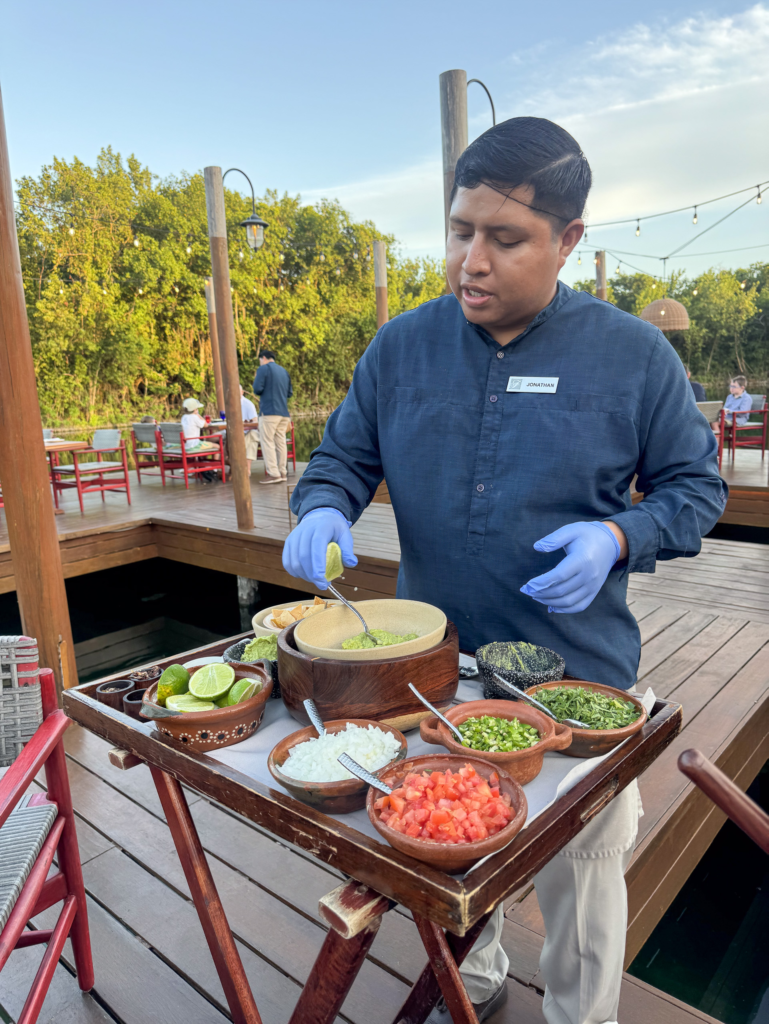
    Aerial view of Kokomo Private Island and its reefPrivate infinity pool on a beachfront villa deck at KokomoEmpty white-sand beach on KokomoA hammock strung between palms on the beach at KokomoSunset over the lagoon at KokomoA private table set on the sand for dinner at KokomoA manta ray gliding over the reef off KokomoA reef shark on the Great Astrolabe ReefKokomo Private Island from the air
  • Ritz-Carlton or Fontainebleau: Two Lapidus Buildings, One Year Apart

    Miami Beach from the air

    THE RITZ-CARLTON, SOUTH BEACH vs. FONTAINEBLEAU MIAMI BEACH · 12 MIN READ

    Ritz-Carlton or Fontainebleau: Two Lapidus Buildings, One Year Apart

    Miami Beach’s most famous architect designed both of them in the 1950s. Seventy years on, one has gone quiet and the other never stopped shouting.

    By J.C. Mercer

    At a glance

    • The matchup The Ritz-Carlton, South Beach vs. Fontainebleau Miami Beach
    • What they share both designed by Morris Lapidus, 1953 and 1954
    • Ritz in a line 375 rooms, Lincoln Road, one cross-shaped pool, calm
    • Fontainebleau in a line about 1,500 rooms, 22 acres, ten pools, LIV

    Every stay on this site is paid for in full and booked the way any other guest would book it.

    Overhead view of the hotel pool deck and gardens with the beach and ocean beyond
    The Ritz-Carlton from above: one cross-shaped pool, a garden, and a short walk to the sand. Compact by Miami Beach standards, and deliberately so.

    Morris Lapidus built both of these hotels within twelve months of each other. He opened the DiLido at the foot of Lincoln Road in 1953 and the Fontainebleau three miles north on Collins in 1954. His two lines about the work are worth holding onto, because the hotels have split them between themselves.

    “Less is a bore,” he said, and the Fontainebleau still lives by it.

    “If you create the stage setting and it is grand, everyone who enters will play their part,” he also said, and the Ritz, which took over the DiLido in 1998 and restored it, has bet everything on the stage rather than the noise.

    Three miles and a whole philosophy apart.

    I slept here

    The Ritz-Carlton, South Beach

    • Nights 2
    • Stayed March 2026
    • Room booked Ocean View King, 9th floor
    • How it was booked Marriott Bonvoy, standard rate, with the Ritz-Carlton credit card club-level upgrade
    • Rate band $$$$Check current rates

    Fontainebleau Miami Beach

    • Nights 2
    • Stayed March 2026
    • Room booked Trésor Ocean View King
    • How it was booked Amex Fine Hotels + Resorts, public rate
    • Rate band $$$$Check current rates

    The short version

    The Ritz-Carlton is a 375-room hotel at the top of South Beach with a preserved mid-century lobby, one beautiful pool, a large spa and a level of quiet that surprises people who booked it for the location. The Fontainebleau is a 22-acre resort city in Mid-Beach with a published 1,500 rooms across multiple towers, ten pools, a nightclub in the basement and a lobby that has been a tourist attraction since Sinatra.

    Book the Ritz if you want a hotel. Book the Fontainebleau if you want a destination and can handle the crowd that comes with it.

    Where they put you

    The Ritz sits at 1 Lincoln Road, on the sand, at the corner where Lincoln Road meets Collins. You can walk to the Lincoln Road Mall in a couple of minutes, Ocean Drive in about nine, and the Convention Centre in ten. That location is the single strongest thing the hotel owns. The trade is that plenty of the restaurants immediately around it are tourist traps, so walk a few blocks before you eat.

    The Fontainebleau is at 4441 Collins in Mid-Beach, on the stretch still called Millionaire’s Row, about three miles north. There is nothing to walk to. The resort is the destination, which is either the appeal or the problem depending on how you travel. Soho Beach House and the Eden Roc are the closest neighbours. Both properties sit roughly half an hour from Miami International.

    Measured, not guessed

    Here is what I measured and noted across both stays, rather than what the websites promise. This is the part I always want from a review and rarely get.

    WhatRitz-CarltonFontainebleau
    Room size392 sq ft, no balcony505 sq ft plus furnished balcony
    Wi-Fi speed145 Mbps down, steady96 Mbps down, dipped at the pool
    NoiseLobby bar audible in the corridor after 10pmPool music until 6pm; quiet inside the room
    BedKing, medium-firm, feather topKing, medium, pillow menu
    Water pressureStrong, hot in about ten secondsStrong, hot in about twenty
    BlackoutFull, manual, small light gapFull, motorised, no gap
    Loungers gone byNot an issue; deck never filled10:30am at the Bowtie Pool
    Walk to Lincoln Road2 minutesNot walkable
    Lift wait, peakUnder 30 secondsUp to 3 minutes at checkout hour
    Resort fee at checkoutConfirmCharged per night, plus tax

    Measured, not guessed

    The buildings

    This is the part worth booking either hotel for.

    The Ritz kept the DiLido. Black terrazzo floors, the grand staircase, a curved wall of polished cherry, and the original chrome sphere light wall that remains the focal point of the multi-level lobby. The Art Deco Society of Miami supervised the restoration and the city protects the building. Three floors were added at the top; almost nothing else moved. The 2019 refresh by HBA Miami and Meg Sharpe Interiors worked around the historic fabric rather than through it.

    The Fontainebleau kept the theatre. The curves, the chandeliers, and the Staircase to Nowhere, which Lapidus built so a woman could leave her coat at the top and make an entrance coming back down. It leads nowhere on purpose. A billion-dollar renovation restored the property and expanded it, and the original Chateau tower still holds the lobby and the bar.

    Rows of loungers and folded umbrellas on the sand in front of the curved white Chateau tower
    Lapidus’s curve, seen from the sand. The Chateau tower is still the building everyone photographs.

    One building rewards standing still and looking. The other rewards walking through it.

    The rooms

    The Ritz lists 375 rooms and suites with 1950s-inspired crown molding, custom millwork and added soundproofing. Entry categories are published at 375 to 400 square feet, with city, partial ocean or full ocean views. Marble bathrooms, Diptyque amenities, feather-topped beds. The ocean-facing rooms are the ones worth paying for, and the difference between a city view and an ocean view here is larger than the price gap suggests.

    The honest note: guest reports split hard. Some call the rooms spacious and immaculate. Others call them dated and small for the money, and one Booking review complained about being pushed into a suite to fix it. At the rates this hotel charges in season, that inconsistency is the main risk.

    The Fontainebleau spreads about 1,500 rooms across multiple towers up to 36 storeys, and which tower you land in matters more than the category. Deluxe Bayview rooms are published at about 300 square feet and look at Biscayne Bay or downtown, not the ocean. The Trésor and Sorrento towers hold the larger suites, many with furnished balconies and kitchenettes. Rooms are generously sized when you get a good one and tired when you do not. AAA reviews from the past two years include both “excellent” and a guest complaining that a seventy-year-old building was being sold as a new one.

    Oceanfront room with mid century chairs, writing table and sliding doors onto the balcony
    An oceanfront room at the Ritz. Mid-century chairs, a writing table, and the balcony doors that make the room.

    Neither hotel is reliably consistent. That is the honest headline on both.

    Pools and beach

    The Ritz has one pool, cross-shaped, elevated so it looks over the sand toward the Atlantic. It is a stunner and it is also, by any resort standard, small. Poolside service comes from the Lapidus Bar. A few guests have called the deck underwhelming for the price, which is fair if you arrived expecting scale and unfair if you arrived expecting quiet.

    Palm trunks framing the pool deck, cabanas and turf lawn with the ocean beyond
    The Fontainebleau’s pool complex runs deep — cabanas, turf lawn, and the ocean past the palms.

    The Fontainebleau has ten, across a poolscape that runs the length of 22 oceanfront acres onto a thousand feet of beach. The Bowtie Pool is the photographed one and the calmer one. Arkadia is the adults-only day club with DJs and bottle service. There is a family pool, a kids’ waterscape and a playground. Cabanas and daybeds rent, food comes to your chair, and loungers are gone by mid-morning unless you go down early. Music plays from late morning at the main pool. Nobody is pretending otherwise.

    Food and drink

    The Ritz now runs its dining with the José Andrés Group: Zaytinya for eastern Mediterranean, the Lapidus Bar named for the architect and done in bronze with live music, and the DiLido Beach Bar, one of the very few restaurants in South Beach that actually sits on the sand. Three outlets, all good, and the beach bar is the one to book.

    The Fontainebleau runs somewhere between eight and twelve outlets depending on what has opened and closed this quarter. The anchors are a Michelin-recognised Cantonese room, a high-end Italian, a steakhouse cut from an on-site aging room, a sushi bar, an American brasserie doing all three meals, a beach club with a Mediterranean menu, a bakery, a pool bar and the Bleau Bar in the lobby. Downstairs is LIV, which remains one of the loudest and most expensive nightclubs in the city, with a cover and drink prices to match.

    If dining variety decides it for you, the Fontainebleau wins by a distance. If you would rather have three good options than nine uneven ones, the Ritz.

    Spa, and the fees

    The Ritz spa is listed at 16,000 square feet with 14 treatment rooms, two couples’ suites and a full salon. For a hotel of 375 rooms, that is a serious facility and the strongest amenity on the property.

    Lapis at the Fontainebleau is built around water: mineral pools, steam, and a 75-foot multi-temperature jetted pool. It is the better spa to spend a whole afternoon in. The Ritz is the better spa to get a treatment in.

    Both charge a resort fee, and the Fontainebleau’s covers Wi-Fi and a daily fitness class. At both, the extras add up faster than the headline rate suggests. Budget for valet, which is the only parking option at the Fontainebleau.

    Service

    Neither hotel runs a spotless operation. With a listed 1,500 rooms, the Fontainebleau simply has more chances to get one interaction wrong on any given day than a house of 375 does.

    Families

    The Fontainebleau, without much argument. FB Kids runs a daily programme for ages four to twelve, there is a playground and a kids’ waterscape, connecting rooms are plentiful, and a child making noise at breakfast will not be the loudest thing in the room.

    The Ritz takes children seriously and Forbes notes it caters to them about as well as to adults. But with one pool and a lobby that turns into a scene at night, a family will feel more accommodated than catered to.

    The money

    The Fontainebleau opens far lower and swings with season and tower; the Ritz sits a clear tier above it in season. Add the resort fee, valet and Miami Beach taxes to both.

    The gap narrows once you match ocean view to ocean view and add a Fontainebleau suite in Trésor. It never closes entirely. What you are paying the Ritz for is fewer people, a better spa and Lincoln Road at your door.

    Which one

    Take the Ritz-Carlton if you want to walk everywhere, if the spa is a reason for the trip, if one good pool beats ten busy ones, and if you would rather stay in a restored building than a restored city.

    Take the Fontainebleau if you are travelling with children, if you want ten pools and nine restaurants and a nightclub without leaving, if the scene is the point, or if the rate difference funds a better trip elsewhere.

    Neither is the safest luxury bet in Miami Beach. Both are the most interesting buildings on it.

    The comparison

    WhatRitz-Carlton, South BeachFontainebleau Miami Beach
    Opened1953, as the DiLido1954
    ArchitectMorris LapidusMorris Lapidus
    Location1 Lincoln Road, South Beach, on the sand4441 Collins Avenue, Mid-Beach
    Size375 rooms and suitesAbout 1,500 rooms across several towers
    GroundsSingle beachfront building22 oceanfront acres, 1,000 ft of beach
    Entry roomRoughly 375–400 sq ftFrom about 300 sq ft, bay-facing
    PoolsOne, cross-shaped, elevated over the sandTen, including an adults-only day club
    Spa16,000 sq ft, 14 treatment roomsLapis, built around mineral and jetted pools
    DiningThree outlets, José Andrés GroupEight to twelve, including a Michelin room
    NightlifeLapidus Bar, live musicLIV, cover charge, city-scale club
    ChildrenWelcome, not built for themFB Kids, playground, waterscape
    WalkabilityLincoln Road in 2 minutesNothing to walk to; the resort is it
    Resort feeCharged; confirm current rateCharged per night, plus tax
    Typical rateA clear tier above, in seasonOpens lower; more for ocean and suites
    Best forQuiet, spa, location, the buildingFamilies, facilities, scene, value

    Book the Ritz if you want the quiet. Book the Fontainebleau if you want the noise.

    Quick verdict

    Which side are you?

    • Book the Ritz for the spa, the quiet and Lincoln Road at the door
    • Book the Fontainebleau for ten pools, nine restaurants and the scene
    • Travelling with kids? Lean Fontainebleau
    • Want to walk everywhere? Lean Ritz

    The Miami Beach galleries

    Every photo on this site is my own, shot on the stay. Slide through →
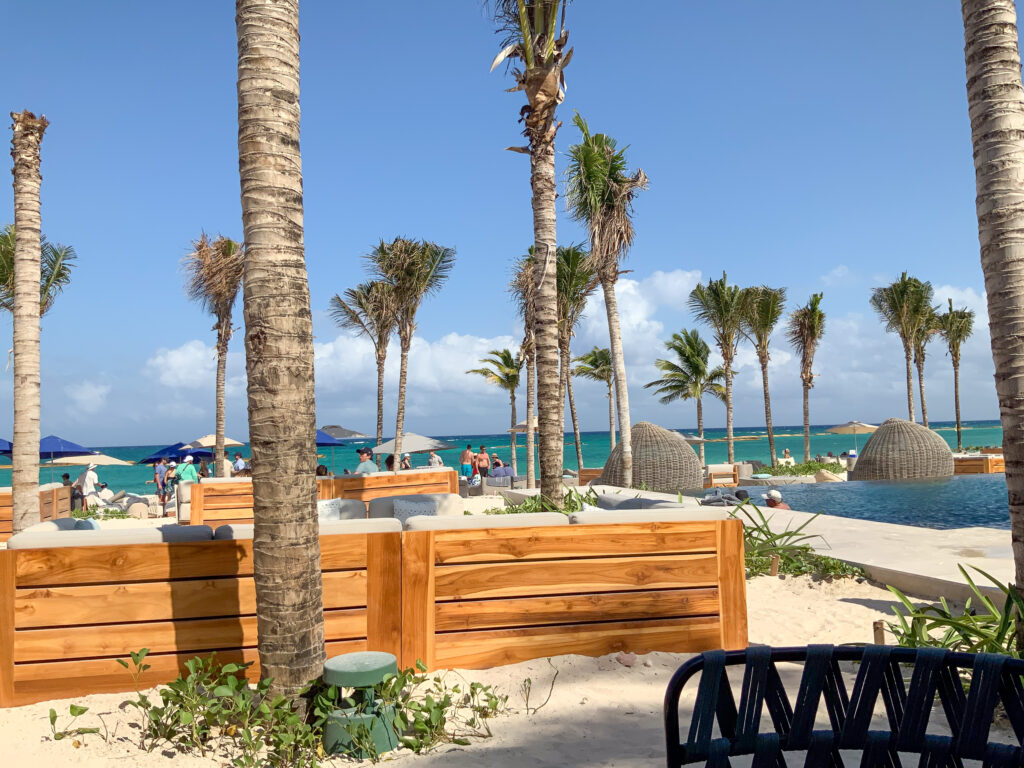
    The main pool and curved Chateau tower on a clear morningOceanfront room with mid century chairs and balcony doorsPalm trunks framing the pool deck, cabanas and turf lawnOcean and beach through the floor to ceiling windows of an oceanfront roomTwo canvas beach cabanas facing the turquoise waterBeachgoers and gulls on the sand at sunsetMarble clad bathroom with a deep soaking tub and glass showerFireworks bursting over the beach at night under a full moonAerial sunset over Indian Creek and the downtown Miami skyline
  • Capella or Four Seasons: the two hotels that share a driveway in Bangkok

    CHAO PHRAYA ESTATE · CAPELLA vs. FOUR SEASONS · 12 MIN READ

    Capella or Four Seasons: the two hotels that share a driveway in Bangkok

    Same owner, same riverbank, three minutes apart on foot. I stayed at both and the answer is not the one the awards lists give you.

    By J.C. Mercer

    At a glance

    • Estate Chao Phraya Estate, Charoen Krung, Bangkok
    • The matchup Capella Bangkok vs. Four Seasons Bangkok
    • Capella in a line 101 rooms, every one on the river, quiet
    • Four Seasons in a line 299 rooms, three pools, urban resort

    Every stay on this site is paid for in full and booked the way any other guest would book it.

    The Chao Phraya Estate covers fourteen acres on the east bank of the river, and the same company built both hotels on it. They share a driveway. They share a river shuttle. You can walk from one lobby to the other in about three minutes, past a security post that waves you through without asking which guest you are.

    In 2025 the World’s 50 Best Hotels list put Four Seasons Bangkok at number two and Capella Bangkok at number three.

    They are both right. The disagreement tells you more than the ranking does.

    I slept here

    Capella Bangkok

    • Nights 2
    • Stayed May 2026
    • Room booked Riverfront Premier, king, 7th floor
    • How it was booked Amex Fine Hotels + Resorts, public rate
    • Rate band $$$$Check current rates

    Four Seasons Hotel Bangkok at Chao Phraya River

    • Nights 2
    • Stayed May 2026
    • Room booked Deluxe River-View Room, king
    • How it was booked Amex Fine Hotels + Resorts, public rate
    • Rate band $$$$Check current rates
    River view from a Capella balcony
    The view that comes with every Capella room.

    The short version

    Four Seasons is a resort that happens to sit in a city: the hotel lists 299 rooms, three outdoor pools, six places to eat and drink, a spa across two floors with a Muay Thai ring in it, and enough happening that you can stay four days without leaving the property. Capella lists 101 rooms, low-rise, every one facing the river with a balcony, with a personal assistant assigned to your room and a hush over the whole place.

    Where you actually are

    Both hotels sit on Charoen Krung Road in the stretch Bangkok now calls its creative district, which is the oldest paved road in the city and the most interesting neighbourhood either hotel could have landed in. Galleries, coffee roasters and old shophouses run north toward Chinatown. There are fewer tourist sights here than in Sukhumvit or around the Grand Palace, and that is the point.

    Reaching the estate from Suvarnabhumi takes about forty minutes without traffic and considerably longer with it. Four Seasons runs an airport transfer at roughly THB 5,000 per vehicle each way. Capella arranges a limousine with VIP fast-track through immigration if you ask your Culturist a day ahead. A metered taxi does the same run for a fraction of either, and Bangkok traffic will treat all three equally.

    Once you are on the estate, the shared shuttle boat is the thing to use. It runs to IconSiam, the enormous mall across the water, and to Sathorn pier for the Skytrain, which puts the rest of the city about twenty minutes away without touching a road. Guests of either hotel can board.

    The shared river shuttle on the Chao Phraya
    The shared river shuttle — guests of either hotel can board.

    Arrival and scale

    Four Seasons announces itself. Jean-Michel Gathy designed the public spaces around water, so you cross reflecting pools and pass carved white elephants by the Thai sculptor Dong Pongsatat on the way to a lobby holding more contemporary Thai art than most galleries in the city. I checked in during a rush and the room stayed calm, with cold towels and coconut water arriving before I had put the bags down. The scale absorbs the crowd.

    Capella does the opposite. The wood-panelled exterior is the more elegant of the two buildings seen from the water. Inside, the lobby is small enough that staff clock you on arrival and keep clocking you for the rest of the stay. Nobody is performing. The building runs nine storeys and never feels like it holds a hundred rooms.

    The estate entrance on Charoen Krung Road
    One driveway, one security post, two hotels.

    The rooms

    This is where the money argument gets settled.

    A Capella river-view suite
    At Capella, every room faces the river.

    At Capella every room faces the river, and the entry category runs 61 square metres with a private balcony. Suites start at 95 square metres and climb to 209. Seven villas sit at the water’s edge with private gardens and plunge pools, and there are eighteen or so plunge pools across the property. The entry room reads smaller than the number suggests. Marble bathroom, separate tub and rain shower, and a vanity set at the window so you look at the river while you shave. Bamford amenities. A tablet runs the room.

    At Four Seasons the entry rooms run about 50 square metres and face either the river or the central courtyard. The courtyard is beautiful, planted with reeds that stand in for northern rice fields. It is not the river. If you book here, pay up for a river view or accept that you have booked a very good room in a very good hotel with an ordinary outlook. The beds are the best thing in either building. High ceilings, picture windows, a pillow menu, and a bathroom with the choice of a regular or overhead rain shower.

    Capella hands every guest a mobile phone with free international calls and data, plus a Capella Culturist on call around the clock, which is a personal assistant with a better name. Mine booked a boat, moved a dinner and found a tailor inside one message thread.

    Food and drink

    Four Seasons wins on range and it is not close.

    Yu Ting Yuan holds a Michelin star. Dim sum and Peking duck come out of an open kitchen overlooking the water garden. Brasserie Palmier does French on the riverfront under Guillaume Galliot. Riva del Fiume handles Italian and hosts breakfast, a full buffet plus an à la carte menu that changes daily. BKK Social Club is an Argentinian-themed art deco bar that has landed on the World’s 50 Best Bars list, and it is the single best room on the estate in which to have a drink.

    Riverside dining at Four Seasons at night
    Riverside at Four Seasons, where BKK Social Club draws the crowd.

    Capella runs a tighter programme. Côte by Mauro Colagreco does Riviera cooking with a river view and Michelin recognition, and the problem is getting in. Reserve before you fly. Phra Nakhon is the Thai restaurant, run by chef Kannika Jitsangworn, whose menu grew out of eating her way through Bangkok street food with her team. Dinner there was the best Thai meal I had in the city. Stella is the bar, small and good.

    Green curry at Phra Nakhon
    Dinner at Phra Nakhon, the best Thai meal I had in the city.

    Breakfast is the split decision. Capella serves it at Phra Nakhon on the riverside terrace, buffet plus unlimited à la carte, and when it lands it is the better meal of the two. Four Seasons breakfast is bigger, safer and never wrong.

    Capella’s afternoon tea is worth crossing the driveway for whichever hotel you are sleeping in. Both hotels open their restaurants to outside guests, so treat the estate as one menu and book across it.

    Pools, spa, gym

    Four Seasons has three outdoor pools, including two temperature-controlled infinity pools stepping down toward the river and a 35-metre lap pool. The Urban Wellness Centre runs to 2,500 square metres over two floors: nine treatment rooms, vitality pools, a herbal steam room, a heated indoor pool, a 24-hour gym, a Muay Thai ring, an aerial yoga studio, a barber and a salon. You can take a paddleboard class in the lap pool, which is either delightful or absurd, and I came down on delightful.

    Aerial of the Four Seasons pools and skyline
    Four Seasons stacks three pools toward the river.

    Capella has one infinity pool. It stayed calm through a weekend in high season with loungers going spare, which no Four Seasons pool will ever do. Auriga Wellness covers about 1,074 square metres with seven treatment suites, and the couples’ room is the most beautiful spa space either of me has been inside. The gym is decent. Against the machine next door it is not a contest, and Capella guests should walk over.

    Service

    Four Seasons service is professional, consistent and impersonal by design. With 299 rooms nobody is learning your coffee order by Tuesday. What you get instead is a floor that never drops: the request gets handled, every time, by whoever is nearest.

    Capella aims higher. At its best the property remembers everything and anticipates the rest, and that is the version I got: warmth that bigger brands rarely manage. One stay is not a guarantee of consistency, and I can only report the one I had.

    Travelling with children

    Four Seasons, without much argument. There is a kids’ club, a children’s pool, three pools total to spread a family across, and the room count means nobody notices a loud table at breakfast. Capella takes children and treats them well, but the property is built around quiet, the pool is single and central, and a family of four in a 61-square-metre room will feel the walls. If you want Capella with children, book a villa.

    The comparison

    WhatCapella BangkokFour Seasons Bangkok
    Size101 rooms, suites and villas299 rooms and suites
    LocationEast bank, low-rise, set back from the roadEast bank, same estate, three minutes north
    Entry room61 sq m plus private balcony50 sq m, no balcony
    ViewRiver from every room, no exceptionsRiver or courtyard, depending on category
    VibeBoutique hideaway, close to silentUrban resort, full of life
    PoolsOne infinity pool, plus 18 private plunge poolsThree, including a 35 m lap pool
    SpaAuriga Wellness, 1,074 sq m, seven suitesUrban Wellness Centre, 2,500 sq m, nine rooms
    GymAdequateAmong the best hotel gyms anywhere
    Signature tableCôte by Mauro ColagrecoYu Ting Yuan
    BarStella, intimateBKK Social Club, World’s 50 Best
    BreakfastBetter ceiling, less reliable floorBigger, safer, never wrong
    Service modelNamed Culturist, 24 hours, per roomDeep bench, consistent, less personal
    ChildrenFine, but book a villaKids’ club, children’s pool, room to spread out
    Entry rateFrom THB 30,000From THB 12,000 courtyard, more for river
    Best forPrivacy, the spa, a villa, slowing downFamilies, facilities, dining, a full day in

    Measured, not guessed

    Here is what I measured and noted across both stays, rather than what the websites promise. This is the part I always want from a review and rarely get.

    WhatCapellaFour Seasons
    NoiseLong-tail boats from 6am with the balcony door open; silent shutSilent; road noise never reached the room
    BedKing, medium-soft, pillow menuKing, medium-firm, the better of the two
    Water pressureStrong, hot in under ten secondsStrong, hot on demand
    Air conditioningQuiet, held temperature overnightQuiet, held temperature overnight
    Shuttle boat to Sathorn pier8 minutes, roughly every 308 minutes, roughly every 30
    Time to first greeting, morningsImmediate, both daysImmediate, both days

    Measured, not guessed.

    What it costs and how to book it

    Capella’s entry Riverfront Premier starts around THB 30,000 before tax and service. Four Seasons opens lower, with courtyard-facing rooms available from roughly THB 12,000 in soft season and river-view rooms climbing from there. Both add 10% service and 7% government tax on top, which people forget and then notice at checkout.

    The gap narrows once you match river view to river view, which is the only fair comparison, since at Capella you cannot book anything else.

    Three things worth knowing before you reserve. Capella participates in the Global Hotel Alliance programme, which makes it the most expensive hotel brand you can earn points at. Four Seasons runs no loyalty scheme, so book through a Preferred Partner or Virtuoso advisor for the upgrade, breakfast and property credit at no extra cost. And both properties discount for length: Four Seasons has run third-night-free offers, and Capella takes 40% off past seven nights.

    Rates across both track the season. November through February is cool, dry and priciest. March to May is punishing heat. June to October brings rain in short afternoon bursts and the best rates of the year, and the rain rarely costs you a whole day.

    Can you do both

    Yes, and I would. Two nights each is enough to see the difference, and the walk between lobbies takes three minutes with a bag. Split the stay with Capella second if you are flying home tired, or with Four Seasons second if you want the gym and pools before a long flight.

    The Capella infinity pool with city view
    Capella keeps a single, quiet infinity pool.

    Book Four Seasons if you want the days full. Book Capella if you want them empty.

    Quick verdict

    Which side are you?

    • Book Capella for privacy, the spa and a river view from every window
    • Book Four Seasons for the pools, the gym and six places to eat
    • Travelling with children? Lean Four Seasons
    • Chasing quiet? Lean Capella

    The Bangkok galleries

    Every photo on this site is my own, shot on the stay. Slide through →
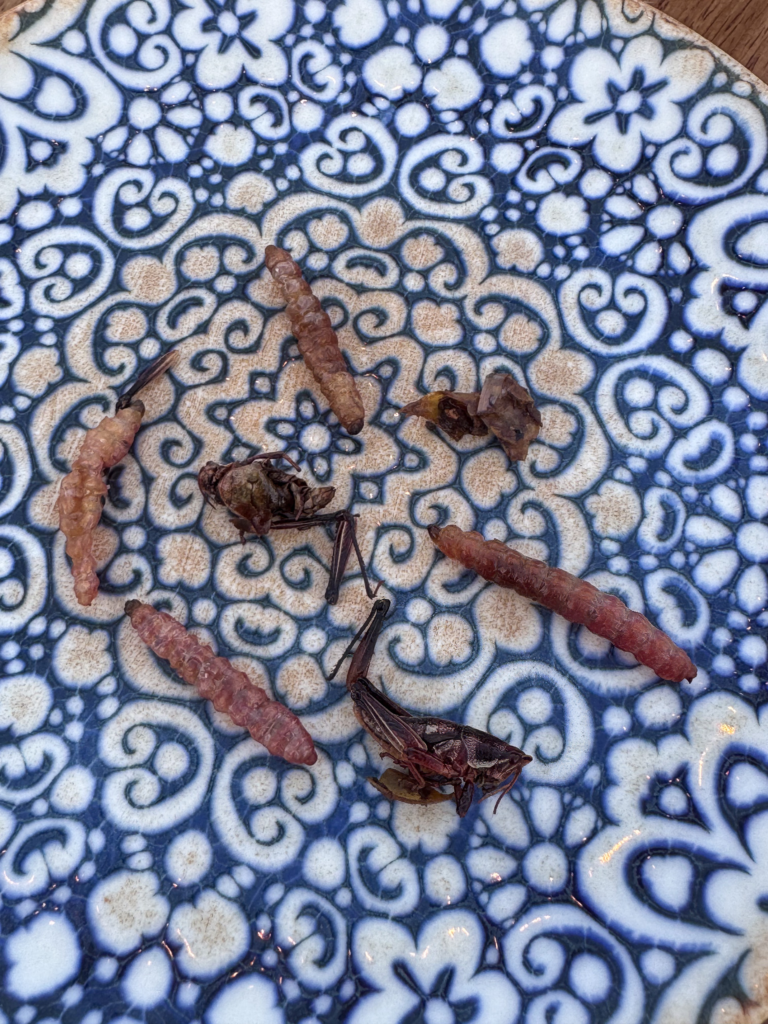
    A Capella river-view suiteThe Four Seasons poolsThai cooking at Phra NakhonCapella riverside at nightThe river viewFour Seasons pool at sunsetA marble bathroomCapella infinity poolThe shared river shuttleAfternoon tea